the trump presidency in 4 photos

Somebody once said photography makes us all tourists in another person’s reality. If that’s true, and I suspect it is, then…wait. You know, if I had to guess, I’d guess it was probably Susan Sontag who said that. I mean, she was always offering some weighty opinion about photography, and she had the terribly annoying habit of generally being right. Anyway, regardless of who said it, let’s acknowledge the truth of it. There’s absolutely no way to accurately depict four years in anybody’s life in four photographs, let alone the life of one of the most powerful people on the planet. So this is really just a tourist’s…wait. I had to check, and yes, it was Sontag.

The camera makes everyone a tourist in other people’s reality, and eventually in one’s own.

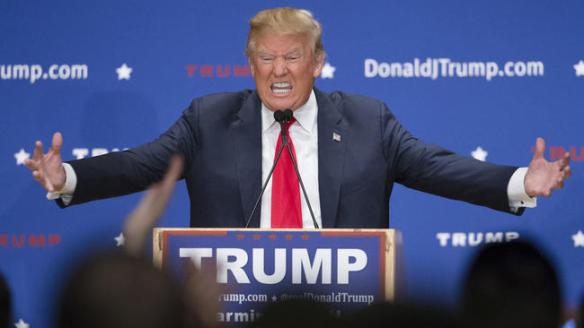
Okay, back to my point, such as it is. My point is that this is basically a tourist’s quick view of the Trump years. It’s not meant to be anything more than a sketch of the guy’s presidency, written mainly for my own amusement. Still, I hope it makes a few valid points about the type of person Comrade Donald J. Trump is and what sort of president he’s been. Which, yeah, is a lot to ask of four photographs.

So let’s start with this: Trump, at age 74, is a spoiled, petulant, selfish child who insists on getting his way. When he can’t get what he wants when he wants it, he pouts. Or he throws a tantrum. Or he finds somebody to blame. Or he claims he was deprived of what he wants because of someone’s personal animosity or jealousy. Like every peevish, impatient child, Trump is thoughtlessly, carelessly rude. It’s more than just a lack of courtesy; it’s an inability to consider the wants or wishes of others. He’s been indulged his entire life. Until now. Now he’s being denied a presidency he only wants because he enjoys the attention and because somebody is trying to take it away from him. He seems incapable of understanding why his pouting/tantrum routine isn’t working anymore.

Infantile, over-indulged, selfish, sulky, and obstinate.

Trump is an angry person. He’s resentful, petty, and vindictive. He assumes everybody else is equally angry, resentful, petty, and vindictive. He’s easily offended, and when offended his first impulse is to strike back, to offend the offender. Trump holds onto a grudge like a leech. Even if he eventually gets what he wants, he remains bitter and spiteful toward anybody who either opposed him or who wasn’t, in his opinion, sufficiently supportive. He has no sense of loyalty to others, though he expects unquestioned loyalty to himself. Worse, Trump is cruel. Deliberately cruel. He wants his ‘enemies’ to suffer, to be humiliated. Their humiliation and suffering makes him feel powerful and justifies his anger, resentment, pettiness, and vindictiveness. This makes him a bully.

Constantly prepared to be offended, constantly resentful, constantly cruel, constantly full of rage.

Trump is tacky. He’s vulgar. Crass. It’s not just that he’s personally gauche and physically graceless (though he is), and it’s not only that he lacks any grasp of art or any appreciation of artistry (though he does). It’s that he has a profoundly shallow concept of beauty. His aesthetic sensibility is limited to the surface of things; he is taken by the gaudy, the glittery, the garish, the bright twinkle of tinsel. He is trapped by the belief that bigger is better, that more expensive is better, that extra is better. This flashy sensibility applies to everything from home furnishings to women (which, I suspect, he also views as a home furnishing).

If his tastes were lowbrow, that would actually be an improvement; there’s honesty and integrity in lowbrow tastes. For example, I believe he genuinely enjoys fast food and junk food — fried chicken from KFC, Diet Coke, a Big Mac with supersize fries, Doritos. Most of us have some lowbrow tastes (confession: I’m a sap for the sweet chemical taste of Orange Hostess Cupcakes). Many people may be horrified by the way Trump likes his steak prepared (well done, served with ketchup), but the fact that he insists on having it served that way suggests he truly likes it. His taste in food is perhaps the only area of his life in which he seems totally sincere and authentic.

Junk food from a junk person.

Trump has no friends. I find this terribly sad, but revealing. He has followers, he has servants, he has sycophants — but no friends. It appears nobody, with the possible exception of his children (and I’m not convinced about them) really likes him as a person. People may want to spend time with Trump the Businessman, or with Trump the president, but there doesn’t seem to be anybody who actually wants to spend time with Trump the person.

He’s a hollow man. He has no human warmth. It’s impossible to imagine him playing with children, or tossing a ball with a dog, or having coffee and a chat with a friend. It’s impossible to imagine Trump sitting back in a chair, relaxing, reading a novel. It’s impossible to imagine Trump hanging out with a buddy. It’s impossible to imagine Trump having a hobby — a simple, regular activity done purely for his personal enjoyment during his leisure time. Golf is probably as close as he gets, but he’s a well-known golf cheat. You only cheat to win, and winning involves a desire to beat others.

Most people would help a stranger who had toilet paper stuck to their shoe.

This, in my opinion, is the saddest, most tragic, and most revealing photograph of the Trump presidency. One of the most powerful persons in the world climbs the steps to Air Force One with toilet paper stuck to his shoe. The president travels with hundreds or thousands of people attending him — members of his administration and all their aides, Secret Service agents, medical staff, communications staff, hospitality staff, the news media. Not one person was willing to tell him he had toilet paper stuck to his shoe. Not one. Everybody around him was either too afraid of him to mention it, or they didn’t regard him enough to save him from this moment of embarrassment, or they simply disliked him enough to let him appear in this humiliating fashion in public. The President of the United States — and they let him climb those steps with toilet paper stuck to his shoe.

That’s shameful. But that’s who he is. Donald Trump is the sort of person who, at the end of the day, isn’t respected enough or liked enough for somebody to say, “Excuse me, but you’ve got toilet paper stuck to your shoe.”

That’s the sad but appropriate epitaph of his presidency.

pioneer cemeteries

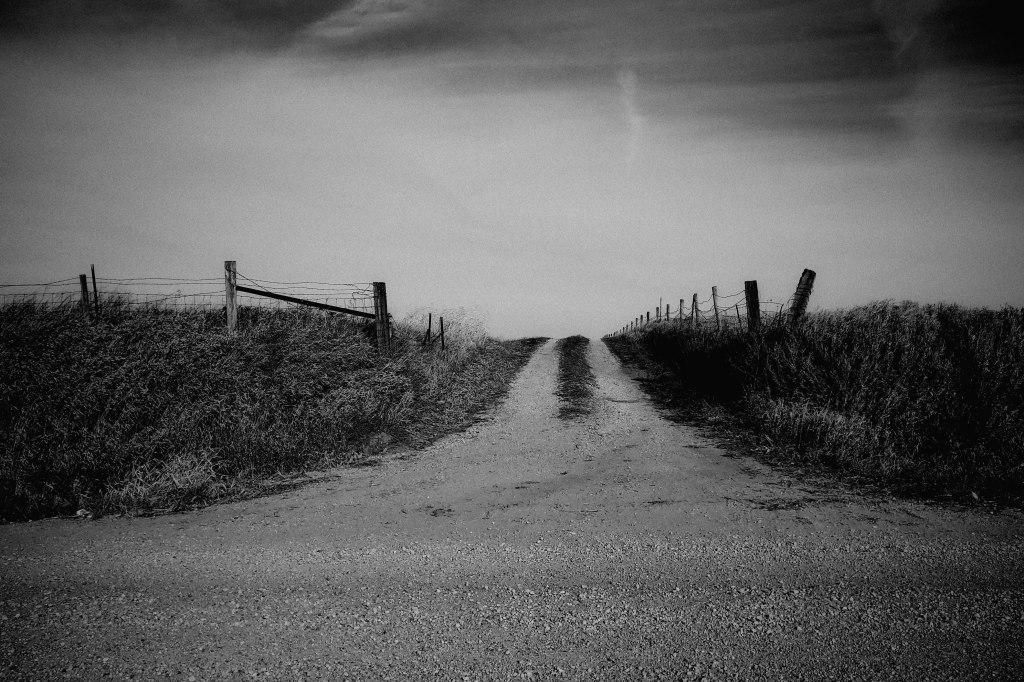
A week ago I posted the following photograph of a dirt road leading back into field that held a pioneer cemetery. It sparked a number of folks to ask a perfectly reasonable question: Dude, what the hell is a pioneer cemetery? I asked the same question the first time I came across a pioneer cemetery. I’m here to give y’all the answer.

Road to Sams pioneer cemetery

Let me amend that. I’m here to give a couple of answers. I mean the obvious answer is simple: a pioneer cemetery is a plot of ground where pioneers are buried. But that leads inevitably to the question: Dude, what the hell is a pioneer?

Let’s start there. The term ‘pioneer’ comes from the French pionnier, which originally referred to a type of specialized foot soldier — troops who were furnished with digging and cutting equipment and sent into new territories to prepare the way for an army. The root term is much older, medieval Latin, pedonem, which meant ‘foot soldier’. That’s also the root for the term ‘pawn’. In chess, pawns always move first; they’re essential, but disposable. The same applies to pioneers; they go first, they’re essential, but disposable.
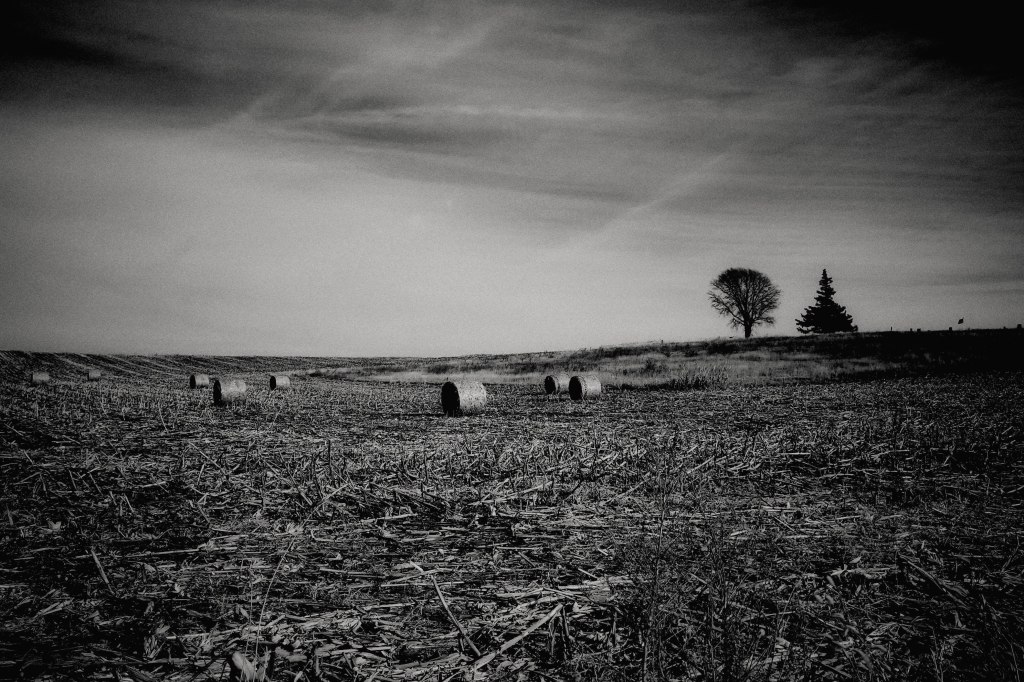
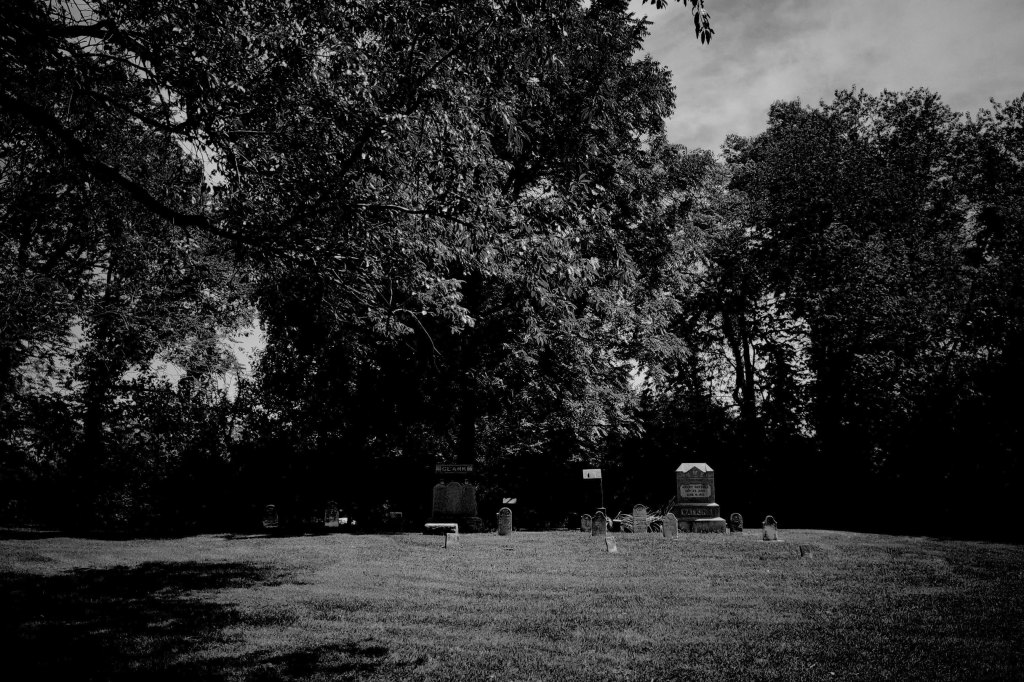
Sams pioneer cemetery is located on the rise by the trees.

In the US, the term ‘pioneer’ has a vaguely heroic connotation. I suppose that’s warranted because it takes a sort of courage — or maybe desperation — to take your family into unknown territory. And that’s what the early US pioneers were. They weren’t soldiers; they were mostly families of immigrants and first generation Americans. At the time, they were called settlers, or homesteaders, or sodbusters. They were families who loaded up wagons with their few possessions and pushed into largely unmapped territories, fording rivers and streams, in the hope they could find land they could farm. When they came to land they felt was promising, they stopped. They chopped down trees and built cabins out of the logs. They cleared trees and stones from the land by hand or with the help of livestock and created fields for crops. They planted and harvested, and they died and were buried.

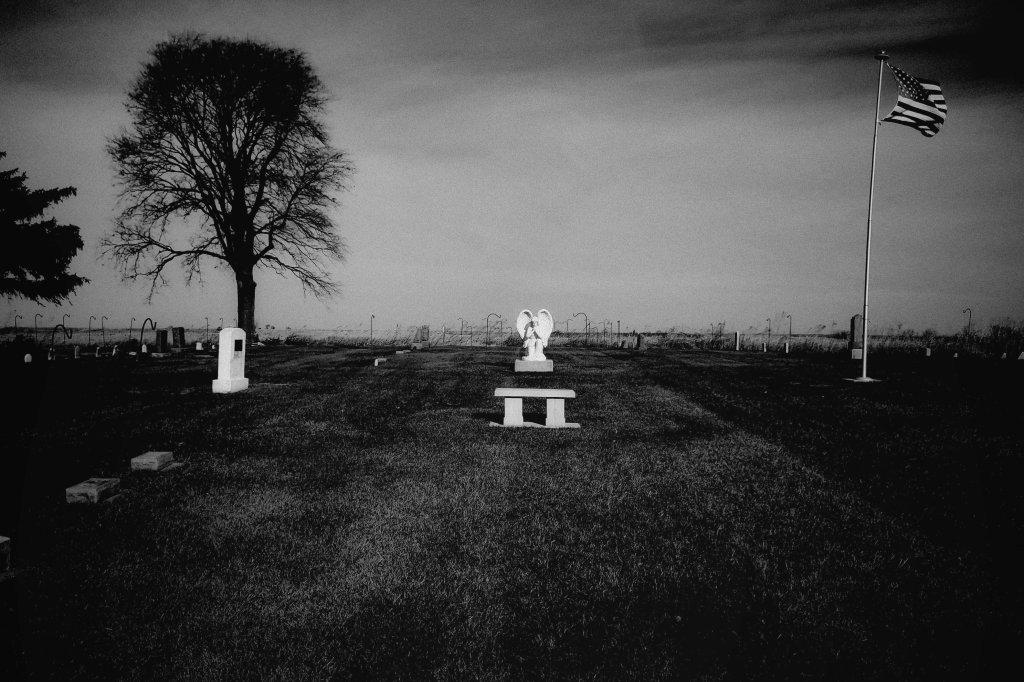
Sams pioneer cemetery.

Pioneer cemeteries are plots of land, often on family property, that these small, loosely formed farming communities agreed was sufficient to bury their dead. They’re the graves of the thousands of unremembered, ordinary people who turned wilderness into settlements.

We have to acknowledge the pluckiness of these pioneers, but we also need to be aware there was a very deep ugliness in what they were doing. In the US, pioneers were the leading edge of the concept of Manifest Destiny. The idea was promoted initially by John O’Sullivan, the son of an Irish immigrant. He wrote it was the new nation’s “manifest destiny to overspread the continent allotted by Providence for the free development of our yearly multiplying millions.” In essence, manifest destiny was a nice way of saying the expansion of white Europeans and their culture across the continent, displacing or killing the native tribes who’d actually lived there for centuries, was not only inevitable, it was also justified by god.

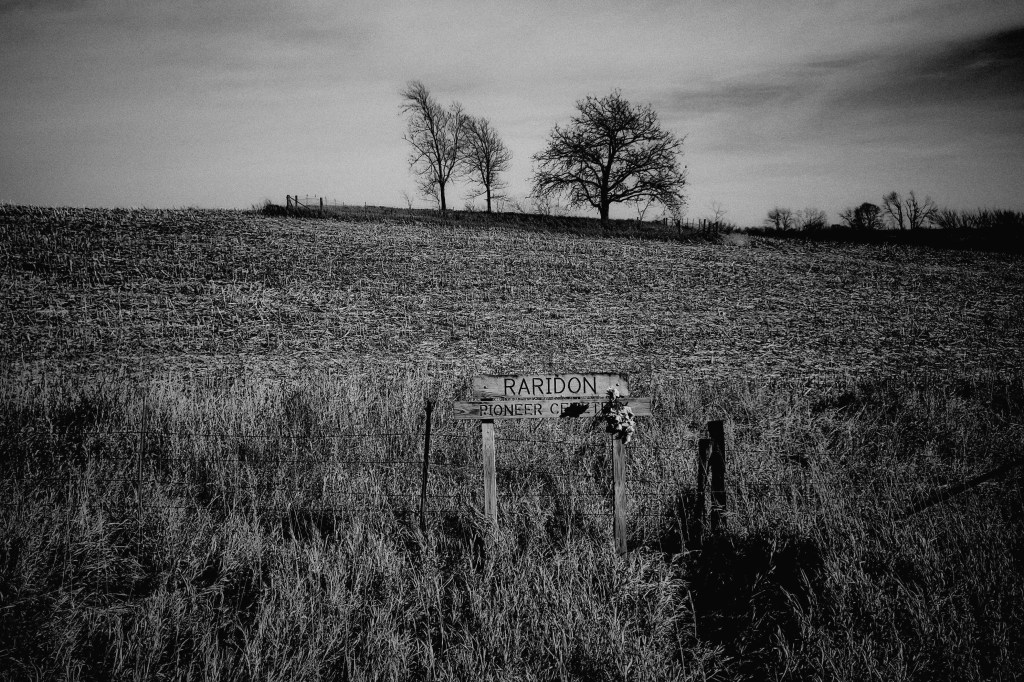
Raridon pioneer cemetery in the middle of a field.

There you have it. The pioneers were intrepid settlers struggling to create a life for themselves. And they were also sanctimonious invaders who were comfortable with the idea of pushing the indigenous people off their land, stealing it for themselves, and killing those natives who resisted.

That’s who the pioneers were — settlers who were almost as expendable as the natives they dislodged and supplanted. But not everybody buried in a pioneer cemetery was an actual pioneer. The pioneers created the conditions for permanent settlements; permanent settlements inevitably bring disputes; disputes require some forum for resolution. That means a bureaucracy, and bureaucracies demand definitions.

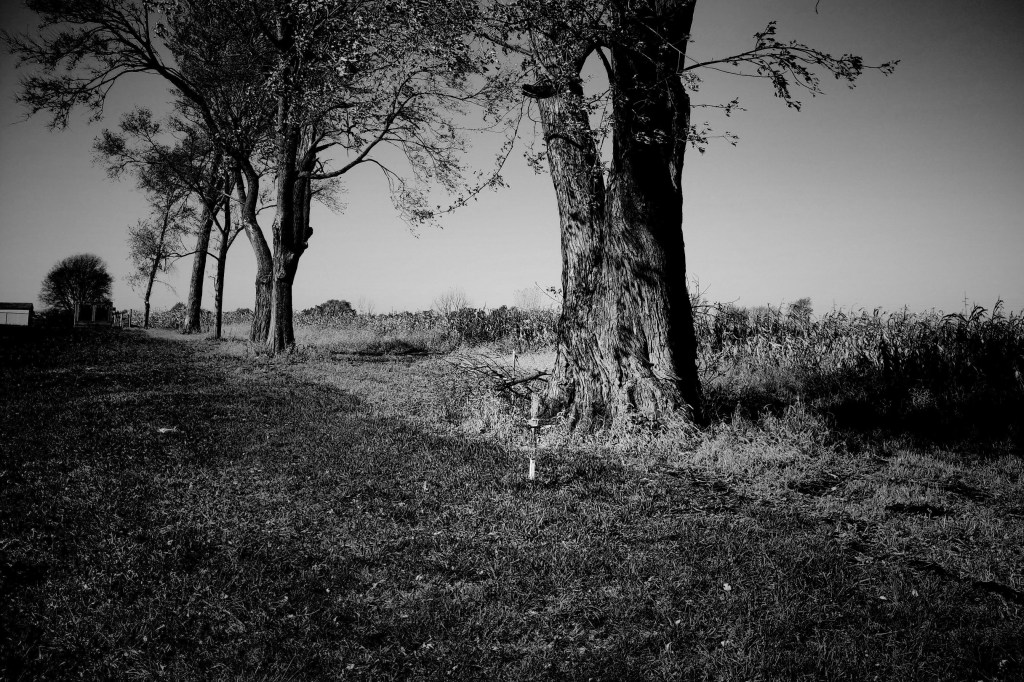
The Enterprise pioneer cemetery has only a single marked grave, a simple cross by a tree.

Which brings us back to the original question: Dude, what the hell is a pioneer cemetery? The bureaucratic answer depends on where you live; different states have different legal definitions of ‘pioneer cemetery’. In Iowa, where I live, the law defines it as a cemetery in which there have been no more than twelve burials in the preceding half century. In neighboring Nebraska, a pioneer cemetery is defined as an abandoned or neglected cemetery that was founded or situated on land “given, granted, donated, sold, or deeded to the founders of the cemetery prior to January 1, 1900.”

There is, I think, something weirdly admirable about a bureaucracy making a deliberate decision to recognize and honor the ordinary people who lived and died in small farming communities dating from the late 1700s. The bureaucracies may not care about the individual pioneer cemeteries, but they care about the notion that there are people buried and memorialized in remote, semi-forgotten patches of land.

This pioneer cemetery could only be reached by steep path through overgrown brush under a canopy of old trees. Yet it was beautifully cared for by a local Boy Scout troop.

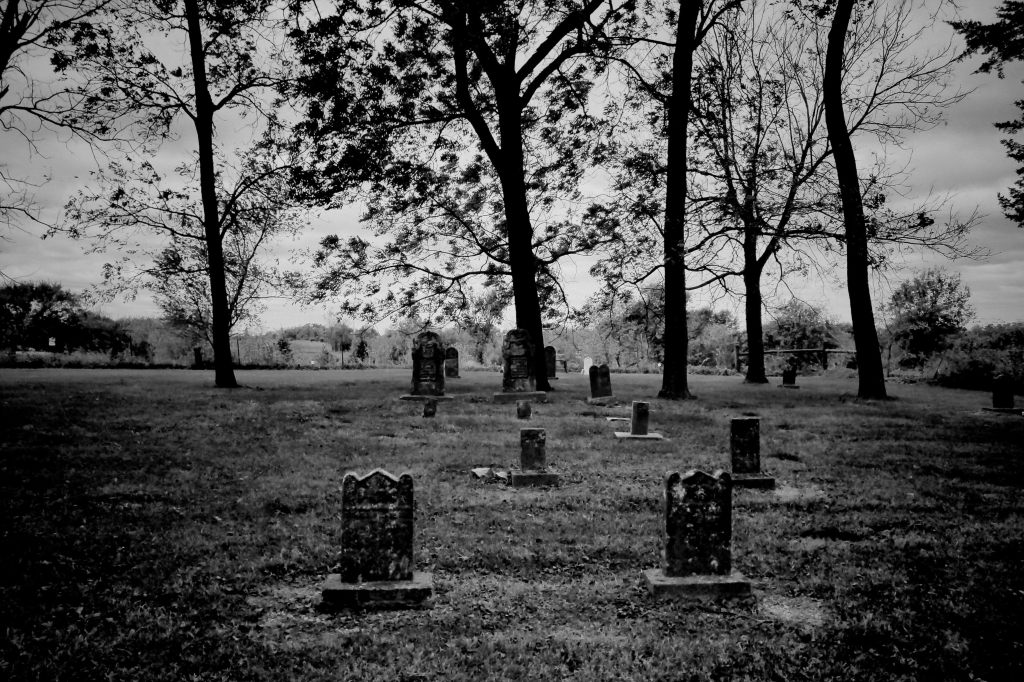
Most of the pioneer cemeteries I’ve visited are lonely places on patches of farmland or meadowland. They’re generally located on a low hill, most often with a small grove of trees. Some are only accessible by overgrown paths, or by vehicles with high ground clearance. A few pioneer cemeteries are well-tended; most aren’t. Many are overgrown with grass and weeds. Most have gravestones that are damaged, weathered, unreadable.

But all of them are full of stories. There are graves of soldiers — Civil War veterans, veterans of the world wars. You can tell by the dates which ones died in uniform. There are graves of wives who outlived their husbands, graves of mothers who died in childbirth, graves of the children they bore. There are lots of graves of infants, often with the number of months or weeks they lived.

Trester pioneer cemetery

All cemeteries and graveyards tend to be quiet. Pioneer cemeteries are more than quiet. They’re silent. And yet they’re full of stories. Untold stories. Forgotten stories. The first person buried in what would eventually become the Slaughter pioneer cemetery was eight-year-old Hester Slaughter, who died of ‘the fever’ in the summer of 1846. She was buried in a corner of the family farm. There was no lumber mill in the region, so there was no sawn lumber to make a casket. Instead, the family split the trunk of a tree that had been chopped down to clear the land; they hollowed it out, placed poor Hester inside, closed it back up, and buried her. A total of 69 people would be buried in that small plot of land, including three Civil War veterans and a veteran of the War of 1812.

Among them is Bluford Sumpter, who served in the 39th Iowa Regiment in the Grand Army of the Republic during the Civil War. We don’t know the details of his story, but we know the 39th was active from November 24, 1862, to August 2, 1865. We know they were involved in a great number of battles and skirmishes. We know the 39th helped chase Confederate General Nathan Bedford Forrest (who would survive the war and help found the Ku Klux Klan) into Tennessee and suffered many casualties. We know they eventually deployed with Union General William Tecumseh Sherman in his brutal and savage march across the South that essentially ended the war. We assume Bluford Sumpter survived the war (since it was uncommon then to ship bodies home for burial), but there are no dates on his tombstone, so we don’t know when he died. We only know he was eventually buried in the Slaughter cemetery in Jasper County, Iowa.

Slaughter pioneer cemetery in the grove of trees in the middle of a field.

Also buried nearby is William Wimpigler, who has his own story. Wimpigler served in the Iowa 48th Battalion during the Civil War, He was one of the Hundred Days Men — a troop of volunteers raised in Midwest during the final days of the war; they agreed to serve one hundred days in order to free experienced troops for combat service. The 48th spent its hundred days at the Rock Island Barracks in Illinois, coincidentally guarding Confederate prisoners taken during Sherman’s campaign.

Both of those Civil War veterans are buried near eight-year-old Hester Slaughter in her hollowed out log coffin on what was once an unused parcel of her family’s farm. Every grave has a story. But we only know about those stories exist because the graves exist, and we only know those graves exist because some unnamed person in a bureaucracy decided it was worthwhile to officially recognize and record the existence of pioneer cemeteries.

That unknown bureaucrat has a story too. We all do. Few of them get told, but all of them are worth telling.

best purchase ever

Imagine a collection of ancient pottery shards and some twisted lumps of barbed wire jammed inside a bit of stiff, old fire hose. That’s my knees, after years of injury and abuse. They creak, they pop, they snap, they grind, they rasp. They hurt. At some point I’ll have to return them to the shelf and get some new ones.

But mostly, I’m used to them. I know how to deal with them. I can get them to do most of what I want to do. There’s only one aspect of my life that’s been buggered up by my wonky knees. Cycling. Riding a bike. I used to ride a lot; it was my favorite mode of transportation. I used my bike for fun and to run errands. But it hurt my knees. Seriously hurt them. So a couple of years ago, I put the bike away for the winter; hung it from some hooks in the garage ceiling. Never took it down.

Over the river

This summer I bought an electric bike, thinking I might be able to ride it with minimal knee pain. When I say I bought an ebike, I don’t mean I went to my local bike shop, examined a wide selection of bikes, and made an intelligent, informed purchase. I mean I bought a bike online. Which even now strikes me as a phenomenally loopy thing to do. Who buys a bike they’ve never actually seen except in a photograph? Who buys a bike you can’t test-ride, a bike that costs US$1500 (more than any two bikes I’d ever bought), a bike that has to be shipped from Seattle and would require some assembly on arrival? Who does that?

Me and, it turns out, lots of other folks. And I got to say, it’s the best purchase I ever made.

Through the woods

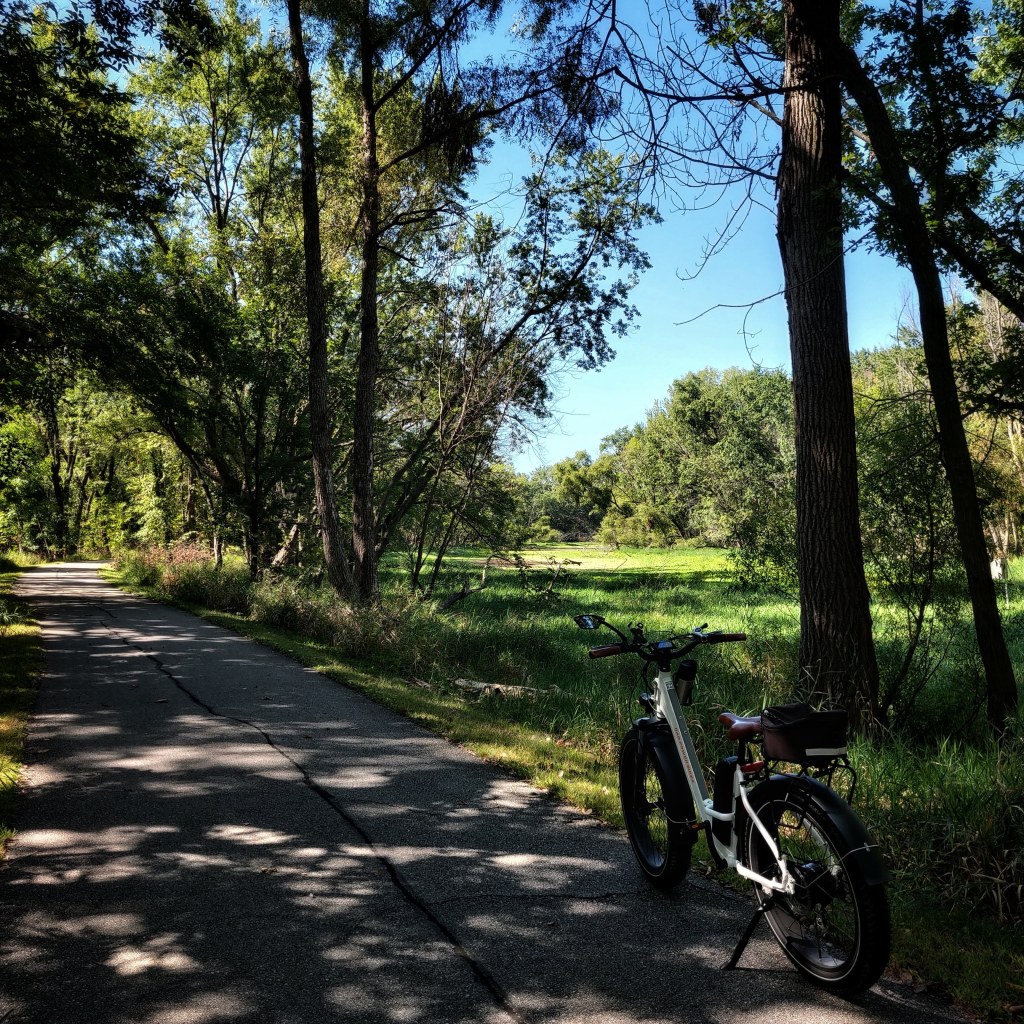
I bought a Rad Rover Step-thru. It’s an improbable bike. Massive. The damned thing weighs about 70 pounds. More than twice what my trusty old Trek mountain bike weighs. It’s a fat tire bike, and when they say ‘fat tire’ they’re serious. Four inches wide. It’s got disc brakes. It’s got a goddamn brake light in back. What sort of bike has a brake light? When I finished putting it together (with the overly enthusiastic help of my brother), I have to admit being a tad intimidated by the scale of the beast. It’s big.

But once I got on it and started riding, that massive beast of a bike became weirdly tame. It rides easily. It’s not what you’d call ‘nimble’ compared to my mountain bike. Because of its size, the turning radius is slightly larger than I’m used to. But it’s rock solid and steady. And surprisingly fun to ride.

They put chairs along the bike paths here.

Best of all? No knee pain. I’d been hoping for minimal knee pain–an amount of knee pain I could tolerate. The notion of pain-free cycling hadn’t even occurred to me. But I’ve had the bike for about three months and I’ve put just over 500 miles on it–and dude, no knee pain at all. That’s because of the pedal assist function. Everything I’d read about ebikes (before committing to the insane act of buying one) talked about this weird techno-magical whatsit called pedal assist. I never quite understood what it was or how it worked; they just said it made pedaling easier. Pedal assist was the reason I gambled on the bike.

It works. It really does make pedaling easier. Or it can if you want it to. It turns out pedal assist is exactly what it says it is. It provides a measured boost to the energy with which you pedal, which makes pedaling more efficient and effective. You can ride this bike without any pedal assist, but it wouldn’t be easy; we’re talking about a 70+ pound bike with four inch tires, so you’d have to be desperate or masochistic to do so. At PAS 1 — the lowest level of pedal assist — it makes riding a 70 pound bike feel pretty much like riding a normal bike (except even then it’s easier on the knees). I spend most of my riding time in PAS 1 or 2. I’ve used PAS 3 for a few steep or long hills; I’ve had no reason to use PAS level 5 yet.

Shortly before the first tornado siren.

I did use PAS 4 once, but it was an emergency. I’d stopped to visit with a county worker who was doing some obscure chore in what will eventually be a new suburban neighborhood. As we were chatting, the tornado siren went off. He checked his phone and told me it looked like it wasn’t a drill. I’m fairly casual about bad weather, and since I was only 3-4 miles from home and didn’t see any of the usual signs of a tornado, I wasn’t too concerned. I headed homeward, but I didn’t rush. Until a second tornado siren went off. Two tornado sirens is serious. So I began to hurry a bit. The sky got really dark. A third tornado siren sounded. I’d never heard a third siren before. I put the bike in PAS 4 and was easily doing over 20mph through neighborhoods.

I made it home about three minutes before the storm hit. It wasn’t a tornado. It was a derecho — a fast-moving straight-line storm with hurricane-force winds. And I made it home without knee pain. Totally winded, but no knee pain. I’m a big fan of pedal assist.

In the river valley.

Something I hadn’t expected: the bike gets attention. People are curious about it. At stop lights, people will roll down their car windows and ask me questions. People on sidewalks and bike paths often shout out questions as I’m riding by them. Sometimes I’ll stop and chat with them. “How does it work? How fast will it go? Does it have a throttle? Can you ride it without pedaling? What’s the battery range? Can you get a good workout with an ebike? Isn’t it cheating if the bike does all the work?”

Here are the answers. I’ve had it up to about 25 mph on flat ground; it can go faster, but I’ve never had the need to do it. Yes, it has a throttle, which is handy at stop lights and stop signs; even with pedal assist, it can be a struggle to get a 70 pound bike in motion from a dead stop. The throttle makes it easy to get started, and that’s all I’ve ever used it for. But yes, you can ride it without pedaling, using just the throttle like a moped. The advertised battery range is 25-45 miles, but I’ve ridden 53 miles through hilly terrain on a single charge and the battery wasn’t quite dead. And finally, you sure as hell can get a good workout on an ebike. The pedal assist allows you to make riding as easy or as strenuous as you want. By the way, if you bike for exercise, folks tend to ride farther and longer on an ebike, which increases the amount of exercise you get.

Me, I don’t ride for exercise. I ride for the joy in it.

Out in the country.

The ‘cheating’ question always throws me. I’m not even sure what it means. How can you cheat at recreational cycling? It’s not like you’re competing with anybody. Using electric pedal assist isn’t really any different than using 21 mechanical gears to make pedaling easier. If riding an ebike is cheating, then so is riding a bike with multiple gears. You’re still using the energy of your body to propel the machine.

That said, I do feel a wee bit awkward about overtaking a cyclist in spandex riding up a hill on a 20 pound road bike. Awkward, but not guilty.

Every so often I’ll go on a ride that takes me by a two-story fitness center. The parking lot, even during this pandemic, is usually full of cars. I know that some of the people who drove those cars to the fitness center are inside on stationary bikes, pedaling in a frenzy. They’re undoubtedly getting a more efficient workout than I am. They’re using their time a lot more effectively than I am. But I suspect I’m happier in the saddle than they are, and having more fun.

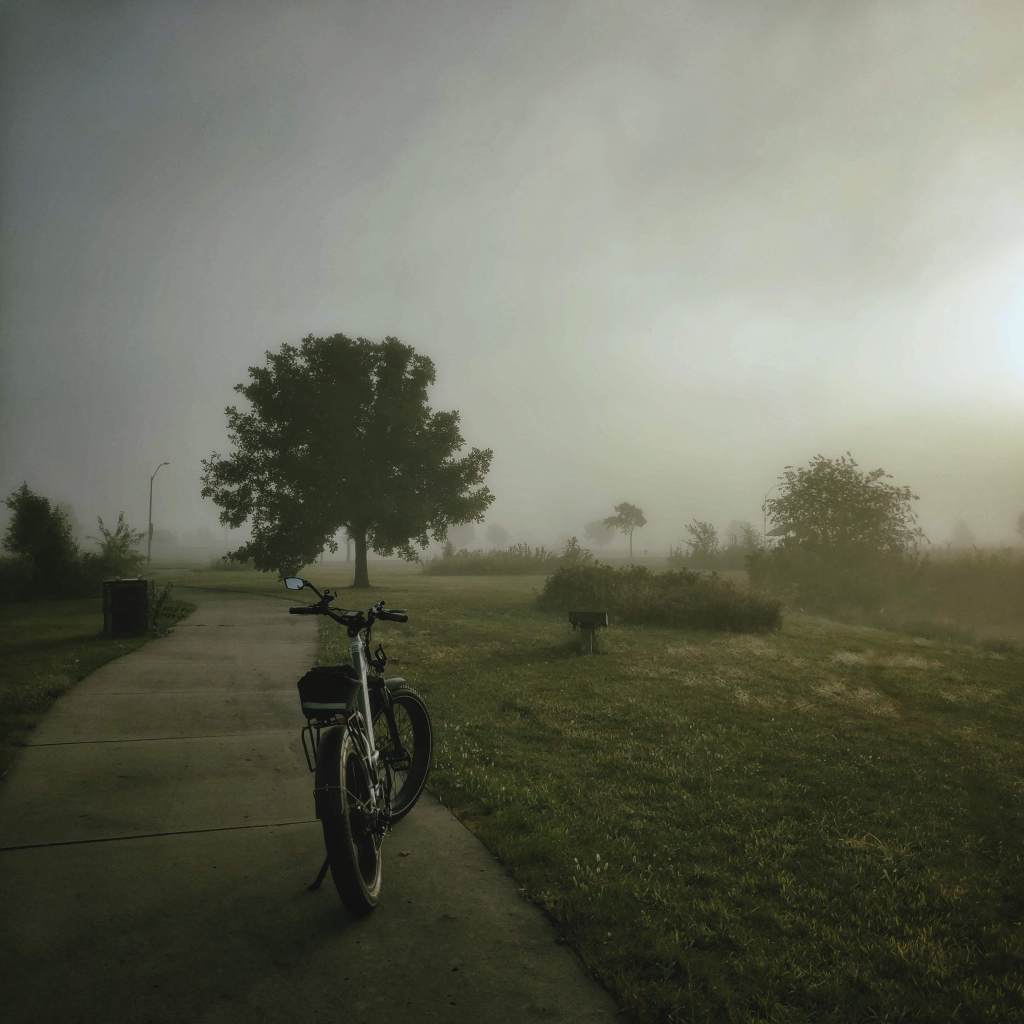
In the fog.

I’ve nothing against exercise, but I ride just for the pleasure in it. With this bike, I get to go places. I get to see stuff and talk to strangers. I get to turn down streets and pathways with no real sense of where they’ll take me; sometimes I get to be lost and have the tiny adventure of finding my way back. I get to be harassed by Canada geese and chased by storms.

I did a 30 mile ride a couple of days ago, the last half of it into a stiff 18-23 mph headwind. When I got home, my legs were wobbly from exhaustion. But my knees? My knees were laughing their ass off. I love this bike.

knuckles dobrovic is slightly dislocated

The whole Knuckles Dobrovic thing began in 2013 when I reluctantly and grudgingly realized there was some artistic value to Instagram. I created the Knuckles alias as a way of investigating Instagram without having my name associated with it. I thought it made sense back then, but sounds really silly now. So I started putting a thing on a glass-topped table on the deck and photographing it. It became a project. Things on a Table. I did that for about a year.

Eventually I started an Instagram account using my real name, but I’d grown absurdly attached to the name Knuckles Dobrovic. I decided I’d keep that account and us it strictly for photo projects. Because I tend to over-analyze things, I came up with some basic parameters for all future Knuckles projects: 1) it’s got to be simple (which means I won’t have to do a lot of planning or a lot of post-processing), 2) it’s got to be organic to my life (which means it’s something I can photograph during the course of an ordinary day — whatever that is), 3) it’s got to have at least one intellectual component (which is more accurately described as a pretentious bullshit element), and finally, 4) it’s got to be able to keep my interest over time.

After ‘Things on a Table’ I turned to Double Exposures of My Feet on the Earth and then to the Hundred Appropriated Google Street View gig. When that was finished, I felt no hurry to find another project. Some idea would eventually roll up in a ball and get my attention. That’s how these things work, mostly.

Yeah, no, not this.

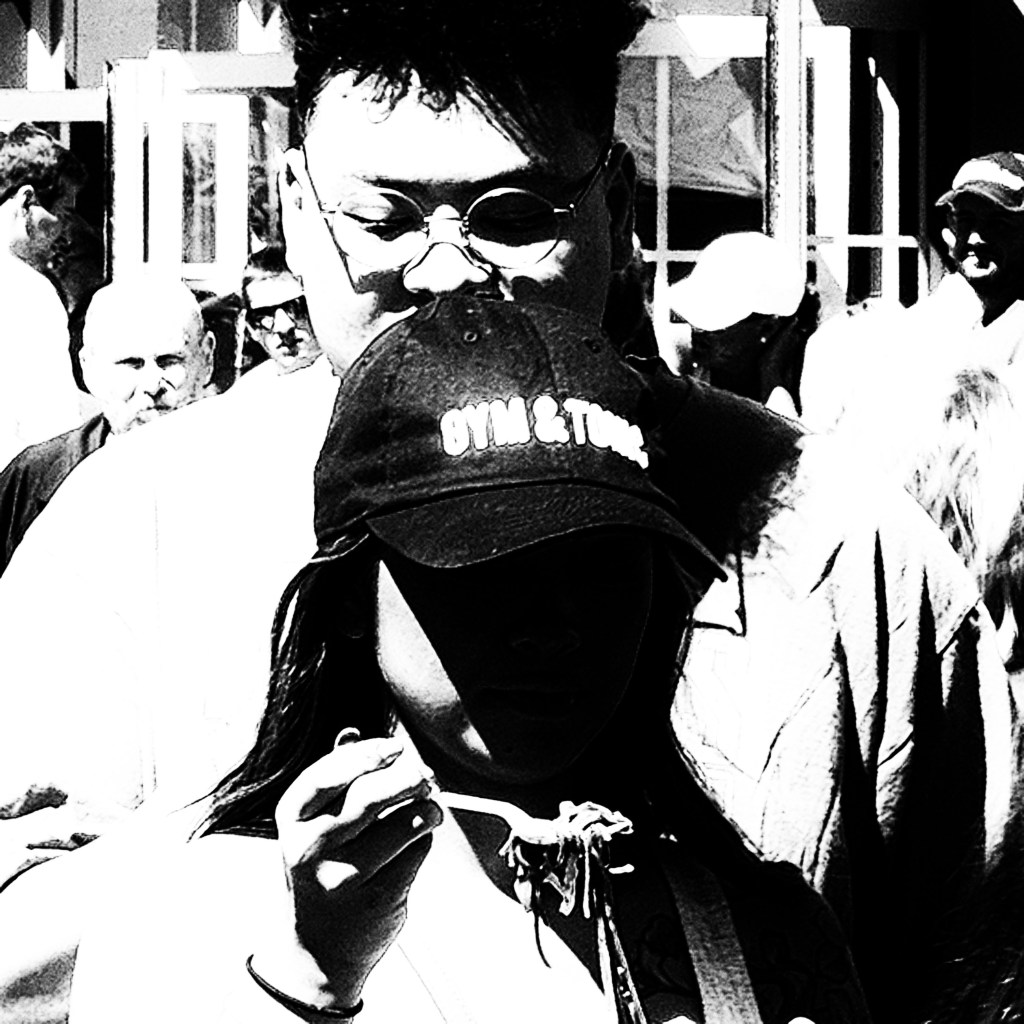
Then, of course, Covid-19 showed up and parked its fat ass in the center of our society. At some point I decided the next Knuckles gig should reflect the strange new Covid reality. I tried a 16:9 moody landscape concept. Broad landscapes as a way of dealing with an increasingly closed in life. But no. Besides, it felt too similar to the Google gig. I also tried reworking a lot of old unseen street portraits in a high contrast are-bure-bokeh-ish style. The idea was to remember life without masks, but do it with a harsh, garish, blurry aesthetic that was sort of alienating. But, again, no. I really like that style, but no. Not now. Maybe someday I’ll come back to that.

Yeah, no, not this either.

But I kept noodling around semi-randomly. Taking new photos and playing with them, looking at old photos (which is something I almost never do) and smooshing them around a bit. Then one restless night I took an old photo of some lawn chairs in a suburban yard, diddled with the color a wee bit, digitally sliced it in thirds, then re-arranged the pieces.

Okay, this might work.

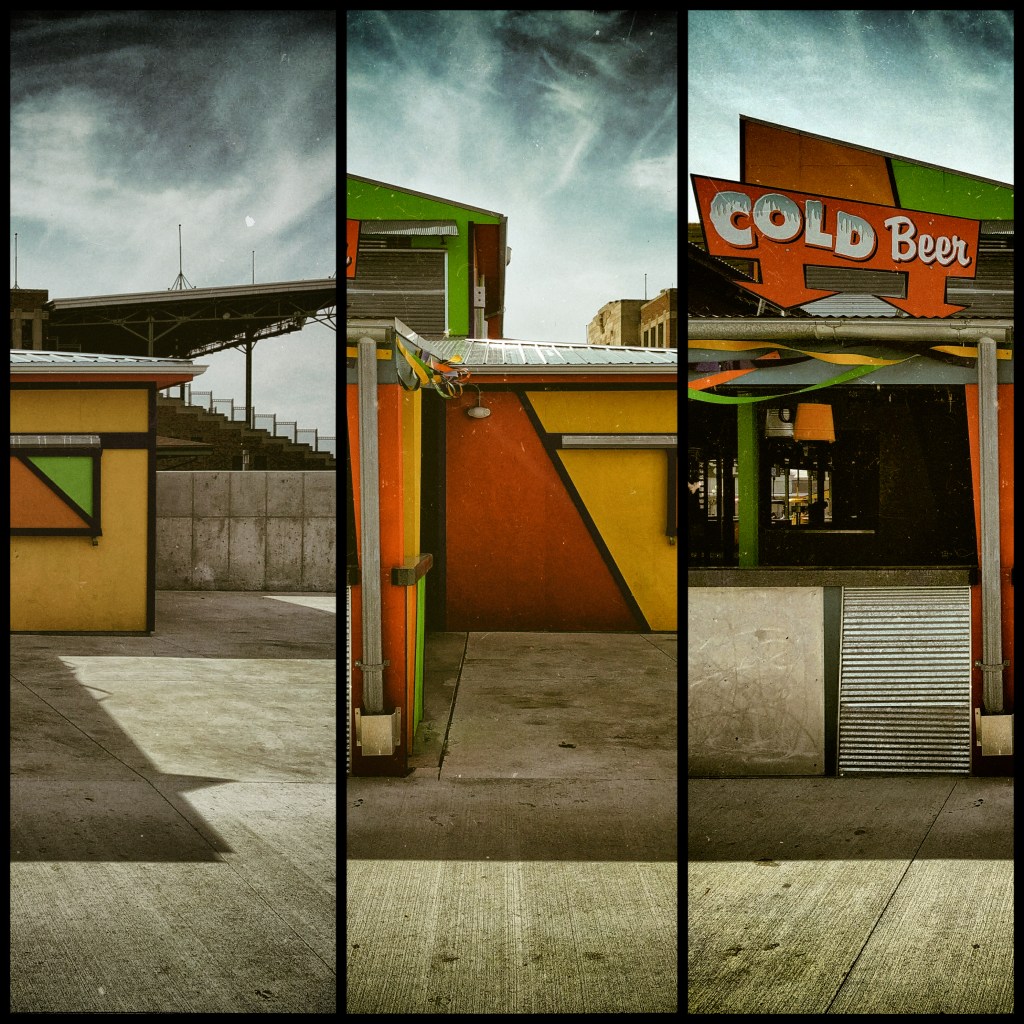
I liked it. It was a mundane, familiar scene but it felt a wee bit out-of-sync. It felt somewhat disjointed and almost (but not quite) unbalanced. Which is sort of how the world seems right now. So I tried with another photo. A bar that wouldn’t be seeing any customers this year.

Yeah, okay, this is starting to work.

The bar was still exactly as it was before the pandemic, but now it was just a tad off-color and slightly dislocated. Which seemed like an obvious title for the gig. It seemed like the approach would be elastic enough to use for almost any sort of photographic style. Landscapes, interior shots, still lifes, street photos.

Okay, that’s it. It’s a project.

It wasn’t until I took a rather busy photo of last year’s Planned Parenthood book sale, chopped it up, and re-organized it that I became confident the gig would probably work. I’ll almost certainly continue to use some old photos in the gig, but I expect I’ll be shooting a lot of new stuff with half an eye on the Slightly Dislocated idea (but only half an eye; I don’t want to be searching for material). I expect I’ll be stopping my bike sporadically to shoot something like this:

Slightly Dislocated — goal

This project may, of course, turn out to be awful. It may become predictable or repetitive, it could turn out to be dull–for the viewer or for me. Hell, as unlikely as it seems, the pandemic might come to a quick end (yeah, that’s not going to happen) and the entire concept of Slightly Dislocated may become out of date. I’ve no idea how long I’ll keep this up, but for now I’m having fun with it.

mawkish memorial day metaphor

Did my bit yesterday. You know…the ritual of tending the graves for Memorial Day. It’s supposed to be a holiday created by a grateful nation to honor the men and women who died while in military service. Some folks are grateful enough to visit cemeteries, large and small in every corner of the nation, to plant a flag on the grave of every veteran. It’s a pretty idea, isn’t it.

But let’s face it, the nation really isn’t all that grateful, and it’s been years since the holiday was about dead veterans. Modern Memorial Day is more a celebration of consumerism than anything else — like most American holidays. But it’s also expanded beyond its original purpose. There’s still a lot of tending to graves, but it’s no longer limited to veterans.

I’m fine with that. It’s nice to have a day set aside for remembering the dead, whoever they are, however they died. That’s especially true now, when the butcher’s bill for Covid-19 will almost certainly top 100,000 in the next week. Maybe next year somebody will plant a flag on the grave of every Covid-19 victim. I think we, as a nation, will need to find some way to express both our horror and our collective grief at the loss of so many lives. Right now it seems we’re either in shock or denial of the enormity of what’s happening. The fact that it’s still happening — that the pandemic is ongoing — makes it difficult to process. Some events are too catastrophic to comprehend until after they’ve finished, until we know how they end.

Yesterday I visited half a dozen different cemeteries — some in the city, some in the burbs, some in the middle of farmland. Some were nicer than others, some better tended, some busy with other Memorial Day caretakers, some weren’t. I helped tend to graves of family and friends, even those of a few strangers, only about half of whom were veterans.

As usual, I shot a few photographs. I generally delete most of the photos I shoot, especially on Memorial Day.  How many photos do you need of gravestones and flags?

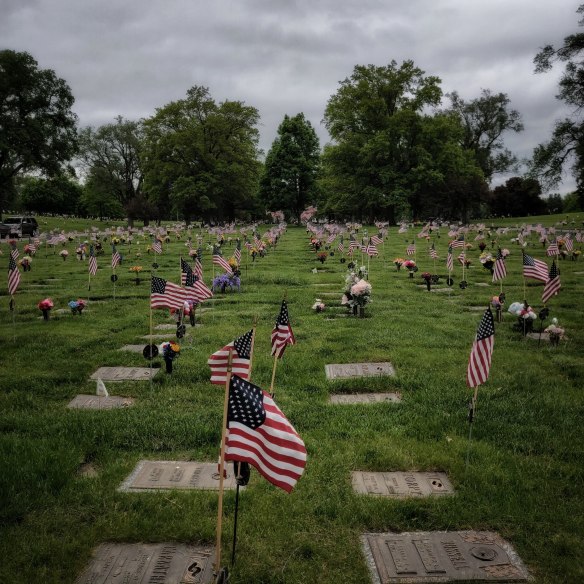
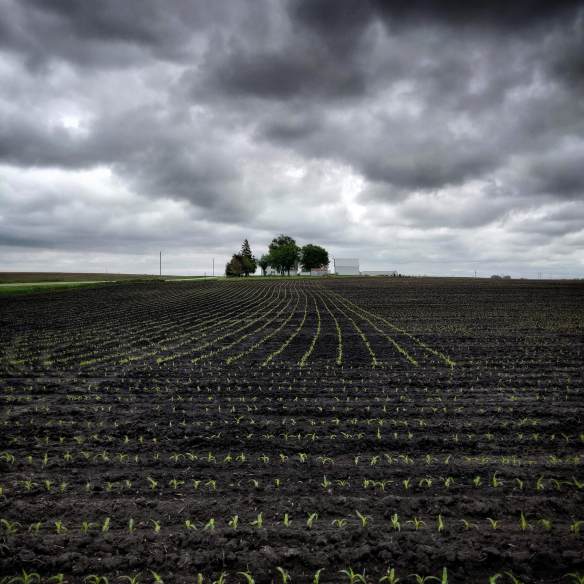
This morning I looked at the photos I shot yesterday. I deleted all but a few. Two of them struck me. One, shot in an urban cemetery, was of the rows and rows of flags — a reminder that there was a time when it was common for American men to do a few years of military service, that it was seen as an honorable thing to do. The other photo was of the farmland just outside a rural cemetery, rows and rows of seedlings growing.

Rows of flags, rows of crops. There are metaphors in those two photos. They’re mostly trite, mawkish metaphors, almost embarrassingly sincere, but they’re also honest. Which is more than I can say for a lot of what we see on Memorial Day. 

still standing

I do like an early morning thunderstorm. It’s nine o’clock in the morning and it’s so dark I have the kitchen light on while I drink my morning coffee and read the news. The rain is falling with a sort of steady insistence, like it’s telling us we can stay inside and act like nothing is happening, but it is not going to stop. The cat is looking resentfully out the window at the rain, unfazed by the sporadic thunder. It’s a pretty solid thunderstorm in terms of rain and thunder, but it’s skimping on the lightning. Maybe it’s storing it up and will give us a show later.

The news tells me that on Friday the Bureau of Alcohol Tobacco Firearms and Explosives issued guidelines to allow federally licensed firearm dealers to provide drive-up or walk-up gun sales during this period of isolation. Why? To reduce the health risks posed by the coronavirus. The BATF has a dead solid lock on graveyard humor.

On Facebook one of my Christian senator is wishing me a happy Easter and assuring me ‘He has risen’. I hope she’s not referring to that dark, malignant force haunting the White House, ghoulishly presiding over the drown-in-the-fluid-that-fills-your-own-lungs pandemic. Speaking of which, the butcher’s bill in the U.S. will exceed 21,000 deaths at some point today.

This morning the Twitterverse is, as usual, like Jabberwocky written by the illegitimate child of Oscar Wilde and Charlie Manson (just go with me on this; I don’t need a lesson in biology). It’s clever and hateful and funny and malicious and witty and snarky and so incredibly stupid and full of fascinating information and confusing as hell. Twitter is probably like a lot of family gatherings.

~ ~ ~

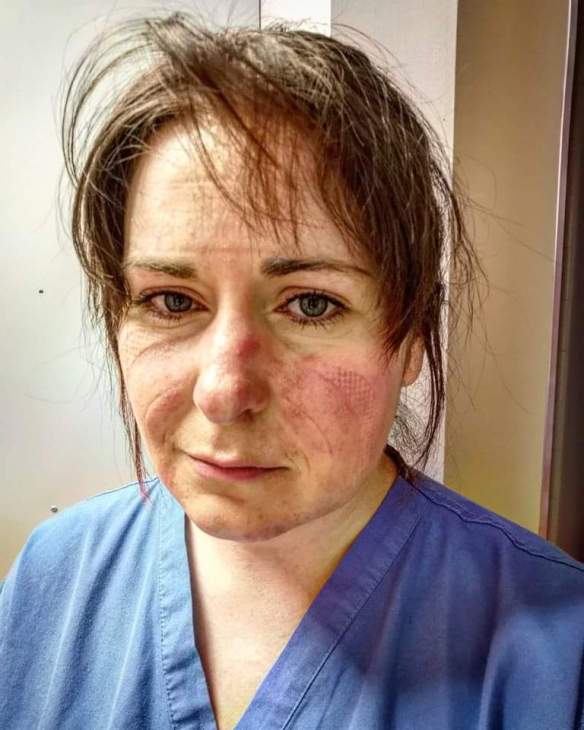
I’ve forgotten what point I’d intended to make when I started writing this morning. I got distracted by this photograph. I saw it on Twitter. If Twitter can be believed — and I want to believe this is true — this is a photograph of an ICU nurse who has worked 65 hours in the last week. I’ve been looking at and thinking about this photo for about an hour.

I don’t know this woman’s name, or where she works, or who shot the photo. I don’t really know anything at all about her. But I recognize her. I recognize that look. I know she’s on the ragged edge of exhaustion, discouraged, worn down by grief and duty. I don’t know who she is, and I know she can’t save us. But I also know she’ll try. And I know that after a few hours of sleep, she’ll be back at it. So will all of her colleagues.

Today I’ll stay inside, dry and warm. I’ll read my book, I’ll cook some food, I’ll do a little housework, I’ll do a bit of writing, I’ll feed and pet the cat, I’ll continue to check in on social media. At some point tonight I’ll watch an episode of Breaking Bad and maybe an episode of some other show. I’ll fill up every hour of the day, but I’ll never be busy and I’ll never be uncomfortable and I’ll never have to make a decision more difficult than what to cook for supper.

But I know I’ll return, over and over, to this photograph. It’s that powerful; it’s that compelling. Right there — everything that can be said about the power of photography is right there. Everything that’s good and noble about humankind, right there. Everything that can be said about sacrifice and dignity and dedication and love and compassion, right there. Everything that is heart-crushing, that is hopeful, that is beautiful, that is desperately sad and deeply caring and incredibly tough and still tender, it’s all right there.

I hope my Christian senator sees this photograph. I’m glad she finds some comfort and strength in her belief that ‘He has risen’. Me, I’m drawing my strength and comfort from knowing that this woman, whoever she is and wherever she is, is still standing.

knuckles, returned to the shelf

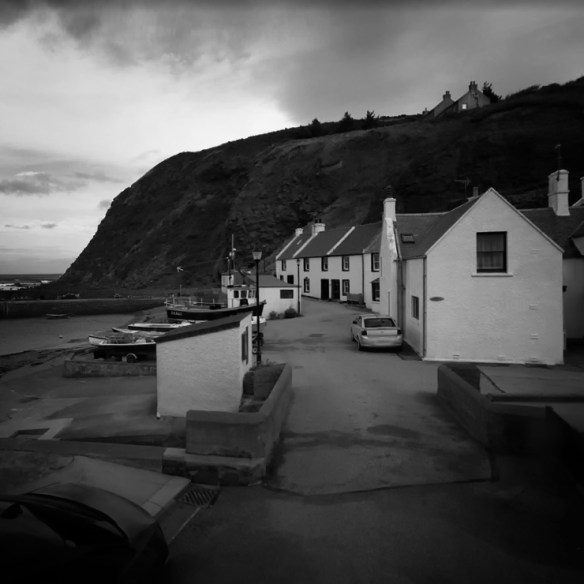
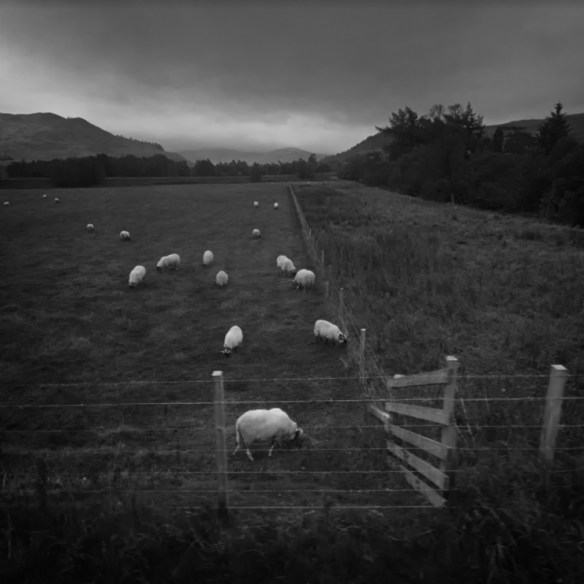
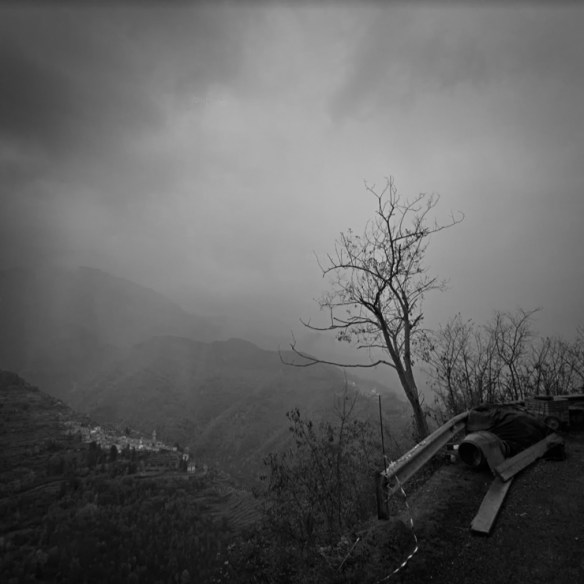
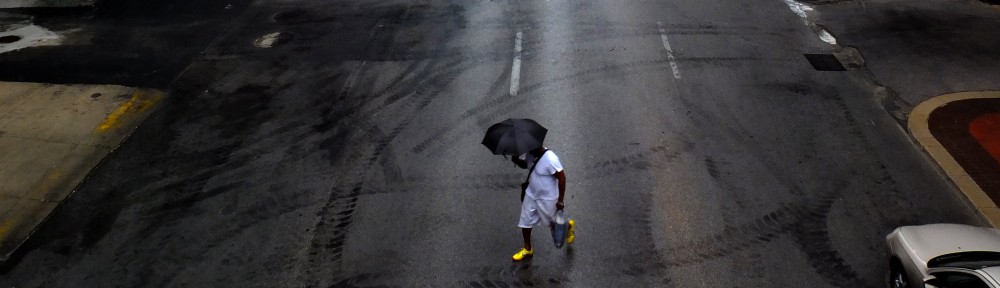
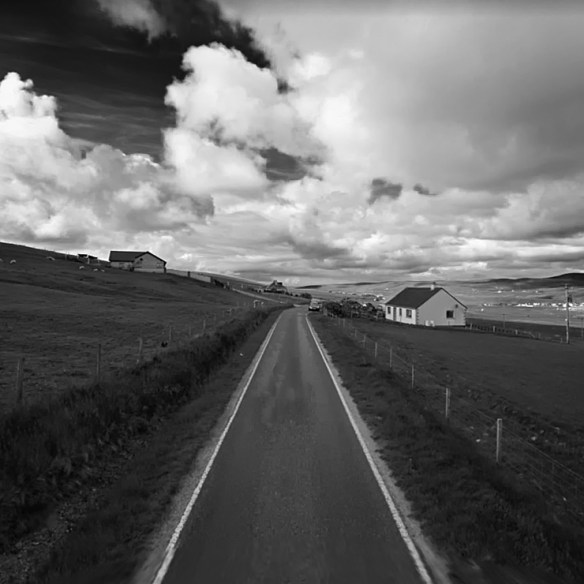
A hundred photographs. A nice round number, and a good stopping point for the Knuckles Google Street View project. I thought about maybe stretching it out until February 18th, which would end the gig a full year from the start date, but…naw. A project shouldn’t be ‘stretched out’ just to reach an anniversary. A project ends when it feels done.

This project feels done to me. Like every Knuckles project, it began primarily as a way to amuse myself. And I mean ‘amuse’ in the older sense of the term: to cause a person to muse about something. To think about stuff. A project, for me, is just a device to engage my interest and attention. A project allows me to become absorbed, to feed my curiosity, to make me think. Granted, the thinking might seem frivolous — at least on the surface — but it’s thinking. Thinking is fun.

The GSV project made me think about a lot of stuff. The practice of curation, for example. I mean, the entire project is, itself, an exercise in curation. We’re talking about ten million virtual miles of highways, streets, avenues, dirt roads, and donkey pathways in eighty-three countries, all dispassionately captured by robotic cameras, each of which has six to eight lenses. That’s a lot of images. I only saw the tiniest fraction of that universe of images, and culling a hundred images out of that number meant some heavy-duty thinking about what makes an image interesting.

It was exceedingly frustrating to have NO control over the elements of composition. I came across a LOT of scenes that would have made a compelling image, except for some distracting element — a trash can, a parked car, a fence, a sign that interfered with the image. Stuff that would be easily dealt with in person. I knew that frustration would be baked into the project, of course. But it was still maddening.

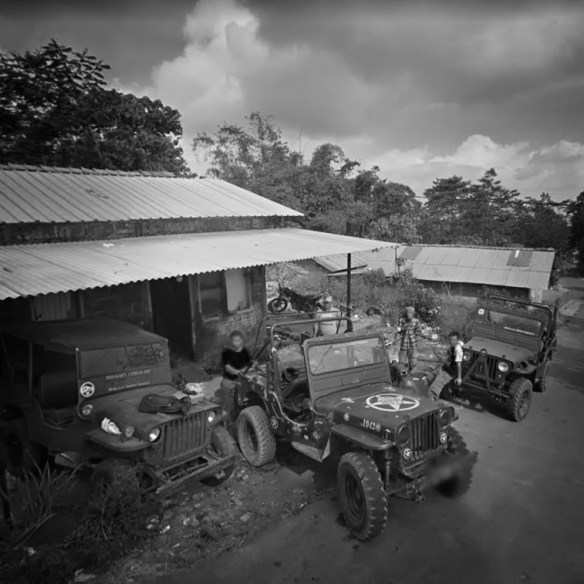
The project also made me think about culture — how culture spreads through the world, and where it spreads from. I saw business parks in Illinois that looked like business parks in Turkey that looked like business parks in Japan. I saw a town in Indonesia that was jammed with US military surplus Jeeps transitioned into local utility vehicles. I saw a statue of a baseball player on a pedestal in Japan, and basketball courts in Slovakia. I saw American-style graffiti everywhere.

In fact, ‘America’ was everywhere. If you followed the project, you may have noticed the majority of the images are located either in the countryside or in small villages. That’s because so many cities — or large areas of the cities — were indistinguishable from each other. Aside from the signs, a city block in Uruguay looked very similar to on in Romania or Indiana. And they were all dull. The oldest neighborhoods of the oldest cities, on the other hand, were often very distinct. Unfortunately, the streets in those neighborhoods were almost always so narrow, so cluttered, so visually busy that despite how interesting they were, they simply weren’t amenable to a good image.

The project made me think about architecture. Not just the obvious architecture of buildings and homes, but also the architecture of infrastructure. Bridges, power lines, bus stops, sheds, fences. Rural mailboxes in Scandinavia look different from those in rural mailboxes in Canada, which look different from those in rural Indonesia. Telephone poles in former Soviet republics and telephone poles in Mississippi are distinct from each other. It was sometimes easy to tell what part of the world you were in simply by looking at the local infrastructure.

Local infrastructure reflects local attitudes. I mean, consider tunnels. You need to build a road through a hilly or mountainous landscape, what do you do? Some nations will build tunnels; other nations will just level the landscape. That approach tells you something about cultural attitudes.

I was also surprised by how many animals I saw on Google Street View, though I don’t know why that surprised me. We live in a world of animals, don’t we. Pets, livestock, wildlife. Dogs, goats, birds, horses, cats, cattle, sheep, chickens. And, of course, people interacting with those animals. Walking dogs, herding cattle, feeding goats and chickens, playing with cats. These were often the most frustrating images, because there’s something strangely emotional about the way humans interact with animals. But this is another of the problems of relying on a robotic camera; robots have no interest in decisive moments. Nor do animals. Animals move. People will stop and stare at a Google Street View car, but to a dog or a donkey, it’s just another car. So the vast majority of images of animals interacting with people (or other animals) were blurry and useless. Except for those of sheep and cattle. Those guys just stand there.

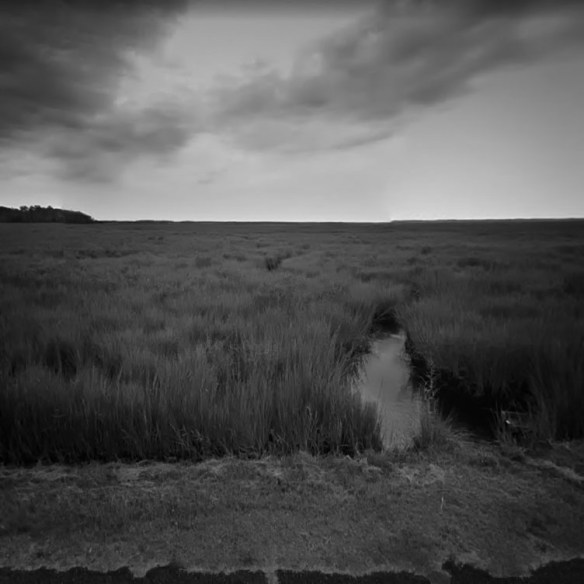
This has been a fun project. It’s been frustrating, of course, but it’s been interesting. And now it feels finished. It didn’t work out quite the way I’d expected (or hoped), but it did work out in ways I hadn’t anticipated. I hadn’t expected weather to be so important. I hadn’t expected cloud formations to be such a factor. I hadn’t expected telephone poles or trees to play such a prominent role. I expected people to be a more critical element.

I like the fact the project didn’t take the shape I thought it would. I like its final shape. I’m satisfied and pleased. And ready to be done with it.

With the final photo today, Knuckles Dobrovic is going back on the shelf. Not forever, obviously, but for a while. One of the things I’ve learned from the Knuckles projects is how much I like the structure that’s necessary for a project. I like the restrictions and the constraints that impose a certain discipline on me. I enjoy pushing against those restrictions and constraints. But this road ends here.

At some point, I’ll take Knuckles back off the shelf. At some point in the future I’ll cobble together some semi-lazy rationale for a project to distract me from all the other stuff I ought to be doing. Until then, if you’re interested in seeing all the photos — or any of the various Knuckles projects — you can find them here on Instagram.

EDITORIAL NOTE: It’s been pointed out to me that I neglected to include links to the origin of the project and the halfway point. I’m a putz. Fixed it, though.

emptiness and excess

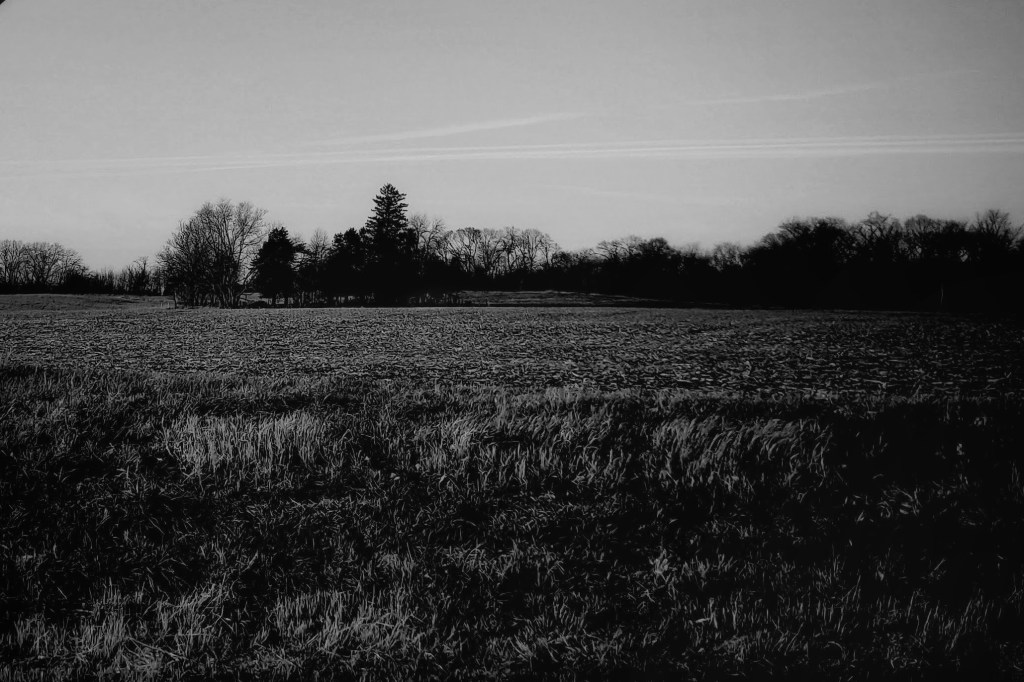
I had to spend a chunk of time on secondary state highways a few days ago. I was a passenger for once, which meant I had the chance to look around and think. In the winter months, the Midwestern landscape can seem awfully empty. Every few miles you can see a clump of trees, which usually means a farm house and the attendant sheds and barns. A water tower lets you know a town is nearby. Occasionally you see some sort of agricultural industrial site; I’ve no idea what gets processed in these places, but they emit strange clouds of smoke or steam. Basically, there’s not much to hold your attention except fields and sky. Fields and sky and your imagination.

And I had a thought. Not an original thought, to be sure. Others have had this same thought and have written about it. But passing through the bleak winter landscape, the thought made more sense to me. Here it is:

This is what Donald Trump’s interior life must be like. Empty. Devoid of warmth. Cheerless. Comfortless. Unwelcoming. Desolate. Barren.

Like I said, not an original thought. Lots of folks have written about Comrade Trump’s emotional emptiness, his discomfort with any emotion that’s not rage or resentment, his absolute inability to empathize with others, his desperate craving for unearned respect, his boundless appetite for praise, his craving for having the ‘best’ without any concept of what constitutes ‘best’.

But looking at that exposed leaden landscape led me to wonder if Trump’s emotionally sterile inner life also accounted for his inability to appreciate beauty. He’s always surrounded himself with a chintzy sort of glamour, a gaudy display of tasteless wealth. All that cheesy gold ornamentation, all those extravagant flourishes, all that lifeless furniture that nobody wants to sit on — maybe that phony excess stems from a genuine attempt to bring some sort of brightness into his dreary, grim, inhospitable inner being.

Trump’s home.

More likely (and infinitely more sad), maybe his inner being is so vacant that he can’t even comprehend the existence of feeling something below the surface. Maybe the concept of inner grace and beauty is completely alien to him. Maybe he’s as incapable of experiencing and appreciating beauty as a weevil is of enjoying music.

Because another thing I became aware of during my road trip, is that if you appreciate beauty and grace, you find it everywhere. Even on secondary highways in the middle of nowhere at the approach of evening. Even in empty fields, even in isolated farm houses, even in the effluvia of mysterious agricultural plants.