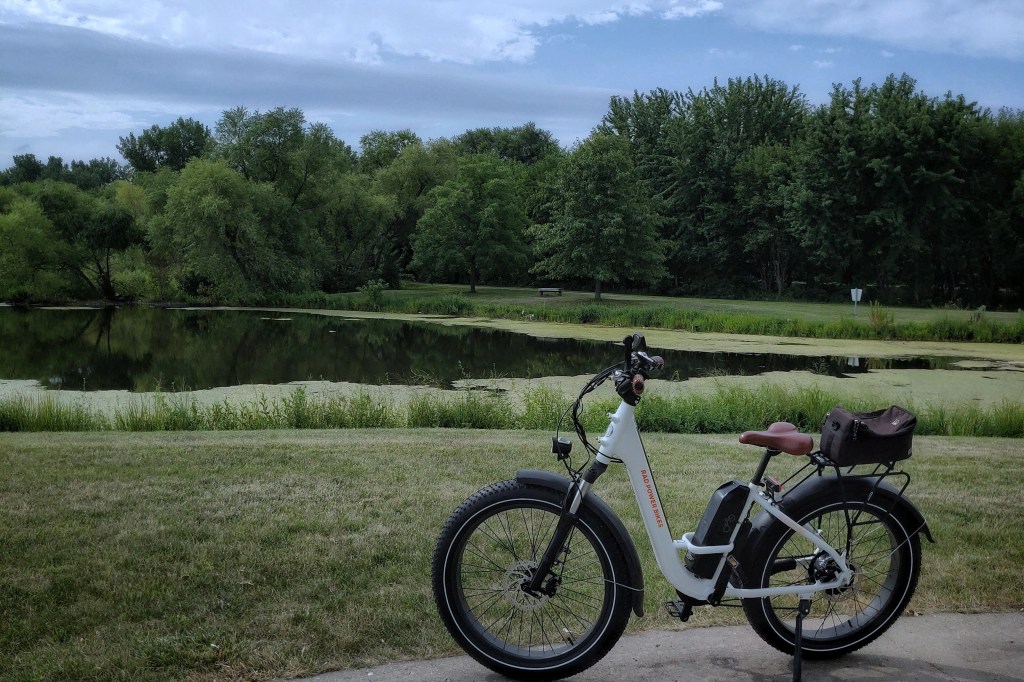
Six years ago today I had two ‘first ever’ experiences at the same time. I’d bought my first ebike—a massive 70 pound fat tire Rad Rover—a month or so earlier. As I’ve said many times, at that point I’d never even seen an ebike. I bought it online, purely out of hope that I might be able to ride again with minimal knee pain. It was a life-changing purchase. I rode that burly bastard everywhere for that month and I’d never taken it out of the lowest level of pedal assist. I’d never needed to.
Until that day six years ago.
That day started out beautifully. Bright, sunny, a bit humid but with a light breeze, a few fluffy decorative clouds. Classic Midwest August weather. I was still enamored with my new bike, so I stopped periodically and photographed it. After I’d ridden about ten miles, the weather began to change. The sky got a wee bit darker; it looked like we might get a rain shower. I don’t mind riding in a light rain, but I wasn’t sure how an ebike would fare in a shower. So I headed home.
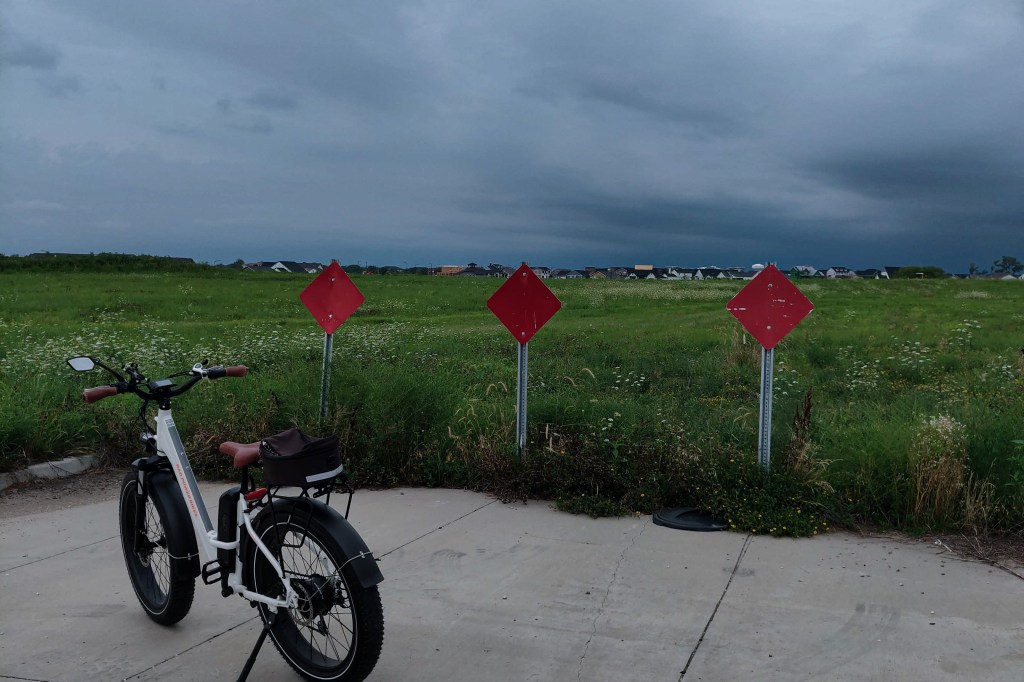
Ebikes were still really uncommon in 2020. Almost every time I went out for a ride, somebody would stop me and quiz me about it. How far could it go, how fast was it, was it expensive, where did I get it, was it different from a regular bike, why were the tires so fat, was it cheating? On this day six years ago, as I was riding down a street that would some day become a new housing development, a city worker flagged me down to ask questions.
We chatted about the bike and about the housing development, and as we talked a tornado siren began to blare. That’s not an unusual occurrence in August, but it’s normally in conjunction with a thunderstorm. It still looked like we might get a bit of rain, but clearly there was no thunderstorm. So we ignored the siren. After a couple of minutes, it went silent.
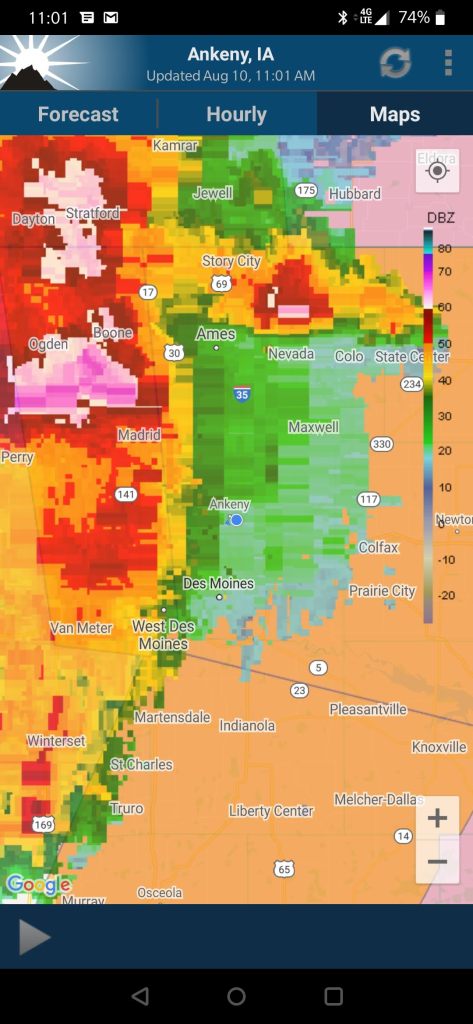
A few minutes later, it sounded again. It still didn’t look like we were facing any sort of seriously bad weather, but a second tornado siren suggests we should pay more attention. The city worker and I both checked our phones. As we did, the wind began to pick up. This is what I saw on my phone.
The city worker climbed back into his truck; I got back on the bike. I was only about four miles from home, so I wasn’t particularly concerned. Then a third tornado siren went off. And the sky got really dark and the wind became pretty insistent. There was still no rain, but there was a radical drop in temperature. I could see bad weather behind me, so for the first time ever, I put the bike in a higher level of pedal assist. There were five levels of pedal assist; I went to level four. With the wind behind me, I was easily cruising just over 20 mph on a 70 pound bicycle.
Let me say this. There’s a weird sort of joy in riding a bike as a bad storm chases after you. Part of it is the drama, of course. The sky getting dark, the wind picking up, the sirens blaring. I’m sort of embarrassed to admit this, but there’s something perversely thrilling about being in a situation that’s out of your control, and dealing with it, and getting away with it. That was one of the things I liked most about being a PI. This situation was definitely out of my control and I was dealing with it, but I had yet to get away with it.
Ginger, my partner, had obviously heard the sirens; she had the garage door open for me. I rode directly into the garage, got off the bike, and closed the door just as the rain began. I was laughing at having escaped the storm, still unaware of what had actually been chasing me. I went to a window and looked out. This is what I saw.
This was the second ‘first ever’ event. I’d never heard the term derecho before. A derecho is a widespread weather system of straight wind reaching at least 60 mph along a front of at least 240 miles lasting at least six hours. This derecho had winds of 120-140 mph (in Iowa); it lasted about eight hours, causing astonishing amount of damage across several states—South Dakota, Nebraska, Iowa, Illinois, Wisconsin, Indiana, Michigan, and Ohio.
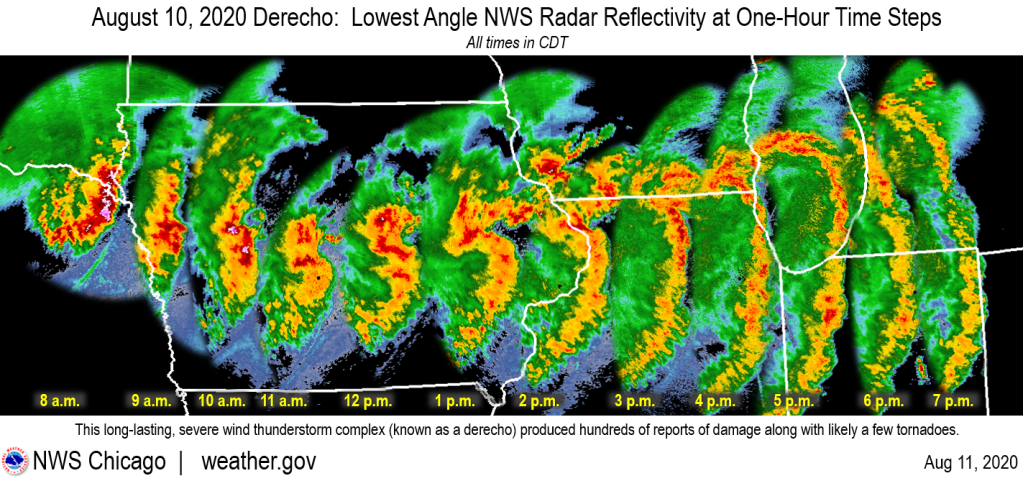
There was no prior warning of this storm in Iowa. Weather forecasts didn’t show the possibility of a derecho occurring until it was already happening. The system developed rapidly and arrived unexpectedly. As the storm traveled east, of course, more communities were warned, but locally it was an absolute surprise.
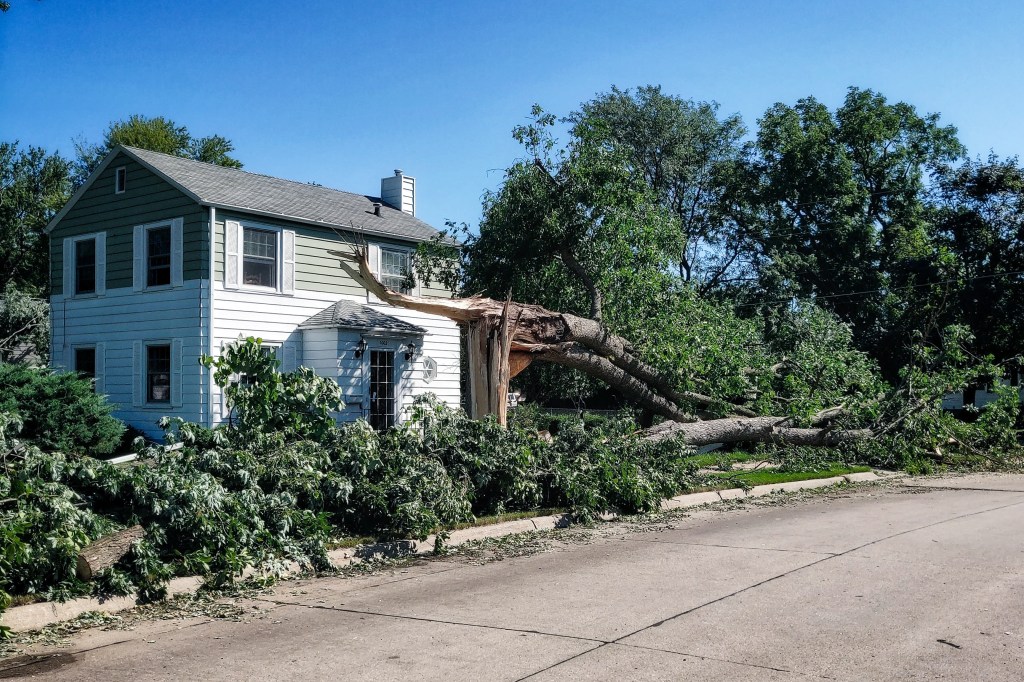
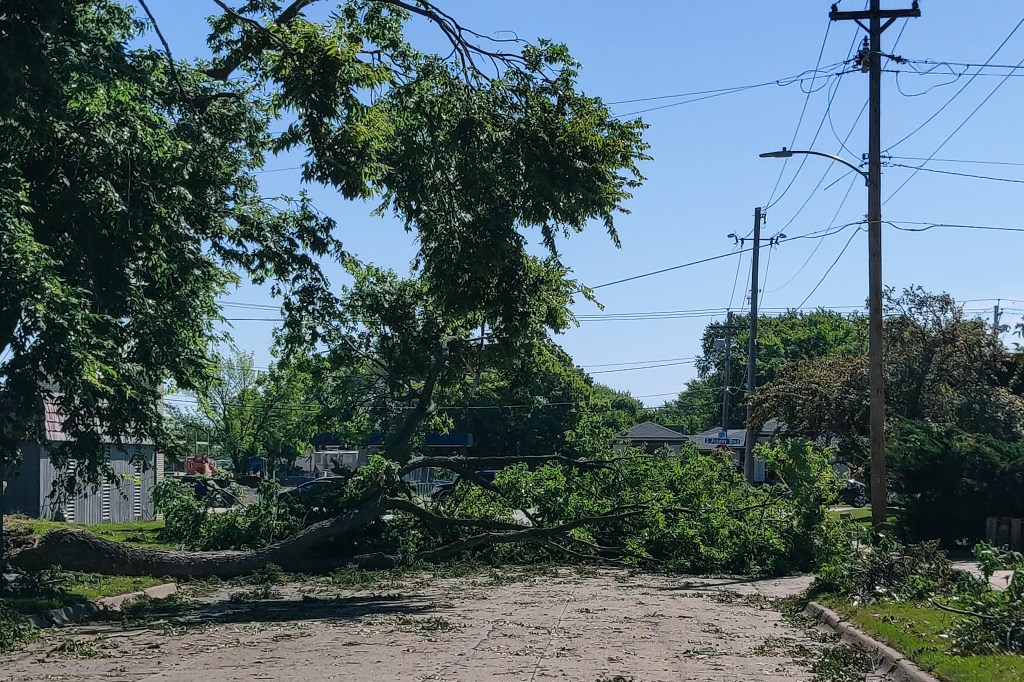
I got back on my bike the next day to survey the damage. It was easier to travel by bike than by car; fallen trees, downed power lines, and debris blocked several city streets and the city’s network of multi-use paths, as well as most of the bike trails.
The storm caused over $11 billion in damages. It’s taken years to rebuild. Although most of the communities have recovered physically from that derecho, trees are slower to replace. You can still see the damage along some of the more rural bike trails. This section of the Heart of Iowa trail is still littered with fallen and partially denuded trees.
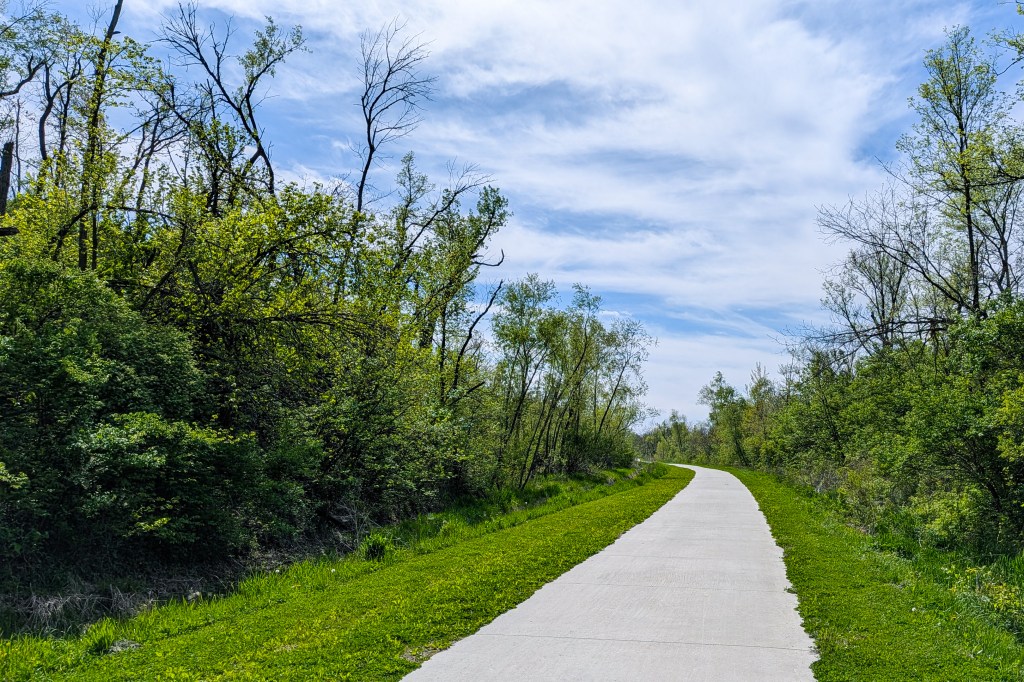
It was a hell of a storm. Six years ago today. I’m still cycling, although I’ve bought a newer, lighter, more maneuverable ebike. But as I ride along the more rural bike trails, I still see evidence of the derecho. And every time I do, I remember that thrilling, harrowing, frenzied race to get home, and I’m grateful for the invention of pedal assist.
You can read more about that derecho at this site by the National Weather Service.