A few days ago I mentioned I was actually busy, that I’d found myself in “one of those rare instances when I’m working under a deadline.” Some folks wondered about that deadline business. Allow me to splain.
Twelve days ago (on Tuesday the 3rd) I noticed a post on Bluesky (which, by the way, is by far the most engaging and positive (and frequently very weird) social media platform I’ve ever encountered) stating that Uncanny Magazine had opened submissions for short fiction. Uncanny has been publishing science fiction and fantasy fiction for about a decade. The magazine itself and the fiction it’s published have won numerous awards. Uncanny has published short fiction and novellas by a LOT of the big hats in the SFF biz.
I don’t write science fiction or fantasy. I write detective/crime stuff. I’ve always read SFF, and I’ve occasionally banged out some ideas for SFF novels, but I’ve never followed through. So when I saw the post about open submissions, I said to myself, “Greg, old sock, why not give it a shot?”
The obvious response was, “I’ll tell you why not. First, you’ve never written SFF in your entire semi-wicked life. Second, you’ve got less than two weeks to come up with an idea and write a short story, which is another thing you’ve never done. Third, there are a million other things you actually WANT to do instead of sitting alone in a quiet room making shit up. It’s October, for fuck’s sake, and you’ll want to ride your bike and see people and go on long drives to look at autumn foliage. Fourth and finally, let me repeat that you’ll only have two weeks to write a story in a genre you’ve never written and it’s the best two weeks of autumn, you massive idiot.”
So I decided to write a story and submit it.
Which is exactly what I did.
Finished it last night, formatted it this morning, just submitted it moments ago. About 9500 words in eleven days. It doesn’t sound like a lot. Less than a thousand words a day. But that includes coming up with the idea, envisioning the story world, populating it with believable (I hope) characters, ensuring the plot holds together, arranging the scenes, and putting all those words in a row. I’ve never written an entire short story, nose to tail, in such a short period of time.
I have absolutely no idea if it’s any good. I mean, I was satisfied enough with the story that I submitted it, but Jesus suffering fuck, 12 days? And, of course, the fact that I’m satisfied with it doesn’t mean a damned thing. The folks who’ll send you the contract and cut the check, they’ve got to be satisfied…and who knows what they’ll do?
But THIS is the part of the writing gig I’m really very good at: letting go. Most writers I know tend to fret about the stories they’ve submitted. Me, once I submit a story for publication, I basically forget it…until I get an acceptance or a rejection. Out of sight, out of mind. Done and dusted.
Which may be good for my mental health, but is a terrible business practice. Because if a story gets rejected by one publisher, you may want to submit it to another. This actually almost happened to me last year. I’d submitted a story to Alfred Hitchcock’s magazine and immediately forgot about it. Well, I forgot about it until I was ready to submit another story to different magazine. Then I remembered, “Hey, dude, it’s been maybe 3-4 months and you haven’t heard about the other story; that ain’t right.” So I sent an email saying ‘Don’t want to make a fuss, but if you’re not going to accept the story, let me know so I can sell it elsewhere.’ The magazine responded with a contract. That story eventually won an Edgar award. Go figure publishers.
Anyway, the story is written. It’s been submitted. And I feel liberated. Now, if you’ll excuse me, I’ll go for a bike ride.
I almost never look back at my own photographs. I figure I’ve already made the shot, processed it in the way I wanted to, then either posted it somewhere or…you know, didn’t post it at all. Either way, I’ve already seen the photo; why look at it again?
I don’t feel that way about the photographs of other folks. I’ll still look at photos by Eggleston (today is his birthday, by the way) or Kertész or maybe one of the Pages (Tim or Homer), for example. There’s almost always something new to be discovered or appreciated when you look at the work of the photographic Big Hats.
But this morning, as I was going about my usual morning routine (after watching Nigeria’s amazing win over Australia in the Women’s World Cup), I saw this photo on Facebook:
I thought, “Damn, that’s solid work, right there.” Then I realized it was a photo I’d shot nine years ago. It was a weird experience–seeing a photo I’d taken but looking at it like it was the work of a stranger. What made it weird was that as I looked at the photo, I could remember why I’d shot it and what sparked the desire to shoot it.
It was all about layers. The wooden bridge under my feet, the water under the bridge, the lily pads on the water, the fish under the water, the stones under the fish in the water, the reflection of the bridge on the water, my reflection on the water standing on the bridge above the water, the reflection of the trees above me on the water, the reflection of the clouds above the trees.
I remember standing on that bridge in Wisconsin and being struck with an immediate sense of absolute location, if that makes sense. I was at that particular spot on the globe on that particular day. It was sort of a Doctor Who moment–time and relative dimension in space. No other person could be in that particular spot at that particular moment. That’s true constantly, of course, but it’s pretty rare that we actually think about the reality of it.
I also recall very deliberately composing the shot in my head. I shot two frames; this one, shot rather quickly but intentionally slightly askew. The second shot was more formally composed, with the line of the bridge horizontal along the bottom of the frame. The more formal shot was…well, uninteresting. It has all the same elements as the photo above, but it’s strangely unemotional. Two photographs of the same thing, taken seconds apart, but only one of them works. That just seems sort of freaky. But normal. Freaky-normal.
I like this photograph. I like it both as a photo, and as a personal experience. Maybe it takes the distance of a few years to be able to actually see your own photos.
I don’t remember how old I was. Maybe ten or twelve. It was summer vacation; we were staying at the family house on the south end of Pawleys Island, South Carolina. The island was pretty primitive back then. There wasn’t much for a kid to do–wander around the dunes, play on the beach, noodle around the salt marsh, walk to a sort of gas station/market where you could buy an RC cola and a packet of Tom’s peanuts.
One day I saw an old guy sitting in the dunes, reading a thick paperback book. Because I was just a kid and probably bored, I asked him what he was reading. And instead of giving me the title, he read a couple of paragraphs aloud. It was language unlike anything I’d ever heard before. Something about a forest at dawn and knight on a horse in misty light, the horse stamping its foot, its nostrils flaring and the vapor of its breath hanging like smoke in the air, and something about flashing of silver.
At least that’s how I remember it. The scene was as distant from summertime Pawleys Island as you could possibly get; I was enchanted. I don’t remember anything about our conversation, but at some point he wrote the title of the book on a scrap of paper. Le Morte d’Arthur. Even the title seemed wildly exotic.
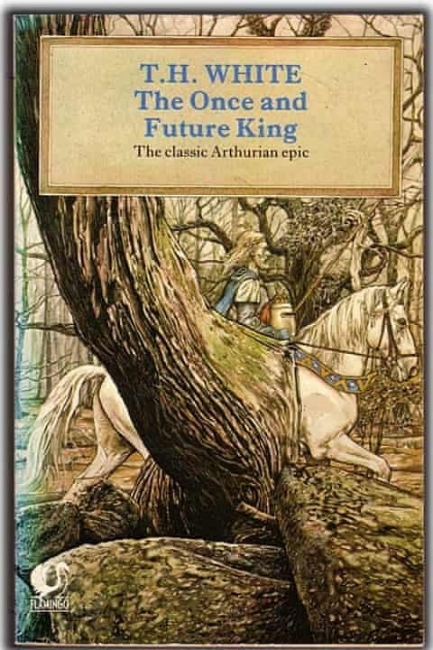
Summer ended, we returned home. I hoarded my allowance, learned where a bookstore was located (I hadn’t even been aware there were shops that sold nothing but books), and asked for the book. The clerk said they didn’t carry it, but offered me another book, which he said was the same story. The Once and Future King, by T.H. White. I don’t recall how much it cost…buck and a quarter, maybe. But I bought it. And read it.
In a way, it was the perfect book for a kid. It begins as a children’s story–the protagonist (Wart, who will eventually become King Arthur) is the companion of Kay. Kay is destined to become a knight; Wart will be his squire. But Wart meets and befriends a wizard–Merlin, of course–and under Merlin’s tutorage, Wart begins to have adventures. He’s magically transformed into an ant, a migrating goose, a fish. There are episodes in which Wart helps Robin Hood or meets King Pellinore who is searching for the Questing Beast. It’s all amusing and fun, but there are subtle lessons being taught about power and privilege, about violence and pacifism, about decency and friendship.
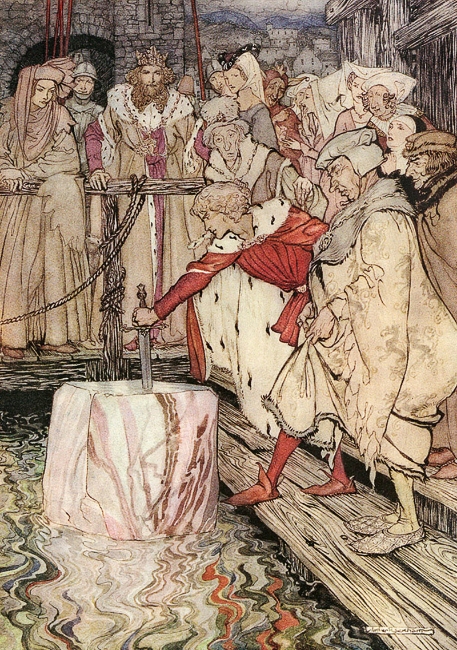
As the novel progresses, it morphs into a more adult tale. Wart yanks a sword out of an anvil and a stone, becomes King Arthur, and the lessons he learned as Wart are translated into adult struggles. He has to deal with love and lust and jealousy and greed and betrayal. He tries to find a balance between strength and mercy, between law and justice, between love and friendship. Issues of ego and concepts of self-worth complicate everything. Relationships get really fucking complex.
Unlike the beginning of the story, the ending of The Once and Future King is entirely unchildlike. Arthur fails. He tries very hard to be a good person, but the world he tries to create comes undone. Cruelty and violence and war unravel his attempts at kindness and decency. The ending is sad and beautifully tragic, but still weirdly hopeful.
Decades have passed since I bought that book. The summer house on Pawleys Island is gone. In fact, the entire southern end of the island is gone, swept away by Hurricane Hugo. I hung onto that paperback copy of The Once and Future King for a couple of decades, but like everything else in the world, it eventually fell apart. At some point I bought and read Le Morte d’Arthur, and I searched the novel for the scene I remembered as a child. Couldn’t find it. I’ve decided it was swept away along with the beach house. That old guy I met in the dunes? He was almost certainly younger than I am now.
As I write this, it occurs to me that my entire life sort of resembles the story arc of The Once and Future King. I never pulled a sword out of stone or became rightwise king born of all England, but I’ve had my share of adventures. And while I’ve tried hard to be a good person, I’ve often failed. I’ve seen much more of cruelty and violence and death than I’d like. I have, at times, been cruel and occasionally violent, which fills me with regret and for which I try to make amends.
I suppose that makes that old guy in the dunes of Pawleys Island my Merlin. That’s a nice thought. Like Merlin did for Wart, that old guy introduced me to the lessons that have shaped the way I’ve moved through the world. Curiosity is good and should be indulged, strangers are often worth talking to, justice can be tempered by mercy, might doesn’t make right but some things are worth fighting for, love is never wrong but is sometimes painful, and it doesn’t necessarily matter if you lose so long as you’re trying do what’s right.
There’s a long…and I mean seriously long, as in Please babby Jeebus, is this thing ever going to end long…opinion piece on the meaning of masculinity in this morning’s Washington Post. It’s entitled Men are lost. Here’s a map out of the wilderness, and frankly, that title alone would normally be enough for me to ignore it. Except it was written by Christine Emba, whose opinion I value. So what the hell, I read it.
And hey, she does a good job of examining the ways people are trying to define masculinity these days. The piece is well-researched, thoughtful, well-written, and determinedly even-handed (which is probably why it’s so fucking long). But as I continued to read it, I kept asking myself the same question: who the fuck cares?
There are some really really really broad categories of being that are ultimately undefinable. They resist definition because they’re so broad and vague and elastic. Who is a man? Who is Black? Who is an artist? Who is a parent? Who is a Red Sox fan? Who is a healer? Who is an athlete? Who is an influencer? Who is a cook?
I mean, it’s possible–even necessary–to organize a specific set of requirements necessary to meet professional standards to define some roles. There are prerequisite training and skills to become, say, a licensed hair stylist. But that’s an administrative thing; if you style your own hair, then hey bingo, as far as I’m concerned you’re a hair stylist.
But trying to define these broad generic categories is basically bullshit. Don’t nobody get to set any goddamn rules on who is (or is not) a man or a woman. And why the fuck would anybody want to? Why would anybody waste a single fucking moment fretting about it?
Toward the end of her opinion piece, Emba writes this:
For all their problems, the strict gender roles of the past did give boys a script for how to be a man. But if trying to smash the patriarchy has left a vacuum in our ideal of masculinity, it also gives us a chance at a fresh start: an opportunity to take what is useful from models of the past and repurpose it for boys and men today.
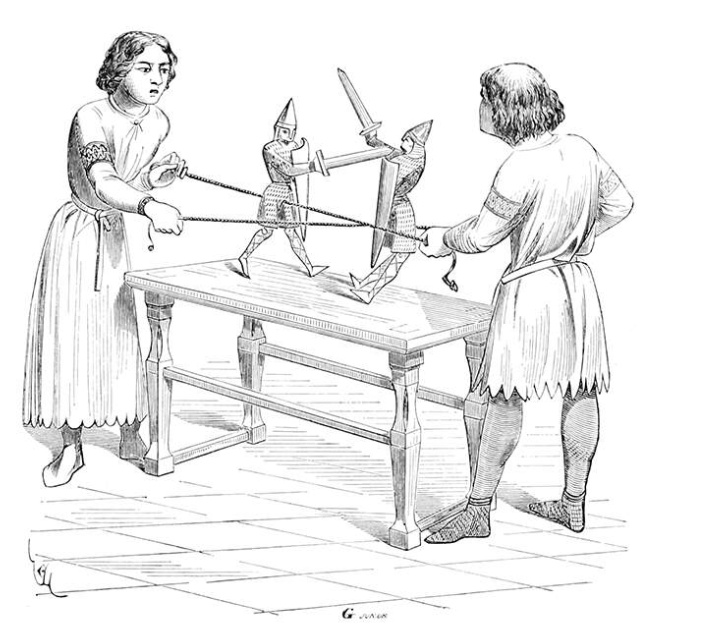
Well, she’s right that the past DID give boys a script for how to be men (and for girls to know how to be women), but isn’t that the source of the problem? A script is just the written text for a performance. We don’t need no script to be who we are. We are already who we are. People need to stop acting and just fucking relax.
(Engraving by Eugène Emmanuel Viollet-le-Duc)
Emba also mentions that ‘trying to smash the patriarchy has left a vacuum in our ideal of masculinity.’ Well, yeah. That’s the whole fucking point, isn’t it. Scrap that shit. Scrap the ideal of femininity too. Scrap the concept of ideals, because they’re imaginary. There IS NO IDEAL man or woman. No ideal cook or artist or Red Sox fan or parent or Black person (and stop thinking of Idris Elba, okay, just stop it). There’s only somebody’s bullshit notion of what they think is ideal.
Here’s another part of the problem. If we smash the patriarchy and replace it with the matriarchy, would that be better? Well, yeah, probably. But that has its own set of problems, and eventually we’d need to smash that as well.
Emba ends her opinion piece with this:
The old script for masculinity might be on its way out. It’s time we replaced it with something better.
This is just my opinion: if you define yourself as a man, then you’re a man. If you refuse to define yourself along any gender line, ain’t nothing wrong with that. Because the problem isn’t gender, really. The problem is the script. Emba got that point right.
People are comfortable with a script. A script tells them what to do, how to behave, where to stand, what to say and when to say it. People like a script. So yeah, maybe Emba is right that we need to replace it. Not just the ‘masculinity’ script, but the gender script. Maybe all we really need is a script that says this: Don’t be an asshole.
That’s a good script because asshole is also one of those categories that resist definition because they’re so broad and vague and elastic. If the script is don’t be an asshole, the actor would have to consider their entire galaxy of self-defined asshole behaviors. And then NOT do those things. That would solve a whole lot of problems.
I don’t spend much time thinking about myself. I mean, I’ve lived with me my whole life; there’s not much unknown territory there for me to explore. But I had this exchange on BlueSky (one of the more promising ‘next Twitter’ social media). There was a call to create an ‘authors feed’. My response:
This is probably silly, but I tend to be uncomfortable with the term ‘author’. I’ve published some stuff–short fiction, nonfiction books, a novel–so ‘author’ technically fits. But maybe it sounds too pretentious for me? I think of myself as a writer. I write stuff.
The reply:
Yeah, that’s the old imposter syndrome kicking in. The only requirement to being an author is to have authored something.
And I thought, “Yeah, that’s probably it.” I suspect anybody who has had some success in anything has, at one point, thought, “Lawdy, who do I think I’m fooling?” Normally, that would be it. Question asked, question answered, end of story.
But this morning, after I sat down at the keyboard, drinking my morning cold brew, looking out the window, reading the news, going through my usual morning routine before starting to write, I thought, “Naw…I’m not an imposter. I mean, I won a damn Edgar this year. That’s a pretty big deal.” And I looked at the mantle…
…and then I thought, “Hey…where’s my Edgar?” Because it wasn’t on the mantle.
Okay, some history. I learned I’d been nominated for an Edgar from Lori Rader-Day (who, by the way, is the real deal; you should go out RIGHT NOW and buy all her books). I thought that was pretty cool, but aside from doing some of the scut work associated with the nomination, I didn’t give it much thought. I didn’t expect to win. I even forgot about the big Edgar event when they announced the winners. Again, it was Lori who alerted me that I’d won. Again, I thought it was pretty cool and I understood I’d be getting a statuette at some point. And again, I pretty much forgot about it until it arrived.
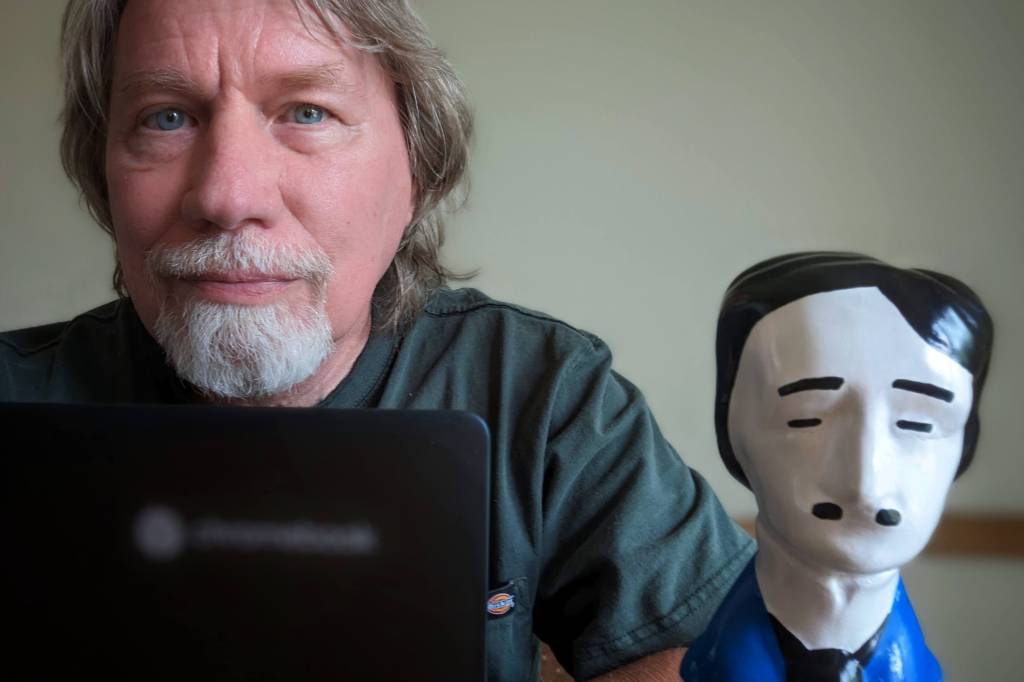
Now THAT was cool. I took it out of the box, put it on the kitchen table (where I usually keep my Chromebook and do most of my writing in the mornings), looked at it a few times, then pretty much ignored it. Until I was reminded I hadn’t taken a photo of it. So I did that.
See? I won that thing right there.
Some time later, I happened to notice it sitting on the mantle over the fireplace. And I said something clever, like, “Hey, look…my Edgar.” To which Ginger replied, “I put it there a couple of weeks ago, you idiot.” So this morning, when I looked at the mantle to remind myself that getting an Edgar is a big deal and I’m not an imposter, I realized she must have moved it somewhere else. I’ll have to ask her later.
My point–if you can call it that–is I don’t feel like an imposter. I have actual, physical, tactile proof that I’m not an imposter. So what is my problem with the term ‘author’? And I’ve decided it’s this: ‘Author’ is a fixed, static state. You become an author when the work is done. ‘Writer’ is dynamic; it’s a thing you DO. I don’t think of myself as an author because I’m not particularly interested in what I’ve already done because…well, I’ve already done it. I am interested in what I’m doing, which is writing.
Like I said, I don’t spend much time thinking about myself, mainly because I’m not that interesting to me. But I realize some of this crap–like why I prefer to be a writer instead of an author–might be interesting to other folks. So, there you have it.
I declare, it’s been a crazy couple of weeks. Between insane weather events, and imploding submersibles, and bizarre Russian semi-coups, and insane imploding bizarre Trump criminal developments, it’s been difficult to focus on a single topic for more than a few minutes at a time.
So I’ve been riding my bike. I mean, when you’re riding a bike, all the rest of that shit fades into vaguely annoying background noise. Like tinnitus. It’s there all the goddamn time, but you just sorta kinda get used to it.
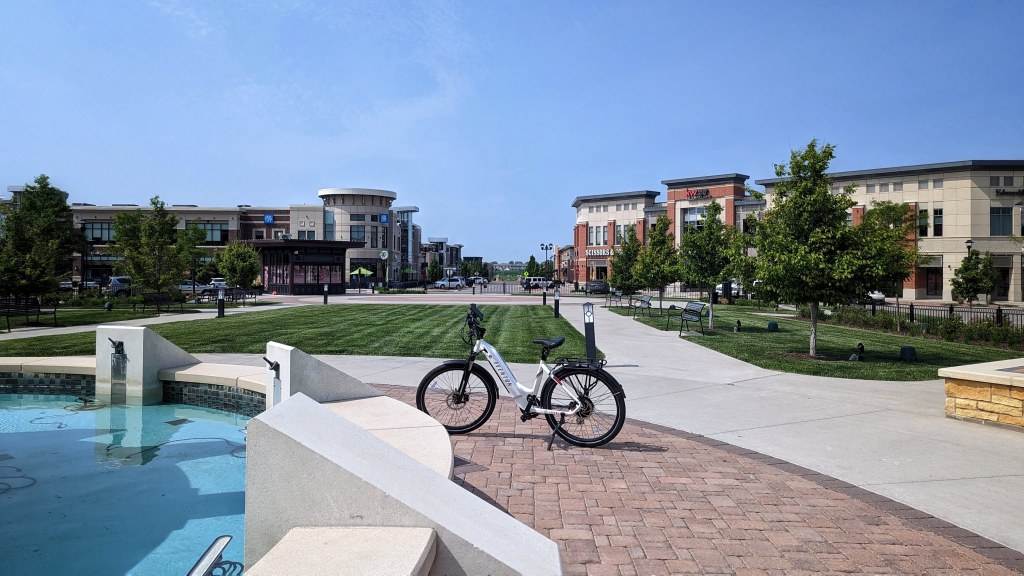
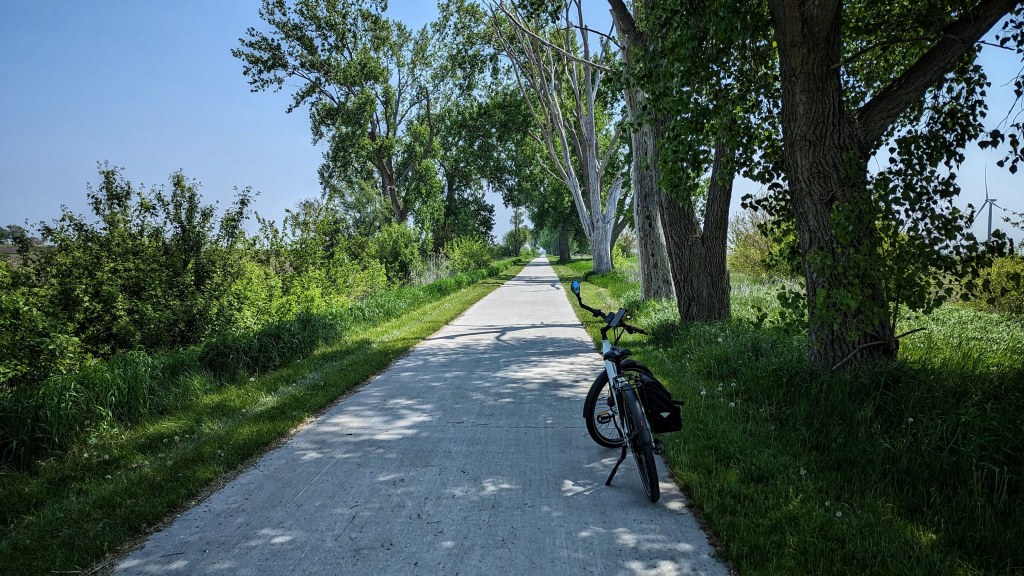
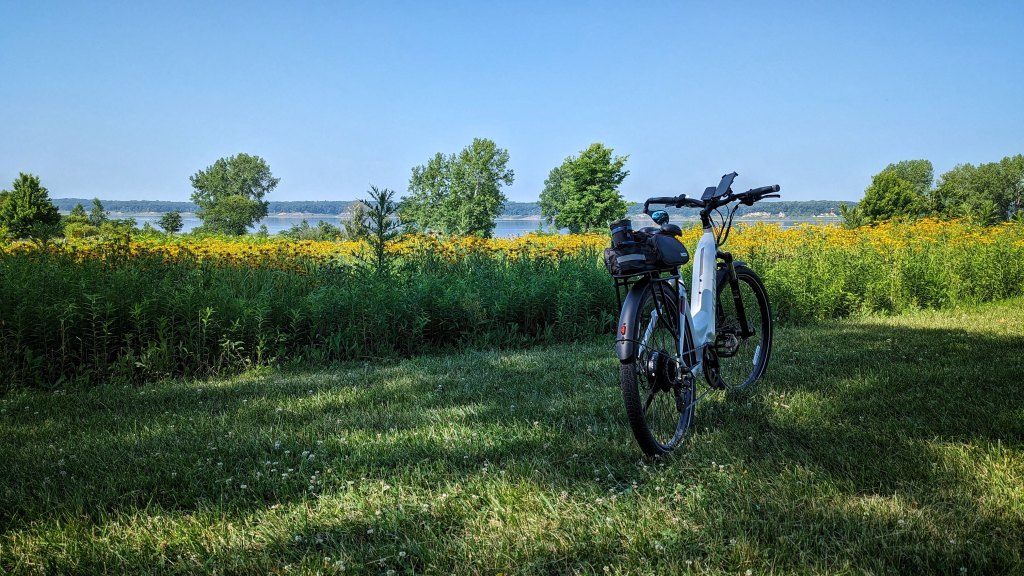
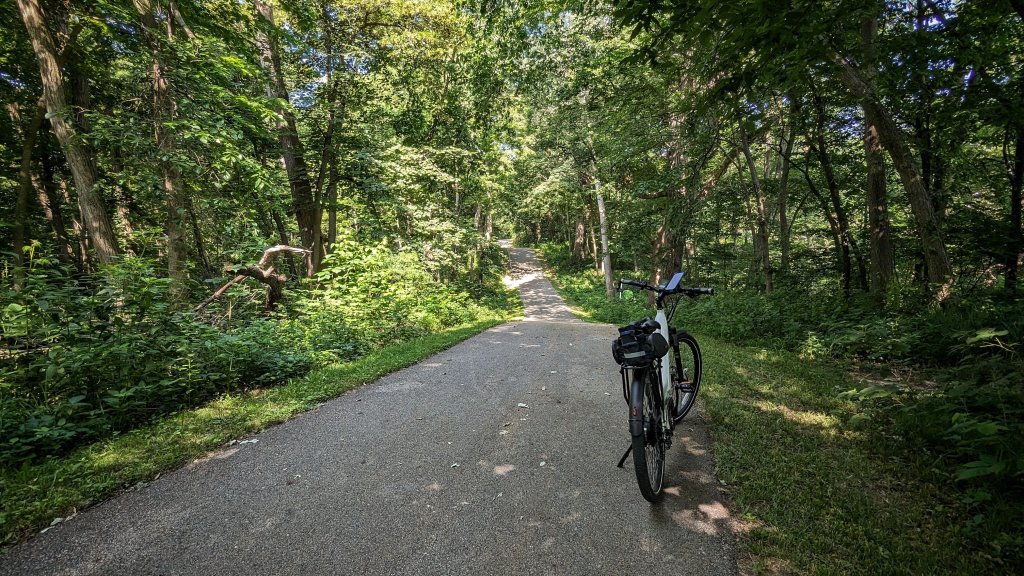
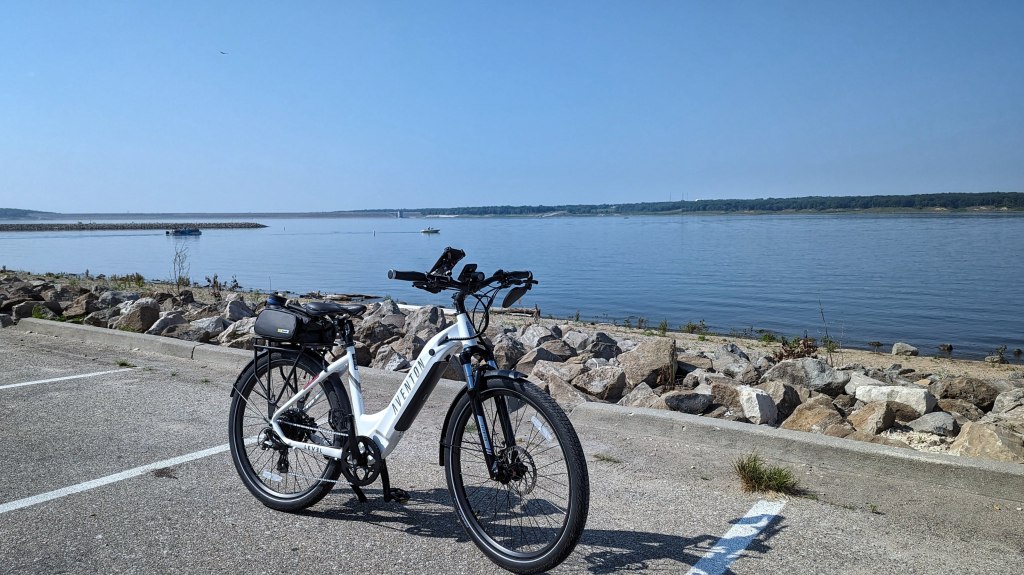
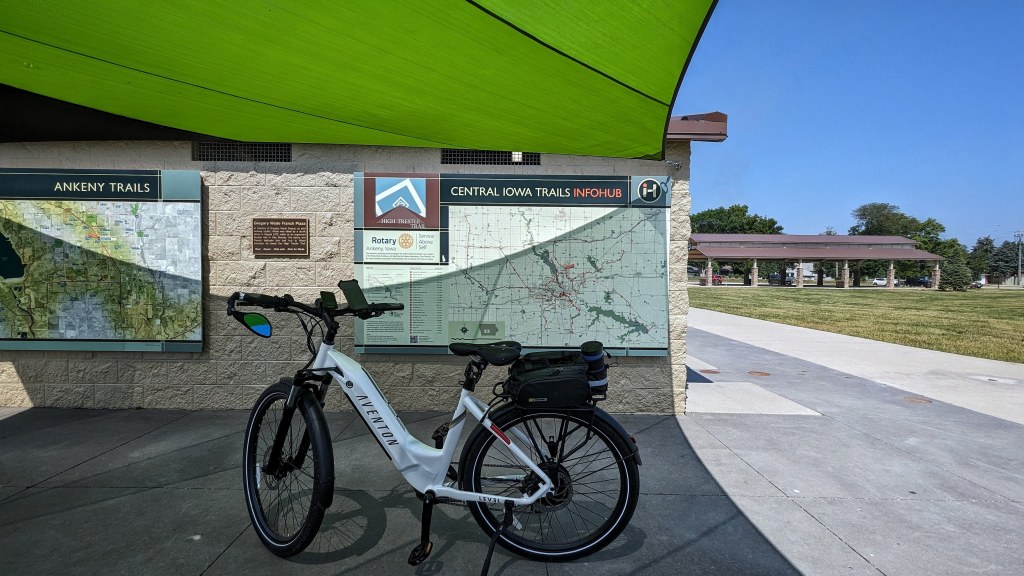
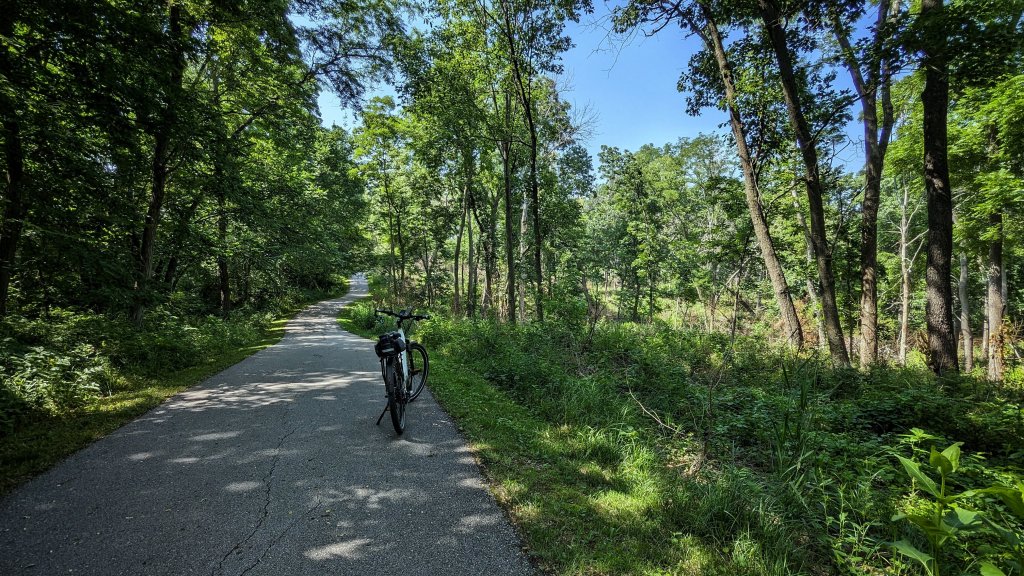
Besides, I have a new bike. Well, it’s not new new. I’ve had it for about a month or so. So it’s still new. Newish. I’ve only put about 170 miles on it. That may sound like a lot, but when you do a few 20-30 mile rides interspersed with sporadically cycling back and forth to the gym, it slowly adds up. And because it’s a new bike and I’m still enamored with it, I’ve been photographing it wherever I’ve gone. Yes, that’s right, I’m taking pictures of a fucking bicycle. Which is just as ridiculous as it sounds.
This is my second electric bike. My first was a fat-tire bike; I described it as the best purchase I’ve ever made. That’s still true, although I sold it when I bought my new bike. It was the best purchase because it allowed me to enjoy cycling again, after years of NOT cycling (because of knee pain). It was a big bastard of a bike; it could go anywhere, but it was cumbersome. The new bike–an Aventon Level 2–is more of a commuter bike. The tires are half as wide, and it’s a lot more nimble. It has a torque sensor instead of the fat bike’s cadence sensor (which will only be of interest to other folks who have ebikes), so riding it feels more like riding a regular bike.
But even on my bike, I can’t fully escape the outside world. For example, President Uncle Joe passed the infrastructure act, which means there’s been a massive increase in transportation construction and repairs, and that includes bicycle paths. Normally, there are a couple hundred miles of easily accessible, dedicated bike trails I can ride, plus all the local bike paths. But with all the new construction, a lot of those paths and trails have been disrupted. It’s a small, temporary inconvenience, and good for Uncle Joe and all…but it’s still annoying to set out on a ride, only to find an excavator has torn up the trail.
And I can’t exclude former President Comrade Trump when it comes to problems. A couple of days ago I rode down to a nearby reservoir, which is a popular sport for boaters, folks who like to fish, and birders. There’s a large paved parking area where folks park their vehicles and leave their boat trailers. As I was riding along, a couple of guys (white, short hair, in their 20s) driving a Jeep approached me, going the opposite direction. They slowed down, looked at me, and one of the guys yelled, “Fuck Ukrainian Nazis!”
It seemed like an odd thing to shout at a random stranger…until I remembered I was wearing a t-shirt with the Ukrainian flag and ‘Україна’ written on it. I’m assuming they recognized the flag, although I suppose it’s possible they were also familiar with the Cyrillic alphabet. I’m actually kind of impressed they recognized the flag; I don’t expect MAGA-Anon folks to have much awareness of geography or vexillology.
The incident put a very short-term damper on my enjoyment of the day. Maybe five minutes. It was just too nice a day to allow fuckwits to disrupt it. My biggest disappointment that day was arriving at one of my favorite bicycle bars and remembering they didn’t open until 1500 hours. There’s a pair of large open-air pavilions nearby, with restrooms and a public bike repair station, so I considered just hanging out for an hour or so until it opened. But home was only a couple of miles away, and I have a refrigerator stocked with an assortment of beers, so for once I made the logical decision.
Okay, I can’t write a blog post without getting at least a little bit pretentious. So here’s Albert Einstein, in a letter to his son:
Life is like riding a bicycle. To keep your balance you must keep moving
I want his head. I want to put it…where should I put Edgar Allan Poe’s head? The mantle is traditional, I suppose. It would probably look silly in the kitchen, next to the coffee maker or on top of the refrigerator. I don’t have to decide now; there’s probably plenty of time to figure that out.
But I want his head. I’m not entirely sure I deserve it, but I won it, fair and square. Really. Last night I won the 2023 Edgar Allan Poe award for Best Short Story. There are probably a lot of benefits that come with winning the award, but the one that has me most excited is Edgar’s head. You get (or at least I’m reliably informed you get) a small bust of Poe’s noggin. How cool is that? Very cool, is how cool.
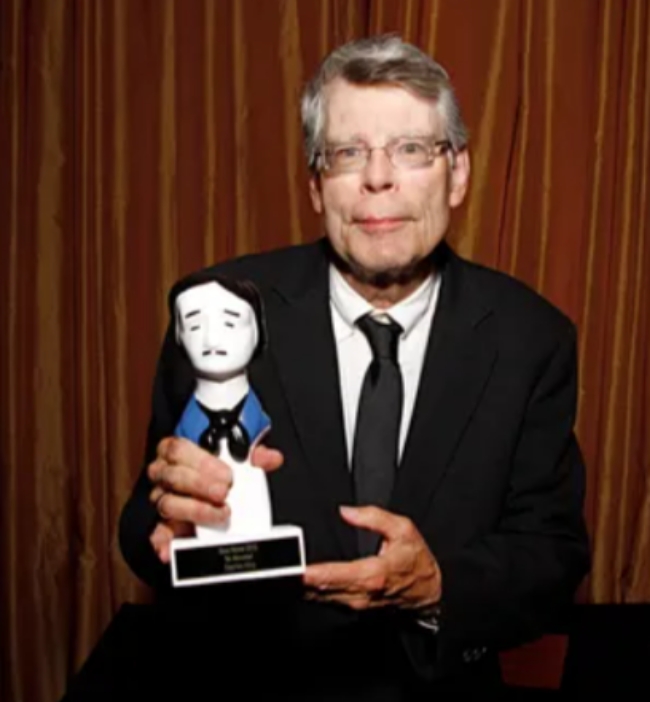
I was curious about the actual size of Edgar’s head (that statuette’s head, not his actual head), so I googled it. And right there, first page, was a photo of Stephen Goddamn King with an Edgar in his hands. So, not exactly life-size (again, I’m talking about Edgar’s head, not Stephen King’s, which I’m pretty confident is life-size), but still.
Look at that, Stephen Goddamn King
Winning an Edgar is really a rather big deal, at least in the world of mystery and detective fiction. There’s a large, enthusiastic, deeply engaged community of folks who love mystery and detective fiction. Writers, would-be writers, fans–they create and join book clubs, reading groups, fan clubs, professional organizations. Groups like the Mystery Writers of America (who sponsor the Edgar awards), Sisters in Crime, and the Private Eye Writers of America–groups that feed and nurture that community. These groups are invaluable.
The thing is, though, I’m not really an active part of that community. I have a lot of respect for it; I’m terribly glad it exists and I benefit from its existence. But aside from writing detective stories, I haven’t contributed to it. I’m just not a joiner. I’m not even a member of MWA, but nevertheless they’re still generously offering me Edgar Allan Poe’s head. That makes me seem a tad ungrateful and vaguely misanthropic, although I’m not. In fact, I’m very grateful and I’m pretty damned anthropic.
— Mystery Writers of America (@EdgarAwards) April 28, 2023
At the risk of sounding immodest, I’m a pretty good writer. But there are a LOT of pretty good writers out there (including all the other nominees for Best Short Story). The thing is (in case you were wondering what the thing is), pretty good writers are nothing without a venue for good writing. And I’ve been lucky enough to be associated with two of the best magazines for mystery and detective fiction.
Alfred Hitchcock’s and Ellery Queen’s Mystery Magazines are two separate, independent magazines owned by the same publishing corporation. They are incredibly welcoming to writers, especially new writers. Without them, I’d just be an odd guy sitting in a room making shit up and putting words in a row.
If you have any aspiration to write short mystery or detective fiction, I encourage you to submit your work to either of these magazines. They may not buy your work, but they’ll treat you right. And hey, you might just get a shot at collecting Edgar Allan Poe’s head.
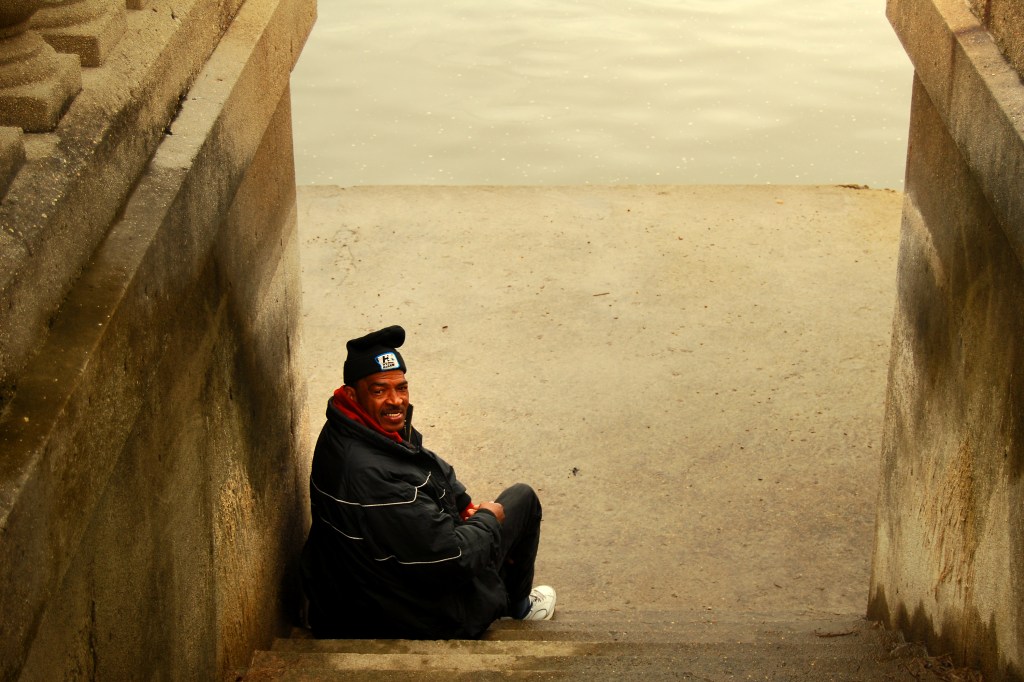
A few years ago, on a cloudy, rainy day, I was taking an idle stroll along the riverwalk in Des Moines and I came across a guy sitting on the steps. We chatted for a bit about nothing in particular. As I was leaving, I stopped and asked if I could take his photograph. He said “You gonna make me look sad or stupid?” I said, “Are you sad or stupid?” and he snorted and said “I sure am.” That’s when I took his photo. When I asked his name, he said “I’m just a guy sitting by the river.”
Just a guy sitting by the river.
I talk to strangers. I like talking to strangers. I like meeting new people and learning something about them. Granted, most of my conversations with strangers are casually superficial, so it’s not like I’m learning anything important or meaningful about them or their lives. But the simple fact of meeting and having an idle conversation with random strangers tells me something about humanity in general.
And this is what I’ve learned: most people are pretty much okay.
Just bought a bunch of children’s science booklets from the 1960s.
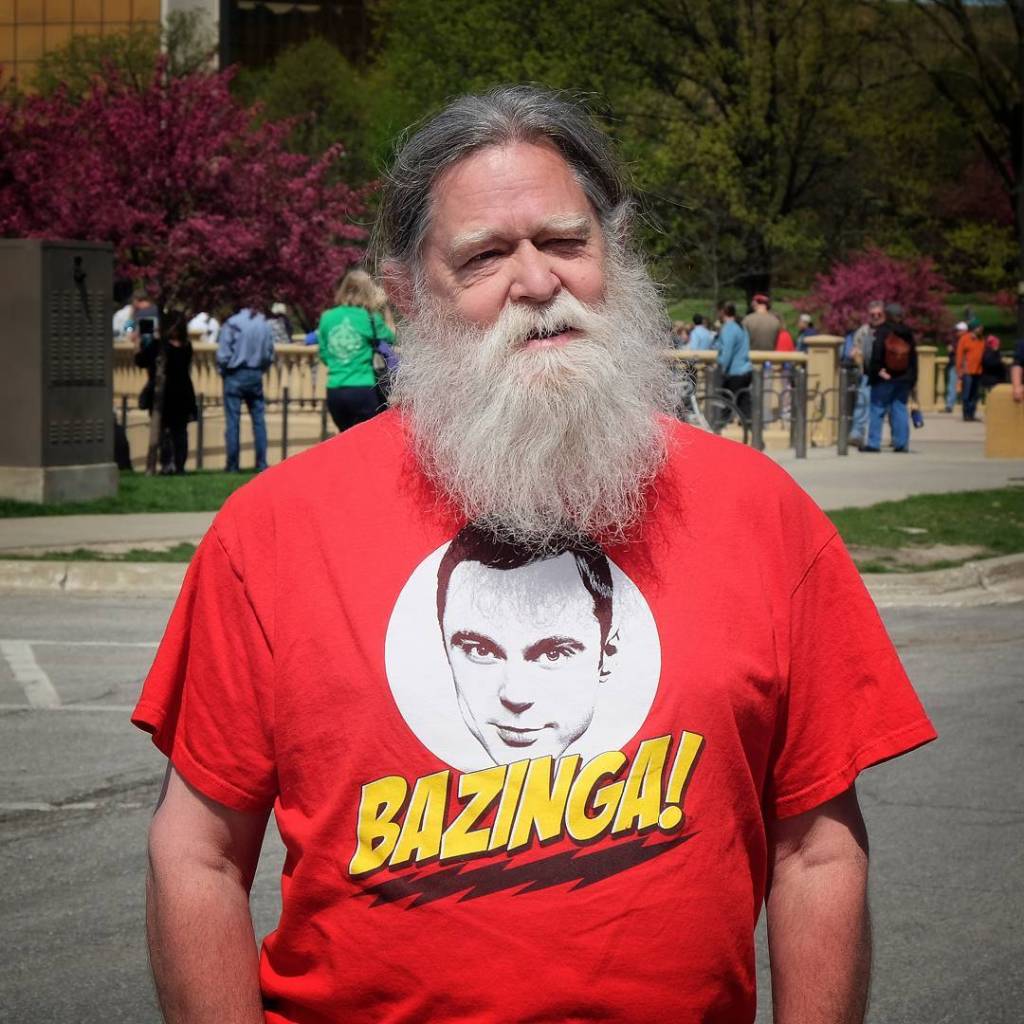
This guy (points up), for example. He’d just bought a bunch of outdated science booklets for kids, and he was happy and excited about them. To me, they looked like badly illustrated pamphlets depicting decades-old information about science. But his enthusiasm was infectious, and I found myself actually interested in the best 1960s approach to dealing with prairie dog overpopulation.
Is that information useful? Nope, not even remotely. But I love knowing that somewhere out in the world is a guy who can give a logical, sincere, and passionate defense of relying on natural predation instead of poison to deal with what ranchers consider vermin.
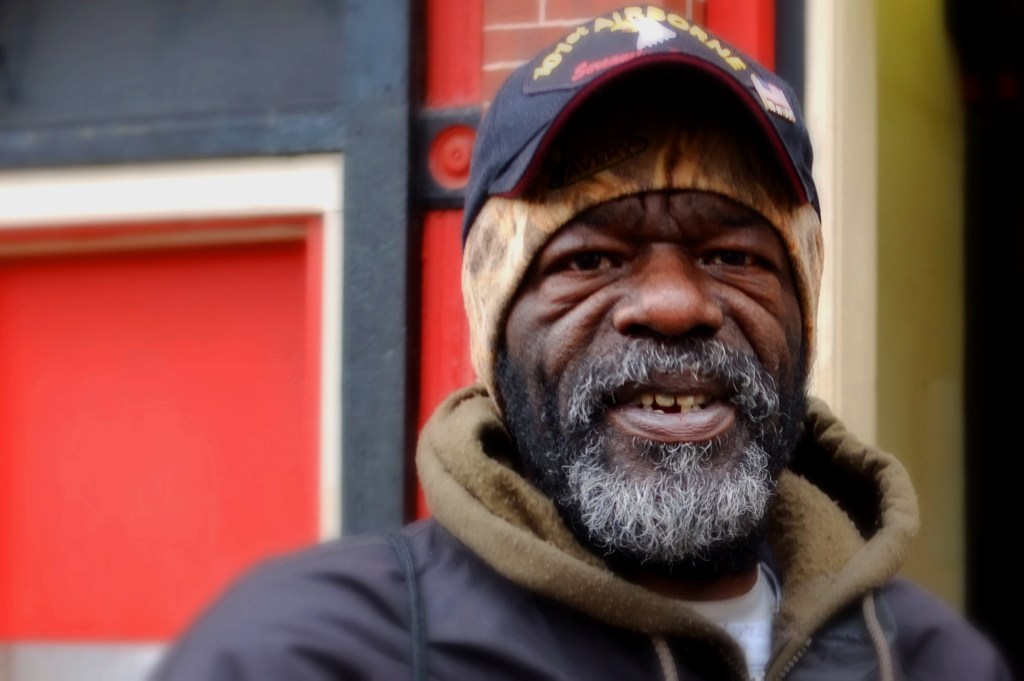
Mickey, whose story had…flaws
Every stranger I’ve met has a story. They’re not all true, of course. I don’t think that matters. Mickey (above) told me he was a disabled veteran. And who knows, maybe he was. He had a Marine Corps emblem on his jacket but his cap said 101st Airborne, which is a division of the Army. He was using a hand-carved walking stick, which I admired–and that’s how we struck up a short conversation. It was too chilly outside to chat for very long, and as we parted I gave him a quick salute–which he returned.
Here’s a True Thing: in basic military training, they literally teach you how to salute. How to hold your hand and wrist, the proper position of your upper arm, the correct incline of your elbow. They make you practice this over and over until it becomes automatic. Mickey didn’t know how to perform a proper salute. Does that mean he was lying about himself? Maybe. Maybe not. Again, I don’t think it matters. His story didn’t have to be true; it still told me something about what he believed and who he’d like to be and what he finds important.
James, sitting under a bridge
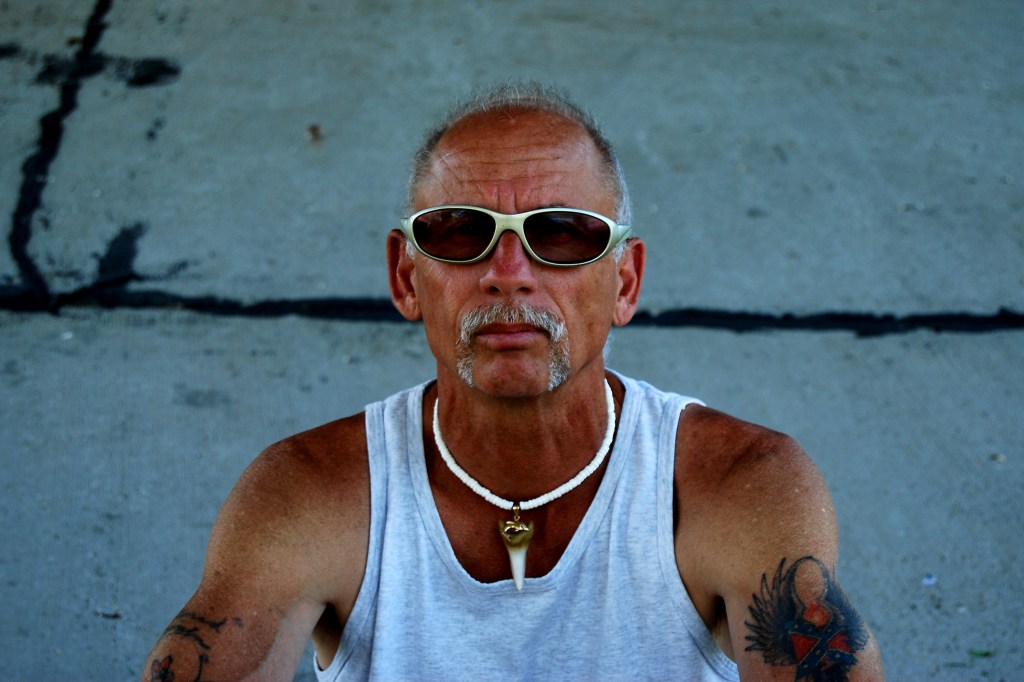
I met James on a hot summer day, sitting under a bridge. I was riding my bike, he was sitting in the cool shade drinking something in a brown paper bag. I stopped to get a drink from my water bottle. We discussed the heat, of course, but James also told me he worked at a nearby theme park; he liked to get away from the noise and the people, and the bridge was within walking distance. It was relatively quiet, cool, and it gave him a bit of what he called “down time.” You could tell James had been around a long, hard block–probably more than once–but he had a weird sort of muted raffish elegance about him. The careful way he trimmed his facial hair, his necklace, his sunglasses, his ornate tattoos–it’s as much about who he wants to be as who he is. And who knows–maybe he actually is who he wants to be.
Guy pushing his bike
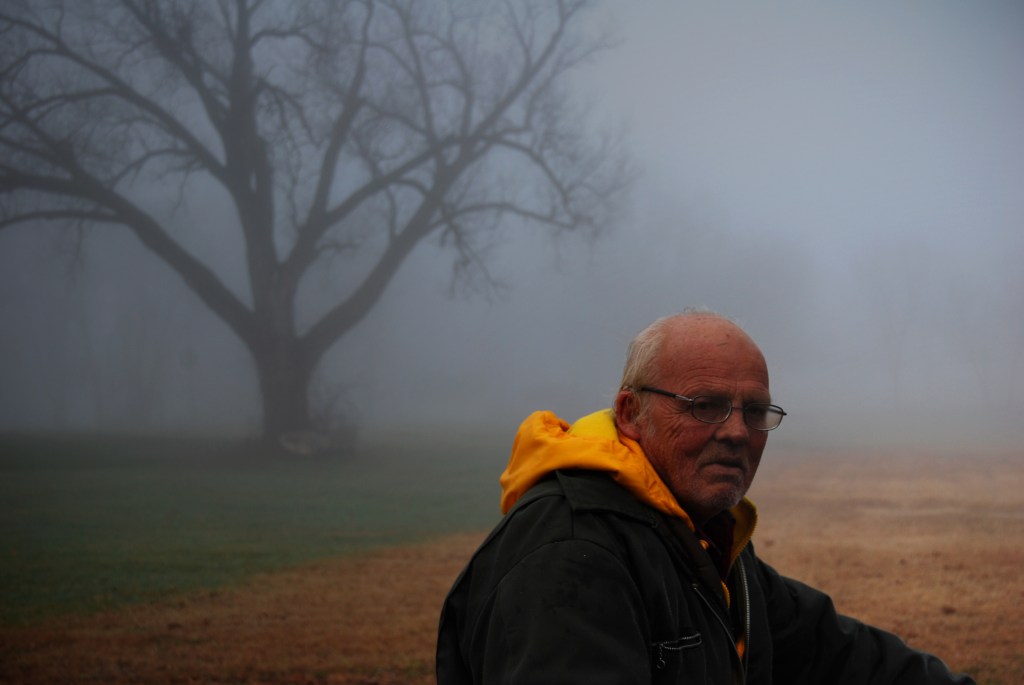
Meeting strangers is easy; they’re everywhere. But it’s getting a wee bit more difficult to get them to talk. People are increasingly suspicious of strangers. I guess I can’t blame the guy in the photo above for being suspicious. It was a cold, foggy morning. I was riding my bike; he was walking a bike. So I stopped to ask him if he was okay, if he needed help with his bike. He hesitated, then said, “I’m okay; I live nearby.” I told him I had a small tool kit in my bike bag and I’d be happy to help if I could. He shook his head. He was clearly uneasy, so I let it go. Instead, I asked if I could take his photo. He asked, “Why?” I said something about his yellow hoodie and the fog, which probably didn’t make any sense to him. But he said, “Okay.” I took his photo, wished him good luck, and went on my way.
I wondered later if maybe the guy didn’t want me reaching into my bike bag. Maybe he thought I carried a gun there. Some people do. On one cycling forum I follow, there are lots of discussions about self-protection on bikes. People are afraid they’ll be attacked as they ride or when they stop, afraid they’ll maybe get bike-jacked. A lot of those fearful people have opted to bike armed.
Scared people are the last people who should be carrying firearms. But we now live in a world in which wrong-place shootings take place on an alarmingly regular basis. It’s inevitable, I suppose, that somebody will get shot for being on a bike in the wrong place at the wrong time (assuming it hasn’t already happened somewhere). The fact that a term like ‘wrong-place shooting‘ even exists is an indictment against our society. I’d argue one of the reasons we have wrong-place shootings is because fewer people are willing to talk to strangers. All day every day there’s a ‘news’ station that injects fear porn directly into the veins of its viewers. They tell folks that ‘others’ are out to get them, to take their stuff, to molest their children, to break into their homes, to take away their rights, to destroy their religion, to confiscate their guns. Of course, they’re frightened.
Kent, keeping the streets clean.
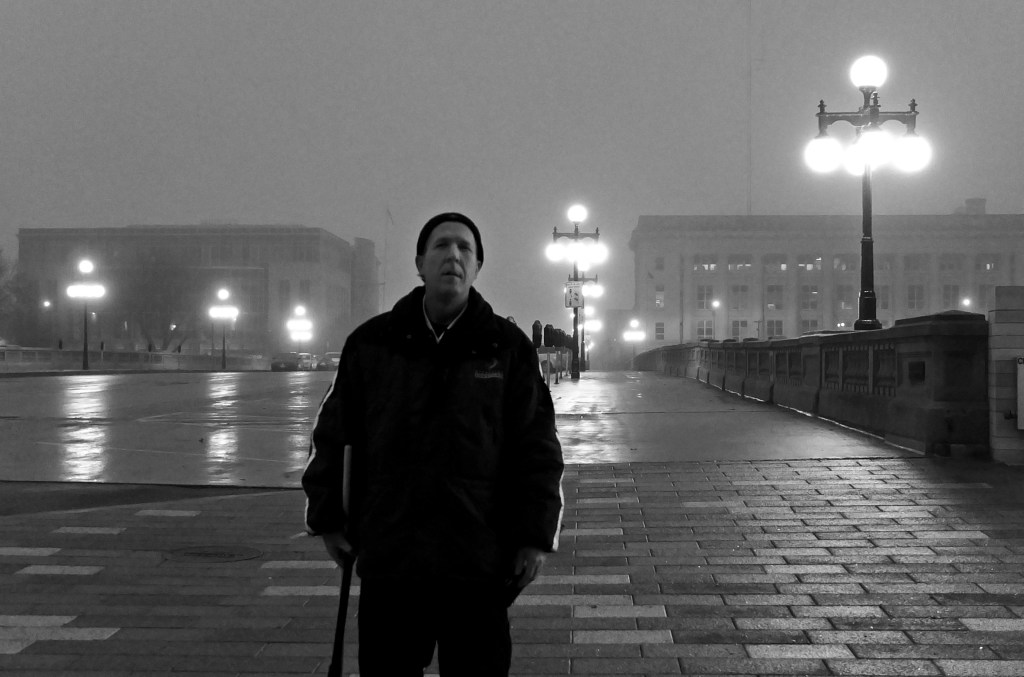
This is Kent. I met him on a cold, foggy morning too. He was walking the streets, sweeping up the trash other people (and their dogs) left behind. He’d been keeping the city streets clean for nearly three years. I asked him about his work. He said, “It’s not a bad job. I like being outside. I get to meet people, walk around, don’t have to stay in one place.” He’d learned which business owners were nice, which ones ignored him like he wasn’t there, which ones were rude. He wouldn’t identify any of the rude ones. Kent said there were about a dozen people who worked cleaning up the downtown area. He thought most of his co-workers were okay; a couple were lazy and some complained about the weather, but basically they were good, decent people. He knew most of the people he met on the street didn’t appreciate his work, but he said clean streets sidewalks make the city a better place. He wouldn’t say his job was important, but it was clear he felt he was doing something worthwhile.
These are just a half dozen of the many strangers I’ve talked to in recent years. All of them have been interesting in some way. All of them are connected in some way, if only by a shared community or a shared humanity. And I like to feel I’m connected to them as well. A guy feeling sad and stupid sitting by the river, a guy excited about science for kids, a guy who maybe lied about his past, a guy sitting quietly under a bridge, a nervous guy afraid to ask for or accept help, and a guy who gets up every morning and tries to make city life a little bit better. These people–these strangers–have enriched my life.
We don’t have to live in fear and isolation. We don’t have to be afraid of strangers. At the risk of sounding hopelessly like a Pollyanna, I truly believe the world would be a lot better place–and we’d all be a lot more relaxed–if we’d just take a few moments and talk to a stranger.