thank you for your service

I had a routine medical exam thing a couple of weeks ago, part of which involved answering a bunch of questions. One of the questions was “Are you a veteran?” I said yes, she said “Thank you for your service,” and went on to the next question.

I didn’t think about it at the time. I mean, it was just a question. Like “Do you smoke?” or “Do you exercise?” But afterwards, that reflexive “Thank you for your service” started to irk me. Because it was reflexive. Like saying ‘Bless you’ when somebody sneezes. It was just an automatic response.

I found myself thinking ‘Why the hell is she thanking me? I didn’t do it for her.’ And because I’m the sort of guy who tends to think too much about too many things, I started to wonder how I’d explain to her why I joined the military. The simple answer is because it was expected of me. Which is true and accurate, but it’s not a complete answer.

I come from a military family. My father had been a Marine in the South Pacific during WWII, most of my uncles had served in the Army in Europe, one served in Korea during that war. I came of military age during the last years of the war in Vietnam. Both of my older brothers were Marines in Vietnam. One was badly wounded physically, the other was badly wounded emotionally.

I protested against that war. I didn’t start protesting until after my brother had been shot up. I came home from school one day to find a Marine officer and chaplain standing outside the door to my home. They’d knocked on the door, but my mother wouldn’t let them into the house. I assumed my brother had been killed. I let them in, and we learned he’d been shot — but because he was in a recon unit, nobody seemed to know where he was when he was shot, how badly he was wounded, or even what parts of his body had been hit. I started protesting while he was still hospitalized; he was hospitalized for nearly a year. I kept protesting when my other brother joined the Marines and went to Vietnam. It angered my father, it angered my brothers, but I did it anyway. 

And when I eighteen, I joined the military. Not the Marines — both of my brothers made me promise I wouldn’t join the Marines. I joined the Air Force. I hadn’t gone to a protest since I graduated from high school, but the war in Vietnam was still going on.

So why did I join? Because it was expected of me. Because I expected it of myself. Because my family taught me that the notion of service was important. Not necessarily military service, but service. To the community, to the state, to the nation. I was taught to be thankful for what I was given and that I should give back.

I hated it. I hated having to wear a uniform. I hated having to salute people. I hated following orders. I hated it, but I was a damned good medic. I hated it, but I learned I could do stuff I’d no idea I could do. I hated it, but I learned discipline. Not just to follow rules and orders, but actual discipline — how to control myself in situations where control is critical and necessary. I hated it, but at the same time I felt I was serving a purpose — that in some very small but meaningful way I was giving back. And even though I spent four long years in military harness, I’m aware I didn’t really do that much.

Thinking about all that — and about the woman who’d automatically thanked me for my service — I came to the conclusion that maybe I really did, after all, do it for her. I didn’t do it because of her, but I did it for her. The thing is, somebody has to do it. Regardless of what ‘it’ is, somebody always has to do it. Somebody has to shoulder a firearm and walk post. Somebody has to fight fires. Somebody has to enforce law. Somebody has to pick up trash and repair roads and defend the accused and take photos for your driver’s license and teach your kids and deliver your mail. You don’t know who they are, and they’re not doing it because of you, but they are most definitely doing it for you. They may not do it well, but nevertheless they’re doing it for you

They’ll do it whether you thank them or not. Because it’s expected. Because it’s necessary. And now I realize it was silly and stupid for me to expect that woman to sincerely thank me for my service. It was silly and stupid to be irked by her perfunctory thanks. Because how can she possibly know what my service was like? And I realize now that my thanks to her, when she’d finished her examination, was also perfunctory. Because I’ve no idea what her service is like.

So I’m going to try to be more sincere when I thank people. At least over this holiday season, I’m going to try to genuinely recognize and appreciate the person who serves me my burger, or rings up my groceries at the register, or drops off the package from Amazon. I’m not going to completely succeed, I know that. But damn it, I’m going to try.

And if you’re reading this, thank you very much.

Editorial Note: I thought I’d illustrate this with a photo or two from my days in uniform, but I’ve never bothered to keep any of that stuff. I’m going to check with my ex to see if she kept any of it. It could be worth a giggle.
a mild defense of facebook

Facebook, I’m told, isn’t cool anymore. I’m not sure it ever was — but now, at this point in time, I’ve been assured by folks who have a more confident hand at the ‘this is cool’ wheel, Facebook is decidedly not cool.

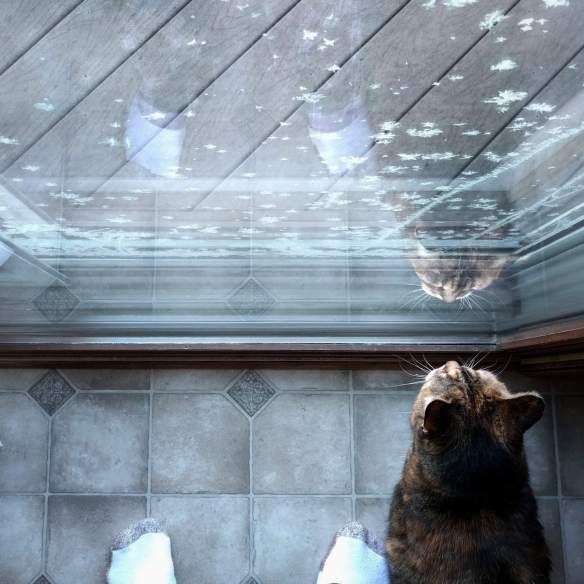
Cool or not, Facebook is an integral part of my morning routine. Since I haven’t held a straight job since 2000 and since I have little native self-discipline, I rely on routines to make sure I get stuff done. Without routines I’d spend my entire day with a cat on my lap, researching stuff I don’t really need to know (seriously, how does a turtle pull its head into its shell–do the vertebrae collapse somehow, does its neck just curve a lot, what the hell is going on in there?), or entranced by the way the morning sunlight refracts off the sugar crystals on the top of the blueberry muffins, or indulging in the shame of politics (indictments of Jerome Corsi, yes please), or pointlessly unpacking all the elements of the most recent Doctor Who episode (what other sci-fi show would do such an intimate exploration of the Partition of India?).

Initiating my morning routine.

So routines (which are also not cool) are important to me, and Facebook is part of my morning routine, which is as follows:

  1. Check the perimeter (though c’mon, I’m living in an incredibly safe and boring suburb now, and the only thing I’m likely to discover when checking the perimeter is the weather) with the aid of the cat.
  2. Feed the cat her stink food.
  3. Make coffee.
  4. Read the news — general Google news headlines first, dipping into stories that interest me; Washington Post for fundamental news reporting; Daily Kos for the lefty take on events.
  5. Tell myself to read my email, look at my email subject headings, then usually ignore my email (unless it’s clearly hate mail, which I’ll generally read for some reason; today’s hate mail: “Are all you cunts ready for cw2? We are!” Which I probably shouldn’t have read, because now I feel I have to get ready for the Second American Civil War, and who has time for that?).
  6. Scroll through Facebook.

I should note that I don’t do Family Facebook. I keep my personal life separate from my online life, so I don’t ‘friend’ loved ones or family members (and I might as well confess that I’m really not at all interested to hear that somebody’s grandchild scored a goal at a soccer match over the weekend). Instead Facebook for me is about friends and art and politics, which may sound like three separate categories but in reality are generally all smooshed together.

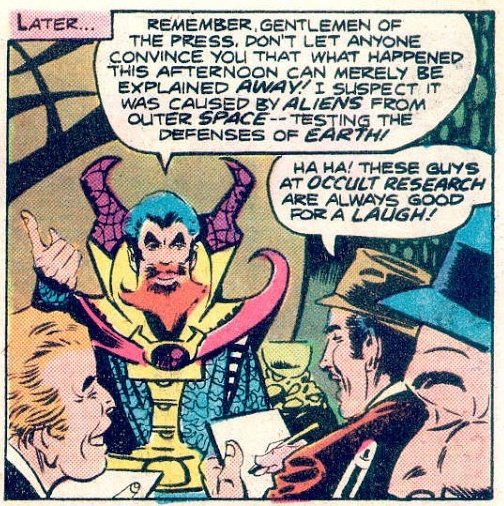
Friends, art, and politics smooshed together through Panel Pulp.

What that means in practical terms is this: Facebook inserts serendipity and random weirdness into my morning. I like that. I like that I’ve become friendly and familiar with folks and I have no recollection at all how I came into contact with them. These are people who’ve come bouncing into my line of sight from some odd social angle and caught my attention in some pleasing or interesting way (and now that I say that, it occurs to me that the process is a lot like seeing the morning sunlight refracting off the sugar crystals on the blueberry muffin). It just happens and I’m lucky enough to notice.

The serendipity and random weirdness isn’t just how I’ve made friends on Facebook, it’s also an intrinsic and essential part of reason I keep this as part of my routine. People post the most unexpected and wonderful stuff on Facebook. I’m not talking about videos of amusing cats or goats playing balloons, though I often enjoy that stuff too. I’m talking about stuff for audiences that I didn’t even know existed. Like Panel Pulp (which is actually a Twitter account, but is often reposted on Facebook).

Another example: international marble racing. If not for my friend Young Jo, I’d have never encountered Jelle’s Marble Runs or seen these exciting qualifying races for the 2018 Sand Marble Race (I prefer the organic nature of sand marble racing over the more sophisticated manufactured marble racing tracks…but that’s just me; also, I’m inclined to be suspicious of Marbly McMarbleface).

Another bit of weird and random I love about Facebook is that I encounter folks who are open and unapologetic about their weirdness. So open, in fact, that they’re not even aware of how weird their weirdness is, and I find that completely endearing. I mean, who creates marble race tracks, records the races, keeps track of the stats of the individual marbles, and narrates the videos? Even weirder is the fact that these videos have an audience. I love that.

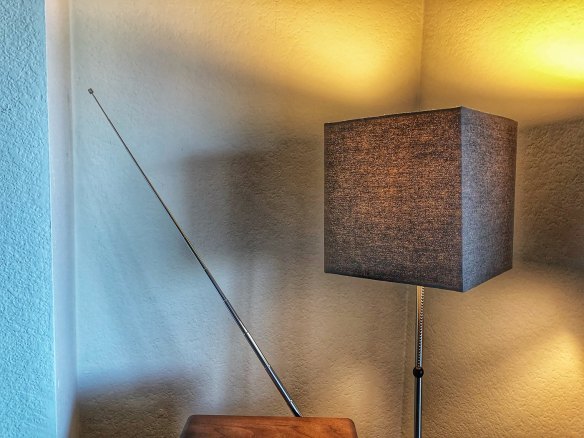
The most consistent thing that draws me to Facebook (aside from the politics) is that it exposes me to some really diverse facets of the arts. Bizarre sci-fi art, stark 1950s Japanese noir photography, beautiful original pen and ink art, strange and/or practical yarn art, and lots of personal photography. For example, this morning I saw this photograph by Larry Rose:

Larry Rose — West room corner.

I have no memory of how I became friends with Larry Rose. I know little about him as a person. But I know and enjoy his work. This wonderfully subtle photo kept me from doing the work I was supposed to be doing for maybe ten minutes. At least two different light sources, each operating at a different wavelength, creating strange but predictable shadows and colors. An antenna at an almost perfect 45 degree angle that creates a bit of visual tension against all the other horizontal and vertical lines. And that beautiful Borg Cube of a lampshade that seems to be floating in the corner. Without Facebook, I’d probably never have seen this photo.

Facebook isn’t cool. But there is cool stuff to be found there. There’s a chance I’d have learned about Burning the Clocks without Facebook, but probably not. And right now there’s an excellent chance that you’re wondering if Burning the Clocks is a band, or a movie, or who the hell knows what. There’s a pretty good chance you’ll click on the link and find out.

Is that cool? I kinda think so.

knuckles steps away

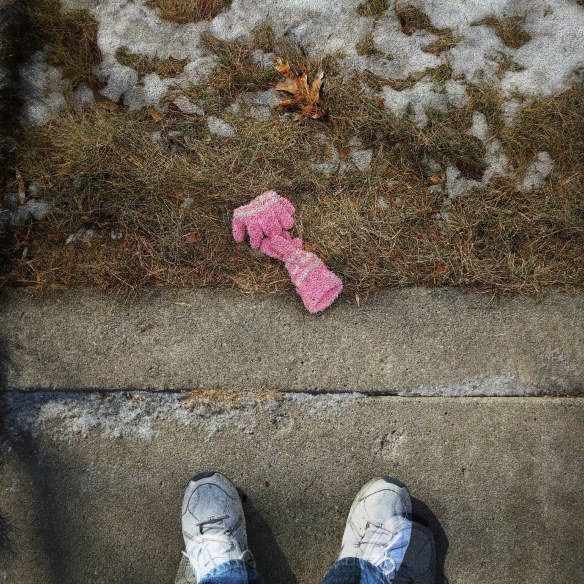
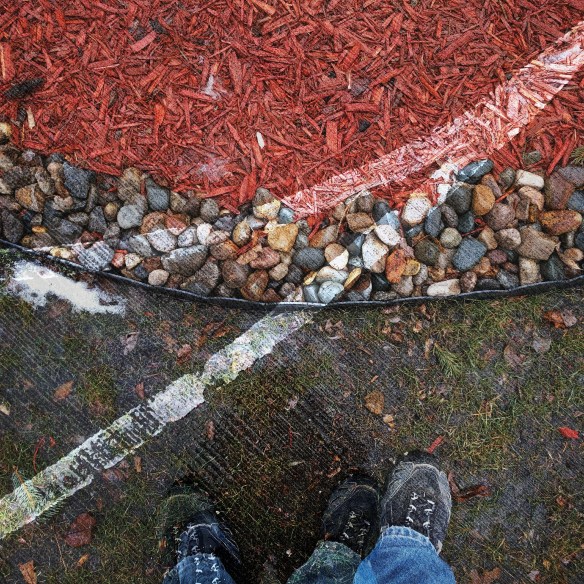
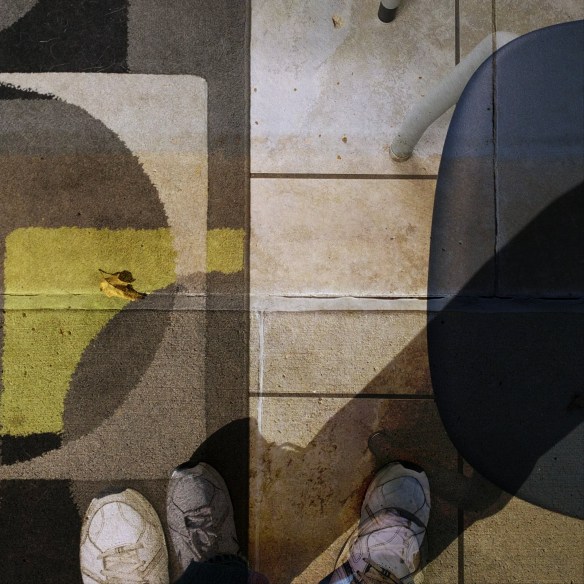
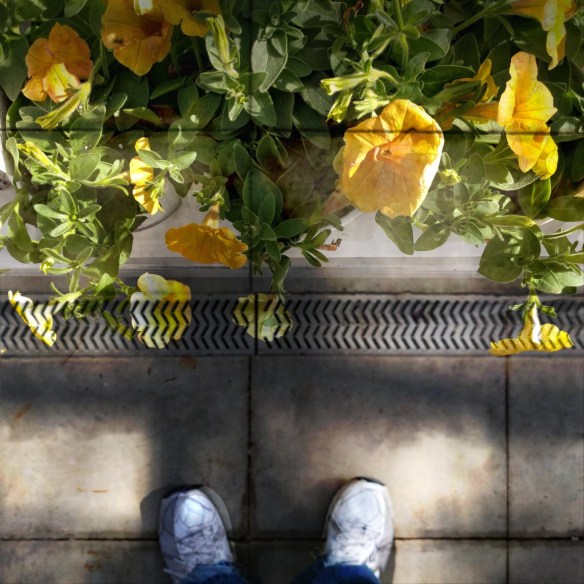
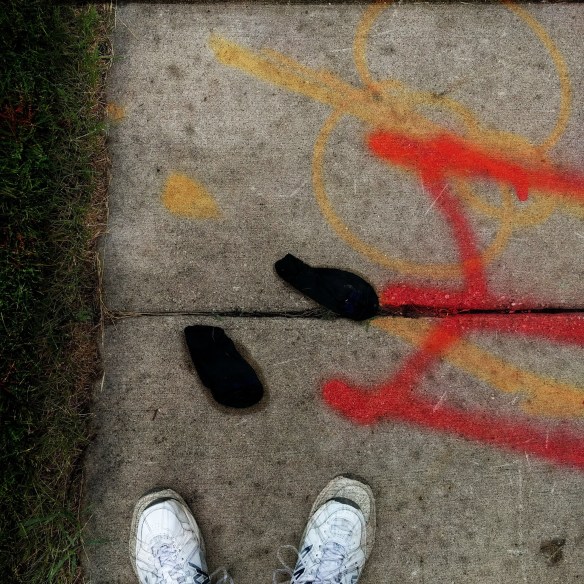
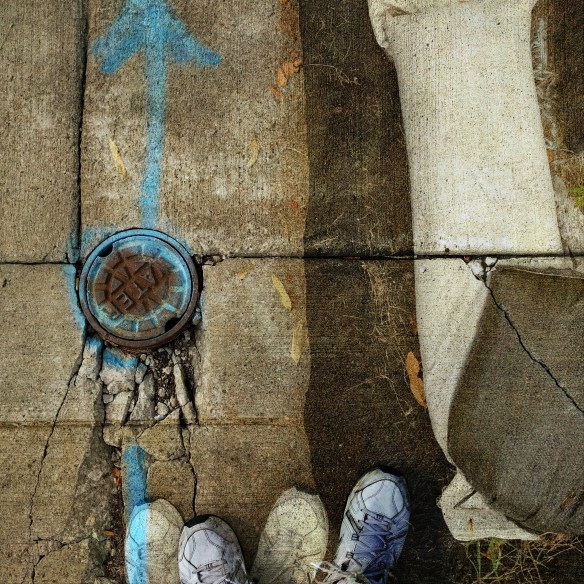
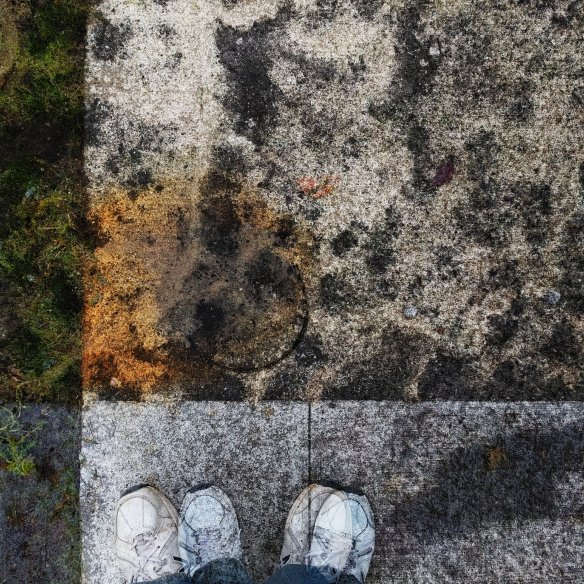
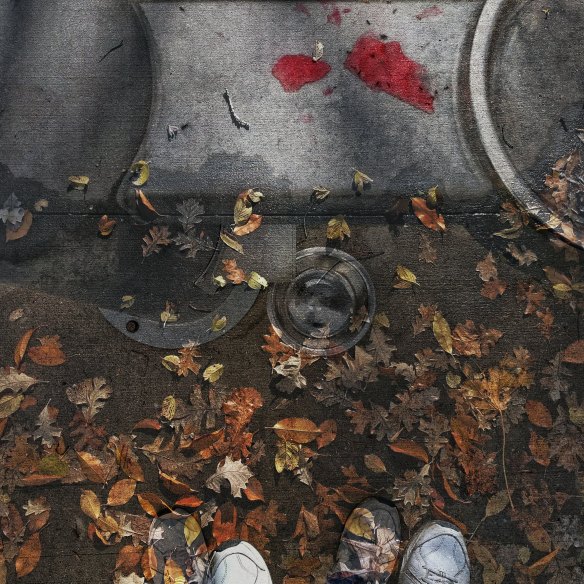
Back in January I began a second photo project (and seeing what I’ve just written, there’s a part of me asking ‘What sort of boneheaded idjit starts a photo project in fucking January?’) under the Knuckles Dobrovic alias. The first project was simple and stupid and rather fun: I put a thing on a table and photographed it. This second project was also simple and fairly unoriginal: when I took a walk I’d stop periodically and photograph my feet. The only original aspect of the notion was that I’d layer two or three of those photos on top of each other, making double or triple exposures.

January 29, the project began.

Why? Well, since it’s a photo project, there has to be at least one pretentious bullshit element at work, right? Dude, this project has two pretentious bullshit elements. Here they are.

Pretentious Bullshit Element One: Susan Sontag described photographs as ‘a thin slice of space and time.’ By layering different photographs shot at different times in different places on the same day, I wanted to suggest there’s a thread that ties together those discreet slices of time and place. I wanted to suggest that although I shot THIS photo HERE and THAT photo THERE, they’re basically one photograph of the same walk.

Pretentious Bullshit Element Two: The Buddhist monk Thích Nhat Hạnh, said this about walking meditation: When you walk, arrive with every step. I love that idea, though I’m not entirely sure what it actually means. But when I stopped to take the photos for this gig, I liked to tell myself that I’d arrived at that scattering of dead leaves, or at that lost mitten, or at that manhole cover.

February 19

See? Told you it was pretentious bullshit. But it helped me establish the gig in my head. It made the project purposeful. The concept appealed to me. The concept still does. But it’s been nine months, and I think I’ve learned as much as I can from the gig. I’d like to say I’ve accomplished my goal, except that there really wasn’t any goal. It was just an interesting thing to do while walking. And now it’s beginning to feel a tad stale to me.

March 12

One of the things I learned, though, is that the sort of stuff I’d originally thought might be interesting, often wasn’t. Shadow turned out to be surprisingly difficult to incorporate. Bright colors were often discordant in double exposures, or else they just turned into a muddy mucky brown. And small visually interesting stuff (like, say, a dead sparrow or a pair of sunglasses with one shattered lens) just tend to disappear in double exposures. 

April 26

I also discovered that I’m in bondage to a certain level of geometric orderliness. Initially, I deliberately photographed a lot of diagonal lines in the hope they’d add a pleasing complexity to the final photographs. Sometimes they did, but more often they just made the double exposures confusing. So I found myself relying more and more on lines that were horizontal or vertical — a sort of Mondrian neoplasticism (and boom, there’s more pretentious bullshit).

June 11

Finally, I was sort of surprised that not every walk resulted in a double exposure I found pleasing enough to publish. I’ve no idea how many total photos I shot for this project, or how many walks I took, but I generally shot at least three and up to eight photos of my feet on each walk. On some walks I simply failed to photograph two things that would work as double exposures.

August 17

So there we are. Nine months, 124 photographs. That’s enough. This gig is done. But I’m going to re-repeat something I said at the end of the first Knuckles project (and repeated at the beginning of this project):

I’ll probably come up with some other sort of project, simply because I’ve grown fond of the name Knuckles Dobrovic. I realize that’s a stupid reason. I don’t care. I’ve no objection to doing things for stupid reasons.

September 29

I don’t know yet what the project will be. I’m still intrigued by double exposures, so it may have something to do with that. And I’m intrigued by the concept of appropriation, so that may work into it somehow. Or it may be something completely unrelated to those things. Or hell, I may not come up with any idea at all, and this will be the end of Knuckles Dobrovic.

But I doubt it.

October 31, project ends.

ADDENDUM: I have been chastised for not including a link to the project on Instagram. For some reason, it never occurred to me. I suck at self-promotion. But for those interested in seeing all the photos, here you go: Knuckles Dobrovic.

suicide

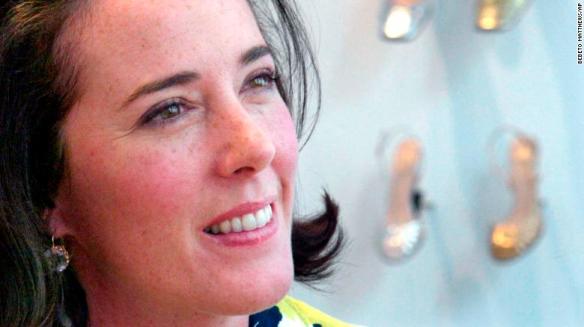
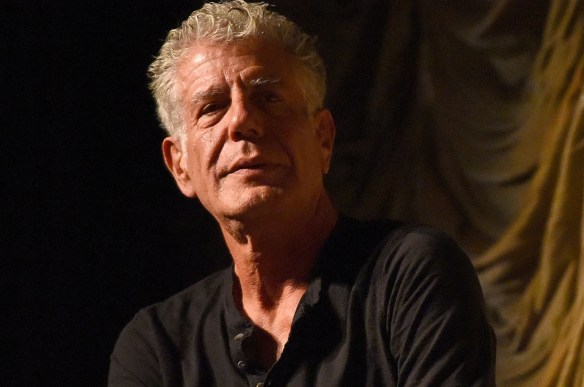
Kate Spade a few days ago. Anthony Bourdain today. I’m rarely surprised when I hear somebody has committed suicide. Saddened, yes, to be sure, but hardly ever shocked or surprised. Why? Partly because there are so many reasons for folks to want to kill themselves, and partly because thoughts of suicide are universal, and partly because the thought of nonexistence can be so strangely attractive.

I doubt I know anybody who hasn’t, at one point or another, thought about how nice it would be if you could just remove yourself from existence. All your problems, all those life complications, all that stress and anxiety and pressure — all of it, just gone.

For some folks there might be some measure of vindictiveness in the thought; that whole ‘They’ll miss me when I’m gone‘ thing. But I suspect most folks who indulge in the thought of suicide are more likely to be thinking something like ‘I wish I’d never been born.’ It’s not death itself that’s attractive, it’s deletion. It’s not being whited out or erased from the page so much as having never been written onto the page in the first place. That way nobody misses you when you’re gone, nobody suffers.

Kate Spade

Most of us never act on those thoughts, of course. Some do. Some succeed. But here’s the thing: everybody has a reason to commit suicide. Everybody. Most of us also have reasons not to do it.

Here are my reasons for suicide: 1) I’ve witnessed/done way too many ugly things in my life; I have way too many ugly images in my head, and not a day goes by without at least one of them popping up, 2) I’m getting old and my body is beginning to fail; I hurt a lot; my knees are crap; I can no longer do things I used to do easily, which is sometimes comical and sometimes terribly frustrating, 3) I’m moderately poor; I never expected to live this long, so I took no steps to insure I’d have enough money to live comfortably as I aged (in the same way I took no steps to insure I’d be healthy). I’m not so poor I’ll ever miss a meal, but more poor than I ever expected to be.

I don’t regret any of that. I may not like the images in my head, but I’m glad I’ve lived the sort of life where I experienced stuff most folks haven’t. I may be beat-up physically, but I’m glad I’ve lived the sort of life where fear of pain or suffering never stopped me from doing something. And I may be poor, but I’m glad I’ve never felt the need for financial security and I’m glad I’ve never made a safe career choice or taken a career path for a steady paycheck.

Anthony Bourdain

Here are my primary reasons for NOT committing suicide: joy and curiosity. Every single day — hell, several times each and every day — I find something fascinating to see, think about, watch, study, enjoy. Every day — several times a day — something happens that makes me laugh, that delights me, that makes me stupidly happy. Every day, several times a day, I’m glad I’m alive. All that far outweighs any passing desire to delete myself from existence.

Besides, the convenient thing about suicide is that you can always do it tomorrow. It’s almost always an option. There’s some weird comfort in that.

I need to acknowledge, though, that I’ve never experienced actual depression. I’ve been deeply sad, I’ve been desperate, I’ve been terrified, but I’ve never felt any sort of sustained depression. That’s a closed box for me; I can understand it intellectually, but I’ve no idea what it’s like to live with any more than I know what it’s like to be blind. But if depression makes a person blind to beauty and joy and curiosity, I understand why it would seem to close any option for living.

So I’m sad about Kate Spade and Anthony Bourdain. I’m sad for their friends and family. I’m sad they felt they’d run out of options. I wish they’d been able to find a reason to delay the decision to kill themselves. I wish they’d continued to find reasons to delay that decision. I’m not surprised by what they did, and I think the world is a slightly lesser place without them in it — not just because they were celebrities or accomplished in their chosen fields, but because their continued existence was part of what made being alive worthwhile for others.

I think that’s probably true for almost everybody who considers suicide.

my ongoing relationship with phytoncide

It’s pre-morel mushroom season in my part of the world. Pre-morel season is that brief period before the brief period of actual morel season; it’s that interval when common sense, experience, and science all agree that it’s still too damned early for morels to appear, but you go hunting for them all the same because hey, you never know and why the hell not. Actual morel season probably won’t start until — who knows? Later this week? Ten days? It’s a damned mystery.

But let’s face it, for a lot of us, there’s no meaningful difference between pre-morel season and morel season. We find the same amount of mushrooms in both. In other words, none at all.

I’m okay with that. Finding morels is the other reason for hunting morels. The primary reason, for me at any rate, is to get out into the woods. Deep into the woods. As deep into the woods as possible, because the deeper into the woods you get, the more the world becomes slow and quiet. Not silent — just quiet. Between wind and wildlife, the woods are rarely silent. It’s just that the sounds of the woods are subtle and usually indirect.

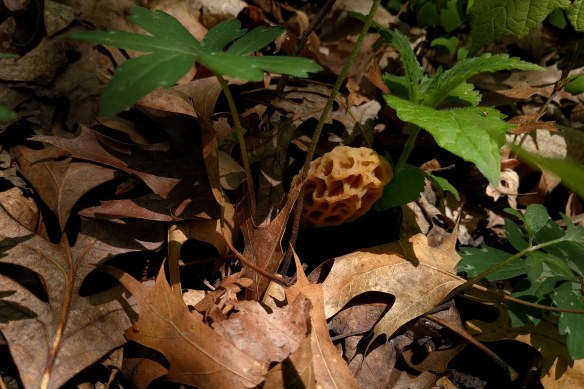
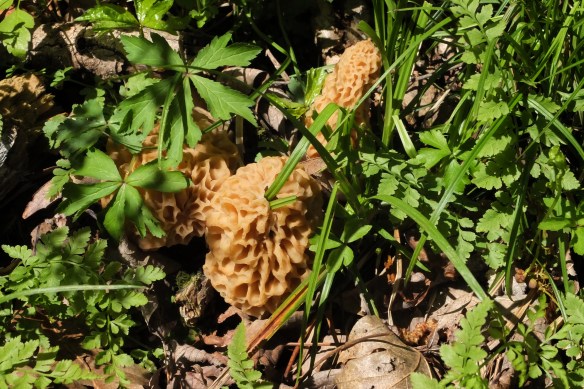
If you spot one morel, there are usually others nearby.

Subtle and indirect — that’s how you find morels in the woods. You walk slowly, scanning the ground for small disruptions in the pattern of the dead leaves. You walk for a couple of minutes, you stop and search for a couple of minutes. It doesn’t necessarily matter where you walk. There are dozens of tips suggesting the best conditions for finding morels — near dead/dying elm trees, old creek bottoms, south-facing slopes, areas of mottled sun, areas of bright occasional sun, shady areas — but the difference between spotting a morel and missing one is often just a matter of a few feet in one direction or another. So you sort of meander semi-aimlessly through the woods, guided by 1) the wisdom of your morel-hunting ancestors, 2) the terrain itself, 3) maybe a deer track, and 4) a sizable dose of bullshit folklore.

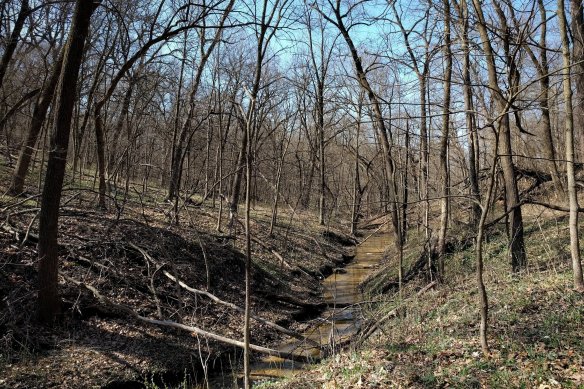
dead elm in an old creek bottom during actual morel season

Hunting morels is weirdly meditative. That’s why folks who talk about hunting morels sometimes sound like students of Zen. Be aware without concentrating, be focused without any objective point of focus. Morels can be masters of camouflage; you can carefully study a few square feet of woodland for a couple of minutes, suddenly realize there are two or three morels right there in plain sight, look away to tell your friends, and then struggle to find those same morels five seconds later.

But here’s a true thing about hunting morels: you can find them just about anyplace. Abandoned lots in town, roadside ditches, suburban yards, in sand, in mud, along farm fields and pastures. Another true thing: a morel you gather from a rural roadside is just as tasty as a morel you gather from the deep woods. One more true thing: there’s always delight in finding a morel anywhere at all.

Actually on a south-facing slope

Still, most of us hunt them in the woods. The tick-infested, thorn-ridden, spiderwebbed, bramble-thick woods. That’s partly because the odds of finding a morel are somewhat better in the woods. Not a lot better, but better — just like the odds of winning the lottery are only slightly improved by buying a ticket. Still, I think most of us hunt them in the woods because getting deep into the woods is…well, it’s nice, isn’t it. It’s pleasant. It’s deeply relaxing. It’s…I’m going to say it…therapeutic.

I’ve seen lots of online references to ‘forest bathing’ lately. That’s a notion developed in Japan (where it’s called shinrin-yoku) back in the 1980s. Forest bathing sounds silly, but it’s become a rather trendy form of therapy. I recently read that it can increase a person’s “capacity to communicate with the land and its species.” I’ve no idea what that means, but it doesn’t sound any less absurd that some of the medical claims in support of forest bathing. For example, this:

[M]any trees give off organic compounds that support our “NK” (natural killer) cells that are part of our immune system’s way of fighting cancer.

Completely ridiculous, right? Well, actually, no. It turns out trees and plants actually do emit compounds called phytoncides. Surprisingly, this has nothing to do with the violent death of phytons. Phytoncides help prevent trees and plants from rotting or being eaten by some insects and animals. And hey, when you go into the woods, you breathe that shit in. And guess what? It turns out, it’s actually good for you.

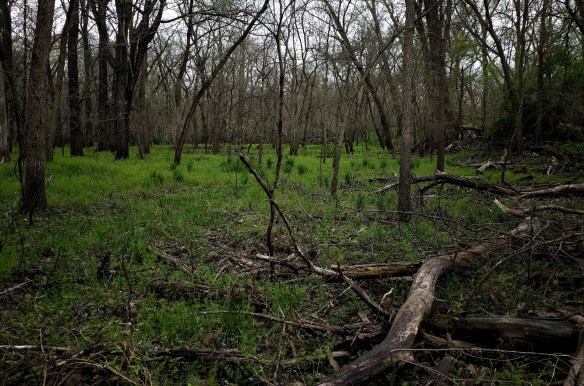
This what pre-morel season looks like — nothing but you, some ticks, and an invisible cloud of phytoncides.

Seriously. A few years ago the New York Times acknowledged studies demonstrating that walking in the woods for a couple of hours can actually increase a person’s white corpuscles (those ‘NK’ cells mentioned earlier) for up to a week. There have been a number of highly respected medical researchers writing in highly respected medical journals all highly agreeing that despite its absurd name, forest bathing (and therefore morel hunting) is good for you.

This video is from a couple of years ago, during actual morel season. It may look like a lazy stroll down a deer track. But no! In fact, this is me madly forest bathing and soaking up phytoncides like a damned sponge.

I’m always a tad alarmed to discover that something I enjoy is good for me. I suspect I’ll now be accused of hunting morels for my health, which would take a great deal of the fun out of it. Well, it would — except that, as I said, finding morels is the other reason for hunting them. Sometimes the point of morel hunting is coming home with a sack (mesh, naturally, so the spores can be spread) full of morels. I don’t mind doing something healthy if it delivers the occasional mushroom.

So for the next few weeks — once pre-morel season morphs into morel season — I’ll be out there as often as I can, forest bathing like motherfucker. I don’t care if it’s good for me or not. I’ll be looking for shrooms; my white corpuscles can look out for themselves.

thanks

Occasionally people send me things. I’ve no idea why they do, but they do. Not often. Maybe three or four times a year. But periodically the postal carrier arrives at the door with an unexpected package.

Well, not always unexpected. I mean, usually somebody has emailed me and said something like “Dude, I have something for you — what’s your address?” And I give them my address. Why the hell not? I spent a chunk of my life as a professional invader of privacy, so I know the notion of personal privacy is pretty much an illusion. So far nobody has mailed me dog shit or anything explodey, so there’s that.

It always pleases me when these packages arrive. Sometimes, I confess, I’m a tad confused by what’s actually in the package — because sometimes the thing in the package is…well, let’s say some of the stuff is eccentric. But still, how could I not be pleased at the generosity and thoughtfulness behind the gift?

A random assortment of stuff folks have sent me.

I get photographs, of course. Lovely, interesting, beautifully printed photographs. And books (usually about photography, or about photographers, or by photographers but I’ve also received stuff like old Conan Doyle novels). I’ve a friend who, like some character out of fiction, sits in European cafes and writes beautifully (occasionally indecipherable) hand-written letters on the most sensuous paper, sometimes including an interesting business card. And occasionally there’s the eccentric stuff — shark teeth, a bent and rusty horseshoe, a bit of shale shaped like a duck’s head, an advert for gas masks, a box of Jane Austen band-aids, a ceramic ashtray. “Saw this,” people write, “thought of you.” I’m not sure quite what it means when somebody sees a key chain modeled after a Medical Examiner’s toe tag and thinks of me, but I like to think it’s somehow a compliment.

Yes, I took a selfie with a Jane Austen band-aid on my nose.

Okay, this is going to seem like a tangent, but it’s not. Back in 2012 I wrote a blog post about encountering a huge murder of crows. A couple of years ago, I was notified about a new comment on that post. It read:

Hi Greg,
I love your photos. I, too, am a huge fan of crows and ravens. We had a pet raven named Cyrano De Bergerac. He was so smart and so funny. I was wondering if I could use/buy one of your crow photos to include in a painting I want to do.
Thanks from heather

I said yes, of course. I usually say yes to this sort of thing. Besides, I’m a huge fan of crows and a huge fan of Cyrano (the Brian Hooker translation) and a huge fan of folks who can paint. So I said yes, then I promptly forgot all about it. I usually promptly forget about this sort of thing. But then in January I got an email.

Dear Greg, I responded to an early blog post about crows. I had a pet raven named Cyrano De Bergerac and I asked if I could use your photos for a painting I wanted to do. I finally got around to working on it. I am almost finished and I was wondering if you would like to have it. If so, may I have your mailing address?  Thanks from Heather

So I gave her my address. And, again, promptly forgot all about it. Then the painting arrived.

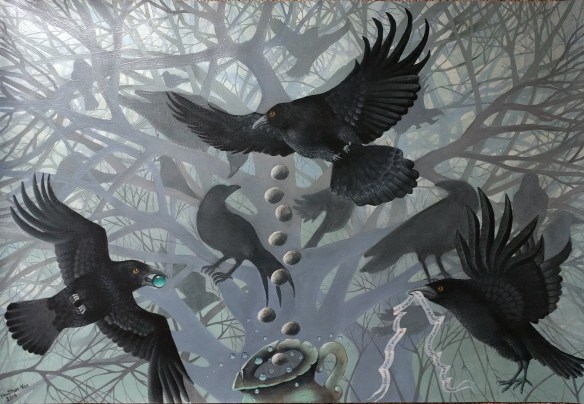
I don’t know what I was expecting. Something small, I suppose. Maybe one of those 8×10 cotton duck canvas panels. Actually, I’m not sure I had any expectations at all. I was just pleased that Heather liked a photograph, and pleased that she wanted to use it as a basis for a painting, and enormously pleased that she was generous enough to want me to have the final work. But whatever I was expecting, I can say without any hesitation that it wasn’t this. It wasn’t 34×24 inches of this:

I was gobsmacked. My gob? Totally smacked. It’s crows, of course, but it’s not just crows; it’s Aesop’s crow, the one from the fable in which a thirsty crow drops pebbles into a jug of water until the water level rises so he can drink. It’s Aesop’s clever crow channeled through Heather Vos, with a bit of mysticism tossed in, and a healthy dollop of pure crowness.

There’s a 12th century bestiary that includes an imaginary discussion between a crow and God. God, it seemed, was foolish enough to try to ignore the crow. The crow wasn’t having any of that, even from a god. The crow said,

“I, Crow, a talker, greet thee Lord. with definite speech, and if you fail to see me it is because you refuse to believe I am a bird.”

This what I love about crows, and it’s what I love second-most about this painting. Crows are clever, confident enough to talk to gods as an equal — confident enough to explain things to gods. We see that crow confidence here.

What I love most about the painting, of course, is that it exists. That it’s a physical reminder that people like Heather Vos exist. That a woman from a small town in Ontario, was thoughtful enough, generous enough, talented enough to create this painting and share it with me.

I’m a lucky guy, I recognize that. I live in a safe place, I have a warm bed in which to sleep, I haven’t had to miss a meal in years, I have friends and family. I’m generally a ridiculously happy person. On those rare occasions when I start to feel the world is cold and cruel (and there’s ample reason to feel that way these days) all I have to do is look around my desk and I’m reminded that the world is full of people who are kind and caring and altruistic and warm-hearted — and I’d go on, but I already sound too much like a Pollyanna.

But thanks — thanks to Heather and to everybody who has ever sent me anything, including their thoughts.

no need to help the arseholes

Yesterday I mocked the biased preliminary report on the Russia investigation from the Republicans on the House Permanent Select Committee on Intelligence. I included a few silly fictionalized tweets based on Comrade Trump’s all-caps tweet celebrating the prelim HPSCI report. One of those fictional tweets…well, hold on. I’ll come back to that.

I tend to write these blog posts fairly quickly. I may piss away a chunk of time doing research, but the actual writing happens in a bit of a rush. Most often it’s a first draft — so there are occasional typos, errors in grammar, mispeled wirds, or words omitted. It also means I sometimes includes stupid shit I wouldn’t have included if I’d paused long enough to consider how the stupid shit could be interpreted by folks who don’t know me. Or even those who do know me.

I made a rare editorial change before publishing yesterday’s post. I deleted a harmless but snarky fake tweet about HPSCI defending the music of Nickelback. I wanted to include something more obviously and sharply political, something more Republicanish. I replaced it with a snarky fake tweet about HPSCI and Stormy Daniels.

This prompted my friend (for the purposes of this post, I’ll call her “Jenn” — which is coincidentally her name) to respond. She wrote:

Loved this, darlin’, until the “STORMY DANIELS PROBABLY ACTUALLY A MAN” bit, which chucks a mudball of mockery in an unfortunate and undeserved direction.

“Jenn” went on to say this:

I’m in complete favor of taking jabs at Republican bullshit and hypocrisy; and lawdy, you do it well. But I find it cruel when a joke depends on transphobia and homophobia for any sort of “scaffolding.” Even if it IS exactly the sort of thing these arseholes would say. There is no need to help the arseholes sideswipe people who are already vulnerable and targeted and getting hurt all the damned time.

“Jenn” is smart, funny, compassionate, and thoughtful. She’s also a good friend. And she’s right. I’d intended the Stormy Daniels bit to be a swipe at the misogyny / gender insecurity of Congressional Republicans. But that swipe WAS built on the hurtful ways haters depict some folks who are already marginalized. It’s all the more hurtful since I have friends who fall outside of traditional gender norms.

I want to say this: I will not let anybody — friend or not — police my speech. But I also want to say this: I need to remember to police my own speech. I’m grateful I have friends who’ll call me out when I’ve crossed a boundary. I may not always agree with the boundary, I may not respect it and I may intentionally violate it — but I’m SO thankful for friends who point out where their boundaries are.

One of the most difficult things we can do — and something we really MUST do — is to call out our friends and family when they say or do something offensive or stupid. It’s probably harder to call out our friends than it is to call out a stranger. It took a bit of courage, I think, for “Jenn” to tell me I’d fucked up. It would have been so much easier for her to stay silent.

Do Not Feed the Arseholes

In this case, I totally agree with “Jenn”. As she said, there was “no need to help the arseholes.” Helping the arseholes is just a tiny step away from being an arsehole. I could have made my point in another way. After “Jenn” spoke up, I considered editing the blog post and re-inserting the snarky Nickelback bit. But that would just be covering my tracks. I think it’s probably more important to acknowledge that I fucked up.

And hey, let’s face it, I’ll likely do it again. We all fuck up. And we can all benefit from friends who remind us not to help the arseholes.

time insists on change

“Because things are the way they are, things will not stay the way they are.” Brecht was right about that. Time insists on change. That’s not a bad thing — but it’s not always welcome.

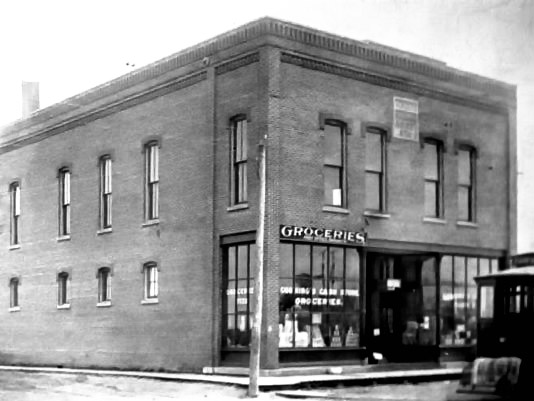
Corning’s Cash Store

In 1893, the International Order of Odd Fellows established Lodge 576, apparently named for General William Tecumseh Sherman — the Union general who famously (or infamously) inflicted total war on the Confederate states during the U.S. Civil War thirty years earlier. The Odd Fellows held their meetings upstairs and leased the ground floor to Corning’s Cash Store.

At some point in the 1940s, the grocery store was sold and Fairground Hardware opened. Mike (I don’t know his last name) bought the place about twenty years ago. In a couple of days, everything in the store will be auctioned off, and Fairground Hardware will become…something else. Possibly a bistro.

Fairground Hardware

The fact that Fairground Hardware lasted as long as it did is something of a miracle. Small, local hardware stores have been failing for more than a decade, driven out of business by big box ‘home improvement’ enterprises and giant retail chains. Online shopping drove the last nail in the hardware coffin.

Fairground Hardware’s survival was due in part to its location; as the name suggests, it’s located directly across from the Iowa State Fairgrounds. During the ten days of the state fair, the hardware store saw a lot of customers — drawn in more by the store’s appearance and its peculiar inventory. A lot of people enter the store just to look around.

That was certainly what first attracted me to the store. I occasionally eat at a working class diner on the corner opposite Fairground Hardware, and I always found myself intrigued by the store. Not so much the structure itself, but by the fact that it was called a hardware store, and yet the shop windows contained an assortment of cowboy hats, old radios, oddly shaped tin canisters, and ancient advertisements for products I’d never heard of before.

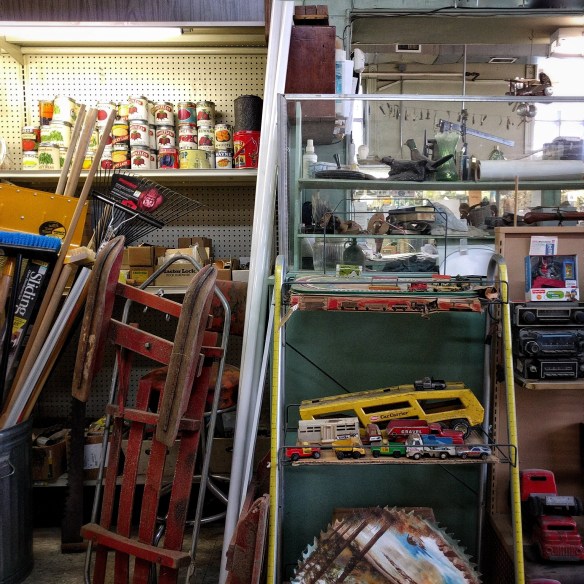
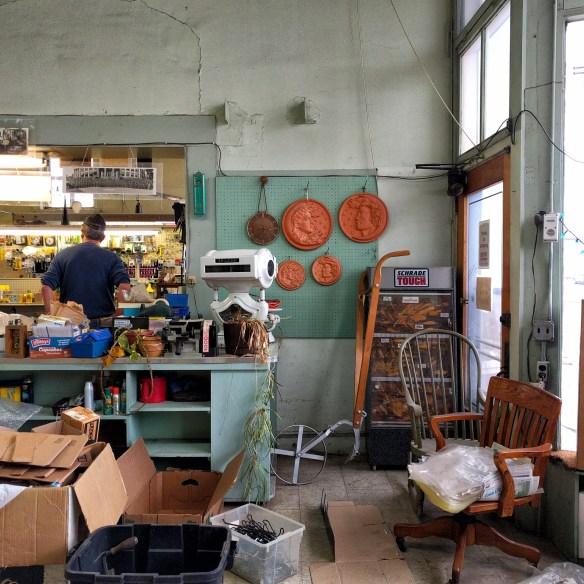
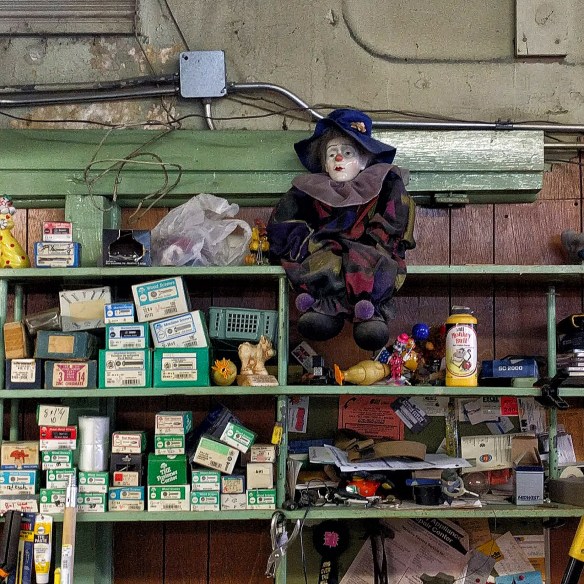
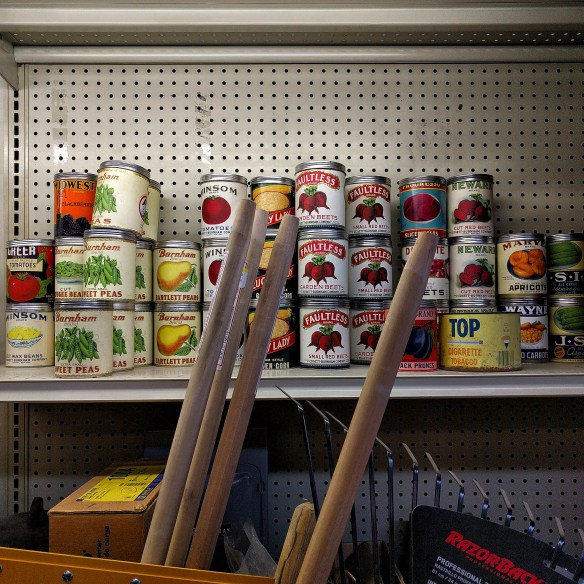
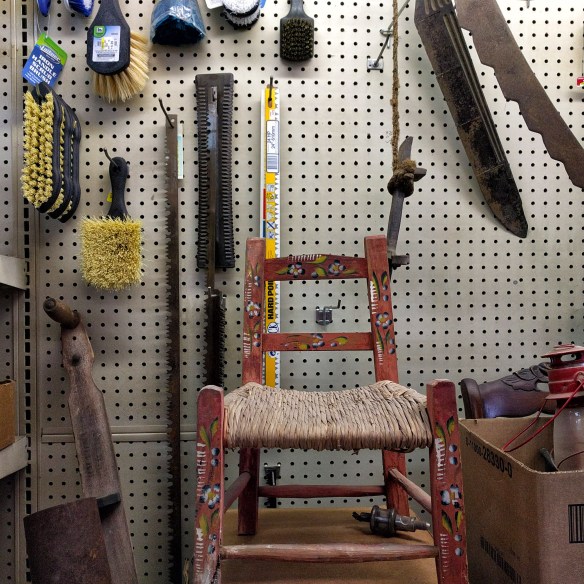
The interior of the shop makes the shop windows seem almost normal. Yes, there are some of the things you’d expect to find in a hardware store — wood screws, paint brushes, wrench sets, replacement parts for water heaters and toilets, mallets, cold chisels, shovels, crank-neck gouges, screwdrivers. But scattered throughout the store are things you do not expect to find in a hardware store — things that have nothing to do with hardware at all. Things that have nothing to do with normal reality.

Stepping into Fairground Hardware is like stepping into a set for a David Lynch film. The mix of normal and not-normal is wonderfully disorienting. Above a display of sockets for wrenches, you’ll find brightly colored fishing lures hung on a line like holiday ornaments. A plastic lobster is affixed to a ceiling water pipe, under which is a selection of coils of industrial wire. An old leather horse collar hangs from a peg-board along with some gardening tools.

Everywhere you turn you find yourself saying, “Wait…what? Why are there taxidermied Canada Geese next to the Allen wrenches, which are beside the cans of spray paint? Who puts PVC pipe and vintage Melmac dishes together, along with toy trains and light bulbs? Putty knives and puppets and metal screws? What? Halloween decorations? And…wait, canned goods? Those can’t be actual canned goods. Can they? Can they?”

Maybe the shelving made sense at one point in time. But it seems clear that in recent years none of this stuff was placed where it is as part of a merchandising strategy. It’s equally clear it hasn’t been placed simply to astonish the customers. I can’t say how Mike decided to put anything where he did, but walking through the store it feels more like he simply had a thing in his hand and saw a place without a thing, and so put the thing in his hand right there. And that’s where it stayed.

Mike himself, the owner, you couldn’t call him a ‘character’. Not really. I’ve probably gone into Fairground Hardware once or twice a year for the past few years. He can probably tell I’m just there to look, not to shop — and for the most part, he’s remained quiet and reserved. But when he decides to talk, he talks. You can’t get him to stop. And he’ll talk about almost any subject. The Old West, his childhood traumas, Donald Trump (he’s a fan), clowns, the inevitability of change. You can try to ease your way out of the conversation, you can say, “Well, I should probably be goin…”, and he’ll start on another tangent — his issues with his foot, why he prefers baseball caps to other hats, the history of camouflage.

You get the sense that he spends a lot of time alone in that shop — and that he’s been okay with that. He’s not reconciled to the fact that Fairground Hardware is going to close. He’s obviously a tad skeptical of the plan to turn the building into a bistro — you can tell simply by the way he says bistro, as though the term itself smells like bad cheese.

Time insists on change. Because things are the way they are, things will not stay the way they are. Because things are the way they are, the authentic weirdness of Fairground Hardware will likely give way to a trendy bistro. In a working class neighborhood. That’s not a bad thing — but it’s not always welcome. And it’ll be a sad day when Mike has to turn off the ‘Open’ sign for the last time.