house of nope — or my ‘game of thrones’ evolution

At some point in the late 1990s a friend who knew I was skeptical about fantasy fiction passionately suggested I read A Game of Thrones. It was, she said, the first novel in a proposed trilogy, and unlike anything she’d ever read before.

So I read it. And hey, it was good. Even a fantasy fiction skeptic like me could appreciate the unpredictability of the narrative. About a year later, the second novel of the series was published. It was equally good, and I became fully invested in the narrative.

A year after that, the third book–and by then the author, G.R.R. Martin felt the original trilogy would require a fourth book. The story was strong enough that I was willing to wait for a fourth book and the end of the ‘trilogy.’

It was a long wait. Five years. Sure, I had to re-read the first three books to remember what was going on, but I didn’t mind. Except that now Martin was saying the story required six books. At least six. I was less invested in the narrative, so I wasn’t sure I wanted to wait another five years for the fifth book.

House of Nope

It took six years. And I bought it for a couple of reasons. First, why not? I wasn’t as invested in the story itself, but there were characters I loved and I wanted to see what happened to them. Second, HBO was producing a television series based on the novels. I told myself that meant G.R.R. Martin must be about to release the final book(s). Otherwise why would HBO even begin the series? It would be monumentally stupid for them to start filming such an expensive (and expansive) series without having an ending. Right?

I made a conscious decision not to watch the HBO series. I liked the books and I figured the series would be a pale version of the story (let’s face it, the book is almost always better than the movie or television series). I figured I might watch it after I’d read the final book, which I expected to be released in the not-too-distant future.

A couple of years went by. I heard a LOT of friends talking about the series. I decided it couldn’t hurt to watch the first episode. You know, just to confirm that it sucked. Besides, I was almost out of patience waiting for G.R.R. Martin to churn out another book. One episode wouldn’t ruin the books for me.

That first episode? It didn’t suck. It was actually pretty good. I seem to recall there was a lot of gratuitous tits and ass, but that’s what you expect from HBO. In any event, Tyrion was perfect and the cinematography was astonishingly good.

So I started watching the series. Not binge-watching, but every couple of nights I’d watch another episode. I told myself it would be okay, because surely the final book(s) would be published soon. Right? I mean, the series couldn’t continue if the books weren’t finished. Right?

Nope. The series moved beyond the books. The source material had stalled, but the screenwriters–presumably with Martin’s help/approval–continued the story. And…well, it wasn’t as good. There were some amazing battle scenes, and I was still invested in a few of the characters, so I continued to watch. But battle scenes are just that–scenes. Individual scenes don’t move the narrative very far. You have to string a lot of scenes together to create a narrative. The individual character story arcs became simple, almost cartoonish. Everything felt rushed. Some aspects of the show became sort of dumb. In fact, some aspects were completely fucking stupid. Worse, they were stupid without being interesting (yes, it’s possible to be both stupid and interesting at the same time–remember LOST?)

And then the series ended. It ended stupidly, as if the writers had lost interest. As if the writers had given up and just wanted to be done with the whole thing. It wasn’t just that the story resolution was disappointing, it was–and I don’t know how else to put this–it was wrong. It felt wrong. It was cheap.

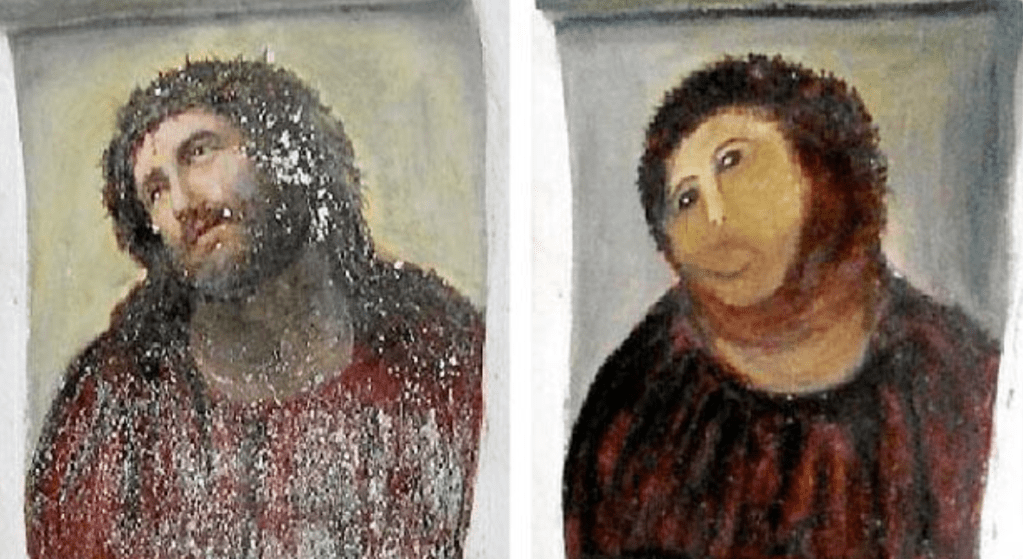
For those of us who believe passionately in the power of a narrative, there’s no betrayal worse than a resolution that cheapens the narrative. I won’t claim the HBO series was any sort of masterpiece, but it had been good, solid television. Ending it the way they did was like–you remember that 19th century painting Ecce Homo that was ‘restored’ by an elderly amateur? Yeah, that’s how Game of Thrones ended.

Now HBO is producing House of the Dragons, a GoT prequel. G.R.R. Martin apparently signed the deal back in 2018/19, when he was still promising to finish A Game of Thrones. Will the series be any good? I don’t know. And I don’t care. I simply don’t trust either HBO or G.R.R. Martin enough to care. I’ve lost all interest in anything Game of Thrones-related. If Martin ever actually produces a final volume in the book series, I can’t imagine caring enough to read it.

The sad thing is, House of the Dragons has a lot of narrative promise. But we’ve been lied to before.

That said, if HBO would string together a compilation of every scene involving Tyrion and release it as a show, I’d watch the hell out of it. Same for Brienne of Tarth. And Bronn. And of course, Arya Underfoot. Now that would be good television.

House of the Dragon? Fuck that.

what i need

I went to the market to buy beer. I was wandering up and down the aisle, looking at all the local and near-local craft beers, and one of the employees looked at me, smiled, and asked, “Whaddaya need?”

What do I need?

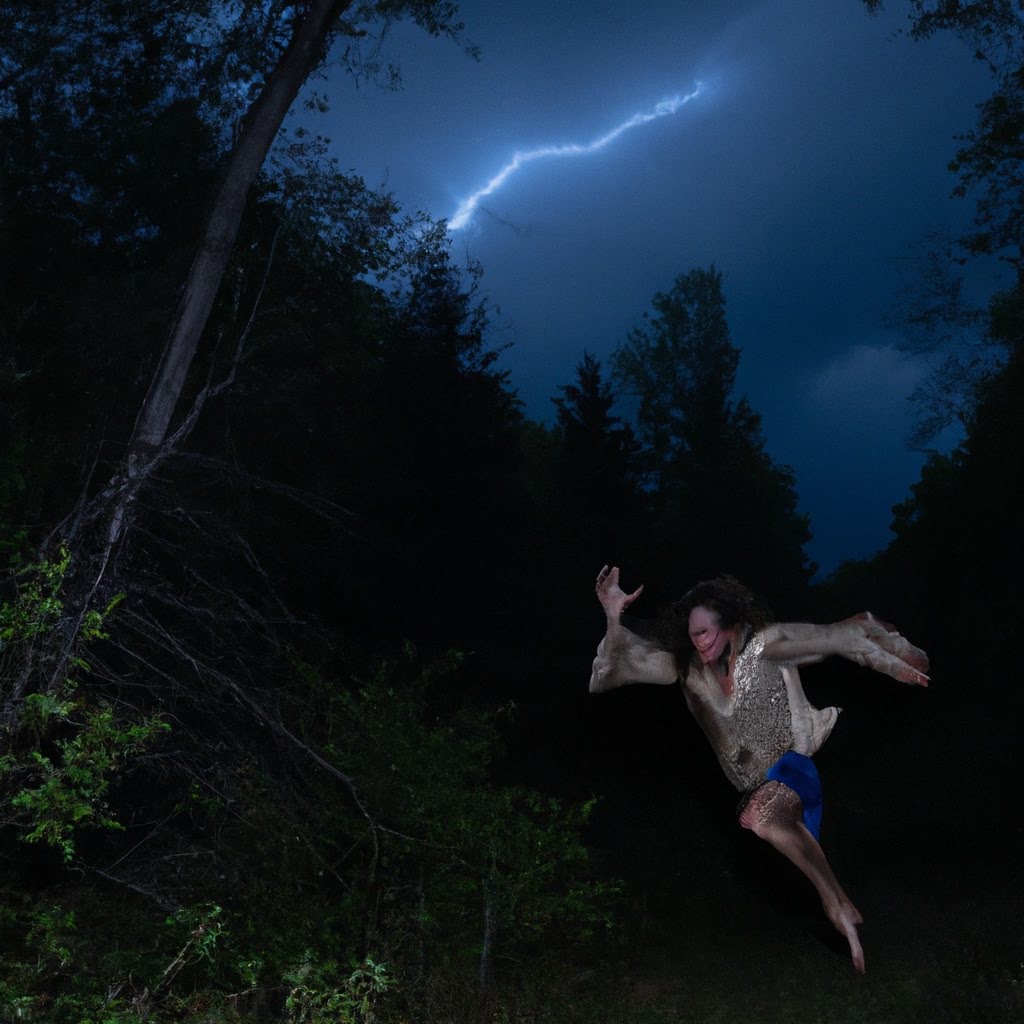
I need some relief from the heat. I need a rain shower. I need a thunderstorm. I need to feel that storm. I need thunder and lightning. I need to go outside in the storm in all my clothes, outside in the wind and the rain, and get soaking wet. I need to run around and around the house barefooted in the thunderstorm, like I used to do as a kid (to my momma’s horror). I need to be able to run again, run like I could when I was 16 years old and still had knees that worked. I need to run and jump like a pagan in a storm. I need to run through the woods at night. I need to be alone in someplace very big and very wild. I need to feel the tension of being near a large, wild animal, holding my breath, trying to be still so it won’t know I’m there. I need to leap over bonfires. I need to leap over stone fences. I need to run and scream in wild delight and know that I’m still part of a natural world where wonderful and awful things can and will happen.

What do I need?

I told him I needed a simple summer lager from a semi-local craft brewery. Or maybe a local ale. Something that could hold its own against a sandwich made with provolone, ham, prosciuttini, cappacuolo, salami, and pepperoni.

I left with a six-pack of Backpocket Brewery’s Tipsy in Tijuana and a four-pack of Mistress Brewing’s Daisy Ale.

inert, but lethal

I confess, I’m fascinated by military tech. Always have been. It’s awful, of course. So much military tech is about killing people, and, well, you know—killing people, by and large, is pretty much wrong, right? Yeah.

And yet, there it is; I’m still intrigued by military technology. I mention this because over the weekend the US, at the order of President Uncle Joe, killed Ayman al-Zawahiri, the leader of al-Qaeda. They killed him with a modified Hellfire missile fired by a Predator drone (and yeah, there’s a whole deeply weird, perverse taxonomy at work here—a Hellfire missile from a Predator drone). They killed him “as he stepped onto the balcony of a safe house in Kabul.”

Him. Just him. Just al-Zawahiri. Nobody else. No so-called ‘collateral damage’.

They were able to do that because the Department of Defense, in conjunction with the CIA and engineers from Lockheed Martin, modified an AGM-114 Hellfire missile and turned it into an AGM-114 RX9—basically a hundred-pound laser-guided Ginsu Knife Bomb. Instead of explosives, this missile has—and I’m NOT making this up—six sword-like blades that pop out of the sides of the missile moments before it strikes the target (and by ‘target’ I mean ‘the person the CIA really seriously no-shit wants to kill’).

Smaller than a six-foot-tall human (not sure why that’s important).

The idea, of course, is to limit the number of casualties. Most versions of Hellfire missiles involve explosives, which are notoriously indiscriminate. When shit blows up, anybody in the blast radius is going to get fucked up. That’s a problem. I mean, if the person the CIA really want to kills is, says, standing on a balcony in Kabul and you fire an explosive weapon at him, you’re going to see a lot of kinetic damage to the building and anybody in it (and anybody near it). Kinetic damage is a nice way of saying blown the fuck up.

When a hundred pounds of inert steel with half a dozen blades hits a target on a balcony, the damage is significantly more limited.

Okay, maybe not a Toyota—I dunno. But still.

This missile is so precise that it can target a specific side of a moving vehicle. When the CIA decided to kill Abu Khayr al-Masri, who was riding in the passenger seat of a Toyota (okay, I’m not certain it was a Toyota) the missile hit the passenger side of the Toyota. And yeah, it also killed the driver, because we’re still talking about a hundred pounds of metal WITH a half dozen sword blades flying at mach 1.3, so it’s not like the driver could duck and escape. And sure, anybody in the back seat probably got dinged up and will very likely require years of serious therapy. But still, that’s better than a fucking explosion, right?

Let’s face it. The Hellfire AGM-114 RX9 is a monstrous weapon. We should look on it with horror. And yet, I’m fascinated by it. I have deep, contradictory feelings about the US (or any nation, for that matter) conducting extra-judicial assassinations. But I also think terrorists like Ayman al-Zawahiri (and yeah, he was a terrorist) can’t be allowed to roam around free to plot acts of terror. Given the option, I’d prefer they get a fair trial and, if convicted of a crime, incarcerated. But that wasn’t really an option, was it. So I’m perversely glad that some heinous engineers put this Ninja Ginsu missile together.

What was it Walt Whitman said about containing multitudes?

hate

I’ve resisted hate. At least I’ve tried to resist hate. I told myself that hate is a pointless, futile emotion, that it only gets in the way, that it warps the process of thought, that it clouds judgment and leads to bad decisions. I’ve told myself that hate harms the hater more than the hated.

I still think that’s true. But I don’t care anymore.

It was difficult at first, but I came to accept the fact that I hated Donald Trump. I don’t need to list all the reasons for hating him — you’re probably aware of them, they’ve been pretty clear for most of his life. But man I resisted admitting to myself that I hated him. Actually hated him. I still hate him, of course. Hate is fucking hard to turn off. But that doesn’t matter, because I have no desire to stop hating Trump.

One of the problems with hate is that once you get the hang of it, it’s easy. It gets harder to resist. Trump taught me to hate. Today I hate Republicans. Right now, as I sit here and type this, I hate Republicans. Not just the Republicans who’ve voted in ways I disagree with, not just Republicans who hold public office at any level, not just the Republican Party — right now, this moment, I hate every person who voted for any Republican in the last five years, Make it ten years. I don’t think this hate will be as persistent as my hatred for Trump; I suspect this generalized hatred will subside over time. But right now, at this particularly painful point in time, I hate them.

They’re all complicit, every Republican, every one of them. The epidemic of gun violence in the US, that’s on Republicans. The erosion of civil rights and liberties, that’s on Republicans. The rise in hate crime against Asians, Jews, Women, Black people, trans people, Muslims, gay folks — that’s on Republicans. The rise of asshole billionaires, that’s on Republicans. The health care desert that so many people live in, that’s on Republicans. The collapse of representative democracy, that’s on Republicans and I fucking hate them for it.

I’ve learned to hate. I’m ashamed of it, but there it is. I’ve become a hater. I hate that they’ve taught me to hate. I feel diminished by that hate; I feel tainted because of it. I hate, but I’m still resisting being hateful. It’s bad enough to hate, to act on that hate…at that point, you’re probably lost. I know it’s possible to come back from that, but it wouldn’t be easy.

Working to defeat Republicans, however, isn’t hateful. It’s just necessary. If your foot becomes infected and gangrene sets it, you don’t amputate your foot because you hate it. You do it because it’s necessary for survival. Republicans are political gangrene; they are necrotic tissue on the body of representative democracy.

That’s where I am now. Right now. Today. I hate Republicans. But that’s not the reason I want them removed from political power and authority; I want them removed because that’s the only way to salvage democracy in the United States.

in facebook jail

I’m in Facebook jail this morning. I sorta deserve it. Not for the reasons given by FB, but for another reason. I’m prevented from commenting or posting on FB for a few more hours today, and for the next 29 days my group posts will be moved lower in the Feed (whatever that is). Why? Because I apparently have “repeatedly violated our Community Standards” by advocating violence.

How did I do that? My first time was back in March, during a discussion about Wordle of all things. I don’t recall the exact context, but I made a comment that I’d have to put a dollar in the knife jar. Somebody asked what the ‘knife jar’ was, and I told them the concept was similar to a swearing jar — when somebody is trying to stop cursing, they put some money in a jar every time they say an obscenity. The knife jar is based on that idea, except it’s when I feel the urge to stab something. It was obviously a joke, and everybody understood that. Everybody except FB. I was restricted for ‘advocating violence.’

Yesterday, while commenting in real time on the January 6 hearing, I complained that both Greg Jacob (former vice-presidential counsel) and Judge Luttig were responding to questions in excruciating detail, often repeating things they’d said earlier in their testimony, even repeating things they’d said earlier in the same response. I was especially irked by the slow, deliberate, very judicial responses of Judge Luttig. I commented that what Lutting was saying was critically important, but he didn’t need to consider every word before he said it. I commented that Liz Cheney could “stop them from repeating the same things over and over and over” if she “choked them with her pearls.” Again, it was obviously a joke, but again I was restricted by FB for ‘advocating violence.’

Here’s the thing. I do deserve punishment. NOT for advocating violence, but for being a jerk about Judge Luttig’s way of speaking. I learned this morning that Lutting may have suffered a stroke recently, which could account at least partially for his slow, deliberative speech. I don’t know if that’s true, of course, but it really doesn’t matter. The judge was under no obligation to speak the way I wanted him to speak. I, on the other hand, had a positive obligation to be patient with his way of speaking. I wasn’t patient. I was annoyed by the constant repetition, but I was also annoyed at Lutting for making me be patient. I was…let’s face it, I was an asshole. Mocking somebody for their manner of speech is an asshole move.

So yeah, I deserve to be in FB jail. Not for advocating violence but for being an asshole. Judge Luttig deserved better from me.

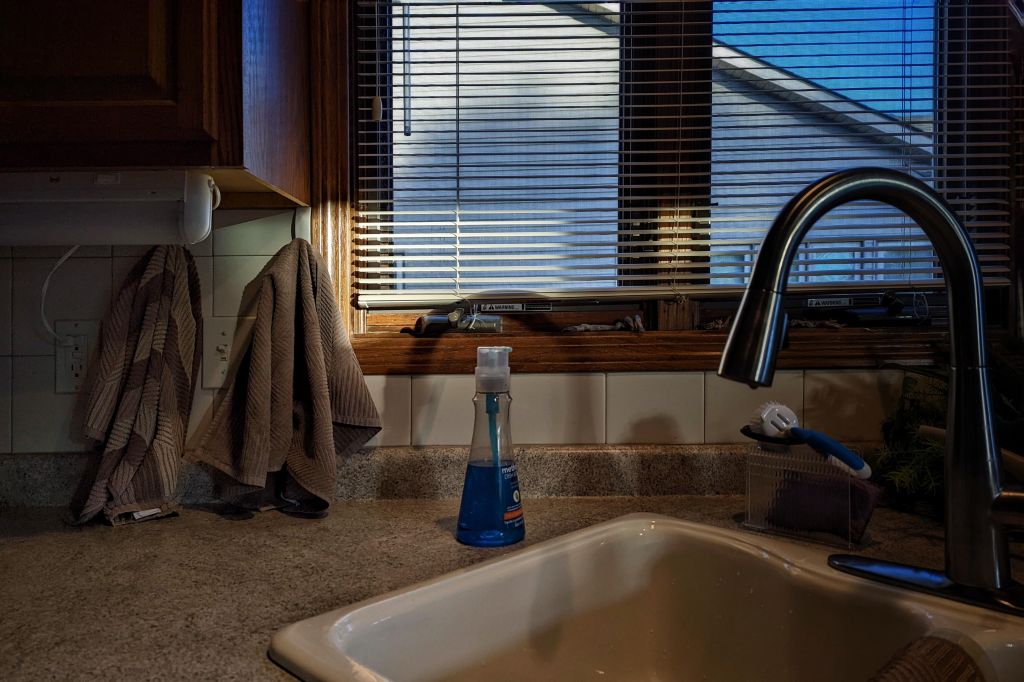
good morning and welcome to the waffle house

I woke up around 0530 this morning. I don’t sleep as much as I used to, though I generally sleep better. I have fewer nightmares, which is good. Fewer and less intense. And I seem to be better at remembering good dreams. This morning I remember dreaming about ordering breakfast at a Waffle House.

I’m sitting here in the kitchen in the heart of the American Midwest, drinking my cold brew coffee, craving hash browns, covered and chunked. Unless you’ve spent some time in a Waffle House–which is to say, unless you’ve lived in the American South–that won’t mean much to you. It’s probably been twenty years since I’ve set foot in a Waffle House, but I know in my bones I can walk into any Waffle House in any town and ask for hash browns covered and chunked, and they’ll know exactly what I want. It’s not code, exactly; it’s culture. I could make my own hash browns, of course. I could add some diced up ham and cover it all with melted cheese. But it wouldn’t be the same.

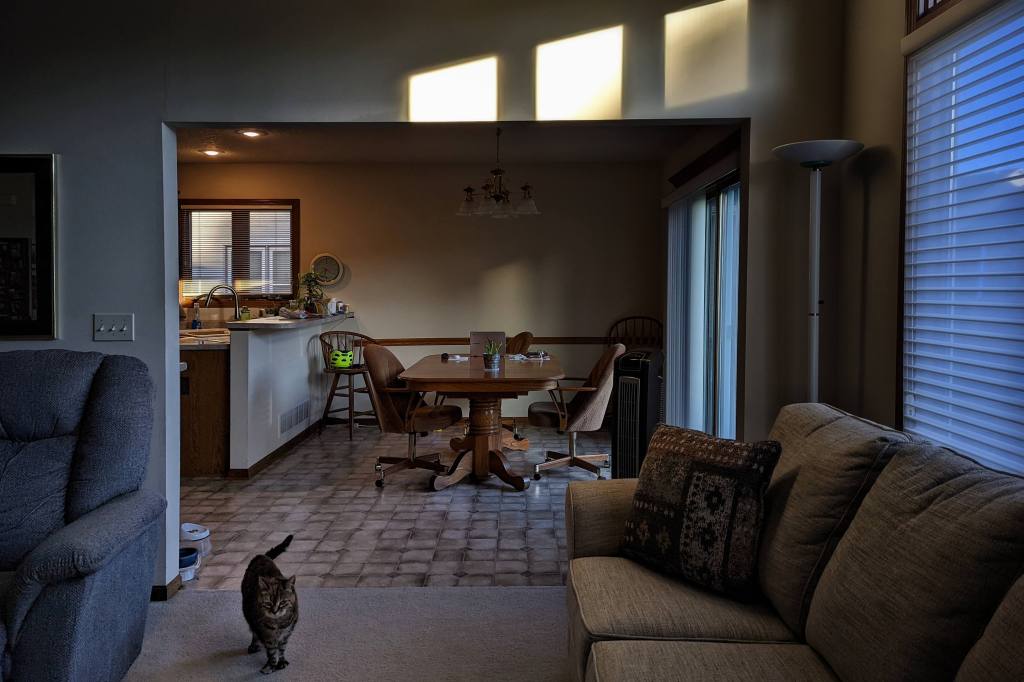
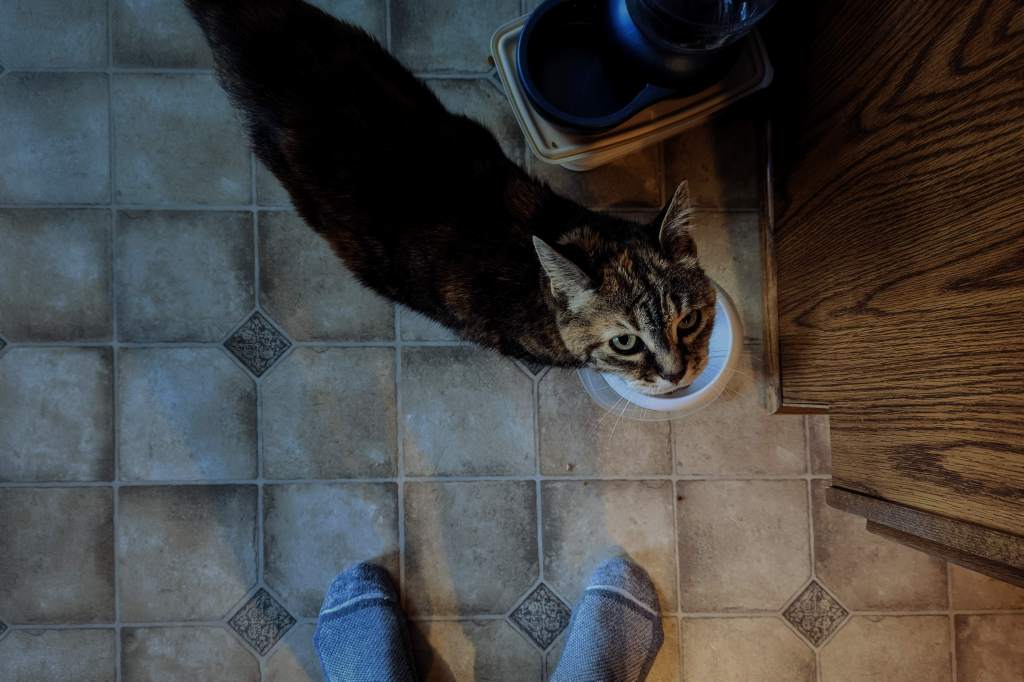
It’s 44F this morning. Unreasonably and unseasonably chilly, so I’ve been forced to put on socks and sweat pants–which I sorta kinda resent (I mean, c’mon, we’re three weeks into May, for fuck’s sake) and sorta kinda enjoy (it’s not so much the warm feet, although I like that; it’s that brief delicious pleasure of sliding my feet into warm socks). It feels like a late October morning in the South. The cat clearly thinks the chilly weather is bullshit, so is seeking extra attention this morning. I’m okay with that. Cats are warm.

The cool weather and the Waffle House dream have me feeling particularly nostalgic and Southern today. I enjoy the quiet too much to put on music, but in my head I’ve been hearing Mahalia Jackson, Mattie Moss Clark, and Tennessee Ernie Ford singing gospel music. I’m not even remotely Christian, but that was the Sunday morning music I grew up with. Snatches of Just a Closer Walk with Thee will drift through my head for a while this morning. As the sun comes up and the coffee disappears and the cat retreats to some quiet spot where she can curl up and sleep undisturbed, that music will gradually fade away again.

There. I’ve rinsed out my coffee mug. I’ve done today’s Wordle. I’ve read all the news I want to read (it’s still to early to read the news and pay attention; I’ll come back to it later, when I’m more willing to deal with reality). The sun has come up enough that I can turn off the kitchen lights. I’d say it’s time to start getting on with the day, but that sounds like I have some sort of plan or agenda to be accomplished. I don’t. I’ll read a bit, maybe go for a bike ride, give some thought to what to prepare for supper, do a few household chores. Since I woke up early, at some point I may take a nap.

There’s a verse of the gospel song Just a Closer Walk with Thee that rarely gets included in the more popular covers. It goes:

Through this world of toil and snares,
If I falter, Lord, who cares?

I know the lyric is meant to suggest the Lord cares, but since I don’t believe in any lord, I like to interpret the lyric as more tolerant and forgiving. It’s not a license to fuck up, but it acknowledges the universality of fucking up. Everybody fucks up. And everybody is welcome at the Waffle House. Doesn’t matter what you’ve done, if you ask for your hash browns chunked and covered, that’s what you’ll get.

attrition

Every morning this week I’ve sat here at the keyboard and started to write a post about the situation in Ukraine. Every single morning I’ve put a couple hundred words in a row, and every morning I’ve deleted them all.

I mean, what is there to say? Well, obviously there’s a LOT to say–the military situation, the refugee situation, the NATO situation, the war crimes situation, and on and on and on. But the internet is awash in experts opining and analyzing all that. What is there for ME to say? Is there anything I can contribute that’s meaningful?

Not much. I can express opinions, but my opinions about Ukraine aren’t very much different from most folks. And as for those folks whose opinions support Russia and Putin–what is there to say to or about them? Not much, other than ‘Russian warship, go fuck yourself’.

The problem (for me) is that it’s hard to write about anything else at the moment. Everything else seems trivial. Art? Clarence Thomas in the hospital? Republican hypocrisy? Pickleball? The January 6th prosecutions? The arrival of Spring and getting back on the bike? Voter suppression? The latest research on crows? Today’s hearing on the nomination of Ketanji Brown Jackson to the Supreme Court? There are lots of things that occupy my mind and my time besides Ukraine. It’s just that none of them seem as important. None of them ARE as important.

What makes this all the more awful is that the war in Ukraine has become something of a stalemate. It’s turning into a war of attrition–the ugliest, cruelest, and most brutal form of war. A war of attrition isn’t about territorial control; it’s about imposing as much suffering as possible in every way possible in order to force the enemy to give up. It’s about wearing away at the very foundations of a sustainable life–food and shelter. It’s about reducing towns and cities to uninhabitable rubble.

But here’s the truly awful thing: I suspect–I fear–the American public will begin to treat the war of attrition in the same way they’ve treated the global pandemic. They’ll get bored with it. It’ll be normalized, in the same way they’ve come to accept a thousand deaths a week from Covid as normal. In the same way they’ve come to accept extreme weather disasters as normal. Instead of being tortured from a death by a thousand cuts, those cuts will be seen as routine. (By the way, if you google ‘death by a thousand cuts’ most of the results will refer to a song by Taylor Swift rather than lingchi, the ancient Chinese method of torture and execution–how’s that for normalization?)

NOTHING ABOUT THE WAR IN UKRAINE IS NORMAL.

So, what are we to do? What am I to do? Carry on as usual with this blog? I guess the only answer is to try to find some sort of balance. Write about the stuff that interests me, even if some of that stuff is trivial. But also keep talking about the suffering of the people of Ukraine, and about the deliberate cruelty of Putin, and about the policies of nations that support–or fail to support–Ukraine.

That’s what I’ve decided to do. But it feels a little like attrition.

just to explain why i took a photo

Last week while out noodling around I came across a tank. When I say ‘tank’ I mean a decommissioned military tank. An M60 battle tank, to be exact. It’s fairly common when the military starts scrapping old tanks, they offer them to small towns to use as memorials, or to ‘decorate’ public parks or town squares or wherever the hell a small town would like to park one. The US military stopped deploying M60s in 1997.

But this isn’t about the tank, really. It’s about how I photographed it. Which was like this:

A friend asked me a couple of questions about the photo. First, what the hell is this a photograph of? Second, if it’s a photograph of a tank, why didn’t I include the whole tank? Those are valid questions. But they’re difficult to answer.

They’re difficult to answer for several reasons. The primary reason is that I’ve been shooting photos for so long that I rarely actually think about composition. I just kind of know what I want in the frame. Another reason it’s difficult to explain is because shooting a photo seems like it’s just a matter of releasing the shutter (or, with a cell phone, poking the whatsit that initiates the photo). But that moment is the result of a fairly complex process.

I wasn’t paying much attention to the process when I shot this, but I’ll try to recreate my thinking. Obviously, it began by getting out of the car to look at the tank because…well, there was a tank and I wanted to look at it. As I walked around it, I was attracted to that cascade of squarish shapes made by the building–so many different-sized squares of different textures. Then there was that white circle that sort of balanced the round rear tread wheel of the tank. And then there were those sweet vertical lines of the chimney and the light pole. And then I was drawn to that tiny splash of red, and that diagonal slant of the roof of the shed, and even the spade leaning against the light pole. All of those things appealed to me, both individually and as a collective.

I’d be lying if I said I noted all that stuff in that order, but when you’re lining up a shot it’s like your brain is ticking off boxes in a list. That works, that works, that doesn’t–so move a bit, that works. And then there’s some point when your synapses seem to agree that you’ve got all–or most–of the stuff you want in the frame, and you take the photo.

I’d probably have taken that photo even if the tank wasn’t there, because the light and the geometry appealed to me. But it was the tank that drew me to that spot and to me, that wee bit of tank is important to the composition. So, to me, it’s still a photo of the tank. The rest of the tank is implied.

Wait…I think I can explain this better. That same day, I took a photo of an old, rusted out Ford panel truck. Three photos, in fact, but only one photo mattered. Here’s the first photo.

There’s nothing wrong with this as a photo. Again, I composed it intuitively, without a lot of thought. It’s got good lines. The curve of that tree is nice; it sorta kinda follows the shape of the truck. There’s a decent balance to the composition. It’s a perfectly adequate photo, a decent documentation of an old, rusted out Ford panel truck. Nothing wrong with it, but not terribly interesting.

So I got closer. Changed the perspective.

Again, there’s nothing wrong with this photo. Again, the composition was casual but deliberate. However, you’ve probably seen ten thousand photos almost exactly like this. A rusty wreck of a vehicle–an artifact of an outdated civilization cast aside in a living environment that will continue to grow while the artifact slowly degrades into nothingness. The best thing about this photo is that it places the panel truck in a larger landscape, which emphasizes how out of place it is. But basically, there’s nothing new to see in this photo.

So I got closer and changed the perspective again.

This is the photo that mattered. I took a bit more care with the composition. I knew I wanted the rust, I knew I wanted the suggestion of a large landscape through the windows, and I knew I wanted the lines of the shattered window and those bubbles formed by the thin layer of ice.

The actual old, rusted out Ford panel truck wasn’t really important; it’s the idea of the old, rusted out Ford panel truck that mattered. It’s a photo of an abandoned vehicle in the same way the first photo is a photo of a tank. The old, rusted out Ford panel truck is implied; you only need to see enough of it to hint at its existence.

The photo of the tank and the final photo of the panel truck are both photos of things that don’t belong there. Was I actually thinking of that when I took those photos? Nope. But after you’ve shot enough photos, a sort of algorithm develops in your brain. It’s like you know at the cellular level that everything in the frame matters, so you become very deliberate about what you keep in and what you keep out.

What you choose to include and exclude is grounded on why you’re shooting the photo. And that’s the thing. You may not be consciously aware that you’re shooting a photo of things that don’t belong where they are, but there’s some chunk of your brain that’s is actively registering that fact. If the tank or the panel truck were what mattered, you’d just photograph the tank and the panel truck. But you keep looking and moving and shifting around until your brain is at least semi-satisfied. Then you take the photo.

Okay, I’ve made the mistake of re-reading this (which I generally try to avoid in these blog posts). It sounds to me like I’m talking bullshit here (which is why I generally avoid re-reading these blog posts). But I’m still convinced that this is how I shoot photos. I can’t tell you how many times I’ve approached something that I wanted to photograph–that I felt was very photographable–and then walked away without taking a single shot because I couldn’t get what I wanted in the frame. There was something in the frame I didn’t want, or something I wanted but couldn’t include. My mind knew it, even if I wasn’t immediately aware of it.

The photographer Marc Riboud once said, “I photograph the way a musician hums.” That makes sense to me. Musicians, even when they’re just idly humming, know without thinking which notes work and which notes don’t. The wrong note ruins the composition.

And there it is.