Two or three times a week I get asked what I think about the George Zimmerman trial. I get asked because I used to be a private detective specializing in criminal defense work, and because I’ve seen a lot of criminal trials, and because I used to teach criminology, and because I write about crime and criminal stuff. So a lot of folks think I’m going to be interested in this trial.
But I’m not.
Oh, it’s a meaty trial, to be sure. There’s lots of drama in it, and if it wasn’t real it would make great theater. We have a young kid, innocently walking from a convenience store back to the condo where his father was staying. We have an over-eager wanna-be cop acting as a community watch volunteer acting on unfounded suspicion. And once they meet up, massive strata of mistrust and class resentment and racism and social angst kick in. The kid ends up dead. Shot once in the chest at extremely close range.
It’s a compelling story. But it’s just not an interesting trial. It’s not interesting for a couple of reasons. First, we basically know all the pertinent facts that are knowable. Second, none of those facts pertain to the only legal question that matters: the question of whether George Zimmerman acted in self-defense. And even that’s not very interesting since Florida law is pretty clear on the issue.
766.13 (3) – A person who is not engaged in an unlawful activity and who is attacked in any other place where he or she has a right to be has no duty to retreat and has the right to stand his or her ground and meet force with force, including deadly force if he or she reasonably believes it is necessary to do so to prevent death or great bodily harm to himself or herself or another or to prevent the commission of a forcible felony.
That’s the entire case, right there. Every important legal question in the case, right there. We knew the answers to those questions even before Zimmerman was arrested. Was Zimmerman engaged in unlawful activity before the shooting? No, he wasn’t (nor was Trayvon Martin; but Martin isn’t on trial). Did Zimmerman have a legal right to be where he was? Yes, he did (and so did Martin — but, again, Martin isn’t on trial). Was Zimmerman attacked? He certainly claims he was. He obviously got punched in the nose at some point, but that’s not really probative. There are no living direct witnesses to the initial act of aggression, so Zimmerman’s claim can’t be proved or disproved. Did Zimmerman have a reasonable belief that force was necessary to prevent his death or great bodily harm? Again, he claims he believed his life was in danger. How can we possibly know what Zimmerman believed at the moment he fired the weapon?
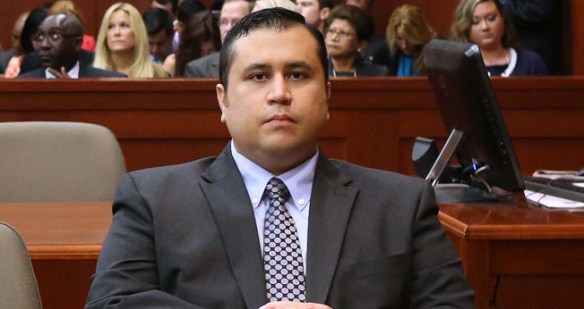
Does it matter that Zimmerman ignored the police dispatcher who told him not to follow the young man? No, not according to the law. Does it matter that Martin was doing nothing wrong? No, not according to the law. Does it matter that Zimmerman, by following and confronting Martin, almost certainly provoked the fatal incident? No, sadly, it doesn’t, not according to Florida law.
What does matter according to Florida law is whether Zimmerman ‘reasonably’ believed he was in danger when he pulled the trigger.
Here’s something that rarely gets mentioned very often. If Trayvon Martin had somehow managed to kill George Zimmerman during that event, he could be presenting the exact same defense Zimmerman’s lawyers are presenting now. The inherent flaw in Florida’s approach to self defense is that it necessarily favors the survivor. If the survivor claims he was, at the moment the fatal act was committed, in fear for his safety — and there’s nothing that blatantly contradicts that claim — then Florida law is on his side. In effect, Florida law rewards the person who acts first and with the most lethality. It’s that simple.
It’s a terrible law. It’s incredibly stupid and irresponsible law. But it is the law in Florida. That means George Zimmerman shot and killed an unarmed teen who was minding his own business, and it was probably legal for him to do it.
Abraham Lincoln, who was a pretty fair country lawyer in his day, once said “The best way to get a bad law repealed is to enforce it strictly.” That’s great if the bad law in question is, say, a traffic law. If you’re the victim of a bad traffic law, you can contest the issue. If the bad law is a self-defense law, the only person to address the issue is the one who fired first.