against my better judgment

Sometimes the forces of popular culture ensnare you. Most of the time you can ignore them, but every so often some slippery bastard finds its way past your guard. Then one day, against your better judgment, you too put your baseball cap on backwards. One day, you too join Instagram. One day, you too watch KPop Demon Hunters or Severance. One day, you too drink kombucha. One day, against your better judgment, you too play pickleball. It’s not so much that you want to do these things; it’s just that you find yourself thinking, “I dunno, maybe I’m missing out on something? Maybe? What the hell, I’ll try it.”

One day, against my better judgment, I bought the book Dungeon Crawler Carl and turned to page one.

For the last year or so I’ve seen Dungeon Crawler Carl (let’s just agree to call it DCC) mentioned on various social media. I thought it was possibly the stupidest book title I’d ever encountered, but beyond that I gave DCC no real thought. Then, about a month ago, my niece mentioned it. We often discuss books and though she’s more sober-minded than I am, I’ve learned to trust her taste. The last time we spoke, she confessed she’d picked up DCC, started to skim it, and couldn’t put it down. She said she was reading the third book in the series. Her husband was on the sixth book.

A few days ago I finished reading a novel and began to cast around for something else to read. Here’s the problem with ebooks; they’re almost designed for impulse buying. I don’t recall what DCC cost, but it was fairly inexpensive. so against my better judgment, I bought it. And started reading it.

Folks, it really is as stupid as it sounds. Possibly even more stupid.

Also? My niece was right; it’s completely engaging. I just bought the second book in the series.

For those of you who are completely and happily unfamiliar with Dungeon Crawler Carl, here’s a brief summary. At 2:23 AM on January 3rd, every structure on Earth that had a roof completely pancaked. Totally flat, smooshing everybody inside (or partially inside).

If you had any sort of roof over you, you were dead. That included people in cars, airplanes, subways. Even tents and cardboard boxes.

What happens next is…okay, wait, a tangent. Samuel Taylor Coleridge, right? Poet, literary critic, philosopher, theologian in the late 18th and early 19th century. You know, In Xanadu did Kubla Khan / A stately pleasure-dome decree, that Coleridge. One of the things our boy Sam came up with was the concept of poetic faith, which he described as the “willing suspension of disbelief for the moment.” Basically, he was saying readers need to relax into a story and not get fussy about its ‘realism.’ This poetic faith is what allows readers (and movie-goers and television watchers) to set aside their logic and accept a world in which librarians solve murders and sword-wielding women in lingerie-armor fight dragons.
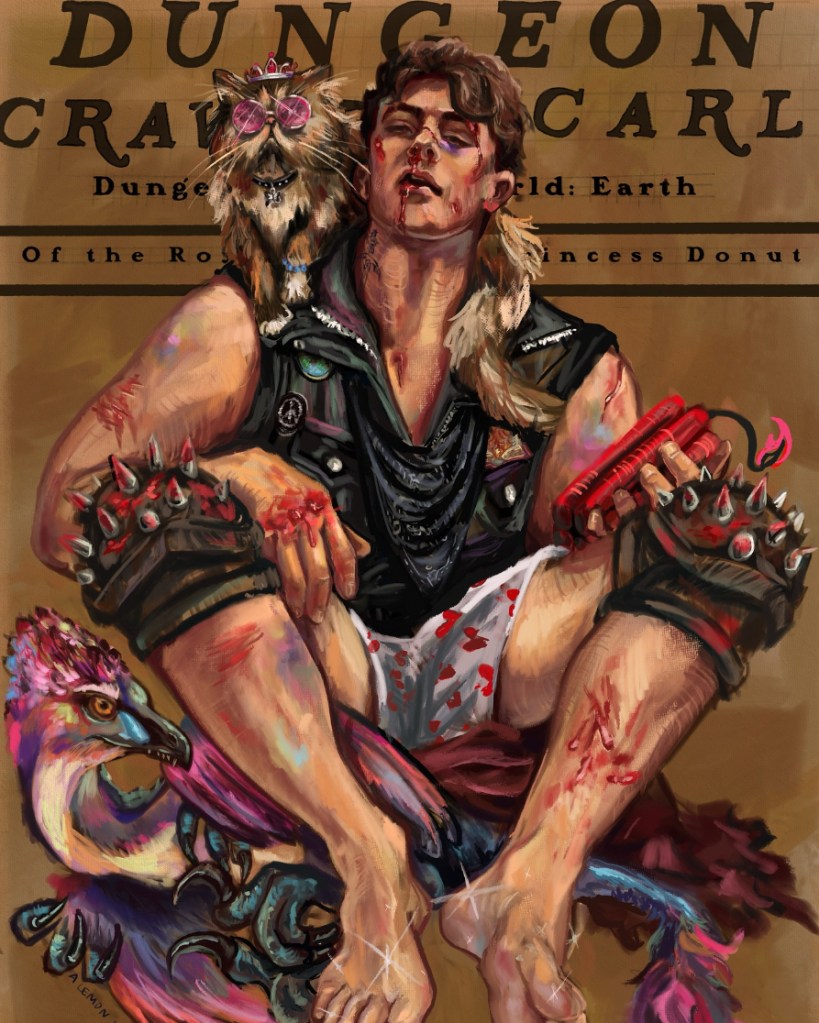
Image by Alemonleaf (Instagram)

Sam Coleridge would applaud Matt Dinniman, the guy who wrote DCC. Right from page one, the reader has to willingly suspend disbelief like a motherfucker. By the end of Chapter One, you not only have to accept that every structure with a roof gets massively smooshed, you have to accept that what’s left of the Earth gets turned into a subterranean reality game show sponsored by some sort of galactic corporation. A game show that echoes every roleplaying video game ever made, in which the survivors of the Great Smooshing become characters fighting monsters (and sometimes each other) as they move through the various levels of the game, while an intergalactic audience watches.

There is absolutely no way this premise should work. I mean, the first five or six chapters are basically a game tutorial. Carl, of course, was NOT inside at 2:23 AM when the Great Smooshing took place. He was outside his Seattle apartment, wearing only a leather jacket, boxer shorts, and a pair of pink Crocs, trying to coax Donut, his ex-girfriend’s prize Persian cat, back inside. Carl and Donut become unwilling contestants in the game.

I am NOT making this up. That’s the story, these two (it’s not a spoiler to tell you Donut becomes sentient and able to speak) fight their way through various levels of the game dungeon. An inordinate amount of time is spent on Carl and Donut setting up their display menus, killing monsters, adding loot to their inventories, gaining game experience, leveling up, assigning skill points.

This should NOT WORK AS A NOVEL. But it does.

Why? For several reasons. First, obviously, is the developing relationship between Carl and Donut. Anybody who has ever shared space with a different species (cat, dog, ferret, snake, doesn’t matter) will identify with this. Like any relationship, it evolves as the characters experience the world and change. The relationship shifts through various stages from ‘Carl and his ex-girlfriend’s annoying cat’ to ‘Carl and Donut.’ And you sense the relationship will continue to evolve in future books.

Second, periodically we’re reminded that the Great Smooshing was an incredibly traumatic event. Not only that, but the injustice of forcing the few survivors to fight for their survival—sometimes against each other—as a form of entertainment is a recurring emotional trauma. And even though the reader knows Carl and Donut will survive their adventures (at least for now), other characters don’t. Carl often has to decide how far he’ll go to survive and/or keep Donut alive. There’s real emotion here.

Third, the story addresses issues involving the entertainment industry in general and game shows in specific, as well as aspects of corporate greed. To improve their slim odds of survival, Carl and Donut need to be popular, to attract fans of the show. That can mean killing in spectacularly gory ways. This is made more problematic when they discover the ‘monsters’ they fight are essentially replaceable slave labor, whose suffering is real.

I used to teach fiction writing. I always told my students that a writer has one overarching job: to get the reader to keep turning the page. Yes, there are hundreds of other things writers need to do, but if you want people to read your work, you have to find ways to make the reader want to turn the page—to need to turn the page, to find out what happens next.

Matt Dinniman does his job well. He’s got me turning pages. Is this art? Nope. Is it literature? Nope. But it’s solid, clever, thoughtful workmanship. I don’t know how many books are in this series. I don’t know if I’ll read them all.

But I know I’ll read the next one.
my year in books

On social media I’ve been seeing a LOT of My Year in Books posts, in which people report on the books they’ve read in the preceding year. I confess, I’m a wee bit baffled by these posts. I mean, I’m interested in what other folks read. I’m interested in their thoughts about what they’ve read. That can be interesting. But the majority of these MYiB posts feature the number of books they’ve read, and I don’t understand the point of such a metric.

I don’t know how many books I’ve read in 2024. It never occurred to me to keep count. It was a bunch, to be sure. Probably less than fifty, but certainly more than thirty. So let’s say somewhere in the low-to-mid forties? But really, who cares how many books I read? Some of them were books I’ve read before, and I’m not sure if people count those towards their book total. Probably, right? I mean, they still read them.

More interesting to me are the books I bought that I thought I’d read, but didn’t. Again, I haven’t kept count, but I suspect I bought at least half a dozen books that I started to read, but ended up putting aside. A very few were books I just didn’t like (and no, I won’t name them). More were books I’d probably like, but simply wasn’t in the right mood to enjoy. Like The Priory of the Orange Tree. I’m totally smitten by the title and the cover art, but I got maybe 15-20 pages in and it just wasn’t working for me. I’ll try it again at some future point. Sometimes it just happens that way. It took me at least three tries before I finally got more than a couple of chapters into Dorothy Dunnett’s The Game of Kings, which is one of my all-time favorite novels. Same with Gideon the Ninth; the first time I tried to read it, I put the book down after less than fifty pages. Now I think it’s one of the most original and delightful novels I’ve ever read.

This year, like most years, I bought some books I didn’t think I’d like, but wanted to check out anyway. Like The Bright Sword, which is sort of a sideways retelling of the Arthurian saga. That’s the thing about Arthurian literature; you can’t trust it. The Arthurian story bones are so damned good that LOTS of people try to retell the story. Most attempts are at least tolerable. A very few are brilliant. But in my experience, the majority of new Arthurian stories are both regrettable and forgettable. However, sometimes your hopes pay off. To my surprise and delight, The Bright Sword turned out to be a lovely read.

This year, like the last several years, I tended to read mostly genre fiction and very little literary fiction. There’s probably a reason for that, but I can’t be bothered to examine it. I read a few mystery and detective novels, some science fiction, more fantasy than I care to admit (I want to like that genre more than I actually do), a couple of spy novels, and some novels that are clearly genre fiction without fitting neatly into a genre category.

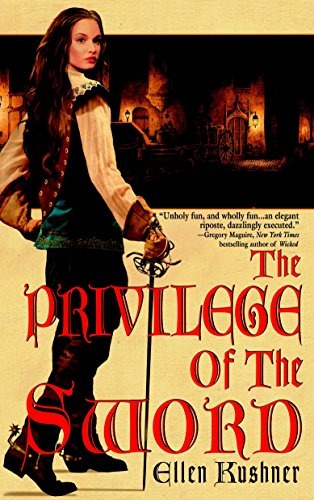
Last year I did more re-reading than I normally do. Comfort reading in uncomfortable times. I re-read books that, for one reason or another, make me happy. Rivers of London, for example; an absolutely charming story, the first book in a series of magical police procedurals that are consistently solid. Mick Herron’s original Slow Horses spy novel, which is a delight in its own offensive way. Ellen Kushner’s The Privilege of the Sword, which, to be fair, isn’t quite as good as her novel Swordspoint, but remains my favorite because there’s an inherent sweetness to the protagonist. I can be a bit of a sap sometimes.

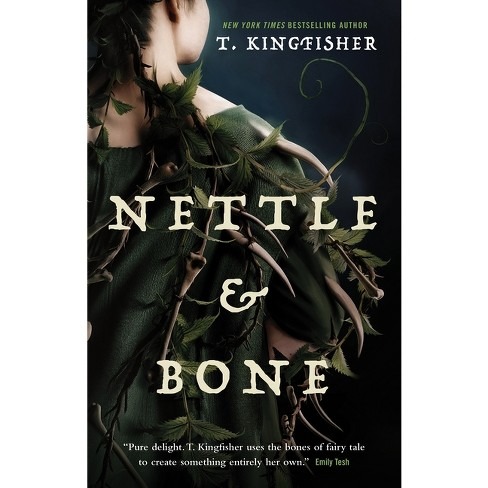
Did I have a favorite book in 2024? I guess. Sort of. I bought Nettle and Bone on a whim, based entirely on the title (which, I should point out, is a terribly stupid reason for buying a book). I have no idea what it is about the title that appealed to me so much. I was very skeptical about the novel at the beginning. I mean, it begins with a woman building a dog out of…well, bones. The scraps of former dogs. Unlike a LOT of novels in which magic is featured, Nettle and Bone doesn’t attempt to explain how magic works. The protagonist puts the dog bones together and when she’s done she’s got a bone dog…there it is, just matter-of-fact, magic exists. sometimes it works and sometimes not so much, you don’t need any more information than that, just accept the existence of the fucking bone dog and get on with the story. And that’s exactly what I did. Nettle and Bone is as dark as the darkest fairy tale (the best fairy tales are pretty damned dark), but it remained charming and amusing and incredibly emotional. Be aware that it deals very bluntly and unflinchingly with violence against women, but at the same time there’s a sweetness that cuts through the grim darkness.

Nettle and Bone was the most unexpected novel I’ve read in recent years. Is it a great novel? Naw, probably not. But I can’t recall any other novel that kept surprising me the way Nettle and Bone did. I look forward to re-reading it again this year.

the privilege of the sword

I don’t know if this is a thing or not, but during the holiday season (which, for those not in the US, is the period between our Thanksgiving and the New Year) I tend to re-read favorite novels. It’s probably got something to do with comfort and quiet and nesting. I don’t know, but there it is and I’m not going to think about it too much.

This year I’ve decided to re-read Ellen Kushner’s The Privilege of the Sword. It’s probably been a decade since I read it, but it’s a novel that resonated with me. I’d read her earlier novel, Swordspoint, a few months before. The Privilege of the Sword (okay, I’m just going to refer to as PotS from now on) isn’t exactly a sequel to the earlier novel, but it’s definitely sequelish. It includes many of the same characters and takes place in the same “fantasy” world.

You’ll note I’ve put “fantasy” in quotation marks. Both novels are often listed as fantasy novels, which is a genre I tend to associate with some sort of magic (and, too often, elves and dragons). I’m fundamentally skeptical about the use of magic (and elves and dragons) in a story, but I accept that they’re inextricably bound up in the fantasy genre. I accept them in the same way that I accept the frequency of murder victims in cozy mysteries. I tend to wince a little when it happens, then get on with the story.

As I started reading Swordspoint, the first novel, I kept waiting for somebody to do something magical. It was sort of like having a new car; you know it’s going to get dinged at some point, so you’re sort of tense every time you leave it in a parking lot. But once somebody opens their car door and dings your fender, you relax a bit. The damage is done. My point is I couldn’t quite relax and enjoy Swordspoint for the first few chapters, because I was waiting for somebody to wave a wand or cast a spell or something. Eventually I realized it wasn’t going to happen. It was a tremendous relief.

There’s no magic in either of these novels (at least not as an element of the story; the magic is in the quality of the writing). These novels are fantasies in the same way one of my childhood favorite books, The Prisoner of Zenda, was a fantasy. They’re set in an imaginary but internally consistent story world, one in which politics and political intrigue play as much a role as the swordplay. The ‘fantasy’ element is the way the story world–its culture, its social norms, its customs and traditions, its concept of status–is maintained and made real.

So why have I decided to read PotS instead of Swordspoint? Because I recall PotS as a more human story. I recall it being funnier, sadder, more simple but more surprising, more elegant, more intelligent, and more (for me, at any rate) emotional. My recollection may be faulty, but I’m relying on it anyway. There’s an excellent chance I’ll reread Swordspoint as well.

The basic plot of PotS (as I recall) is as follows: a young, rather flighty young woman is called to attend her uncle — the mad and deliciously depraved Duke of Tremontaine — who has decided, for obscure reasons and against all tradition, to train her as a swordsman. In both novels, disputes are sometimes/often decided by setting hired swordsmen against each other. The young woman (I think she’s in her teens?) is initially more interested in attending balls and attracting a potential husband, but tolerates her uncle’s peculiarities for her family’s sake. Eventually, she learns to appreciate swordplay both as a skill and for the freedom it provides her. Her new talent and attitude also allows her to help others who aren’t able to help themselves. There are, as I recall, at least a couple of subplots which are woven seamlessly into the narrative.

Some of that may be incorrect, but that’s how I remember it. What I remember most is that delicious feeling of being completely engaged with the story world and the characters who inhabit it.

I’ll start re-reading PotS this evening or tomorrow, depending on when I finish the novel I’m now reading (the most recent Murderbot novel) and how busy I am. I’ll take my time reading it — maybe read 2-3 chapters a day. I may report back here every few chapters.

I confess, I’m a tad hesitant to start re-reading it for fear it won’t quite hold up to my memory and my expectations. It’s always a risk to return to your favorites, isn’t it.