
I really wish things were simple and obvious. I sometimes really wish there was no need for a nuanced understanding of…well, of anything. At times I really wish the world wasn’t complex and complicated.
Except, of course, I don’t really wish that at all. The world is messy and irrational and down at the bone, I like it that way. But lawdy, it does confuse things.
So then, let’s go ahead and talk about war and statues of Confederate generals and war memorials and what should be done with them. Let’s start with this: when it comes to war, there are essentially three groups of people involved. There are the politicians who declare war, who develop the policies of war, who determine the political goals of war. There are the officer classes, who are in charge of actually prosecuting the war based on the politician’s policies and goals, who determine the strategies used by the armies and the broad range of tactics to fight the battles. And then there are the poor bastards who fight the war — the ordinary people who have nothing to do with strategies, who have little or no voice in the politics, but who do the fighting and the killing and the dying. This is true of all wars in all the nations of the world over the entire scope of history.
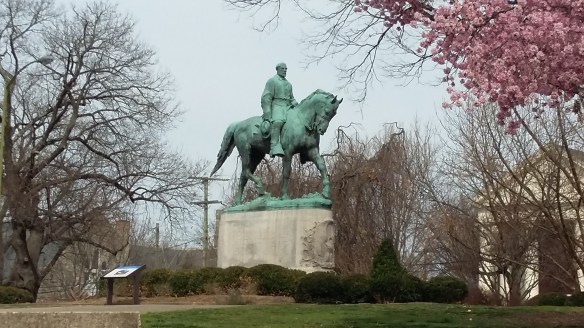
Confederate General Robert E. Lee — this must go.
Why is that important? Because it’s important to distinguish between statues and memorials. Statues are built to honor the specific politicians and the senior officers who start the wars and prosecute them. Memorials, on the other hand, are generally built to honor the nameless mass of soldiers who get mutilated or killed fighting those wars.
For the last several years there’s been a movement to remove and/or destroy statues honoring Confederate politicians and military officers. Over the last few days we’ve seen that notion expand to include essentially all symbols of the Confederacy. Statues, memorials, flags — get rid of them all.
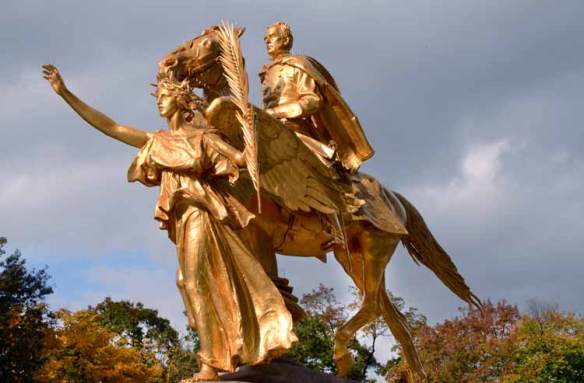
Union General William Tecumseh Sherman, War Criminal and Indian Killer — should this go?
I totally understand that feeling. I just disagree with it. Well, I disagree with chunks of it. I have no problem with removing the statues of Confederate leaders. I don’t want to see them destroyed, but I think it’s a fine idea to remove them from public land and place them either in storage or in museums. Destroying statues of people we dislike or whose beliefs we disagree with — that’s what ISIS does. It’s vengeful, it’s small-minded, and at heart it’s an attempt to color over the past. Remove them, and if they must be displayed, display them with context.
The problem, of course, is where you draw the line once you decide to remove the offensive statues. Which statues do we keep; which ones do we remove? Clearly, the statue of William Tecumseh Sherman in Manhattan would have to go. Even if we ignore his scorched earth actions during the Civil War (which would make him a war criminal by modern standards), his actions against native Americans after the Civil War were horrific. And what about the statues of John Brown, the abolitionist who believe a violent armed insurrection was the only way to insure the end of slavery? His cause may have been just, but should we ignore his extra-judicial murders? Should we remove his statues? I don’t know.
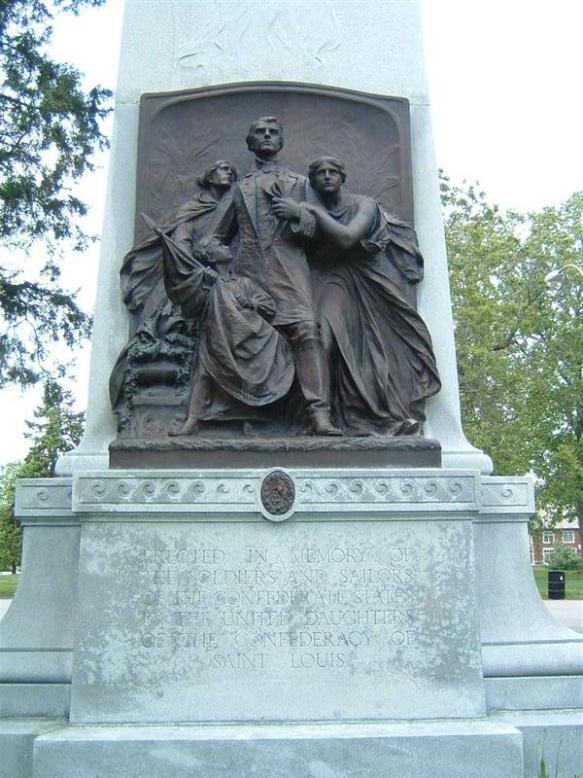
Civil War memorial — do we remove this? Is it Confederate or Union? How much does the answer matter?
In any event, I’m adamantly opposed to removing/destroying Confederate war memorials. Or any war memorial, for that matter. Soldiers enlist for any number of reasons, but they don’t necessarily fight for the reasons cited by politicians to start the war. The U.S. fought a war in Vietnam to stop the spread of communism; how many of the troops on either side really cared about communism? Both of my older brothers fought in Vietnam, both came back damaged; neither of them really had any notion of communism as a political system. They enlisted for the same reason I did: it’s what the men in my family have always done. We were raised to believe we have an obligation to serve — the nation, the state, the city, the community.
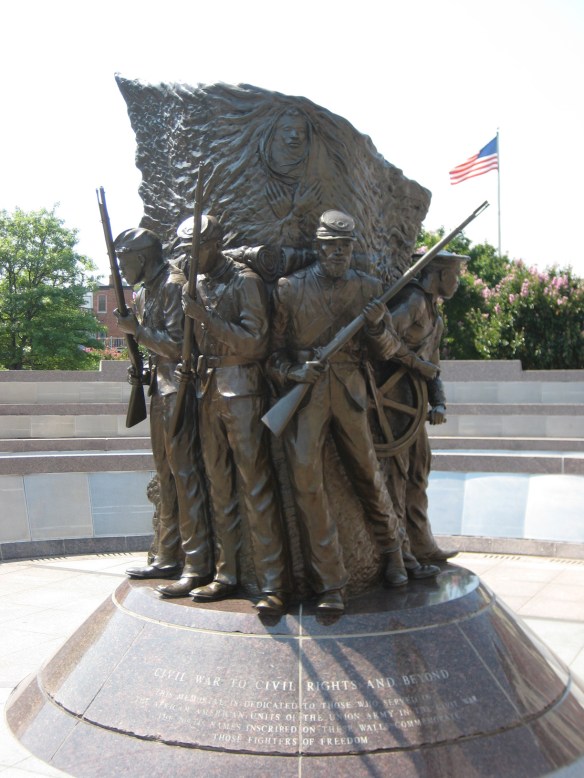
Civil War memorial — do we remove this? Is this Confederate or Union? How much does the answer matter?
I mention Vietnam for a couple of reasons. One, obviously, is because there are Vietnam war memorials all over the U.S. They’re not there to celebrate a war against the expansion of communism into Asia; they’re just there to honor the fact that people fought and died — even if the cause was wrong, even if the cause was pointless. I also mention it because I used to live in D.C. and I’ve visited the Vietnam memorial dozens of times. I always tried to visit in on the day my oldest brother was wounded, the day some of his buddies were killed. But I also visited it once with a fellow graduate student, a Vietnamese-American woman. I knew she’d been born in Vietnam, but I knew nothing about her history. I just assumed she and her parents had immigrated to the U.S. during the war. In fact, she’d immigrated as a child with her aunt and uncle; her parents had both died, killed by U.S. troops. She didn’t tell me how or why they were killed; maybe it didn’t matter if they were collateral damage in a bombing or whether they’d been involved in the actual fighting. The thing is, she blamed the death of her parents on the war itself, not on the troops.
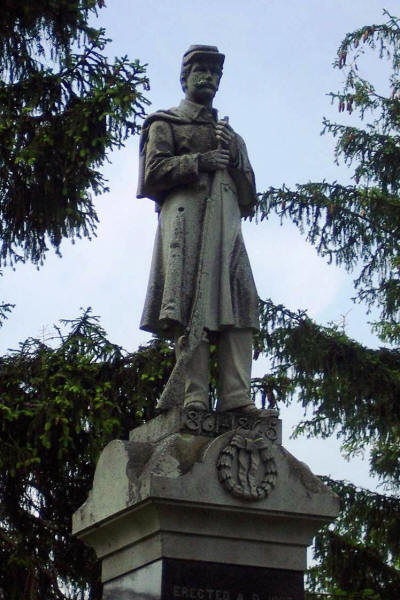
Civil War memorial — do we remove this? Is it Confederate or Union? How much does the answer matter?
The statues of Confederate politicians and generals were (and still are) political statements, honoring the men (they’re all of men) and the cause they fought for. Their removal is justified and warranted. The memorials to the soldiers who fought, on the other hand, are an acknowledgement that ordinary people die in wars. I see them as a reminder that war — even a just war fought for valid reasons — is wasteful.

Does it matter if they cause they died for was just or unjust?
I know a lot of folks will disagree with me on this. I’m okay with that. This is just my opinion, and I recognize that other folks will have different and equally valid opinions. Like I said at the beginning, the world is messy and irrational. I like it that way.
I only wish there were memorials dedicated to all the civilians, the true innocents who die and suffer in war.







 gregfallis.com