triffids killed my academic career

I should begin by saying I was never passionate about academia. In fact, I had no interest at all in academia. I almost became an accidental academic.

The only reason I went to graduate school was because I was badly burnt out after five years working in the Psych/Security unit of a prison for women and seven years as a criminal defense private investigator. I wanted a break. Hell, I needed a break. As a working class guy, I had no idea that you could actually get paid to attend graduate school. When I learned that, I applied to half a dozen different universities in half a dozen different disciplines. American University offered me the best deal: free tuition AND a small stipend to study Criminal Justice. So that’s what I did.

That was my plan. Take a year or two off, loafing as a graduate student, then find something else interesting to do. But as I was finishing my MS in Justice, I was offered more money to go for a Ph.D. So, again, that’s what I did.

A couple of years later I found myself with a contract from Fordham University to teach Sociology. I loved teaching and I was good at it. But I disliked academic politics, and I positively hated academic writing. Still, it was relatively easy work, so I didn’t complain. Then one day I was sitting in my Lincoln Center office reading an old paperback book I’d picked up at some second-hand bookshop and the Chair of the Department wandered in. He asked what I was reading.

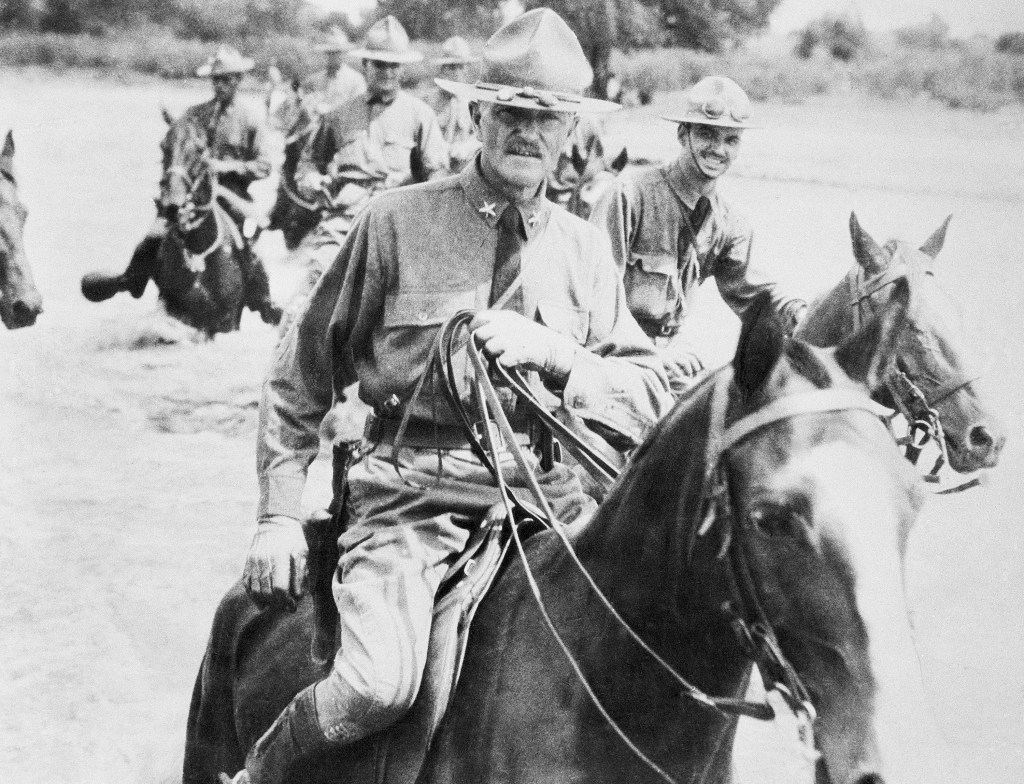
This is the actual cover of the novel I was reading.

Here’s a true thing about academia: it’s about specialization. For example, you can’t just study history. You have to study English history. But not just English history, English history of the Tudor period. But not just Tudor history, but Tudor history during the reign of Henry VII. And not just the history of Henry VII, but the fiscal policies of Henry VII. Academia is about narrowing your interests until you become a specialist in a small segment of a larger field of learning.

As a larval academic, I was expected to decide on an area of specialization and spend my time concentrating on it. I was expected to study the appropriate academic journals. Instead, I was reading a 1951 science fiction novel about venomous, carnivorous plants capable of locomotion (that’s right…walking plants) and the collapse of society.

“Are you reading this for your classwork?” I was asked.

I could have said yes. I mean, I could easily argue that the story examined economic systems (these dangerous plants, triffids, were cultivated as a source of industrial quality oil). I could say in all honesty that the collapse of society (a strange ‘meteor’ shower had turned most of the world blind, leaving only a small segment of the population capable of sight) resulted in a variety of localized ad-hoc systems of governance and justice, which could be explored through various criminological theories. I could accurately claim there was value in studying how a 1951 novel explored the ways new social norms and mores were formed from the bones of the old system. I could have absolutely justified reading The Day of the Triffids.

But the truth is, it never occurred to me that I needed to justify it. I told him the truth; I was reading for the pleasure of it. I was actually surprised by the disapproving, judgmental look on his face. I was even more surprised when I discovered the university had advertised a tenure-track position in the Sociology Department, and I hadn’t been asked to apply. I applied anyway, but I wasn’t even offered an interview, despite the fact that my teaching evaluations were among the highest in the department.

There were probably other reasons I wasn’t considered for the position. There’s often an unspoken (and sometimes loudly spoken) bias by academic theorists against practitioners. Some academics assumed my years as a private detective and as a prison counselor tainted my views. There’s a saying: In theory, there is no difference between theory and practice. In practice, there is. But after my brief encounter with the department Chair over Triffids, there was an obvious shift in attitude.

You could say triffids killed my academic career. It’s probably more accurate to say triffids saved me from an academic career.

in which i look at an old photo (part7)

Back in May of 2024 I reluctantly began to occasionally look at my old photographs, because apparently that’s a thing. I’d never stopped shooting photos, but I’d stopped thinking about the praxis of photography–the many ways in which photography can be put into practice. Then I came across an article somewhere that suggested looking at your old photos as if they were made by a different person and seeing what you could learn from them.

I gave some thought to that idea and decided it was silly. But I did it anyway. And hey, whaddya know? It had some value. Maybe not the intended value (which was something to do with improving your photography maybe?), but value all the same. If nothing else, looking at a few old photographs has reminded me that I tend to be pretty deliberate when it comes to composition.

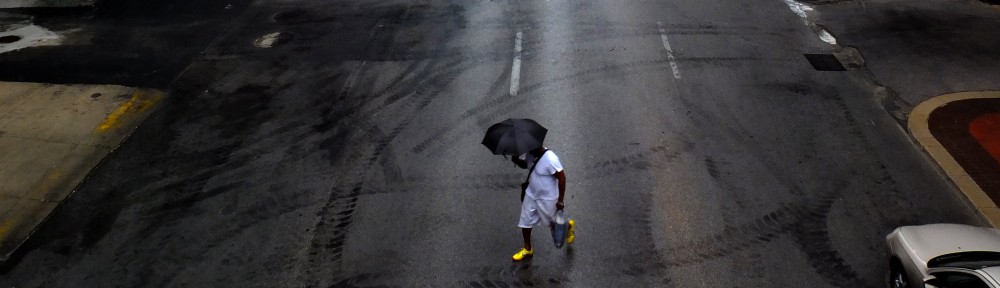
This is the seventh time I’ve looked at an old photo. And you’ll notice the composition is unusual. I’ll explain why in a moment. First, the photograph.

11:02AM, Thursday, August 15, 2013

Yeah, you’re probably wondering what the hell, right? Allow me to ‘splain. A photography group I used to belong to (well, okay, a group I used to run) would engage in a variety of photo projects. This particular project involved shooting photographs as an homage to photographers we admired or respected. The idea was that by emulating these photographers, we could learn something about them and their approach to photography.

I chose to emulate the work of Uta Barth, a photographer I’d written about several years earlier. Barth is a conceptual fine arts photographer; her most important work is about the act of seeing rather than what is seen. She essentially decided to remove the subject of the photograph from the photograph. By focusing on where the subject would be and by overtly calling the viewer’s attention to the absence of the subject, she attempted to turn the viewer into the subject. When the viewer is the subject, the photograph is no longer about what is in the photograph; it’s about the act of looking at the photograph. Many critics of her early photographs complained that her images were blurry and out of focus. Barth explained the photos were “perfectly in focus, the camera just happens to be focused on an unoccupied point in space.”

I confess, at first this approach didn’t make a lot of sense to me. It was until I realized Barth was basically saying the world and everything in it exists independent of us and independent of anything to do with us. She was saying the world is NOT just our background. That concept hit me hard, partly because it should be so obvious.

The particular photo was my first attempt to emulate Barth, and it’s a failure as an homage. Why? Because, unconsciously, I included a subject. Barth very deliberately cleared away any sign of herself in her work. The inclusion of any personal item makes the photograph about the photographer. “Shoes on the floor, clothes, letters and objects on my desk immediately construct a narrative and identity of the person, and there you have it: I’m the subject.

And hey, there’s me…the two single-use plastic bottles of water (it was 2013; I didn’t know any better back then) and an item of clothing slung over a screen divider. It doesn’t say much about me, but it suggests something—and that’s enough to create a subject of the photograph.

I guess there’s a lesson there. If you’re going to attempt conceptual photography, make sure you have a solid grasp on the concept. And I suppose this demonstrates the value of looking at your old photographs. If nothing else, they remind you of lessons learned.

agri-culture

The only thing I know about keeping livestock is…okay, I don’t know anything about keeping livestock. I mean, I know it’s hard work. I don’t know that from experience, since I’ve never kept livestock, but even sharing space with a pet (cats and dogs, certainly, and probably birds and lizards, what do I know?) means cleaning up after them. Even the tidiest of cats uses a litterbox and somebody has to deal with that.

Why am I talking about this? Because looking over the photographs I took at the recent Iowa State Fair, I noticed I have a lot of photos of farm people cleaning stuff. Cleaning their animals, cleaning the gear needed to take care of their animals, cleaning the things their animals pull, cleaning up massive amounts of animal shit. Everywhere I went, men and women and kids were busy cleaning.

Cooperative cow-washing.

And when I say ‘cleaning their animals,’ I don’t mean they were just washing them (although there’s an astonishing amount of animal-washing going on all the time). I mean they’re shampooing them, blow-drying them, combing them, trimming them, vacuuming them.

A little light goat-vacuuming.

Seriously, people were vacuuming off…something, I don’t know what. Loose hair? Dandruff? Barn grit? No idea, but everywhere you go in the animal barns at the fair, there are men and women and kids vacuuming their livestock.

Women grooming sheep while men sit and chat.

These animals weren’t just being cleaned; they were being groomed. Meticulously groomed. (Okay, sorry, a slight tangent here. The term groom has a slightly hazy etymology. It’s probably(?) related to the Old English growan, meaning ‘to grow.’ At any rate, by the 14th century groom referred to a male servant who attended to officers (and their gear and horses) in a noble household. By the 19th century, the noun had been verbed, and groom referred to the process of tidying up or preparing for a purpose. So groom referred to both a person and what the person did. I don’t know why I thought you needed to know that, but there it is.)

A young girl vacuuming (or blow-drying) a cow.

As I was saying, these livestock animals (and I’m talking about cows, horses, pigs, goats, sheep, llamas, alpacas (is that the plural of ‘alpaca’?), rabbits, and chickens (do rabbits and chickens count as livestock? No idea.) are meticulously groomed. It’s clear that some of the grooming is done in the hope of winning a prize, but it was also clear that much of it was done out of pride and affection. That was especially true of the younger people.

Equine pedicure.

Here’s a thing you probably need to understand. All this cleaning and grooming? It’s taking place in and around massive cooperative barns housing hundreds of animals. Animals are noisy, so these barns are a constant barrage of animal noises. Also? Animals shit and piss a lot. I mean, a LOT. And they’re not particular about where or when they do it. So even though there’s a constant stream (so to speak) of people shoveling, sweeping up, and carting of waste products (the logistics of livestock waste management must be staggering), the fact remains that these massive barns…well, they smell like you’d think they’d smell, but not as bad as you’d expect.

Bovine shampoo.

What I’m trying to say here is that there’s an astonishing amount of hard work done by the farm families who bring their livestock to the fair, and all that work makes the environment as pleasant as possible. One of my reasons for visiting the animal barns during the State Fair is to look at animals, of course, but it’s also to see this remarkable group of people cobble together a shared sense of community. There’s something very tribal about it. And as a sociologist by training, it’s fascinating.

Detailing a wagon wheel.

But here’s the problem with being a sociologist: I know that the farming community I see at the State Fair is, largely, a myth. Around 40% of farms in Iowa are owned by corporations. Modern farming, even among non-corporate farms, is a business more than a self-sufficient way of life. The farming life we witness at the State Fair is something of a sentimental homage to an idea of rural living from the past. An homage grounded in nostalgia and an agrarian myth.

But so what? I’d argue there’s value in that. The fact is, it’s not corporations who are grooming their livestock at the State Fair. It’s not corporations who are hauling manure and polishing wagon wheels. It’s families doing that.

My visits to the State Fair animal barns always leave me impressed (and yes, a wee bit stunned by the smell and noise). I leave those barns profoundly grateful there are people–families–still willing to do the hard work of making sure the world gets fed. As myths go, this is a pretty damned good one, and I’m glad folks are keeping it alive.

we’re straight up murdering people now

Yesterday the United States military attacked and destroyed a civilian vessel in international waters, killing eleven people. Comrade Trump claims the boat was carrying narcotics bound for the US, and that the victims were members of Tren de Aragua, the Venezuelan drug cartel.

The alleged ‘drug boat’ moments before being obliterated.

That may be true. We don’t know. We can’t know because we blew them up. What we DO know is this:

  1. It was a civilian vessel.
  2. The vessel wasn’t an immediate threat to anybody or anything.
  3. There was apparently no attempt to intercept the vessel.
  4. There was no attempt to disable the vessel.
  5. There’s no declaration of hostilities against Venezuela.

In other words, the Trump administration hasn’t presented any evidence to justify the use of military force against this boat. It appears to be an extrajudicial killing of 11 people. Which is illegal as fuck.

If we can locate and track the vessel accurately enough to fire a missile up its ass (and we obviously did), then we can track it long enough to intercept it in US waters. At that point, we could determine if there were, in fact, narcotics onboard. If so, we could then detain the crew, interrogate them about the source of the drugs, and hold them for trial in a criminal court. We could have followed the law.

But nope.

There appears to be no reason to blow them up except to gratify the blood lust of Trump and his Cabinet of Nazgûl. This is literally murder. It’s criminal on the part of the people who ordered the missile fired and the person who actually fired it. However, there’s no chance any of them will be held accountable.

It’s important to remember that back in February, just a few weeks after Trump resumed the presidency, Pete Hegseth summarily fired the senior Judge Advocates General of the Army, Navy, and Air Force. These are the officers responsible for enforcing the Uniform Code of Military Justice. Hegseth actually said the JAGs were fired because he didn’t want them to be “roadblocks to orders given by a commander in chief.” That was, in effect, an announcement that Trump intended to use US military forces in ways forbidden by the UCMJ.

And now he has. And what’s perhaps scarier is this: military personnel have shown themselves willing to execute orders they know are illegal, in direct violation of the oath they swore when they entered military service.

Killing these eleven people in this particular way–and doing it openly–is a test and a declaration. It’s a test to see the domestic and international response. And it’s a declaration that Trump intends to use the US military in ways that are expressly forbidden to further his own political and personal agenda.

This is straight up dictatorial bullshit. And with a MAGA-controlled Congress, Trump will get away with it.

tactical yardwork

I’m sure you’ve all asked yourselves this very same question: “What do I do when I’ve declared a national emergency and activated the National Guard to fight crime, but then there’s almost no crime to fight?” It’s annoying, right?

I mean, they elect you to be POTUS and they give you the entire District of Columbia National Guard to play with, so obviously you’d want to use them to guard the nation against something. Otherwise they’re just wasted, sitting there on the shelf. So, crime. Nobody likes crime. Crime is a good thing to fight. Everybody likes crime-fighting. It’s popular on television. It’s not YOUR fault there’s not much crime to fight.

Courageous National Guard troops, dressed in camouflage AND hi-visibility vests engage trash.

So there you are, you’ve got your troops all dressed up and no crime to fight. What to do, what to do? EASY! Make them fight trash! DC is host to tens of thousands of foreign tourists who toss trash all over the fucking place because that’s how they behave in foreign countries. Except, not so many people are coming to DC now, because they’re not really welcome. Besides, you’ve told them DC is a dangerous shit-hole. So the trash assault is a pretty short term event.

Courageous National Guard troops mulching like nobody has mulched before.

But hey, DC is also beautiful. Trees and bushes and all sorts of pretty flowers, and that shit has to be mulched. The National Guard may not be trained to mulch, but they know how to improvise, adapt, and overcome. Issue them rakes and hoes and other geoponic implements, and turn them loose. They’ll mulch the absolute shit out of whatever needs mulching.

Tactical yardwork is fine, but you really really wanted them to fight crime. That means you have to send the troops where crime exists. Fortunately, there are some pretty tough, crime-ridden neighborhoods in DC, neighborhoods where people don’t always feel safe at night, neighborhoods where news photographers are reluctant to visit. There’s no point in sending your troops there. However, you’ve heard from your pretty-eyed Vice President that vagrants–actual people without proper employment and/or lacking a fixed abode, like in those movies from the 1930s–have been loitering around Union Station. Vagrants are smelly (probably) and unsightly, like windmills off the coast of Scotland. We can’t have that. Also, somebody on your staff might have said something about maybe somebody they knew almost had their luggage stolen while at Union Station.

Courageous National Guard troops supported by an MRAP guarding carry-on luggage.

Now that’s crime worth fighting! Deploy the MRAP! Nothing discourages loitering like a mine-resistant ambush protected vehicle. Ain’t nobody gonna sleep on benches–if there were any benches–at Union Fucking Station when your National Guard is on duty. Ain’t nobody gonna roll away some poor tourist’s Samsonite hardside, not when you’re in charge and you have a MRAP handy.

So there you are. You’ve ended crime in DC. Trash is gone. Plants are mulched. You’ve established peace through superior firepower. Now all you have to do is wait for your Nobel Peace Prize. It’s good to be POTUS.

not the weirdest thing i’ve done

A couple of days ago I wrote about a photograph I’d taken of some cracks and oil stains in a random patch of blacktop. It may seem a wee bit weird to photograph a patch of blacktop, but…well, just wait. In that post, I briefly referred to the fact that there’s a difference between blacktop and asphalt. That sparked a reply to the post, and that reply reminded me of an earlier crushed stone and bitumen-related photograph I’d taken fifteen years ago.

Now that was weird.

Back in November of 2010 I was noodling around a location where a local supermarket had been demolished. All that remained of the store was its foundational slab and what had once been a parking lot. That’s where I came across something odd.

November 13, 2010

Yep, that’s a chunk of asphalt curbing around which somebody had tied a strand of red PVC-coated wire. Why would somebody do that? I don’t know, but I assumed it was to make it easier to carry. Why would somebody want to carry a chunk of asphalt curbing? No idea. I located the spot from which the curbing had been removed about 20 yards away. There were several similar chunks of broken asphalt curbing. But somebody had selected that particular chunk, tied red PVC wire around it, and moved it.

Why? No fucking clue. But it was odd, and I do love things that are odd.

December 23, 2010

So I returned to that spot about six weeks later. The chunk of curbing was still there. It had snowed, but the snow had melted off the chunk. A heron had apparently been curious enough to check it out. Not sure if that meant the heron was as curious as I was, or if I was as stupid as a heron.

Anyway, I stood there in the snow for a while, trying to cobble together some semi-logical reason for somebody to tie some PVC wire around a chunk of curbing and carry it twenty yards before dropping it. I was sure there was a logical reason; not necessarily logical to me, but logical to the person who did it. But I’m damned if I could figure it out.

February 16, 2011

I found myself occasionally wondering about that chunk of curbing and the red PVC wire. Did the person just happen to have some red PVC wire in their pocket? Had they deliberately brought the wire with them, intending to move the chunk of curbing? And why why why would they want to move it in the first place? It made no sense, but I was intrigued by it.

So I went back again on a cold, wet, foggy day in February. And yep, it was still there.

February 16, 2011

It wasn’t just strange; it was also visually interesting. I was taken with that red PVC wire. I considered taking hold of the wire and lifting the chunk, just to see how heavy it was. But I was reluctant to disturb it. It wasn’t just an object of curiosity anymore. That’s when I began to think of the chunk of curbing as a possible photo project. Which meant it didn’t seem right to intentionally change anything about the subject matter.

April 13, 2011

I returned to visit the chunk of curbing about a month later and was shocked to see it had been moved. Somebody had apparently picked it up, carried it about twenty-five feet, at which point the red PVC wire had snapped.

I can’t imagine many people would find a reason to noodle around the detritus of a former supermarket. But IF somebody did, and IF that somebody happened upon the chunk of curbing, then surely they’d be tempted to pick it up. I mean, I’d been tempted to pick it up myself. The way the PVC wire was wrapped around the chunk of curbing–it was clearly intended for it to be picked up. Who could resist it?

Somebody didn’t resist it. Somebody had seen it, had picked it up, and toted the chunk of curbing twenty-five feet. Hell, that was the most understandable thing about the whole situation.

August 24, 2011

I didn’t get back to visit my pet chunk of asphalt curbing until late in the summer. As I approached, I saw two chunks. I thought maybe whomever had moved the curbing back in the spring must have returned and broken it.

But no. It was a second chunk of asphalt curbing. Somebody–maybe the same person who’d moved it earlier–had apparently gone to the spot where other chunks of curbing were scattered, picked up another chunk, carried it to the vicinity of my pet chunk, and dropped it.

This compounded the WTFedness of the situation. It reinforced the original weirdness. It made no sense at all. It was insane. It was…kind of wonderful. I was oddly pleased by the development.

September 8, 2011

I returned a month later. Not much had changed. Some orangish lichen had grown in a nearby crack and I spent some time trying to find a way to photograph the red PVC wire and the orange lichen, but nothing seemed to work. In the end, I just documented my chunk of asphalt curbing along with its companion.

I figured I’d just about come to the end of the chunk’s story. I was still curious about the whole thing, but the original aura weirdness was beginning to fade.

October 18, 2011

Still, I’d developed something of a perverse relationship with that chunk of curbing. I felt a need to check on it. So of course I went back.

The red PVC wire had moved. It had broken six months earlier, but a length of it had been trapped beneath the chunk of curbing. How did it get loose? Maybe a bird or animal had tugged on the wire and freed it? In any event, I took it as a sign (No, not that sort of sign; just an ordinary sign) that the project was at an end. Surely, the wire would soon get blown away. Without the red PVC wire, the chunk of curbing was just a chunk of curbing. As soon as it was gone, the photo project would be over.

December 20, 2011

I gave it a couple of months. I went back in December. Nothing had changed. As near as I could tell, the red PVC wire hadn’t even moved. That was…weird. You’d think that over the course of two months something would have moved the wire. But that was just minor league weird compared to the overall weirdness.

Still, I’d made the decision that I’d keep coming back until the red wire was gone. So I returned in the spring. The entire area was fenced off and construction equipment was tearing up the old parking lot.

There’s an apartment complex there now.

I no longer live in that area, but maybe once or twice a year there’ll be a reason for me to pass nearby. And when I do, I think about that chunk of asphalt curbing, and the bright red PVC-insulated wire, and the person who’d tied the wire into a parcel-carrier. And I wonder what in the hell they’d been doing, and why. And it pleases me that I’ll never know the answer.

blacktop

So I’m in a parking lot. No, wait, not a parking lot…a parking area. It’s not like a parking lot outside a big box store, with lines designating parking spaces. This is just an extra wide bit of blacktop on a winding blacktop road through some woods near the spillway of a dam. It’s a place where people who fish the area above the spillway can park their cars.

On a weekday, it’s usually empty except for the occasional Asian or Latino immigrant looking to put some fish on the table. It’s a quiet spot. Shaded by trees. My partner and I sometimes make the half hour drive to this spot with a couple of camp chairs, something cool to drink, and our books. We sit, we read, we look at the birds, we listen to the wind in the trees, we chat with the folks who come to fish. On the way home we usually stop for ice cream. It’s nice.

She can sit still longer than I can. My knees are wonky and I have to get up periodically and stretch them. There’s always something to look at, and I’ve always got a camera with me, so occasionally I’ll take a photo. Yesterday I took a photo of the blacktop.

I don’t know why this particular patch of blacktop caught my attention, but it did. There are some cracks with little weedy bits growing in them, and some oil stains–some new, some faded. But it’s just blacktop (which isn’t asphalt, by the way; both blacktop and asphalt are made of crushed stone and bitumen, but the ratio of stone to bitumen is higher in blacktop, which can give it a more sparkly appearance–and lawdy, this is way more information than you need or want).

I pulled my Ricoh GR3X out of my pocket and looked at that patch of blacktop from several different angles and directions. I raised the camera higher, I lowered it closer to the surface, looking for a different framing of the patch. I probably spent three or four minutes trying to get the framing just right. Then I took this single photo.

I looked up to see my partner was watching me. She said,

“Bug?”
“What?”
“Where you taking a picture of a bug or something?”
“Oh. No. Just the blacktop.”

She looked at me for a moment, then nodded and went back to her book. The sky is blue, the clouds are white and fluffy, the water ripples a wee bit with the wind. There are swallows hawking for insects just above the surface of the lake. A kettle of vultures is making lazy circles in the distance. And there’s Greg taking a photo of a patch of blacktop.

The view.

Just another day at the upper spillway.

state fair in…monochrome?

The Iowa State Fair…well, every fair, really…is a colorful event. Bright, garish colors. Not normally a venue I’d consider photographing in black-and-white. And, in fact, of the maybe 150 photos I shot during my five hours of noodling around the fairgrounds yesterday, only a few were shot in monochrome.

Guy in an almost empty barn.

Why would I do that? Because there are some scenes that feel like they ought to be shot in monochrome. Color photography is my default approach, and sure, you can shoot scenes in color and convert them into black-and-white images (which is actually the best approach, since digital imagery is grounded in information rather than color). But if there’s something I want to shoot in black-and-white…well, I shoot it in black-and-white. I want to see it in black-and-white.

Bearded guy.

Obviously, we live in a world of color (well, most of us do) and yay for that. I love color. But sometimes it’s a distraction. The photograph above is all about the beard. But this guy’s clothing was a drab sort of khaki which made his beard almost disappear. Worse, the woman next to him was dressed in bright colors. In fact, most of the passers-by were dressed fairly colorfully. The only way this photo would work was if I removed the distractions of color.

That’s one of the many advantages of digital photography. Almost every modern digital camera allows you to quickly shift back and forth between color and monochrome. I have my Ricoh GR3X set up with two different color profiles and a high contrast monochrome profile. When I saw this guy demonstrating wood-turning on a small lathe, I knew his brown-green smock would interfere with the color of the wood. A turn of a dial, and problem solved.

But what do you do when there are scenes that work in monochrome AND color? For example, a blacksmith at work. You can’t ignore the bright color of flame, or the way fire casts a glow on the surroundings. Obviously, you have to shoot both. Each carries a different emotional weight.

Blacksmith at work.

The photograph above is, I think, a very human photo. It’s as much…or more…about the people in the photo as it is about blacksmithing. The light cast by the flame and the high windows softens everything. It gives the image an almost cozy feeling.

When you remove the distractions of color, the mood changes. It’s not just that the composition becomes more focused on tone and texture, on shadow and light, or line and form. Removing color also means abandoning the strictures of reality. Black-and-white photos are a wee bit divorced from reality, a step or two away from the real world, recognizable but still different. This can give an image an almost mythic quality.

Blacksmith at work.

This photo is less personal, more emotionally distant, more analytic. It’s not about the guy doing the work; it’s more about the mythos of blacksmithing–the narrative of the smithy, the cultural representation of blacksmithing. It has a more primitive vibe. Where the color photo is about warmth, this is about heat and fire.

Also? Black-and-white photography encourages a LOT more artsy-fartsy bullshit.