yeah, we’re going to attack venezuela

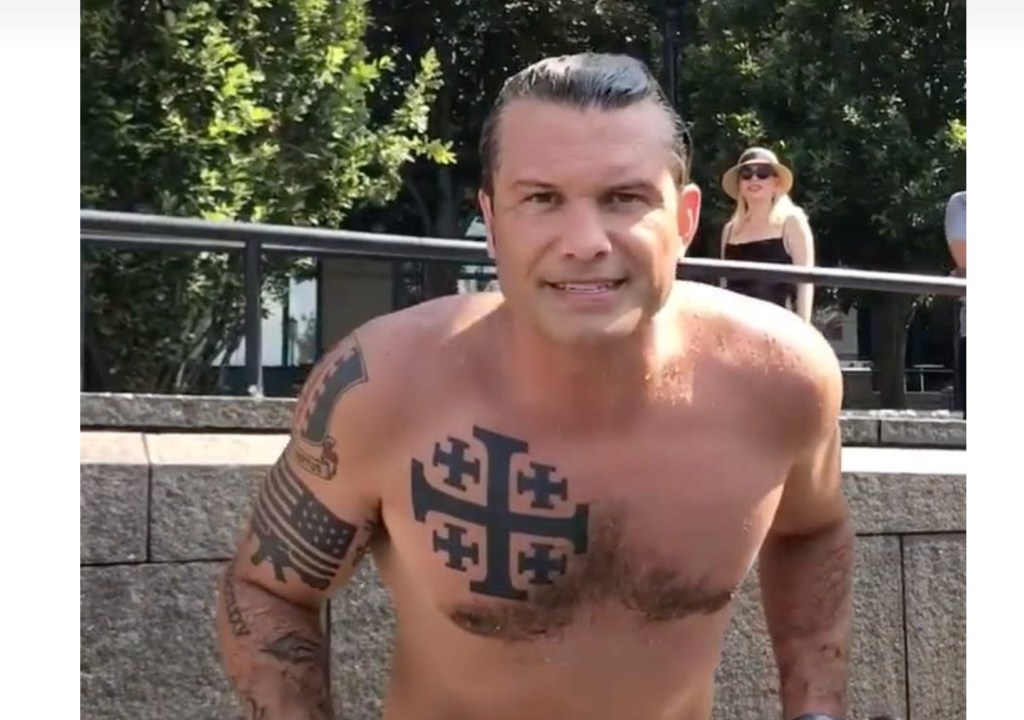
As you know, Comrade President Trump ordered the destruction of at least 10 vessels in the Caribbean, killing more than 40 people. He and Pete Hegseth (Secretary of Biceps) claim these boats were manned by Venezuelan drug couriers and jammed full of illegal Venezuelan drugs, but they haven’t offered an ounce of supporting evidence. Nor have they asked for Congressional approval to kill random Venezuelans.

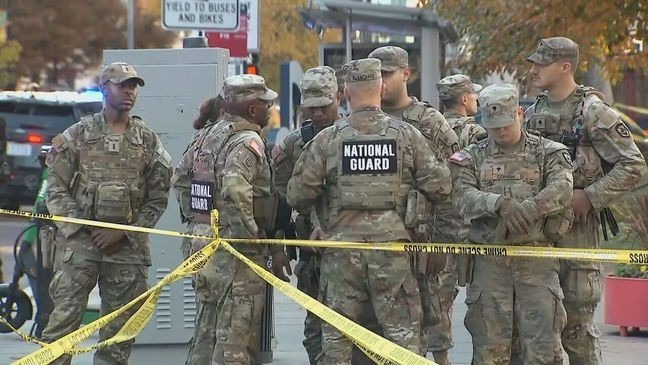
Now Trump and Hegseth have ordered the aircraft-carrier USS Gerald R. Ford to leave the Mediterranean Sea and make way to the Caribbean. There are already eight Navy vessels (crewed by some 6,500 sailors and Marines) operating in the Caribbean region. Why do they need an aircraft carrier?

Good question.

By the way, this isn’t just any aircraft carrier. The Ford is the world’s largest aircraft carrier. In fact, she’s the largest warship ever constructed. She carries an air wing of 65 to 70 aircraft, including F/A-18 fighters, which have a range of over a thousand miles and can carry laser-guided bombs and missiles for air-to-air, air-to-ground, and anti-ship assaults. Wait, there’s more. The Ford is also the heart and command center of an entire carrier strike group. That means she’s usually accompanied by at least one cruiser (armed with guided missiles for ship-to-shore combat) as well as a couple of destroyers (also armed with missiles for both ship-to-shore or ship-to-ship combat) or frigates (similar to destroyers, but smaller, faster, and more maneuverable. but still stocked with a whole lot of missiles), as well as a logistic ship and a supply ship.

USS Gerald R. Ford

SO MANY MISSILES! Clearly, a carrier strike group is massively over-armed for attacking and sinking a few small suspected drug-running vessels. There’s only one reason to send the Ford and its attendant strike force to the Caribbean.

The US is going to attack targets ashore. Venezuelan targets.

Now, you may be wondering, “Greg, old sock, what has Venezuela ever done to us?” The answer is: nothing, really. I mean, sure, Trump says it’s all about drugs, but like so much of what he says, that’s bullshit. Relatively few drugs are trafficked through Venezuela. If it was about drugs, we’d be attacking Colombia or Mexico.

The most optimistic analysts suggest we’d attack Venezuela because the current government is making the region less stable; taking down the Maduro regime, they think, would help stabilize South America. But does anybody really believe Trump cares a rat’s ass about South American stabilization? Marco Rubio, the so-called Secretary of State, has some strong feelings about the Maduro government (I don’t know why and couldn’t be bothered to find out), but Trump wouldn’t open a door for Rubio, let alone attack a sovereign nation for him.

It might be because of the number of Venezuelan immigrants coming to the US. There are something like three-quarters of a million Venezuelan immigrants living here now. And who can blame them? Life in Venezuela is grim. But 750,000 Venezuelans is less that 2% of the immigrants living in the US. Then again, math isn’t Trump’s strong suit.

Bullying is his strong suit. Picking on much weaker opponents, that’s also one of Trump’s strong suits. And hey, we can safely bully Venezuela. I mean, their annual military budget is about 1/18th the cost of the USS Gerald Ford. I’m sure they’ll put up some sort of defense, but c’mon. It’s not what you’d call a fair fight.

I’m sure there are some military analysts who can cobble together some legitimate-sounding reason for the US to attack Venezuela. But the real reason is probably that Trump and Hegseth want an excuse to impress the world by the size of their dicks.

needless death on the high trestle trail

I ride the High Trestle Trail a few times a year. Well, that’s not entirely accurate. The HTT trailhead is about a mile from where I live. The trail itself is 25 miles long, but it’s linked with the approximately 100 miles of dedicated intra-city bike paths, so even if I just ride around town, I’m often on some section of that trail.

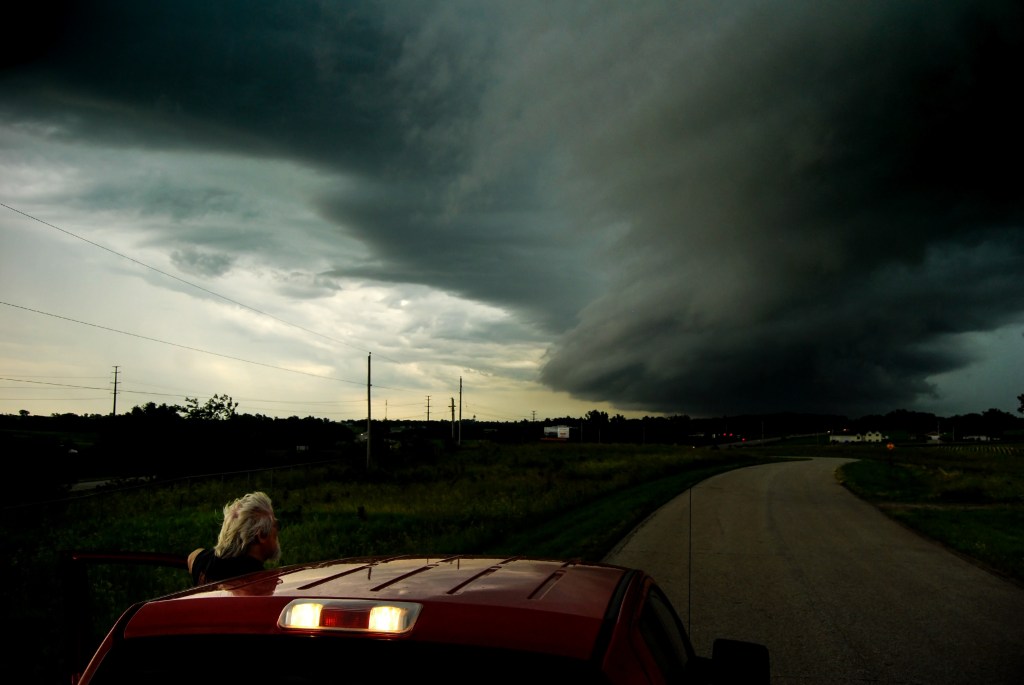
Like a lot of Rails-to-Trails bicycle paths, the HTT tends to be long and straight. Once it leaves the city limits, there’s a long stretch that runs through flat, open farmland. We’re talking corn and soybean fields, which means there’s nothing to protect you from the sun and the wind. And the wind can be brutal. The section of the HTT is great for folks who (unlike me) ride road bikes for fitness or exercise; they can put their heads down and fly.

That’s the section of the HTT where I usually saw Corey Petersen. I didn’t know her; I’ve never spoken to her, but I’ve seen her several times. We’ve shared waves and head-nods the way cyclists do. I didn’t know she was a Marine Corps veteran, but it doesn’t surprise me. Anybody who rides a hand-cycle on a trail known for wind is a bad-ass.

Corey Petersen, cyclist, USMC veteran.

You’ll notice I’m speaking in the past tense. Corey Petersen was killed a week ago while cycling on the HTT (please watch the news video). She was hit by a truck while crossing a busy country road. I’ve always hated that particular intersection. It’s a sharp turn, so you have to slow down. Worse, the trail is designed to make you ride parallel to the busy road, so you have to look back over your shoulder for oncoming traffic behind you. Even worse, there’s a low hill on the road, which limits a driver’s visibility just before the trail crossing. And to make it still worse, the speed limit on that road is 55mph, and many vehicles are traveling above the speed limit.

The intersection where Corey Petersen was killed.

It’s a badly-designed, dangerous crossing. It was almost certainly designed by somebody who didn’t understand how bicycles operate. It’s a car-brained design. It’s dangerous enough for folks on regular bikes; for anybody riding a recumbent bike or hand-cycle, which are lower to the ground and much less visible, it’s significantly more dangerous. Although I’ve personally never had a close call there, I’ve been on group rides and witnessed close calls with members of my group.

We don’t know all the facts that led to Corey Petersen’s death. The driver of the truck may have been traveling at the legal speed limit; he may have been paying attention to the road, he may have done everything right…but a vehicle traveling at 55mph covers about 80 feet in a second. At most, a driver cresting the small hill in the road would have 4-5 seconds to respond to a cyclist crossing the road. At most, 4-5 seconds. Make that a recumbent bike, which would be more difficult to see…make that a hand-cycle, which has less immediate torque…and you have a tragedy. Even if the driver is doing everything right. And let’s be honest, how many drivers are doing everything right?

This is a hand-cycle. Cyclist ‘pedal’ with their hands. It’s very low to the ground.

The High Trestle Trail draws a lot of cyclists. The Iowa Natural Heritage Foundation estimates that, on average, around 3000 people ride some section of the trail every week. A popular (and economically important) bicycle trail is an asset to the State and to the towns along the trail. There is absolutely NO reason for such a dangerous crossing to exist on that trail. Granted, the HTT was opened in 2011, but that means they’ve had 14 years to fix a known problem.

There is a petition to make that intersection safer. Please consider signing it.

Back in 1896, the journalist Nellie Bly interviewed Susan B. Anthony. The subject of cycling came up during the interview. This is Anthony’s take on cycling:

Let me tell you what I think of bicycling. I think it has done more to emancipate women than anything else in the world. I stand and rejoice every time I see a woman ride by on a wheel. It gives a woman a feeling of freedom and self-reliance. It makes her feel as if she were independent. The moment she takes her seat she knows she can’t get into harm unless she gets off her bicycle, and away she goes, the picture of free, untrammelled womanhood.

Cycling clearly meant something to Corey Petersen. I can’t speak for her, but I know that being on a bike gives me a sense of freedom and joy. I’m confident Corey felt something similar. I wish ‘she can’t get into harm unless she gets off her bicycle‘ was true.

Sadly, it’s not.

weird and normal

The great and horrible thing about people is that they’re unpredictable; they do weird shit in ways that seem normal and normal shit that in ways that seem weird. If you’re on the street and you have a camera, you can sometimes photograph moments that are both weird and normal at the same time.

Yesterday I spent a short time at an autumn festival in a small Iowa town. It was about what you’d expect: locals and visitors milling about, some music, kids playing, adults trying to be patient with kids playing, old folks enjoying the mild chaos without having to be responsible for anybody, booths selling baked goods (I brought home a delicious apple cinnamon cream cheese coffee cake, which I’m eating as I write this), fresh local veggies, craft goods, displays by local artists, hot and cold beverages (I bought a cup of hard apple-pineapple cider that must have had an ABV of around 10%), tee shirts, decorative gourds, etc, There are usually some decent opportunities for candid photos at festivals like this.

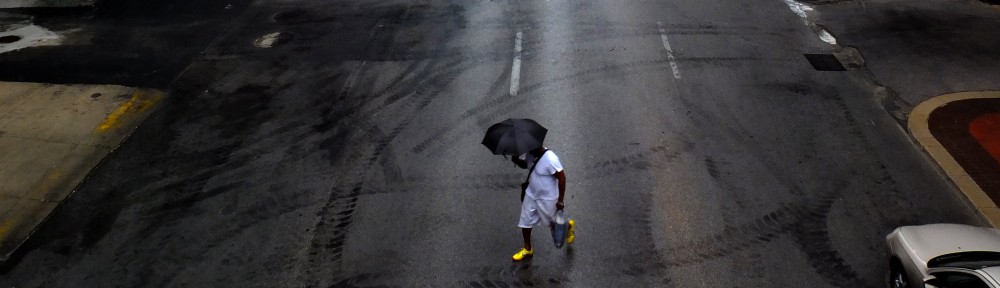
There was a young woman I assumed to be Mennonite since she wore a classic white kapp and black clothing. There are a lot of Amish and Mennonite communities in small Iowa towns, and I think it’s important as a photographer to be sensitive about both when and why you photograph them. In my opinion, it’s okay to photograph them as people, but not as specimens–if that makes sense. I think it’s also okay to photograph them as compositional elements, in much the same way you might photograph a person in a bright red bonnet or wearing yellow shoes (as in the photo at the top of this blog). But it’s NOT okay to photograph them for being different or in a way that treats their clothing as a costume. It’s NOT okay to photograph them as ‘weird’.

This young woman was standing beside a booth decorated in large, deep reddish-brown leaves, which made her white kapp pop out beautifully. But there was a lamp post with a ‘No Parking’ sign directly behind her, which detracted from the scene. So I started to shift position in the hope of getting a better composition. As I moved, I saw another women start to pass behind her. That lizard part of your brain that tells you to do something before your brain actually processes it took over and I snapped a quick shot as I moved. Here’s that shot.

Unfortunately, I never did get the shot I wanted; other people got in the way. But that’s what happens on the street. You either get the shot or you don’t. I moved on and didn’t give the moment another thought. Until I got home and looked at the photos.

At first glance, the quick shot of the young Mennonite woman wasn’t particularly interesting to me. If anything, it was the sort of photograph I don’t want to take…a ‘normal’ person and a ‘weird’ person. But then I noticed the expression on the face of the woman passing behind her.

I can’t quite figure out what to make of that expression. It’s disapproving, to be sure. But beyond that, I just don’t know. Is she merely displeased by the woman’s clothing/beliefs? Is she outraged, or repelled? Is she offended by the presence of the Mennonite woman or her clothing? Is she being intolerant of religious differences?

It’s entirely possible she wasn’t looking at the the young Mennonite woman at all, that she was looking at something beyond her. But I don’t think so. What is that woman thinking, what is she feeling? And why am I letting it bother me?

In any event, it occurred to me that the ‘normal’ woman in this photograph was being weird and the ‘weird’ woman was being normal. Which made the photo more interesting to me. But because I tend to overthink things, I have to wonder if a photographer feels it’s necessary to explain why a photograph is interesting…is it really interesting? I don’t know.

But I know I’m glad I took the shot. And I’m glad I wrote about it. Because now I can let it go.

EDITORIAL NOTE: Let me once again sing the praises of the Ricoh GR3X. I took this shot while moving and carrying a plastic cup 2/3 full of apple-pineapple hard cider. I was able to turn on the camera, make a quick aperture change to enlarge the depth of field, and press the shutter release, all within a quick moment and with only one hand. Never spilled a drop.

civic virtue selfies

A friend recently said she was eager to vote in the coming local election next month, but was a wee bit sad that she wouldn’t be comfortable posting her usual “I Voted” selfie. I asked why she’d be uncomfortable. She said after posting her selfie after the last election, she was accused of virtue signaling.

My first thought was, “Okay, yeah, I get that.” Because saying, “Look how virtuous I am” is pretty cringe (and yeah, I know saying ‘cringe’ is…well, cringeworthy, but c’mon). My second thought, though, was, “Fuck that, go vote and post your selfie.”

This is not me.

Nonverbal signals are important in any culture. You already know that, so I’m not going to natter on about it. There are some virtues that ought to be signaled. Civic virtue is a good thing. Right now, when we’re facing growing authoritarianism, claiming our civic virtues is critically important.

You may be wondering, “Greg, old sock, what is this ‘civic virtue’ of which you speak?” Well, I’m about to tell you…and I’ll warn you up front it’s rather old-fashioned and maybe a tad sappy. Civic virtue is the general belief among the citizenry that the common good of the public should come before special interests of the few. That’s it, that’s all it is. It’s that whole Spock “The needs of the many outweigh the needs of the few” thing.

This is not me.

Voting is good. It’s virtuous. Signal the fuck out of it. I firmly believe in the concept of civic virtue. I’m a good citizen. Most of my life has been spent in some form of public service. I vote in every election. I stay relatively well informed on current events. I pay my taxes. I pay my bills. I follow most of the laws most of the time. If I’m in the market and see some product has fallen off the shelf, well I pick that shit up and put it back where it belongs. This is how civil society is supposed to work.

This is not me.

Civic virtue is the primary distinguishing difference between republican forms of government (note that’s small r republican, not ‘Republican’) and monarchical or tyrannical forms. In a republic, power belongs to the public through their elected representatives. Decisions on governance should reflect values and attitudes that promote the general welfare. It’s the polar opposite of a monarchical society, in which decisions on public matters are made by a monarch and based on the monarch’s interests. (Yeah, I’m talking about Comrade President Donald Trump here.)

The so-called ‘Republican’ Party in the US doesn’t support republican ideals. MAGA is essentially a weird, twisted, mishmash of monarchical and consumerist ideologies. Governmental decisions are based on the wants and needs of one person who believes civic virtue and selflessness are for suckers, and wealth is the only true measure of worth, and scams are the best and easiest way to accumulate wealth.

This is me.

MAGA wants us to be embarrassed by expressions of civic virtue. Go vote. Take a selfie with your “I Voted” sticker. Post it on social media. Tell MAGA to go fuck itself with a chainsaw.

a tiny period of temporary release

Let me first say this: this is NOT about golf. It’s also NOT about television. It’s about assholes. I don’t watch much television–couple hours in the evening, that’s about it–and aside from women’s futbol, I don’t watch much sports on television. But recently, wanting a tiny period of temporary mindless release, I decided to turn on the quietest television sport. Golf.

It was awful. Not awful in the expected way. Awful in an asshole sort of way. Instead of the tranquil, hushed environment I expected to see, there was a loud, raucous, obnoxious crowd jeering and aggressively insulting European players. And who was leading them on? Comrade President Donald Trump.

Guardian sports analyst Bryan Armen Graham noted that the behavior reflected “what’s been an incremental breakdown in public behavior. The country now lives in all-caps, from school-board meetings that sound like street rallies and comment sections that have spilled into the street.” He’s talking about the phenomenon I call Asshole Culture.

I first used the term ‘Asshole Culture’ in August of 2021, in a post about the MAGA response to an unvaxxed man on his deathbed, admitting that Covid was real and pleading with people to get themselves vaxxed up. The MAGA response was what you’d expect–cruel, scornful, aggressive, hateful, profoundly and proudly stupid.

A month later, I felt the need to explore Asshole Culture a bit more carefully in a post called I Am Asshole, Hear Me Roar. In that post, I described the credo of Asshole Culture:

I do/do not want to do this thing. I don’t care if it helps/hurts other people. You can’t make me do or not do this thing. I will go way the fuck out of my way to create a disturbance sufficient to make others miserable in order to do/not do/stop other people from doing this thing. I am Asshole, hear me roar.

I’d expand that credo now. It’s not just about things assholes do/do not want to do; it’s also about things assholes do/do not want to exist (mostly trans folks and, to a lesser extent, Democrats). I’ve written about 40 posts on Asshole Culture (I say ‘about’ because I got distracted while trying to count them and couldn’t be bothered to start over). Here’s a list of topics I’ve written about in which Asshole Culture has had an influence:

  • gun rights
  • vaccines/face masks
  • libraries
  • trans kids in sports
  • ebikes
  • insulting behavior toward Volodymyr Zelenskyy
  • MAGA humor
  • Trump’s ear bandage
  • Kristi Noem / puppycide
  • MAGA support for Trump’s hush money/stormy daniels/repeated infidelity
  • Trump role as bull goose looney of Asshole Culture
  • Trump as martyr
  • Matt Gaetz omfg
  • MAGA response to white supremacist mass shootings
  • MAGA congress
  • Twitter
  • Attack on paul pelosi
  • Abortion
  • Trump’s theft of classified documents
  • Facebook
  • Will Smith bitch-slapping Chris Rock
  • Celebration of January 6 insurrectionists
  • Nazi free speech
  • Kyle Rittenhouse

I used to believe Trump supporters did cruel stupid shit because they were too stupid to grasp that what they were doing was cruel. Over time, it’s became clear to me that many of them are doing cruel stupid shit because they’re cruel. Not just cruel, but performatively cruel. In your face cruel. Visibly and vocally cruel. And because of Trump, they now believe (and they’re too often correct) that they can be cruel without any fear of consequence. It’s led to louder, more aggressive, celebratory cruelty.

We’re seeing it everywhere. Every day ICE agents are openly committing atrocities, confident they won’t be held accountable. Recently a Fox News personality casually mentioned murdering the homeless on live television, and to my knowledge he hasn’t even been reprimanded. Yesterday, a television news report on the day’s second mass murder was interrupted to announce a third mass murder had taken place. Comrade President Trump orders the murder of suspected criminals in international waters with a shrug at the law.

It shouldn’t surprise me that asshole culture has spread to the golf course. Golf in the US has always been a sport for conservatives with money and MAGA has a lock on that demographic. Even so, I didn’t expect to hear a television golfing audience yelling ‘Faggot!’ at golfers on the links.

Flann O’Brien wrote: Anybody who has the courage to raise his eyes and look sanely at the awful human condition…must realize finally that tiny periods of temporary release from intolerable suffering is the most that any individual has the right to expect.

Those tiny periods of temporary release are becoming tinier still.

in which i return to instagram

I stopped posting photographs on Instagram (and posting anything on Facebook) back in January of this year (2025), after Mark Zuckerberg (you know…the desperately uncool dweeb who owns Meta, the parent company of IG and FB) announced Meta was ending its fact-checking program and ‘easing’ content moderation.

FB had already become a hostile, advert-bloated social medium; as much as I loved keeping in touch with friends, the FB experience itself was annoying and aggravating. The new policies only promised to make it worse. The problems with IG were different. A lot of people were getting caught up in the illusion of ‘perfect IG lives’ and that created all sorts of emotional health issues. I was only there for the photography, not for ‘lifestyle’ stuff. While it didn’t affect me, the fact that Zuckerberg didn’t care that if it DID affect a lot of people…especially young people…was reason enough to leave.

O Holy Mop Bucket (Tuesday, Aug. 26, 2025)

Why am I returning to Instagram? For the same reason I joined in the first place. Photography. I miss seeing good photography. Don’t get me wrong, there’s a lot of good photography on Bluesky, my preferred social medium, but it’s not well organized. In fact, it’s barely organized at all. Bsky is great, but it’s not photocentric. Instagram is. IG allows me to have a curated experience. I can follow a select group of photographers, who sometimes lead me to other interesting photographers.

I’m not doing this to become a ‘better’ photographer (although I think looking at–and trying to understand–good photos CAN lead a person to try new things, which can make you a better photographer). I’m doing this simply because looking at good photography makes me happy. Being happy is a good reason for doing anything, and it’s especially important these days.

I could, of course, just look at the good photos shot by other people; I don’t have any obligation to post anything. By posting (either photos or comments on the photos of other folks), I’m basically supporting the platform, which benefits Zuckerberg. But looking without participating is cowardly and furtive. If I’m going to use the platform, I have to take responsibility for it. So, this morning I posted a photograph on Instagram for the first time since January.

Here’s a stupid thing: when I decided I was going to actually return to IG, I felt some weird pressure to post the ‘right’ photo. A “Return to IG” photo. Something somehow meaningful, something symbolic (I told you it was stupid). So I opened up my photo app with that in mind. But I immediately saw the photo above and thought, “Oooh, mop bucket” like a little kid. So in the end, I just posted the first photo that caught my eye.

And maybe that’s the right way to do Instagram.

triffids killed my academic career

I should begin by saying I was never passionate about academia. In fact, I had no interest at all in academia. I almost became an accidental academic.

The only reason I went to graduate school was because I was badly burnt out after five years working in the Psych/Security unit of a prison for women and seven years as a criminal defense private investigator. I wanted a break. Hell, I needed a break. As a working class guy, I had no idea that you could actually get paid to attend graduate school. When I learned that, I applied to half a dozen different universities in half a dozen different disciplines. American University offered me the best deal: free tuition AND a small stipend to study Criminal Justice. So that’s what I did.

That was my plan. Take a year or two off, loafing as a graduate student, then find something else interesting to do. But as I was finishing my MS in Justice, I was offered more money to go for a Ph.D. So, again, that’s what I did.

A couple of years later I found myself with a contract from Fordham University to teach Sociology. I loved teaching and I was good at it. But I disliked academic politics, and I positively hated academic writing. Still, it was relatively easy work, so I didn’t complain. Then one day I was sitting in my Lincoln Center office reading an old paperback book I’d picked up at some second-hand bookshop and the Chair of the Department wandered in. He asked what I was reading.

This is the actual cover of the novel I was reading.

Here’s a true thing about academia: it’s about specialization. For example, you can’t just study history. You have to study English history. But not just English history, English history of the Tudor period. But not just Tudor history, but Tudor history during the reign of Henry VII. And not just the history of Henry VII, but the fiscal policies of Henry VII. Academia is about narrowing your interests until you become a specialist in a small segment of a larger field of learning.

As a larval academic, I was expected to decide on an area of specialization and spend my time concentrating on it. I was expected to study the appropriate academic journals. Instead, I was reading a 1951 science fiction novel about venomous, carnivorous plants capable of locomotion (that’s right…walking plants) and the collapse of society.

“Are you reading this for your classwork?” I was asked.

I could have said yes. I mean, I could easily argue that the story examined economic systems (these dangerous plants, triffids, were cultivated as a source of industrial quality oil). I could say in all honesty that the collapse of society (a strange ‘meteor’ shower had turned most of the world blind, leaving only a small segment of the population capable of sight) resulted in a variety of localized ad-hoc systems of governance and justice, which could be explored through various criminological theories. I could accurately claim there was value in studying how a 1951 novel explored the ways new social norms and mores were formed from the bones of the old system. I could have absolutely justified reading The Day of the Triffids.

But the truth is, it never occurred to me that I needed to justify it. I told him the truth; I was reading for the pleasure of it. I was actually surprised by the disapproving, judgmental look on his face. I was even more surprised when I discovered the university had advertised a tenure-track position in the Sociology Department, and I hadn’t been asked to apply. I applied anyway, but I wasn’t even offered an interview, despite the fact that my teaching evaluations were among the highest in the department.

There were probably other reasons I wasn’t considered for the position. There’s often an unspoken (and sometimes loudly spoken) bias by academic theorists against practitioners. Some academics assumed my years as a private detective and as a prison counselor tainted my views. There’s a saying: In theory, there is no difference between theory and practice. In practice, there is. But after my brief encounter with the department Chair over Triffids, there was an obvious shift in attitude.

You could say triffids killed my academic career. It’s probably more accurate to say triffids saved me from an academic career.

in which i look at an old photo (part7)

Back in May of 2024 I reluctantly began to occasionally look at my old photographs, because apparently that’s a thing. I’d never stopped shooting photos, but I’d stopped thinking about the praxis of photography–the many ways in which photography can be put into practice. Then I came across an article somewhere that suggested looking at your old photos as if they were made by a different person and seeing what you could learn from them.

I gave some thought to that idea and decided it was silly. But I did it anyway. And hey, whaddya know? It had some value. Maybe not the intended value (which was something to do with improving your photography maybe?), but value all the same. If nothing else, looking at a few old photographs has reminded me that I tend to be pretty deliberate when it comes to composition.

This is the seventh time I’ve looked at an old photo. And you’ll notice the composition is unusual. I’ll explain why in a moment. First, the photograph.

11:02AM, Thursday, August 15, 2013

Yeah, you’re probably wondering what the hell, right? Allow me to ‘splain. A photography group I used to belong to (well, okay, a group I used to run) would engage in a variety of photo projects. This particular project involved shooting photographs as an homage to photographers we admired or respected. The idea was that by emulating these photographers, we could learn something about them and their approach to photography.

I chose to emulate the work of Uta Barth, a photographer I’d written about several years earlier. Barth is a conceptual fine arts photographer; her most important work is about the act of seeing rather than what is seen. She essentially decided to remove the subject of the photograph from the photograph. By focusing on where the subject would be and by overtly calling the viewer’s attention to the absence of the subject, she attempted to turn the viewer into the subject. When the viewer is the subject, the photograph is no longer about what is in the photograph; it’s about the act of looking at the photograph. Many critics of her early photographs complained that her images were blurry and out of focus. Barth explained the photos were “perfectly in focus, the camera just happens to be focused on an unoccupied point in space.”

I confess, at first this approach didn’t make a lot of sense to me. It was until I realized Barth was basically saying the world and everything in it exists independent of us and independent of anything to do with us. She was saying the world is NOT just our background. That concept hit me hard, partly because it should be so obvious.

The particular photo was my first attempt to emulate Barth, and it’s a failure as an homage. Why? Because, unconsciously, I included a subject. Barth very deliberately cleared away any sign of herself in her work. The inclusion of any personal item makes the photograph about the photographer. “Shoes on the floor, clothes, letters and objects on my desk immediately construct a narrative and identity of the person, and there you have it: I’m the subject.

And hey, there’s me…the two single-use plastic bottles of water (it was 2013; I didn’t know any better back then) and an item of clothing slung over a screen divider. It doesn’t say much about me, but it suggests something—and that’s enough to create a subject of the photograph.

I guess there’s a lesson there. If you’re going to attempt conceptual photography, make sure you have a solid grasp on the concept. And I suppose this demonstrates the value of looking at your old photographs. If nothing else, they remind you of lessons learned.