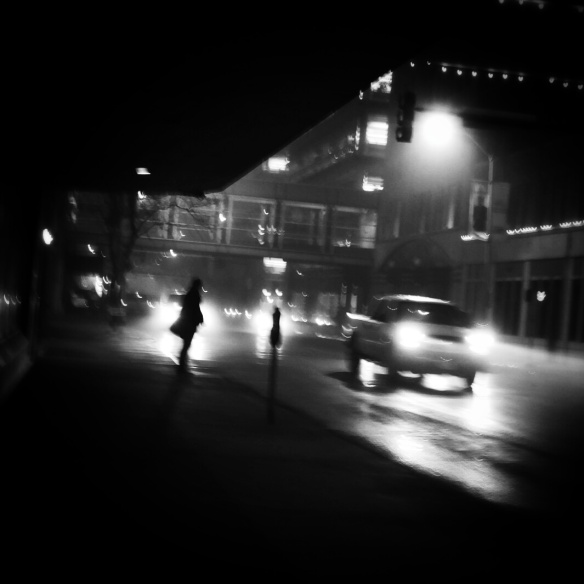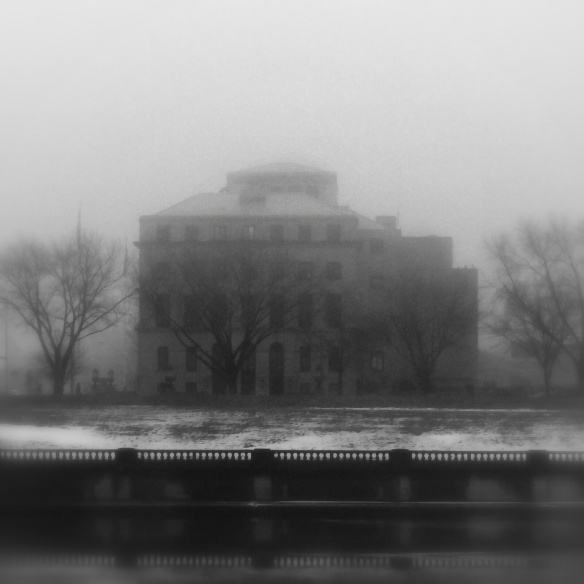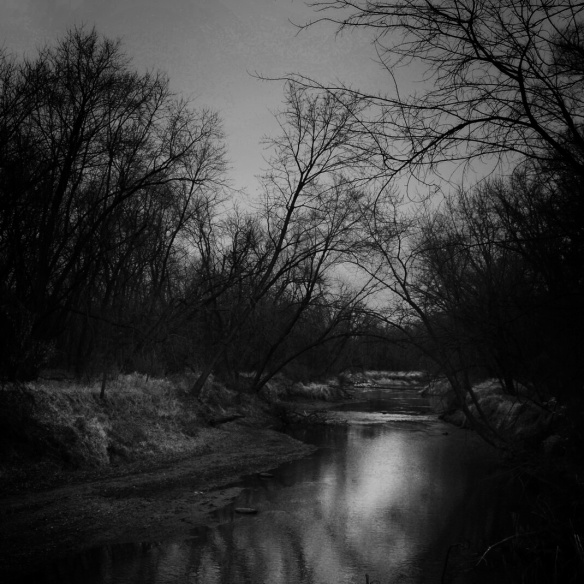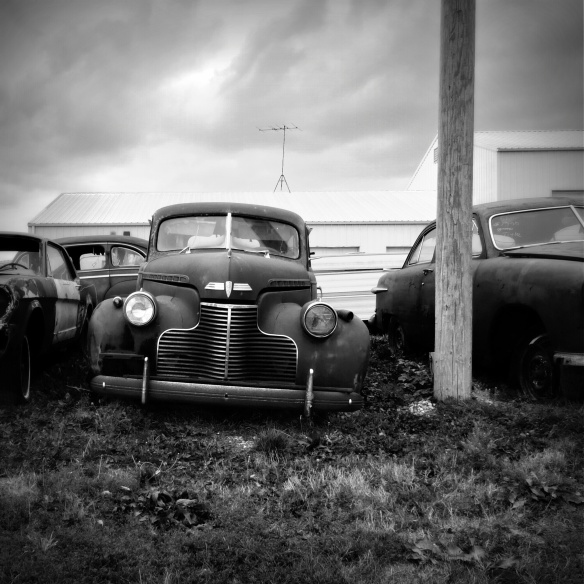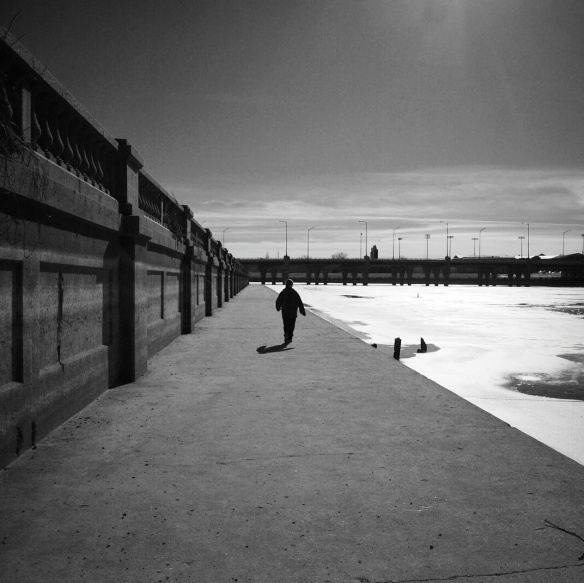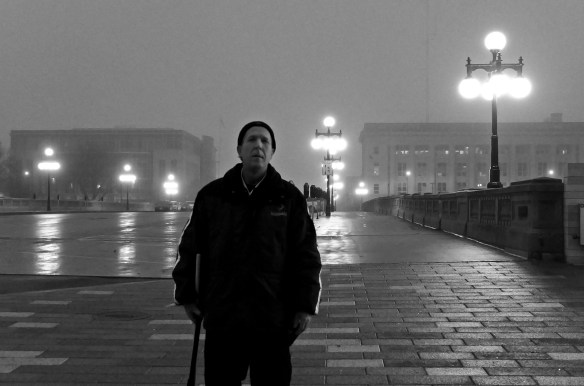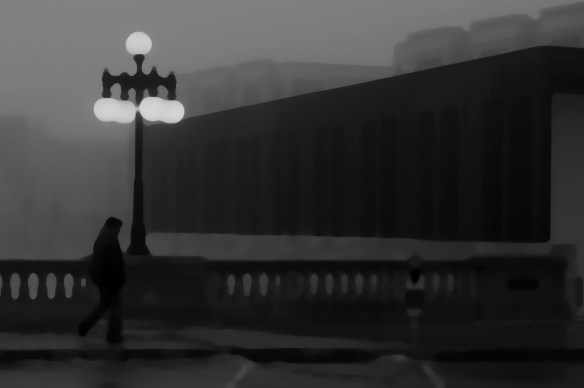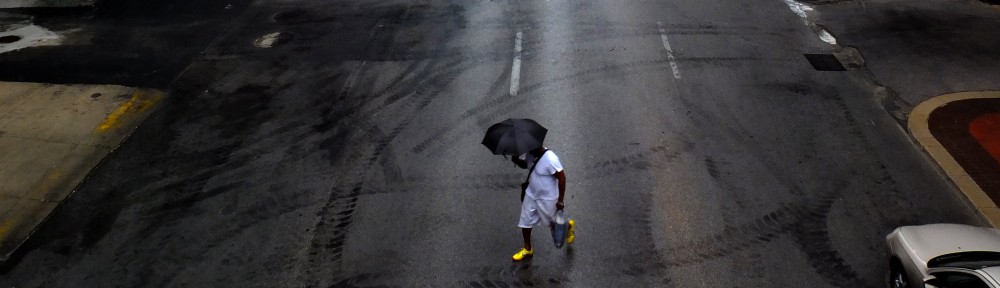
aimless, but not pointless

It’s probably got something to do with the transitional seasons — spring and autumn. Summer and winter are seasons of certainties and absolutes; you know what you can expect: heat and cold. Spring and autumn, though, are seasons of flux and movement; they’re about the passage from one absolute to another.

Maybe that’s why I feel a greater need to explore the countryside in spring and autumn. That’s where you witness the change.

DSCF4161b

Saturday began as a dark, cloudy, stormy day with no real promise of improvement. I had good reasons to stay inside — a book doctoring gig that was overdue, household chores I’d put off for too long, photographs I’d taken the week before but hadn’t yet uploaded. Valid reasons to stay home. But I felt restless…and here’s a true thing: I almost never feel restless. When I do, I usually give in to it.
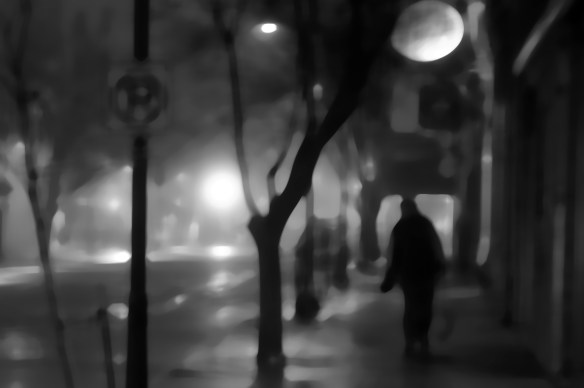
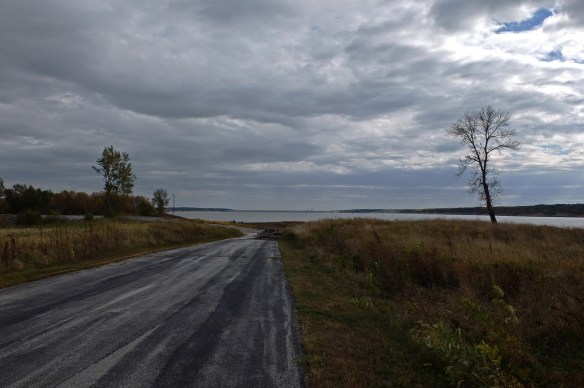
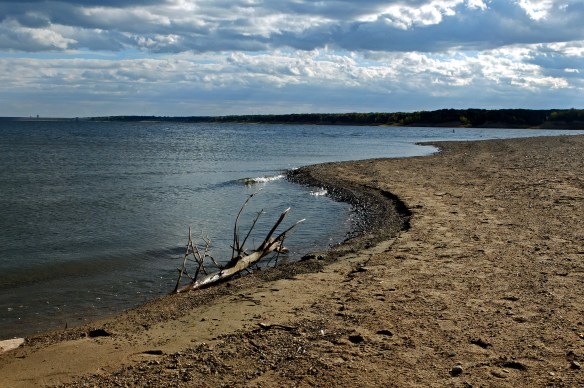
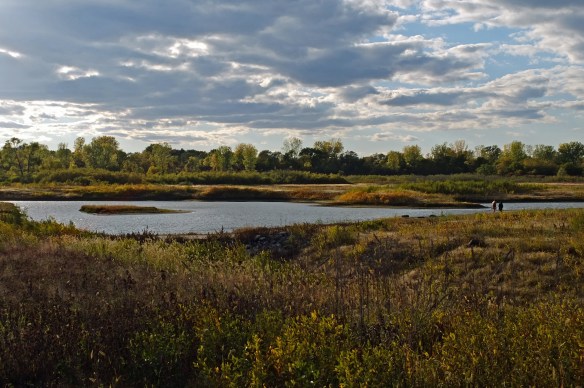
So I went to a nearby lake, with no purpose in mind other than to noodle around and see what there was to see. It was raw outside, miserably damp, and the light looked infirm. But there’s always something to see at the water’s edge. Lake, brook, ocean, river, doesn’t matter — there’s always something to see.

DSCF4196b

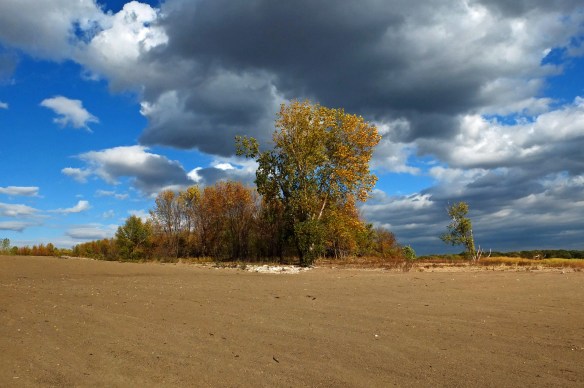
Then the clouds began to fail. The sun took a shufti, and started to wriggle and squirm through the cloud cover. And soon the day had become lovely. It didn’t get warm or anything, but it became comfortable. And the light…lawdy.

I’m sort of stingy when it comes to photography — maybe because I learned to shoot using film. I’ll lift the camera to my eye fairly often, but I don’t always press the shutter release. I’m not particularly conscious of my reasons for shooting or not shooting. All I know is sometimes it feels right and sometimes it doesn’t.

I was out at the lake for about an hour and a half — ninety minutes — and I took about ninety photographs. For me, that’s a LOT of photos.

DSCF4183c

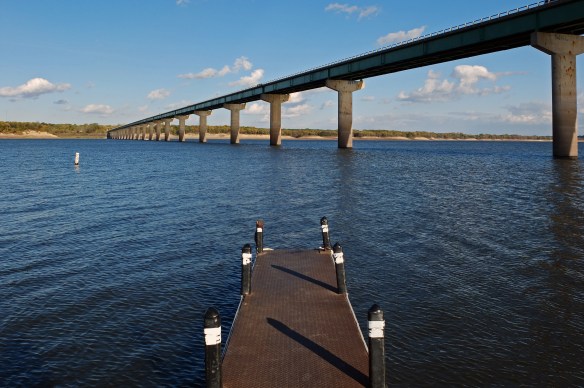
They call it a lake, but in fact it’s a reservoir built in the late 1960s and 70s as part of a flood control program. It’s hard to believe these days, but it wasn’t that long ago when the U.S. government spent big money on big projects that benefited regular people in a big way. Not only did the massive construction project itself provide a lot of jobs, but the finished lake supports a large community of small businesses.

The lake is a major local recreational area. It’s popular with recreational boaters, with hunters, with anglers, with hikers, with bicyclists (there are bike trails all through the area), with picnickers, with photographers (I saw one guy with a 4×5 view camera), with campers. All of those people spend money on their hobbies. They buy boats and jet-skis (and have them repaired and moored at marinas in the summer and stored in the winter), they buy fishing and hunting gear, they buy bikes and cameras, they eat at local diners and buy gas at local filling stations, they buy camping gear and rent camping sites at the many campgrounds, they buy sunscreen and mosquito repellent, they buy beer and soda, they spend a metric buttload of money every year. All because the government built a 26,000 acre flood protection reservoir. (All of which is to say ‘Fuck you, Tea Party Asshats!’)

DSCF4220bIn the summer, this lake is busy. It slows down quite a bit in the autumn, and on a day that began so cold and unwelcoming it wasn’t surprising that there were so few people to be seen. There were a few people bundled up but still zooming around in boats, there were a few folks fishing, there was a guy with a dog, and another guy wrestling with a large format camera. Lots of gulls, a few deer, some dead fish, a different hawk every few yards, no obvious raccoons or weasels (though a lot of tracks), finches so tiny you could fit two in a teacup.

It seems so quiet when you first arrive — but soon you realize how much sound there is. The waves, of course, and the wind through the grasses. Distant drone of boat motors. That ridiculous but somehow still moving plaintive cry of the gulls. Soft rattling of dead leaves. It seems absurd that the world could be so quiet and still so full of noise.

DSCF4207c

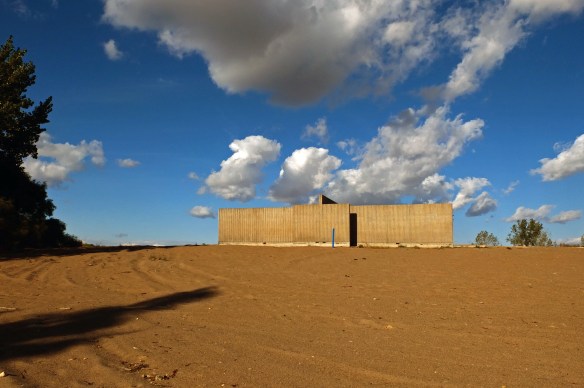
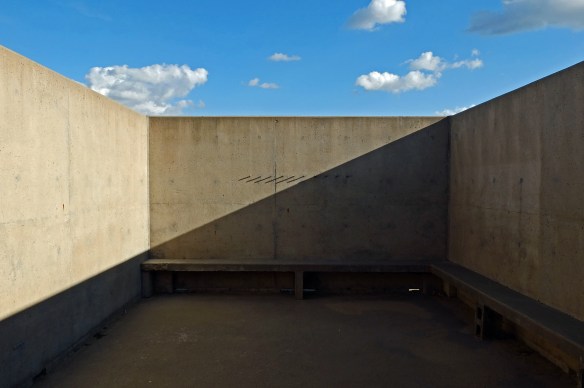
At one of the many official recreation spots there’s a bath house for swimmers — an open air place to shower and change in and out of swim suits. It’s a purely functional building made of formed concrete. It looks rather like a failed student project from the Soviet School of Architecture and Design. It ain’t pretty.

But, again, the light. Light has the capacity to turn even a butt-ugly bath-house into something interesting. For a moment, anyway.

DSCF4214b

Here’s an odd thing. When I first arrived at the lake, I spent most of my time looking out at everything. Looking out at the horizon, out at the trees and out over the water, out at the buildings and the shifting clouds. But the longer I was there, the more I began to look down.

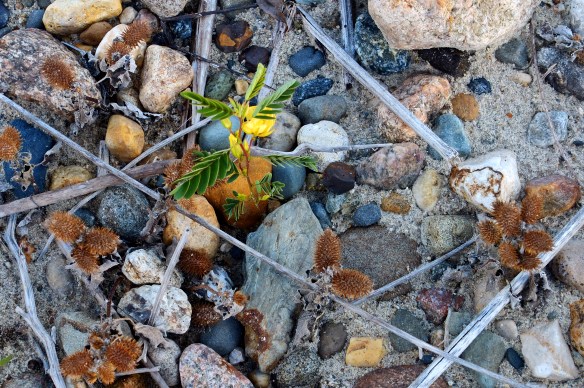
Looking out, you tend to see the larger world and the things you notice are large things. Looking down, you notice the smaller world. A world of small stones and tiny plants and odd-looking insects and sand and dry broken bits of wood and dead grasses and clusters of cockleburs. Along the lakeside, it’s a universe of cockleburs.

DSCF4230b

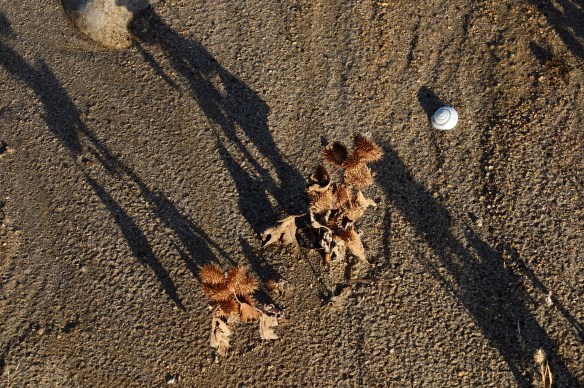
Cockleburs are really rather fascinating. The seeds, of course, are hard ovals covered in spines. The spines are actually wonderfully-formed hooks, though the tiny hooks are difficult to see without close study. But c’mon, who really looks at a cocklebur? Nobody. You just want to get the wee bastards off. Off your shirt, and off your pants, and off your socks, and your shoes, and Jeebus on toast I’ll bet the damned things could stick to tank treads.

That’s the point, of course. The spiny hooks are an incredibly efficient and effective mode of seed dispersal. But what’s really cool about these remarkably annoying plants is that they’re classic examples of photoperiodism. They’re what’s called short-day plants, plants that only bloom when the days begin to get shorter. Short-day plants have a protein that actually serves as a photo-receptor, which is incredibly cool. What’s even more cool (if you like this sort of thing) is that the photo-receptor isn’t triggered by the amount of light during the day, but by the amount of dark during the night. Short-day plants should actually be called long-night plants.

DSCF4235b

But wait — there’s still more cool but weird cocklebur stuff. That infuriating egg-shaped seed pod generally holds two seeds — one seed grows the next year, the other seed waits and grows during the second year. It’s a marvelously effective way to insure the perpetuation of the species. If you were to pick a few of those irritating burrs off your socks and boil them, you could make a tea that’s moderately effective at relieving nasal and sinus congestion. Or, you could use the plant itself to make a yellow dye. Seriously. The cocklebur belongs to the genus Xanthium, which means ‘yellow’ in Greek. It got that scientific name from a 17th century French botanist, Joseph Pitton de Tournefort, who was aware that the plant had been used for centuries by the Greeks to create a yellow hair dye.

So the next time you have to pick cockleburs off your shoestring, remember to give a moment of thought to what a truly remarkable plant it is. Then throw the irksome little bastard away (which, of course, is exactly what the irksome little bastard wants).

DSCF4241b

An hour and a half, that’s all the longer I was out there. An hour and a half, and the clouds began to move back in, the wind picked up, and the air took on a dampness that made it seem colder than it was. An hour and a half, and if I believed in the soul I’d say mine was replenished in that time. Ninety minutes of mostly aimless walking and looking and shooting photos.

And another ten minutes picking the damned cockleburs off my clothes.

neighbors

It might be art, but does that make it O.K.?

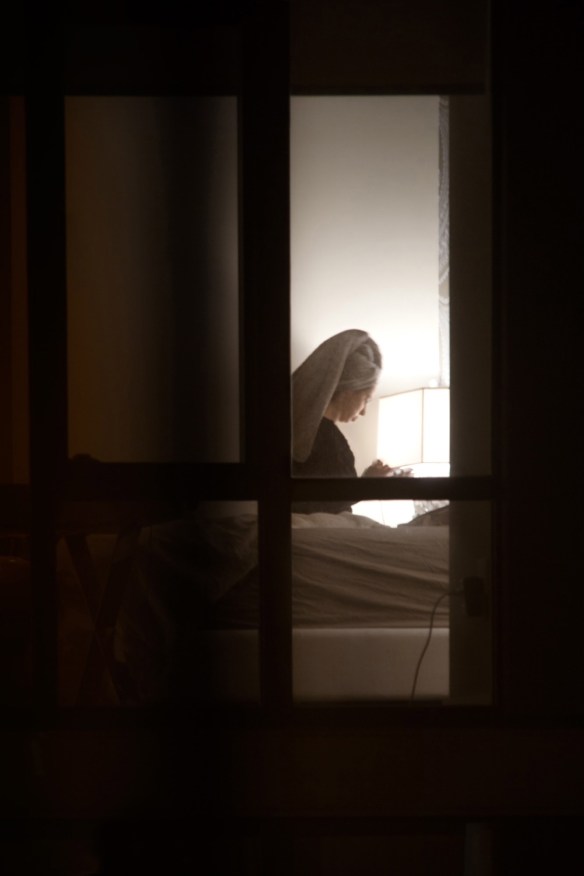
That’s the lead-in question raised in a New York Times article about photographer Arne Svenson’s new series Neighbors, which is on display in a Chelsea gallery. Svenson, who is probably best known for his still life photographs, came into possession of a 500mm lens. He didn’t buy it; according to reports, he ‘inherited’ the lens — whether from a friend who died or in some other way, it’s not clear. What is clear is that Svenson somehow ended up with a lens that’s great for wildlife and sports photography, but not particularly useful for still lifes.

So he did what I suspect any photographer would do. He put the lens on his camera and looked out the window. Since Svenson lives in an apartment in TriBeCa, it’s not surprising that when he looked out his window, he saw the apartment building across the street.

neighours #1

Neighours #1

Back in 1964 the social philosopher Abraham Kaplan posited the Law of the Instrument. He wrote: Give a small boy a hammer, and he will find that everything he encounters needs pounding. This concept is sometimes referred to as Maslow’s Hammer, because a couple of years later Abraham Maslow wrote: I suppose it is tempting, if the only tool you have is a hammer, to treat everything as if it were a nail.

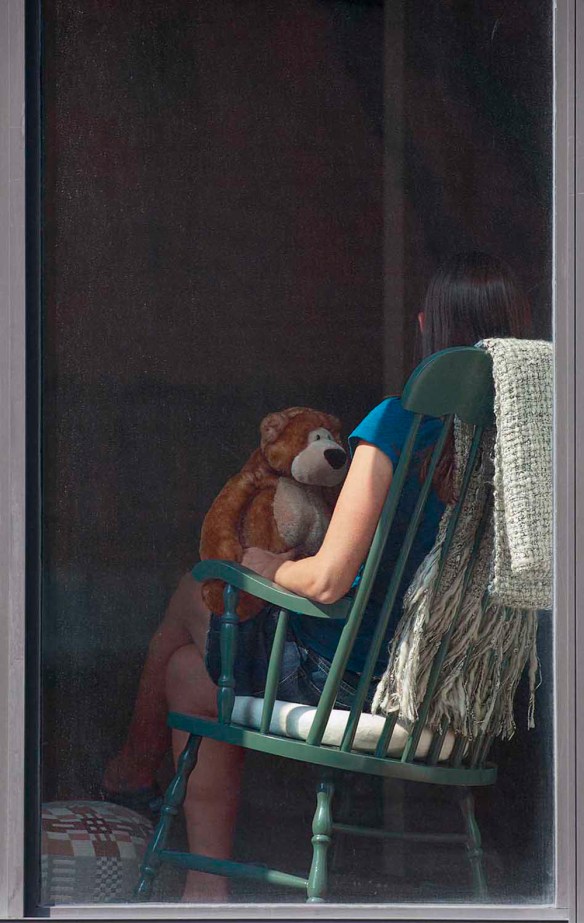
If you have a wildlife photographer’s lens, you treat everything you see through it as wildlife. And that’s sort of what Svenson did. He began to photograph his unsuspecting neighbors in the building across the street in much the same way a wildlife photographer would photograph, say, a Pileated Woodpecker. Quietly, surreptitiously, covertly. You don’t want to spook the bird; it’ll fly away. Svenson embraces this analogy.

“I am not unlike the birder, quietly waiting for hours, watching for the flutter of a hand or the movement of a curtain as an indication that there is life within.”

There’s a crucial difference between New Yorkers and woodpeckers, though. Birds don’t go to galleries in Chelsea. Birds never see their photographs hanging in a venue open to the public. Birds have a poor grasp on the concept of privacy. Birds don’t sue.

neighbors #14

Neighbors #14

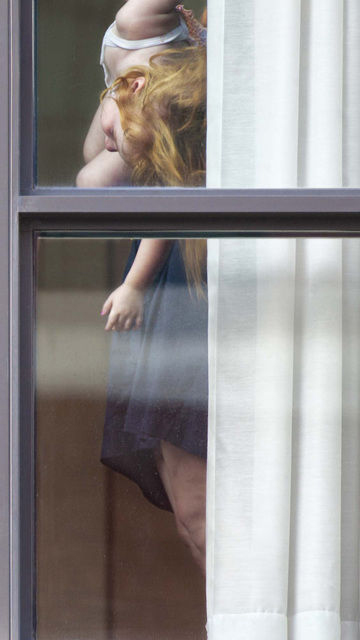
Not surprisingly, some of the people Svenson photographed have brought suit against him. Martha and Matthew Foster are seeking ‘actual and exemplary damages for intentional infliction of emotional distress and an injunction to stop the dissemination of the photographs’ (emphasis added). Ms Foster and her children appear in two of Svenson’s photographs — Neighbors #6 and Neighbors #12, which are being sold for US$5000 and $7500. Ten copies of each print are apparently being offered. According to the suit,

Plaintiffs were also greatly frightened and angered by defendant’s utter disregard for their privacy and the privacy of their children. Plaintiffs now fear that they must keep their shades drawn at all hours of the day in order to avoid telephoto photography by a neighbor who happens to be a professional photographer.

It needs to be noted that this is a civil suit, not a criminal case; Svenson’s behavior may be ethically questionable, but it doesn’t appear to be illegal. But even though a civil suit has a lower standard of proof than a criminal case (generally ‘a preponderance of evidence’ or ‘clear and convincing evidence’ rather than ‘beyond a reasonable doubt’), I suspect the Fosters will have a difficult time proving Svenson intentionally inflicted emotional distress on them. Their anger and distress are almost certainly real, but that’s not enough for them to win a civil suit.
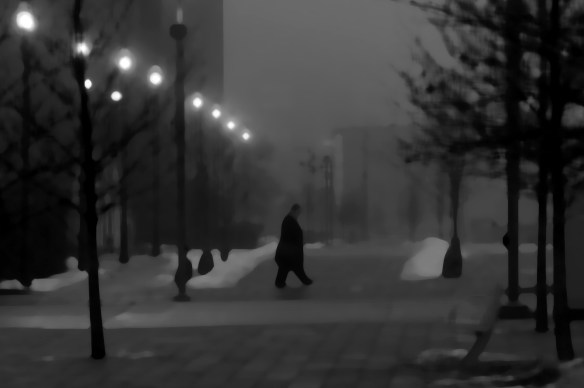
neighbors #12

Neighbors #12

So it seems Svenson did nothing criminal, and it appears unlikely he’ll be found civilly liable for his behavior. That brings us back to the ethical question raised in the Times: It might be art, but does that make Svenson’s behavior okay?

It’s really a rather silly question. I doubt many people would think using a telephoto lens to shoot surreptitious photographs of unsuspecting neighbors is okay. It’s most certainly not okay. It’s fucking rude, is what it is. Rude and more than a little creepy.

Neighbors #11

Neighbors #11

That said, I’m not convinced that ‘okay’ and ‘not okay’ are metrics that should be applied to art. I don’t think ‘rude’ or ‘creepy’ are useful yardsticks for measuring the acceptability of art. There’s good art and there’s bad art; there’s art that works and art that doesn’t. And those, of course, are entirely subjective measurements.

I’m not suggesting art trumps ethics, or that art is above ethics. Nor am I saying artists should ignore ethics. What I’m saying is that artists shouldn’t choose their subject matter based on whether it’s socially acceptable or not. They should, however, be willing to suffer whatever consequences arise from socially unacceptable art — including the occasional civil suit. In this case, as might be expected, the legal attention has brought Svenson’s work to a much wider audience and will almost certainly help his sales.

Neighbors #17

Neighbors #17

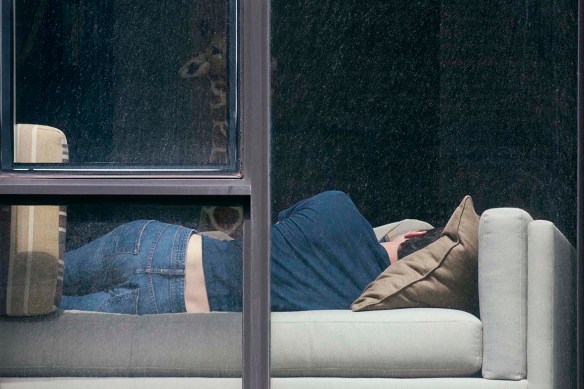
I think this is good art. I think these photographs work. I’m completely taken by the stillness, and the intimacy, and the painterly quality of the light. But at the same time, I think Svenson’s behavior in spying on his neighbors is morally reprehensible. If he’d done it to me, I’d very likely be massively pissed off. I’m glad he did it anyway.

I find myself wondering if the Fosters weren’t the subjects of the photographs and saw them — in a book, on a gallery wall, in a magazine — if they’d have appreciated them as photographs. As art. I wonder if they’d be able to look at Neighbors #6 and Neighbors #12 and, instead of seeing an appalling invasion of their own personal privacy, see them as lovely photographs depicting a happy, close-knit family. Because that’s what I see.

walking like a camel

No, I don’t do it for the exercise. Yes, I understand that both walking and cycling are terrific forms of exercise, but no, that’s not why I do it. Yes, I’m usually going somewhere when I go for a walk or a ride, but no, that ‘somewhere’ isn’t a destination. I’m not actually going to that place. That place is just a prompt, a nudge, a reminder that it’s time to turn around and go back. Yes, the walk or ride serves a purpose; the walk or the ride is the purpose.

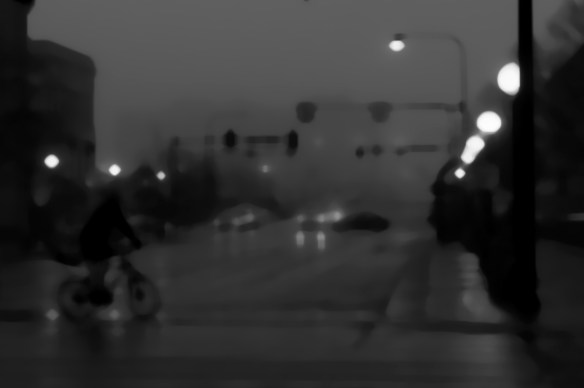
the cyclistI do this almost every day, regardless of weather. Sometimes I’ll walk or ride for hours, sometimes just for ten or fifteen minutes. I might stroll for a couple of hours along the river; I might ride five minutes to the nearby Stop & Rob and buy a Coke Zero. The purpose isn’t to see the river or fetch a Coke, though those are both fine things. The purpose is movement, the purpose is to move the body and disengage the mind from whatever I was doing and allow it to re-engage in…well, something else.

jaywalkHere’s a true thing: I don’t really walk or ride. I saunter. I even saunter when I’m on a bicycle. This is how Chambers defines saunter:

to walk, often aimlessly, at a leisurely pace; to wander or stroll idly

That’s me, wandering idly on foot or bicycle, somewhat aimlessly, at a leisurely pace.

promenadeThere’s some uncertainty about the etymology of saunter. It’s been suggested the term derives from sans terre, ‘being without land or a home,’ which would be a good reason for walking aimlessly. Others believe it comes from s’aventurer, ‘to take risks or leave to chance.’ My favorite explanation of the term, though, comes from the Middle Ages, during the period of the Crusades.

When we think of the Crusades, we generally think of armored knights on destriers, traveling to Jerusalem to ‘rescue’ Christendom. But it wasn’t just knights and noblemen who made their way halfway around the world; poor folks were also seized with the irrational desire to travel to the Holy Land. But they had to walk and beg for food as they made their way à la sainte terre. While of lot of those folks were sincere, the willingness of people to help a common sainte-terrer (it was a sacrifice that would gain them favor with God) created a population of poor folks who wandered through much of Europe claiming to be journeying to the Holy Land, but actually were just medieval hobos.

humming to himselfObviously, I’m not that sort of saunterer. I’m more in the Ludwig Von School of walking. Beethoven took a long stroll almost every afternoon, with a pencil and some paper stuffed in a pocket so he could write down any musical thoughts he might have. I keep myself open to ideas when I walk or ride, but I don’t take any writing paraphernalia with me. I tell myself that if an idea is good enough, I’ll remember it. If I don’t remember it when I get home, I tell myself the idea couldn’t have been that good.

That’s probably nonsense, but it gives me some comfort when I get home and can’t recall the ‘great’ idea I had when out sauntering.

a wee bit tipsyOr maybe I’m more in the Thoreau School of walking. Thoreau said this:

[T]he walking of which I speak has nothing in it akin to taking exercise, as it is called…but is itself the enterprise and adventure of the day.
Moreover, you must walk like a camel which is said to be the only beast which ruminates when walking.

I’m very much taken with the notion of riding a bicycle like a camel.

hard day at the officeI think I could argue that the real reason I take walks or go on rides is to get outside of my mind. Things happen when you’re out and about. Real things, and they happen to real people. The things that happen when you’re at your desk only happen in your mind.

Here’s an example of the way things happen. This thing happened to the composer Benjamin Britten, who was a great walker. It’s my favorite Benjamin Britten story (okay, my only Benjamin Britten story, because c’mon, does anybody have more than one Benjamin Britten story?). He was walking along a railroad track one day and came across a couple of young boys standing by the track, waiting. They had a newt in a jam jar. Britten asked the kids what they were doing. They said, “We’re waiting for the two o’clock train to come out of Aldeburgh, so we can show this newt what a steam train looks like.”

I’m willing to bet you five dollars this will become your favorite Benjamin Britten story too.

wishing flags

Most last week sucked. It sucked on so many different levels. You’d need an abacus to count the many ways in which last week sucked. But on Friday afternoon Suspect #1 in the Boston Marathon bombing was dead. Suspect #2 was said to be injured and corralled in a ten block area of Watertown. So I felt free to abandon the television and the Internet for the first time in a couple of days and take a much-needed walk.

It wasn’t an ideal afternoon for it. The weather sucked too. The temperature had struggled to climb up into the low 40s, but I got the impression it wasn’t very committed to staying there. The wind was fluctuating between 6 and 7 on the Beaufort scale (not that anybody still uses the Beaufort scale, so let’s just say it was blowing about 25-30 mph) and shoving around massive wads of discouraged-looking clouds. Every so often, though, there was a break in the cloud cover and the most incredible sunlight would gush through for a moment.

So I stuck my little Fujifilm X10 in a jacket pocket and set off for the river.

and larsonThe river was flooding a wee bit because of all the rain. Not enough to cause any serious damage, but the river had risen enough to cover the lowest level of the riverwalk. As I approached one of the pedestrian bridges, I heard an unusual noise. I assumed it was just the wind through the girders, combined with the rushing of the water. But it wasn’t.

It was flags. Lots of flags. Lots and lots of small flags.

small flagsCord had been strung crisscrossed through the girders, to which small squares of something resembling cloth had been affixed. Even though the little flags were weathered and a tad faded (not surprising after a few days of rain), they gave the pedestrian bridge a rather festive look. They couldn’t quite overcome the gloomy weather, but they made a brave attempt.

I didn’t look at the flags very closely, I’m afraid. Not at that point. I noticed one of the flags had the logo of the Principal Financial Group, so I dismissed it as some of corporate promotional stunt. And it was, after a fashion. But as promotional stunts go, this one happens to be pretty cool.

clothette flagsA local bookbinding company donated recycled clothette (a durable paper that resembles cloth and is used in — that’s right, binding books). Using still more donated materials, children turned those squares of clothette into ‘wishing flags.’ Each flag is a celebration of Earth Day — which, it turns out, is today, April 22. The materials were also made available near the riverfront one day recently, so anybody could create and contribute a wishing flag to the project.

Something like five thousand of the small flags were created. Volunteers, most of whom were students, worked with the Parks Department to string them up along the river. Not just across that particular pedestrian bridge, but for a mile or so along the riverwalk itself.

shadow of flagsRemember, this was a cold, windy, cloudy miserable day. Somewhere just west of Boston a 19 year old kid who was responsible for at least four deaths and well over a hundred horrific injuries was cowering, wounded, in a tarp-covered boat in somebody’s backyard, hunted by dozens of police agencies. Thousands of lives had been disrupted, and some will never recover from it. And yet that Friday afternoon, for the first time in a week, I felt a sense of joy.

I’m going to say something sappy here. Sappy and sentimental and goopy. Here it is: By and large, people are pretty fucking great. Sure, there are always going to be folks who hate, folks whose anger and resentment and fear will cause them to do horrible things. But as we saw in Boston, good people outnumber the bad people. And here, along a small stretch of river in the Midwest, a group of kids collaborated with a local bookbinder and a multinational corporation to celebrate Earth Day. So yeah, haters are assholes and corporations are almost certainly inherently wicked, but people in general are pretty fucking great.

i love the riverThey’ll remove all those flags in a few days. And that’s okay. They’ll have served their purpose, and they’ll be recycled again. After a week like the one we’ve all just suffered through, it’s good to see something hopeful and cheerful. Like a kid’s painting of two happy girls, a few flowers, and some sort of mutant ferret.

And you know what else is cool? That building in the background? It used to be the main branch of the public library. Now it houses the World Food Prize, an honor given annually to somebody who has “advanced human development by improving the quality, quantity or availability of food in the world.” The prize was the idea of Dr. Norman Borlaug, who won the Nobel Peace Prize in 1970 — the very same year as the first Earth Day celebration.

People. I’m telling you, they’re pretty fucking great. In general

two of this, two of that

Occasionally I’ll take a walk with the specific intent to shoot photographs. More often, though, I take a walk just to…well, to take a walk. To get out of the house, to breathe some fresh air, to stretch the muscles and make the blood pump just a wee bit faster. And it helps me clear out the cobwebs when I’m having writing issues — like when I’m unable to think of a metaphor and I have to resort to a cliché like ‘clear out the cobwebs.’

Sometimes when I take a walk, I’ll stick my little Fujifilm X10 in a pocket. I almost never take it out. Almost never is another way of saying Sometimes I do. On a strangely warm morning back in January, I did. I took the camera out because as I walked through a small suburban park, I saw these two trees:

two treesBHere’s the problem. I’ve been working on a novel for a while. A novel is as much an exercise in persistence as anything else. I’ve published a lot of short fiction in various genres, I’ve published several nonfiction books, but I’ve only published one novel. So I very much want to get this novel manuscript finished and out the door. But I’m also heartily weary of the damned thing. Don’t get me wrong; I think the manuscript is good — but at this point I know everything there is to know about the characters and the plot. That leaves me with nothing to do but put words in a row. That’s not easy, of course. They have to be the right words. And that can be fun sometimes. But the real fun of writing fiction is, for me, the bit where you’re actively making shit up.

Why is that a problem? It’s a problem because it means my mind has already moved on to other projects. My mind can be a real asshole. When I take a walk, instead of thinking about my current project, my mind is kicking around ideas for the future. So when I saw those two trees, my mind began to build a scene around them. An anonymous guy running slowly between them. A guy running from something? Or toward something?

I turned around to see what he’d be running toward. And I saw these two horses:

two horsesHere’s another part of the problem. I’ve only written for an adult audience. Not ‘adult’ as in ‘adult movies’ but adult as in ‘not young folks.’ But a lot of the most creative fiction I’ve read over the last couple of years has been in the Young Adult genre. I find myself wanting to write a YA novel. Most of the fiction I’ve published has been in the mystery and detective fiction field — and I’d like to try something altogether different. Over the last few years I’ve been drawn to the sort of world-building that takes place in fantasy fiction. However, I can’t really abide stuff with dragons and wizards, or magic swords, or those grand epic stories in which the pot-boy turns out to be the bastard-heir to the throne. If I ever write anything like that, you have my permission to stab me.

I much prefer stories that drop ordinary folks into extraordinary situations. So I’ve been wanting to write a YA novel revolving around a fairly ordinary kid who gets caught up in a situation having fantasy overtones. When I saw those two trees and those two horses, my asshole mind began to concoct an opening scene. An ordinary kid sitting on the bench near the horses sees an anonymous guy running slowly in his direction from between those two trees. The kid, of course, would be the protagonist. And the kid would have to be asking the very same question I was asking myself as a writer.

two bollardsBTension. It’s almost always the driving force in fiction, and it often expresses itself in some form of question. Like Who is that guy and why is he running towards me?

I kept walking and considering possible answers to that question, and soon found myself behind the local Salvation Army store, where there was a rubbish hatch tucked away between two bollards. A great place to hide, if somebody was chasing you. But who is being chased? The kid? The guy? Maybe both of them? Maybe the guy was being chased until he met the kid, and now the kid is being chased by whoever was chasing the guy?

I checked the rubbish hatch; it was locked from the inside (of course it was — this is real life). But one of the advantages fiction has over real life is that it doesn’t have to completely conform to reality. It only has to conform enough to be believable. There are a lot of ways to deal with a locked rubbish hatch. But what we’re after at this point is tension, and one way to ratchet up tension is to offer a release from the tension — then snatch it away. You show the protagonist (and the reader) the convenient rubbish hatch, you let them think a solution has been found. then you turn the apparent solution into another problem.

This is how writers torture readers and make them happy.

two crossingsBI walked along, thinking of various ways to construct the scene. You’d want the kid (and maybe the guy) desperately trying to open the hatch, looking back over his/her/their shoulder for whoever the hell is chasing him/her/them. Maybe have the kid and the guy (if he’s there — and there would be some distinct structural advantages to having the guy there) run off together. Maybe have them run off separately, never to meet again. Maybe have them run off separately, only to meet later in the story. Maybe have the kid run off and the guy stay behind to face whoever is doing the chasing — give the kid a chance to escape. So many options.

As I walked I saw two potential avenues of escape. The first, a shiny railroad track passing between two crossing signals. Hop a slow-moving freight train? Maybe one that picks up speed and becomes too dangerous to hop off? Lots of potential there — an ordinary kid sitting in a suburban park, and half an hour later he (or she, of course) is on an express freight high-balling out of town toward some unknown destination.

The second, by turning the other direction you see two muddy ruts leading to some old out-buildings.

two tracksBMore places to hide. And who knows what might be stashed away in those out-buildings? Farm implements, maybe. Rows of high-stacked pallets filled with potting soil and fertilizer and grass seed. Maybe rusting circus equipment. Or a meth lab. I spent the rest of the walk thinking of things that might be found in those buildings — everything from a secret missile defense system to the bastard heir to the throne who’d been turned into a dragon by a wizard with a magic sword. (I told you my mind can be a real asshole.)

That was back at the end of January. This is early April. Over the intervening two months I’ve continued to grudgingly work on the existing novel manuscript — but almost every time I set out on an idle walk, my asshole mind returns to this story idea.

An ordinary kid sitting alone in a park at dusk, a stranger slowly running towards him.

20×13 [+30]

Terri Bell is a terrific artist who runs her own gallery in Denver — a thoroughly delightful and charming woman. Last October I got a note from her asking if I’d consider being a juror for a photography exhibit she was planning. I didn’t have to consider it at all. I agreed immediately. Who wouldn’t want to work with T. Bell?

The project was limited to black and white photographs, but the subject matter was wide open. Thirteen jurors with varied backgrounds and skills would review the photographs offered for submission, then render their thirteen different opinions. The twenty photos that received the most positive attention would then be hung in Terri’s gallery. I’ve been a juror in these sorts of things before; picking twenty photos without regard to genre sounded like it would be fun and interesting. Easy peasy, lemon squeezy, as they say.

I wasn’t expecting — I don’t think anybody was expecting — so many photographs would be submitted. How many? About 480. Four hundred and eighty! Out of which we were expected to pick twenty? What had originally sounded like a fun, interesting project turned out to be…well, fun and interesting. It took a bit more time effort than I’d originally expected, but I didn’t regret a moment of the time I spent on the gig. There was a LOT of really good work there.

The exhibit opened March 29th and continues until April 14th. If you’re anywhere in the Denver area, go see it.

all hereBut I’m not writing this to plug Terri’s show (though seriously, go see it if you can). I’m writing this because a couple days ago I received a package from Terri. I opened the box and found a nest of black tissue paper, beautifully crinkled. Inside the tissue — a black envelope and a slim package wrapped in elegant glossy white wrapping paper, tied with a black satin ribbon and bow. The black envelope contained a white card; the white wrapping paper contained the show catalog (which can be purchased here).

It’s not unusual, when you act as a juror, to receive a copy of the show catalog. What is unusual is the extraordinary care and thoughtfulness and artfulness Terri put into the packaging of the catalog. It says a great deal about Terri as a person and as an artist that she would pay such close attention to detail.

all here in black and whiteI love the show catalog.The photography is brilliant. I’m very pleased to have played a small role in the project. But I think what I’ll remember most about this entire process is slowly unwrapping the package.

You’ll note that the title of the catalog is 20×13 [+30]. That’s because the book not only contains the twenty photographs selected for the exhibition, but also thirty more that are so damned good they could be hung as well.

louche

Louche. I can’t recall the first time I encountered this word, but I immediately fell in love with it. I’d no idea what the definition of louche was, but I knew exactly what it meant.

Checking a dictionary simply confirmed it.

Louche, adjective:
1) of questionable taste or morality; decadent
2) not reputable or decent; shady, dubious, seedy

What else could it possibly mean? I was attracted to the word partly by the way it comes out of your mouth. Loosh. You have to make a sort of kissy-face to say it.

It’s French, of course. How could it not be? From the Old French term lousche or lois, which apparently meant ‘cross-eyed’ or ‘squint-eyed.’ That came from the Latin lusca, which is the feminine form of luscus which meant ‘one-eyed.’

You can almost see it, can’t you. A man peering squint-eyed through the half-gloom of evening at a woman wearing a red smear of lipstick. A louche scenario.

But louche isn’t just an adjective; it’s also a noun and a verb. As a noun it describes the cloudiness that comes from a suspension of fine particles in a liquid. As a verb it describes the act of suspending those particles. That sounds so very scientific, but it can be an almost erotic act of decadence.

When preparing absinthe to drink, one first pours the liquor into a glass. A slotted spoon is laid across the rim of the glass. A cube of sugar is placed on the spoon. Ice-cold water is then very slowly dripped over the sugar, dissolving it into the absinthe. The absinthe itself is highly alcoholic — forty-five to eighty percent alcohol combined with anise, fennel, and other medicinal herbs. The high alcohol content keeps the herbal oils in suspension. The higher the alcohol content, the more oils the absinthe can hold. The introduction of cold sugar-water causes the herbal oils in the absinthe to become cloudy, creating a sort of milky opalescence and releasing the aromas and scents of the herbs. The cloudiness is called the louche.

Decadent. Of questionable taste or morality. Disreputable. Shady. Louche.

Which explains why, when I was recently walking down 5th Street as evening approached and shadows began to obscure and conceal parts of the world, I passed a bright red doorway glancing at me sideways out of the darkness, the first word that came to my mind was louche.red door

my 188th thursday walk

Every couple of weeks I’ll head downtown, run a few errands, grab a venti white mocha (and a glazed donut) from the Starbucks directly next to the main branch of the public library, then spend a couple of hours noodling around in the stacks. I know a lot of folks consider Starbucks to be the Devil — and they may be right — but its right there, just steps from the library. Besides, I’ve never been known to shun the Devil.

In any event, the library is a good place to begin a Thursday Walk. The Utata group has been walking on Thursdays since April 20, 2006. I don’t always participate in the project, but I try not to let more than a couple of weeks go by without joining in. Last Thursday was the 361st consecutive Utata Thursday Walk. Isn’t that amazing? It was my 188th; I’ve done just over half of the Thursday Walks.

The date is in danger of not being saved

The date is in danger of not being saved

I began by heading back to the Save the Date scene, which was hidden away behind construction equipment on my last visit. It’s still behind a bright orange warning fence, but at least I can see the spot where the message is located. I talked to some of the construction guys — they said the building has been bought by an architectural firm, which will use the ground floor as offices and turn the upper floor into loft-style apartments.

In a way that pleases me. I love to see these old industrial buildings restored and put into use. But it pretty much ruins any hope of learning what I was saving the date for. And in related bad news — I was able to see that my chalked question had been washed off (I presume by rain or snow or ice or some other meteorological eraser).

Smoker's haven

Smoker’s haven

Around the corner there’s a converted garage entrance that’s been turned into a place where smokers can gather and escape the worst of the weather. It’s a weird little place. They open the garage door in the morning and close it at the end of the working day. They’ve made an effort to make it comfortable, and it’s kept surprisingly neat.

I walk by this spot periodically, and occasionally I’ll stop and say hi to the smokers. They’re a camera-shy group. So far none of them has been willing to be photographed. It’s a guy thing. But I’ll keep trying. Maybe some day one of them will relent.

Stacks of yellow crates

Stacks of yellow crates

There’s an alley that runs behind a few bars, a coffee shop, and a somewhat seedy hotel. It’s a nice alley (as alleys go) and there’s usually something there worth photographing. But I rarely shoot anything there because it’s always clogged with cars or delivery vehicles. People seem willing to park anywhere, without any regard at all for photography.

I always glance down the alley as I pass, hoping that one day it’ll be free of parked vehicles. Last week it wasn’t exactly clear, but there was a space between vehicles where I could see some stacks of seriously yellow crates. Even as I walked toward the crates, I could see a transit van entering the other end of the alleyway. So I hustled and managed to shoot one frame just as the van pulled up. I shot a second frame before he honked his horn, and one final frame after the honk, then waved him into the spot.

Riverside bike path

Riverside bike path

I was heading east toward the river. If the weather is nice, I usually head toward the river. In fact, if the weather is less-than-nice, I often head for the river. Oh hell, I’ll head toward the river even if it’s pissing down rain. I’ll head to the river if a hail of scorpions is falling from the sky. I like the river.

Nobody would call the weather nice — it was cloudy and pretty cold — but it wasn’t raining or snowing, and the sky was scorpion-free. So…river.

Under the Court Street bridge

Under the Court Street bridge

There’s a bike path along the river and a fairly new pedestrian walkway, though much of the time the two are merged. There’s also an old river-level walkway down below the balustrade. On windy days the river often laps up over that walkway. Sometimes you’ll find fish — usually small ones — that have leaped out of the water and onto walkway. You’ll also find the occasional old grommet where boats and barges used to tie up back in the day when they were allowed in this stretch of the river.

Dead fish and grommet

Dead fish and grommet

One of the things I like about the riverwalk is that it’s out-of-the-way. There’s absolutely no reason to go there unless you want to be there. I mean, it’s not on the way to anyplace else, and there’s no purpose in walking the river level other than to be walking the river level. You rarely meet people there — but when you do, the people tend to be interesting. Or scary. And sometimes both.

On that day, there was nobody on the river level except me and a few dead fish.

At river level

At river level

Most days I’ll only walk a short stretch of the river. Just far enough to generate some river-calm. You know, that feeling that comes with spending time along a slow-moving body of water. I find it soothing to know the water sliding by me began in Lake Shetek in Minnesota, and 525 miles later it’ll join the Mississippi River on its way to the Gulf of Mexico. I like knowing the river is following a course carved out by glacial melt some 13,000 years ago.

It makes me feel small and impermanent. I’m aware some folks are uncomfortable with that feeling, but I find it weirdly comforting. It reminds me that whatever crap is going on in my life — and right now my life is pretty crap-free — isn’t all that important or momentous. That’s a nice thing to remember.

Pedestrian bridge over the Center Street dam

Pedestrian bridge over the Center Street dam

I continued all the way to the end of the riverwalk, just below the Center Street dam. From there I could see the crazy-ass pagoda constructed by the Chinese Cultural Center, and the crazy-ass John Anderson White paddle-wheel riverboat, and even the crazy-ass dome of the Botanical Center. Each of those things is maybe a wee bit weird, but seeing them all in one place always makes me feel like I’m hallucinating. I like that.

Center Street dam

Center Street dam

That dam, by the way, is fifteen feet tall. The water rushing over it makes a hell of a noise. It gives you a real sense of the astonishing power of the river. Even though it’s a fairly slow moving river, it’s a lot of water and it just doesn’t stop. Eleven people have died in the boil below that dam — mostly stupid boaters who got too close despite all the warning signs and the rescue cables.

I’d have kept walking, over the pedestrian bridge, down the riverwalk on the east side of the river, and back again over the lower pedestrian bridge. But by then it was nearly five o’clock and I had to meet a friend, and even though it was only a three and a half mile walk, I was feeling the cold in my knees.

But it was a good walk. They all are. Man, I love Utata for giving me an incentive every week to get out, put a camera in my hand, and walk someplace. And there’s something really special about knowing that other folks all over the globe are out doing the exact same thing for exact same reason. This is going to sound really corny, but I don’t care. These Thursday Walks are like being part of a river. And I’ll leave it at that.