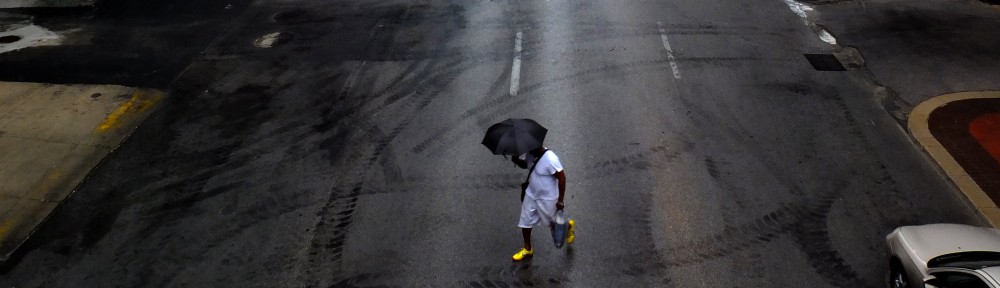
warm boot

Ninety percent of the work I do takes place in my head. The other ten percent involves shifting that work from my head to the computer through my fingers. Because so much of my work involves the creative writing of other folks, I spend a lot of time thinking about odd stuff, asking myself odd questions, researching odd topics.

Example? Sure, here’s one. Last week, I found myself exploring the history, function, and evolution of the lapel — complete with tangents on why we only see peaked lapels on formal evening wear, and the sad decline of the boutonnière loop on the reverse of the lapel. Here’s another issue I dealt with last week: at what point, in a science fiction mystery set in a massive orbiting space colony, does the number of sapient species living in the colony cease to create the illusion of the diversity of life in the known universe and begin to become a distraction from the story?

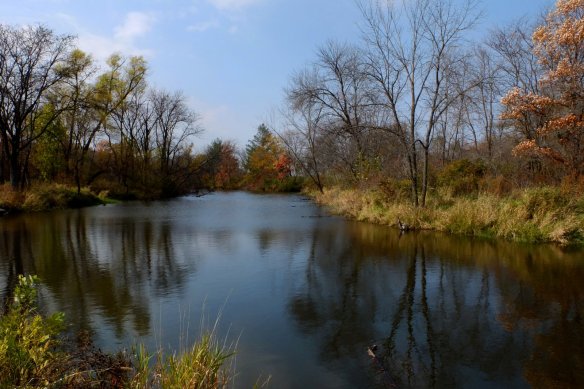
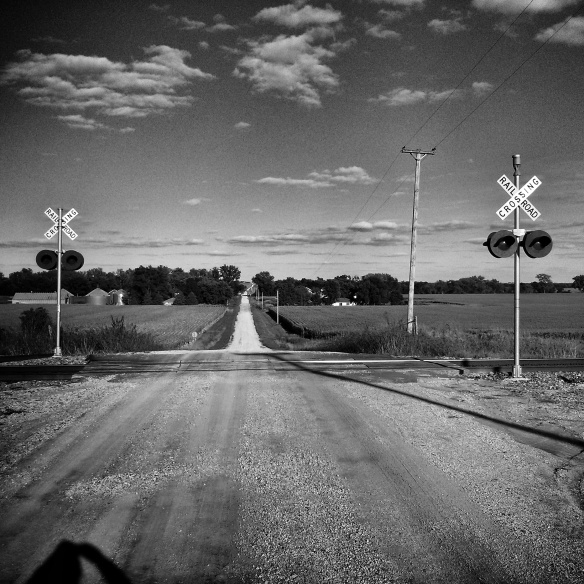
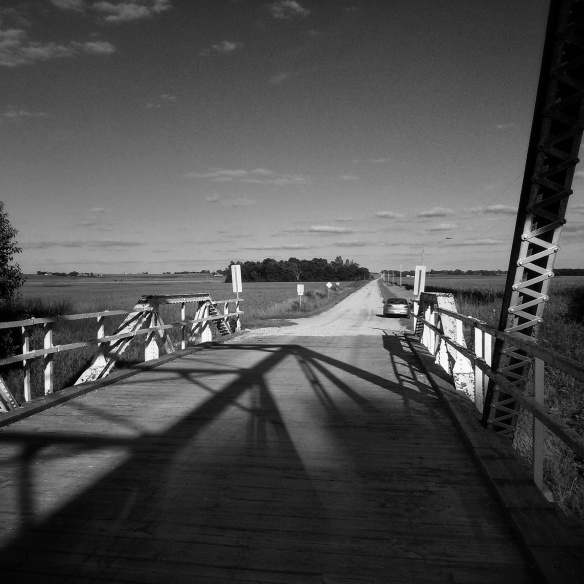
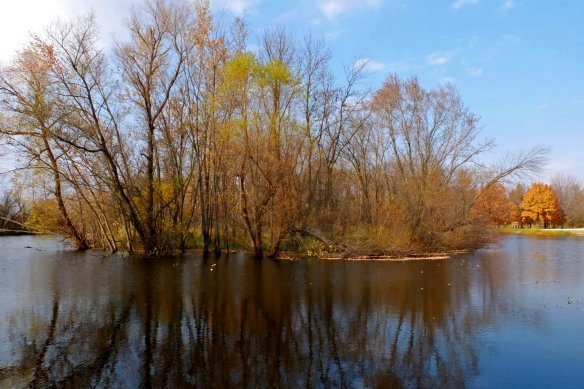
Where the gravel road intersects the line of trees is a bridge spanning a river.

Where the gravel road intersects the line of trees is a bridge spanning a river.

I do most of this thinking and wondering and questioning and researching in a small office with a window that looks out on a deeply uninteresting suburban street. I periodically shift to the kitchen table, where the windows look out on some deeply uninteresting suburban back yards. The absence of anything visually interesting is usually a good thing; it makes it easier to stay inside my head, where almost everything is interesting.

But I also need to regularly reset my brain, so once or twice a week I either bang into the city or I go lounge around the countryside — which I tend to think of as either a cold boot or a warm boot (do people even use those terms anymore to describe different levels of rebooting a computer?). The city is a cold boot. A complete re-start. The countryside is a warm boot. Restarting without going through the rigorous Power On Self Test.

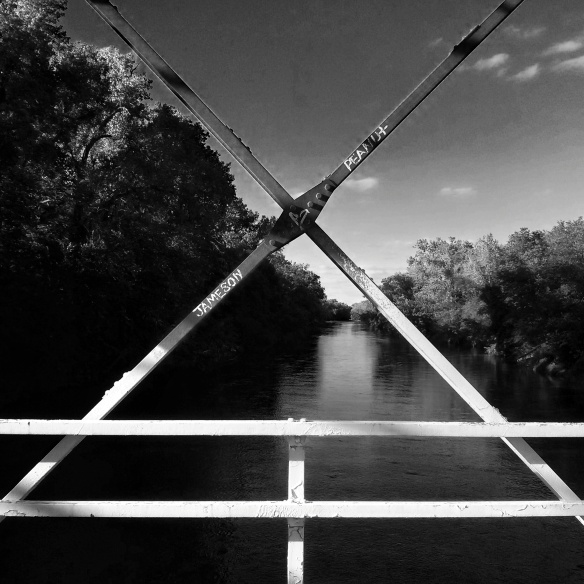
Jameson and Peanut

Jameson and Peanut

A couple of days ago I did a warm boot. Got in the car late one afternoon, went looking for a bridge over a river. Any bridge, any river. It’s really a pretty easy task. There are rivers, creeks, brooks, and streams all over the Midwest. The same with roads. At some point all those roads have to intersect with all those rivers, creeks, brooks, and streams. And that means a bridge.

Fifteen — maybe twenty — minutes later I was standing on a classic steel truss bridge spanning the South Skunk River. These used to be pretty common bridges; easy to build, practical, sturdy. They began making them out of wood in the 1870s, moved to cast iron a few decades later, then to steel in the early 1900s. Engineers still make various forms of truss bridge, but these old steel units on secondary or gravel roads are gradually being replaced by safer, more easily built, less expensive (and much less interesting) concrete beam bridges.

Perfectly understandable from a governance perspective. But it’s still rather sad. There’s simply no romance in a concrete beam bridge. No struts on which Peanut and Jameson can record their love.

Skunk River

Skunk River

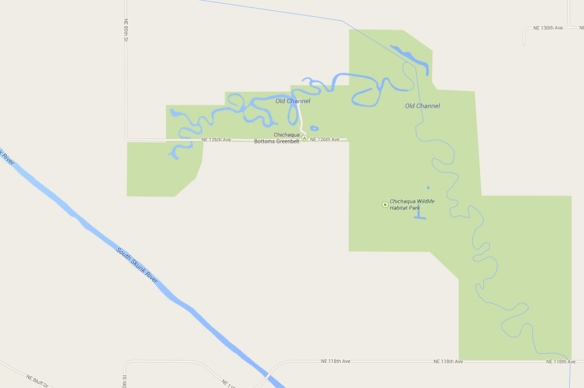
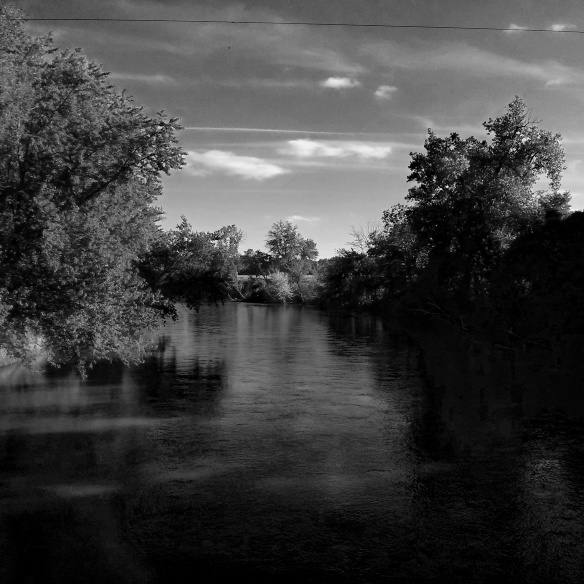
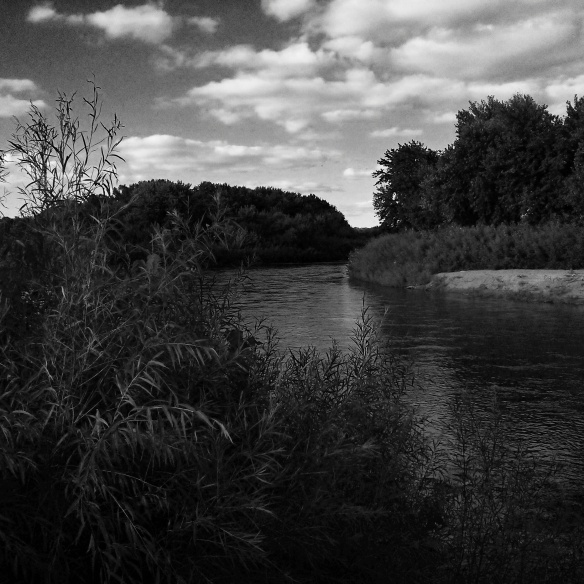
It’s a nice river though, the South Skunk. Hundred and eighty-five miles long. Add another ninety-five miles after it joins up with the North Skunk and they both meander down into the Mississippi.

It’s not actually named for skunks, by the way. Back in the mid-17th century when the French coureurs de bois and voyageurs were wandering around in the wilderness, they often (and I mean seriously often) failed to properly translate the names given to local geographical landmarks by the native peoples. The local Sauk and Meskwaki tribes told the French explorers that the river was Chicaqua, a term meaning ‘having a powerful smell.’ The Indians were apparently referring to the onions that grew wild along the banks. But since they’d also used the same term in describing skunks…well, there it is. The Skunk River.

Long and straight, heading due east.

Long and straight, heading due east.

I noodled around on the bridge for a while, no longer thinking about aliens or the sociology of fashion, then got back in the car and headed farther upriver. But this is the Midwest, and the roads rarely follow the course of geological features. The secondary highways and gravel roads are long and straight, laid out east-west and north-south on a grid.

That’s the work of Thomas Jefferson. I don’t mean to suggest Jefferson was out in Iowa with a surveyor’s theodolite (that’s that little telescope-looking thing). It’s just that he came up with the concept of the Public Land Survey System. After the Revolutionary War, the new U.S. government needed to raise some cash, and find a way to reward the soldiers who’d fought. The solution was pretty obvious: there was a whole lot of land unoccupied by white folks — give it to the troops.

But first that new land had to be surveyed. It took years to actually implement the system. It wasn’t until white folks began to ‘civilize’ Ohio that the government began to apply the system. It’s really pretty simple. They established east-west baselines and north-south meridians, divided the territory into square townships (never mind if there were any actual towns there yet), made each township six miles by six miles, divided the townships into thirty-six sections of 640 acres each, set aside one section (always Section 16) for a school, and when it came time to lay down roads all they had to do was follow the grid.

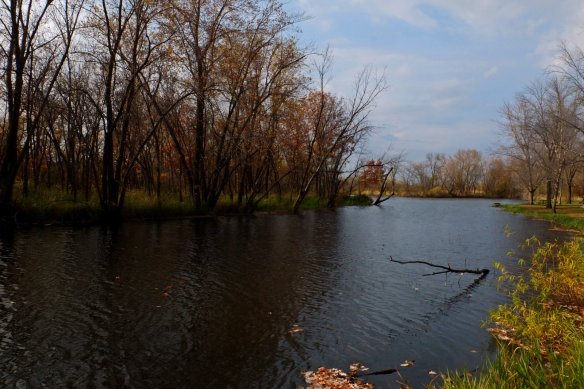
Canoe access farther up the South Skunk.

Canoe access farther up the South Skunk.

Which is what I did. I followed the grid. A couple of miles east, eight miles north, a few miles west, cross over the soulless, ugly little concrete beam bridge, and there’s the river. With a canoe access marker, telling me how far downriver the next canoe access point is.

The brain is rebooted. I go home and the problem with the alien species saturation point seems a lot more clear. Later when a friend asked “How was your day?” I replied, “It was busy.” “Yeah? What did you do?”

And really, what could I say? I drove on roads laid out on principles designed by the third President of the United States, and stood on a bridge probably built during the Depression of the 1930s over a river mis-named by French explorers a hundred years before Thomas Jefferson was born — all to distract myself from thinking about aliens and lapels.

Instead I said “I went for a drive and thought about some stuff.” Which sparked a long, long silence during which I swear I could hear my friend thinking “What? Are you fucking kidding me? That’s what you call busy?

“And I made my final selections for my fantasy football team,” I said. That seemed to satisfy him.

color photography is vulgar

You know whose birthday it is? Today, the 27th day of July–whose birthday? It’s okay if you don’t know, on account of I’m going to tell you.

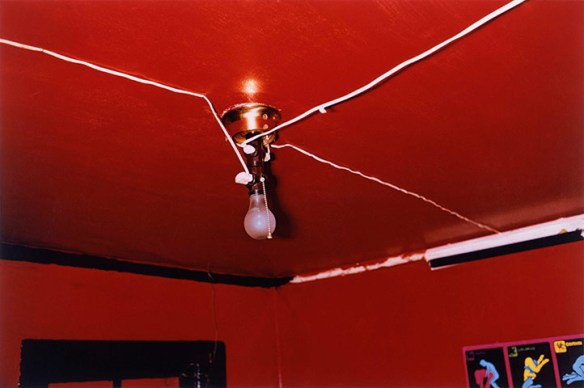
It’s the birthday of William Joseph Eggleston. You know, the photographer? The guy who took black-and-white art photography by the neck, wrestled it to the ground, and rubbed its face in bright, bright color. Lurid color. William Eggleston. Bill. Born in that fine Southern city of Memphis, Tennessee. 1939. Seventy-five years old today.

Yeah, he’s still alive. His son, Winston, told The New Yorker magazine that Eggleston will likely spend the day “playing Bach sonatas on his recently installed Bösendorfer piano.” Yeah. Maybe. Or maybe that’s just the sort of thing a son would tell The New Yorker magazine, because he didn’t want to say his dad might just spend the day slowly sipping bourbon and looking out the window at Overton Park in Memphis, wondering how the hell he could possibly be seventy-five years old.

He pissed off a lot of important photography folks, Bill Eggleston. Folks like Walker Evans, who didn’t like color photography. Walker Evans, whose quest was to make photographs that were “literate, authoritative, transcendent” (which he did, by the way, nobody can say Evans was anything less than literate and authoritative). But the man just didn’t like color.

“There are four simple words on the matter, which must be whispered: Color photography is vulgar.”

He was authoritative on that, no mistake. Eggleston, though, liked vulgar color. And he didn’t give a rat’s ass about being authoritative or transcendent. He had–and probably still has–a subversive eye. “I am at war with the obvious,” Eggleston once said. Which, given the vivid color of his photography, sounds an awful lot like bullshit. But it’s not.

I wrote about Eggleston’s war with the obvious half a decade ago, and I’m just too lazy to spend the time trying to find a way to repeat it using different words. You can read it if you’re interested. Or just trust me–when Eggleston said he was at war with the obvious, he was straight up telling the truth.
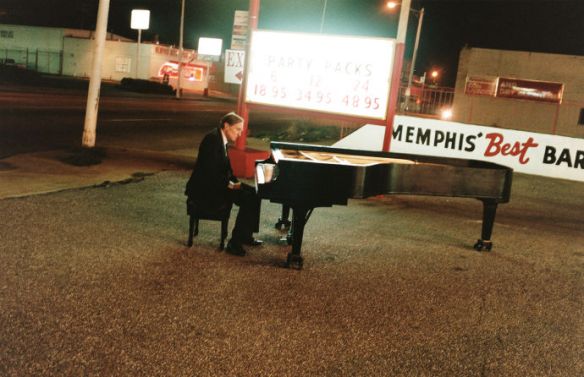
Eggleston at a piano (photo by Juergen Teller)

Eggleston at a piano (photo by Juergen Teller)

I’m hoping Eggleston has himself a happy birthday. I’m hoping he really does play some Bach on his fancy piano. And sips some bourbon. And maybe spends some time outside. It would be cool if he shot some photos today, but if he doesn’t…well, he’s taken his share. It’s okay if he leaves the camera at home.

(By the way, that photo above–the one by Juergen Teller? It’s a damned fine photo. I like it a lot. But it’s pretty obvious. Teller does good work, but he’s no William Joseph Eggleston, is he.)

things on a table — knuckles dobrovic

Back in January I wrote about my reluctant conversion to Instagram. I was one of those people who mocked and jeered the app. I was one of those folks who used a camera to shoot photos — not a telephone with integrated camera-like technology. I considered Instagram to be a platform for cheesy photographers to display cheesy snapshots of their feet, or drunken snapshots of their drunken friends at parties, or sappy snapshots of sappy sunsets.

And hey, there really is a LOT of that stuff to be found in Instagram. But when I started to noodle around looking at photos on Instagram, I discovered there was also a surprising amount of really good work. It was because of that work (along with the purchase of a phone with a moderately decent camera) that I decided to dip my toe into the Instagram stream.

22 July, 2013

22 July, 2013

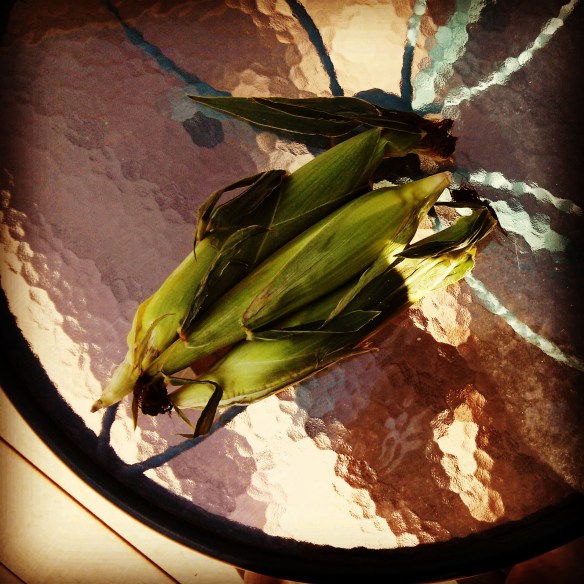
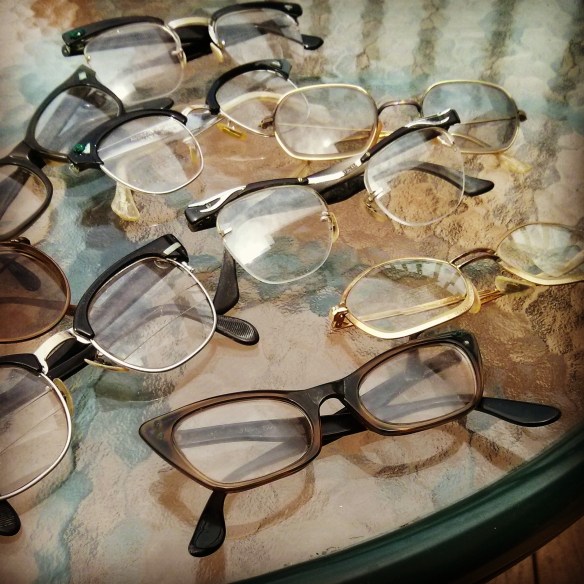
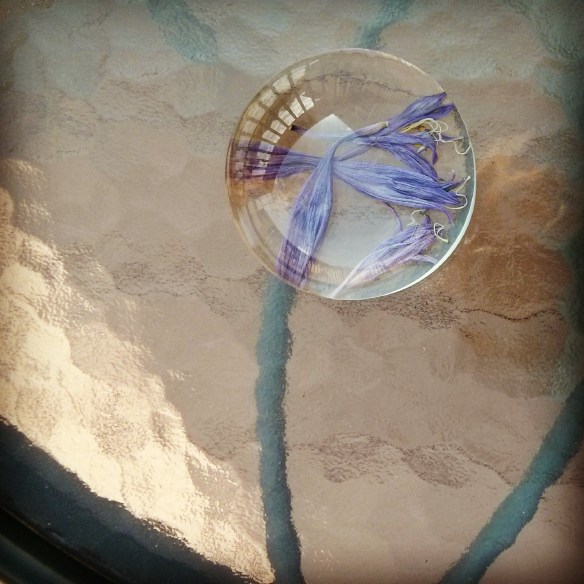
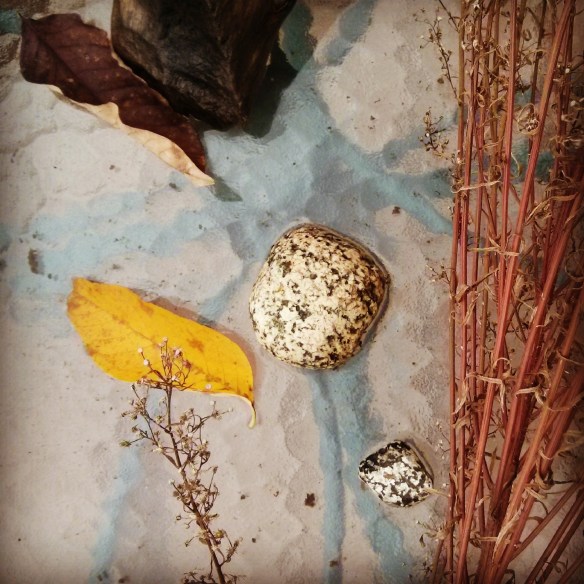
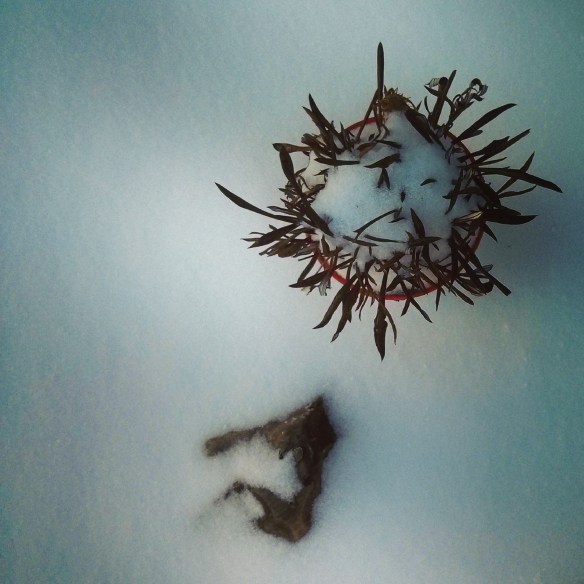
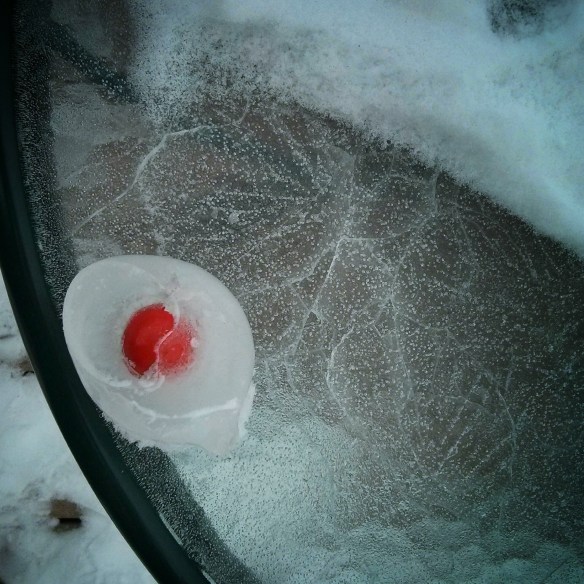
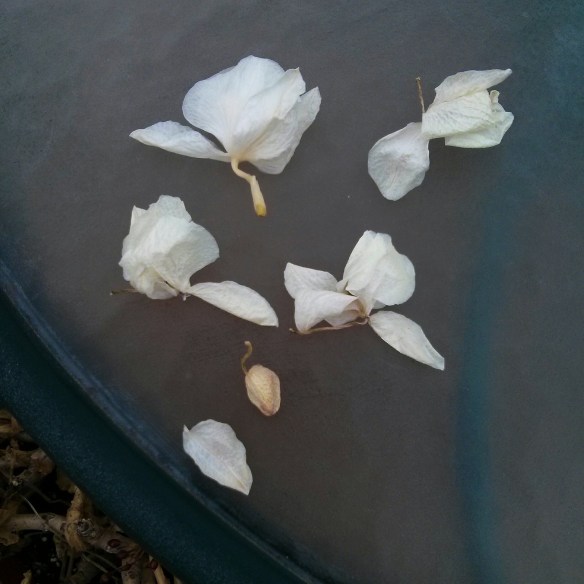
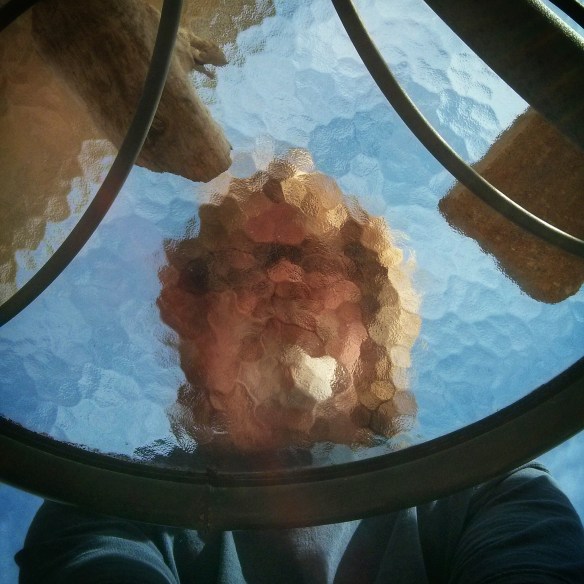
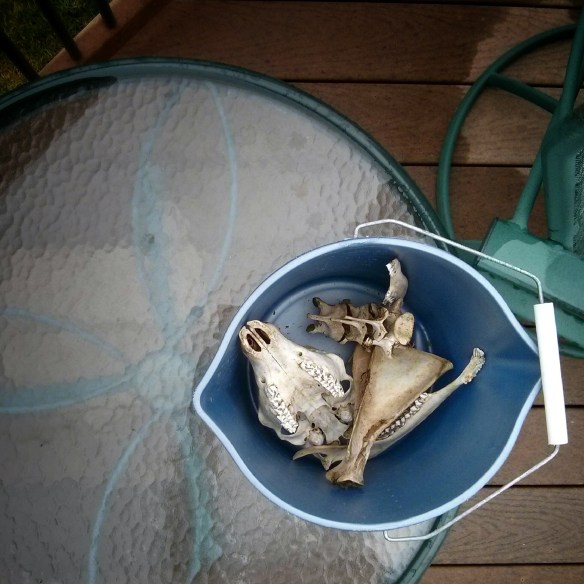
So in July of last year, I created an Instagram account. I was shy about it. I didn’t want something that could be publicly associated with me, so I used an alias for my account: Knuckles Dobrovic. I conceived a really simple (and let’s face it, really contrived) idea for some Instagram-ish photos: I would put something on a glass patio table, and I’d photograph it.

It was intended to be a lighthearted experiment. I was just going to noodle around and see what the cellphone camera could do, and get some idea of how Instagram worked. I wanted it to be something I could delete without hesitation or regret if/when it became too embarrassing or too dull.

August 3, 2013

August 3, 2013

What I’d actually done, of course, was unconsciously sabotage the experiment. I didn’t want to like Instagram. And in the earliest photographs, that really showed. I just put any damned thing near to hand on the table — some ears of corn, a baseball, a beer bottle,  a random collection of old eyeglasses — and photographed it without much care or concern about the final image.

Sure, there was some minimal attempt at composition, but it remained basically a fairly lackadaisical exercise.

September 19, 2013

September 19, 2013

At some point, however, the experiment took hold of me. I found myself being more thoughtful and deliberate about the photos. I began to look around to find things that would be more photogenic on the table. I began to compose the shots more carefully. When I was out and about, I began collecting things specifically for the table. I talked about the project to friends and family. I actually began to care about the photographs.

November 4, 2013

November 4, 2013

Things on a Table became an actual project. Almost every day, I put something on the table and photographed it. I began to vary the time of day I shot the photo so I could use different light and catch different shadows. I photographed things on the table in all sorts of weather. I’d shift the table to different spots on the deck to get different patterns of line, light and shadow.

I even considered taking the table to different locations — out into the country, onto the sidewalk, into the city. That idea got tossed fairly quickly, mainly because it would have been a massive pain in the ass. But the important thing was that I’d begun to set specific parameters for limits on the project.

November 22, 2013

November 22, 2013

Winter came and snow covered the table, and I still put a thing on it and took a photo. I even began to create ice-things for the table. I’d find a thing, put it in a container, fill the container with water, set it outside and photograph the frozen result. I’d stuff things inside balloons, then fill the balloons with water and let them freeze. I’d shoot the photo, then leave the frozen things on the table and let the snow cover them. Over time the heat of the sun or the force of the wind would gradually reveal them, and I’d photograph them again.

January 9, 2014

January 9, 2014

To my surprise, friends and family members began gathering assorted bits and bobs of stuff they thought might appeal to me or look good on the table. An odd rock, plastic bubble wrap from a toner cartridge, an interesting weed, a hubcap found along the road. Eventually, people I know only through social media began to mail me things to put on the table.

I began to re-use some of the things — a piece of driftwood, a half a brick, some dead flower blossoms, an ornamental magnifier — partly because I like their shape or texture, and partly because the idea of continuity of things appealed to me.

March 15, 2014

March 15, 2014

Like any project, this one occasionally feels like a chore. I’ve considered abandoning it two or three times. But each time I’d spot something that might be interesting on the table, and I’d find myself out on the deck trying to find an angle that worked.

At this point I figure I’ll finish out the year. I’ll continue to photograph things on the table into July. Then I’ll probably come up with some other sort of project, simply because I’ve grown fond of the name Knuckles Dobrovic.

April 29, 2014

April 29, 2014

I realize that’s a stupid reason. I don’t care. I’ve no objection to doing things for stupid reasons. I mean, I’m the guy who came up with the name Knuckles Dobrovic just to photograph random things on a table. Stupid is where I live.

May 23, 2014

May 23, 2014

the vivian maier problem

Everybody loves a mystery — and right there, that’s the beginning of the problem. Who is Vivian Maier? And everybody loves a success story — and there you have the middle of the problem. Vivian Maier is now famous, and the people who ‘discovered’ her have become important. And finally, everybody loves to see the high brought low — the tag end of the problem. Vivian Maier was just an amateur and the people who’ve made her famous are vultures picking off her bones.

maier2

I suspect everybody who pays attention to photography knows the basic outline of the Vivian Maier story. Photographer/local historian John Maloof attends an auction and buys a storage locker full of old photographic prints and negatives. The photos, which are quite striking, turn out to be the work of a reclusive nanny. Maloof publicizes the photos, the nanny is hailed as a naïve genius at street photography, a new star is created in the photographic firmament, the entire combustible photographic world is agog and everybody is completely charmed.

Predictably, the initial delight at the discovery is followed by the Vivian Maier backlash. This response seems to be driven in large measure by the extravagance of the early hype about Maier’s work, and is peppered with a large dose of cynicism.

“[I]t’s way too early to declare Vivian ‘great’ or to appraise her place or status in any way”

“Maier is a good enough photographer, I certainly don’t think she’s one of the greats”

“I can find no steady thread of consistency in her style”

“[S]omebody (or somebodies) smell an art gold mine with Maier’s work and are doing a fantastic job of building buzz that will pay off for them in the long run”

“[G]reatness and fame are two very different things”

“Maier can never be recognized (or collected) at the same level as, say, Winogrand, Arbus, or Frank mainly because she worked in utter isolation and influenced nothing in her time”

The backlash has been as bombastic as the hype. The result is two highly polarized camps; one of which believes Maier was a gifted but unschooled master of photography, and one which sees her at best a prolific but lucky amateur and at worst as a hack. Thanks to the Internet, those two camps formed with astonishing speed, and they’ve informed the Vivian Maier narrative so thoroughly that at this point it’s difficult for anybody to look at her work with an unjaundiced eye.

maier4

I was a quiet observer at the beginning of the Vivian Maier problem, before the hype. In October of 2009, John Maloof posted the following in a Flickr discussion forum:

I purchased a giant lot of negatives from a small auction house here in Chicago. It is the work of Vivian Maier, a French born photographer who recently past away in April of 2009 in Chicago, where she resided.

I have a ton of her work (about 30-40,000 negatives) which ranges in dates from the 1950’s-1970’s. I guess my question is, what do I do with this stuff? Check out the blog. Is this type of work worthy of exhibitions, a book? Or do bodies of work like this come up often?

Any direction would be great.

It’s clear Maloof believed the work was solid (though he was uncertain whether others would share his view). It’s equally clear the participants in the discussion largely agreed with him. It’s also obvious, though, that while Maloof was soon trying to promote the photography, he wasn’t making any exaggerated claims about Maier’s talent. He was genuinely intrigued by her work and her story.

maier1

It seems to me (and I’m sure other will disagree) that the hype didn’t originate with Maloof, though he was willing to feed it. So then, where did it come from?

I’m inclined to think it grew organically out of the situation. Vivian Maier really was a very odd woman. She really was an extremely talented photographer. She was almost certainly aware of what was going on in the world of photography, but it appears she really was essentially self-taught. Her photos and negatives really were a completely random, lucky find by John Maloof, who recognized he’d found something potentially extraordinary.

The situation sounds more like the plot of a novel or a screenplay than real life. Because of that, the narrative almost demands that Vivian Maier be an unrecognized genius or an over-promoted hack. It also requires that Maloof be either a savior who rescued her work or a villain who has taken advantage of another person’s talent. It has nothing to do with what actually happened; it has everything to do with what makes a better story.

maier3

In fact, it seems to me that the Vivian Maier Problem has relatively little to do with Vivian Maier or her photography. Rather, it’s grounded in the narrative imposed on her work by folks who spend their time thinking about photography (which isn’t a complaint, by the way; thinking about photography is a very fine thing to do — I do it myself).

I’ve spent some time over the last couple of weeks looking closely at the photographs in Maloof’s book Vivian Maier Street Photographer. Some of the photographs are unremarkable and a tad trite, even for the era in which they were shot. But others are absolutely stunning. Since the book was edited by Maloof (and, presumably, he also chose the photographs), there’s no way to tell if the photos are representative of Maier’s work or of Maloof’s editorial viewpoint.

maier6

In many ways, it doesn’t matter. There’s good work in the book. That’s what matters.

Does Vivian Maier deserve all the hype she’s received? No, of course not. She was not Mary Poppins with a Rolleiflex. She was not Cartier-Bresson in a dress and gloves. How could anybody possibly deserve all that hype?

But she deserves a great deal of it.

the devil is loose

Naming new things is tough work. Back in the 1850s they had to coin a term to describe the physical manifestation of communications sent over a distance by electrical signal. Somebody came up with telegram. That’s a portmanteau of tele, which is Greek for ‘over a distance’, and gram, also Greek, meaning ‘something written or drawn’. It’s really pretty catchy, but telegram totally pissed off language purists of the day. They absolutely hated it. Hated it.

May I suggest to such as are not contented with ‘Telegraphic Dispatch’ the rightly constructed word ‘telegrapheme’? I do not want it, but … I protest against such a barbarism as ‘telegram.’ [Richard Shilleto, Cambridge Greek scholar, London “Times,” Oct. 15, 1857]

I’m not any sort of purist, but I find Instagram objectionable as a word. It’s so bland and corporate. It could have been worse; they might have called it Instagrapheme which, let’s face it, would have been intolerable. Still, Instagram is an unattractive and unappealing name, and it made it easy for lots of folks (including me) to sneer at it. And we did.

DSCF4611_1

We sneered at Instagram for being a cheap, easy, lazy way to turn crappy photos into images that look artsy. Not ‘artful’ or ‘artistic’ but artsy. We sneered at it because the learning curve for using Instagram is — well, it’s hardly a curve at all. It’s almost a straight line. You shoot a photo with your cell phone, you flip through a couple dozen preset filters until you find one you like, tap to apply it, and hey bingo, you have yourself an artsy photo of your drunken friends at a tacky Chinese restaurant.

That ease of use is a big part of the appeal, of course. It allows any tunahead to bang out a halfway decent photograph. But it pisses off photography purists (purists of every persuasion spend a lot of time being pissed off, have you noticed?). The ease of use is another thing that makes Instagram so sneerable.

on the far side of the river_1

I grew up shooting film — and shooting it with a completely manual rangefinder camera without a resident light meter. That gave me certain inalienable sneering rights. But at the same time, I’m totally in favor of the democratization of photography. I love the fact that so many people are out there photographing so many things. 

That put me in a damned awkward position. How can I embrace the democratization of photography and at the same time still be able to sneer at Instagram? I told myself the app, at its best, was just a cheap imitation of real photography. At its worst, it was the devil itself. I told myself a lot of people — people who might otherwise actually learn the important mechanics and physics of photography — would substitute the creative process (which, let’s face it, can be really hard work) with the unthinking application of a filter. So I could argue that sneering at Instagram was actually good for photography. Right?

DSCF3901_1

All that sneering was made a lot easier by the fact that I’d never really looked at Instagram. Then I bought a smartphone with a tolerably decent camera. And suddenly everybody was all “Dude, join Instagram.”

So I reluctantly decided to look at it. And to my smug delight, I discovered I was right. It really was a cheap imitation of real photography. It really was an artistic wasteland of hipsters in vests photographing their lattes, and hiphop wannabes shooting pictures of their two hundred dollar sneakers, and women shooting duckface selfies in bathrooms, and …whoa…hold on hold on…what’s this? What the hell is this?

‘This’ turned out to be good work. I started to come across photography I actually wanted to see. Images that impressed the hell out of me and made me want to see more. On Instagram.

DSC_0017bw_1

I found solid, serious street photography. And good travel and landscape photography. And lawdy, good fine arts photography. I found good editorial news photography. Good color photography, good black-and-white photography. Good portraiture. Good photography. All of it right there in a 3-inch square on Instagram.

And that good shit, it was scalable. It looked good in a 3-inch square on my phone, but it continued to look good in larger versions. I was not expecting that.

Yes, yes — there’s a staggering amount of appalling crap on Instagram, but there’s a staggering amount of appalling crap everywhere in the world of photography. It’s one of the facts you accept if you believe in the democratization of photography. You accept the existence of the crap, and you try to help stem the tide by not making crap yourself.

DSC_0041bw_1

So hey, I joined Instagram. Quietly. Uncomfortably. Under an assumed name. Like an atheist going to Sunday School. I began shooting a simple little series — something I could delete easily if I decided I was contributing to the crapitization of photography. That project gradually transformed and grew into something more complex, but coherent and constrained — which is how real photo projects start. I may write about that project at another time, but what it meant for me was that I was taking Instagram seriously. How the hell did that happen?

It also meant (in my mind, at least) that I should limit that account to that project.

So I created a second Instagram account. Yes, I actually created a second Instagram account, and devoted it to shooting black-and-white images.

wink and a nod_1

The photographs you see here, and along the side of the blog (and if you’re interested, you can see more of them here) have taught me that Instagram is an incredibly flexible and elastic app. You can shape it to fit whatever you want to photograph, in whatever style you want to photograph it. You don’t have to rely on their crappy little filters; there are some very fine processing apps for your mobile phone that give you a metric buttload of control over the image.

Instagram, it turns out, is not about filters. It’s not even about easily turning crappy photos into artsy ones. It’s about distribution. It’s about putting the photos out there.

DSC_0068bw_1

Instagram may, in fact. turn out to be the devil after all. It can be that seductive. But it’s the devil that’s likely to have the most influence on the shape of modern photography. 

Here’s where I drop in some more esoteric information. Eight hundred years ago King Richard I of England was captured on his way back from the Holy Land, where he’d been cheerfully slaughtering Muslims during the Crusades. While he was imprisoned, his brother John attempted to usurp the throne. When Richard won his release, King Philip of France sent a message to John, warning him. The message read: Look to yourself. The devil is loose.

The analogy isn’t perfect, but the warning is. The devil IS loose. And you know what? I kind of like him.


not a bad job

It’s eight-thirty in the morning. Dense fog and a deep, soaking mist. Cold, and getting colder. I’m walking around with my little Fujifilm X10, shooting manually because the fog and mist completely bitch-slapped the autofocus and light metering. Not many people on the street; not many people are stupid enough to be outside in that weather.

And I see this guy. He’s got a short broom — looks sort of like a modern version of an old-fashioned besom — and a long-handled dustpan. And he’s sweeping up trash off the street. At 0830 hours, in the cold, foggy mist. I shoot a couple of quick frames, thinking to myself “This poor bastard must be miserable.”

kent at work

I keep walking, he keeps looking for trash and sweeping it up. I nod to him and smile and say “You’ve got a cold morning for it.” He smiles and shrugs and says “I don’t mind so much, long as it’s doing this…” and he waves his hand up and down, like a karate chop “…and not doing this.” He waves his hand back and forth like he’s polishing a table. “Yeah, least there’s no wind,” I say.

His name is Kent. He’s been keeping the city streets clean for nearly three years. He says it’s not a bad job. “I like being outside. I get to meet people, walk around, don’t have to stay in one place.” He’s learned which business owners are nice, which ones ignore him like he’s not there, which ones are rude. He won’t identify any of the rude ones.

Kent says there’s about a dozen folks cleaning up the downtown area. He thinks most of his co-workers are pretty good or okay; a couple are lazy and some complain about the weather, but mostly they’re good people. He knows that most of the people he meets on the street don’t appreciate what he does, but he says clean streets sidewalks make the city a better place. He won’t say his job is important, but it’s clear he feels like he’s doing something worthwhile.

kent2

We talk for about ten minutes. We could have talked longer, but it’s obvious Kent feels he should get back to work. Sidewalks aren’t going to clean themselves, are they. I ask if I can take his photo. Kent sort of shuffles his feet, but nods. I take the shot, show it to him, and he grins. He tells me to stay safe; I tell him to stay warm. I go back to walking around, shooting photos; he goes back to picking up trash.

When people complain about their taxes — when they talk about cutting taxes and reducing the size of government — they’re talking about folks like Kent. Every single working day, regardless of the weather, this guy is out there making his city a more livable place. He’s making a meaningful contribution to the common good, which is a lot more than most of the folks complaining about their taxes do. Kent might not be comfortable saying his job is important, but it surely is.

And you know what’s really cool? You probably have somebody like Kent working in your city too. These folks don’t just exist in John Prine songs, you know. So take note of the people out there, and be sure to say hello to them.

a short note on the passing of saul leiter

Back in April of 2008 I did a Sunday Salon on Saul Leiter. Mr. Leiter died yesterday. He was 89 years old.

saul leiter2

These days we tend to think of Leiter as a pioneer in color street photography. It would probably surprise most of Leiter’s modern fans to discover he actually made his bones as a second-tier fashion photographer. He said,

“I was constantly aware that those who hired me would have preferred to work with a star such as Avedon. But it didn’t matter. I had work and I made a living. At the same time, I took my own photographs.”

Those photographs — the ones he described as ‘my own’ — are the photos he’s known for today. But Leiter stopped showing those photos to people in the late 1940s. He simply filed the transparencies away in cardboard boxes. Half a century later, in the 1990s, he began to print and show them.

saul leiter

Nobody paid much attention to them. Not at first. But gradually his work began to infiltrate into the world of fine arts photography. Today, of course, he’s the famous Saul Leiter.

“I spent a great deal of my life being ignored. I was always very happy that way. Being ignored is a great privilege.”

Saul Leiter. 1923 to 2013. We’ll not see his like again.

it ain’t just the zombies

I’ve avoided writing about The Walking Dead because, as improbable it sounds, there are people who don’t share my perfectly normal interest in zombies. But almost everybody I know is interested in art and photography. The cinematography of TWD is always compelling — but sadly most zombie fans don’t recognize the artistry involved in constructing those shots. That artistry was apparent in the most recent episode.

A word of warning: this WILL CONTAIN SPOILERS.

wd1

In order to really appreciate the photography, it’s necessary to give a bit of background information. Here’s what you need to know: 1) a zombie apocalypse has taken place; only a few survivors exist, 2) everybody is infected with the zombie virus, though it’s dormant in the living, 3) a zombie bite is always fatal, 4) everybody who dies — including those who die of natural causes — becomes a zombie,  5) the only way to ‘kill’ a zombie is to destroy its brain.

A group of survivors has taken residence in an old prison, where they can live in relative safety inside its walls. However, some sort of lethal flu-like syndrome has infected many of the survivors — and when they die…you get the picture. The most recent episode is called Isolation. On the most obvious level, it refers to the fact that the survivors are attempting to isolate their members who’ve contracted the ‘flu.’

wd2

On a deeper level, though, the episode is about human isolation. The geographic isolation of the small group of humans in a world of hungry zombies. Their physical isolation inside the walls of the prison (which, after all, is designed to isolate convicts from the citizenry, and from each other). The medical isolation of the sick from the healthy. The psychological isolation of the survivors from each other. And the terrible emotional isolation of the individual survivors from their own feelings.

And all of that is depicted on the screen — through the writing and the acting, of course, but also through the camera work.

wd4

Notice how often the cinematographer uses the entire frame — not just from side to side, but from front to back. He deliberately stacks subjects on various planes within the frame. In the foreground of the first shot above we see a pair of eyeglasses attached to a simple grave-marker. Viewers will recognize the glasses as belonging to a young boy, the first victim of the mysterious flu. In the previous episode the boy died, became zombiefied, and had to be killed. In the middle-ground, a pistol — a killing tool, necessity in TWD world. In the background is Glenn, who is clearly exhausted — he’s exhausted both physically and emotionally, exhausted in almost every possible way (the boy with the eyeglasses was attacking Glenn at the time he was killed).

Everything in that shot — Glenn, the dead boy, the handgun — is linked thematically. Every element is isolated from the others. And yet every element is also inextricably linked to the others. The photography supports and enhances those themes.

wd7

The same is true of the second shot. In the foreground, two bodies belonging to people who’d displayed symptoms of the illness. They’d been isolated; but somebody entered the isolation area, killed them, dragged their bodies outside, and set fire to them (much of the episode revolves around discovering who murdered these two). In the front middle-ground is the lover of one of the victims — a man obviously in shock. In the rear middle-ground are Rick and Daryl, leaders of the group of survivors. And in the background is Carol, the only one not looking directly at the bodies. At the end of the episode, Carol is revealed as the murderer.

Again, everyone and everything in the frame is thematically linked to everything else. And again, they’re all isolated from each other.

wd9

The director and cinematographer also use the frame to instill a sense of confinement. Everything seems to be crowding in on the characters. Even in the scenes that take place outdoors, the characters are somehow confined. In the woods they’re hemmed in by the trees, and by lurking zombies. On the open road — that most American venue — they find themselves quickly enclosed by a herd of zombies, trapped in the vehicle that’s supposed to grant them freedom of movement.

This happens in scene after scene in the episode. The frame is filled in every direction, thematically tight, and psychologically crowded. All those cascading claustrophobic moments create an aura of dread and despair in the viewer. It’s subtle, but very effective.

wd11

In the final sequence of the episode Rick is reluctantly preparing himself to ask Carol if she’s the person who killed and burned the two flu-sufferers. They’re filmed far apart; he’s high above her, in a rather judgmental position. She’s small and far below, waiting. He gradually comes down to her level — physically, emotionally, ethically — and asks the question he doesn’t want to ask.

The tension is palpable. She answers simply — yes. And walks away, the distance between them growing. And yet they’re both still linked, both still confined, both even more isolated.
I began watching The Walking Dead for the zombies. I still like it for that reason. Zombies are just flat out cool. But I appreciate TWD for the quality of the acting, the occasionally brilliant writing, and for the consistently amazing camera work.