well, that was something

US presidential debates have always been…wait, wrong approach. US presidential debates have NEVER been debates. I mean, a debate is a discussion, right? A discussion between individuals or groups about a particular topic or a related range of topics. When you sit around the coffee shop and have a convivial argument with your friends about the merits of film photography versus digital imagery, that’s a debate. When you sit in a bar and challenge your friend to prove that Star Wars has a more coherent universe than Star Trek, that’s a debate. These may be stupid debates, but they’re more true to the debate concept than whatever the fuck that was last night.

[Okay, I wrote this yesterday morning, then had a Squirrel Moment and got distracted by something outside. Then I had to go to the gym and get ritually humiliated in pickleball by a bunch of savage retired women. Then there was lunch and the day just got away from me. So any reference to ‘last night’ should be interpreted as ‘Thursday’.]

Presidential debates in the US have just been awkward Q&A sessions. The moderators ask a question, the candidates give some sort of an answer that may or may not be tangentially related to the question. There’s rarely any real discussion, and to my knowledge there’s never ever been any attempt to persuade their opponent to change their mind.

What we saw last night was…well, I don’t know what the fuck it was. Whatever it was, it was ugly. And the reaction by most of the US political news media to whatever it was, was even uglier. In fact, the news media reaction has been just as fucking stupid as Donald Trump was last night.

How stupid? The New York Times editorial board called for Joe Biden to drop out of the race. Why? Because he gave a poor performance. Which is true; Biden seemed older than usual, and his voice was raspy and congested. He didn’t always give a consistent, reasoned answer to the moderator’s questions. He rambled a bit, he stuttered (the guy has always had a stutter, that’s not unusual for him), and he sometimes strayed from the topic. It was unpleasant to watch.

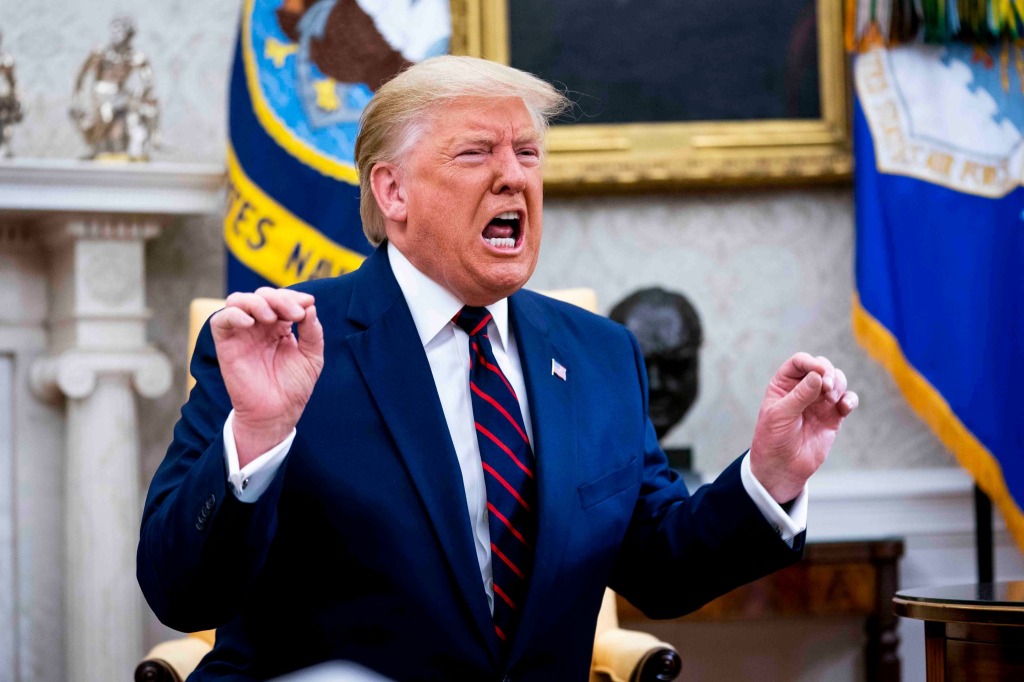
Trump, on the other hand, was fucking vile. Which is to say, Trump was Trump. Rude. Often incoherent. Insulting. Openly lying in literally almost every comment he made. But he told those lies in a loud, confident voice, as opposed to Biden’s tremulous responses. Trump refused to even attempt to answer the moderator’s questions, while Biden tried to answer them.

But NYT thinks Biden should drop out of the race? Because he’s old and did poorly in a debate? Because he’s a decent, patriotic American, Biden should be willing to sacrifice his presidential career for the good of the nation?

What about the convicted felon and sex pest? The NYT did NOT call for Donald Trump to drop out of the race. In (grudging) defense of the NYT, there’s no point in suggesting Trump drop out for the good of the nation, because he doesn’t give a rat’s ass about the good of the nation. He doesn’t give a rat’s ass about anything but his ownself. Trump is a fucking cancerous tumor; the only way he’ll leave the political body if he’s surgically excised.

Trump mugging democracy

This is a seriously risky moment in US history. The Republican Party has become an authoritarian White Christian Nationalist party, openly hostile to the very concept of representative democracy. That’s bad enough, but we also have what is essentially a rogue Supreme Court. In the last couple of weeks alone, SCOTUS has decided that 1) homeless people can be banned from sleeping outside even if there’s no other place for them to sleep, 2) random judges should have more control over the environment, public health, workplace safety & consumer protections than expert regulators, 3) public officials can accept ‘gratuities’ from wealthy businesses for favorable decisions AFTER the decision is made (but not before the decision is made, because that would be bribery), and 4) that obstructing or impeding an official proceeding only applies if you destroy records or documents, not if you violently disrupt Congress by breaking in and threatening members of Congress. (We still don’t know how SCOTUS feels about presidential immunity for criminal acts, but I’ve got no confidence in them doing what is obviously right.)

Joe Biden is NOT an ideal candidate. I mean, his role in enabling the genocide of Palestinians in Gaza and the West Bank is, to me, incomprehensible and unforgivable. But I’ll vote for the guy because he IS the Democratic candidate. I’ll vote for whoever the Democratic candidate is because fuck Trump and the GOP. Fuck them in the neck.

fairness

Try to imagine this. A nation in which entities licensed to broadcast news or entertainment to the public were obligated to set aside a certain amount of their broadcast schedule to discuss controversial matters of public concern–and to do so in a way that included different perspectives.

Let’s say there was a television network called Really Good TV. To keep its broadcast license, RGTV created a regularly scheduled program called Really Important Stuff. And let’s also say there was a public controversy involving…I don’t know, maybe the overpopulation of parrots. RGTV’s Really Important Stuff show might do a segment in which people would discuss whether overpopulation of parrots was a critical issue, and if it was, how it might be handled. They’d include folks who very much enjoyed all the parrots and didn’t think it was a problem, and folks who totally fucking hated parrots and felt they should be poisoned at government expense, and folks who felt the best solution to parrot overpopulation was to allow them to be hunted for sport, and folks who felt parrots should be captured and neutered and released back into the city. Every main point of view would be included in the discussion, and viewers would be allowed to evaluate those positions and make up their own minds.

Reader, we actually used to live in that nation. We really did.

In 1927, Congress decided the agency that regulated federal communications (back then it was the Federal Radio Commission) should only issue broadcast licenses when doing so serves the public interest. Not private interests, not corporate interests, not the interests of the rich, not the interests of a particular political party. The public interest. In 1949, the Federal Communications Commission (which expanded the FRC to include television) created a policy that required the holders of broadcast licenses to 1) present controversial issues of public importance AND 2) to do so in a manner that fairly reflected differing viewpoints. It was called, appropriately, the Fairness Doctrine.

And hey, it worked. Television and radio stations were allowed to decide for themselves HOW to implement the doctrine; they could do it through news segments, or public affairs shows, or through editorials. Nor were the stations required to provide equal time for the various opposing views. But they had to devote some time to important public issues and they had to present contrasting viewpoints.

It didn’t always work smoothly, but it worked. In 1969, for example, the FCC yanked the broadcast license from WLBT television in Mississippi (an NBC affiliate station) because the station’s overtly segregationist politics shaped their decision to refuse to broadcast NBC’s coverage of the civil rights movement.

News media ‘free speech’ includes misleading information & lying.

Think about that for a moment. A local NBC news station refused to show news coverage of the civil rights movement created by NBC–coverage of a nationally important topic–because the owners/staff of that local station opposed civil rights. That local station didn’t have to agree with the coverage (and clearly, they didn’t; WLBT broadcast the Citizens’ Council Forum, a syndicated series of fifteen-minute interviews with segregationists). But they needed to present the issue fairly to their audience, about half of which was Black. When the station refused, the FCC punished them by taking away their broadcast license.

It was a powerful statement by the government that important public issues broadcast on public airwaves needed to be addressed fairly, and that meant including differing perspectives held by the public.

What happened to the Fairness Doctrine? One of the two dominant political parties felt oppressed by having to present opposing points of view. Care to guess which one?

President Ronald Reagan, in the mid-1980s, appointed three new commissioners to the FCC (the fourth had been appointed by Richard Nixon). They issued a report stating the Fairness Doctrine actually harmed the public interest by violating the 1st Amendment protection of free speech. Seriously. The FCC commissioners argued the free speech rights of political entities were diminished by requiring opposing views to be presented to the public. They voted unanimously to abandon the Fairness Doctrine.

Congress, believe it or not, disagreed with the FCC decision. It’s difficult to imagine now, given the current level of hyper-partisanship, but back then both houses of Congress, Republicans and Democrats alike, voted to enact the Fairness Doctrine into law (previously it had only been an FCC policy).

Not surprisingly, Reagan (who, again, engineered the destruction of the Fairness Doctrine) vetoed the legislation. Congress failed to overturn the veto. The FCC decision was implemented. By the summer of 1987, the Fairness Doctrine was dead. Dead as the Wicked Witch of the East–not only merely dead, but really most sincerely dead.

About a year later, in the summer of 1988, radio broadcaster Rush Limbaugh began his new radio show at WABC-AM in New York. In 1991, Democrats attempted to revive legislation to make the Fairness Doctrine law. That failed when President George H.W. Bush announced he would veto the law. In 1996, Rupert Murdoch and former Republican Party political strategist Roger Ailes launched Fox News.

Do the math.

new camera…and lawdy

A few months ago–October/November of last year–I got sucked back into the Cameraverse. I’d pretty much abandoned cameras (cameras, not photography) in favor of my phone. My phone was convenient, did a fine job, and had the massive advantage of always being with me. But my hands began to miss the feel of a camera in them.

That’s only partly a metaphor. Shooting with a phone and shooting with a camera are two very different tactile experiences. I felt a strong desire to pick up an actual, no-shit, physical camera and go shoot photos. I resurrected my 12-year-old Fujifilm X10 because it was 1) a real camera and 2) it was small. I flirted a bit with another larger Fujifilm camera, but it soon became clear to me that, for a variety of reasons, I don’t enjoy larger cameras.

With a new camera, you photograph whatever is at hand.

So I began to noodle around the InterTubes to see what was out there in the Small Camera World. That introduced me to the Cult of Ricoh. I DO NOT do cults. I resist cults. Cults are bullshit. But after enough exposure to the Ricoh GR3 series, I was ready to shave my head, shake a tambourine, and buy one of the wee bastards. Except I couldn’t find one. Seriously. The problem is/was the Ricoh GR3 series is so popular, they’re on continuous back-order everywhere.

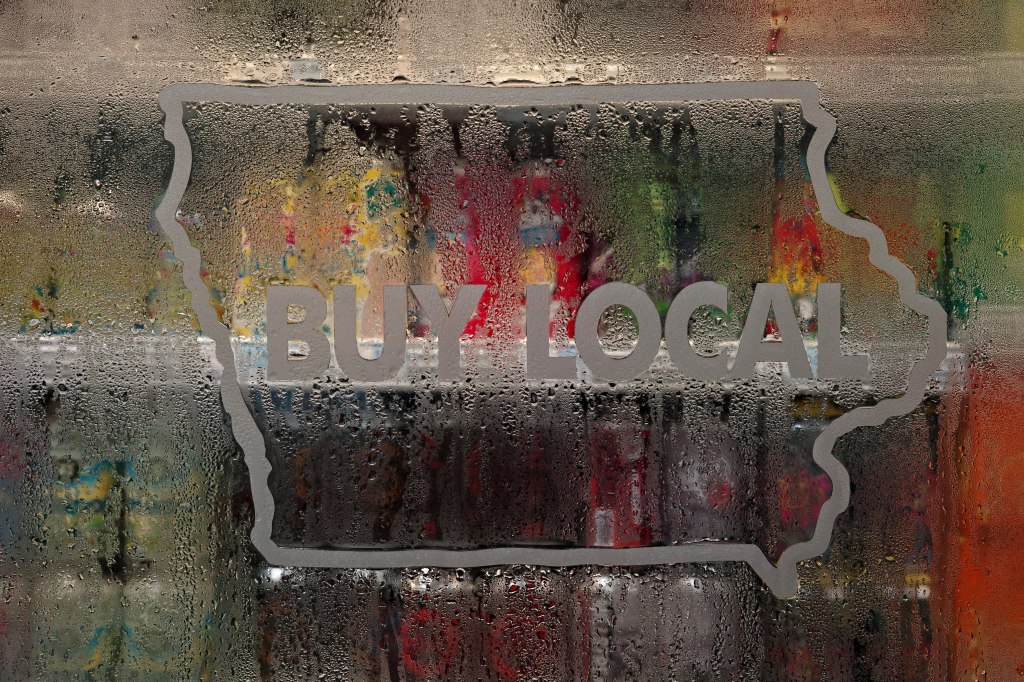
Buy Local

Persistence paid off, and four days ago I was able to unbox a brand new Ricoh GR3x. Here are three inescapable things about the Ricoh GR3 series: 1) They’re small. Really small. I kept hearing them described as ‘pocketable,’ which I assumed was bullshit. It’s not. You can actually tote the thing around in your pants pocket. Regular pants, not baggy cargo pants. I’ve no idea where women carry them, since fashion Nazis have deprived women of real pockets, but lawdy, the camera is small. 2) They’re quick. That photo above? Six seconds. Saw the condensation on the refrigerated beer door, pulled the camera out of my pants pocket, composed and shot the photo with one hand, put the camera back in my pocket. Six fucking seconds. It’s not a great photo, but lawdy. I felt like a gunslinger. 3) They’re easily customizable, if that’s a word. Almost every button on the camera (most of which are accessible when shooting with one hand) can be assigned almost any function. Which won’t mean much to anybody who isn’t a photographer, but trust me, that’s a HUGE deal.

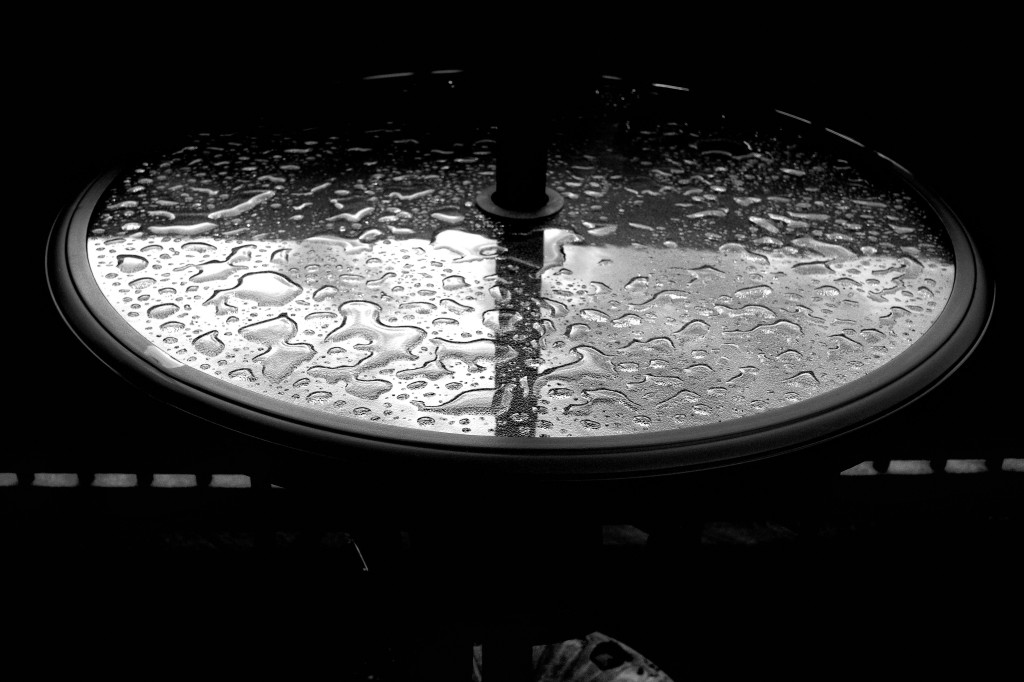
High contrast monochrome — water on a table.

It allows you to experiment. Hell, it almost demands you experiment. During a break in the rain on my first day I shot the photo above. It’s just rainwater organizing itself on a glass-topped patio table, but it has me thinking of a possible new Knuckles Dobrovic project–something about water in its various forms (as a liquid, as a solid, as a vapor, etc) done in high contrast black-and-white. I’ve no idea if it’s a viable project, or if I’ll follow through on it, but the thing is this camera has me thinking about projects again.

The problem? The learning curve. Oh, you can take decent photos almost immediately (as you can see here). But there are SO MANY ways to set up the camera to be responsive to your individual needs/wants, that I expect it’ll take me a couple of months of experimentation. Messing about with different set-ups, trying new ways of arranging things, establishing different photographic profiles for different subjects.

Chicory

Of the four days I’ve had the camera, two were rainy and stormy, one was savagely hot under a Gibsonesque dead channel sky. A bit of sunshine…even the teensiest bit, nicking through the gloomy clouds…would have done wonders for the photo above. The blue of the chicory was so lovely. But you get what you get.

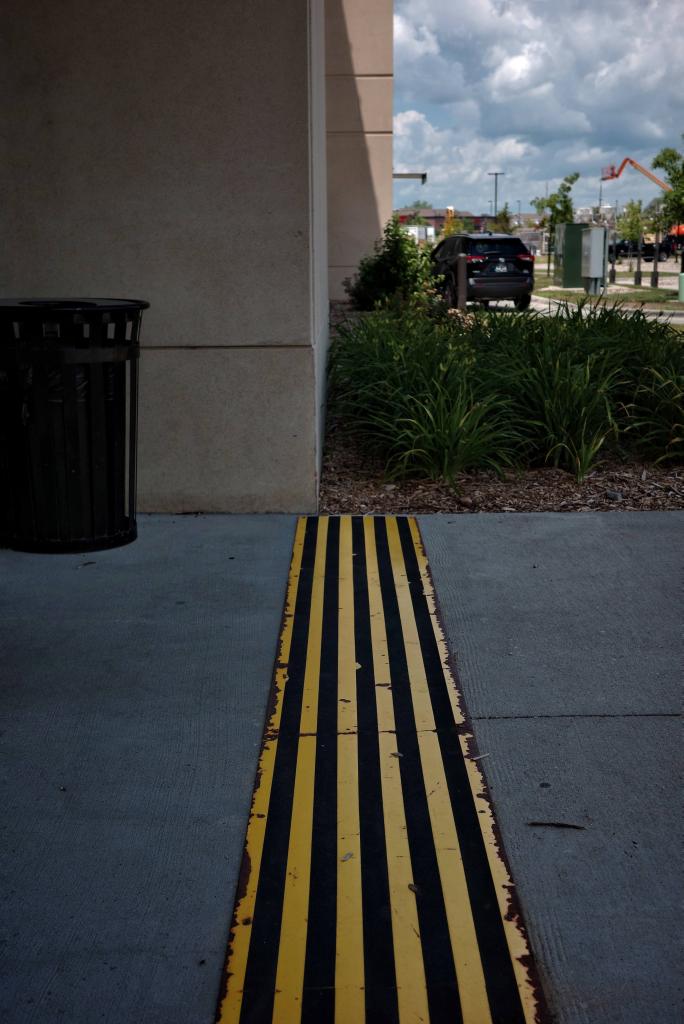
This camera will, I think, allow me to take advantage of what I get. Yesterday what I got was yellow stripes outside the library exit. I hesitated for just a few seconds, one hand full with a heavy book, the other allowed me to dig the Ricoh out of my pocket, shoot this quickly, and be on my way. (And here’s another thing: I almost never shoot in portrait format, but there’s something about the ergonomics of the GR3 that makes you want to shoot that way. I don’t understand it, but there it is.)

Stopped by the library, shot a photo.

I’ve shot a total of 48 photos in these four days. Forty-eight photos, and I think I’m in love. Because this is the first camera that feels like it was designed to shoot the way I see. It’s unobtrusive, it’s fast, it’s easy to shoot with one hand AND at the same time it gives you a LOT of almost immediate control over how the photo will look. All of the elements of exposure–ISO, shutter speed, aperture–all right there for your thumb and index finger. It’s perfect for shooting fast and loose and from the hip. That’s why this camera is a favorite of street shooters.

But that’s not me. I’m not a spray & pray shooter; I tend to compose a photo quickly, but deliberately. I think this wee bugger will give me some of the speed of a street shooter while still letting me make important exposure decisions. It’ll take me a while to get proficient with it, but lawdy.

And I’ll just say it again. Lawdy.

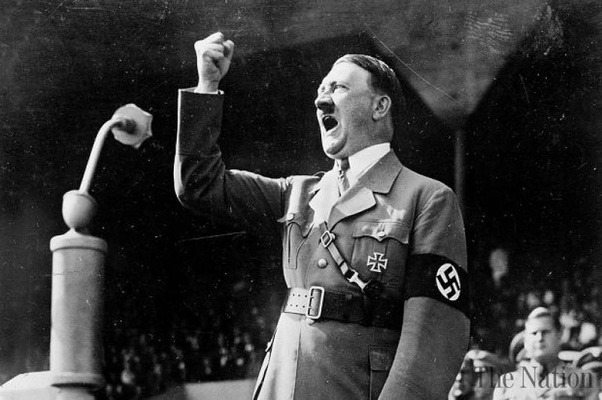
hitler/trump — not just a cheap shot

A couple of years ago, when I was dodging the work I should have been doing, I decided to research the authenticity of a quotation that frequently appeared online. I’d seen it attributed to both Hitler and Joseph Goebbels. You’ve probably seen it too.

Make the lie big, make it simple, keep saying it, and eventually they will believe it.

There doesn’t seem to be any evidence that either Hitler or Goebbels said it, though they certainly believed it and acted on it. However, a very similar line appeared in a classified World War 2 psychological profile of Hitler:

People will believe a big lie sooner than a little one; and if you repeat it frequently enough people will sooner or later believe it.

I downloaded the report (which was declassified in 1968) to read later…and promptly forgot about it. Until yesterday, when I stumbled on it again while deleting old files. I decided to glance through it before deleting it…and lawdy.

This is what happened. Back in late 1943 or early 1944, the Office of Strategic Services (the US intelligence agency during World War 2, which eventually morphed into the CIA) tasked a psychoanalyst named Walter Langer to prepare a profile on Adolf Hitler. The report was “an attempt to screen the wealth of contradictory, conflicting and unreliable material concerning Hitler into strata which will be helpful to the policy-makers and those who wish to frame a counter-propaganda.”

We’ve all seen a lot of comments comparing former POTUS Comrade Donald Trump to Hitler. It’s easy to either nod and agree or dismiss the comparison as overreach. But when you read the report–which, remember, was completed before the end of the war, when Hitler was still alive and in power–it’s uncanny how closely Langer’s evaluation of Hitler resembles Trump. The report itself has six sections: 1) Hitler as he believes himself to be, 2) as the German people know him, 3) as his associates know him, 4) as he knows himself, 5) a psychological analysis and reconstruction, and 6) Hitler’s probable behavior in the future. Only some of those could be applied to Trump. The quotations are taken directly from Langer’s report (which can be found here).

Hitler/Trump as he believes himself to be:

Many people have stopped and asked themselves: “Is this man sincere in his undertakings or is he a fraud?” Certainly even a fragmentary knowledge of his past life warrants such a question…. [A]ll of his former associates whom we have been able to contact, as well as many of our most capable foreign correspondents, are firmly convinced that Hitler actually does believe in his own greatness.

It makes little difference whether the field be economics, education, foreign affairs, propaganda, movies, music or women’s dress. In each and every field he believes himself to be an unquestioned authority.

He has fallen in love with the image of himself in this role and has surrounded himself with his own portraits.

Does that sound like Trump? Oh, absolutely.

Hitler/Trump as the people know him:

[F]rom a physical point of view, is not, however, a very imposing figure.

[His] personal appearance… it is safe to assume that this has been greatly tempered by millions of posters, pasted in every conceivable place, which show the Fuehrer as a fairly good-looking individual with a very determined attitude. In addition, the press, news-reels, etc., are continually flooded with carefully prepared photographs showing Hitler at his very best.

[H]is speeches were sinfully long, badly structured and very repetitious. Some of them are positively painful to read but nevertheless, when he delivered them they had an extraordinary effect upon his audiences.

[B]y the time he got through speaking he had completely numbed the critical faculties of his listeners to the point where they were willing to believe almost anything he said. He flattered them and cajoled them. He hurled accusations at them one moment and amused them the next by building up straw men which he promptly knocked down. His tongue was like a lash which whipped up the emotions of his audience. And somehow he always managed to say what the majority of the audience were already secretly thinking but could not verbalize.

[H]is refusal to permit ordinary scruples to get in his way is given as a sign of his greatness.

Yeah, that’s Trump.

Hitler/Trump as his associates know him: much of this section contradicts comparisons with Trump. Hitler, it seems, was a hard worker who was actually well informed about the workings of government. Apparently, he was generally thoughtful with his underlings, making sure they took breaks and ate well–even to the point of refusing to eat until everybody in the room had been served. He was also, it seems, personally courageous. However, there are a lot of aspects of Hitler’s personality that are equally Trumpian. For example:

H]is ability to persuade others to repudiate their individual consciences.

His primary rules were: never allow the public to cool off; never admit a fault or wrong; never concede that there may be some good in your enemy; never leave room for alternatives; never accept blame; concentrate on one enemy at a time and blame him for everything that goes wrong.

He has a passion for the latest news and for photographs of himself…. Very frequently he becomes so absorbed in the news or in his own photographs that he completely forgets the topic under discussion.

Almost everyone who has written about Hitler has commented on his rages. These are well known to all of his associates and they have learned to fear them…. [H]is behavior is still extremely violent and shows an utter lack of emotional control. In the worst rages he undoubtedly acts like a spoiled child who cannot have his own way and bangs his fists on the tables and walls. He scolds and shouts and stammers and on some occasions foaming saliva gathers in the corners of his mouth.

It must not be supposed, however, that these rages occur only when he is crossed on major issues. On the contrary, very insignificant matters might call out this reaction. In general they are brought on whenever anyone contradicts him, when there is unpleasant news for which he might feel responsible, when there is any skepticism concerning his judgment or when a situation arises in which his infallibility might be challenged or belittled.

We all know how he can say something one day and a few days later say the opposite, completely oblivious to his earlier statement. He does not only do this in connection with international affairs but also with his closest associates.

[H]e seems to lack any real sense of humor. He can never take a joke on himself.

That’s so totally Trump.

Hitler/Trump as he knows himself and Psychological analysis and reconstruction: These sections are devoted to a Freudian psychoanalytic view of Hitler’s personal life and history. It’s about his family, his youth, his military service in WW1, his rise to power, his relationships, and his sexuality and sexual proclivities. They’re full of Freudian concepts and interpretations (like “Unconsciously, all the [Oedipal] emotions he had once felt for his mother became transferred to Germany.”) and there’s a lot of focus on Hitler’s probable issues with childhood toilet training trauma. I mean, this was the early 1940s–Freud still wore the biggest hat in the field–so we have to expect this stuff. I suppose we could include Hitler’s alleged indulgence in urine play as a similarity with Trump, but I’m not sure that anybody’s particular kink is terribly relevant.

What MIGHT be relevant, though, is this observation by Langer:

Hitler’s outstanding defense mechanism is one commonly called projection…his own personal problems and conflicts were transferred from within himself to the external world where they assumed the proportions of racial and national conflicts.

We’ve all heard that every accusation made by Trump is also a confession. It’s interesting to read, to be sure, but while there are comparisons to be made with Trump’s personal life and history, the comparisons are rather generic.

Hitler’s/Trump’s probable behavior in the future: Langer outlined eight possible/probable scenarios for Hitler’s fall.

  1. He said Hitler might die of natural causes, but considered that a remote possibility. Given Trump’s diet and lack of exercise, this possibility is less remote in his case.
  2. Hitler might seek refuge in a neutral country. Langer also considered this to be extremely unlikely. Trump, who has property in other countries, might be more open to this.
  3. Hitler might get killed in battle. Langer thought this was a real possibility. He said it would be undesirable from the US point of view, since it would make Hitler a martyr. As for Trump, ain’t no way he’d martyr himself.
  4. Hitler might be assassinated. Langer felt Hitler was too well protected for this, and thought it would be undesirable–again, that martyrdom business. It also seems an unlikely scenario for Trump.
  5. Hitler may go insane. Langer meant more insane. Incapacitated by mental illness. Which could also happen to Trump, as his emotional defenses collapse.
  6. German military might revolt and seize him. Langer believed as Hitler’s behavior became more neurotic, a point might be reached where the military confined him. As for Trump, nobody in the MAGAverse has the courage to seize him.
  7. Hitler may fall into [the US military’s] hands. Yeah, no, doesn’t apply.
  8. Hitler might commit suicide. Langer said this was the most plausible outcome. And hey, that’s what Hitler did. I won’t comment further on this possibility.

Langer’s profile concluded with this comment:

[Hitler’s} mental condition will continue to deteriorate. He will fight as long as he can with any weapon or technique that can be conjured up to meet the emergency. The course he will follow will almost certainly be the one which seems to him to be the surest road to immortality and at the same time drag the world down in flames.

Again, that’s totally Trump. Willing to burn the entire combustible world in a fit of pique if he can’t get his way.

It’s weird and disturbing that Walter Langer, 80+ years ago, writing about a man “the world has come to know…for his insatiable greed for power, his ruthlessness, cruelty and utter lack-of feeling, his contempt for established institutions and his lack of moral restraints” seems to have provided us with some pretty solid insight into the psyche of Donald Trump.
slow cycling movement

Every week or so I’ll take a glance at some online cycling magazines and forums. It’s usually just a glance, because there’s rarely anything there to interest me. I don’t really care about most cycling tech, like derailleurs or suspension; I’m not interested in performance enhancing drinks or supplements; I have no interest at all in the various forms of cycling competition; and I’ve never paid any real attention to cycling efficiency or fitness. I’d rather pound a nail through my foot than read something about the coefficients of drag or wind resistance. I’ll occasionally read something about bicycle infrastructure or a recent development in ebikes. But in general, I’m not the target audience for cycling magazines.

That said, today I stumbled across an article that caught my attention. It was titled How to ride your bicycle slower and love it. It surprised me for a couple of reasons. First, because it never occurred to me that anybody would ever need to learn how to ride more slowly. I mean, you ride slower by…well, riding more slowly. Right? It’s pretty fucking obvious. But second, and more interesting (from my perspective, at any rate) I was surprised to discover there’s a growing (slowly growing, I presume) slow cycling movement.

Taking a break with my mountain bike, September, 2011

I was completely unaware of this. Apparently, there are communities of cyclists who’ve banded together to boldly declare, “Hey, I’m in no particular rush.” The article took pains to actually explain what slow cycling is, how it’s done, and why a person would do it. Slow cycling is:

[R]iding your bicycle in a relaxed manner, with time to look around and see the landscape…. It’s for leisurely enjoyment, not achievement, speed, or distance-bragging…. It’s all about meeting up with friends for a leisurely ride to the café for a streetside chat or going for a slow roll around town.

I shouldn’t mock (I’m going to, but I shouldn’t) because slow cycling is–and always has been–my default cycling mode. By nature, I’m a noodler. Whether I’m walking, driving, or riding a bike, I tend to just sort of noodle along. I’ve got nothing against riding for exercise. If that’s your interest, fine. Bikes are great for exercise. But so many of the people who ride for fitness seem to think those of us who ride for enjoyment are just in the way. We’re taking up valuable bike trail space that could be more effectively utilized for cardiovascular improvement.

A converted railway station on a bike trail, where I took a break.

The article about slow cycling (and yeah, I feel sort of silly even using that name) even went so far as to suggest how slow cyclists should dress. It’s not surprising that I actually dress in classic slow cyclist fashion. Cycling jerseys? Why? Wear a comfortable tee-shirt, or even something with buttons and a collar. What matters is that it should wick moisture away from the body to help keep you cool. Cycling shorts? Who needs them? (Well, I do, for one; I always have padded cycling underwear under my multi-pocketed sports shorts, and yeah, I like having lots of pockets for phones and keys and wallet and a camera.) When I’m riding with a group, the way I dress has always marked me as somebody not ‘serious’ about cycling.

When I’m riding with a group, I ride at the group’s pace, because that’s the polite thing to do. That’s usually anywhere from 15 to 20 miles per hour. But the vast majority of my cycling has been done solo. And yeah, then I ride slow. I’m talking a carefree 10-12 mph. That’s fast enough to cover distance, but slow enough to allow me to look at stuff while I ride. I’m constantly swiveling my head to look at birds and deer and groundhogs and whatever cool stuff I happen to see along the road or bike trail.

I took a break to chat with some guy and his dog I met on a bike path.

Not only do I ride slowly when I ride solo, but I stop fairly often. I stop and talk to strangers, I stop to pet dogs, I stop to look at stuff, I stop to take photos, I stop to have a drink and kick back for a bit and enjoy the quiet. I used to carry a small hammock; there have been many times I’ve stopped, tied the hammock between a couple of convenient trees, climbed in and taken a short nap. Or read a book.

None of that is efficient. It doesn’t burn many calories. It just makes me happy.

Which brings me back to that article. It claimed that slow cycling “releases serotonin and other happy hormones, not adrenalin.” That’s right. Happy hormones. Those are my favorite hormones. Fuck those grumpy hormones. Fuck them in the neck.

I was glad to learn a slow cycling movement exists, though I admit I haven’t seen any sign of it around here. Most cyclists I see are still on road bikes, still wearing colorful spandex cycling gear, still cycling with their heads down to be more aerodynamic, still failing to notice the chipmunks they’d just ridden past. Maybe that’ll change over time.

Or maybe I haven’t been paying enough attention. It’s possible I was looking at other stuff and the slow cyclists just sort of noodled on by me while I was distracted. I’d like that.

how do you start

This might seem a silly question, but

This question wasn’t asked of me; it was asked generally on Bluesky. But anybody who has ever written anything and been paid for it will eventually get a question that starts the same way. The questions tend to be pretty generic (…but how much dialog do you need?) or vague (…but how do you know when a scene is over?). But this was the most common and fundamental ‘silly’ question:

…but how do you *start* writing? How do you bridge the gap between staring at an empty page, with only a story idea & vague sense of urgency in your head, and convincing yourself to actually Start Writing?

There’s something fundamentally innocent about this situation. I’m just a writer, standing in front of an empty page, asking it how to begin. It’s both silly and serious, because the answer is both self-evident and incomprehensibly complex. How do you start writing a story? You put words in a row. It’s that simple. How do you start writing? Using godlike powers, you create an entire world where none exists and imbue it with rules and natural laws, then populate it with beings who behave as though they have free will but are, in fact, completely and entirely under your control. It seriously IS that complex.

Any story (and by ‘story’ I mean a work of fiction of any length–novel, novella, short fiction) is a cosmological event. When we write a story, we create a world and the world we create shapes how the story will be played out. All fictional worlds, to some degree, resemble the one we live in. The operative term there is resemble. As writers we routinely take liberties with the world we live in, making our fictional worlds different in ways we find useful. We may, for example, create a world in which dog trainers routinely discover dead bodies and solve crimes. Or librarians secretly engage in magical combat with ghosts. Or lesbian necromancers explore haunted gothic palaces in space. Regardless of the liberties we take with reality, the world we create nonetheless still resembles the world we live in.

This is true, but it doesn’t begin to help answer the actual question. How do you confront the empty page?

Brain to hand to pen to page.

It’s like when you have a new car (or any other shiny new purchase). You’re very careful where you park, because you don’t want other cars to ding it, or birds to shit on it, or tree sap to fall on it. You dread that first ding, but once it happens you relax a bit. You don’t fret about it as much.

So that’s how you start writing. Ding the car. If you find a clean white page to be intimidating, get it dirty. Put words in a row. Any words.

Another thing. There are LOTS of books on how to write. I haven’t read any of them, but I’m told many have rules on what NOT to do when starting a story. Rules’ like Don’t start with dialog or Don’t start with descriptions of weather or other bullshit. If you’re at a loss with how to start, maybe start by deliberately breaking one of those ‘rules.’

Start with dialog between lesbian necromancers describing the gloomy weather at the gothic space castle if you want. You can always change it later. I mean, it’s ALL just stuff you’re making up, so do whatever the fuck you want. Ain’t nobody looking over your shoulder. Later, if you want/intend/hope to sell what you’ve written, then you may want to take an audience into consideration. But when you’re starting a story, you are completely free. There are no rules, no moral code, no ethical constraints, no social standards you have to comply with.

Once you realize you’re free to write anything you want in any way you want, starting to write becomes pretty easy. Here’s what I know to be true: writing the beginning is fun. It’s all enthusiasm and you’re unburdened by the weight of the story. Writing the ending is harder, but it’s always satisfying. The dangerous part of writing–the part that strangles most writing projects–is the grim fucking middle. That’s where you have to do the grunt work of creativity. That’s where you have to do the heavy lifting of the imagination. The middle requires discipline. I don’t know about you, but I resent discipline. But it’s part of the gig, so there it is.

The beginning though? That’s all bluebirds and sunshine and chocolate eclairs.

ebike evolution

Today is World Bicycle Day. And, okay, that sounds silly–like with all the awful shit taking place in the world, we need to set aside a day to celebrate bikes. But it actually makes sense. Bikes are–and always have been–revolutionary.

That includes electric pedal-assist bikes. The perception of ebikes is evolving rapidly. I bought my first ebike back in June of 2020. There weren’t many of them around at the time. In fact, I didn’t see another ebike in the wild until late that autumn. They were so uncommon that people–pedestrians, other cyclists, even people in cars at stop signs and traffic lights–would stop me to ask about the bike. They had lots of questions: how did it work, how far could it go, how fast, how much did it cost. And very often, these two questions: “But isn’t it…cheating?” and “Aren’t they for…old/disabled people?”

Those questions are what I like to call ‘stupid-ass questions.’ No, they’re not cheating. No, they’re not just for old or disabled people. They’re just bicycles. Bicycles plus.

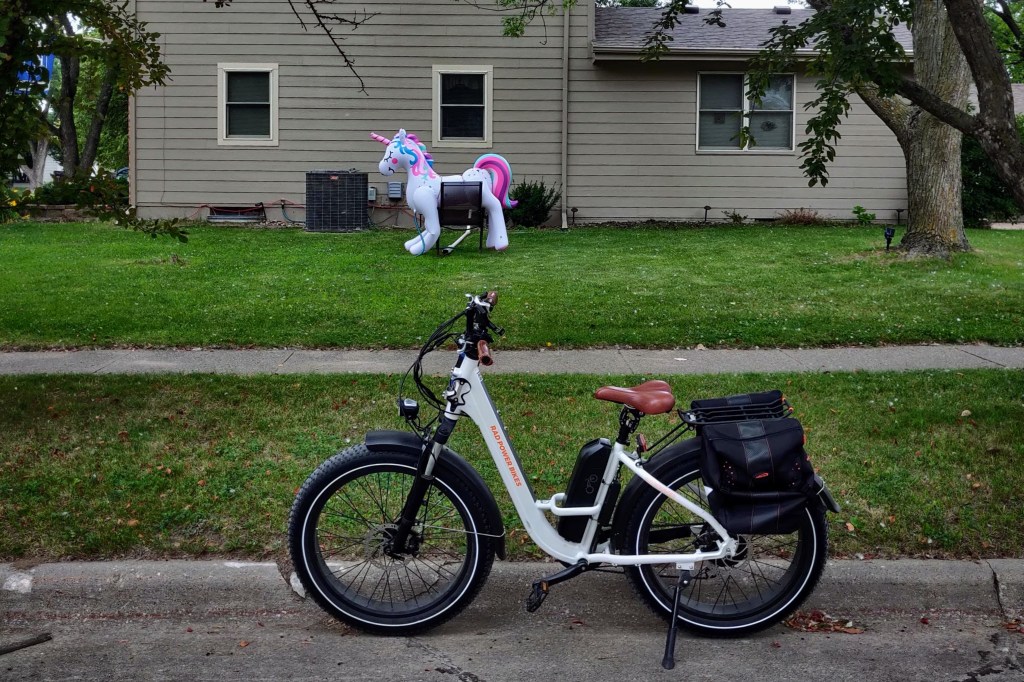
When I bought my first ebike, they were as rare as unicorns.

I’ve talked about the ‘cheating’ issue before. The entire concept of cheating in recreational cycling is ridiculous. It’s stupid on multiple levels. Cheating implies some sort of competition. Who the fuck are we competing with when we go out for a ride? If you’re riding purely (or even primarily) for exercise, you could, I suppose, argue that you’re competing against yourself–that you’re trying to cycle better each time you go for a ride. Go faster, go farther, go longer, burn more calories. If that’s the case, then riding a bike would be cheating against runners. Riding a bike with multiple gears is cheating against cyclists who ride fixies. If you buy into the ‘cycling is competition’ argument, then anything that makes cycling easier can be considered cheating. All that spandex shit you wear? That’s cheating.

The other question–ebikes are for old or disabled folks–is equally wrong-headed. Ebikes ARE great for older folks and for folks who have some sort of disability. It allows people who otherwise couldn’t or wouldn’t ride a bike to…well, ride a bike. The same is true for step-through bikes, which are easier to get on and off (and yeah, there were assholes who thought they were clever by referring to my bike as a girl’s bike–like that’s an insult). Anything that helps people get on bikes and ride is a good thing. That’s pretty fucking obvious.

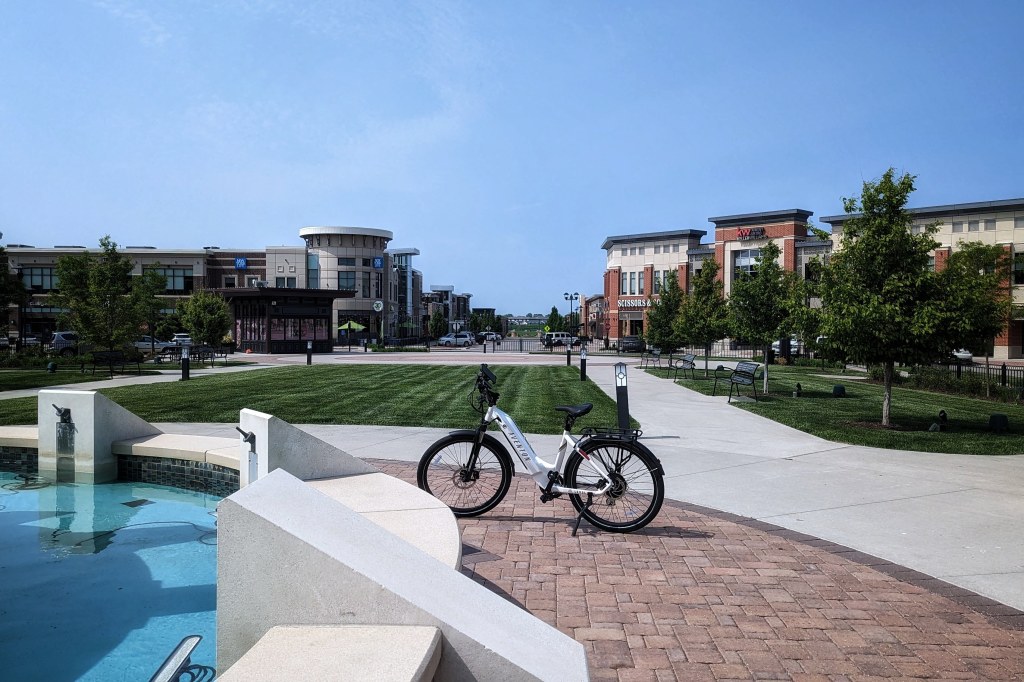
My second ebike is a lot more nimble.

Here’s the thing: a lot of us don’t see cycling as competition or a fitness tool. We’re riding bikes because they’re fun. We’re riding bikes as a form of transportation. That’s the main thing about ebikes: they’re generally adaptable. If you want an inexpensive way to commute to work without getting all sweaty, an ebike is your friend. If you want to take long rides without worrying that you’ll exhaust yourself (turning a fun ride into an ordeal), an ebike allows you to do that. Even if you want to cycle for exercise, you can reduce the level of pedal assist and sweat your ass off.

There are still a LOT of bicyclists who mock ebikes. But it’s changing. I rode my bike to the local farmers market on Saturday. The market is deliberately located on the town’s central bicycle trail. I’d say at least a third–maybe even half–of the bikes parked around the market were ebikes. There are two bike brew pubs within a few hundred yards of the farmers market; around a quarter of the bikes parked outside those pubs were ebikes.

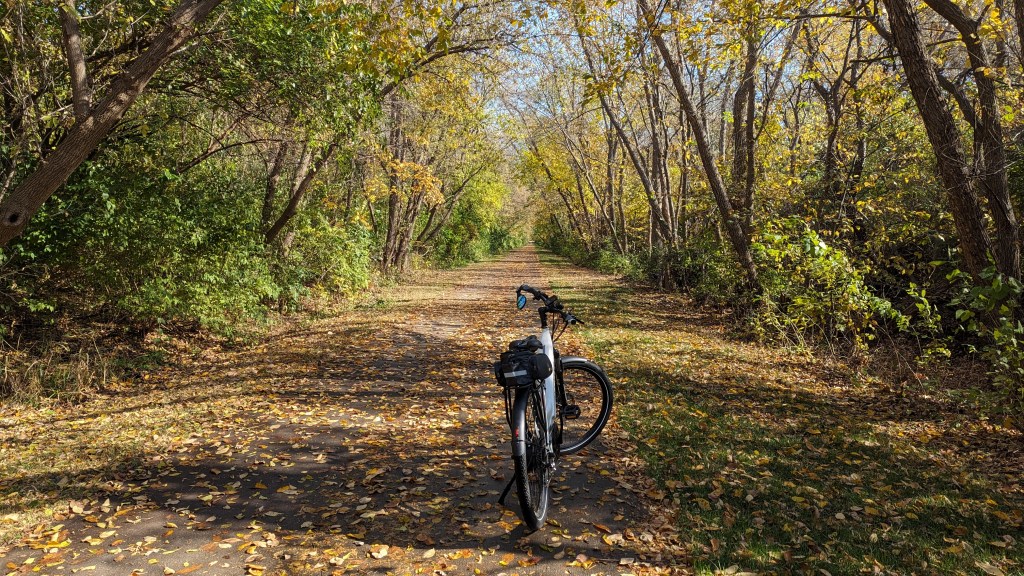
I can ride farther and longer and have more fun with my ebike.

Don’t get me wrong; ebikes are far from perfect. They’re generally more expensive than regular bikes. They’re heavier. Batteries have a limited capacity, which affects the bike’s range (although that’s becoming less of an issue). Any device that depends on electricity to function necessarily has more ways to fail than their human-powered counterparts. And yet, despite this, ebikes are becoming more popular.

Why? Because they’re fun. I’ve been riding bike for most of my life, but I can honestly say I’ve never had as much fun on a bike as I’ve had the last four years. For me, the ebike has been liberating. I called my first ebike the best purchase I ever made. That’s still true. My second ebike is a much better bike, but that first bike was a revelation. The second bike was confirmation of how much better my life is with an ebike.

It’s World Bicycle Day and I’m certain most people–including most cyclists–won’t notice. They don’t need to. They’ll be out riding their bikes regardless.