ukraine, let my memory of you be like a blade in my soul

Sometimes fiction and reality collide in unexpected and horrifying ways. A couple of days ago, the war in Ukraine crashed into a fantasy novel written in 1990.

Years ago I had a friend who kept encouraging me to read fantasy fiction. I’d read Tolkien, of course, but I was generally uninterested in the genre. She gave me a novel by a writer with the unlikely name of Guy Gavriel Kay. If a friend gives you something to read, the laws of friendship require you to at least try to read it. So I dutifully read the prologue (I’m also generally suspicious of prologues), then put the novel on a shelf with other novels I’d probably never finish.

The prologue was beautifully written, although the prose was more elegant than the fiction I was accustomed to reading. The characters were engaging and the situation they were facing was powerful. It was largely a nighttime conversation between two men–a prince leading an army facing certain destruction in the morning and a sculptor/friend who was a volunteer in that army. They both acknowledged they were probably going to die in a few hours and wondered if the war was a cause worth dying. This is part of their conversation.

“Oh, our pride. Our terrible pride. Will they remember that most about us, do you think, after we are gone?”
“Perhaps. But they will remember. The one thing we know with certainty is that they will remember us…. We will leave a name.”

Very powerful, emotional, dramatic stuff, right there. My problem was the heroic speech. I’ve done my time in military harness. So did both of my brothers. So did my father and most of my uncles. I’ve been around military men all my life. That’s not how they talk, especially when it comes to really important stuff, like killing and dying. Combined with my basic dislike of the genre, it was enough for me to stop reading.

Now, you may be saying, “But Greg, old sock, it’s fiction…and fantasy fiction at that. Give the writer some slack.” And you’d be right (also, stop calling me ‘old sock’). I’d made a mistake by putting that novel on the shelf. A few years later, another friend–also a fan of fantasy fiction–handed me another novel, also by Guy Gavriel Kay (it’s not a name you’re likely to forget). Again, the laws of friendship required me to try it. The Lions of Al-Rassan. It was amazing and has become one of my favorite novels. I was so taken by it that I went back to the shelves and pulled out the novel I’d abandoned before.

Tigana. That’s the title. It’s also the name of the independent province in which the two men in the prologue lived. The story takes place after the battle referred to in the prologue. Here’s a thing Kay does extraordinarily well–he doesn’t just inform the reader, “Yeah, these guys? They live in Tigana.” Instead he quietly, slowly, subtly adds layers of history, art, tradition, music, cuisine–layers of a unique, believable culture–so that Tigana isn’t just a place on a map. It becomes an indelible aspect of a character’s identity.

This is critically important to the story, because the battle referred to in the prologue destroys all that. The invading sorcerer/king was so enraged by the Tiganan resistance against his army and so grief-stricken by the death of his son (killed in the war) that he wasn’t content with merely conquering and ruling Tigana. He had his army kill women and children, he burned their fields and razed their villages, he flattened their cities. Not content with the physical destruction of Tigana, he eradicated their culture–tore down their statues, destroyed their art. He re-named the capitol city after his dead son. He renamed the province Lower Corte (Corte being the province’s traditional enemy; he wanted to insure the survivors understood they were lesser than their enemies). He killed almost an entire generation of people, and then (because this is the sort of thing sorcerer/kings do) he cast a magic spell that stripped the true name Tigana from the memory of every person NOT born in the province. Nobody else could even hear the name if it was spoken. This meant the few remaining Tiganans couldn’t even discuss with others what had happened to their land and culture. It was as if the kingdom of Tigana had never existed.

This is essentially what Putin and Russia planned for Ukraine.

A few days ago the Russian state-owned news agency RIA Novosti published an article called What Should Russia Do With Ukraine? (You can read a translation of the article here.) It’s grounded on the premise that most of the population of Ukraine are Banderite Nazis or Nazi sympathizers. Banderite refers to Stephan Bandera, a Ukrainian nationalist, Nazi collaborator, and anti-Communist leader who was assassinated by Soviet agents in 1959. The article suggests that Ukrainians have so internalized Nazism that they’re not even aware they’re Nazis. It’s part of their culture, their identity.

That’s complete bullshit, of course, but for Russia/Putin it’s necessary bullshit to justify the plan for Ukraine. When the author of this article says ‘Nazi’ he means ‘Ukrainian’. The article says Nazis must be killed.

Those Nazis who took up arms must be destroyed on the battlefield, as many of them as possible. No significant distinction should be made between the Armed Forces of Ukraine and the so-called “nationalist battalions,”

This also applies to ordinary citizens who support the government of Ukraine. Whatever happens to them during the ‘military special operation by the Russian Federation’ is a just punishment for that support.

They supported the Nazi authorities and pandered to them. A just punishment for this part of the population can only be possible through bearing the inevitable hardships of a just war against the Nazi system…. The Banderite elites must be eliminated; their re-education is impossible.

The survivors of the ‘war against the Nazi system’ will be re-educated and forced to engage in the manual labor of rebuilding the territory.

The further denazification of this bulk of the population will take the form of re-education through ideological repressions (suppression) of Nazi paradigms and a harsh censorship not only in the political sphere but also in the spheres of culture and education…. making the names of accomplices of the Nazi regime public, involving them in forced labor to restore the destroyed infrastructure as punishment for Nazi activities

The article acknowledges that wiping out Ukrainian culture would be a generation-long process.

The period of denazification can take no less than one generation that has to be born, brought up and mature under the conditions of denazification.

Obviously, this includes eliminating the very name of Ukraine.

[T]he name “Ukraine” cannot be kept as a title of any fully denazified state entity on the territory liberated from the Nazi regime…. Denazification will inevitably include de-ukrainization…. history has proved it impossible for Ukraine to exist as a nation-state, and any attempts to “build” such a nation-state naturally lead to Nazism. Ukrainism is an artificial anti-Russian construct that has no civilizational substance of its own.

In the novel, a group of rebel Tiganan conspirators disguise themselves as traveling musicians and merchants and plot to assassinate the sorcerer/king and restore the ability of the people to remember the province of Tigana. One of the characters repeats a sort of prayer: Tigana, let my memory of you be like a blade in my soul. The memory of lost beauty is painful, but pain keeps the memory of that beauty alive.

In the novel, the erasure of Tigana is done through brute force reinforced by magic. Putin doesn’t have any real magic; all he has is brutality and the weak magic of propaganda, like this article. It’s difficult to say how effective the propaganda is with the Russian populace. There are reports that around 70% of Russian people support Putin’s war. Those reports may also be propaganda. Or they may accurately reflect the opinions of people whose only source of information is purposely biased. (Yes, I’m looking at FOX News.)

In the novel, only those born in what was once Tigana can hear the name spoken. Only they can keep the idea of Tigana alive. In real life, all of us can speak about Ukraine, can retain the memory of Ukraine’s once-beautiful cities, can honor the ordinary people of Ukraine who’ve resisted Russia, can weep for those who’ve been tortured and killed, can celebrate the Ukrainian identity and keep it alive.

Ukraine, let my memory of you be like a blade in my soul.

Bucha

We knew this was going to happen. We knew it was happening. It happens in every war. Always has, always will. Where there is war, there will be war crimes committed against civilians. It’s usually impulsive; troops who’ve been under prolonged stress and ongoing fear sometimes strike out in rage and frustration, in a desire for revenge against the situation they’re in.

But what’s taking place in Ukraine is war crime as a matter of policy. It’s war crime as a strategy. The indiscriminate shelling of civilian apartment buildings, of shelters, of hospitals has been deliberate and intentional. It’s been a conscious, calculated attempt to terrorize the populace and the government of Ukraine and sap their will to resist.

What’s happened in Bucha is different. The shelling and bombing, as horrific as it’s been, was remote, impersonal. It was done at a distance, by troops who would never witness the destruction they were causing. You drop a bomb, you fire an artillery shell, and whatever happens will happen somewhere else to people whose bodies you’ll never see.

In Bucha it was personal. Individual civilians deliberately murdered by individual Russians. Civilians with their hands tied behind their backs, executed in the street. Random civilians riding their bikes, murdered for no reason other than a desire to kill somebody. Men and women shot while sitting in their cars. At least 40 bodies of civilians were scattered along the street. Reports of nearly 300 buried–or partially buried–in two mass graves.

Bucha is was just a small quiet town. A little more than 35,000 people. There’s a nice little municipal park and an international children’s center. Or at least there used to be–now, who knows? The town began as a railway stop back in the 1890s. The station house is still the town’s main landmark. Assuming it’s still there.

Bucha Railway Station

Maybe that railroad was the reason Bucha was a military objective. Russia is accustomed to moving troops and materiel by rail, and Bucha is on the doorstep of Kyiv. I don’t know.

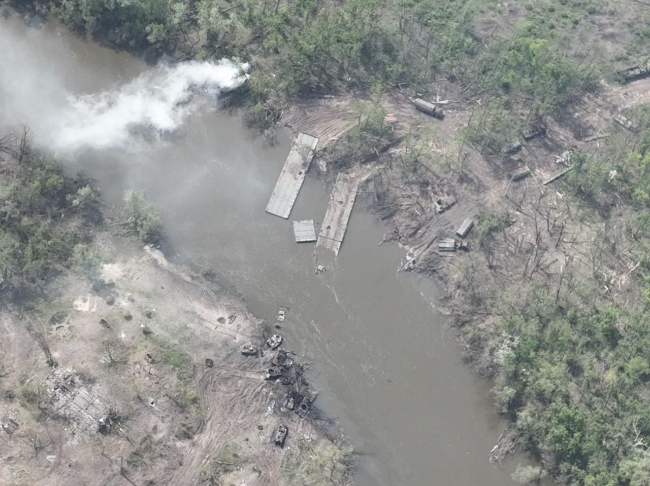
What I know is this: Russia has turned Bucha into a graveyard. You may not want to look at this video of Ukrainian troops arriving in Bucha. You may not want to look at it, but you should. It’s awful, it’s gut-wrenching, but it’s important that the world–that YOU–see what Russia under Putin has done. What Russia is continuing to do in other towns and cities in Ukraine, because this isn’t going to stop until the Russian invasion has stopped.

The video refers to Russian troops as ‘animals’. It would be easy to dismiss the men who did this as less than human. But by doing that, we also diminish their responsibility. The horrifying truth is that the people who did this are almost certainly ordinary young men who’ve been traumatized by their situation. This is what war does; what it’s always done. It ruins everything.

Michael Herr, an Esquire magazine reporter who covered the war in Vietnam, wrote this about that war:

There was such a dense concentration of energy there, American and essentially adolescent, if that energy could have been channeled into anything more than noise, waste and pain it would have lighted up Indochina for a thousand years.

That’s true of any war in any place at any time. Had the energy, the money, the materiel, the humanity pissed away in this single month been applied to “anything more than noise, waste, and pain” Ukraine would be a garden. Bucha would still be a charming town.

Bucha

Now it’s a hellscape, littered with burnt out vehicles, destroyed buildings, the dead scattered like trash. And why?

Putin.

We can literally lay the responsibility of all this on one man. Vladimir Vladimirovich Putin. Fuck him. Fuck him in the neck. Fuck anybody who praises him. Fuck anybody who offers an excuse for him. Putin, may he rot in hell.

male ego masquerading as love

Look, in the grand scheme of things (wait…IS there a grand scheme of things? It doesn’t seem very likely, does it. But never mind, it’s too early for that sort of tangent.) Chris Rock getting slapped by Will Smith is pretty small beans. Who cares if a rich actor slaps a rich comedian?

Except it happened in front of an audience–a live audience and a really huge television audience. Except that it happened during an award ceremony. Except Smith, just half an hour or so later, said, “People do crazy things for love,” as if the slap–and let’s just call it what it really was: a violent assault–as if that violent assault was the result of love. Except that some folks interpreted the assault as a ‘defense’ of Smith’s wife, who was the butt of a tacky Chris Rock joke.

It’s ego that makes people do crazy things, not love.

Except that the assault was really a clear, public display of male ego, of male rage, of male privilege. Except that Will Smith felt he had the right to interrupt a ceremony to exact physical retribution for a perceived insult to somebody else. Except the assault had nothing to do with love. Except that Will Smith made the entire incident–the entire award show and the entire night–about him. “Keep MY WIFE’s name out your fucking mouth.” MY wife.

You know what would be a good way to defend your wife? A good way to turn that joke into something actually about love? A good way to truly demonstrate your love for your wife? Use your time in front of the camera to talk about alopecia. Use that time to educate folks about what it is. Use that time to discuss the weird and often unhealthy social relationship between women and their hair. Use that time to remind folks that humor doesn’t have to be cruel. Use that time to say love doesn’t depend on hair. That love doesn’t depend on appearance. That the Beatles were right, and love is all there is.

At the end of his acceptance speech, Smith said, “I’m hoping the academy invites me back.” Invites ME back. Me. This may be the saddest thing about the entire incident. Will Smith was given an opportunity–a truly unique opportunity–to demonstrate how love for another person works. Instead, he put himself in the center.

EDITORIAL NOTE: I’ve said this before, but it’s always worth repeating. Hell, it’s necessary to keep repeating. Burn the patriarchy. Burn it to the ground, Burn it to the ground and collect the ashes, and grind them into powder. Bury the powder deep in the earth, and salt the ground above it so nothing will ever grow there. Pour cement over the salt. Then nuke the entire site from orbit (it’s the only way to be sure).

can we please, for fuck’s sake, hold somebody accountable for something?

I see that the Senate committee investigating the January 6th Insurrection is considering issuing a subpoena to Ginni Thomas, the wife of SCOTUS Justice Clarence Thomas, after the public revelation that she was deeply and actively engaged in arranging the 1/6 demonstration AND ALSO actively encouraging the White House Chief of Staff to help overturn the legitima…wait, what?

The 1/6 committee is considering a subpoena? Are you fucking kidding me? The wife of a SCOTUS judge is plotting to scuttle a presidential election, and they’re CONSIDERING a subpoena? Arrest her. Charge her with a crime. What is wrong with you people?

And why is Clarence Thomas allowed to rule on cases involving his wife? Fuck that, why he he still on SCOTUS? Why hasn’t this malignant bastard been forced to resign? Why hasn’t he been impeached?

Why aren’t Steve Bannon and Mark Meadows and any of the other Republican assholes who’ve refused to answer a subpoena in jail on contempt charges? As far as that goes, why hasn’t the 1/6 Committee been holding public hearings like they said they would? Why hasn’t the 1/6 Committee subpoenaed Margie Greene and Gym Jackson and Lauren Boebert and Mo Brooks and that weaselly bastard Josh Hawley and any other seditious member of Congress who might have information about the insurrection?

Why isn’t Manhattan AG Bragg prosecuting Trump? Hell, why isn’t Attorney General Merrick Garland prosecuting…well, any of the Trumps? I know, I know, it takes time to build a solid criminal case, but Jesus suffering fuck, this is ridiculous.

This aggressively ignorant, arrogant, lying sack of shit ought to be behind bars.

And yeah, sure, it’s great that some of the fuckwits that actually broke into the Capitol Building to disrupt the election are being tried and sentenced. But does anybody believe that if BLM folks had broken into the Capitol, that they’d be given sentences of just a few months? No fucking way.

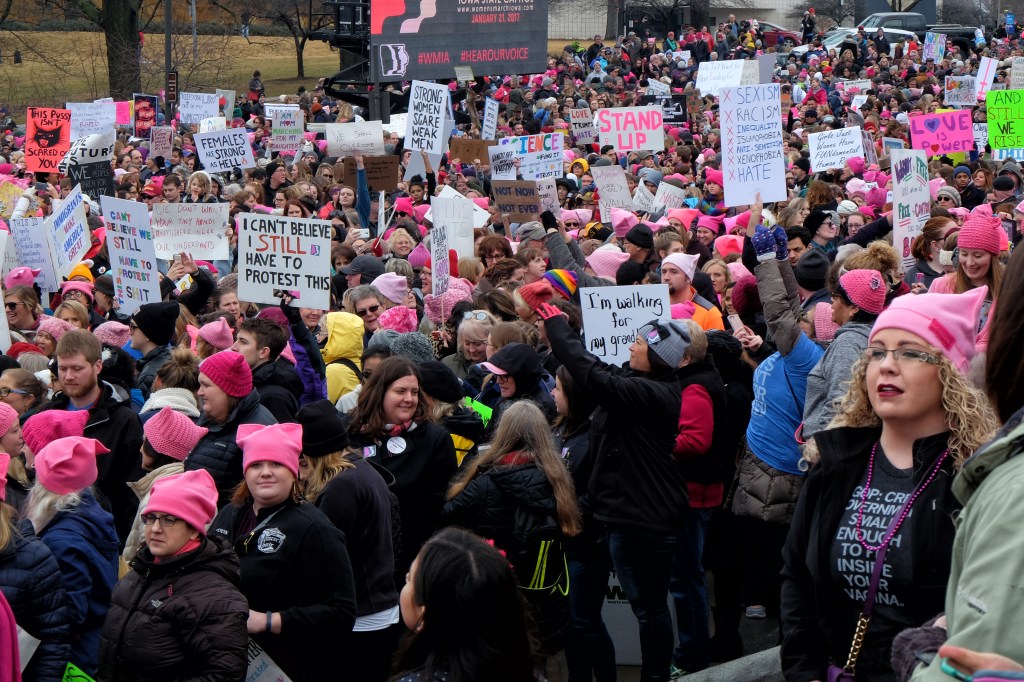
This is fucking infuriating. There are so many political pundits fretting that the US might be losing representative democracy. We’re not losing it; we’re pissing it away. We’re letting the authoritarian right take it from us. We’re allowing them to strip away voting rights, to ban books they don’t like, to criminalize trans kids and their parents, to eliminate safe and legal abortion, and so much other shit that it’s too long to list.

And ain’t nobody being held to account for none of it.

Can we please, for fuck’s sake, hold somebody accountable for something?

dead generals

Yesterday I wrote that I didn’t need to write about the war in Ukraine all the time. So this morning, what am I doing? Right; writing about the war in Ukraine. Specifically, all the dead generals. The Russian Army has lost five (and possibly a sixth, though that’s unconfirmed at the moment) generals in the last 25 days. They’ve lost three regimental commanders in the last 24 hours. When I say ‘lost’ I don’t mean they became confused and wandered off; I mean they were killed in combat.

Generals and regimental commanders (in the US military, RCOs are usually full colonels, the rank just below general) hardly ever get killed. They might die of a heart attack or liver disease or something, but they just don’t get killed in combat. They’re rarely close enough to the fighting to be at risk.

You may be asking, “Greg, old sock, why would these Russian generals and RCOs be so close to the fighting?” It’s a valid question (and c’mon, stop calling me ‘old sock’). The answer is, they’ve got to be close to the fighting because failures in their electronic communications equipment force the generals to be there in person to give orders.

You may be asking, “Greg, old…uh, these ‘failures in electronic communication equipment’ of which you speak…what are they?” Another good question, and the answer is both tragic an hilarious. The Russian Army developed a sophisticated, highly secure, cryptophone system called Era. It was supposed to allow secure communication in almost any situation–so long as there is at least 3G cellular telephony available.

What did the Russian Army do at the beginning of their invasion? They destroyed all the cell phone towers. So they basically knee-capped their sophisticated Era cryptophones; they just won’t work. That means the Russians have been reduced to using ordinary cellphones with sim cards to communicate with each other, and those calls are easily intercepted by Ukrainians. Now the generals and RCOs have to get close enough to the fighting to issue strategic orders. Which means they’re close enough to get killed.

Generals and RCOs getting killed plays hell with morale–both the morale of the troops, who hate not knowing who’s in charge, and the morale of the remaining generals and RCOs who now have to take their place close to the fighting.

To make matters worse for the Russian Army (and yeah, we want to make things worse for them), Russia accidentally acknowledged that almost 10,000 Russians have been killed in action, and more than 16,000 wounded. The WIA number is undoubtedly low. As a general rule of thumb, you can assume two to three times as many combat wounded as combat killed–so the number of WIA is probably closer to 20-30,000.

Here’s another thing to take into consideration: in combat, wounding the enemy is often more effective than killing them. A dead soldier can’t be helped, so troops can ignore them and keep fighting. A wounded soldier, on the other hand, is screaming (which has to be distracting) and requires aid, which means other troops have to stop and treat them and carry them off the battlefield–which further reduces the size of the fighting force.

Again, these casualty numbers are in just over three weeks of fighting. The US, in the 20 years of fighting in Iraq and Afghanistan, had 7,000 KIA.

In an earlier post, I talked about the Russian Army running out of trucks. They’re also running out of generals and combat troops. They should load the remaining troops into the remaining trucks and get the fuck out of Ukraine.

Oh, and fuck Putin in the neck.

attrition

Every morning this week I’ve sat here at the keyboard and started to write a post about the situation in Ukraine. Every single morning I’ve put a couple hundred words in a row, and every morning I’ve deleted them all.

I mean, what is there to say? Well, obviously there’s a LOT to say–the military situation, the refugee situation, the NATO situation, the war crimes situation, and on and on and on. But the internet is awash in experts opining and analyzing all that. What is there for ME to say? Is there anything I can contribute that’s meaningful?

Not much. I can express opinions, but my opinions about Ukraine aren’t very much different from most folks. And as for those folks whose opinions support Russia and Putin–what is there to say to or about them? Not much, other than ‘Russian warship, go fuck yourself’.

The problem (for me) is that it’s hard to write about anything else at the moment. Everything else seems trivial. Art? Clarence Thomas in the hospital? Republican hypocrisy? Pickleball? The January 6th prosecutions? The arrival of Spring and getting back on the bike? Voter suppression? The latest research on crows? Today’s hearing on the nomination of Ketanji Brown Jackson to the Supreme Court? There are lots of things that occupy my mind and my time besides Ukraine. It’s just that none of them seem as important. None of them ARE as important.

What makes this all the more awful is that the war in Ukraine has become something of a stalemate. It’s turning into a war of attrition–the ugliest, cruelest, and most brutal form of war. A war of attrition isn’t about territorial control; it’s about imposing as much suffering as possible in every way possible in order to force the enemy to give up. It’s about wearing away at the very foundations of a sustainable life–food and shelter. It’s about reducing towns and cities to uninhabitable rubble.

But here’s the truly awful thing: I suspect–I fear–the American public will begin to treat the war of attrition in the same way they’ve treated the global pandemic. They’ll get bored with it. It’ll be normalized, in the same way they’ve come to accept a thousand deaths a week from Covid as normal. In the same way they’ve come to accept extreme weather disasters as normal. Instead of being tortured from a death by a thousand cuts, those cuts will be seen as routine. (By the way, if you google ‘death by a thousand cuts’ most of the results will refer to a song by Taylor Swift rather than lingchi, the ancient Chinese method of torture and execution–how’s that for normalization?)

NOTHING ABOUT THE WAR IN UKRAINE IS NORMAL.

So, what are we to do? What am I to do? Carry on as usual with this blog? I guess the only answer is to try to find some sort of balance. Write about the stuff that interests me, even if some of that stuff is trivial. But also keep talking about the suffering of the people of Ukraine, and about the deliberate cruelty of Putin, and about the policies of nations that support–or fail to support–Ukraine.

That’s what I’ve decided to do. But it feels a little like attrition.

in which vlad putin drives a truck over his own dick

First, let’s admire the courage and determination of the Ukrainian military and the civilian volunteers. I think we all knew Ukraine would put up a fight; we all knew they were scrappers. But damn.

Their resistance has been inspiring. And let’s be honest, it’s also been intimidating as fuck. “Here, carry these sunflower seeds in your pocket so the ground on which you die will flower.” That’s ice cold, right there. That goes beyond Josey Wales ‘plumb, mad-dog mean’ levels of scrappiness; that’s deep into Keyser Söze territory. We’re talking grim poetic borderline pathological resistance. And it shows.

Just over seven thousand US troops died in twenty years of combat in Iraq and Afghanistan. Russia has lost more than that in three weeks.

I say Russia ‘lost’ that many troops, but it would be more accurate to they’ve ‘thrown away’ that many. It’s increasingly obvious the Russian military is hollow. The inside has rotten away. A couple decades of systemic corruption left a facade that appeared solid and sturdy, but masked a military that was drastically unprepared for sustained military operations.

Ural-4320 supply trucks.

What it comes down to is this: the Russian army doesn’t have enough trucks.

We hear a lot about Russia’s 190,000 troops involved in the invasion, the majority of them are support personnel. In the military we refer to this as “tooth to tail”ratio–the number of support troops (the tail) necessary to keep combat troops supplied and fighting (the tooth).

Russia is big. Really big. So big that it takes forever to get from one side to the other. Because of that, their military depends on railroads to rapidly move equipment from one place to another. Trains are more efficient; the army can move military units and supplies around inside Russia pretty quickly. But that all stops at the Russian border. Beyond the border, it comes down to trucks and truck-like supply vehicles.

We know that in the weeks leading up to the invasion, the Russian army amassed a LOT of troops and supplies on their border with Ukraine.

So this is what you need to know. The standard Russian military truck is the Ural-4320. The Ural-4320 is a multi-use truck; there are armored versions to carry troops, versions to transport fuel, and it’s also used as a platform for the BM-21 rocket launcher. But mostly, it’s just a really solid truck used to haul stuff. It has a top speed of around 50mph and can carry about 6.5 tons of material on hard surface roads.

Bones of a Ural-4320

Now, let’s say Ukraine’s road/highway network will allow a Ural-4320 to move at a sustained 45mph, which may be a wee bit optimistic. Let’s say it takes an hour to load six tons of supplies (food, ammunition, replacement parts for armored attack vehicles, medical supplies, fuel, etc.). It takes another hour to dive 45 miles into Ukraine. Another hour to unload supplies. And one more hour to return to the supply depot. That’s four hours.

Let’s say that truck can make four trips per day–sixteen hours. The other eight hours will be spent on stuff like truck maintenance, drivers eating and sleeping. That’s the very best case scenario. That’s assuming nothing disrupts the process–no ambushes, no caltrops in the road, no flat tires or engine issues, no loading or unloading problems, no refueling issues. That means Russian combat troops and assault vehicles can expect to be resupplied up to four times a day. If they’re only 45 miles from the Russian border.

If elements of the Russian army are 90 miles from the Russian border, the very best case is they could only count on resupply twice a day. At 180 miles, only once a day.

Kyiv is about 230 miles from the border.

Ural-4320 with BM-21 rocket launcher

We see lots of photos and videos of tanks and other armored vehicles destroyed by the Ukrainian army–and yay for that. But perhaps more importantly, they’re taking out resupply trucks at an astonishing rate. That’s one reason we’re seeing so many abandoned Russian vehicles and tanks. No fuel, no food for the troops, no ammunition to fight.

Russia will do as much damage as it can in the hope that Ukraine will give up, but it doesn’t have enough trucks to keep it up or take it very far. And the Ukrainian army won’t relent enough to allow the Russians to establish safe supply depots inside Ukraine. It’s not very dramatic, but in a contest between Ukrainian grit and Russian trucks, the trucks lose. And if the trucks lose, so does Russia.

just to explain why i took a photo

Last week while out noodling around I came across a tank. When I say ‘tank’ I mean a decommissioned military tank. An M60 battle tank, to be exact. It’s fairly common when the military starts scrapping old tanks, they offer them to small towns to use as memorials, or to ‘decorate’ public parks or town squares or wherever the hell a small town would like to park one. The US military stopped deploying M60s in 1997.

But this isn’t about the tank, really. It’s about how I photographed it. Which was like this:

A friend asked me a couple of questions about the photo. First, what the hell is this a photograph of? Second, if it’s a photograph of a tank, why didn’t I include the whole tank? Those are valid questions. But they’re difficult to answer.

They’re difficult to answer for several reasons. The primary reason is that I’ve been shooting photos for so long that I rarely actually think about composition. I just kind of know what I want in the frame. Another reason it’s difficult to explain is because shooting a photo seems like it’s just a matter of releasing the shutter (or, with a cell phone, poking the whatsit that initiates the photo). But that moment is the result of a fairly complex process.

I wasn’t paying much attention to the process when I shot this, but I’ll try to recreate my thinking. Obviously, it began by getting out of the car to look at the tank because…well, there was a tank and I wanted to look at it. As I walked around it, I was attracted to that cascade of squarish shapes made by the building–so many different-sized squares of different textures. Then there was that white circle that sort of balanced the round rear tread wheel of the tank. And then there were those sweet vertical lines of the chimney and the light pole. And then I was drawn to that tiny splash of red, and that diagonal slant of the roof of the shed, and even the spade leaning against the light pole. All of those things appealed to me, both individually and as a collective.

I’d be lying if I said I noted all that stuff in that order, but when you’re lining up a shot it’s like your brain is ticking off boxes in a list. That works, that works, that doesn’t–so move a bit, that works. And then there’s some point when your synapses seem to agree that you’ve got all–or most–of the stuff you want in the frame, and you take the photo.

I’d probably have taken that photo even if the tank wasn’t there, because the light and the geometry appealed to me. But it was the tank that drew me to that spot and to me, that wee bit of tank is important to the composition. So, to me, it’s still a photo of the tank. The rest of the tank is implied.

Wait…I think I can explain this better. That same day, I took a photo of an old, rusted out Ford panel truck. Three photos, in fact, but only one photo mattered. Here’s the first photo.

There’s nothing wrong with this as a photo. Again, I composed it intuitively, without a lot of thought. It’s got good lines. The curve of that tree is nice; it sorta kinda follows the shape of the truck. There’s a decent balance to the composition. It’s a perfectly adequate photo, a decent documentation of an old, rusted out Ford panel truck. Nothing wrong with it, but not terribly interesting.

So I got closer. Changed the perspective.

Again, there’s nothing wrong with this photo. Again, the composition was casual but deliberate. However, you’ve probably seen ten thousand photos almost exactly like this. A rusty wreck of a vehicle–an artifact of an outdated civilization cast aside in a living environment that will continue to grow while the artifact slowly degrades into nothingness. The best thing about this photo is that it places the panel truck in a larger landscape, which emphasizes how out of place it is. But basically, there’s nothing new to see in this photo.

So I got closer and changed the perspective again.

This is the photo that mattered. I took a bit more care with the composition. I knew I wanted the rust, I knew I wanted the suggestion of a large landscape through the windows, and I knew I wanted the lines of the shattered window and those bubbles formed by the thin layer of ice.

The actual old, rusted out Ford panel truck wasn’t really important; it’s the idea of the old, rusted out Ford panel truck that mattered. It’s a photo of an abandoned vehicle in the same way the first photo is a photo of a tank. The old, rusted out Ford panel truck is implied; you only need to see enough of it to hint at its existence.

The photo of the tank and the final photo of the panel truck are both photos of things that don’t belong there. Was I actually thinking of that when I took those photos? Nope. But after you’ve shot enough photos, a sort of algorithm develops in your brain. It’s like you know at the cellular level that everything in the frame matters, so you become very deliberate about what you keep in and what you keep out.

What you choose to include and exclude is grounded on why you’re shooting the photo. And that’s the thing. You may not be consciously aware that you’re shooting a photo of things that don’t belong where they are, but there’s some chunk of your brain that’s is actively registering that fact. If the tank or the panel truck were what mattered, you’d just photograph the tank and the panel truck. But you keep looking and moving and shifting around until your brain is at least semi-satisfied. Then you take the photo.

Okay, I’ve made the mistake of re-reading this (which I generally try to avoid in these blog posts). It sounds to me like I’m talking bullshit here (which is why I generally avoid re-reading these blog posts). But I’m still convinced that this is how I shoot photos. I can’t tell you how many times I’ve approached something that I wanted to photograph–that I felt was very photographable–and then walked away without taking a single shot because I couldn’t get what I wanted in the frame. There was something in the frame I didn’t want, or something I wanted but couldn’t include. My mind knew it, even if I wasn’t immediately aware of it.

The photographer Marc Riboud once said, “I photograph the way a musician hums.” That makes sense to me. Musicians, even when they’re just idly humming, know without thinking which notes work and which notes don’t. The wrong note ruins the composition.

And there it is.