0 and 2

That title’s a tad misleading. There was only one actual assassination attempt on Trump’s life. The second incident was basically a security breach, but it’s being described as an assassination attempt. In order to be an assassination attempt, you have to actually attempt the assassination. The Secret Service stopped the guy before an attempt could be made. Which, you know, is what they’re supposed to do.

About that…people (and by ‘people’ I mean Republicans and gutless Democrats) are posturing outrage again, asking “How did the would-be shooter get so close to Trump before being spotted?” He got that close because 1) Trump insists on golfing at his public courses, and 2) golf courses are fucking huge, and 3) unless a golf course is in a secure area (like, say, a military base) it would take a LOT of personnel to secure the entire perimeter. This is why presidents Obama and Bush often golfed on military bases. They weren’t greedy narcissists like Trump, who’s happy to charge the Secret Service for green fees that’ll go right into his own pocket.

I don’t know, but I’m assuming the Secret Service was running some sort of rolling security bubble around Trump’s golf cart, securing a couple of holes ahead of him and a couple of holes behind him. Which, really, is enough…or would be enough for an ordinary ex-POTUS. An ex-POTUS who wasn’t an active, volatile threat to the future of democracy. An ex-POTUS who didn’t thrive on pissing people off.

Let’s face it. A lot of people would like to see Trump dead. A lot of people responded to the first assassination attempt by saying they were sorry the shooter missed. A lot of people fucking hate Trump.

I want to see him cry.

I’m not one of them. Well, okay, yeah, I hate the guy. But I don’t want to see him dead killed by an assassin. I don’t want him made into some sort of MAGA martyr. That could lead to something really really ugly. And, frankly, a quick death is too good for Trump. I want him to suffer.

I want to see him tried by a jury of ordinary citizens and, it’s to be hoped, convicted of his crimes. I want to see him incarcerated. Or at least—at the very least—facing some sort of carceral punishment, even if it’s something like 20 years under house arrest. I want to see him bankrupt. I want to see his assets seized to given to E. Jean Carroll. I want Trump broke and humiliated and reviled. I want his wife and family broke, humiliated, reviled. I want him to be internationally scorned; I want global headlines calling him a convict. I want Trump alive and painfully aware that he’ll be one of the most despised characters in American history. I want him cognizant that the name Trump will be mocked and scorned for decades.

I want the motherfucker to suffer. I’m somewhat ashamed of that, but there it is.

goddamnit

Let’s talk about Neil Gaiman. No, wait. Let me first offer up my creds.

I was, for several years, a private investigator specializing in criminal defense. I helped criminal defense attorneys defend criminals. That sounds awful, I know. But two things. First, the US Constitution says every person accused of a crime deserves a fair trial, and a fair trial means the accused has the right to challenge the evidence of the State. The other thing is this: my job was to investigate a criminal case and report facts and evidence to the defense attorney. Not facts and evidence that HELPED the defendant. Just facts, just evidence. It didn’t matter to me if the facts/evidence helped or hurt the accused. A good defense lawyer needs an unbiased account of the case.

I’m telling you this so you can judge for yourself whether or not I’m full of shit when I talk about Neil Gaiman. He hasn’t, to my knowledge, been charged with a crime. He has, though, been accused by multiple women of sexual abuse.

I believe them.

I wish it wasn’t true, but it almost certainly is.

A lot of feminists (and I like to count myself as a feminist) say we should always believe women. I don’t always believe anybody. If there’s anything I learned as a PI, it’s this: everybody lies. But as a criminal defense PI, I never had a case in which a woman lied about sexual assault. Some women may have confused some of the details of the assault (no surprise; sexual assault is pretty fucking traumatic), but I never had a single sexual assault/rape case in which the accusation was unfounded. I’m not saying women don’t lie about it; I’m just saying I never had a criminal case in which a woman lied about it. (I should amend that; I never had a case in which an adult woman lied about it. I did, sadly, have two cases in which adolescent girls lied about sexual assault—one apparently out of spite, one for no apparent reason. Kids don’t always act logically.)

But back to Neil Gaiman, a writer I’ve long respected and admired. He always struck me as being thoughtful, caring, sensitive, and honest. He may actually be some of those things most of the time. But based on the reports I’ve heard and read, I believe he also used his position and influence to coerce or pressure women to engage in unwanted sexual acts.

When the first woman reported, I hoped it would turn out to be an isolated incident (which, of course, is one incident too many). That was my hope, but I fully anticipated there’d be more. It’s always safe to assume influential men will be assholes. Hell, it’s always safe to assume all men, influential or not, will be assholes. I mean, patriarchy is built on a foundation of men being assholes, and believing in their absolute right to be assholes.

At this point, I think three more women have now come forward with accusations against Gaiman. Why is that important? Because any form of abuse can be a single act. A person might get roaring drunk and piss their pants once and never do it again. A person might get angry and hit somebody once, and never do it again. A person might pressure somebody to have sex once, and feel bad about it, and never do it again. Everybody is capable of acting badly. But a pattern of behavior is what defines an abuser. It’s necessary to distinguish between a person who commits a bad act and a person who’s a bad actor.

Neil Gaiman, it appears, is a bad actor.

Is it possible he’s being unfairly accused? Sure. But it’s highly unlikely. Is it possible that he believes all these acts were consensual? Sure. But he’s forfeited any claim to actual innocence, and my experience suggests these women are telling the truth.

EDITORIAL NOTE: This is further evidence (as if we need any more evidence) that we must burn the patriarchy. Burn it to the ground, gather the ashes, piss on them, douse them in oil and set them on fire again. Burn the patriarchy, then drive a stake directly through the ashes where its heart should be, and then set fire to the stake. Burn the fucker one more time. And keep burning it, over and over. Burn it for generations.

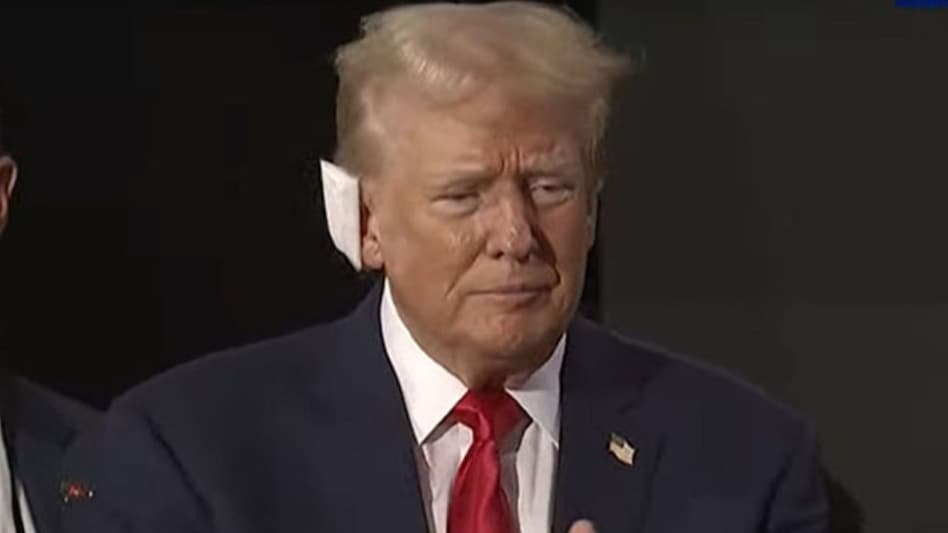
the bleeding ear of trump

I confess, I’m a wee bit disappointed. I mean, yeah, I’m glad Trump’s idiotic but hypnotic control of the MAGAverse is waning. But I really thought this might happen. I’m talking about the potential for an Ellen Jamesian moment.

Now some (okay, probably most) of you right now are wondering, “Greg, old sock, who is this Ellen James of which you speak and what would that moment entail?” I’m going to tell you. Back in 1978 novelist John Irving published a novel called The World According to Garp. It won the National Book Award for Fiction the following year. Garp was the first novel I’d ever read that explicitly examined toxic masculinity, and the first novel I’d read that featured a trans character in a positive way. It also looked at ideological extremism and cults of personality. One critical element of the narrative revolves around a group of women who cut off their own tongues in solidarity with an eleven-year-old sexual assault survivor (Ellen James) whose tongue was cut out by her rapists to silence her.

When I first saw a Trump supporter wearing a sweatshirt with a ‘Diapers over Dems’ logo and other supporters wearing adult diapers with the logo ‘Real Men Wear Diapers’ I thought his cult of personality might have hit a high water mark. Then came the assassination attempt. Trump’s ear got pinked, possibly by a bullet fragment. It doesn’t matter what pinked his ear; it got pinked. It bled. He had to wear a bandage for a few days. And some of his supporters adopted the bandage. People actually put bandages on their ears. It looked ridiculous, but that never stopped them before.

I felt all the elements of an Ellen Jamesian moment began to coalesce. I actually thought there was a chance–not a great chance, but a chance–members of the MAGAverse would pink their own ears. But no. The cowards stopped with the bandage. Sure, there was at least one guy who got a tattoo of Trump surrounded by Secret Service personnel with his tiny fist raised and an angry look on his face. But that was about it.

Bloodless fake crucifixion

I truly believe that if the assassination attempt had happened a year ago, we’d have seen some MAGA fuckwits piercing their own ears. A year ago, a bleeding ear would have been seen as Trump stigmata. Maybe the most dedicated Trumpists died of Covid, maybe his people are just weary of having to support every idiotic thing that rancid motherfucker utters, maybe JD Vance has hollowed out some of his support, but a year ago Trump’s bloody shirt would be enshrined at Mar-a-Lago. A year ago Trump would be selling cheap-ass Chinese-made white shirts with symbolic blood on the collar. It seems clear (to me, at least) that Trump doesn’t command quite the same passion that he did a year ago.

And yes, that’s a good thing. A very good thing. But I did sorta kinda want to see Trumpists tearing out a chunk of their own ears.

if it had been anybody other than trump

Yes, it’s an impressive photograph. You know the one I’m talking about. Trump, bloody, angry, fist raised. I’m not going to post it because I’m already sick of it. But it’ll probably win a lot of photojournalist awards, and rightly so. A lot of folks (and by ‘folks’ I mean ‘political pundits’) believe that photo is going to help Trump in the coming election. They think it’ll carry Trump along on a groundswell of sympathy.

A lot of folks are wrong.

Had it been anybody other than Trump, they’d probably be right. But we’re talking about Comrade Donald J. Trump here. Trump is different. There’s not a lot of sympathy for Trump. Perhaps the most remarkable (and, in a very real way, incredibly sad) aspect of the assassination attempt against Trump is this: so many people are disappointed that it failed.

Yes, that’s a horrible thing to say. But there it is. I’ve heard it and I suspect you’ve heard it as well. It’s usually expressed in a soft voice–maybe even a whisper–and it’s often said with more than a little shame. But it’s being said all the same. Regret that Trump didn’t catch one of those rounds fired.

The people saying this aren’t raging ideologues, they’re not political junkies, they’re not rabid progressives or conspiracy nuts. They’re regular people. Moms to their kids, people in the produce aisle at the market, couples eating smashburgers at a diner. They’re saying stuff like, “You know, I don’t really want anybody to get shot, I’m opposed to any sort of violence, but….” And they let that ‘but’ hang there, and the person they’re talking to frowns and nods. Or maybe they turn it into a joke. “Nobody’s been that disappointed by a couple of inches since Stormy Daniels.” And we cringe and groan, but we’re still nodding.

Most people who feel this way are properly reluctant to say it out loud. It’s a horrible thing to say. It’s a horrible thing to feel. I mean, we’re decent people–or we try to be. But that thought and feeling is out there, and it’s widespread. And it’s Trump-specific.

If it had been anybody other than Trump…

hey MAGA, remember this?

We knew there was going to be violence, didn’t we. I mean, the threat of violence has been a constant theme in the MAGAverse. Just a few days ago, Kevin Roberts, the president of the Heritage Foundation, announced, “[W]e are in the process of the second American Revolution, which will remain bloodless if the left allows it to be.” Hell, Trump his ownself, during the George Floyd protests, asked his Sec. of Defense, “Can’t you just shoot them? Just shoot them in the legs or something?”

Of course there was going to be violence. We just didn’t expect the violence would be directed at Trump. It’s always been MAGA that’s been doing the threatening. They’re the ones with all the guns. Democrats and the left have all been threatening to…you know, vote. We’ve been threatening to…you know, hold criminal investigations and give Trump and his MAGA fuckwits a chance to defend themselves in court. We’ve been threatening them with the Constitution of the United States. Or the tattered shreds of the Constitution after SCOTUS ripped it up.

And MAGA? This is their approach:

A pickup tailgate with the image of a kidnapped President Biden.

We post images of Trump in an orange jumpsuit on social media. They celebrate the imagined kidnapping of Joe Biden. And let’s not forget, just four years ago 13 men were arrested by the FBI and charged in a plot to kidnap Michigan Governor Gretchen Whitmer and ‘try’ her for the crime of…you know, implementing Covid public health restrictions.

But the MAGAverse is trying, once again, to turn reality on its head. Here’s one of the headlines in the morning’s Washington Post.

Trump allies immediately blame Biden, Democrats for their rhetoric

There are LOTS of examples of GOP politicians and supporters blaming Democrats. I’ll just mention one. Senator Tim Scott, once a hopeful VP candidate, said “This was an assassination attempt aided and abetted by the radical Left and corporate media incessantly calling Trump a threat to democracy, fascists, or worse.” Scott ignores the fact that Trump actually IS a threat to democracy.

At this point, we know very little about what happened yesterday. We know the shooter was a 20-year-old registered Republican armed with an AR-15 style rifle. That’s about it; that’s about all we actually know at the moment. We’ll know more by the end of the day. We’ll also be inundated by a cascade of conspiracy theories, misinformation, disinformation, and outright bullshit. It’ll be hard to separate what we know from the bullshit. Hell, a lot of folks won’t even try to separate it. MAGA won’t.

But we can count on this: Democrats and folks on the left will be held to a higher standard of behavior than Republicans and other MAGA fuckwits.

fuck everything, especially those guys

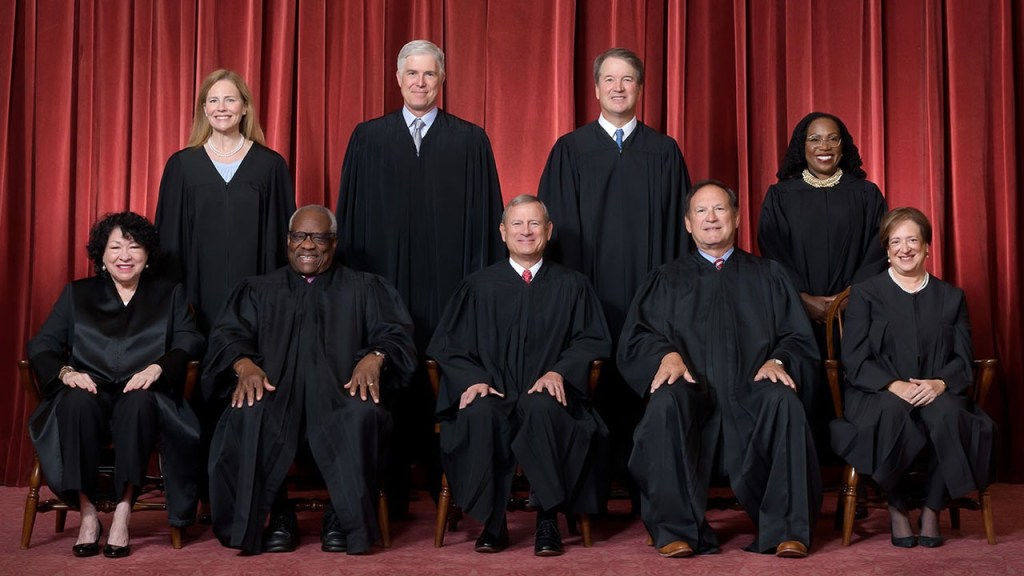
Yeah, I’m talking about those Nazgûl motherfuckers on SCOTUS. Like almost everybody I know, I spent yesterday vacillating between 1) feeling depressed and helpless and 2) wanting to set fire to the entire combustible world. The decision yesterday that POTUS (and Trump in particular) is essentially above the law was appalling and frightening, but the fact that it was delivered in smug terms by the most conspicuously corrupt and openly partisan SCOTUS in history was insulting. It’s like they’re standing there, grinning in their black robes, saying “Fuck yeah, we’re corrupt. And ain’t nothing you plebs can do about it.”

Justice Sotomayor, in her properly raging dissent, wrote, “in every use of official power, the President is now a king above the law.” And she’s right. That whole notion that nobody is above the law has gone straight down the porcelain facility. This is an unprecedented fuckwankery. This is deep fuckwankery; fuckwankery down at the cellular level. I mean, the spouses of two of the Justices (Alito and Thomas) openly supported the insurrection/insurrectionists, and yet those two tainted pricks didn’t have the fundamental sense of decency to recuse themselves from the case.

What makes this even more galling is the fact that those arrogant motherfuckers on SCOTUS were put on the bench by partisan politicians who represent a minority of US citizens. A combination of partisan gerrymandering, voter suppression, and the absurdity of the Electoral College means that the US is largely ruled by the minority. And in recent years, that minority cheated, lied, and wriggled around enough to install three partisan hacks onto the SCOTUS bench.

Wipe the smiles off the faces of 6 of these corrupt wankers.

Every single one of the Justices sitting on this SCOTUS testified under oath that they respected stare decisis, the legal concept that courts should follow precedent. At least six of them lied about that. This Court has largely shat all over precedent. For almost half a century, Roe guaranteed a woman’s right to choose. That’s gone. The Bakke decision on race-conscious admissions in higher education was the law of the land for almost as long. Not any more. For 40 years, Chevron — Jesus suffering fuck, people, there have been 70 SCOTUS and some 17,000 or so lower court cases based on Chevron, which states courts need to defer to the experts in various regulatory agencies when deciding how to interpret a law. A judge probably doesn’t know enough to decide what level of exposure to a certain chemical or substance would be harmful to a child. A judge probably doesn’t have a fucking clue about the long term effects of effluent run-off from a hog containment farm into a local river upstream from a small town. Experts need to decide this shit, not judges. But nope, this SCOTUS has turned that power over to elected or appointed judges.

Wait…I forgot bribery. Last week, this SCOTUS (and I am NOT MAKING THIS UP) made the bizarre decision that while it’s illegal for a public official (like, say, a mayor or a member of Congress, or possibly a judge) to accept a bribe, it’s perfectly for fine for them to accept a gratuity. A bribe is the offer of money (or something of value) from a person/entity before the public official makes a decision affecting that person or entity. A gratuity is accepting the same fucking thing after the decision is made. Seriously, the Court says bribes are bad but gratuities are okay. This decision was written by the Justice whose massive credit card debt was mysteriously paid off before he was nominated. You know who I’m talking about–the guy reliably accused of sexual assault. That guy. (Okay, Kavanaugh.)

If you’re reading this hoping that at the end I’ll suggest some way to make you feel better about the situation…sorry. If you’re hoping I’ll cobble together ideas for a way forward, or maybe offer some practical advice on how to minimize the damage…nope. Maybe tomorrow or at some point in the future. For now, all I have to say is let yourself be angry or depressed for a while. Maybe just be numb for a while.

But pretty soon we’ll need to get over it and resist. Resist in any way we can. Resist in every way we can. But today it’s literally raining here in the heartland, and for today that’s fine.

fairness

Try to imagine this. A nation in which entities licensed to broadcast news or entertainment to the public were obligated to set aside a certain amount of their broadcast schedule to discuss controversial matters of public concern–and to do so in a way that included different perspectives.

Let’s say there was a television network called Really Good TV. To keep its broadcast license, RGTV created a regularly scheduled program called Really Important Stuff. And let’s also say there was a public controversy involving…I don’t know, maybe the overpopulation of parrots. RGTV’s Really Important Stuff show might do a segment in which people would discuss whether overpopulation of parrots was a critical issue, and if it was, how it might be handled. They’d include folks who very much enjoyed all the parrots and didn’t think it was a problem, and folks who totally fucking hated parrots and felt they should be poisoned at government expense, and folks who felt the best solution to parrot overpopulation was to allow them to be hunted for sport, and folks who felt parrots should be captured and neutered and released back into the city. Every main point of view would be included in the discussion, and viewers would be allowed to evaluate those positions and make up their own minds.

Reader, we actually used to live in that nation. We really did.

In 1927, Congress decided the agency that regulated federal communications (back then it was the Federal Radio Commission) should only issue broadcast licenses when doing so serves the public interest. Not private interests, not corporate interests, not the interests of the rich, not the interests of a particular political party. The public interest. In 1949, the Federal Communications Commission (which expanded the FRC to include television) created a policy that required the holders of broadcast licenses to 1) present controversial issues of public importance AND 2) to do so in a manner that fairly reflected differing viewpoints. It was called, appropriately, the Fairness Doctrine.

And hey, it worked. Television and radio stations were allowed to decide for themselves HOW to implement the doctrine; they could do it through news segments, or public affairs shows, or through editorials. Nor were the stations required to provide equal time for the various opposing views. But they had to devote some time to important public issues and they had to present contrasting viewpoints.

It didn’t always work smoothly, but it worked. In 1969, for example, the FCC yanked the broadcast license from WLBT television in Mississippi (an NBC affiliate station) because the station’s overtly segregationist politics shaped their decision to refuse to broadcast NBC’s coverage of the civil rights movement.

News media ‘free speech’ includes misleading information & lying.

Think about that for a moment. A local NBC news station refused to show news coverage of the civil rights movement created by NBC–coverage of a nationally important topic–because the owners/staff of that local station opposed civil rights. That local station didn’t have to agree with the coverage (and clearly, they didn’t; WLBT broadcast the Citizens’ Council Forum, a syndicated series of fifteen-minute interviews with segregationists). But they needed to present the issue fairly to their audience, about half of which was Black. When the station refused, the FCC punished them by taking away their broadcast license.

It was a powerful statement by the government that important public issues broadcast on public airwaves needed to be addressed fairly, and that meant including differing perspectives held by the public.

What happened to the Fairness Doctrine? One of the two dominant political parties felt oppressed by having to present opposing points of view. Care to guess which one?

President Ronald Reagan, in the mid-1980s, appointed three new commissioners to the FCC (the fourth had been appointed by Richard Nixon). They issued a report stating the Fairness Doctrine actually harmed the public interest by violating the 1st Amendment protection of free speech. Seriously. The FCC commissioners argued the free speech rights of political entities were diminished by requiring opposing views to be presented to the public. They voted unanimously to abandon the Fairness Doctrine.

Congress, believe it or not, disagreed with the FCC decision. It’s difficult to imagine now, given the current level of hyper-partisanship, but back then both houses of Congress, Republicans and Democrats alike, voted to enact the Fairness Doctrine into law (previously it had only been an FCC policy).

Not surprisingly, Reagan (who, again, engineered the destruction of the Fairness Doctrine) vetoed the legislation. Congress failed to overturn the veto. The FCC decision was implemented. By the summer of 1987, the Fairness Doctrine was dead. Dead as the Wicked Witch of the East–not only merely dead, but really most sincerely dead.

About a year later, in the summer of 1988, radio broadcaster Rush Limbaugh began his new radio show at WABC-AM in New York. In 1991, Democrats attempted to revive legislation to make the Fairness Doctrine law. That failed when President George H.W. Bush announced he would veto the law. In 1996, Rupert Murdoch and former Republican Party political strategist Roger Ailes launched Fox News.

Do the math.

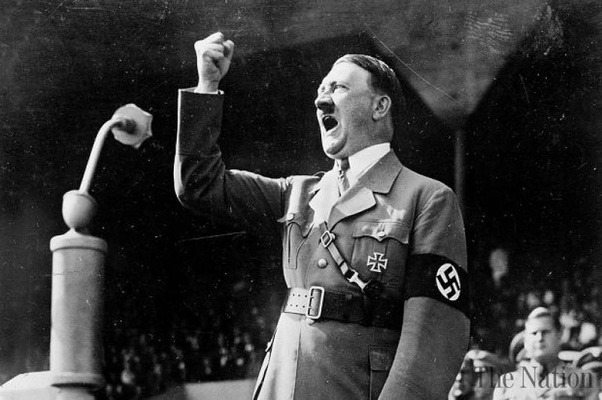
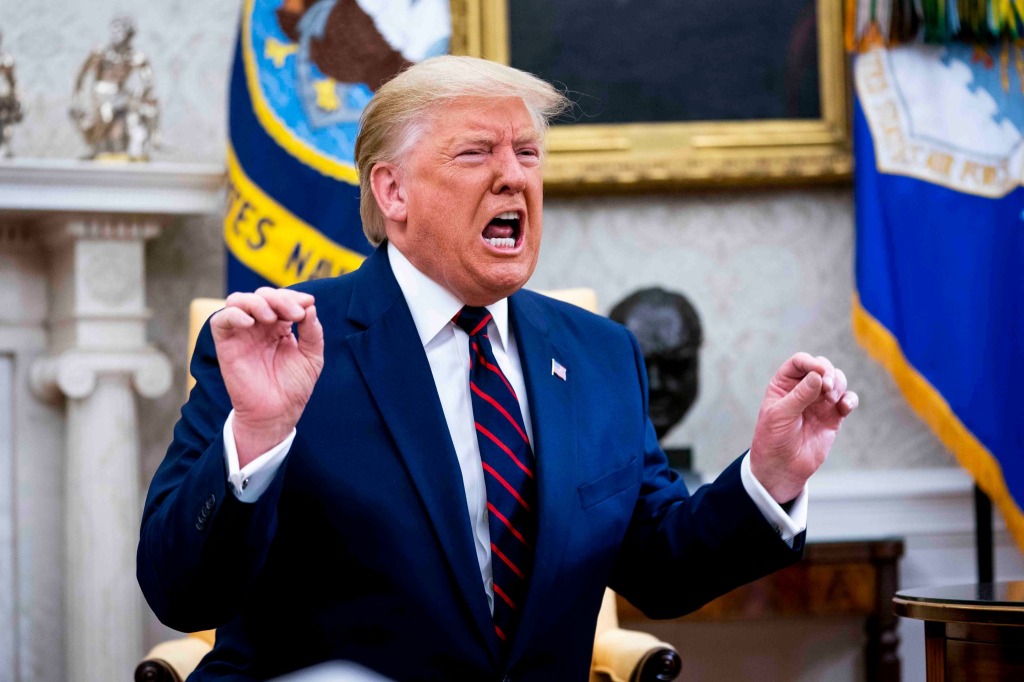
hitler/trump — not just a cheap shot

A couple of years ago, when I was dodging the work I should have been doing, I decided to research the authenticity of a quotation that frequently appeared online. I’d seen it attributed to both Hitler and Joseph Goebbels. You’ve probably seen it too.

Make the lie big, make it simple, keep saying it, and eventually they will believe it.

There doesn’t seem to be any evidence that either Hitler or Goebbels said it, though they certainly believed it and acted on it. However, a very similar line appeared in a classified World War 2 psychological profile of Hitler:

People will believe a big lie sooner than a little one; and if you repeat it frequently enough people will sooner or later believe it.

I downloaded the report (which was declassified in 1968) to read later…and promptly forgot about it. Until yesterday, when I stumbled on it again while deleting old files. I decided to glance through it before deleting it…and lawdy.

This is what happened. Back in late 1943 or early 1944, the Office of Strategic Services (the US intelligence agency during World War 2, which eventually morphed into the CIA) tasked a psychoanalyst named Walter Langer to prepare a profile on Adolf Hitler. The report was “an attempt to screen the wealth of contradictory, conflicting and unreliable material concerning Hitler into strata which will be helpful to the policy-makers and those who wish to frame a counter-propaganda.”

We’ve all seen a lot of comments comparing former POTUS Comrade Donald Trump to Hitler. It’s easy to either nod and agree or dismiss the comparison as overreach. But when you read the report–which, remember, was completed before the end of the war, when Hitler was still alive and in power–it’s uncanny how closely Langer’s evaluation of Hitler resembles Trump. The report itself has six sections: 1) Hitler as he believes himself to be, 2) as the German people know him, 3) as his associates know him, 4) as he knows himself, 5) a psychological analysis and reconstruction, and 6) Hitler’s probable behavior in the future. Only some of those could be applied to Trump. The quotations are taken directly from Langer’s report (which can be found here).

Hitler/Trump as he believes himself to be:

Many people have stopped and asked themselves: “Is this man sincere in his undertakings or is he a fraud?” Certainly even a fragmentary knowledge of his past life warrants such a question…. [A]ll of his former associates whom we have been able to contact, as well as many of our most capable foreign correspondents, are firmly convinced that Hitler actually does believe in his own greatness.

It makes little difference whether the field be economics, education, foreign affairs, propaganda, movies, music or women’s dress. In each and every field he believes himself to be an unquestioned authority.

He has fallen in love with the image of himself in this role and has surrounded himself with his own portraits.

Does that sound like Trump? Oh, absolutely.

Hitler/Trump as the people know him:

[F]rom a physical point of view, is not, however, a very imposing figure.

[His] personal appearance… it is safe to assume that this has been greatly tempered by millions of posters, pasted in every conceivable place, which show the Fuehrer as a fairly good-looking individual with a very determined attitude. In addition, the press, news-reels, etc., are continually flooded with carefully prepared photographs showing Hitler at his very best.

[H]is speeches were sinfully long, badly structured and very repetitious. Some of them are positively painful to read but nevertheless, when he delivered them they had an extraordinary effect upon his audiences.

[B]y the time he got through speaking he had completely numbed the critical faculties of his listeners to the point where they were willing to believe almost anything he said. He flattered them and cajoled them. He hurled accusations at them one moment and amused them the next by building up straw men which he promptly knocked down. His tongue was like a lash which whipped up the emotions of his audience. And somehow he always managed to say what the majority of the audience were already secretly thinking but could not verbalize.

[H]is refusal to permit ordinary scruples to get in his way is given as a sign of his greatness.

Yeah, that’s Trump.

Hitler/Trump as his associates know him: much of this section contradicts comparisons with Trump. Hitler, it seems, was a hard worker who was actually well informed about the workings of government. Apparently, he was generally thoughtful with his underlings, making sure they took breaks and ate well–even to the point of refusing to eat until everybody in the room had been served. He was also, it seems, personally courageous. However, there are a lot of aspects of Hitler’s personality that are equally Trumpian. For example:

H]is ability to persuade others to repudiate their individual consciences.

His primary rules were: never allow the public to cool off; never admit a fault or wrong; never concede that there may be some good in your enemy; never leave room for alternatives; never accept blame; concentrate on one enemy at a time and blame him for everything that goes wrong.

He has a passion for the latest news and for photographs of himself…. Very frequently he becomes so absorbed in the news or in his own photographs that he completely forgets the topic under discussion.

Almost everyone who has written about Hitler has commented on his rages. These are well known to all of his associates and they have learned to fear them…. [H]is behavior is still extremely violent and shows an utter lack of emotional control. In the worst rages he undoubtedly acts like a spoiled child who cannot have his own way and bangs his fists on the tables and walls. He scolds and shouts and stammers and on some occasions foaming saliva gathers in the corners of his mouth.

It must not be supposed, however, that these rages occur only when he is crossed on major issues. On the contrary, very insignificant matters might call out this reaction. In general they are brought on whenever anyone contradicts him, when there is unpleasant news for which he might feel responsible, when there is any skepticism concerning his judgment or when a situation arises in which his infallibility might be challenged or belittled.

We all know how he can say something one day and a few days later say the opposite, completely oblivious to his earlier statement. He does not only do this in connection with international affairs but also with his closest associates.

[H]e seems to lack any real sense of humor. He can never take a joke on himself.

That’s so totally Trump.

Hitler/Trump as he knows himself and Psychological analysis and reconstruction: These sections are devoted to a Freudian psychoanalytic view of Hitler’s personal life and history. It’s about his family, his youth, his military service in WW1, his rise to power, his relationships, and his sexuality and sexual proclivities. They’re full of Freudian concepts and interpretations (like “Unconsciously, all the [Oedipal] emotions he had once felt for his mother became transferred to Germany.”) and there’s a lot of focus on Hitler’s probable issues with childhood toilet training trauma. I mean, this was the early 1940s–Freud still wore the biggest hat in the field–so we have to expect this stuff. I suppose we could include Hitler’s alleged indulgence in urine play as a similarity with Trump, but I’m not sure that anybody’s particular kink is terribly relevant.

What MIGHT be relevant, though, is this observation by Langer:

Hitler’s outstanding defense mechanism is one commonly called projection…his own personal problems and conflicts were transferred from within himself to the external world where they assumed the proportions of racial and national conflicts.

We’ve all heard that every accusation made by Trump is also a confession. It’s interesting to read, to be sure, but while there are comparisons to be made with Trump’s personal life and history, the comparisons are rather generic.

Hitler’s/Trump’s probable behavior in the future: Langer outlined eight possible/probable scenarios for Hitler’s fall.

  1. He said Hitler might die of natural causes, but considered that a remote possibility. Given Trump’s diet and lack of exercise, this possibility is less remote in his case.
  2. Hitler might seek refuge in a neutral country. Langer also considered this to be extremely unlikely. Trump, who has property in other countries, might be more open to this.
  3. Hitler might get killed in battle. Langer thought this was a real possibility. He said it would be undesirable from the US point of view, since it would make Hitler a martyr. As for Trump, ain’t no way he’d martyr himself.
  4. Hitler might be assassinated. Langer felt Hitler was too well protected for this, and thought it would be undesirable–again, that martyrdom business. It also seems an unlikely scenario for Trump.
  5. Hitler may go insane. Langer meant more insane. Incapacitated by mental illness. Which could also happen to Trump, as his emotional defenses collapse.
  6. German military might revolt and seize him. Langer believed as Hitler’s behavior became more neurotic, a point might be reached where the military confined him. As for Trump, nobody in the MAGAverse has the courage to seize him.
  7. Hitler may fall into [the US military’s] hands. Yeah, no, doesn’t apply.
  8. Hitler might commit suicide. Langer said this was the most plausible outcome. And hey, that’s what Hitler did. I won’t comment further on this possibility.

Langer’s profile concluded with this comment:

[Hitler’s} mental condition will continue to deteriorate. He will fight as long as he can with any weapon or technique that can be conjured up to meet the emergency. The course he will follow will almost certainly be the one which seems to him to be the surest road to immortality and at the same time drag the world down in flames.

Again, that’s totally Trump. Willing to burn the entire combustible world in a fit of pique if he can’t get his way.

It’s weird and disturbing that Walter Langer, 80+ years ago, writing about a man “the world has come to know…for his insatiable greed for power, his ruthlessness, cruelty and utter lack-of feeling, his contempt for established institutions and his lack of moral restraints” seems to have provided us with some pretty solid insight into the psyche of Donald Trump.