It’s been a month since I’ve written anything on this blog. A whole month. I used to write something here 2-3 times a week. I’ve never gone this long without writing something for the blog. Never. Why is this happening?
Here’s why: Trump trauma. Ever since the election, I’ve been…I don’t know. I can’t quite find the right word to describe this feeling. And it’s not just Trump (though Trump alone is enough); it’s also the collection of incompetent fascist nitwits he (and a complicit GOP Congress) placed in critically important political offices. That means that ever single day, including weekends, there are at least half dozen things so outrageous that they deserve a scathing blog post. And I just don’t have the energy to do that right now.
I mean, if Russia had done what TrumpCo has done to the United States (and for what it’s worth, you can argue Russia IS responsible), you’d say it was an act of war. In a mere one hundred days, TrumpCo has kneecapped the US. They’ve completely shredded our reputation for intelligence gathering and sharing; they’ve ignored basic operational security; they’ve gutted our ability to respond to climate disasters while simultaneously reducing the resources needed to warn the populace about those disasters; they’ve rolled back food testing, increasing the likelihood of contamination; they’ve made it easier to evade taxes and harder for the IRS to collect taxes and prosecute tax cheaters; they’ve cut spending on both medical research and Medicaid, which will certainly lead to increased childhood and elderly mortality; they’ve made air travel less safe; they’ve not only limited civil rights, they’ve actually rescinded civil rights that had already been established; they’ve sent out masked goon squads to kidnap and secretly detain people legally in the US; they’ve…well, you get the idea. TrumpCo has basically shit all over the US Constitution, and done it openly.
It’s overwhelming.
You know what? That’s the word I couldn’t think of when I began writing this post. That’s exactly why I haven’t written anything here for a month. I’m not just whelmed (from the Middle English hwielfan, meaning “to turn upside down (as a ship); to roll over and over”), I’m totally and completely overwhelmed. I’m whelmed the fuck over.
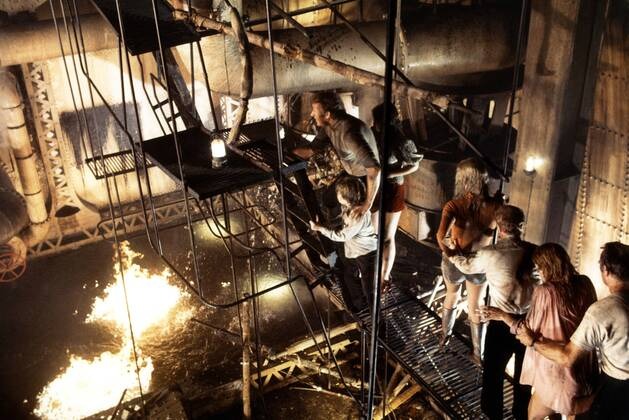
Stunned, exhausted, bedraggled survivors trying to escape a capsized ship.
I feel like the United States has been capsized, like we’re caught up in some political Poseidon Adventure. It’s as if the ship of state has been hit by a rogue wave and turned completely upside down, and we the people have to crawl and fight our way through the burning, topsy-turvy, almost unrecognizable wreckage of the nation we knew in an attempt to reach what used to be the bottom of the ship, hoping that somebody on the other side of the hull will be able to cut a hole through which we can escape to daylight.
Maybe that sort of rescue only happens in movies. But we have to try, right?
The concept of due process is getting a lot of attention right now, and rightly so. It’s at the heart of the Trump administration’s attempt to destroy democracy. Due process–the adherence to the laws that balance the power of the State against the civil rights and liberties of the individual–is the primary defense against the US becoming a police state.
Most folks can grasp that concept in theory, but a LOT of people have trouble with the practice itself.
I spent seven years or so as a private investigator specializing in criminal defense; I had a contract with a Public Defender program. For the most part, the lawyers I worked for represented people charged with major crimes…robbery, rape, murder, etc. I rarely told strangers what I did for a living, because it would almost always result in some variation of this conversation:
“Do you ever have a guilty client?” “Almost all of my clients are guilty.” “How can you defend a person you KNOW to be guilty?” “Because I believe in civil rights and liberties.” “But if you KNOW they’re guilty?” “They still have rights.” “But if you KNOW they’re GUILTY?” “The only way to protect the rights of the innocent is to force the State to prove guilt beyond a reasonable doubt every single time.” “Sure, you have to protect the innocent, but if YOU KNOW THEY”RE GUILTY?”
The Fifth Amendment of the US Constitution tells us No person shall…be deprived of life, liberty, or property, without due process of law. It’s really that simple. It doesn’t say ‘No citizen.’ It doesn’t say, “No white person.’ It doesn’t say, “No rich person.’ It says NO PERSON. Period. Every person who is at risk of losing their life, their liberty, or their property MUST be allowed the full protection of the law BEFORE any penalty can be applied.
“Let the jury consider their verdict,” the King said, for about the twentieth time that day. “No, no!” said the Queen. “Sentence first–verdict afterwards.”
Kilmar Abrego Garcia, who probably paid a higher proportion of his income in taxes than Donald Trump, has the right to expect the same due process of law as Donald Trump. Not because he’s been illegally detained and imprisoned (although he has), but because EVERYBODY in the US is–or should be–protected by due process. Timothy McVeigh, who killed 168 people in an act of terrorism 30 years ago yesterday, received more due process than Garcia.
I’ll also say this. As somebody who spent years helping defend the guilty, there is nothing more terrifying than an innocent client. There is so much at stake with an innocent client. Seeing an innocent person go to prison feels a hundred times worse than seeing a guilty person go free. And the ONLY way to protect the rights of an innocent person is to require the State to follow the law EVERY SINGLE TIME, even with the guilty.
As I’ve explained elsewhere, about a year ago I came across an article on some photo website that suggested looking at and analyzing your old photos as if they were made by a different person. The idea seemed a wee bit silly to me, but I was just coming out of a photographic slump…so what the hell, I thought I’d try it.
That slump is long dead now, though I suspect it had more to do with buying a camera that fits my approach to photography than with this practice of looking at old photos. That said, I’ve found some unexpected value in looking at my old photographs. I’m not learning anything new about photography (as I recall, the article was about evaluating or improving your compositional skills or something), but I’ve been surprised to find a weird sense of formality in my photos.
I don’t think of myself as being a formal photographer. I tend to shoot sparingly (I learned photography in the film era, which meant every shot cost money and I was rather poor), but quickly. I’ve been doing this photo stuff long enough that I don’t really think much when it comes to composition. I just put myself or my subject in a position that feels right, then take the photo. While I don’t believe there are any rules that MUST BE OBEYED, I do think there are some very strong photographic suggestions that ought to be considered. For example, if you’re making an informal portrait, you should be reluctant to have your subject strike a pose and you should avoid putting your subject in the center of the frame.
10;29 AM, Wednesday, October 3, 2012
Like this. This is Sakim. I’ll tell you about Sakim in a moment. First, the photo. It’s everything you don’t want in an informal portrait–stiff pose, center of the frame. But (to me, at any rate) it works as a photograph. Why? Partly because of the composition; all the lines direct your eye to him and the angle of his arms matches the angle of the light on the sidewalk. It also works partly because this genuinely represents this particular person at this particular moment.
I was noodling along the riverwalk when I saw Sakim approaching. He was wearing a black baseball cap with smiley faces on it, drinking juice from a soft packet, and walking in a sort of marching gait that I associate with psychiatric patients. I’ve worked with a lot of psychiatric patients, mostly in a prison setting. I’m comfortable encountering them in unscripted public settings. I’ve found folks with emotional issues are often eager to visit with people IF those people are relaxed around them. Of course, the opposite is also true; some folks just want to be left alone. You can’t always tell until you start visiting with them.
I don’t recall how we struck up a conversation, but based on past experience I suspect I initiated it. I do recall he had a soft, gentle, deeply accented voice. We spoke about the weather (it was warm for October, but Sakim said it was chillier than where he was from) and his juice (he didn’t mind that his juice was warm). He wasn’t entirely comfortable having a conversation, but I had the feeling he didn’t really want the conversation to end. My sense was that he didn’t quite know how to have a casual conversation and was always concerned that he wasn’t doing it right.
After a few moments I asked if I could take his photo and he agreed. He took his cap off and stuck it down the front of his pants (which was disappointing–I really wanted him to leave it on, but I didn’t want him to feel like he’d made a mistake by taking it off). Then he struck this awkward pose. He had the sun to his back, which left his face in shadow, so I asked if we could trade places. He struck the same pose again. I told him he could relax. He said he was relaxed. Without lifting the camera to my eye, I recall asking him to take a couple steps this way and that way until it felt like he was in the right position, then I raised the camera and took a single shot. I showed him the photo and thanked him; he said “Okay” or something, then he turned around and went marching off.
Sakim never smiled the entire time we talked. Never showed any emotional affect at all. The entire encounter couldn’t have taken more than 3-5 minutes. I left feeling like I’d sort of failed him somehow.
When I got home and looked at the day’s photos, I almost deleted this one. I was only looking at Sakim and thinking about his awkward attempt to engage with a stranger. It’s NOT a good photo of him. He looks a little sad and distant. But even though it violated my sense of informal portraiture, and even though it’s not a good photo of Sakim, I felt it still worked as a photograph. Despite that, I’m not sure I ever posted it on social media.
If nothing else, this practice of looking at old photographs has reminded me of my 3-5 minutes with Sakim. It’s been almost 13 years. I hope he’s okay.
Like a million other concerned people, I attended the local Hands Off! protest yesterday. I wasn’t sure how many people would show up, considering it was a cold, blustery day (about 42F with steady 14mph winds and gusts about twice that). I thought we might still get a thousand people. Maybe.
The local news estimated the attendance to be around 7,500, and they tend to be conservative in their estimates. It was an eclectic crowd with a variety of concerns. Climate change, veteran’s benefits, social security, health care, education, trans rights, social justice, the court system, immigrant’s rights, Ukraine, and more. But there was absolutely universal condemnation of Comrade Trump, Elon Musk, and DOGE.
The protest began, as all protests do, with speeches. I confess, I paid little attention to the actual speeches, though I was pleased to hear the crowd cheering and applauding. During the speeches, I left the main crowd and moved around the fringes. Why? Because there are folks who want to protest and make their voices heard BUT for any of a thousand reasons may be uncomfortable with crowds.
The folks on the fringe of the protest were pretty much the same people who made up the rest of the crowd. They were mostly white (this IS Iowa, after all) but beyond that they seemed to be a fairly representative sample of the protesters. There were young kids (some in strollers), and working class folks, and church-goers, and goths, and office workers, and trans folk, and wine moms, and college students, and old folks (some using walkers), and union members, and passers-by who just wanted to know what the hell was going on.
One of the things I found most interesting about the event was that everybody was 1) happy and 2) pissed off. They were pissed off enough to give up their Saturday to carry signs and listen to speeches and shout for Elon Musk to be deported and for Donald Trump to be impeached and to take over one of the main city streets and march a mile or so in cold, blustery weather to the state capitol building, where they listened to still more speeches. But they were also happy and laughing and clearly delighted to be with others who agreed with them. There was a tremendous sense of relief, and a sense of urgency, and a sense of something approaching hope and optimism. That all seems contradictory, but it didn’t feel like it.
Nobody there thought this march–or any of the hundreds of other marches–was going to change anything. Nobody there was that innocent. But it felt like there was a shared commitment to changing the way we govern ourselves. There was a very clear feeling of joy at the chance to express themselves, to carry signs and chant slogans and shout out their frustration and rage and hope.
It was also clear that this was the first time a lot of these people had attended a protest. At the beginning, there was a tentativeness to the crowd. A lot of looking around to see if anybody was watching, if anybody was upset or offended by what they were doing. This was especially clear when the organizers asked them to take to the street and march up to the capitol, where we’d join up with a second protest. We are a car-brained culture, and these people were unsure about the propriety of taking over a street without permission.
But they did it. And when cars approached the head of the march, they had to stop and make a U-turn. At the back of the march, a lone police officer in a squad car followed to insure no drivers disrupted the march from behind. Within a few hundred yards, this crowd of normal Iowans were chanting, “Whose street? OUR STREET!” There was a palpable sense of released anger and resentment and liberation. It really was OUR street.
When the crowd took to the street, these two women with their “We the People” sign led the way. It seemed appropriate. Because it’s true. We, the people, are massively pissed off. And yesterday, we let those malignant fuckwits of the Trump administration know it.
I took a lot more photos of (and in) the crowd itself. But here I wanted to show the people who, at least at the beginning of the day, hovered around the fringe of the protest. The people who usually get overlooked. The people who don’t make the highlight reels or the news reports. As so many protest signs said, you know things are grim when even the introverts show up.
You’ll notice that most of these photographs are of women. You’ll notice they’re not drawing attention to themselves. They’re drawing attention to the signs they’re carrying. Signs they mostly made themselves. There’s a song from the 1950s resistance movement in South Africa that goes, “Wathint’ abafazi, wathint’ imbokodo.” This translates as:
When you strike the women, you strike stone.
We’ve been striking stone for decades. Centuries. Eventually, it’s going to spark a fire that will incinerate the patriarchy. It may still be a long time coming, but it’ll happen. And when it does, women like the ones in these photos–the ones quietly occupying space at the fringe–they’ll have helped light that spark.
Okay, first off, I admit I’m confused. I mean, I understand that Donald Trump, with the assistance of a cadre of feral Christo-fascist authoritarians and the support of a cartoonist collection of buffoons, is conducting an aggressive frontal assault on the US Constitution. And so far it’s been mostly effective.
Unlike a LOT of folks, I’m inclined to think Trump has a plan. It’s a very simple, very very stupid, and very selfish plan, to be sure. It’s the sort of plan you’d expect from a cartoon villain. But it’s still a plan. As I see it, Donald Trump’s plan is as follows:
Make everybody dependent on the whims and wishes of Donald Trump.
It’s ridiculous, isn’t it. What Trump really wants, of course, is loyalty and respect. Two things he’ll never get. He’ll never get the respect he wants (and thinks he deserves), and I suspect he knows that. Nor will he ever get real loyalty, because loyalty is reciprocal; you earn loyalty by being loyal to others. Trump is loyal to nothing and nobody. Who’s going to respect of be loyal to this guy?
Since he can’t/won’t get the respect and loyalty he truly wants, Trump has to settle for a shabby substitute–unquestioned obedience. The problem for Trump, even as POTUS, is that there are HUGE intentional limits to presidential obedience in a representative democracy.
The president’s actual job is to preside over the government, not to rule it. ‘Preside’ literally means “to sit in front of.” The president is basically like an orchestra leader. In order for Trump to command unquestioned obedience, he has to first weaken or destroy the Constitutional constraints on presidential power.
That’s exactly what he’s doing. In his first term, Trump converted the entire Republican Party to so-called MAGA loyalists (I say ‘so-called’ because many/most of the GOP are just sycophantic cowards or craven opportunists, not actual loyalists). He also stacked the Supreme court with ‘loyalists’. The only check on his authority came from the professionals who occupied the Cabinet posts and the various governmental agencies. Now, in his second term, he’s replaced the Cabinet secretaries and the heads of every government agency with more so-called loyalists. He’s basically removed or degraded almost every federal administrative constraint on his authority (there are still some federal judges who remain independent, though they’re under attack now).
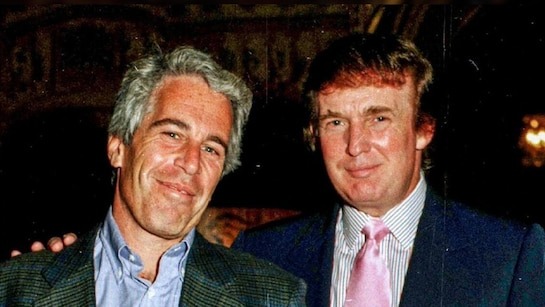
This guy? Powerful politicians and institutions are afraid of this guy? This fucking guy?
There are a few other social constraints that can challenge the president: independent law firms, universities, business interests, and independent news sources. Trump is making every effort to hobble or undermine them, threatening retaliation either in the form of investigations or by removing federal financial aid and federal contracts. In order to avoid this sort of persecution, these social institutions are being required to appeal to Trump personally. To humiliate themselves by publicly kissing his ring. You want to avoid tariffs on products you need? Humbly ask Trump to remove them for YOUR company. You want federal financial aid for teaching or research? Humbly ask Trump to restore the funding he denied. You want to practice law or receive federal contracts? Humbly ask Trump to overlook any earlier opposition and publicly promise to support him. You want access to the Trump administration as a news source? Humbly agree to refer to the Gulf of Mexico as the Gulf of America. What kind of person or institution would humble themselves before this guy?
But hey, it’s working. Some large law firms and some universities have already compromised themselves; many news agencies have modified their coverage of Trump and are parroting his bullshit; a lot of businesses threatened by Trump’s trade practices are considering personal appeals to Trump and praising his harmful policies. Intimidation works. But c’mon, how could anybody be intimidated by this guy?
I find truly astonishing that so many people and institutions are afraid of this guy. He’s a cartoonish nitwit; he’s more a malignant Elmer Fudd than an evil genius. The sheer mass of his ignorance could bend light. He’s ten pounds of racist bullshit in a five pound bag. He’s a coward and a liar. People are afraid of taking on this guy?
Iron Photographer, qu’est-ce que c’est? Think Iron Chef…only with photography. Iron Chef, if you’re not familiar with it, was probably the original televised cooking competition. Starting back in the 1990s, the show required contestants to improvise a multi-course meal around a surprise theme ingredient–asparagus, for example, or eel, or peaches. The chefs had to be creative and resourceful.
Back in 2006, at the dawn of the digital photography era, in a Flickr group called Utata, we decided to purloin that concept and apply it to photography. Instead of a theme ingredient, Jamelah Vincent (@jamelah.bsky.social) and I provided three photographic elements and challenged our group members to use them to create an artful photograph. After more than 250 Iron Photographer challenges, we retired the project.
1) Something round, 2) a reflection, 3) black-and-white – Greg
Now we’re bringing Iron Photographer back on Bluesky. On the 1st and 15th day of each month, we’ll post the three elements of a new IP challenge.
Unlike the Iron Chef model, Iron Photographer is NOT a competition. There are no winners, no losers, no judges. It’s simply a challenge; an invitation to stretch your imagination and creative skills.
Usually (but not always) the challenge is comprised of two compositional elements and one artistic element. For example, 1) something with stripes, 2) a food item, 3) shot slightly out of focus. The challenge is to find a way to photograph those three elements in an expressive way. It doesn’t have to be Art; but it should be artful, if that makes sense.
1) something with stripes, 2) a food item, 3) shot slightly out of focus – Greg
Every photographer interprets the compositional elements for themselves. You decide on the food item (I chose an apple; you might choose an egg, or a chuck roast, or some tofu, or a handful of chia seeds), you decide on the thing with stripes (I picked a shirt; you might choose a lawn chair, or a beach towel, or a tabby cat). The compositional elements are usually broad and expansive enough to provide the photographer with lots of options. You can almost always find–and photograph–the IP elements in your home or apartment.
The artistic element, on the other hand, is meant to be fixed, though it’s often flexible. You decide what “slightly out of focus” means, but the shot MUST be slightly out of focus. If the third element is ‘Dutch angle,’ you decide HOW tilted the frame should be. On the other hand, if the artistic element is ‘square format’ then the format has to be square. Not squarish; square.
Jamelah note: Sometimes you just rip off Greg’s idea because you can’t help yourself.
1) something with stripes, 2) a food item, 3) shot slightly out of focus – Jamelah
That’s basically it. That’s all there is to it. Iron Photographer is really that simple. And really that complex and convoluted, because while the photograph has to feature the selected compositional elements, it’s not limited to those elements.
For example, in the photograph below the three elements are: 1) a plastic bag, 2) the color red, 3) shot in square format. Again, the only concrete element is the square format. You decide what constitutes a plastic bag and you decide on the red thing, but you can also include any elements you think might contribute to the photo.
1) a plastic bag, 2) the color red, 3) square format – Greg
I chose a weirdly racist plastic wrapper of a fortune cookie. Is that really a bag? I say it has enough ‘bagness’ to qualify. You may disagree. For the red element, I used some mesh that held some apples from the fruit market. But the purple latex glove? The bit of blue ribbon? I included that stuff simply because it pleased me.
I found Iron Photographer to be a creative Get Out of Jail Free card. You can do whatever you want. It doesn’t have to make sense.
1) Self portrait, 2) umbrella, 3) in a bathroom – Jamelah
Let me repeat that: it doesn’t have to make sense. That, to me, has always been the most wonderful thing about Iron Photographer. There’s NO LOGICAL REASON FOR THESE PHOTOGRAPHS TO EXIST. There’s absolutely no earthly reason for Jamelah to balance herself on the side of a bathtub with an umbrella–except for Iron Photographer. If you participate in this gig, you WILL take photographs nobody has ever taken before. Guaranteed.
Jamelah Note:One thing about Iron Photographer, aside from the other things, is that if you let it, it’ll push you to try things that don’t seem like a great idea, but you just want to see — maybe I could do this? For example, I tied a ladder to the ceiling because I wondered if I could tie a ladder to the ceiling. When the elements for this particular challenge — 1) an umbrella, 2) a chair, and 3) Polaroid-ish — came together, I immediately started thinking about umbrellas open indoors and bad luck and then I spent an afternoon using jute twine to tie a pretty damn heavy wooden step ladder to some plant hooks in my living room ceiling and wound up with this. As I like to say, stand back. I’m being weird.
1) an umbrella, 2) a chair, and 3) Polaroid-ish – Jamelah
You’ll also find yourself thinking about the elements. How do you interpret them? How can you combine them in an artful way? A table, something tough, weird shadows. A table is a table, and shadows are shadows…but what does ‘something tough’ mean? What is tough? An old boot, sure. Maybe a 3000 piece jigsaw puzzle. Or a musical score that’s difficult to play. What about a piece of an old movie poster with legendary tough guy Jimmy Cagney? YOU get to define ‘tough.’
1) something tough, 2) a table, 3) weird shadows
Iron Photographer encourages you to try new and weird things. It prompts you to find creative ways to combine disparate photographic elements that may not appear to go together. It gives you permission to try crazy shit. Iron Photographer is less about taking photographs than making photographs.
And best of all, photographers at any skill level can participate. Beginners, advanced amateurs, professionals, it doesn’t matter; all you need is some imagination and a camera.
Jamelah Note: Iron Photographer offers an opportunity to learn new techniques and figure out how to make them work. Never tried noir or processing in sepia or cinematic aspect ratio or lightpainting? Iron Photographer will give you a chance.
By now, everybody is aware of the colossal fuck-up in which senior Trump national security officials conducted a high level discussion about launching at attack in Yemen using…and it sounds so stupid to write this, but it’s true…using a messaging platform that IS NOT approved for exchanging classified or secret intelligence.
These weren’t low-level aides we’re talking about. This was Trump’s Vice President, his Director of National Intelligence, his National Security Adviser, his Secretary of Defense, his CIA Director and his Chief of Staff. Oh yeah, and the editor of The Atlantic. The fact that these people had this discussion on a commercially available cell phone app is scandal enough. But it’s just ONE OF MANY scandals revealed by this fuck-up.
For example, Trump’s national security team isn’t quite sure if Trump has actually ordered the attack. They were discussing the timing of the attack–when the attack should take place–when Trump’s Chief of Staff says, “As I heard it, the president was clear: green light.” Seriously, this attack took place when it did because Stephen Miller interpreted some comment from Trump as a ‘green light.’ Apparently nothing was signed; apparently no official record exists authorizing an attack on a foreign nation. In any normal administration, that would be unthinkable. But this is Trump.
Another thing. One of the members of Trump’s national security team, Steve Witkoff, was in Moscow at the time (he’s Trump’s Ukraine negotiator) meeting with Putin and his people. Let me just say that again. This guy was part of a group chat discussing highly sensitive information involving the military’s attack capabilities, using an unapproved app on a cell phone while waiting for a meeting with Vlad Putin IN MOSCOW. In any normal administration, that would be unthinkable. But this is Trump.
There’s more. During this astonishingly stupid group chat on a non-secure cell phone, Trump’s Director of the Central Intelligence Agency, John Ratcliffe, used the name of an active intelligence officer. He basically outed a working spy, which is a criminal act. In any normal administration, that would not only be unthinkable, but would lead to criminal charges. But this is Trump. His Attorney General and Director of the FBI will almost certainly refuse to investigate the matter, let alone bring criminal charges.
“I don’t know anything about it.”
And if that’s not scandal enough, when confronted by news media about the incident, Trump said he wasn’t aware of it.
“I don’t know anything about it. You’re telling me about it for the first time.”
This is Trump, so that’s almost certainly a lie. Almost certainly, also because this is Trump. It’s entirely possible his national security team 1) had decided Trump probably intended to order an attack on Yemen and didn’t bother to get the decision confirmed, 2) were too lazy or incompetent to use secure communications systems to organize the attack, 3) and when it became public that they’d not only used wildly inappropriate and insecure tech to discuss the attack BUT ALSO INCLUDED A FUCKING CIVILIAN WHO WAS THE EDITOR OF A GODDAMN NEWS MAGAZINE, they decided NOT to tell POTUS that they’d fucked up. Which would mean Trump can’t trust his own hand-picked national security team to keep him informed or tell him the truth. Which is entirely possible. Although it’s more likely Trump just lied about not knowing, because that’s what he does.
In any normal administration, an incident like this would lead to mass resignations and/or terminations as well as criminal charges. But this is Trump.
Right now, it appears the Trump administration is attempting to put the blame for all this on National Security Adviser Mike Waltz, who set up the ‘group chat’ and accidentally included the editor of The Atlantic. But every single person who participated in the discussion should have known the proper protocol; they should have objected to having the discussion outside a sensitive compartmentalized information facility (SCIF); they should have refused to participate.
What will happen? Who knows? Democrats will be outraged, but will they actually DO anything? Who knows? Will anybody be held accountable for such a colossal fuck-up? Who knows? It’s possible that this scandal, like every Trump scandal, will be buried beneath the next cascade of scandal. It’s possible nothing at all will happen; nothing will change.
Because this is Trump. Nothing is ordinary anymore. No rules apply, no norms are maintained, no standards exist. There is only Trump and his cadre of trolls, banging around randomly, ignoring actual governance in their pursuit of performative trolling.
Let’s face it, Donald Trump is well on his way to turning the United States into a mafia state. It’s not just a matter of corrupt officials using governmental power and authority to enrich themselves (and their families and friends) while punishing poor and marginalized people. It’s not just manipulating the system so public services can be turned into private ownership for the profit of the already-wealthy.
It’s also the petty authoritarian mindset, that mobster code that demands unquestioned loyalty and obedience. Any disagreement, any hesitation, any refusal to obey is an offense that can’t be tolerated. Everybody must abase themselves before Trump. Everybody must kiss the Godfather’s ring. Failure to do so leads to punishment.
Back in February, during a conference of Governors, Trump threatened Janet Mills, the Democratic governor of Maine, over her public refusal to issue an unconstitutional ban on transgender athletes competing in school-sponsored sports. She replied, “I’ll see you in court.”
Hours later, the Trump Department of Education opened an investigation into Maine’s educational policies. Within days, there were six different administrative and Congressional investigations of Maine’s policies. Trump’s Department of Education threatened to cut off all federal funding to Maine’s Department of Education.
There are apparently no trans athletes competing at the collegiate level. There are around 45,000 high school students competing in sports competitions in Maine, four of which are trans girls. Only two of them have competed in statewide events. But Trump threw the entire weight of the Federal government against them. There are more federal investigations of this handful of high school girls in sports than there are of the fatal crashes involving Tesla’s ‘self-driving’ system.
Nonetheless, Maine’s universities, facing a massive loss of federal funding, have agreed to comply with Trump’s executive order banning trans athletes. But that’s not enough for Trump. Like a Mafia don, he insists on having his ring kissed. Trump wrote:
While the State of Maine has apologized for their Governor’s strong, but totally incorrect, statement about men playing in women’s sports while at the White House House Governor’s Conference, we have not heard from the Governor herself, and she is the one that matters in such cases. Therefore, we need a full throated apology from the Governor herself, and a statement that she will never make such an unlawful challenge to the Federal Government again, before this case can be settled. I’m sure she will be able to do that quite easily. Thank you for your attention to this matter and, MAKE AMERICA GREAT AGAIN!!! DJT
Aside from the bullshit lies (the State of Maine didn’t apologize), this display of arrogance and petty vindictiveness is classic mobster behavior. It’s not enough that he successfully bullied Maine’s Department of Education into complying with a spiteful, cruel, unconstitutional executive order. It’s not enough that he used the government of the United States of America to embarrass and punish four trans girl athletes. Trump is now insisting that Gov. Mills must personally grovel to him and humiliate herself before he’ll stop the intimidation. She must kiss the ring so he can feel powerful.
This is what America is now.
EDITORIAL NOTE: It’s no coincidence that the subjects of Trump’s pettiness and vindictiveness are women and girls. It’s baked into the patriarchal system WHICH MUST BE BURNED TO THE FUCKING GROUND. Burn it, gather the ashes, piss on them, douse them in oil and burn them again. Burn it for generations, just to be sure. Burn it burn it burn it. Then bake cookies