it’s just a few fingers

Every few weeks Bsky has this…I can’t call it a discussion or an argument, because it’s neither of those things. Even calling a discourse doesn’t quite fit, because that term refers to a serious conversation–and while the subject is very very serious, it’s not a conversation. In a conversation, both sides (all sides) are attempting to communicate. This is about folks repeating their positions on the subject.

The subject is voting. The positions, essentially, are as follows:

  1. Vote for the Democrat even if they suck on a particular issue, because they’re still infinitely better than the Republican.
  2. I will not vote for somebody who opposes an issue that is central to my life.

The argument made folks in the first category is pretty simple: “I know your situation is precarious. I know you’re just barely holding on. I feel your pain. But you belong to a small subset of the voting population. In order to effect change, we have to first win the election. After we’ve done that, we can see about improving your situation.”

The argument made by folks in the second category is even more simple: “This is my life. I won’t vote for somebody who will make my life more difficult than it already is.”

Sorry, I hope you understand that I have to do this to win the election.

The counter-argument by the first category is: “To get elected, we may have to cause you some minor inconvenience. You may end up with a bruised finger. At worst, you’ll lose a finger. Maybe two. But the Republicans will happily chop off both your hands. Which is worse?”

The counter-counter-argument is: “I shouldn’t have to settle for which is worse. I want better. I deserve better. I won’t vote for a candidate who thinks I should settle for which is worse. I’ll only vote for a candidate who offers me better.”

The counter-counter-counter-argument is: “Refusing to vote for the Democrat guarantees you a future of being handless. If you vote for the Democrat, you’ll at least have the chance that eventually, at some vague point in the future, you’ll get some prosthetic fingers. If you’re patient, there’ll probably be a time when you’ll never have to worry about losing any of your appendages.”

The counter-etc. argument is: “Even if I vote for the Democrat, I’ll lose some fingers and maybe fall to my death. You’ll be sitting inside, safe and whole. You want my vote, give me a candidate who’ll protect my right to keep my hands. Give me a candidate who’ll take my hand and help me through the window. Give me a candidate who’ll welcome me into the room. Until then, nope.”

The thing is, both of those folks are right. They’re just not talking about the same thing. The folks in category 1 are concerned about winning elections, and it’s true that you can’t effect change unless you win elections. But the folks in category 2 are concerned about their survival and the survival of their people. Winning an election only matters to folks who get to survive.

I’m a cisgender hetero white guy. I recognize that I’ll probably be mostly safe, regardless of who wins. I’ll vote for the Democrat. But I’ll work for and support candidates who respect everybody’s civil rights. And I won’t fault or blame anybody who refuses to vote for a candidate who’s willing to chop off a few marginalized fingers, even if it means a Republican gets elected.

EDITORIAL NOTE: We must burn the patriarchy to the ground. We need to burn it, gather the ashes, piss on them, douse them in oil, and set them on fire again. Then drive a stake directly through the ashes where its heart used to be. Then set fire to the stake. Burn it and keep burning it for generations. Then nuke it from orbit (you know why). Then open a semi-dry Riesling and serve it with a nice Emmental cheese and some crackers. I mean, we’re not savages, are we.

Other Editorial Note: The illustration is by Sidney Paget, for the short story The Engineer’s Thumb in the 1892 edition of The Adventures of Sherlock Holmes.

yeah, we’re going to attack venezuela

As you know, Comrade President Trump ordered the destruction of at least 10 vessels in the Caribbean, killing more than 40 people. He and Pete Hegseth (Secretary of Biceps) claim these boats were manned by Venezuelan drug couriers and jammed full of illegal Venezuelan drugs, but they haven’t offered an ounce of supporting evidence. Nor have they asked for Congressional approval to kill random Venezuelans.

Now Trump and Hegseth have ordered the aircraft-carrier USS Gerald R. Ford to leave the Mediterranean Sea and make way to the Caribbean. There are already eight Navy vessels (crewed by some 6,500 sailors and Marines) operating in the Caribbean region. Why do they need an aircraft carrier?

Good question.

By the way, this isn’t just any aircraft carrier. The Ford is the world’s largest aircraft carrier. In fact, she’s the largest warship ever constructed. She carries an air wing of 65 to 70 aircraft, including F/A-18 fighters, which have a range of over a thousand miles and can carry laser-guided bombs and missiles for air-to-air, air-to-ground, and anti-ship assaults. Wait, there’s more. The Ford is also the heart and command center of an entire carrier strike group. That means she’s usually accompanied by at least one cruiser (armed with guided missiles for ship-to-shore combat) as well as a couple of destroyers (also armed with missiles for both ship-to-shore or ship-to-ship combat) or frigates (similar to destroyers, but smaller, faster, and more maneuverable. but still stocked with a whole lot of missiles), as well as a logistic ship and a supply ship.

USS Gerald R. Ford

SO MANY MISSILES! Clearly, a carrier strike group is massively over-armed for attacking and sinking a few small suspected drug-running vessels. There’s only one reason to send the Ford and its attendant strike force to the Caribbean.

The US is going to attack targets ashore. Venezuelan targets.

Now, you may be wondering, “Greg, old sock, what has Venezuela ever done to us?” The answer is: nothing, really. I mean, sure, Trump says it’s all about drugs, but like so much of what he says, that’s bullshit. Relatively few drugs are trafficked through Venezuela. If it was about drugs, we’d be attacking Colombia or Mexico.

The most optimistic analysts suggest we’d attack Venezuela because the current government is making the region less stable; taking down the Maduro regime, they think, would help stabilize South America. But does anybody really believe Trump cares a rat’s ass about South American stabilization? Marco Rubio, the so-called Secretary of State, has some strong feelings about the Maduro government (I don’t know why and couldn’t be bothered to find out), but Trump wouldn’t open a door for Rubio, let alone attack a sovereign nation for him.

It might be because of the number of Venezuelan immigrants coming to the US. There are something like three-quarters of a million Venezuelan immigrants living here now. And who can blame them? Life in Venezuela is grim. But 750,000 Venezuelans is less that 2% of the immigrants living in the US. Then again, math isn’t Trump’s strong suit.

Bullying is his strong suit. Picking on much weaker opponents, that’s also one of Trump’s strong suits. And hey, we can safely bully Venezuela. I mean, their annual military budget is about 1/18th the cost of the USS Gerald Ford. I’m sure they’ll put up some sort of defense, but c’mon. It’s not what you’d call a fair fight.

I’m sure there are some military analysts who can cobble together some legitimate-sounding reason for the US to attack Venezuela. But the real reason is probably that Trump and Hegseth want an excuse to impress the world by the size of their dicks.

needless death on the high trestle trail

I ride the High Trestle Trail a few times a year. Well, that’s not entirely accurate. The HTT trailhead is about a mile from where I live. The trail itself is 25 miles long, but it’s linked with the approximately 100 miles of dedicated intra-city bike paths, so even if I just ride around town, I’m often on some section of that trail.

Like a lot of Rails-to-Trails bicycle paths, the HTT tends to be long and straight. Once it leaves the city limits, there’s a long stretch that runs through flat, open farmland. We’re talking corn and soybean fields, which means there’s nothing to protect you from the sun and the wind. And the wind can be brutal. The section of the HTT is great for folks who (unlike me) ride road bikes for fitness or exercise; they can put their heads down and fly.

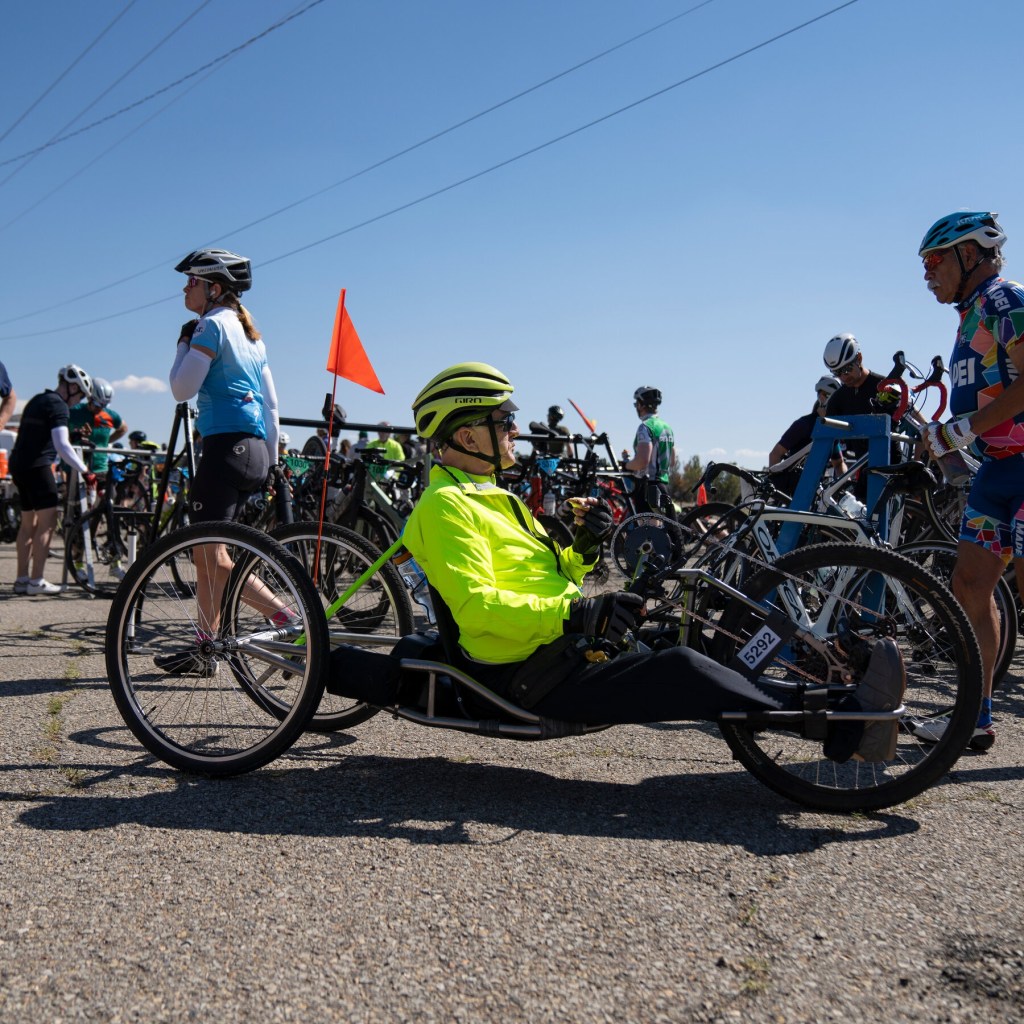
That’s the section of the HTT where I usually saw Corey Petersen. I didn’t know her; I’ve never spoken to her, but I’ve seen her several times. We’ve shared waves and head-nods the way cyclists do. I didn’t know she was a Marine Corps veteran, but it doesn’t surprise me. Anybody who rides a hand-cycle on a trail known for wind is a bad-ass.

Corey Petersen, cyclist, USMC veteran.

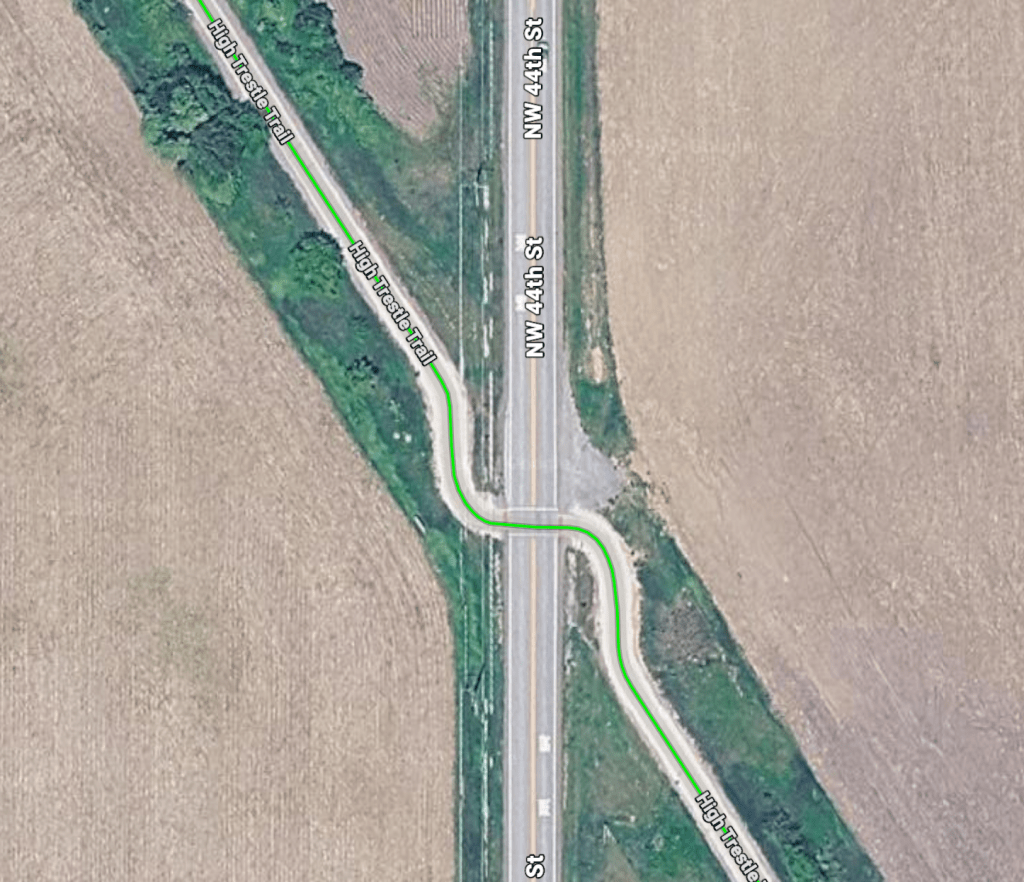
You’ll notice I’m speaking in the past tense. Corey Petersen was killed a week ago while cycling on the HTT (please watch the news video). She was hit by a truck while crossing a busy country road. I’ve always hated that particular intersection. It’s a sharp turn, so you have to slow down. Worse, the trail is designed to make you ride parallel to the busy road, so you have to look back over your shoulder for oncoming traffic behind you. Even worse, there’s a low hill on the road, which limits a driver’s visibility just before the trail crossing. And to make it still worse, the speed limit on that road is 55mph, and many vehicles are traveling above the speed limit.

The intersection where Corey Petersen was killed.

It’s a badly-designed, dangerous crossing. It was almost certainly designed by somebody who didn’t understand how bicycles operate. It’s a car-brained design. It’s dangerous enough for folks on regular bikes; for anybody riding a recumbent bike or hand-cycle, which are lower to the ground and much less visible, it’s significantly more dangerous. Although I’ve personally never had a close call there, I’ve been on group rides and witnessed close calls with members of my group.

We don’t know all the facts that led to Corey Petersen’s death. The driver of the truck may have been traveling at the legal speed limit; he may have been paying attention to the road, he may have done everything right…but a vehicle traveling at 55mph covers about 80 feet in a second. At most, a driver cresting the small hill in the road would have 4-5 seconds to respond to a cyclist crossing the road. At most, 4-5 seconds. Make that a recumbent bike, which would be more difficult to see…make that a hand-cycle, which has less immediate torque…and you have a tragedy. Even if the driver is doing everything right. And let’s be honest, how many drivers are doing everything right?

This is a hand-cycle. Cyclist ‘pedal’ with their hands. It’s very low to the ground.

The High Trestle Trail draws a lot of cyclists. The Iowa Natural Heritage Foundation estimates that, on average, around 3000 people ride some section of the trail every week. A popular (and economically important) bicycle trail is an asset to the State and to the towns along the trail. There is absolutely NO reason for such a dangerous crossing to exist on that trail. Granted, the HTT was opened in 2011, but that means they’ve had 14 years to fix a known problem.

There is a petition to make that intersection safer. Please consider signing it.

Back in 1896, the journalist Nellie Bly interviewed Susan B. Anthony. The subject of cycling came up during the interview. This is Anthony’s take on cycling:

Let me tell you what I think of bicycling. I think it has done more to emancipate women than anything else in the world. I stand and rejoice every time I see a woman ride by on a wheel. It gives a woman a feeling of freedom and self-reliance. It makes her feel as if she were independent. The moment she takes her seat she knows she can’t get into harm unless she gets off her bicycle, and away she goes, the picture of free, untrammelled womanhood.

Cycling clearly meant something to Corey Petersen. I can’t speak for her, but I know that being on a bike gives me a sense of freedom and joy. I’m confident Corey felt something similar. I wish ‘she can’t get into harm unless she gets off her bicycle‘ was true.

Sadly, it’s not.

weird and normal

The great and horrible thing about people is that they’re unpredictable; they do weird shit in ways that seem normal and normal shit that in ways that seem weird. If you’re on the street and you have a camera, you can sometimes photograph moments that are both weird and normal at the same time.

Yesterday I spent a short time at an autumn festival in a small Iowa town. It was about what you’d expect: locals and visitors milling about, some music, kids playing, adults trying to be patient with kids playing, old folks enjoying the mild chaos without having to be responsible for anybody, booths selling baked goods (I brought home a delicious apple cinnamon cream cheese coffee cake, which I’m eating as I write this), fresh local veggies, craft goods, displays by local artists, hot and cold beverages (I bought a cup of hard apple-pineapple cider that must have had an ABV of around 10%), tee shirts, decorative gourds, etc, There are usually some decent opportunities for candid photos at festivals like this.

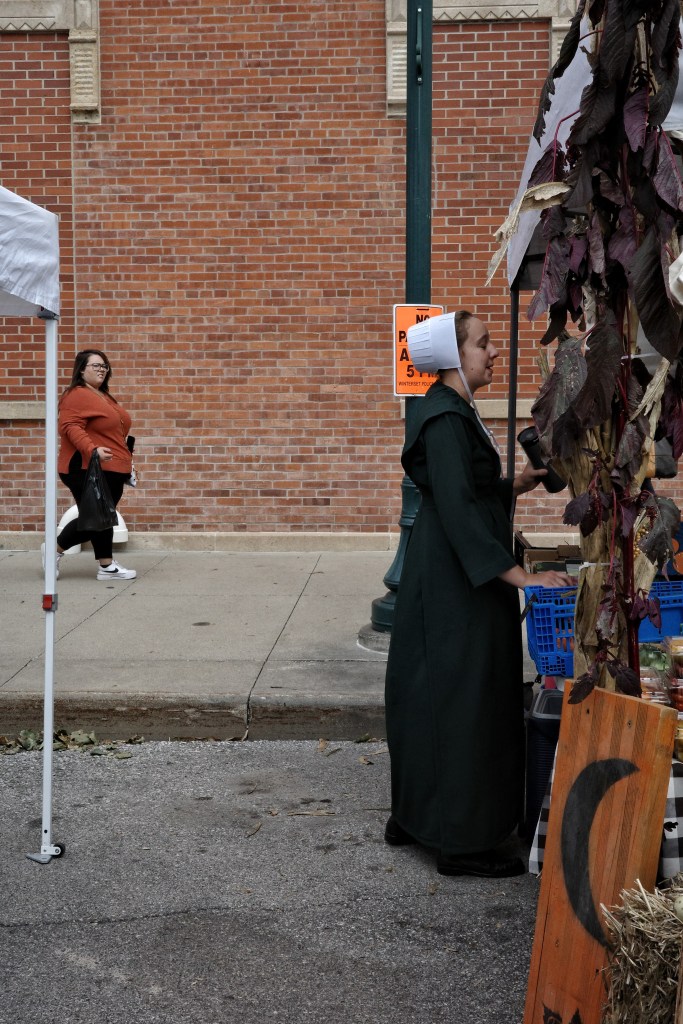
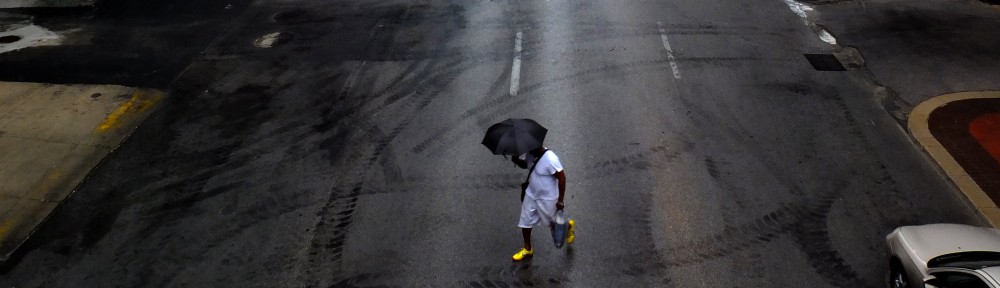
There was a young woman I assumed to be Mennonite since she wore a classic white kapp and black clothing. There are a lot of Amish and Mennonite communities in small Iowa towns, and I think it’s important as a photographer to be sensitive about both when and why you photograph them. In my opinion, it’s okay to photograph them as people, but not as specimens–if that makes sense. I think it’s also okay to photograph them as compositional elements, in much the same way you might photograph a person in a bright red bonnet or wearing yellow shoes (as in the photo at the top of this blog). But it’s NOT okay to photograph them for being different or in a way that treats their clothing as a costume. It’s NOT okay to photograph them as ‘weird’.

This young woman was standing beside a booth decorated in large, deep reddish-brown leaves, which made her white kapp pop out beautifully. But there was a lamp post with a ‘No Parking’ sign directly behind her, which detracted from the scene. So I started to shift position in the hope of getting a better composition. As I moved, I saw another women start to pass behind her. That lizard part of your brain that tells you to do something before your brain actually processes it took over and I snapped a quick shot as I moved. Here’s that shot.

Unfortunately, I never did get the shot I wanted; other people got in the way. But that’s what happens on the street. You either get the shot or you don’t. I moved on and didn’t give the moment another thought. Until I got home and looked at the photos.

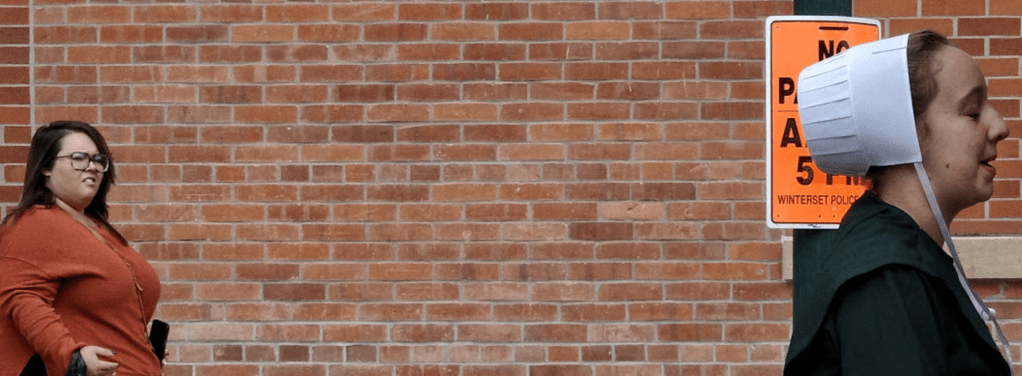
At first glance, the quick shot of the young Mennonite woman wasn’t particularly interesting to me. If anything, it was the sort of photograph I don’t want to take…a ‘normal’ person and a ‘weird’ person. But then I noticed the expression on the face of the woman passing behind her.

I can’t quite figure out what to make of that expression. It’s disapproving, to be sure. But beyond that, I just don’t know. Is she merely displeased by the woman’s clothing/beliefs? Is she outraged, or repelled? Is she offended by the presence of the Mennonite woman or her clothing? Is she being intolerant of religious differences?

It’s entirely possible she wasn’t looking at the the young Mennonite woman at all, that she was looking at something beyond her. But I don’t think so. What is that woman thinking, what is she feeling? And why am I letting it bother me?

In any event, it occurred to me that the ‘normal’ woman in this photograph was being weird and the ‘weird’ woman was being normal. Which made the photo more interesting to me. But because I tend to overthink things, I have to wonder if a photographer feels it’s necessary to explain why a photograph is interesting…is it really interesting? I don’t know.

But I know I’m glad I took the shot. And I’m glad I wrote about it. Because now I can let it go.

EDITORIAL NOTE: Let me once again sing the praises of the Ricoh GR3X. I took this shot while moving and carrying a plastic cup 2/3 full of apple-pineapple hard cider. I was able to turn on the camera, make a quick aperture change to enlarge the depth of field, and press the shutter release, all within a quick moment and with only one hand. Never spilled a drop.

civic virtue selfies

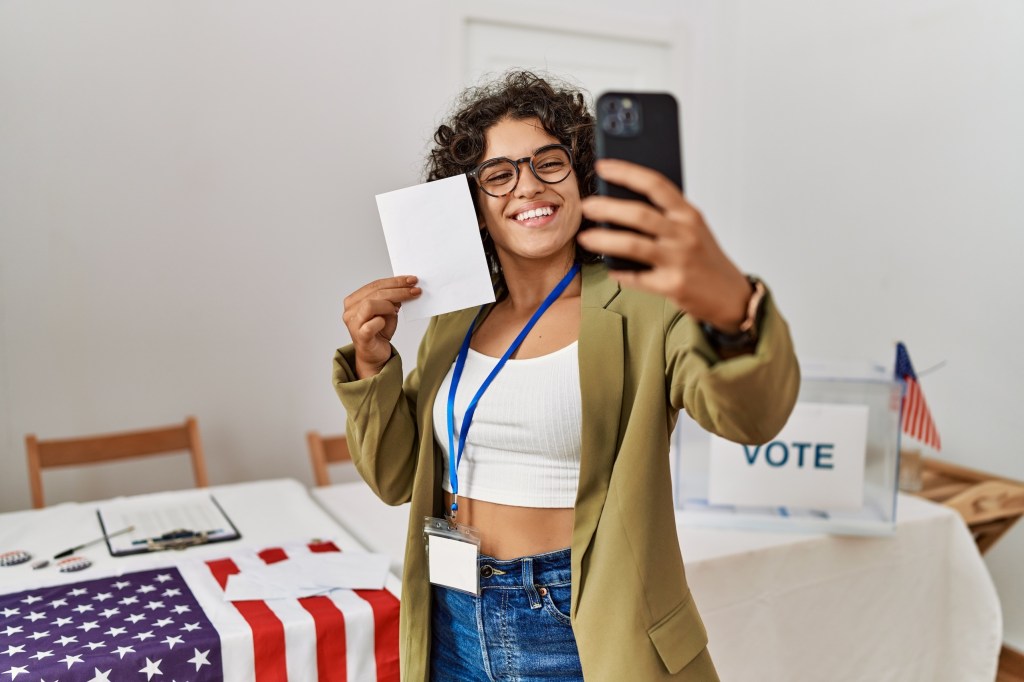
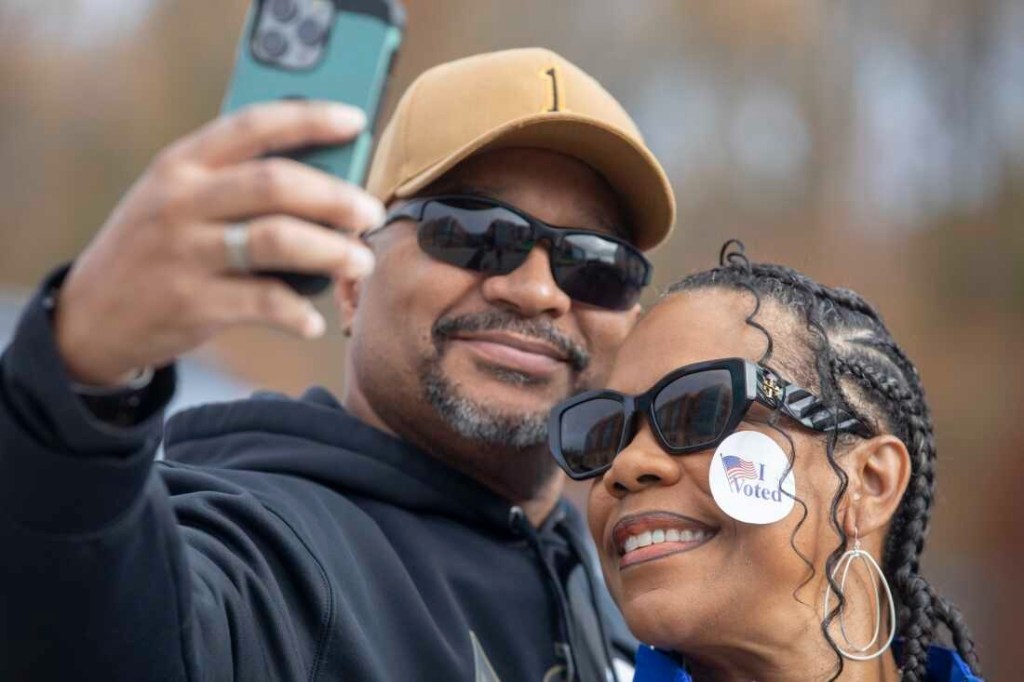
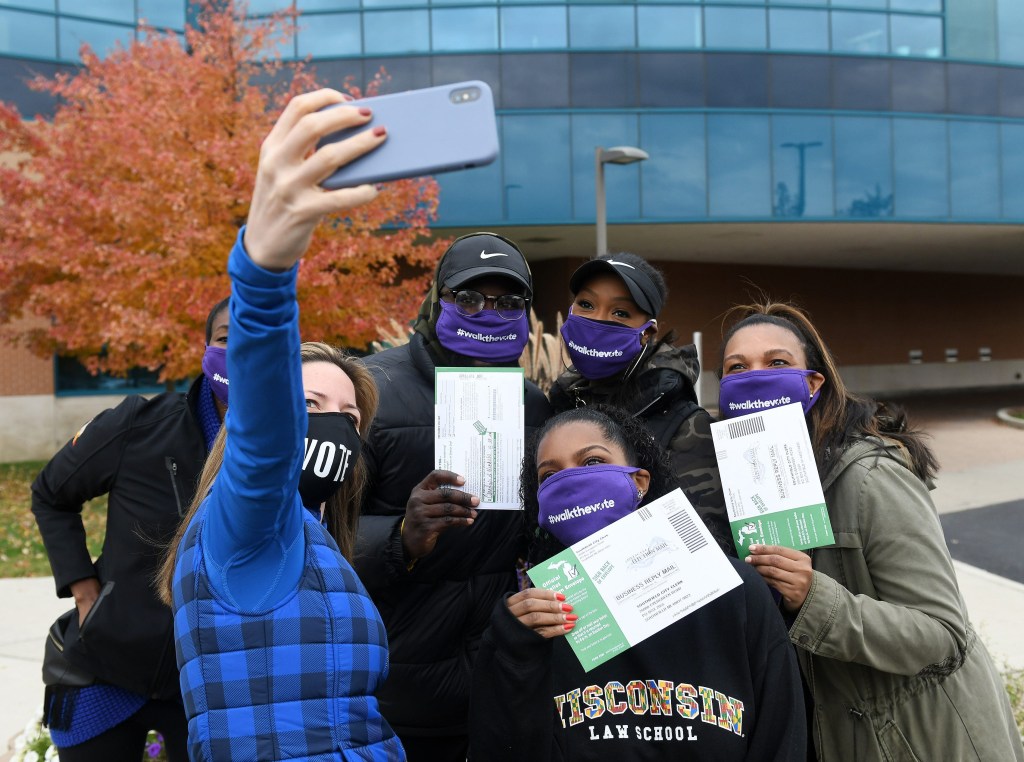
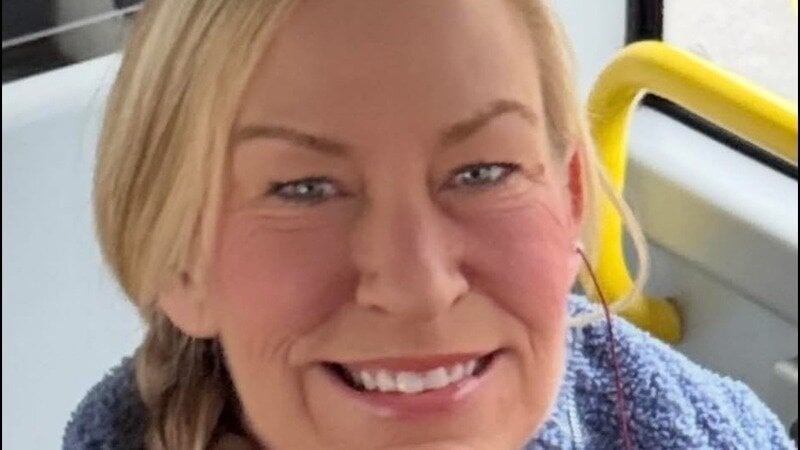
A friend recently said she was eager to vote in the coming local election next month, but was a wee bit sad that she wouldn’t be comfortable posting her usual “I Voted” selfie. I asked why she’d be uncomfortable. She said after posting her selfie after the last election, she was accused of virtue signaling.

My first thought was, “Okay, yeah, I get that.” Because saying, “Look how virtuous I am” is pretty cringe (and yeah, I know saying ‘cringe’ is…well, cringeworthy, but c’mon). My second thought, though, was, “Fuck that, go vote and post your selfie.”

This is not me.

Nonverbal signals are important in any culture. You already know that, so I’m not going to natter on about it. There are some virtues that ought to be signaled. Civic virtue is a good thing. Right now, when we’re facing growing authoritarianism, claiming our civic virtues is critically important.

You may be wondering, “Greg, old sock, what is this ‘civic virtue’ of which you speak?” Well, I’m about to tell you…and I’ll warn you up front it’s rather old-fashioned and maybe a tad sappy. Civic virtue is the general belief among the citizenry that the common good of the public should come before special interests of the few. That’s it, that’s all it is. It’s that whole Spock “The needs of the many outweigh the needs of the few” thing.

This is not me.

Voting is good. It’s virtuous. Signal the fuck out of it. I firmly believe in the concept of civic virtue. I’m a good citizen. Most of my life has been spent in some form of public service. I vote in every election. I stay relatively well informed on current events. I pay my taxes. I pay my bills. I follow most of the laws most of the time. If I’m in the market and see some product has fallen off the shelf, well I pick that shit up and put it back where it belongs. This is how civil society is supposed to work.

This is not me.

Civic virtue is the primary distinguishing difference between republican forms of government (note that’s small r republican, not ‘Republican’) and monarchical or tyrannical forms. In a republic, power belongs to the public through their elected representatives. Decisions on governance should reflect values and attitudes that promote the general welfare. It’s the polar opposite of a monarchical society, in which decisions on public matters are made by a monarch and based on the monarch’s interests. (Yeah, I’m talking about Comrade President Donald Trump here.)

The so-called ‘Republican’ Party in the US doesn’t support republican ideals. MAGA is essentially a weird, twisted, mishmash of monarchical and consumerist ideologies. Governmental decisions are based on the wants and needs of one person who believes civic virtue and selflessness are for suckers, and wealth is the only true measure of worth, and scams are the best and easiest way to accumulate wealth.

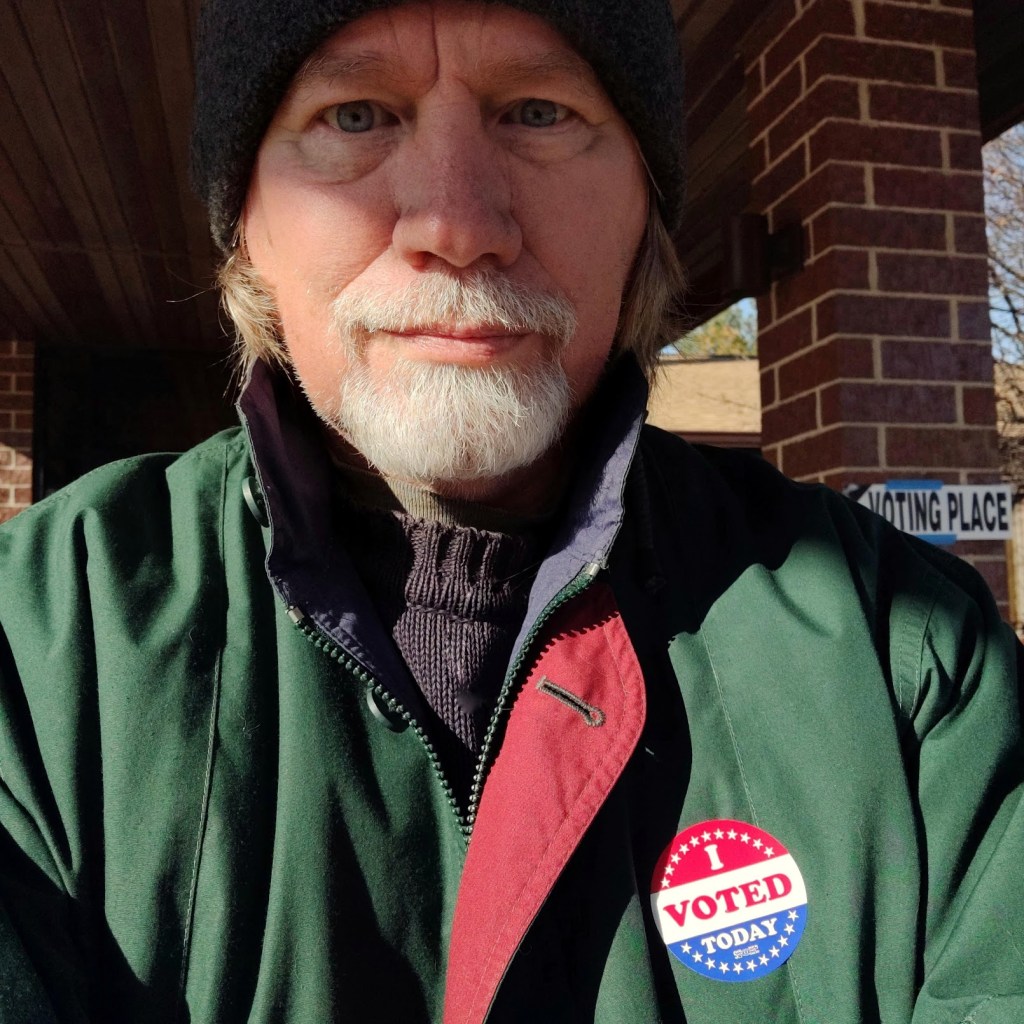
This is me.

MAGA wants us to be embarrassed by expressions of civic virtue. Go vote. Take a selfie with your “I Voted” sticker. Post it on social media. Tell MAGA to go fuck itself with a chainsaw.