knuckles, back on the map

As some of you may know, Knuckles Dobrovic is the name under which I occasionally create photo projects on Instagram. This began back in 2013. I created the Knuckles alias to explore Instagram, to learn what it was and how it worked, and to do that without having my name associated with it. I thought it made sense to dissociate myself from the account back then; now it just seems silly. In any event, I created the account and began to compile a very simple project. I put a thing on a glass-topped table on my deck and photographed it.

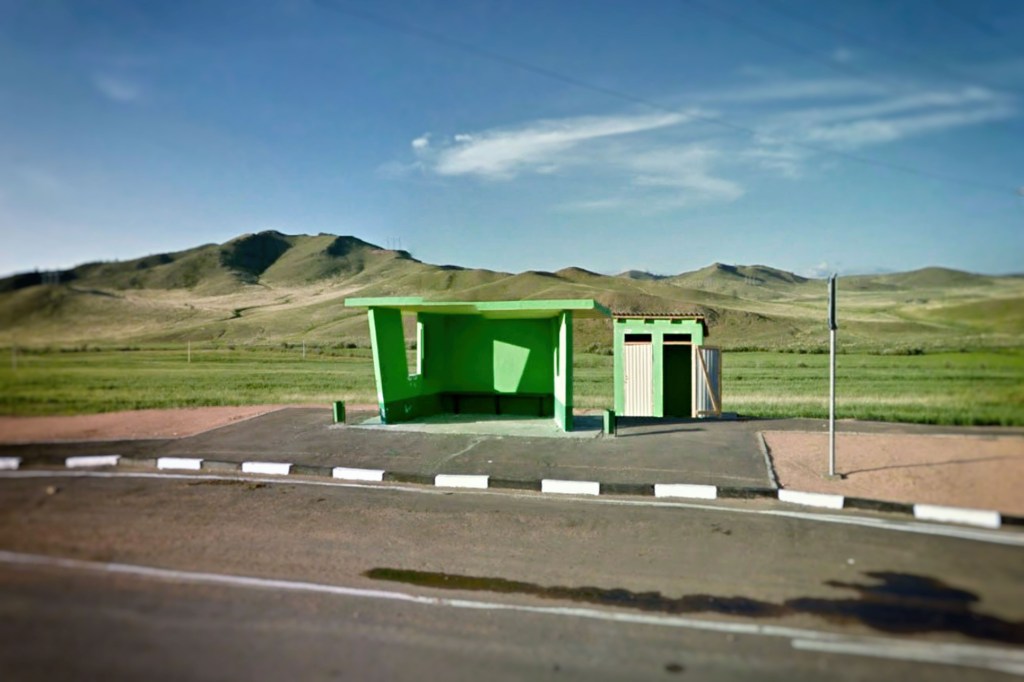
South of Ulan-Ude, Russia

I did that for about a year, during which I realized how ridiculous it was to have an alias account. So I created an IG account in my own name. When Things on a Table was finished, I put the Knuckles account on a shelf and forgot about it. Except–and I realize this is also silly–I’d become attached to the name. So eventually I revived the Knuckles account for another project. And then another. This will be the seventh Knuckles photo project.

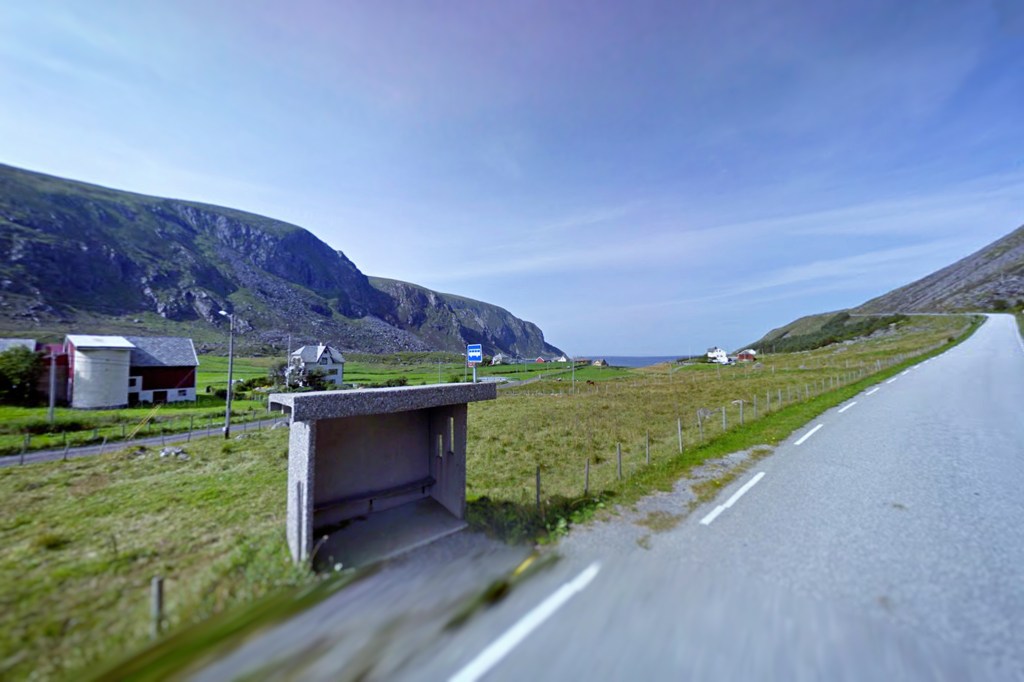
Arvik, Norway

Early on, I cobbled together some simple, flexible parameters for Knuckles projects:

  • It’s got to be simple (which means I won’t have to do a lot of planning or a lot of post-processing).
  • It’s got to be organic to my life (which means it’s something I can photograph during the course of an ordinary day — whatever that is).
  • It’s got to have at least one intellectual component (which is more accurately described as a pretentious bullshit element).
  • It’s got to be able to keep my interest over time.
Near Yotvata, Israel

Here’s a quick recap of the various Knuckles projects themselves with a link to a representative image from that project:

  1. Things on a Table — I put a thing on a table and photographed it.
  2. My Feet on the Earth — I took walks, stopping periodically to photograph my feet. I selected two or three of the images during a walk and created multiple exposure images.
  3. One Hundred Appropriated Google Street Views — This was sort of an homage to Hiroshige’s ‘One Hundred Famous View of Edo’. While playing the online game GeoGuessr (which involves finding a random location based on Google Street View), I made screen captures of interesting vistas. I converted those screen grabs into square black & white images.
  4. Slightly Dislocated — During the enforced isolation of the pandemic, I shot square format photos during my solo walks or masked errands. I diddled with the color a wee bit, digitally sliced the image in thirds, then re-arranged the pieces.
  5. Are Bure Bampot — I’d been playing Geoguessr again, and during a break I read something about Daido Moriyama, the godfather of a photographic style called are bure bokeh, which roughly translates as “rough, coarse/crude, out of focus.” That same afternoon, on Twitter, a Scots acquaintance referred to somebody as ‘a total bampot,’ which I was told means “an idiot, a foolish person, a nutcase”. For reasons I can’t explain, the phrase are bure bampot came to me, and I decided to follow through on it. As before, I made Google Street View screen captures of scenes and locations in Scotland. This time I modified them using the are bure bokeh style.
Unknown location in South Africa

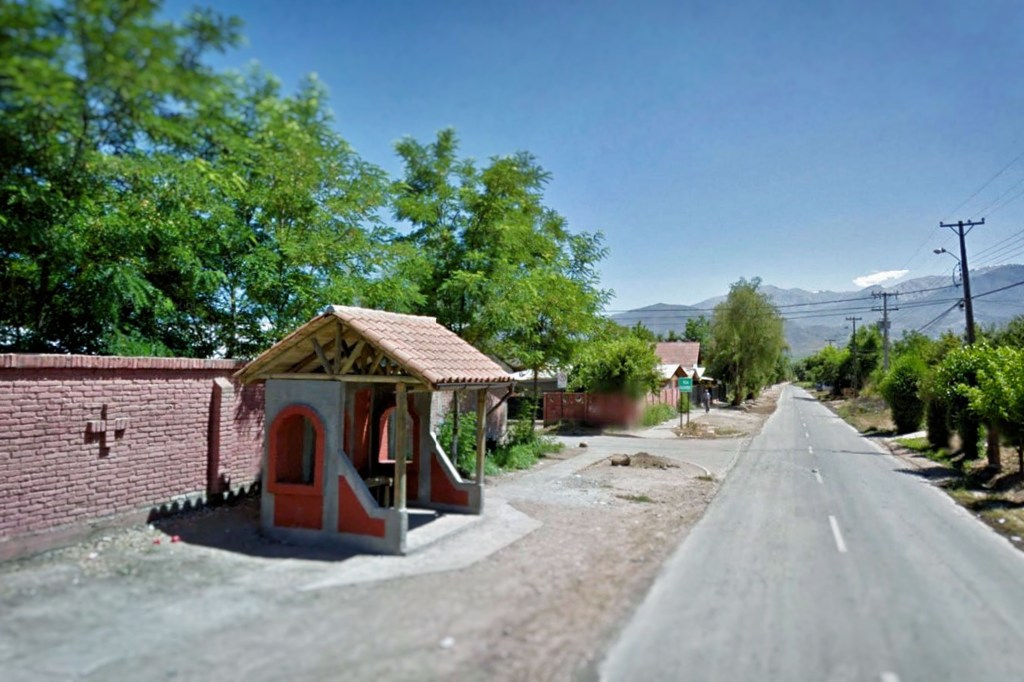
Now I’ve returned yet again to Google Street View with a new project: Bus Stops. I’ve always been intrigued by the bus stops I’ve encountered playing GeoGuessr, and I often pause long enough to get a screen capture of them. I’ve written about my fascination with bus stops before; lots of folks know about my interest. Recently an acquaintance sent me a link to a photo of a primitive bus stop in Turkey. It occurred to me that over the years I’d amassed a small collection of Google Street View screen captures of bus stops.

So I decided to do a quick search my old files and organize them. I found just over a dozen images of bus stops–enough to kickstart a new Knuckles project. It falls well within the Knuckles Criteria: simple, organic to my life, an intellectual component, and since I’ve been doing it haphazardly and thoughtlessly for years I’m not likely to get bored with it.

San Esteban, Chile

The intellectual component? A bus is the most democratic form of public transport. They’re most commonly used by the poor and working classes, but the bus stops for everybody. In cities it’s not uncommon to see people in business attire riding the bus to work. A bus network is fundamentally simple: a series of designated routes with consistent designated arrival/departure times and stable designated boarding locations with predetermined fees. It’s a predictable, reliable, efficient dynamical transportation system in which bus stops act as fixed point attractors. And if that’s not enough, bus stops are ubiquitous. They’re everywhere because a bus network is socially elastic–the design can be stretched to fit almost any community anywhere in the world. But stops are both local and global.

Outside of Petronys, Lithuania

You need more? Bus stops can tell you a lot about a community. Are the bus stops clean? Cared for? Are they in poor repair? Are they stylish or simple? Some bus stops have trash receptacles. Some are trash receptacles themselves. Some are shelters, designed to please the eye as well as keep riders dry and protect them from the wind. Some are purely utilitarian. Some are nothing more than a wide space in the road. You look at a bus stop, you learn something about the people who use them and the communities in which they live.

Bus stops are fascinating. But you have to look at them. So here…take a look.

balloons and the threat to national security.

Jesus suffering fuck. Republicans are terrified of everything but guns–the one thing we KNOW kills thousands of Americans every goddamn year. They’re terrified of gay folks, terrified of the entire concept of gender that’s not based on a toggle switch, terrified of people of color, terrified of beliefs that don’t fall within their wildly idiotic interpretation of Christianity, terrified government agents will break into their homes and seize their gas stoves, terrified of books they haven’t read, terrified of surgical masks, and now they’re terrified by a Chinese balloon.

“My concern is that the federal government doesn’t know what’s in that balloon. Is that bioweapons in that balloon? Did that balloon take off from Wuhan?”

This was no ordinary fucking idiot who said this. This was a special fucking idiot. This fucking idiot was Congressman James Corner, the Republican Chair of the House Oversight Committee. And he said it on FOX News, of course, the primary venue for fucking idiots. This fucking idiot has access to a massive amount of information; he’s a fucking idiot with a staff whose job includes researching issues of national concern and informing him so he won’t come across to the public like a fucking idiot.

I’m not a member of Congress. I don’t have a staff. But I have a Chromebook (I could have just used my cell phone, but the display is smaller and my eyes get tired). So let’s see if we can answer Corner’s concerns.

Did the balloon take off from Wuhan? Nope. Okay, first–because words matter–it’s a goddamn balloon. Balloons don’t “take off.” Balloons are inflated and released. It’s not a fucking missile. Beyond that, we can with a certain level of accuracy backtrack the balloon’s path based on its current height and known patterns of wind currents. And hey, a whole bunch of meteorologists did just that, and we can say with confidence it was released somewhere in west central China. Wuhan is in east central China. So, nope.

Do we know what’s in the balloon? Yes and no. I mean, yes we know what’s IN the balloon, since all high altitude balloons are filled with some lighter-than-air gas, like helium or hydrogen. But he’s talking about the payload. The stuff the balloon is carrying. And no, we don’t know what the payload is. However…

Is the payload a bioweapon? We don’t know, but almost certainly nope. First off, it would be massively stupid for China to attack the US. Secondly, even if China was stupid enough to attack the US, a localized bioweapon attack would be an incredibly weak opening salvo of a war. Thirdly, even if China was that stupid, a high altitude balloon would be a really inefficient and ineffective delivery system for a bioweapon attack.

Here’s a question this particular fucking idiot didn’t ask, but is being asked by lots of other fucking idiots: A) Could the balloon be carrying surveillance technology? Sure. But why? China launches a lot of rockets capable of carrying sophisticated surveillance technology–and by ‘a lot’ I mean they’re second only to the US in the number of rocket launches. If China wants to conduct surveillance of troops/bases/deployments, they have the capability to do it without resorting to a balloon.

The thing about balloons is they’re at the mercy of the wind. And yeah, we know general wind patterns at different altitudes, so while it’s possible (by changing the altitude of the balloon) to generally guide a balloon, they can’t be sent to spy on a specific target location. In addition to the wind, high altitude balloons are sensitive to the weight of the payload, to the amount of helium/hydrogen used for inflation, and even the air temperature at the time of release. Balloon guidance is largely a crap shoot; you know the odds, but you don’t know the outcome. To attach surveillance tech to a balloon and hope it drifts by something worth seeing is a really dumb surveillance approach.

Another thing. People keep saying “This balloon is the size of two (sometimes three) school busses,” as if that’s somehow threatening. The balloon IS A BALLOON. Even a really big balloon is just a latex membrane surrounding a lighter-than-air gas. The balloon may be really big, but that doesn’t mean the payload is really big. If the payload was the size of a couple of school busses, then the balloon carrying it would probably be the size of a football stadium.

But but but the military says they won’t shoot it down because of the risk of “debris could land on people or homes“. So doesn’t that mean the payload must be big? Nope. It means if you shoot a missile up in the air, the missile will come back down. That’s how gravity works. Could the US military shoot down the balloon over a rural area to minimize the risk? Sure. But the least expensive air-to-air missile (AIM-9X Sidewinder) costs US$430,818. Add in the cost of jet fuel (and that shit ain’t cheap) and we’re talking about spending maybe half a million dollars to take down a balloon. A balloon, for fuck’s sake.

So just what in the popcorn fuck IS the balloon and what’s it real purpose? I don’t know. But I wouldn’t be surprised if it turns out to be just an underinflated weather balloon. Underinflated because a properly inflated weather balloon is designed that as the balloon gains in elevation the gas inside it expands to a volume larger than the balloon’s capacity to expand, at which point it…pops. The payload then returns to earth on a parachute. An underinflated balloon won’t reach that height and so won’t expand beyond its tolerance. It can just wander along until the elevated UV light at that height degrades the latex and it pops on its own.

Is this situation a violation of US air space? Yes. It may be accidental, but yes. But it seems highly improbable that the balloon or its payload, whatever it is, is a threat to US national security.

The actual threat to US national security is the Republican Party.

UPDATE: Well, it seems I was wrong. Apparently this balloon (which has now been shot down) actually was some sort of low tech surveillance device. So far, the best possible explanation for deploying such a random pattern easily detectable surveillance balloon is that it allowed China to gather information on what kind of signal technology the US uses to track it. Knowing what sorts of tech the US uses could possibly help China to find ways to thwart that technology, which would come in handy if they ever decide to actually launch an attack on Taiwan.

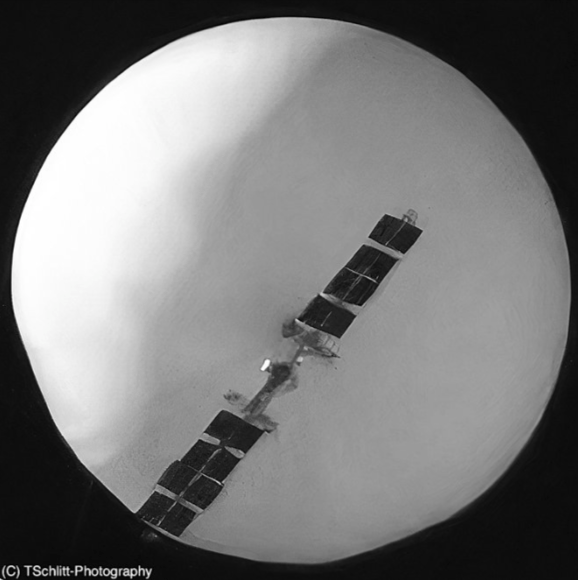
Yeah, this is the balloon in question.

It still seems to me to be a phenomenally stupid use of resources, but there it is. At least I was right about the missile used to take down the balloon. Which means we spent at least half a million dollars to destroy what may be around ten thousand dollars of Chinese technology.

And the threat to national security remains the Republican Party.

idea for a hunter biden screenplay

FADE IN

STRIP MALL COMPUTER REPAIR SHOP — APRIL — DAY

A gotch-eyed, legally blind man, JOHN PAUL MAC ISAAC, stands behind a counter, peering through thick lenses at disassembled computer hardware. The door to the shop CHIMES. A PERSON enters. From MAC ISAAC POV we see a blurry figure approach the counter.

PERSON
Greetings, comrade. I have laptop. Is damaged. You can recover data, yes?

MAC ISAAC
Sure, I can do that.

PERSON
Data is chastnyy. How you say…private? Boring email. Family photo. Not of interest.

MAC ISAAC
Okay.

PERSON
You keep laptop, recover data. I return soon, pay you.

MAC ISAAC
Absolutely. I just need your name.

PERSON
Menya zovut Hunter. Hunter Biden.

STRIP MALL COMPUTER REPAIR SHOP — DECEMBER — DAY

MAC ISAAC stands at the counter of his computer repair shop, holding an external hard drive in his hand.

MAC ISAAC
How very odd. It’s been eight months and Hunter Biden has not returned to collect his laptop. What shall I do? Should I contact Hunter Biden and remind him? Oh, I know! I’ll make a copy of the hard drive and…and give it to Rudy Giuliani!

how we got here

It’s Sunday, and this morning there are a LOT of quick, simplistic, really bad takes on the police murder of Tyre Nichols in Memphis. I’m actually pretty much okay with that. This is a situation that calls for immediate outrage, and that inevitably lead to quick, simplistic, bad takes. Right now, outrage first is a valid response.

The good thing about almost all of these quick, simplistic, bad takes is they do actually focus on the source of the problem: police culture. People are asking, “How did we get here?” Which is a good question. A complex question with a really complex answer. Because we’re talking about the intersection of multiple areas of concern.

I’m going to talk about four of them: 1) The wrong sorts of people are joining the police, and they’re joining for the wrong reasons. 2) Police officers are trained to assume guilt and danger. 3) Police officers aren’t bound by a duty of care. 3) The doctrine of qualified immunity protects bad police officers and undermines community trust in the police.

(photo by Erik McGregor)

The wrong sorts of people are joining the police, and they’re joining for the wrong reasons. Occupational studies suggest that until around the late 1960s and early 1970s, most of the people who joined the police did so for three pretty basic reasons. It was 1) an interesting job that offered a lot of diverse activities in a non-office/shop/factory setting, 2) it was a good union job that offered decent pay, excellent benefits, opportunities for advancement, and a reliable retirement plan, and 3) it was a way to help people and serve the community.

That last reason seems hard to believe now, but it was generally true. People joined the police because they liked the idea of helping people.

Why did that change? Lots of inter-related reasons, including the social upheaval of the late 1960s, which was the fallout from recreational drug use, the war in Vietnam, and growing alienation with consumer culture. One of the less obvious reasons was this: television.

Early cop shows (like Dragnet, Naked City, Highway Patrol, M Squad) showed police officers and detectives dutifully doing their job and–and this is key–doing it within the confines of the law. Television cops rarely lied (to suspects, to judges, to their superiors), rarely fabricated evidence, rarely threatened or intimidated people to get information, and they almost never shot anybody. They just followed the evidence and caught the bad guy.

In the 1970s, cop shows changed. The ‘rogue’ cop became fashionable. Shows like Baretta, Starsky and Hutch, Miami Vice, NYPD Blue, The Shield featured police officers–usually detectives–who bent the law to get ‘bad guys’ off the street. There were crazy-ass car chases, cops kicking in doors, cops making threats, cops harassing and intimidating bad guys (and sometimes ordinary citizens who got in the way), cops lying to get around the law, cops committing crimes to catch criminals, a LOTS of cops shooting and killing LOTS of bad guys.

The new shows were more exciting. An unintended consequence of those shows is that they attracted a different sort of police candidate. Fewer people joined because it was a good union job, more people joined because they wanted to kick in doors; fewer people joined because of the excellent benefits, more joined because they thought car chases were cool; fewer people joined because they wanted to help the community, more joined because they wanted excitement. These are NOT the qualities you want in a police force.

Police officers are trained to assume guilt and danger. The operative assumption of guilt is baked into police training. For their own protection, police officers are trained to assume the people they interact with are probably guilty of something. This keeps the officers alert, which is a good thing. It also keeps them suspicious and anxious, which isn’t. It leads officers to perceive danger where no danger actually exists. This also applies to situations as well as people. If you chase somebody into an alley or behind a house, you have to assume that every shadow could hide somebody who wants to hurt you. Being surrounded by presumably guilty people in presumably dangerous places shapes the way you see and interact with the world–and not just when you’re on duty.

Because of the proliferation of guns in the US, the operative assumption of guilt and danger is heightened. It’s more real. Police officers are more at risk now. They respond to that risk by being more aggressive and more suspicious, which leads to more resentment from the populace, which leads to more risk for the police officers, which leads to…well, you see where this is going.

Police officers aren’t bound by a duty of care. All those early cop shows? They emphasized what’s known as a duty of care. Basically, a duty of care simply means being responsible for the health, safety, and well-being of other people. There’s a legal definition of that phrase, and like all legal definitions, it’s deliberately narrow and primarily involves liability for injuries to others. You know, like if you leave a bunch of power tools lying around in a day care center where curious kids could hurt themselves or other kids. You have a legal duty of care not to do shit like that.

In many nations, policing agencies have a duty of care explicitly spelled out as part of the job. The police have a positive ethical obligation to avoid acts that could foreseeably harm others. That means putting the safety of the public before everything else, including the safety of the police officers. The public, by the way, includes people suspected or accused of crimes.

In the US, police have NO formal duty of care to protect members of the public (unless they’re in custody). Seriously, neither the Constitution, nor state law, impose a general duty upon police officers or other governmental officials to protect individuals from harm, even if they know the harm will occur. As a result, police officers often put their own safety above the safety of others. We saw that in Uvalde, Texas.

The absence of a duty of care also means police officers are more inclined to shoot early in situations, and to shoot a lot. That inclination is encouraged by the next issue.

The doctrine of qualified immunity protects bad police officers and undermines community trust in the police. Qualified immunity is a legal doctrine granting police officers (well, all government officials) immunity from civil suits UNLESS the officer violated “clearly established statutory or constitutional rights of which a reasonable person would have known.”

What in the popcorn fuck does that mean? It means police officers who do awful stuff are protected from civil and criminal prosecution IF 1) they can testify they believed in good faith that the awful stuff was lawful and objectively reasonable, and 2) they’re unaware of a “clearly established” law saying that specific awful stuff was illegal. Only one of those factors has to hold in order for qualified immunity to apply.

Here’s an example: back in 2014, in Coffee County, Georgia, a deputy sheriff named Michael Vickers was searching for a robbery suspect. He and other officers found the suspect, Christopher Barnett, talking to a woman in her yard. Half a dozen kids were also in the yard. The officers demanded they all get on the ground, including the kids. Everyone immediately complied. At that point, Bruce, the family dog, came into the yard to see what the fuss was. Although the dog wasn’t threatening anybody, Vickers fired at him…and missed. Bruce ran away. Moments later, Bruce returned, the way dogs do. Vickers fired at him again. And missed again. But this time the bullet struck a ten-year-old child in the leg. The kid’s family sued Vickers. The court ruled he was immune from the suit.

Why? Because 1) Vickers thought he was behaving within the limits of the law by shooting at the dog, and 2) even if shooting at an innocent dog WAS illegal, there was no “clearly established” law STATING shooting at a dog and missing, thereby accidentally shooting a kid was illegal. In fact, Vickers could theoretically shoot at another dog and miss and accidentally wound another kid and get by with it because there’s no law specifically stating that’s against the law. I’m not making this up; this is how this shit really works.

When the wrong people enter policing for the wrong reasons, and they’re taught to be suspicious and aggressive, and they’re not required to consider the safety of the people they’re sworn to protect, and they’re rarely held personally accountable for their bad behavior, you create a policing culture that encourages pre-emptive, sustained violence.

We need to change every deeply ingrained aspect of that culture. Sadly, even if the US has the commitment to do that (and I rather doubt we do), it will take time. But we can start by taking three small common sense steps. Radically modify qualified immunity (it would be better to eliminate it from policing, but you know…baby steps). Codify a duty of care into policing. Reduce police officers to a subordinate support role in mental health situations, and create more mental health response teams staffed by trained mental health professionals. It would also help to present sensible firearm legislation as being pro-police.

EDITORIAL NOTE: Obviously, race plays a huge role in police violence. Huge. Why didn’t I address that? Because lots of other folks are addressing it, and this is already a really really long blog post.

actual conspiracies

Conspiracy theorists aren’t afraid of hard work.They’ll cheerfully concoct massively complicated theories with multiple interacting elements that require flow charts to understand how and why Hillary Clinton was responsible for the murder-by-plane crash of some obscure businessperson in Arkansas. But one of the many many problems with conspiracy theorists is they prefer fantasy theories that fit their worldview over actual theories that may contradict it.

Let’s take a very quick look at the arrest last weekend of former FBI big hat, Charles McGonigal (which is a lovely patronymic name, by the way; from the Gaelic Mac Conghaile, meaning the son of Conghaile which basically means ‘brave as a hound’). Your man McGonigal had what appeared to be a stellar FBI career, dealing with counter-espionage primarily. He joined the FBI in 1996 and was initially assigned to the New York Field Office, where he worked on Russian foreign counterintelligence and organized crime matters. When he retired in 2018, he was the Special Agent in Charge of the Counter-intelligence Division for the New York Field Office.

Why was McGonigal arrested? For money laundering and for helping Russian oligarch Oleg Deripaska–a close friend and ally of Vlad Putin–dodge US sanctions imposed against him.

Right now, the MAGA crowd likes to depict the FBI as Trump-haters, largely because they searched Mar-a-Lago and found a hoard of classified documents that Trump had illegally taken and refused to release to the National Archives. But back in 2015-2016, when Trump was running for president, Trump supporters celebrated how much the FBI loved him. The New York Field Office in particular (and remember, McGonigal was in charge of a major FBI section of that office) was openly referred to as Trumplandia. It was the NY Field Office that got FBI Director James Comey to inform Congress (and therefore the news media) of the possible existence of new information that might lead to re-opening the closed investigation of Hillary Clinton’s e-mail server. Comey’s letter to Congress, which was written even before the FBI obtained a warrant to explore the possible new information, was made public ten days before the 2016 election. It almost certainly influenced the election result in Trump’s favor. And, of course, it turned out there was no new information.

It was McGonigal’s Counter-intelligence unit that handled the investigation of Donald Trump’s ties to Russia. Remember, Trump and most of his presidential campaign’s inner circle–his sons and daughter, Michael Flynn, Paul Manafort, Roger Stone, Rick Gates, and others–had major business interests in Russia. Many of them had business dealings with Oleg Deripaska. In fact, in 2016 Deripaska was suing Trump’s campaign manager, Manafort, for US$25 million over a failed business deal in…wait for it…Ukraine. Manafort was instrumental in changing the 2016 Republican Presidential Platform to remove support for supplying defensive weapons to Ukraine. Why was the US giving weapons to Ukraine in 2016? Because in 2014, Russia (on orders from Putin) invaded and “annexed” the Crimean peninsula and a big chunk of eastern Ukraine.

2016 is also apparently the year in which McGonigal began secretly working with/for Deripaska. That same year, his unit investigated allegations that Russia was interfering with the US election process in support of Donald Trump. Although that investigation was later conducted under the aegis of Robert Mueller as Special Counsel, it was McGonigal’s agents who continued to investigate the matter. Mueller’s report concluded the Trump campaign DID welcome Russian interference in the election and they expected to benefit from it, The report also noted that pervasive obstruction of justice by witnesses made it impossible for McGonigal’s agents to obtain sufficient evidence to claim Trump committed a criminal conspiracy. In addition, there was/is a policy against charging a sitting president with a crime. Mueller did, however, note that Trump could be charged with obstruction of justice (or other crimes) after he left office.

“Rabbits are ruining your garden!” shout the crows.

So just to recap. 1) Putin/Russia seizes parts of Ukraine, 2) Russia leans on the Trump campaign to resist helping Ukraine, 3) the campaign complies, 4) Russia interferes with the election to help Trump, 5) the FBI investigation into that interference is conducted by McGonigal, who 6) is secretly being paid by an ally to Trump, and 7) the investigation fails to find any criminality. Also? 8) in 2019, President Trump lifts most of the sanctions against Deripaska.

This is all well documented in several public news sources. This is an actual conspiracy, a broad and wide-ranging criminal conspiracy.

Can we expect Congress to investigate? Nope. They’ll be too busy trying to figure out how Hunter Biden’s laptop was used by Bill Gates to create a secret Satanic community of cannibalistic pedophiles by secretly releasing a phony ‘plague’ manufactured in China by the Deep State Uniparty to weaken the rights of parents to decide which books their children should avoid to keep them from being groomed by drag queens and harvested for the lymph nodes celebrities need to stay young.

Let’s give the next-to-last word to William Gibson:

People find conspiracy theories fantastically comforting not because they’re more frightening than reality, but because they’re less frightening than reality.

We have nothing (aside from dick pics) to fear from Hunter Biden’s laptop. We have a great deal to fear from people willing to undermine democracy in return for wealth and power.

me and edgar

Okay, good news. This morning I learned I’ve been nominated for an Edgar. The Mystery Writers of America have been handing out Edgar Allan Poe awards for short fiction since 1951. The nominations are announced on Poe’s birthday, which is today. Getting nominated is a pretty big deal in the mystery and detective fiction biz.

The nomination is for a short story called Red Flag, which deals with red flag laws (hence the clever title). It’s a story about a man whose career was ended by a mass shooting. He returns to his home state of Michigan, tries to live a quiet life, but gets reluctantly drawn into a situation. A mother is concerned about her son–an alienated young man she’s afraid is thinking about committing a mass murder. Because the young man has broken no law, local law enforcement can’t do anything. So the protagonist cobbles together a sort of plan in the hope of disrupting what he sees as the inevitable mass murder attempt.

It’s an odd story. I was having lunch in a brew pub in a small Iowa town when I learned Alfred Hitchcock’s Mystery Magazine was going to publish it. I was delighted. The very next morning, there was a high publicity mass shooting in a Michigan high school; four students were killed and seven wounded. Lots of people were aware of the shooter’s emotional problems–his parents, school officials, other students. They all knew he’d made vague threats about a mass murder. They knew he had access to a firearm. A red flag law would have allowed the police to remove that firearm, which might have prevented the tragedy.

The coincidence of selling a story about a potential mass murder in Michigan and an actual mass murder in Michigan less than 24 hours later was weirdly discomfiting. Obviously, there was no connection. And yet, it bothered me. Still does, in fact.

So I have mixed emotions about the story, about its publication, and about this nomination. I’m obviously chuffed about it. But I can’t entirely enjoy it. I’ll always associate this story with tragic events. And since I live in the United States, there’ll always be another tragic event.

Today is January 19th. So far this year there have been at least 33 mass shooting incidents in the US, resulting 48 deaths and 128 wounded. There’ll almost certainly be another one today.

I’m incredibly pleased to have been nominated for the Edgar. But I sort of hope I don’t win. I hope more people will read the story. I hope we can change our culture. I have hope.

But not very much of it.

UPDATE: Yer boy won the Edgar.

return of the sunday salon

I’ve been shooting photographs for most of my life. I’m a competent photographer. But for most of my life, I was also pretty ignorant about the history and culture of photography. Oh, I knew the names of some of the Big Hats in photography and could probably recognize some of their photos. But I had no real understanding at all of what had been done in photography, or who had done it, how they’d done it, or what they were thinking when they did it. I was the Jon Snow of photographic culture. I knew nothing.

So I set out to correct that. I decided to educate myself. I did it in a fairly haphazard and casual way– picking a photographer who’d caught my attention for some reason and doing some research on them. I also decided to share what I’d learned. At the time, I was the managing editor for Utata, an online collective of smart, creative, funny, curious people who enjoyed photography and discussion in equal measure. So I wrote a short essay on the photographers I studied and used those as a foundation for discussion in the group’s online forum on Flickr.

It was fun at first. I did an essay every week. Then after a while, it was every other week. It was still basically fun, and I learned a lot. But after a few years, it became a chore. A pleasant chore, for the most part, but still a chore. And like one does with a chore, I began to find reasons to avoid doing it.

And then I stopped.

I just didn’t want to do it anymore. I continued to read about photographers and think about their work, but the idea of writing an essay about them…well, it was simply too much unpaid labor. The last Sunday Salon was published in July of 2017.

A year or so later I learned a change in Flickr’s API (I have no idea what an API is, but it changed) had essentially gutted the Sunday Salons; they were no longer available online. Nobody could see them. I was okay with that. I didn’t really care. The salons had been a personal project, after all, and I’d accomplished what I wanted to accomplish. If they were gone, they were gone.

A few years went by. A few folks would occasionally mention something they’d learned from the salons, but I gave them little or no thought. Until about a year ago, when I got the urge to write another one. But I didn’t do it. I mean, why write an essay for a site that couldn’t display them? But I got in touch with Utata’s tech ninja, David Winkinson, who is one of the most thoughtful, generous, and considerate tech ninja’s ever. Would it be possible to resurrect the old site? The answer was ‘Not entirely; not the photos.’ But he said he could restore the text and establish it on his personal server. And before I could say, ‘Don’t bother’ he went right ahead and bothered.

And there it was. 170 or so essays. Somewhat buggered up, to be sure, but all the bones were there. They just needed to be collected, put in order, and fleshed out with photo examples from each photographer.

So I’ve spent the last few months sporadically noodling around, rebuilding the damned thing. I have absolutely NO skill at graphic design. I’m not even sure ‘graphic design’ is the appropriate term for what I’m talking about. But I cobbled the Sunday Salon together after a fashion. I’d have spent more time trying to figure out how to make it more presentable and more useful, but last week Adolfo Kaminsky died.

Violinist, 1945, by Adolfo Kaminsky

Odds are, you’ve no idea who Adolfo Kaminsky was. But you should. So I wrote a Sunday Salon about him (yes, I know today isn’t Sunday, but c’mon, let’s not get fussy at this point). Click on the link if you’re interested.

So here you go. The return of the Sunday Salon. You can find them all right here. Or just click on the Sunday Salon link at the top of the page.