2025 sucked, don’t even try to tell me otherwise. 2026 has the potential to be better, though it could implode at any moment. Nothing is certain. However, in a feeble attempt to be optimistic, I’ve make a list of things I’d like to see in 2026. I don’t expect to see any of them, but hey, there’s no harm in hoping.
Anyway, in no particular order, I’d like to see:
- local municipal police officers arresting ICE agents for violating the law. These assholes are running wild in the street and ain’t nobody holding them to account. Arrest them, cuff them, give them a fair trial.
- sensible legislation limiting e-motos. I’m talking about these stubby bastards. They’re sold as ebikes, but they’re not intended to be ridden like bikes. I don’t have anything against them as a mode of transportation, but the sad reality is a LOT of these e-motos are ridden by assholes. Assholes ruin everything.
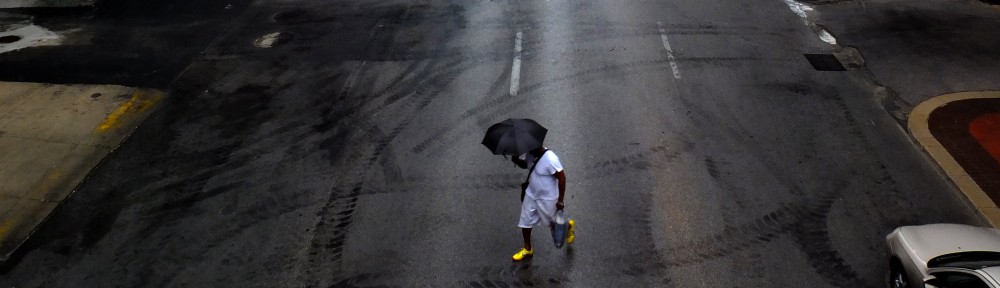
- speaking of bikes, I’d like to see more people dressed in normal clothes on bikes. This isn’t a dunk on folks who wear lycra and ride road bikes. I’d just like to normalize cycling as transportation, not just as a form of exercise.
- women in US films & television shows that look like actual women wearing actual women’s clothing with sensible shoes instead of models in high heels. Give me more Sarah Lancashires, more Olivia Colmans, more Susan Wokomas, more Lesley Manvilles. Give me women who can act, not just look good. (Okay, we have Merritt Wever in the US, who is fucking amazing; give me more Merritt Wevers too.)
- Donald J. Trump in handcuffs and an orange jumpsuit…in a coffin.
- quiet spaces. Deliberately quiet spaces, both indoors and outdoors, both public and commercial. Not silent spaces; just quiet. Spaces where you can have a conversation. Coffee shops, pubs, restaurants, and other businesses that commit to quietness should be given tax breaks.
- Brett Kavanaugh busted for DWI.
- a mini-series based on Ellen Kushner’s novel Swordspoint. Or any of her novels, really.
- billionaires taxed out of existence. There’s no reason for billionaires to exist. Nobody has any real use for that much money. Every dollar somebody ‘earns’ over a billion dollars should be taxed at 100%. I mean, c’mon, if you spent US$100 thousand every single day, it would take you more than 27 years to spend a billion dollars. That’s just nuts.
- more dedicated infrastructure for bicycles and other forms of mobility. I’m talking about bike lanes and secure bicycle parking. We should really make it safe and easy for not just cyclists to get around, but also folks in wheelchairs (and we should subsidize motorized wheelchairs to a much greater extent). We should drastically decrease car dependency (and the operative term there is ‘dependency’).
- much much much more funding for the Arts. All sorts of arts, and especially weird esoteric arts, even if we don’t like them. Hell, we should encourage people–ordinary people–to take up any form of expression. I’d go so far as to support accordion players and mimes. It would make people happier, and lawdy, we need happier people.
- also, Trump’s name removed from the Kennedy Cen…well, from everything.
- capes for mail carriers. These people are fucking heroes; they deserve capes.
Okay, that’s enough. None of these things will happen (although I think there’s a decent chance Comrade Trump will go toes up in the next 12 months), but they’re still it’s nice to think about. Oh, wait. I forgot one.
I’d like to see the patriarchy smashed into tiny shards, those shards ground into the finest dust, that dust buried deep in the earth, and the earth above it salted so that nothing will grow there for a thousand years. Or so.
There. Done.
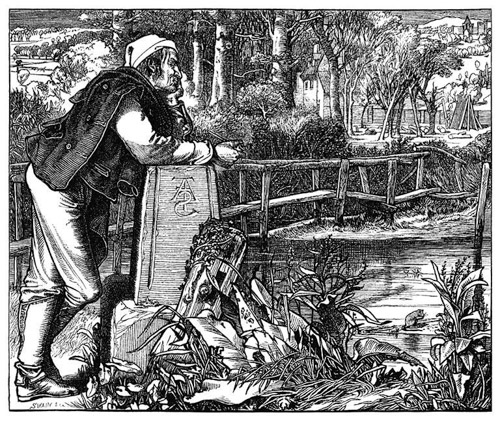
Editorial Note: By the way, the illustration is a wood engraving by Frederick Sandys from the early 1860s. It’s called ‘The Old Chartist.’ Chartism was a British working class movement that called for 1) the vote for every man aged twenty-one years and above (women, of course, were totally fucked), 2) secret ballots, 3) no property qualification to be a Member of Parliament, 4) payment for Members (so working men could temporarily leave their regular employment to work in the public interest), 5) annual elections. These were radical wishes unlikely to occur, much like my wishlist above.






 gregfallis.com