So. Chris Kluwe has been named by Salon magazine as the Sexiest Man of the Year. There are at least four cool things about that. And one uncomfortable thing.
Cool Thing #1: Salon picked a jock but didn’t celebrate him for his jockitude; it celebrated him for his politics, his beliefs, his willingness to express those beliefs, and his nerdiness. Salon is saying being smart is sexier than playing sports. I like that.
Cool Thing #2: Salon picked a guy who used to be best known for kicking a football (an American football, that is; there are a lot of non-American guys who are best known for kicking a football) but is now best known for writing a scathing letter to a homophobic Maryland state legislator. Salon is saying it’s sexy to be politically progressive. I like that.
Cool Thing #3: Chris Kluwe is an unabashed video gamer. Hard core gamers are known for two things: being dorks and being some of the most vocally homophobic and misogynistic beings on the planet. Salon is saying dorks can be cool and sexy without being dicks. I like that.
Cool Thing #4: In his interview in Salon, Kluwe says he learned how to express himself forcefully (with creative cursing) by spending time on gamer message boards.
You have to hang out on online gaming message boards for about six or seven years and get into a lot of arguments…. With the whole arguing on message boards, I found a very effective style was to present a carefully reasoned, thought-out argument and highlight it with really kind of bizarre swear words where you stop for a moment and go, “What does that even mean?” It’s the juxtaposition between the two. The swear word sticks in your head but you think on it and you realize there was a point too.
Salon is saying it’s sexy to be able to express yourself deliberately and clearly, even if that expression includes comments like “[Y]ou also come across as a narcissistic fromunda stain.” A classic gamer-nerd insult, that. I like it.
The Uncomfortable Thing: I discovered it’s difficult for a straight guy to write something about the Sexiest Man of the Year without starting off with a disclaimer. Like “I don’t normally do a Google Image search for Chris Kluwe Shirtless” or “This is the first time I’ve paid any attention to a magazine’s Sexiest Man of the Year article.” The feeling that you first need to assert your heterosexuality before writing about the sexiest man of the year is essentially homophobic. It’s uncomfortable to realize that even though you support gay rights and despite the fact you have many gay friends, there’s still a kernel of homophobia buried inside you. I don’t like that.
But this is one of the ways you change culture. This is one of the way you shift social attitudes. You celebrate people who stand up for ideas and beliefs that are unpopular. You celebrate people who may not fall into traditionally heroic categories. You celebrate magazines like Salon that celebrate men like Chris Kluwe. And you try to recognize your own stupidity and make an effort not to come across as a fromunda stain.
There were SO many critically important national election races to watch Tuesday night that we can, I think, be forgiven for overlooking the contest between Democrat Colleen Lachowicz and Republican Tom Martin. They were both seeking to represent the 25th District in the Maine State Senate.
Colleen Lachowicz, social worker
Martin, the incumbent who won the seat in the last election, is the owner of an excavation and construction business. Lachowicz is a social worker who works for a non-profit mental health agency, treating adults with mental illnesses. She has a Master of Social Work degree and is a licensed foster parent. And she’s a level 85 orc rogue called Santiaga in World of Warcraft.
During the campaign the Republican Party of Maine suggested that her participation in the online gaming community made her unqualified to serve in the state senate. They even created a website called Colleen’s World in order to alert Maine citizens about her “disturbing alter-ego” and her “time-consuming double life.” The site includes comments Colleen made in WoW discussion groups.
To his credit, Martin said he was unaware of the attacks on Lachowicz (which were promoted by the Maine Republican Party rather than by Martin’s campaign) and he didn’t condone them. Still, the attack brought international attention to the state campaign and Lachowicz garnered the support of gamers from all over the world.
It pleases me enormously to be able to say Colleen Lachowicz is the new respresentative for Maine’s 25th District. Come January, an orc rogue will be sitting in the Maine State Senate.
Santiaga, Senator from Maine 25th District
There are two lessons Republicans can learn from this. First, if you embrace diversity, you win elections. Second, DO NOT FUCK WITH GAMERS.
I spent part of this morning reading some of the more extreme conservative political blogs. Two things stand out. One, of course, is that the United States is doomed because President Obama is going to steal everybody’s guns and deny them the right to buy gold and he’s going to give Mexicans and black folks free houses and hi-def satellite television. But they’re also saying with some consistency that Gov. Romney lost because he wasn’t conservative enough.
Gov. Romney concedes the election
On the surface, that sounds sort of logical. But it also suggests that voters went to the polls and said to themselves “That Mitt, he’s just too liberal…so I guess I’ll vote for Obama.” Or maybe it suggests conservatives just decided not to vote for anybody and sat on their patriotic asses all night. In the conservative blogs I saw lots of accusations of fraud, lots of paranoia, lots of anger, and lots of blaming.
What I didn’t see was a recognition that this is no longer the United States of Angry White Men. The harsh Ayn Rand “I’ve got mine, go fuck yourself” approach to conservatism just doesn’t resonate with the population of the U.S. as it now exists. Four years ago we elected a black man named Barack to the presidency of the United States. Last night we re-elected him. Think about that. A black man. Named Barack Hussein Obama. That right there is evidence that the American demographic has shifted toward inclusiveness and away from resentful exclusivity. But we still continue to see Republicans strive to restrict and reduce individual civil rights and liberties in everything from marriage to voting to immigration to a woman’s right to exercise her own decisions over the integrity of her body.
For more and more Americans, that shit just don’t play anymore.
Last night Maine and Maryland voted to expand marriage rights to same-sex couples, and it seems likely the State of Washington is about to do the same. Minnesota rejected a proposal to deny same-sex couples the right to marry. That’s NOT the action of an electorate longing for more conservative social principles. Last night two states expanded the use of medical marijuana, and two others voted to legalize and tax the use of marijuana. That’s NOT the action of an electorate longing for more conservative social principles. Last night two states supported ballot measures to restrict the power of corporations to donate monies to campaigns. That’s NOT the action of an electorate longing for more conservative social principles.
And yet despite all the evidence, a lot of conservatives continue to believe that the reason Mitt Romney lost was because he wasn’t conservative enough. Of course, a lot of them also believe the earth is only a few thousand years old, that climate change is a hoax, and the President of the United States is a not-so-secret Muslim Socialist who is deliberately trying to ruin the American economy in order to…in order to…shut up, that’s why. Right now the Republican party is more concerned with making the nation ungovernable than in pressing forward any agenda at all. That’s the approach of a spoiled, angry child.
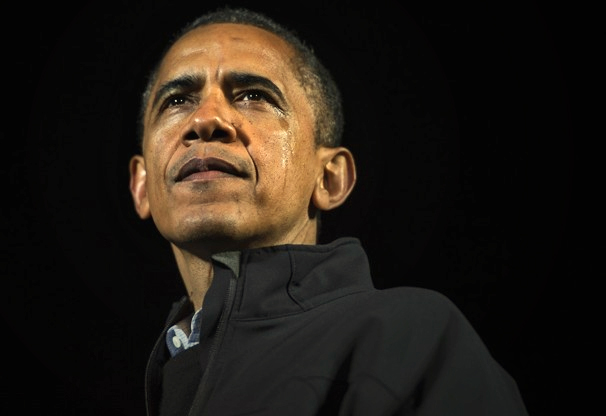
President Obama teary-eyed in final campaign speech in Des Moines
Four years ago the last day of October was unseasonably warm. I was part of a large crowd that watched as then-Senator Barack Obama gave one of his last campaign speeches before the 2008 election. A couple nights ago it was much colder and I watched on television as President Obama gave an emotional speech — the last of his political career. He’s gotten older. So have we all. His appeal now is a more mature appeal. We know — and he knows — he’ll never be able to do all the things he wants to do. But we also know he’s going to try to do as many of them as he can. You can sense the president has an adult’s thin-stretched irritation with the behavior of Republicans in Congress, but you can also see an adult’s patience. It’s as if he believes and hopes that someday they’ll grow out of it.
Senator Obama in Des Moines, 2008
And here’s the crazy thing: I believe they will. I really do. As more Republicans come to recognize the change in the demographics of the electorate, they’ll begin to realize they can’t just rely on angry white men anymore — not if they want to actually shape policy instead of just oppose it. At some point they begin to understand that if they want to govern and not just obstruct governance, they’ll have to appeal to a broader range of voters.
When that happens, we’ll see the resurrection of moderate Republicans. And the nation will be the better for it.
It’s okay. We understand. You’re too polite to say anything, but we can tell you’re worried. You think there’s a pretty good chance we’re going to elect Mitt Romney as President of the United States.
Your anxiety is perfectly understandable, Canada. You’re concerned because Gov. Romney is what us folks south of the border like to call ‘a lying sack of shit.’ You’re nervous because you believe he’d be mind-bogglingly horrific as president. But most of all you’re also worried that if he gets elected, hordes of disgruntled Americans will flood across your border — that we’ll build tent cities in every Tim Hortons parking lot and we’ll turn the warmer less chilly parts of your great nation into an American ghetto.
Canada, you don’t need to fret. Think about it for a moment. When Barack Obama was seeking the nomination, he had to beat Hilary Clinton. Do you know how hard it is to beat Hilary Clinton at anything? Really really hard, is how hard. And Mitt Romney, who’d he have to beat? Rick Perry? Herman Cain? Michele Bachmann? That’s like beating the Three Stooges. Obama had to beat Hilary; Mitt Romney only had to beat Donald Fucking Trump.
Here’s the thing, Canada. You have to learn to ignore our news media. They have a vested interest in pretending the election is close. Americans are a great people, but we’re only capable of paying attention to stuff if there’s some drama involved. We’re like magpies in that regard; we make a lot of noise and we’re easily distracted by shiny objects. And yeah, sometimes we’ll shit all over everything. But here’s the truth: the popular vote is close, but President Obama has always maintained a significant lead in the Electoral College and he has something like a 70% chance to win.
Gov. Romney displaying his policy positions
So you can relax, Canada. Everything is going to be okay. Oh sure, we’ll still be sending out aerial robots to kill foreign folks we don’t like, and we’ll continue to elect people who think the world is 9000 years old to lower offices, but you won’t have to face a Romney presidency.
Probably. Just in case, I have my eye on a spot near the door in the parking lot of a Tim’s on Spadina Avenue in Toronto.
Last Sunday my brother Roger Lee and I went out for breakfast. For no real reason, we chose to leave the city and go find a diner or local cafe in a small town. Iowa is teeming with small towns. We found ourselves at CayAnne’s in Woodward (population 1024), and breakfasted on biscuits and a tasty but rather odd-looking spicy sausage gravy.
just outside of CayAnne’s restaurant
After breakfast we sort of noodled around the county, sliding in and out of various small towns. Like the town of Moingona (population unknown, but it’s really small), where we saw the original town school. It’s not in use (at least I don’t think it’s in use), but it was nice that the town cared enough about the old building to preserve it. The school probably constitutes about 5% of all the town’s structures (excluding sheds). Like I said, the town is really small.
moingona schoolhouse
Moingona is named for the native American tribe that inhabited the area before white folks arrived and casually took their land and kept their name. The town was home to Kate Shelley — the first woman in the U.S. to have a bridge named after her. On a stormy night (okay, it was a dark and stormy night) in July of 1881 a railroad bridge was partially washed out by a flash flood. A pusher locomotive that had been sent out to inspect the track conditions failed to notice the mostly-missing bridge. Our Kate, hearing the crash, rescued two of the engine’s crew (the other two died). Knowing that a passenger train was scheduled to pass over the bridge soon, Kate (relying on the illumination of the storm’s lightning) crawled across the remaining span of the damaged bridge, then ran a mile or so to alert the nearest depot manager of the problem. The passenger train, with 200 aboard, was stopped in time. A grateful Chicago & NorthWestern Railroad rewarded her with US$100, a half barrel of flour, half a load of coal and a life-time pass. Later they named a nearby bridge after her.
railroad track and dusty road
After we left Moingona, we discovered the railroad tracks were still in use. We began to sort of leisurely follow them. I can’t say it was an intentional decision at first, but the tracks seemed to parallel the general direction we were heading. After a while, we began to feel some sort of connection with them.
union pacific – building america
I believe it was outside of Ogden (population 2041) we came across some sort of slag heap, or possibly the tailings of a mining operation (both coal and iron were mined locally in the late 19th century). The truth is, I don’t know what the hell it is. It’s a massive pile of something. It looks vaguely like a smallish, Midwestern version of Ayers Rock in Australia. You can get a sense of the scale of the pile by noting the house and large garage on the right side of the frame. Aside from the dwarf alpaca, this pile of something may have been the oddest thing we saw all day.
a very large pile of something
We eventually found ourselves in the town of Boone (population 12,661). Boone was originally a coal-mining town. A pair of thick coal veins were discovered near the banks of Honey Creek, which attracted local blacksmiths (who needed the coal for their forges). It became incorporated as a town in 1866, the year the C&NW Railroad laid track through the area. The Lincoln Highway passes through Boone. That’s the first transcontinental road built for the automobile. The Lincoln Highway begins at the intersection of 42nd and Broadway in Manhattan and ends at 100 34th Avenue in San Francisco; that’s the address of Lincoln Park and the California Palace of the Legion of Honor. When I win the Lotto, I think I’ll spend a few months idling along the length of the Lincoln Highway.
boone scenic valley railroad
Boone, to my surprise, also turns out to be the home of the Pufferbilly Days Festival. I’d never heard of Pufferbilly Days. In fact, I’d never heard of a Pufferbilly, It turns out that Pufferbilly is another term for a railroad steam engine, and the festival appears to be a celebration of All Things Railroadish. The Boone Scenic Valley Railroad operates a number of old railroad engines, and periodically takes passengers on short jaunts around the area (including, apparently, the Kate Shelley Memorial High Bridge, which I’m assured is the longest, highest, double-track railroad bridge in the country — who knew, right?).
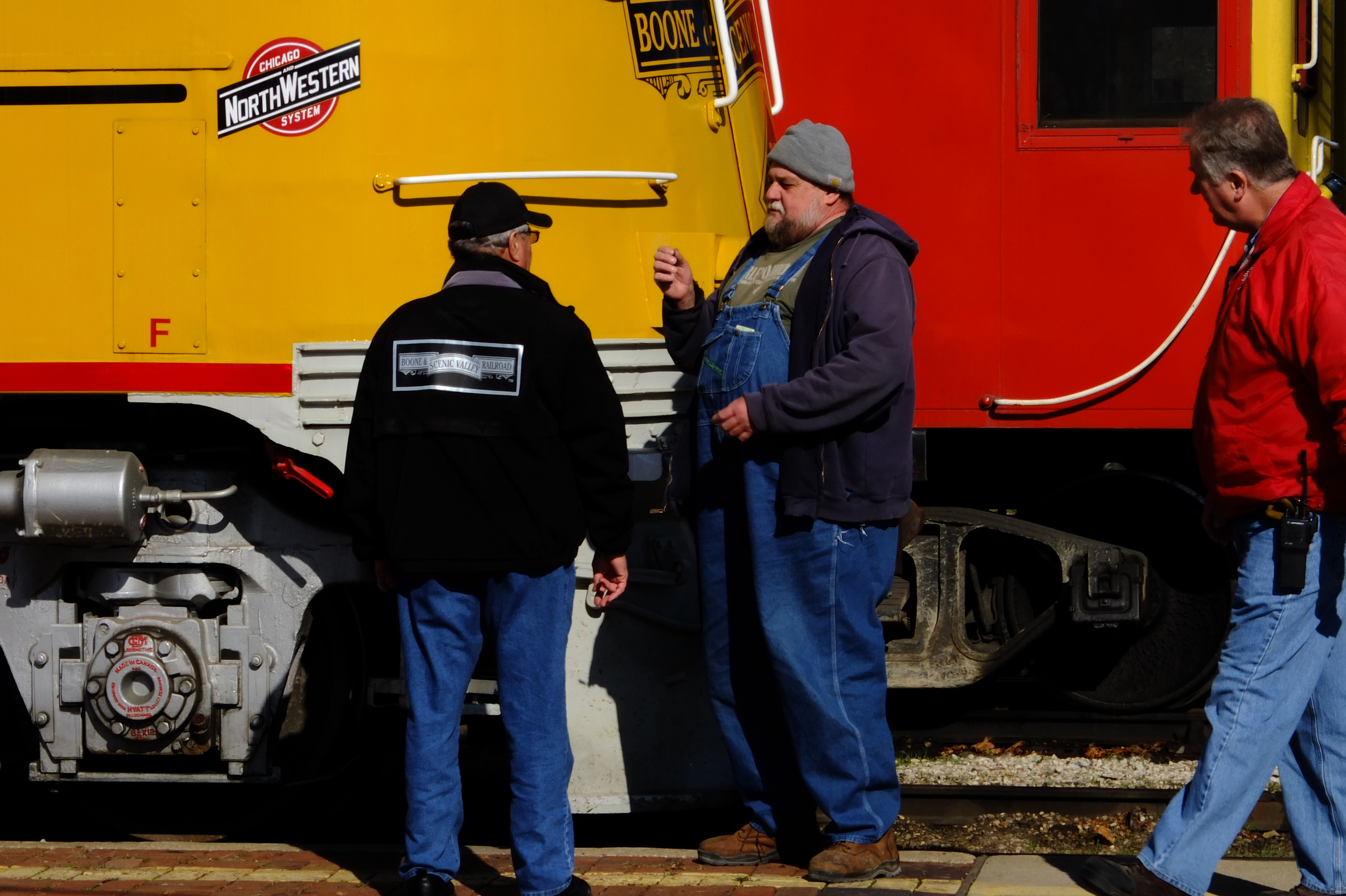
engineers
While we were nosing around the depot area, a couple engineers and assorted other folk were warming up Engine 6540. Unfortunately, by that time Roger Lee and I had already pissed away the entire morning and were running late, so we couldn’t stay to see if they were planning to take the train anywhere.
All in all, it was a strangely entertaining morning. Unfortunately, I failed to photograph the herd of dwarf alpaca (which, upon closer examination, turned out to be a single adult alpaca standing in a herd of goats) or the peculiar reddish-orange sausage gravy we had for breakfast (the gravy was similar in color to parts of the large Pile of Something which, now that I consider it, is a wee bit alarming). Still, I still managed to shoot just under fifty frames during the morning. For me, that’s a lot of photos.
Roger Lee and I plan (well, as much as we plan anything) to do this periodically over the next few months. We’ll take off on a Sunday morning, find a small town for breakfast, and then wander around pointlessly until we’re late, after which we’ll hurry back to the city. It may not be a very tight plan, but it’ll do.
So today I had a brief discussion with a friend who tried to convince me that Gov. Romney is a ‘moderate’ in regard to a woman’s right to choose to have a legal abortion. “He supports abortion in cases of rape and incest,” my friend said, “and if the mother’s life is in danger.”
Well, that’s just fucking great. To whom would a woman have to prove she’d been raped in order to end her pregnancy? A doctor? A court? An elected representative? What evidence would she have to present to prove she’d been raped? How long would it take for that person to decide whether or not the woman would be allowed to terminate her pregnancy? What if the accused rapist denies it was rape — would there have to be some sort of due process hearing before the woman would be given permission to end the pregnancy?
The very notion that a woman should have to request permission from a third party in order to terminate a pregnancy is insulting. For that woman to have to ask permission after having been sexually assaulted compounds the offense. To suggest that women have to be allowed to make a decision about their own bodies is to treat women as if they were children, incapable of making a rational decision about the state of their own bodies. Permission and allow aren’t words that should even enter into the discussion.
You want a moderate position on abortion? I’ll give you one: abortion should be rare, but legal and safe — a decision to be made by a woman in consultation with her doctor. There you go, that’s moderate. Anything that takes the decision away from the woman affected is NOT moderate. Anybody who tries to convince you that it IS moderate doesn’t understand the situation. And this guy? This guy doesn’t have the vaguest hint of a clue about the situation. Moderate, my ass.
Yesterday was probably the last day of ‘good’ weather I’ll see until Spring. I’m using the term ‘good’ deliberately and after some consideration, because in the Midwest near the end of October a day in the mid-70s is a treat — even if it’s windy and cloudy and looks like it might could decide to storm at any moment.
And what’s a guy to do on the last day of ‘good’ weather? Get on the bike, of course, and take off — preferably someplace new. Which is exactly what I did. I rode north on a bike trail out of Ankeny, Iowa into farmland. Open fields, corn, soybeans, barns, cows, and a whole lot of wind.
Long before this was a bike trail, it was part of the the Chicago & Northwestern Railroad line. Before that, the tracks belonged to the Des Moines & Minneapolis Railroad Company. And before that I believe dinosaurs roamed the earth. Now it’s part of the 20,000 miles of rail-to-trail conversions in the United States.
One reason these converted rail lines are popular with cyclists is because they tend to be relatively flat, smoothly paved, with gradual shifts in elevation. That makes for easy riding, of course. And this trail was no exception. Riding north was an absolute breeze. Literally. There was a 17 mph wind at our backs. Riding south was a lesson in wind resistance. Iowa has a lot of wind.
It also has a lot of sky, and fields that used to hold crops, and farm structures, and black dirt, and giant Tootsie Rolls made entirely of hay. I assume that’s hay. Or straw. Do people grow straw? What the hell IS straw? I’ve always assumed that whatever it is the farmers roll up into those massive pellets was something to feed cows. Or horses, maybe. Or, I don’t know, goats. Farm animals. Livestock. Although now I think of it, in the movies barns are always full of hay. Or straw. And some kid is constantly using a pitchfork to move it around from one part of the barn to another, though it’s never quite clear why. Maybe hay it’s like cat litter for horses. I don’t know.
Whatever those massive pellet rolls are for, I rather doubt they’re scattered around the fields for aesthetic purposes. But it would be very cool if they were.
Equally intriguing (to me, at any rate) is the old farm equipment that gets shunted into small paddocks or stashed away behind sheds and barns. I find myself wondering if the farmers think this equipment might somehow come in handy in the future. As spare parts, maybe, or material that can be scavenged and cobbled together with other odd bits of this and that to create…well, something like that blue pick-up bed/trailer-looking unit that’s been attached to what appears to be the framework for some sort of enhanced interrogation device. Clearly that thing, whatever it is, was constructed with a purpose. Unless the wind just picked it up and deposited there, like Auntie Em’s house.
Maybe this is the farmer’s equivalent of the urban dweller’s problem: what to do with that twenty-two pound, twelve-year-old computer monitor that nobody wants, and has been taking up space in the storage room since two computers ago?
It’s the same with old farm vehicles. What do you do with an old 1955 Ford pick-up? You park it out back near the even older 1950 International Harvester pick-up. I was really drawn to that old Ford. It must have been at least partially restored at some point in the last couple of decades, then put back out to pasture. It’s actually a very cool looking machine, and whoever chose that color to restore the truck had some taste.
Back when those two trucks were new, the D&M Railroad was already a hundred years old. A hundred and fifty years ago incredibly powerful locomotives pulled boxcars loaded with coal and grain across those same fields I was bicycling through. I find that oddly comforting. I like to think that in another hundred and fifty years that same band of now-public land will still be used by ordinary folks in some way.
Unless Mitt Romney gets elected. Then we’re just fucked. Go vote.
It was certainly the most quotable moment in last night’s debate. It was also the most telling moment in terms of Gov. Romney’s qualifications to be president. It was almost embarrassing to watch, but President Obama lost his patience took Romney to school.
Romney, it seems, wants the United States to build a bigger World War II-style Navy in order to fight against…who? The Navy of al-Qaeda? What Romney doesn’t understand is that a Navy built for second generation warfare is pretty much useless against a fourth generation warfare enemy like those we face in the modern world.
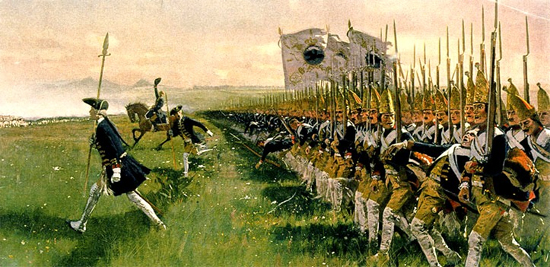
First generation war (1GW) was war between nation-states. It was warfare grounded in line and column tactics, both by land and naval forces; it involved bringing superior numbers into battle. 1GW was fought by troops in distinctive uniforms, which allowed them to tell friend from foe in close combat. It was contained warfare, fought in a limited battle-space. For the most part, military operations and wars were won by the side that brought the most men and/or ships to the battle-space.
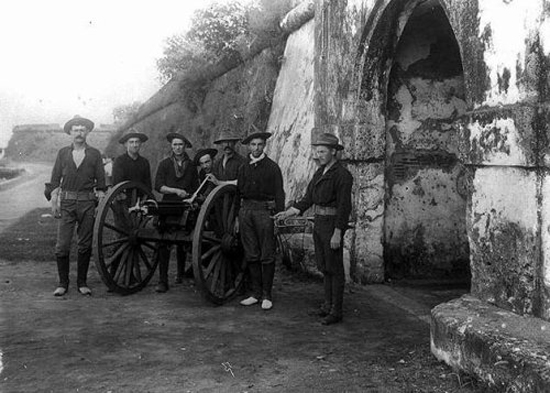
That was true up until around the middle of the 19th century — the time of the American Civil War — when superior firepower generally replaced superior numbers as the critical factor for victory. Improvements in military technology created Second Generation Warfare (2GW). Troops and ships could attack each from a much greater distance, so the battle-space expanded. More effective weaponry (such as the Gatling gun seen below) allowed smaller units to be more effective. The side that could deliver the most munitions on target usually won the battle. There were always exceptions, of course (in 1GW as well), but no military commander would want to rely on exceptions to win a battle.
Both 1GW and 2GW depended on a fairly rigid top-down military hierarchy. Generals looked at maps, decided on lines of battle based on terrain and weather, gave orders about troop deployments, and the troops carried out those orders. Obedience and discipline by the troops was essential in order to synchronize troop movements and insure manpower and firepower would be in the right place at the right time. Individual initiative was frowned upon; it disrupted troop unity and synchronization.
Further improvements in military technology, however, stressed the advantages of speed and mobility over firepower, introducing Third Generation Warfare. Where 1GW depended on superior numbers and 2GW depended on superior firepower, 3GW depended on the ability of troop movements that surprised and confused the enemy. 1GW and 2GW relied on strategies that were essentially linear — bring up the troops or weapons, establish battle lines, then slug it out. 3GW, on the other hand, was non-linear. Highly mobile units could simply skip around or over battle lines and attack from unexpected directions.
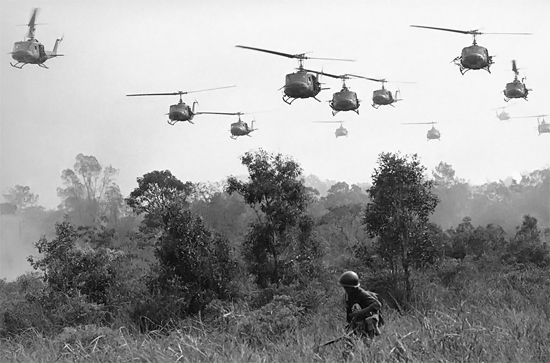
The German’s Blitzkrieg during the Second World War was all about bypassing stationary targets and attacking where they weren’t expected. The use of helicopters in Korea and Vietnam did the same. 3GW is a war of maneuver rather than a war of territory. It requires generals to trust the initiative and decisions of local commanders, which has the effect of decentralizing the command structure. Instead of being given strict orders, in 3GW local commanders receive a general set of objectives and then decide how best to achieve them.
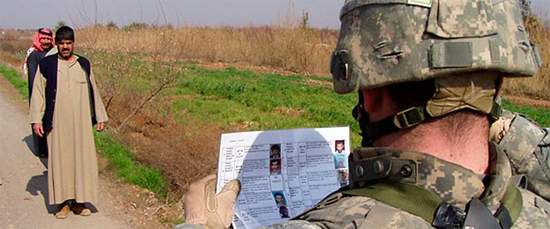
The wars the U.S. are involved in today, however, are Fourth Generation Wars (4GW). They are in many ways more sophisticated and, at the same time, more primitive. 4GW is no longer restricted to nation-states. Non-state participants (like al-Qaeda in the Muslim world or the FARC in Columbia) are actively engaged in 4GW. The goals of 4GW are essentially cultural rather than political, and therefore it’s highly decentralized. Small groups of combatants, often unaffiliated with any larger group, select objectives and attack them without any direction from a general in a uniform. Tactics considered ‘unacceptable’ to the modern rules of warfare are common and utilized effectively. In 4GW, the enemy is largely invisible until they strike.
The suicide vest, the IED, the hijacked commercial airliner — these are the tools of 4GW. Terror is a tactic, not just because of the loss of lives involved, but because of the disruption of ordinary life. The anxiety sparked by error in civilian populations and among the military in-country degrades our willingness to continue to fight.
Most importantly, the enemy in 4GW isn’t hampered by political realities. In the U.S. the political reality is the Commander-in-Chief needs to be able to give the electorate a timetable for success. 4GW combatants are cultural warriors, and they operate on God’s time. If the U.S. is in Afghanistan for another decade, the remnants of al-Qaeda and the Taliban can carry on fighting their low-intensity war secure in the knowledge that at some point we’ll leave — and they’ll win.
Gov. Romney is locked into an out-moded mindset; he still thinks the biggest military is the best military. He wants to create a 2GW Navy to fight in a 4GW world. When he complains that the U.S. no longer has a military capable of fighting two large scale WWII-style land wars on two separate continents, he fails to comprehend that the world no longer fights those type of wars.
Sadly, what Romney and President Obama both fail to understand is that 4GW has an inescapable moral component. When members of the Taliban deliberately shoot a 14 year old girl in the head for advocating education for girls, people are appalled — but because the Taliban is a decentralized religious movement consisting of a shifting array of participants, the blame gets spread out and diffused. When a Predator drone fires a missile and accidentally kills members of a wedding party, it’s clear the act was committed by the United States and blame attaches squarely firmly to the U.S. When U.S. Marines are photographed urinating on the corpses of suspected Afghan insurgents, they are seen as representing the United States, whereas if a shadowy cell claiming some loose affiliation with al-Qaeda of Yemen throws acid in the face of a woman for refusing to wear the hijab, they’re not necessarily seen as representing anybody in specific.
Decentralization not only shifts the command structure, it diffuses responsibility for atrocities. For a modern state military force to succeed against a violent non-state participant, it’s necessary to redefine the term ‘success.’ An army or navy can’t root out the cultural ideas of the enemy; they can only offer support for alternative ideas and perhaps give those ideas fertile soil in which to grow.

 Cool Thing #2: Salon picked a guy who used to be best known for kicking a football (an American football, that is; there are a lot of non-American guys who are best known for kicking a football) but is now best known for writing a scathing letter to a homophobic Maryland state legislator. Salon is saying it’s sexy to be politically progressive. I like that.
 But this is one of the ways you change culture. This is one of the way you shift social attitudes. You celebrate people who stand up for ideas and beliefs that are unpopular. You celebrate people who may not fall into traditionally heroic categories. You celebrate magazines like Salon that celebrate men like Chris Kluwe. And you try to recognize your own stupidity and make an effort not to come across as a fromunda stain.
















 gregfallis.com