a five dango city

It was a cold, cloudy, wet, grey, miserable sort of afternoon and I was downtown with a couple of hours to piss away on nothing in particular. In other words, a perfect time to go larking about in alleys. Alleys are best photographed in rotten weather because there are fewer people working in them. I actually like the people who work in alleys, but they tend to be camera-shy. And suspicious. It’s just easier to do alley work in foul weather.

So I slipped the little X10 in my pocket and headed out to find a nice juicy alley. First, though, I thought I’d make a little detour to visit to the river.

courthouse across the river

courthouse across the river

I’m of the opinion that you can never go very wrong making a detour to visit the river. Any river. That said, I have to admit there are certain aspects of a river that make you better appreciate a good alley. Like the absence of walls and buildings to block the wind. Let’s face it, rivers suck at wind-blocking.

On the other hand, the absence of all those walls and buildings gives rivers the great advantage of meteorological drama. With rivers you get all that accompanying sky. And you get it twice — once overhead and once in reflection.

there are always pigeons along the river

there are always pigeons along the river

There really wasn’t anything particularly interesting going on at the river. There was the usual flock of pigeons morris-dancing around in the sky. Despite the cold and wet, there were a few intrepid bicyclists and runners tooling up and down the riverwalk and bike path. There were a couple of really bitchy Canada Geese fussing at each other.

It took me a while to figure out why it was so quiet. The construction that’s been taking place along the riverwalk for the last couple of years is largely finished. There were no generators coughing away, no backhoes, no bucket trucks or forklifts, no men with jackhammers. The riverwalk was…quiet.

riverwalk intersection

riverwalk intersection

For years the Des Moines city planners have been making a considerable effort to draw people back into the downtown area. It’s not just that developers have been building loft apartments and faux brownstones — the city has been adding a lot of public art and other quality of life amenities. There’s a new dog park, there’s a skating rink, there are bike trails and pedestrian bridges, there’s a botanical center and a science center and a historical building — all near the river.

Construction has just been completed on a small, two-level riverwalk pavilion. When it opens, it’ll include public restrooms (and trust me, that’s important in a city) and a small cafe or coffee shop.

And in front of the pavilion: five dango.

the dangos of jun kaneko

the dango of jun kaneko

The dango are large ceramic sculptures by Japanese artist Jun Kaneko. A dango is a sort of Japanese steamed dumpling. These don’t look anything like dumplings, but I think there is something dumplingish about them. They’re not bland like dumplings, but they’re simple and strangely comforting. These are happy-making works of art.

There’s something very sweet and childlike about the dango. They were only installed a few weeks ago, but they seem to fit right in along the river. Seeing them, touching them, watching other folks look at them with a sort of bemused confusion — it makes me ridiculously happy.

Still, I hadn’t set out to look at the dango; I’d set out to wander idly through alleys. So I didn’t stay.

 the court avenue bridge

the court avenue bridge

But before I ventured forth alleyward, I decided to check out the other structure that’s been under construction along the riverwalk.

Rivers flood. All of them, they all flood. If you look at the large version of the photo below (or almost any photo of the riverwalk) you’ll see several lines of flood levels. What you can’t see are the tree-trunk-sized logs jammed up in the infrastructure beneath those bridges. When the Des Moines River has once-in-a-century floods (which we seem to have every five years or so now, thanks to climate change and the short-term planning of the old Army Corps of Engineers), it really floods. It’s not uncommon for those balustrades to be under water.

police department

police department

I’m mentioning that because the other structure that’s been under construction is a storm pump station. It’s designed to keep those pesky once-in-a-century flood waters under control. Both the pump station and the new pavilion have exceedingly cool flood doors that can be closed during high water. They look a lot like the doors you see protecting the island lairs of James Bond villains.

I spent an absurd amount of time looking at those doors. I don’t really want to see the river flood, but at the same time I can’t wait until the river floods.

and the snow melts slowly

flood pump station

I was just getting ready to head out and find a friendly alley when my cell phone chirped. I discovered I’d spent about two hours walking a grand total of about three and a half blocks. I had to hurry to meet my friend, so I took a shortcut through an alley.

I did manage to shoot a photo in the alley. But it was blurry.

dimwit sheriffs

I have on occasion chided gun control advocates for their lack of knowledge about the very weapons they want to regulate. It’s a pretty basic concept: if you want to regulate certain weapons, you should at least make some minimal effort to educate yourself about those weapons and they way they function. Otherwise you’re going to look like a fucking dimwit.

The same applies to gun rights advocates. If you’re going to make arguments defending your Constitutional rights, then you should at least make some minimal effort to educate yourself about the Constitution and the nature of those rights. Otherwise you’re going to look like a fucking dimwit.

I’m thinking primarily of that small group of county Sheriffs who’ve taken it upon themselves to inform Congress and/or the President of the United States that they don’t have to enforce laws they don’t like. Like this dimwit from Hancock County, Ohio, who wrote a letter to President Obama, saying:

It has come to my attention that you and some of your administration believe that the 2nd Amendment of the Constitution of the United States is up for your personal interpretation, and that there is a movement underway from the White House, and the Senate, and the Congress to take away the right of the people of this free country to keep guns and ammunition for their personal defense and security.

It’s come to my attention that Sheriff Michael Heldman spends too much time reading the lunatic rants at FreeRepublic.com and other extremist web sites. There is no ‘movement’ underway by anybody to deny the right of lawful citizens to keep firearms. That’s just the paranoid delusion of people who’ve watched Red Dawn too many times.

Hancock County, Ohio Sheriff Michael Heldman

Hancock County, Ohio Sheriff Michael Heldman

Sheriff Heldman thoughtfully reminds the president that the Constitution of the great state of Ohio guarantees “The people have the right to bear arms for their defense and security.” He goes on to say:

You have my solemn promise that I will defend the Constitution I swore to uphold. Our free citizens will remain free citizens, and as free citizens, we recognize as our only ultimate governmental authority — the Constitution of these United States.

Any edict, regulation, or so-called ‘federal law’ which infringes on the right of the citizens of Hancock County, Ohio to keep and bear arms for their security will not be tolerated, recognized or enforced by me or my office.

That’s a spectacular display of dimwittedness. Sheriff Heldman might consider taking a few moments to read that Constitution he’s so concerned about. It states pretty clearly in Article VI that the good citizens of Hancock County, Ohio are required to follow the same so-called ‘federal law’ that everybody else living in the United States has to follow.

This Constitution, and the laws of the United States which shall be made in pursuance thereof; and all treaties made, or which shall be made, under the authority of the United States, shall be the supreme law of the land; and the judges in every state shall be bound thereby, anything in the Constitution or laws of any State to the contrary notwithstanding.

That little bit about the supreme law of the land? That’s called the Supremacy Clause, and it basically means Federal law trumps State law and that the Constitution of the United States trumps the constitutions of the individual states. Including Ohio.

In other words, Sheriff Heldman is legally and ethically bound by his oath of office to uphold and enforce the law of the land as it’s written.

There’s another part of the U.S. Constitution that might interest Sheriff Heldman; it’s called Article III. It says: The judicial power of the United States, shall be vested in one Supreme Court. That means there’s only one body that has jurisdiction over the interpretation of the U.S. Constitution — and folks, it ain’t the Sheriff of Hancock County, Ohio.

Fortunately for Sheriff Heldman, nobody has written a law like the one he’s vowing not to follow. Nobody has even written so much as a draft of such a law, let alone attempted to pass it. And no, there’s no secret Executive Order issued by the Kenyan Muslim Communist Anti-Christ to outlaw or seize guns. So the sheriff can relax.

But if a law was drafted, and if both houses of Congress passed that law, and if the President of the United States signed it, then Sheriff Michael Heldman would have a legal duty to enforce it, whether he agreed with it or not. That applies to every sheriff in each and every one of the 3,141 counties and county equivalents in the United States. Including the following sixty dimwits:

  • Sheriff Blake Dorning – Madison County, Alabama
  • Sheriff Ana Franklin – Morgan County, Alabama
  • Sheriff Andy Hughes – Houston County, Alabama
  • Sheriff Scott Mascher – Yavapai County, Arizona
  • Sheriff Joe Arpaio – Maricopa County, Arizona 
  • Sheriff Adam Christianson – Stanislaus County, California
  • Sheriff Jon Lopey – Siskiyou County, California
  • Sheriff Tom Bosenko – Shasta County, California
  • Sheriff John D’Agostini – El Dorado County, California
  • Sheriff David Hencraft – Tehama County, California
  • Sheriff Dean Growden – Lassen County, California
  • Sheriff Dean Wilson – Del Norte County, California
  • Sheriff Mike Poindexter – Modoc County, California
  • Sheriff Thomas Allman – Mendocino County, California
  • Sheriff Mike Downey – Humboldt County, California
  • Sheriff Margaret Mims – Fresno County, California
  • Sheriff Greg Hagwood – Plumas County, California
  • Sheriff Bruce Haney – Trinity County, California
  • Sheriff Justin Smith – Larimer County, Colorado
  • Sheriff Terry Maketa – El Paso County, Colorado
  • Sheriff John Cooke – Weld County, Colorado
  • Sheriff Stan Hilkey – Mesa County, Colorado
  • Sheriff Bill Snyder – Martin County, Florida
  • Sheriff Frank McKeithen – Bay County, Florida
  • Sheriff Mike Scott – Lee County, Florida
  • Sheriff Roger Garrison – Cherokee County, Georgia
  • Sheriff Stacy Nicholson – Gilmer County, Georgia
  • Sheriff Scott Berry – Oconee County, Georgia
  • Sheriff Roy Klingler – Madison County, Idaho
  • Sheriff Kieran Donahue – Canyon County, Idaho
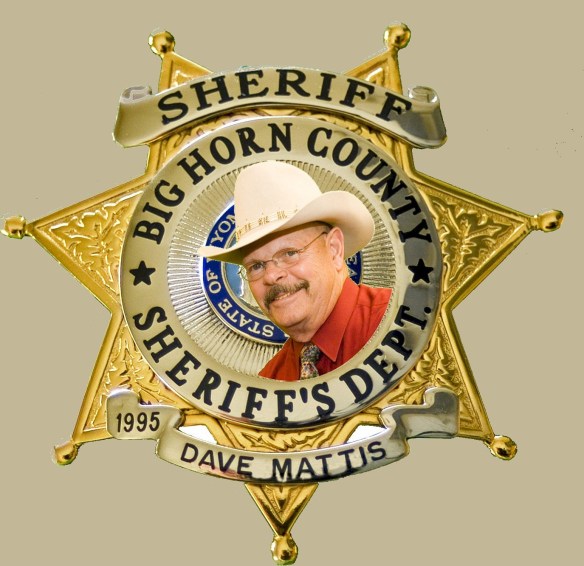
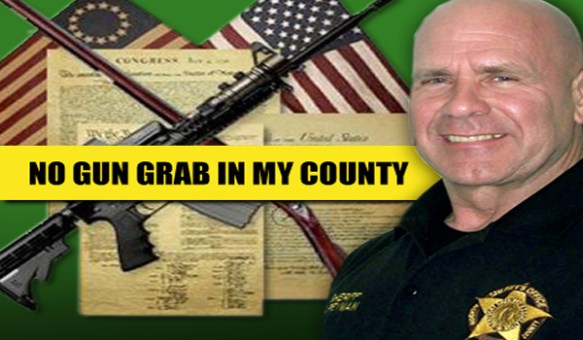
  • Sheriff Denny Peyman – Jackson County, Kentucky
  • Sheriff Robin Cole – Pine County, Minnesota
  • Sheriff Brad A. DeLay – Lawrence County, Missouri
  • Sheriff Charles M. Heiss – Johnson County, Missouri
  • Sheriff Steve Cox – Livingston County, Missouri
  • Sheriff Frank Denning – Johnson County, Missouri
  • Sheriff Ed Kilgpore – Humboldt County, Nevada
  • Sheriff Tony Desmond – Schoharie County, New York
  • Sheriff Richard Devlin Jr. – Otsego County, New York
  • Sheriff Micahel A. Helmig – Boone County, Ohio
  • Sheriff A.J. Rodenberg – Clermont County, Ohio
  • Sheriff Bob ‘Big Block’ Colbert – Wagoner County, Oklahoma
  • Sheriff Glenn E. Palmer – Grant County, Oregon
  • Sheriff Gil Gilbertson – Josephine County, Oregon
  • Sheriff Tim Mueller – Linn County, Oregon
  • Sheriff Craig Zanni – Coos County, Oregon
  • Sheriff John Hanlin – Douglas County, Oregon
  • Sheriff John Bishop – Curry County, Oregon
  • Sheriff Larry Blanton – Deschutes County, Oregon
  • Sheriff Jim Hensley – Crook County, Oregon
  • Sheriff Pat Garrett – Washington County, Oregon
  • Sheriff Dan Staton – Multnomah County, Oregon
  • Sheriff Mike Winters – Jackson County, Oregon
  • Sheriff Brian Wolfe – Malheur County, Oregon 
  • Sheriff Al Cannon – Charleston County, South Carolina
  • Sheriff Chuck Wright – Spartanburg County, South Carolina
  • Sheriff Wayne DeWitt – Berkeley County, South Carolina
  • Sheriff Larry Smith – Smith County, Texas
  • Sheriff Terry Box – Collin County, Texas
  • Sheriff Joel W. Richardson – Randall County, Texas

The office of sheriff is a unique office, to be sure. But it doesn’t confer on those elected to that office the right to ignore the law if they don’t agree with it. These 61 dimwits should either publicly state that they’ll honor their oath of office, or they should have the courage and integrity to resign in protest.

Siren

So. My fingernails. They’re red. Bright red. Incredibly fucking red. I have incredibly fucking red fingernails. I’m typing this with fingers that have incredibly fucking red nails. It’s really distracting.

Last night, during the fourth quarter of the Super Bowl, while it looked like San Francisco might actually make a comeback, I had my fingernails painted incredibly fucking red. The actual shade of red, according to the label on the bottle, is Siren. No, I’m not making that up. Siren. Also on the label is a warning:

Avoid Heat and Flame

For all I know, Heat and Flame may be other shades of red. And if they’re redder than Siren, you can bet your ass I’ll avoid them. But I assume the manufacturers of Siren are actually warning me NOT to put the bottle of fingernail polish in a fire. I hadn’t even considered putting the bottle in a fire — not until they told me NOT to. Now it seems like it might be an interesting experiment.

why yes, my fingernails ARE incredibly fucking red

why yes, my fingernails ARE incredibly fucking red

You may be wondering why I had my fingernails Sirenized. I got to confess, there were moments when I wonder that my ownself. I did it for an Iron Photographer photo. I have discussed the IP process before. I can’t even begin to tell you about the phenomenally stupid shit I’ve done for Iron Photographer photographs. I need to point out that Iron Photographer is about creating artful photographs, not about doing stupid shit. But it’s surprising how often the process involves some degree of stupid shit.

This time it involved Siren. And a shovel. Seriously, it always makes sense while you’re putting the photo together. It’s only when you look at it afterwards that you begin to ask yourself “What the HELL was I thinking?”

Now I have to figure out how to remove this incredibly fucking red nail polish before I can leave the house. Or answer the door (I have an order of Thin Mints scheduled to be delivered and I do NOT want to have Siren-red nails when I’m handing over some cash to the poor innocent Girl Scout. Or her mother).

deserved better

Chris Kyle was murdered yesterday. There’s a good chance you’ve never heard of Kyle, though he was famous in some circles.

Kyle was one of those guys — the ones they make American movies about. He was the son of a church deacon who became a cowboy, then joined the military at the age of 24, and eventually found himself as a sniper in a SEAL unit. And because he was one of those guys they make American movies about, he became the most lethal sniper in the history of US military.

The Department of Defense credited him with more than 150 confirmed kills. His own count put him at more than 250 kills.

Chris Kyle

Chris Kyle

How you personally feel about somebody who’s killed a couple hundred people during war — well, that really doesn’t matter. These facts matter: he was decorated half a dozen times, he was wounded in action a couple of times, he protected a lot of US troops during the decade he was on active duty, as a civilian he participated in a program to help veterans with PTSD recover, and yesterday Chris Kyle was shot at close range and killed.

The extreme right wing immediately exploded with conspiracy theories. The following are quotes taken verbatim from various contributors to FreeRepublic.com:

“I think mooslims are responsible.”

“Islam, Democrat, it’s all the same. Enemies of a free America.”

“It’s a hit, period. We are at war and the president is on the wrong side.”

“Don’t forget Breitbart. And, yes, I think he was offed.”

“Obama is offing his enemies one by one..nothing would surprise me about this Administration, absolutely nothing.”

“They should be offed first. A worthless opposition party is our hugest obstacle. So yes, they should be afraid. The war will be on them. They are pushing it that way. A biased state media its also a problem.”

“Think of it. A ‘civil war’ is eminent, being pushed by a radical leader to boil and explode. He knows that a good portion of his army will split, and that the most dangerous among them, a sharpshooter, someone who could take out this said radical leader. Would it not be in his best interest to take the sharpshooter down before the civil war broke out?”

“Chris Kyle is one of the latest who I believe to have been killed by this Administration.”

“The moment the seals helicopter went down in the Afghanistan ambush, weeks after the Bin-laden raid, I thought it was suspicious, and every Seal death since has been suspicious to me. There is a massive cover-up going on and those that are a threat are being killed.”

“After Obama had our Ambassador killed(YES I believe that was a hit..it was an attempt to swap the Blind Sheihk for Stevens, that was the original plan) I believe Obama is capable of ANYTHING.”

“There is a theory circulating around the Internet that all the recent shootings that are receiving widespread attention are not coincidences and that it is being coordinated at the highest levels to push the anti-gun agenda. So far it’s only a theory but if even one of the shooters can be captured and linked to the Obama administration it would stop them dead in their tracks and expose them for what they really are. O’s not getting away with anything; the hens will be coming home to roost soon.”

It quickly became known that the suspect alleged to have murdered Kyle was a former Marine with PTSD — one of the people Kyle was attempting to help. You might reasonably think that information would mute some of the conspiracy comments.

It didn’t.

“[S]uspects name is Eddie Routh, former Marine, arrested for DWI. Take it with a grain of salt, it’s early yet.”

“Allegedly murdered by a ‘veteran with PTSD’ who Chris was mentoring as a volunteer. Probably just a BS story we’re being fed.”

“[T]his POS is/was in the Marines.” He’s a pawn…he’s either being paid, having his family threatened, or in some other way coerced. Maybe he’s dying of cancer and he was promised his family will be taken care of, if he just “does this little thing” for Barry. After all, Barry’s ruled that he can kill ANY American ANYTIME he wants. Too damned many SEALs have been assassinated recently.”

It must be horrible, to be so afraid all the time. These people must live in a constant state of anxiety and suspicion. They feel so threatened by so many things on so many different fronts. The scenarios they concoct are so removed from reality that it must be exhausting to maintain them. I sort of feel sorry for these people.

Maybe they find some strange comfort in thinking of themselves as being on the same ‘team’ as Chris Kyle. If so, it makes it all the more shameful for them to drag him into their deranged conspiracies.

I suspect I’d have disagreed with Chris Kyle’s politics. Since I never met him, I’ve no idea what I’d think about him as a person. He is said to have decked Jessie Ventura in a bar after Ventura said something disrespectful following the wake of a SEAL member who died in combat — and I’d guess anybody who’s ever heard Jessie Ventura speak has wanted to deck him at some point. By all accounts, Chris Kyle was a nice guy. A nice guy who killed a couple hundred people. I haven’t a clue whether I’d have liked him or not, but I can guarantee you this: I’d have loved to have a beer with him. This was a guy with stories to tell.

Chris Kyle

Chris Kyle

This is what I know: for a decade this guy put on a uniform and put his own ass on the line. I have nothing but respect for that.

Chris Kyle deserved better than this — better than to have been shot down on a gun range in Texas. Better than to be used as a hook for conspiracy theorists.

scary-looking guns

So I watched yesterday’s Senate hearing on gun safety (or as Wayne LaPierre would call it, Gun-Grabber-Palooza). I was pleased to see a woman on the panel of experts. Yes, Gayle Trotter is a gun rights advocate, but at least it was a break from the usual panel of white middle-aged men. I was looking forward to what she had to say.

Here’s a true thing: I generally expect women to be more reasonable than men. More practical, more thoughtful, more grounded in reality. I think that’s true much of the time. Not yesterday. Yesterday Gayle Trotter’s testimony was misleading at best; at worst it was irrational and — there’s no nice way to say this — stupid.

gayle trotter

gayle trotter

Much of her testimony was an impassioned defense of assault-style weapons. She testified,

[W]omen are speaking out as to why AR-15 weapons are their weapon of choice. The guns are accurate. They have good handling. They’re light. They’re easy for women to hold. And most importantly, their appearance. An assault weapon in the hands of a young woman defending her babies in her home becomes a defense weapon. And the peace of mind that a woman has as she’s facing three, four, five violent attackers, intruders in her home, with her children screaming in the background, the peace of mind that she has knowing that she has a scary-looking gun gives her more courage when she’s fighting hardened, violent criminals.

That’s her argument. A woman needs a scary-looking gun when she and her children are being attacked in their home by multiple hardened, violent criminals. Trotter even told the story of Sarah McKinley:

Home alone with her baby, she called 911 when two violent intruders began to break down her front door. The men wanted to force their way into her home so they could steal the prescription medication of her deceased husband, who had recently died of cancer. Before the police could arrive, while Ms. McKinley was on the line with the 911 operator, these violent intruders broke down her door. One of the men brandished a foot-long hunting knife. As the intruders forced their way into her home, Ms. McKinley fired her weapon, fatally wounding one of the violent attackers and causing the other to flee the scene.

That’s a sad and scary story. And it actually happened. But not quite in the way Trotter suggests. The fact is, Sarah McKinley didn’t use a scary-looking assault rifle to protect herself. She used a Remington 12 gauge shotgun — a weapon that wouldn’t be regulated under the new proposed gun control laws. Although Trotter didn’t actually state McKinley used an AR-15 to defend herself, she certainly suggested it. Her testimony was deliberately misleading.

But it was her irrational and stupid testimony that was, in my opinion, more deleterious. She argued that women need firearms to counter the superior strength and size of a male attacker. That sounds logical, doesn’t it. After all, men do tend to be bigger and stronger than women. Men do tend to be the aggressor in domestic disputes. So surely a woman having access to a firearm would make her less vulnerable. Right?

No. Not right. This is where being trained as a criminologist comes in handy. Here are some actual facts:

  • Relatively few incidents of violence against women involve strangers; their attackers are almost always men with whom they are close: boyfriends, husbands, fathers, etc.
  • Research shows men who batter women frequently use firearms to scare them, threatening to shoot them, or shoot their children, or shoot their pets. In other words, abusive situations often begin with men already holding a firearm.
  • Most incidents of domestic violence occur under circumstances in which women are attempting to reduce the tension; they’re trying to avoid a fight. When somebody does reach for a weapon, it’s almost always the man.
  • In the last wide-ranging study that looked at the use of firearms in domestic violence, the data revealed that for every instance in which a woman used a gun to successfully defend herself there were more than eighty instances in which a woman was murdered by her abuser.

By the way, that study was done in the late 1990s. It was the last such study because in 1996 NRA-supported Republican Members of Congress passed a law banning the use of federal funds for research that promoted gun control — and since any research that might suggest guns were a hazard could be interpreted as promoting gun control, all such federal research was halted.

Once you actually unpack Gayle Trotter’s argument that guns make women safer, once you look at real world data, it becomes clear her argument is…well, irrational and stupid. In her testimony, Trotter cites ‘research’ which she claims supports her argument. The work she cites is a book called More Guns, Less Crime, by John Lott. A panel of sixteen scholars under the aegis of the National Research Council examined the claims made by Lott; fifteen of them found his claims to be either invalid or unconvincing. It’s also worth noting that Lott, when his findings were criticized on several websites, used ‘sockpuppet identities’ to support his claims.

john lott

john lott

In other words, John Lott is perhaps not the most reliable of sources when it comes to firearm statistics.

Let me also say this: there ARE some valid and logical arguments that can be made against the suggested ban on assault-style weapons. It’s true some weapons that would be affected under the proposed ban are on the list for no other reason than because they’re scary-looking. But any valid arguments are undermined when gun rights advocates present testimony that is deliberately misleading or simply stupid.

walking

I don’t really like to go walking in the morning. I like to wake slowly. Maybe read a bit before I get out of bed. I like to ease into the day. Drink some juice, eat my morning Advil, have a cup of coffee with too much sugar and too much cream. I like my mornings comfortable. I like my mornings unhurried.

So it makes no sense whatsoever for me to rise early, dress hurriedly, skip my juice and coffee (but not my Advil), and head out for a long walk — especially when it’s damp and chilly. Which is what I did yesterday. But you know…fog and mist, dude. Fog and mist.

why my shoes were muddy

why my shoes were muddy

I don’t like to walk in the morning, but I do like to walk in fog and mist. And since those conditions occur more frequently in the morning — well, there it is.

I like to walk in the fog and mist because they smooth things. They soften the corners of things, they plane off the sharp edges. They make the world soft and a wee bit vague. Fog and mist elevate the ambiguity of the world — everything seems less solid, more forgiving. Less harsh, more indulgent. More romantic, and I mean romantic in the medieval sense of the term. Open to adventure and mystery and imagination.

rail bed

rail bed

I enjoy purposeless walking. I don’t walk for exercise, and unless I’m on an errand, I rarely walk with a destination in mind. Well, that’s only half-true. It’s not uncommon for me to walk to or toward a specific location, but that location isn’t really a destination. I’m not going to that spot for any particular reason. In fact, I’m not really going there at all. It’s just a vague geographical marker, a reminder to suggest I should consider turning around and heading homeward.

I rarely have anything that resembles a schedule, but I always have work to do. Taking a walk gives me a pleasant interruption during my day; walking idly toward a specific fixed point provides me with a very flexible timetable. If I want to walk for, say, an hour, I have a general sense how far I’ll walk in thirty minutes. I know, for example, that it will take me about forty minutes to reach the heliport (which, okay, isn’t really a heliport at all — it’s just a concrete slab that was probably the foundation of some sort of shed, but I’ve never felt any overpowering compulsion to adhere strictly to reality). So when I get close to the heliport, I can decide to turn around and begin walking vaguely in the direction of home. Or I can keep walking. It’s a system.

heliport

heliport

Even though I often walk with a camera tucked away in a pocket or in a bag slung over my shoulder, I’m usually not walking to shoot photographs. I’m normally not actively looking for things to photograph. I’m just walking. With a camera. On the vast majority of my walks, the camera never leaves my pocket or bag. I do sometimes go on photo-walks, but that’s a whole nother thang.

For me, most of my walks are a form of meditation. I generally walk mindfully, as Buddhists like to say. When I was part of a Zen community in Washington, DC the roshi explained mindfulness to me; he said it was the quality of being in the immediate moment, fully aware and cognizant of what’s going on around you, but not involved in it or with it. I was able to tell him, “Dude, I was a private investigator for seven years; I did a lot of surveillance; I’ve got seven years of practice at being mindful.”

So as I walk I notice a lot of stuff. Birds, the condition of a passer-by’s shoes, signs in windows, bits of paper being shuffled along by the breeze, the breeze itself. I can notice stuff and appreciate it without being distracted by it. I don’t feel any need to try to ‘capture’ it with a photograph.

i saw this stick

i saw this stick

But at the same time, it usually registers when I see something that might make an interesting photo. Sometimes it only really registers after I’ve taken a few steps. It’s like my brain sends up a flare and it takes a moment for the flare to rise high enough for me to see it. Dude, you just walked by some interesting graffiti — you might want to turn around and take a look. Like that.

It sounds almost robotic in a way, though it doesn’t feel that way. I mean, it’s as if there’s some sort of algorithmic process taking place below the conscious level. A quiet decision-making process I can mostly ignore. Dude, you just stepped in some mud. “Is that important? If ‘no’ then keep walking; if ‘yes’ then stop and clean shoes.” Naw, not important. “Keep walking. Will it be important later? If ‘no’ keep walking; if ‘yes’ walk on the grass” Yeah, it might important later when I get home. “Walk on grass.”

Everybody has those internal discussions. Don’t they?

eight ball

eight ball

This is why most of my walks are solitary. If I’m with another person, there’s a social obligation to interact. I like walking with other people, don’t misunderstand me. It’s just a different experience. And not always a pleasant one — for them, that is. I usually have a good time. But as I said, I walk fairly slowly. More an amble than a walk. A stroll. A meandering stroll. And I stop now and then. And I comment on stuff. “Do you smell cinnamon?” “That woman had the most extraordinary eyebrows.” “Did you hear that? Black-capped chickadee.” “Sign painters should be required by law to learn the rules of apostrophization.”

I can be annoying on a walk.

powerball

powerball

Yesterday morning on my walk I noticed the lottery jackpot was US$130 million. This afternoon I think I’ll walk toward one of the local convenience stores. Maybe I’ll stop and buy a lotto ticket. There’s one about fifteen minutes away, one about twenty-five minutes away, and another about forty minutes away.

This is what passes for a scheduling decision in my life.

jesus and gun safety

I’m not a Christian; I need to say that right up front. I’m not a Christian, but I’ve read the Bible — both the Old and New Testaments. I’m not a Christian, but I respect the teachings of Jesus. So I was more than a little bit surprised when I was sent a link to this article in the National Review Online: The Biblical and Natural Right of Self-Defense.

The author, David French, makes this the the basic premise of his argument:

Simply put, self defense is a biblical and natural right of man.

He then cites passages in the Old and New Testaments that he suggests supports his argument. I won’t debate his Old Testament arguments because the Old Testament is full of behaviors we no longer tolerate in modern society (like animal sacrifices and slavery). But I can’t help but wonder about his use of the New Testament to support his notion that Jesus would support the Second Amendment.

jesus, armed

French mentions that the disciples of Jesus carried weapons, and that they did it on his command. And hey, he’s right. In Luke 22 Jesus does, in fact, tell his followers to purchase some swords.

Then said he unto them, But now, he that hath a purse, let him take it, and likewise his scrip: and he that hath no sword, let him sell his garment, and buy one.

Let’s put aside the argument that in the original Attic Greek (the language in which the Gospel of Luke was written) there’s some dispute whether there’s actually any mention of a ‘sword’ at all. According to Strong’s Concordance, the Greek word μάχαιρα is the term under discussion. That apparently translates into machaira, which leads to the question: just what the hell is a machaira? Homer (yes, that Homer — the guy who wrote the Iliad and the Odyssey) described a machaira as a knife; Xenophon (another ancient Greek) indicated it was a long knife or short sword useful for cavalry. Both of those men lived a few centuries before Jesus was born, and nobody seems really sure what was considered to be a machaira at the time Luke was written (which was around a century after Jesus died). But for the sake of this discussion, let’s agree to assume it’s a sword.

So the question you have to ask is why? Why did Jesus want his followers to have swords? French would have you believe the answer is self-defense. But if that was the case, why would Jesus think two swords was enough to defend thirteen people?

And they said, Lord, behold, here are two swords. And he said unto them, It is enough.

Jesus may not have been a great military commander, but he wasn’t stupid. He had to know two swords in the hands of his untrained followers would be useless against Roman legionnaires. So why would he think two swords were enough for his purpose?

It would depend on what his actual purpose was. If you’re a Christian, I’d suggest the answer lies in the passage that lies immediately between the two I just quoted:

For I say unto you, that this that is written must yet be accomplished in me, And he was reckoned among the transgressors: for the things concerning me have an end.

In other words, in order to fulfill the scriptures Jesus had to be viewed as a transgressor and arrested. It seems likely he intended to provoke the authorities into arresting him. He’d done something similar a few days earlier; that fuss with the money-changers in the Temple was clearly a provocation. Wandering around with some armed followers could be an effective way of getting the Romans to act.

jesus, child, and glock

If Jesus had intended the swords to be used in self-defense, then he wouldn’t have prevented them from actually being used for self-defense — which is exactly what he did later that evening. When the Romans came to arrest him, one of his disciples drew his weapon and separated a slave from his ear.

  And, behold, one of them which were with Jesus stretched out his hand, and drew his sword, and struck a servant of the high priest’s, and smote off his ear.
Then said Jesus unto him, Put up again thy sword into his place: for all they that take the sword shall perish with the sword.
Thinkest thou that I cannot now pray to my Father, and he shall presently give me more than twelve legions of angels?
But how then shall the scriptures be fulfilled, that thus it must be?

Again, Jesus is saying he has to be arrested and punished in order for the scriptures to be fulfilled. The swords weren’t for fighting; they weren’t for self-defense; they weren’t for personal protection. If he needed personal protection, he says he could hit up God for a dozen legions of angels. That’s a LOT of angels. So it seems probable the swords were intended to incite the authorities to act. A lot of non-violent religious leaders have used similar tactics — Gandhi forced the British to arrest him, Martin Luther King forced the police to arrest him.

It’s also worth recalling that after his disciple smote off the slave’s ear, Jesus re-attached it. Still later, when he’s presented to Pontius Pilate to answer for his ‘crimes,’ Jesus specifically says his followers are not fighting and defending themselves. Pilate asks him if he’s the King of the Jews. And what did Jesus say?

Jesus answered, My kingdom is not of this world: if my kingdom were of this world, then would my servants fight, that I should not be delivered to the Jews: but now is my kingdom not from hence.

If my kingdom were of this world, then would my servants fight. That seems pretty clear. At no point in the Bible does Jesus ever advocate violence; not in self-defense and certainly not in defense of property.

  But I say unto you, That ye resist not evil: but whosoever shall smite thee on thy right cheek, turn to him the other also.

And if any man will sue thee at the law, and take away thy coat, let him have thy cloke also.

Nonviolence, even in the face of monstrous brutality, was the hallmark of early Christianity. All those early Christian martyrs didn’t inspire their followers by going all Bruce Willis on the Romans. They did it by courageously applying their faith even when it meant their certain death; even when it meant the deaths of their loved ones.

David French, in his article, says:

The idea that one is required to surrender his life — or the lives of his family, neighbors, or even strangers — in the face of armed attack is alien to scripture.

Sorry dude, it’s not only NOT alien to scripture, it’s essential to scripture. It’s fundamental to Christianity. If French wants to ignore the New Testament in favor of the much harsher Old Testament, I’m okay with that — so long, of course, as he’s consistent and is willing to exact appropriate punishment for folks who refuse to leave grapes in their vineyard for the poor to gather (Leviticus 19:10) and makes immigrants as welcome as natives (Leviticus 19:34).

But if he’s going to bring Jesus into it, I think he’d do well to actually read what Jesus is supposed to have said and believed:

  Thou shalt love thy neighbour as thyself. There is none other commandment greater than these.

And the scribe said unto him, Well, Master, thou hast said the truth: for there is one God; and there is none other but he:

And to love him with all the heart, and with all the understanding, and with all the soul, and with all the strength, and to love [his] neighbour as himself, is more than all whole burnt offerings and sacrifices.

And there it is. It’s pretty pathetic that a non-Christian should have to remind David French of that.

the integrity of theft

Whenever somebody asks me about ‘my work’ I automatically assume they’re talking about writing, not photography (although it now occurs to me that I almost never discuss writing on this blog — which is probably something I’d think about if I was even remotely self-reflective). I don’t think of photography as ‘my work.’ I don’t even think about it in terms of ‘my photography.’ I think about it as ‘the photographs I shoot,’ which is a subtle but meaningful distinction. At least it’s meaningful to me.

Don’t get me wrong; I take photography seriously. I just don’t take myself seriously as a photographer. So it feels odd to me to write about the photographs I shoot. But a few days ago I mentioned I received an email in which I was asked the following questions:

I guess what I’m asking is how do you develop a personal photography project? Do you just pick a thing and start taking picture of it? Do you make up rules or guidelines before you start? How do you start a photography project?

I decided to take the questions seriously and try to answer them — at least insofar as the three photo series I’ve included on this site. Last time I talked about the Traffic Signals series. Today I’m going to explain the origins of the Faux Life series.

My blindness to what was going on, led me to act by them in a way that I must always be ashamed of, and I was very foolishly tempted to say and do many things which may well lay me open to unpleasant conjectures....

My blindness to what was going on, led me to act by them in a way that I must always be ashamed of, and I was very foolishly tempted to say and do many things which may well lay me open to unpleasant conjectures….

I blame Richard Prince. If you’re not familiar with Prince, he was the first photographer whose work sold for more than a million dollars. What made that amount even more staggering is his work was also the work of commercial photographer Sam Abell. Does that sound confusing? That’s because it is.

Sam Abell photographed the famous Marlboro Man advertisements. What Richard Prince did was re-photograph some of those advertising images. He removed the text, printed them very large, then presented them as a comment on American culture.

Afterwards he got worse, and became quite my shadow.  Many girls might have been taken in....

Afterwards he got worse, and became quite my shadow. Many girls might have been taken in….

Some folks would call that theft; Prince called it appropriation art. The idea is that by removing the image from its original context, new layers of meaning can be attached to the work. Abell’s original photograph was intended to create an association between Marlboro cigarettes and the robust life of a manly cowboy living and working in an idealized vision of the Old West. It was, in effect, a lie. A double lie, in fact. It not only associated smoking with a healthy lifestyle, it also invoked a nostalgic vision of an American West that never really existed. It was a lie used to sell cigarettes.

Richard Prince removed the Marlboro Man from that original context. In doing so, he gave the photograph a radically different interpretation and a different meaning. It became a comment on commercialism. The viewer has a different experience when looking at the re-photographed photograph — he’s no longer being sold a product, he’s being introduced to the idea of using romance as a marketing tool. Prince would argue that this, in effect, makes it a different photograph.

The key was in the door, and she had a strange fancy to look into it; not, however, with the smallest expectation of finding anything, but it was so very odd, after what Henry had said.

The key was in the door, and she had a strange fancy to look into it; not, however, with the smallest expectation of finding anything, but it was so very odd, after what Henry had said.

That concept — that simply by shifting the context of an image it can be turned into an entirely new image –fascinated me. It still does, in fact. I’m appalled that Prince made millions of dollars off Abell’s work, but I have to admit that even though the photographs of Abell and Prince are essentially the same, they DO have a different meaning — and Prince’s image is more interesting.

Anxious and uneasy, the period which passed in the drawing-room, before the gentlemen came, was wearisome and dull to a degree that almost made her uncivil.

Anxious and uneasy, the period which passed in the drawing-room, before the gentlemen came, was wearisome and dull to a degree that almost made her uncivil.

I decided I wanted to play around with the concept of appropriation art. By coincidence, as I was knocking around ideas for an appropriation project, Buffy the Vampire Slayer came on television. I’m a long-time, devoted fan of the Buffy television series. It occurred to me that Joss Whedon had, in effect, appropriated the vampire concept and turned it on its head by shifting the role of vampire slayer from the traditional virile and sober-minded male to a bubble-headed Valley Girl cheerleader. The television show used the tropes of vampire movies to examine the life crises of high school students.

He had suffered, and he had learned to think: two advantages that he had never known before; and the self-reproach arising from the deplorable event in Wimpole Street, to which he felt himself accessory by all the dangerous intimacy of his unjustifiable theatre, made an impression on his mind....

He had suffered, and he had learned to think: two advantages that he had never known before; and the self-reproach arising from the deplorable event in Wimpole Street, to which he felt himself accessory by all the dangerous intimacy of his unjustifiable theatre, made an impression on his mind….

So I decided to steal Buffy. I mean appropriate Buffy. But I discovered it wasn’t enough to extract one particular moment from a television episode. It wasn’t enough to shift color photography to black and white. It wasn’t enough to manipulate the shadows. That certainly changed the image, but it didn’t really add any meaning to the image.

It needed something else. And by still another coincidence, I was engaged in an ongoing discussion with a friend about the novels of Jane Austen. I was arguing that you could read her novels as detective stories in which the modern notion of crime was replaced with social deviance. Murder was replaced by incivility. Jane Austen’s protagonists were all keen observers of life, all had a detective’s eye toward detail.

We cannot help ourselves. We live at home, quiet, confined, and our feelings prey upon us.

We cannot help ourselves. We live at home, quiet, confined, and our feelings prey upon us.

So there it was. I would steal an out-of-context moment from Buffy (or the spin-off series of Angel), then I would steal an  out-of-context line from a Jane Austen novel, after which I’d combine them with the intent of creating something altogether new. I hoped to give a new meaning to both the image and the text.

It was a lot harder than I thought it would be. I wanted to catch moments of visual drama. I wanted there to be some compositional tension within the frame. But I also wanted to be sure the faces of the characters were obscured. If the viewer sees Buffy, I reasoned, then the photograph becomes all about Buffy. There was, as you can imagine, a great deal of Photoshop work involved.

Once I had the photograph, I needed to search the novels of Jane Austen to find an appropriate line. It had to be a line that, when associated with the photograph, would convey a completely different meaning than it did in the story. And yet the line still had to be congruous with the image.

It took a lot of searching. Jane Austen did not write short novels.

The invitation was refused.

The invitation was refused.

There are now just over thirty photographs in the series. That seems like a nice size for a project. I keep thinking about returning to the series and adding new images, but it would just be for my own amusement. As an experiment in appropriation art, the series is complete. I did what I wanted to do, I’ve learned what I wanted to learn.

The project convinced me that appropriation is a valid art technique. It’s certainly ethically dodgy if the appropriator is making buttloads of coin off another person’s original work. But the technique of appropriation itself has artistic integrity.

Or at least that’s what I tell myself.