Naming new things is tough work. Back in the 1850s they had to coin a term to describe the physical manifestation of communications sent over a distance by electrical signal. Somebody came up with telegram. That’s a portmanteau of tele, which is Greek for ‘over a distance’, and gram, also Greek, meaning ‘something written or drawn’. It’s really pretty catchy, but telegram totally pissed off language purists of the day. They absolutely hated it. Hated it.
May I suggest to such as are not contented with ‘Telegraphic Dispatch’ the rightly constructed word ‘telegrapheme’? I do not want it, but … I protest against such a barbarism as ‘telegram.’ [Richard Shilleto, Cambridge Greek scholar, London “Times,” Oct. 15, 1857]
I’m not any sort of purist, but I find Instagram objectionable as a word. It’s so bland and corporate. It could have been worse; they might have called it Instagrapheme which, let’s face it, would have been intolerable. Still, Instagram is an unattractive and unappealing name, and it made it easy for lots of folks (including me) to sneer at it. And we did.
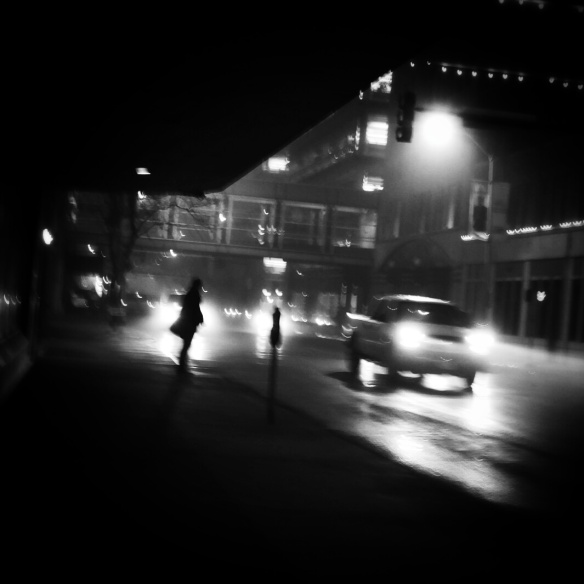
We sneered at Instagram for being a cheap, easy, lazy way to turn crappy photos into images that look artsy. Not ‘artful’ or ‘artistic’ but artsy. We sneered at it because the learning curve for using Instagram is — well, it’s hardly a curve at all. It’s almost a straight line. You shoot a photo with your cell phone, you flip through a couple dozen preset filters until you find one you like, tap to apply it, and hey bingo, you have yourself an artsy photo of your drunken friends at a tacky Chinese restaurant.
That ease of use is a big part of the appeal, of course. It allows any tunahead to bang out a halfway decent photograph. But it pisses off photography purists (purists of every persuasion spend a lot of time being pissed off, have you noticed?). The ease of use is another thing that makes Instagram so sneerable.
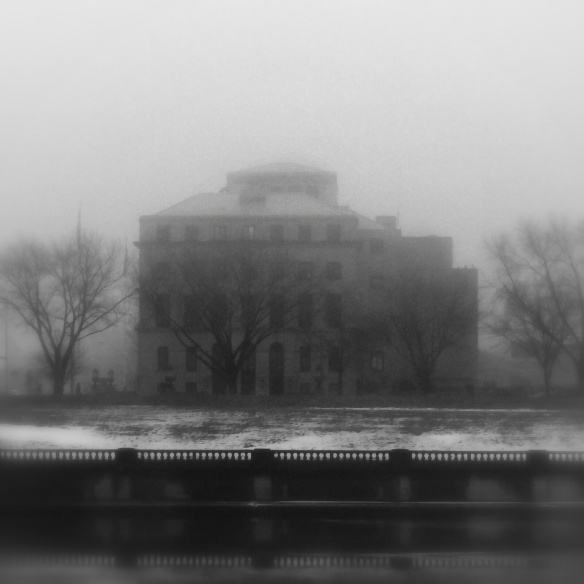
I grew up shooting film — and shooting it with a completely manual rangefinder camera without a resident light meter. That gave me certain inalienable sneering rights. But at the same time, I’m totally in favor of the democratization of photography. I love the fact that so many people are out there photographing so many things.
That put me in a damned awkward position. How can I embrace the democratization of photography and at the same time still be able to sneer at Instagram? I told myself the app, at its best, was just a cheap imitation of real photography. At its worst, it was the devil itself. I told myself a lot of people — people who might otherwise actually learn the important mechanics and physics of photography — would substitute the creative process (which, let’s face it, can be really hard work) with the unthinking application of a filter. So I could argue that sneering at Instagram was actually good for photography. Right?

All that sneering was made a lot easier by the fact that I’d never really looked at Instagram. Then I bought a smartphone with a tolerably decent camera. And suddenly everybody was all “Dude, join Instagram.”
So I reluctantly decided to look at it. And to my smug delight, I discovered I was right. It really was a cheap imitation of real photography. It really was an artistic wasteland of hipsters in vests photographing their lattes, and hiphop wannabes shooting pictures of their two hundred dollar sneakers, and women shooting duckface selfies in bathrooms, and …whoa…hold on hold on…what’s this? What the hell is this?
‘This’ turned out to be good work. I started to come across photography I actually wanted to see. Images that impressed the hell out of me and made me want to see more. On Instagram.
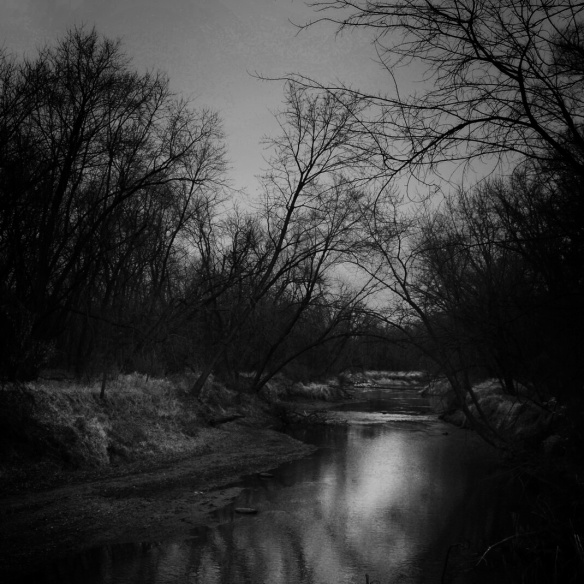
I found solid, serious street photography. And good travel and landscape photography. And lawdy, good fine arts photography. I found good editorial news photography. Good color photography, good black-and-white photography. Good portraiture. Good photography. All of it right there in a 3-inch square on Instagram.
And that good shit, it was scalable. It looked good in a 3-inch square on my phone, but it continued to look good in larger versions. I was not expecting that.
Yes, yes — there’s a staggering amount of appalling crap on Instagram, but there’s a staggering amount of appalling crap everywhere in the world of photography. It’s one of the facts you accept if you believe in the democratization of photography. You accept the existence of the crap, and you try to help stem the tide by not making crap yourself.

So hey, I joined Instagram. Quietly. Uncomfortably. Under an assumed name. Like an atheist going to Sunday School. I began shooting a simple little series — something I could delete easily if I decided I was contributing to the crapitization of photography. That project gradually transformed and grew into something more complex, but coherent and constrained — which is how real photo projects start. I may write about that project at another time, but what it meant for me was that I was taking Instagram seriously. How the hell did that happen?
It also meant (in my mind, at least) that I should limit that account to that project.
So I created a second Instagram account. Yes, I actually created a second Instagram account, and devoted it to shooting black-and-white images.
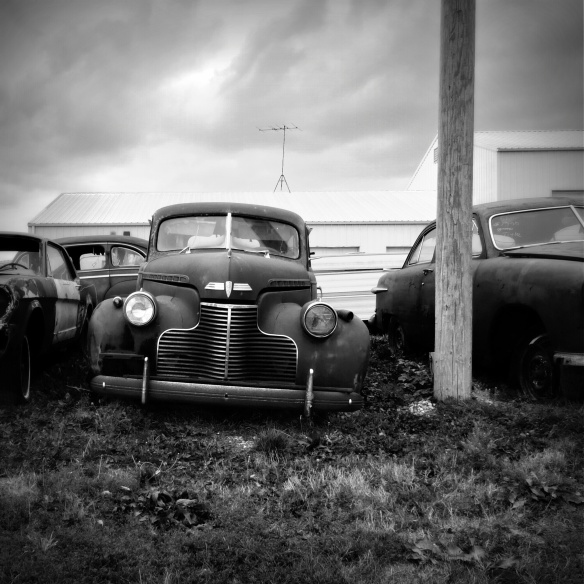
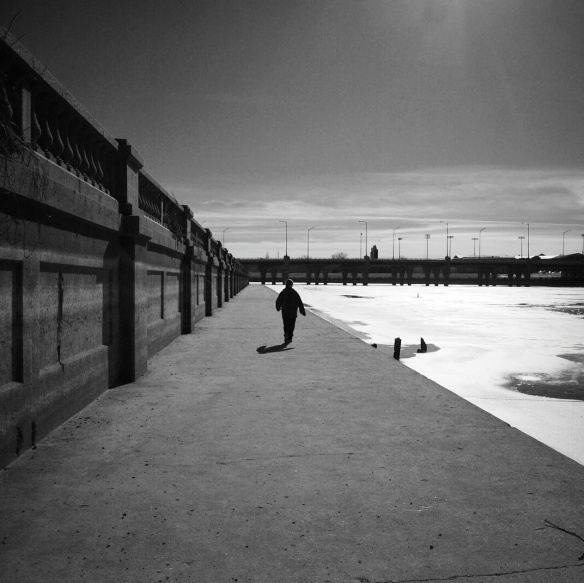
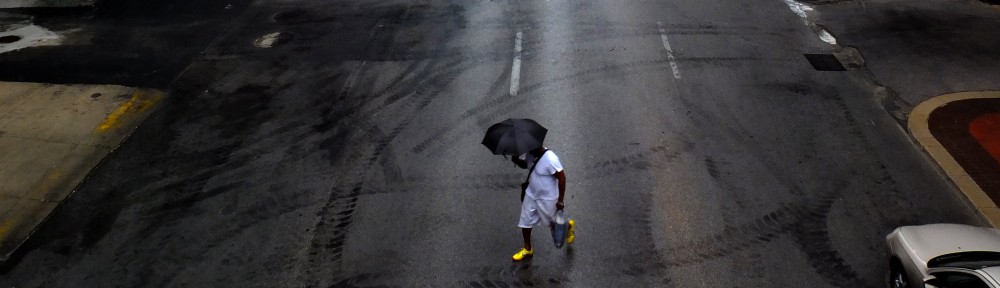
The photographs you see here, and along the side of the blog (and if you’re interested, you can see more of them here) have taught me that Instagram is an incredibly flexible and elastic app. You can shape it to fit whatever you want to photograph, in whatever style you want to photograph it. You don’t have to rely on their crappy little filters; there are some very fine processing apps for your mobile phone that give you a metric buttload of control over the image.
Instagram, it turns out, is not about filters. It’s not even about easily turning crappy photos into artsy ones. It’s about distribution. It’s about putting the photos out there.
Instagram may, in fact. turn out to be the devil after all. It can be that seductive. But it’s the devil that’s likely to have the most influence on the shape of modern photography.
Here’s where I drop in some more esoteric information. Eight hundred years ago King Richard I of England was captured on his way back from the Holy Land, where he’d been cheerfully slaughtering Muslims during the Crusades. While he was imprisoned, his brother John attempted to usurp the throne. When Richard won his release, King Philip of France sent a message to John, warning him. The message read: Look to yourself. The devil is loose.
The analogy isn’t perfect, but the warning is. The devil IS loose. And you know what? I kind of like him.









 gregfallis.com