just kill it already

Okay, first thing — stop predicting the Death of the Democratic Party because the Iowa DNC shit the bed. What happened is still happening in Iowa isn’t because of a flaw in the national party; it’s a problem with the Iowa DNC. But the Iowa caucus system should die.

Second thing — stop with the conspiracy theories, already. This didn’t happen isn’t happening because the Russians or Chinese (and certainly not the Ukrainians) hacked the system. It’s not because of the coronavirus, or aliens from outer space, or some barbarian invasion (although, Jason Momoa WAS raised in Iowa, so…never mind). It was apparently some sort of an app fuck-up, which shouldn’t surprise anybody who’s ever downloaded an app. I’m confident we did it to ourselves. We’re Democrats; we don’t need help fucking things up. Even so, the Iowa caucus should die.

Third thing — if we’re lucky, this will be the very last Iowa caucus. Don’t get me wrong. I love the Iowa caucus system as performance art. It’s messy, it’s archaic, it’s often frustrating, but sporadically entertaining. Participating in the Iowa caucus is like being in an old movie where Mickey Rooney says, “C’mon gang, let’s put on a show!” And every four years, we do. But this should end, and the caucus should be put out of its misery.

Actual scene from the 2020 Iowa Democratic Caucus

It’s politics by amateurs. Dedicated amateurs. Seriously. Everybody I’ve met who runs, helps, or participates in the Iowa caucus is willing to put in a LOT of effort to make it work. At least in their own precinct. Last night, I help set up tables for signing in voters. I was one of eight or so volunteers who signed in the voters, making sure they were registered as Democrats, showing them where/how to register that night if they weren’t. After the doors were closed, I joined the rest of the caucus-goers and participated in the actual voting. When it was over, a lot of folks stayed behind to help clean up, put away the chairs, and fold up the tables before going home. Nobody got paid to do any of that.

And that’s one of the reasons this eccentric practice should die out. It should be run by professionals, not enthusiastic amateurs. Professionals can also fuck things up, of course. I mean, it looks like the problem this year is because of the app used to improve things, which was designed by professionals. But professionals fuck things up in a professional way. Putting a professional fuck-up in the hands of amateurs only compounds the fucked-upedness. The current caucus system should be smothered in its sleep.
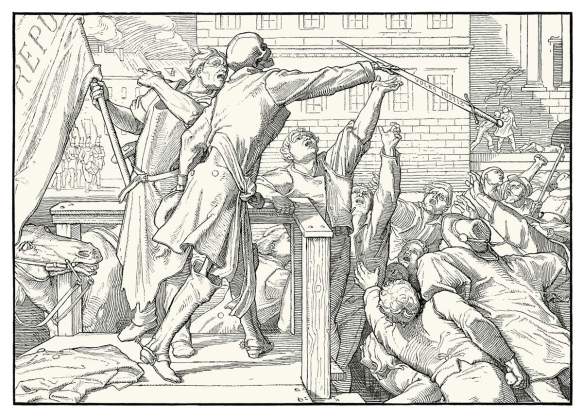
Actual scene from the 2020 Iowa Democratic Caucus

You may be asking, “Greg, old sock, how does this caucus thing actually work?” Good question. Also, stop calling me ‘old sock’. It works like this:

  1. Everybody gathers in the middle of the room. Our precinct had about 240 people sitting in folding chairs.
  2. We count off. “One! Two! Three!” and so on. The total number is compared to the number of folks who signed in. If the numbers agree, we move on.
  3. We split into candidate groups. Warren supporters here, Bernie supporters there, Amy supporters over there, and so on.
  4. We count off again, this time within the group. The group totals are added together and compared to the number of folks who signed in. If the numbers agree, we move on.
  5. If a candidate doesn’t get at least 15% of the number of voters who signed in, that candidate is non-viable. Supporters of non-viable candidates can either choose to stay uncommitted or join a viable group.
  6. After this realignment, we count off one more time. The new group totals are again compared to the number of voters signed in. If the numbers agree, that’s it. We can all go home.

I’ve left out a few minor procedural steps, but that’s basically the process. It never goes entirely smoothly. Never. It’s remarkable how people can screw up the simple process of counting off, but it happens every time. Somehow, in some group, somebody will call out the wrong number and we have to count off all over again. Without fail, every time. It’s hilarious. It’s maddening. It’s an effective 19th century process that was quaint by the 1970s. It should have died with Elvis.
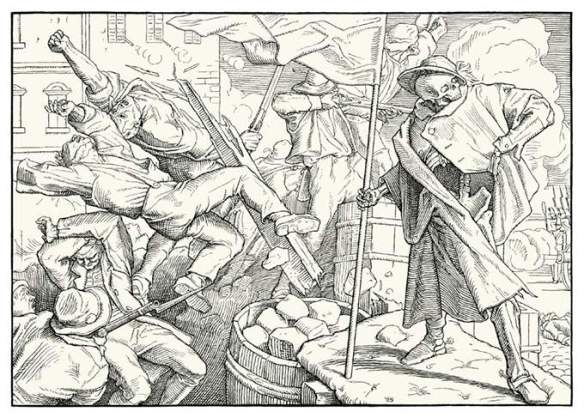
Actual scene from the 2020 Iowa Democratic Caucus

Actual results? In our precinct, the first preference alignment was almost evenly split between five viable candidates — Warren, Biden, Sanders, Pete, and Klobuchar each had about 40 supporters, which left about 40 supporters of non-viable candidates. After the realignment Pete took a big lead, followed by a tie between Biden and Amy, closely followed by Warren, with Bernie in last place.

That’s one out of nearly 1700 precincts. It took us about an hour and a half to do that. Considering most of the folks arrived a bit early, and several of them stayed late, the average caucus-goer in my precinct probably spent 2-2.5 hours out of their evening. Not every voter can — or is willing to — piss away that much time. Another reason the caucus system should be strangled with piano wire.

The current caucus system should be relegated to historic re-enactments, like Civil War enthusiasts engage in. It should be nothing more than an eccentric form of political cosplay. I can see it being gamed out in high school civics classes for extra credit. There should be a movie made in which a caucus goer is murdered and everybody who attended the event is a suspect. Jason Momoa could star in it. But the actual living system should be held underwater until it gives up and dies.

I haven’t even mentioned the fact that Iowa doesn’t actually represent the nation in terms of demography. Or that its coveted ‘first in the nation’ status should be shifted to some other more representative state. I haven’t mentioned those things because they’re not specific reasons to kill off the caucus system. But as long as we’re plotting to murder the caucus system, we might as well hide the body by dumping it in the middle of the primary season and hope it’ll go unnoticed.

Again, I really enjoy the Iowa caucus. I really do. But the fact is it’s just too stupid to let live. Democracy is too important for this to be the showcase. The Iowa caucus system needs to die. We need to kill it.

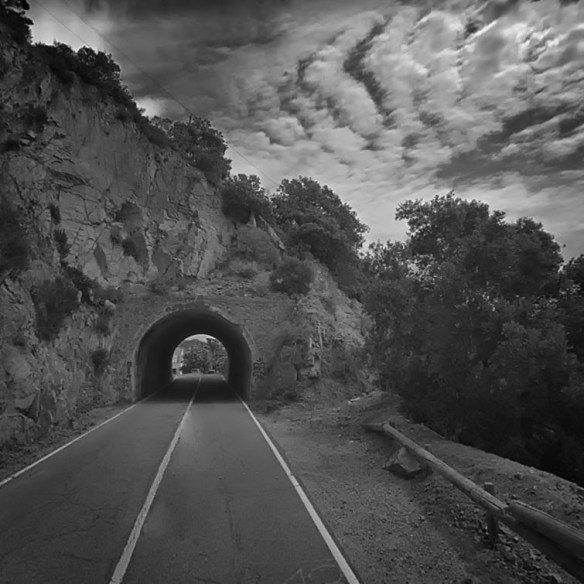
knuckles, returned to the shelf

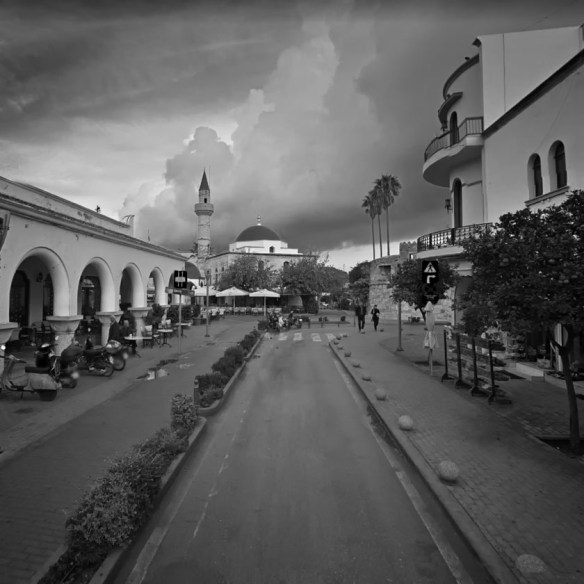
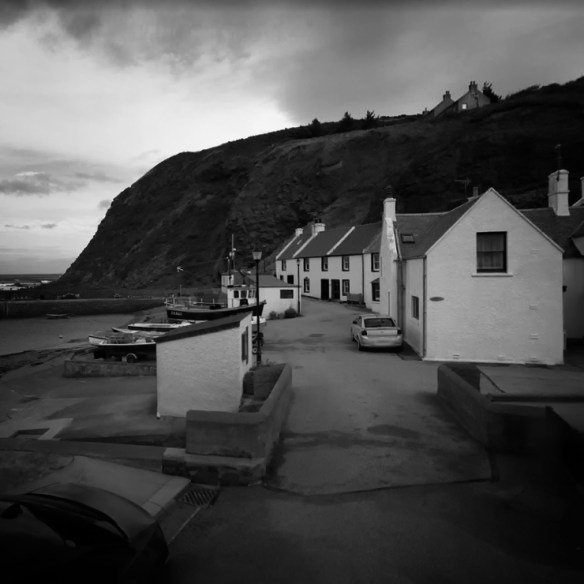
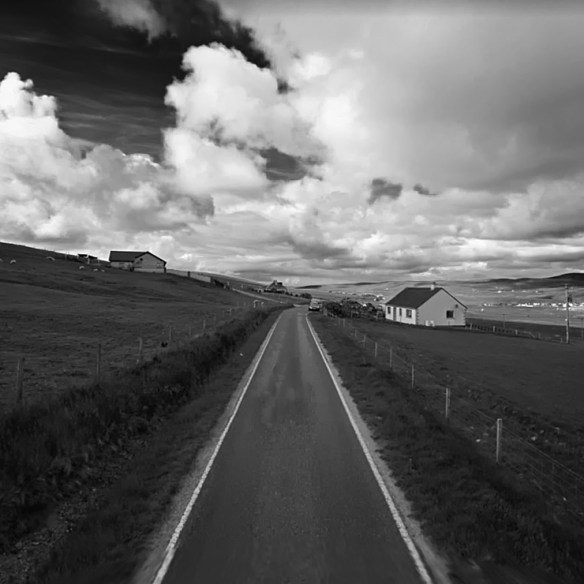
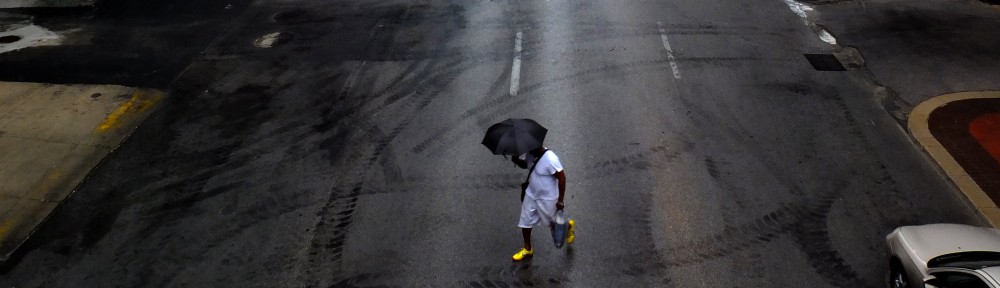
A hundred photographs. A nice round number, and a good stopping point for the Knuckles Google Street View project. I thought about maybe stretching it out until February 18th, which would end the gig a full year from the start date, but…naw. A project shouldn’t be ‘stretched out’ just to reach an anniversary. A project ends when it feels done.

This project feels done to me. Like every Knuckles project, it began primarily as a way to amuse myself. And I mean ‘amuse’ in the older sense of the term: to cause a person to muse about something. To think about stuff. A project, for me, is just a device to engage my interest and attention. A project allows me to become absorbed, to feed my curiosity, to make me think. Granted, the thinking might seem frivolous — at least on the surface — but it’s thinking. Thinking is fun.

The GSV project made me think about a lot of stuff. The practice of curation, for example. I mean, the entire project is, itself, an exercise in curation. We’re talking about ten million virtual miles of highways, streets, avenues, dirt roads, and donkey pathways in eighty-three countries, all dispassionately captured by robotic cameras, each of which has six to eight lenses. That’s a lot of images. I only saw the tiniest fraction of that universe of images, and culling a hundred images out of that number meant some heavy-duty thinking about what makes an image interesting.

It was exceedingly frustrating to have NO control over the elements of composition. I came across a LOT of scenes that would have made a compelling image, except for some distracting element — a trash can, a parked car, a fence, a sign that interfered with the image. Stuff that would be easily dealt with in person. I knew that frustration would be baked into the project, of course. But it was still maddening.

The project also made me think about culture — how culture spreads through the world, and where it spreads from. I saw business parks in Illinois that looked like business parks in Turkey that looked like business parks in Japan. I saw a town in Indonesia that was jammed with US military surplus Jeeps transitioned into local utility vehicles. I saw a statue of a baseball player on a pedestal in Japan, and basketball courts in Slovakia. I saw American-style graffiti everywhere.

In fact, ‘America’ was everywhere. If you followed the project, you may have noticed the majority of the images are located either in the countryside or in small villages. That’s because so many cities — or large areas of the cities — were indistinguishable from each other. Aside from the signs, a city block in Uruguay looked very similar to on in Romania or Indiana. And they were all dull. The oldest neighborhoods of the oldest cities, on the other hand, were often very distinct. Unfortunately, the streets in those neighborhoods were almost always so narrow, so cluttered, so visually busy that despite how interesting they were, they simply weren’t amenable to a good image.

The project made me think about architecture. Not just the obvious architecture of buildings and homes, but also the architecture of infrastructure. Bridges, power lines, bus stops, sheds, fences. Rural mailboxes in Scandinavia look different from those in rural mailboxes in Canada, which look different from those in rural Indonesia. Telephone poles in former Soviet republics and telephone poles in Mississippi are distinct from each other. It was sometimes easy to tell what part of the world you were in simply by looking at the local infrastructure.

Local infrastructure reflects local attitudes. I mean, consider tunnels. You need to build a road through a hilly or mountainous landscape, what do you do? Some nations will build tunnels; other nations will just level the landscape. That approach tells you something about cultural attitudes.

I was also surprised by how many animals I saw on Google Street View, though I don’t know why that surprised me. We live in a world of animals, don’t we. Pets, livestock, wildlife. Dogs, goats, birds, horses, cats, cattle, sheep, chickens. And, of course, people interacting with those animals. Walking dogs, herding cattle, feeding goats and chickens, playing with cats. These were often the most frustrating images, because there’s something strangely emotional about the way humans interact with animals. But this is another of the problems of relying on a robotic camera; robots have no interest in decisive moments. Nor do animals. Animals move. People will stop and stare at a Google Street View car, but to a dog or a donkey, it’s just another car. So the vast majority of images of animals interacting with people (or other animals) were blurry and useless. Except for those of sheep and cattle. Those guys just stand there.

This has been a fun project. It’s been frustrating, of course, but it’s been interesting. And now it feels finished. It didn’t work out quite the way I’d expected (or hoped), but it did work out in ways I hadn’t anticipated. I hadn’t expected weather to be so important. I hadn’t expected cloud formations to be such a factor. I hadn’t expected telephone poles or trees to play such a prominent role. I expected people to be a more critical element.

I like the fact the project didn’t take the shape I thought it would. I like its final shape. I’m satisfied and pleased. And ready to be done with it.

With the final photo today, Knuckles Dobrovic is going back on the shelf. Not forever, obviously, but for a while. One of the things I’ve learned from the Knuckles projects is how much I like the structure that’s necessary for a project. I like the restrictions and the constraints that impose a certain discipline on me. I enjoy pushing against those restrictions and constraints. But this road ends here.

At some point, I’ll take Knuckles back off the shelf. At some point in the future I’ll cobble together some semi-lazy rationale for a project to distract me from all the other stuff I ought to be doing. Until then, if you’re interested in seeing all the photos — or any of the various Knuckles projects — you can find them here on Instagram.

EDITORIAL NOTE: It’s been pointed out to me that I neglected to include links to the origin of the project and the halfway point. I’m a putz. Fixed it, though.