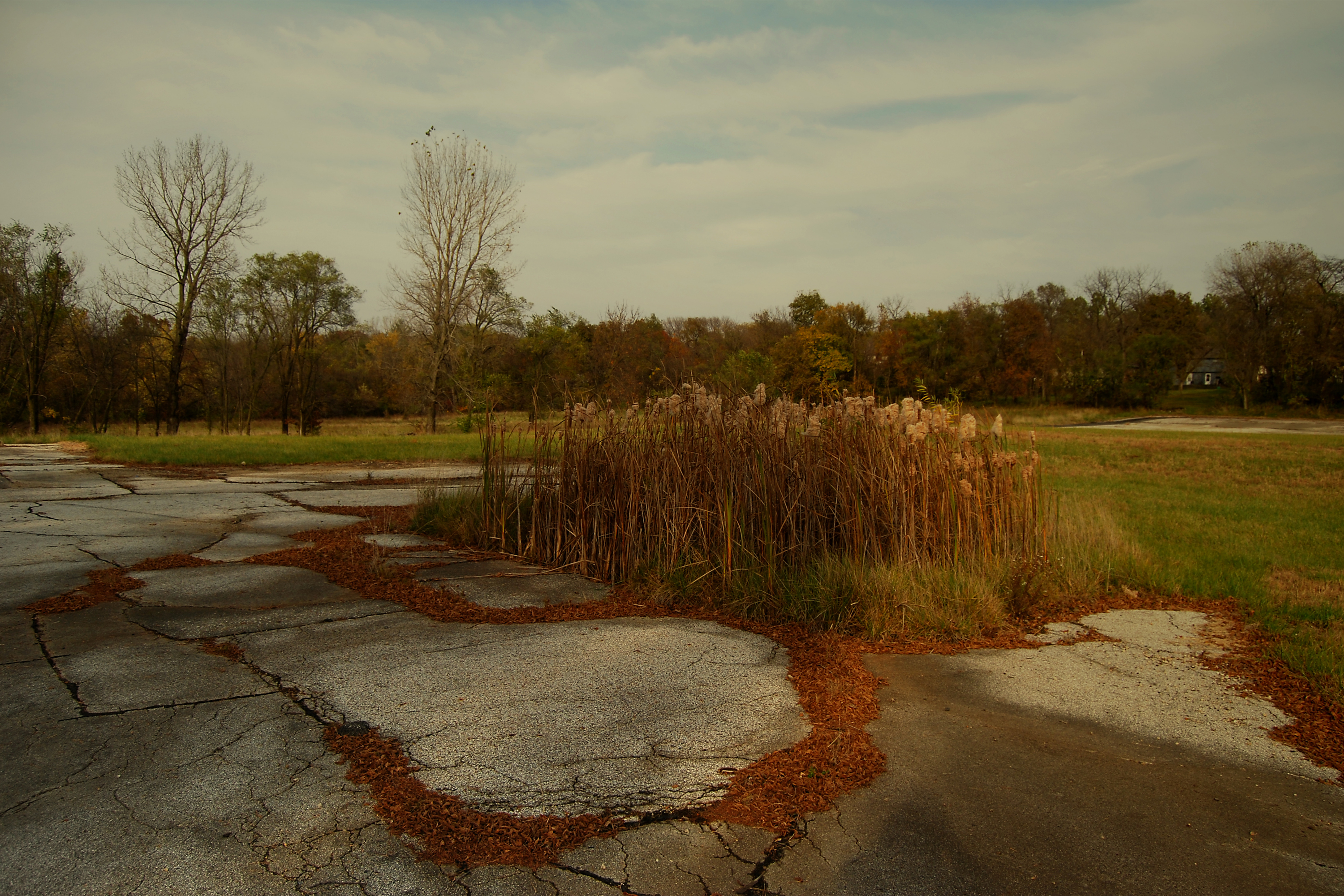
There’s an empty lot I like to visit. There used to be a supermarket at that location. I don’t know quite when it was torn down, but nature is slowly having its way with the lot. People once bought Cheerios and pork chops and dish-washing detergent here. Now it’s home to field mice and garter snakes, to rabbits and hawks, to crows and the occasional deer.
I find that oddly appealing.
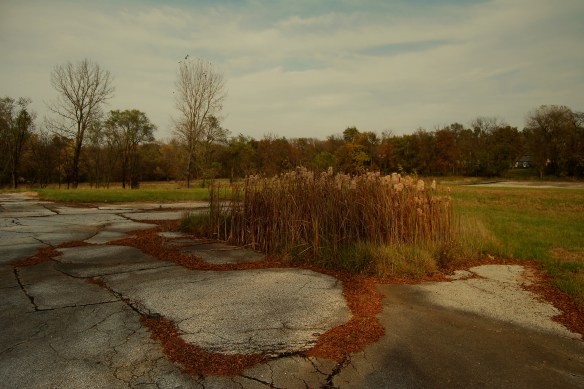
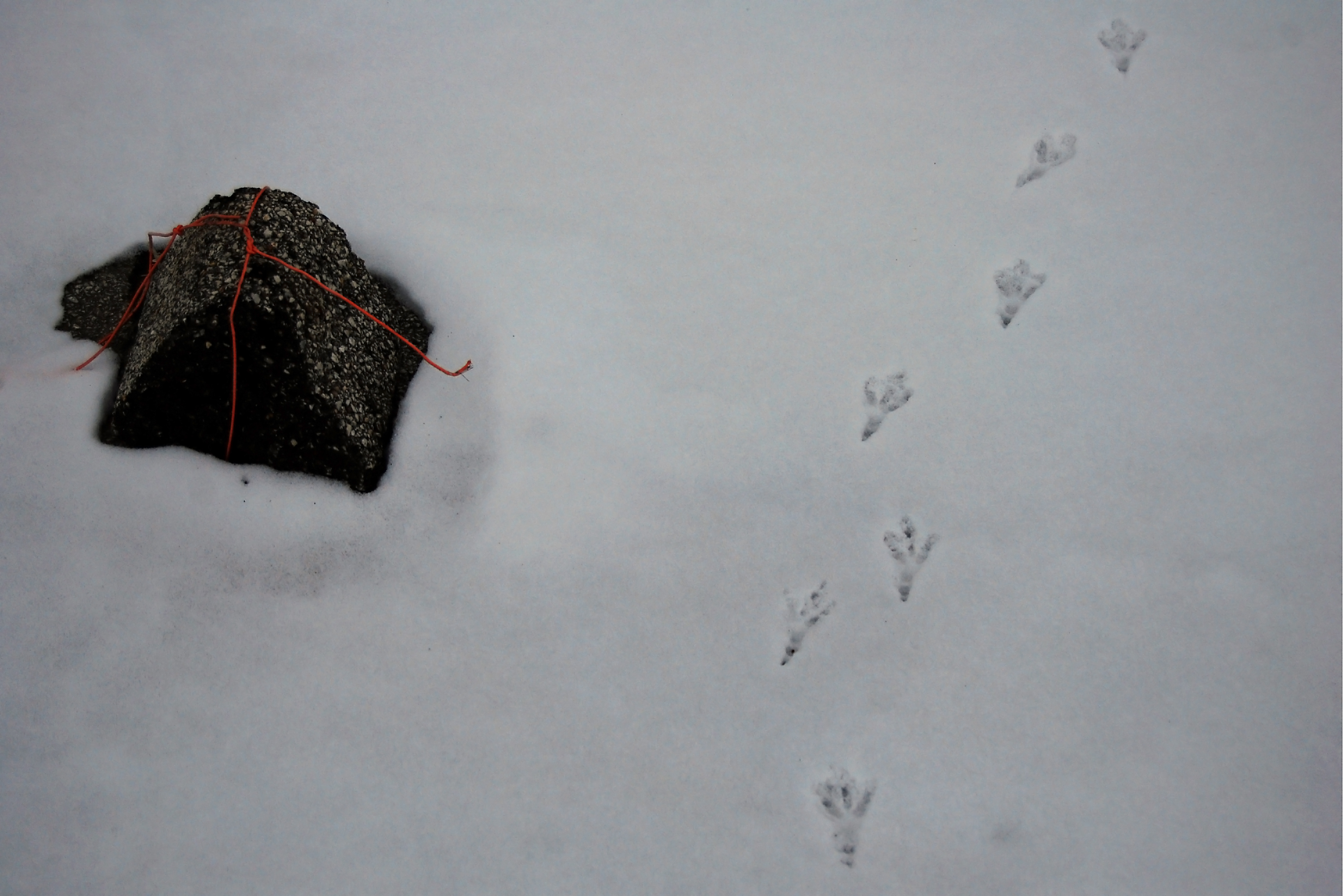
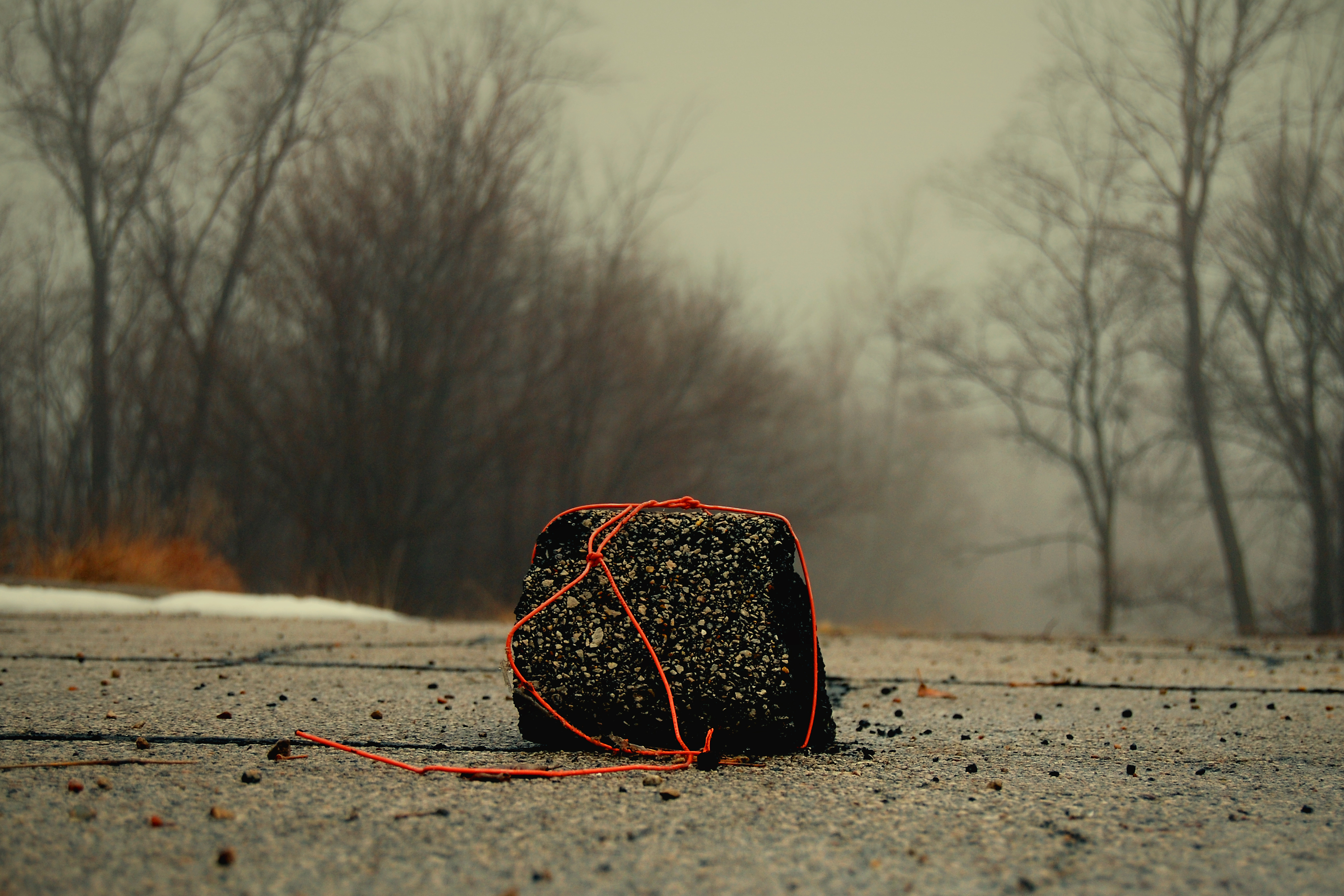
As I wandered around the empty lot back in November I noticed somebody had tied a length of red PVC-coated wire around a chunk of broken asphalt curbing–presumably to make it easier to carry. I’ve no idea why anybody would want to carry a chunk of broken asphalt curbing anywhere, but apparently somebody did–and wanted to make the chore less onerous (although, in truth, the bit of curbing couldn’t have weight more than a couple of pounds). In any event, somebody had toted the curbing some twenty yards from its original position and then set it down.
Why? Why move the chunk of curbing? Why move it only twenty yards? Why weave a curb-carrying net for the task?
I didn’t understand it. I still don’t understand it. I’m completely baffled by it. But I find it inordinately cool.
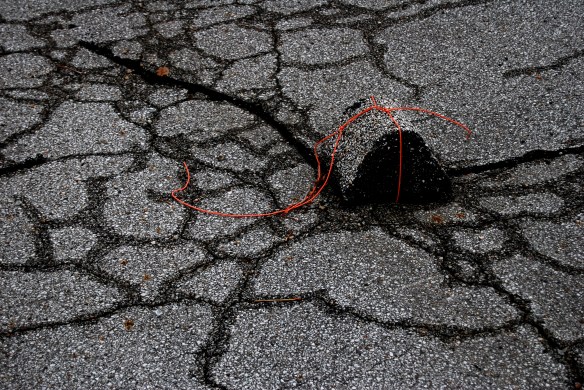 Every time I passed that empty lot I’d stop and check on the bit of curbing. I’m not sure what drew me–what continues to draw me. I suppose it was as much a ritual as anything else. Nothing changed. The curbing stayed exactly where it always was (what else would a bit of curbing do?) and remained an enigma. The world just moved on around it.
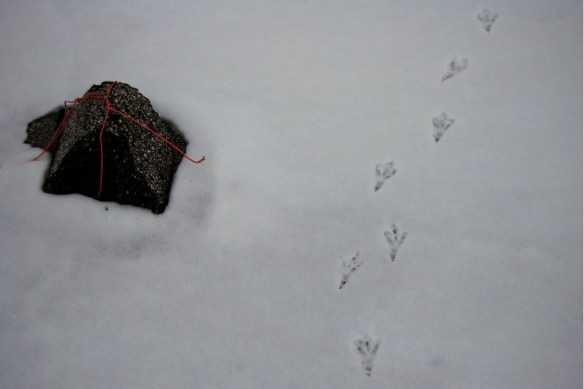
Last winter I noticed a heron had passed by without stopping to ponder the larger meaning of a bit of asphalt curbing wrapped round with a length of red PVC-coated wire. I suppose herons have their own things to consider.
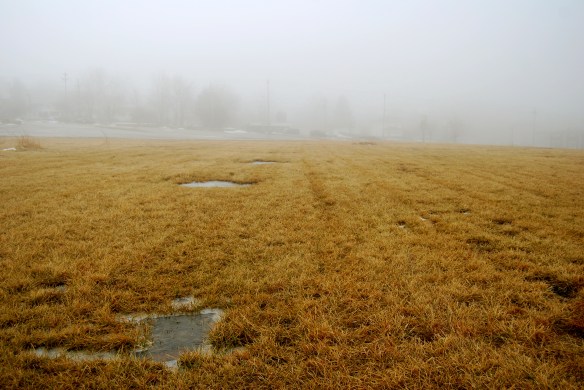
 Winter became spring, and I continued to stop by and visit the bit of curbing whenever I passed by the empty lot. I didn’t go there just for the curbing. The lot itself has charms of its own. There’s usually a contingent of shy crows making a fuss in the distance. Fog and mist seem to linger there longer than in the surrounding areas. On occasion somebody from the nearby apartments will wander through, taking a short cut to the nearest bus stop.
I think of those people as trespassers. They’ve no interest in the lot itself, let alone in the chunk of curbing. They have no relationship with the lot. They’re just passing through. Which is perfectly okay with me.
 The empty lot might have its own unique attractions, but the curbing–that’s a mystery. It’s the chunk of asphalt curbing that pulls me with tidal regularity. I might visit the empty lot and not pay any attention to this or that particular aspect, but I invariably make my way to the curbing.
I’ve told other people about it–about my fascination for the lot and the curbing. And for the most part, they smile and nod with a sort of kindhearted patience–but it’s clear they see the whole thing as ‘another of Greg’s eccentricities.’ And I suppose they’re right. But how could they not be curious about it? Somebody tied red PVC-coated wire around a chunk of asphalt curbing and toted it a distance of twenty yards–and then just set it down. How can that fail to fascinate?
 Then one day I visited the former supermarket and the bit of asphalt curbing was gone.
Except, of course, it wasn’t really gone. It had merely been moved. Somebody had picked it up–presumably by the red PVC-coated wire carrying net–and toted it another twenty or thirty feet. I’d sort of expected something like that might happen. I’d felt the desire to pick it up and move it myself. The more I thought about it, the more I realized it was inevitable that somebody at some point would take hold of the chunk of asphalt curbing and carry it off–even if only for a few feet.
The curbing-mover might have moved it farther, except the wire handle had snapped. The curbing was abandoned where it fell. I suppose there’s no reason to move the curbing at all if you can’t carry it by the handle.
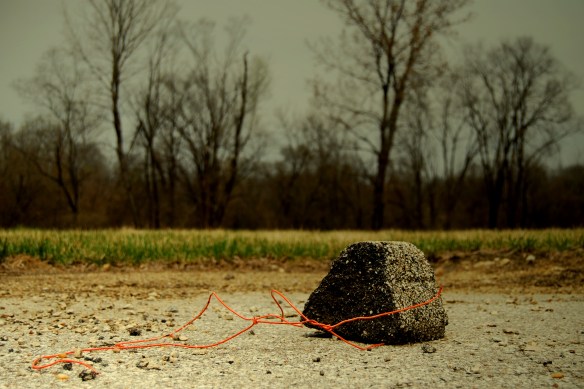 And there it sat. Through the spring and into the summer, there it sat all by itself, unmoving and unmoved. Until now.
Now it’s been tipped over. Somebody saw the chunk of curbing and, for whatever bizarre reasons, decided to fuss with it. But that’s not the most peculiar thing.
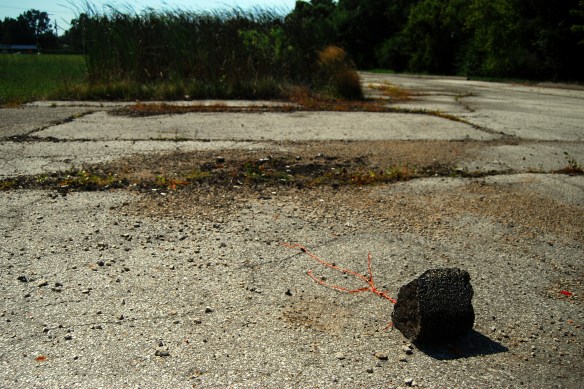 Even more peculiar is the fact that there’s now a second chunk of asphalt curbing beside the first. A second chunk of curbing without any red PVC-coated wire carrying web. A chunk of curbing that doesn’t seem to have come from the same location as its predecessor. A chunk of curbing that was apparently just minding its own business when it was commandeered and carried–apparently by hand–to this new spot.
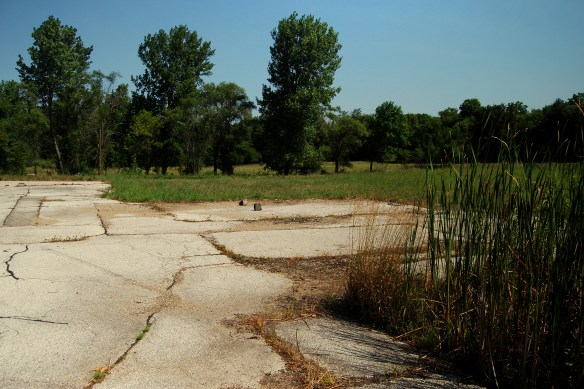 And now I’m left, once again, to wonder why. Not just why somebody tied red PVC-coated wire around the original chunk of curbing and carried it for twenty yards. And not just why somebody (presumably a different person), several months later, carried it a tad farther. But why somebody (I’m assuming a third unrelated person) would carry a second chunk of asphalt curbing and set it in the vicinity of the original. Why?
It makes no sense. None at all. It is absolutely bat-shit crazy. The ambiguity is killing me.
I hope it continues.







 gregfallis.com