celebrate good times

This morning, for the first time in a year, I actually wanted to read the news. For the first time since the darkness dropped again and Comrade Donald Trump slouched back into the White House, I actually looked forward to reading the news.

Because the news was good. Not just because Democrats won, and not just because they won by larder-than-expected margins, and not just because they won from coast to coast. The news is good because of the way they won. The ways they won, I should say, Because the way they won in New York City was different than the way they won in New Jersey and in Virginia. That confuses the pundit class.

Today there will be a LOT of pundits claiming Zohran Mamdani is the new face of the Democratic Party. Nope. He’s the face of the Democratic Party in New York City. Mikie Sherrill is the face of the Democratic Party in New Jersey, and Abigail Spanberger is the face of the Democratic Party in Virginia. We don’t have–we don’t need or want–a single face to represent the Democratic Party. We want a variety of faces and a medley of different voices all dedicated to civil rights and the needs of working people. This morning, we have more of that.

But we need still more. We want and need Democrats who will not just speak out against MAGA fascism in the US, but who will actively resist it. MAGA should be worried about last night’s electoral results, but the people who should be actually scared are the impotent Old Guard of the Democratic Party. They’ve convinced themselves that they’re helpless and weak against MAGA; they’ve allowed themselves to be cowed by Trump, they’ve been too timid to fight back. These election results are also a warning for them–either stand up and fight for democracy or get the fuck out of the way.

Yes, the news this morning is good. We should celebrate it. We should take as much joy as we possibly can from it. And then tomorrow (or what the hell, next week) we have to get back to work. The results of this one election isn’t going to turn the nation around. The US is still massively fucked up. It will remain massively fucked up for the near future. But this morning we see evidence that, with hard work, we can begin to unfuck the nation. That’s what I call good news.

So, in the words of the philosophers Kool & the Gang, “Let’s all celebrate and have a good time.”

hands off, the fringes

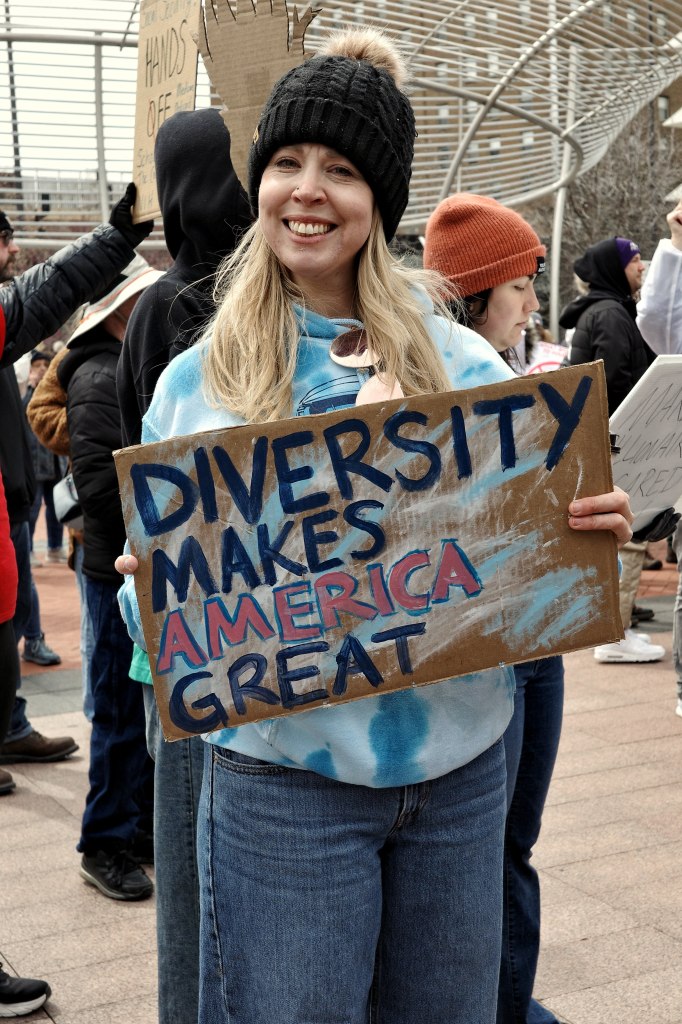
Like a million other concerned people, I attended the local Hands Off! protest yesterday. I wasn’t sure how many people would show up, considering it was a cold, blustery day (about 42F with steady 14mph winds and gusts about twice that). I thought we might still get a thousand people. Maybe.

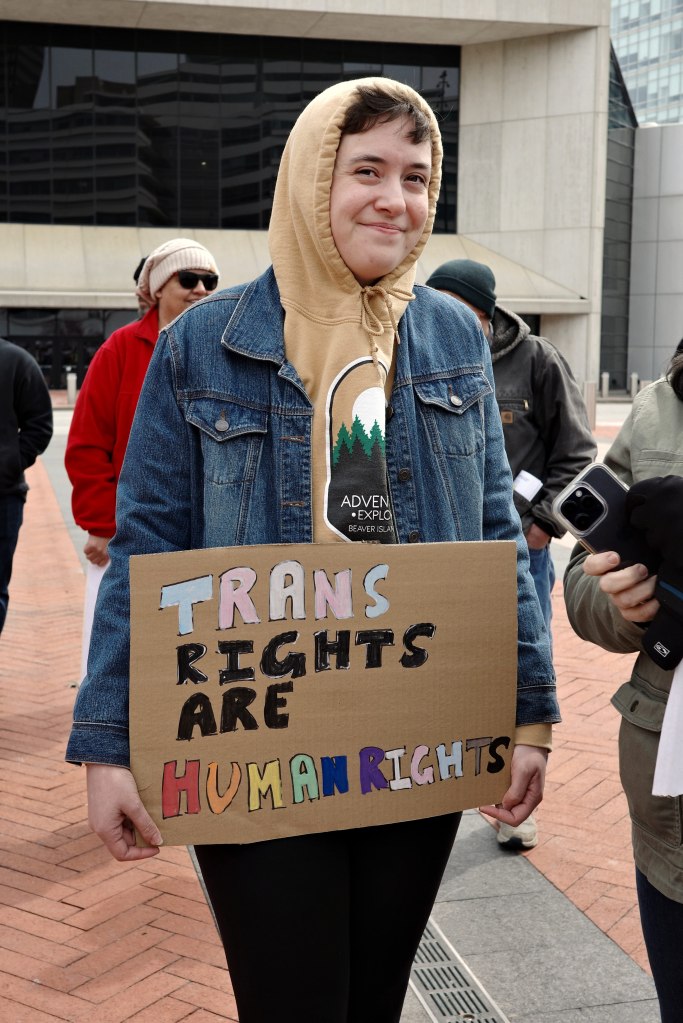
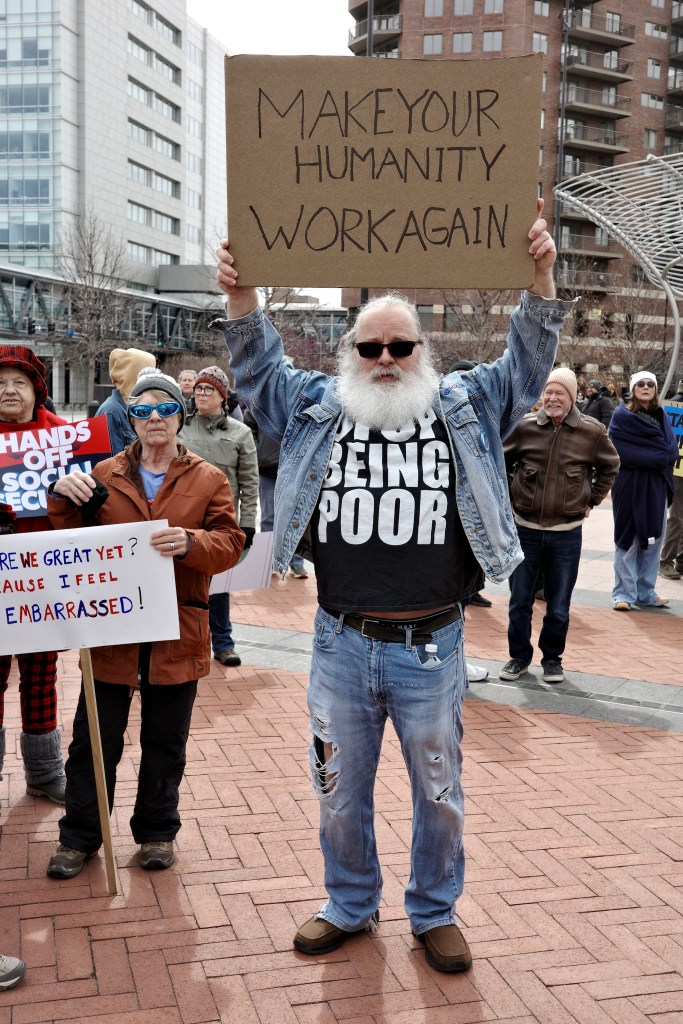
The local news estimated the attendance to be around 7,500, and they tend to be conservative in their estimates. It was an eclectic crowd with a variety of concerns. Climate change, veteran’s benefits, social security, health care, education, trans rights, social justice, the court system, immigrant’s rights, Ukraine, and more. But there was absolutely universal condemnation of Comrade Trump, Elon Musk, and DOGE.

The protest began, as all protests do, with speeches. I confess, I paid little attention to the actual speeches, though I was pleased to hear the crowd cheering and applauding. During the speeches, I left the main crowd and moved around the fringes. Why? Because there are folks who want to protest and make their voices heard BUT for any of a thousand reasons may be uncomfortable with crowds.

The folks on the fringe of the protest were pretty much the same people who made up the rest of the crowd. They were mostly white (this IS Iowa, after all) but beyond that they seemed to be a fairly representative sample of the protesters. There were young kids (some in strollers), and working class folks, and church-goers, and goths, and office workers, and trans folk, and wine moms, and college students, and old folks (some using walkers), and union members, and passers-by who just wanted to know what the hell was going on.

One of the things I found most interesting about the event was that everybody was 1) happy and 2) pissed off. They were pissed off enough to give up their Saturday to carry signs and listen to speeches and shout for Elon Musk to be deported and for Donald Trump to be impeached and to take over one of the main city streets and march a mile or so in cold, blustery weather to the state capitol building, where they listened to still more speeches. But they were also happy and laughing and clearly delighted to be with others who agreed with them. There was a tremendous sense of relief, and a sense of urgency, and a sense of something approaching hope and optimism. That all seems contradictory, but it didn’t feel like it.

Nobody there thought this march–or any of the hundreds of other marches–was going to change anything. Nobody there was that innocent. But it felt like there was a shared commitment to changing the way we govern ourselves. There was a very clear feeling of joy at the chance to express themselves, to carry signs and chant slogans and shout out their frustration and rage and hope.

It was also clear that this was the first time a lot of these people had attended a protest. At the beginning, there was a tentativeness to the crowd. A lot of looking around to see if anybody was watching, if anybody was upset or offended by what they were doing. This was especially clear when the organizers asked them to take to the street and march up to the capitol, where we’d join up with a second protest. We are a car-brained culture, and these people were unsure about the propriety of taking over a street without permission.

But they did it. And when cars approached the head of the march, they had to stop and make a U-turn. At the back of the march, a lone police officer in a squad car followed to insure no drivers disrupted the march from behind. Within a few hundred yards, this crowd of normal Iowans were chanting, “Whose street? OUR STREET!” There was a palpable sense of released anger and resentment and liberation. It really was OUR street.

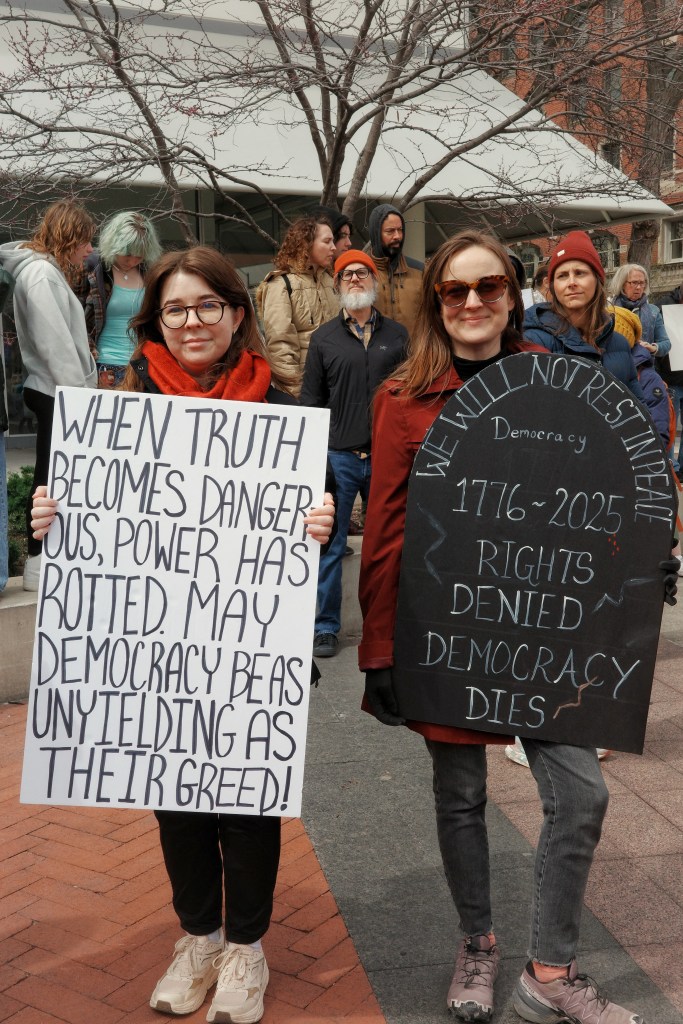
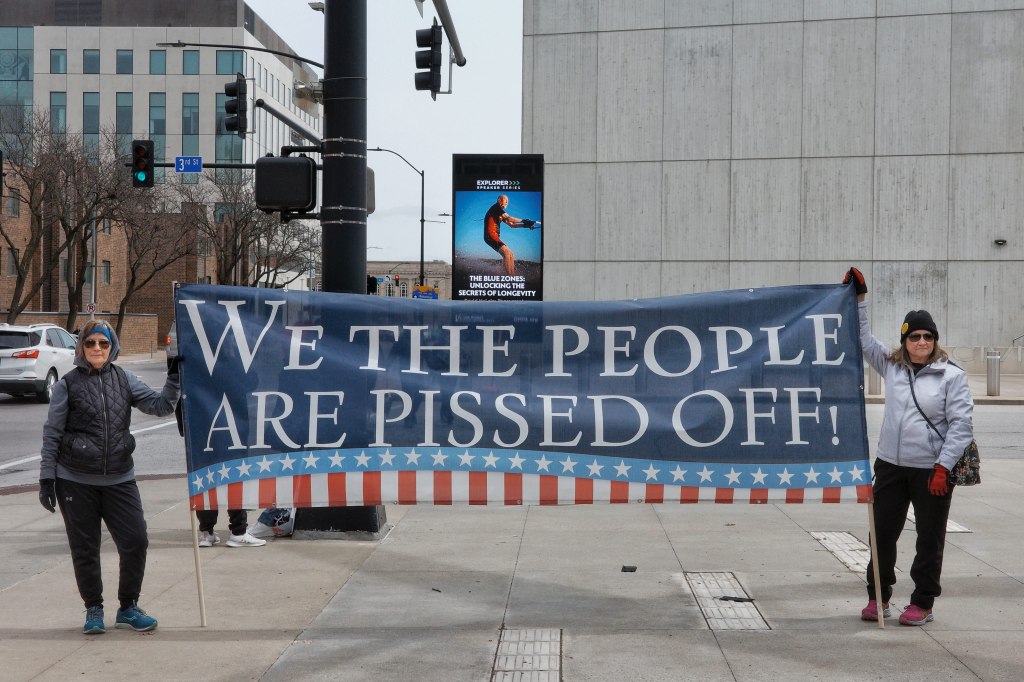
When the crowd took to the street, these two women with their “We the People” sign led the way. It seemed appropriate. Because it’s true. We, the people, are massively pissed off. And yesterday, we let those malignant fuckwits of the Trump administration know it.

I took a lot more photos of (and in) the crowd itself. But here I wanted to show the people who, at least at the beginning of the day, hovered around the fringe of the protest. The people who usually get overlooked. The people who don’t make the highlight reels or the news reports. As so many protest signs said, you know things are grim when even the introverts show up.

You’ll notice that most of these photographs are of women. You’ll notice they’re not drawing attention to themselves. They’re drawing attention to the signs they’re carrying. Signs they mostly made themselves. There’s a song from the 1950s resistance movement in South Africa that goes, “Wathint’ abafazi, wathint’ imbokodo.” This translates as:

When you strike the women, you strike stone.

We’ve been striking stone for decades. Centuries. Eventually, it’s going to spark a fire that will incinerate the patriarchy. It may still be a long time coming, but it’ll happen. And when it does, women like the ones in these photos–the ones quietly occupying space at the fringe–they’ll have helped light that spark.

red hat ladies

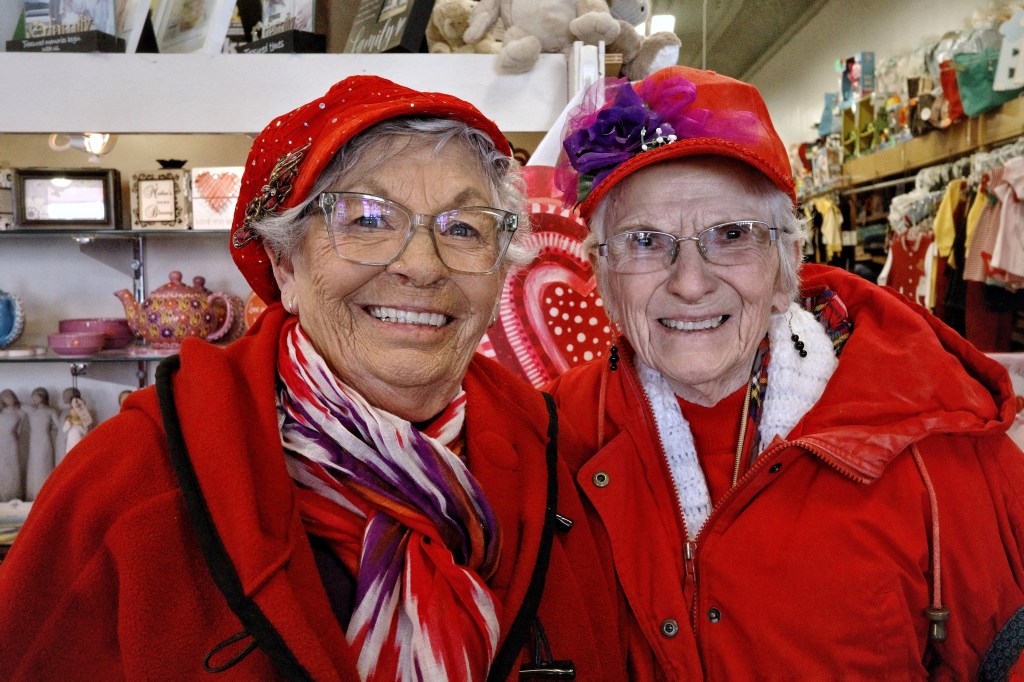
So here’s me in this small town (we’re talking fewer than 500 people) where there’s a little diner that serves the most excellent desserts (they make their bread pudding with cinnamon rolls). While I’m having lunch, there’s an impossible-to-ignore table with about a dozen older women. They’re all wearing red hats. Not MAGA hats, just hats that are red. All sorts of hats. And these women, they’re having a good time, laughing and talking.

It was fun to see them, and I thought about shooting a photo, but decided not to. I could have justified it ethically in photographic terms, but my momma taught me that old women deserve a few extra layers of respect. So I didn’t.

But after lunch, I ran into a couple of them at a gift shop across the street. And I chatted them up, because I was curious and because I like talking to strangers. We must have talked for more than ten minutes. And at one point, I asked if I could take their photo. And they said yes.

They belong to the Red Hat Ladies. It’s an informal group of a couple of dozen women who meet for lunch maybe once a month, maybe every couple of weeks, depends on their mood. They have rules, sort of. You have to be invited to be a member. You have to be over 60. You have to be sorta kinda approved by most of the other members (they indicated that wasn’t actually a rule, but you know, there’s some folks that just don’t click). And you have to wear a red hat to lunch. Most of them also wore red coats. I got the impression that many (maybe most) of them were widowed or divorced.

And they were a hoot. I teased them, they teased me back. They were so very clearly happy with themselves, and it made me happy to see them and spend time with them. There’s something wonderful about the way older women gather together, something liberating and caring, something that leaves them highly opinionated. It’s like they’ve learned to shrug off so much of the bullshit they’ve had to deal with for most of their lives. And if they haven’t actually shrugged it off, they’ve learned to shove the bullshit off to one side long enough to get together and have a good time. You have to respect that.

I suspect (and I hope this is true) that there are similar Red Hat Lady collectives all over the world. I’m pretty sure I’d object to many of the political and religious views of these women, but I’m inclined to think I’d trust them to run the country. Certainly, I’d prefer them to the hateful crew that’s now in charge. The thing about the Red Hat Ladies, they know when to be sensible and when to stick a purple bow on a red hat and if folks don’t like it, they can go eat lunch someplace else.

I’m pretty much content with being a guy, but I’m also sort of envious of these Red Hat Ladies. They’ve got something few men will ever have. One more reason to burn the patriarchy.

small love story

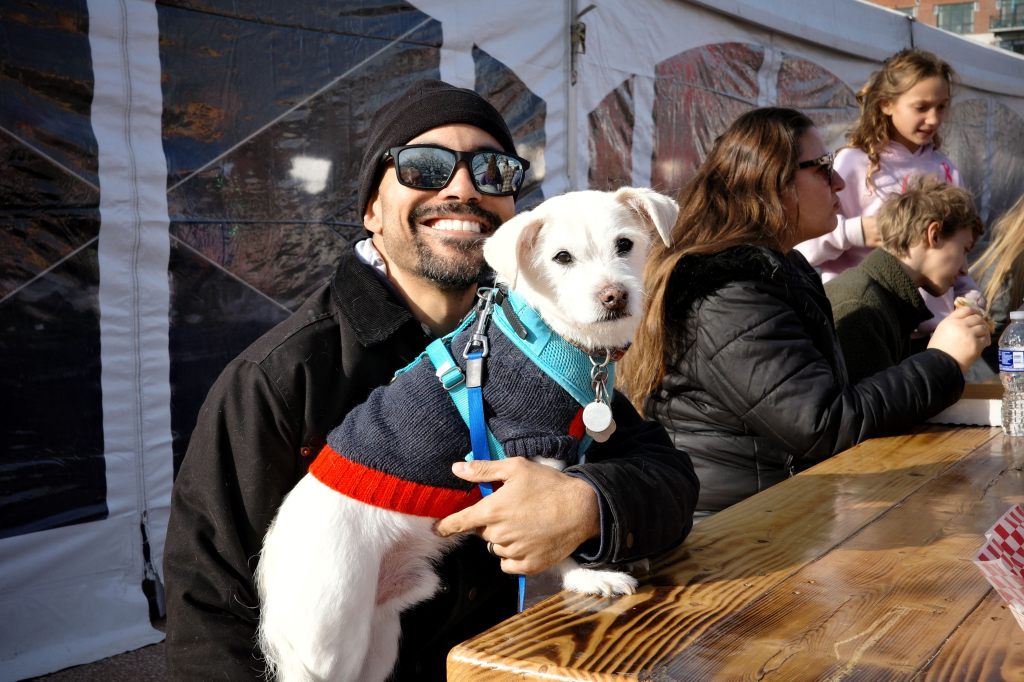
I’m at the Christkindlmarket and I see this guy and his dog sitting at a table. He’s holding the dog and the dog is leaning against him. I know it sounds ridiculous, but the moment I saw them I thought, “Madonna and child.” I blame all the Christmas stuff for that. I’m not a Christian, but I’m a fan of any holiday that’s (supposed to be) about love and sharing.

Anyway, I’ve got my little Ricoh GR3X in hand as I approach them, and the guy knows why I’m coming. I could see it on his face, the recognition that I wanted to photograph his dog. And it obviously pleased him. I barely got the words out…”Would you mind if I…?” before he said, “Sure.”

The dog, though, seemed a tad uncertain, so I slowed down. Instead of the close-up I’d intended, I stayed back a bit. Instead of shifting my position to isolate the guy and his dog from other people from the frame, I stayed still. Instead of shooting 3-4 frames, I took only one. I moved slowly to take the photo.

I said something like, “He’s a wee bit shy, isn’t he.” The guy said the dog was timid around other people, which is why he’d brought him to the Christkindlmarket and why he was holding him. He wanted the dog to feel safe and protected, but he also wanted him to get used to being around other people.

I didn’t even try to pet the dog, though I wanted to. I didn’t try to shoot more photos of them, though I very much wanted to. I figured the little guy was dealing with enough already.

In the end I said something like, “You’ve got yourself a little buddy.” He said, “I sure do.” And I walked away. But seeing them together lifted my spirits–which, given the world as it is today, was quite a feat. The obvious bond between them, the care the guy was taking with the dog, the trust the dog had in the guy — it was lovely, and I was weirdly proud of them both.

I could have taken a better photograph of them. They deserve a better photo. But it might have made the dog nervous, and no photo would be worth that.

i still talk to strangers

I wrote a piece back in April of 2023 about my habit of talking to strangers. Here’s a somewhat concise summary of the point of that post.

I like talking to strangers. I like meeting new people and learning something about them. Granted, most of my conversations with strangers are casually superficial, so it’s not like I’m learning anything important or meaningful about them or their lives. But the simple fact of meeting and having an idle conversation with random strangers tells me something about humanity in general.

And this is what I’ve learned: most people are pretty much okay.

That’s still true. Most people really are pretty much okay. A few days ago I found myself in Perry, Iowa, a small town of about 8,000 people. As my companion and I walked down the street, we saw a guy get out of a pickup truck, carrying a couple of small jars. One of which looked like homemade pickles.

I kind of leaned forward and grinned at the jar of pickles…and he stopped. He was delivering the pickles and some homemade cherry jelly to a couple of friends in a nearby shop. I asked if he sold his homemade goods, and he said, “No, I just give them to friends.” He asked, in a very kindly but curious say, what we were doing in Perry. I told him we were just walking around, looking at the town and its architecture, shooting photos.

He started talking about the town—how it had changed over the years, how it had fallen on hard times, and he started to get a bit emotional. I said something vague about how it was clear that he loved his town, and that sort of love was a wonderful thing. Then he left to deliver his goods.

We walked on. I stopped to take a few photos. And then the guy came trotting up to us. The friend who was to get the cherry jelly wasn’t in the shop, so he thought we might like it. This stranger, just because we’d chatted with him for a bit, wanted to share his jelly with us.

Randy Kennedy and a jar of cherry jelly.

Randy Kennedy. He’d lived in Perry most of his life, and he walked with us down the street, giving us a history of almost every building and the people/families who lived/worked in them. The old shoe store owned by Greek immigrants, whose son was a hero in the Second World War. The French woman who ran a small diner/sandwich shop, and the various sandwiches she made, and how he and his friends would tap on a window and she’d sell them sandwiches through the window. The florist whose shop always smelled so nice. The building where the local newspaper had been printed and how he and his brother had been paperboys and they’d gather at “that door right there” and collect their papers, and how he was sometimes late in getting his deliveries made because he’d stop and get a slice of pie at another shop. He told us about two taverns with doors on opposite sides of an alley, one for hippies and one for farm folks, and how they’d drink together and argue politics in the 1970s.

As we walked and talked, other locals would drive by or ride by on bikes, and many of them would call out to Randy, and he’d wave back. He walked with us for maybe thirty minutes, telling us stories about how wonderful the town was, and how it was failing now, and how MAGA had created deep rifts in the community. He talked about the way the town felt increasingly divided, and had become less tolerant. He talked about the local pork producing plant that closed six months earlier, putting 800 people out of work. Eight hundred, out of a population of eight thousand.

He didn’t mention the school shooting that happened in January, leaving an 11-year-old boy and the school’s principal dead, and seven others wounded. Some things were apparently still too raw to talk about. But most of the shops—even the ones that were closed and empty—kept ‘Perry Strong’ posters in their windows, maybe claiming more resilience than the town actually has. Maybe hoping resilience would hold the town up long enough for some good news.

This guy loved his small town and was proud of what it had been and mourning what it had become. He was pessimistic about the future, but desperately hoped he was wrong. His love for the town was heartbreaking. He was sad, but said he was okay. That’s when I asked if I could take his photograph, holding the jelly he’d give us.

Like I said in my earlier post, most people are pretty much okay. In a lot of ways, being okay can be seen as a victory. Randy Kennedy may look a wee bit sad in this photo; he has good reason to be. And yet he’s basically okay. The proof of that is that he chased a couple of strangers down the street just to give us some cherry jelly that he’d made himself.

I talk to strangers. I will always talk to strangers. And this morning, I had cherry jelly on my toast.

we got us a presidential buddy movie

Alright, buddy, I’ll see you soon.” That’s how Democratic POTUS nominee Kamala Harris ended her phone call asking Gov. Tim Walz to be her running mate. She calls him ‘buddy.’

Buddy is one of those familiar terms with a murky etymology. It’s thought to have evolved from butty, an 18th century term for ‘work-mates’ associated with Welsh coal miners. It’s a wonderfully informal word describing close but informal friendships. Buddy has been mostly associated with men, but these days gender is a lot more fluid than it used to be. Oddly enough, that cultural shift has been supported by popular culture in the form of buddy movies.

Buddy movies are basically male rom-coms. Romantic comedies between hetero men. They’re not sexual (usually), but they’re about two people who are intimately close to each other, engaged in some sort of adventure. And people, that’s what we’ve got with Harris/Walz. We got us a buddy movie. Kamala and Tim’s Excellent Adventure.

Sure, in some ways it’s a non-trad buddy movie. I mean, we’re talking about a whip smart mixed race woman former DA from California and a classic Midwestern Dad who’s a balding former social studies teacher and high school football coach. But in all the ways that matter, it’s an absolutely classic pairing. Most buddy movies revolve around two people from different backgrounds with different personalities who go through episodic shit and in the end gain mutual respect and a stronger relationship.

And Coach Walz is perfect casting. He’s the polar opposite of the GOP notion of masculinity. He’s not loud, he’s not a bully, he’s not aggressive, he’s not domineering, he’s not suffering from testosterone poisoning, he’s not brutally competitive. He’s compassionate, caring, practical, thoughtful, considerate, helpful. Walz is the kind of guy who’s not only loan his neighbor a hedge trimmer, he’d also offer to help trim the hedge. And he’d know HOW to trim a hedge.

The Adventure Begins

Tim Walz appears to be a sort of counter-Kamala, but he’s not…and that’s much of what makes this buddy team work. He’s what Kamala Harris would be if she’d grown up a white boy in Nebraska. And she’s what Coach Walz would be if he’d grown up a mixed race girl who moved frequently as a child. They bring together a weird melding of experiences and cultures that work perfectly together. (Editorial Note: yeah, I don’t know if that whole ‘who they’d be’ business is accurate in any way, but it like it so I’m keeping it.)

I’m telling you, we need a campaign poster in which Harris and Walz are dressed in Men in Black suits and shades, with the tagline “Protecting the earth from the scum of the universe.” We need a poster of them in ordinary clothes and the tagline “The Not-So-Odd Couple.” We need a poster of them in Wyld Stallyns t-shirts, standing outside a phone booth, with the tagline “Be excellent to each other. And party on, dudes!”

This presidential campaign is going to be different. Yes, it’ll get ugly at times, and yes we’ll probably be disappointed by something Harris or Walz does, and yes yes yes we’ll still have to see Trump and JD being creepy and hostile and mean-spirited. But buddy movies are all about two people overcoming that shit by being supportive of each other. And the very best buddy movies, like the very best rom-coms, have happy endings.

And let also say this: we fucking deserve a happy ending.

the flâneur school of photography

There are people–lots of people–who like to name things. I know people who’ve given names to their car, who’ve named their computer, who’ve named their favorite camera. I’m not one of those people. I don’t anthropomorphize gear. A camera is just a tool. You choose the tool best suited for the job you’ve got planned.

I say that, but lawdy, I’m starting to develop a relationship with my new camera. My Ricoh GR3X and me, we’re becoming buddies.

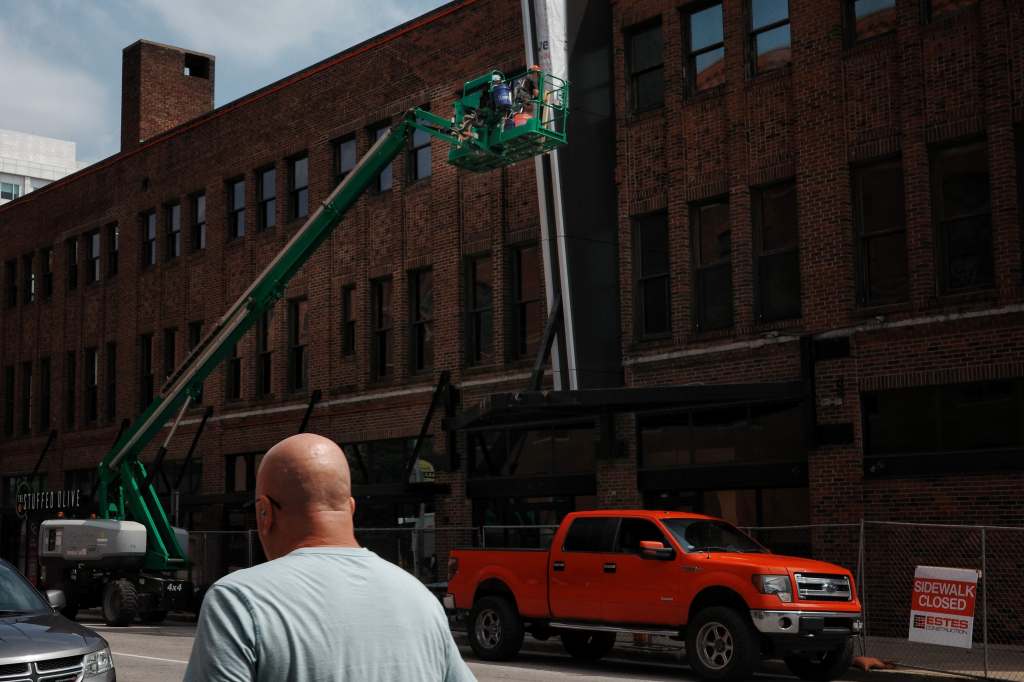
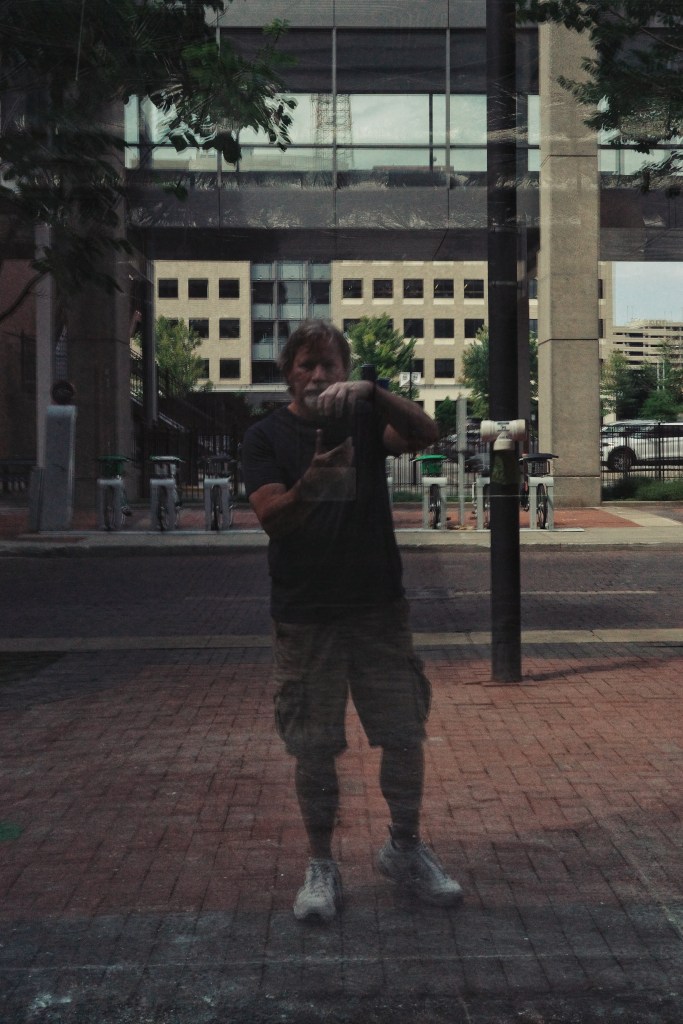
A bald guy walks down the street.

Why? Because this camera seems to have been designed almost specifically for the way I shoot photographs. I’m not a street photographer, although I enjoy shooting street. I’m not a landscape photographer, or a fine arts photographer, or a portrait photographer; I don’t really belong to any of the more common photographic traditions. I belong to what I like to call the flâneur school of photography.

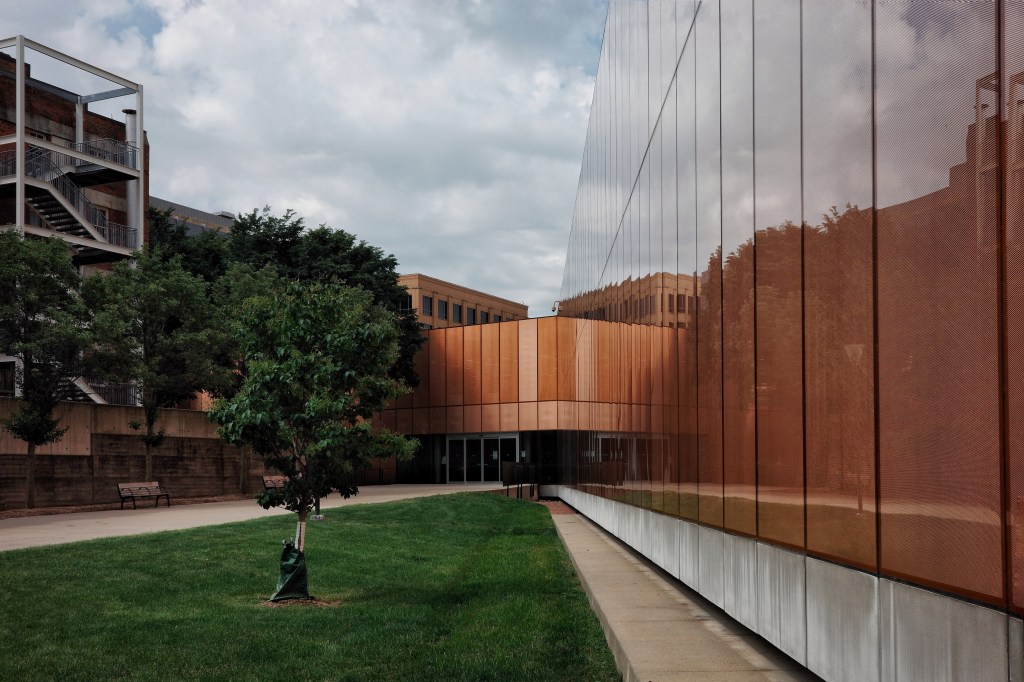
A tree in the library courtyard.

If you’re not familiar with the term, a flâneur is somebody who roams around idly observing the world while being somewhat emotionally detached from it. Somebody who’s not necessarily involved in what’s taking place around them, but is keenly aware of it. One writer described a flâneur as “an amateur detective and investigator of the city.” The term is usually applied to urban life, but it’s a philosophical approach to the world that can take place anywhere. It’s a strange nonjudgmental balance between being analytical and emotional.

(By the way, the term flâneur is French but it’s derived from the Old Norse verb flana, which meant “to wander with no purpose.” And if you’re wondering how a French word is derived from an Old Norse word, you need to read more about Vikings.)

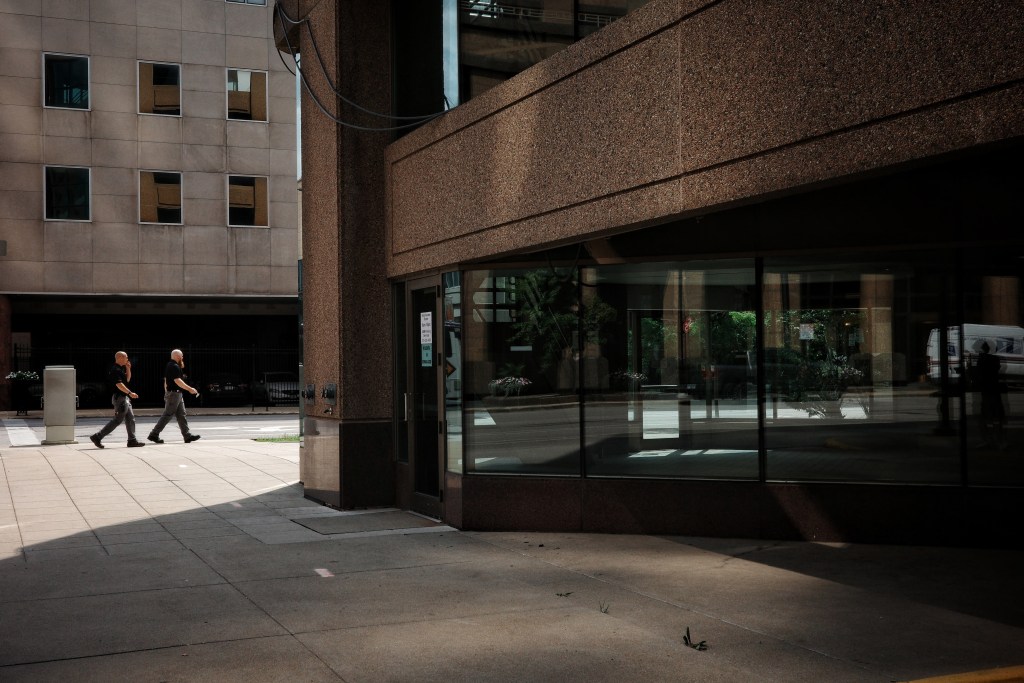
I don’t think those guys were intentionally walking in step, but…

That’s how I shoot photographs. Hell, that’s largely how I’ve lived my life. I’m a flâneur both by nature and by training. Almost every career I’ve had involved the same basic process: observe, analyze, filter the analysis through emotion (or the emotion through analysis), then act. It’s a skill set that helped me as a medic in the military, as a counselor in the Psych/Security unit of a prison for women, certainly as a private investigator specializing in criminal defense, and even (to a lesser extent) as a teacher.

In terms of photography, being a flâneur just means noodling around, paying sharp attention to detail, and seeing stuff in terms of composition. What’s cool is that when it all comes together–the scene, the light, the moment–there’s an immediate emotion, a serotonin hit that’s generated whether you have a camera or not.

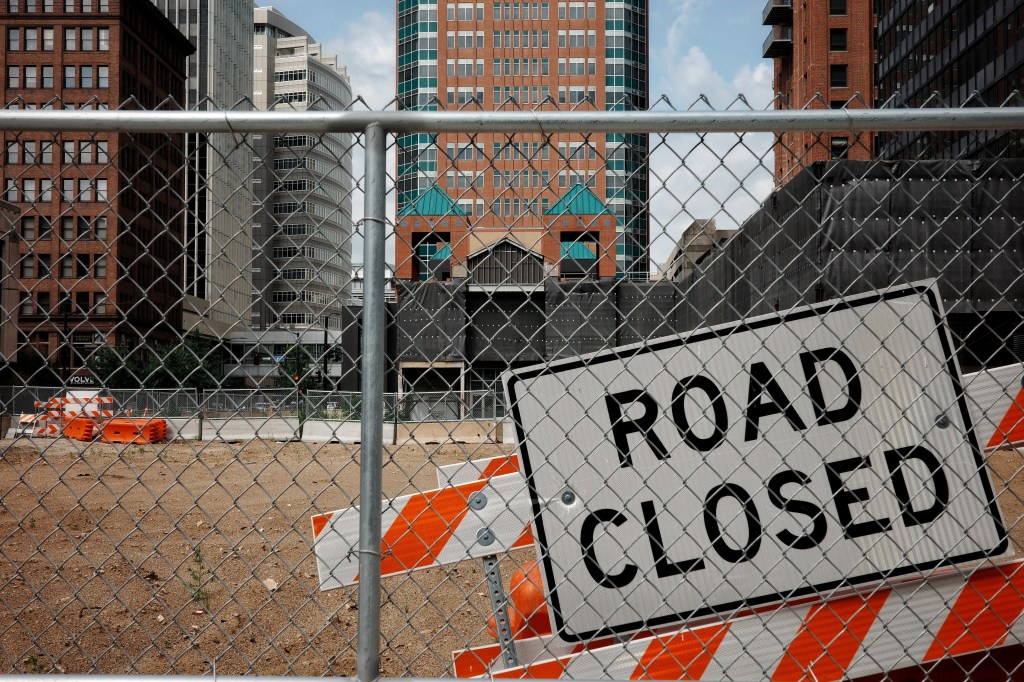
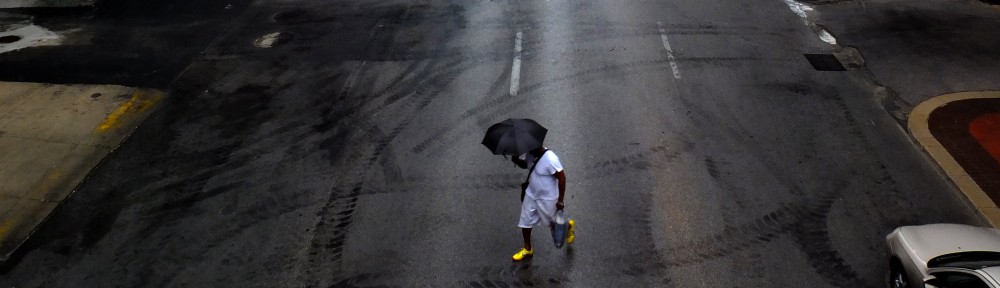
Yeah, road closed.

My Ricoh GR3X is ideally suited to the flâneur school of photography, partly because it’s so compact and easy to carry everywhere. I’d heard you could carry it in a regular pants pocket, but I assumed that was mostly bullshit. It’s not. I’ve done it; I’ve walked around–I’ve ridden my bike–with this unit IN MY GODDAMN POCKET. It also turns on almost immediately, which is incredibly handy. Best of all (I’m not sure this is actually the ‘best of all’ because there are so many ‘best’ things about this camera), you can shoot with one hand. Even in the manual mode, you can control all the settings you need with one hand.

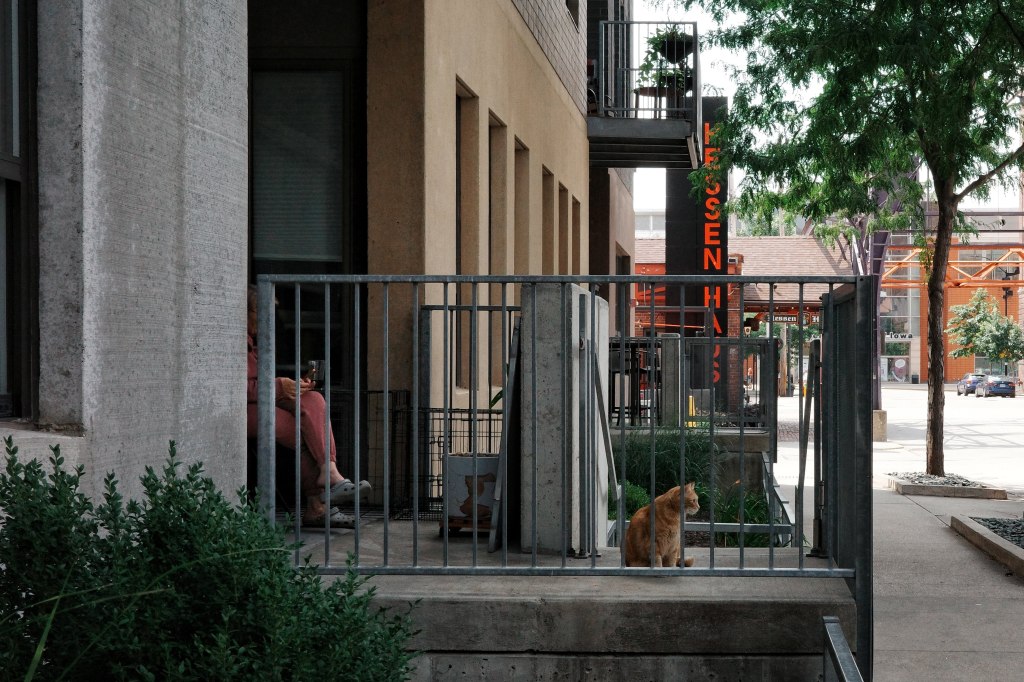
Ginger cat.

Seriously, you can pull the camera out of your pocket, turn it on, compose the shot, adjust all the elements of exposure with one hand, take the shot, turn the camera off, and put it back in your pocket…and you can do all that in just a moment. Which is pretty much what I did with the photo above. As I was walking down the street I noticed the ginger cat. I stepped off to one side so as not to spook the cat, which is when I noticed the woman’s legs. Her legs were in shadow, so I had to quickly adjust the exposure to make sure they’d show up in the photo. Then a step back to include the tree and the window in the frame, and there it was. Maybe ten seconds from seeing the cat to taking the shot. One hand.

Say hello to my little friend

It’s not a perfect camera; I’d love for it to be weather-sealed and dust-proofed, but I’m not sure it’s possible to do that without making it bigger. It’s more important (to me, at any rate) to have a camera I can tote in my pocket than one I can shoot in the rain. There have been a couple of instances where some fill flash would have been handy; the GR3 series doesn’t have a native flash. But, again, that’s small beans.

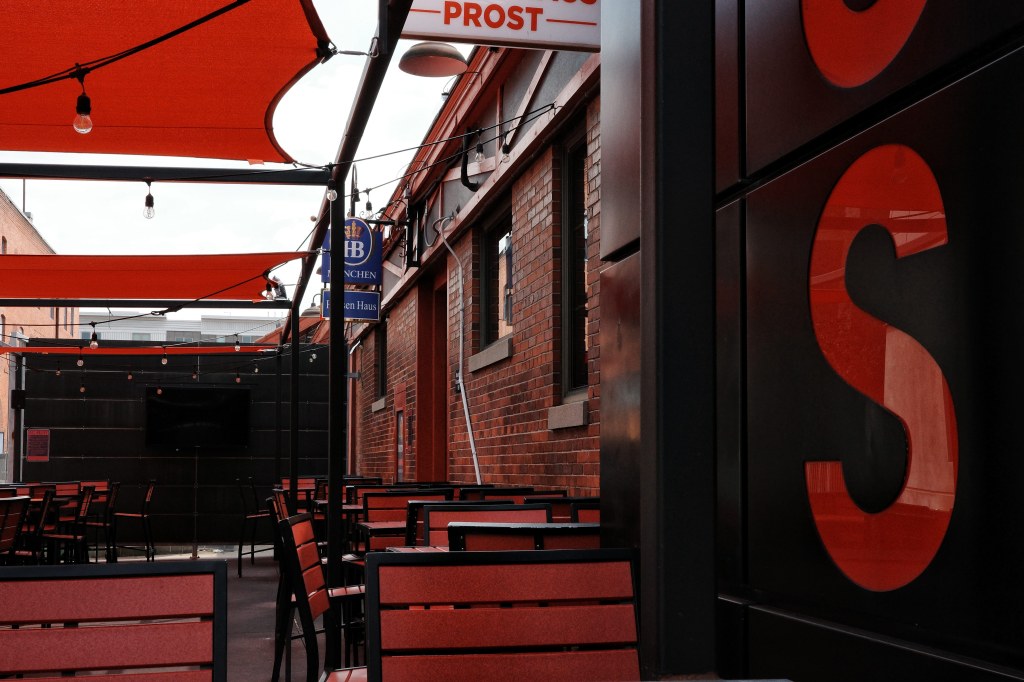
Big S.

The fact is, this camera has already allowed me to get some shots I couldn’t have done with any of my other cameras. And it’s allowed me to get some shots quicker and more easily than with my other cameras. I could have made the shot above with any of my cameras, but it would have taken longer and I’d have had to use both hands. It’s not a great photo (I shot it largely as a reminder to go back when this bar was open), but I was able to get the depth of field I wanted with a minimum of fuss. That absence of fuss is like heroin; it’s fucking addictive.

So yeah, it looks like me and the GR3X are becoming good buddies. I look forward to spending time with it.

new camera…and lawdy

A few months ago–October/November of last year–I got sucked back into the Cameraverse. I’d pretty much abandoned cameras (cameras, not photography) in favor of my phone. My phone was convenient, did a fine job, and had the massive advantage of always being with me. But my hands began to miss the feel of a camera in them.

That’s only partly a metaphor. Shooting with a phone and shooting with a camera are two very different tactile experiences. I felt a strong desire to pick up an actual, no-shit, physical camera and go shoot photos. I resurrected my 12-year-old Fujifilm X10 because it was 1) a real camera and 2) it was small. I flirted a bit with another larger Fujifilm camera, but it soon became clear to me that, for a variety of reasons, I don’t enjoy larger cameras.

With a new camera, you photograph whatever is at hand.

So I began to noodle around the InterTubes to see what was out there in the Small Camera World. That introduced me to the Cult of Ricoh. I DO NOT do cults. I resist cults. Cults are bullshit. But after enough exposure to the Ricoh GR3 series, I was ready to shave my head, shake a tambourine, and buy one of the wee bastards. Except I couldn’t find one. Seriously. The problem is/was the Ricoh GR3 series is so popular, they’re on continuous back-order everywhere.

Buy Local

Persistence paid off, and four days ago I was able to unbox a brand new Ricoh GR3x. Here are three inescapable things about the Ricoh GR3 series: 1) They’re small. Really small. I kept hearing them described as ‘pocketable,’ which I assumed was bullshit. It’s not. You can actually tote the thing around in your pants pocket. Regular pants, not baggy cargo pants. I’ve no idea where women carry them, since fashion Nazis have deprived women of real pockets, but lawdy, the camera is small. 2) They’re quick. That photo above? Six seconds. Saw the condensation on the refrigerated beer door, pulled the camera out of my pants pocket, composed and shot the photo with one hand, put the camera back in my pocket. Six fucking seconds. It’s not a great photo, but lawdy. I felt like a gunslinger. 3) They’re easily customizable, if that’s a word. Almost every button on the camera (most of which are accessible when shooting with one hand) can be assigned almost any function. Which won’t mean much to anybody who isn’t a photographer, but trust me, that’s a HUGE deal.

High contrast monochrome — water on a table.

It allows you to experiment. Hell, it almost demands you experiment. During a break in the rain on my first day I shot the photo above. It’s just rainwater organizing itself on a glass-topped patio table, but it has me thinking of a possible new Knuckles Dobrovic project–something about water in its various forms (as a liquid, as a solid, as a vapor, etc) done in high contrast black-and-white. I’ve no idea if it’s a viable project, or if I’ll follow through on it, but the thing is this camera has me thinking about projects again.

The problem? The learning curve. Oh, you can take decent photos almost immediately (as you can see here). But there are SO MANY ways to set up the camera to be responsive to your individual needs/wants, that I expect it’ll take me a couple of months of experimentation. Messing about with different set-ups, trying new ways of arranging things, establishing different photographic profiles for different subjects.

Chicory

Of the four days I’ve had the camera, two were rainy and stormy, one was savagely hot under a Gibsonesque dead channel sky. A bit of sunshine…even the teensiest bit, nicking through the gloomy clouds…would have done wonders for the photo above. The blue of the chicory was so lovely. But you get what you get.

This camera will, I think, allow me to take advantage of what I get. Yesterday what I got was yellow stripes outside the library exit. I hesitated for just a few seconds, one hand full with a heavy book, the other allowed me to dig the Ricoh out of my pocket, shoot this quickly, and be on my way. (And here’s another thing: I almost never shoot in portrait format, but there’s something about the ergonomics of the GR3 that makes you want to shoot that way. I don’t understand it, but there it is.)

Stopped by the library, shot a photo.

I’ve shot a total of 48 photos in these four days. Forty-eight photos, and I think I’m in love. Because this is the first camera that feels like it was designed to shoot the way I see. It’s unobtrusive, it’s fast, it’s easy to shoot with one hand AND at the same time it gives you a LOT of almost immediate control over how the photo will look. All of the elements of exposure–ISO, shutter speed, aperture–all right there for your thumb and index finger. It’s perfect for shooting fast and loose and from the hip. That’s why this camera is a favorite of street shooters.

But that’s not me. I’m not a spray & pray shooter; I tend to compose a photo quickly, but deliberately. I think this wee bugger will give me some of the speed of a street shooter while still letting me make important exposure decisions. It’ll take me a while to get proficient with it, but lawdy.

And I’ll just say it again. Lawdy.