
I should begin by saying I was never passionate about academia. In fact, I had no interest at all in academia. I almost became an accidental academic.
The only reason I went to graduate school was because I was badly burnt out after five years working in the Psych/Security unit of a prison for women and seven years as a criminal defense private investigator. I wanted a break. Hell, I needed a break. As a working class guy, I had no idea that you could actually get paid to attend graduate school. When I learned that, I applied to half a dozen different universities in half a dozen different disciplines. American University offered me the best deal: free tuition AND a small stipend to study Criminal Justice. So that’s what I did.
That was my plan. Take a year or two off, loafing as a graduate student, then find something else interesting to do. But as I was finishing my MS in Justice, I was offered more money to go for a Ph.D. So, again, that’s what I did.
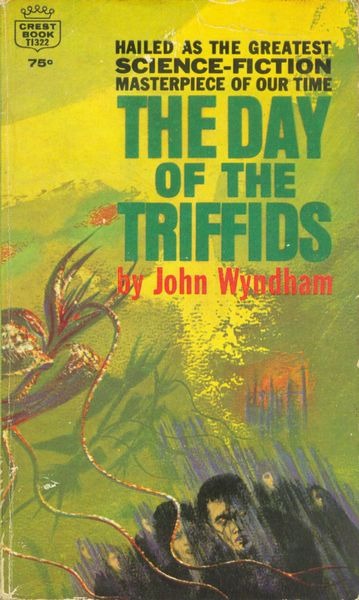
A couple of years later I found myself with a contract from Fordham University to teach Sociology. I loved teaching and I was good at it. But I disliked academic politics, and I positively hated academic writing. Still, it was relatively easy work, so I didn’t complain. Then one day I was sitting in my Lincoln Center office reading an old paperback book I’d picked up at some second-hand bookshop and the Chair of the Department wandered in. He asked what I was reading.
Here’s a true thing about academia: it’s about specialization. For example, you can’t just study history. You have to study English history. But not just English history, English history of the Tudor period. But not just Tudor history, but Tudor history during the reign of Henry VII. And not just the history of Henry VII, but the fiscal policies of Henry VII. Academia is about narrowing your interests until you become a specialist in a small segment of a larger field of learning.
As a larval academic, I was expected to decide on an area of specialization and spend my time concentrating on it. I was expected to study the appropriate academic journals. Instead, I was reading a 1951 science fiction novel about venomous, carnivorous plants capable of locomotion (that’s right…walking plants) and the collapse of society.
“Are you reading this for your classwork?” I was asked.
I could have said yes. I mean, I could easily argue that the story examined economic systems (these dangerous plants, triffids, were cultivated as a source of industrial quality oil). I could say in all honesty that the collapse of society (a strange ‘meteor’ shower had turned most of the world blind, leaving only a small segment of the population capable of sight) resulted in a variety of localized ad-hoc systems of governance and justice, which could be explored through various criminological theories. I could accurately claim there was value in studying how a 1951 novel explored the ways new social norms and mores were formed from the bones of the old system. I could have absolutely justified reading The Day of the Triffids.
But the truth is, it never occurred to me that I needed to justify it. I told him the truth; I was reading for the pleasure of it. I was actually surprised by the disapproving, judgmental look on his face. I was even more surprised when I discovered the university had advertised a tenure-track position in the Sociology Department, and I hadn’t been asked to apply. I applied anyway, but I wasn’t even offered an interview, despite the fact that my teaching evaluations were among the highest in the department.
There were probably other reasons I wasn’t considered for the position. There’s often an unspoken (and sometimes loudly spoken) bias by academic theorists against practitioners. Some academics assumed my years as a private detective and as a prison counselor tainted my views. There’s a saying: In theory, there is no difference between theory and practice. In practice, there is. But after my brief encounter with the department Chair over Triffids, there was an obvious shift in attitude.
You could say triffids killed my academic career. It’s probably more accurate to say triffids saved me from an academic career.








 gregfallis.com