seriously, do something

Remember when all those six year old kids were shot and killed while at school in Connecticut? Remember how that was going to change everything? Remember the outrage and the horror and how finally the government would get its shit in order and do something about gun violence?

And remember how the National Rifle Association said that horror and outrage was just an emotional response to a tragedy and people would quickly forget.\?

The NRA was right. They were right when they said the outrage and horror was an emotional response — because you’re supposed to be fucking emotional when a couple dozen six year old boys and girls are slaughtered. If you don’t have an emotional response to children being shot 150 times in five minutes then you’re some sort of fucking Terminator.

This Tom Latham, my Congressman - I wrote him, I called him

This is Tom Latham, my Congressman – I wrote him, I called him

And the NRA was right when they said people would forget. Congress has basically abandoned the assault-style weapons ban. Admittedly, that legislation wouldn’t do much good — but it would do any harm. Even a little good is better than no harm. Congress is facing a difficult struggle to pass a watered down universal background check, and might not even be able to pass a straw buyer law. Despite the overwhelming support of the public, Congress may just stand around with its thumb up its collective ass. Again.

And you know why? Because Congress is scared of the NRA and they’re not scared of you. Because the NRA is leaning on Congress and you’re not. Because the NRA is speaking directly to the people who’ll vote on the legislation and you’re not.
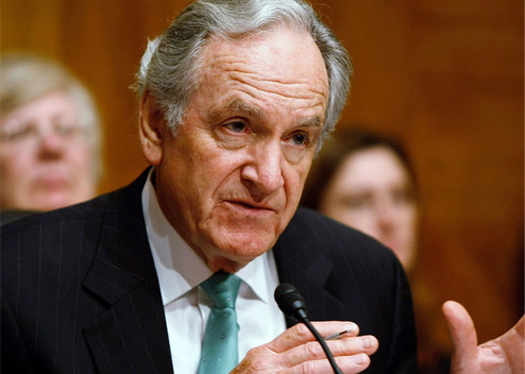
This is Tom Harkin, one of my Senators - I called him, I wrote him

This is Tom Harkin, one of my Senators – I called him, I wrote him

Oh, you’re answering polls and saying you want effective legislation passed. You’re on Facebook sharing articles on gun violence and ‘liking’ photographs insulting the NRA. But who gives a rat’s ass about that? You’re not calling or writing your Congressional representatives and telling them that your vote in the next election depends on their vote on commonsense gun safety legislation.

Don’t blame Congress if this legislation fails. Blame your ownself. You can have an impact, but only if you’re willing to take a few minutes and do something. And folks, it really only takes a few minutes.

If you don’t know who your representatives are, you can get that information here. The most effective way to reach your representative is write an actual letter. Like on paper. With an inkpen. Put it in an envelope and mail it. Seriously. That shit gets read. And it carries weight. But if writing a letter cuts too deeply into your day, use the telephone. A phone call is the second most effective approach. Email? Not very effective at all. And those mass email petitions are almost totally worthless.

This is what you do: give them your actual name. Tell them your zip code, so they can be sure you live in their district (if you can’t vote for or against them, they’re not going to care what your opinion is). Clearly identify the specific issue you’re contacting them about, let them know you feel strongly, and let them know your vote is on the line.
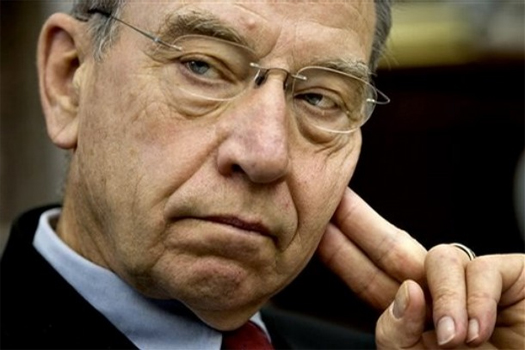
This is Chuck Grassley, one of my Senators - I wrote him, I called him

This is Chuck Grassley, one of my Senators – I wrote him, I called him

We get the government we deserve, sad to say. So for fuck’s sake, people, do something. Write your legislators. Call their offices. It won’t take long and it won’t cost much money.

Do it even if you don’t think it will do any good. One of my legislators is Chuck Grassley, as big an asshole as you’ll ever meet. He’s opposed to even the most reasonable limits on firearms, and there’s nothing I can say that will change his vote. I wrote him anyway. I called his office anyway. Because if this jerk is purporting to represent me, then I’m damned well going to make my positions clear to him.

My other congressional representatives both support sensible gun safety measures. So I called and wrote telling them how much I appreciate their efforts and they can count on my vote and my support. They like hearing that.

Here’s the thing: we don’t have to get every vote. We just need to get enough votes. We just need to convince a few moderate Democrats and Republicans that they don’t have to kiss the NRA’s ass. But they’re not going to act unless we do.
equal justice under law

I’ve met one Justice of the Supreme Court. Well, two if you’re willing to count Thurgood Marshall — but that was in 1993 and Thurgood Marshall was dead at the time. You can’t really say you’ve ‘met’ somebody just because you looked at his coffin lying in state in the Great Hall of the United States Supreme Court building. I did meet Nina Totenberg that day, sorta kinda; she was interviewing some of the people standing in line to meet Thurgood Marshall’s coffin. She didn’t interview me, but she smiled at me when I said “Hi Nina.” She has a nice smile. When you’re standing in a long line on a cold January morning to look at somebody’s coffin, a nice smile means a lot.

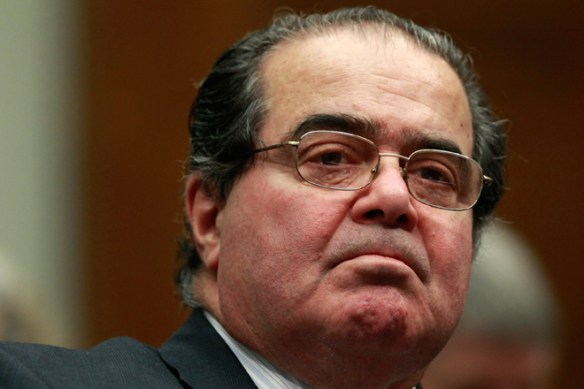
The Supreme Court Justice I did meet was Antonin Scalia. I met him at Heathrow Airport in London. I was arriving to help conduct a summer course in International Justice Systems. I’m not sure why Justice Scalia was in London. Probably wanted to experiment in fucking up a judicial system that’s older than ours.

My colleague spotted Scalia behind us in the airport, and paused a moment in order to meet him. I paused as well, because I’m not a total jerk. My colleague introduced the both of us and told him why we were there. He shook Scalia’s hand. Scalia, to his credit, said something gracious and encouraging, then turned to me.

Associate Justice of the United States Supreme Court, Antonin Scalia

Associate Justice of the United States Supreme Court, Antonin Scalia

I didn’t extend my hand. Neither did he. It was immediately clear to both of us that we were mortal enemies.

Then he moved on. I’m absolutely convinced he could hear what I was thinking, though. What I was thinking was this: “You, sir, are no Thurgood Marshall.

I do not like Justice Scalia. I’ll grudgingly admit he’s brilliant and articulate jurist, but he’s also a judicial hypocrite. He claims to be a Constitutional originalist and textualist, but he never seems reluctant to treat the U.S. Constitution as a living document when it suits his ideology. For example, Scalia has stated the 14th Amendment (which, among other things, guarantees equal protection under the law) doesn’t necessarily apply to women or gay folks since it was crafted after the Civil War for the purpose of preventing racial discrimination. Yet during the 2000 election crisis, in Bush v. Gore, Scalia used that same 14th Amendment and that same equal protection argument to decide to stop the Florida recount. (Do I need to point out that George W. Bush was not a victim of racial discrimination?)

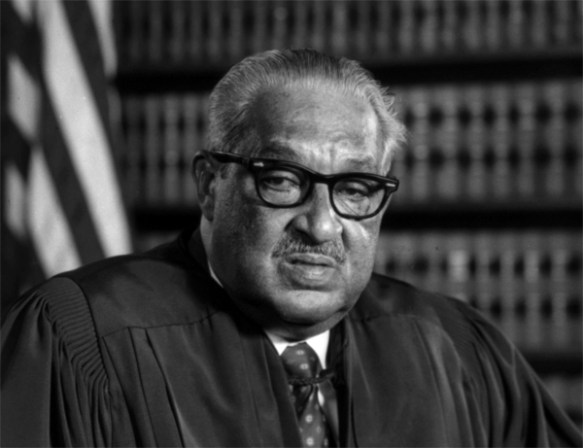
Justice Marshall was — still is — a hero to me. Not just because he was a civil rights lawyer at a time when that was a dangerous occupation, but because he never lost his compassion for common folks or his zeal for protecting the civil rights of all people. Antonin Scalia used the 14th Amendment to insure George Bush would be elected president; Thurgood Marshall used the 14th Amendment to end racial segregation of public schools.

Associate Justice of the Supreme Court of the United States, Thurgood Marshall

Associate Justice of the Supreme Court of the United States, Thurgood Marshall

I was a doctoral student at American University when Marshall died in January of 1993. Three days later, his coffin was lying in state in the Supreme Court building, on the same catafalque that had held Abraham Lincoln’s. Instead of attending class, I joined the long, subdued line of people standing in the cold, waiting to pay their respects. You hear that phrase a lot, paying respect. This was one of those instances when the phrase was entirely accurate.

I don’t know how many people passed by his coffin. Thousands. All kinds of people. People in suits, of course, since this was Washington, D.C. But also people in military uniform, young folks in jeans, old black women who’d dressed in their Sunday outfits that Wednesday. What moved me the most, though, was the number of working folks who showed up. Regular people, standing in long lines, outside in the January air, come to pay their respects to a Justice of the Supreme Court of the United States. I’ve never seen anything quite like it.

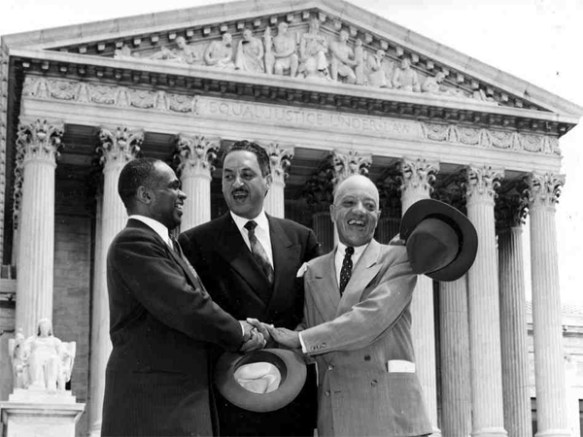
They closed the doors at ten o’clock that night. I’d already gone home by then, but I heard about it. The people still outside waiting got to see Marshall’s coffin carried out of the Great Hall and down the steps. If you’ve never been to the Supreme Court Building, it looks pretty much like any other governmental structure in DC. But above the door, these words are carved: Equal Justice Under Law. Thurgood Marshall believed in those words, and he made a great many other people believe in them as well.

Young Thurgood Marshall on the steps of the U.S. Supreme Court

Young Thurgood Marshall on the steps of the U.S. Supreme Court

Antonin Scalia is probably smarter than Thurgood Marshall was. He’s maybe more articulate than Marshall was. He’s more forceful on the bench than Marshall was. But on that day in the future when Scalia is laid to rest, how many people will associate his name with Equal Justice Under Law? How many people do you think will be willing to take a day off work and stand for hours outside in the cold in order to pay their respects?

a couple of quick thoughts on marriage equality

First thing this morning I got an email from an acquaintance calling me out for not supporting marriage equality by changing my Facebook profile photo to the equality sign.

“i assumed you supportd marriage equality. but you didn’t change your fb profile pic. whats up with that.”

What’s up with that is pretty simple. I do support marriage equality but I don’t feel like I need to change my Facebook profile photo to prove it. I think it’s extraordinarily cool that so many folks have changed their Facebook profiles. It’s just not me, though.

Same sex marriage has been legal here since 2009, when the Iowa Supreme Court ruled unanimously there was no legal basis for denying a same sex couple the right to marry. It’s a done deal here. Ain’t nobody been hurt by it — which is no surprise to anybody but bigots. There are still some Republicans who try to pass legislation reversing the court’s ruling, but basically same sex weddings have become routine here. Nobody notices.

Another thing — all those polls saying a majority of the American public approves of same sex marriages. That’s great and all, but really public opinion shouldn’t be the arbiter of whether or not a thing is right. Same sex couples ought to be able to marry whether the public approves of it or not. It’s just the right thing to do.

Don’t get me wrong. I’m glad attitudes are changing. Today and tomorrow are important days in the struggle for marriage equality. But regardless of what the Supreme Court decides, I’m absolutely confident that marriage equality will eventually happen. It’s inevitable. Sooner is better than later, of course, and I’d love to see SCOTUS make a sweeping decision that it’s unconstitutional to deny same-sex couples the right to marry. But if they don’t, then we’ll just have to keep on fighting. Because it’s going to happen.

In the meantime, though, here:

equality

cowardice

First, a confession. I’d originally planned to write about my ambivalence regarding the ‘assault-style weapons’ ban. I don’t believe banning those weapons would have any real effect — certainly not on crime in general, and probably not on mass killings.

I may be ambivalent about the proposed legislation, but I’m NOT ambivalent about the way it’s been dropped by Harry Reid, the Senate Majority Leader. If the legislation had been given a vote and failed, I wouldn’t be upset. If it had succeeded, I wouldn’t be upset. But to refuse to even offer it up for a vote? That upsets me.

Harry Reid, Senate Majority Leader & Coward

Harry Reid – Senate Majority Leader, Coward

Here, according to Politico.com, is the reason:

Reid’s decision highlights the tightrope walked by the majority leader in governing the gun control issue. Trapped between the White House and rank-and-file Democrats who support broad gun control legislation following the shootings last December in Newtown, Conn., Reid must also be mindful of red-state Democrats up for reelection in 2014 who favor gun rights.

Why? Why must he be mindful of red-state Democrats up for re-election? Shouldn’t he be mindful of the citizenry they’re supposed to represent? The most recent ABC News–Washington Post poll found 57% of the nation supports the proposed ban. The University of Connecticut–Hartford Courant poll had the very same result. Quinnipiac found 54% supported the ban, and Pew found 56%. Hell, even a recent poll in Texas (which revealed 39% of those polled want to see President Obama impeached) showed 49% support for an assault-style weapons ban.

I’m not suggesting the majority is always correct. Clearly, they’re not. Nor do I believe legislators should always do what the majority of their constituents want. Legislators should vote their own conscience, even if it goes against the will of their constituents. But I am suggesting they should vote on the issues their constituents think are important.

They want a vote on the proposed weapons ban.

Bushmaster .223

Bushmaster .223

Refusing to bring the proposed legislation to the Senate floor for a vote is, in my opinion, an act of cowardice. It’s not about representing the citizenry; it’s about political expediency. It’s about wanting to stay in office. It’s about putting their personal considerations before those of the people they’re supposed to represent.

#

So, why am I ambivalent about the legislation itself? I wrote something about the topic back in December, so forgive me if I partly repeat myself. Basically, I don’t see any evidence that banning the 157 assault-style weapons listed in the law will have an impact on mass killing.

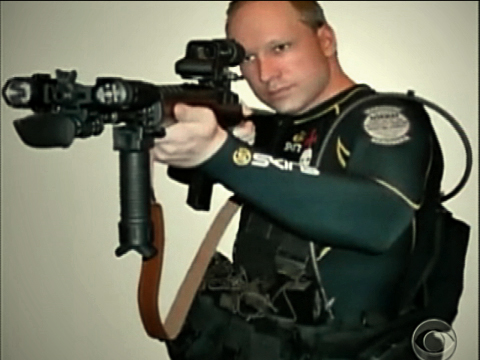
Since the first assault-style weapons ban was put into place in 1994, there have been 44 mass killings (see the note below). Relatively few of those involved assault-style weapons. I don’t think there’s much doubt that, given a choice, mass killers would prefer to use assault-style weapons — but the sad fact is, folks who are intent on committing mass murder will use whatever weapons they can get their hands on. Mass killers don’t choose assault-style weapons because they’re better at killing people — they’re not. They choose those weapons because they fit in with the Mass Killer Aesthetic. They look scary.

Anders Behring Breivik, poster boy for the Mass Murder Aesthetic

Anders Behring Breivik, poster boy for the Mass Murder Aesthetic

That’s the same reason mass killers (and especially the younger ones) tend to dress in similar ways — camouflage or all-black tactical outfits. These guys plan these crimes in advance, including how they’re going to dress. They make deliberate fashion-based decisions. They know how mass killers are supposed to look. Popular culture has taught us the elements of Mass Killer Fashion. Assault-style weapons are the weapons of choice because they complete the look. But in the end, the most common weapons used by mass killers since 1994 has been the semi-automatic pistol with a high capacity magazine.

You want to pass a law that will have a real and measurable effect on mass killings? Pass the universal background check. Pass the ban on magazines holding more than ten rounds. And give the BATF enough funding and personnel to do its job. That will make a difference.

In any event, when the public wants these measures enacted, the refusal to bring them to the floor of Congress for a vote is an act of political cowardice. Harry Reid should be ashamed of himself. He should have to explain to the families of the victims of the Newtown School murders why he’s failing to put the legislation to a vote.

But I’m willing to bet he doesn’t have the balls to do that either.

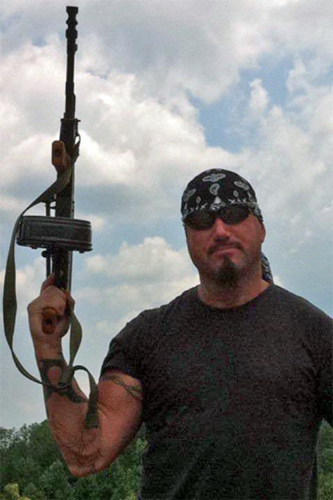
Nathan Van Wilkins - not a mass killer

Nathan Van Wilkins – not a mass killer

Editorial note: How do we define a mass killing? It’s generally defined as one in which at least four people unknown to the shooter were killed. This, of course, excludes all those mass killings in which family members or ‘loved ones’ were among those killed. It also excludes failed attempts at mass murder. For example, in January of this year Nathan Van Wilkins opened fire in downtown Tuscaloosa, Alabama with an AK-47 variant; 17 people were injured, but nobody died, so this incident is only a mass shooting, not a mass killing.

happy anniversary, clarence earl gideon

Let’s say all police officers and all criminal prosecutors are sincere and honest. We know that’s not true, but bear with me a while. Let’s also say the police only arrest people they’re convinced are guilty, and that prosecutors only bring cases against defendants they truly believe committed the crime with which they’re charged. That’s probably closer to being true, but it’s still got a healthy bit of fantasy in it.

Let’s also acknowledge that even the most sincere and honest police and prosecutors occasionally make mistakes. For the sake of argument, let’s be generous and say the police and prosecutors are correct 98% of the time.

That necessarily means that even the most honest and sincere police and prosecutors are wrong 2% of the time. That doesn’t sound too bad, does it.

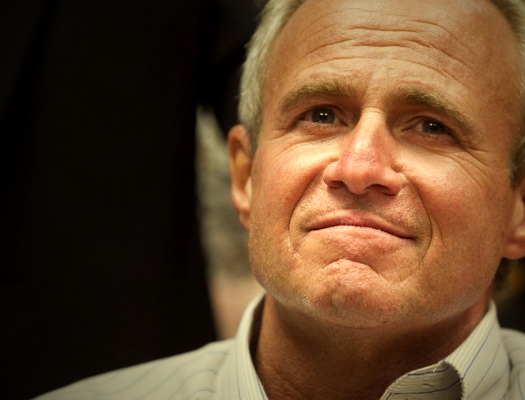
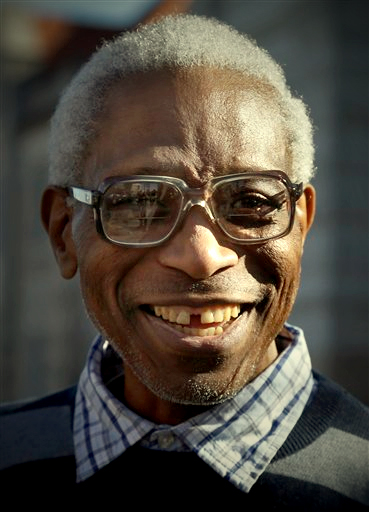
Greg Bright - wongly convicted of murder; served 27 years

Greg Bright – wrongfully convicted of murder; served 27 years

In 2010, according to the Bureau of Justice Statistics, there were 1,484,530 arrests for violent crimes. We’re talking murder, manslaughter, rape, armed robbery, aggravated and simple assault. If the police arrested the right person 98% of the time, it means they mistakenly arrested around 30,000 innocent people in 2010. That’s eighty people every single day on the calendar, arrested for violent crimes they didn’t commit.

And those are just the arrests for violent crimes. Add in property crimes, drug offenses, and social order crimes like prostitution, liquor violations, indecency and the like, and you end up with 13,122,110 arrests in 2010. Applying the same 98% rule, it means more than a quarter of a million innocent people were arrested in the U.S. in 2010.

The reality, of course, is uglier. Much uglier. Nobody believes the police arrest the right person 98% of the time. Nobody believes that every police officer and prosecutor is sincere and honest. Those are fantasies.

Michael Morton - wrongfully convicted; served 25 years

Michael Morton – wrongfully convicted of murder; served 25 years

Now think about those poor bastards who are arrested and prosecuted for crimes they didn’t commit. When a person is being prosecuted for a crime, it’s listed on court dockets in this way: The State of Wherever versus Defendant Whozis. That actually means what it says. For example, if you’re going to trial in Wyoming (the least populated state in the Union), all the resources of the State can be arrayed against you. All those uniformed Wyoming police, all those detectives, all those lawyers and those forensic experts and those evidence technicians and those lab geeks — every one of them could be used in an effort to convict you.

What do you, the defendant, have? A defense attorney. Maybe an investigator, if you’re lucky. If you’ve got money, you can hire a team of defense lawyers and investigators, but you’ll never have anything like the resources available to the prosecutor. Still, if you’ve got money you’re in significantly better shape than somebody who’s poor. If you’re poor and accused of a crime, brother you’re in serious trouble. And it’s getting worse.

Darryl Burton - wrongfully convicted of murder; served 23 years

Darryl Burton – wrongfully convicted of murder; served 24 years

This is where our boy Clarence Earl Gideon comes into it. He was born in 1910, in Mark Twain’s old hometown of Hannibal, Missouri. Gideon was basically Huck Finn without the charm. He quit school in the 8th grade and ran away from home. He was a petty thief for much of his life. He did time in Missouri, Kansas, and Texas — mostly for minor larcenies. He moved to Florida in the late 1950s. In 1961 the owner of the Bay Harbor Pool Room noticed that five dollars in change and a couple of bottles of beer were missing from his fine billiards establishment. A witness said he saw Gideon leave the pool hall with a bottle of wine and bulging pockets.

Gideon, with his history of theft, was arrested and prosecuted. Since he had no money for a lawyer, he had to defend himself in court. He asked the judge if he could have a lawyer to help him. The judge said no. Gideon was convicted, of course, and sentenced to five years in prison. He was 50 years old at the time.

Clarence Earl Gideon

Clarence Earl Gideon

While in prison, Gideon began reading about the legal system. Among the things he read was the Bill of Rights — specifically the 6th Amendment, which includes this:

…the accused shall enjoy the right to…the assistance of counsel for his defense.

Gideon wrote the FBI, essentially saying “Dude, I didn’t get any of that assistance of counsel stuff.” The FBI wrote back saying, “Well, that’s a shame. Sorry.” Gideon wrote the Supreme Court of Florida. “Dude, that assistance of counsel business? I didn’t get any of that.” The Supreme Court of Florida wrote back. “No, really? It sucks to be you.” Finally Gideon wrote to the Supreme Court of the United States. “Seriously guys, no assistance of counsel. WTF?” The Supreme Court wrote back. “Yo, Clarence, tell us all about it.”

Think of how remarkable that is. An uneducated prison inmate sent a hand-written (in pencil, no less) request to the highest court in the land, asking for justice — and they listened. More importantly, they acted.

Alan Northrop - wrongfully convicted of rape; served 17 years

Alan Northrop – wrongfully convicted of rape; served 17 years

Today is the 50th anniversary of the Supreme Court’s unanimous verdict in the case of Gideon v. Wainwright (Louie Wainwright was the director of the Florida Division of Corrections). That ruling changed the way criminal law was practiced in the United States. Gideon said you had the right to an attorney, Miranda said the police had to tell you about that right. Every time you watch a cop show on television and hear “You have the right to an attorney; if you can’t afford one, one will be appointed for you,” you can thank Clarence Earl Gideon.

In principle, the Gideon decision guaranteed that every person accused of a crime had the right to be represented by competent counsel. Justice Hugo Black wrote:

Reason and reflection require us to recognize that, in our adversary system of criminal justice, any person haled into court, who is too poor to hire a lawyer, cannot be assured a fair trial unless counsel is provided to him.

What Justice Black failed to consider is that ‘reason and reflection’ generally get kicked in the ditch by politics. In theory, the law may require poor folks be given a competent attorney. Of course, in theory the police and prosecutors always arrest and prosecute the guilty party. Theory, like ‘reason and reflection,’ tends to end up bloody and confused in the ditch.

George Allen, Jr. - wrongfully convicted of rape/murder; served 30 years

George Allen, Jr. – wrongfully convicted of rape/murder; served 30 years

A half century after Gideon, the entire indigent defense system is pretty much fucked up and getting worse. The system has never been adequately funded (paying lawyers to represent poor folks has never been a very high priority), but in this era of drastic cuts in state budgets, indigent defense funding it getting it in the neck.

Remember, some of these people are innocent. Greg Bright, the man in the first photograph, was convicted of murder based on the testimony of one eyewitness who claimed to have seen the crime from her apartment window. If the defense had had the resources to hire an investigator, they’d have found the witness had been diagnosed as schizophrenic, had a history of visual and auditory hallucinations, was a heroin addict, and lived in an apartment that didn’t overlook the crime scene. One day of competent investigating would have saved Greg Bright 27 years of prison.

Here’s the really scary part: Bright was convicted at a time when indigent defense had better funding than it has now. The reality is that if you’re poor and you get arrested and charged with a crime, you’re not very much better off today than Clarence Earl Gideon was fifty years ago.

hellish world

Yesterday during a Senate Judiciary Committee hearing on the proposed ban of some assault-style weapons, Senator Lindsey Graham conjured up the NRA’s most popular nightmare scenario. He asked Attorney General Eric Holder to imagine:

[A] lawless environment where you have a natural disaster or some catastrophic event and those things, unfortunately, do happen. And law and order breaks down because the police can’t travel, there’s no communication. And there are armed gangs roaming around neighborhoods. Can you envision a situation where if your home happens to be in the cross-hairs of this group that a better self-defense weapon may be a semiautomatic AR-15 versus a double-barrel shotgun?

Holder politely pointed out that his example posed a purely a hypothetical situation. To which Graham replied:

Well, I’m afraid that world does exist. I think it existed in New Orleans, to some exist in Long Island, it could exist tomorrow if there’s a cyber attack against the country and the power grid goes down and the dams are released and chemical plants are discharges…

Graham may think it existed, but he’s wrong. No, it didn’t happen on Long Island after Hurricane Sandy. And no, it didn’t happen in New Orleans after Hurricane Katrina. There was looting of commercial areas during each of those natural disasters, to be sure. Grocery stores and convenience stores were hard hit, as were shops selling electronic goods. Gun shops were also looted, as were stores selling high-end sneakers.

But armed gangs roaming around neighborhoods targeting individual homes? Nope, just didn’t happen.  

Senator Lindsey Graham crushing an imaginary zombie's skull

Senator Lindsey Graham crushing an imaginary zombie’s skull

Could it happen? Sure, anything is possible. IF the power grid goes down and IF the dams burst and IF all the chemical and nuclear plants all go haywire and IF society totally collapses, then after every downtown shop and store has been looted, and after every strip mall has been looted, and after every suburban corner convenience store has been looted, then I suppose armed mobs might start roaming neighborhoods and invading individual homes. But that’s a scenario from a zombie apocalypse, not a logical basis for implementing public policy.

Nevertheless, that’s the argument the NRA keeps making and so it’s the argument offered by Lindsey Graham and other Republicans. Compare Graham’s comments to those of Wayne LaPierre:

After Hurricane Sandy, we saw the hellish world that the gun prohibitionists see as their utopia. Looters ran wild in south Brooklyn. There was no food, water or electricity. And if you wanted to walk several miles to get supplies, you better get back before dark, or you might not get home at all.

It doesn’t matter that this “hellish world” didn’t exist. The NRA wants you to believe it did in the hope that 1) you’ll buy more guns and 2) you’ll buy still more guns.

What Lindsey Graham wants you to believe could happen in your neighborhood

What Lindsey Graham wants you to believe could happen in your neighborhood

It’s all about fear, isn’t it. Fear that somebody somewhere wants what you have, and is willing — even eager — to take it by violence. Fear that a segment of the population is just waiting and hoping for some sort of disaster to strike so they can take your stuff. Research has shown that fear of social disorder is related to fear of dark-skinned people, so basically the fear Graham and the NRA want you to experience is the fear that minorities will come to a white neighborhood and fuck things up.

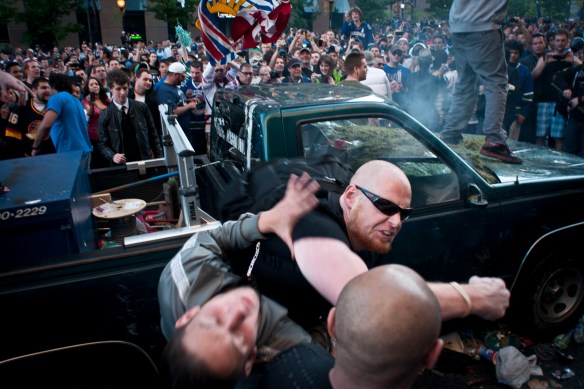
A more likely scenario

What’s more likely to happen in your neighborhood

Here’s a true thing: civil disorder following a sporting event takes place more often than civil disorder after a natural disaster. The photograph above was taken in 2011, in Vancouver, British Columbia after the Canucks lost the seventh game of the Stanley Cup to the Bruins. This was in Canada, people. This happened in the most civil and polite nation on the entire fucking planet. Almost a hundred and twenty people were arrested during and after the riot — nearly three times the number of people arrested following Hurricane Sandy.

There are, in my opinion, some valid arguments to be made against the assault-style weapons ban. But self-defense and home protection in the event of civil disorder isn’t one of them.

You want to deter people from breaking into your home? You want to keep your family safe from intruders? Buy a dog with a loud bark. Better yet, go to the local animal shelter and adopt one. A dog will offer more protection and be more reliable than an firearm. And it will love you without reservation. Ain’t no gun will do that.

jeffersonian bullshit on a baseball cap

Just a quick (at least I hope it’s quick) note. You can’t do any research into the gun rights movement without coming across this quotation attributed to Thomas Jefferson:

No free man shall ever be debarred the use of arms. The strongest reason for people to retain the right to keep and bear arms is, as a last resort, to protect themselves against tyranny in government.

It’s repeated often — on placards, on right wing political cartoons, on posters, on t-shirts, on baseball caps, on coffee mugs and mouse pads. And like so many of the things claimed by gun rights advocates, it’s inaccurate and misleading.

jefferson quote3

That first line is sometimes given the following scholarly attribution:

Thomas Jefferson Papers, pg 334 (C.J.Boyd, Ed., 1950)

It looks good, doesn’t it. But it just ain’t so. A scholar named Julian P. Boyd (not C.J. Boyd) did, in fact, edit the collected Jefferson papers — but the alleged quotation is a fraud. It doesn’t exist in Boyd’s Thomas Jefferson Papers.

In fact, it doesn’t exist anywhere except in the minds of gun rights advocates. There’s absolutely nothing to indicate Jefferson ever said or wrote that line. It’s not in any of his personal correspondence, not in any of his diaries, not in any of his speeches, not in any of his notes. Nor has that line ever been cited in any law journal by any Constitutional scholar.

Thomas Jefferson just flat out didn’t say it, no matter how many baseball caps claim he did.

Jefferson quote2However, Jefferson did write that second line. In fact, he wrote it three times. It was included in his various drafts of the proposed Constitution of Virginia.

“No freeman shall ever be debarred the use of arms.” (From the first draft)
“No freeman shall be debarred the use of arms [within his own lands or tenements]” (From the second draft)
“No freeman shall be debarred the use of arms [within his own lands or tenements].” (From the third draft)

Let me first point out that while the line was included in each of Jefferson’s three drafts, it wasn’t included in the final draft. The line was dropped in the version adopted by the Virginia Constitutional convention.

But also note the term freeman. It’s usually written as free man when presented by gun rights advocates, but the two terms aren’t synonymous. At the time Jefferson wrote those words, freeman had a specific meaning in law. A freeman was, first and foremost, literally a man. Women couldn’t be freemen. A freeman wasn’t just any man, but a man who was “free of all debt, owing nothing to anyone except God Himself.”

It’s necessary to understand that a lot of people arrived in the American colonies as indentured servants. It’s estimated that in the 18th and 19th centuries, about 80% of immigrants to the colonies were redemptioners. Indenture wasn’t considered a social stigma; it was simply a way for people to pay their way to the new world, also learn a skill or trade, and maybe earn a meager wage while they were at it. After their period of indenture was finished, redemptioners were free to go where they wanted and to use their training to fend for themselves.

But being free didn’t make them freemen. After a sort of probationary period–generally a year or two–a man could be considered a freeman only if he owned real property (such as land or a building) or if he had sufficient wealth for taxation. Only freeman were permitted to vote. In many communities, only freemen could become members of a church (common folk could attend, but not be members).

When Jefferson talked about freemen, he wasn’t talking about common folks. He was talking about the Colonial version of landed gentry. That’s why he considered including the provision that freemen could use arms within his own lands or tenements. (it’s also worth noting that ‘tenement’ also has a specific legal meaning — basically it refers to real property a person holds or controls for somebody else).

jefferson quoteWhat Jefferson was basically saying was that men who owned property shouldn’t be prohibited from using firearms on their own property or on the property they control for another person.

But that doesn’t look quite as catchy on a baseball cap.

return of the dimwitted sheriffs

A few weeks ago I nattered on about a group of dimwit sheriffs who hold a rather flawed understanding of the Supremacy Clause of the U.S. Constitution (their understanding of the Supremacy Clause, essentially, is this: What? There’s a Supremacy Clause in the U.S. Constitution?). When I wrote about them, these folks claimed to have more than sixty county sheriffs who supported the belief that they are the final arbiters of the law in their county. Now they claim there are more than 200 sheriffs who support that position.

An organization called the Constitutional Sheriffs and Peace Officers Association recently held their first conference (in Las Vegas, of course, because where else would ultra right wing Christianists hold a meeting?). The CSPOA conference was organized by this jamoke:

Former sheriff Richard Mack

Former sheriff Richard Mack locked in mortal combat against Imaginary Obama

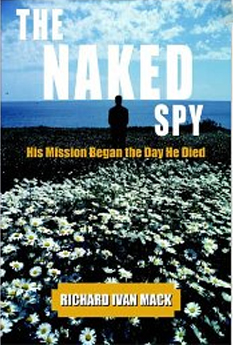
That’s Richard Mack, former sheriff of Graham County, Arizona (population: 37,220). Mack was the National Rifle Association Law Enforcement Officer of the Year for 1994; he’s been inducted into the NRA Hall of Fame. He’s also the author of From My Cold Dead Fingers: Why America Needs Guns and THE NAKED SPY: His Mission Began the Day He Died. 

The CSPOA conference was sponsored by the Gun Owners of America, the Front Sight Firearms Training Institute, and the John Birch Society. And before you ask, I swear I’m not making that up — it was sponsored by the fucking John Birch Society. The folks best known for claiming the fluoridation of drinking water was a communist plot, the folks who claimed President Eisenhower was a “communist tool.”

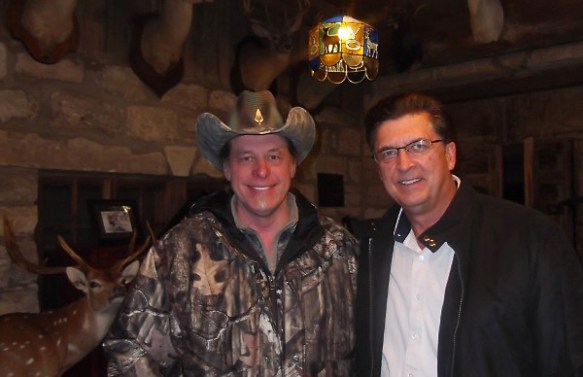
But be assured, former-sheriff Mack also has support from equally reputable sources. Like has-been, draft dodging rock musicians with tendencies toward pedophilia.

Former sheriff Mack, former rocker Nugent, former deer

Former sheriff Mack, former rocker Nugent, former deer

The purpose of the CSPOA conference was to instruct county law enforcement officers  about their alleged constitutional powers. They maintain the Constitution of the United States and the 10th Amendment grant sheriffs supreme law enforcement power within their counties. This, by the way, is the 10th Amendment:

The powers not delegated to the United States by the Constitution, nor prohibited by it to the States, are reserved to the States respectively, or to the people.

According to former-sheriff Mack and his lunatic companions of the CSPOA, the Constitution essentially limits federal law enforcement powers to policing matters of treason, piracy, treaty violations and counterfeiting. That’s it — counterfeiters, traitors and pirates, that’s all the Feds can do. Therefore, the 10th Amendment necessarily confers all primary law enforcement power on the county sheriff. Seriously, that’s their claim. I’m not making this up. The CSPOA folks maintain the following:

The sheriff’s position overrides any federal agents or even the arrogant FBI agents who attempt to assume jurisdiction in our cases.

Yes, they claim the locally elected sheriff has more authority than the Federal Bureau of Investigation. They can only believe that if they ignore that pesky Supremacy Clause of the Constitution. That clause prevents States (and therefore the individual counties of those States) from enforcing their local laws in a way that interferes with federal law. That’s why it’s illegal to own a bazooka in, say, Big Horn County, Wyoming.

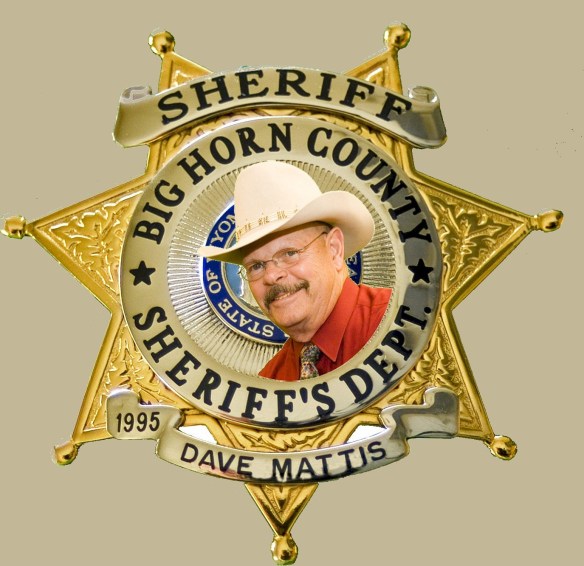
Sheriff Dave Mattis, who just happens to be from Big Horn County, Wyoming (population: 11,668), attended the CSPOA conference. He told the other attendees that he’s issued an edict (an edict!) forbidding Federal agents from entering Big Horn County without his approval. Not only that, Mattis also told the conference the Wyoming District Court agreed with him.

Dave Mattis, dimwit liar and sheriff

Dave Mattis, dimwit liar and sheriff

But the court didn’t actually agree with him. In fact, after they learned of Mattis’ claim, the Wyoming District Court issued a statement (and note the court wouldn’t even agree that Mattis issued an edict; they dismissed it as a mere policy and even then they even put policy in quotes — that’s a tough court):

Big Horn County Sheriff, David M. Mattis, issued a “Policy.” In the “Policy,” the Sheriff purports to impose conditions upon federal law enforcement operations in the County. We have learned that it has been reported, erroneously, that the court made a legal ruling in the Castaneda case regarding the authority of federal law enforcement officials to conduct operations in the County. There was no such ruling or decision.

This Court has never issued an order which would serve to limit the lawful activities and duties of federal law enforcement officers and other federal employees in the District of Wyoming. Furthermore, this Court has never made the comments attributed to it which purports to advise state officers they can prohibit federal law enforcement officers or agents from entering a Wyoming County. Those alleged quotations are utterly false.

Any person who interferes with federal officers in performance of their duties subjects themselves to the risk of criminal prosecution.

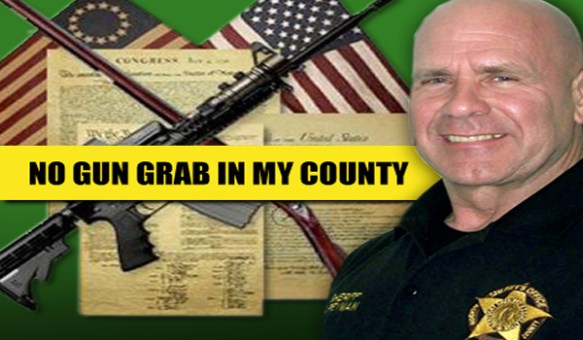
In less legalistic terms, the court is saying Big Horn County Sheriff Dave Mattis is full of shit. So is Sheriff Denny Peyman of Jackson County, Kentucky (population: 13,494). Peyman held a news conference in which he said this:

I am the highest elected official in this county…I can ask federal people to leave, they have to leave. I can ask state people to leave, they have to leave. [I]t doesn’t matter what [new laws] Obama passes, the sheriff has more power than the federal people.

Dimwit Sheriff Denny Peyman

Dimwit Sheriff Denny Peyman and all of his deputies

It probably ought to be noted, though, that due to Sheriff Peyman’s misuse of county funds (County judge William Smith says the Sheriff’s Department owes the county nearly $300,000) county officials have formed an alternate Jackson County Police Department comprised of Peyman’s former deputies. Sheriff Peyman is now the entire Jackson County Sheriff’s Department; his staff is gone, his policing duties are gone, and he has nothing to do but call dimwitted news conferences. The FBI has apparently been called in to investigate the case. I guess Peyman forgot to ask them to leave.

Despite what these dimwitted sheriffs say, the law on this matter is pretty clear. Federal officers can’t be subjected to state criminal sanctions for carrying out their appointed duties. It doesn’t mean federal agents are above the law; but it does mean no dimwit sheriff can prevent them from fulfilling their lawful duty just because that dimwit sheriff disagrees with the laws written by Congress.

But don’t be too hard on these sheriffs for being dimwitted or telling lies. Lying seems to be part and parcel of the CSPOA approach. Earlier I mentioned that the organization is claiming to have more than 200 sheriffs as members. The operative term there is claiming. I noticed one of the sheriffs listed as members is Bill McCarthy, the sheriff of Polk County, Iowa.

I live in Polk County. I voted for Sheriff McCarthy. I based my vote on comments he made during a debate. McCarthy actually brought up the subject of the so-called constitutional sheriffs movement. His opponent in the election had demanded he join the Oath Keepers — another group of law enforcement officers who believe they get to define the Constitution. This is what McCarthy said:

“I had him and others come in my office and demand that I sign an Oath Keepers promise which is a sign that you support the Constitution.  That would be the last thing I’d ever do is sign a Constitution for people like that. I took an oath when I joined the Marine Corps. I took an oath that caused me to do two terms in Vietnam.  I took an oath in 69 when I joined the Sheriff’s office, and again in 70 with the Police Department, and then again when I was elected Sheriff.  I’m not taking an oath for people who define ‘We the People’ [as those] who look exactly like them and think exactly like them.”

McCarthy won with nearly 60% of the vote. He’s not a member of the Constitutional Sheriffs and Peace Officers Association. Claiming him as a member is a lie. But that’s how groups like the CSPOA operate.

Trial lawyers have a maxim: When the facts are against you, bang on the law; when the law is against you, bang on the facts; when both the law and the facts are against you, bang on the table.

These dimwits are banging on the table. They hope that by banging loudly enough, it’ll distract folks from the facts and the law. But the fact is, nobody in the government is planning to confiscate everybody’s guns. But there’s a chance the laws will change to require some minimal restrictions on firearms. If the law changes, all law enforcement officers — including sheriffs — will have a duty to uphold it.

Then former sheriff Richard Mack can resume his badly neglected writing career.

the naked spy