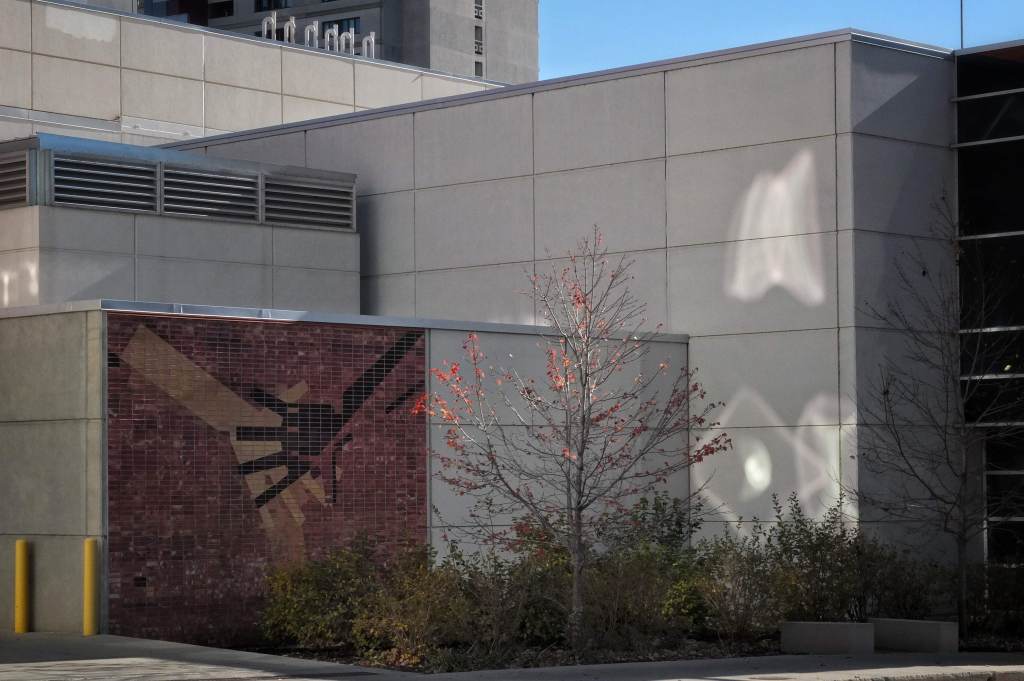
So I’m walking down the street last Saturday, right? And I see these weirdly-shaped areas of light on the side of a building–light reflected off another nearby building. The light is also illuminating just the top of a tree that’s almost completely devoid of its Autumn leaves. The nearly-bare tree is beside a tile mural of two hands–one black, one white–touching each other. The fingers on the hands sort of mirror the limbs of the tree. Everything there is odd and lovely and since I’ve got my little 12-year-old, 12 megapixel Fujifilm X10 in a pocket, I stop and shoot the photo.
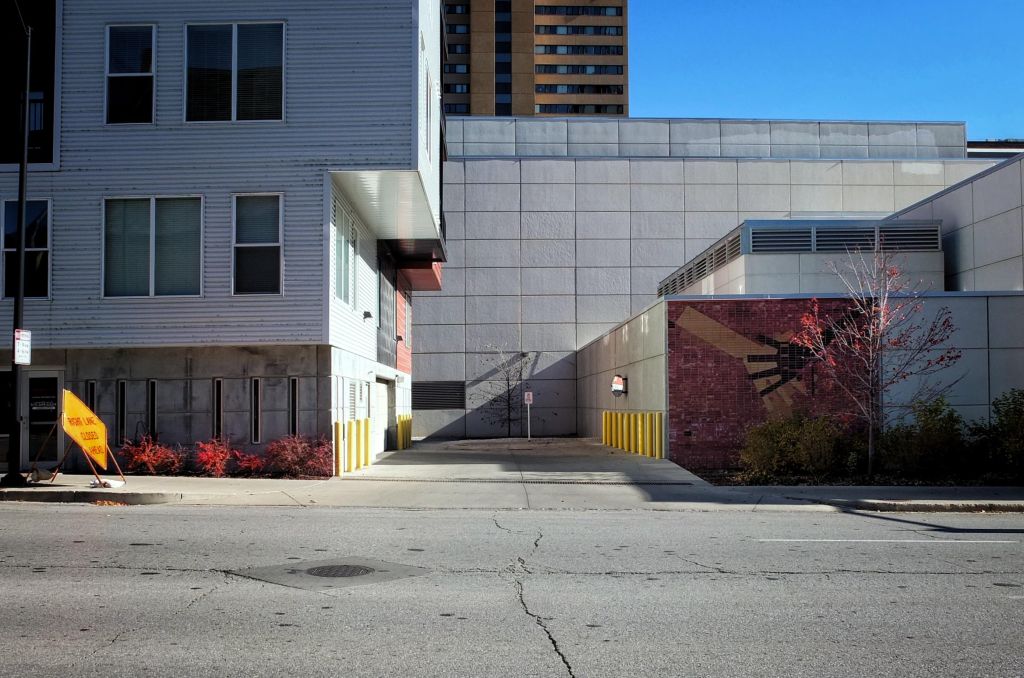
And I’m happy with it. So I keep walking and I notice the mural is directly next to a cul-de-sac that’s the entrance to an underground parking garage for an apartment building (the building that’s creating the weird reflections in the first photo). There are a LOT of lovely yellow bollards (I have a thing for bollards) in the cul-de-sac that are sort of balanced by a yellow ‘Lane closed’ sign. Even better, there are some reddish shrubs that sort of balance the red of the illuminated tree. Better still, there’s a delicious acute right angle of shadow right in the middle–and in the middle of the shadow, another tree. And I’m immediately smitten by all the colors and the lines of the various buildings. So I stop and shoot the photo.
I want to get closer to those bollards, so I cross the street, where I discover that there are sections of the apartment complex that couldn’t be seen from a distance. Lovely red and black color blocks, with windows that cast still more reflections on the wall opposite. A circular convex mirror reflects those red and black colors. I notice that the wall at the back of the cul-de-sac, which appeared white from a distance, is actually a very pale shade of blue, that’s enhanced by the slight shift in the angle of the light. The angle of shadow is somewhat less acute. There’s a strange curving line of electrical tubing for a lamp, and some crazy shadows. Those yellow bollards, also catching some reflected light, seem almost decadent. And so many glorious straight lines at interesting angles to each other. Finally, right in the center, a tree which sneers at straight lines. So I took another photo.
Six minutes. According to the EXIF data, that’s how long I spent at that scene. It seemed a lot longer. Six minutes and three shots. Six minutes, drunk on light and shadow and line and shape. Six captivating minutes.
This isn’t unique. Every photographer has had a similar six minutes. They’ve probably had several similar six minute experiences. It’s those six minutes that keep us toting cameras and making a nuisance of ourselves. Six minutes of ineffable delight.
This is what happened. At some point over the last few months I began to miss the feeling of using a camera. I missed holding a camera in my hands. I wasn’t dissatisfied with my phone; it takes excellent photos. But it’s not the same; it’s a multi-use device that also happens to take photographs. I missed using a tool designed solely for the purpose of making photographs.
So a couple of weeks ago I opened up a cupboard and looked at all my abandoned cameras. I don’t have a camera collection; I just have some cameras I’ve stopped using. Some are film cameras, some are digital. I picked up a few and handled them. It was one of those Goldilocks moments; this camera was too big, this one was too heavy, this one would require a substantial investment in film and processing.
I pulled out the last camera I’d bought–a Fujifilm mirrorless camera. I was surprised to find the battery still had a charge. So I shot a few frames around the house. It felt awkward in my hands. Worse, I’d forgotten all the familiar menu pathways. I couldn’t remember how to make the cameras do what I wanted it to do. When I put the camera back in the cupboard, I noticed the very first Fujifilm camera I bought. A small X10, the first model of the compact cameras with the letter X and two digits in the product name. I bought it back in 2012 and wrote a blog post about it.
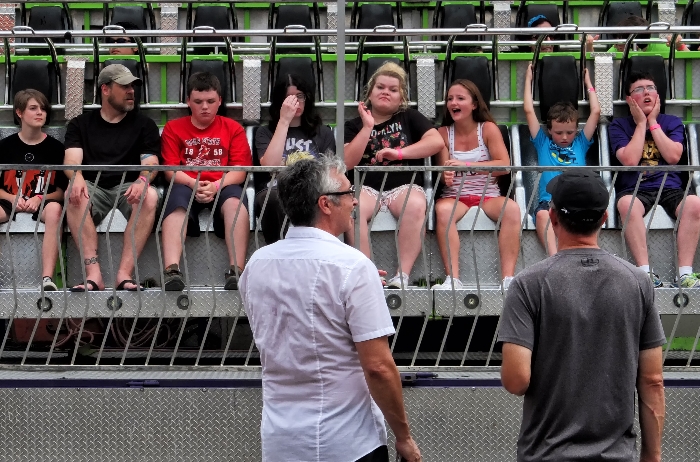
Out of curiosity, I did a quick file search and found the last photo I shot with x10. It was from August 15, 2016 at the Iowa State Fair, at one of those rides designed to toss people around and give them the illusion of danger. I liked the photo; you can see anxiety and bravado, you can see the clinched-butt need to appear calm and unfazed.
Iowa State Fair 8/15/2016
That photo was the spark I needed. So I dug around in the cupboard until I found the battery charger and charged the batteries. It had been so long since I’d used the camera that I had to re-set everything from scratch, including the date and time. I even tracked down the manual for the X10 online. I’m sure I must have at least glanced at the manual when I bought the camera, but I was unaware of some of the things the camera could do. For example, I created a custom setting for black-and-white shots, which is something I’ve never done before (and I’ll come back to that in a bit).
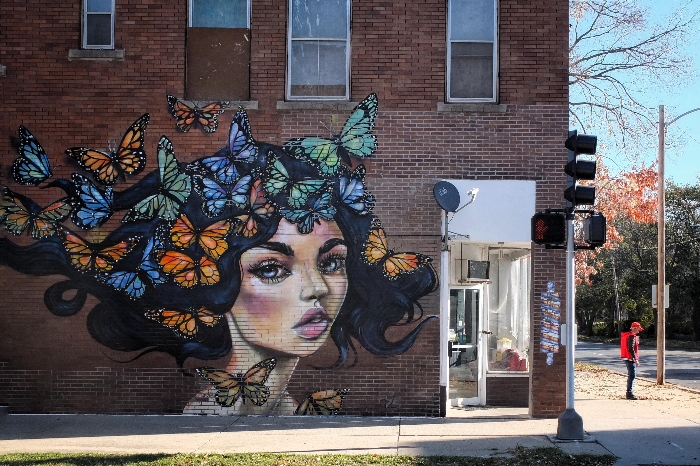
A man in a bright red vest and hoodie standing outside a barber shop.
Yesterday I set out to see if I could remember how to use a camera. Well, that’s not entirely true; I set out to go geocaching with my brother, but I used the excursion as an opportunity to re-acquaint myself with the X10. The little camera was a tad too big to slip into the pocket of my jeans, but it slid easily into the pocket of my hoodie. It weighed next to nothing. While my brother did the grunt work of geocaching, I watched a guy in a red vest fidget outside a barbershop in a Latino neighborhood. And the camera felt right.
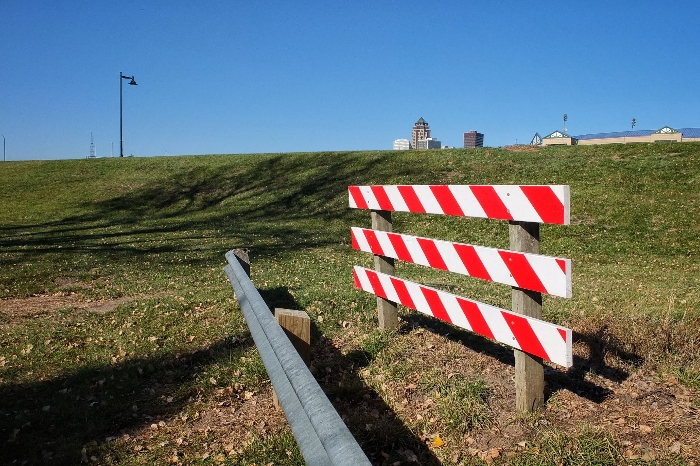
Dead end road across the river from the minor league baseball stadium.
The camera felt right but the final results were…mixed. The first thing I had to re-adapt to was the parallax effect since the X10 is a sort of retro-designed rangefinder camera. I suspect a lot of folks have never used a rangefinder camera and are wondering, “Greg, old sock, what the hell is this parallax effect?” Unlike your basic single-lens-reflex camera, which allows you to see the scene through your lens, a rangefinder viewfinder is only near the lens. So you’re not seeing exactly what the lens sees: that’s the parallax effect. You have to learn to adjust to the small shift between what you see and what the lens sees. The closer you are to the subject, the more drastic the effect.
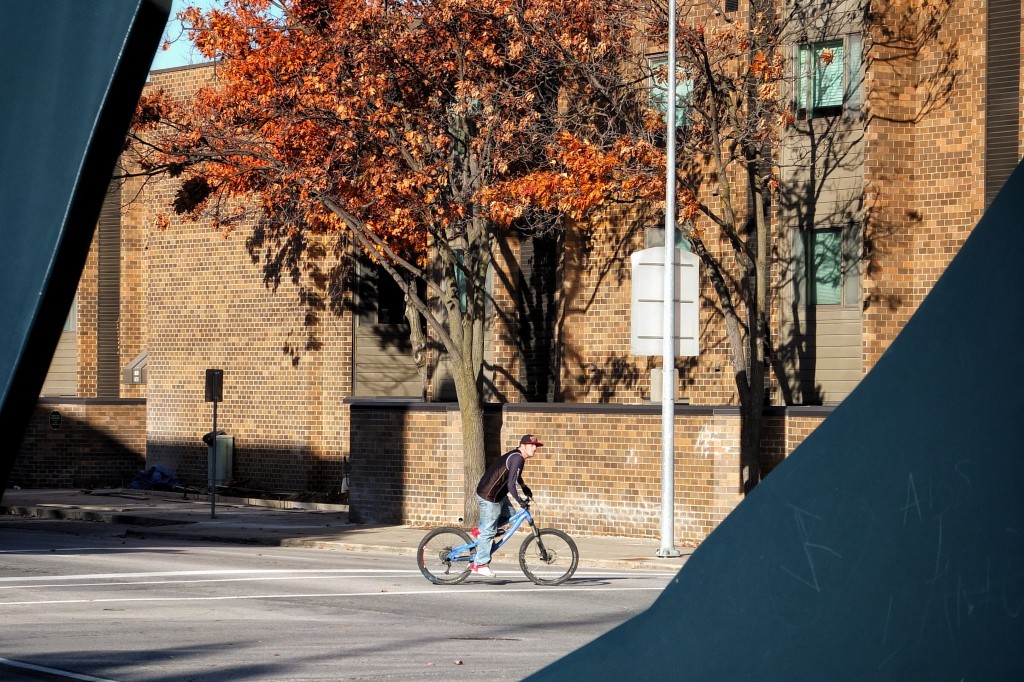
Kid riding a bike, seen through a public art sculpture.
In the photo above, I wanted to catch the rider in that patch of sunlight between the shadow and the tree. I was a fraction of a second late with the shutter as I panned to follow the kid, but I want to claim the tiny amount of parallax exacerbated the problem (DISCLAIMER: it almost certainly did not exacerbate the problem, but it’s a convenient thing to blame). If I was a fraction of a second too late releasing the shutter in the photo above, I was a fraction too soon in the photo below.
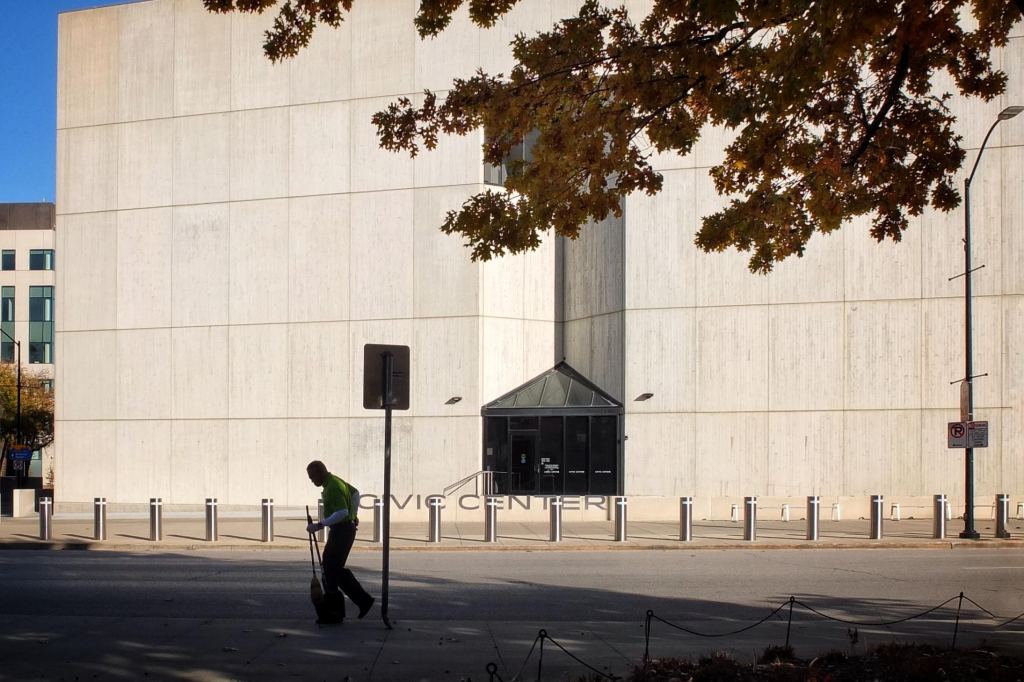
A city employee cleaning up litter and leaves.
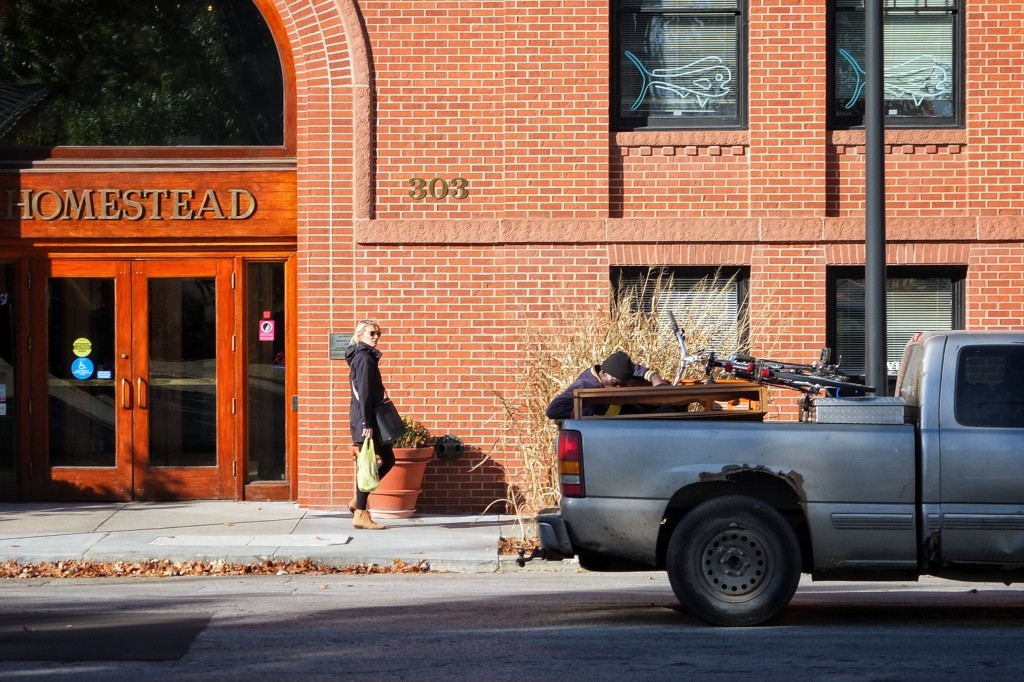
I’d hoped to catch the street cleaner at a point just beyond the sign identifying the location as the Civic Center. I was a tad too quick on the trigger. Much of the day was spent confronting the reality of the Ferris Bueller School of Photography. Life moves pretty fast. If you don’t stop and look around once in a while, you could miss it. I was lucky not to miss the look of disdain by this privileged white woman as she watched a black man securing some home furnishings in the back of a rusty pick-up.
A man secures some home furnishings in his pick-up while a woman walks by and watches.
I mentioned earlier that I created a custom setting for black-and-white shots. This is one of the advantages of digital photography. With a film camera, you either have to change from color film to black-and-white film or carry two cameras. With a digital camera, you just turn a dial or change a menu option. I decided to try to create a setting that would sorta kinda almost mimic Daido Moriyama’s Provoke period. High contrast, high ISO, high grain. (Of course, digital imagery doesn’t have grain; it has noise, which isn’t remotely the same…but what the hell, I set the noise allowance as high as possible).
And hey, guess what. It didn’t work.
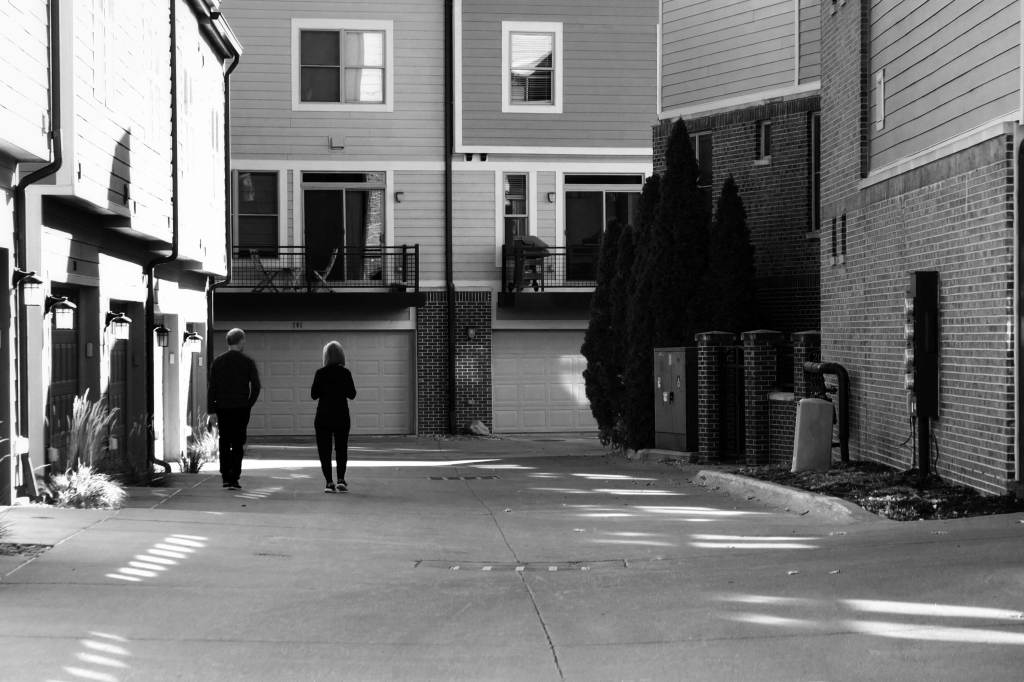
Two people walking behind some townhomes.
It wasn’t really a surprise that it didn’t quite work. Partly because Moriyama wouldn’t photograph a couple walking behind some upscale trendy townhomes. Partly because I didn’t see many high contrast scenes. And partly-mostly because I’m no Daido Moriyama. I shot maybe a dozen frames (okay, digital imagery doesn’t actually have frames either) using the custom setting. Most of them, like the photo above, are painfully dull.
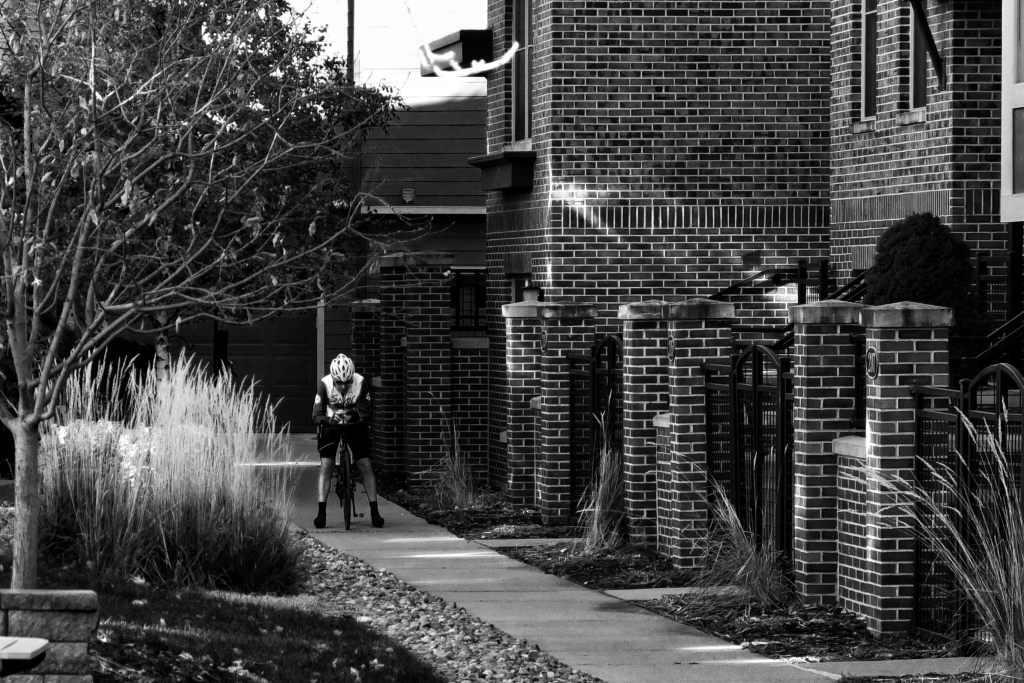
I was only pleased with one black-and-white shot. Frankly I’ve shot MUCH better black-and-white photos with my cell phone (which, if you’re interested, you can see in a post about practicing photography in public). These photos were less black-and-white and more black-and-shite. But I intend to experiment more. Maybe I’ll figure out how to get the camera to give me the b&w photos I want.
Cyclist checking his stats.
At the heel of the hunt, though, I’m happy with the old X10. I’m reminded that my approach to almost everything I do is grounded in the same attitude. I want to do things well, but so long as I’m enjoying myself, I’m not that concerned with the results. And folks, I had fun with that little X10. I plan to start toting it around with me more often. In fact, I just ordered two extra batteries.
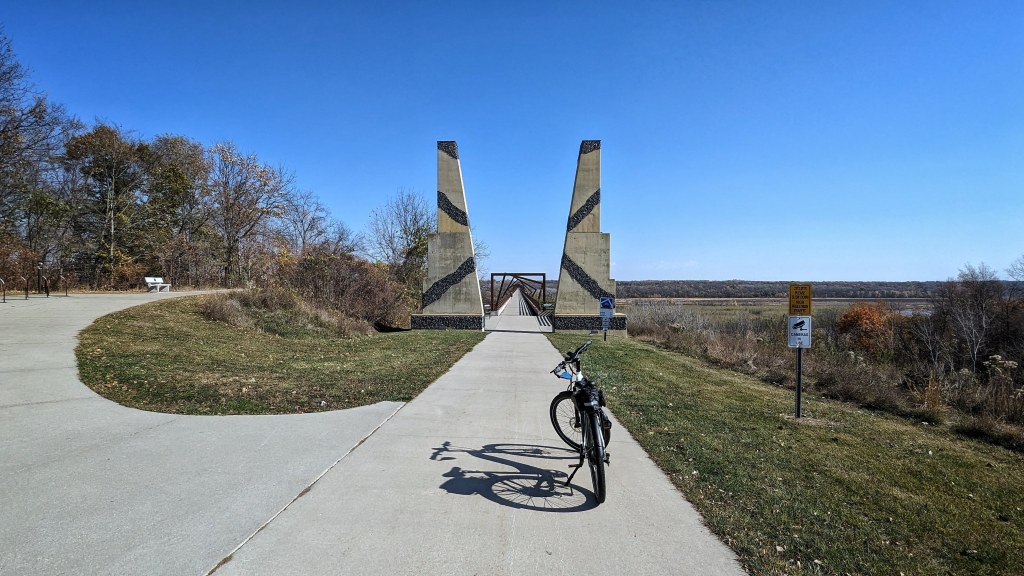
It was a lovely day for a bike ride…except for the wind. A sunny Monday (which meant all the decently employed people were off at work, leaving most of the bike trail almost empty), just a few days past peak foliage season, unseasonably warm (fuck you, climate change, there’s no reason for it to be 70F in the Midwest in the third week of October). So yeah, a lovely day for a bike ride…except for the wind
But the wind…lawdy. Steady 15-17 mph; gusts over 30. That kind of wind at your back is grand on a bike; it just pushes you along. But riding into that wind is a massive pain in the ass. And cross-wind? Fuck me with a chainsaw. If you need another reason to dislike the wind, it rips away the autumn foliage. Still, a bike ride seemed like a good idea.
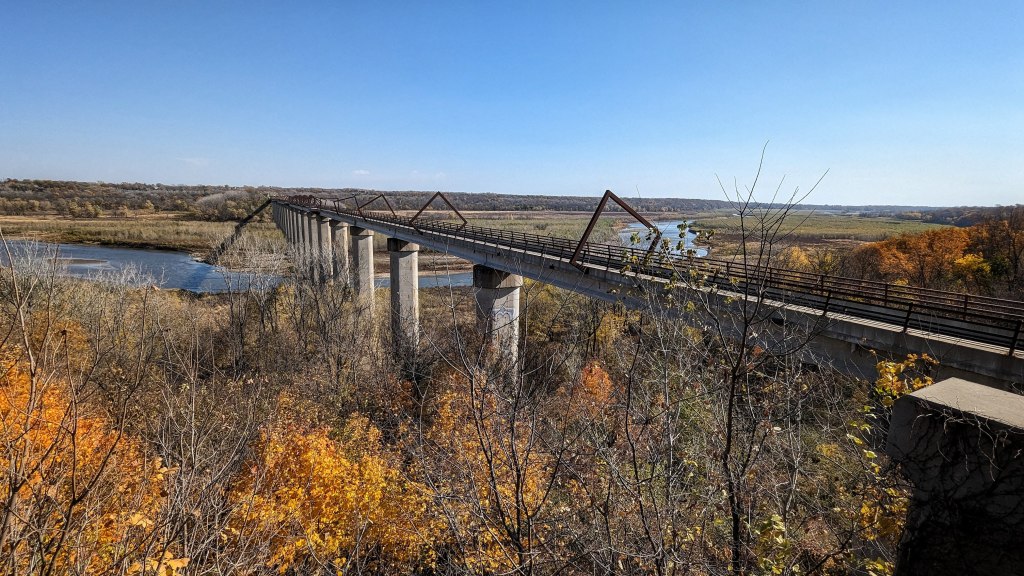
Besides, I’d never ridden across the High Trestle Bridge. I’d ridden most of the High Trestle Trail many times, but the bridge is inconveniently placed near the end of the trail. I like to ride loops; you know, the sort of ride where you circle back to the beginning. The HTT isn’t a loop. It starts in on town, goes through a few other towns, then just ends. When you get to the end, you just turn around and ride the same trail back. That would be fine, except a big section of that trail is what cyclists call boring as fuck. It’s a long, ruler-edge straight, former railroad track that’s almost completely exposed to farmland. Which means there’s absolutely no protection from the sun or the wind. It’s awful.
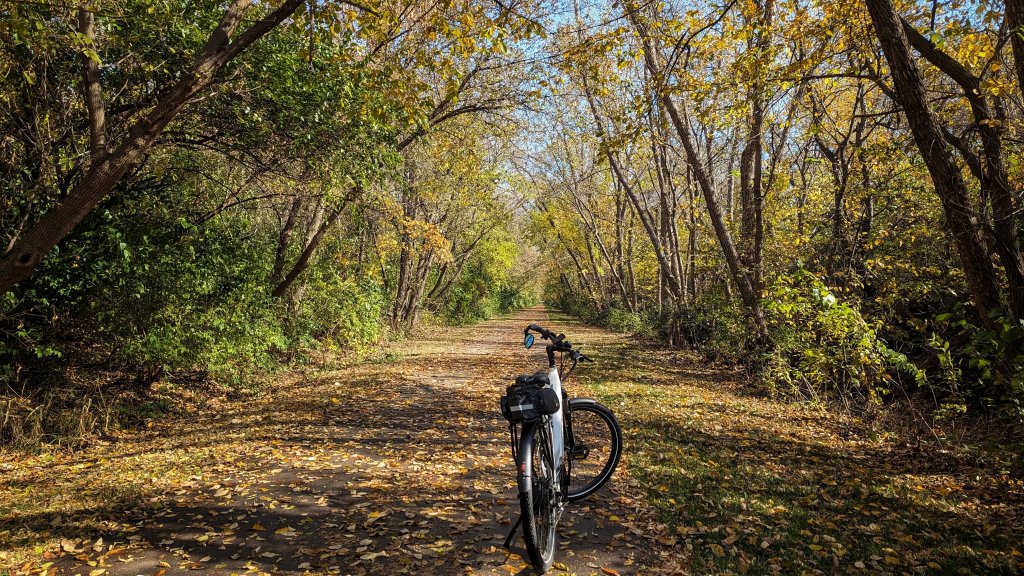
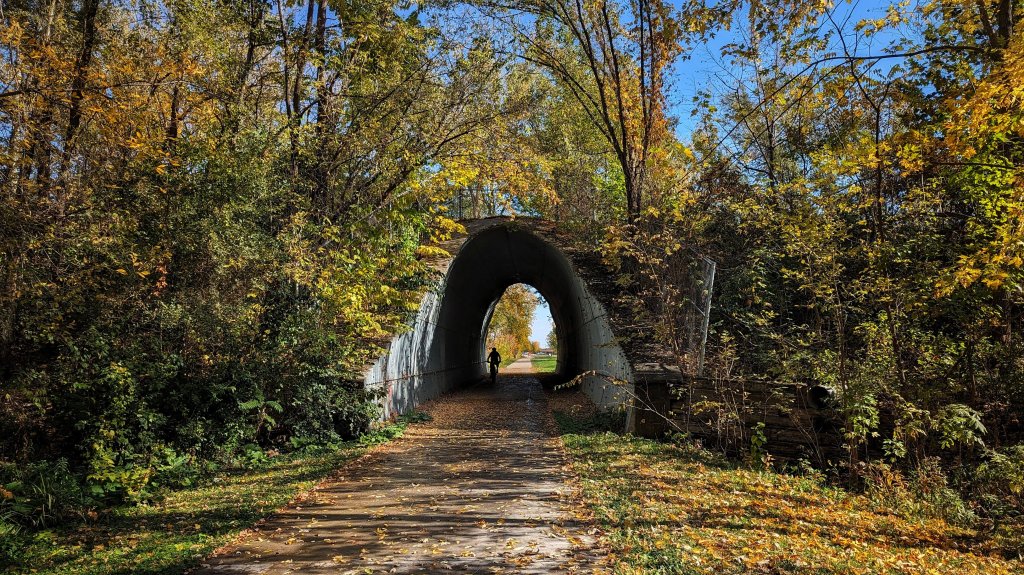
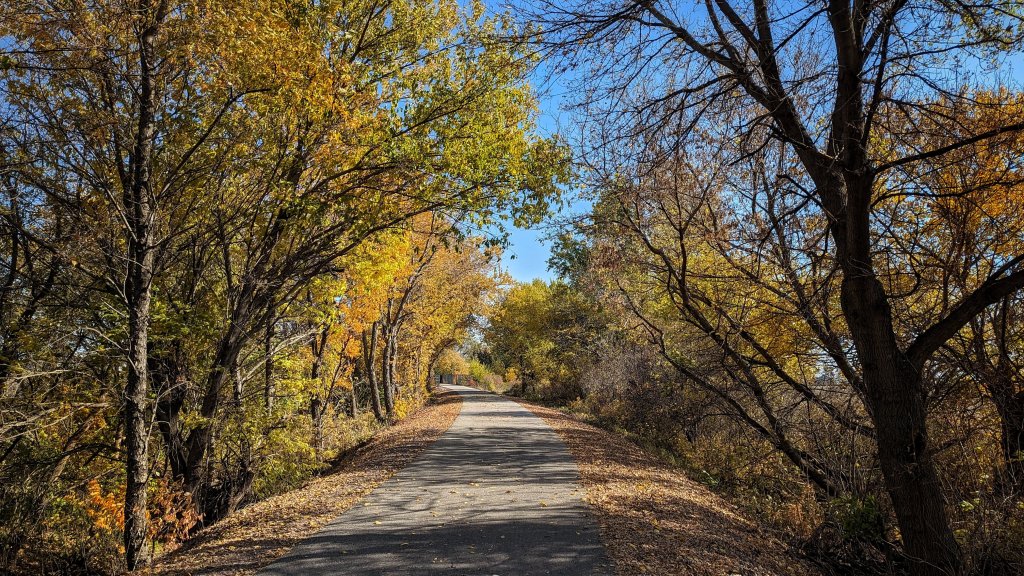
But you can put up with the dull sections so long as there are interesting sections. So we hauled my bike to the far end of the High Trestle Trail and I rode home. The first few miles were lovely; a tree-lined, leaf-strewn trail. Quiet, peaceful, mostly protected from the wind. Then I came to the bridge. It’s a former railroad bridge, spanning the Des Moines River Valley. Half a mile long. One hundred and thirty feet high in the center. Absolutely beautiful. Absolutely exposed to the wind.
Did I mention there were gusts over 30 mph? Did I mention those were cross-winds on the bridge? Even on weekdays, the HHT bridge gets plenty of traffic. The far trailhead is within a few miles of the bridge, and there are bike pubs on both sides. It’s a popular cycling spot. Yesterday was no exception. But those winds.
I saw cyclists start on the bridge, then turn around and come back. I saw a four-bike collision in which it appeared the wind blew one cyclist into another, and two other cyclists piled into them. I saw some cyclists get off their bikes and walk them. And there were a few of us who just put our heads down and rode. I’d originally planned to stop at a couple of the observation areas on the bridge–slightly wider spots where you can dismount and enjoy the scenery. But it was too windy. The bridge is wide enough for maybe three bikes to ride side-by-side, but it felt awfully narrow in those winds.
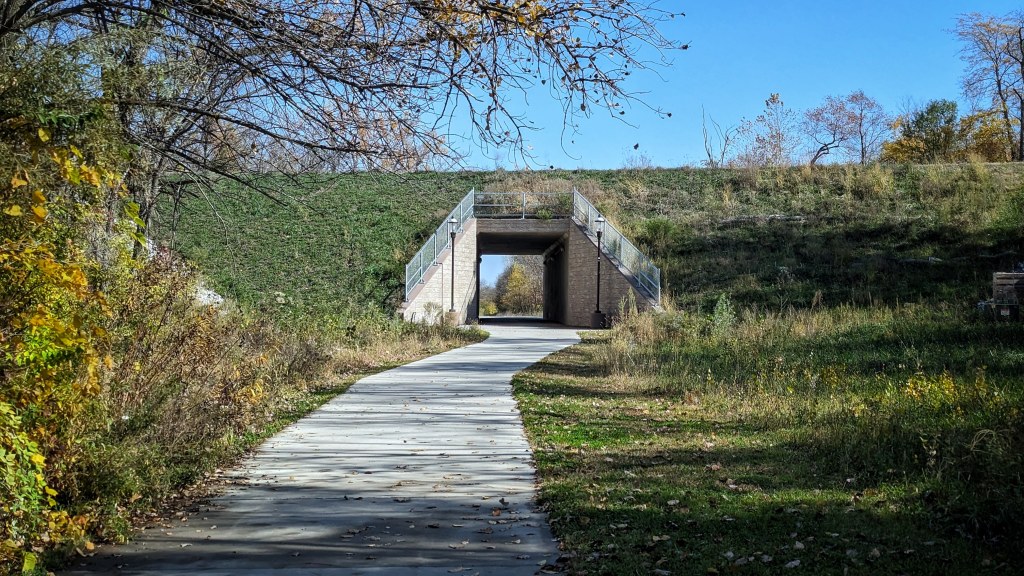
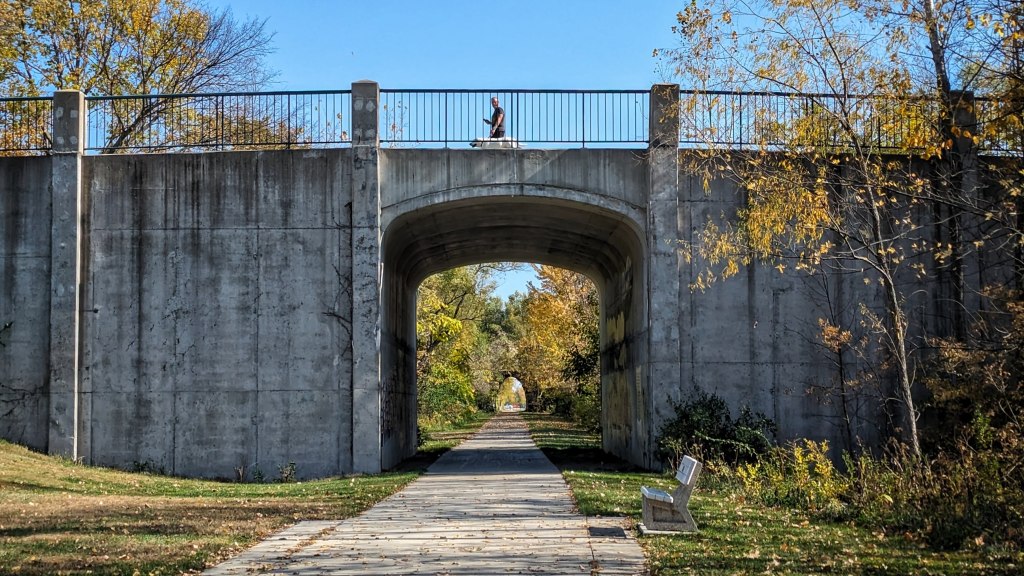
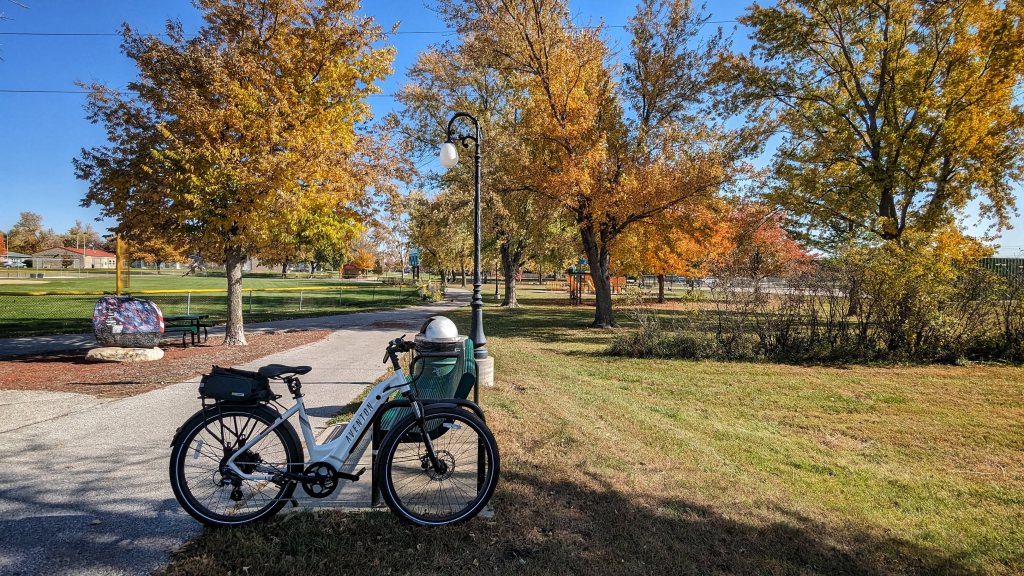
Once across the bridge, the trail became friendlier. It’s a beautifully maintained paved trail, lined with trees, passing by or through a few small farming towns. It was the very best part of the ride; the part in which most of these photos were taken. But then the HHT turns southward and, aside from a few small sections, it’s almost entirely open to the wind. I’ve never been so glad to own an ebike.
My bike has five levels of pedal-assist. It’s so easy to ride, I’ve never felt the need to leave the first level of assist. But into those headwinds, I toggled up to pedal-assist two. Around ten miles straight into steady 15-17 mph headwinds, with gusts of 30 mph. There were very few cyclists riding into the wind; maybe half of the riders I encountered were riding ebikes. The ones who weren’t, looked miserable. I didn’t even think about stopping to take photos.
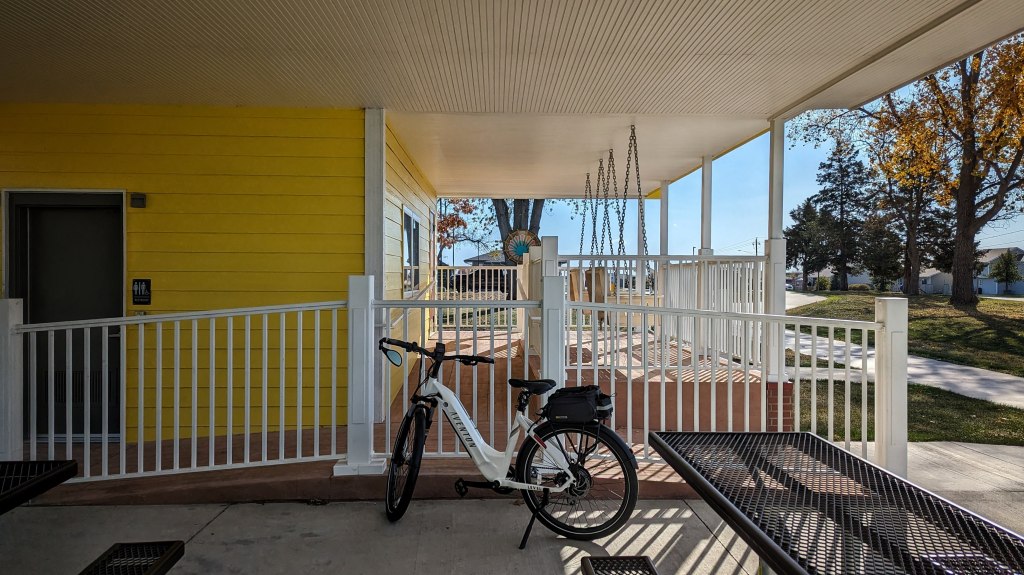
One of the many nice things about the High Trestle Trail is that there are lots of places to stop and rest. Benches every few miles, small towns with parks, people who live along the trail set out chairs and small tables. I saw at least three bike maintenance locations along the trail, with air pumps and a selection of tools. There are trailheads at both ends of the HHT, with restrooms, picnic tables, and repair stations. The trailhead at the southern end even has porch swings.
It wasn’t a terribly long ride. Less than 30 miles. A hefty chunk of it was unpleasant and more strenuous than I’d like. But any day you get to spend on a bike is a good day. Yesterday was a good day. Except for the wind.
I almost never look back at my own photographs. I figure I’ve already made the shot, processed it in the way I wanted to, then either posted it somewhere or…you know, didn’t post it at all. Either way, I’ve already seen the photo; why look at it again?
I don’t feel that way about the photographs of other folks. I’ll still look at photos by Eggleston (today is his birthday, by the way) or Kertész or maybe one of the Pages (Tim or Homer), for example. There’s almost always something new to be discovered or appreciated when you look at the work of the photographic Big Hats.
But this morning, as I was going about my usual morning routine (after watching Nigeria’s amazing win over Australia in the Women’s World Cup), I saw this photo on Facebook:
I thought, “Damn, that’s solid work, right there.” Then I realized it was a photo I’d shot nine years ago. It was a weird experience–seeing a photo I’d taken but looking at it like it was the work of a stranger. What made it weird was that as I looked at the photo, I could remember why I’d shot it and what sparked the desire to shoot it.
It was all about layers. The wooden bridge under my feet, the water under the bridge, the lily pads on the water, the fish under the water, the stones under the fish in the water, the reflection of the bridge on the water, my reflection on the water standing on the bridge above the water, the reflection of the trees above me on the water, the reflection of the clouds above the trees.
I remember standing on that bridge in Wisconsin and being struck with an immediate sense of absolute location, if that makes sense. I was at that particular spot on the globe on that particular day. It was sort of a Doctor Who moment–time and relative dimension in space. No other person could be in that particular spot at that particular moment. That’s true constantly, of course, but it’s pretty rare that we actually think about the reality of it.
I also recall very deliberately composing the shot in my head. I shot two frames; this one, shot rather quickly but intentionally slightly askew. The second shot was more formally composed, with the line of the bridge horizontal along the bottom of the frame. The more formal shot was…well, uninteresting. It has all the same elements as the photo above, but it’s strangely unemotional. Two photographs of the same thing, taken seconds apart, but only one of them works. That just seems sort of freaky. But normal. Freaky-normal.
I like this photograph. I like it both as a photo, and as a personal experience. Maybe it takes the distance of a few years to be able to actually see your own photos.
On some social media platforms I describe myself as a writer and a photographer. That recently led to an interesting question. I was asked:
“Do you shoot photographs the same way you write? Do you write like you shoot photos?”
My response was pretty simple: Never thought about it. And then, of course, I started thinking about it. I probably spent most of an afternoon thinking about it. Well, that’s not really accurate. I thought about it off and on for an afternoon. Because that’s a thing I do; I think about stuff.
Morning light, drinking coffee
My first thought was: Well, maybe I do. I mean, it was worth considering. Both writing and photography are vehicles for self-expression. They’re both grounded in craft rather than art, although they’re amenable to art. Do I need to go into the difference between art and craft? I suppose I do…but briefly. Basically, craft is about structured skills that can be learned whereas art is about unstructured imagination. I think that’s brief enough.
Anybody of average intelligence can learn the skills involved in writing and photography, stuff like the mechanics of grammar or the mechanics of exposure, or how to use punctuation in a sentence or determine an image’s depth of field. So in that sense, sure, I write and shoot photos in the same way. Learn the skills, apply them to the work.
But there’s a lot more to fiction than being able to write a complete sentence; there’s a lot more to creative photography than being able to correctly expose a photo. It all comes down to composition: 1) choosing what gets included, 2) what gets excluded, and 3) how it’s presented.
Because while writing and photography are both vehicles for self-expression, they’re completely different vehicles. Asking if me if I write the same way I shoot photos is like asking me if I drive a truck the same way I paddle a kayak. It’s like asking me if I sing the same way I play the banjo. (Okay, I don’t actually play the banjo, but you get the idea.)
I can articulate my reasons for crafting sentences and paragraphs. I’m aware as I’m writing why I arrange scenes the way I do. I know I’m trying to amuse the reader, or distract the reader from something in the story, or foreshadow an event that will take place later, or reveal something about a character.
I can’t always articulate why I shoot a photograph. Sometimes there’s just something about the arrangement of the world that pleases me. Looking through a camera’s viewfinder allows me to put a border–a frame–around a chunk of the world. At that point it becomes about arranging the world within that frame. A step to the right, two steps forward, dropping down on a knee–all of that changes the arrangement of the world inside the frame. But I’m not always aware of why a specific arrangement pleases me. Afterwards, looking at the photo, I can sometimes perform a sort of autopsy on the image to figure out what I was seeing at the moment I shot the photo.
Seven posts
(Sorry…here’s a tangent. Autopsy is from the Greek auto, meaning ‘self’, and opsis, meaning ‘see’ or view’. It basically means ‘to see for yourself’. Since the late 17th century autopsy has been used to describe a forensic dissection of the body to see for yourself what caused the body to die.)
Anyway, having thought about the question ‘Do you shoot photographs the same way you write?’ I decided to do a brief autopsy on a few photos I shot recently. The first was shot while I was sitting drinking coffee and reading the news–the morning light coming through a window. The other two were just things I saw during a semi-short road trip to find a small town diner for lunch.
The first photo autopsy was easy. I was just pleased by the momentary arrangement of light and shadow, of lines and shapes. And it was momentary; five minutes later the earth had rotated enough that the light through the window had shifted and was no longer interesting. But THINK about that for a moment. That photo depends entirely on the alignment of the solar system. How cool is that?
I suppose the second and third photographs also depended on the cooperation of the solar system since all photography depends on light, but not in such an immediately obvious way. They’re photos of ordinary crap you’d see in the Midwest countryside. Some posts marking the boundaries of a parking area in a public hunting zone. A blue corrugated metal shed. Why were they worth photographing?
Okay, I’m going to get even more pretentious here. There was a French poet-essayist-philosopher with the cumbersome name of Ambroise Paul Toussaint Jules Valéry (though he’s normally just called Paul Valéry). He wrote:
To see is to forget the name of the thing one sees.
That reads like a Zen koan, except that Valéry’s comment actually makes some sort of sense–or at least it does to me. The photo of the blue corrugated metal shed doesn’t depend on it being a blue corrugated metal shed. It’s ‘shedness’ is irrelevant. What matters is that it offers three different shades of blue, which pair well with the softer blue of the sky. What matters is the sharp angular lines of its shape, which contrasts nicely with the sinuous way the gravel road curves around it. It doesn’t matter that those three utility poles exist to distribute low voltage power to customers while keeping the cables insulated from the ground and out of the way of people and vehicles. It only matters that they provide a sense of balance to the overall image.
To see is to forget the name of the thing one sees. To forget the thing’s purpose, its use, its reason for existing. Those things can contribute to the complete effect of an image on the viewer, of course. I mean, the photo of the blue corrugated metal shed could be seen as a commentary on how humans have transformed the prairie by organizing its resources for commercial purposes. The photo of the posts in the parking area of a public hunting zone could serve as a reminder that early residents of the area hunted game in order to survive (and some still do).
But that’s all gravy. The photographs either work (or fail to work) on their own compositional merits. The words don’t always matter, and they shouldn’t. The visuals displace and supplant the words.
So there’s my answer. Nope, I don’t shoot photos the way I write. And more apologies, but here comes another pretentious moment. This is from TS Eliot’s Fragment of an Agon:
I gotta use words when I talk to you But if you understand or if you dont That’s nothing to me and nothing to you We all gotta do what we gotta do
I’ve got to use words when I talk to you, but not when I show you something. But if you understand the words or images or if you don’t, that’s nothing to me. And really, it’s nothing to you either. We’ve all got to do what we’ve got to do.
As some of you may know, Knuckles Dobrovic is the name under which I occasionally create photo projects on Instagram. This began back in 2013. I created the Knuckles alias to explore Instagram, to learn what it was and how it worked, and to do that without having my name associated with it. I thought it made sense to dissociate myself from the account back then; now it just seems silly. In any event, I created the account and began to compile a very simple project. I put a thing on a glass-topped table on my deck and photographed it.
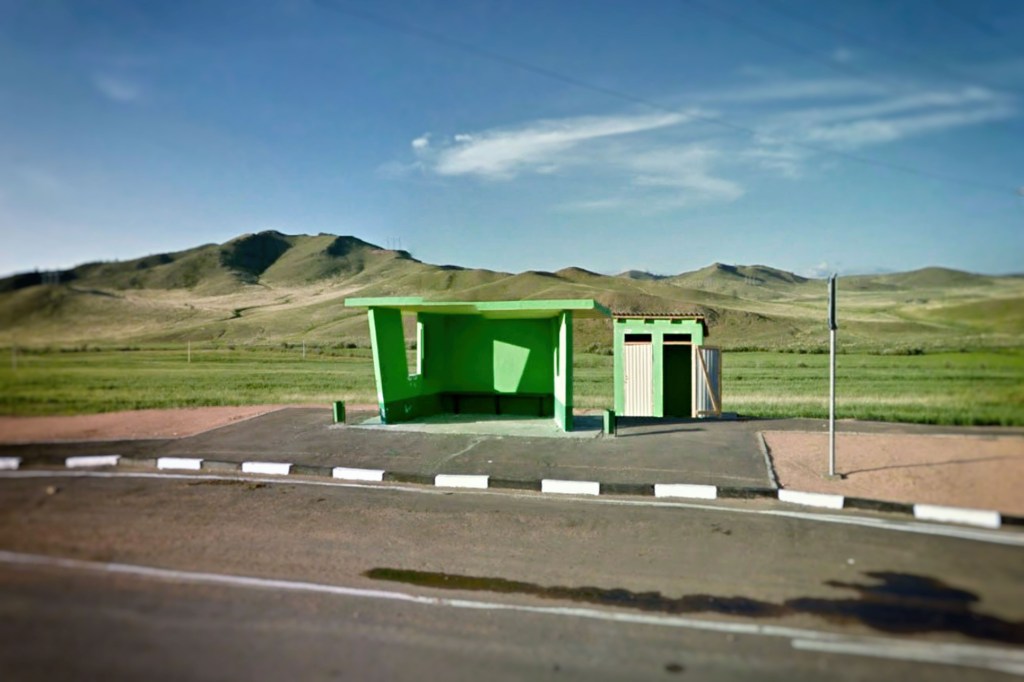
South of Ulan-Ude, Russia
I did that for about a year, during which I realized how ridiculous it was to have an alias account. So I created an IG account in my own name. When Things on a Table was finished, I put the Knuckles account on a shelf and forgot about it. Except–and I realize this is also silly–I’d become attached to the name. So eventually I revived the Knuckles account for another project. And then another. This will be the seventh Knuckles photo project.
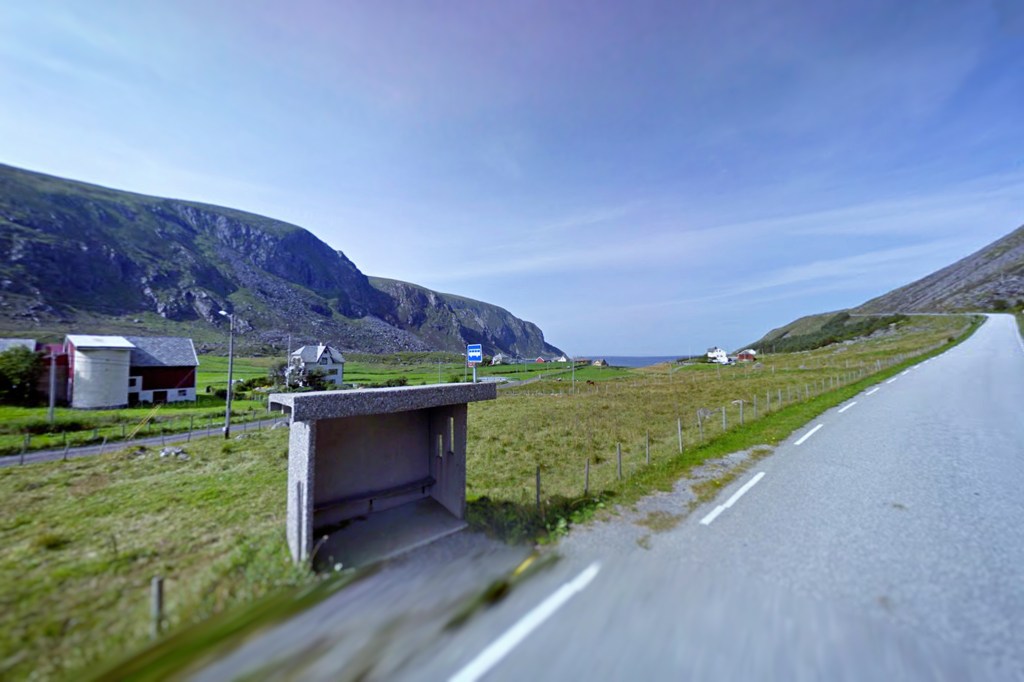
Arvik, Norway
Early on, I cobbled together some simple, flexible parameters for Knuckles projects:
It’s got to be simple (which means I won’t have to do a lot of planning or a lot of post-processing).
It’s got to be organic to my life (which means it’s something I can photograph during the course of an ordinary day — whatever that is).
It’s got to have at least one intellectual component (which is more accurately described as a pretentious bullshit element).
It’s got to be able to keep my interest over time.
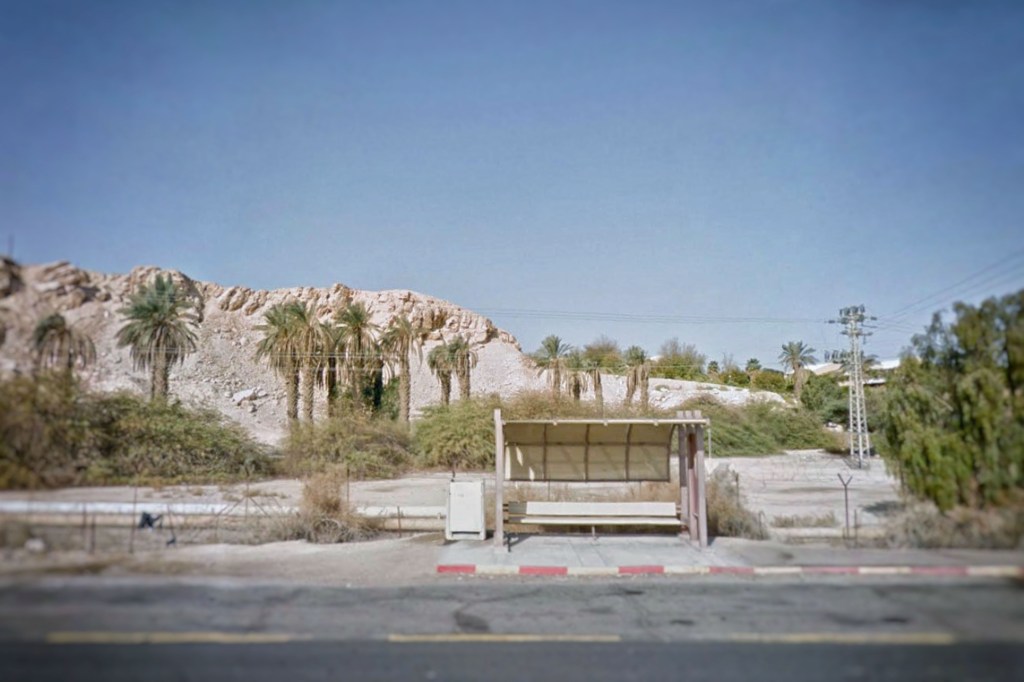
Near Yotvata, Israel
Here’s a quick recap of the various Knuckles projects themselves with a link to a representative image from that project:
My Feet on the Earth — I took walks, stopping periodically to photograph my feet. I selected two or three of the images during a walk and created multiple exposure images.
One Hundred Appropriated Google Street Views — This was sort of an homage to Hiroshige’s ‘One Hundred Famous View of Edo’. While playing the online game GeoGuessr (which involves finding a random location based on Google Street View), I made screen captures of interesting vistas. I converted those screen grabs into square black & white images.
Slightly Dislocated — During the enforced isolation of the pandemic, I shot square format photos during my solo walks or masked errands. I diddled with the color a wee bit, digitally sliced the image in thirds, then re-arranged the pieces.
Are Bure Bampot — I’d been playing Geoguessr again, and during a break I read something about Daido Moriyama, the godfather of a photographic style called are bure bokeh, which roughly translates as “rough, coarse/crude, out of focus.” That same afternoon, on Twitter, a Scots acquaintance referred to somebody as ‘a total bampot,’ which I was told means “an idiot, a foolish person, a nutcase”. For reasons I can’t explain, the phrase are bure bampot came to me, and I decided to follow through on it. As before, I made Google Street View screen captures of scenes and locations in Scotland. This time I modified them using the are bure bokeh style.
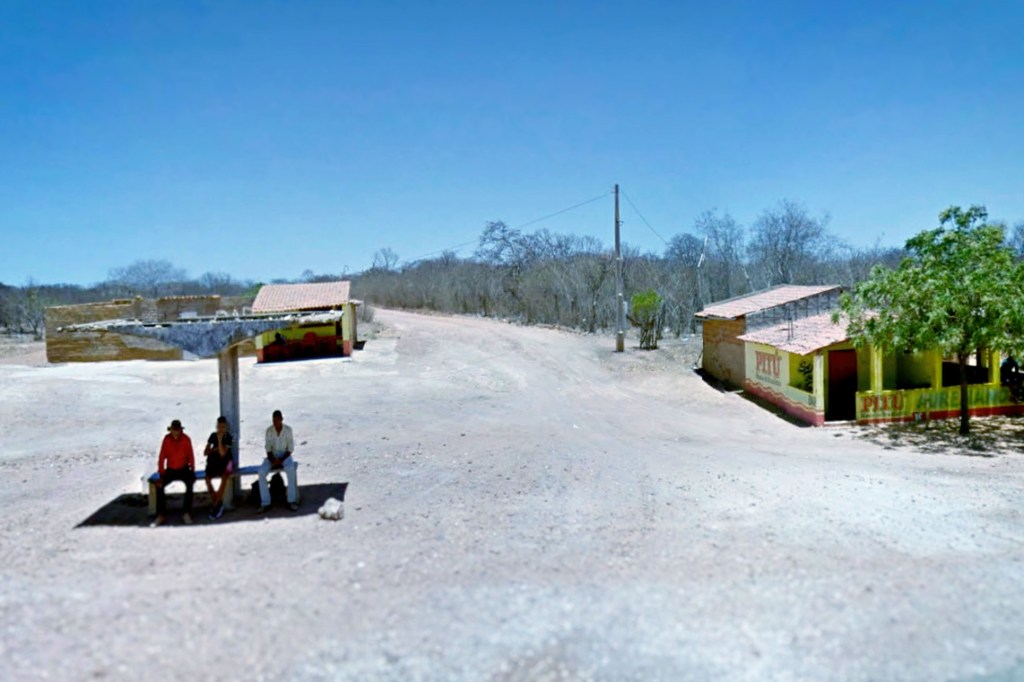
Unknown location in South Africa
Now I’ve returned yet again to Google Street View with a new project: Bus Stops. I’ve always been intrigued by the bus stops I’ve encountered playing GeoGuessr, and I often pause long enough to get a screen capture of them. I’ve written about my fascination with bus stops before; lots of folks know about my interest. Recently an acquaintance sent me a link to a photo of a primitive bus stop in Turkey. It occurred to me that over the years I’d amassed a small collection of Google Street View screen captures of bus stops.
So I decided to do a quick search my old files and organize them. I found just over a dozen images of bus stops–enough to kickstart a new Knuckles project. It falls well within the Knuckles Criteria: simple, organic to my life, an intellectual component, and since I’ve been doing it haphazardly and thoughtlessly for years I’m not likely to get bored with it.
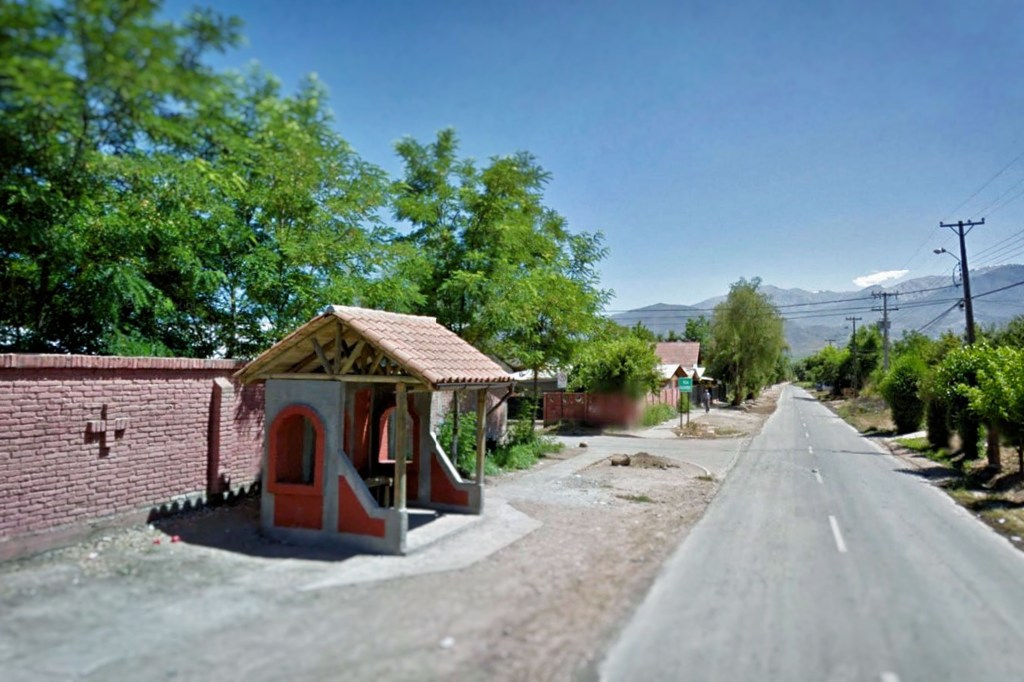
San Esteban, Chile
The intellectual component? A bus is the most democratic form of public transport. They’re most commonly used by the poor and working classes, but the bus stops for everybody. In cities it’s not uncommon to see people in business attire riding the bus to work. A bus network is fundamentally simple: a series of designated routes with consistent designated arrival/departure times and stable designated boarding locations with predetermined fees. It’s a predictable, reliable, efficient dynamical transportation system in which bus stops act as fixed point attractors. And if that’s not enough, bus stops are ubiquitous. They’re everywhere because a bus network is socially elastic–the design can be stretched to fit almost any community anywhere in the world. But stops are both local and global.
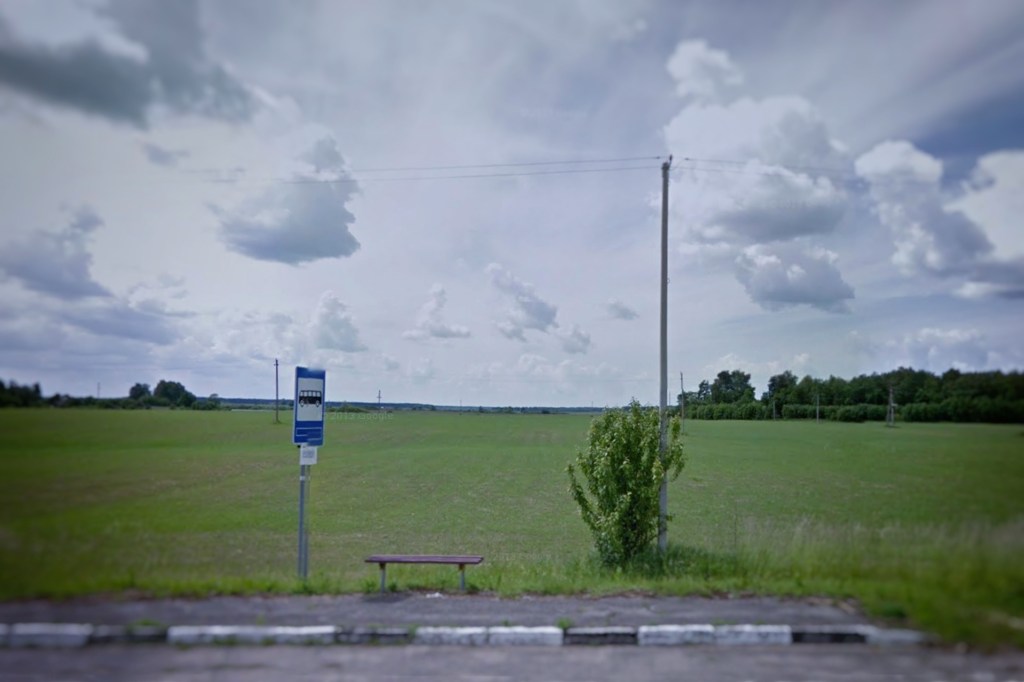
Outside of Petronys, Lithuania
You need more? Bus stops can tell you a lot about a community. Are the bus stops clean? Cared for? Are they in poor repair? Are they stylish or simple? Some bus stops have trash receptacles. Some are trash receptacles themselves. Some are shelters, designed to please the eye as well as keep riders dry and protect them from the wind. Some are purely utilitarian. Some are nothing more than a wide space in the road. You look at a bus stop, you learn something about the people who use them and the communities in which they live.
Bus stops are fascinating. But you have to look at them. So here…take a look.
I’ve been shooting photographs for most of my life. I’m a competent photographer. But for most of my life, I was also pretty ignorant about the history and culture of photography. Oh, I knew the names of some of the Big Hats in photography and could probably recognize some of their photos. But I had no real understanding at all of what had been done in photography, or who had done it, how they’d done it, or what they were thinking when they did it. I was the Jon Snow of photographic culture. I knew nothing.
So I set out to correct that. I decided to educate myself. I did it in a fairly haphazard and casual way– picking a photographer who’d caught my attention for some reason and doing some research on them. I also decided to share what I’d learned. At the time, I was the managing editor for Utata, an online collective of smart, creative, funny, curious people who enjoyed photography and discussion in equal measure. So I wrote a short essay on the photographers I studied and used those as a foundation for discussion in the group’s online forum on Flickr.
It was fun at first. I did an essay every week. Then after a while, it was every other week. It was still basically fun, and I learned a lot. But after a few years, it became a chore. A pleasant chore, for the most part, but still a chore. And like one does with a chore, I began to find reasons to avoid doing it.
And then I stopped.
I just didn’t want to do it anymore. I continued to read about photographers and think about their work, but the idea of writing an essay about them…well, it was simply too much unpaid labor. The last Sunday Salon was published in July of 2017.
A year or so later I learned a change in Flickr’s API (I have no idea what an API is, but it changed) had essentially gutted the Sunday Salons; they were no longer available online. Nobody could see them. I was okay with that. I didn’t really care. The salons had been a personal project, after all, and I’d accomplished what I wanted to accomplish. If they were gone, they were gone.
A few years went by. A few folks would occasionally mention something they’d learned from the salons, but I gave them little or no thought. Until about a year ago, when I got the urge to write another one. But I didn’t do it. I mean, why write an essay for a site that couldn’t display them? But I got in touch with Utata’s tech ninja, David Winkinson, who is one of the most thoughtful, generous, and considerate tech ninja’s ever. Would it be possible to resurrect the old site? The answer was ‘Not entirely; not the photos.’ But he said he could restore the text and establish it on his personal server. And before I could say, ‘Don’t bother’ he went right ahead and bothered.
And there it was. 170 or so essays. Somewhat buggered up, to be sure, but all the bones were there. They just needed to be collected, put in order, and fleshed out with photo examples from each photographer.
So I’ve spent the last few months sporadically noodling around, rebuilding the damned thing. I have absolutely NO skill at graphic design. I’m not even sure ‘graphic design’ is the appropriate term for what I’m talking about. But I cobbled the Sunday Salon together after a fashion. I’d have spent more time trying to figure out how to make it more presentable and more useful, but last week Adolfo Kaminsky died.
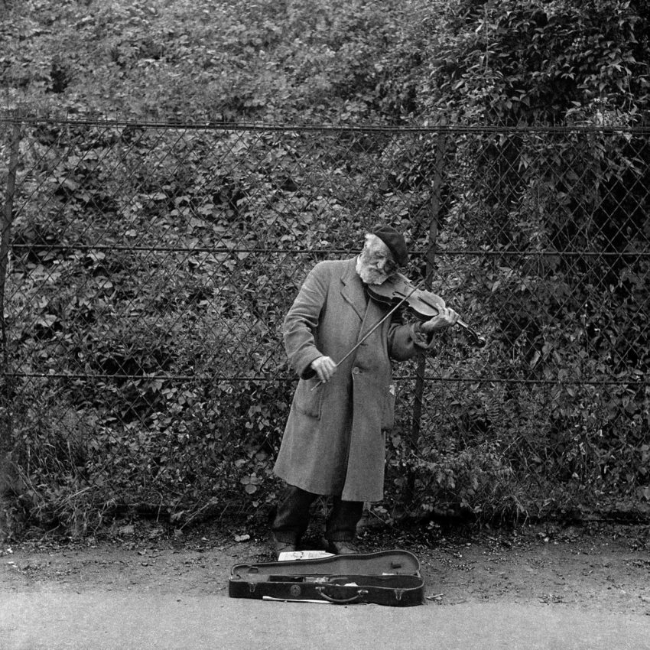
Violinist, 1945, by Adolfo Kaminsky
Odds are, you’ve no idea who Adolfo Kaminsky was. But you should. So I wrote a Sunday Salon about him (yes, I know today isn’t Sunday, but c’mon, let’s not get fussy at this point). Click on the link if you’re interested.
So here you go. The return of the Sunday Salon. You can find them all right here. Or just click on the Sunday Salon link at the top of the page.
No, wait. It would be more accurate to say I went for a ride; I didn’t do any driving, I was just a passenger. It would be even more accurate to say four of us decided to visit a small town and have lunch in some local cafe (or diner or bakery or brewery or whatever passes for a lunch spot in that particular small town), and while we were out, I shot some photos. This is something we do periodically. After we eat we tend to tool around fairly randomly and see what there is to see. We may tour the town (if it’s big enough to actually tour), we may wander along the surrounding back roads.
I generally sit in the front passenger seat and shoot photos. Sometimes we stop and I shoot photos, sometimes I shoot photos out the window, sometimes I convince the driver (my very patient and obliging brother) to stop, turn around, drive back to something I thought might make an interesting photo.
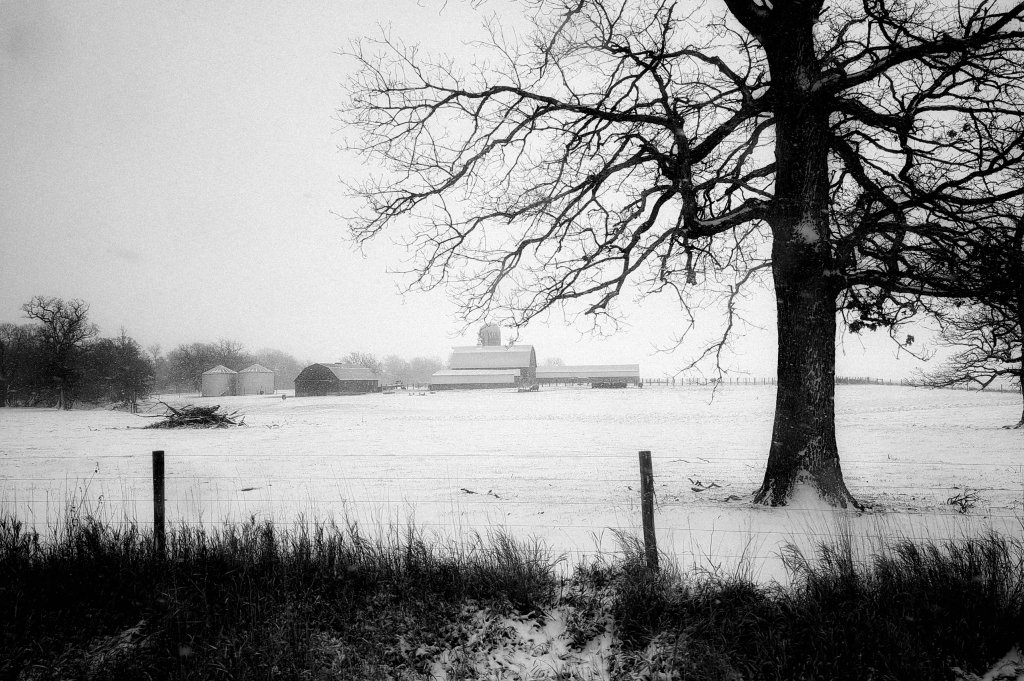
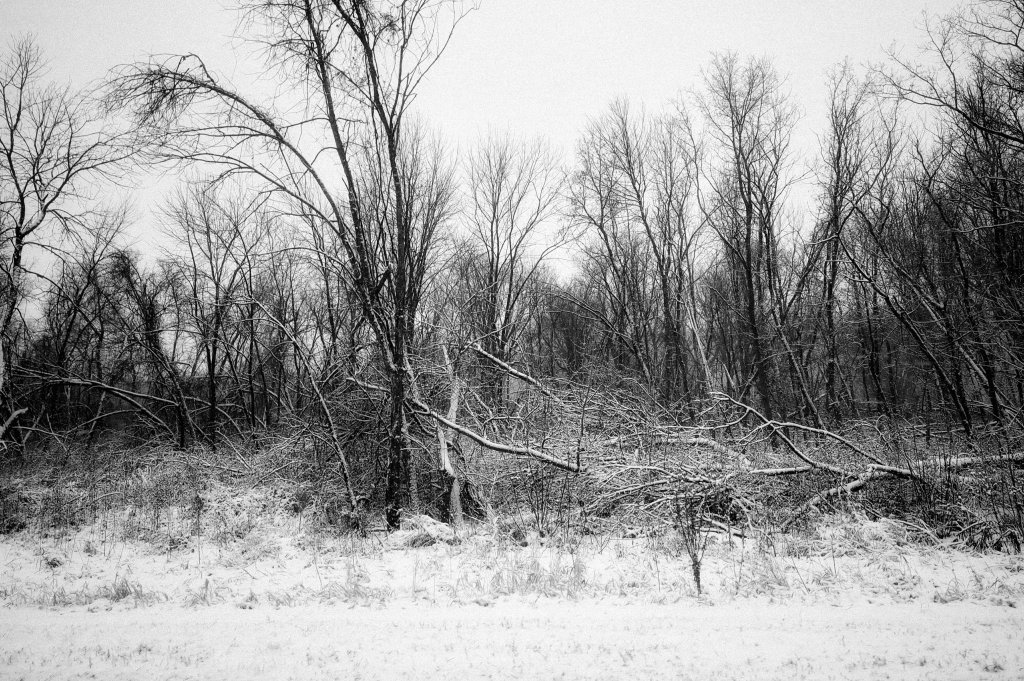
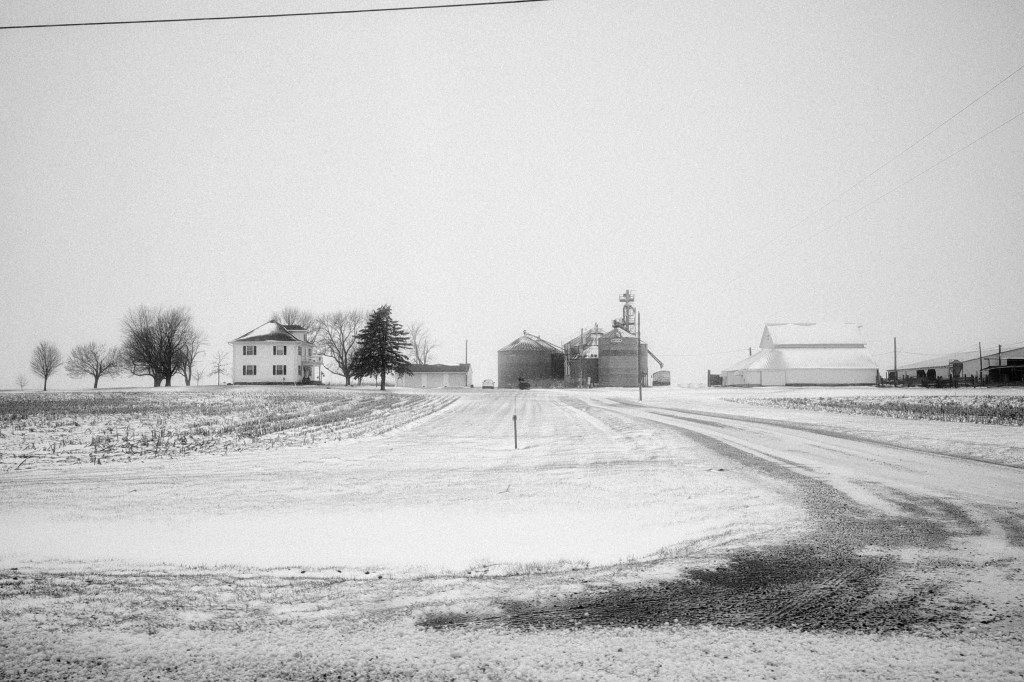
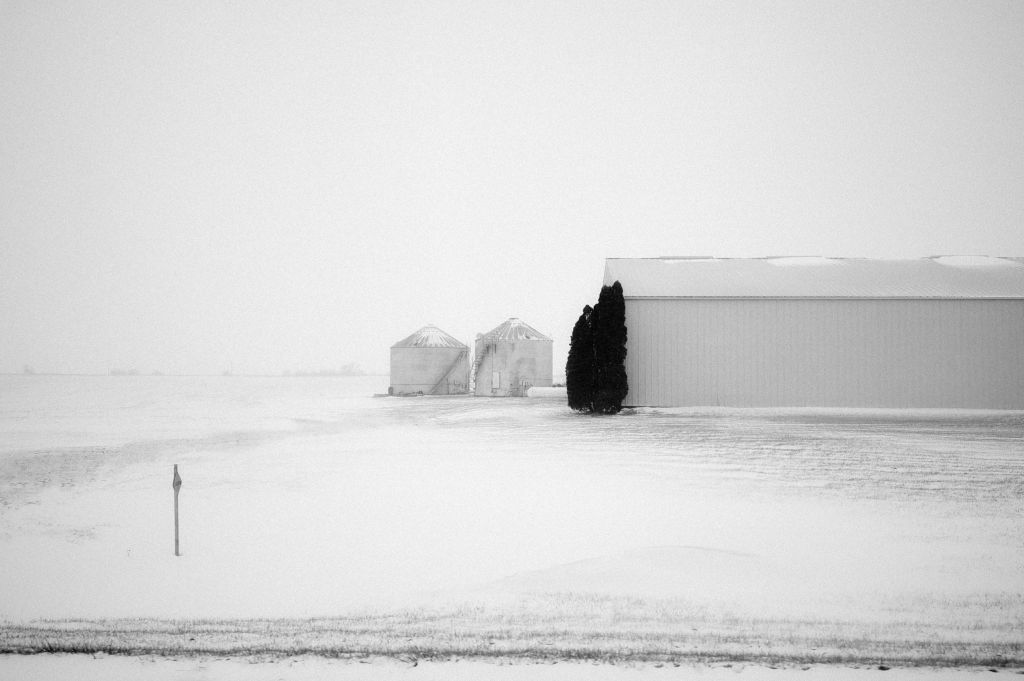
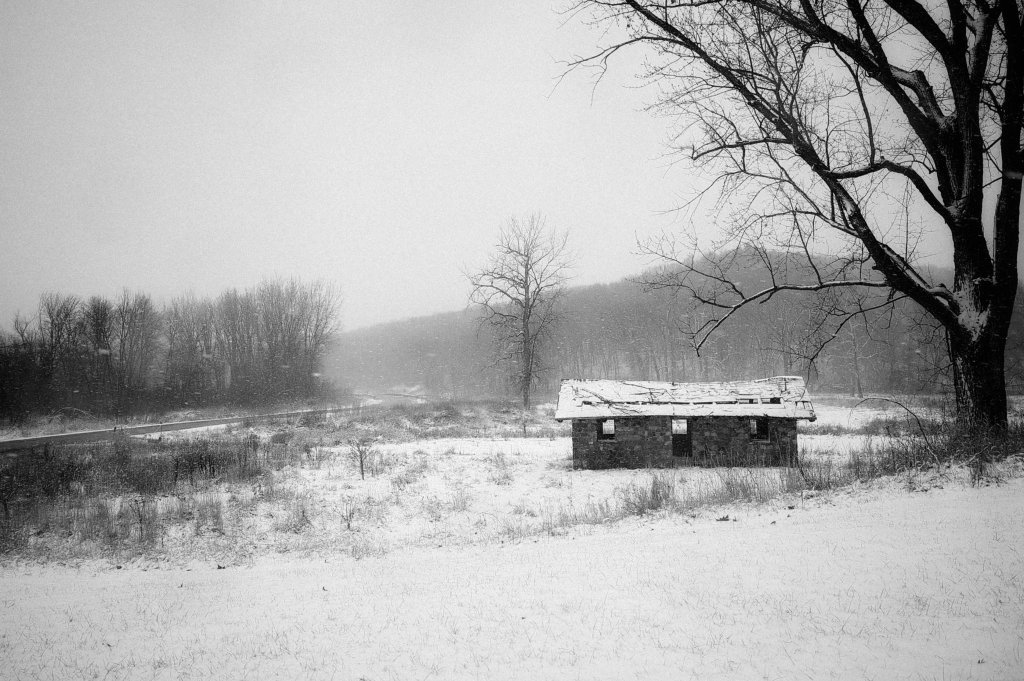
My point, if you can call it that, is that on Thursday we…well, we did that. It was a chilly, occasionally breezy day with a steady fall of exceedingly fine snow. I don’t mean fine in terms of high quality or excellence (although as snow goes, it was pretty fine); I mean fine in terms of texture and delicacy. It was mostly a light, powdery sort of snow; it made the world look like it had been dusted with a sprinkling of powdered sugar.
Two things. One, I used to bring one of my cameras on these ventures, but for the last few years I’ve mostly used my phone for this sort of photography. Two, in winter I tend to shoot in black-and-white. I know it makes more sense to shoot in color and convert it to b&w; you have greater control over the final image. But there’s some weird trigger in my brain that says, “Hey, old sock, if you’re going to make black-and-white photos, commit to it.” It doesn’t make any sense, but there it is.
Over the years I’ve used half a dozen different dedicated b&w phone apps. So far, I keep gravitating back to an app called Vignette, which is a very flexible app that allows you to create a number of different camera profiles. I bang it around until I get a b&w setting that meets my general needs and aesthetic, then save it. Every time I buy a new phone, I sort of recreate that setting (although the recreated version is never quite the same as the previous, I’m okay with that).
All of the photos here are drive-by photos. They were shot through the passenger side window (which, of course, was closed because it’s fucking winter here). There’s always a part of me that wishes the window was perfectly transparent, and a conflicting part of me that likes the fact that the window conditions change and the photos change accordingly. The window might be a tad foggy with condensation, or it might be streaked with water or melting snow, or even spattered with mud or road grime. It all finds its way into the photo.
Drive-by photography is ridiculous. It’s all about predicting an image–seeing what’s up ahead and visualizing what it might look like when you get there. If that’s loopy enough, you then have to anticipate what’s coming and try to time the shutter release (okay, there’s no actual shutter in a cellphone, I know that, but you know what I mean) to correspond with what you hope will be a proper composition. That’s another issue with the Vignette app: the shutter lags. Just a moment, but it’s a fairly predictable moment. Which means if you’re using Vignette to shoot a drive-by photo, you have to factor that lag into the equation.
Half the fun of drive-by shooting, of course, is not quite knowing what you’re going to get. You make a number of guesses and predictions based on your experience and intuition and your understanding of the technical concerns, and hope for a good result. Most times, you guess wrong. But sometimes you guess just right and the photo is what you hope it will be. I guessed right (or close enough to right) on the photos you see here. None of them has been cropped, but most of them have been rotated slightly to straighten the horizon line.
The snow helped. Not just because it was pretty, but because we were driving more slowly. That gave me more time to evaluate the shot and a larger margin of error.
There are few finer ways to spend a weekday, when all the normal employed people are at work and out of the way. Good company, good food (usually), good drink (usually), and the serendipitous exploration of some place we have no real reason to visit other than whim. I count myself very fortunate that I get to do this.



 gregfallis.com