iron photographer

One of the things I love most about Utata—the peculiar collective of photographers I’m involved with—is a project we call Iron Photographer. We’ve been doing IP projects since April of 2006. Every two weeks Jamelah Earle and I come up with three elements—two compositional elements and an artistic element—which our members try to put together in an artful way.

The IP process begins when Jamelah and I chat about the elements over Instant Messaging. We purposely refuse to come up with a list of possible elements in advance; we want the elements to grow organically out of the conversation. Sometimes one (or both) of us isn’t in the mood to be creative, and the process is messy and awkward and a jangle of nerves, annoying as a paper cut. Other times the process is like the very best jazz, improvisational and intelligent and funny and entirely unpredictable. Sometimes it starts off one way and ends another, or goes through two or three iterations of each. But somehow, we always manage to come up with something.

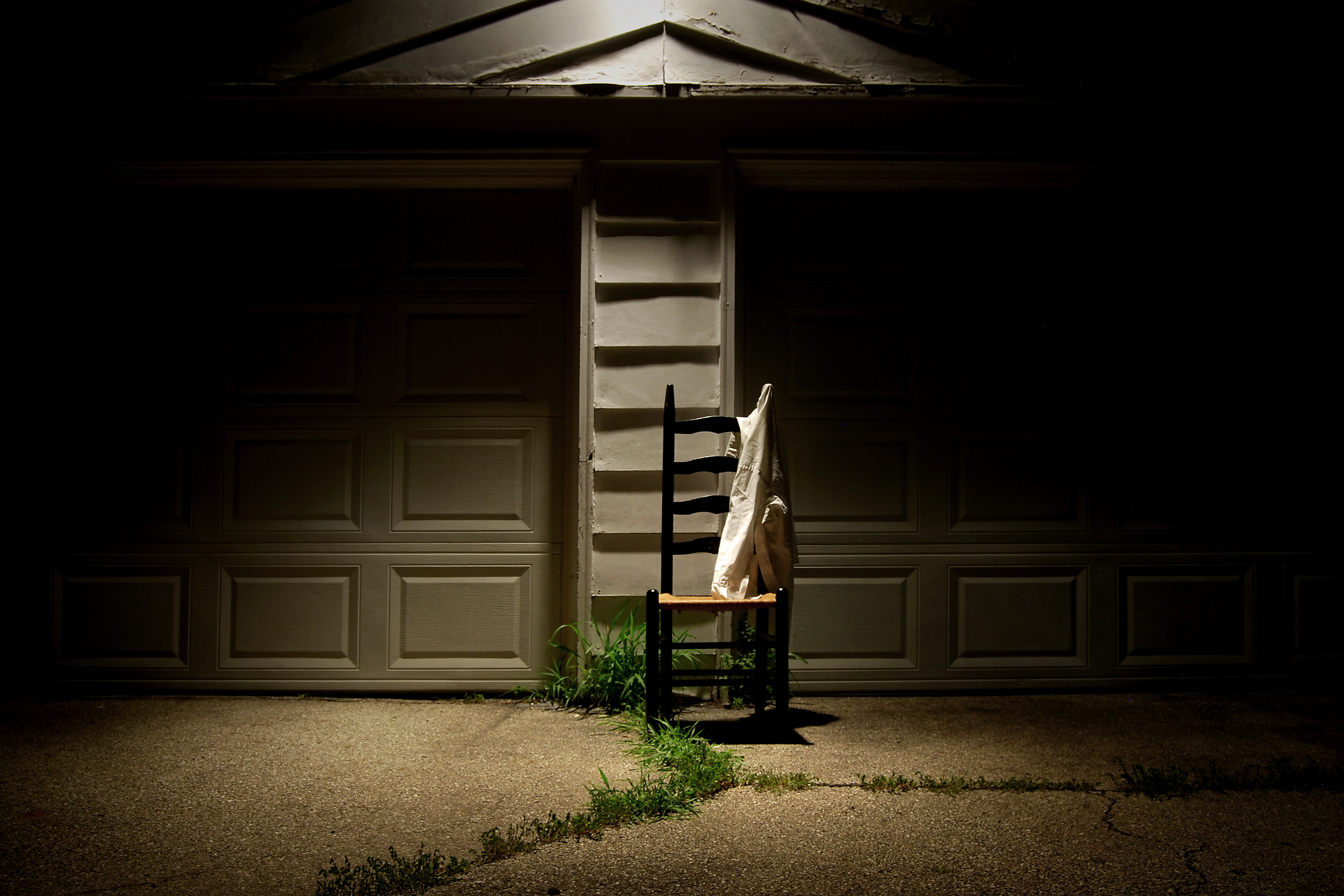
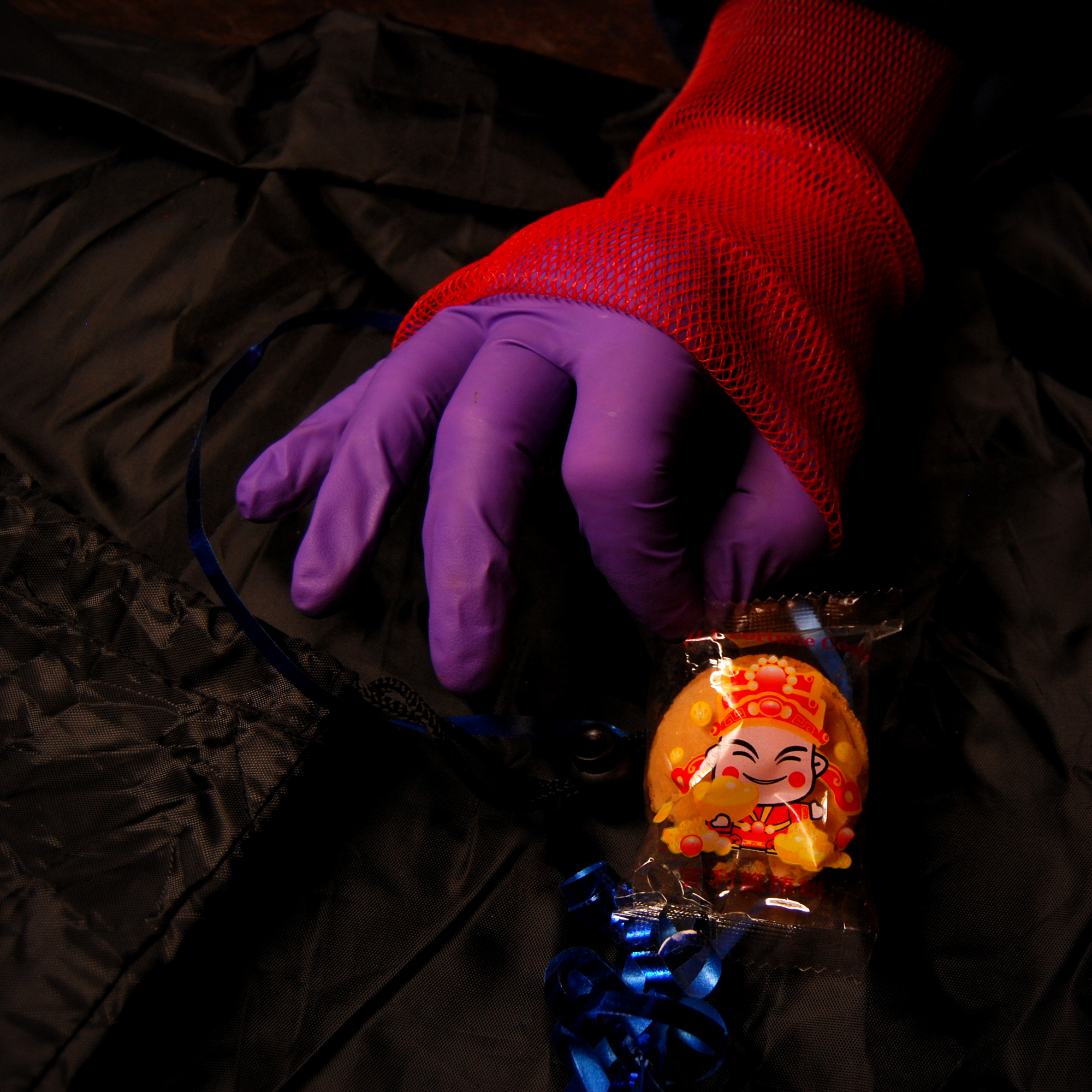
The elements can be…let’s call them idiosyncratic. Something with stripes, a food item, shot slightly out of focus (IP 47). Something white, a chair, shot in a gothic style (IP 102). A plastic bag, something red, shot in square format (IP 118).

What’s amazing to me is how often the members of Utata can take the most impossible and bizarre elements and find incredibly creative and artful ways to put them together. They do it so beautifully and with such consistency that they’ve forced me to become a better photographer in an attempt to keep up with them.

There’s nothing quite like a community of smart, funny, creative people to keep the creative juices percolating (if juices percolate—which under most circumstances, they don’t but in Utata percolating juices wouldn’t raise an eyebrow).

one conversation is nearly over

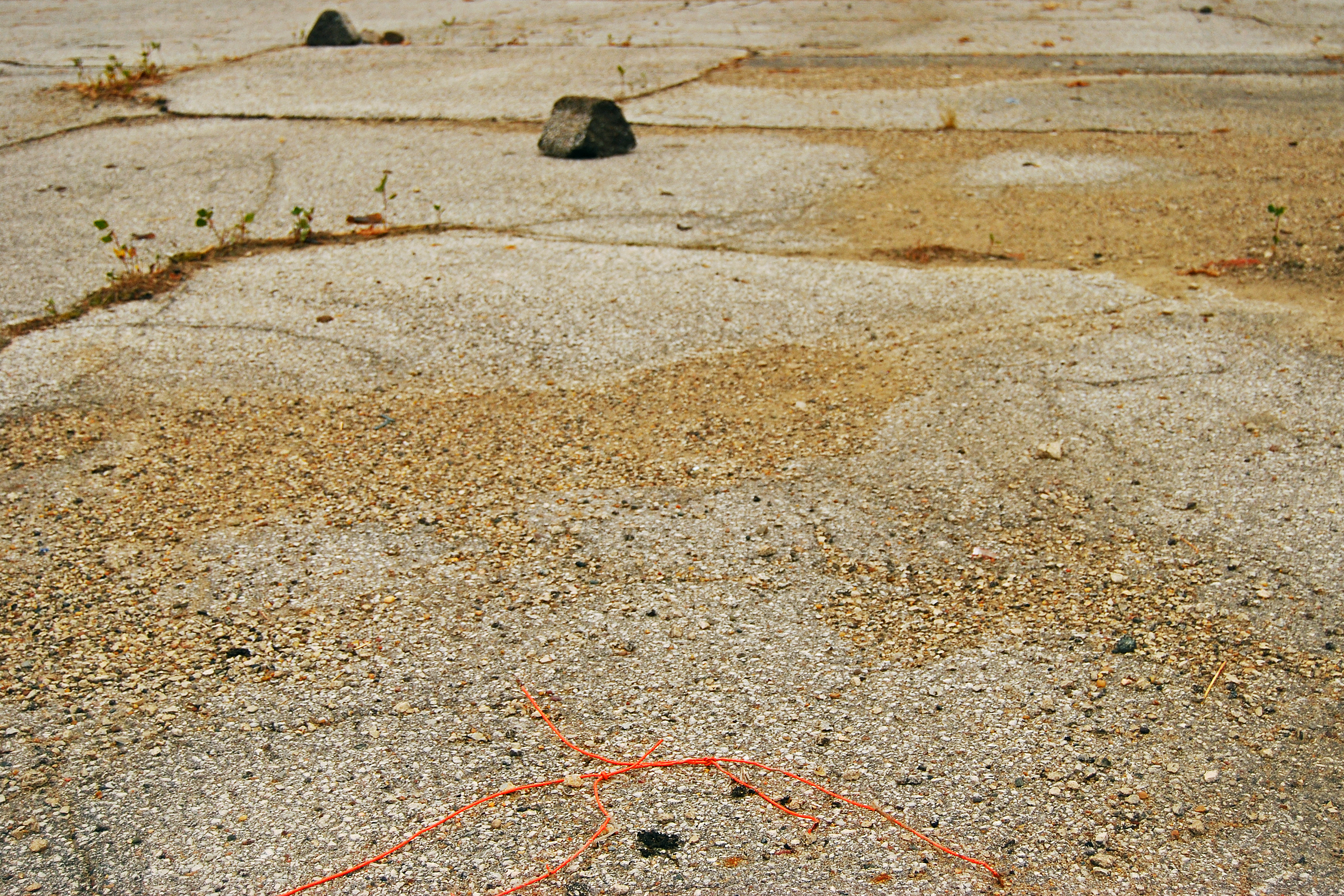
For almost a year I’ve been visiting an odd bit of curbing in a vacant lot where a supermarket was once located. There are two or three places where the curbing of the store’s parking lot had been broken up. It’s not clear if that destruction was accidental, intentional or organic. What was clear, though, was that somebody—for reasons entirely unclear—had tied a length of red PVC wire around a chunk of the broken curbing and carried it some sixty feet away.

And then set it down. I’ve been fascinated by it ever since. Why was it moved from its original position? Why that particular chunk of curbing? Why fashion a carrying handle from red PVC wire when it would be just as easy—easier, in fact—to carry it in your hands? And why leave it where it was left? It made absolutely no sense. I loved it.

Over time, the chunk of curbing was moved again—maybe twenty or thirty feet from its last position, and perhaps it would have been moved farther had the red PVC wire ‘handle’ not snapped. On a later visit I noticed the curbing had been overturned and another chunk of curbing had been carried and set down nearby.

It continued to make no sense, and I continued to be fascinated by it. But now the conversation is almost over. On my last visit, the curbing had been moved once again.

As you can see, the chunk of curbing has been moved and the red PVC wire left behind. In fact, both chunks of curbing have been shifted a few feet from their last positions.

I suspect kids are responsible for most of the recent moving, if only because young boys do things for reasons even they don’t understand—or no reason at all. It doesn’t matter, really who moved them, or even why. There’s something appealing about these migrating chunks of curbing. But the wind will probably blow away the red PVC wire eventually. And then the conversation will be over.

I’ll continue to visit the vacant lot, of course. There’s something about the slow reclamation process that I find weirdly comforting and attractive. There’s a sort of drama to it, though a very patient drama. It’s a different sort of conversation—less peculiar, more fundamental.

This abandoned lot is set on a fairly busy thoroughfare in a moderately poor neighborhood. Nearby is a car-wash, a small local Latino-operated auto repair shop, and an indie copying center that never seems to have any customers. The road noise is vicious—at least until you get near the back of the empty lot. Then it becomes muted, and it’s difficult to distinguish between the road noise and the sussuration of wind through the trees.

It’s not quite tranquil. But you can sense that tranquility used to exist here, and may some day return. That’s a conversation I’d like to join.

fog, cats, dogs, walnuts

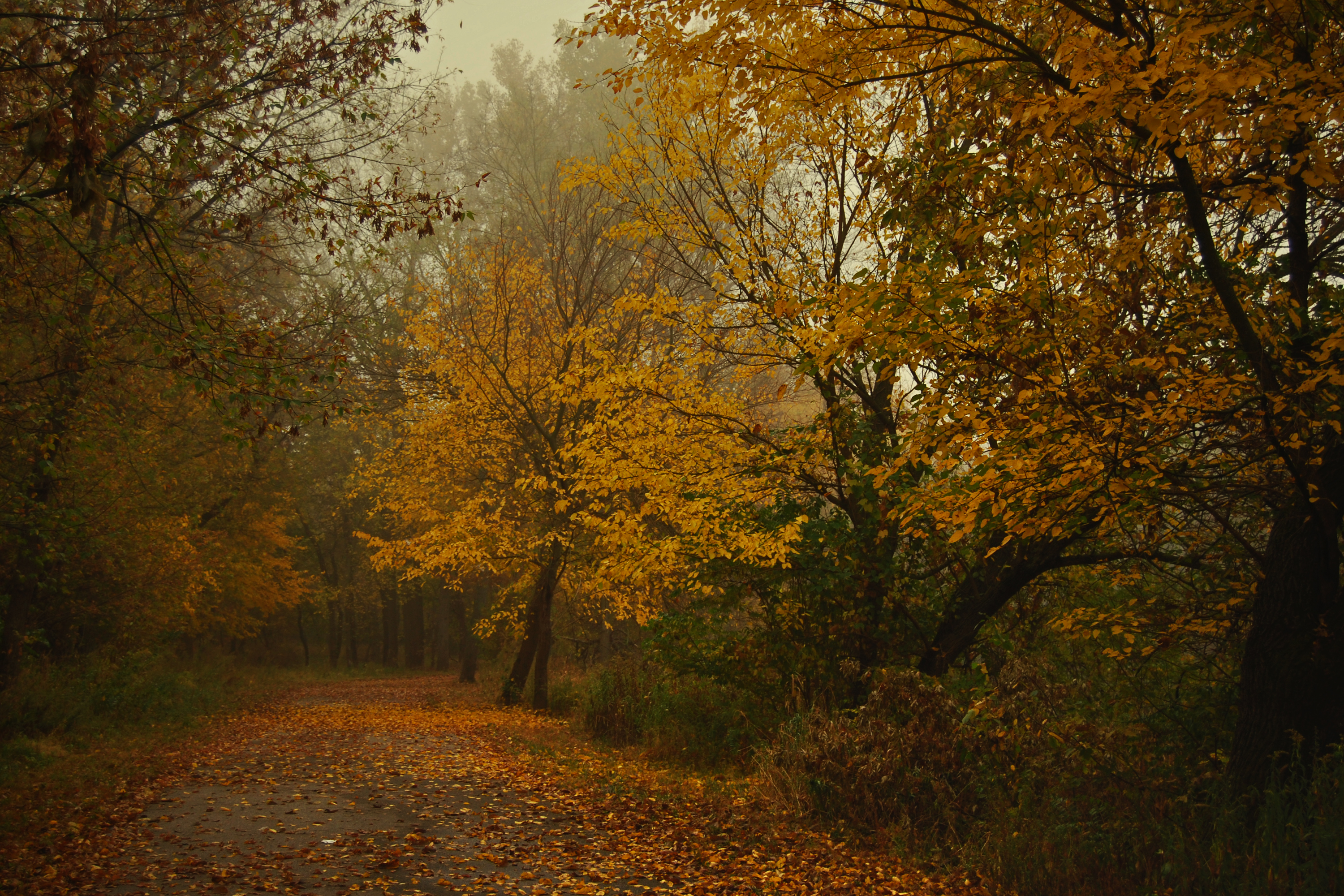
By chance, I heard the weather forecast last night. ‘Fog advisories for the morning; commuters should be alert.’ So I set my alarm for six o’clock ante meridiem—telling myself I’d go to bed early, which of course I failed to do. So there’s me at 6am, looking out the window and not seeing a bit of fog through the dark. Nothing. So I booted up my computer, went to work, and didn’t look out the window again until around eight o’clock.

And we had fog.

I’d completely failed to consider the mechanics of fog production. By 8:15 I was on my bicycle, by 8:30 I was on the bike path that ran along the creek.

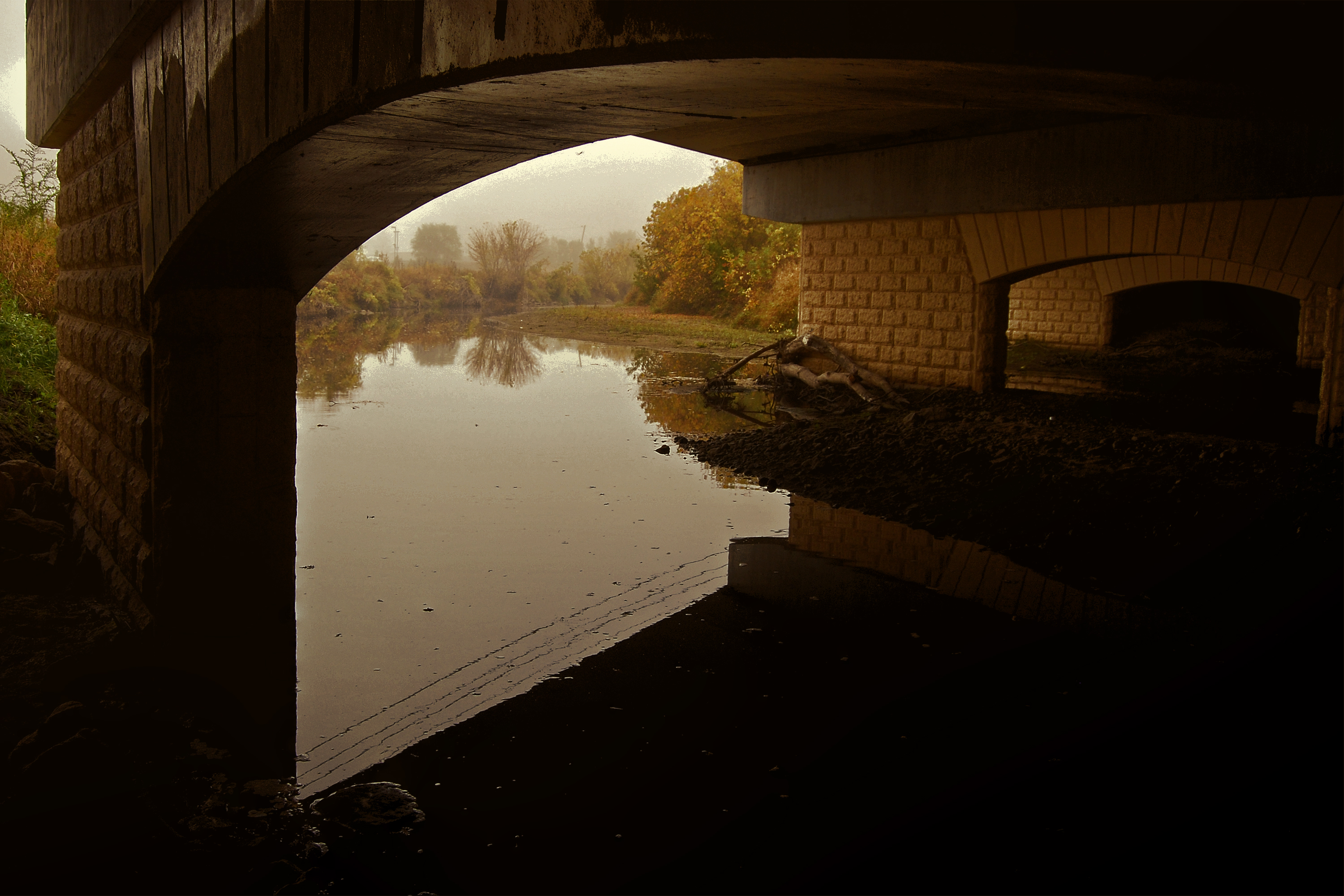
It was a chilly ride, and wet. The fog wasn’t particularly thick, but it made the world all clammy and dark and weird and sometimes a wee bit dangerous. Occasionally it was more like a mist than fog. I stopped under one of the bridges to tie my hair back.
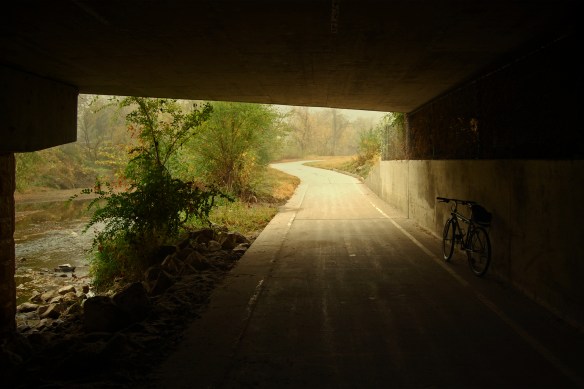
When I stopped, I surprised a feral cat with three kittens. The cat and two of the kittens scampered off up the creek bank; one of the kittens panicked and ran the other way—toward the creek. The creek was running low so the kitten wasn’t in any real danger, but it mewed and cried and was obviously frightened at being separated from the others. So I played border collie for about ten minutes, and eventually succeeded in herding the little bugger back across the bike path and up the bank where the others were.

Did I take a photo of the cat and kittens? Sadly, no. I didn’t take the camera out of the bike bag until after I’d dealt with the kitten. By the time I got the camera out, the thoughtless little bastards had scurried away. Still, it was pleasant under the bridge.

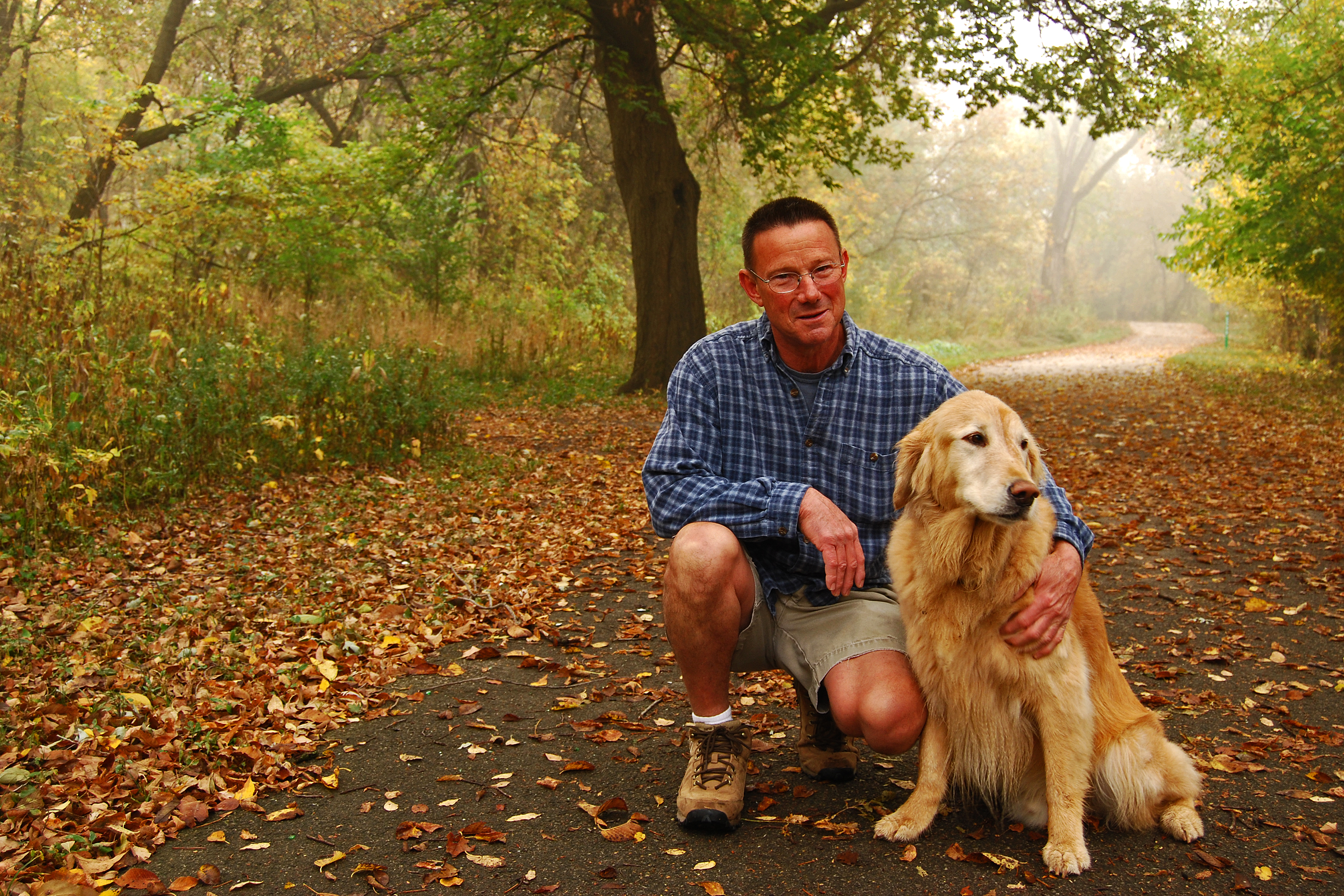
I had much better luck farther down the trail, when I came across Wrigley. I’ve met this dog and his human companion three or four times in the last couple of months. He owns property in the area; Wrigley owns him. He’s a classic golden retriever—smart, friendly, a wee bit loopy, eager to please. And I was reminded why you never want to wear black around a golden; after a few minutes of petting and hugging Wrigley had left about thirty-six pounds of dog hair on my clothes.

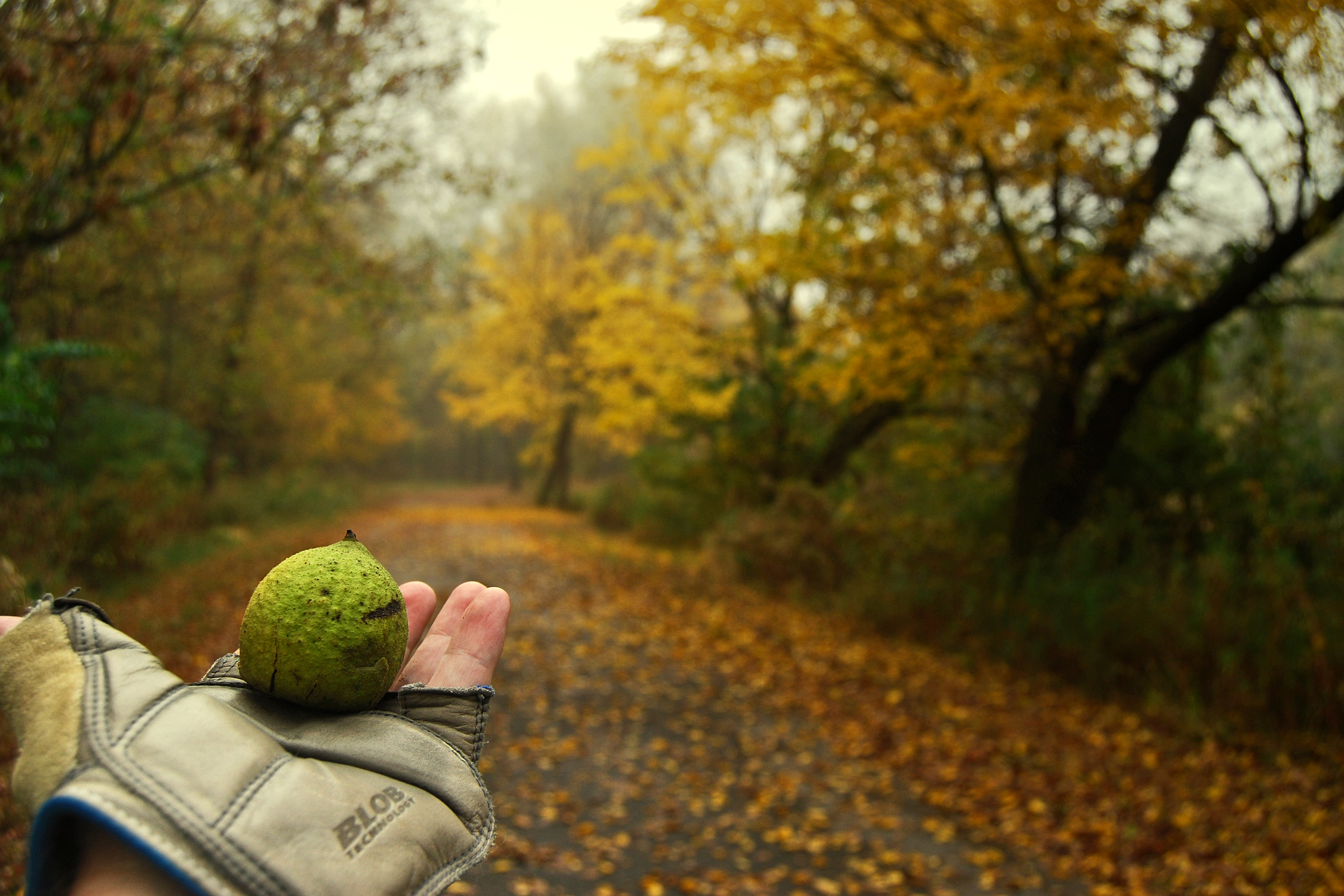
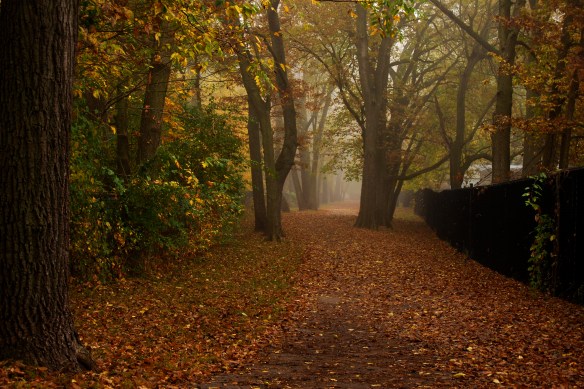
I mentioned earlier that the fog made the world a wee bit dangerous—and so it did, for two reasons. First, all those wet leaves were surprisingly slick; if you took a corner at speed, they’d slide out from under the tires. But the bigger danger came from the fact that the bike path wends its way through groves of walnut trees. Walnut trees drop walnuts. And they drop walnut leaves to hide the walnuts.

So concealed beneath all those lovely leaves are these handball-sized organic land mines waiting for some unsuspecting cyclist to plow into them. And it’s almost impossible not to smack into a few on a long ride. When you use toe cages on your pedals (like I do) finding a walnut with your front tire can get pretty exciting.

Even though wet leaves and walnuts are a massive pain in the cyclist’s ass, I have to admit I like them. First, they’re pretty—and pretty goes a long way. Second, they discourage those folks who ride for exercise from using that particular path. I’ve got nothing against riding for exercise, but so many of the people who do that seem to think those of us who ride for the enjoyment of it are just in the way. We’re taking up valuable bike space that could be more effectively utilized for cardiovascular improvement. Or something like that.

In a couple of weeks the wind will blow most of those leaves away. In a couple of weeks the squirrels will have gathered most of the walnuts. And the exercise crew will be back. And that’s okay too. At least they’re out riding. They’ll just have to get used to me stopping at irregular intervals in the bike path to take photographs and herd kittens.
The fog has burned off now. It’s sunny outside—beautiful blue sky, mid-70s, very light breeze. I’ve got an afternoon of editing in front of me. Editing and noodling around with book cover designs. Even though I wasn’t on the bicycle for exercise this morning, I can feel the ride in my legs. It’s a pretty good feeling.

If I was a golden retriever, I’d turn around three times, lay down, and take a nap.
walking distance

Everywhere is within walking distance if you have the time.

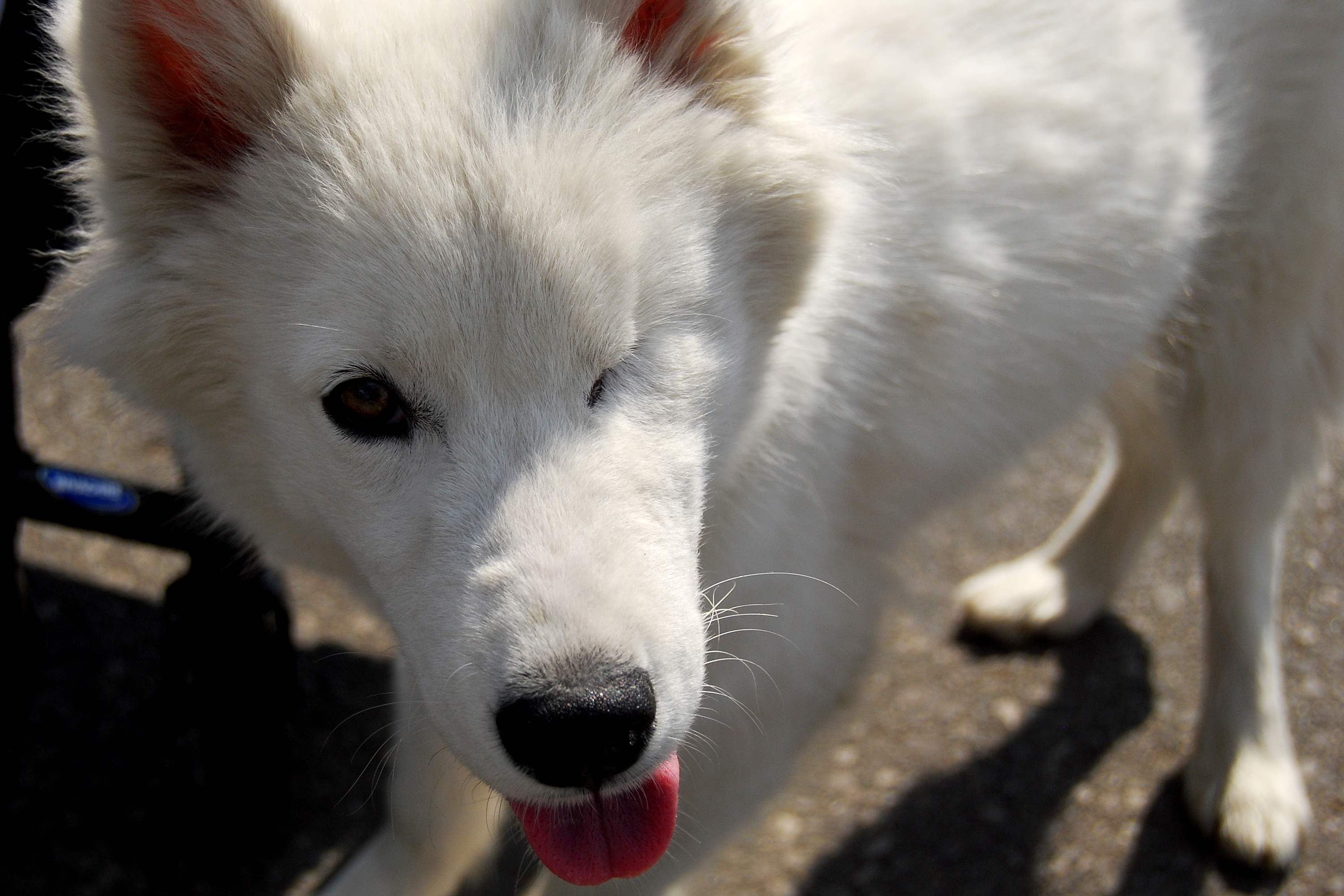
I like slow modes of travel: walking and bicycling. But sometimes cycling is just too fast. On a bicycle you don’t have time to stop and visit with the young woman in a wheelchair who is being pulled along by an enthusiastic one-eyed Samoyed named Astra. Why was the woman in a wheelchair? I don’t know—I didn’t ask. How did Astra lose her eye? I don’t know—I didn’t ask. This is what I do know: Astra is a dog, and all dogs are wonderful no matter how many eyes they have. She’s not a one-eyed dog; she’s a dog—a dog who  happens to have half as many eyes as most dogs. But you don’t judge a dog by the number of its eyes. You judge it by its dogness.

The same is true of people, by the way. The number of operative legs a person has is a pretty inadequate metric for evaluation. If you’re on a bicycle—or worse, in a car—you may not stop long enough to remember that.

On foot you can stop and chat. I’m a big fan of chatting. Oh, I enjoy deep, meaningful conversations about politics and religion and Important Things as well. But there’s something delicious about a brief aimless chat—with friends or with strangers. “Hi, hello, how are you, isn’t it a lovely day, you have a beautiful dog, I like your hat, is there anything better than a sunny day by the river, take care, g’bye.” You can’t do that so easily on a bicycle.

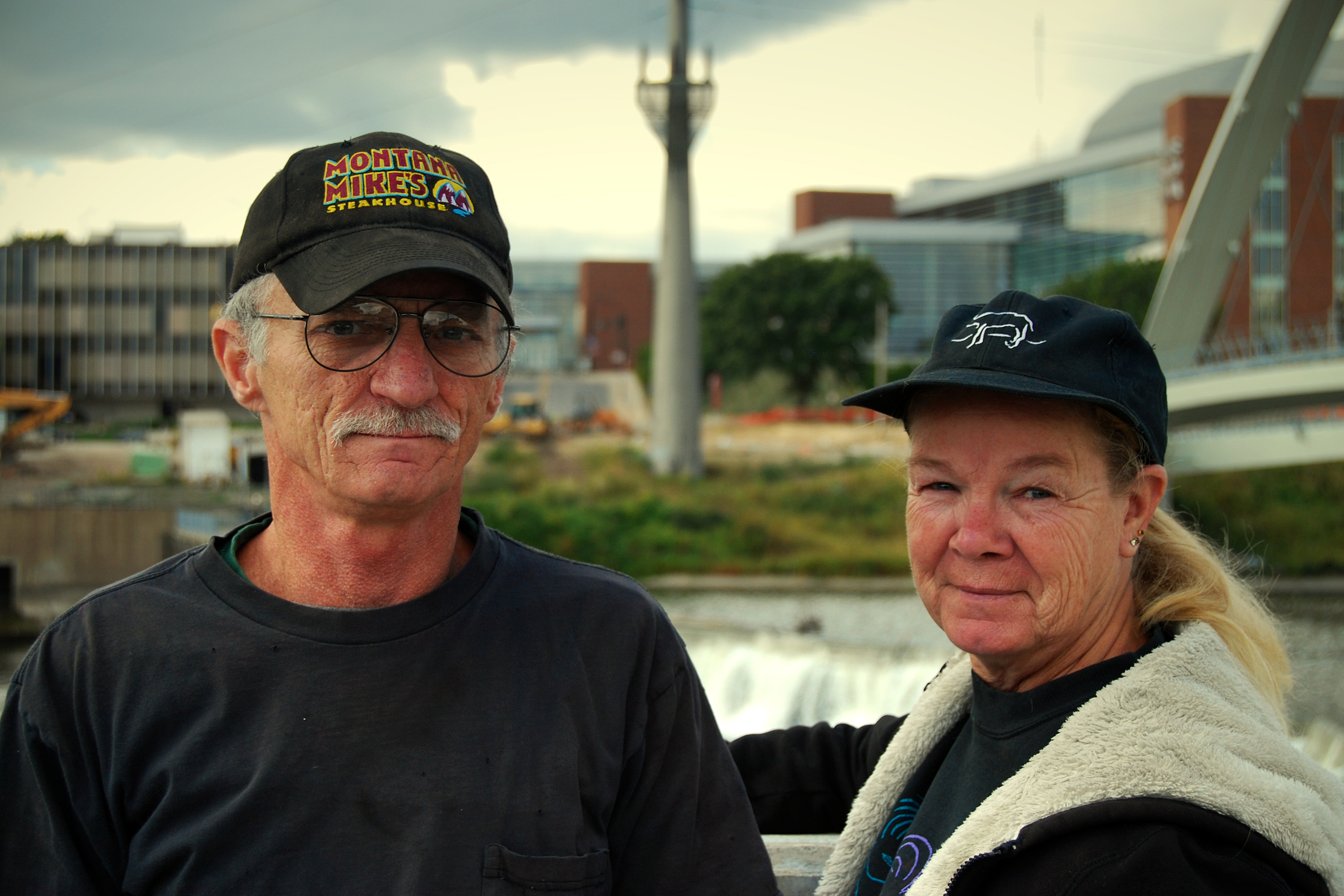
If I’d been on my bike, I probably wouldn’t have stopped to chat with Mike and Jodi, who were just loitering along the river, taking a walk themselves, watching the water go by and the fisherman waste their bait. They seemed a tad embarrassed when I asked if I could take their photograph—but he straightened his cap and she removed her sunglasses, and both seemed pleased by what they saw in the LCD monitor.

Just ordinary people out on an ordinary Sunday afternoon taking an ordinary walk. The only thing out of the ordinary was when some long-haired character with a camera approached them, nattering away, and asking to take their photograph. I figure I gave them something to talk about—fair exchange for a photograph. With any luck, Mike and Jodi will have met Astra on their walk.

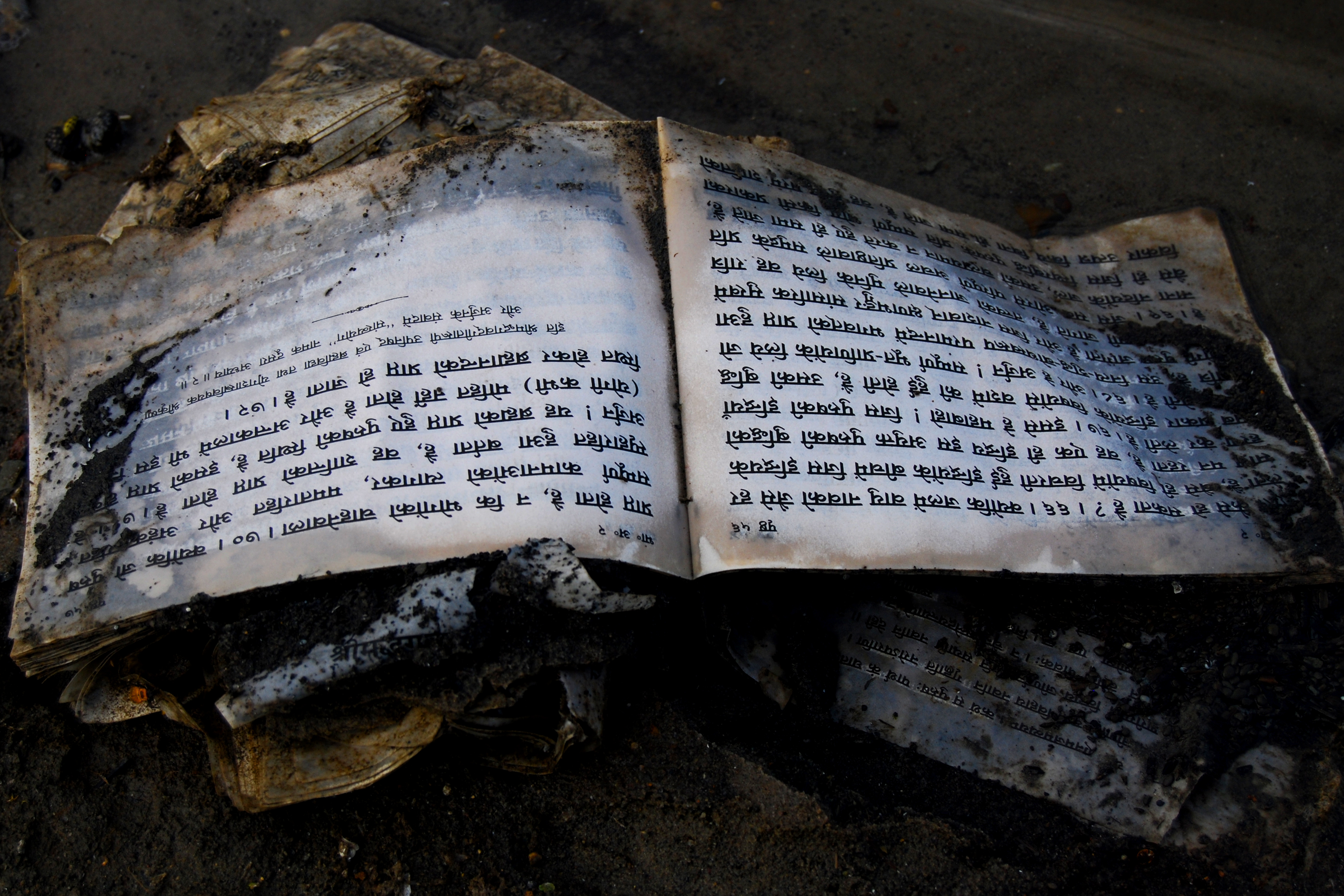
Farther up the river—much, much farther—I came across (actually my friend Stacey came across it first and pointed it out to me) a water-logged text written in what appears to be a form of Sanskrit. I never would have seen this on a bicycle (nor, I daresay, would she). There’s a Hindu temple nearby; I assume somebody was studying along the river and accidentally dropped the book in the water. Or perhaps somebody just wanted to share it with the frogs and fish and pelicans (the annual autumn white pelican migration is taking place now—is it a coincidence that the best English-language books are published by Pelican Press? Well, yes. Of course it’s a coincidence. C’mon).

It’s a beautiful written language, Sanskrit, and although I’ve no idea at all what this says, it’s a lovely addition to the river.

Steven Wright is correct—everywhere is within walking distance if you have the time. This is why you should take the time. Or make the time. Because the people you meet and the things you see will, if you let them, take you farther than your legs will carry you. It can give you an entirely new understanding of walking distance.

(Update: I am reliably told by Arvind Kumar that the text is in Hindi, not Sanskrit; both languages use the Devanagari script.)

don’t know

My brother Roger Lee asks me, sometimes, he asks me “Why’d you take a picture of that?”

It used to be “Why’d you take a picture of that?” with ‘that’ being the operative term. Why that thing? What are you seeing that you think is worth taking a picture? Are you crazy?

More and more, though, it’s “Why’d you take a picture of that?” with the emphasis on ‘why’? He’s beginning to accept that I actually have a purpose for photographing the things I do, but he doesn’t quite understand what that purpose is. He understands it’s less about the ‘thing’ in front of the lens and more about…well, something else.
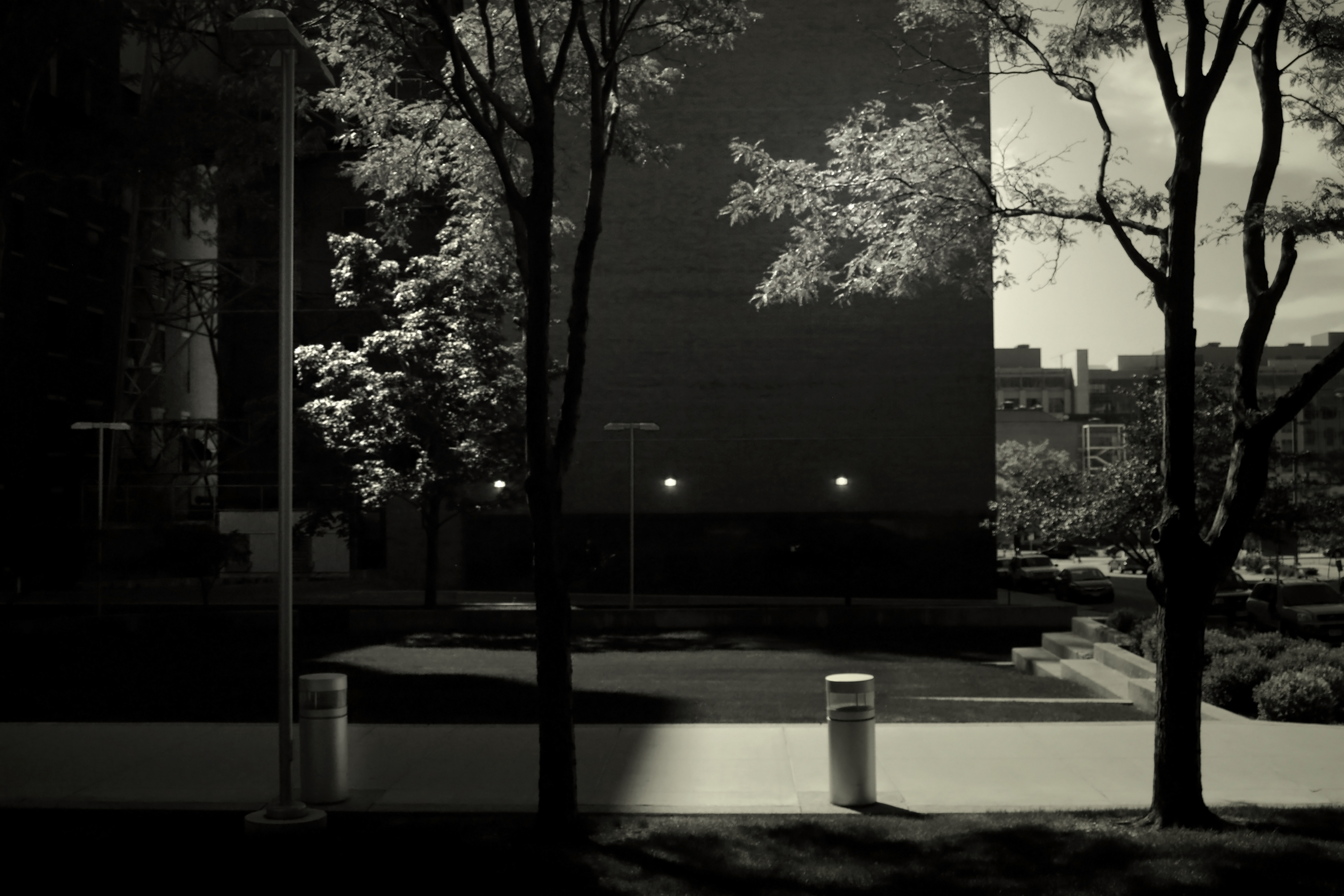
It doesn’t help that I can’t give him a consistent answer. “It’s a condition of light,” I’ll say. Or “It’s the geometry.” Or “It’s the form of the shadow.” Or “Don’t know.”

He accepts “Don’t know” as an answer.

last breath

Somewhere in a filing cabinet stashed (at great inconvenience to everybody involved) in Ohio or Virginia or possibly New York are a few three-ring binders containing Kodachrome transparencies of various old crime scenes. They’re images I shot as a criminal defense investigator–all from cases that never went to trial. Had the cases gone to trial, the images would be filed away somewhere else as evidence. Since the cases were either dismissed or resolved by a plea agreement, the transparencies remained in my possession.

They are, for the most part, the most dull images imaginable. A lot of them are nothing more than establishing shots–photographs taken to establish the features of a location. If, say, a murder took place in a house, you’d begin (or end) your crime scene photography by shooting pictures of the exterior, taking care to include things like street signs and traffic signals and light poles. Evidentiary photographs are about registering clear information that might be helpful to an attorney or to a jury. A conviction or an acquittal might depend on something as mundane as the distance between a front stoop and the nearest light pole.

But also tucked away inside those three-ring binders are images that have no evidentiary value at all. These are photographs I shot simply because they appealed to the eye. There is, for example, a photograph of a blood spatter pattern that splashed across a church calendar hung on a kitchen wall. The calendar has a painting depicting the face of Jesus on the cross. It’s pretty horrible (both the painting itself and the photo showing the blood on the painting), but it’s also visually arresting.

There’s also an abstract image that shows a glass sample container from an old Breathalyzer test. Years ago when suspects were administered a Breathalyzer test to determine their blood alcohol, the samples were kept in glass vials that looked rather like test tubes. Two samples were taken–one of which was sent to the crime lab, the other was set aside for independent testing by the defense. In this case, the accused was charged with vehicular homicide. While awaiting trial, he hung himself in his jail cell. Several months later I discovered the tube while I was cleaning out my evidence locker. It occurred to me that it contained the breath of a dead man. So I photographed it.

There are probably no more than fifteen or twenty such Kodachromes. Except for a few defense lawyers, nobody has ever seen them. I’m not entirely comfortable with them. I’m rather glad they’re unavailable to me now. If I had them, I’m not sure if I’d scan them and make them available for people to see.

I rather think I might, though I’d feel bad about it. I hope I’d feel bad about it.

we walk on thursday

I belong to a group called Utata. The group is an odd collective; we have photographers and writers, we have stay-at-home moms and software designers, we have scientists and security guards—and you can’t always tell which is which. Mostly what we do is talk a lot and participate in photography projects.

Our longest-running project is also our most simple. We walk on Thursdays. As of yesterday, we’ve been doing this every Thursday for 281 weeks. That’s nearly five and a half years. Five and a half years.

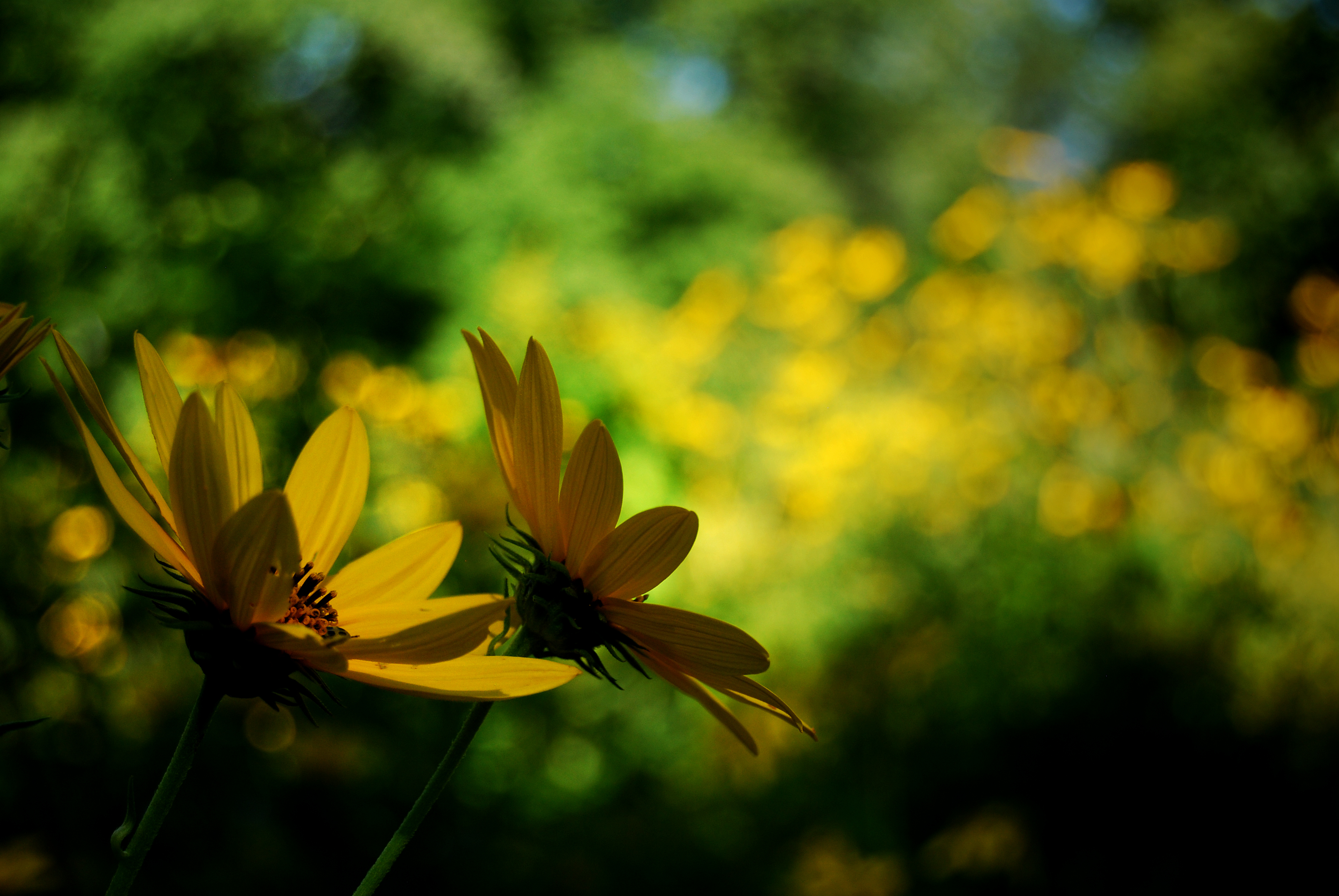
Not everybody in the group walks on Thursdays. We have around 20,000 members, after all. But every Thursday, somebody is walking somewhere and taking photographs. This week we had somebody walking a picket line in Canada, somebody walking down a street in Kaiserslautern, Germany and along a field in Tungelsta, Sweden, somebody walking along a beach in Florida and a harbor in Ireland. And me, I went walking along a wooded creek and took the world’s most common photograph: flowers.

It’s such a simple thing, and yet it’s completely wonderful—and I mean wonderful in the old sense of the term. It leaves me full of wonder. There’s no logical reason for people all over the world to do this—and yet they’ve continued to do it for half a decade. We have continued to do it for half a decade.

I really feel fortunate to be a part of such a group.

alert to possibilities

Ever since I wrote this I’ve been thinking about why I enjoy shooting photographs of traffic signals. I’d never really given it much thought before.

I first photographed traffic signals in 2009, as part of the Utata Storytellers project. The project ended, but I continued to wander around and shoot the signals. I wasn’t trying to make a point or suggest something meaningful—I just wanted to create a certain mood. The traffic signals were just the compositional device that tied the various photographs together.

But having finally turned my mind to the idea, I think I’ve figured out why I’m drawn to traffic signals. First, they’re all essentially the same—one stoplight looks pretty much like another, one Walk/Don’t Walk signal is identical to all the others. But the backgrounds change. What I like is the continuity of the subject matter and the variety of the surroundings. I enjoy finding the best angle from which to photograph the signal, finding the right light, finding the right moment. There are some traffic signals I want to photograph, but not until the shadows are right. There are some that will, I believe, only become an interesting composition if there’s a person in the frame. I’ll sometimes wait ten, fifteen, thirty minutes hoping for just the right person to walk into the frame—and then I need to catch them at just the right point and, it’s to be hoped, in a posture that complements the traffic signal.

I enjoy this because sometimes it’s incredibly easy and sometimes it’s incredibly difficult. I enjoy this because there are traffic signals wherever I go. I enjoy this because even though the photographs are about traffic signals, they’re not really about traffic signals at all. They’re about being alert to possibilities.