whelmed

It’s been a month since I’ve written anything on this blog. A whole month. I used to write something here 2-3 times a week. I’ve never gone this long without writing something for the blog. Never. Why is this happening?

Here’s why: Trump trauma. Ever since the election, I’ve been…I don’t know. I can’t quite find the right word to describe this feeling. And it’s not just Trump (though Trump alone is enough); it’s also the collection of incompetent fascist nitwits he (and a complicit GOP Congress) placed in critically important political offices. That means that ever single day, including weekends, there are at least half dozen things so outrageous that they deserve a scathing blog post. And I just don’t have the energy to do that right now.

I mean, if Russia had done what TrumpCo has done to the United States (and for what it’s worth, you can argue Russia IS responsible), you’d say it was an act of war. In a mere one hundred days, TrumpCo has kneecapped the US. They’ve completely shredded our reputation for intelligence gathering and sharing; they’ve ignored basic operational security; they’ve gutted our ability to respond to climate disasters while simultaneously reducing the resources needed to warn the populace about those disasters; they’ve rolled back food testing, increasing the likelihood of contamination; they’ve made it easier to evade taxes and harder for the IRS to collect taxes and prosecute tax cheaters; they’ve cut spending on both medical research and Medicaid, which will certainly lead to increased childhood and elderly mortality; they’ve made air travel less safe; they’ve not only limited civil rights, they’ve actually rescinded civil rights that had already been established; they’ve sent out masked goon squads to kidnap and secretly detain people legally in the US; they’ve…well, you get the idea. TrumpCo has basically shit all over the US Constitution, and done it openly.

It’s overwhelming.

You know what? That’s the word I couldn’t think of when I began writing this post. That’s exactly why I haven’t written anything here for a month. I’m not just whelmed (from the Middle English hwielfan, meaning “to turn upside down (as a ship); to roll over and over”), I’m totally and completely overwhelmed. I’m whelmed the fuck over.
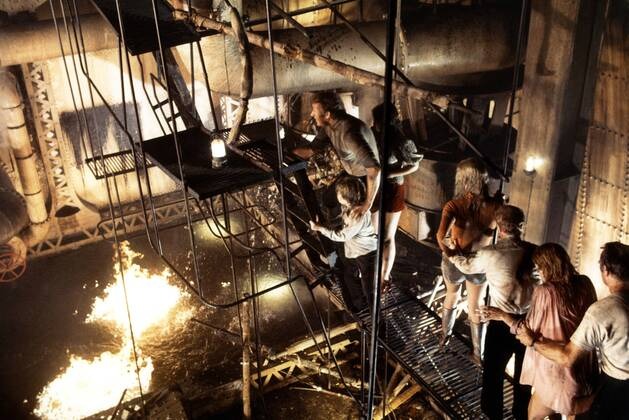
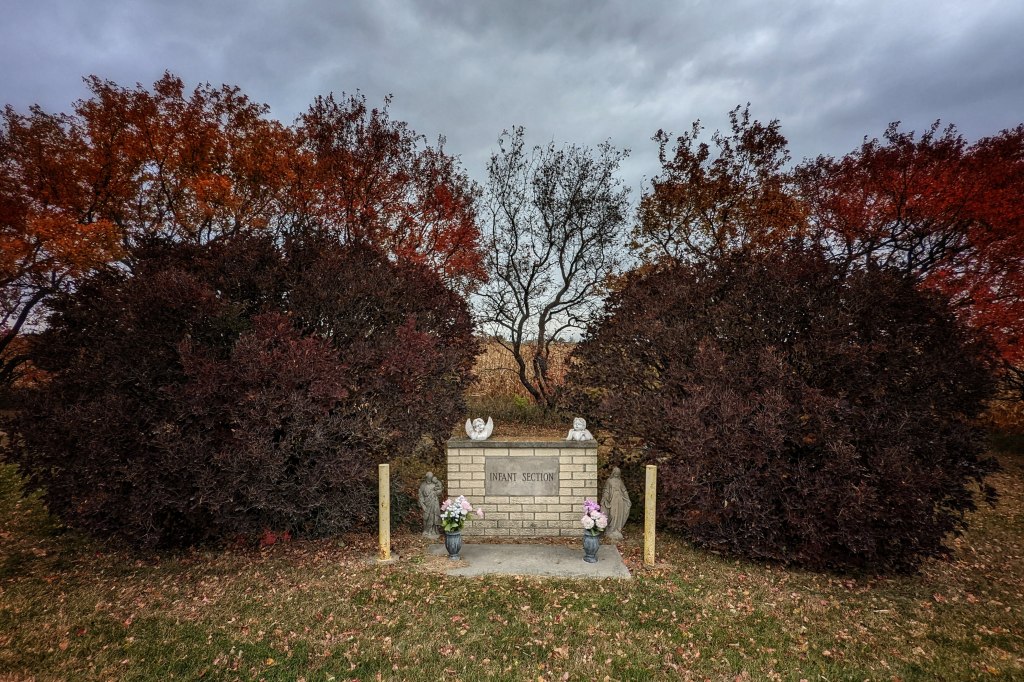
Stunned, exhausted, bedraggled survivors trying to escape a capsized ship.

I feel like the United States has been capsized, like we’re caught up in some political Poseidon Adventure. It’s as if the ship of state has been hit by a rogue wave and turned completely upside down, and we the people have to crawl and fight our way through the burning, topsy-turvy, almost unrecognizable wreckage of the nation we knew in an attempt to reach what used to be the bottom of the ship, hoping that somebody on the other side of the hull will be able to cut a hole through which we can escape to daylight.

Maybe that sort of rescue only happens in movies. But we have to try, right?

undecided? c’mon.

A couple of days ago there was a headline in the Philadelphia Enquirer stating “About 3% of Pennsylvania voters are still undecided.” As of October 23 of this year, there are 8,646,572 registered voters in Pennsylvania. That’s 3,897,179 Democrats, 3,451,289 Republicans, and 1,298,104 independent and third party voters. Three percent would be 259,397 undecided voters. A quarter of a million Pennsylvanian claim they just can’t make up their minds. “Harris or Trump…man, I just don’t know.”

I’m inclined to think the headline should have read ‘About 3% of Pennsylvania voters are either lying sacks of shit OR completely fuckwitted chumps.’ The liars, of course, are Trump supporters who don’t want to acknowledge out loud that they’re racist, misogynistic assholes. And really, I don’t blame them. The completely fuckwitted chumps are just that—chumps who are completely fuckwitted.

(Okay, short etymological tangent. The origin of chump is uncertain, but it’s thought to probably be a mash-up of stump, chunk, and lump—all of which at some point referenced a short, thick piece of wood in Old English, Danish, and Middle High German. In other words, a blockhead.)

There has never, in the entire long, ugly, weird history of these United States, been a more vividly clear difference between two presidential candidates. Never. About the only thing they have in common is they both walk upright on two feet (although Trump’s posture calls that into question). Comparing Harris and Trump is like comparing apples and maybe some sort of foot fungus. I could make a list (an incredibly long list) of the differences between them, but unless you’re on the Editorial Board of the Washington Post, you already know most of those differences. And unlike WaPo’s Editorial Board, you know why they’re important.

My point, if you can call it that, is that it seems highly improbable that 3% of the voters in Pennsylvania are truly undecided. The reality is you’ve got some Trump supporters who are either afraid of confessing their support or who’d like to get a little bit of attention, so are lying about their position. And you’ve got some people who simply don’t care about anything outside of their own personal interests and who probably can’t be bothered to vote anyway.

This election won’t turn on convincing ‘undecided’ voters to become ‘decided’ voters. It’ll turn on 1) getting people to the polls and 2) making sure the people in charge of counting the votes and certifying the results do their job. Trump can’t win the popular vote. He probably can’t win the electoral vote. But he’s put a LOT of money and effort into ratfucking the certification process.

I’m confident Harris will win the election. I’m not as confident she’ll become president.

we got us a presidential buddy movie

Alright, buddy, I’ll see you soon.” That’s how Democratic POTUS nominee Kamala Harris ended her phone call asking Gov. Tim Walz to be her running mate. She calls him ‘buddy.’

Buddy is one of those familiar terms with a murky etymology. It’s thought to have evolved from butty, an 18th century term for ‘work-mates’ associated with Welsh coal miners. It’s a wonderfully informal word describing close but informal friendships. Buddy has been mostly associated with men, but these days gender is a lot more fluid than it used to be. Oddly enough, that cultural shift has been supported by popular culture in the form of buddy movies.

Buddy movies are basically male rom-coms. Romantic comedies between hetero men. They’re not sexual (usually), but they’re about two people who are intimately close to each other, engaged in some sort of adventure. And people, that’s what we’ve got with Harris/Walz. We got us a buddy movie. Kamala and Tim’s Excellent Adventure.

Sure, in some ways it’s a non-trad buddy movie. I mean, we’re talking about a whip smart mixed race woman former DA from California and a classic Midwestern Dad who’s a balding former social studies teacher and high school football coach. But in all the ways that matter, it’s an absolutely classic pairing. Most buddy movies revolve around two people from different backgrounds with different personalities who go through episodic shit and in the end gain mutual respect and a stronger relationship.

And Coach Walz is perfect casting. He’s the polar opposite of the GOP notion of masculinity. He’s not loud, he’s not a bully, he’s not aggressive, he’s not domineering, he’s not suffering from testosterone poisoning, he’s not brutally competitive. He’s compassionate, caring, practical, thoughtful, considerate, helpful. Walz is the kind of guy who’s not only loan his neighbor a hedge trimmer, he’d also offer to help trim the hedge. And he’d know HOW to trim a hedge.

The Adventure Begins

Tim Walz appears to be a sort of counter-Kamala, but he’s not…and that’s much of what makes this buddy team work. He’s what Kamala Harris would be if she’d grown up a white boy in Nebraska. And she’s what Coach Walz would be if he’d grown up a mixed race girl who moved frequently as a child. They bring together a weird melding of experiences and cultures that work perfectly together. (Editorial Note: yeah, I don’t know if that whole ‘who they’d be’ business is accurate in any way, but it like it so I’m keeping it.)

I’m telling you, we need a campaign poster in which Harris and Walz are dressed in Men in Black suits and shades, with the tagline “Protecting the earth from the scum of the universe.” We need a poster of them in ordinary clothes and the tagline “The Not-So-Odd Couple.” We need a poster of them in Wyld Stallyns t-shirts, standing outside a phone booth, with the tagline “Be excellent to each other. And party on, dudes!”

This presidential campaign is going to be different. Yes, it’ll get ugly at times, and yes we’ll probably be disappointed by something Harris or Walz does, and yes yes yes we’ll still have to see Trump and JD being creepy and hostile and mean-spirited. But buddy movies are all about two people overcoming that shit by being supportive of each other. And the very best buddy movies, like the very best rom-coms, have happy endings.

And let also say this: we fucking deserve a happy ending.

the flâneur school of photography

There are people–lots of people–who like to name things. I know people who’ve given names to their car, who’ve named their computer, who’ve named their favorite camera. I’m not one of those people. I don’t anthropomorphize gear. A camera is just a tool. You choose the tool best suited for the job you’ve got planned.

I say that, but lawdy, I’m starting to develop a relationship with my new camera. My Ricoh GR3X and me, we’re becoming buddies.

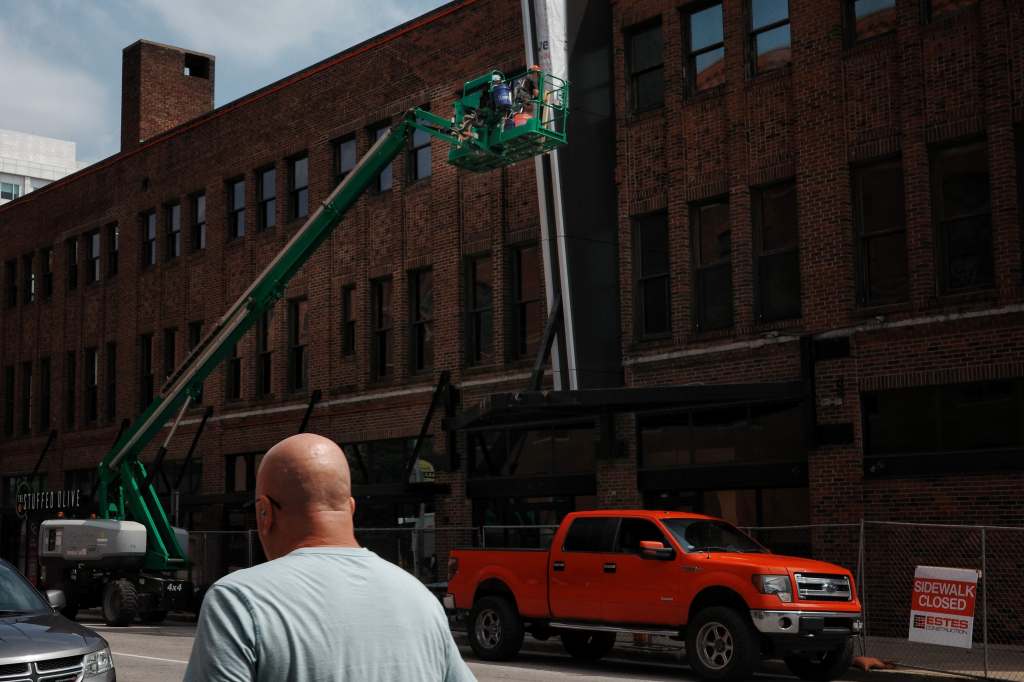
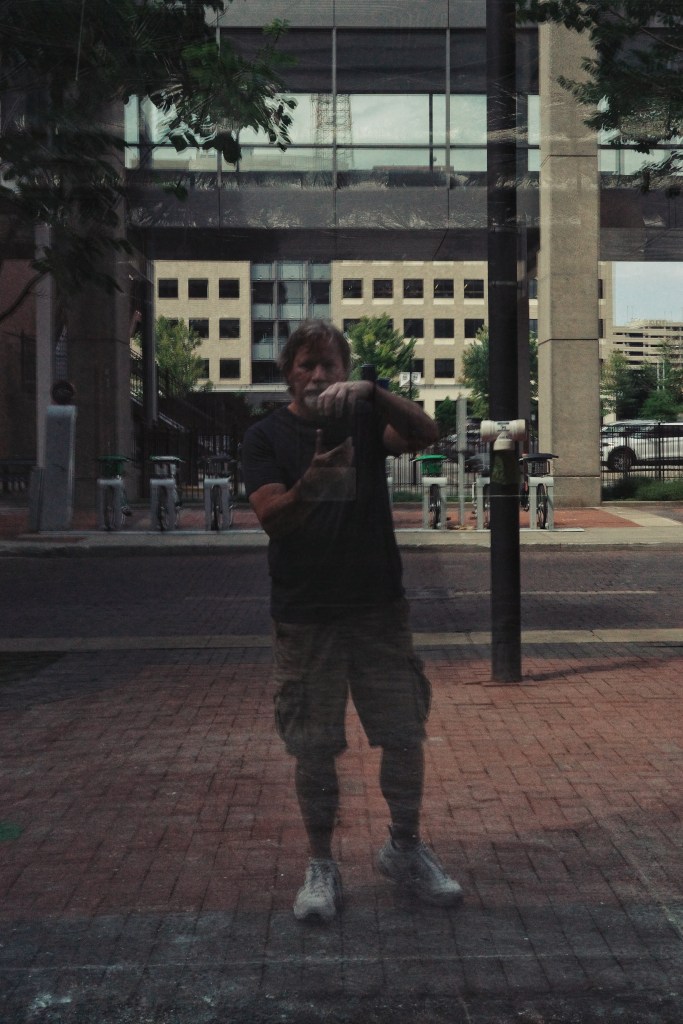
A bald guy walks down the street.

Why? Because this camera seems to have been designed almost specifically for the way I shoot photographs. I’m not a street photographer, although I enjoy shooting street. I’m not a landscape photographer, or a fine arts photographer, or a portrait photographer; I don’t really belong to any of the more common photographic traditions. I belong to what I like to call the flâneur school of photography.

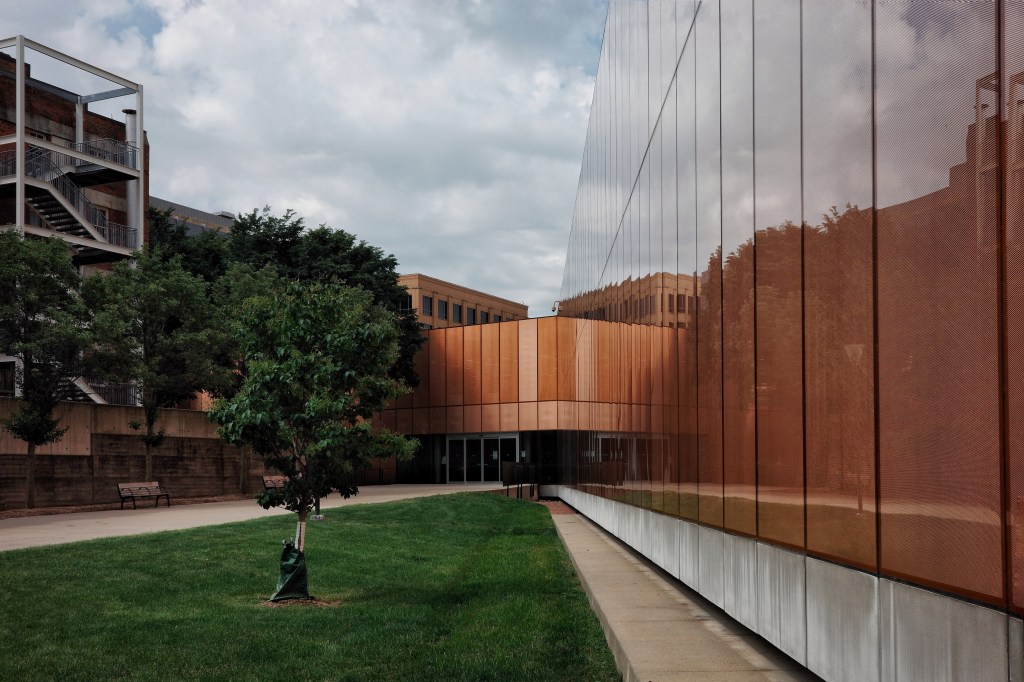
A tree in the library courtyard.

If you’re not familiar with the term, a flâneur is somebody who roams around idly observing the world while being somewhat emotionally detached from it. Somebody who’s not necessarily involved in what’s taking place around them, but is keenly aware of it. One writer described a flâneur as “an amateur detective and investigator of the city.” The term is usually applied to urban life, but it’s a philosophical approach to the world that can take place anywhere. It’s a strange nonjudgmental balance between being analytical and emotional.

(By the way, the term flâneur is French but it’s derived from the Old Norse verb flana, which meant “to wander with no purpose.” And if you’re wondering how a French word is derived from an Old Norse word, you need to read more about Vikings.)

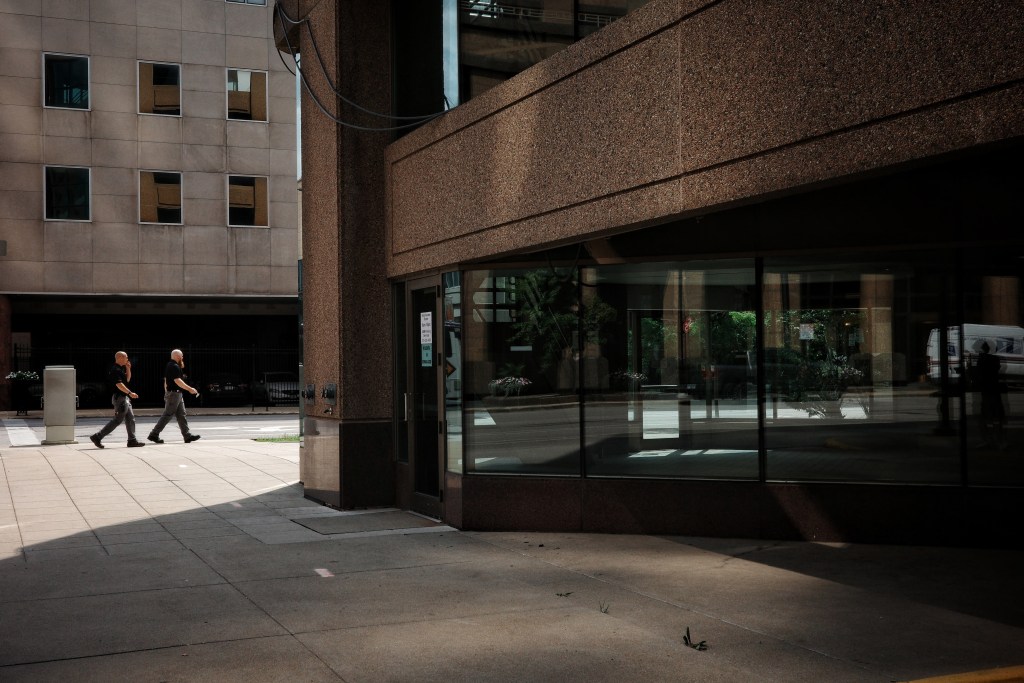
I don’t think those guys were intentionally walking in step, but…

That’s how I shoot photographs. Hell, that’s largely how I’ve lived my life. I’m a flâneur both by nature and by training. Almost every career I’ve had involved the same basic process: observe, analyze, filter the analysis through emotion (or the emotion through analysis), then act. It’s a skill set that helped me as a medic in the military, as a counselor in the Psych/Security unit of a prison for women, certainly as a private investigator specializing in criminal defense, and even (to a lesser extent) as a teacher.

In terms of photography, being a flâneur just means noodling around, paying sharp attention to detail, and seeing stuff in terms of composition. What’s cool is that when it all comes together–the scene, the light, the moment–there’s an immediate emotion, a serotonin hit that’s generated whether you have a camera or not.

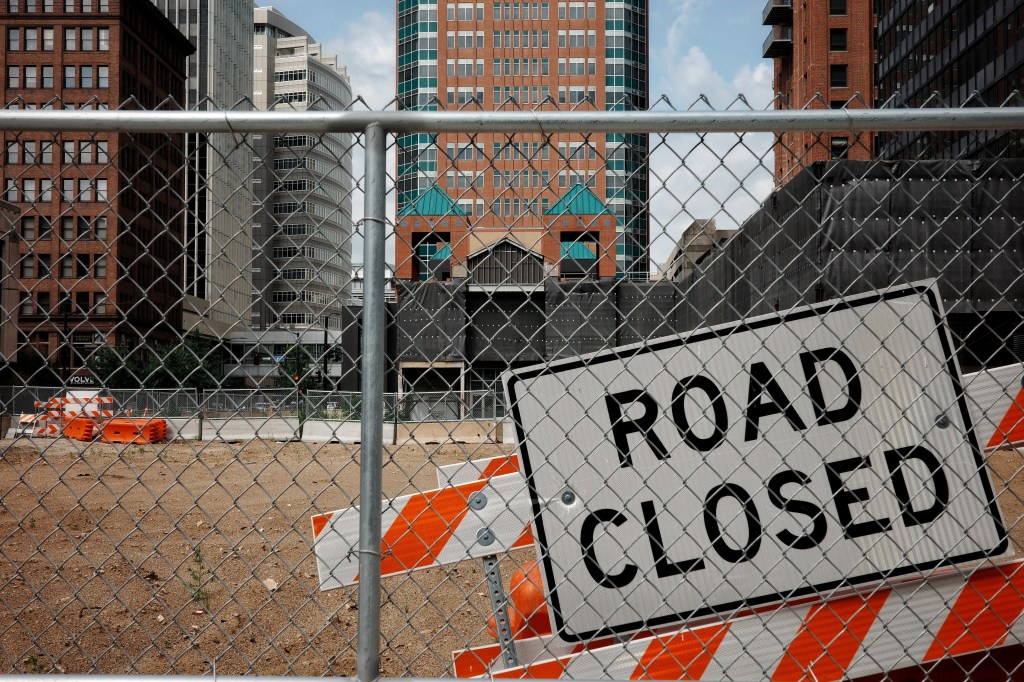
Yeah, road closed.

My Ricoh GR3X is ideally suited to the flâneur school of photography, partly because it’s so compact and easy to carry everywhere. I’d heard you could carry it in a regular pants pocket, but I assumed that was mostly bullshit. It’s not. I’ve done it; I’ve walked around–I’ve ridden my bike–with this unit IN MY GODDAMN POCKET. It also turns on almost immediately, which is incredibly handy. Best of all (I’m not sure this is actually the ‘best of all’ because there are so many ‘best’ things about this camera), you can shoot with one hand. Even in the manual mode, you can control all the settings you need with one hand.

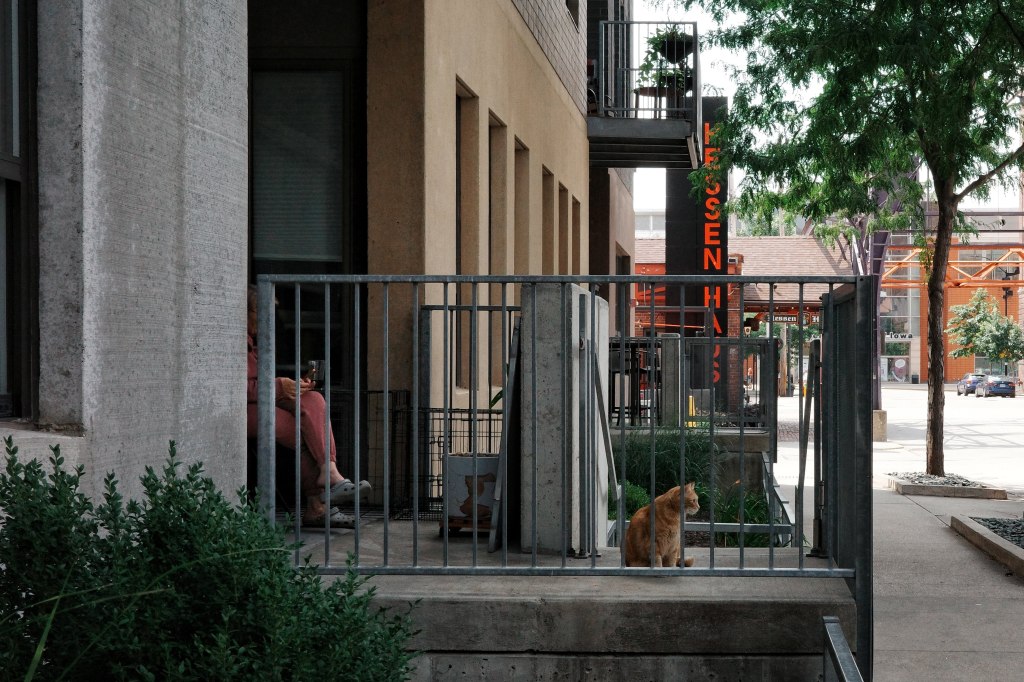
Ginger cat.

Seriously, you can pull the camera out of your pocket, turn it on, compose the shot, adjust all the elements of exposure with one hand, take the shot, turn the camera off, and put it back in your pocket…and you can do all that in just a moment. Which is pretty much what I did with the photo above. As I was walking down the street I noticed the ginger cat. I stepped off to one side so as not to spook the cat, which is when I noticed the woman’s legs. Her legs were in shadow, so I had to quickly adjust the exposure to make sure they’d show up in the photo. Then a step back to include the tree and the window in the frame, and there it was. Maybe ten seconds from seeing the cat to taking the shot. One hand.

Say hello to my little friend

It’s not a perfect camera; I’d love for it to be weather-sealed and dust-proofed, but I’m not sure it’s possible to do that without making it bigger. It’s more important (to me, at any rate) to have a camera I can tote in my pocket than one I can shoot in the rain. There have been a couple of instances where some fill flash would have been handy; the GR3 series doesn’t have a native flash. But, again, that’s small beans.

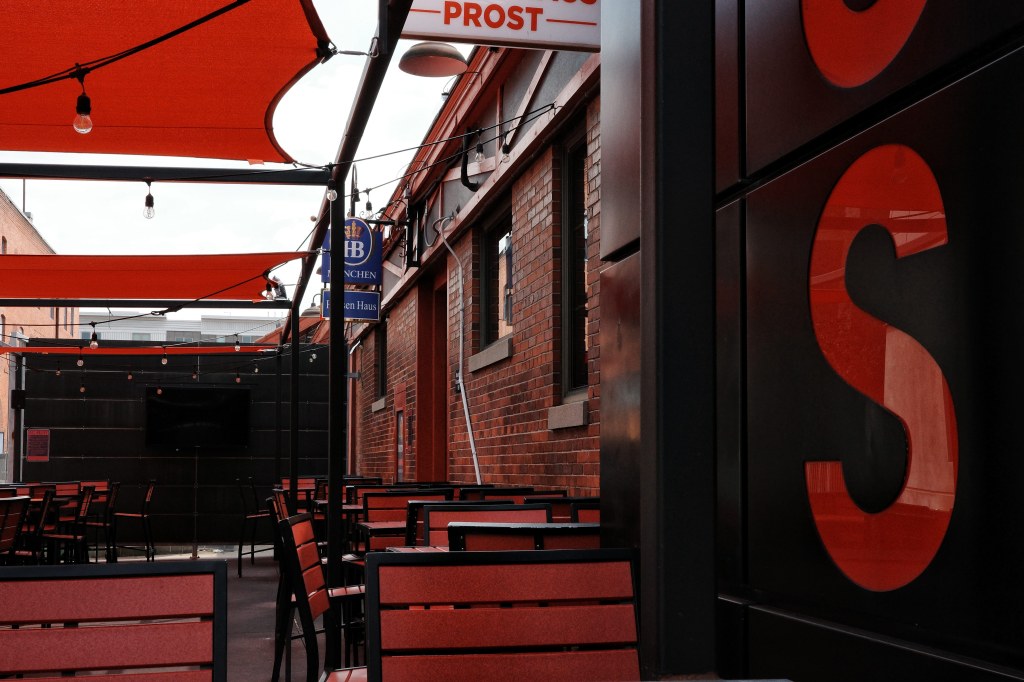
Big S.

The fact is, this camera has already allowed me to get some shots I couldn’t have done with any of my other cameras. And it’s allowed me to get some shots quicker and more easily than with my other cameras. I could have made the shot above with any of my cameras, but it would have taken longer and I’d have had to use both hands. It’s not a great photo (I shot it largely as a reminder to go back when this bar was open), but I was able to get the depth of field I wanted with a minimum of fuss. That absence of fuss is like heroin; it’s fucking addictive.

So yeah, it looks like me and the GR3X are becoming good buddies. I look forward to spending time with it.

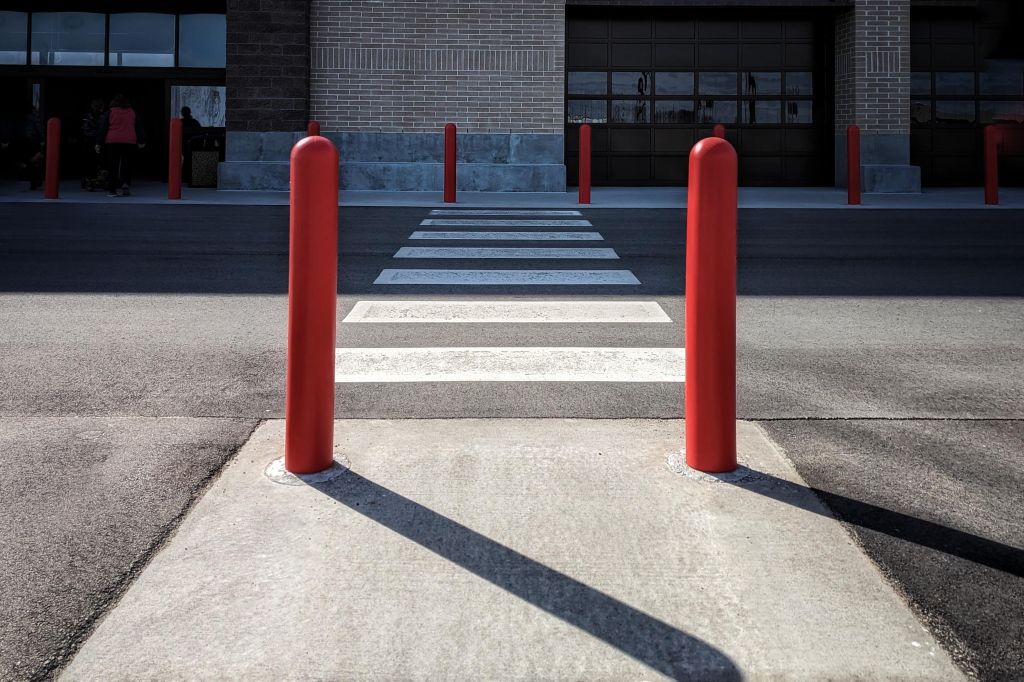
yes, i have a thing for bollards

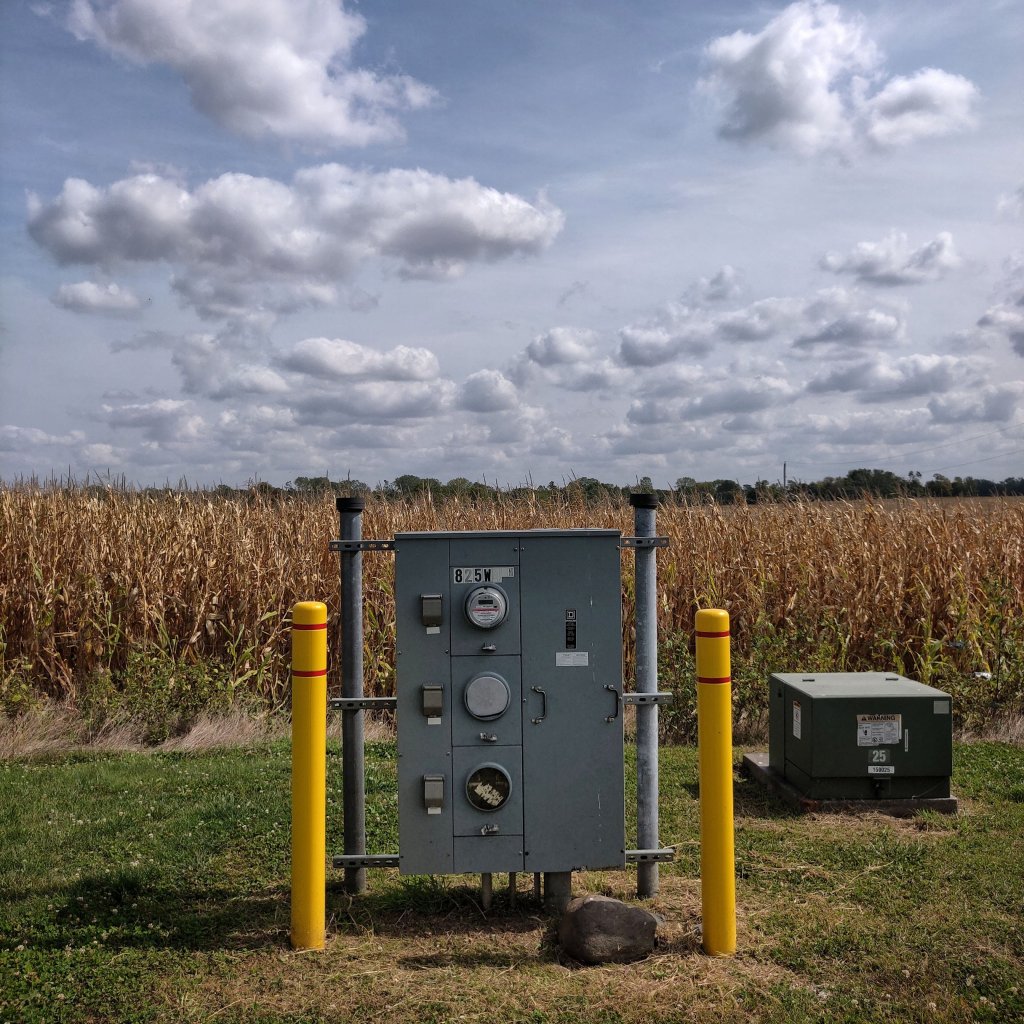
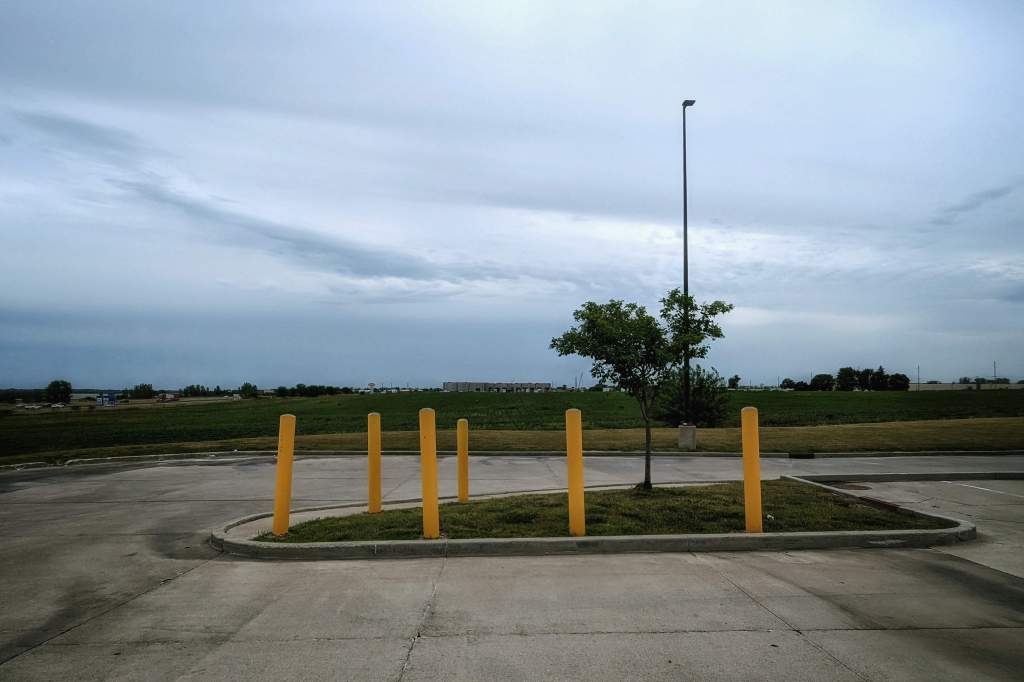
I don’t know when it started, this thing for bollards. Out of curiosity, I did a quick search through my digital photographs and found a photograph of a bollard from 2007. I know I’ve shot photos of bollards with film cameras, including instant film cameras. I’ve photographed them in color and in black-and-white, in several formats (square, 3:2, 4:3), in all sorts of environments, in all manner of weather, using whatever camera I happened to have at hand. So yeah, my bollard fascination has been active for at least a couple of decades.

Why bollards? No idea. I mean, sure, I can come up with lots of justifications for why I photograph them. They’re an interesting compositional form. They’re often present in uniform groups, so there can be a nice repetitive element to them. They’re frequently painted in bright colors—and when they’re not, when they’re old and battered with weathered paint, they can add a sort of wabi-sabi aura to an image.

But like I said, those are justifications for including them in a photo. The fact is, I’ve no idea when or why bollards as a concept attached themselves to my brain like some sort of remora. What’s weird—well, one of the many weird things—is that so many other folks are aware of my interest in and affection for bollards. I’ve had friends from all over the globe shoot and photographs of the local bollards they encounter just for my interest. Do I talk about bollards that much? I guess I must.

Maybe my interest in bollards attracted the attention of other folks partly because so many people had no idea that all those banged up ‘posts’ they see everywhere every day actually have a name. Bollard, it comes from the Old Norse term bolr, meaning “the trunk of a tree”, and the suffix -ard, which generally acts as an attributive pejorative intensifier (as in ‘coward’ being one who cowers, or ‘drunkard’ being one who is often drunk, or even ‘bastard’ which originally referred to “someone conceived on a pack-saddle” (French bast), since they were used as makeshift beds).

Originally, bollards were tree trunks used by Vikings to moor their ships and boats. Over time, the term was used to describe the posts on docks used for that same purpose. By the early 1700s, urban bollards began to be used to constrain horse and wagon traffic. Now the term bollard is applied mostly to posts used to protect objects (or people) from being struck by carelessly driven vehicles.

Bollards are everywhere. The fact that they’re ubiquitous makes them almost invisible. Unless, of course, you look for them. Some bollards are decorative—brightly colored or metallic and shiny. Some are sort of disguised; there’s a small, family-owned ice cream joint not too far from where I live that has bollards shaped like ice cream cones. But most bollards are plain, unadorned, simple, practical, utilitarian. They’re not there to please the eye, but to serve a purpose.

In my mind, bollards are sort of heroic. Yes, that’s right…I’ve romanticized bollards. I find a weird, sad, lonely, powerful beauty in them. They may be weather-beaten, banged up, isolated and ignored, damaged, with chipped paint, but they’re still standing there, doing their job. Protecting stuff.

No matter how abused or battered they are, bollards provide the illusion of permanence. They’re fucking solid. But at the same time, the very fact that they’re so often damaged exposes the lie of permanence. Bollards will stand a very long time, but eventually they’ll be removed and replaced. And very likely, nobody will notice when that happens.

I’m also attracted to bollards because they’re excellent examples of the humanness of things. They’re thoughtful, deliberate infrastructure. Somebody deliberately put them where they are. Somebody decided there was something that needed to be protected, and chose a specific type of bollard to be placed in specific patterns to keep that ‘something’ safe. The humanness of things is always there, if you look for it.

So, yeah, bollards. They’re not pretty. They’re common, unrefined, even crude. They don’t need your respect. But they deserve it.

in which I stray somewhat from the topic

Jeebus fuck a pumpkin, can you believe every single member of the Republican Party in the House of Representatives voted to open a formal ‘impeachment inquiry’ against President Uncle Joe? I mean, yes, of course you can believe it because the GOP is no longer a legitimate political party, and hasn’t been for years…but can you fucking believe it?

Sure, it’s entirely symbolic. Sure, it’s just performative politics. Sure, it doesn’t change a damned thing. Sure, we’re accustomed to this sort of Republican skullduggery. And sure…wait. Hold on a minute.

Okay, here’s a thing I just learned: there’s only one L in skulduggery. Who knew? Skulduggery, of course, is a term used to describe all manner of unscrupulous, underhanded, or dishonest behavior—which makes it appropriate for the GOP. Another thing I just learned: skulduggery has nothing whatsoever to do with skulls, which is both a relief and a wee bit disappointing.

The term apparently comes from an old Scots word, sculdudrie, which referred to a certain laxity in regard to chastity—which, coincidentally, also makes it applicable to the modern GOP. The term has been described as “a euphemism of uncertain origin,” although some etymologists seem to think it may have been used as a legal term of art in the early-to-mid 1800s. And let’s face it, considering how weird Scottish law has been throughout history, that wouldn’t be very surprising.

Remember, Scotland—and particularly Edinburgh—was one of the centers of anatomical study back at the time sculdudrie would have been used in law. Dissections of human bodies were often performed in front of an audience (I am NOT making this up) made up of medical students and interested members of the public. Scottish law limited the origin of cadavers used for medical research; they could only come from suicide victims, foundlings, orphans, or inmates who’d died in prison. When legal cadavers became scarce, anatomists began buying corpses from ‘resurrection men.’ Which is a nicer way of saying ‘grave robbers.’ Under Scottish law at the time, it was illegal to disturb a grave. And it was illegal to steal the possessions of the dead. But actually selling a dead body was perfectly legal.

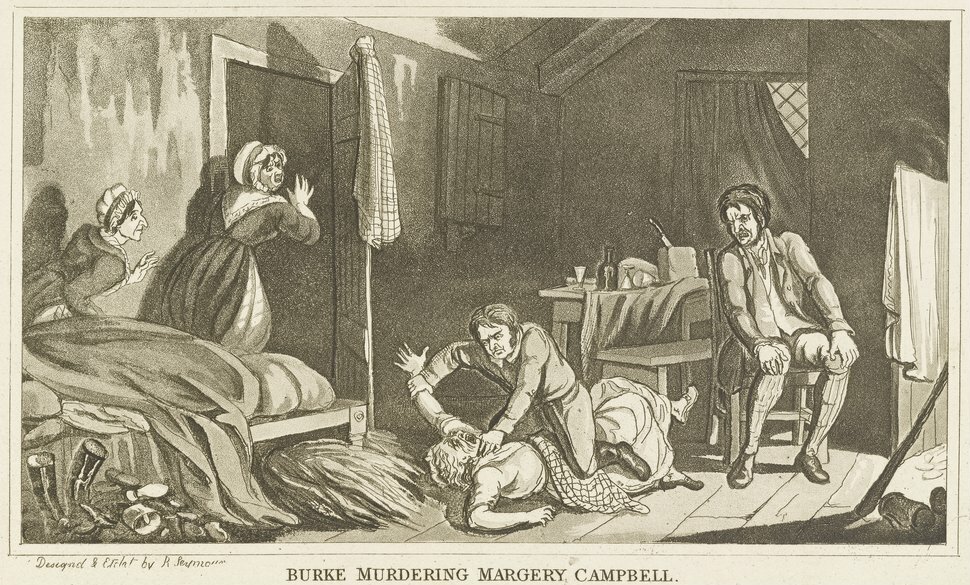
You can see how this might lead to some skulduggery (even though it’s got nothing to do with skulls). In fact, that’s how the case of Burke and Hare got started. William Hare owned a lodging house in Edinburgh. When one of his lodgers died, he and a buddy, William Hare, sold the corpse to famed anatomist Robert Fox. Later, when another lodger became ill with a fever, Burke and Hare decided not to wait for her to die. They smothered her and sold her cadaver. In the end, they apparently supplied a total of sixteen fresh corpses to Dr. Fox.

Burke, Hare, and both their wives (who were at least aware of their crimes) were arrested. Hare agreed to testify against Burke in exchange for immunity from prosecution. And since Scottish law prevented him from testifying against his wife, the case against her was dismissed. Burke was found guilty at trial. The verdict against his common-law wife was ‘not proven’ which is another weird aspect of Scottish law; it’s a verdict that basically says “Yeah, we know you did it, but the State didn’t prove it, so off you go.”

Burke was hanged and his body was given to an anatomist and was dissected in front of an audience. His skeleton is on display (I swear I am NOT making this up) at the Anatomical Museum of the University of Edinburgh Medical School.

Uh…I seem to have gone off on a slight tangent. It wouldn’t be very difficult to find a way to compare the GOP to Burke and Hare or to compare the absurd impeachment ‘inquiry’ to grave robbery. Hell, I could even find a way to compare the public dissection of William Burke to the trial of Donald Trump, since both of those motherfuckers deserve to be flayed in front of an audience. But I think I’ve probably tried your patience long enough.

circular dance of ants

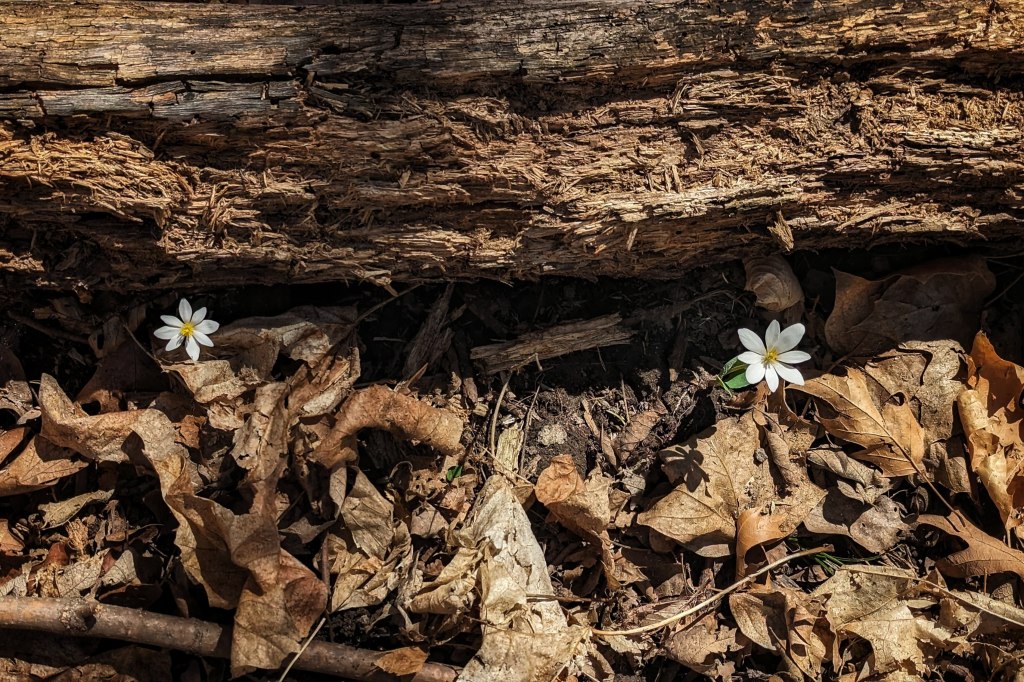
The photograph below shows a pair of bloodroot blossoms, one of the first flowering plants we see at the beginning of morel season. It doesn’t look at all bloody, does it. The sap, however, is generally orange to bright red. It’s sometimes used by native artists as a dye. The sap is also somewhat poisonous; eating bloodroot probably wouldn’t kill you, but it would certainly make you vomit like a high school drunk.

What’s cool about bloodroot, though, is the way it’s disseminated. The flowers produce pollen, but no nectar–which means all those bees and flies that land on the blossoms foraging for nectar are getting scammed. They’re helping pollinate the plant, but they aren’t getting jack in return.

But what’s really cool is that the seeds of bloodroot are spread by ants. That’s right, ants. The seeds have a fleshy organ–an elaiosome–that ants fucking love. They take the bloodroot seeds to their nest, eat the elaiosomes off them, then chuck out the seeds with the other ant trash and nest debris. Ant trash turns out to be a terrific medium for germinating seeds.

The process of ants foraging seeds for their tasty elaiosomes, then getting rid of the useless seeds in ant trash middens is called myrmechory. It’s from the Greek term for ants (mýrmēks) and a circular form of Greek dancing called khoreíā. The ants don’t actually dance in circles, of course, though they probably could if they wanted to. Who’s going to stop them? The important thing, though, is myrmechory works. It’s great for the ants, who get a scrumptious treat, and for the bloodroot, which gets dispersed across a wider range.

Of course, bees and flies and other pollen-seeking winged foragers get completely fucked over, which probably adds to the enjoyment of the elaiosome-eating ants. I’m okay with that. I mean, bees get to fly, after all; they get a temporary pardon from gravity. Hard to blame ants for being a wee bit envious and taking some small pleasure out of seeing the winged bastards get stiffed.

a sweet savour unto the lord

Billy B. Yeats wrote the poem in 1919, just months after the end of World War One, the bloodiest and most technologically advanced war ever fought. His young wife, Georgie Hyde-Lees, pregnant with their first child, had almost died from the global flu pandemic of 1918-1919 and was still recovering. Twenty million people died in that war, twenty-one million during the pandemic. And the Irish War of Independence was just beginning.

Turning and turning in the widening gyre
The falcon cannot hear the falconer

Falcons hunt at the command of the falconer. It’s not just that the falcon has slipped free of that control, it’s not just that the falcon isn’t listening to the falconer; he can’t even hear the voice of control anymore. Control no longer exists.

Things fall apart; the centre cannot hold;
Mere anarchy is loosed upon the world,
The blood-dimmed tide is loosed, and everywhere
The ceremony of innocence is drowned

To Yeats, the entire world must have seemed on the verge of combustion. Everything was blowing up around him. Nobody was in charge; there was no constraint on the horror in the world, there was no legitimate authority to curb humanity’s worst impulses. One era was coming to a bloody end; a new one was being born and nobody knew whether or not it would be monstrously worse.

And what rough beast, its hour come round at last,
Slouches towards Bethlehem to be born?

And here we are, a century and a wink later, after another pandemic, living in a nation we hardly recognize during an era of increasing hate and horror. It feels like our world is at a horrific tipping point. Firearms have become the leading cause of death for children under 18 years of age. Not disease, not accidents, not any natural or organic issue, but a device. A tool, an implement, a thing we deliberately manufacture and freely sell almost without control. The leading cause of death among children is a mechanical apparatus, and one political party celebrates it.

The best lack all conviction, while the worst
Are full of passionate intensity.

The members of the Republican Party almost universally identify themselves as Christian, and they publicly bemoan the deaths of all those thousands of children. They offer their thoughts and prayers because that’s what you do when you make a burnt sacrifice–you pray when you create a holocaust. Holocaust, from the Greek holokauston, meaning “a thing wholly burnt.” A burnt offering is the oldest form of Biblical sacrifice; a “burnt sacrifice, an offering made by fire, of a sweet savour unto the Lord,” as the King James Version has it. The sacrificed offering should be “without blemish.” Untainted, unspoiled, pure. Like children.

Republican Andrew Clyde, a gaze blank and pitiless as the sun.

Guns are the rough beast. Republicans, with a “gaze blank and pitiless as the sun,” are willingly sacrificing children to it. We have the power to stop that. We have the power to, at a bare minimum, reduce the magnitude of the holocaust of children. We have the ability to minimize the butcher’s bill.

But we won’t.

The blood-dimmed tide has corrupted the water of our political and social culture. The falcon cannot hear the falconer. It will feed where it wants.