Today is Presidents’ Day in These United States. Well, sorta kinda. In some of These United States, it’s President’s Day. It’s an apostrophe thing. But there are some states that do away with the apostrophe altogether, in which case it’s Presidents Day.
But a lot of These United States don’t hold with lumping all those presidents together; they’re more exclusive. In a lot of places, the day is all about George Washington and Abraham Lincoln, both of who were born in February. So those states call this holiday Washington-Lincoln’s Birthday. Or, in some places, Washington and Lincoln Day. In Alabama, they dump Lincoln and substitute Jefferson, so they’re celebrating George Washington/Thomas Jefferson Birthday. And in Arkansas it’s both George Washington’s Birthday AND Daisy Gatson Bates Day (and if you don’t know who Daisy Gatson Bates is, I recommend Wikipedia).
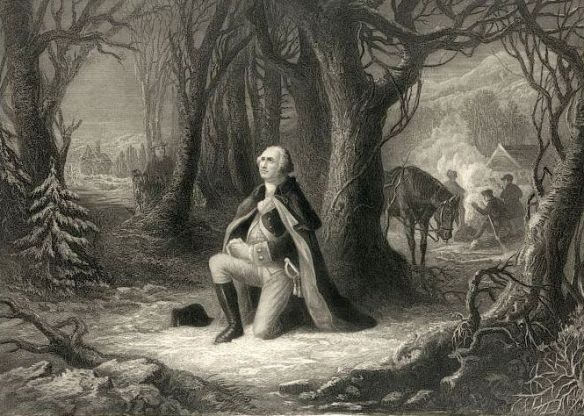
Originally, of course, this was just George Washington’s Birthday — and there are still four states (including the one where I’m currently parked) that have stuck with the original version. And that’s why in Iowa today, we’re celebrating the birthday of the First President of…fuck, wait.
Okay, it’s not actually his birthday. George was born on February 22, 1732. A century and a half later, in 1879, Congress decided we needed to honor the first president, so they decided to make his birthday a federal holiday. Folks working in the federal government could take the day off to — well, it’s not exactly clear what they were expected to do on George’s birthday, but not going to work was a big part of it. Also, to honor our first president, many shops closed their doors and conducted no commercial business.
At any rate, that’s why we’re celebrating George Washington’s birthday…fuck, wait.
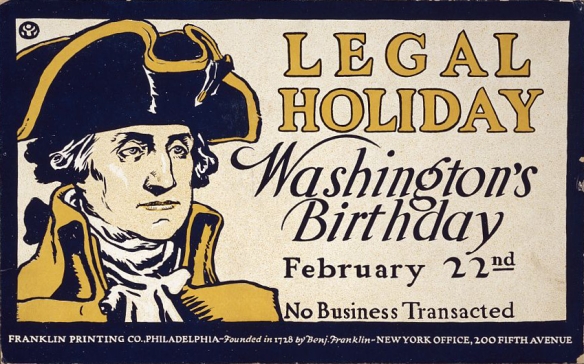
Okay, turns out George Washington was officially born on February 11, 1731 — not on February 22, 1732. The problem was George was born in Virginia, and Virginia was part of the British Empire, and the British Empire was still using the Julian calendar because the British Empire wasn’t a Catholic empire and even though the Catholic countries of the world had switched to the better Gregorian calendar in 1582, the British Empire wasn’t about to give in to calendar fashion because, dammit, it was the British Empire, don’t you know. Then in 1752 they decided there wasn’t anything terribly wrong with the Gregorian calendar, so they adopted it and George Washington’s birthday went from February 11, 1731 to February 22, 1732.
And that’s why every February 22nd, we celebrate…fuck, wait.
Okay. In 1951 this guy named Harold Stonebridge Fischer formed something he called the President’s Day National Committee. His plan was to create a holiday to celebrate ALL the presidents, not just one. He wanted the holiday to be celebrated on March 4, because that was the traditional date on which new presidents were inaugurated (not George Washington, of course, because he was the very first president and we were basically just faking everything back then, hoping it would all work out somehow). Fischer pimped that proposal for something like twenty years with absolutely no success whatsoever. But some Congressional folks liked the notion of fucking around with federal holidays, and in 1971 they passed the Uniform Monday Holiday Act.
The Uniform Monday Holiday Act essentially said ‘Hey America, we don’t really care what day Washington was born on, or when World War One ended, or what day y’all have been celebrating Memorial Day, and does anybody even know why we’ve been doing Columbus Day on the 12th day of October, seriously? So we’re just moving those holidays to a Monday, so we can all have a long weekend. You can thank us later.’ Granted, some of those holidays have been re-shifted back to their original dates, because we’re still just basically faking it, hoping it will all work out somehow.

Anyway, that is why we celebrate the first president — or some of the presidents — or all of the presidents — or some of the presidents and maybe some folks who weren’t president at all — on the third Monday of February. And that’s why all the mattress stores and shoe emporiums are slashing prices. At least that’s what we’re doing now. Who the hell knows what’s going to happen now that Comrade Trump has parked his ass in the Oval Office, and Republicans run both houses of Congress.
That business of faking it and hoping? It still applies. But hey, at least some folks get a three-day weekend. So there’s that.