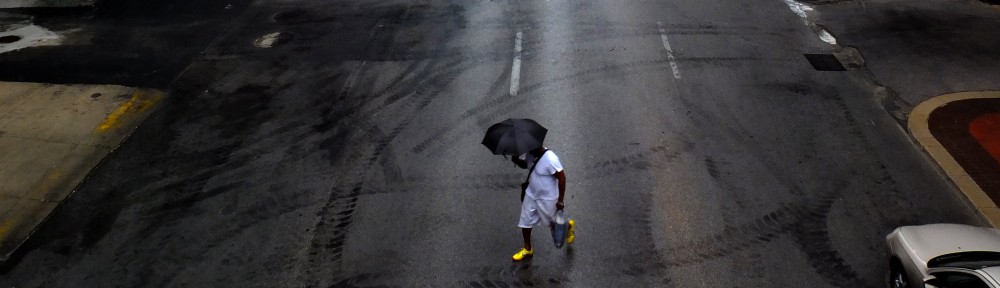
a tiny period of temporary release

Let me first say this: this is NOT about golf. It’s also NOT about television. It’s about assholes. I don’t watch much television–couple hours in the evening, that’s about it–and aside from women’s futbol, I don’t watch much sports on television. But recently, wanting a tiny period of temporary mindless release, I decided to turn on the quietest television sport. Golf.

It was awful. Not awful in the expected way. Awful in an asshole sort of way. Instead of the tranquil, hushed environment I expected to see, there was a loud, raucous, obnoxious crowd jeering and aggressively insulting European players. And who was leading them on? Comrade President Donald Trump.

Guardian sports analyst Bryan Armen Graham noted that the behavior reflected “what’s been an incremental breakdown in public behavior. The country now lives in all-caps, from school-board meetings that sound like street rallies and comment sections that have spilled into the street.” He’s talking about the phenomenon I call Asshole Culture.

I first used the term ‘Asshole Culture’ in August of 2021, in a post about the MAGA response to an unvaxxed man on his deathbed, admitting that Covid was real and pleading with people to get themselves vaxxed up. The MAGA response was what you’d expect–cruel, scornful, aggressive, hateful, profoundly and proudly stupid.

A month later, I felt the need to explore Asshole Culture a bit more carefully in a post called I Am Asshole, Hear Me Roar. In that post, I described the credo of Asshole Culture:

I do/do not want to do this thing. I don’t care if it helps/hurts other people. You can’t make me do or not do this thing. I will go way the fuck out of my way to create a disturbance sufficient to make others miserable in order to do/not do/stop other people from doing this thing. I am Asshole, hear me roar.

I’d expand that credo now. It’s not just about things assholes do/do not want to do; it’s also about things assholes do/do not want to exist (mostly trans folks and, to a lesser extent, Democrats). I’ve written about 40 posts on Asshole Culture (I say ‘about’ because I got distracted while trying to count them and couldn’t be bothered to start over). Here’s a list of topics I’ve written about in which Asshole Culture has had an influence:

  • gun rights
  • vaccines/face masks
  • libraries
  • trans kids in sports
  • ebikes
  • insulting behavior toward Volodymyr Zelenskyy
  • MAGA humor
  • Trump’s ear bandage
  • Kristi Noem / puppycide
  • MAGA support for Trump’s hush money/stormy daniels/repeated infidelity
  • Trump role as bull goose looney of Asshole Culture
  • Trump as martyr
  • Matt Gaetz omfg
  • MAGA response to white supremacist mass shootings
  • MAGA congress
  • Twitter
  • Attack on paul pelosi
  • Abortion
  • Trump’s theft of classified documents
  • Facebook
  • Will Smith bitch-slapping Chris Rock
  • Celebration of January 6 insurrectionists
  • Nazi free speech
  • Kyle Rittenhouse

I used to believe Trump supporters did cruel stupid shit because they were too stupid to grasp that what they were doing was cruel. Over time, it’s became clear to me that many of them are doing cruel stupid shit because they’re cruel. Not just cruel, but performatively cruel. In your face cruel. Visibly and vocally cruel. And because of Trump, they now believe (and they’re too often correct) that they can be cruel without any fear of consequence. It’s led to louder, more aggressive, celebratory cruelty.

We’re seeing it everywhere. Every day ICE agents are openly committing atrocities, confident they won’t be held accountable. Recently a Fox News personality casually mentioned murdering the homeless on live television, and to my knowledge he hasn’t even been reprimanded. Yesterday, a television news report on the day’s second mass murder was interrupted to announce a third mass murder had taken place. Comrade President Trump orders the murder of suspected criminals in international waters with a shrug at the law.

It shouldn’t surprise me that asshole culture has spread to the golf course. Golf in the US has always been a sport for conservatives with money and MAGA has a lock on that demographic. Even so, I didn’t expect to hear a television golfing audience yelling ‘Faggot!’ at golfers on the links.

Flann O’Brien wrote: Anybody who has the courage to raise his eyes and look sanely at the awful human condition…must realize finally that tiny periods of temporary release from intolerable suffering is the most that any individual has the right to expect.

Those tiny periods of temporary release are becoming tinier still.
in which i return to instagram

I stopped posting photographs on Instagram (and posting anything on Facebook) back in January of this year (2025), after Mark Zuckerberg (you know…the desperately uncool dweeb who owns Meta, the parent company of IG and FB) announced Meta was ending its fact-checking program and ‘easing’ content moderation.

FB had already become a hostile, advert-bloated social medium; as much as I loved keeping in touch with friends, the FB experience itself was annoying and aggravating. The new policies only promised to make it worse. The problems with IG were different. A lot of people were getting caught up in the illusion of ‘perfect IG lives’ and that created all sorts of emotional health issues. I was only there for the photography, not for ‘lifestyle’ stuff. While it didn’t affect me, the fact that Zuckerberg didn’t care that if it DID affect a lot of people…especially young people…was reason enough to leave.

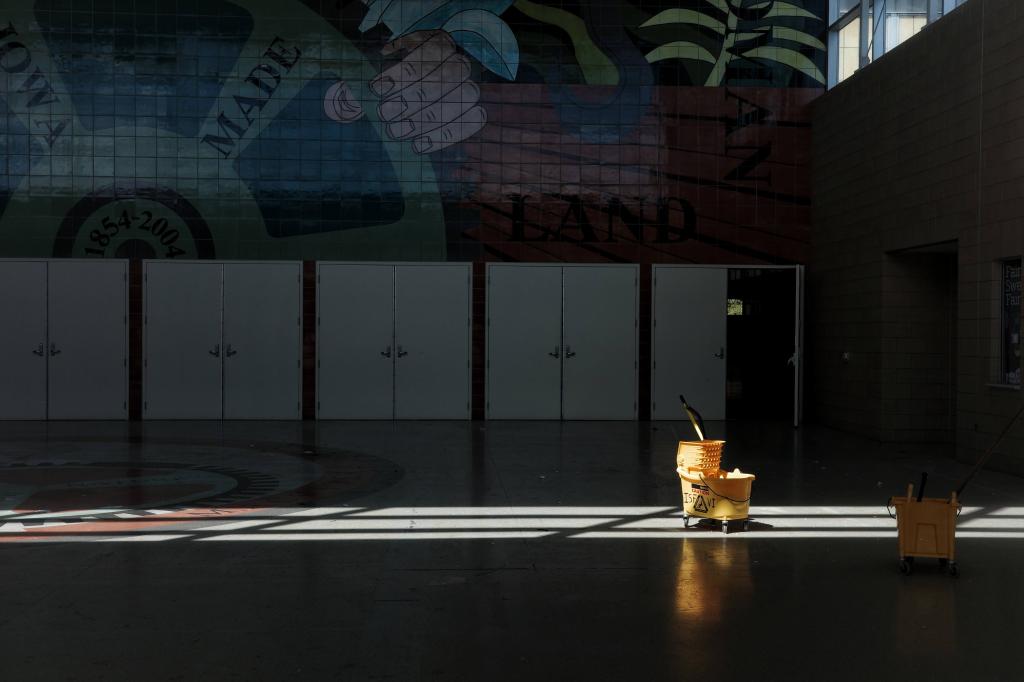
O Holy Mop Bucket (Tuesday, Aug. 26, 2025)

Why am I returning to Instagram? For the same reason I joined in the first place. Photography. I miss seeing good photography. Don’t get me wrong, there’s a lot of good photography on Bluesky, my preferred social medium, but it’s not well organized. In fact, it’s barely organized at all. Bsky is great, but it’s not photocentric. Instagram is. IG allows me to have a curated experience. I can follow a select group of photographers, who sometimes lead me to other interesting photographers.

I’m not doing this to become a ‘better’ photographer (although I think looking at–and trying to understand–good photos CAN lead a person to try new things, which can make you a better photographer). I’m doing this simply because looking at good photography makes me happy. Being happy is a good reason for doing anything, and it’s especially important these days.

I could, of course, just look at the good photos shot by other people; I don’t have any obligation to post anything. By posting (either photos or comments on the photos of other folks), I’m basically supporting the platform, which benefits Zuckerberg. But looking without participating is cowardly and furtive. If I’m going to use the platform, I have to take responsibility for it. So, this morning I posted a photograph on Instagram for the first time since January.

Here’s a stupid thing: when I decided I was going to actually return to IG, I felt some weird pressure to post the ‘right’ photo. A “Return to IG” photo. Something somehow meaningful, something symbolic (I told you it was stupid). So I opened up my photo app with that in mind. But I immediately saw the photo above and thought, “Oooh, mop bucket” like a little kid. So in the end, I just posted the first photo that caught my eye.

And maybe that’s the right way to do Instagram.

triffids killed my academic career

I should begin by saying I was never passionate about academia. In fact, I had no interest at all in academia. I almost became an accidental academic.

The only reason I went to graduate school was because I was badly burnt out after five years working in the Psych/Security unit of a prison for women and seven years as a criminal defense private investigator. I wanted a break. Hell, I needed a break. As a working class guy, I had no idea that you could actually get paid to attend graduate school. When I learned that, I applied to half a dozen different universities in half a dozen different disciplines. American University offered me the best deal: free tuition AND a small stipend to study Criminal Justice. So that’s what I did.

That was my plan. Take a year or two off, loafing as a graduate student, then find something else interesting to do. But as I was finishing my MS in Justice, I was offered more money to go for a Ph.D. So, again, that’s what I did.

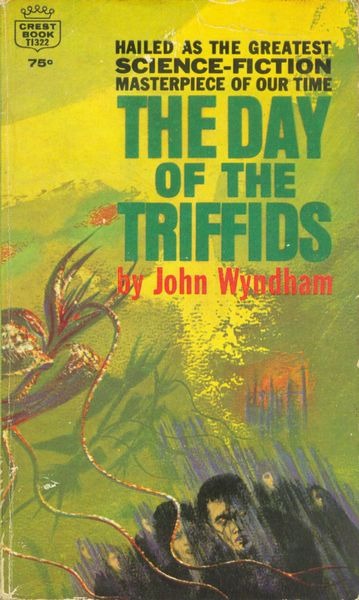
A couple of years later I found myself with a contract from Fordham University to teach Sociology. I loved teaching and I was good at it. But I disliked academic politics, and I positively hated academic writing. Still, it was relatively easy work, so I didn’t complain. Then one day I was sitting in my Lincoln Center office reading an old paperback book I’d picked up at some second-hand bookshop and the Chair of the Department wandered in. He asked what I was reading.

This is the actual cover of the novel I was reading.

Here’s a true thing about academia: it’s about specialization. For example, you can’t just study history. You have to study English history. But not just English history, English history of the Tudor period. But not just Tudor history, but Tudor history during the reign of Henry VII. And not just the history of Henry VII, but the fiscal policies of Henry VII. Academia is about narrowing your interests until you become a specialist in a small segment of a larger field of learning.

As a larval academic, I was expected to decide on an area of specialization and spend my time concentrating on it. I was expected to study the appropriate academic journals. Instead, I was reading a 1951 science fiction novel about venomous, carnivorous plants capable of locomotion (that’s right…walking plants) and the collapse of society.

“Are you reading this for your classwork?” I was asked.

I could have said yes. I mean, I could easily argue that the story examined economic systems (these dangerous plants, triffids, were cultivated as a source of industrial quality oil). I could say in all honesty that the collapse of society (a strange ‘meteor’ shower had turned most of the world blind, leaving only a small segment of the population capable of sight) resulted in a variety of localized ad-hoc systems of governance and justice, which could be explored through various criminological theories. I could accurately claim there was value in studying how a 1951 novel explored the ways new social norms and mores were formed from the bones of the old system. I could have absolutely justified reading The Day of the Triffids.

But the truth is, it never occurred to me that I needed to justify it. I told him the truth; I was reading for the pleasure of it. I was actually surprised by the disapproving, judgmental look on his face. I was even more surprised when I discovered the university had advertised a tenure-track position in the Sociology Department, and I hadn’t been asked to apply. I applied anyway, but I wasn’t even offered an interview, despite the fact that my teaching evaluations were among the highest in the department.

There were probably other reasons I wasn’t considered for the position. There’s often an unspoken (and sometimes loudly spoken) bias by academic theorists against practitioners. Some academics assumed my years as a private detective and as a prison counselor tainted my views. There’s a saying: In theory, there is no difference between theory and practice. In practice, there is. But after my brief encounter with the department Chair over Triffids, there was an obvious shift in attitude.

You could say triffids killed my academic career. It’s probably more accurate to say triffids saved me from an academic career.

in which i look at an old photo (part7)

Back in May of 2024 I reluctantly began to occasionally look at my old photographs, because apparently that’s a thing. I’d never stopped shooting photos, but I’d stopped thinking about the praxis of photography–the many ways in which photography can be put into practice. Then I came across an article somewhere that suggested looking at your old photos as if they were made by a different person and seeing what you could learn from them.

I gave some thought to that idea and decided it was silly. But I did it anyway. And hey, whaddya know? It had some value. Maybe not the intended value (which was something to do with improving your photography maybe?), but value all the same. If nothing else, looking at a few old photographs has reminded me that I tend to be pretty deliberate when it comes to composition.

This is the seventh time I’ve looked at an old photo. And you’ll notice the composition is unusual. I’ll explain why in a moment. First, the photograph.

11:02AM, Thursday, August 15, 2013

Yeah, you’re probably wondering what the hell, right? Allow me to ‘splain. A photography group I used to belong to (well, okay, a group I used to run) would engage in a variety of photo projects. This particular project involved shooting photographs as an homage to photographers we admired or respected. The idea was that by emulating these photographers, we could learn something about them and their approach to photography.

I chose to emulate the work of Uta Barth, a photographer I’d written about several years earlier. Barth is a conceptual fine arts photographer; her most important work is about the act of seeing rather than what is seen. She essentially decided to remove the subject of the photograph from the photograph. By focusing on where the subject would be and by overtly calling the viewer’s attention to the absence of the subject, she attempted to turn the viewer into the subject. When the viewer is the subject, the photograph is no longer about what is in the photograph; it’s about the act of looking at the photograph. Many critics of her early photographs complained that her images were blurry and out of focus. Barth explained the photos were “perfectly in focus, the camera just happens to be focused on an unoccupied point in space.”

I confess, at first this approach didn’t make a lot of sense to me. It was until I realized Barth was basically saying the world and everything in it exists independent of us and independent of anything to do with us. She was saying the world is NOT just our background. That concept hit me hard, partly because it should be so obvious.

The particular photo was my first attempt to emulate Barth, and it’s a failure as an homage. Why? Because, unconsciously, I included a subject. Barth very deliberately cleared away any sign of herself in her work. The inclusion of any personal item makes the photograph about the photographer. “Shoes on the floor, clothes, letters and objects on my desk immediately construct a narrative and identity of the person, and there you have it: I’m the subject.

And hey, there’s me…the two single-use plastic bottles of water (it was 2013; I didn’t know any better back then) and an item of clothing slung over a screen divider. It doesn’t say much about me, but it suggests something—and that’s enough to create a subject of the photograph.

I guess there’s a lesson there. If you’re going to attempt conceptual photography, make sure you have a solid grasp on the concept. And I suppose this demonstrates the value of looking at your old photographs. If nothing else, they remind you of lessons learned.

agri-culture

The only thing I know about keeping livestock is…okay, I don’t know anything about keeping livestock. I mean, I know it’s hard work. I don’t know that from experience, since I’ve never kept livestock, but even sharing space with a pet (cats and dogs, certainly, and probably birds and lizards, what do I know?) means cleaning up after them. Even the tidiest of cats uses a litterbox and somebody has to deal with that.

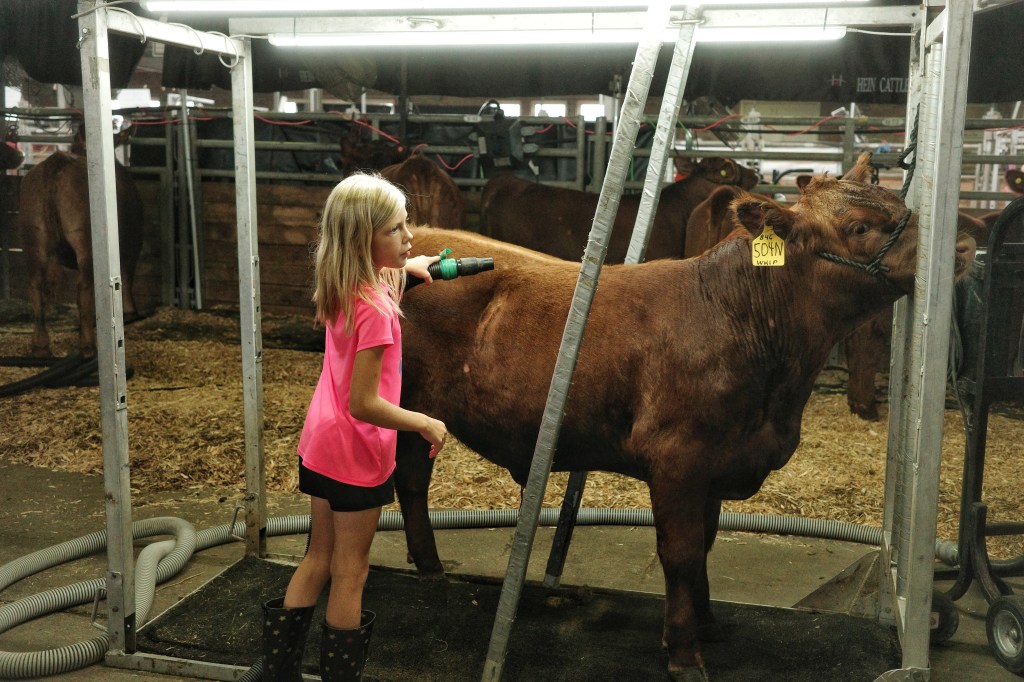
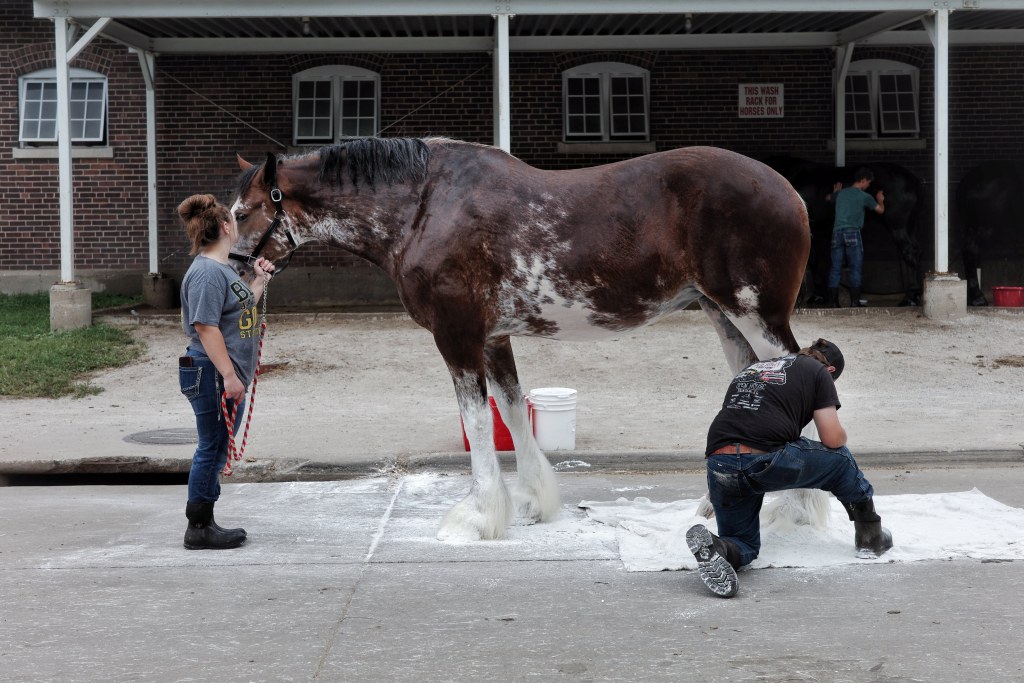
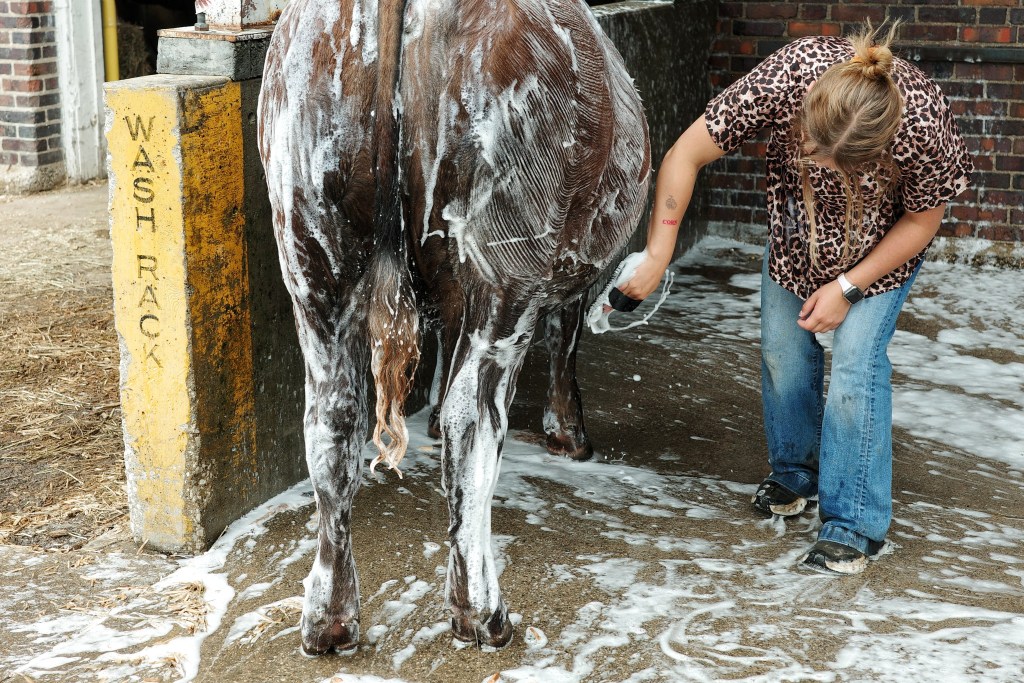
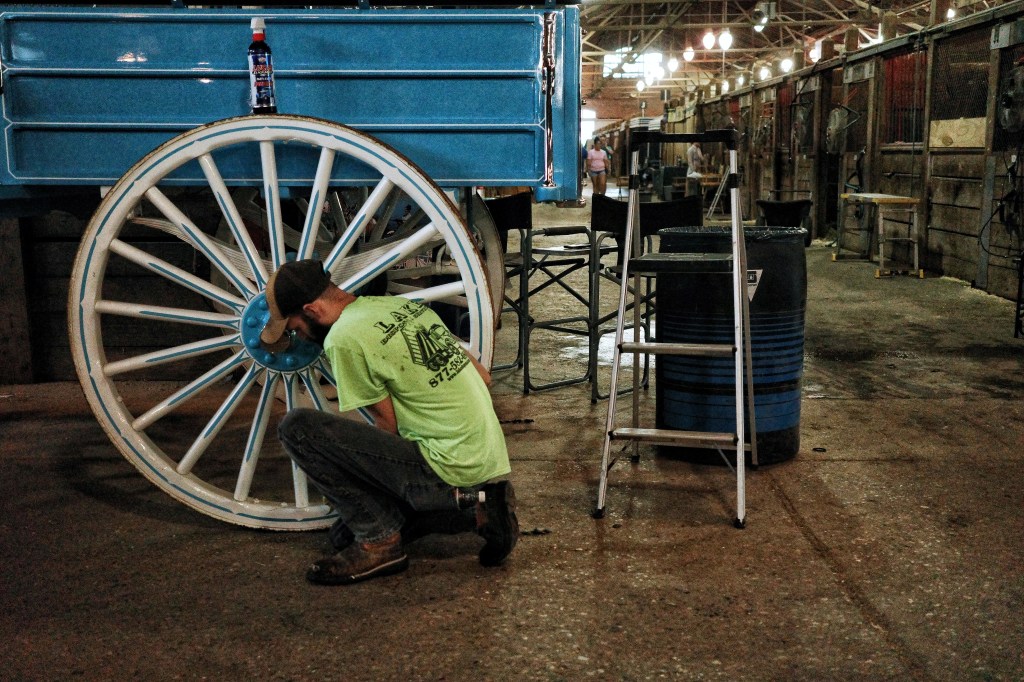
Why am I talking about this? Because looking over the photographs I took at the recent Iowa State Fair, I noticed I have a lot of photos of farm people cleaning stuff. Cleaning their animals, cleaning the gear needed to take care of their animals, cleaning the things their animals pull, cleaning up massive amounts of animal shit. Everywhere I went, men and women and kids were busy cleaning.

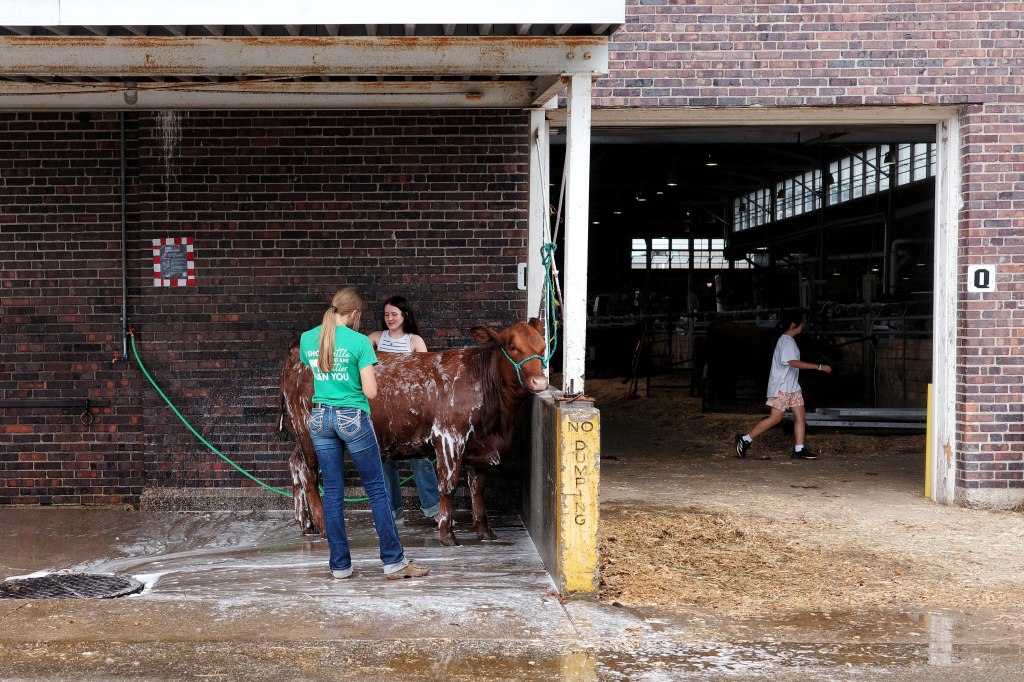
Cooperative cow-washing.

And when I say ‘cleaning their animals,’ I don’t mean they were just washing them (although there’s an astonishing amount of animal-washing going on all the time). I mean they’re shampooing them, blow-drying them, combing them, trimming them, vacuuming them.

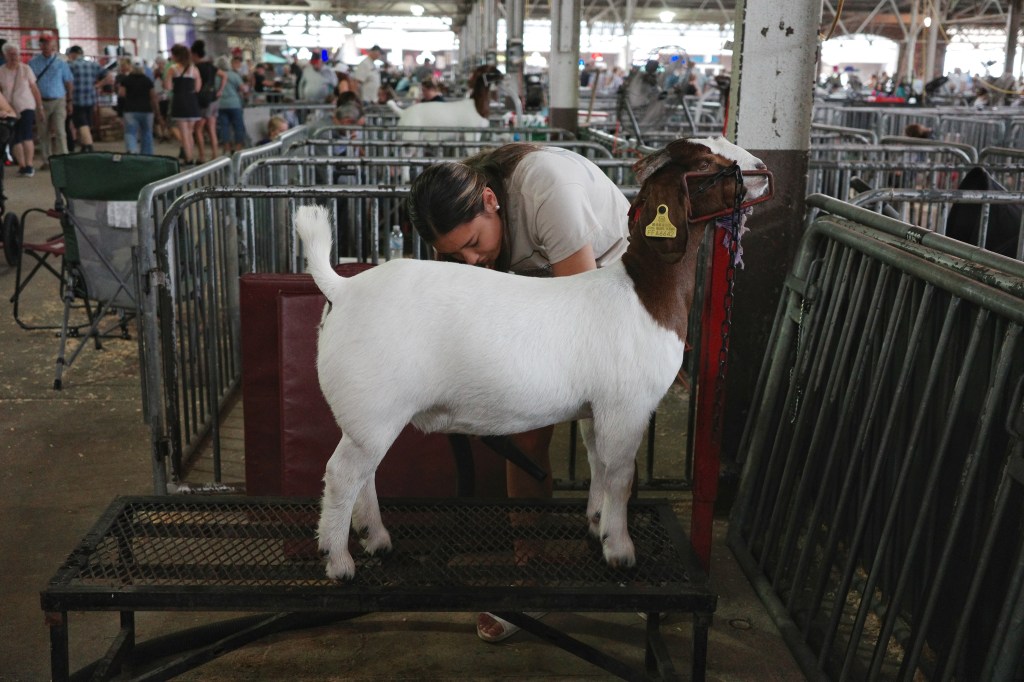
A little light goat-vacuuming.

Seriously, people were vacuuming off…something, I don’t know what. Loose hair? Dandruff? Barn grit? No idea, but everywhere you go in the animal barns at the fair, there are men and women and kids vacuuming their livestock.

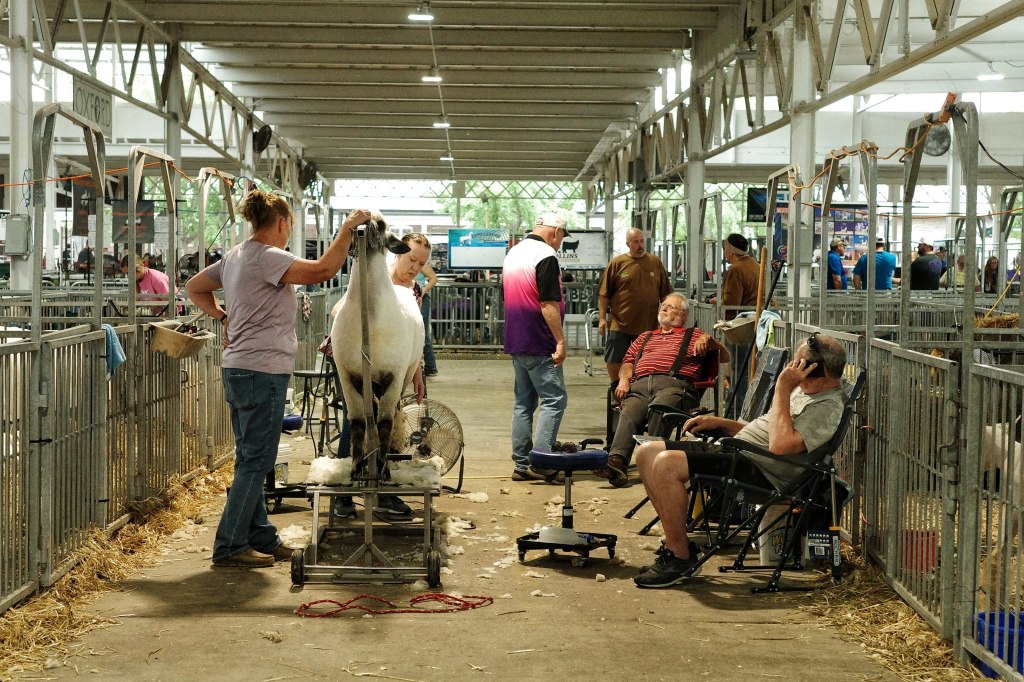
Women grooming sheep while men sit and chat.

These animals weren’t just being cleaned; they were being groomed. Meticulously groomed. (Okay, sorry, a slight tangent here. The term groom has a slightly hazy etymology. It’s probably(?) related to the Old English growan, meaning ‘to grow.’ At any rate, by the 14th century groom referred to a male servant who attended to officers (and their gear and horses) in a noble household. By the 19th century, the noun had been verbed, and groom referred to the process of tidying up or preparing for a purpose. So groom referred to both a person and what the person did. I don’t know why I thought you needed to know that, but there it is.)

A young girl vacuuming (or blow-drying) a cow.

As I was saying, these livestock animals (and I’m talking about cows, horses, pigs, goats, sheep, llamas, alpacas (is that the plural of ‘alpaca’?), rabbits, and chickens (do rabbits and chickens count as livestock? No idea.) are meticulously groomed. It’s clear that some of the grooming is done in the hope of winning a prize, but it was also clear that much of it was done out of pride and affection. That was especially true of the younger people.

Equine pedicure.

Here’s a thing you probably need to understand. All this cleaning and grooming? It’s taking place in and around massive cooperative barns housing hundreds of animals. Animals are noisy, so these barns are a constant barrage of animal noises. Also? Animals shit and piss a lot. I mean, a LOT. And they’re not particular about where or when they do it. So even though there’s a constant stream (so to speak) of people shoveling, sweeping up, and carting of waste products (the logistics of livestock waste management must be staggering), the fact remains that these massive barns…well, they smell like you’d think they’d smell, but not as bad as you’d expect.

Bovine shampoo.

What I’m trying to say here is that there’s an astonishing amount of hard work done by the farm families who bring their livestock to the fair, and all that work makes the environment as pleasant as possible. One of my reasons for visiting the animal barns during the State Fair is to look at animals, of course, but it’s also to see this remarkable group of people cobble together a shared sense of community. There’s something very tribal about it. And as a sociologist by training, it’s fascinating.

Detailing a wagon wheel.

But here’s the problem with being a sociologist: I know that the farming community I see at the State Fair is, largely, a myth. Around 40% of farms in Iowa are owned by corporations. Modern farming, even among non-corporate farms, is a business more than a self-sufficient way of life. The farming life we witness at the State Fair is something of a sentimental homage to an idea of rural living from the past. An homage grounded in nostalgia and an agrarian myth.

But so what? I’d argue there’s value in that. The fact is, it’s not corporations who are grooming their livestock at the State Fair. It’s not corporations who are hauling manure and polishing wagon wheels. It’s families doing that.

My visits to the State Fair animal barns always leave me impressed (and yes, a wee bit stunned by the smell and noise). I leave those barns profoundly grateful there are people–families–still willing to do the hard work of making sure the world gets fed. As myths go, this is a pretty damned good one, and I’m glad folks are keeping it alive.

we’re straight up murdering people now

Yesterday the United States military attacked and destroyed a civilian vessel in international waters, killing eleven people. Comrade Trump claims the boat was carrying narcotics bound for the US, and that the victims were members of Tren de Aragua, the Venezuelan drug cartel.

The alleged ‘drug boat’ moments before being obliterated.

That may be true. We don’t know. We can’t know because we blew them up. What we DO know is this:

  1. It was a civilian vessel.
  2. The vessel wasn’t an immediate threat to anybody or anything.
  3. There was apparently no attempt to intercept the vessel.
  4. There was no attempt to disable the vessel.
  5. There’s no declaration of hostilities against Venezuela.

In other words, the Trump administration hasn’t presented any evidence to justify the use of military force against this boat. It appears to be an extrajudicial killing of 11 people. Which is illegal as fuck.

If we can locate and track the vessel accurately enough to fire a missile up its ass (and we obviously did), then we can track it long enough to intercept it in US waters. At that point, we could determine if there were, in fact, narcotics onboard. If so, we could then detain the crew, interrogate them about the source of the drugs, and hold them for trial in a criminal court. We could have followed the law.

But nope.

There appears to be no reason to blow them up except to gratify the blood lust of Trump and his Cabinet of Nazgûl. This is literally murder. It’s criminal on the part of the people who ordered the missile fired and the person who actually fired it. However, there’s no chance any of them will be held accountable.

It’s important to remember that back in February, just a few weeks after Trump resumed the presidency, Pete Hegseth summarily fired the senior Judge Advocates General of the Army, Navy, and Air Force. These are the officers responsible for enforcing the Uniform Code of Military Justice. Hegseth actually said the JAGs were fired because he didn’t want them to be “roadblocks to orders given by a commander in chief.” That was, in effect, an announcement that Trump intended to use US military forces in ways forbidden by the UCMJ.

And now he has. And what’s perhaps scarier is this: military personnel have shown themselves willing to execute orders they know are illegal, in direct violation of the oath they swore when they entered military service.

Killing these eleven people in this particular way–and doing it openly–is a test and a declaration. It’s a test to see the domestic and international response. And it’s a declaration that Trump intends to use the US military in ways that are expressly forbidden to further his own political and personal agenda.

This is straight up dictatorial bullshit. And with a MAGA-controlled Congress, Trump will get away with it.