eat a cookie

Like a lot of you folks, I was unaware this year, 2012, is the 100th anniversary of Oreo Cookies. I only became aware of it on June 25th, when Nabisco took what turned out to be a controversial step forward. On that day, in celebration of Gay Pride Month, they released this advert:

The ad, of course, delighted an awful lot of gay and gay-friendly straight folks. It was fun and funny, clever without being twee, and expressed a political and social position. That’s a lot to include in a simple advertisement.

Predictably, it caused an uproar among religious conservatives and homophobes. While liberals applauded, conservatives vowed to boycott Oreos specifically and Nabisco products in general. They swore would give their custom to Hydrox cookies — apparently unaware that Hydrox had gone out of business. It was a classic temper tantrum.

Kraft Foods, which makes Oreo cookies, rightly refused to back down. They released the following statement: “Kraft Foods has a proud history of celebrating diversity and inclusiveness. We feel the Oreo ad is a fun reflection of our values.”

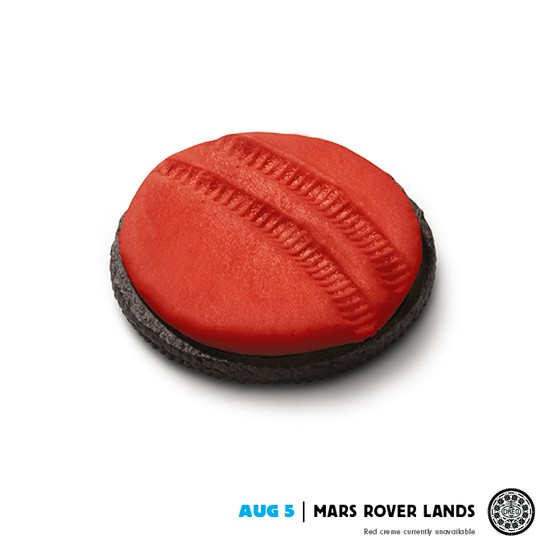
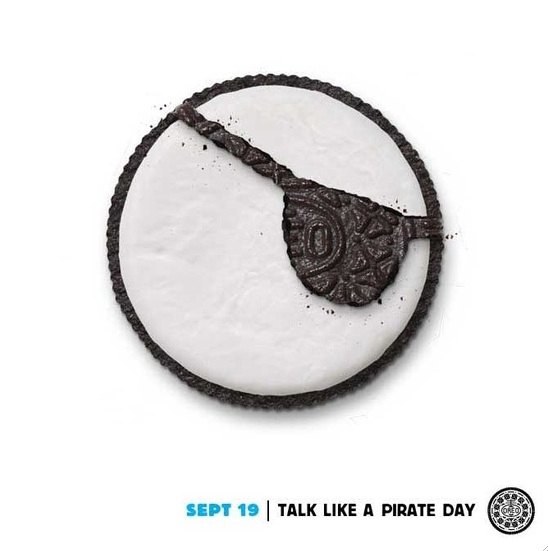
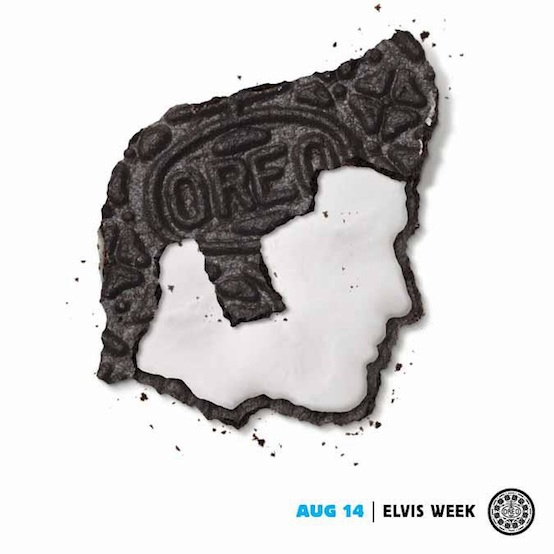
What is just as cool — and what has sadly been overlooked — is that for the next 100 days Oreo celebrated their centennial anniversary by releasing an interesting new advert each day, commemorating some event. Here’s a sample:

The ad campaign was known as The Daily Twist. They used multiple agencies and a dedicated team of four designers to come up with these clever ads, and sadly not nearly enough people saw them.

So here’s your chance to make up for that. Go buy some Oreos. Support the company. Remind them that we appreciate their willingness to do what’s right instead of what’s safe. Eat some cookies in a good cause.

the people are wrong

I’ve been shooting a lot of cityscapes lately — partly because I have a new camera that’s particularly well-suited for that sort of photography, and partly because I’m a sap for the geometry of structures. It’s been pointed out to me that most of my photographs are unpopulated. Devoid of people or other life forms.

This photograph, for example, sparked a couple of my favorite internet people to make the following comments:

I’m becoming increasingly aware of how meaningfully empty and post apocalyptic your cityscapes are. I used to think it was purely a compositional choice, that you didn’t want too many people or cars cluttering up the frame, but now I’m wondering if Des Moines has been quietly evacuated

I’ve wondered, too, about Des Moines. Where are all the people?

Where are all the people? The people are all over the damned place. They’re out on the streets and in the alleys and walking through the skywalk. I don’t always include them in the photographs, though. When I’m shooting cityscapes, I’m usually drawn to some combination of light and shadow, or some arrangement of form and shape. I’m usually drawn to the geometry, and the problem is that so often the people are just wrong for the geometry in the frame.

They’re dressed in the wrong colors, or they’re moving the wrong way, or they’re standing in the wrong spot or in the wrong stance, or they’re looking in the wrong direction, or they’re looking in the right direction but with the wrong expression. Sometimes they’re just wrong for reasons I can’t articulate, but they’re clearly wrong in the frame and they distract from what interests me.

When the people are being right, I include them. But when they’re being wrong I wait until the right people come along or until there aren’t any people at all. Or I give up and go somewhere else. For example, the following photograph needs people. I noticed the light and the shadows and the reflections, and I parked my ass across the street and waited for the right person or group to move into that space. I don’t recall how long I waited — I’d guess it was somewhere between a quarter of an hour and half an hour. During that time a lot of folks entered the space, but there was something wrong about all of them. None of them contributed to the space. So I documented the light, and moved on. With the right person, it would have been a good photograph. Now it lacks life.

There are other times — less common, to be sure — when I notice people who look like they’d be right. There’s something about the person that draws the eye and makes me think all that’s lacking is the right background. So I sort of wander along with them for a while in the hope they’ll move into an interesting space with good geometry. If they don’t, they don’t. I end up with nothing. I tagged along with the kid in the next photo and his puppy for maybe ten minutes (any longer and I begin to feel like a pervert). I shot maybe a half dozen frames in a half dozen different situations — but the light was always wrong, or the shadows were wrong, or the geometry was wrong. And when the exterior factors cooperated, the kid or the puppy were wrong, or I was a half second too slow or too quick. So in the end, I got nothing interesting.

The thing is, I’ve been shooting cityscapes — photographs of the city. Not photographs of the people. This new camera is also, I think, well-suited for street photography and I’d like to start getting involved in that. Street photography is a lot more fluid and relies on a different sort of geometry. Instead of looking for the geometry of structures into which people might fit, I’ll have to learn to look for geometry and structure in how people move and arrange themselves.

Cityscapes, in my opinion, can fail if the people are wrong or if the geometry is wrong. I have the feeling that when street photography fails it’s because the photographer is wrong. That should make things interesting.

memory, imagination, and a pretty little creek

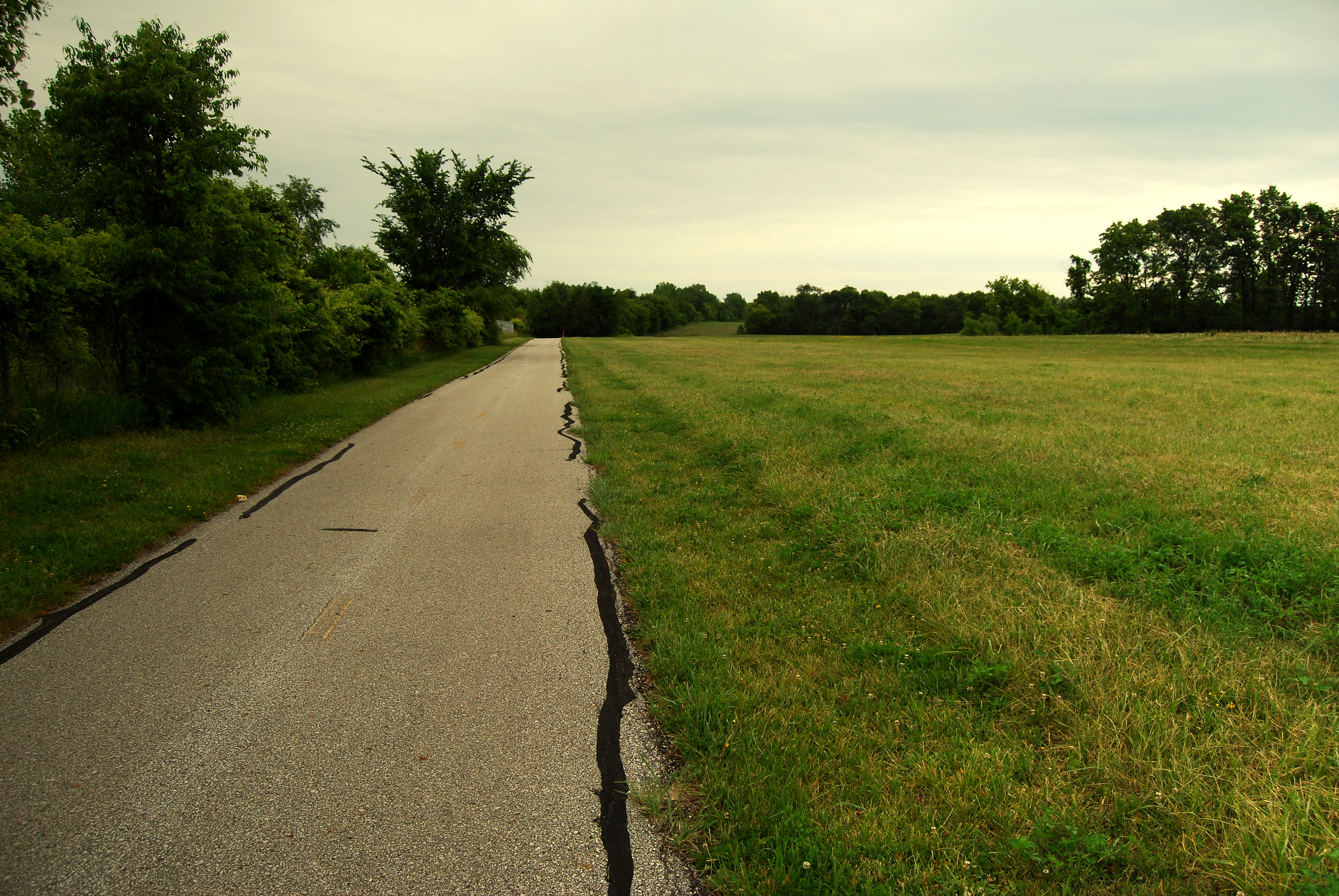
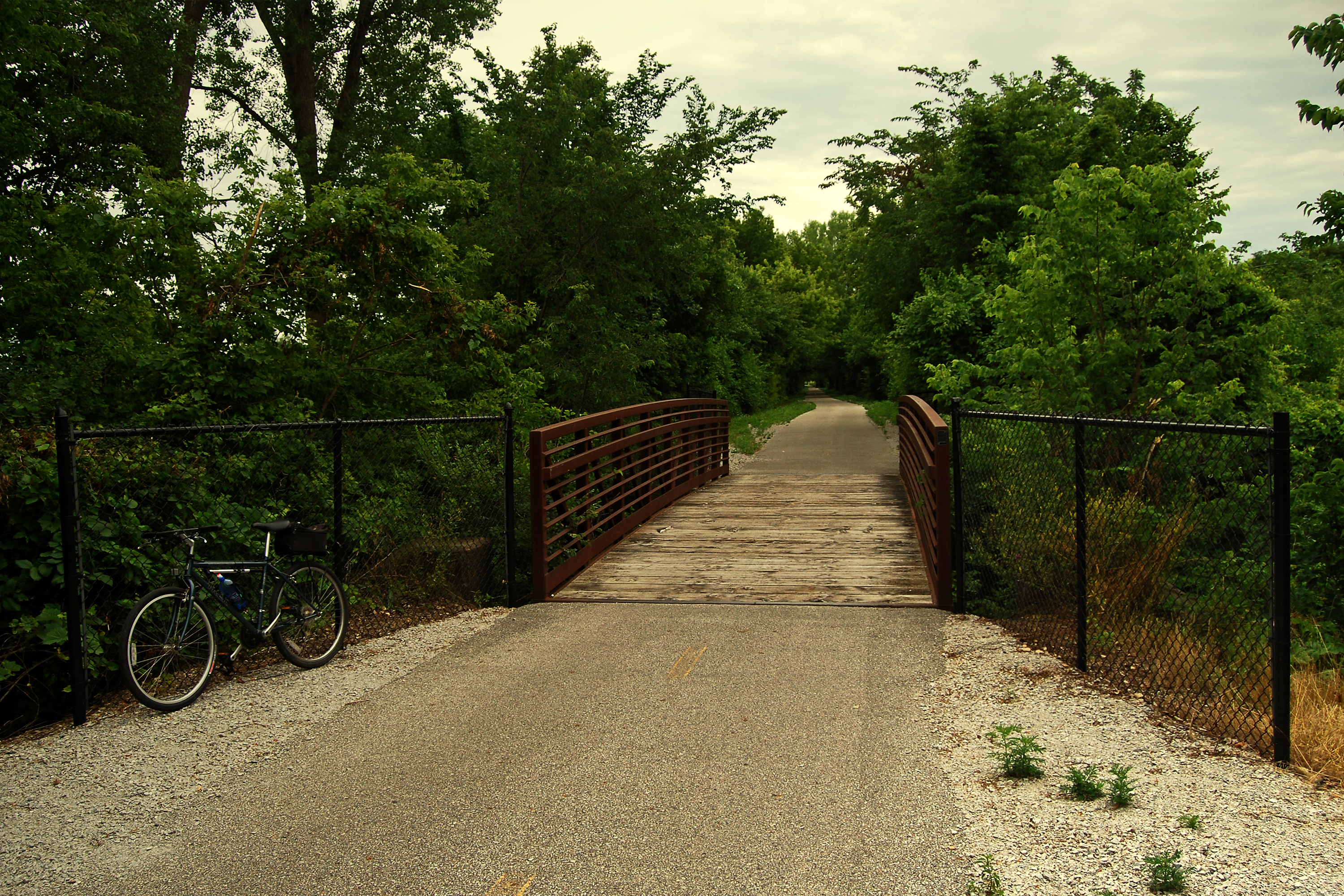
See those trees? Not just the ones along the bike path–the ones in the distance. They’re new. Relatively new. New since 1877, anyway.

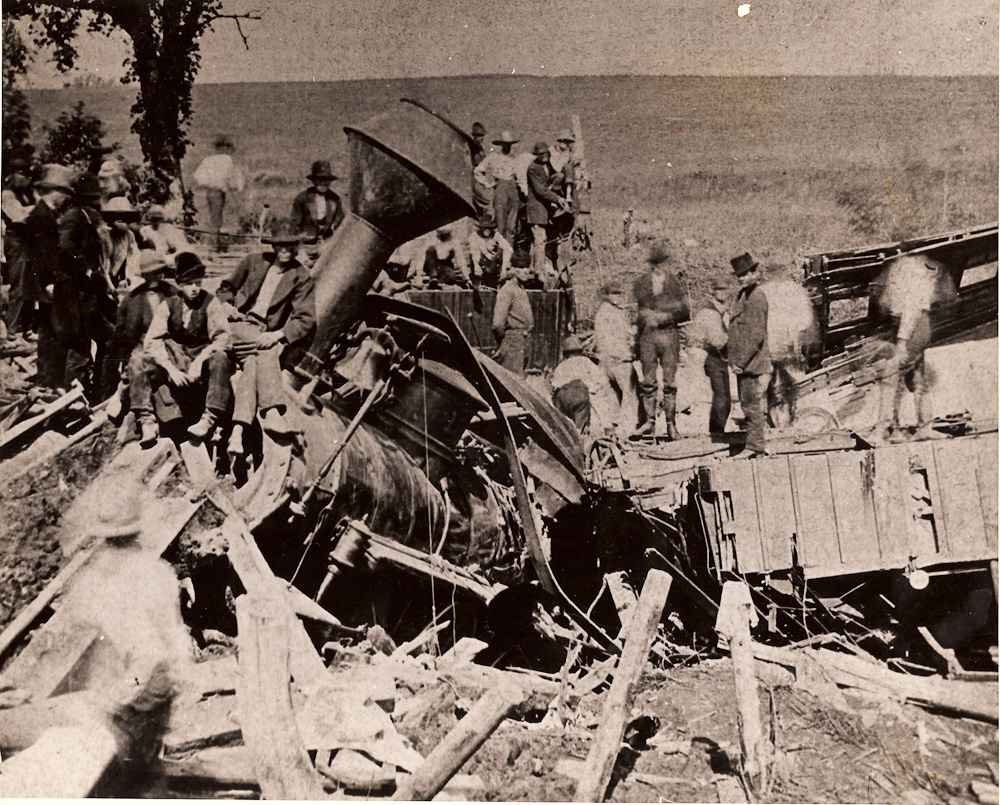
In 1877 this whole area was flat. Really flat. Nothing but field–field and a small creek called Little Four Mile Creek. It may only be a small tributary of the larger Four Mile Creek–which, by the way, is significantly longer than four miles–but the Little Four Mile is big enough to seriously fuck up a train. Which is exactly what happened to a small Chicago & Rock Island express train at around 2:30 in the morning of the 28th day of August, 1877.

It was raining that morning. Had been for a while. Raining hard and at two-thirty in the morning it had to be so very dark. I can sort of picture it in my mind–the train running along at speed, the metronomic clatter of the engine, nothing for the engineer to see, hurtling through that dark laminar landscape. He couldn’t possibly have seen that the heavy rain had flooded the tiny creek and undermined a culvert, collapsing the small bridge.
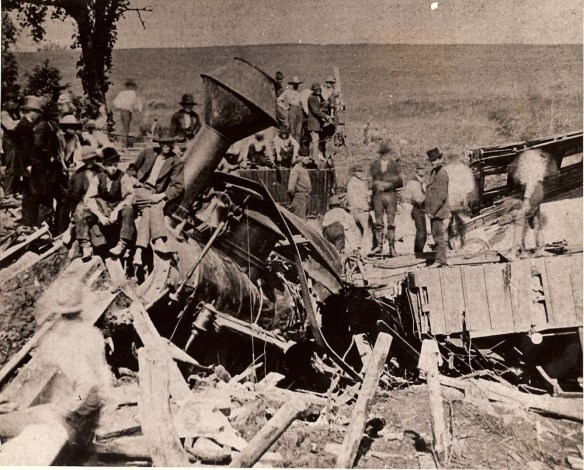
The engine was pulling a baggage car, three coaches, a Barnum & Bailey advertising car (along with a 13-man paste brigade–the people who spread out through the town pasting up posters advertising the coming of the circus), and at the very end–a sleeper car.

Everything but the sleeper went into the flooded creek.

Eighteen bodies were recovered that day. Two more were recovered later, having been carried downstream in the flood. Most of the passengers, fortunately, were in the sleeper car, which remained almost magically on the tracks. In a way, this disaster very likely prevented an even larger disaster. The next bridge–a little over a mile away, crossing the larger Four Mile Creek–had also washed out.

They built a temporary bridge the following day and the day after that the trains were back on schedule. A few days after that, they built a new permanent bridge over a reinforced culvert. The trains still run along those tracks, they still cross that bridge. The photograph above (shot from the bicycle bridge over the creek where the train wreck occurred) shows the ‘new’ bridge, though you can’t really see the creek below.

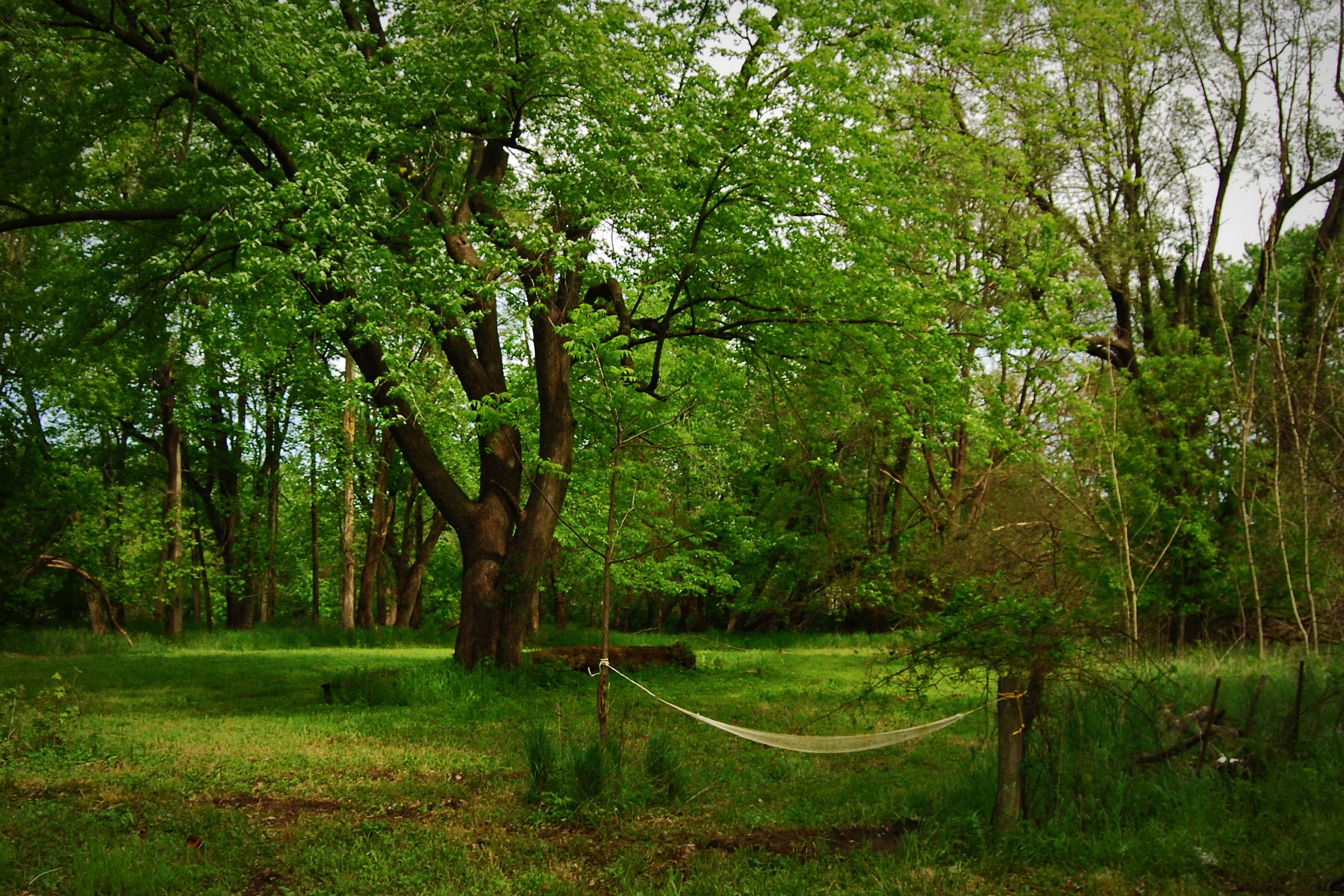
The next photograph, also taken from the bike bridge, shows the creek in the direction in which the bodies were carried away. It’s a pretty little creek, isn’t it. Frogs, minnows, lots of red-winged blackbirds. All very quiet, aside from the birds, all very still.

There’s a small plaque beside the bike path, and a bench where you can sit and rest and listen to the birds. You could probably scramble down to the creek itself and walk in it, if you didn’t mind first passing through a gauntlet of thorny bushes and stinging nettles. If you were diligent and determined, you could probably still find bits of wreckage.

I stayed there for maybe fifteen minutes, resting, drinking water, listening to the water in the creek, and to the squirrels bickering with the blackbirds, thinking about the twenty people who died that night 135 years ago, not more than fifteen yards from where I sat. I tried to imagine the last thing the engineer saw, the last thing he might have been thinking, barreling through the rain in the black Iowa night.

This is what writers do–construct a narrative out of the merest wisps of fact. In truth, the engineer almost certainly couldn’t see much of anything at all, and he likely wasn’t thinking about anything in particular. One moment he was just keeping the throttle company–all by himself in a rainy, horizonless darkness–and the next moment he was dead.

I don’t believe in ghosts or spirits. I don’t believe in any sort of afterlife. But I believe in the power of memory and imagination. And there’s something wonderful in the fact that after one hundred and thirty-five years, that engineer and his nineteen dead passengers and crew continue to exist in memory and imagination.


iron photographer is unforgiving

The Spanish arrived on the island of Ayiti in the 1490s (you’ve probably heard of Cristóbal Colón–aka: Christofer Columbus). They brought with them greed and infectious diseases; they left with gold and slaves. But one good thing came out of this tragic encounter.

The Spanish noted that the native Taino peoples slept in fishing nets suspended between trees or the posts of their bohio huts. The practice was not only more cool in the hot climate, it also protected them from snakes, biting ants, and an alarming variety of stinging insects that prowled on the ground. When Columbus returned to Spain, he brought along a number of these amaca, which proved to be useful aboard ship as well.

We call them hammocks now. This one is portable; it rolls up into a little globe about the size of a softball, fits handily in a bike bag and still leaves plenty of room for a paperback book or e-reader. When you’re out cycling, you never know when you’ll chance upon two vertical objects exactly the perfect hammock-distance apart. If that happens, you’re almost required to stop and stretch out in a fishing net and read a book.

On this occasion, though, the hammock is just a prop. Utata’s current Iron Photographer project requires us to take a landscape photograph that includes two things connected by a third thing. The hammock is that third thing.

Unhappily, the project also requires the colors to be inverted. In some instances, that can create a really interesting and provocative image. In this instance, it mostly just serves to enpurple the natural world.

Iron Photographer is unforgiving.

from the world of the batshit crazy

A couple times a week I visit a few extreme right wing conservative websites. I tell myself it’s because it’s important to try to understand people with whom you disagree–even if you disagree strongly. And I believe that’s true. But it’s also true that I visit those sites because they make me laugh. Sometimes they’re so wildly illogical that you have to wonder if they’re actually parody. Maybe some sort of performance art.

Sometimes, of course, those sites are just sad and pathetic. And sometimes there is so much hate and rage behind the posts that it’s a tad frightening. And then there are the times when they become so batshit crazy–so divorced from anything remotely resembling reality–that they generate a sort of out-of-body, hallucinatory experience.

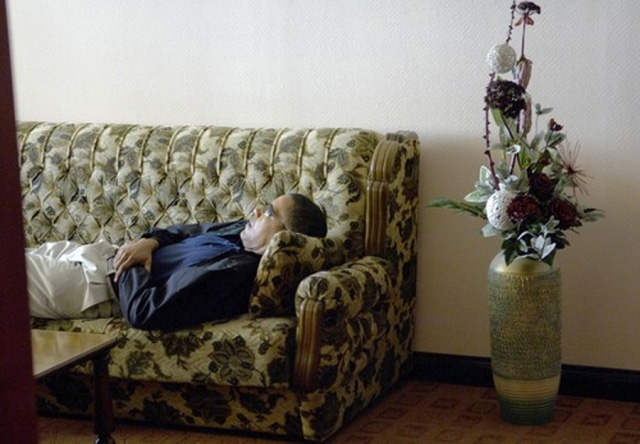
Today was one of those days. It all begins with a White House photograph showing President Barack Obama wearing a pair of glasses while napping on a sofa. But wait, you say, the president doesn’t wear glasses. So why is he wearing them? And why would he wear them when napping?

Because those aren’t just any old pair of glasses. No sir, no ma’am–according to a few right wing bloggers, those are the very glasses worn by Malcolm X on the day he was assassinated!

How did the president obtain those glasses?

From his mother, obviously. There is speculation (and seriously, I’m really not making any of this up) among some of the more lunatic right wing Obama-watchers that Malcolm X was actually the president’s biological father. If a person is capable of believing that, then it’s only a short walk down Loopy Street to believing Obama’s mother was present in the audience on the day Malcolm X was murdered. And if she was there, then…

…the pandemonium that ensued when Malcolm was shot dead on that stage could have left Stanley Ann Dunham ignored while the slain leader’s distraught wife and family members hurried to the hospital…. Did the President’s mother grab these glasses for safe keeping to give them to her son? Was she ignored, forgotten? Were these glasses all she could take away from that horrible scene?

If it’s possible, then it must be true! There’s no other logical explanation for the president to be wearing a pair of glasses while taking a nap! His mother, teenage lover Stanley Ann…unable to follow Malcolm to the hospital because of Malcolm’s wife and child, is left behind, grief-stricken and horrified. And then, almost as if by magic, there, amidst the hideous chaos, are his eyeglasses. His precious, signature, tragically broken eyeglasses. So of course she took them to give to her three year old son, because he’d need them in the future when he’d be napping as president. Any mother would do the same.

What…you want even MORE proof? Here it is:

When Malcolm was shot at the Audubon Ballroom, 21 February 1965, as usual, he was wearing his eyeglasses.

Yet when he was wheeled out, his eyeglasses were off.

Then –

No eyeglasses on Malcolm’s body at the wake.

No eyeglasses at the funeral.

Whatever happened to Malcolm X’s eyeglasses?

Now that we have the White House photo, above, it may not be a mystery after all.

Satisfied now? Malcolm X was Barack Obama’s biological father. How do we know that? Because despite the fact that there’s an unfortunate lack of evidence that Ann Dunham and Malcolm X were ever in the same town at the same time, he and President Obama sorta kinda look alike (I swear, I am NOT making this up). Malcolm X was assassinated and his glasses mysteriously disappeared. How do we know that? Because they’re not in a photograph of the crime scene, and any disappearance is mysterious by definition.

But since there’s now indisputable photographic evidence that non-eyeglass-wearing Obama is clearly wearing glasses while napping, and since he’s indisputably the love child of Malcolm X and since Malcolm X’s indisputable glasses are indisputably nowhere to be found, surely there can’t be any dispute. Those MUST be the glasses of Malcolm X.

Welcome to the world of the batshit crazy.

the evolutionary process

Well. I suppose it’s a good thing that Bosch believes in evolution. That certainly puts the company ahead of the entire field of Republican presidential candidates.

But perhaps this is a way to make evolution palatable to those Republicans? Maybe they’ll accept the science if it suggests women were created by god to do laundry—and evolution has made them fit to do it in heels.

iowa nice

Here’s the thing—I like Iowa. I really do. I was born here. It’s true that I’ve spent most of my life living elsewhere, but I’ve always had affection for the state and its people. Iowa is an odd place—not at all the way it’s portrayed in the news and entertainment media. But then, how many places are?

However, Iowa is afflicted by the Iowa Caucus—which has traditionally been the first contest of the U.S. presidential race. That means every four years presidential candidates swarm Iowa like spawning salmon. It also means every four years we have to endure the news media talking about Iowa like the entire state is comprised of ultra-religious corn-fed, cretinous hicks.

We certainly have some of those—but they’re not the majority. They’re not even a significant segment of the population. They’re just noisy and annoying, like those locusts that crawl out of the soil every thirteen years and make life miserable for a bit.

But overall, that’s just not Iowa. So I was delighted to see the following video become something of a hit on YouTube and elsewhere.

I like it. But he had to leave a lot out. Like the fact that the very first case heard by the Iowa Supreme Court was In Re the Matter of Ralph. Ralph was a slave owned by a man in Missouri. The Iowa court ruled that the moment Ralph set foot on Iowa territory, he became a free man. This was 1839—that’s 22 years before the U.S. Civil War.

And he didn’t mention that one of the U.S. Supreme Court’s most important free speech rulings was a result of Iowa high school students protesting the war in Viet Nam. In 1965 a group of students wore black armbands to school. They were abused by pro-war students (who were in the majority in 1965), insulted by their teachers, and expelled for refusing to remove their armbands. After their expulsion ended, they returned…without the armbands, but dressed entirely in black clothing.The Supreme Court ruled that students (and teachers too) do not “shed their constitutional rights at the school house gate.”

Which reminds me—Iowa is almost always at the top of the list when states are ranked by literacy. Nearly 70% of all Iowans own a library card. Iowans read a lot—and they’re not just reading the Bible.

I could go on. I could mention, for example, that when same-sex marriage came before the Iowa Supreme court, the judges ruled unanimously that it was unconstitutional to deny members of the same sex the right to marry. That’s right…unanimously. The fact is, Iowa is a pretty liberal state. Most Iowans are pretty open-minded. And they really are, for the most part, nice. Seriously. If you drive down the road and wave to the stranger in the oncoming car, they’ll wave back. And smile. It’s a little weird until you get used to it.

I’m in Iowa again, and it seems I’ll be here for the foreseeable future. But this is the first time in my life I haven’t felt a compelling need to be someplace else. I think I’ve grown into Iowa.

Addendum: Let’s not get carried away by the fact that Rick Santorum and Mitt Romney received the most support from Iowa Republican Caucus voters. There are more than 2,100,000 registered voters in Iowa, about evenly split among Democrats, Republicans and Independents (with a slight edge to Democrats). Santorum and Romney each received around thirty thousand votes out of a voter population of more than two million. It doesn’t mean Iowans are generally supportive of either of them.

thinking of this and that on st. stephen’s day

Today is St. Stephen’s Day, the 26th of December. All I know about Stephen is that he was stoned to death for blasphemy—which seems an unlikely entry on the résumé for a saint. I’m sure at one point I must have known who did the stoning and what the blasphemy was, but it all escapes me now. It couldn’t have been very spectacular blaspheming, though, if they turned the day after Christmas into his feast day.

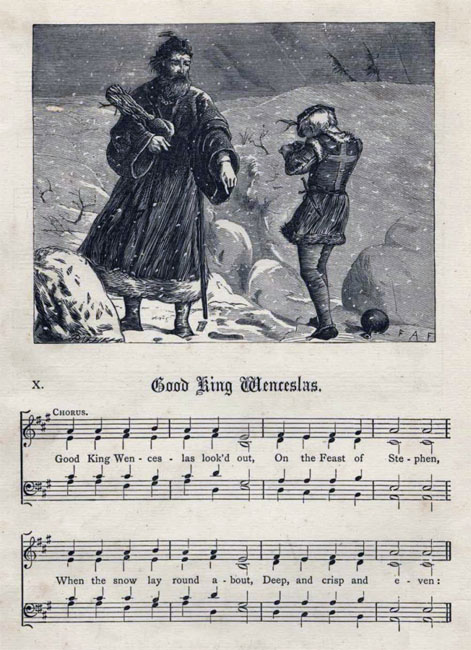
St. Stephen’s day is the day on which the events described in the Christmas carol about Good King Wenceslas took place. You know the carol—Wenceslas sees a ‘poor man’ out in the snow ‘gathering winter fuel.’ He has a page gather some meat, some wine and some pine logs (why waste good hardwoods on a peasant?) and ‘forth they went together’ to make sure the peasant didn’t go to bed hungry that night. I’ve no evidence to support this, but I’d bet my paycheck (if I had a paycheck) that the page carried the food items and the peasant ended up toting the pine logs. Wenceslas might have carried the corkscrew.

It wasn’t just a coincidence, by the way, that this happened on the Feast of Stephen (assuming, of course, the carol is based on an actual event—it’s not as if there’s anybody out there fact-checking Christmas carols). Christmas was the day set aside for exchanging gifts with equals; Stephen’s Day was for giving gifts to people who were below your social station. It’s the original re-gifting day.

Although he may have been good, Wenceslas was never really a king. He was merely the Duke of Bohemia—which isn’t a bad gig in itself, but it’s hardly in the same league as king. It wasn’t until after he died that Otto, the Holy Roman Emperor, granted Wenceslas the honorary title of rex justus—a ‘righteous king.’ Like St. Stephen, Duke Wenceslas was also a martyr. He was murdered by his brother Boleslav as he returned home from church one day. Anybody who’s ever had an older brother—especially who can do no wrong—will understand the impulse.

I suppose it could be said Wenceslas had the last laugh. After all, nobody ever wrote a carol about good king Boleslav. In fact, he is known in history as Boreslav the Cruel. I suppose murdering your brother is something of a disqualification when it comes to being selected as a subject for a Christmas carol. Still, my guess is that given a choice, Wenceslas would have preferred spending a few more years leading his page around Bohemia delivering foodstuffs to random peasants over having grubby school kids singing about him down the centuries during the holiday season.

Pretty good carol, though.