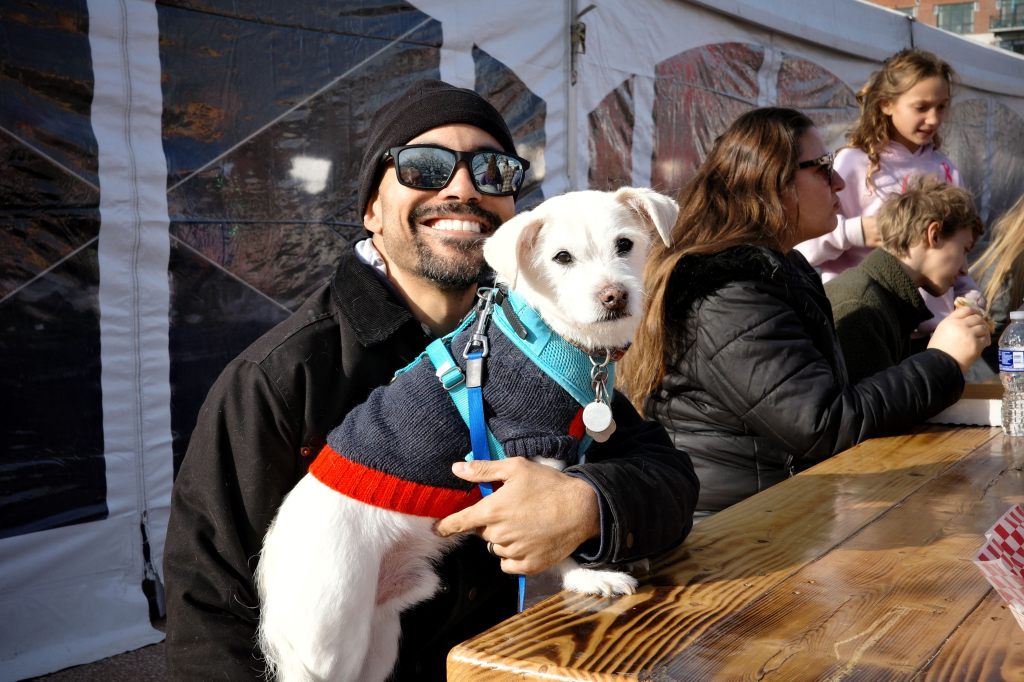
I’m at the Christkindlmarket and I see this guy and his dog sitting at a table. He’s holding the dog and the dog is leaning against him. I know it sounds ridiculous, but the moment I saw them I thought, “Madonna and child.” I blame all the Christmas stuff for that. I’m not a Christian, but I’m a fan of any holiday that’s (supposed to be) about love and sharing.
Anyway, I’ve got my little Ricoh GR3X in hand as I approach them, and the guy knows why I’m coming. I could see it on his face, the recognition that I wanted to photograph his dog. And it obviously pleased him. I barely got the words out…”Would you mind if I…?” before he said, “Sure.”
The dog, though, seemed a tad uncertain, so I slowed down. Instead of the close-up I’d intended, I stayed back a bit. Instead of shifting my position to isolate the guy and his dog from other people from the frame, I stayed still. Instead of shooting 3-4 frames, I took only one. I moved slowly to take the photo.
I said something like, “He’s a wee bit shy, isn’t he.” The guy said the dog was timid around other people, which is why he’d brought him to the Christkindlmarket and why he was holding him. He wanted the dog to feel safe and protected, but he also wanted him to get used to being around other people.
I didn’t even try to pet the dog, though I wanted to. I didn’t try to shoot more photos of them, though I very much wanted to. I figured the little guy was dealing with enough already.
In the end I said something like, “You’ve got yourself a little buddy.” He said, “I sure do.” And I walked away. But seeing them together lifted my spirits–which, given the world as it is today, was quite a feat. The obvious bond between them, the care the guy was taking with the dog, the trust the dog had in the guy — it was lovely, and I was weirdly proud of them both.
I could have taken a better photograph of them. They deserve a better photo. But it might have made the dog nervous, and no photo would be worth that.
So here’s me, larking about in alleys again. I’ve always had a thing for alleyways. I used to do this frequently, wandering through alleys, looking for stuff that might make an interesting photo. It eventually became a small photo project. I’ve written about how that project came into existence. But like all projects, eventually it came to an end. That was about a decade or so ago.
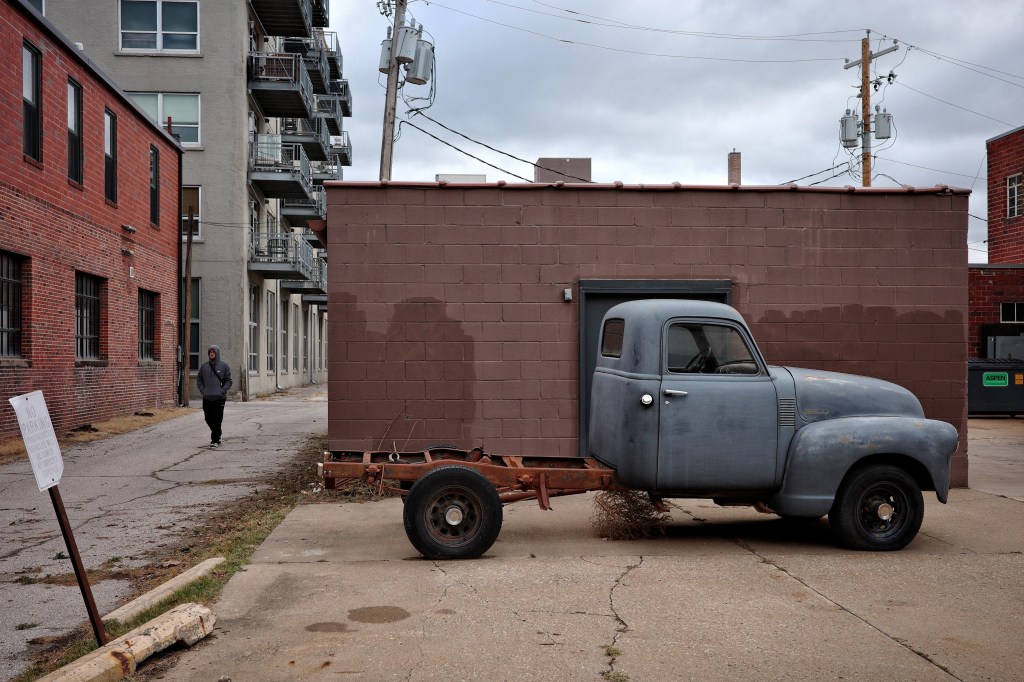
But yesterday I took a little walk. It was cold and cloudy, damp and dismal, and the light seemed fairly listless. I passed by an alley and thought, “What the hell, why not?” There’s almost always something worth photographing in an alley. And there’s always a lot of stuff that’s almost, but not quite, worth photographing. For example, an old, partially dismembered pickup.
When I spotted this unit, I was certain it had potential. It was a sort of blue-grey; I couldn’t tell if the color was a primer coat or the actual color of the truck. It didn’t matter. What mattered was that it was similar to the color of the sky. Again, that seemed like it ought to have potential. The truck also had a tumbleweed caught below its frame, which I thought might contribute something.
But, no. Nothing seemed to work. I looked at the truck from a distance, I looked at it close up, and while I kept seeing potential, I couldn’t see anything worth photographing. It didn’t help that it was parked next to a cinderblock structure that was painted an unfortunate tawny port color. Had the building been a different color, them maybe something might have worked. But it wasn’t. It was just blah.
I gave it a few minutes, trying to find an angle or an approach that appealed to me. I considered shooting it in monochrome, but even then it felt inert, bland, static. So I gave up and started to walk away. Sometimes the photo just isn’t there.
As I started back down the alley, I saw a guy approaching. He was also rather drab, dressed in grey and black. But he was moving—and, lawdy, his hoodie was almost the same color as the truck. I thought maybe…maybe…adding an active figure in the frame might make a photo of the truck work. So I turned around and headed back.
This is where years of shooting photos paid off. I had only a moment to compose the photo. I knew what I wanted. The truck, of course, but I also wanted that crooked sign on the left half of the frame; I wanted those buildings on the right side of the frame to give the image more depth; I wanted the transformers on the telephone poles along the top. Since I was shooting with a fixed focal length lens, I had to position myself in the right spot (rather than zoom in or out). A step forward, a step back, a step to the left or right—every step made a difference. A step back would have brought in the top of a telephone pole, but it would diminish the figure of the guy. He’d be too small in the frame. Easy decision.
I got the composition I wanted just a second or two before the guy arrived. I also knew I wanted to isolate him and his dark clothing against the light grey building backdrop. I knew I’d only get one chance. I was maybe a tenth of a second late. Not enough to matter, but still enough to make me wince. But still, I had my photo of the truck.
This morning, when I started reviewing yesterday’s photos, I realized this wasn’t actually a photo of the truck at all. It’s a photograph of the guy. The truck is, in effect, a MacGuffin. If you’re not familiar with the term, a MacGuffin is a movie device; it refers to an object or event that sets the plot and characters in motion but is essentially insignificant, unimportant, or irrelevant in itself. The truck that drew me in turned out to be largely unimportant.
I thought I was taking a photo of a truck. It turned out I was taking a photo of that guy. The guy—because he’s in the right clothing, in the right spot at the right moment—holds the photograph together. Without that guy, this would be a dull, static, uninteresting photo. With the guy, it becomes a photograph of a single moment in the long course of his life. The truck is just there; the photo is about some guy wandering by himself down an alley for purposes known only to himself.
I’m not a train guy. Not a railroad guy. I mean, sure, I like trains and railroads. I appreciate their historical significance. I like to hear their whistles and see them rumbling along the tracks. I absolutely love the photographs of O. Winston Link. But if somebody asked me if I’d like to go spend a day looking at trains, I’d say…well, I’d say yes. Not because I’m a train guy, but because I’ll go look at just about anything.
And that’s exactly what I did recently. I agreed to go on a family/friend train excursion that included historic trains, a small train museum, and a dining experience in an old train that traversed some fields and woods and a ridiculously narrow bridge over a rather high river valley. It wasn’t something I’d have chosen on my own, but I’m really glad I agreed. (Pro-tip: always agree to do almost everything, because you never know.) It was fun and, of course, I took a few photos.
I’d expected to enjoy the train ride, and I did. There was a period of time when I lived on the East coast and I frequently traveled by train–Boston, New York City, Washington, DC, Norfolk. I always enjoyed it. But there’s a radical difference between (what in the US passes for) ‘modern’ train travel and an historical train. The engine that pulled our dining cars wasn’t a steam engine or anything, but it was old and slow and pleasantly lazy. Which was just as well, since the tracks were also old and the train swayed a LOT more than any train I’d ever been on. Hell, at times it swayed more than a lot of boats I’ve been on. You don’t want a lot of swaying when you’re on a high trestle bridge over a river valley. Still, it was fun and the food was surprisingly good.
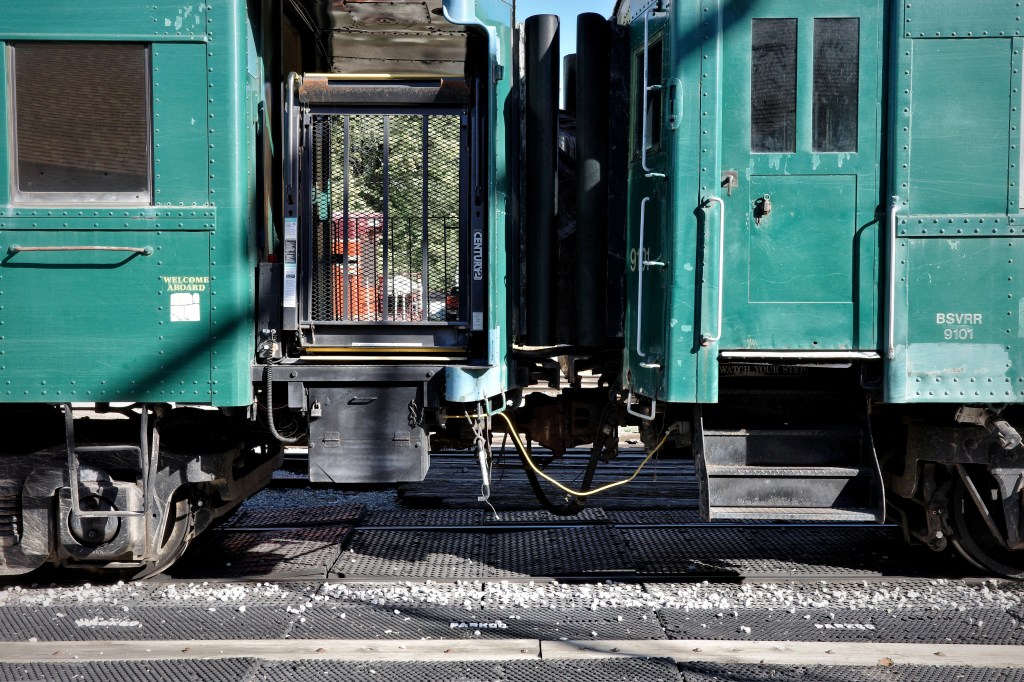
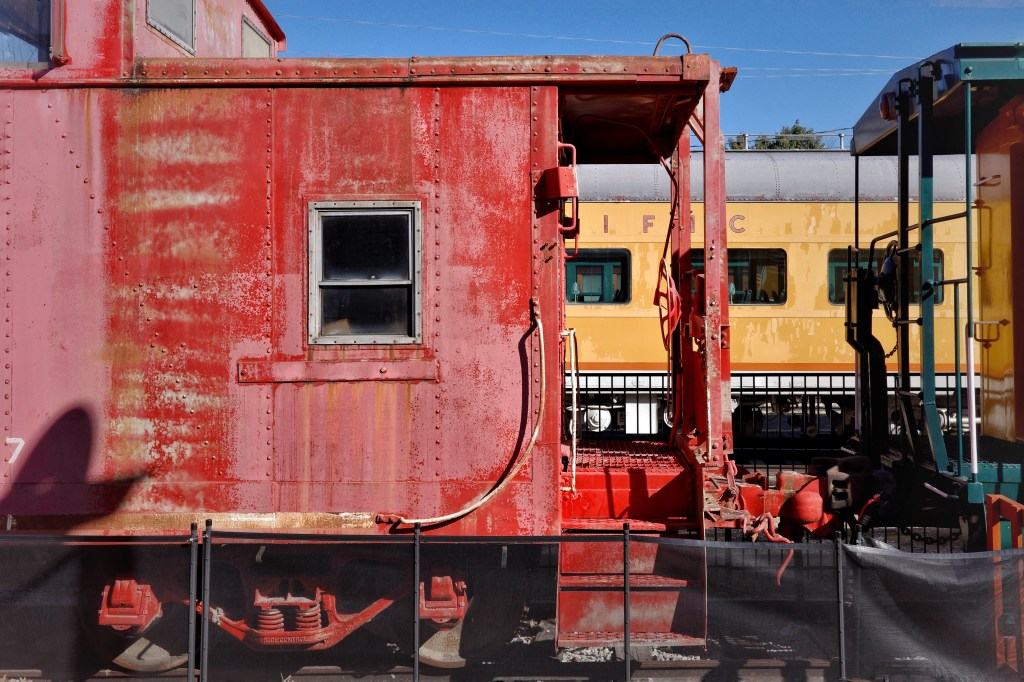
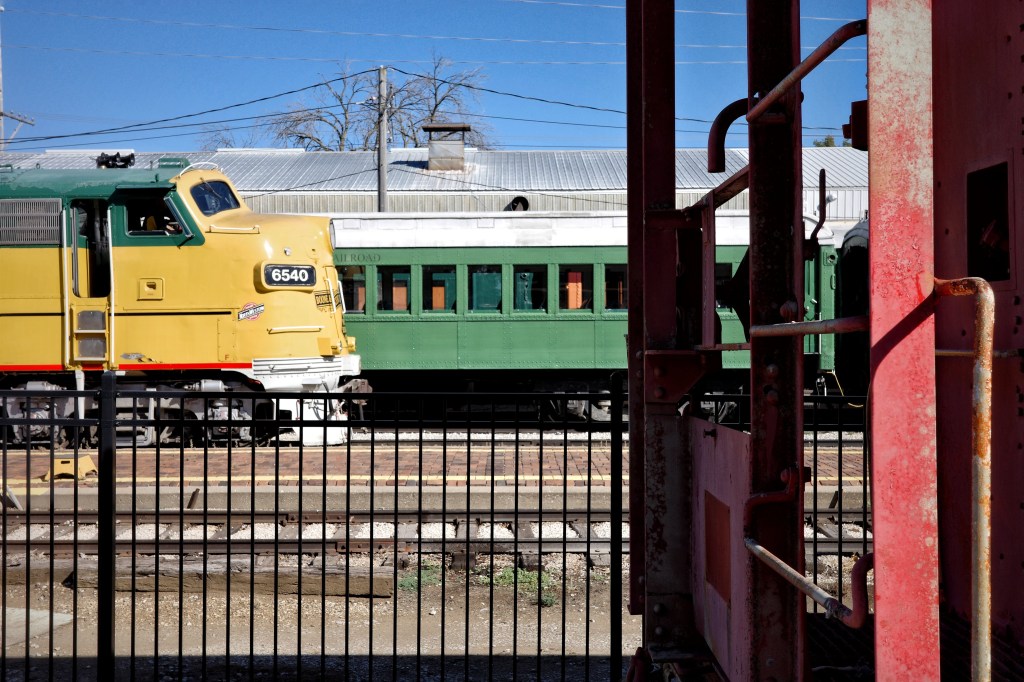
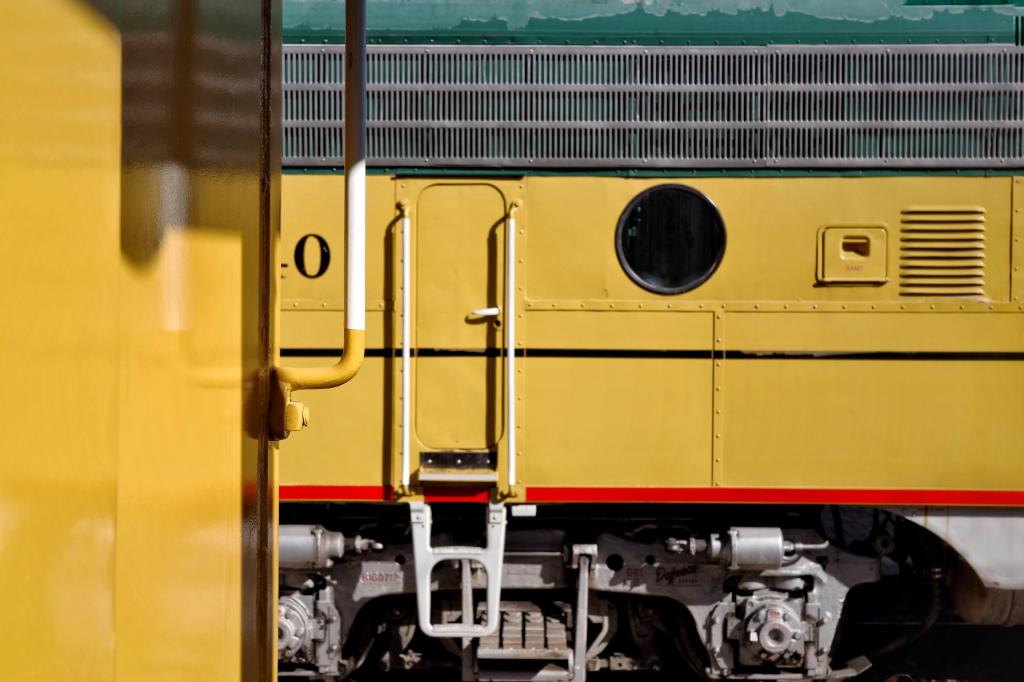
But the train ride and the meal were, for me, secondary. Hell, they were tertiary. I could have spent the entire day noodling around the train yard, looking at stuff I didn’t understand and appreciating it. BIG blocks of color. Gobs of dark, sexy shadow. Weirdly-shaped mechanical bits and bobs. And who knew trains had so many ladders? Everywhere you look, there’s a ladder. And different shapes of ladders, at that.
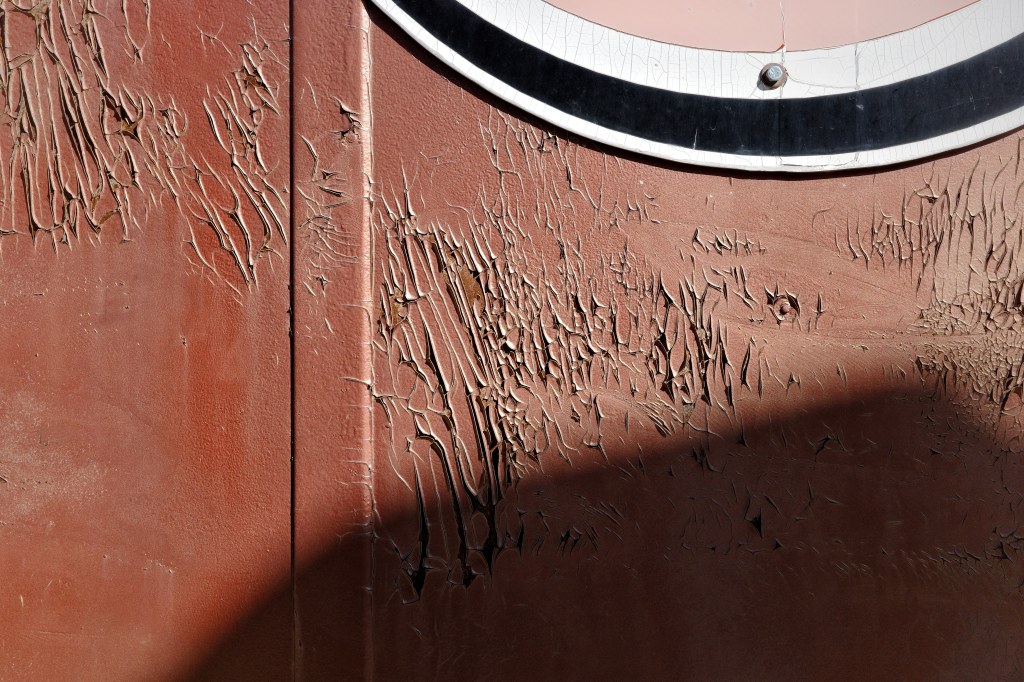
I hadn’t anticipated being fascinated by the shapes and forms, particularly of the works of the undercarriage (if that’s what it’s called). Everything was so massively sturdy. And I was completely captivated by the colors–the sun-faded greens, the bright yellows and oranges, the weathered reds and russet browns of the cars. I could have spent an hour just looking at the variety of textures and photographing the industrial weirdness of the undercarriage.
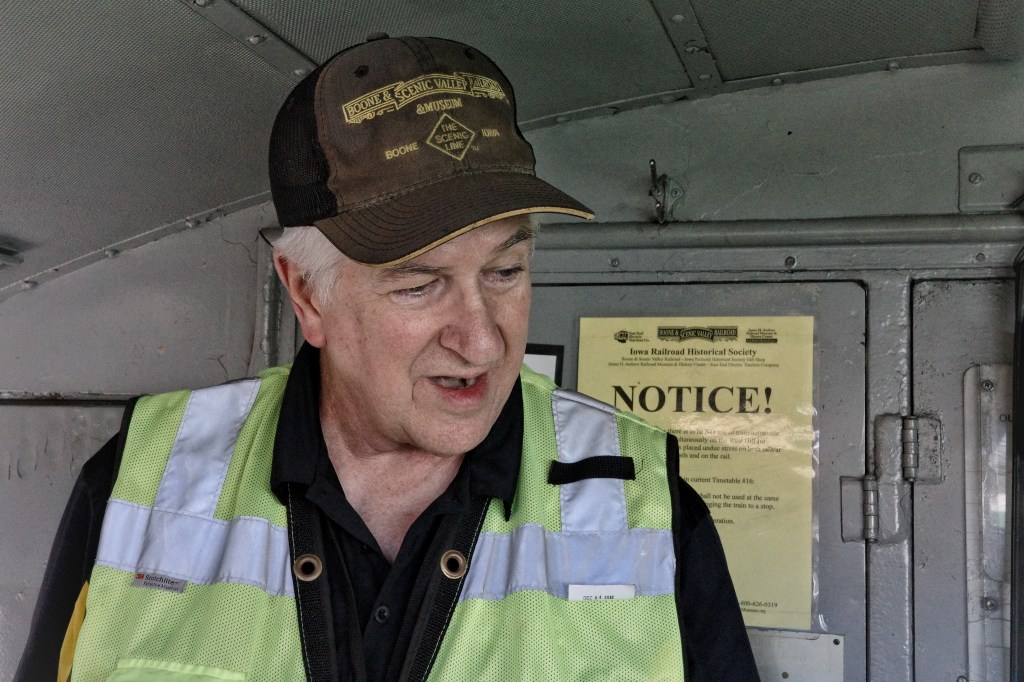
For once, I was more interested in the stuff than in the people, and I rather regret that because when I took a moment to actually talk with the people they were…well, I guess you could call them retirement-age train otaku. They were obsessive, but reserved until encouraged. One guy, with minimal encouragement, agreed to let my brother and I climb up an exterior ladder into the engineer’s cockpit (if that’s what it’s called). I don’t think it was actually prohibited, but it was certainly not part of the routine. Once we got up there, he explained how the engine, which had been built in 1958, had been retired from some Canadian railroad. He rattled off the specifications of the engine, and where it fit in the evolution of train engines. I suspect he’d have told us the entire life history of that particular engine, but folks were waiting for us and we had to leave.
I actually regretted leaving the train yard. But not everybody shares my interest in weathered paint and arcane mechanical whatsits, so I left without complaint. Now I find myself with a metric ton of train-related photographs, and while I’m hesitant to impose them on the unsuspecting Intertubes, I’m afraid you’re going to see more train stuff on my social media. Of course, I won’t be able to identify what’s IN the photos. You’ll have to find a retirement-age train otaku for that.
Strangest thing. I’ve been shooting photos since about the Triassic period and in all that time I very rarely shot photos in portrait orientation. Well, I mean, except when I was shooting actual portraits, of course. Landscape orientation has always seemed more natural and organic to me.
But since I’ve been using this Ricoh GR3X, I find myself shooting more shots in portrait style. I really can’t explain it. Is it because the camera is so small and light that I’m more willing to turn it on its side? That doesn’t make much sense to me, because I tend to pre-visualize almost all of my shots. I generally ‘see’ them before I shoot them. So why would the camera matter? Maybe it’s the fixed lens? I don’t know.
Or maybe I’m just ‘seeing’ more portrait-oriented shots? Maybe it’s just a coincidence that I’ve started doing that shortly after picking up a new camera? That seems improbable too. Doesn’t it?
Another thing. I’m not entirely sure this is true, but it seems like when I shoot something in portrait orientation, I pay closer attention to the edges of the frame. I like to think I do that with most shots, but I find myself actively thinking about the edges when I’m shooting in portrait. Maybe that’s just because I’m not used to it? Maybe I do it so automatically in landscape orientation that I just don’t notice it as much? That seems possible.
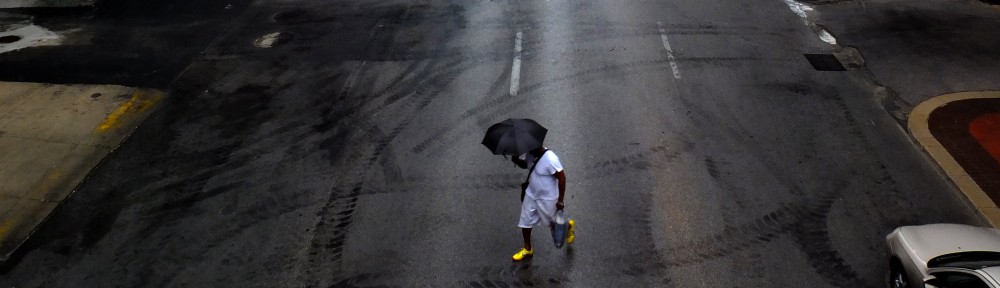
Take this photo, for example. I wanted that tiny bit of chimney in the upper right. And that sliver of the window frame on the left side. And along the bottom, that white line of the parking strip and the blob of shadow from a parked car. I wanted those things, but I didn’t want very much of them. Which, because the GR3 has a fixed lens, meant stepping forward just an inch or two, then stepping back half an inch. It meant doing the goddamn hokey-pokey in the middle of the street until I had it just right.
When I got home and downloaded the photos, I noticed that of the 24 photos I shot during that brief photo-walk, 7 of them were in portrait orientation. Seven. Almost a third of the photos. I’ve never in my life done anything like that.
It doesn’t bother me. It’s just a bit of a shock. Has this happened to anybody else? Have you suddenly found yourself shooting in a different orientation? Or have I maybe had a stroke and just failed to notice it? Maybe it’s a tumor. I don’t know. All I know is that it’s weird.
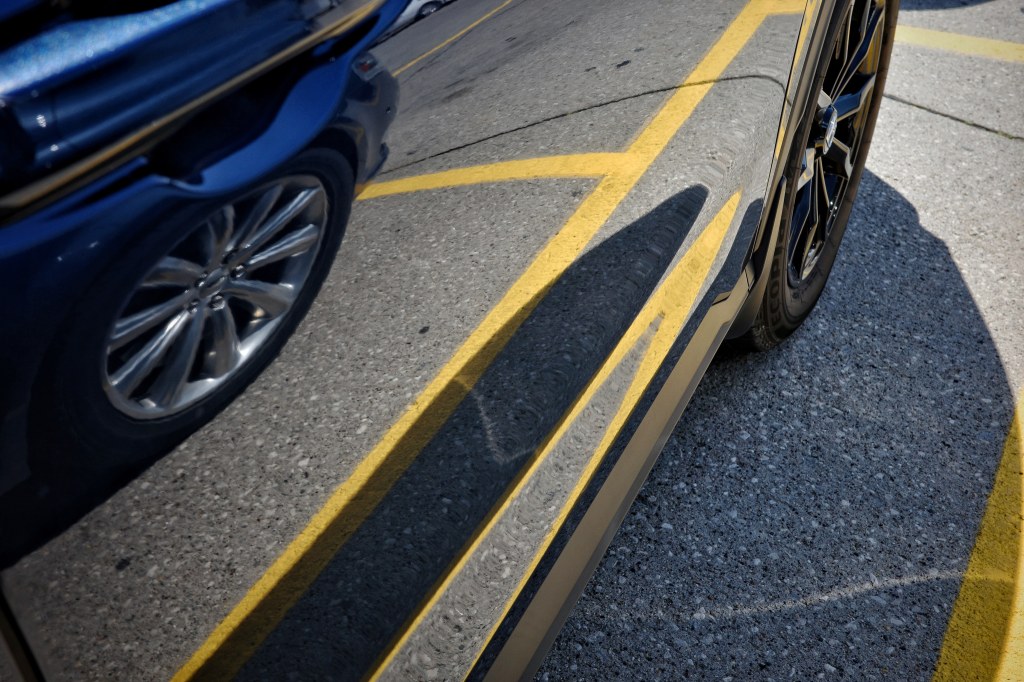
I’m an absolute pain-in-the-ass to run errands with. Why? Because I have a tendency to get distracted by stuff I see. Random stuff. I’m talking abstract lines and shadows and shapes and colors, stuff that usually gets lost in the passing clutter of everyday life. Stuff that, when it’s isolated within a frame, becomes visually interesting (to me, at least). Like, for example, some newly painted yellow parking lines reflected off a car door.
We’d just bought a few groceries and I’d just put the bag in the back seat when I saw the reflection. I stood there for a moment, sort of arranging it in my head. In the past, I’d have just admired it, then got in the car. But now I have an actual camera that fits in my pocket. So now I have this photograph.
It’s just a flash of light, shadow, line, and color that likely won’t appeal to anybody but me. But this is how I go through the world, seeing stuff like this. And since I now own a little Ricoh GR3X, I can photograph the world the way I see it. Sure, I could have taken a similar photo with my cellphone. But it’s not the same. With an actual camera you have more control over the exposure.
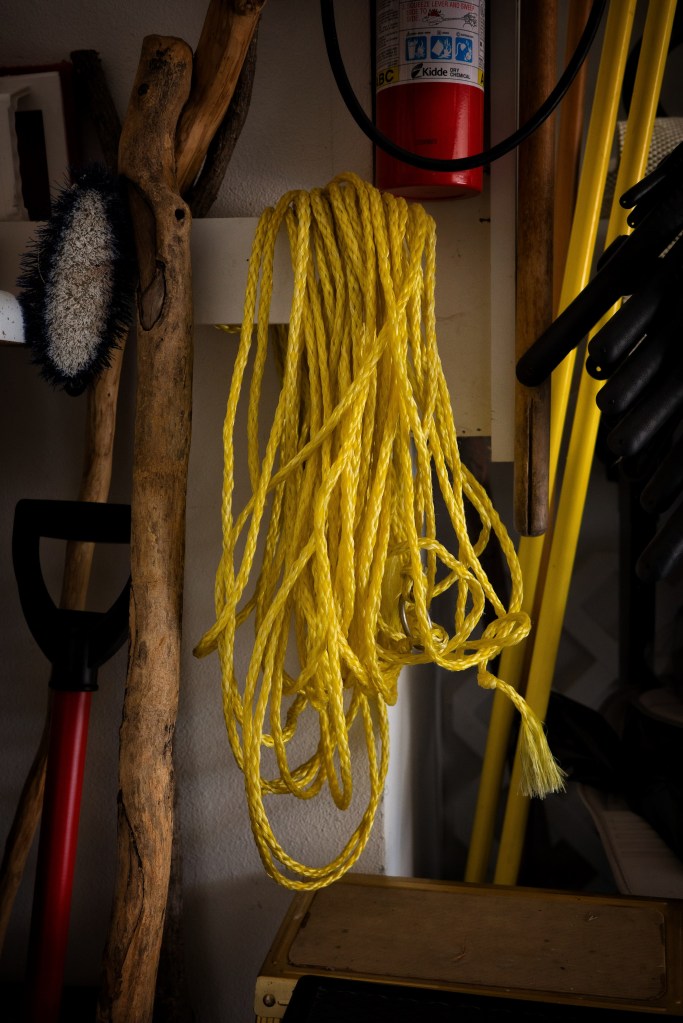
I also use the GR3X to take ‘normal’ photographs, of course. The usual landscapes, urbanscapes, street images, New Topo stuff (which counts as ‘normal’ for me). But almost every day there’s some weird little visual thing that will captivate me enough to stare at for a moment, but not enough to go fetch a camera. Having a camera in my pocket comes in handy at these moments. You know…in case I see a bit of sunlight illuminating a coil of yellow polypropylene rope hanging in the garage.
The yellow rope alone would have been enough. But the red of the fire extinguisher almost exactly matched the red of the walking stick. You can explain that to people, but without the photograph they probably won’t see it. They may not see it even with the photograph. But that’s okay.
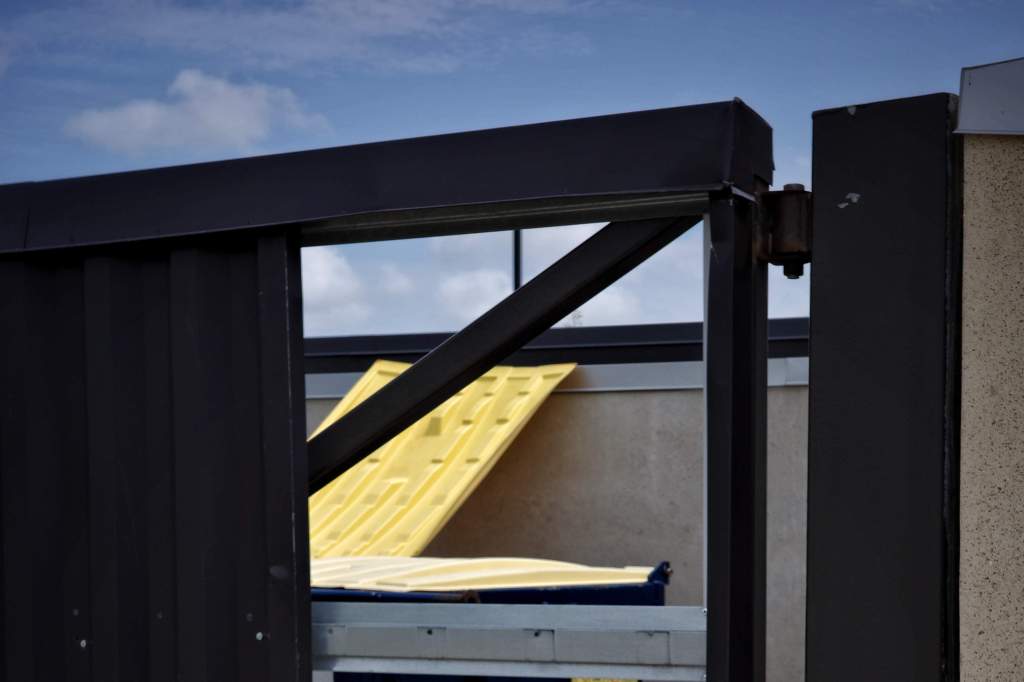
My friends and family are ridiculously patient with me when this sort of thing happens. “What are you doing? Why have you stopped?” “The dumpsters have yellow lids.” “Yellow lids.” “One of them is open and the yellow is brighter. And the clouds.” “I’ll wait in the car.” It’s really a wonder they don’t stab me.
There’s an old photographer’s aphorism: the best camera is the one you have with you. I suppose at some point I’ll get over my infatuation with this camera and I’ll stop carrying it with me all the time. But right now, it’s just part of my leaving-the-house ritual. I grab my keys, my wallet, my phone, and my Ricoh GR3X before I walk out the door.
There are two benefits to this. First, I’m shooting more photographs and shooting them more thoughtfully. Second, carrying this camera everywhere has impressed upon me how very tolerant folks are of my eccentricities. It reminds me that I’m a very lucky guy. It reminds me to appreciate the people around me even more. How many cameras can do that?
EDITORIAL NOTE: Okay, I just now noticed that the predominant color in all three of these photos is yellow. Is that weird? It seems weird. But now I have to change the title to reflect that.
I have a complicated history with Instagram. I downloaded the app and joined 11 years ago today, on 21 July, 2013. I did it under a pseudonym–Knuckles Dobrovic–because, like every good photographer I knew, I assumed Instagram was trash and I didn’t want to be associated with it. As I wrote at the time,
We sneered at Instagram for being a cheap, easy, lazy way to turn crappy photos into images that look artsy. Not ‘artful’ or ‘artistic’ but artsy. We sneered at it because the learning curve for using Instagram is — well, it’s hardly a curve at all. It’s almost a straight line. You shoot a photo with your cell phone, you flip through a couple dozen preset filters until you find one you like, tap to apply it, and hey bingo, you have yourself an artsy photo of your drunken friends at a tacky Chinese restaurant.
I hadn’t actually looked at Instagram; I was just operating on the assumption it was trash. I had to join it in order to confirm my assumption. And hey, I was right. It was, in fact, trash. It still is trash, mostly. But eleven years ago to my surprise, I also found a healthy dose of really fine photography. All sorts of photography, from street work to portraiture to landscape to editorial work to fashion photography. There was (and still is) solid work to be found on Instagram.
I used the Knuckles Dobrovic account mainly to explore IG. But I also felt an obligation to participate, so I used it as a platform for a hastily cobbled together project. After a few months, I decided to more fully embrace IG; I created a second account under my own name. Originally, the account was devoted to square format monochrome photos. Now, of course, it’s my main IG account for all types of photography.
I continued to use the Knuckles account as a platform for random photo projects (for anybody interested, I’ll include a list and a description of those projects in an addendum at the end of this post). The last Knuckles project ended in April of 2023. I haven’t posted anything under the Knuckles account since then.
Until today. My IG anniversary. I’m starting my 8th Knuckles project. Appropriately, it’s going to be pretty similar to how I began my personal IG account. I’ve always had four simple rules for a Knuckles Dobrovic project.
It’s got to be simple (which means I won’t have to do a lot of planning or a lot of post-processing).
It’s got to be organic to my life (which means it’s something I can photograph during the course of an ordinary day — whatever that is).
It’s got to have at least one intellectual component (which is more accurately described as a pretentious bullshit element).
It’s got to be able to keep my interest over time.
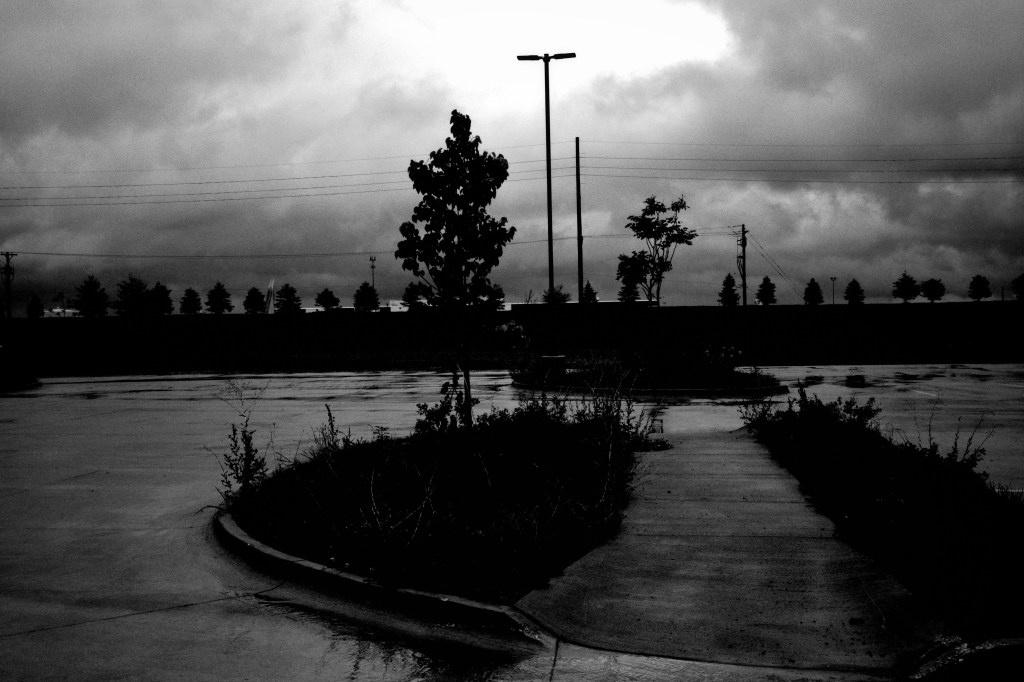
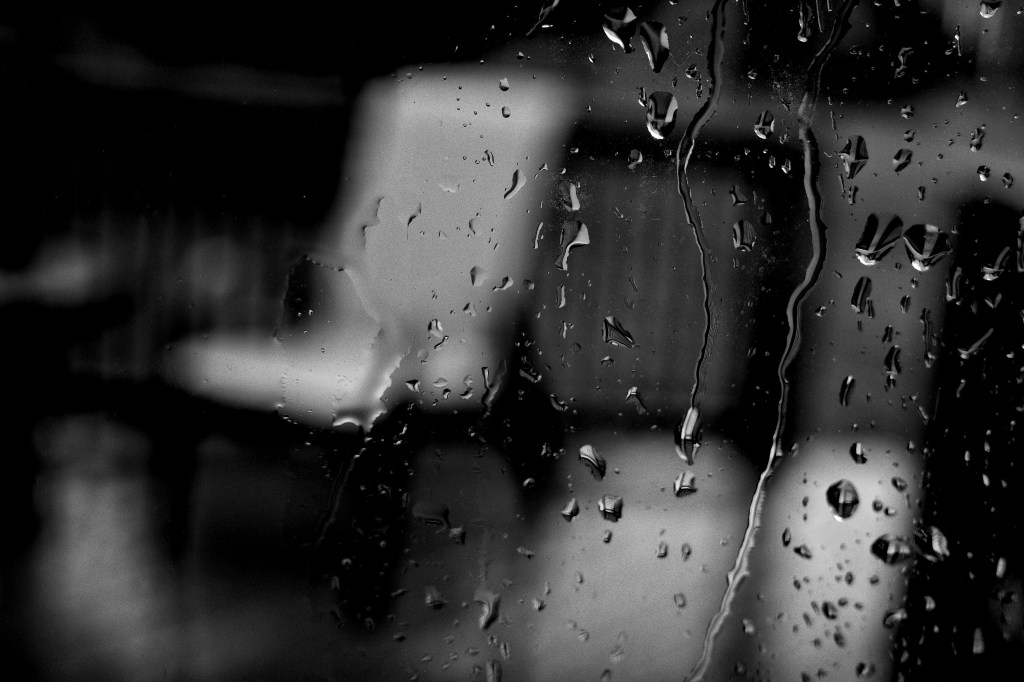
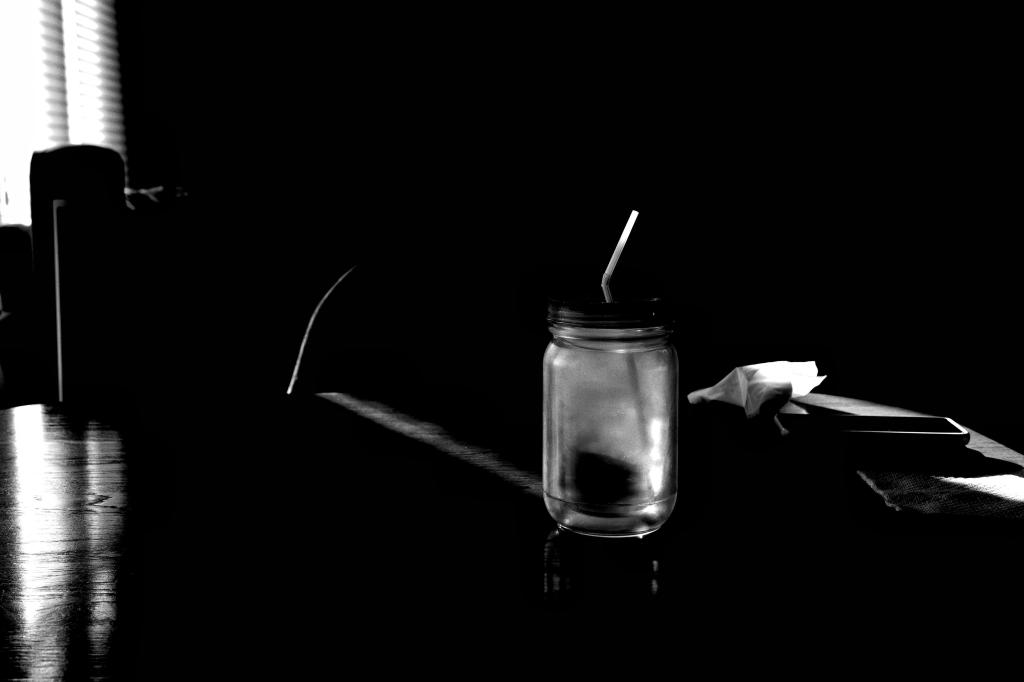
So here we go. Simple: high contrast monochrome, which is made easy with my new Ricoh GR3X camera. Organic to my life: my normal flâneur walk-about style plus whatever I happen to see that catches my interest. Pretentious Bullshit Element: my ongoing fascination with the Japanese Provoke-style photography, which is NOT how I normally see the world. Keeping my interest: Well, yeah. I’ve played around with this style of photography before and I see no reason why I’ll ever stop. At some point, I may feel the need to start a 9th Knuckles project, but until then…well.
ADDENDUM: Previous Knuckles Dobrovic projects. Things on a Table — I put a thing on a table and photographed it.
My Feet on the Earth — I took walks, stopping periodically to photograph my feet. I selected two or three of the images during a walk and created multiple exposure images.
One Hundred Appropriated Google Street Views — This was sort of an homage to Hiroshige’s ‘One Hundred Famous View of Edo’. While playing the online game GeoGuessr (which involves finding a random location based on Google Street View), I made screen captures of interesting vistas. I converted those screen grabs into square black & white images.
Slightly Dislocated — During the enforced isolation of the pandemic, I shot square format photos during my solo walks or masked errands. I diddled with the color a wee bit, digitally sliced the image in thirds, then re-arranged the pieces.
Are Bure Bampot — I’d been playing Geoguessr again, and during a break I read something about Daido Moriyama, the godfather of a photographic style called are bure bokeh, which roughly translates as “rough, coarse/crude, out of focus.” That same afternoon, on Twitter, a Scots acquaintance referred to somebody as ‘a total bampot,’ which I was told means “an idiot, a foolish person, a nutcase”. For reasons I can’t explain, the phrase are bure bampot came to me, and I decided to follow through on it. As before, I made Google Street View screen captures of scenes and locations in Scotland. This time I modified them using the are bure bokeh style.
Geoguesser Bus Stops — A bus is the most democratic form of public transport. They’re most commonly used by the poor and working classes, but the bus stops for everybody. A bus network is fundamentally simple: a series of designated routes with consistent designated arrival/departure times and stable designated boarding locations with predetermined fees. It’s a predictable, reliable, efficient dynamical transportation system in which bus stops act as fixed point attractors. Bus stops are ubiquitous; they’re everywhere because a bus network is socially elastic–the design can be stretched to fit almost any community anywhere in the world. Bus stops are both local and global.
A few months ago–October/November of last year–I got sucked back into the Cameraverse. I’d pretty much abandoned cameras (cameras, not photography) in favor of my phone. My phone was convenient, did a fine job, and had the massive advantage of always being with me. But my hands began to miss the feel of a camera in them.
That’s only partly a metaphor. Shooting with a phone and shooting with a camera are two very different tactile experiences. I felt a strong desire to pick up an actual, no-shit, physical camera and go shoot photos. I resurrected my 12-year-old Fujifilm X10 because it was 1) a real camera and 2) it was small. I flirted a bit with another larger Fujifilm camera, but it soon became clear to me that, for a variety of reasons, I don’t enjoy larger cameras.
With a new camera, you photograph whatever is at hand.
So I began to noodle around the InterTubes to see what was out there in the Small Camera World. That introduced me to the Cult of Ricoh. I DO NOT do cults. I resist cults. Cults are bullshit. But after enough exposure to the Ricoh GR3 series, I was ready to shave my head, shake a tambourine, and buy one of the wee bastards. Except I couldn’t find one. Seriously. The problem is/was the Ricoh GR3 series is so popular, they’re on continuous back-order everywhere.
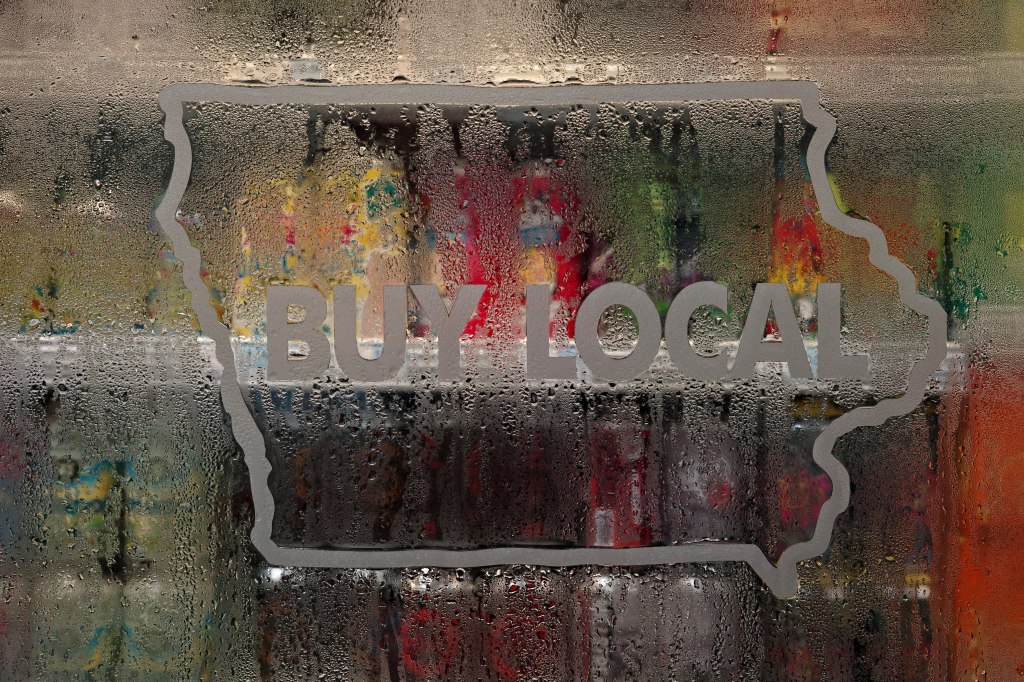
Buy Local
Persistence paid off, and four days ago I was able to unbox a brand new Ricoh GR3x. Here are three inescapable things about the Ricoh GR3 series: 1) They’re small. Really small. I kept hearing them described as ‘pocketable,’ which I assumed was bullshit. It’s not. You can actually tote the thing around in your pants pocket. Regular pants, not baggy cargo pants. I’ve no idea where women carry them, since fashion Nazis have deprived women of real pockets, but lawdy, the camera is small. 2) They’re quick. That photo above? Six seconds. Saw the condensation on the refrigerated beer door, pulled the camera out of my pants pocket, composed and shot the photo with one hand, put the camera back in my pocket. Six fucking seconds. It’s not a great photo, but lawdy. I felt like a gunslinger. 3) They’re easily customizable, if that’s a word. Almost every button on the camera (most of which are accessible when shooting with one hand) can be assigned almost any function. Which won’t mean much to anybody who isn’t a photographer, but trust me, that’s a HUGE deal.
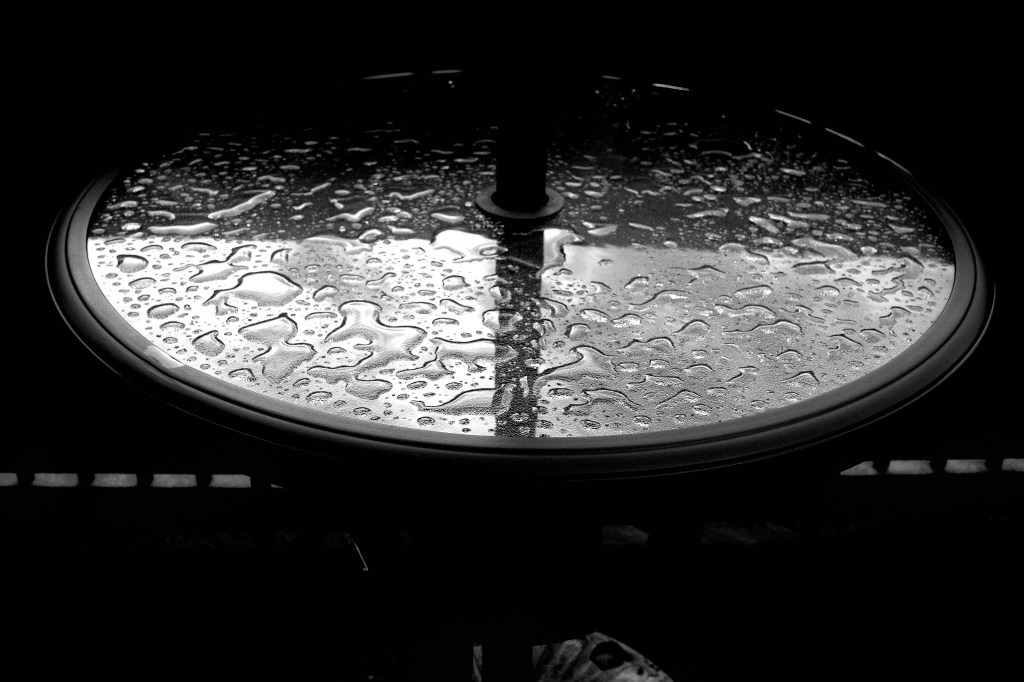
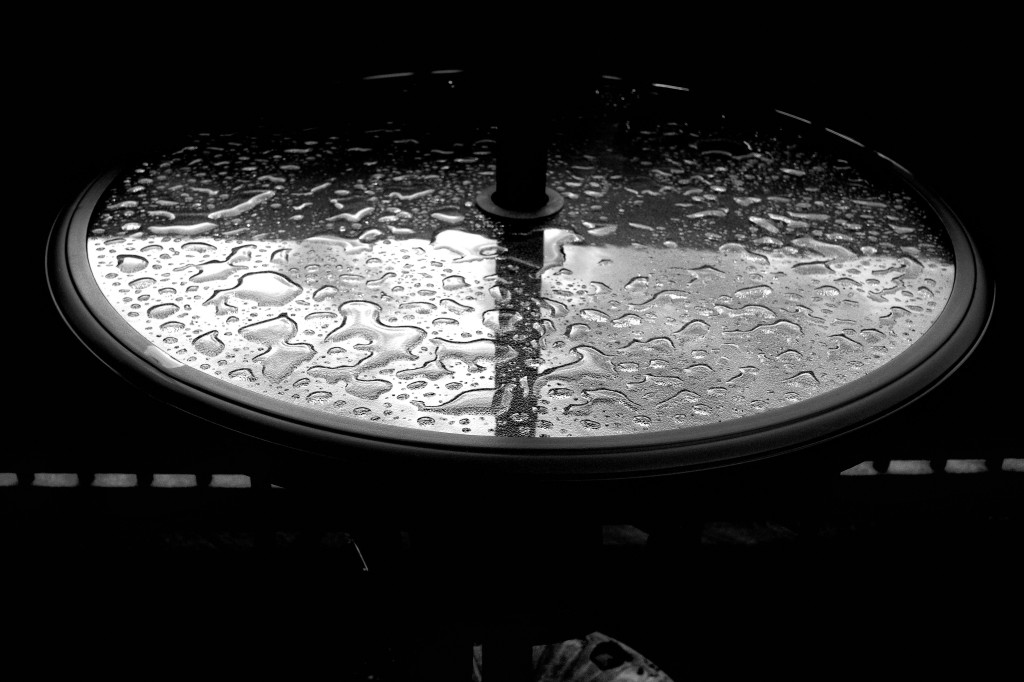
High contrast monochrome — water on a table.
It allows you to experiment. Hell, it almost demands you experiment. During a break in the rain on my first day I shot the photo above. It’s just rainwater organizing itself on a glass-topped patio table, but it has me thinking of a possible new Knuckles Dobrovic project–something about water in its various forms (as a liquid, as a solid, as a vapor, etc) done in high contrast black-and-white. I’ve no idea if it’s a viable project, or if I’ll follow through on it, but the thing is this camera has me thinking about projects again.
The problem? The learning curve. Oh, you can take decent photos almost immediately (as you can see here). But there are SO MANY ways to set up the camera to be responsive to your individual needs/wants, that I expect it’ll take me a couple of months of experimentation. Messing about with different set-ups, trying new ways of arranging things, establishing different photographic profiles for different subjects.
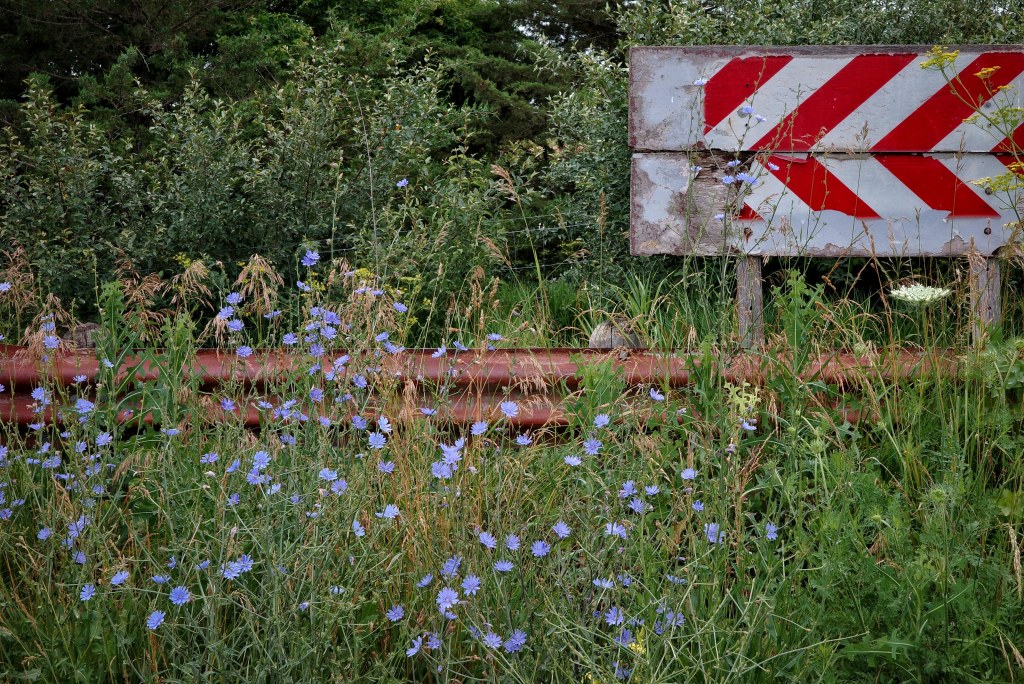
Chicory
Of the four days I’ve had the camera, two were rainy and stormy, one was savagely hot under a Gibsonesque dead channel sky. A bit of sunshine…even the teensiest bit, nicking through the gloomy clouds…would have done wonders for the photo above. The blue of the chicory was so lovely. But you get what you get.
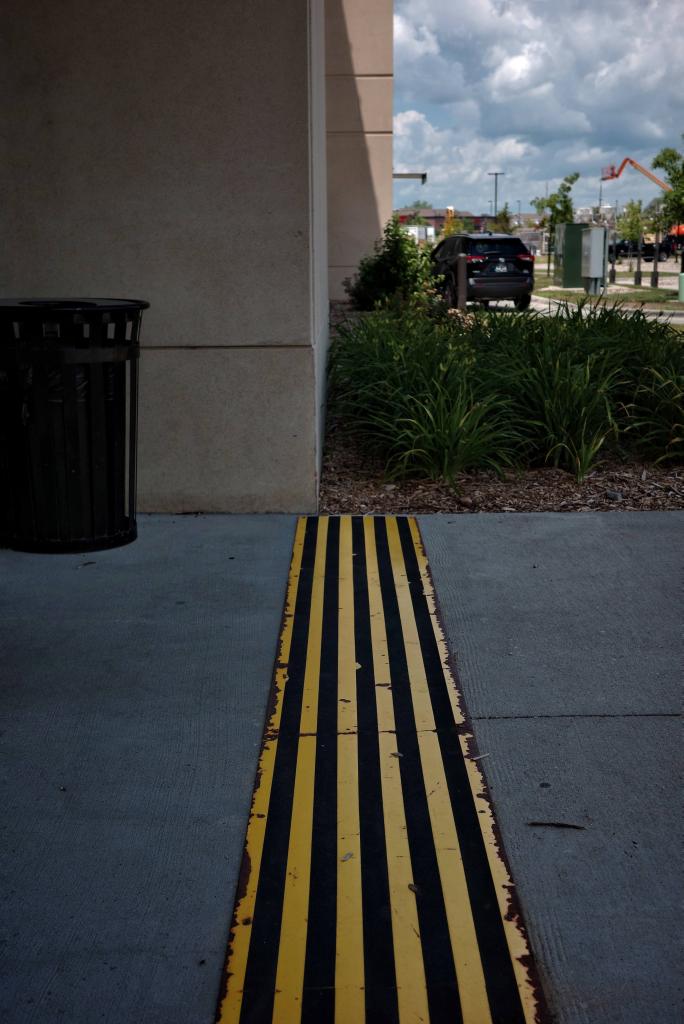
This camera will, I think, allow me to take advantage of what I get. Yesterday what I got was yellow stripes outside the library exit. I hesitated for just a few seconds, one hand full with a heavy book, the other allowed me to dig the Ricoh out of my pocket, shoot this quickly, and be on my way. (And here’s another thing: I almost never shoot in portrait format, but there’s something about the ergonomics of the GR3 that makes you want to shoot that way. I don’t understand it, but there it is.)
Stopped by the library, shot a photo.
I’ve shot a total of 48 photos in these four days. Forty-eight photos, and I think I’m in love. Because this is the first camera that feels like it was designed to shoot the way I see. It’s unobtrusive, it’s fast, it’s easy to shoot with one hand AND at the same time it gives you a LOT of almost immediate control over how the photo will look. All of the elements of exposure–ISO, shutter speed, aperture–all right there for your thumb and index finger. It’s perfect for shooting fast and loose and from the hip. That’s why this camera is a favorite of street shooters.
But that’s not me. I’m not a spray & pray shooter; I tend to compose a photo quickly, but deliberately. I think this wee bugger will give me some of the speed of a street shooter while still letting me make important exposure decisions. It’ll take me a while to get proficient with it, but lawdy.
Okay, first? There be SPOILERS here. If you want to see the Alex Garland film Civil War with innocent eyes, then DON’T READ THIS.
Second, Civil War is NOT a movie about how the United States split up into various factions. In fact, you can basically ignore the underlying premise of the story. It’s just not very important. Well, it’s not important to the story. Sure, it’s weird as fuck that California and Texas have somehow joined together to overthrow the fascist government of the United States (and even weirder that–and I swear I’m NOT making this up–they are supported by the armed forces of Florida), but none of that really matters. It could have been Wakanda and Ruritania teaming up to fight against Fredonia and the story would be the same.
Because this is a movie about two journalists and two news photographers covering a story. That’s basically it. They don’t take any moral or political stance; they’re simply documenting and reporting what they see. And what they see is pretty fucking awful.
It’s also a sort of road movie. Instead of a traditional plot, this movie is a series of related vignettes. As the four make their way from New York City to Washington, DC, they encounter a series of deeply localized situations. Here’s a gas station controlled by a few guys who maybe belong to some sort of community militia, there’s a town where life goes on without any apparent awareness that a civil war is taking place (until you notice the snipers on a rooftop), and over there are some uniformed sociopaths quietly filling a mass grave.
Obviously, the four characters are affected by these scenarios. The two journalists–one a sort of adrenaline junkie, the other an older obese man at the end of his career–are an important part of the story, but they’re essentially supporting roles. The ‘stars’ of the movie are the photographers. The journalists just have to observe and report; the photographers have to get the photos, which requires them to expose themselves to the action.
This was the aspect of the film I was most interested in. Unlike a lot of movies in which an actor pretends to be a photographer, Kirsten Dunst and Cailee Spaeny clearly knew how to hold a camera. While I’m skeptical that a photographer–even a rookie–would rely on a 1980s-era Nikon FE2 film camera (without a motor drive, no less) in a modern combat situation, I wasn’t particularly troubled by it. After all, the FE2 was Don McCullin’s camera of choice in Vietnam, so I assume that choice was no accident. Kirsten Dunst’s more modern Sony A7 camera bodies made a lot more sense, although I’m not convinced an experienced conflict photographer would be running around during close quarters combat toting a camera with a massive and highly visible 70-200mm zoom lens.
But overall, both actors looked natural using their cameras. There was no sense that the cameras were just being treated as props. And I have to say, I got a kick out of the fact that Kirsten Dunst (like me) has a dominant left eye–which is sort of inconvenient for a photographer.
I was especially pleased when the film referenced Lee Miller, one of the pioneering women photojournalists during World War 2. And doubly pleased by a brief early scene that was (intentionally, I hope) a callback to Miller. The scene shows Kirsten Dunst in a bathtub, which I found was reminiscent of the famous photograph of Lee Miller sitting in Hitler’s bathtub on the day he committed suicide.
My only real complaint about the film is that the climactic scene was predictable–and frankly, that’s a pretty small complaint. Fairly early in the story, Jessie (the rookie) asks Lee (the veteran) if she’d photograph Jessie’s body if she was killed in action. Lee responds, “What do you think?” (or words to that effect). At that point, it was clear that one of them would be killed and the other would shoot the photograph. It could have played out either way, but it seemed more likely there’d be a sort of ‘passing the torch’ moment in which the rookie becomes the veteran. It’s a seriously stupid scene. Jessie exposes herself to gunfire and Lee, instead of tackling her and removing both of them as a target, stands in front of Jessie, facing her (her back to the gunfire). It makes for a nice photo of Lee’s face as she’s being killed, but is still stupid.
However, the final shot of the film–the shot on the screen as the credits roll–is perfect. In the final scene, Jessie photographs some troops summarily executing the president. It’s a very matter-of-fact scene, not particularly dramatic. As the credits roll, though, we see the shot taken after the execution. It’s depicted as if the image is very slowly being developed in a darkroom–the gradual revealing of the scene. It’s a classic military trophy photo, similar to every awful trophy photo shot in every war. Soldiers standing over a body, smiling proudly.
That final image is disgusting. It’s brilliant. It’s horrible. It’s perfect in that it says everything that needs to be said about war and violence. THAT is the shot that people need to think about and discuss. It reminds us that violence is the worst form of seduction.



 gregfallis.com