a photograph i won’t post

I posted this photograph on Bluesky a couple of days ago. I almost didn’t take it.

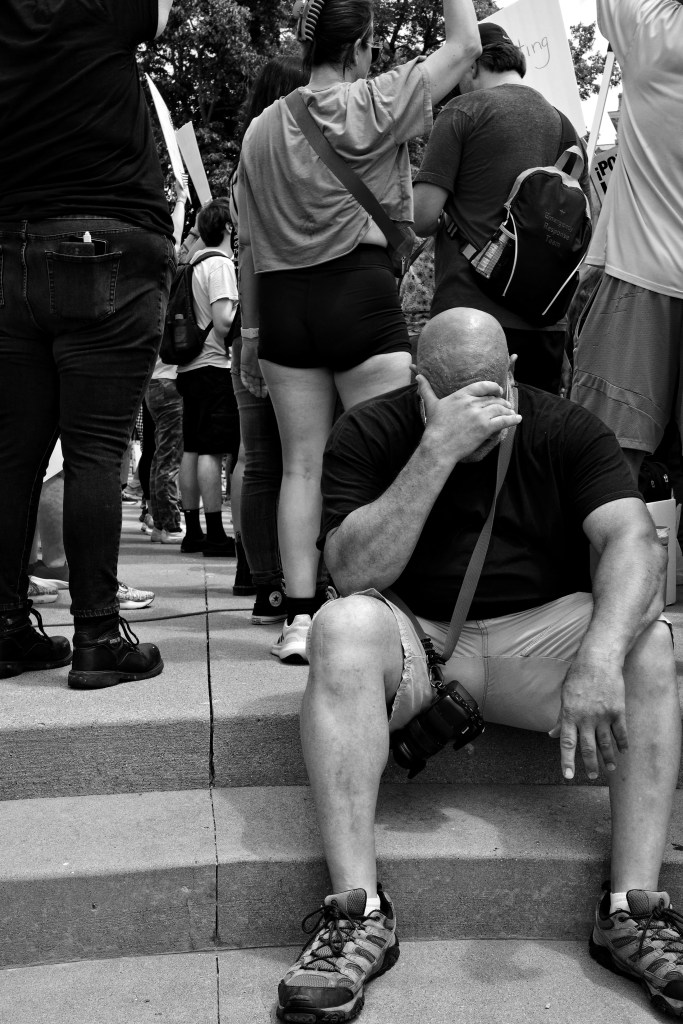
I was noodling around the edges of a demonstration and saw this guy, overcome with emotion (and maybe the heat), turn away and sit down. He was a big guy, bald, looked strong; not gym-strong, but work-strong. The anguish on his face was hard to look at but strangely beautiful. It was probably a moment he’d rather not have in public…but he did.

Overcome.

Okay, let me just get this out of the way: in the US you have no right to privacy when you’re in a public space. That’s the law. If you’re in public, other people have the right to take your photograph. The question is never whether it’s legal to take another person’s photo; the question is always whether it’s ethical or appropriate. Those are individual decisions and only the photographer gets to make them.

I wanted to take that guy’s photo. But I didn’t. It seemed too private, too personal. Then he put his hand up and covered his face. The depth of his emotion was still clear from his body language, but by covering his face the image became less about him as a person and more about the emotion itself. So I took one shot and moved on.

I don’t shoot a lot of photographs of people. When I do, it’s most often during a public event. A farmer’s market, a street fair, a protest march, a sporting event, that sort of thing. Sometimes I’ll shoot people in more generic public venues–at a fruit stand, in a pub, on a bicycle ride. I may or may not ask permission to take their photo; it depends on the situation and the moment. I’m very open about carrying my camera in circumstances like this; I’m not trying to conceal what I’m doing, but at the same time I don’t try to draw attention to myself.

“Oh? You want a photo?”

Occasionally I’ll see somebody who, for one reason or another, interests me and I’ll stop them and ask if I can take their photo. Occasionally, they’ll say no; sometimes because they’re in a hurry, sometimes because they’re shy, sometimes for reasons they don’t articulate. If they say no, I just thank them and go on my way.

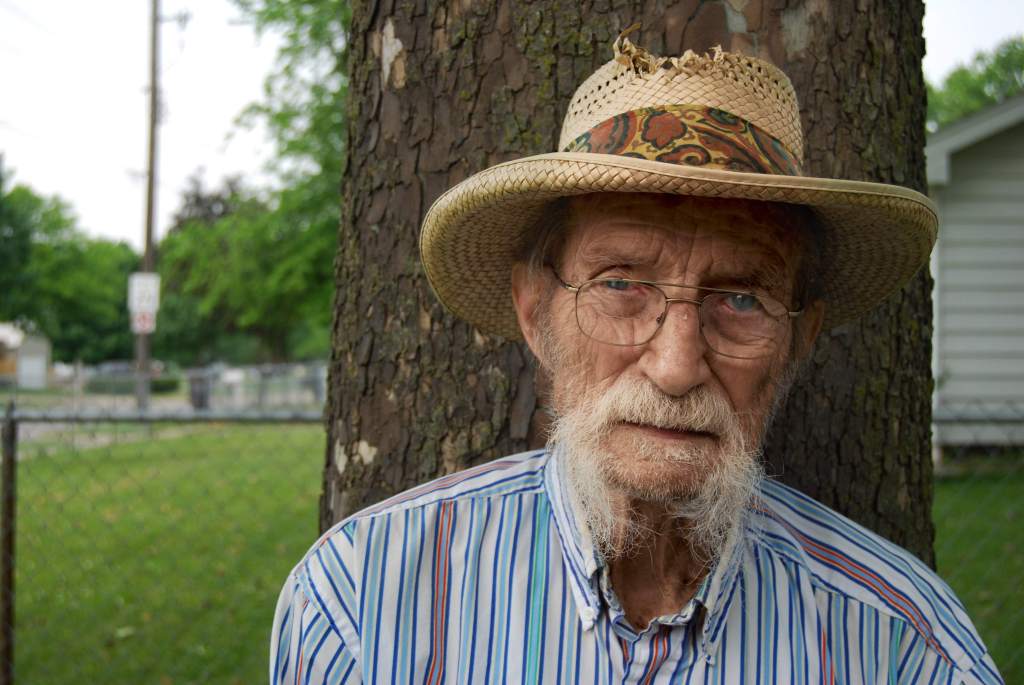
But most people say yes. Like this guy, John, who was waiting for a bus. Most people are friendly. They may ask, “Why do you want to take my picture?” and if they do, I tell them. I told John I liked his mustache and his hat. I don’t always ask their name, but I always thank them and show them the photo. Nobody has ever asked me to delete their photo.

John, waiting for the bus.

I DO NOT take photos of marginalized people in states of distress. I confess, I’m occasionally tempted to shoot those sorts of photos. Suffering is part of the human condition, after all, and I think if it’s done with compassion, such photos can have merit. But they can also just be cheap exploitation. And frankly, the viewer can’t know the photographer’s purpose by looking at the photo. The photo is what it is.

Having just said that I don’t take photos of folks experiencing hardship, I’m now going to admit I actually DID take one a couple of weeks ago. I was walking down a city street and came across a man who was stumbling along, leaning against a containment wall of a landscaped office building. As I got closer it became clear he was extremely intoxicated. I asked him if he was okay. He kind of wobbled his head; I couldn’t tell if he was shaking his head ‘no’ or if he was nodding. He said, “I just need to lay down for a bit, I just need to rest, to sleep.” He said that two or three times.

And he did just that. He climbed up on the containment wall, laid his head on his arm, and closed his eyes. I don’t know if he went to sleep or if he just passed out. I stood there for a very long moment, uncomfortable about leaving him and equally uncomfortable about staying with him. The look of misery and exhaustion never left his face. But there was something almost delicate about his relaxed hands.

I very much wanted to photograph him. And I was ashamed of wanting that. In the end, after a minute or so, I took the photo and left. Was it an ethical violation of his privacy in moment of vulnerability? Yes, without a doubt. But I did it anyway.

It’s a good photograph. Not a great one, but good. t’s an honest one. I like it and I hate it. I haven’t shown it to anybody. I discussed the entire incident with my partner and told her about the photo; she was rightly troubled by my behavior. So am I.

But I can’t entirely regret it.

a writer of detective fiction has thoughts on rules and magic

I recently had a semi-long, somewhat convoluted discussion (debate? argument?) with a friend who writes fantasy fiction. This is it (edited for brevity):

Friend: “Magic doesn’t have to have rules.”
Me: “Well, yeah, it does.”
Friend: “No, it doesn’t.”
Me: “Yeah, it does.”
Friend: “You write detective fiction. What do you know about magic?”

Here’s the answer to that question: All fiction is a cosmological event.

That’s it. That’s my answer. When we write a story—any story in any genre—we create a world. Most fictional worlds resemble the one we live in. The operative term there is resemble. This is true across all genres. As writers, we take liberties with the world; we shape our fictional worlds in ways we find useful. A mystery writer might, for example, create a world in which dog trainers routinely discover dead bodies and solve crimes. A horror writer might create a world in which vampires live among us. A fantasy writer might create a world in which people can engage in rituals or behaviors that manipulate natural or supernatural forces.

But when we create these worlds, we also create a set of internal rules for them. Again, MOST of those rules are patterned after OUR real world and we take them for granted. Things like gravity; if an elf drops her sword or a detective drops his gun, it falls to the ground. Unless we’re talking about elves in space.

UNLESS. The Great Unless. That’s where everything gets all slickery. You can slide all manner of things into the UNLESS envelope. Things like magic. But here’s the thing about an envelope: it’s a container. You can stuff all sorts of things inside it, but it still has boundaries. If your magic doesn’t have some sort of boundaries, you don’t have a story. If a Dark Evil threatens the Land and you have limitless unbounded magic at your command, you can just wave a hand and…poof. No more Dark Evil. There’s not much entertainment value in that.

But that doesn’t mean magic has to exist within a spreadsheet. It just means there are things that Can Be Done and things that Cannot Be Done. What Can and Cannot Be Done might be person-specific, or limited by location, or constrained by training, or or or. Those limits don’t have to be articulated for the reader, but they have to exist.

Here’s an example. One of the most delightful novels I’ve read in recent years is Nettle and Bone by T. Kingfisher. It begins with a woman in a bone pit, constructing a dog out of wire and an assortment of dog bones. When she’s done…hell, even before she’s done…the dog comes to life. How and why the bone dog comes to life isn’t explained. It’s magic. The woman’s ultimate goal in the story is to kill an evil prince, but her access to magic is limited. Building a dog out of a random assortment of bones is a thing that Can Be Done; killing a prince is a thing that Cannot Be Done. At least not by her at this point in time.

That right there? That’s a rule. The reader doesn’t need to know WHY the rule exists. Even the writer doesn’t need to know why it exists. But it HAS to exist for the story to work as a story. She can use magic to bring a bone dog to life, but she can’t use it to kill the prince.

Look, there’s nothing wrong in not knowing why things are the way they are. I mean, we still don’t understand how gravitation works and folks have been studying it for at least 2300 years. We know it works at the Newtonian level, but then things get all weird down at the quantum level. If we’re unable to understand and explain one of the fundamental forces of the natural world, how in the hell are we supposed to understand how things work in the supernatural world?

So yeah, magic has rules. It has to. We just don’t always know what they are. That’s perfectly…well, natural.

a modest ebike proposal

Okay, first, this is NOT a Jonathan Swift-style modest proposal (see Endnote). This isn’t satire. Second, yes, okay, maybe I’m focusing on this relatively minor problem in an attempt to dodge thinking about the truly massive, cataclysmic problems we’re facing in the US. But hey, it’s my blog and I get to do what I want.

The fact is, there’s a very real problem in the Ebikeverse, and I have thoughts about it. I’ve been thinking about this problem off and on for a few months, in part because I had a minor disagreement with a fellow cyclist/photographer on Bluesky. He’d made a rather broad, disparaging comment about ebike riders. As an ebike rider, I asked for clarification. It turned out he was talking about a specific type of ebike, which he referred to as “not-a-moped” ebikes. These little bastards.

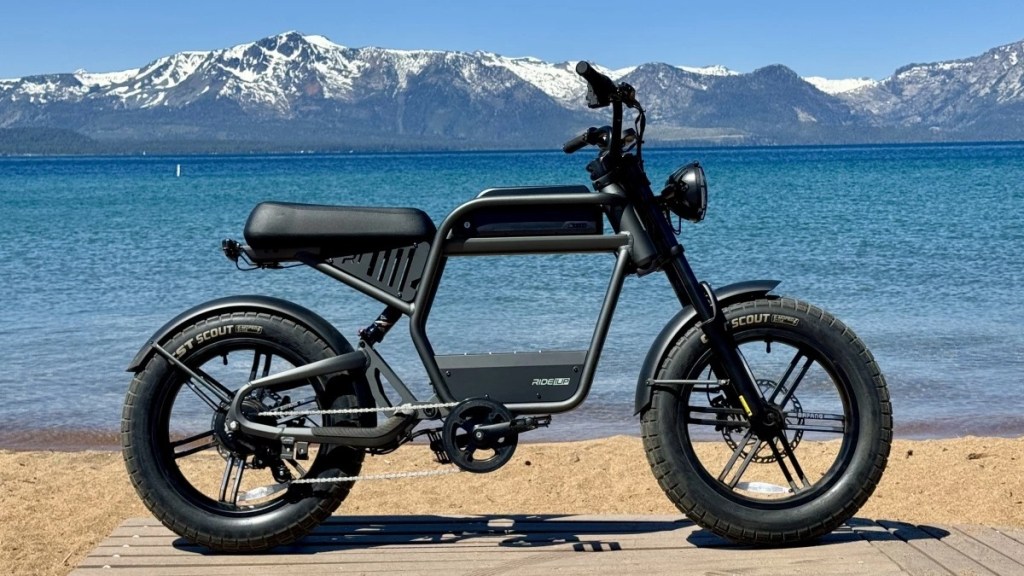
Ride1up Revv 1 FS

I responded to his comments:

It’s a mistake to equate all ebike cyclists with not-a-moped jerks, who I’ll agree are a massive problem.

I can’t quote his reply exactly because…well, he’s blocked me (see the Other Endnote). Basically, he said the people who ride that type of ebike were assholes. I responded that assholes are assholes, regardless of the type of bike they ride. At which point, he blocked me. Perhaps he thought I was calling him an asshole. Who knows?

But he was right about the problem. A sizable chunk of the people who ride this particular style of ebike DO tend to be aggressive jerks who are abusive and a danger to regular cyclists and pedestrians. But he was wrong to call them not-a-moped bikes, because (in my opinion) they actually ARE mopeds, not bicycles. They may have pedals, but they aren’t really designed to be pedaled; they’re designed to be driven using a throttle.

In the US, ebikes are basically categorized by how they’re powered. Class 1 ebikes rely exclusively on pedal assist (they’re technically called ‘pedelecs’).They have a top speed of 20mph and they lack a throttle. Class 2 ebikes are basically Class 1 ebikes, only with a throttle (which is used most often to get the bike moving again after a complete stop). Class 3 ebikes have pedal assist but no throttle, and a top speed of up to 28 mph. In reality the distinction between Class 2 and 3 ebikes is blurred by the fact the many–if not most–Class 2 bikes can be easily unlocked so they can reach 28 mph.

There are also Class 4 ebikes, which generally have more powerful motors and aren’t limited by a top speed. They’re considered to be motorized vehicles and (in many states) require a license to operate, as well as proof of insurance. They’re generally prohibited on bike paths.

The ebike/mopeds I’m talking about (like the one pictured above) are the bastard children of Class 3 and Class 4 units. They’re marketed as Class 3 ebikes and sold as Class 3 ebikes, but they’re not ridden like ebikes. Everybody knows this. In fact, in a review for the Ride1up Revv 1 FS shown above, it’s openly admitted.

[It] isn’t a bike, at least in conventional terms. The presence of pedals on little crank arms is more incidental and added to skirt existing laws about electric mopeds…nothing about the bike’s weight, geometry, or gearing is built for actual pedaling.

They’re designed to be throttle-driven. While they may be sold with a top speed of 28mph, they’re easily modified to go much faster, and there are lots of videos showing people how to do it (for example, here’s a video showing how to unlock the ‘bike’ in the photo above). And this is why they’re a problem.

So here’s my modest proposal: designate this specific type of ebike as a Class 4 ebike and establish an age limit for purchasing Class 4 ebikes.

That’s it. Don’t allow manufacturers to skirt existing laws by attaching mock pedals to a vehicle designed to be throttle-driven. It won’t stop assholes from riding like assholes, but it would reduce the asshole quotient on bike paths and sidewalks.

Endnote: Back in 1729, Swift wrote a satirical piece called A Modest Proposal for Preventing the Children of Poor People from Being a Burthen to Their Parents or Country, and for Making Them Beneficial to the Publick. The proposal was that poor folks should sell their children to the rich for food. So, nothing at all like my proposal.

Other Endnote: Even though I was blocked by this guy, I can’t/won’t complain about it. I’m a huge fan of the way blocking works on Bluesky. It’s incredibly effective and efficient. If somebody is annoying you, you block them and they disappear. You’ll never see anything they post again. They’ll never see anything you post again. If somebody you follow responds to a post by the person you blocked, you’ll see the response but not the post itself. It’s brilliant (even when it’s used against you).

the one thing everybody agreed on

Like a few million other folks, I showed up at the local No Kings protest. We were all there for the same fundamental reason: because Comrade Donald Trump and his cadre of Nazgûl have been merrily shitting on…well, everything that’s good and promising and hopeful and decent about the US.

Fuck Trump.

People are pissed off about SO MANY things Trump has done (and intends to do). The attacks on immigration, science, trans rights, healthcare, civil liberties, the environment, due process, Gaza (and Israel and Iran and and and), veteran’s benefits, free speech, the national debt, the January 6th pardons, everything about January 6th, the assault on education, the assault on libraries, the assault on the very concept of Truth.

No, really, fuck Trump.

But one thread tied all the anger and frustration and resentment together. A deep, abiding rage against Donald Trump as a person. Not only for the horrors he’s inflicted on the United States, but a profound loathing for him as an individual. As I wandered through the No Kings crowd, I kept seeing this same sentiment. Fuck Trump.

Also? Fuck Trump.

People really hate this motherfucker and they hate him personally. They hate him for what he’s done, they hate him for what he wants to do, and they hate for him who he is. Which, I suppose, is only fair, considering how many people he hates for who they are. Trump has a singular talent for both hating others and being hated.

Seriously, fuck that guy.

Why do people hate him so? Because he’s a liar, because he buried one of his many wives on a goddamn golf course, because he’s betrayed the United States, because he’s got truly godawful taste in everything, because he’s cheated on every wife he’s had, because he’s massively ignorant and unaware of it, because he’s a liar, because he’s fucked over every person and contractor he’s ever worked with, because he’s an unrepentant racist, because he hates women, because he loves autocrats, because he’s a liar, because he’s a coward, because he’s never owned a pet, because he’s a narcissist, because he pretends to support the military but believes they’re losers, because he’s a liar, because of his stupid fucking red hats, because he’s a phony, because he’s put incompetent people in positions of power, because he insults everybody who disagrees with him, because he’s a vindictive prick, because he’s a liar, because he’s rude, because of his stupid fucking hair, because he encourages his followers to be violent, because he hates immigrants but hires them to work for his resorts, because he’s shit all over the Arts, because he’s a liar, because he’s cruel and enjoys inflicting harm on others, because he pretends to be a Christian without having an inkling of Christian charity, because he’s a sex pest, because he’s committed many many crimes but has never been held accountable for any of them, because the people who like him are all massive assholes, because he’s a fucking liar.

And the horse he rode in on.

I’m sure I’ve skipped a few dozen other reasons why people hate him. But I think you get the point. People sincerely hate Trump.

But there was another guy at the No Kings event. Bearded guy, dressed all in black, sitting on a granite railing. He was wearing a T-shirt that said “Hate Will Never Win.” I hope he’s right. I genuinely hope hate won’t win. But I also hope the hatred against Donald Trump will get people to stand up for themselves and for others. I hope it will get people to push back against his authoritarianism. I hope it will get people to vote. I hope it will get people to hold Trump accountable for all (or at least some) of the horrible things he’s done to this country.

And then I hope we can let go of that hate.

you have to be there

The question came up again today. “Is there a relationship between the way you write and the way you shoot photographs?” Somebody asked me a similar question a couple of years ago, and this was my response:

My response was pretty simple: Never thought about it. And then, of course, I started thinking about it.

And, of course, since the question came up again, I started thinking about it again. The last time I was asked the question (yeah, I actually had to go back and find that blog post and re-read it to know how I responded last time), I focused on writing and photography as matters of craft. I said they were two very different crafts, and…

[W]hile writing and photography are both vehicles for self-expression, they’re completely different vehicles. Asking if me if I write the same way I shoot photos is like asking me if I drive a truck the same way I paddle a kayak.

That’s still true. But this morning it occurred to me that there’s another fundamental difference between the two crafts. It’s this:

Photography is the only medium of self expression that requires you to be physically present.

You can paint a picture of a house on the edge of a mountain meadow without being there. You can write a scene that takes place in 17th century Venice or on the planet Tralfamadore. You can dance the Dance of the Sugar Plum Fairy without being in an enchanted garden. But to shoot a photograph, you have to be there. (Yeah, sure, you can set up a tripod and rig some sort of timed or remotely triggered shutter release, but c’mon, you know what I mean.)

I can write anywhere. To shoot a photo, I have to be there. Right there, at that precise spot in that precise moment. Five seconds earlier, five seconds later, it’s a different moment. Five inches higher, five inches to the right, it’s a different photo. When you shoot a photo, you’re right there.

This isn’t to say photography is more real, or more powerful. I could write a scene…or, better yet, a poem…about the way light falls on a coffee cup that would be as emotional or more emotional than a photo. I could write a scene about a man crossing a street as the light is ten seconds away from turning green that would be full of tension.

A photograph is just now. That both limits its power AND gives it power. A photograph is a real moment as it’s happening.

I hear a lot of people saying stuff like, “This photo tells a story.” No, it doesn’t. A story has a beginning, an ending, and a middle. Again, a photograph is just right now. It might suggest a story, but it’s the viewer who supplies it. It’s not inherent in the photo. A story is what’s taking place outside the frame, what the guy is looking at, why he’s looking, what he’s NOT seeing. A story is what’s in his pockets, what he’s thinking, where he’s going, where’s he’s been, what he did when he was there.

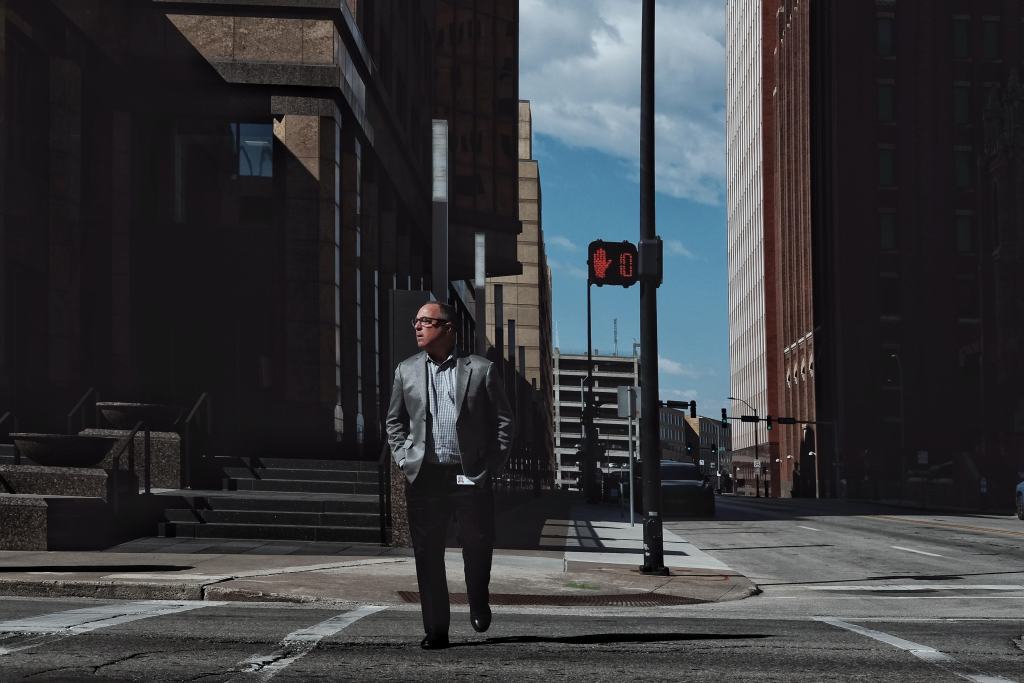
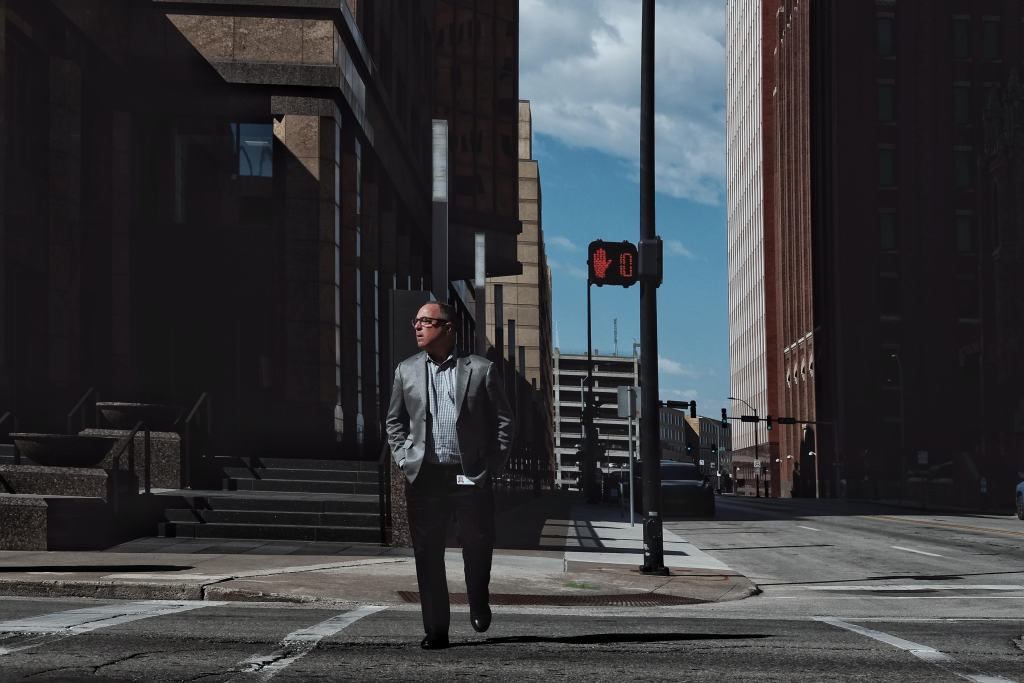
The photo is just a guy with his hands in his pocket, crossing the street while the Don’t Walk warning is flashing.

Back to the question. “Is there a relationship between the way you write and the way you shoot photographs?” Sort of. They both require practice to be consistently good, they both require a certain degree of disciplined composition, they both require a weird merging of passion and control. And (for me, at least), both writing and photography require me to be open and welcoming to the moment. Sometimes a random thought will completely change what I’m writing.

The difference is I can edit and correct what I’ve written. Reality isn’t so easily revised.

EDITORIAL NOTE: This isn’t really relevant to what I’ve just written, but it’s been a while since I’ve mentioned how critical it is to burn the patriarchy to the ground. Burn it, gather the ashes, grind the ashes into dust. Wait for a high wind then scatter the dust so that no two particles exist within a mile of each other. Then bake some bread and eat it with butter and honey.

reflected

So here’s me, noodling around the city, shooting photos (okay, I know it’s way too soon for a tangent, but let me just say that I’m totally smitten with my Ricoh GR3X, oh lawdy, it’s SO much fun to shoot) and basically having as fine a time as is possible on a cold January day. The sun’s out, the sky is blue, the people I meet on the street are uniformly pleasant and smiling despite the chill in the air. It’s a nice way to spend an hour or so.

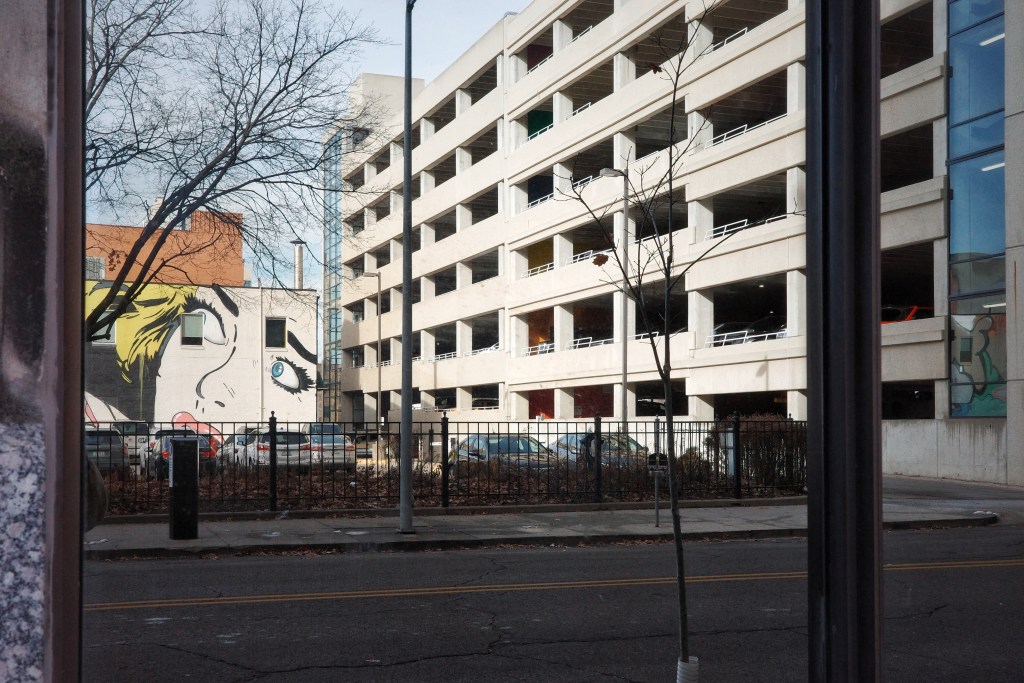
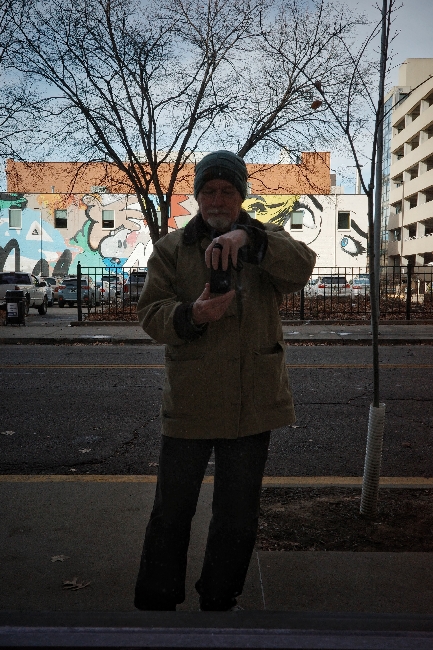
As I’m walking along I notice a mural reflected in a window. The mural includes a massive cartoon-styled woman’s face, showing alarm or horror. It’s cool, but it’s not particularly photo-worthy. But what the hell, I take a shot. Why not? I keep walking and keep looking at the mural hoping a better shot will appear, and then I reach a spot where I’m also in the reflection. There’s a giant cartoon hand reaching for me, and I’m thinking that must be the reason the giant woman is so alarmed. Still not photo-worthy (in fact, it’s even less photo-worthy), but it amuses me. So what the hell, I take a shot.

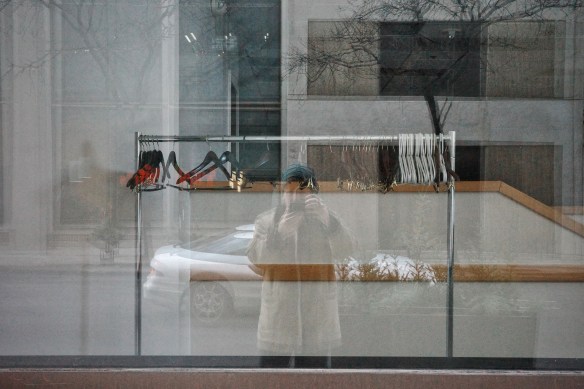
And I keep on walking (which is what you do on a photo-walk, after all). I stop now and then when the light or shadow catches my attention. I notice a particularly fine bollard. A stack of tires in an alley. There’s an ambulance and a fire truck flashing their lights in front of a hotel, but the light sucks and whatever is happening is happening inside the hotel and there’s nothing to see, so I keep walking. And I see an empty shop window, with a clothes rack devoid of clothes but with a fine collection of empty hangers. The lines are nice, the light is acceptable and there’s me again, reflected in the window along with a nice bare tree. So what the hell, I take a shot.

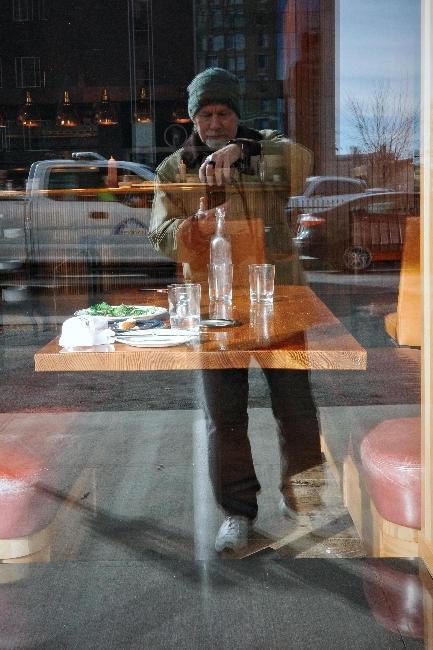
And I keep walking. Down along the river, which is running low. There’s about a million Canada Geese milling about as the ice is breaking up, making a colossal noise, and ignoring the mallards that are paddling around, minding their own business. Then I’m down a street with nice shops and fine restaurants, and the light is catching a table through a window, with the remains of somebody’s salad and an empty water carafe (which is a lovely word to say aloud; French, from the Arabic gharraf meaning “a drinking cup”; go ahead, say it out loud, nice and slow…isn’t it nice?). And, once again, there’s me in the reflection, ruining what might have been a nice photo. But what the hell, I take a shot.

This is a thing I seem to do…reflection selfies. They’re never good photographs, they’re never interesting photographs, and I almost never post those photos (for the reasons just stated). They’re more of a reflex action–like when your doctor taps your patellar tendon with a rubber mallet. I see myself reflected in a window, my shutter finger jerks. It’s a reflection reflex.

But as I was sorting through the day’s photos, deciding which ones were worth keeping, I found myself reflecting on my reflection reflex and c’mon, there’s no way I’m not going to use that phrase. So yeah, this blog post exists solely so I can write ‘reflecting on reflex reflections.’

the curious incident of the diner at midday

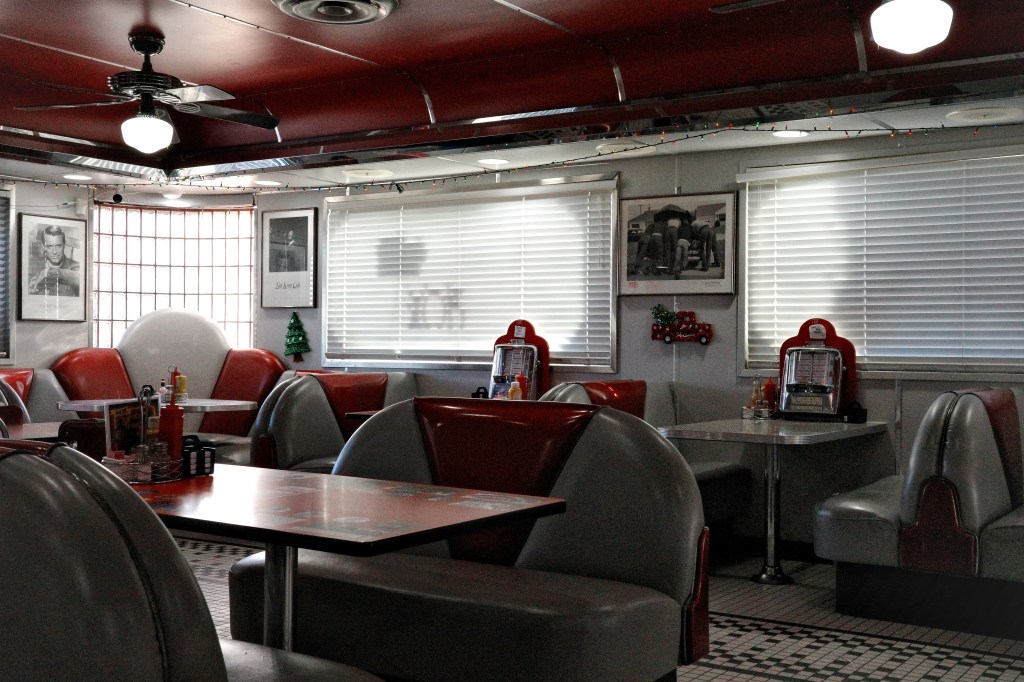
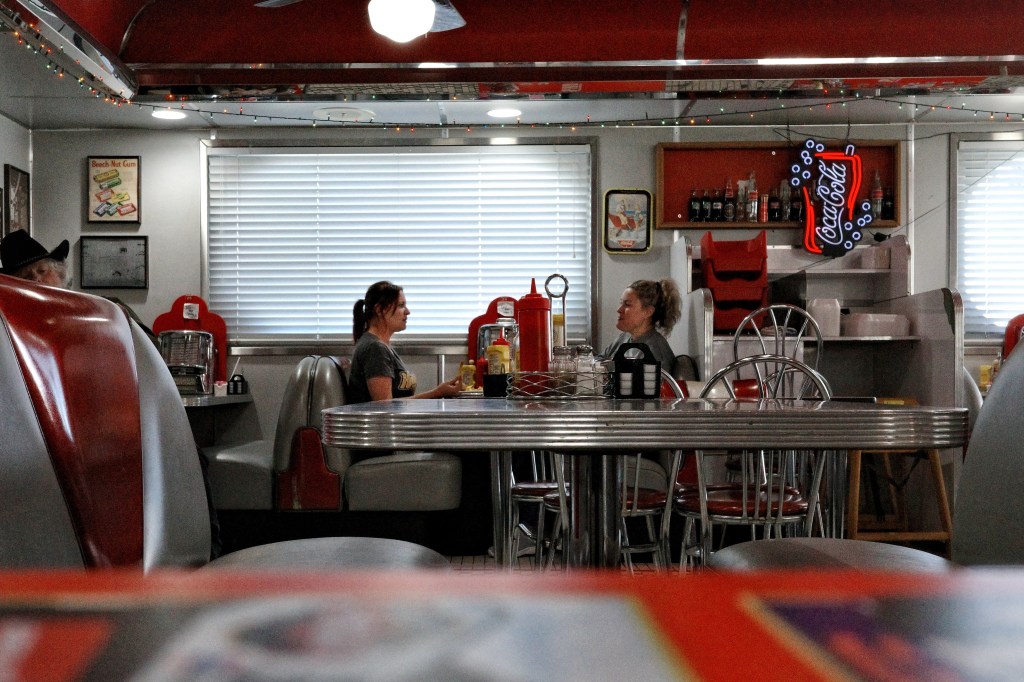
Here’s one of those photography ethics things. I was sitting in a booth in a quintessential American lunch-car diner with my camera on the table. While looking at the menu, I heard the sound of stressed voices coming from across the diner. I glanced over, saw two women who I thought had a family resemblance staring at each other. The light was nice and the scene had some drama. What to do?

  1. Mind your own business?
  2. Turn your camera on the table and shoot a quick photo without looking?
  3. Pick up your camera and photograph the situation?

Obviously, the most ethical thing to do is 1) Mind your own business. I had no idea what the situation was, it had nothing to do with me, and the two women involved would almost certainly prefer to be ignored.

But if you’ve ever practiced street photography–or if you’ve ever wanted to practice street photography–you know that people are often most interesting and most honest during emotionally charged moments. And those moments are almost always worth photographing. So some/many photographers would at least consider options 2 and 3.

You have to be a complete asshole to choose option 3; to pick up your camera and openly, deliberately invade their privacy. Option 3, however, has the dubious advantage of being honest and direct, whereas option 2 is, let’s face it, sort of underhanded. The thing about option 2–shooting without looking, without composing–is you’re allowing the fickle Gods of Photography determine if you get a decent shot or not. If the shot sucks, then it will get binned and nobody has to think about it.

If the result works as a photograph, then both options 2 and 3 set up a secondary ethics challenge: do you further violate the privacy of these two women by posting it? If you choose to post it, do you post it on a very public social media platform (like, say, BlueSky or Instagram) or on a significantly less popular platform (like, say, your blog)?

Obviously, I chose option 2. Well, sort of. I mean, it’s not like I sat there and considered all the ethical questions. I took the photograph without considering anything at all, completely unhindered by any thought process. I turned the camera on, turned it toward their table, touched the shutter release, turned the camera off, and didn’t think about it again until I got home and looked at my photos.

And hey, I got lucky. It’s a pretty good shot (in my opinion).

This is the shot in question.

Obviously, I decided to post the photos here, on my personal blog. I’ll also post links to the blog on Facebook and BlueSky. How do I justify this? I’m relying on the Men in Black defense. If you’re in a public place: don’t start nothing, won’t be nothing. If you raise voices in a public setting, the public will look at you. Sure, few of them will take your photo, but a photograph is essentially nothing more than an extended look. You don’t have a reasonable expectation of privacy in a public setting.

Another thing: I’ve no idea what these women were talking about. I don’t know if they were arguing, if they were upset with each other or with something else, if their distress was sincere or in jest, if one was distressed and the other wasn’t. I don’t know because I didn’t pay any attention to them (other than to note their voices were momentarily raised). They could have been outraged by the portions or the size of their bill, for all I know.

That said, it’s important (to me, at any rate) not to fully absolve myself. The women may not have had a reasonable expectation of privacy while talking to each other in a very public diner, but I didn’t have to pay attention to them. While I didn’t make any effort to take a good photograph, the fact remains that by taking any photograph I invaded what they probably thought of as a private moment.

Was it worth it? I don’t know. I think it’s an interesting photograph. The chance that either of them will ever see this…or that anybody they know will ever see this…are incredibly slim. I could probably legitimately make the ‘No harm, no foul’ argument. But maybe this type of photography is a social harm in and of itself. I don’t know.

Here’s the thing: I spent several years as a private investigator. Much of my work (which was primarily criminal defense investigation) involved making ethical decisions in the immediate moment–and there was rarely any obviously correct decision in those moments. So I’m used to questioning my ethics. It’s easier with photography. With photography, you can always take the shot and delete it later IF you decide it was inappropriate or unethical. In photography, you have that leeway.

Looking at the photo, I don’t think the level of tension between the two women is terribly obvious–unless you’re looking for it. I don’t think there’s any ethical reason NOT to publish it. Others may disagree, but I’m comfortable with my decision.

clothes with history

Okay, first: here’s a photograph shot in October of 2020 of a blue flannel shirt draped over a stairway railing. You may be wondering why I’m posting a photo of a blue flannel shirt. Patience, grasshopper.

Now, here’s me loafing on a Sunday morning, drinking coffee, scrolling through Bluesky, and I see a post by my friend Kim Denise. It’s about knitting, a subject in which I have absolutely no interest at all; something to do with ‘fingering/4-ply/sock yarn,’ whatever that means. But she’s included a delightful photo of a young girl wearing a colorful knit jacket thingy, pushing a wheelbarrow. Kim explains, “This is a long cardigan/coat I made for a young friend of mine who was four at the time. She requested a number of specific elements. She wore it for years!

Photo by Kim Denise

I don’t know when Kim knitted that cardigan or who she knitted it for, but the child wore it for years, which means she had a history with that piece of clothing. I have a thing for clothes with history. Everybody has some item of clothing they cherish, whether they use that term or not. A shirt, a hat, a jacket, a sweater–something they’ve worn for years, something that’s comfortable or comforting, something that’s been through the wars and shows its age. Something they’ve become irrationally attached to.

For me, it’s that blue flannel shirt. In fact, I’m wearing it right now, this morning. I was wearing it when I saw Kim’s post, which is why I’m writing this blog post.

Here’s the weird thing: it’s not really my shirt at all. I didn’t buy this shirt. In 2001, when I moved from Manhattan to an old farm house in rural Pennsylvania, one of the movers accidentally left this shirt behind. Initially, I considered contacting the moving company to return the shirt. But then I discovered the movers had also walked off with my shepherd’s crook (yes, I owned a shepherd’s crook; it’s a long story) and a hand-carved mushroom-hunting stick made for me by my brother. The moving company informed me no such sticks were reported by the movers. So I kept the shirt. I’ve moved twice since then.

I don’t know how old the shirt is; it wasn’t new in 2001. Twenty-three years later, it’s getting pretty threadbare. These days I wear it exclusively around the house or to do yardwork; it’s too ratty to wear in public now. I’ve actually worn two holes in the front shirttails by fussing with them; the holes occasionally catch on doorknobs and drawer handles, jerking me to a halt. My partner sometimes teases me about the shirt; she says a hobo wouldn’t be seen wearing it.

In 2016 (photo by Sweet Jody Miller)

The shirt is soft with age now. Comfortable. I’m afraid to put it in the washing machine for fear it’ll disintegrate. A quarter of a century is long enough to turn flannel into something like gossamer. I have a history with this shirt. I have an irrational affection for it. I’ll wear it until it’s rag-worthy. But I’ll never turn it into rags. This shirt is my friend.