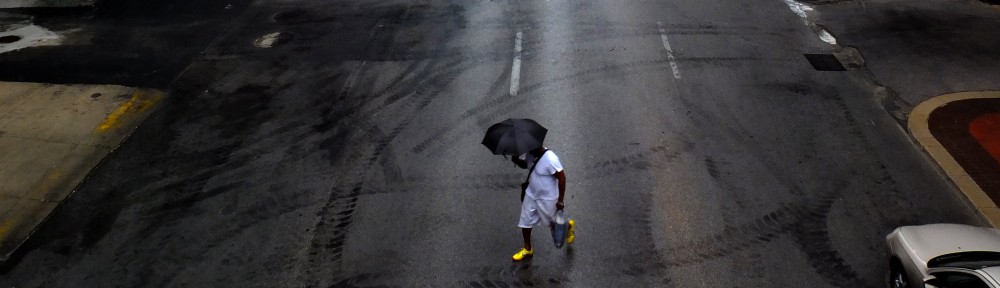
not quite yet

In the 1930s the Banner Coal Company explored “an unusually good grade” of coal in central Iowa, just a few miles south of Des Moines. The vein was rather shallow, buried beneath only forty feet of soil and shale. The shallow depth and the fragile ‘roof’ made mining the coal problematic. Traditional mining techniques wouldn’t work. So the company resorted to the open pit process.

Open pit mining wasn’t new. The practice had been used in the U.S. for a century–since the 1830s. The Banner Coal Company knew how to wrench the most product from the earth with the least fuss (and the most profit). They brought in the largest electric dragline excavator in the country (spectators traveled for miles to watch the massive machine at work) and for the next two decades they hauled coal out of the pits. It was the largest strip mining project in Iowa history.
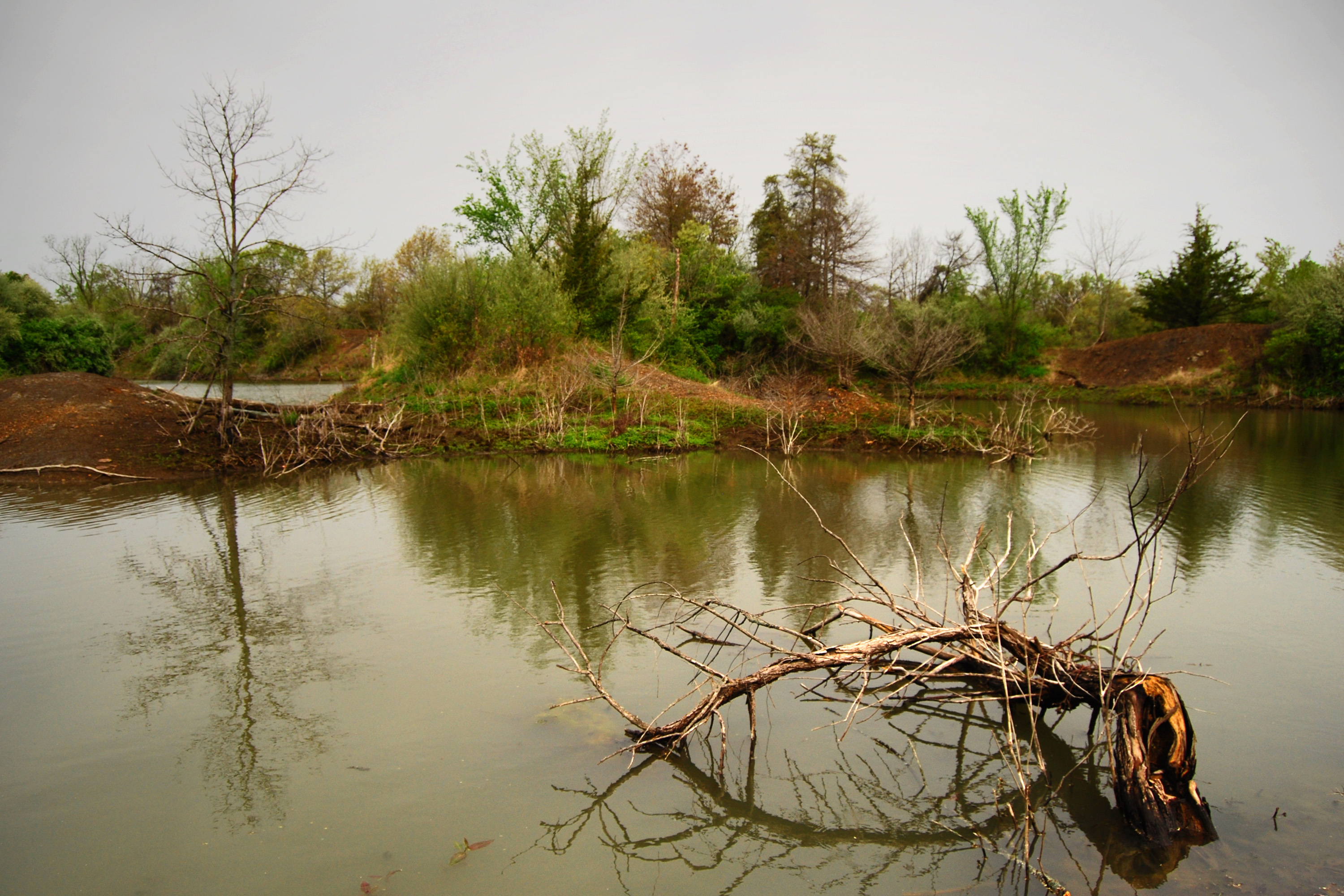
By the mid-1950s, the coal was gone–and when the coal was gone, the coal company went with it. They sold the land–some 220 acres–to the Iowa Department of Natural Resources, which intended to turn the area into a wildlife management area. The operative term there is intended.

Half a century passed without much being done. The pits slowly filled with groundwater. Natural flora grew wherever there was enough soil to support it. Growth on the waste-rock and tailings was spotty to say the least, and the only plants that grew were brought there by wind and wildlife. But the wildlife came, drawn by the water. It came, settled, made nests, created dens. It wasn’t just animals–kids were also drawn in by the deep pools of dark water (that attraction almost certainly heightened by parental warnings against the place).

In addition to the 80 acres of former-pit-turned-lake, the landscape is dotted with strange little pocket marshes and hidden sloughs where turtles and frogs squat with cranky blackbirds and condescending herons. In 2002 the Department of Natural Resources finally decided to turn the site into a state park. They built bicycle trails (for both casual cyclists and adrenalin-crazed mountain bikers), they set up picnic tables, added a boat ramp, and brought in other amenities.

Despite the work that’s been done, the area still has an odd, semi-feral, almost post-apocalyptic feel. There’s a sense that Nature is patiently and unceasingly trying to overcome the damage done by thoughtless humans. Trying, but it’s been a struggle.

I feel strangely at ease here. As much as I despise the damage done by the Banner Coal Company, I can’t get too pissed off at them. In the 1930s they had little knowledge about the long term effects of this type of mining operation. In their ignorance, they created a landscape that feels wounded–even mutilated. And yet it’s a very compelling landscape, partly because of the harm that was done and partly because of the organic regrowth that hasn’t quite been able to repair the damage. Yet.

I like that yet. It’s a good yet. A comforting yet. Some day this area will lose its post-apo air. It’ll just be an unusual lake. Some day. But not quite yet.
find of the day

If you judged only by the number of morels plucked from the soil, then my first morel hunt of the season was an absolute bust. I saw one small grey morel, no larger than the first knuckle of my thumb. I found three times that many ticks on my clothes–so if this was a tick hunt, then it would have been slightly more successful.

However, if you just count it as a walk in the woods, it was an unqualified triumph. I went with my brother Roger Lee, who may be a tad too impatient to be a good mushroom hunter but has a nicely cavalier attitude about being in the woods. Some people hover around you when you’re in the woods–afraid to get too far away from you, afraid you’ll get lost or they’ll get lost. Roger Lee just wanders off with the casual assumption that somehow you’ll manage to meet up again somewhere. I like that.

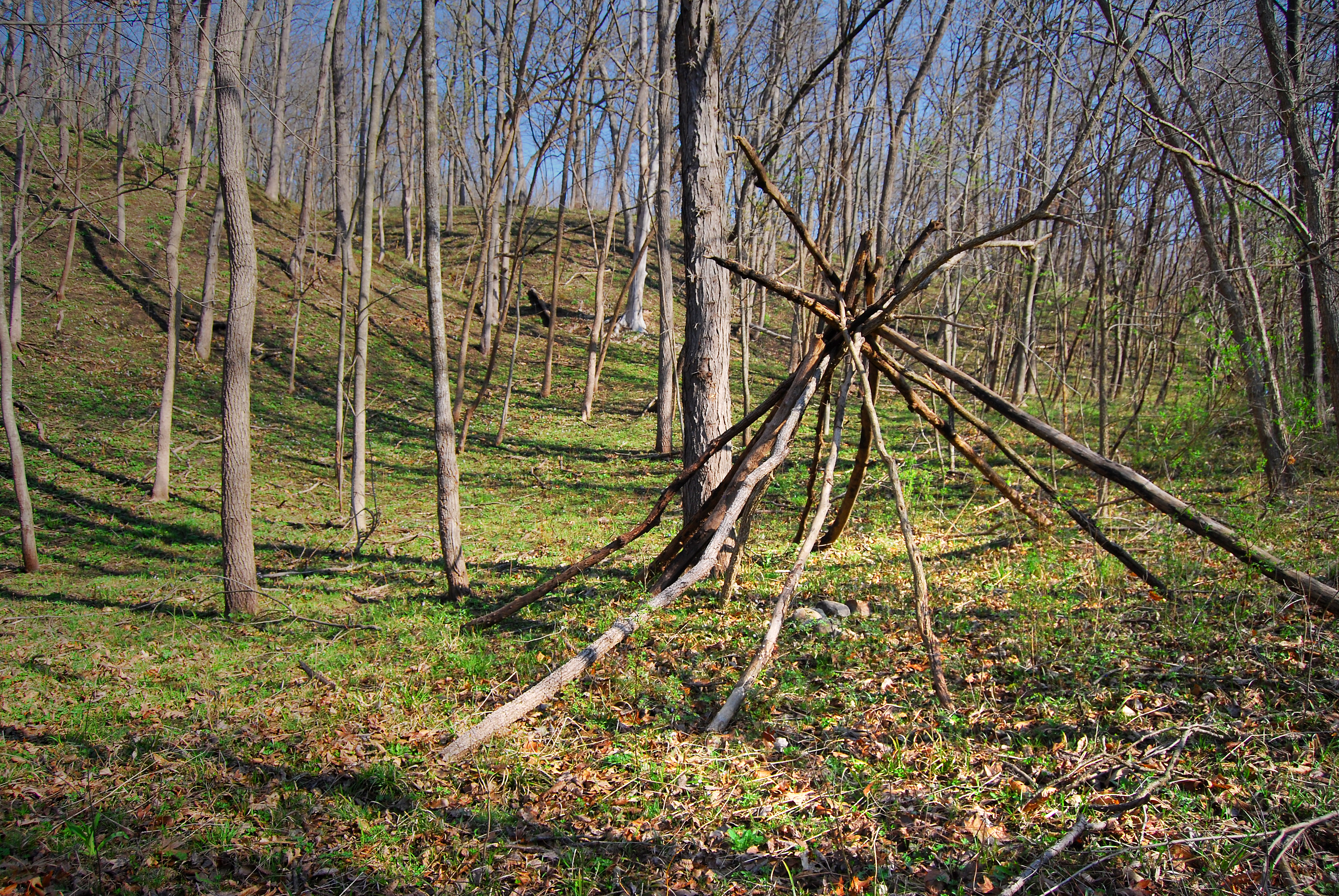
It was Roger Lee who made the Find of the Day. A tipi frame, almost camouflaged by being as bare as the trees around it. Centered below the frame was a small circle of rocks to serve as a fire-pit. Clearly somebody had camped there in the not-too-distant past; the need for a fire suggests last autumn or possibly even during the winter. The tipi was in a good spot–protected from the wind, a few yards away a small brook, isolated from view, far enough from the road to be inconvenient to find but close enough that fifteen minutes of steady walking would get you there.

But the tipi frame wasn’t the Find of the Day; that was just an interesting object. The woods are full of interesting objects–things that are thought-provoking but not particularly surprising. That’s one of the many reasons to walk in the woods.

No, the Find of the Day was lurking a short distance away–maybe fifteen yards–hidden inside the hollow trunk of a dying tree.

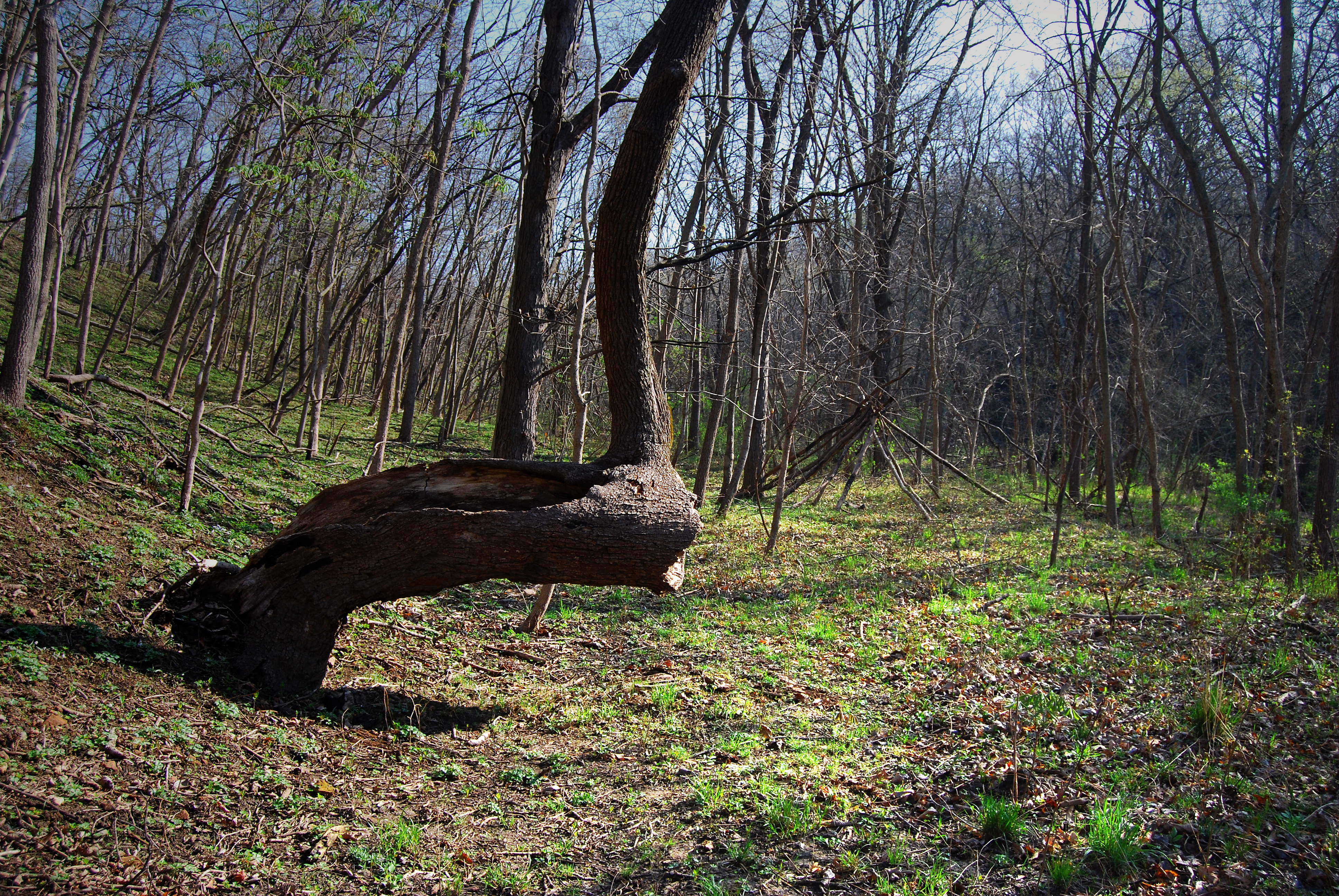
The tree itself was an interesting object. It was bent and broken–maybe the result of an old lightning strike, maybe from some sort of rot, maybe ice damage, maybe an infestation of beetles–who can say? But it was bent and broken open, and the interior of the trunk was hollow.

The natural thing to do with a bent, broken, hollow tree trunk, of course, is to look inside. Which is exactly what Roger Lee did. You’d have done the same thing your ownself, you know it. What he saw inside, that was the Find of the Day.

I’ve written elsewhere about my fascination with a chunk of curbing wrapped in a length of red PVC wire. That object must have struck a chord with people, because since then I’ve received a number of emails from people describing similar found-objects, sometimes with cameraphone photos showing bits of concrete bundled in ribbon or stones tied up in wire like some sort of primitive holiday package. I find them all strangely fascinating.

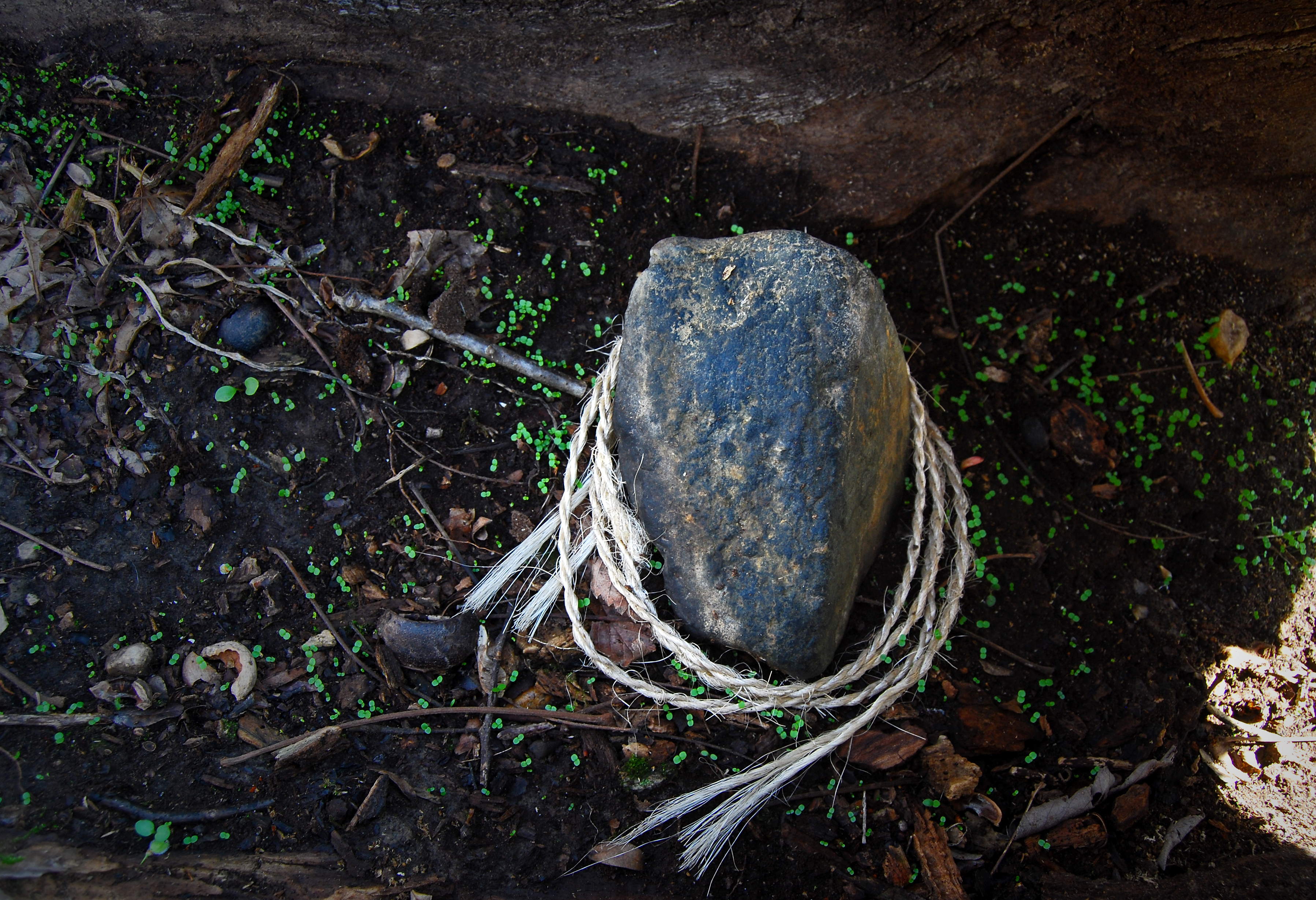
This is what was tucked away in the hollow of that bent tree:

I’ve no idea what this bluish stone is, although it appears to have been shaped at some point in the past. I’ve no idea why a length of twine is so tidily coiled around it, although the condition of the twine suggests it was done fairly recently. And I’ve no idea why it was stashed n the hollow of a dead tree trunk, although it clearly was stashed; it didn’t just wind up there by accident.

Somebody did this purposefully. Somebody deliberately placed the stone in the hollow of the tree, and just as deliberately encircled it with a length of twine. Most likely it was placed there by whoever was camping in the nearby tipi–but that’s just an assumption.

All I know is that this is strange and lovely and it moves me in some peculiar way. The Irish have a saying: Níl sa saol seo ach ceo is ní bheimíd beo ach seal beag gearr. It’s a misty old world and we’re only in it for a short, sharp while. It’s stuff like this that keeps it sharp.

words is my business

Words is my business. I know a lot of them, and I enjoy using them. I enjoy seeing and hearing them used. I adore people who use them well.

One of the reasons I adore Meera Lee Sethi (just one of the reasons; there are so many reasons to adore Meera that you’d need an abacus to keep count) is because she’s engaged in the most wonderful and quixotic projects I’ve seen in some time: 366 Days of Words in Science.

This is more than a mere introduction to esoteric words. It’s partly a sort of diary, and partly a collection of philosophical musings, and partly a work or art (each term is accompanied by a photo that in some way illustrates the concept), and partly an act of immense generosity. It’s a delightful combination of intelligence and charm, and every day it offers something new to captivate the curious.

It’s highly unlikely I’ll ever be able to use ‘ceratotrichia’ or ‘palpebral’ in casual conversation, even if I can remember them. I’ve no idea how many of these 366 words I’ll actually fold into my vocabulary. But I do know that each day I look forward to another term, another photograph, and another brief peek into Meera’s mind.

So this little blog post is just an aliquot (a measured portion from a larger sample) of my affection for words and for science and for Meera. The level of my actual affection for words, science, and Meera is only measurable on a galactic scale.

the world conspires to amuse me

Okay, first I have to explain why I was in a Starbucks yesterday. No…that’s too complicated. Let’s just say I had good reason NOT to be in my usual coffee dive. But I needed free wifi access in order to chat with the Jamelah and cobble together the new Iron Photographer elements. For those of you who aren’t part of the Utata community, that probably won’t make any sense. I’d explain Iron Photographer and why I needed to chat online with Jamelah, but it’s even more complicated than the reason I was in Starbucks.

I wouldn’t even mention the fact that this happened in Starbucks, but the location is part of what made it so amusing to me. So…Starbucks.

Right. I’d just finished my business (if you can call a chat with Jamelah ‘business’) and I was packing to leave when a middle-aged guy in a nice suit sat down at the next table. Packing to leave takes time when it’s only 17F outside–there’s all that business with the scarf and the hat and the gloves and the coat. By the time I was ready to go, another guy in a suit approached the table where the first guy in the suit is sitting.

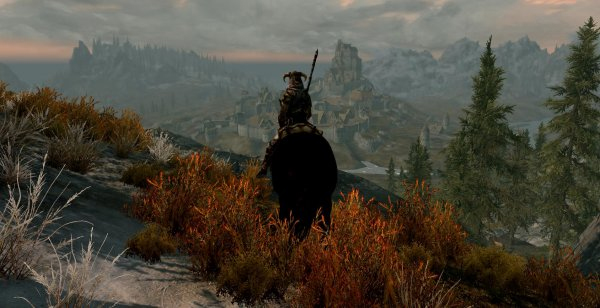
I started to walk away. I overheard the first guy in a suit say to the other guy in a suit, “I used to be an accountant like you; then I took an arrow in the knee.”

I was halfway out the door before that sunk in. Then I was out on the sidewalk cackling.

It occurs to me, this will probably only be amusing to folks who have been playing Skyrim. I’d explain Skyrim, but it’s about as complicated as Iron Photographer and why I was meeting with Jamelah and why I was at Starbucks.

Okay, maybe you had to be there. Or maybe you had to be me. Or maybe next time I’ll just put this sort of thing on Twitter. Overheard: I used to be an accountant like you; then I took an arrow in the knee.

In my defense, I did say the world conspired to amuse me. I didn’t say it conspired to amuse anybody else.

iowa nice

Here’s the thing—I like Iowa. I really do. I was born here. It’s true that I’ve spent most of my life living elsewhere, but I’ve always had affection for the state and its people. Iowa is an odd place—not at all the way it’s portrayed in the news and entertainment media. But then, how many places are?

However, Iowa is afflicted by the Iowa Caucus—which has traditionally been the first contest of the U.S. presidential race. That means every four years presidential candidates swarm Iowa like spawning salmon. It also means every four years we have to endure the news media talking about Iowa like the entire state is comprised of ultra-religious corn-fed, cretinous hicks.

We certainly have some of those—but they’re not the majority. They’re not even a significant segment of the population. They’re just noisy and annoying, like those locusts that crawl out of the soil every thirteen years and make life miserable for a bit.

But overall, that’s just not Iowa. So I was delighted to see the following video become something of a hit on YouTube and elsewhere.

I like it. But he had to leave a lot out. Like the fact that the very first case heard by the Iowa Supreme Court was In Re the Matter of Ralph. Ralph was a slave owned by a man in Missouri. The Iowa court ruled that the moment Ralph set foot on Iowa territory, he became a free man. This was 1839—that’s 22 years before the U.S. Civil War.

And he didn’t mention that one of the U.S. Supreme Court’s most important free speech rulings was a result of Iowa high school students protesting the war in Viet Nam. In 1965 a group of students wore black armbands to school. They were abused by pro-war students (who were in the majority in 1965), insulted by their teachers, and expelled for refusing to remove their armbands. After their expulsion ended, they returned…without the armbands, but dressed entirely in black clothing.The Supreme Court ruled that students (and teachers too) do not “shed their constitutional rights at the school house gate.”

Which reminds me—Iowa is almost always at the top of the list when states are ranked by literacy. Nearly 70% of all Iowans own a library card. Iowans read a lot—and they’re not just reading the Bible.

I could go on. I could mention, for example, that when same-sex marriage came before the Iowa Supreme court, the judges ruled unanimously that it was unconstitutional to deny members of the same sex the right to marry. That’s right…unanimously. The fact is, Iowa is a pretty liberal state. Most Iowans are pretty open-minded. And they really are, for the most part, nice. Seriously. If you drive down the road and wave to the stranger in the oncoming car, they’ll wave back. And smile. It’s a little weird until you get used to it.

I’m in Iowa again, and it seems I’ll be here for the foreseeable future. But this is the first time in my life I haven’t felt a compelling need to be someplace else. I think I’ve grown into Iowa.

Addendum: Let’s not get carried away by the fact that Rick Santorum and Mitt Romney received the most support from Iowa Republican Caucus voters. There are more than 2,100,000 registered voters in Iowa, about evenly split among Democrats, Republicans and Independents (with a slight edge to Democrats). Santorum and Romney each received around thirty thousand votes out of a voter population of more than two million. It doesn’t mean Iowans are generally supportive of either of them.

still talking

It was 34 degrees Fahrenheit when I gave into the fool notion to take a walk yesterday. I decided to visit the chunk of curbing. It’s been over a year since I first came across it—a small, displaced bit of asphalt curbing around which somebody had tied a length of red PVC wire fashioned into a sort of carrying handle. The bit of curbing had been toted a short distance from its original location—though I’ve no idea why anybody would do such a thing. It made absolutely no sense at all. That, of course, was its appeal.

After discovering it, I returned periodically to the site (an old, deteriorating parking lot that once surrounded a supermarket, but now surrounds the grassy field where the supermarket used to be) to look at and ponder the meaning of the chunk of curbing and the wire. It attracted attention from other folks as well. I never saw them, but the chunk of curbing was moved on at least one occasion.

Since I tend to over-think almost everything (apart from my behavior) I developed the conceit that I was engaged in a sort of ongoing conversation with the chunk of curbing. I looked forward to seeing it, which I realize sounds completely unhinged. But there it is. I’d developed a peculiar fondness for a bit of molded asphalt.

On my last visit—back in October—I noticed somebody had tried to move it again, and the red PVC wire had completely snapped. The chunk of curbing and the red PVC wire were no longer connected. I fully expected the next I visited the lot, the wind would have swept the PVC wire away. The conversation seemed to be over.

But I was wrong.

As you can see, the red PVC wire is still there. Totally divorced from the chunk of curbing, but it’s still there. I’ve no idea why; we’ve had serious wind storms—storms powerful enough to knock down trees. And yet there it is, splayed out slightly differently than before but in what appears to be the exact same spot. The original chunk of curbing, along with a companion chunk that appeared some months ago, seem to have moved again—which is entirely inexplicable and illogical. But against all expectations, the wire and the curbing are still there.

I find that reassuring. I guess the conversation isn’t over yet. I’ll visit again in a few weeks and see what I can see.

looking at puddles

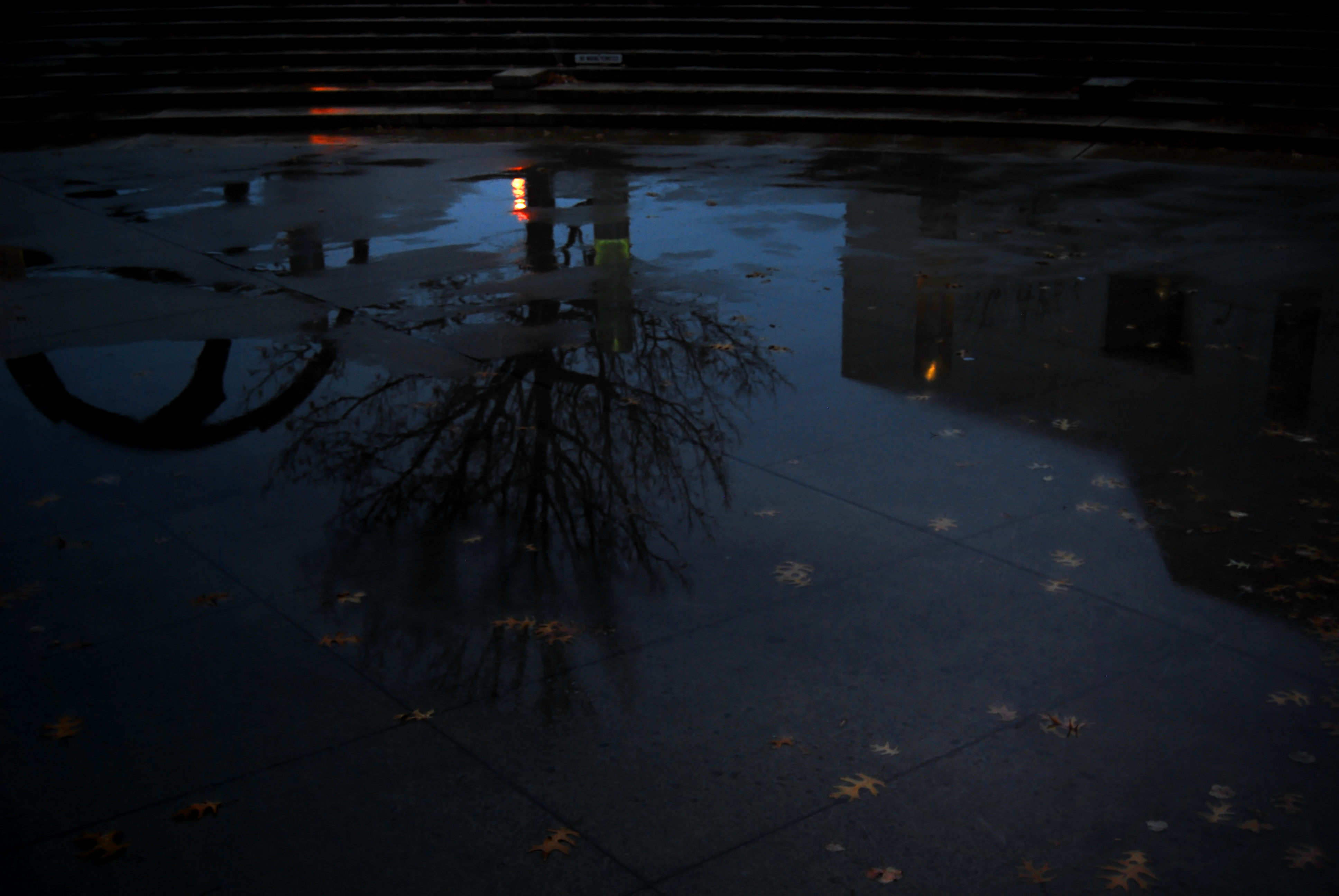
Yesterday was one of those cold, windy, wet, altogether miserable days. It snowed, and the snow turned to sleet, and the sleet turned to rain, and the wind blew hard enough in some of the narrow streets that at times the snow/sleet/rain was actually flew upwards.

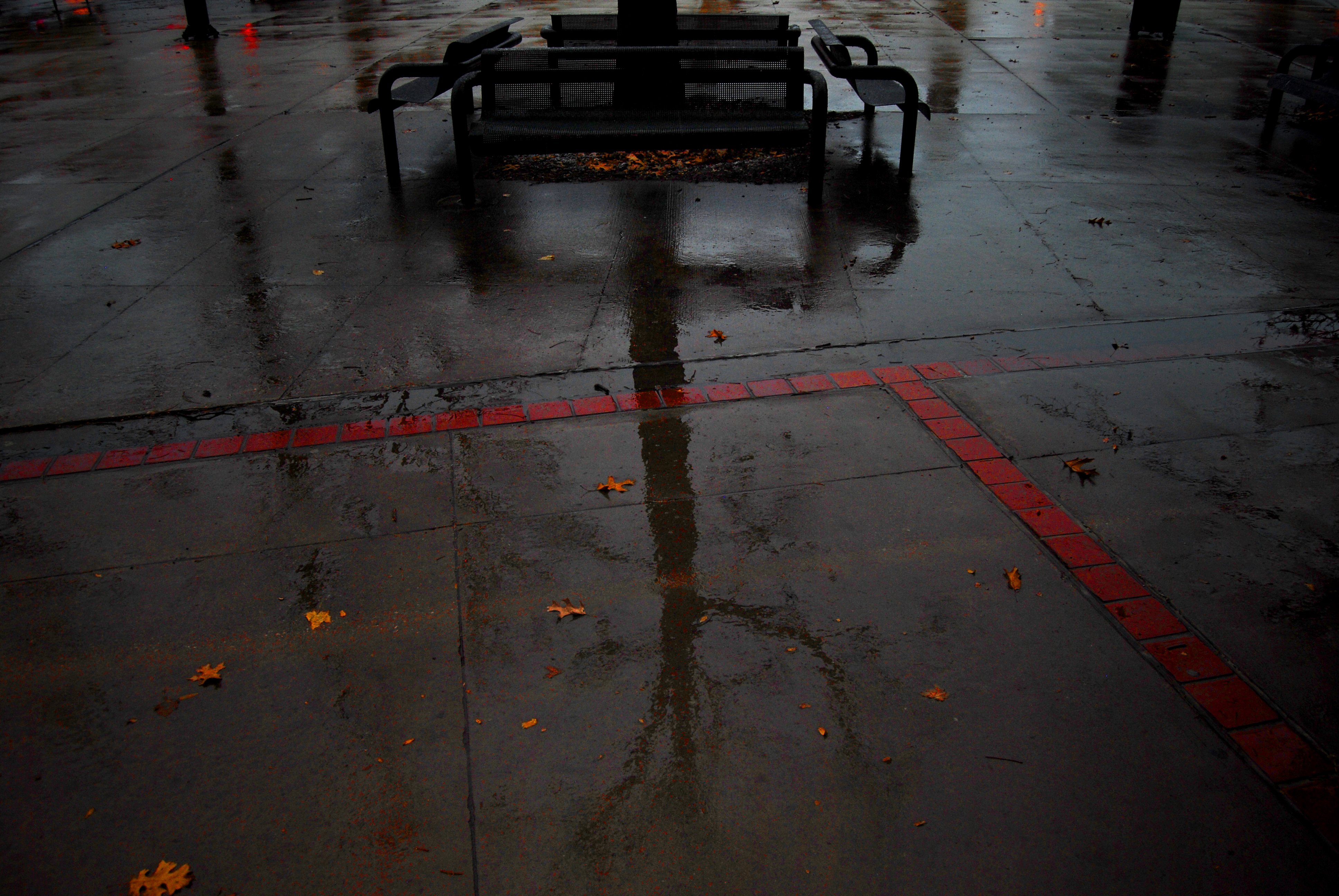
So I went for a walk. Partly because it was Thursday and I belong to a group of folks who traditionally walk on Thursdays. But I’d have gone for a walk regardless of the day, because the snow/sleet/rain layered enough wetness on the streets and sidewalks to make them reflective. Even better, we’ve reached that time of year when it starts getting dark early—which is a thing I both love and hate.

It casts a gloomy pall over the world. Despite having watched every episode of Buffy the Vampire Slayer (most of them more than once), I’m not generally a fan of the dark and the foreboding and the brooding. But it’s a condition that makes for great visuals.

There’s a tipping point, of course—especially when it comes to puddles. Like most folks who’ve picked up a camera, I’m intrigued by puddles. But a puddle that’s too big lacks mystery. It just becomes a reflective surface. But a puddle that’s patchy, that’s barely there, that’s unpredictably disrupted by the contours of the surface—that’s the puddle for me. That’s a puddle with character.

That’s a puddle that will get me outside despite the snow/sleet/rain, and despite the wind and despite all rational thought.

Some day, when all my other projects are finished and I’m casting around for something to do, I’ll develop a taxonomy of puddles. A systematic classification of puddles based on the similarities and dissimilarities of their morphological features.

But no, of course I’ll never do that. I don’t really want to think systematically about puddles. I just want to look at them. I just want to walk around in the gloomy half-light of early evening, freezing my aging ass off in the snow/sleet/rain and look at puddles.

the world is an unlikely place

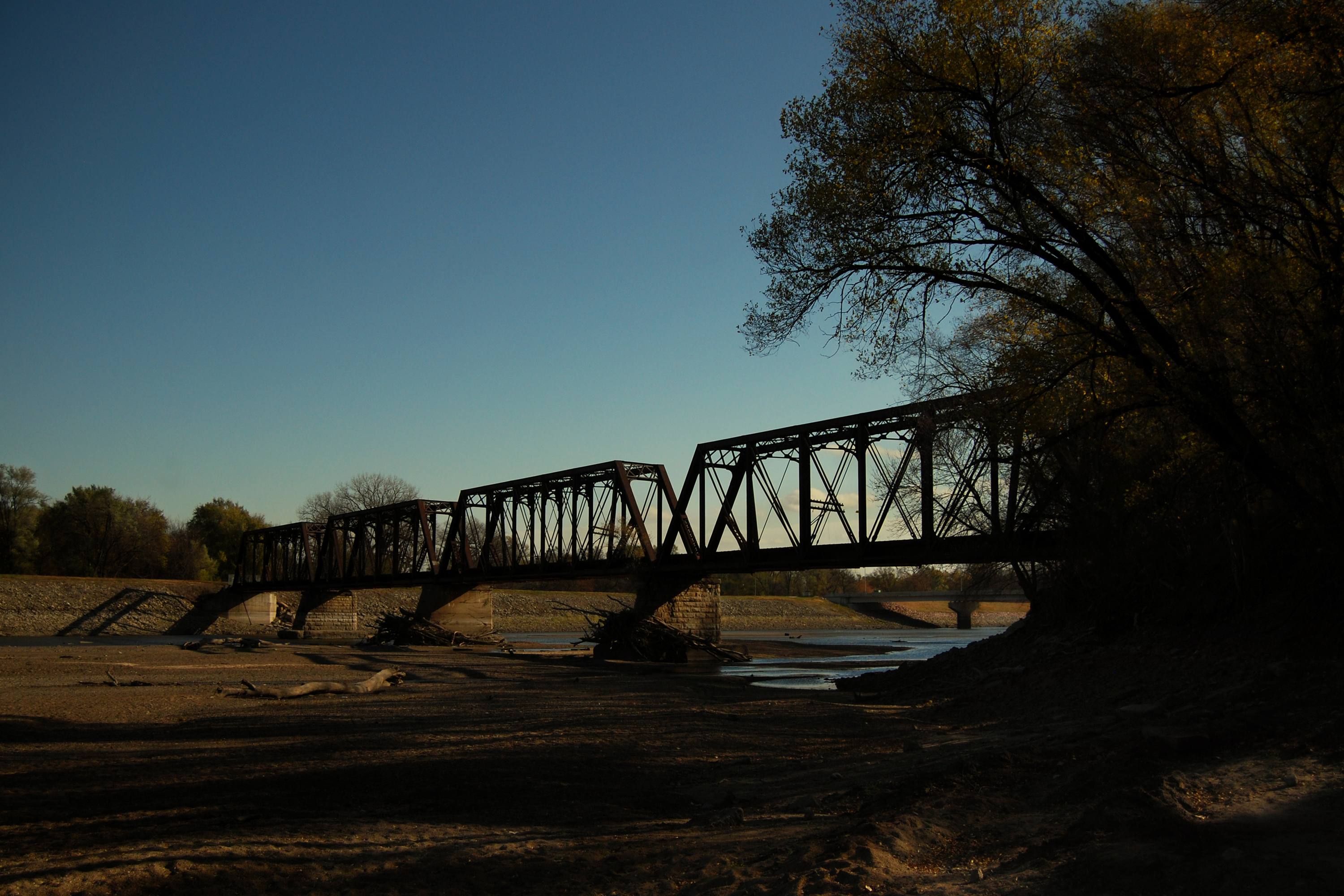
A drought led me to a railroad bridge, which led me to a brick, which led me to an 18th century French fur trader, which led me to the establishment of a major city, which led me back to the railroad bridge. The world is an unlikely place

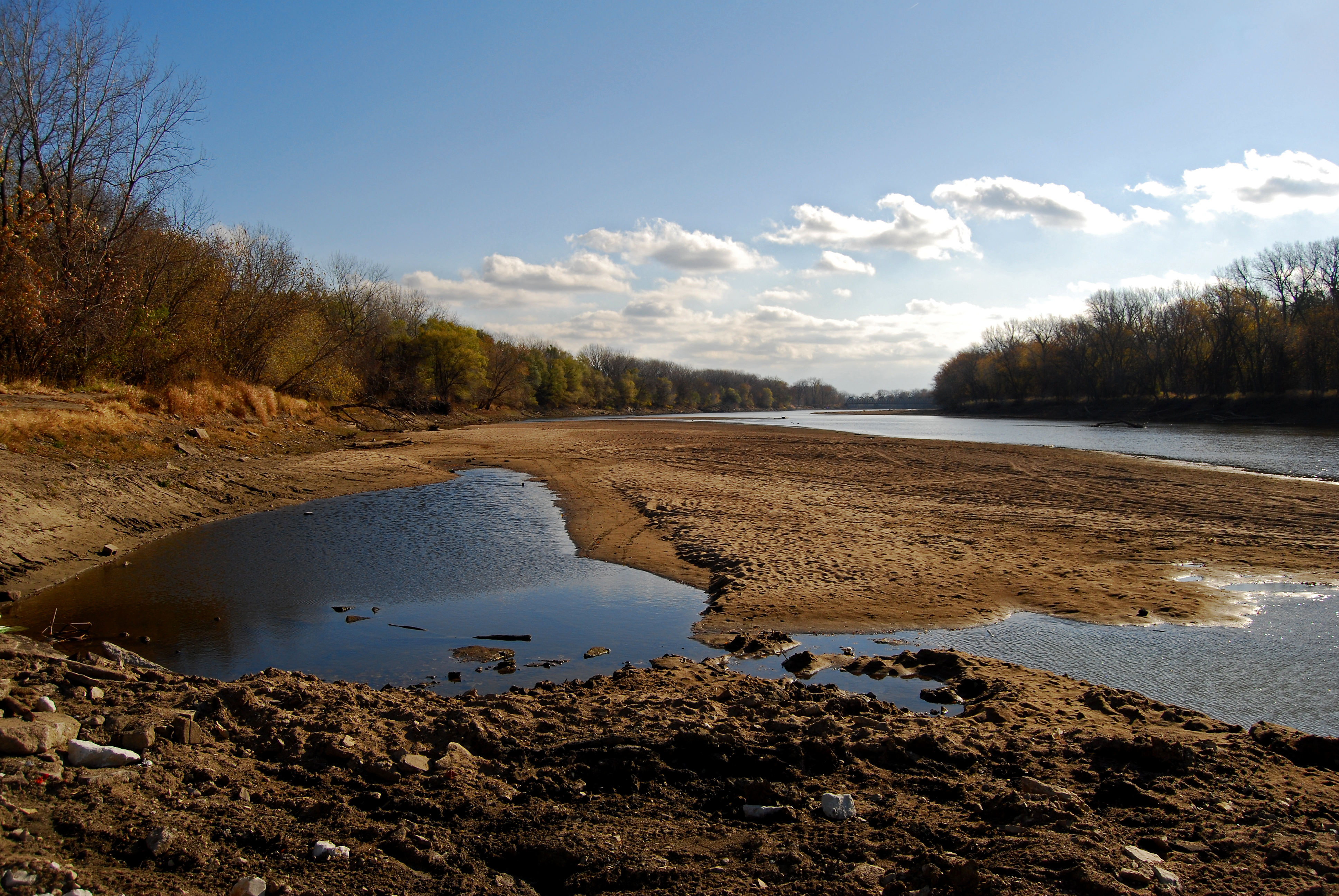
We’ve had a bit of a drought in the central plains of the United States. River levels have dropped dramatically. This is troubling and problematic in any number of very obvious ways. It does, however, create an opportunity for curious people to explore areas that are usually under several feet of water.

Once you start exploring anything, you never know what you’ll find.

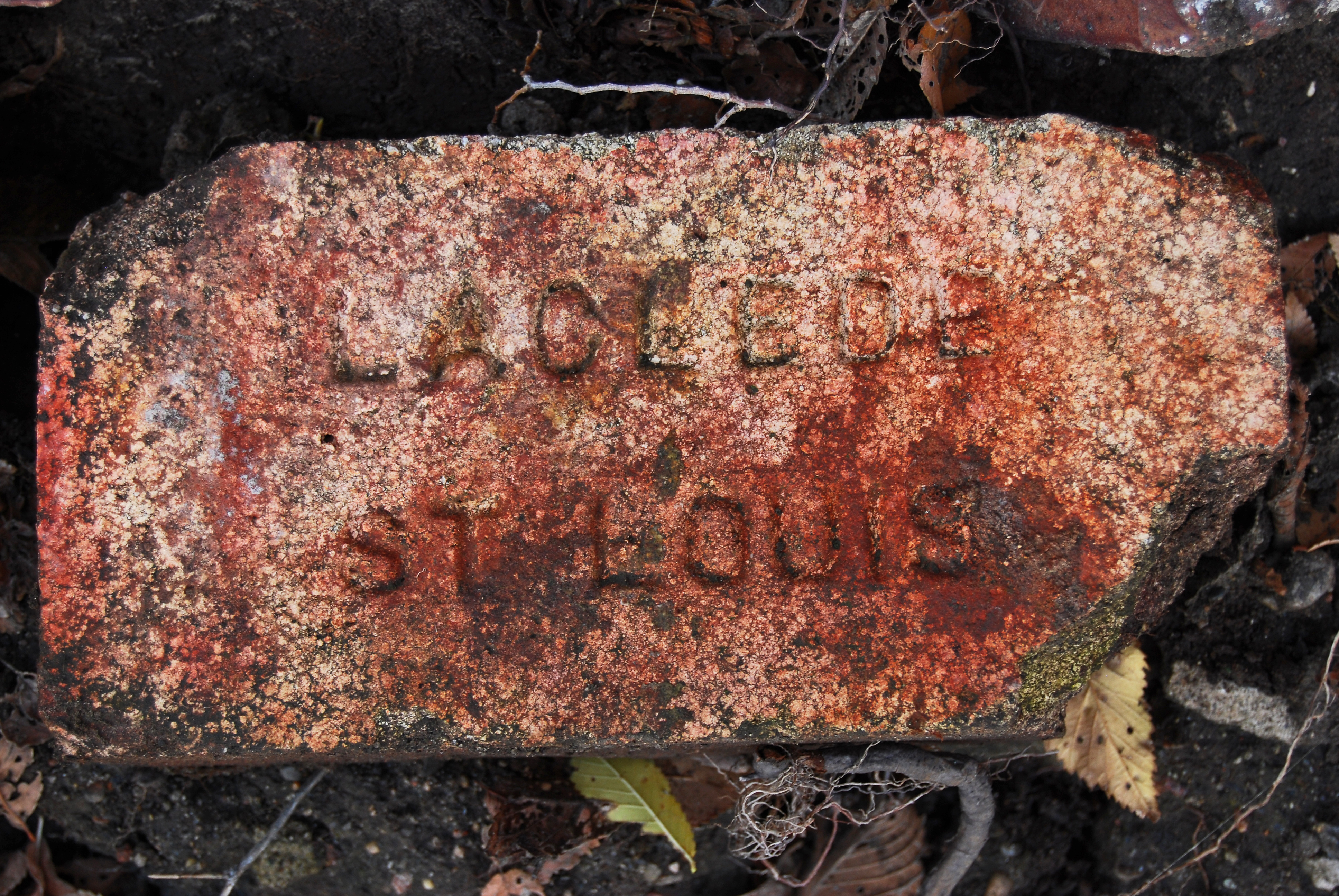
A couple weeks ago my brother Roger Lee and I found ourselves wandering along the river bed near a defunct railroad bridge on the Des Moines River. I explored along the riverbank, where erosion had exposed all manner of odd stuff—included many dozens of old bricks. A lot of those bricks displayed the names of the brick-makers. Among them were several bricks from the Leclede Brick Company of St. Louis, Missouri.

I was curious enough to Google the company. And again, once you start exploring, you never know what you’ll find.

Among the things I found was this: Pierre Laclède was born in 1729 in Bedous, France—a small village in the Pyranees (even today the village’s population is less than a thousand). Laclède must have been an adventurous youth. For reasons we don’t know, he made his way to New Orleans, arriving in 1755. He was 26 years old. Laclède became a fur trader, traveling up the Mississippi River and exploring its tributaries in search of native tribes with whom he could exchange goods for the pelts of beaver, ermine, mink and skunk.

By all accounts, he was a poor businessman, but a very good trader. In 1763, Laclède’s trading company was commissioned to establish a trading post far upriver, near the confluence of the Mississippi and Missouri Rivers. He led a party of thirty men up the Mississippi until he found a gently sloping site with nearby limestone outcroppings. He hoped the limestone would eventually provide the material for stone buildings. Laclède ambitiously laid out a map consisting of three streets and named the trading post after King Louis IX, the only French king ever to be canonized. Saint Louis.

Laclède’s company established a monopoly on furs trapped by the Osage tribe, who inhabited that part of the Missouri River. The fur trade, of course, eventually died. Happily for Laclède’s ancestors (the children he begat with another man’s wife), around the same time the fur trade ended a new brick manufacturing process was being perfected. That process required a certain type of clay (called ‘fireclay’). The best type of fireclay was found near limestone deposits. The presence of limestone, of course, was one of the factors that determined the location of Laclède’s trading post. Laclède’s children owned much of the property where the best fireclay was to be found.

By the end of the 19th century, the Laclède family abandoned the grave over the first ‘e’ in their name and founded the Laclede Fire Brick Company, which covered more than 120 acres on the outskirts of St. Louis, Missouri, and made untold millions of bricks, some of which can be found on the dry riverbed beneath a defunct railroad bridge on the Des Moines River.

The world is an unlikely place, and once you start exploring it you never know what you’re going to find.