
Yesterday I wrote that I didn’t need to write about the war in Ukraine all the time. So this morning, what am I doing? Right; writing about the war in Ukraine. Specifically, all the dead generals. The Russian Army has lost five (and possibly a sixth, though that’s unconfirmed at the moment) generals in the last 25 days. They’ve lost three regimental commanders in the last 24 hours. When I say ‘lost’ I don’t mean they became confused and wandered off; I mean they were killed in combat.
Generals and regimental commanders (in the US military, RCOs are usually full colonels, the rank just below general) hardly ever get killed. They might die of a heart attack or liver disease or something, but they just don’t get killed in combat. They’re rarely close enough to the fighting to be at risk.
You may be asking, “Greg, old sock, why would these Russian generals and RCOs be so close to the fighting?” It’s a valid question (and c’mon, stop calling me ‘old sock’). The answer is, they’ve got to be close to the fighting because failures in their electronic communications equipment force the generals to be there in person to give orders.
You may be asking, “Greg, old…uh, these ‘failures in electronic communication equipment’ of which you speak…what are they?” Another good question, and the answer is both tragic an hilarious. The Russian Army developed a sophisticated, highly secure, cryptophone system called Era. It was supposed to allow secure communication in almost any situation–so long as there is at least 3G cellular telephony available.
What did the Russian Army do at the beginning of their invasion? They destroyed all the cell phone towers. So they basically knee-capped their sophisticated Era cryptophones; they just won’t work. That means the Russians have been reduced to using ordinary cellphones with sim cards to communicate with each other, and those calls are easily intercepted by Ukrainians. Now the generals and RCOs have to get close enough to the fighting to issue strategic orders. Which means they’re close enough to get killed.
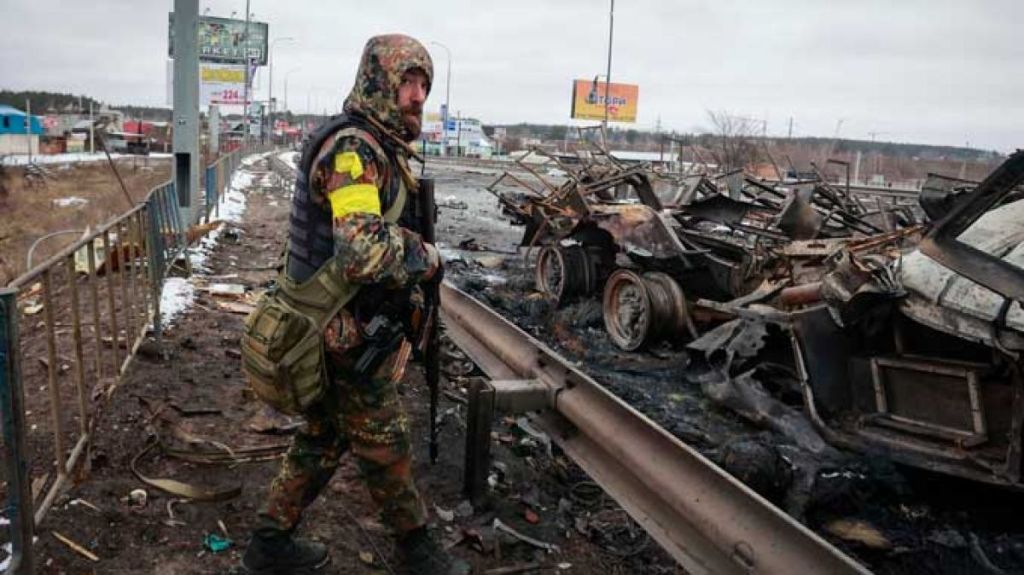
Generals and RCOs getting killed plays hell with morale–both the morale of the troops, who hate not knowing who’s in charge, and the morale of the remaining generals and RCOs who now have to take their place close to the fighting.
To make matters worse for the Russian Army (and yeah, we want to make things worse for them), Russia accidentally acknowledged that almost 10,000 Russians have been killed in action, and more than 16,000 wounded. The WIA number is undoubtedly low. As a general rule of thumb, you can assume two to three times as many combat wounded as combat killed–so the number of WIA is probably closer to 20-30,000.
Here’s another thing to take into consideration: in combat, wounding the enemy is often more effective than killing them. A dead soldier can’t be helped, so troops can ignore them and keep fighting. A wounded soldier, on the other hand, is screaming (which has to be distracting) and requires aid, which means other troops have to stop and treat them and carry them off the battlefield–which further reduces the size of the fighting force.
Again, these casualty numbers are in just over three weeks of fighting. The US, in the 20 years of fighting in Iraq and Afghanistan, had 7,000 KIA.
In an earlier post, I talked about the Russian Army running out of trucks. They’re also running out of generals and combat troops. They should load the remaining troops into the remaining trucks and get the fuck out of Ukraine.
Oh, and fuck Putin in the neck.









 gregfallis.com