nobody burned more bridges

“Nobody burned more bridges than Louise Brooks, or left prettier blazes on two continents.”

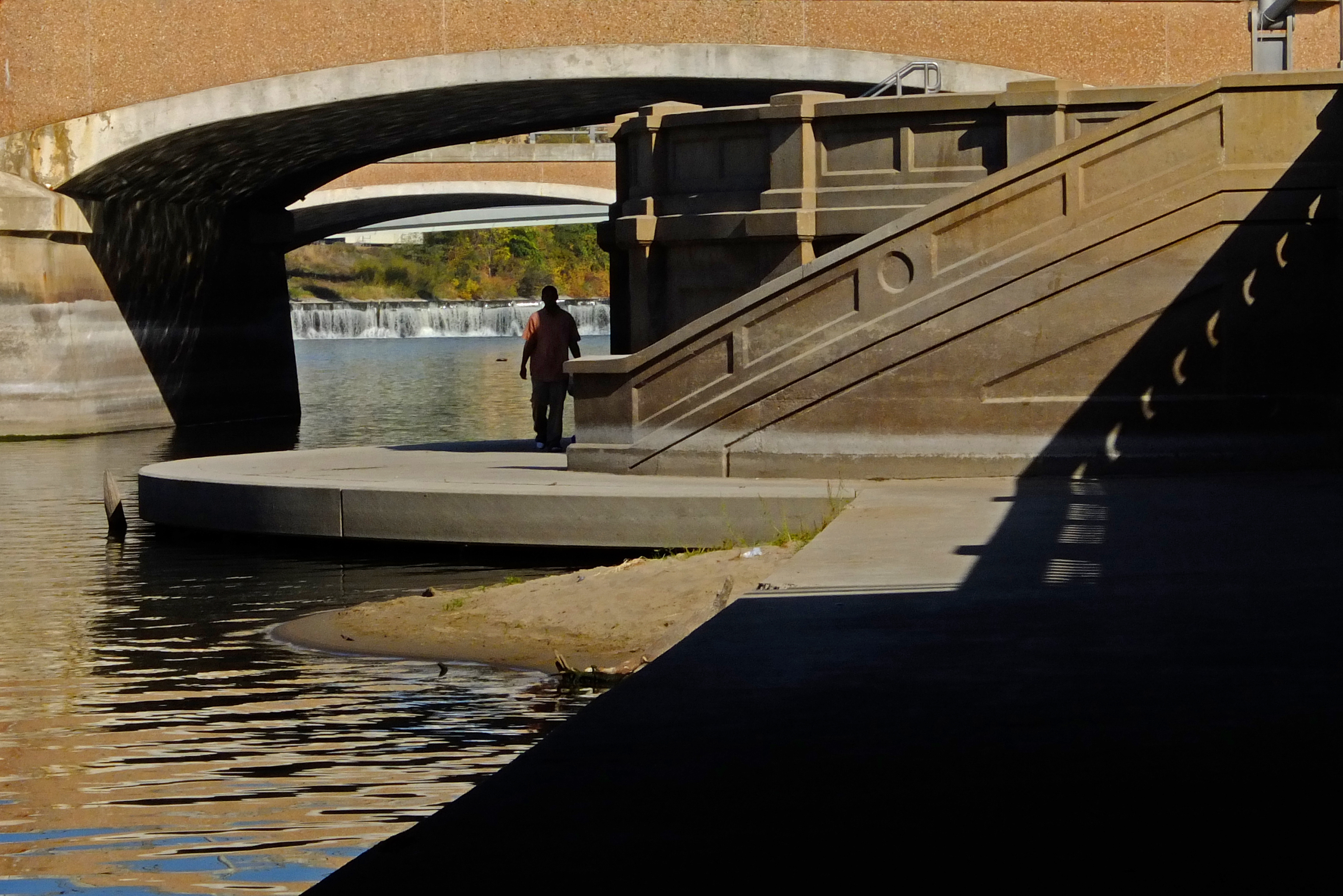
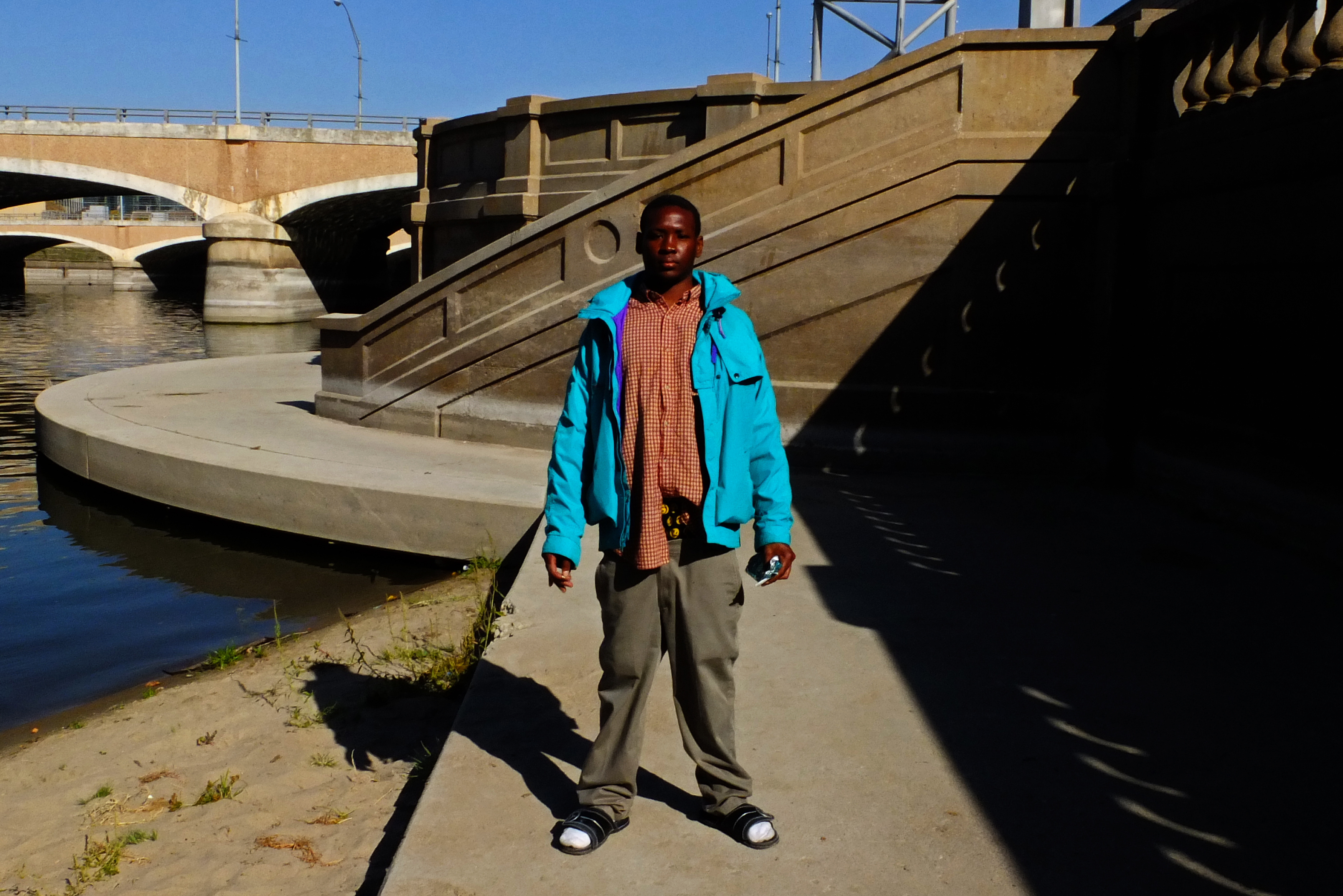
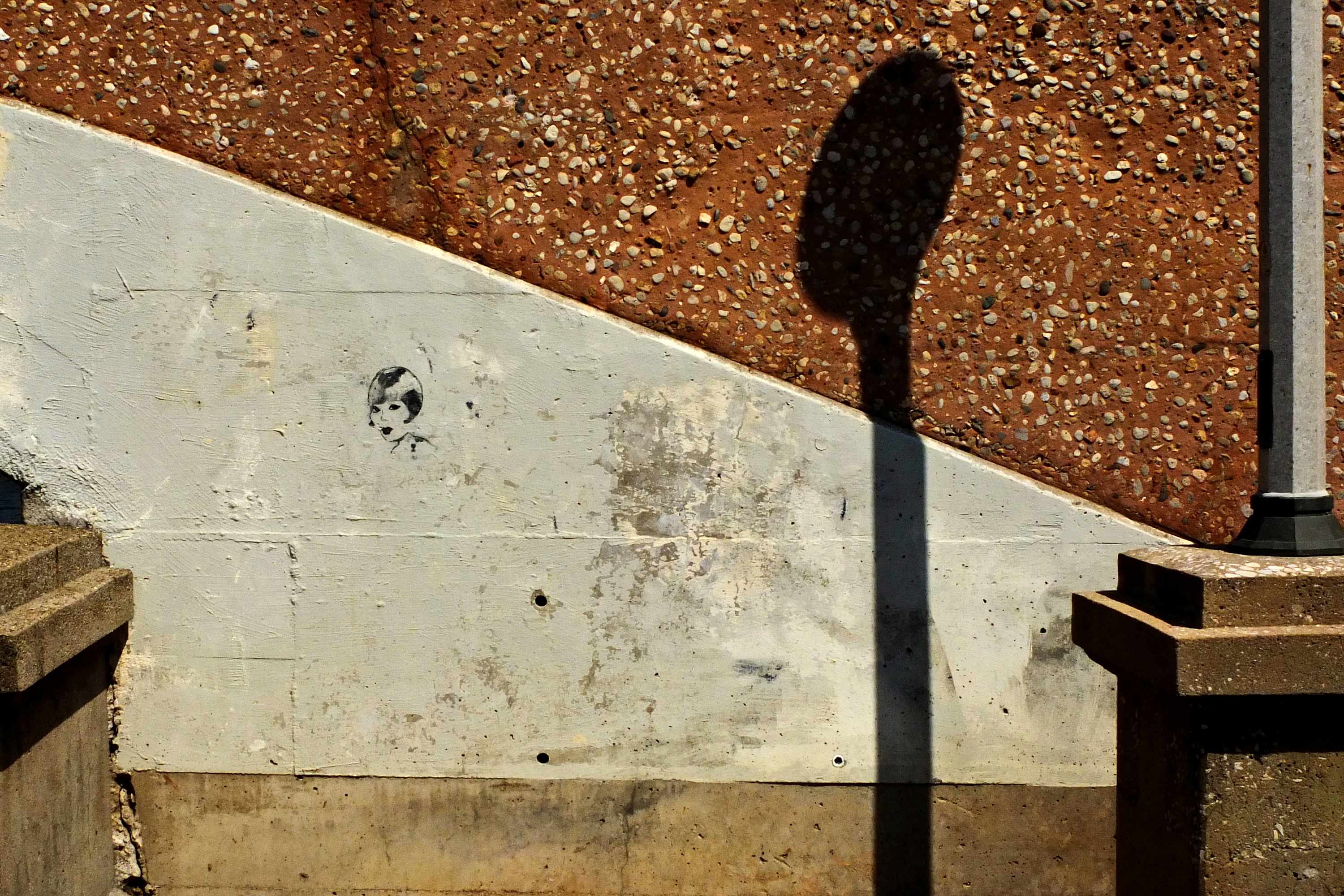
It was a pleasant afternoon and I was strolling along the riverwalk, which is a thing I like to do whenever possible. I was thinking about all the stuff I needed to get done, which is a thing I like to avoid thinking about whenever possible. As I approached one of the many bridges that cross the river I noticed a small sketch inked or painted on the side of the abutment.
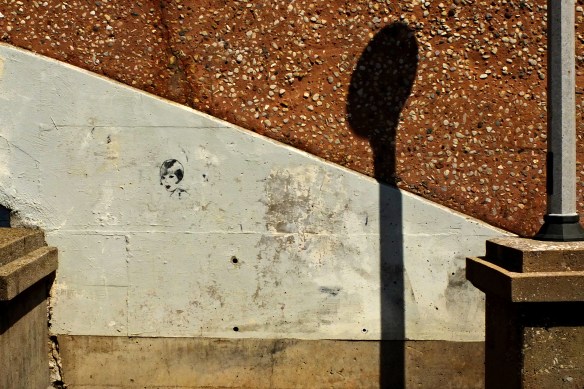
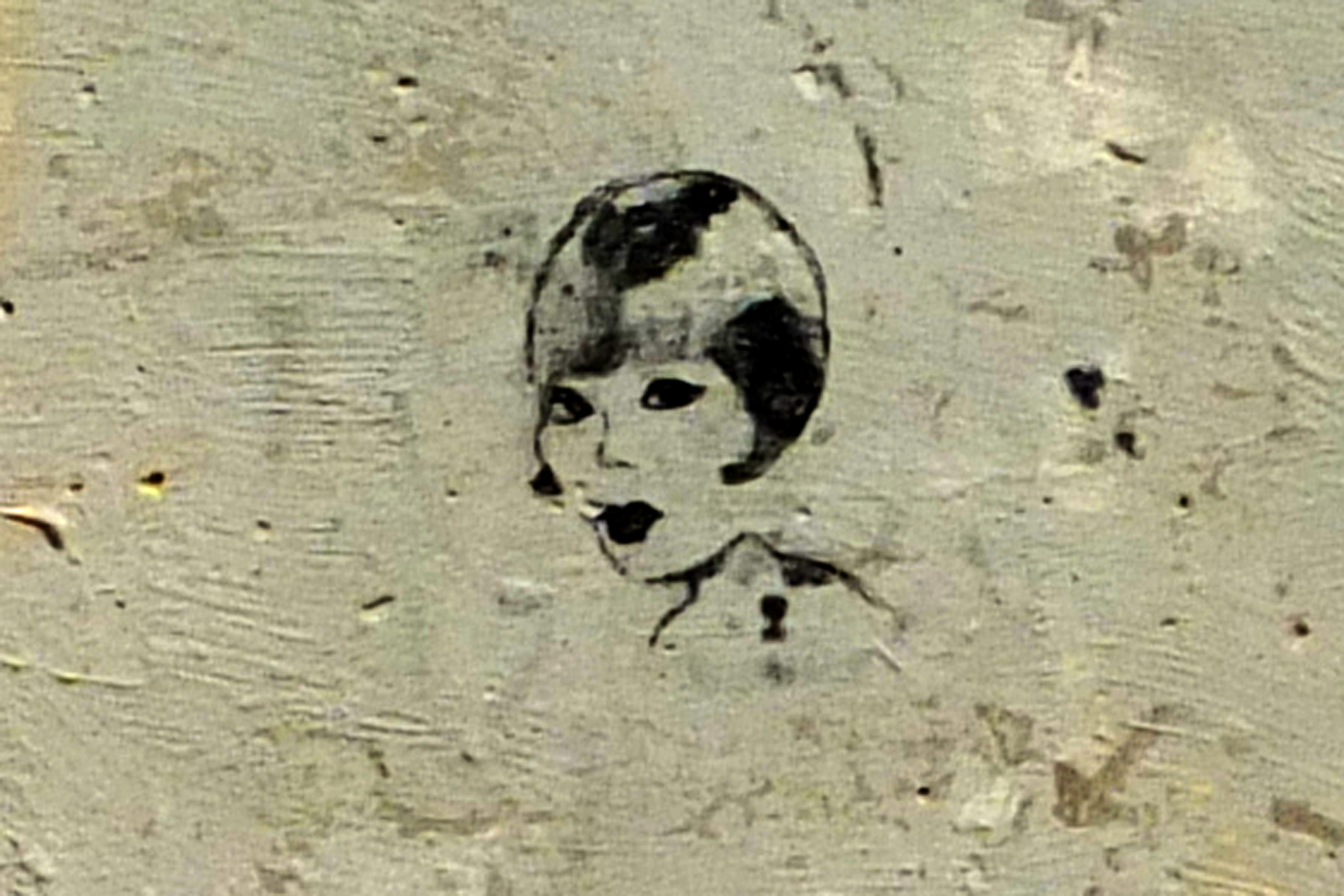
It clearly wasn’t the usual graffiti. It was a woman’s face, sketched small — not much bigger than my hand. There was something very familiar about the face. It was the hair, mostly — that short angled bob — but even the pose reminded me of something I’d seen somewhere before. I knew that face.

I stood there for a time and studied the sketch. There seemed to be a slight Asian quality to her eyes, and I wondered for a bit if it might be a sketch of Anna Mae Wong — the first Chinese-American movie star of the 1920s and 30s. I’d seen a documentary about Wong at some point, and it mentioned her as having gone through a ‘flapper’ period. It might be her.

Anna Mae Wong

Anna Mae Wong

But no. When I returned home, I cracked open my computer and a quick Google search confirmed it. Whoever it was — if it was intended to be a sketch of an actual person — it wasn’t Anna Mae Wong.

But who was it? I was absolutely certain I’d seen that face somewhere. Maybe I’d come across a photo similar in style while researching a Sunday Salon. Some photographer from the 1920s or 30s, certainly. American? Possibly, but more probably European. A French photographer, perhaps. That hairstyle, though, definitely belonged to the flapper era. Was that a uniquely American Jazz Age phenomenon? Or was the flapper fashion cross-cultural? I’d no idea.

So I tried a Google image search using the keywords flapper bob. It seemed like a long shot…but there she was: first photograph on the first page.

Her name is Louise Brooks, and she wasn’t European. She certainly wasn’t French — at least not by birth. She was born in 1906 in a small town in Kansas, of all places — a town with the improbable name of Cherryvale. She wanted to be a dancer, which was quite an ambition for a girl from Cherryvale (which, at the time she was born, had a population of about 4000 souls — almost double the current population, which tells you something about Cherryvale, Kansas).

Louise decided to do what all ambitious Midwestern girls dream of doing: she packed a bag and went to New York City. That was in 1922; Louise was 15 years old.

She was accepted into the Denishawn Dance Company, run by famed choreographers Ruth Saint-Denis and Ted Shawn. By 1923 she was one of the company’s principal dancers. By 1924 she was fired from the company because of her temper. By 1925 she was dancing in London, where she gained some notoriety for being the first woman in England to dance the Charleston on stage. Later that year Louise returned to the U.S. and signed a five year contract with Paramount Studios. She was 19 years old and they told her they wanted to make her a movie star.

And lawdy, they did. They surely did.

She made a number of silent films in the U.S., and her signature hairstyle quickly became adopted by young women all over the country. For the most part Louise played flappers and vamps, roles for which she was perfectly suited since she actually was a flapper and a vamp. Her career at Paramount was tumultuous — she drank too much, she had affairs with men and women (including Marlene Dietrich), she argued with the studio executives, and she alienated directors and producers by ‘reading too many books’ and having too many opinions.

And once again her fiery temper caused her to be fired. As before, Louise responded to being rejected by going to Europe and becoming a success. In 1929, at the age of 23, she made the film for which she’s best known: Die Büchse der Pandora. Pandora’s Box. Here’s how the movie is described:

The rise and inevitable fall of an amoral but naive young woman whose insouciant eroticism inspires lust and violence in those around her.

Louise played the role of Lulu, the ‘amoral but naive young woman.’ The movie itself is confused and disjointed, but by all accounts Louise personified the role. It lifted her from the status of ‘movie star’ up into the category of ‘movie legend’ and eventually ‘cult figure.’

Her life continued at the same dizzying, passionate pace. She returned to Hollywood, she married millionaires and divorced them, she argued and seduced and drank and danced, she posed in the nude for photographers, she made two more films (one with John Wayne) and then abruptly left the movie business. She moved back to New York and spent herself into bankruptcy. By the time the Great Depression rolled around Louise Brooks was broke but well-dressed. She worked part-time as a salesgirl at Saks Fifth Avenue and part-time as a courtesan, keeping company with the city’s few remaining rich men.

By the 1950s, Louise Brooks was something of a recluse, living in a small New York apartment. Then French film historians rediscovered her and began to revive her films. The critic Henri Langlois declared “There is no Garbo, there is no Dietrich, there is only Louise Brooks.” The French revival sparked interest in the U.S., and caused the film curator of the George Eastman House to track down Louise in New York City. He persuaded her to move to Rochester, NY, where she began to write about her life and acting career. She became something of a film critic herself, and later published an autobiography titled Lulu in Hollywood. When Liza Minnelli was looking for inspiration on which to base her character Sally Bowles in the movie Cabaret, she found it in Louise Brooks. Her life story fueled novels and biographies, it drew the attention of documentary filmmakers, and even became the underlying concept of a popular and influential Italian erotic comic book series — Valentina.

That face went from Cherryvale, Kansas to New York City to London to Hollywood to Germany to Hollywood again and New York City again to Rochester, NY and now it’s on the side of a bridge crossing the Des Moines River, some four hundred miles from Cherryvale. That’s a hell of a journey. It’s a hell of a story. Louise Brooks was a hell of a woman.
from the world of the batshit crazy

A couple times a week I visit a few extreme right wing conservative websites. I tell myself it’s because it’s important to try to understand people with whom you disagree–even if you disagree strongly. And I believe that’s true. But it’s also true that I visit those sites because they make me laugh. Sometimes they’re so wildly illogical that you have to wonder if they’re actually parody. Maybe some sort of performance art.

Sometimes, of course, those sites are just sad and pathetic. And sometimes there is so much hate and rage behind the posts that it’s a tad frightening. And then there are the times when they become so batshit crazy–so divorced from anything remotely resembling reality–that they generate a sort of out-of-body, hallucinatory experience.

Today was one of those days. It all begins with a White House photograph showing President Barack Obama wearing a pair of glasses while napping on a sofa. But wait, you say, the president doesn’t wear glasses. So why is he wearing them? And why would he wear them when napping?

Because those aren’t just any old pair of glasses. No sir, no ma’am–according to a few right wing bloggers, those are the very glasses worn by Malcolm X on the day he was assassinated!

How did the president obtain those glasses?

From his mother, obviously. There is speculation (and seriously, I’m really not making any of this up) among some of the more lunatic right wing Obama-watchers that Malcolm X was actually the president’s biological father. If a person is capable of believing that, then it’s only a short walk down Loopy Street to believing Obama’s mother was present in the audience on the day Malcolm X was murdered. And if she was there, then…

…the pandemonium that ensued when Malcolm was shot dead on that stage could have left Stanley Ann Dunham ignored while the slain leader’s distraught wife and family members hurried to the hospital…. Did the President’s mother grab these glasses for safe keeping to give them to her son? Was she ignored, forgotten? Were these glasses all she could take away from that horrible scene?

If it’s possible, then it must be true! There’s no other logical explanation for the president to be wearing a pair of glasses while taking a nap! His mother, teenage lover Stanley Ann…unable to follow Malcolm to the hospital because of Malcolm’s wife and child, is left behind, grief-stricken and horrified. And then, almost as if by magic, there, amidst the hideous chaos, are his eyeglasses. His precious, signature, tragically broken eyeglasses. So of course she took them to give to her three year old son, because he’d need them in the future when he’d be napping as president. Any mother would do the same.

What…you want even MORE proof? Here it is:

When Malcolm was shot at the Audubon Ballroom, 21 February 1965, as usual, he was wearing his eyeglasses.

Yet when he was wheeled out, his eyeglasses were off.

Then –

No eyeglasses on Malcolm’s body at the wake.

No eyeglasses at the funeral.

Whatever happened to Malcolm X’s eyeglasses?

Now that we have the White House photo, above, it may not be a mystery after all.

Satisfied now? Malcolm X was Barack Obama’s biological father. How do we know that? Because despite the fact that there’s an unfortunate lack of evidence that Ann Dunham and Malcolm X were ever in the same town at the same time, he and President Obama sorta kinda look alike (I swear, I am NOT making this up). Malcolm X was assassinated and his glasses mysteriously disappeared. How do we know that? Because they’re not in a photograph of the crime scene, and any disappearance is mysterious by definition.

But since there’s now indisputable photographic evidence that non-eyeglass-wearing Obama is clearly wearing glasses while napping, and since he’s indisputably the love child of Malcolm X and since Malcolm X’s indisputable glasses are indisputably nowhere to be found, surely there can’t be any dispute. Those MUST be the glasses of Malcolm X.

Welcome to the world of the batshit crazy.

stupid piled on stupid

Honest, I do NOT want to keep writing about this ‘stand your ground’ stuff. But I declare, it seems like every twenty minutes something completely predictable and completely stupid happens–and what’s the point of having a blog if you can’t take a moment out of the day to point out the effect stupidity has on the world around us?

You might have heard about the series of shootings in Tulsa Oklahoma over the weekend. A couple of white guys drove through a predominantly black neighborhood the night before Easter and shot five random black guys, killing three of them. Two men–Alvin Watts and Jake England–have been arrested and charged with the crimes. The motive appears to be generally racist and generically vengeful. The shootings took place on the second anniversary of the killing of England’s father. The man who shot and killed England’s father was black; he wasn’t charged with murder because Oklahoma is another ‘stand your ground’ state and he claimed self-defense.

It seems fairly certain that the earlier ‘justified’ killing, fueled in part by some non-specific racism, has led to these recent ‘unjustified’ killings. This is stupid piled on top of stupid.

But stupid appears to be in unlimited supply. There are people who see all these unrelated shootings as engagements in some undeclared race war being implemented by President Obama. I’m not kidding–there are folks actually claiming that. Here are four examples taken directly from four different members of freerepublic.com:

“Much like the ‘War on Terror’, there won’t be any actual declaration that the race war has begun. Just a series of incidents like this. The number of incidents will grow and then a spark will set off a riot in a city or a number of cities.”

“This race riot that Obama and Holder started is sickening. I feel so sorry for all my friends in America that remember what our country used to be.”

“It’s just what Obama wanted too. Another way to divide the country, and this is all part of his grand re-election scheme. Think about it, if he loses he’ll blame all the racist whites and spark the final wave of a giant race war in this country.”

“It’s a been a small scale guerrilla war for now. The shootings in Tulsa show that the whites have begun to engage. Look out this summer. A hot summer, high gas and food prices, possible government shutdown over the debt ceiling, war in the mid east, financial meltdown in Europe. Throw in a presidential campaign where the incumbent seems perfectly comfortable orchestrating a racial Götterdämmerung. They’ll be lucky to keep the trucks rolling and the interstates open.”

These folks are as unhinged as the people who keep declaring the world is going to end on a specific date. They’ve been predicting race wars and religious wars and communist invasions across the Mexican border and other lunatic apocalyptic crises for half a century. It’s always on the verge of happening–and even though it never does happen, these folks are waiting for it. They’re armed and prepared and waiting.

And the really truly stupid thing about all this–the stupid conspiracy theories, the stupid laws, the stupid shootings–is that they’re all grounded in nothing but free-floating fear. It’s a volatile feedback loop: stupidity leads to fear, fear leads to a desire for protection, that desire leads to stupid laws based on fear and the stupid belief that guns are a solution, easy access to guns makes lethal violence more likely, lethal violence leads to more fear, and the green grass grows all around, all around.

Stupid. Stupid piled on stupid, piled on still more stupid. Stupid is George Zimmerman following Trayvon Martin because he ‘looks suspicious.’ Stupid is a law that allows Zimmerman to legally shoot that young man. Stupid is a pair of guys ‘avenging’ a death by randomly shooting people who are the same general color of a person who committed an earlier stupid act of violence.

It’s so easy to be stupid. And stupid is so hard to root out.

much fuss, no point

There’s a bit of fuss about this photograph. Some of it’s deserved; most of it isn’t. First posted on the Wipeout Homophobia wall on Facebook, the photo is said to depict a gay pride flag being raised at a U.S. Marine compound in Afghanistan.

The fuss seems to take two approaches, one that disputes the authenticity of the photograph and one that objects to the message of the photograph. The former is almost certainly an extension of the latter. I suspect the people who call the authenticity of the photograph into question are also opposed to gay folks serving openly in the military (or serving at all, for that matter).

The authenticity arguments are pretty…well, stupid. For example, this guy: “No American commander in Afghanistan would allow that to happen. The American flag and guidons approved by the Institute of Heraldry are the only banners displayed in a war zone. It’s a great photoshop though.”

Since there are also photos of the Marine climbing up onto the Hesco bastion with the flag in his hand, it’s highly unlikely the images are photoshopped. But the guy is right about the commander and the heraldry issues. It’s highly improbable that any commander would authorize that flag and the flag doesn’t conform to military guidelines. Of course, nobody has claimed this was an authorized act*, or that the rainbow flag remained there for any length of time. It’s almost certainly just some Marine making a personal statement in support of gay rights.

Should he be punished for it? I have to say yes, though I agree with what he did. I’d certainly expect him to receive some punishment if he’d raised a white power flag or a Nazi flag. I can’t condone the behavior just because I agree with it.

Still, I’m glad this guy did it, regardless of how long the flag was up and regardless if he gets punished for it. Sometimes making a point is more important than following the rules. If you break the rules, you have to be willing to accept your punishment, of course. But there are times when it’s worth it. There are times, in fact, when it’s necessary.

The fact is, being gay is no more a matter of pride than being, say, right-handed. Being gay isn’t an achievement; it’s not something people strive for. It’s just what some folks are. The pride comes from announcing you’re gay or that you support gay rights at a time when gay folks are being marginalized, discriminated against, killed. The pride comes from making a big deal out of something that shouldn’t be a big deal at all, and continuing to make a big deal out of it until it’s actually NOT a big deal anymore.

There’ll come a day when the grandkids of gay folks will look at photos like this and wonder what all the fuss was about. They won’t think that because they’re innocent; they’ll think that because they’ll be right–there’s nothing here to make a fuss about.

* That’s not entirely correct; some conservatives have claimed that raising the gay pride flag in that military compound was part of the “Obama agenda” of “salut[ing] the colors of the homosexual lobby by flying a rainbow flag in place of Old Glory.” Note that ‘in place of.’ Lawdy, these people are phenomenally stupid.

hey bingo, it’s all good

I don’t know how it works for you (assuming ‘you’ are somebody who attempts Iron Photographer projects), but for me the IP process follows a few common patterns. Sometimes I know exactly what I want to do—and even if the final photograph has almost nothing to do with my original idea, the process is smooth and harmonious and I get that whole ‘A garden is a lovesome thing, God wot‘ feeling.

Sometimes I have absolutely no idea at all what to do (even though I help come up with the elements, along with the Blessed Jamelah—may her hair grow long), and I spend the two weeks of the project squatting toadlike and glaring at anything that might possibly relate to the three IP elements.

And sometimes I just say ‘fuck it’ and start jamming stuff together. Which is what I did here. The elements of Iron Photographer 143 are 1) something with a handle, 2) the colour orange (we add the irrelevant letter ‘u’ as a sop to our Canadian and British members), and 3) vignetting. I was shaving and I noticed the blue razor in the mirror and thought “Oh, something with a handle. Hey, bingo—Iron Photographer!” So I brought the razor with me from the bathroom. As I dressed I remembered I owned a seldom-worn orange t-shirt. Hey, bingo—two elements down.

But that would be a pretty dull photo, so I grab an old mirror off the dresser. Orange t-shirt as background, razor on the mirror and hey that’s still pretty damned dull. Wait, there’s an old Coca Cola bottle I’d set aside for the last IP project but didn’t use. Put it on the mirror and lawdy, it’s still dull.

Add some drama. Have the light reflect in the mirror, meter off the reflection. Nope, still dull. Get a sheet of black plastic, wrinkle it up for texture, put the t-shirt back down, fold it over a bit, add the mirror and the razor and the coke bottle, make sure the light is reflecting in the mirror and hey bingo—still needs something. Fuck fuck fuck.

Okay, maybe the bit of red plastic mesh I used in a much older IP project. Find that, knot it up. The red clashes horribly with the orange. I like that. Finally shoot a photo and—well, it’s better, but dull. Still dull. Still missing something.

Shift everything around. Shoot another dull photo. Shift it all around again. Shoot a couple more frames. The phone rings; I ignore it. Shift all the stuff around maybe three or four more times and shoot a couple more frames. Shifting it all around doesn’t help because it’s missing something. Shifting doesn’t add anything.

Study the mess I’ve made on the table for a bit, thinking about any of the bits that might please me. Decide what I like best is the curve of the mirror, and the curve of a fold in the t-shirt, and a curve in the knotted mesh and clearly what it needs is another curve. Grab a hanger from the closet. Slide it into the frame. No…slide it a bit farther into the frame. A bit farther. Too far. And there. Shoot two more frames. Process the one I like most, add a whole lot of vignetting (the third IP element) and…

Hey bingo, IP 143. Done.

Return the phone call I ignored earlier. First thing said: “What’ve you been up to?” And I realize I’ve just spent 90 minutes arranging and rearranging a jumble of random objects that are entirely unrelated to each other in any way. A razor, an old Coke bottle, a bit of mesh left over from some cherry tomatoes (that I didn’t eat, but bought purely because I wanted the mesh), a mirror, a t-shirt, a sheet of black plastic, and a coat hanger? So I confess to that over the telephone. After a long pause, “So, I’m thinking about going to Spain next summer.”

The phone calls ends after a brief chat. I look at the photo. It makes no sense. Nothing even remotely like sense. I consider deleting the photo. Then I figure, “What the hell. It’s Iron Photographer. The people who get it, will get it. The people who don’t will still discuss their travel plans with me. It’s all good.”

the evolutionary process

Well. I suppose it’s a good thing that Bosch believes in evolution. That certainly puts the company ahead of the entire field of Republican presidential candidates.

But perhaps this is a way to make evolution palatable to those Republicans? Maybe they’ll accept the science if it suggests women were created by god to do laundry—and evolution has made them fit to do it in heels.

still talking

It was 34 degrees Fahrenheit when I gave into the fool notion to take a walk yesterday. I decided to visit the chunk of curbing. It’s been over a year since I first came across it—a small, displaced bit of asphalt curbing around which somebody had tied a length of red PVC wire fashioned into a sort of carrying handle. The bit of curbing had been toted a short distance from its original location—though I’ve no idea why anybody would do such a thing. It made absolutely no sense at all. That, of course, was its appeal.

After discovering it, I returned periodically to the site (an old, deteriorating parking lot that once surrounded a supermarket, but now surrounds the grassy field where the supermarket used to be) to look at and ponder the meaning of the chunk of curbing and the wire. It attracted attention from other folks as well. I never saw them, but the chunk of curbing was moved on at least one occasion.

Since I tend to over-think almost everything (apart from my behavior) I developed the conceit that I was engaged in a sort of ongoing conversation with the chunk of curbing. I looked forward to seeing it, which I realize sounds completely unhinged. But there it is. I’d developed a peculiar fondness for a bit of molded asphalt.

On my last visit—back in October—I noticed somebody had tried to move it again, and the red PVC wire had completely snapped. The chunk of curbing and the red PVC wire were no longer connected. I fully expected the next I visited the lot, the wind would have swept the PVC wire away. The conversation seemed to be over.

But I was wrong.

As you can see, the red PVC wire is still there. Totally divorced from the chunk of curbing, but it’s still there. I’ve no idea why; we’ve had serious wind storms—storms powerful enough to knock down trees. And yet there it is, splayed out slightly differently than before but in what appears to be the exact same spot. The original chunk of curbing, along with a companion chunk that appeared some months ago, seem to have moved again—which is entirely inexplicable and illogical. But against all expectations, the wire and the curbing are still there.

I find that reassuring. I guess the conversation isn’t over yet. I’ll visit again in a few weeks and see what I can see.

one conversation is nearly over

For almost a year I’ve been visiting an odd bit of curbing in a vacant lot where a supermarket was once located. There are two or three places where the curbing of the store’s parking lot had been broken up. It’s not clear if that destruction was accidental, intentional or organic. What was clear, though, was that somebody—for reasons entirely unclear—had tied a length of red PVC wire around a chunk of the broken curbing and carried it some sixty feet away.

And then set it down. I’ve been fascinated by it ever since. Why was it moved from its original position? Why that particular chunk of curbing? Why fashion a carrying handle from red PVC wire when it would be just as easy—easier, in fact—to carry it in your hands? And why leave it where it was left? It made absolutely no sense. I loved it.

Over time, the chunk of curbing was moved again—maybe twenty or thirty feet from its last position, and perhaps it would have been moved farther had the red PVC wire ‘handle’ not snapped. On a later visit I noticed the curbing had been overturned and another chunk of curbing had been carried and set down nearby.

It continued to make no sense, and I continued to be fascinated by it. But now the conversation is almost over. On my last visit, the curbing had been moved once again.

As you can see, the chunk of curbing has been moved and the red PVC wire left behind. In fact, both chunks of curbing have been shifted a few feet from their last positions.

I suspect kids are responsible for most of the recent moving, if only because young boys do things for reasons even they don’t understand—or no reason at all. It doesn’t matter, really who moved them, or even why. There’s something appealing about these migrating chunks of curbing. But the wind will probably blow away the red PVC wire eventually. And then the conversation will be over.

I’ll continue to visit the vacant lot, of course. There’s something about the slow reclamation process that I find weirdly comforting and attractive. There’s a sort of drama to it, though a very patient drama. It’s a different sort of conversation—less peculiar, more fundamental.

This abandoned lot is set on a fairly busy thoroughfare in a moderately poor neighborhood. Nearby is a car-wash, a small local Latino-operated auto repair shop, and an indie copying center that never seems to have any customers. The road noise is vicious—at least until you get near the back of the empty lot. Then it becomes muted, and it’s difficult to distinguish between the road noise and the sussuration of wind through the trees.

It’s not quite tranquil. But you can sense that tranquility used to exist here, and may some day return. That’s a conversation I’d like to join.