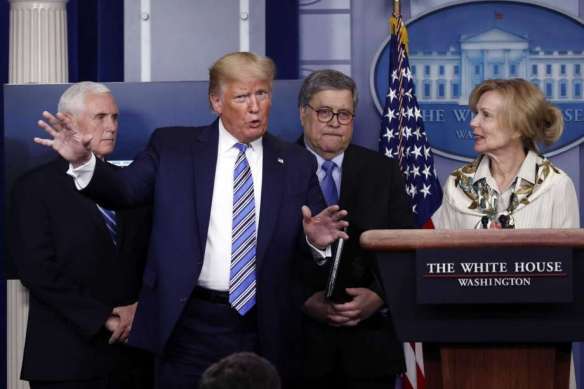
Comrade President Donald Trump is, of course, the worst possible leader in any sort of crisis. Because he views everything through a transactional lens, he’s singularly inept when it comes to a medical crisis. I mean, I understand he dislikes criticism, even (or especially) when it’s deserved. But to delay or withhold critical medical equipment from a state because that state’s governor was mean to you? Jesus suffering fuck, what a petty-minded, vindictive thing to do.
But here’s Trump:
I don’t believe you need 40,000 or 30,000 ventilators. You go into major hospitals sometimes, and they’ll have two ventilators. And now all of a sudden they’re saying, ‘Can we order 30,000 ventilators?’
I have some experience with ventilators. This is how old I am: I was a medic when the military first began developing specialized respiratory therapy units. I was assigned to the first RT unit at the medical center where I was stationed. There were only six medics in the unit, two of whom were senior NCOs whose duties were largely supervisory. The other four of us did the actual work — which meant we worked 24 hour shifts. One day on, two or three days off.
Sometimes we were busy, sometimes we spent most of a 24 hour shift sitting around waiting for an emergency. For the most part, we spent our shifts giving positive pressure breathing treatments, nebulizing patients with asthma, checking on patients getting oxygen through nasal O2 tubes. For critically ill or ICU patients, we also set up and managed the ventilators.
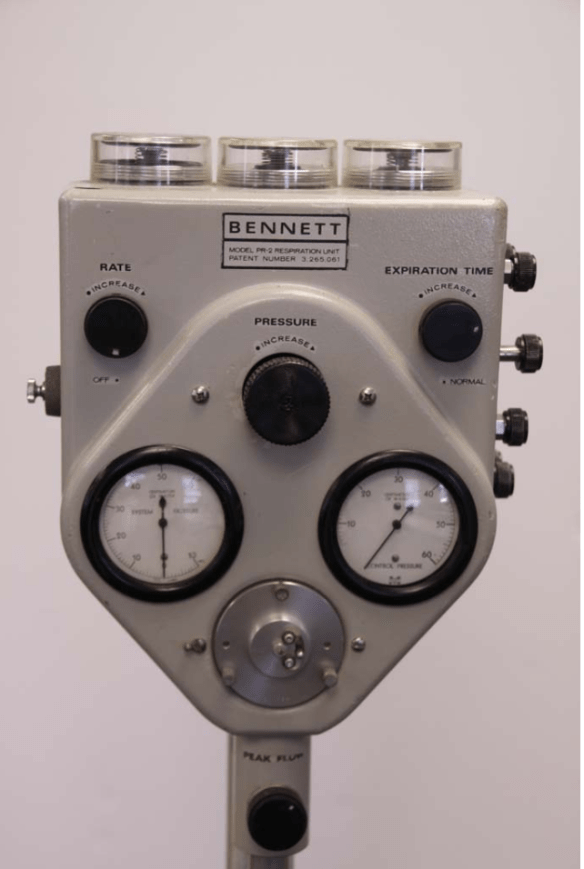
The Bennett PR2, our primary volume ventilator back in the day.
There are basically two types of mechanical ventilators — pressure ventilators and volume ventilators. The ventilators you hear about on the news are volume ventilators, which allow patients with incapacitated lungs to breathe. It’s that simple. Without the aid of a ventilator, patients with badly damaged lungs will probably die.
We had a total of six volume ventilators. We rarely needed more than three. But ‘rarely’ means we sometimes needed more. And there were times during my career when we needed seven.
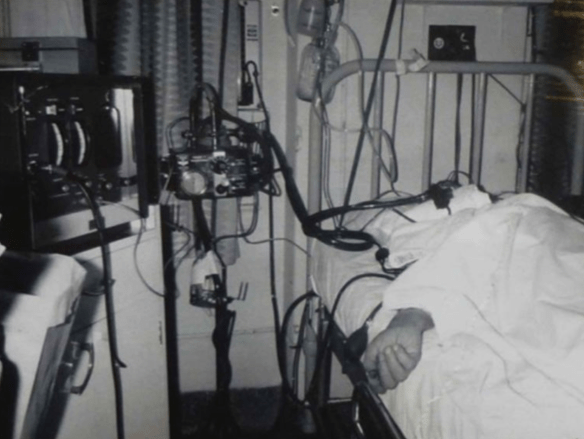
Bird Mk7 — this is what it used to look like.
You can see the problem. When you have six volume ventilators and seven patients who need them to breathe, somebody has to go without. Somebody dies. The doctors make that decision. They decide that Patient A has a better chance of survival than Patient B.
But it’s the technicians who do the work.
Nobody tells you how do that. Remember, this was a new unit. There was no written process — no manual detailing what to do about unhooking a living person from a ventilator. And the first time we got the order, we didn’t have time to consider how to do it. Patient A needed the ventilator. So we winged it.
I unhooked the ventilator from Patient A, the supervisor moved the ventilator to Patient B, and I stayed with Patient A. Until his damaged lungs stopped working. Until his body stopped struggling to draw air. Until he stopped gasping and making sucking noises. Until his heart stopped. Until he died.
After the first time, that became the process. We felt somebody needed to stay with the patient until the patient became a body. We felt the person who unhooked the patient was the person who should stay. If you’re going to kill somebody, you have some sort of an obligation to stay with them until they’re dead.
I’ve had to do that five times.
Patients die. Sometimes even with the assistance of a volume ventilator, the patient dies. That’s part of the job and you accept that. But it’s one thing to have a patient die; it’s another thing to kill them. Even if you’re following a doctor’s orders, even if there’s logic and reason behind the decision, the fact remains that you’re killing somebody.

What it looks like now.
I’m sure things are different now. That was a long time ago in a military hospital and military hospitals operate under slightly different rules than civilian hospitals. As a medic I was allowed — and sometimes even required — to do stuff that wouldn’t be allowed in a civilian hospital. I’m sure now there are medical ethicists who get involved in the process, and there are detailed written procedures outlining the circumstances under which a patient can be removed from a ventilator. I’m sure it’s a lot more regimented and orderly and lawyerly now.
But when it happens, there still going to be some poor bastard doing the ugly work.
Like I said, it was a long time ago and I haven’t thought about this very often over the last few years. I mean, you see something in a hospital scene on television or in a movie and it comes immediately back. But the sad fact is that killing those five people isn’t even in the top five of my most common ugly memories.
At least it wasn’t until recently. Now, because of the news, I remember those five people a few times every day. I remember sitting or standing by their beds, holding their hands, watching and waiting for their bodies to give up and die. And when I hear Trump say nobody needs thirty thousand ventilators, I think about that thirty thousand and first patient. And I think about the poor bastard who’s going to have to kill somebody in order to try to save somebody else.


 gregfallis.com