clothes with history

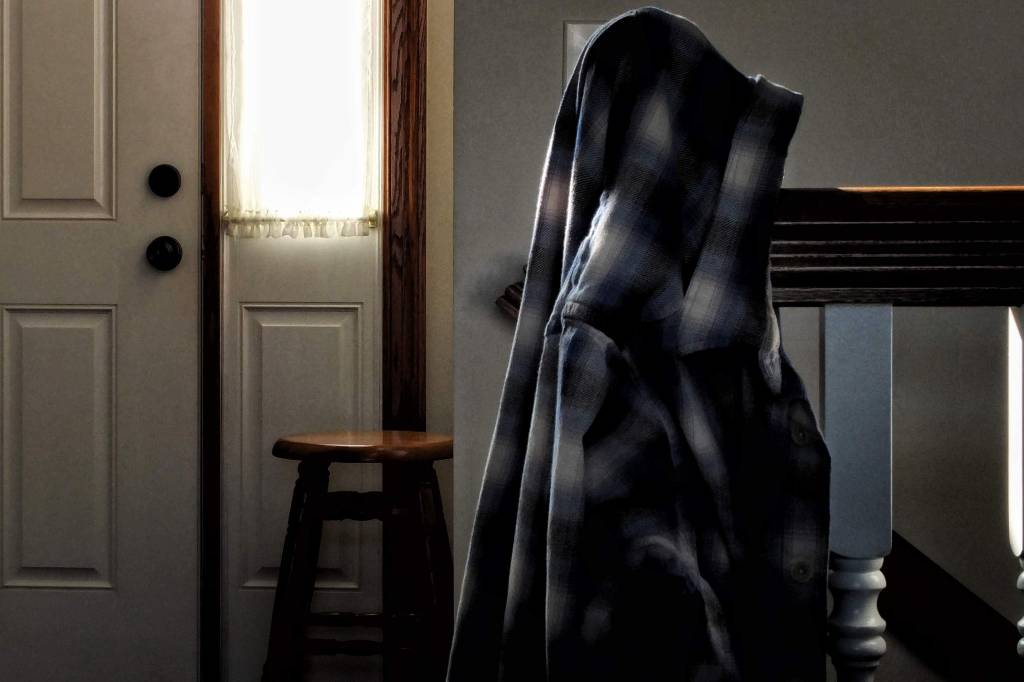
Okay, first: here’s a photograph shot in October of 2020 of a blue flannel shirt draped over a stairway railing. You may be wondering why I’m posting a photo of a blue flannel shirt. Patience, grasshopper.
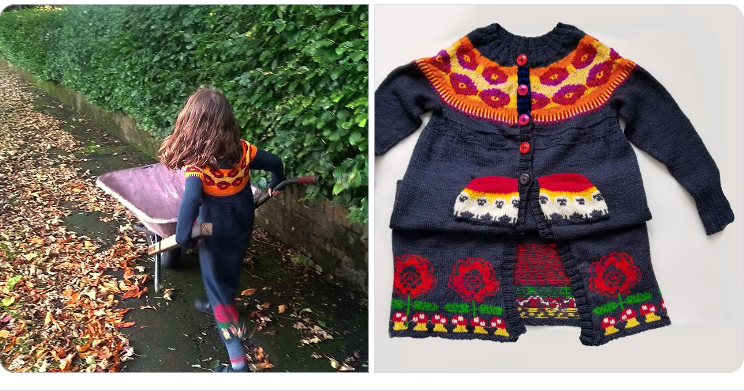
Now, here’s me loafing on a Sunday morning, drinking coffee, scrolling through Bluesky, and I see a post by my friend Kim Denise. It’s about knitting, a subject in which I have absolutely no interest at all; something to do with ‘fingering/4-ply/sock yarn,’ whatever that means. But she’s included a delightful photo of a young girl wearing a colorful knit jacket thingy, pushing a wheelbarrow. Kim explains, “This is a long cardigan/coat I made for a young friend of mine who was four at the time. She requested a number of specific elements. She wore it for years!

Photo by Kim Denise

I don’t know when Kim knitted that cardigan or who she knitted it for, but the child wore it for years, which means she had a history with that piece of clothing. I have a thing for clothes with history. Everybody has some item of clothing they cherish, whether they use that term or not. A shirt, a hat, a jacket, a sweater–something they’ve worn for years, something that’s comfortable or comforting, something that’s been through the wars and shows its age. Something they’ve become irrationally attached to.

For me, it’s that blue flannel shirt. In fact, I’m wearing it right now, this morning. I was wearing it when I saw Kim’s post, which is why I’m writing this blog post.

Here’s the weird thing: it’s not really my shirt at all. I didn’t buy this shirt. In 2001, when I moved from Manhattan to an old farm house in rural Pennsylvania, one of the movers accidentally left this shirt behind. Initially, I considered contacting the moving company to return the shirt. But then I discovered the movers had also walked off with my shepherd’s crook (yes, I owned a shepherd’s crook; it’s a long story) and a hand-carved mushroom-hunting stick made for me by my brother. The moving company informed me no such sticks were reported by the movers. So I kept the shirt. I’ve moved twice since then.
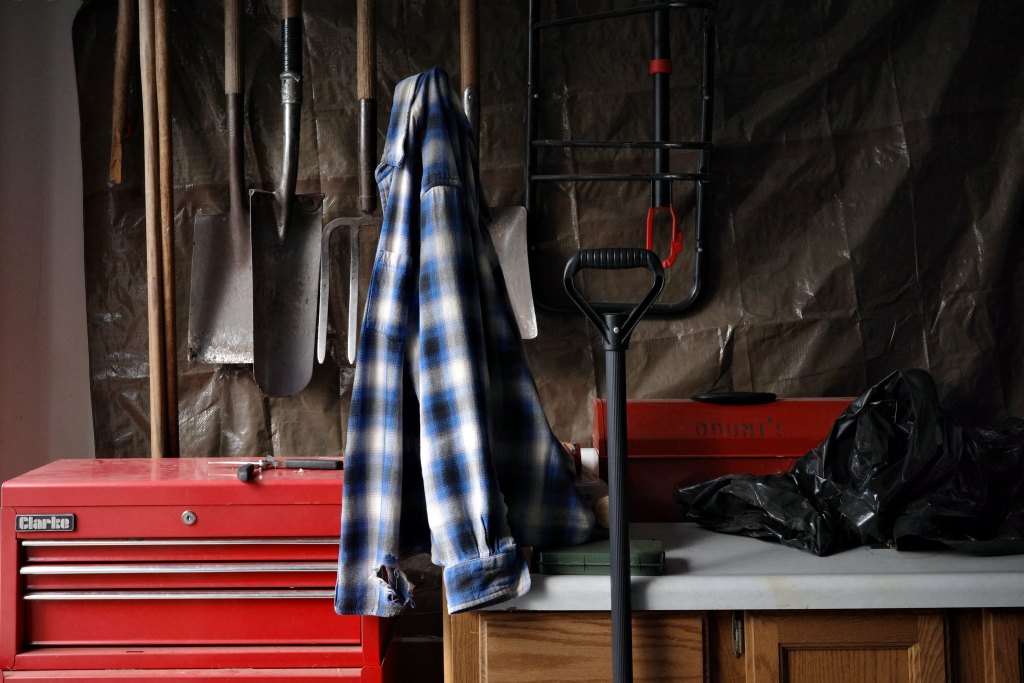
I don’t know how old the shirt is; it wasn’t new in 2001. Twenty-three years later, it’s getting pretty threadbare. These days I wear it exclusively around the house or to do yardwork; it’s too ratty to wear in public now. I’ve actually worn two holes in the front shirttails by fussing with them; the holes occasionally catch on doorknobs and drawer handles, jerking me to a halt. My partner sometimes teases me about the shirt; she says a hobo wouldn’t be seen wearing it.
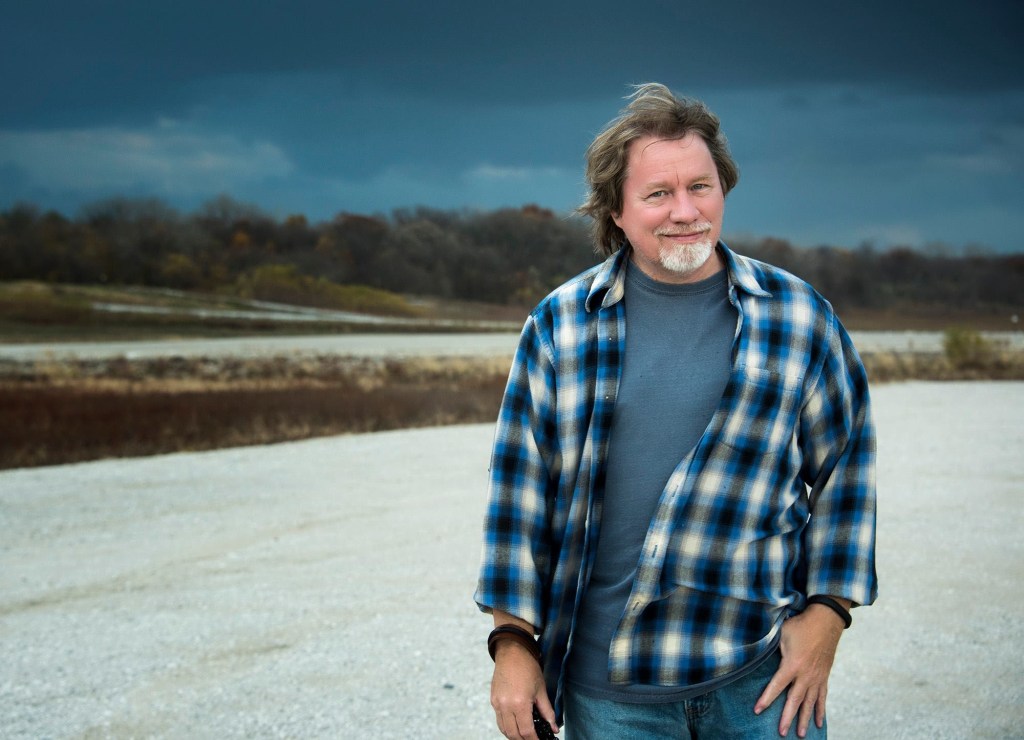
In 2016 (photo by Sweet Jody Miller)

The shirt is soft with age now. Comfortable. I’m afraid to put it in the washing machine for fear it’ll disintegrate. A quarter of a century is long enough to turn flannel into something like gossamer. I have a history with this shirt. I have an irrational affection for it. I’ll wear it until it’s rag-worthy. But I’ll never turn it into rags. This shirt is my friend.
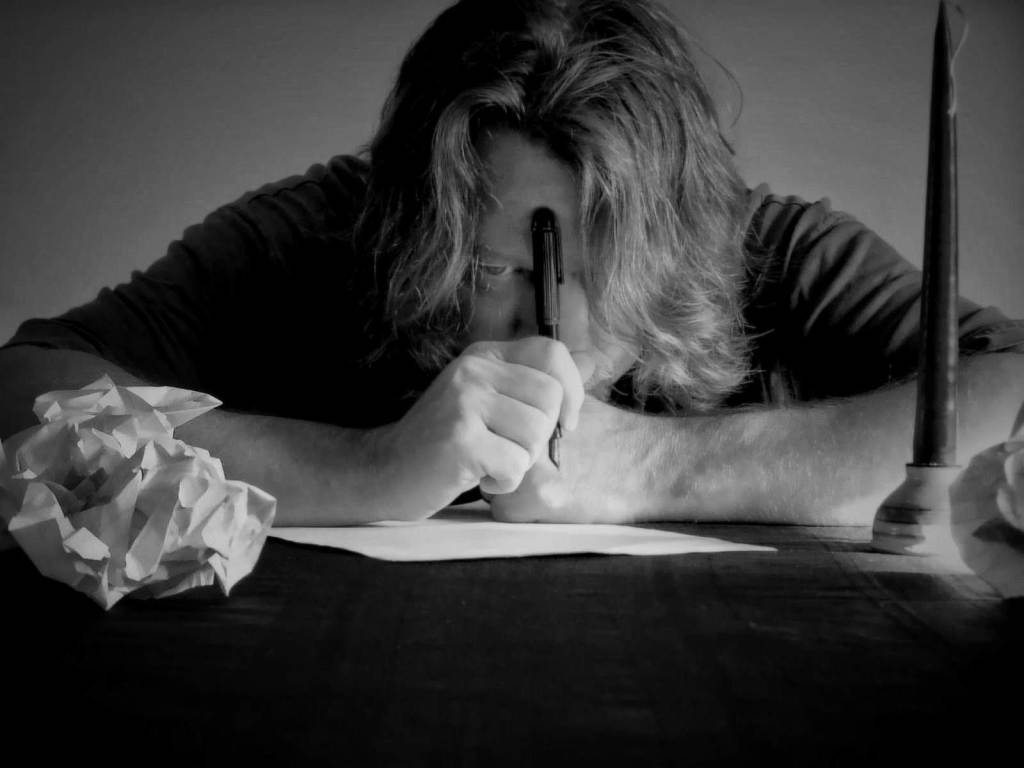
in which I look at an old photo (part 4)

Okay, why am I looking at one of my old photographs? I explained all this back in May, but to recap quickly, I happened across an article on some photo website that suggested looking at and analyzing your old photos as if they were made by a different person. Although that idea strikes me as silly, I thought I’d try it.

This is me, still trying it–although, to be honest and transparent, this is also me trying like hell NOT to think about a future under Trump Unbound. So, the photo.

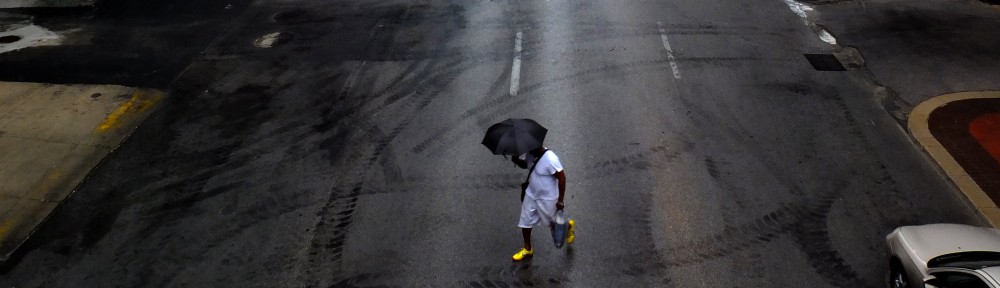
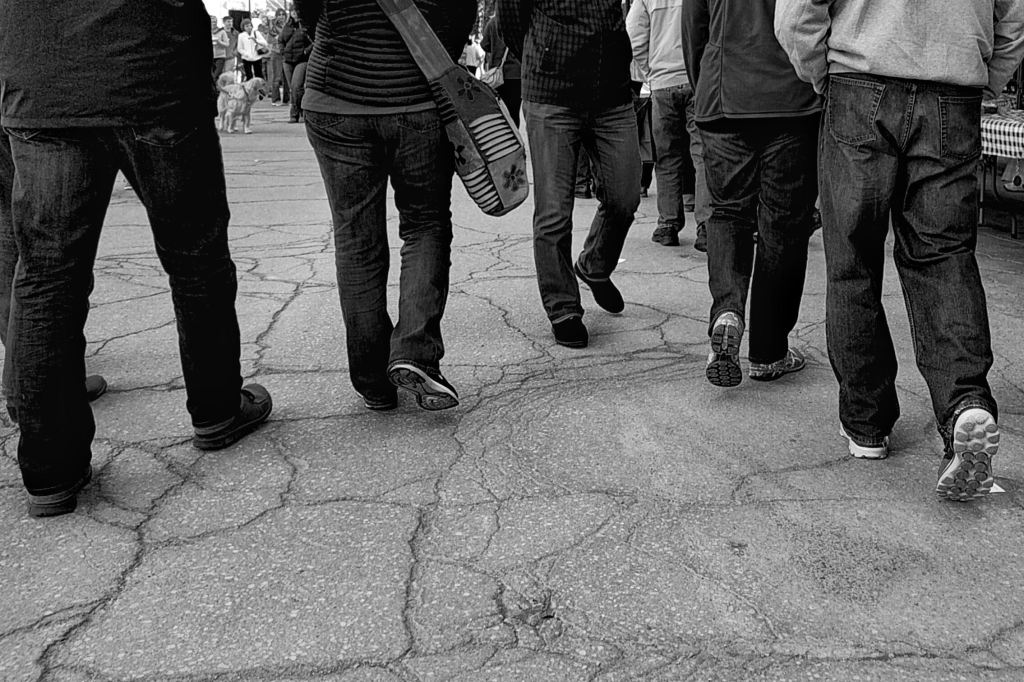
9:22 AM, Saturday, May 14, 2016

Okay, see that dog, barely visible in the upper left hand side of the frame? That dog was my main interest. It was Saturday morning, we were at the local farmers market (which actually has a policy discouraging dogs, but that policy is almost universally ignored, for which I’m grateful). I keep my eye out for dogs at the farmers market because dogs do unpredictable things. Unpredictable things can make good photographs. Unpredictable things in a crowd, even better.

I shot this with my cellphone, using a dedicated monochrome app (well, that’s not entirely true; it was a general photography app that I’d set up as my dedicated b&w app). So I opened the app as I approached the dog. That’s when I noticed the two couples in front of me separate so a man could pass between them. I instinctively snapped a quick frame, then went back to concentrating on the dog.

The dog apparently didn’t do anything unpredictable or interesting, because I have no other photo of that dog. Later, when I downloaded the photos, I was drawn to the photograph above, but I didn’t give it much thought. There was nothing farmers-markety about it, so it didn’t hold my attention. But I kept going back to it. There’s something about the arrangement–ten feet forming a sort of arc; eight feet walking away, two feet walking toward the viewer. Maybe it’s the balance. Or maybe it’s the implied movement, the sense of coming and going, of people fluidly making way for others. I’m sure I posted this photo online in some venue, but I’m not curious enough to track it down.

Why did I choose this photo to re-examine today? I don’t know. Maybe I picked this particular photo to look at on this particular day because it offers a hopeful metaphor. It feels like everything in the world right now is somehow going away, and I’d like to believe that at some point in the future all that ‘going away’ feeling will part and allow something good to get through.

That sounds a lot like bullshit, doesn’t it. It probably is. Like I said at the beginning, the idea of looking your old photos as if they were made by a different person seems silly. Maybe I just need a bit of silliness today.

border collies, civil war, and murder for the fun of it

A million years ago I wanted to write a novel about border collies. I’d just published a detective novel (my first and only) and a couple of nonfiction books on detective stuff, so I was able to wrangle an invitation to spend a few days on a sheep ranch in the Appalachians. It was a wonderful and fascinating experience, and it helped clarify the story I wanted to write. I wrote the first couple of chapters over a weekend.

But the world, as Lula Pace Fortune pointed out, is wild at heart and weird on top. Stuff happened, I moved away from Washington, DC, and the manuscript ended up as a mostly-forgotten file on a thumb drive. I continued to write, but my focus became short detective fiction. Short stories are a more difficult form than novels; they require more discipline to write well, but are more elegant when they work. They also pay considerably less.

I didn’t write a lot of them, but I sold every manuscript I submitted. Well, all but one–and, of course, I like to think the editors made a mistake there. I even won an Edgar for Best Short Story in 2023. But a part of me still wanted to carve out enough time to write another novel-length manuscript. So after Mr. Poe’s head was delivered to my door, I plugged in that ancient thumb drive with the border collie story, downloaded the early partial draft, and started thinking about it.

After reading it, I decided to scrap everything–the plot, the characters, the style. I scrapped everything but the setting and the border collies. I added two sisters–one who’d left rural Appalachia to become a conflict photographer, one who’d stayed home and raised sheep. I added a Civil War diary, whose author died mysteriously after surviving the war. I added a writer for a monthly American history magazine who was interested in the diary. I added a rural community worried about the future of their Civil War memorial, a community suspicious of an outsider poking around in their past. I added an escalating plague of vandalism and racist graffiti. I added a sheriff who tries to cope with the unrest disrupting the community he loves. I added a wealthy, gentleman farmer–a relative newcomer to the community who wants to fit in. And I added townsfolk, some of whom struggle to be decent while being conflicted about their community’s racist past.

Then I killed one of them. Which brings in the State Police, whose presence isn’t entirely welcome and whose agenda differs from that of the sheriff.

It’s taken me about a year to write, edit, and revise the manuscript, but early this afternoon, I put the final period on it. Now I can relax, right? Nope. Now comes the hard part. Now I have to find the energy to start the agony and humiliation of an agent search, which is SO MUCH WORSE than writing.

You know, short fiction may be harder, it may pay poorly, but once you’re done with a short story, you send it off and forget about it. This novel business is work.

13 million

On the morning of 9/11/2001 I woke up, turned on NPR as I got dressed, and heard a report that a plane had crashed into the World Trade Center. I turned on the television just in time to see the second plane hit. It was surreal. It was gutting. I vacillated between disbelief and horror. But I knew immediately that the entire world had just changed, and the change was going to be awful.

Same thing happened yesterday morning. I woke up, turned on NPR as I dressed, and heard the unthinkable news that Donald Trump had won the 2024 election. Disbelief, horror, and the same sinking awareness that the entire world had just changed. And the change is going to be fucking awful.

This morning I woke up and decided not to turn on NPR. I did, though, decide to look at the Electoral College vote. I expected the results to show that, like Trump’s first election in 2016, Trump had won the Electoral College vote while losing the popular vote.

But no. Trump won the popular vote. He actually got more votes than Kamala Harris. I just typed that sentence and it still doesn’t make any sense. How was it possible for Trump to get more votes than Harris? I mean, the guy ran the shittiest presidential campaign in US history. The guy was actually shouting about Haitians eating pets. He’d been convicted of 34 felonies, and found liable for sexual assault. How the fuck did that guy win?

This is how:

2020
Trump: 74 million votes
Biden: 81 million votes (the most votes ever cast for a presidential candidate in the US)

2024
Trump: 72 million votes
Harris: 68 million votes.

That’s how. Thirteen million people who’d voted for Joe Biden didn’t turn up. Thirteen million people just didn’t fucking vote. Thirteen million.

Why? I don’t know. I can’t be bothered to research their reasons. Before the election, I heard people complaining that Harris was campaigning with disaffected Republicans. Maybe some people stayed home because they didn’t like Liz Cheney. I heard people complaining Harris had flip-flopped on fracking. Maybe they didn’t vote because of environmental reasons. A lot of people, including me, were angry because she didn’t denounce the Palestinian genocide as vociferously as she should have. Maybe people sat out the vote as a protest. Maybe some people just didn’t want to vote for a Black woman. Maybe they decided to vote for Jill Fucking Stein or RFK. I heard people complaining about how Harris campaigned, that she didn’t do enough interviews, that she gave too many interviews to the wrong news outlets, that she ignored certain demographic groups. Maybe voters stayed home because they felt excluded. Or maybe some people saw all the enthusiasm for Harris on the news and decided she was going to win anyway so they felt they didn’t need to show up and vote.

The reasons really don’t matter. Not now. They didn’t fucking vote; that’s all that matters. They didn’t vote, and Donald Trump won. He got two million fewer votes than last time, and he still fucking won.

No, that’s not true. Not really. Trump didn’t win. Thirteen million voters gave it to him. Because of reasons.

The Palestinians? They’re more completely fucked now than before. Ukraine, absolutely fucked. Liz Cheney, fucked. The environment, fucked in so many ways you need an abacus to keep count. Trans people, fucked. Immigrants, fucked. People who look like they might be immigrants, fucked. Freedom of the Press, fucked. Reproductive rights, fucked. The list of people and causes that will be fucked over is long and deep. Things are going to get exceedingly ugly in the US. In the world. So very fucked.

Because thirteen million decided not to vote. They may never get the chance to vote again.

EDITORIAL NOTE: I’ve ended a lot of posts on this blog with a rant about the necessity to burn the patriarchy to the ground. I passionately believe that needs to be done. Patriarchy hurts everybody. I’m not going to include the rant today, because the American voters just invited the ugliest aspects of patriarchy to run the government and today I’m just too emotionally exhausted to shout. Tomorrow–or maybe next week, or next month–I’ll be less resigned. But today, the patriarchy has kicked my ass.

the truck is a macguffin

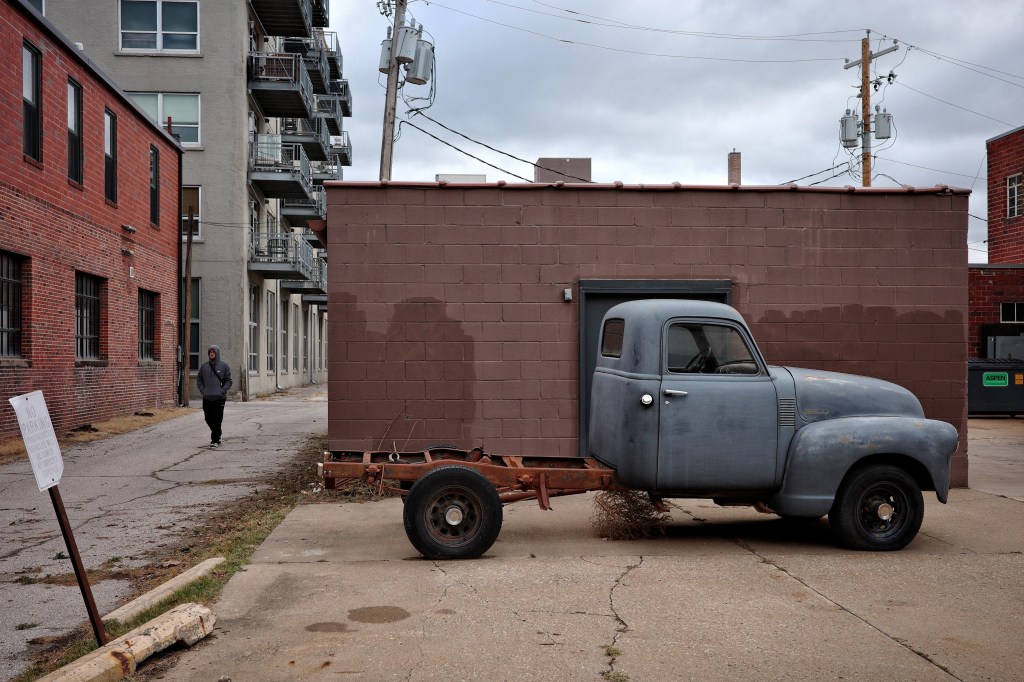
So here’s me, larking about in alleys again. I’ve always had a thing for alleyways. I used to do this frequently, wandering through alleys, looking for stuff that might make an interesting photo. It eventually became a small photo project. I’ve written about how that project came into existence. But like all projects, eventually it came to an end. That was about a decade or so ago.

But yesterday I took a little walk. It was cold and cloudy, damp and dismal, and the light seemed fairly listless. I passed by an alley and thought, “What the hell, why not?” There’s almost always something worth photographing in an alley. And there’s always a lot of stuff that’s almost, but not quite, worth photographing. For example, an old, partially dismembered pickup.

When I spotted this unit, I was certain it had potential. It was a sort of blue-grey; I couldn’t tell if the color was a primer coat or the actual color of the truck. It didn’t matter. What mattered was that it was similar to the color of the sky. Again, that seemed like it ought to have potential. The truck also had a tumbleweed caught below its frame, which I thought might contribute something.

But, no. Nothing seemed to work. I looked at the truck from a distance, I looked at it close up, and while I kept seeing potential, I couldn’t see anything worth photographing. It didn’t help that it was parked next to a cinderblock structure that was painted an unfortunate tawny port color. Had the building been a different color, them maybe something might have worked. But it wasn’t. It was just blah.

I gave it a few minutes, trying to find an angle or an approach that appealed to me. I considered shooting it in monochrome, but even then it felt inert, bland, static. So I gave up and started to walk away. Sometimes the photo just isn’t there.

As I started back down the alley, I saw a guy approaching. He was also rather drab, dressed in grey and black. But he was moving—and, lawdy, his hoodie was almost the same color as the truck. I thought maybe…maybe…adding an active figure in the frame might make a photo of the truck work. So I turned around and headed back.

This is where years of shooting photos paid off. I had only a moment to compose the photo. I knew what I wanted. The truck, of course, but I also wanted that crooked sign on the left half of the frame; I wanted those buildings on the right side of the frame to give the image more depth; I wanted the transformers on the telephone poles along the top. Since I was shooting with a fixed focal length lens, I had to position myself in the right spot (rather than zoom in or out). A step forward, a step back, a step to the left or right—every step made a difference. A step back would have brought in the top of a telephone pole, but it would diminish the figure of the guy. He’d be too small in the frame. Easy decision.

I got the composition I wanted just a second or two before the guy arrived. I also knew I wanted to isolate him and his dark clothing against the light grey building backdrop. I knew I’d only get one chance. I was maybe a tenth of a second late. Not enough to matter, but still enough to make me wince. But still, I had my photo of the truck.

This morning, when I started reviewing yesterday’s photos, I realized this wasn’t actually a photo of the truck at all. It’s a photograph of the guy. The truck is, in effect, a MacGuffin. If you’re not familiar with the term, a MacGuffin is a movie device; it refers to an object or event that sets the plot and characters in motion but is essentially insignificant, unimportant, or irrelevant in itself. The truck that drew me in turned out to be largely unimportant.

I thought I was taking a photo of a truck. It turned out I was taking a photo of that guy. The guy—because he’s in the right clothing, in the right spot at the right moment—holds the photograph together. Without that guy, this would be a dull, static, uninteresting photo. With the guy, it becomes a photograph of a single moment in the long course of his life. The truck is just there; the photo is about some guy wandering by himself down an alley for purposes known only to himself.

Now I think of it, that guy could be me.

Okay, I didn’t expect this post to get so weird.