chik chik chik chik

Guilty as charged in all thirty-four counts. Everybody has a take on this, of course. Most of those takes are focused on either Comrade Trump’s immediate future or the effect these convictions will have on the 2024 presidential election.

Take a step beyond that. Remember that this case–these 34 indictments–was the most complicated and weakest of the four sets of indictments Trump is/was facing. The prosecution had to convince a jury of ordinary people that 1) Trump knowingly falsified some business documents, and 2) he falsified them with the intent to commit another crime. That’s not as easy as it sounds. It’s fucking hard to prove intent, because intent takes place in the mind. In this case, the State was able to prove intent almost entirely because Trump’s malignant personality got in his way.

Trump’s other cases are much less complicated; the evidence in those cases is a lot more clear and easy to understand. The Georgia case has a fucking tape of him trying to strong-arm the Georgia Secretary of State to “find” votes that weren’t there, to “find” enough votes for Trump to claim he’d won that state. There’s SO MUCH clear, easily understood evidence in that case. The Florida documents case? Tons of evidence that he took them, denied he had them, refused to give them back, left them lying about unsecured in a goddamn golf club that was frequently visited by foreign agents, moved them around to make them harder to find, lied about moving them. Sure, the judge in that case is doing everything she can to kneecap the prosecution, but if it ever goes to trial, it’ll be pretty one-sided. The insurrection case has texts, recordings of phone calls, eyewitness testimony, and hours of video of assholes actually storming the goddamn capitol in an effort to stop the electoral college vote, not to mention hundreds of other participants already serving prison sentences.

Compared to those other sets of indictment, the NY indictments were like hieroglyphics. If a jury could figure them out and reach a verdict in the NY case, the other cases should be significantly easier.

chik chik chik chik

What this first case does is further erode the notion that Trump is untouchable. Trump has lost legal cases before, of course, but the last year was (I believe, I hope) the beginning of a cascading sequence of increasingly serious legal setbacks for Trump.

  1. In May of 2023 Trump was found legally liable for sexually abusing and defaming E. Jean Carroll; he was ordered to pay her US$5 million in damages.
  2. In July of that year, the judge acknowledged that the jury had found Trump raped Carroll, according to the common definition of the term.
  3. In January of this year, 2024, a second trial brought by Carroll as a result of Trump’s continued defamation awared her an additional $83.3 million in damages.
  4. In February, Trump (along with his sons and his company) was found to have committed years of fraud by lying about the worth of his various properties. He was fined $355 million.

What makes Trump so admirable to his cadre of MAGA fuckwits? His sense of invincibility. The notion that he can do whatever he wants, no matter how outrageous, and get by with it. Remember, this is the guy who bragged he could shoot somebody on 5th Avenue and not lose any votes. The guy who bragged he could grab women by the pussy because, “when you’re a star, they let you do it. You can do anything.” MAGA loves that shit.

That aura of invincibility is being shattered. Each of those cases exposes Trump as a loser. A consistent loser. Right now, of course, the MAGAverse is awash in bullshit patriotic pro-Trump rhetoric. Trump is raising funds calling himself a political prisoner. The congressional MAGA remora who’ve attached themselves to Trump continue to feed on his backwash. And on FreeRepublic they’re digitally shouting “Remember May 30th!” like the courtroom in lower Manhattan is the fucking Alamo. BUT…

But they know. They may not admit it to anybody, to themselves, but they know. In their secret hearts, they know Trump’s not really Trump anymore. He’s not what he was. He’s failing, he’s getting shoved around, he’s unable to defend himself, he’s weak.

That first domino was tapped. It took a while for the second to fall. Then the third. If you listen, you can hear it. That inevitable chik chik chik chik.

juries

Okay, long story.

Years ago, when I was a criminal defense investigator, I worked a bank robbery case. Our client had been charged with robbing a bank in a small New Hampshire town near the border of Massachusetts. It was a local bank, had been in that town for decades, the clients were all local folks. The bank was so small there were only two teller windows. So small, they’d never installed security cameras or security dividers at the teller windows. So small, they’d only just installed a drive through window.

Here’s what happened: guy comes into the bank shortly after it opens, says he has a gun, orders the tellers to empty their cash drawers into a bag. While they’re doing that, the guy is so nervous he pisses himself. They give him the cash, he leaves. Nobody sees him drive away.

The two tellers give the police a very basic description: the robber is maybe six feet tall, short curly dark hair, pale complexion, maybe some acne scars. No arrest is made.

A few weeks later, one of those tellers is working the new drive-through window. Guy drives up, makes a deposit, drives off. The teller says it’s the robber. The local police respond, chase him down, stop his car on the side of the road, order him out at gun point. He gets out, pisses himself. He’s maybe 5’10”, long straight dark hair, fair complexion, no acne scars. The tellers identify him as the robber. He’s arrested, charged with robbery, and taken to jail.

Another couple of weeks pass. Guy walks into the bank shortly after it opens, robs it, manages NOT to piss himself, takes the money, leaves, nobody sees him drive away. The two tellers report to the police saying it’s the same robber as before. The problem is, the guy they’d already arrested is sitting in a jail cell. The police eventually release him. No arrest is made in the second robbery.

Couple of months pass. Across the border in Massachusetts, police bust a couple of guys in a drug deal. Some of the money seized turns out to be from the first bank robbery. The guy holding the money is maybe five-eight, reddish hair, ruddy complexion, no acne scars. But he’s from NH and he’s got no solid alibi for the date and time of the robbery. The NH police charge him with bank robbery. The tellers identify him as the robber.

That was my client. When his lawyer and I interview him, he tells us he didn’t rob the bank and has an alibi he didn’t tell the police; he claims he was in Cape Cod when the bank robbery took place; he’d been there for a couple of days, selling drugs. He gives me some names of people who might confirm his alibi.

I spend a couple of days in and around Truro, talking to drug users. Some confirm the client was there for a few days, but deny buying drugs and can’t/won’t confirm the date (drug users are pretty shitty when it comes to keeping a calendar). Some deny seeing him or knowing him at all. But two guys admit buying drugs from him. They can confirm the date (they had friends from out of state visiting), and can confirm when and where they bought the drugs from (the friends wanted to visit a cemetery near where the dismembered bodies of the Cape Cod Vampire’s victims were found in the late 1960s; that’s where they arranged to meet the client). But, of course, they were very very reluctant to testify about it.

The defense attorney and client conferred. They decided to rely on the strong ID defense. After all, the tellers had already mistakenly identified a different guy once, and their description of the robber at the time of the crime didn’t match the client. They decided an alibi of “I was selling drugs to serial murder fans at the Cape Cod Vampire murder scene” wouldn’t help their already strong ID defense. Besides, Truro was only about three or four hours away from the small NH town; it would have been possible for the client to be selling drugs in Truro, drive to NH, rob a bank, and return to Truro to sell more drugs. And while a jury might wonder why a drug dealer would interrupt a successful drug dealing holiday on Cape Cod to drive 7-8 hours round trip to rob a bank of a few thousand dollars, the alibi seemed to raise more problems than it solved.

The case went to trial, and the jury voted to convict. The client was sentenced to 20 years for a bank robbery he (probably) didn’t commit.

The Jury — by John Morgan (1861)

Why am I telling you this? Because today, Judge Merchan will be instructing the jury in Comrade Trump’s election interference case. And because folks who know I’ve spent a lot of time in and around criminal courts have been asking me for an opinion about the outcome of this trial. Here’s my opinion: the evidence against Trump is solid and the defense case is weak.

But juries are fucking weird. No matter if the case presented by the prosecution or by the defense is solid, once the jurors close the doors and start deliberating, anything can happen. All it takes is one juror who thinks maybe Michael Cohen can’t be trusted (and let’s face it, Michael Cohen CAN’T be trusted, even if he’s telling the truth now) and the State’s case goes down the porcelain facility.

I generally disagree with folks who describe a jury trial as a crap shoot. The dice are usually loaded in the prosecution’s favor. But once the dice start bouncing around, they can bounce in bizarre, unpredictable directions. All we can do is wait.

I’m hoping they bounce toward guilty.

in which I look at an old photo

Here’s a thing I’m going to do. Well, it’s a thing I’m thinking I might do. I’m not going to commit to actually doing it because it might be awful–for me and for any poor bastard reading this blog. Anyway, here’s the thing:

I’m thinking I might periodically look at one of my old photos and review or analyze it as if it were shot by a stranger.

I almost never look at my old photos. The very idea of looking at my old photos sounds boring as fuck. The idea of talking about one of my own photos sounds pretentious and annoying (and also boring as fuck). So why am I going to do this? I’ll explain the reasons later. Anyway, here’s the first photo I’ve chosen for this maybe-project.

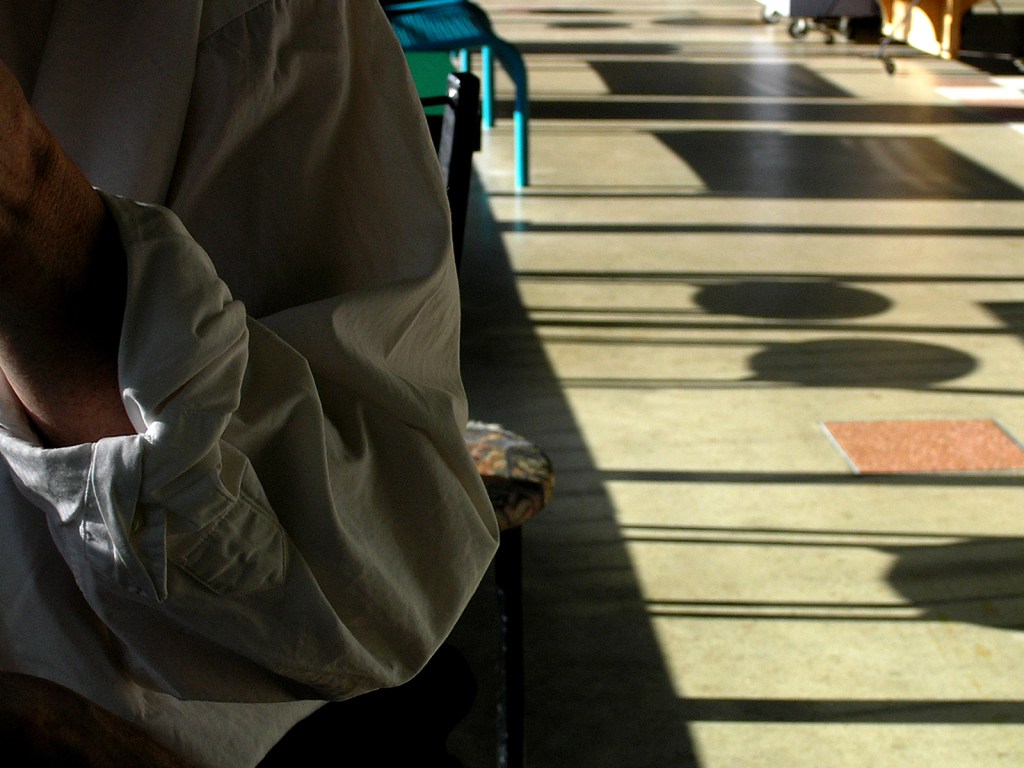
5:51 PM, Wednesday, September 27, 2006

I shot this one late afternoon in September of 2006 (EXIF data is handy) with my very first digital camera, an Olympus C-770 UZ. A four megapixel powerhouse. It’s shot in a 4:3 aspect ratio, which I’ve never been comfortable with. As I recall, there was an option to shoot in 3:2, but it required some loss in resolution, which was noticeable in a 4mp camera.

I was having coffee with a friend and was somewhat distracted by the pattern of the late afternoon shadows. I recall shooting a couple frames of the shadows, but the images weren’t very interesting. At some point, my friend raised her arm to sip her coffee; the sun had shifted enough to illuminate the edge of the rolled up sleeve of her white shirt. I asked her to do it again and took the shot.

It’s not a great photograph, but that arm and sleeve humanizes the image. It’s not just a photo of some shadows; it’s a photo of a human moment. There’s a palpable mood here–quiet, reflective, casual, conversational. There’s something comfortably relaxed, intimate even, about that rolled up sleeve. I also like the fact that the image is intimate while being sort of impersonal; there’s almost nothing to identify the other person–age, gender, height, weight. It could be anybody. Fill in the blank.

Finally, the perspective puts the viewer IN the scene. Sitting relaxed across at a table with a friend in an almost empty coffee shop on a sunny afternoon.

Okay. Now, why am I talking about this 18-year-old photo? Here’s why.

I used to spend a lot of time thinking about photography. Thinking about different photographers, about styles and trends in photography, about the decision-making processes involved in making photos. For years I wrote a fairly regular series of essays about photographers (which can be found here). I started those essays primarily as a way to educate myself, but they became a tool for discussion in a Flickr group called Utata.

And then I stopped. I could probably cobble together some logical explanation for why I stopped, but really, who cares? The thing is, I just didn’t spend much time thinking about photography and photographers. I continued to shoot photographs, but lackadaisically and rarely with an actual camera. I was satisfied with my Pixel phone. Until a few months ago.

Again, I could probably cobble together some logical explanation for why I picked up a 12-year-old camera, but, again, who cares? I picked it up and started shooting with a camera again. Which led me to start shooting with another of my cameras. Which led me to decide to buy a new camera (which should arrive in a month or so). I’ll write about the new camera when it arrives. But the thing is, I’m thinking about photography again. I’m reading about photography again. And one of the articles I read included some bullshit about reviewing your old photographs.

Here’s a True Thing: I have no real interest in looking at my old photos. The very idea of looking at my old photos sounds boring as fuck. I mean, I shot those photos; I’ve already seen them. I’d rather look at new photos, photos shot by somebody else.

But this article suggested looking at your old photos as if they were made by a different person. The rationale is that we change over time, so our approach to photography probably changes. Which sorta kinda makes sense to me, since in a very real way I’m NOT the same person I was in, say, 2006.

So I said, “What the hell, why not?” and I opened up Google Photos and scrolled all the way down to the oldest photos. The photo above was one of them. It seemed like a good place to start.

I don’t know if this is a good idea or not. I’m not sure I’ll follow through on it. But back in the days when I was actively thinking about photography, I stumbled across some thoughts by Alfred Stieglitz and William Gedney about practicing in public. Although they didn’t put it quite like this, those guys were suggesting that if you’re serious about photography, you’ve got to be willing show your whole ass. Maybe this is related to that whole notion.

the way to end the genocide in Gaza is…

…not to vote in the 2024 election, I guess?

Well, that’s what some people seem to believe. I’m basing this on recent Bsky comments responding to my ‘voting is like taking a bus‘ analogy. Granted, the voting-bus analogy is flawed. Anytime you compare a thing to a different thing, the comparison will fall short, because (obviously) they are two separate things. Still, I think that analogy is/was useful in explaining WHY I’ll be grudgingly voting for Biden in the 2024 election. Here, briefly, is the analogy:

The U.S. government is a bus. The 2024 election is about who’ll drive the bus. If neither bus driver will take the bus directly to the place we want to be, it makes sense to choose the driver who’ll deliver us closest to where we want to be.

Several people on Bsky used the analogy to lament the choice of bus drivers and/or wish there was a better bus driver we could choose. Here are some of their responses:

— There are two buses that are driving toward hell at slightly different rates, I would like to turn around and take a bus away from hell
— If my desired destination required that the bus run over tens of thousands of innocent people to get me where I was going, I’d simply not ride that bus and find some other way to get there
— So if I want guaranteed healthcare, take the genocide bus, got it.
— why don’t we change the bus routes so the bus goes where people actually want to go instead of only going to the dump.

I don’t blame these folks. I’m not happy with the choices either, or with the system that limited our choices. Unfortunately, the system we have IS the system we have. It takes time to change an entire electoral system and, sadly, the only way to change it is by voting for people who’ll change the system (very few of which are running for national office).

For a lot of these folks, the solution is obvious. Don’t take the bus. Don’t vote. They argue that voting for Biden is essentially endorsing genocide. They say Biden’s support of genocide is so defining they can’t, in good conscience, vote for him.

These folks have an uncomfortably valid point. Here’s an exchange I had with one person:

Them: Here’s the problem with this analogy: The place I want to go is a free and safe Palestine. Not only is Biden going nowhere near there, it’s impossible to get there on one’s own.
Me: I would also like a free, safe, independent Palestine. Tell me, who should I vote for to get that? I’m willing to be convinced. Hell, I’m eager to be convinced.
Them: Neither. That’s the point.
Me: So your suggestion is…not to vote? Does that help anybody at all? Voting for either Biden or Trump–or not voting at all–isn’t going to help anybody in Gaza or the West Bank. For me, personally, there are other reasons to vote; friends & family who will suffer more under Trump. Yes, the lesser of 2 evils is still evil, but it’s less evil. I can settle for that.
Them: Well, many can’t. Either get Biden to change or deal with it.

A lot of these folks argue they’ll vote for the down ballot candidates–the members of the U.S. Congress, state legislators, local offices–but not for Biden as POTUS. But here’s the thing: POTUS sets foreign policy. Congress controls the budget, but the agenda for foreign relations is established by the president. If your primary concern is a safe, independent Palestinian state, your choices are limited to a guy who reluctantly contributed to genocide or a guy who enthusiastically endorses it.

Forget the bus analogy. Instead, think of the coming election like this: somebody is going to pound a nail through the foot of every Palestinian. You have a choice: a) a ten-penny nail, or b) a railroad spike. It’s an ugly choice. In a better world, we could choose between two leaders who want to teach Palestinians to dance. But we don’t live in that world. The best we can do right now is try to reduce the harm.

I’ll be voting for Joe Biden AND doing what I can to pressure him and Congress to stop the genocide. Yes, it’s contradictory. But Walt Whitman was right; we are large, we contain multitudes.

EDITORIAL NOTE: Biden is also significantly better than Trump on a number of issues, including the environment, labor, LGBTQ issues, voting rights, civil liberties, infrastructure, taxes, and a lot of other policy stuff. Still awful on his support for Netanyahu, but multitudes and all that.

we’re all on the bus

Voting. Think of it like public transportation. Think of it like a bus service. There’s a place you want/need to go to. But there’s no bus line that will take you directly to that place. So what do you do?

You take the bus that gets you closest to where you want to be.

For me, that bus is driven by Joe Biden. Yes, he’s old and believes that the institutions of democracy will save us. Yes, his role in aiding the Palestinian genocide and his actions in support of Netanyahu are unforgivable. I could provide a long list of his faults and flaws. But he’s also the bus driver that will get the bus closer to where I want this nation to be. It might only a few blocks closer, but closer is closer.

Trump, on the other hand, wants to take the bus in the opposite direction. A big chunk of the US population is in favor of that. There are also a few third party bus drivers who have plans for the bus, and they all have their supporters. But let’s be honest about that; no bus driven by a third party driver is going to leave the terminal. That’s just a fact.

Here’s a True Thing: you’re on the bus. Whether you like it or not, if you’re a US citizen, you’re on the bus. That gives you the right to vote to decide who’ll be driving it. But here’s another True Thing: your choices are basically limited to two old white guys: Biden or Trump. Sure, there are those third party folks out there who’d LIKE to drive the bus. Some of them might be much better bus drivers than either Biden or Trump. But the reality is, it’s going to be one of the two old white guys. That’s just another fact.

So what do you do if you don’t like those two old white guys? You can choose NOT to vote; you can forfeit your right to choose the bus driver. You can opt out. You can tell yourself there’s no difference between those two old white guys. You can claim they’re both awful, that one is only marginally less evil than the other. You can argue that less evil is still evil and you won’t vote for evil.

That’s fine. But you’re still on the bus, as are all your friends and family. If you opt out, you have to be willing to ignore the fact that less evil is still less evil. You have to ignore the fact that less evil is a better choice than more evil.

When there’s no direct route, you take the closest bus.

You also have the option to cast your vote for a bus driver other than Biden or Trump, one of those third party drivers. You can, in fact, choose to vote for the BEST POSSIBLE bus driver. You can tell yourself that voting for the BEST POSSIBLE bus driver–that voting your conscience–is absolutely the right thing to do, the moral and ethical thing to do. But you know the BEST POSSIBLE bus driver isn’t going to get enough votes to drive the bus. You know either Trump or Biden IS going to be driving the bus. No matter how much you hate knowing this, you still know it’s true.

In effect, voting for the BEST POSSIBLE bus driver is passively accepting whichever old white guy eventually wins. Whoever wins, you can tell yourself (and others) it’s not your fault. You can blame everybody else for not being wise enough to vote for the BEST POSSIBLE bus driver. You can’t be held responsible for the direction the bus takes. You can take comfort in that, if/when the bus goes in the wrong direction.

The bus isn’t going to wait. The bus is on a schedule. Come November, one of those two old white guys will be chosen to drive the bus in January of 2025. You can help choose which one. Or you can shrug it off.

It sucks. But here we are and there it is.

hello sweetie

SPOILERS HERE!
THERE WILL BE SPOILERS
INITIATE SPOILER ALERT SYSTEM
ALL THE SPOILERS FIT TO PRINT

Okay, I’ve watched all three episodes (yes, I’m including The Church on Ruby Road as an episode) of the newest version of Doctor Who…and I’m concerned.

I’m not concerned about Ncuti Gatwa as The Doctor. He seems to be a natural Doctor, which perhaps is because unlike every other new Doctor, he didn’t have to go through the whole ‘Who am I this time?’ fuss. And I’m not concerned about Millie Gibson as Ruby Sunday, although she’s at risk of being perky. Nor am I concerned about the basic plot structure of these three episodes; they all seem like classic Doctor Who events. They fit perfectly in the Doctor approach as described by Neil Gaiman:

[T]here’s a blue box. It’s bigger on the inside than it is on the outside. It can go anywhere in time and space and sometimes even where it’s meant to go. And when it turns up, there’s a bloke in it called The Doctor and there will be stuff wrong and he will do his best to sort it out.

We see that in each of these three episodes. We’ve had a baby kidnapped by goblins; we’ve had babies abandoned in space who are threatened by a snot monster, and we’ve had a villain who has essentially stolen music from the world. These are all great Doctor Who scenarios—they’re all classic problems for the Doctor and Ruby to ‘sort out.’ I’m not concerned about any of this.

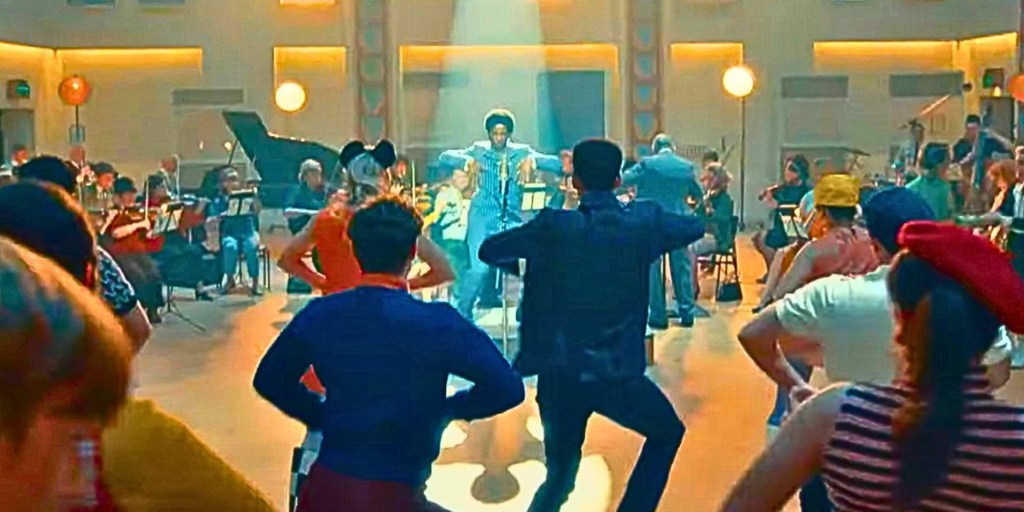
The goblin musical number from The Church on Ruby Road.

What I AM concerned about is the nature of the show itself. Of the three episodes so far, two of them have included musical numbers. I’m talking about incorporating theatrical singing (and dancing) as a part of the narrative (as opposed to something organic but incidental WITHIN the episode…like hearing music on the radio or a band performing). What the fuck is that about?

I’m not opposed to singing and dancing…but why? What’s the point? Did the singing and dancing contribute to the story? No. Did it develop the characters? No. This is Doctor Who filmed like Disney’s Little Mermaid or Moana. It’s turning Doctor Who into Singing in the Rain or Guys and Dolls.

The song & dance number from The Devil’s Chord

Don’t get me wrong. I like musicals. On any given day, you might find me humming or singing tunes from My Fair Lady. I’d be perfectly fine with an actual musical episode (like the brilliant Buffy the Vampire Slayer sixth season episode Once More with Feeling), but personally, I don’t want a Doctor who might, at any moment, burst into song and dance instead of acting and using dialog.

The thing is, the musical numbers in those two episodes were superfluous. They didn’t contribute to the story in any meaningful way. In fact, I’d argue they diminished the show. I’d argue they distracted the viewer from the events within the story world.

So there it is. I love Doctor Who, but I’m concerned about the direction the show is taking. I’m excited about Ncuti Gatwa as The Doctor. I think Millie Gibson as Ruby Sunday shows a lot of promise. I’ll continue to watch Doctor Who, but I’ve lost some of my enthusiasm for it. I’m uneasy about the next episodes. I hope the new relationship with Disney doesn’t result in a Disneyfied Doctor. But that seems to be a real risk.

EDITORIAL NOTE: That said, the end scene in which The Doctor and Ruby recreate the dancing on the piano moment from Tom Hanks’ movie Big while on the zebra crosswalk from the Beatles’ Abbey Road album was fucking brilliant.

shogun

I recently finished watching the new Shogun mini-series, and yes, I have thoughts. Before I inflict those thoughts on you, I should report that I’ve read the novel twice. I don’t recall when I first read it, but it was many years ago; I reread it earlier this year when I heard about the remake of the mini-series. I should also say I’ve seen the original Shogun mini-series starring Richard Chamberlain and Toshiro Mifune. So I can compare the new version to the old version and to the novel itself.

Shogun 2024 is both better and worse than Shogun 1980. Visually, it’s significantly better. The cinematography is spectacular. It’s certainly darker (literally), but the biggest difference is the story world of Shogun 2024 looks and feels lived in, if that makes sense. The story world in Shogun 1980 looked and felt like elaborate movie sets. The production values of Shogun 1980 are a product of their time, and it shows. There’s a convincing verisimilitude in the new version that was absent in the original.

The narrative in the new version is, in some ways, easier to follow–which ought to be a good thing, but isn’t always. I’d heard it would emphasize the Japanese perspective over that of the European protagonist. I confess, I was of two minds about this. I mean, the story takes place in early 17th Japan, so yeah, obviously it should be sensitive to the existing culture. But at the same time, it’s a classic ‘stranger in a strange land’ tale. At its heart, it’s a story about a person trying to understand and survive a society that’s exceedingly different from his own.

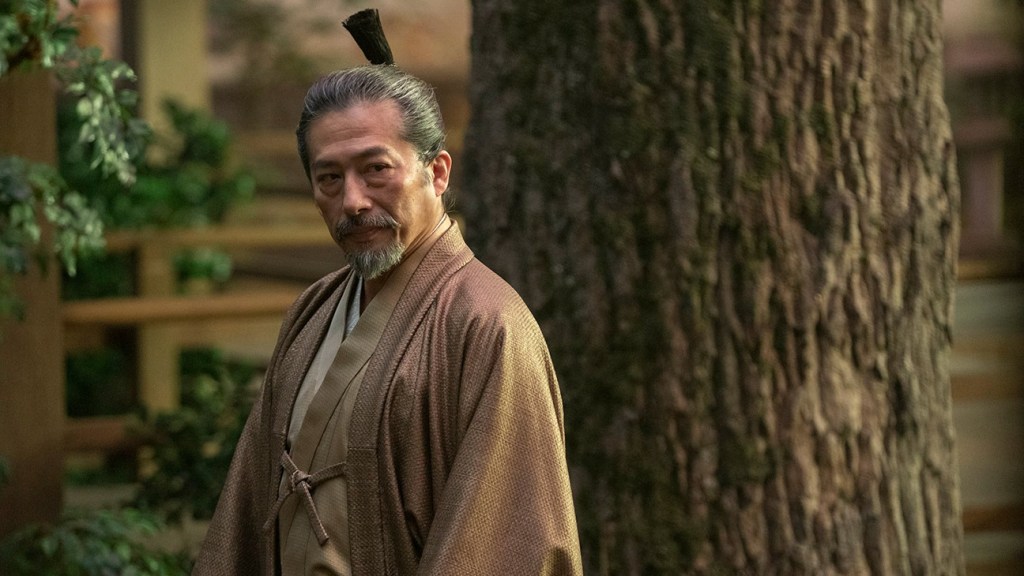
Toranaga — Shogun 2024

In Shogun 2024, the Japanese dialog includes subtitles. This, obviously, allows the viewer to understand what’s being said. Shogun 1980 did NOT provide subtitles, which had a HUGE impact on the story and the viewing experience. The viewer was as confused and uncertain about what was happening as Blackthorne. Unless you spoke Japanese, you were at the mercy of Mariko’s translation–or you were forced to try to deduce what was being said based on the behavior of the characters. This reinforced Blackthorne’s sense of isolation. The absence of subtitles also required the actors to rely more on face and body acting; they had to use body language and facial reactions to physically demonstrate what was taking place and being said.

This leads me to my main criticism of Shogun 2024, which is the way Toranaga is depicted. In the novel and in Shogun 1980, Toranaga clearly enjoys being alive. He displays a wide range of emotions; he’s exuberant, he’s stern, he drinks, he’s sentimental, he laughs, he gets angry, he’s wise, he’s deeply curious, he’s willing to be silly, he’s deadly serious, he’s stubborn. For example, in Shogun 1980 Toranaga sees Blackthorne dive off the ship, headfirst into the water. It’s a technique new to Japan and Toranaga immediately wants to learn to dive (this, by the way, is at the heart of the Toranaga-Anjin relationship; Blackthorne has skills that surprise and intrigue Toranaga, skills he wants to learn). Blackthorne demonstrates the dive. Toranaga and his retainers all try it. However, Toranaga is unable to make a proper dive. Initially, it’s a funny scene; his repeated painful belly flops are comical. But Toranaga’s failure at diving puts him at risk of losing face in front of his followers. Blackthorne eventually demonstrates a simpler method and Toranaga finally succeeds. We learn a lot about Toranaga in that scene — his thrill at learning something new, his joy of playing around in the water, his stubbornness and determination, his pride.

In Shogun 2024, however, Toranaga says he wants to learn to dive, but only watches as Blackthorne repeatedly demonstrates his diving technique. Eventually Toranaga leaps into the water and challenges Blackthorne to a race. We learn almost nothing interesting about Toranaga in the 2024 version.

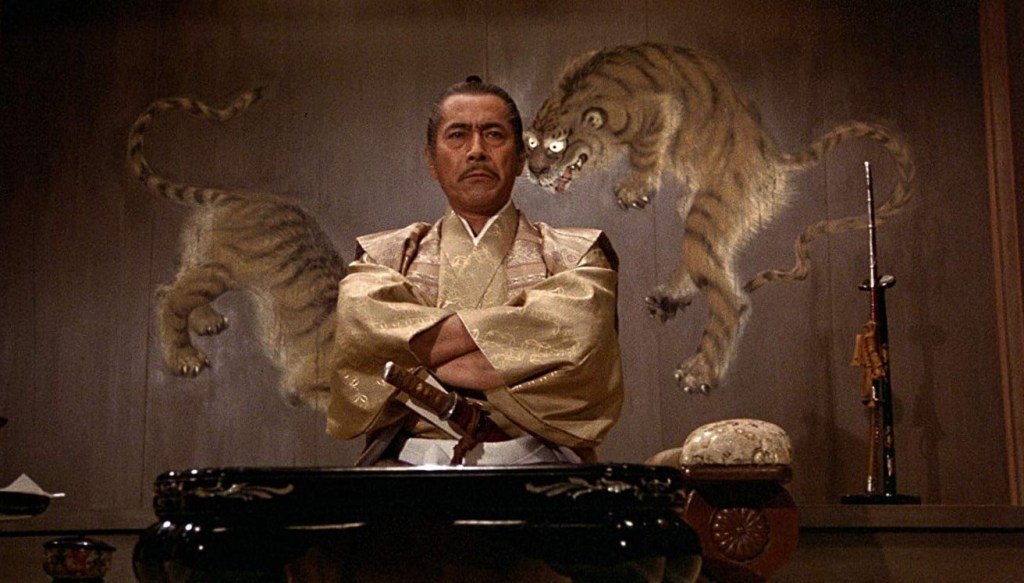
Toranaga –1980

Another example, in Shogun 1980 Blackthorne is being entertained by some women and he becomes a wee bit drunk and high-spirited. He sings a shanty and dances a hornpipe. The noise draws Toranaga to the room. Blackthorne realizes he’s created a scene (which is frowned upon in Japanese society) and starts to apologize, but Toranaga is intrigued and insists on seeing the dance. He then decides to learn Blackthorne’s dance. We’re treated to a scene in which Toranaga is attempting to dance a hornpipe. It’s wonderfully ridiculous and delightful.

The Toranaga of Shogun 2024 doesn’t dance. He doesn’t laugh, he doesn’t get sentimental, he doesn’t get tipsy, he doesn’t get silly, he doesn’t seem to enjoy much of anything. Throughout the series, he’s almost always stern and serious.

In my opinion, this handicaps Toranaga’s development as a character. This is especially clear after Toranaga’s capitulation to his brother and his announced decision to surrender himself in Osaka. In Shogun 1980 and the novel, we see Toranaga lose his joy; we see him defeated and deflated and depressed; there’s a marked contradiction in his behavior. He’s emotionally diminished. The Toranaga of Shogun 2024, on the other hand, has been consistently sober and serious. When he submits to his brother and Osaka, the change in his demeanor is slight. Instead of showing him emotionally changed, the narrative suggests he’s physically ill as well as depressed. It’s simply not as interesting.

This flaw (and yeah, to me it’s a massive flaw) becomes more obvious at the end of the series. Toranaga makes a series of confessions, including the fact that he’s always wanted to become Shogun. In Shogun 1980, he also admits he had Blackthorne’s ship destroyed to keep him in Japan, largely because he needs Blackthorne — not because of his ship or his skills, but because his alien/outsider status allows Toranaga to have an actual friend, somebody who doesn’t have a Japanese agenda. In both versions of the show, Toranaga declares Blackthorne “makes me laugh.” In Shogun 1980, we see that laughter and we know it’s true. Toranaga makes the same statement in Shogun 2024, but we never see that joyful/playful side, so the comment doesn’t ring true.

Shogun 2024 centers the experience of the Japanese characters, but that makes it a story about political maneuvering. Shogun 2024 is about Toranaga’s hidden agenda to become Shogun, in which Blackthorne plays a minor role. In this version, Blackthorne is actively resistant — hostile, even — to change. He remains boorish, rude, and almost willfully ignorant of Japan’s societal norms. It’s not until the final episode, when he realizes he’s unlikely to be able to return to Europe, that he seems to genuinely adapt to Japanese life. It’s a story about political conflict.

Shogun 1980 (and the novel), on the other hand, is about Blackthorne’s struggle to adapt to a very alien culture, which takes place during a potential civil war in Japan. In this version, Blackthorne realizes there are many positive aspects of this new culture and he eagerly embraces aspects of it. This is maybe most clear in Blackthorne’s enthusiastic “Oh lawdy, I fucking LOVE a hot bath” revelation and his pleasure at the simple cleanliness of Japan. It’s a story about cultural conflict.

Both versions end with Blackthorne realizing he’ll never get to leave Japan. But that awareness lands differently in each version. In Shogun 1980, Blackthorne’s willingness to adapt makes his acceptance less painful; having to live the rest of his life in Japan doesn’t seem like much of a sacrifice. In Shogun 2024, however, Blackthorne having to stay in Japan feels like a prison sentence which he’ll try to make it as palatable as possible.

I found Shogun 2024 to be a more compelling and visually interesting story. But I also think it’s a less enjoyable story.