
I recently had a semi-long, somewhat convoluted discussion (debate? argument?) with a friend who writes fantasy fiction. This is it (edited for brevity):
Friend: “Magic doesn’t have to have rules.”
Me: “Well, yeah, it does.”
Friend: “No, it doesn’t.”
Me: “Yeah, it does.”
Friend: “You write detective fiction. What do you know about magic?”
Here’s the answer to that question: All fiction is a cosmological event.
That’s it. That’s my answer. When we write a story—any story in any genre—we create a world. Most fictional worlds resemble the one we live in. The operative term there is resemble. This is true across all genres. As writers, we take liberties with the world; we shape our fictional worlds in ways we find useful. A mystery writer might, for example, create a world in which dog trainers routinely discover dead bodies and solve crimes. A horror writer might create a world in which vampires live among us. A fantasy writer might create a world in which people can engage in rituals or behaviors that manipulate natural or supernatural forces.
But when we create these worlds, we also create a set of internal rules for them. Again, MOST of those rules are patterned after OUR real world and we take them for granted. Things like gravity; if an elf drops her sword or a detective drops his gun, it falls to the ground. Unless we’re talking about elves in space.
UNLESS. The Great Unless. That’s where everything gets all slickery. You can slide all manner of things into the UNLESS envelope. Things like magic. But here’s the thing about an envelope: it’s a container. You can stuff all sorts of things inside it, but it still has boundaries. If your magic doesn’t have some sort of boundaries, you don’t have a story. If a Dark Evil threatens the Land and you have limitless unbounded magic at your command, you can just wave a hand and…poof. No more Dark Evil. There’s not much entertainment value in that.
But that doesn’t mean magic has to exist within a spreadsheet. It just means there are things that Can Be Done and things that Cannot Be Done. What Can and Cannot Be Done might be person-specific, or limited by location, or constrained by training, or or or. Those limits don’t have to be articulated for the reader, but they have to exist.
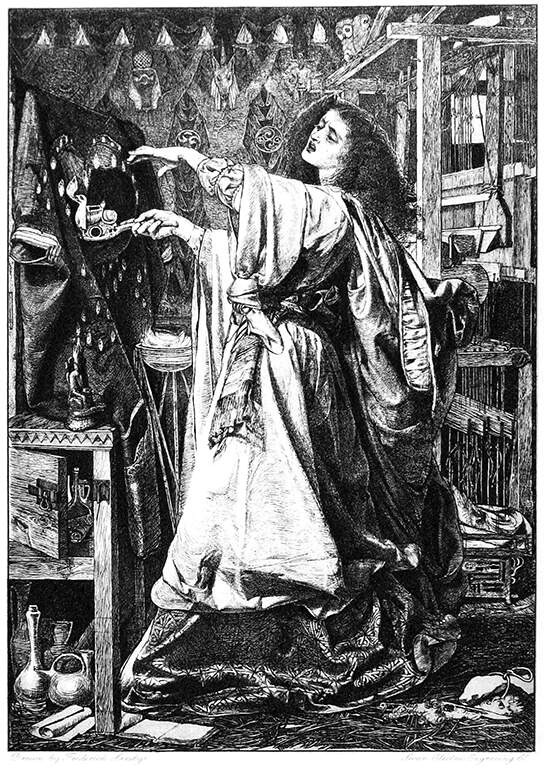
Here’s an example. One of the most delightful novels I’ve read in recent years is Nettle and Bone by T. Kingfisher. It begins with a woman in a bone pit, constructing a dog out of wire and an assortment of dog bones. When she’s done…hell, even before she’s done…the dog comes to life. How and why the bone dog comes to life isn’t explained. It’s magic. The woman’s ultimate goal in the story is to kill an evil prince, but her access to magic is limited. Building a dog out of a random assortment of bones is a thing that Can Be Done; killing a prince is a thing that Cannot Be Done. At least not by her at this point in time.
That right there? That’s a rule. The reader doesn’t need to know WHY the rule exists. Even the writer doesn’t need to know why it exists. But it HAS to exist for the story to work as a story. She can use magic to bring a bone dog to life, but she can’t use it to kill the prince.
Look, there’s nothing wrong in not knowing why things are the way they are. I mean, we still don’t understand how gravitation works and folks have been studying it for at least 2300 years. We know it works at the Newtonian level, but then things get all weird down at the quantum level. If we’re unable to understand and explain one of the fundamental forces of the natural world, how in the hell are we supposed to understand how things work in the supernatural world?
So yeah, magic has rules. It has to. We just don’t always know what they are. That’s perfectly…well, natural.




 gregfallis.com