still pissing on the dead

Last week I made a brief comment about the incident in which the members of a U.S. Marine sniper unit pissed on the bodies of Afghans they’d (presumably) killed. There were a couple of responses I found troubling, and I sort of feel the need to address some of the issues raised in them.

Joe said:

Wish ALL our troops were here home with their familys

I think we can all agree with that. However….

but our dumbass politicians/president whom have NEVER SERVED OR HAVE BEEN IN THIS SITUATION BEFORE

I’m not sure how this behavior can be attributed to President Obama or Congress. Certainly the behavior of troop units is a reflection of their leadership, but there are over 200,000 active duty Marines. It’s a bit silly to hold the civilian leadership of the military responsible for the behavior of individual units. That said, as I mentioned in the original comment, if you don’t want troops to piss on the bodies of their dead enemies, don’t send them to war.

The solution……DO NOT SHOOT AT OUR SERVICE MEN AND WOMEN AND WE WON’T HAVE TO CELEBRATE KICKIN YOUR STUPID ANTI-AMERICAN ASSES!!!!!!!!!!!!!

First, you can’t blame Afghans for shooting at invading troops. It’s their country. Afghan tribes have been fighting against invaders ever since it became a semi-unified nation-state some three hundred years ago. Before they were shooting at U.S. troops, they shot at the Soviets. Before that, they shot at the British. Before that…well, just read the long history of Afghan tribal groups successfully repelling invading world superpowers.

Second, the Afghans who are shooting at the U.S. troops may, in fact, be anti-American, but I suspect they’re mostly anti-invader. I mean, they’ve also been shooting at the French and the British and the Dutch and the Italians and the Canadians (seriously, who’d shoot at a Canadian?) and a host of other nationalities. They’ll shoot at anybody who was attempting to occupy their country. So would you, Joe, if you were an Afghan. That’s what you do to invading armies—you shoot them. We’d do the same if (in some right wing Red Dawn fantasy) foreign troops invaded the U.S.

Finally, pissing on the dead is more an expression of contempt than a celebration. But even if there was some twisted psycho-sexual celebratory component to it, we don’t have to celebrate killing the enemy. This isn’t football. A victory dance in the end zone isn’t necessary. To suggest the ‘solution’ to this is for Afghans to refrain from shooting at U.S. troops is to massively fail to understand the situation.

WAKE UP AMERICA WE AE THE BEST,,,,,START SHOWING IT!!!!!!!!!!!!!!!!!!!!!!!!!!!!!!!!!!!!!!!!!!!!!!!!!!!!!!!!!!!!!!!!!!!!!!!!!!!

The more exclamation points we use, the better we are. But really, this isn’t a nationalist issue. It’s not about America. It’s about war. The Marines didn’t piss on the bodies of the dead because they were Americans; they did it because that sort of shit happens in war. They didn’t piss on the bodies of the Afghans because they were Afghans; they did it because war always dehumanizes everybody involved.

Daniel repeats (without attribution, by the way) the text of a statement issued by Republican Congressmane Allen West, but I’ve no doubt he agrees with Representative West.

I do not recall any self-righteous indignation when our Delta snipers Shugart and Gordon had their bodies dragged through Mogadishu.

Neither you nor Rep. West may recall the outrage, but I do. The incident was widely reported and sparked a massive public outcry. Of course, the treatment of Shugart and Gordon was at the hands of a disorganized mob, not committed by a highly-trained and disciplined military unit, but they both reflect the same reality. War brutalizes the people who fight.

Give them a maximum punishment under field grade level Article 15 (non-judicial punishment), place a General Officer level letter of reprimand in their personnel file, and have them in full dress uniform stand before their Battalion, each personally apologize to God, Country, and Corps videotaped and conclude by singing the full US Marine Corps Hymn without a teleprompter.

The teleprompter comment, of course, is a childish reference to President Obama; conservatives seem to think the president is inarticulate without access to a teleprompter and find that wildly amusing.

I should mention that Rep. West is a former Army Lt. Colonel who served in Iraq. He’s familiar with the military justice process. After an incident in which he terrorized an Iraqi police officer, West was fined US$5000, removed from command of his unit, and reassigned to a rearward detachment while his resignation from military service was processed.

Let me also say that although I vehemently disagree with West and his politics, I completely understand what he did in Iraq and why he did it. By normal moral standards, his behavior was egregiously wrong; by battlefield standards, it was illegal. But it may have actually saved the lives of his men.

Again, if you don’t want U.S. troops to do horrible things, don’t send them to war. If you send them to war, you MUST hold them to high behavioral standards—but it’s critical to remember that war can brutalize even the most decent of people.

Anybody who is really interested in this topic would do well to read With the Old Breed: At Pelelieu and Okinawa by Eugene Sledge. Sledge was a nice, bookish, religious Alabama boy who served with the U.S. Marines in the South Pacific during World War II. His account of the brutalizing effects of war is shocking and appalling, and quite possibly the best memoir ever written about war.

iowa nice

Here’s the thing—I like Iowa. I really do. I was born here. It’s true that I’ve spent most of my life living elsewhere, but I’ve always had affection for the state and its people. Iowa is an odd place—not at all the way it’s portrayed in the news and entertainment media. But then, how many places are?

However, Iowa is afflicted by the Iowa Caucus—which has traditionally been the first contest of the U.S. presidential race. That means every four years presidential candidates swarm Iowa like spawning salmon. It also means every four years we have to endure the news media talking about Iowa like the entire state is comprised of ultra-religious corn-fed, cretinous hicks.

We certainly have some of those—but they’re not the majority. They’re not even a significant segment of the population. They’re just noisy and annoying, like those locusts that crawl out of the soil every thirteen years and make life miserable for a bit.

But overall, that’s just not Iowa. So I was delighted to see the following video become something of a hit on YouTube and elsewhere.

I like it. But he had to leave a lot out. Like the fact that the very first case heard by the Iowa Supreme Court was In Re the Matter of Ralph. Ralph was a slave owned by a man in Missouri. The Iowa court ruled that the moment Ralph set foot on Iowa territory, he became a free man. This was 1839—that’s 22 years before the U.S. Civil War.

And he didn’t mention that one of the U.S. Supreme Court’s most important free speech rulings was a result of Iowa high school students protesting the war in Viet Nam. In 1965 a group of students wore black armbands to school. They were abused by pro-war students (who were in the majority in 1965), insulted by their teachers, and expelled for refusing to remove their armbands. After their expulsion ended, they returned…without the armbands, but dressed entirely in black clothing.The Supreme Court ruled that students (and teachers too) do not “shed their constitutional rights at the school house gate.”

Which reminds me—Iowa is almost always at the top of the list when states are ranked by literacy. Nearly 70% of all Iowans own a library card. Iowans read a lot—and they’re not just reading the Bible.

I could go on. I could mention, for example, that when same-sex marriage came before the Iowa Supreme court, the judges ruled unanimously that it was unconstitutional to deny members of the same sex the right to marry. That’s right…unanimously. The fact is, Iowa is a pretty liberal state. Most Iowans are pretty open-minded. And they really are, for the most part, nice. Seriously. If you drive down the road and wave to the stranger in the oncoming car, they’ll wave back. And smile. It’s a little weird until you get used to it.

I’m in Iowa again, and it seems I’ll be here for the foreseeable future. But this is the first time in my life I haven’t felt a compelling need to be someplace else. I think I’ve grown into Iowa.

Addendum: Let’s not get carried away by the fact that Rick Santorum and Mitt Romney received the most support from Iowa Republican Caucus voters. There are more than 2,100,000 registered voters in Iowa, about evenly split among Democrats, Republicans and Independents (with a slight edge to Democrats). Santorum and Romney each received around thirty thousand votes out of a voter population of more than two million. It doesn’t mean Iowans are generally supportive of either of them.

a walk along the creek

The creek is down. That’s how the locals phrase it. The creek is up, the creek is down. They say it like it’s a weather report—and in a way, it is.The level of the water in the creek may not be as immediately variable as the weather, but it changes. There’s usually some warning, but it can change and change radically in a very short time. And like the weather, the change can be savage.

It looks so tranquil, doesn’t it. Right now the water moves so slowly and lazily. There’s not much power behind it; it slides around any obstacle it meets. It moves just enough to prevent ice from forming—though in some small eddies and quiet spots where the water is still, a thin icy layer modestly covers the water.

A few months ago, this was a different creek. A wildly different creek. A few months ago the creek was a brutal bastard, pummeling anything in its path, knocking down trees and driving all manner of rubbish and detritus ahead of it.

The creek overran the banks. That’s such a paltry sentence to describe what actually happened. The creek overran the banks the way the Lakota overran Custer’s 7th Cavalry at the Little Bighorn. It swept everything out of its way. It dug up stuff that had been long buried on the creek bed, and rattled it all downstream. It just slammed everything out of its way. And then it stayed.

That’s the thing about a flood. It doesn’t just stop. It lingers. It takes days to recede, and weeks before the land is dry enough to walk on. If you look at the trees along this path, you can see the high water mark on their trunks. This path is about twenty yards from the creek bank. It was entirely under about three feet of water.

I walk along this creek every two or three weeks. I’ve done that for at least a couple of years. I walk along the creek and I pay attention to what I see. I know the stretch of creek that’s home to a pair of Belted Kingfishers. I know the places the deer like to cross. I know where the local kids make bonfires and drink beer and do all the things kids probably shouldn’t do but do anyway. I know where to look for weasel and fox and beaver. I know where there used to be an old Maytag washing machine half-buried in the creek bed (it’s gone now, of course—swept away by the flood).

But I never noticed an old Ford Fairlane. I’ve no idea where it came from. It just appeared there after the flood. Whether it was somewhere farther upstream, whether it was buried in the creek bank, whether it was rusting away on somebody’s property—I don’t know. But there it is, like some would-be fossil uncovered by the forces of nature.

The creek isn’t nearly as attractive as it used to be. It’s no longer quite so pleasant to walk along its banks There’s too much crap piled up in the water, too many downed trees, too much damage done.

But its correcting itself. I love that about the creek. All those uprooted trees are useful; woodpeckers find insects in them, groundhogs dig burrows under them, mushrooms grow on them, chipmunks live in them. Given enough time, the creek will even dismantle that old Fairlane. Given enough time, the creek will be lovely again.

There’s something satisfying in all this. Something deeply gratifying. The creek may be ugly in places today—and it’ll remain ugly in places for the foreseeable future—but every day the creek is repairing a bit of the damage. In the spring it’ll probably flood again, and that will cover up or remove some of the debris left behind by the last flood, and the new flood will create a few new ugly places.

I don’t know why that pleases me. But it does.

passion

Passion makes up for a lot. Passion is beautiful and dangerous; sometimes it’s scary as hell. Passion doesn’t discriminate between good ideas and bad ideas, between the sublime and the profoundly stupid. The same thing that makes Patti Smith an amazing artist who can transcend her own pretensions makes Michele Bachmann frightening and creepy. Yeats, I think, was only half right:

The best lack all conviction, while the worst
Are full of passionate intensity

You can switch those around, and it’s still true.

The best are full of passionate intensity, while the worst
Lack all conviction

As crazy as it sounds, I respect Michele Bachmann’s passion. As far as I can tell (or as far as I care to look into it) I disagree with very nearly every political, economic, and social position she advocates—but I don’t doubt her sincerity and I respect her willingness to voice every crazy bat-shit idea she has.

But here’s the thing: you have to accept the existence of Michele Bachmann in order to truly embrace Patti Smith. Or Billy B. Yeats, for that matter. Because let’s face it, Yeats and Patti Smith share that willingness to voice crazy bat-shit ideas. If you want a world with Yeats in it, if you want a world with Patti Smith, then you have to accept a world with Michele Bachmann. That’s how passion works.

I’m willing to tolerate the Bachmanns so long as I can live in a world where Patti Smith can do this:

Passion is over the top. Always over the top. That’s why it’s dangerous, why it’s beautiful. That’s why people listen to Michele Bachmann talk stupid shit about The Lion King as gay propaganda, and why people listen to Patti Smith sing her fucking heart out about stupid shit like a man on the run, heading down to Mexico to shoot his unfaithful wife. Passion, dude, don’t try to make sense of it.

burying the brother

I’ll be leaving in a couple of hours to go bury the brother. It’s a weird, dissociative feeling—like when you wake up inexplicably in the middle of the night and you get out of bed and go get a drink of water and nothing in your house looks quite right—as if everything in the house has been removed and replaced with nearly perfect replicas. That’s sort of how I feel. Just a wee bit distant from myself and everything in the material world.

Soon I’ll be surrounded by grieving and sympathetic people, who will say shit like “He’s in heaven now” or “He’s probably looking down on us now and smiling” and I’ll be nice about it and maybe nod in agreement. Almost everybody there will be some brand of Christian and they’re going to talk a lot about God. “We don’t understand God’s plan,” and “He works in mysterious ways.” If they find comfort in that notion, who am I to disagree? But I don’t believe it.

This is what I believe. My brother lived a moderately good life—and that was about the only thing he ever did in moderation. He was a firefighter and he was given to all the sins and graces of firefighters. He sometimes drank too much, he took too many risks, he never quite grew up, and he gave the best parts of himself to the job—sometimes to the detriment of his wives and children. But he also saved some lives and he mitigated some disasters and he spent most of his life putting himself at risk to help strangers. He could have been a better person, but—and this, I think, is what matters—he was the best person he could be.

I’m going to miss him. I miss him already.

ongoing conversations with the curb

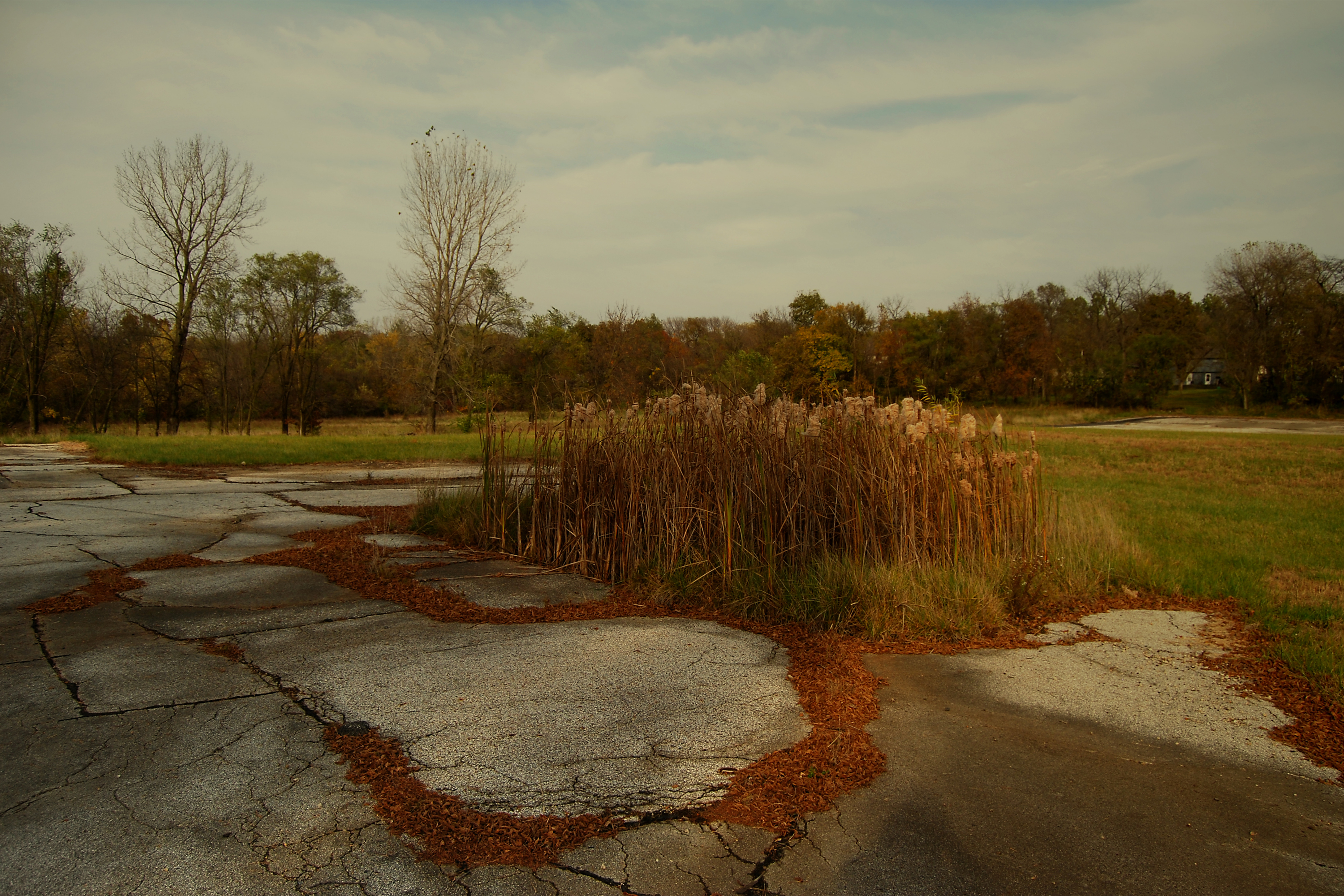
There’s an empty lot I like to visit. There used to be a supermarket at that location. I don’t know quite when it was torn down, but nature is slowly having its way with the lot. People once bought Cheerios and pork chops and dish-washing detergent here. Now it’s home to field mice and garter snakes, to rabbits and hawks, to crows and the occasional deer.

I find that oddly appealing.

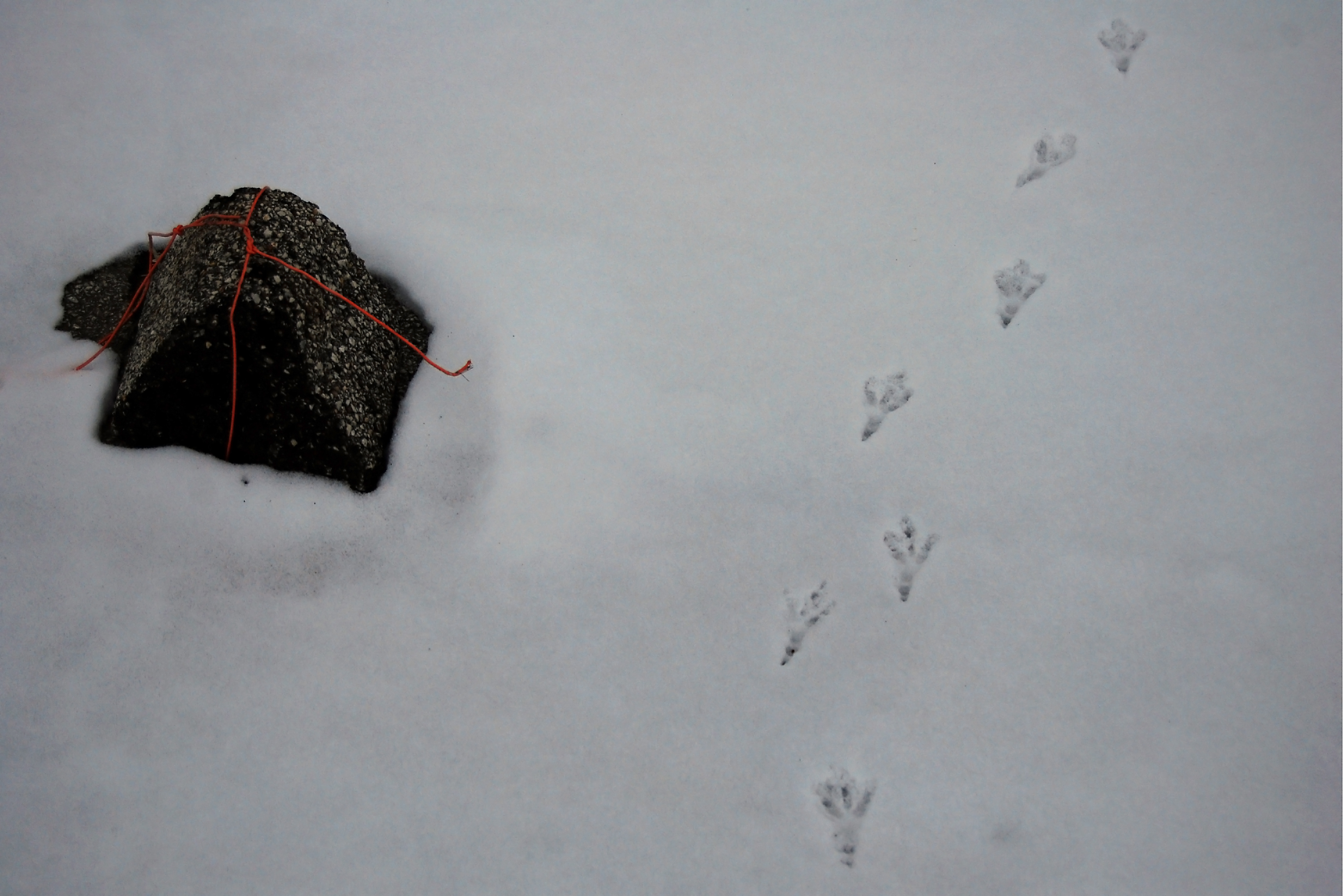
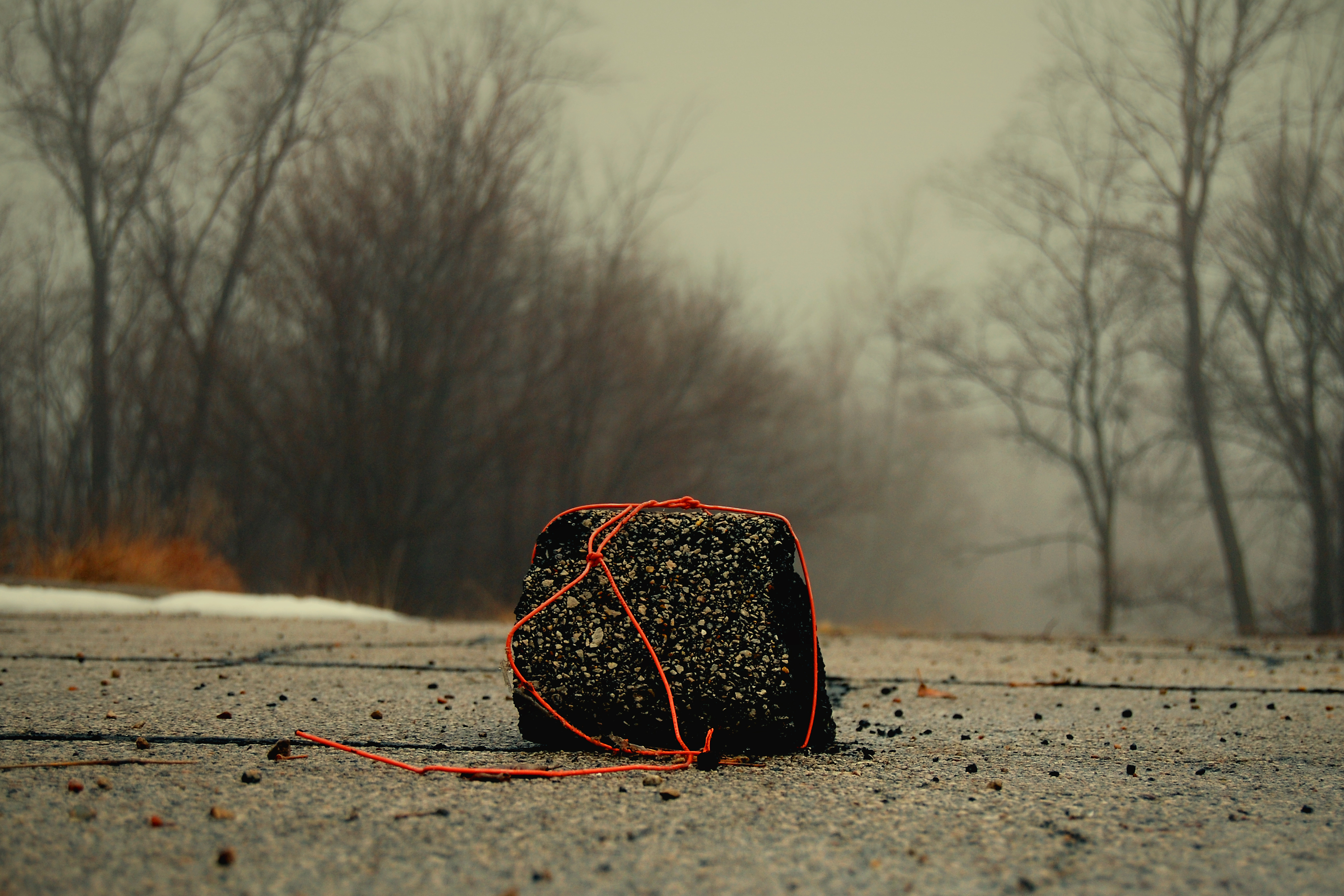
As I wandered around the empty lot back in November I noticed somebody had tied a length of red PVC-coated wire around a chunk of broken asphalt curbing–presumably to make it easier to carry. I’ve no idea why anybody would want to carry a chunk of broken asphalt curbing anywhere, but apparently somebody did–and wanted to make the chore less onerous (although, in truth, the bit of curbing couldn’t have weight more than a couple of pounds). In any event, somebody had toted the curbing some twenty yards from its original position and then set it down.

Why? Why move the chunk of curbing? Why move it only twenty yards? Why weave a curb-carrying net for the task?

I didn’t understand it. I still don’t understand it. I’m completely baffled by it. But I find it inordinately cool.

Every time I passed that empty lot I’d stop and check on the bit of curbing. I’m not sure what drew me–what continues to draw me. I suppose it was as much a ritual as anything else. Nothing changed. The curbing stayed exactly where it always was (what else would a bit of curbing do?) and remained an enigma. The world just moved on around it.

Last winter I noticed a heron had passed by without stopping to ponder the larger meaning of a bit of asphalt curbing wrapped round with a length of red PVC-coated wire. I suppose herons have their own things to consider.

Winter became spring, and I continued to stop by and visit the bit of curbing whenever I passed by the empty lot. I didn’t go there just for the curbing. The lot itself has charms of its own. There’s usually a contingent of shy crows making a fuss in the distance. Fog and mist seem to linger there longer than in the surrounding areas. On occasion somebody from the nearby apartments will wander through, taking a short cut to the nearest bus stop.

I think of those people as trespassers. They’ve no interest in the lot itself, let alone in the chunk of curbing. They have no relationship with the lot. They’re just passing through. Which is perfectly okay with me.

The empty lot might have its own unique attractions, but the curbing–that’s a mystery. It’s the chunk of asphalt curbing that pulls me with tidal regularity. I might visit the empty lot and not pay any attention to this or that particular aspect, but I invariably make my way to the curbing.

I’ve told other people about it–about my fascination for the lot and the curbing. And for the most part, they smile and nod with a sort of kindhearted patience–but it’s clear they see the whole thing as ‘another of Greg’s eccentricities.’ And I suppose they’re right. But how could they not be curious about it? Somebody tied red PVC-coated wire around a chunk of asphalt curbing and toted it a distance of twenty yards–and then just set it down. How can that fail to fascinate?

Then one day I visited the former supermarket and the bit of asphalt curbing was gone.

Except, of course, it wasn’t really gone. It had merely been moved. Somebody had picked it up–presumably by the red PVC-coated wire carrying net–and toted it another twenty or thirty feet. I’d sort of expected something like that might happen. I’d felt the desire to pick it up and move it myself. The more I thought about it, the more I realized it was inevitable that somebody at some point would take hold of the chunk of asphalt curbing and carry it off–even if only for a few feet.

The curbing-mover might have moved it farther, except the wire handle had snapped. The curbing was abandoned where it fell. I suppose there’s no reason to move the curbing at all if you can’t carry  it by the handle.

And there it sat. Through the spring and into the summer, there it sat all by itself, unmoving and unmoved. Until now.

Now it’s been tipped over. Somebody saw the chunk of curbing and, for whatever bizarre reasons, decided to fuss with it. But that’s not the most peculiar thing.

Even more peculiar is the fact that there’s now a second chunk of asphalt curbing beside the first. A second chunk of curbing without any red PVC-coated wire carrying web. A chunk of curbing that doesn’t seem to have come from the same location as its predecessor. A chunk of curbing that was apparently just minding its own business when it was commandeered and carried–apparently by hand–to this new spot.

 And now I’m left, once again, to wonder why. Not just why somebody tied red PVC-coated wire around the original chunk of curbing and carried it for twenty yards. And not just why somebody (presumably a different person), several months later, carried it a tad farther. But why somebody (I’m assuming a third unrelated person) would carry a second chunk of asphalt curbing and set it in the vicinity of the original. Why?

It makes no sense. None at all. It is absolutely bat-shit crazy. The ambiguity is killing me.

I hope it continues.

dnr

My brother died this morning. He was pronounced dead at 2:20 a.m. It was exactly a year and a day after he was diagnosed with pancreatic cancer.

It’s been a long, strange 366 days. I’ve taken several photographs of him in that time. Photos taken during mushroom hunts, photos shot while taking walks, photos of him in his garage. Many of those photos are sitting quietly on my computer, where they’ll probably remain for a while. Eventually I’ll delete most of them. They’re just photographs.

But every day of this last month I brought my camera with me to the hospice. Most days it stayed in the bag. I couldn’t bring myself to photograph him with the naso-gastric tube; it made him look so frail. He wouldn’t want to be seen that way. Three or four times I pulled the camera out of the bag with the intent of photographing his hands, and each time I put the camera back without taking the lens cap off. Except this one frame, shot three days ago when the sun filtered in softly and he seemed calm and quiet and comfortable. One frame is all I could manage—one shaky frame, and it sort of creeps me out that I shot it.

It’s not a good photograph, and ordinarily I’d hit the delete button. But I told myself it was the last photo ever taken of my brother. As I write this, though, it seems to me that this really isn’t a photograph of my brother at all. Not really. This is just a photo of the failing container that held him.

(I’ve deleted four earlier drafts of this. I felt the need to say something about my brother, but each of the earlier drafts turned into a soppy eulogy. He’d have hated that. He’d prefer, I think, to see something in which I’ve creeped myself out. That would have made him laugh.)

chores

I need to mow the brother’s lawn.

Despite not taking any nourishment or liquids for the last three or four days, despite blood still being suctioned from his stomach, Jesse Eugene’s body continues to remain alive. We keep thinking that this must be his last day–and yet each day his body carries on.

The world doesn’t stop, of course, just because my brother is very slowly dying. It doesn’t even slow down. And yet all the little mundane chores and errands that take up so much time every week seem weirdly out of place. Yesterday I went with my oldest brother, Roger Lee, to replenish his supply of his favorite tea. We had to visit three or four shops before we could find one that carried the tea. At one point we were near a big box sporting goods store, so we stopped and went in. We looked at kayaks, we looked at golf equipment–and for a short time we stopped thinking about Jesse Eugene slowly dying in the hospice.

So this morning, instead of heading off to the hospice, I’ll be cranking up the brother’s aging lawn mower and making his lawn presentable to the neighbors. When I get to the hospice later, I’ll tell him about it. It won’t matter to him. It doesn’t really matter to me. The neighbors might appreciate it.

It’s just another of those many things that have to be done. All over the world, the lawns of dying people are being mowed.

update: The lawn is mowed. I can’t say it was fun, but it was a nice distraction. I’ve decided to do a yard chore every day until the brother checks out. Tomorrow I’ll power up his weed-eater and clear out this mess:

What I like about yard work is that there’s a clear, visible indication of how much work you’ve done. It’s oddly satisfying when you finish.