murderbot

I held off on watching Murderbot on AppleTV until last night. Why? For reasons.

I don’t recall what prompted me to buy All Systems Red, the first of the Murderbot diaries. It might have been a recommendation from a friend, maybe I read a review, I really don’t remember. I recall being skeptical, though. The name Murderbot seemed silly, offputting.

But I bought it and damn. Then I had to wait a few months to buy the next one. The first four installments came pretty quickly, as I recall, and each one solidified my feeling for the character. Now, of course, I’ve read (and loved) every Murderbot story that’s been published. And I’ve read them more than once.

And that’s exactly why I avoided the television series. I figured there was at least a 90% chance the series would screw it up. How could it not? I mean, I know what SecUnit looks like. I know the sound of its voice. Any actor chosen to portray SecUnit would almost certainly be wrong. Alexander Skarsgård is an excellent actor, but he’s NOT SecUnit (at least not in my head). Kate Box (from Deadloch) could probably do it. Maybe Gwendoline Christie (Brienne of Tarth from Game of Thrones). But Alexander Skarsgård?

So my expectations of the show were low. I fully expected to dislike it.

Reader, I was wrong.

As I said, last night I decided to watch the first episode. Well, I decided to watch the first ten minutes. And I’ll say this: the first five minutes of Murderbot was somewhat painful. SecUnit’s voice was wrong. Its attitude was SO wrong. In the stories, when SecUnit refers to humans as ‘assholes’ it’s simply making an observation; in Skarsgård’s voice, it sounded judgmental. Early in the series, SecUnit doesn’t care enough about humans to judge them.

But then…damn it, the show began to seduce me. It’s not MY Murderbot, but…I don’t know, that first episode was…good? Good enough that I watched the second episode. Which was better. And yes, now I’m hooked.

Skarsgård is very, very good at evoking SecUnit’s discomfort at being forced to associate with humans. I still think his voice is wrong, but goddamnit he’s SO good at looking at a wall like it’s a comfort blanket. He may not be MY SecUnit, but he’s really effective as A SecUnit.

None of the other characters were quite right (in my head). Except Mensah (played by Noma Dumezweni), who was perfect. Her ability to depict patient compassion without being annoying is wonderful to watch. And, again, the more I watched, the more I enjoyed the crew. They’re not MY PreservationAux survey team, but they’re a damned good and engaging PreservationAux survey team. Allowances must be made when translating the written word to the screen.
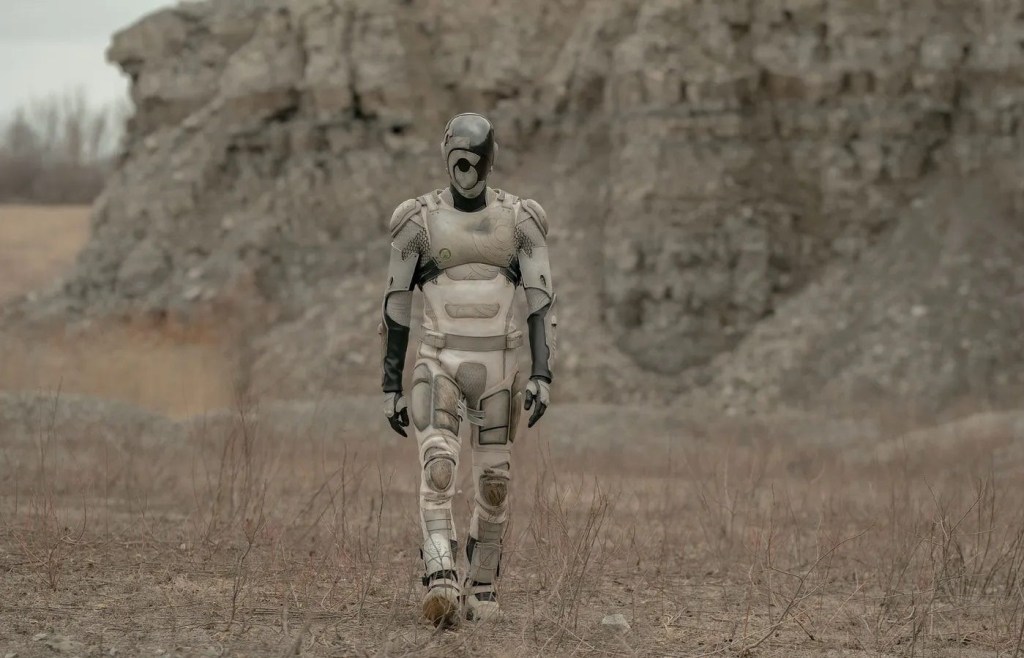
By the end of the first episode, I realized I needed to divorce MY SecUnit from AppleTV’s SecUnit and MY PreservationAux survey team from the show’s team to more fully enjoy the series. My SecUnit is still (and always will be) the best, but their version is really watchable and very entertaining.

I’m still a wee bit skeptical. I’m prepared to be disappointed, because so much of SecUnit’s development takes place INSIDE its head–what it’s thinking, what it’s feeling (it is seriously uncomfortable with emotion), and how its behavior is shaped by its thinking and feeling (and yes, it’s an ‘it’ rather than a gendered being).

But it looks like Skarsgård might have the acting chops to pull off SecUnit’s internal struggle to adamantly deny its humanity while still insisting on its personhood. To me, that’s the heart of the Murderbot Diaries. So far, Skarsgård’s ability to mute his facial expressions while still depicting unwelcome emotions has been spot on. It’s just a fraction of an emotion away from deadpan (and yes, I think Kate Box would have done it better).

So tonight I’ll watch another episode. Maybe two (I suck at binge-watching). I can say without any hesitation that it’s the second-best Murderbot ever.
hello sweetie

SPOILERS HERE!
THERE WILL BE SPOILERS
INITIATE SPOILER ALERT SYSTEM
ALL THE SPOILERS FIT TO PRINT

Okay, I’ve watched all three episodes (yes, I’m including The Church on Ruby Road as an episode) of the newest version of Doctor Who…and I’m concerned.

I’m not concerned about Ncuti Gatwa as The Doctor. He seems to be a natural Doctor, which perhaps is because unlike every other new Doctor, he didn’t have to go through the whole ‘Who am I this time?’ fuss. And I’m not concerned about Millie Gibson as Ruby Sunday, although she’s at risk of being perky. Nor am I concerned about the basic plot structure of these three episodes; they all seem like classic Doctor Who events. They fit perfectly in the Doctor approach as described by Neil Gaiman:

[T]here’s a blue box. It’s bigger on the inside than it is on the outside. It can go anywhere in time and space and sometimes even where it’s meant to go. And when it turns up, there’s a bloke in it called The Doctor and there will be stuff wrong and he will do his best to sort it out.

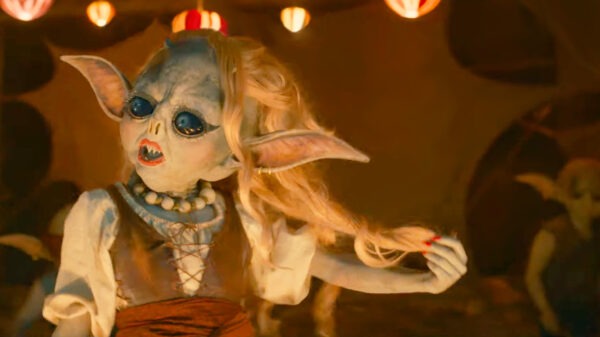
We see that in each of these three episodes. We’ve had a baby kidnapped by goblins; we’ve had babies abandoned in space who are threatened by a snot monster, and we’ve had a villain who has essentially stolen music from the world. These are all great Doctor Who scenarios—they’re all classic problems for the Doctor and Ruby to ‘sort out.’ I’m not concerned about any of this.

The goblin musical number from The Church on Ruby Road.

What I AM concerned about is the nature of the show itself. Of the three episodes so far, two of them have included musical numbers. I’m talking about incorporating theatrical singing (and dancing) as a part of the narrative (as opposed to something organic but incidental WITHIN the episode…like hearing music on the radio or a band performing). What the fuck is that about?

I’m not opposed to singing and dancing…but why? What’s the point? Did the singing and dancing contribute to the story? No. Did it develop the characters? No. This is Doctor Who filmed like Disney’s Little Mermaid or Moana. It’s turning Doctor Who into Singing in the Rain or Guys and Dolls.

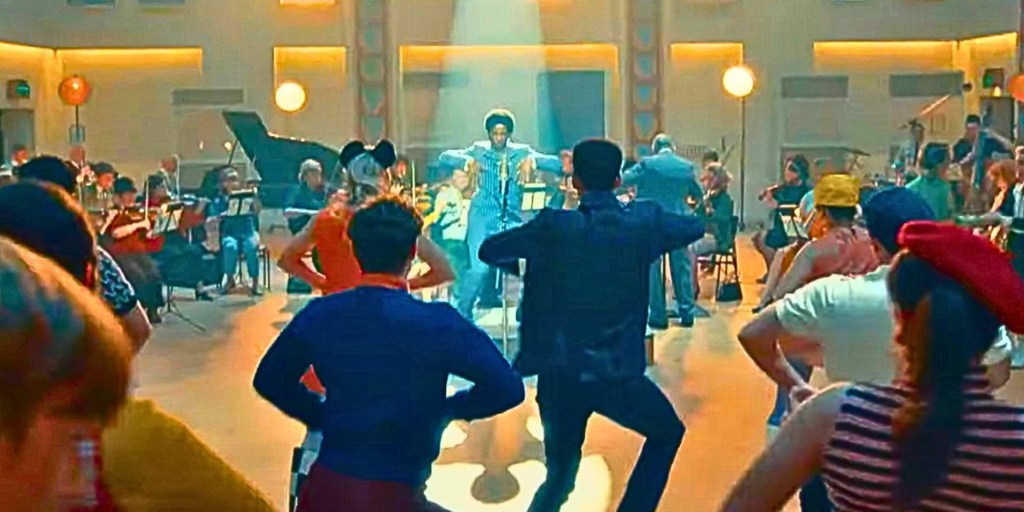
The song & dance number from The Devil’s Chord

Don’t get me wrong. I like musicals. On any given day, you might find me humming or singing tunes from My Fair Lady. I’d be perfectly fine with an actual musical episode (like the brilliant Buffy the Vampire Slayer sixth season episode Once More with Feeling), but personally, I don’t want a Doctor who might, at any moment, burst into song and dance instead of acting and using dialog.

The thing is, the musical numbers in those two episodes were superfluous. They didn’t contribute to the story in any meaningful way. In fact, I’d argue they diminished the show. I’d argue they distracted the viewer from the events within the story world.

So there it is. I love Doctor Who, but I’m concerned about the direction the show is taking. I’m excited about Ncuti Gatwa as The Doctor. I think Millie Gibson as Ruby Sunday shows a lot of promise. I’ll continue to watch Doctor Who, but I’ve lost some of my enthusiasm for it. I’m uneasy about the next episodes. I hope the new relationship with Disney doesn’t result in a Disneyfied Doctor. But that seems to be a real risk.

EDITORIAL NOTE: That said, the end scene in which The Doctor and Ruby recreate the dancing on the piano moment from Tom Hanks’ movie Big while on the zebra crosswalk from the Beatles’ Abbey Road album was fucking brilliant.

shogun

I recently finished watching the new Shogun mini-series, and yes, I have thoughts. Before I inflict those thoughts on you, I should report that I’ve read the novel twice. I don’t recall when I first read it, but it was many years ago; I reread it earlier this year when I heard about the remake of the mini-series. I should also say I’ve seen the original Shogun mini-series starring Richard Chamberlain and Toshiro Mifune. So I can compare the new version to the old version and to the novel itself.

Shogun 2024 is both better and worse than Shogun 1980. Visually, it’s significantly better. The cinematography is spectacular. It’s certainly darker (literally), but the biggest difference is the story world of Shogun 2024 looks and feels lived in, if that makes sense. The story world in Shogun 1980 looked and felt like elaborate movie sets. The production values of Shogun 1980 are a product of their time, and it shows. There’s a convincing verisimilitude in the new version that was absent in the original.

The narrative in the new version is, in some ways, easier to follow–which ought to be a good thing, but isn’t always. I’d heard it would emphasize the Japanese perspective over that of the European protagonist. I confess, I was of two minds about this. I mean, the story takes place in early 17th Japan, so yeah, obviously it should be sensitive to the existing culture. But at the same time, it’s a classic ‘stranger in a strange land’ tale. At its heart, it’s a story about a person trying to understand and survive a society that’s exceedingly different from his own.

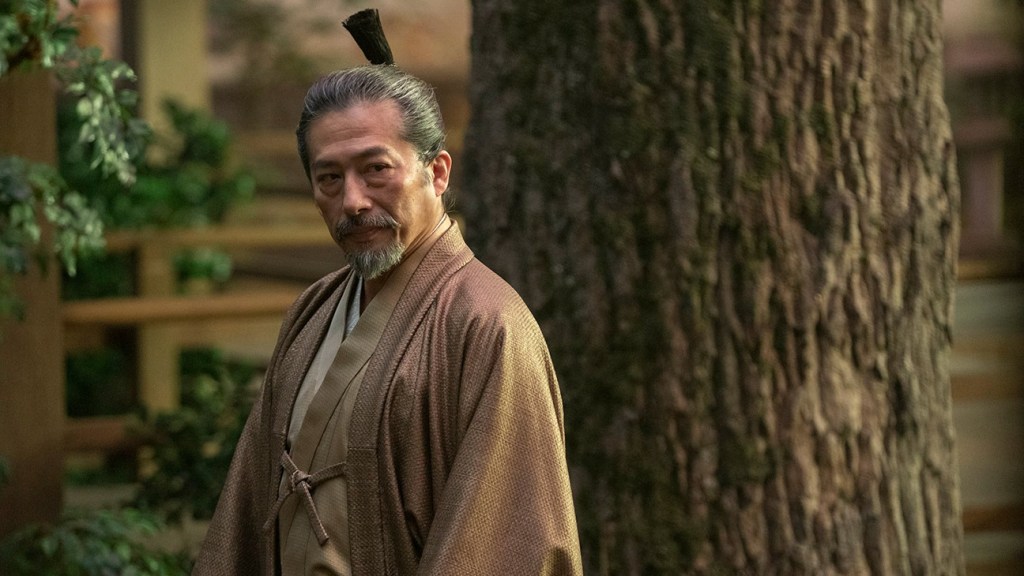
Toranaga — Shogun 2024

In Shogun 2024, the Japanese dialog includes subtitles. This, obviously, allows the viewer to understand what’s being said. Shogun 1980 did NOT provide subtitles, which had a HUGE impact on the story and the viewing experience. The viewer was as confused and uncertain about what was happening as Blackthorne. Unless you spoke Japanese, you were at the mercy of Mariko’s translation–or you were forced to try to deduce what was being said based on the behavior of the characters. This reinforced Blackthorne’s sense of isolation. The absence of subtitles also required the actors to rely more on face and body acting; they had to use body language and facial reactions to physically demonstrate what was taking place and being said.

This leads me to my main criticism of Shogun 2024, which is the way Toranaga is depicted. In the novel and in Shogun 1980, Toranaga clearly enjoys being alive. He displays a wide range of emotions; he’s exuberant, he’s stern, he drinks, he’s sentimental, he laughs, he gets angry, he’s wise, he’s deeply curious, he’s willing to be silly, he’s deadly serious, he’s stubborn. For example, in Shogun 1980 Toranaga sees Blackthorne dive off the ship, headfirst into the water. It’s a technique new to Japan and Toranaga immediately wants to learn to dive (this, by the way, is at the heart of the Toranaga-Anjin relationship; Blackthorne has skills that surprise and intrigue Toranaga, skills he wants to learn). Blackthorne demonstrates the dive. Toranaga and his retainers all try it. However, Toranaga is unable to make a proper dive. Initially, it’s a funny scene; his repeated painful belly flops are comical. But Toranaga’s failure at diving puts him at risk of losing face in front of his followers. Blackthorne eventually demonstrates a simpler method and Toranaga finally succeeds. We learn a lot about Toranaga in that scene — his thrill at learning something new, his joy of playing around in the water, his stubbornness and determination, his pride.

In Shogun 2024, however, Toranaga says he wants to learn to dive, but only watches as Blackthorne repeatedly demonstrates his diving technique. Eventually Toranaga leaps into the water and challenges Blackthorne to a race. We learn almost nothing interesting about Toranaga in the 2024 version.

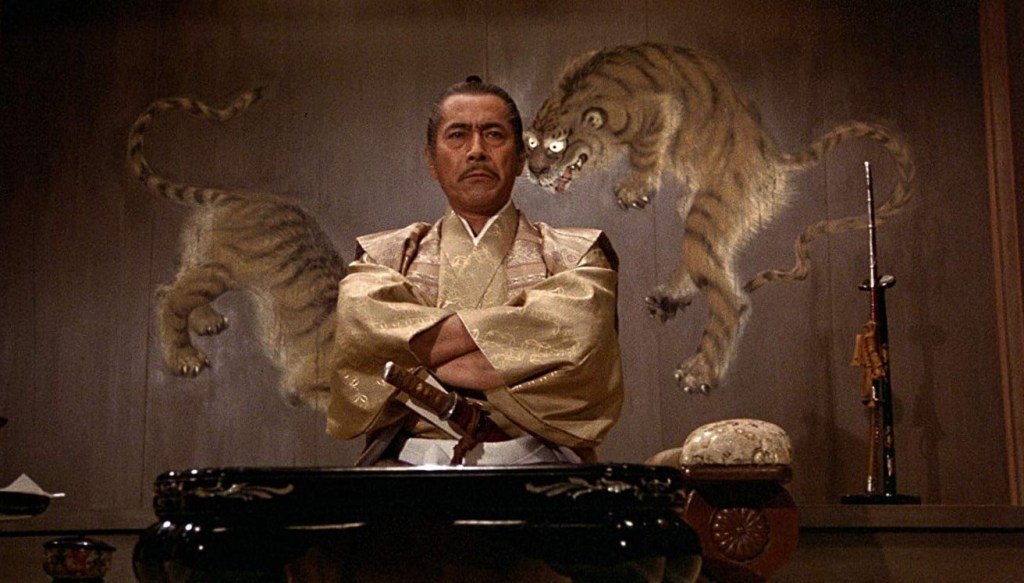
Toranaga –1980

Another example, in Shogun 1980 Blackthorne is being entertained by some women and he becomes a wee bit drunk and high-spirited. He sings a shanty and dances a hornpipe. The noise draws Toranaga to the room. Blackthorne realizes he’s created a scene (which is frowned upon in Japanese society) and starts to apologize, but Toranaga is intrigued and insists on seeing the dance. He then decides to learn Blackthorne’s dance. We’re treated to a scene in which Toranaga is attempting to dance a hornpipe. It’s wonderfully ridiculous and delightful.

The Toranaga of Shogun 2024 doesn’t dance. He doesn’t laugh, he doesn’t get sentimental, he doesn’t get tipsy, he doesn’t get silly, he doesn’t seem to enjoy much of anything. Throughout the series, he’s almost always stern and serious.

In my opinion, this handicaps Toranaga’s development as a character. This is especially clear after Toranaga’s capitulation to his brother and his announced decision to surrender himself in Osaka. In Shogun 1980 and the novel, we see Toranaga lose his joy; we see him defeated and deflated and depressed; there’s a marked contradiction in his behavior. He’s emotionally diminished. The Toranaga of Shogun 2024, on the other hand, has been consistently sober and serious. When he submits to his brother and Osaka, the change in his demeanor is slight. Instead of showing him emotionally changed, the narrative suggests he’s physically ill as well as depressed. It’s simply not as interesting.

This flaw (and yeah, to me it’s a massive flaw) becomes more obvious at the end of the series. Toranaga makes a series of confessions, including the fact that he’s always wanted to become Shogun. In Shogun 1980, he also admits he had Blackthorne’s ship destroyed to keep him in Japan, largely because he needs Blackthorne — not because of his ship or his skills, but because his alien/outsider status allows Toranaga to have an actual friend, somebody who doesn’t have a Japanese agenda. In both versions of the show, Toranaga declares Blackthorne “makes me laugh.” In Shogun 1980, we see that laughter and we know it’s true. Toranaga makes the same statement in Shogun 2024, but we never see that joyful/playful side, so the comment doesn’t ring true.

Shogun 2024 centers the experience of the Japanese characters, but that makes it a story about political maneuvering. Shogun 2024 is about Toranaga’s hidden agenda to become Shogun, in which Blackthorne plays a minor role. In this version, Blackthorne is actively resistant — hostile, even — to change. He remains boorish, rude, and almost willfully ignorant of Japan’s societal norms. It’s not until the final episode, when he realizes he’s unlikely to be able to return to Europe, that he seems to genuinely adapt to Japanese life. It’s a story about political conflict.

Shogun 1980 (and the novel), on the other hand, is about Blackthorne’s struggle to adapt to a very alien culture, which takes place during a potential civil war in Japan. In this version, Blackthorne realizes there are many positive aspects of this new culture and he eagerly embraces aspects of it. This is maybe most clear in Blackthorne’s enthusiastic “Oh lawdy, I fucking LOVE a hot bath” revelation and his pleasure at the simple cleanliness of Japan. It’s a story about cultural conflict.

Both versions end with Blackthorne realizing he’ll never get to leave Japan. But that awareness lands differently in each version. In Shogun 1980, Blackthorne’s willingness to adapt makes his acceptance less painful; having to live the rest of his life in Japan doesn’t seem like much of a sacrifice. In Shogun 2024, however, Blackthorne having to stay in Japan feels like a prison sentence which he’ll try to make it as palatable as possible.

I found Shogun 2024 to be a more compelling and visually interesting story. But I also think it’s a less enjoyable story.

bi-generation?

Okay, first thing, if you’re expecting this to be about a generation of bisexual people, you can just stop now. It’s not about bisexuality. Well, not specifically. I mean, it’s about Doctor Who, so it could be argued that bisexuality is sorta kinda implicit. I mean, The Doctor (and yes, Whovians (and also yes, Doctor Who fans are often called Whovians, get over it) always refer to Doctor Who as The Doctor, get over that too) is an alien who’s been both male and female and has been attracted to both men and women, so…yeah.

I understand, not everybody is a fan of Doctor Who. If you’re one of those folks, then you might as well take a nap, on account of this is totally about one of the esoteric aspects of The Doctor. I’m talking, of course, about bi-generation.

If you’re NOT a Doctor Who fan and, for some inexplicable reason you’re still reading this, allow me to explain the regeneration business. There’s obviously a practical aspect to it. The show is 60 years old; the original Doctor Who has been dead for almost half a century. In order to keep the show going, a new Doctor had to be introduced. Rather than just toss in another actor and pretend he’s the same person, the writers introduced the concept of regeneration. When The Doctor is fatally injured or their body is failing for some reason, they go through a transformation process—their cells renew into a different physical form, which results in a new body. Their memory remains mostly intact, but the new Doctor has a unique new personality. This is regeneration.

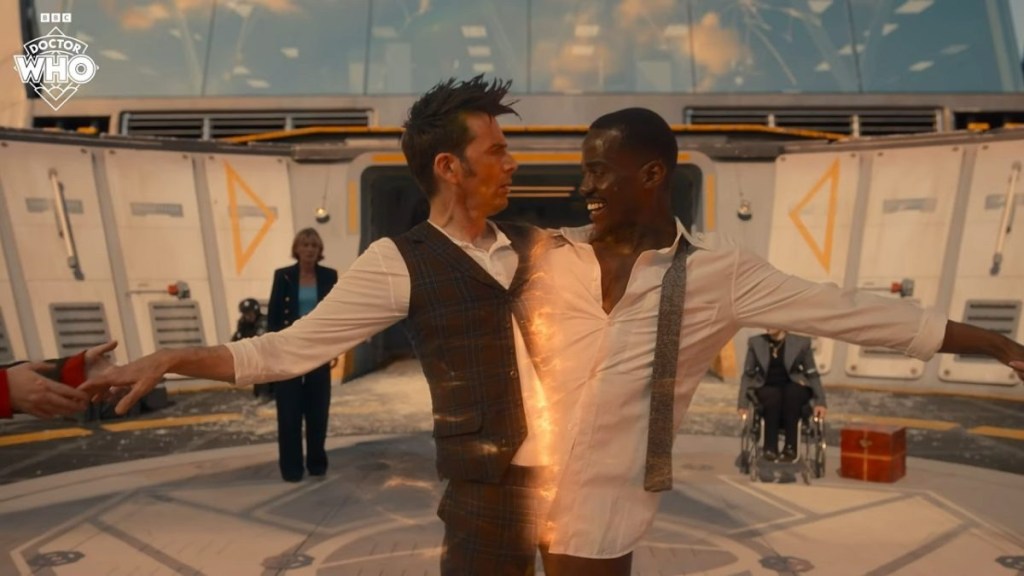
It’s happened 13 times in the course of the show. We expected it to happen a 14th time, when the new Doctor (played by Ncuti Gatwa) would be introduced. But instead of a classic regeneration, we were subjected to bi-generation. As The Doctor (played by David Tennant) prepares to die, he’s supported by two women, one on either side. The regeneration process begins, then…nope. It just…stops. Everybody is confused. The Doctor asks those supporting him to pull (on his arms), and hey, bingo, he splits in two. Sorta kinda.

I mean, where there was The Doctor, now there are two Doctors—one a pale skinny Scotsman (Tennant), the other a muscular Black man (Gatwa). I didn’t notice this at first, but The Doctor’s clothes are also divided; Gatwa gets the shirt, tie, shoes, and underpants. Gatwa also gets to ask the question that EVERYBODY is thinking: “Now, someone tell me what the hell is going on here!”

Putting the bi in bi-generation.

What the hell is going on is something completely and entirely unprecedented. As a fan, you have to ask, why did the writers do this? Why would they introduce a new form of regeneration? In my opinion, there are solid narrative reasons for the bi-generation business. Consider that The Doctor, in various incarnations, has been around a LONG time. They’ve saved civilizations and destroyed them, they’ve rescued billions of people and seen (or caused) billions to die, they’ve fought monsters and they’ve been monsters, they’ve loved companions and seen them die (or leave or get abandoned). Because of this, The Doctor has the universe’s worst case of PTSD and survivor’s guilt ever. Let’s face it, the Doctor is massively fucked up.

By tossing in this bi-generation, the writers have done two very important (for the fan base) things. First, they’ve given the new Doctor a clean slate. Gatwa has The Doctor’s memories, but isn’t burdened by the guilt. It also allowed Gatwa to skip the post-regeneration ‘Wait, who am I now?’ confusion that normally accompanies a new Doctor. He starts fresh, confident, eager, enthusiastic—and Gatwa’s delight in being Doctor Who is apparent and infectious.

Second (and probably more important for the fans), the old Doctor gets a chance to heal—to live a somewhat more normal life, to have something like a family, to be relieved of the obligation to fix every fucking thing that goes wrong, to just relax. There’s something healing about seeing Tennant sitting down to a meal with his expanded chosen family. It’s just really nice to know his end isn’t traumatic.

BUT (you knew there was a ‘but’ coming, didn’t you), I’m a wee bit disconcerted by one thing in particular. As I said at the beginning, Whovians always refer to The Doctor as The Doctor. Not just any Doctor, but THE Doctor. Because The Doctor is singular. There’s only one The Doctor.

Until now. How can Ncuti Gatwa be The Doctor when there’s another Doctor Who loafing about in Donna Noble’s garden in Chiswick? Personally, I’m more than willing to abandon the singular The and refer to the 14th Doctor as the Doctor, so long as I get to imagine the old Doctor sitting around at night with Wilfred Mott, drinking tea from a thermos and looking at stars through a telescope.

the answer is: buffy & veronica

“Name a television show that changed you.” That sort of question gets asked all the time in social media, mainly by folks who want to generate some discussion. I generally ignore those questions. I thought I’d ignored that one too, when it came up a few days ago. But apparently I didn’t, because I’ve been thinking about it at odd moments when my brain isn’t occupied with other bullshit.

And hey, after a few days of episodic thought, I came up with two shows that…wait. You know, the whole notion of a television show actually changing somebody seems ridiculous. On the other hand the notion of a book changing somebody seems (to me, at any rate) perfectly reasonable. But I don’t know…I mean, they’re both narrative forms and only an idiot would deny the power of a narrative. So, okay, there’s no reason a television show/series can’t have a powerful effect on somebody. Whatever point I was going to make at the beginning of this paragraph is clearly bullshit. So never mind. Let me try that again.

After a few days of episodic thought, I came up with two shows that have had a profound effect on me. Buffy the Vampire Slayer and Veronica Mars. The former is about a high school girl who becomes the Chosen One whose purpose in the world is to kill vampires and demons and general ‘forces of darkness,’ which (as Buffy says) is a job of work for a high school kid. The latter is about a high school girl who becomes a private detective, solving crimes and helping innocent (and semi-innocent) people.

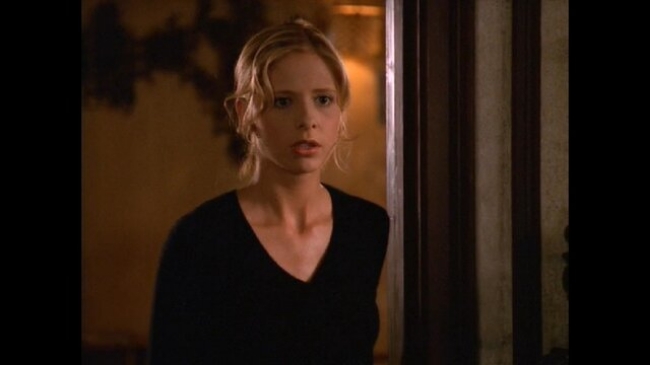
“I’m telling you, having a secret identity in this town is a job of work.”

Yeah, I know, the premise of each of those shows is absurd. Also yeah, I know, some of you may be saying to yourself, “A guy who watches girl hero television shows? What’s with that?” My response to that is a) hey, they’re really good shows and b) grow the fuck up.

Here’s the thing. Yeah, Buffy and Veronica are high school girls (at the beginning of each series) who are tough and snarky, who defend ordinary folks against bad folks, and who have to deal with gender and high school issues while also dealing with much larger problems. But what makes them singularly influential (to me, at least) is that they’ve both been through a world of shit and they’ve adapted to that by no longer caring very much what other folks think about them. They’re aware of peer pressure, and it still carries much of the gravitational pull that influences most of their peers. But they’ve each found the strength to shrug off that gravity and deal with the world they live in on their own terms.

“Why can’t the evil just get jobs like the rest of us?”

But that comes with a cost. They each suffer the isolation and alienation that comes with being different. They each learn to assemble a cohort that serves as a sort of family or support group. And then they’ve each learned that in some/many ways, they’re also isolated and alienated from that cohort. And as painful as that is, they continue to cope and occasionally to actually thrive.

Another thing about those shows: they each include a father figure who is realistically complex. Buffy has Giles, her Watcher; Veronica has…well, her dad. They try to help; they try to protect; they try to NOT interfere too much, and they routinely fuck up. Realistically fuck up. Because they’re conflicted; society suggests they should behave in a specific male parent way that generally interferes with the agency of their children BUT they also want to encourage their children to be their true selves. Anthony Head and Enrico Colantoni manage to bungle their parental responsibilities without completely destroying the trust of their kids. Their relationships are often painful, but always sort of beautiful.

So yeah, those two television shows were massively influential to me. The fact that Buffy and Veronica struggle against vampires or criminal sociopaths is sort of irrelevant. What matters is they mostly hold onto their personal integrity in a world that seems almost designed to destroy it. What matters is Buffy and Veronica build a mostly workable relationship with their own selves. If that makes sense.

Buffy Summers and Veronica Mars offered lessons in how to hold onto your true self when the world around you tried relentlessly to disrupt that. They gave good television.

THE USUAL EDITORIAL COMMENT: Yeah, the patriarchy. Got to incinerate it. Stake it to the ground, douse it with an accelerant, light it up. Burn it to ashes, bury the ashes, piss on the the burial site, then salt the earth above it so that nothing will ever grow there again. Then have a glass of wine. I recommend a Gewürztraminer.

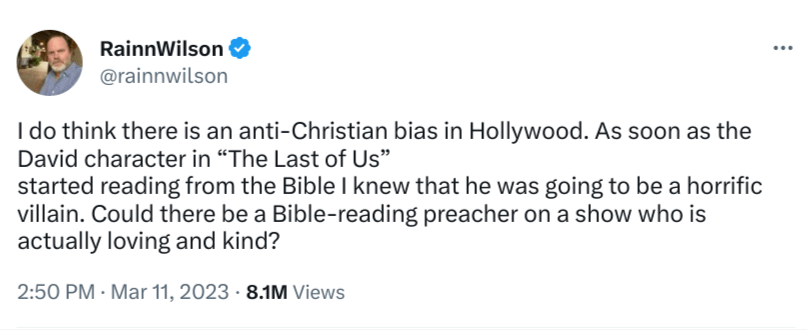
that’s not bias, that’s behavior

This ‘anti-Christian bias’ bullshit again.

It’s important to remind everyfuckingbody that in all of Western culture, Christianity is the default. Unless it’s specifically mentioned, every television and movie character is assumed to be Christian. There is a definite, consistent pro-Christian bias in Hollywood. When Christian characters act in non-Christian ways–by lying, by cheating, by conniving, by being greedy, by sexually molesting people, by being hypocrites, and yes, by being fucking cannibals–that’s NOT anti-Christian bias. It’s anti-Christian behavior. And hey, that shit happens ALL THE TIME.

The fact is, there are–and always have been–lots of television shows and movies devoted to favorable portrayals of Christian priests and ministers and nuns. There was even a show called God Friended Me about an atheist ‘friended’ by God on social media, who then became an active agent for good things. How many crime-solving Christian clergy shows are there? Dozens. How many movies and shows about ex-priests still doing the Christian God’s work by fighting supernatural evil–vampires and demons and all that?

There are far more overtly positive representations of Christians on television and in the movies than disparaging ones. And, again, the unfavorable representations are generally about characters who are defined by their close association with Christianity. That’s how character-driven narratives work: you play them against a higher standard. The more trust placed in a person, the greater the betrayal when that trust is broken. A judge or a police officer who steals is seen as worse than an ordinary person who steals, because their job is to uphold the law. A professed Christian who violates the tenets of Christianity is more shocking than a non-Christian who does.

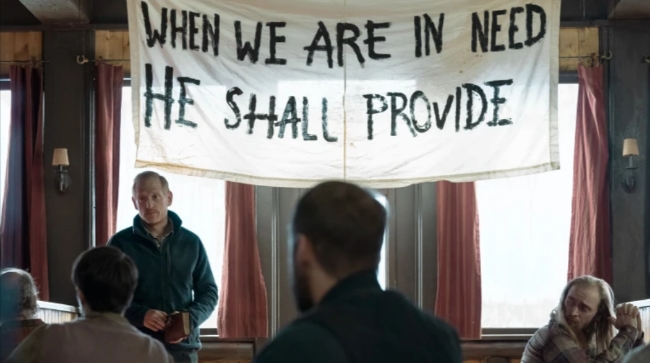
So yeah, if you want to create a villain, first you put that character in a position of trust and respect. Because Christianity is the default, and because society is expected to honor and trust the clergy, they make great villains. Presenting a post-apocalyptic Bible-reciting preacher as a cannibalistic predator is NOT anti-Christian bias; it’s a depiction of the betrayal of Christian beliefs.

Mark Wahlberg (who, by the way, is an absolutely dreadful actor–which has nothing at all to do with his faith) has also complained about an anti-Christian bias in Hollywood. He’s said he intends to dedicate the rest of his career to ‘faith-based storytelling.’

“I don’t want to jam it down anybody’s throat, but I do not deny my faith. That’s an even bigger sin. You know, it’s not popular in my industry, but, you know, I cannot deny my faith. It’s important for me to share that with people. I have friends from all walks of life and all different types of faiths and religions, so you know, it’s important to respect and honor them as well.”

This is a huge part of the problem. Christians DO jam it down our throats. Spreading the Gospel–the Good News–is inherent in Christianity. It’s hard-wired into the belief system.

And he said unto them, Go ye into all the world, and preach the gospel to every creature.

‘Preaching the Gospel’ sounds a lot better than ‘Jamming it Down Throats’ but the commandment to ‘share’ exists independently of the desire of others to listen. It may be important for Wahlberg “to share that with people” but it’s not important to those of us who aren’t Christians. Go be a Christian, but we’d very much appreciate it if you’d leave us out of it. Wahlberg says it’s important to “respect and honor” folks of other faiths and religions, but one way to do that would be to NOT to ‘share’ your religion with others unless invited. Refraining from ‘sharing’ your faith is not the same as denying it.

Anti-Christian bias absolutely exists. But it’s generally a result of two things: 1) that unrequested sharing business, and 2) the constant barrage of professed Christians caught doing stuff they preach against. Wait…make that three things. Let’s include 3) Christians who’ve been caught doing stuff they preach against and who, after a period of ‘reflection’, announce they’ve been forgiven and go right back to preaching. And making money.

Anti-Christian bias exists primarily because of anti-Christian behavior on the part of Christians.

house of nope — or my ‘game of thrones’ evolution

At some point in the late 1990s a friend who knew I was skeptical about fantasy fiction passionately suggested I read A Game of Thrones. It was, she said, the first novel in a proposed trilogy, and unlike anything she’d ever read before.

So I read it. And hey, it was good. Even a fantasy fiction skeptic like me could appreciate the unpredictability of the narrative. About a year later, the second novel of the series was published. It was equally good, and I became fully invested in the narrative.

A year after that, the third book–and by then the author, G.R.R. Martin felt the original trilogy would require a fourth book. The story was strong enough that I was willing to wait for a fourth book and the end of the ‘trilogy.’

It was a long wait. Five years. Sure, I had to re-read the first three books to remember what was going on, but I didn’t mind. Except that now Martin was saying the story required six books. At least six. I was less invested in the narrative, so I wasn’t sure I wanted to wait another five years for the fifth book.

House of Nope

It took six years. And I bought it for a couple of reasons. First, why not? I wasn’t as invested in the story itself, but there were characters I loved and I wanted to see what happened to them. Second, HBO was producing a television series based on the novels. I told myself that meant G.R.R. Martin must be about to release the final book(s). Otherwise why would HBO even begin the series? It would be monumentally stupid for them to start filming such an expensive (and expansive) series without having an ending. Right?

I made a conscious decision not to watch the HBO series. I liked the books and I figured the series would be a pale version of the story (let’s face it, the book is almost always better than the movie or television series). I figured I might watch it after I’d read the final book, which I expected to be released in the not-too-distant future.

A couple of years went by. I heard a LOT of friends talking about the series. I decided it couldn’t hurt to watch the first episode. You know, just to confirm that it sucked. Besides, I was almost out of patience waiting for G.R.R. Martin to churn out another book. One episode wouldn’t ruin the books for me.

That first episode? It didn’t suck. It was actually pretty good. I seem to recall there was a lot of gratuitous tits and ass, but that’s what you expect from HBO. In any event, Tyrion was perfect and the cinematography was astonishingly good.

So I started watching the series. Not binge-watching, but every couple of nights I’d watch another episode. I told myself it would be okay, because surely the final book(s) would be published soon. Right? I mean, the series couldn’t continue if the books weren’t finished. Right?

Nope. The series moved beyond the books. The source material had stalled, but the screenwriters–presumably with Martin’s help/approval–continued the story. And…well, it wasn’t as good. There were some amazing battle scenes, and I was still invested in a few of the characters, so I continued to watch. But battle scenes are just that–scenes. Individual scenes don’t move the narrative very far. You have to string a lot of scenes together to create a narrative. The individual character story arcs became simple, almost cartoonish. Everything felt rushed. Some aspects of the show became sort of dumb. In fact, some aspects were completely fucking stupid. Worse, they were stupid without being interesting (yes, it’s possible to be both stupid and interesting at the same time–remember LOST?)

And then the series ended. It ended stupidly, as if the writers had lost interest. As if the writers had given up and just wanted to be done with the whole thing. It wasn’t just that the story resolution was disappointing, it was–and I don’t know how else to put this–it was wrong. It felt wrong. It was cheap.

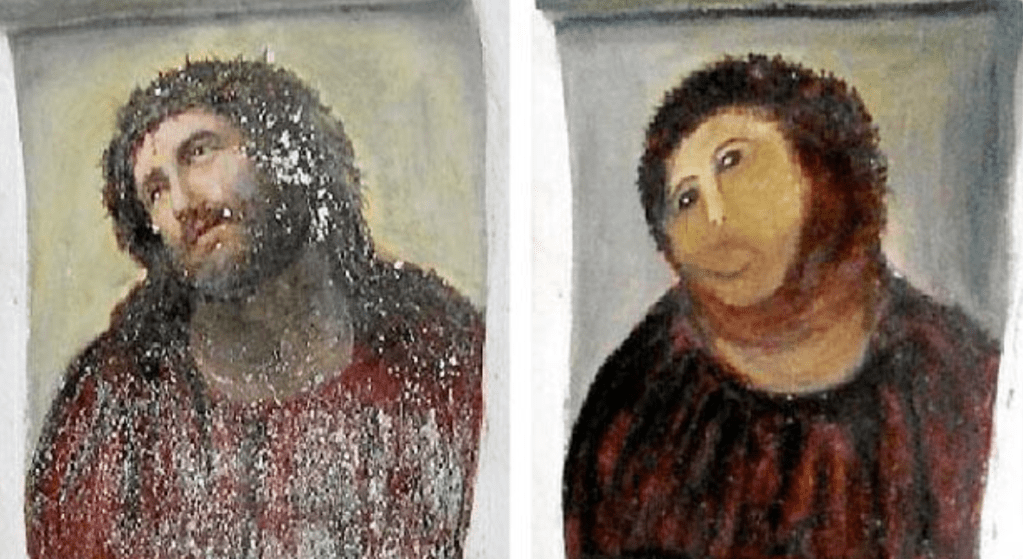
For those of us who believe passionately in the power of a narrative, there’s no betrayal worse than a resolution that cheapens the narrative. I won’t claim the HBO series was any sort of masterpiece, but it had been good, solid television. Ending it the way they did was like–you remember that 19th century painting Ecce Homo that was ‘restored’ by an elderly amateur? Yeah, that’s how Game of Thrones ended.

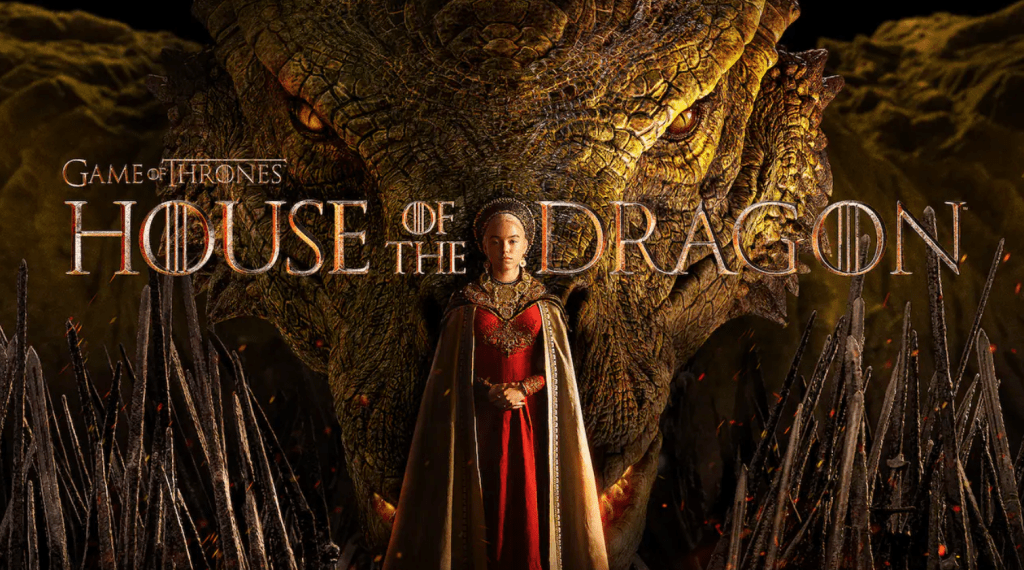
Now HBO is producing House of the Dragons, a GoT prequel. G.R.R. Martin apparently signed the deal back in 2018/19, when he was still promising to finish A Game of Thrones. Will the series be any good? I don’t know. And I don’t care. I simply don’t trust either HBO or G.R.R. Martin enough to care. I’ve lost all interest in anything Game of Thrones-related. If Martin ever actually produces a final volume in the book series, I can’t imagine caring enough to read it.

The sad thing is, House of the Dragons has a lot of narrative promise. But we’ve been lied to before.

That said, if HBO would string together a compilation of every scene involving Tyrion and release it as a show, I’d watch the hell out of it. Same for Brienne of Tarth. And Bronn. And of course, Arya Underfoot. Now that would be good television.

House of the Dragon? Fuck that.

that’s right, it’s a movie review

I sporadically read movie and/or television reviews. I don’t necessarily trust entertainment reviewers, but I tend to assume they get it approximately right. Maybe they don’t point to true north, but they wave in a general northish direction. The reviews of Don’t Look Up were harsh; I saw it described as glib, as disastrous, as unamusing, as obvious and without subtlety, as over-the-top, as trivializing an actual social problem, as cynical and mocking. Reviewers said Don’t Look Up failed both as satire and as comedy.

But sometimes all I want is mindless, distracting entertainment–something glib and trivial and obvious. Besides, there were a lot of really fine actors in it, so how bad could it be?

I won’t say Don’t Look Up is a great movie; it’s not. But it’s not at all what the reviewers claimed it was. It’s not mindless entertainment; it’s not glib or trivializing or without subtlety. It’s a damned fine movie. It IS over-the-top, but considering the last few years, it’s only over the top by inches.

With only the tiniest possible SPOILER, I’m going to tell you what the movie is about. I’m not going to relate the entire plot; I’m only going to reveal one plot element (which you probably already know). But I’m going to describe what I think is the pivotal scene. It takes place fairly early in the film, and it establishes the theme on which the movie depends.

Three people–a grad student who discovers a comet heading directly toward earth, the professor who oversees her research, and a government official who heads some obscure agency devoted to protecting Earth from comets and/or other space stuff–are at the White House with a high-ranking military escort. They’re there to warn the president of the impending extinction level event. POTUS is busy doing political bullshit, so they’re left idling in a hallway. The escort leaves briefly and returns with bottled water and some snacks. He complains about how expensive the snacks were. The others reimburse him–US$20. He keeps the change. Later, the grad student (played by Jennifer Lawrence with unfortunate hair) discovers the snacks and water were free. Periodically through the rest of the film, she talks about how astonished she was that this guy screwed them for a few bucks when they were at the White House trying to warn humanity that all life on the planet is likely going to be extinguished. She just can’t understand people who act that way.

And that’s the movie. Good, decent people trying to do what’s right, trying to do what’s best for everybody, trying to deal with a system designed for–and occupied by–people primarily concerned with themselves and their own gain, people who are willing to lie, mislead, and manipulate others to achieve their short term goals. It’s not just that they have incompatible value systems; it’s that they don’t even share the same definition of values.

It’s a comedy. Sort of. It’s satire. Sort of. Actually, I’m damned if I know what genre it falls into. It’s a critique of the politico-corporate culture we live in, where maximizing profits and shareholder value have priority over human concerns. It’s a critique of the social media driven culture in which celebrity is valued over knowledge and manipulated opinion trumps science. All of that sounds very dull, doesn’t it; but this is not a dull movie.

In the end, I found Don’t Look Up to be weirdly hopeful. It suggests that trying to do good, trying to do the right thing, is in itself a worthy goal, even if you don’t believe you can succeed. It suggests a person’s sincere attempt to do what’s right confers a sort of grace on the person. I like to think that’s true.

Don’t Look Up is worth watching.

EDITORIAL NOTE: By the way, this is one of the few films in which scientists are depicted as normal people who are simply devoted to science. Nerdy, perhaps, but ordinary.

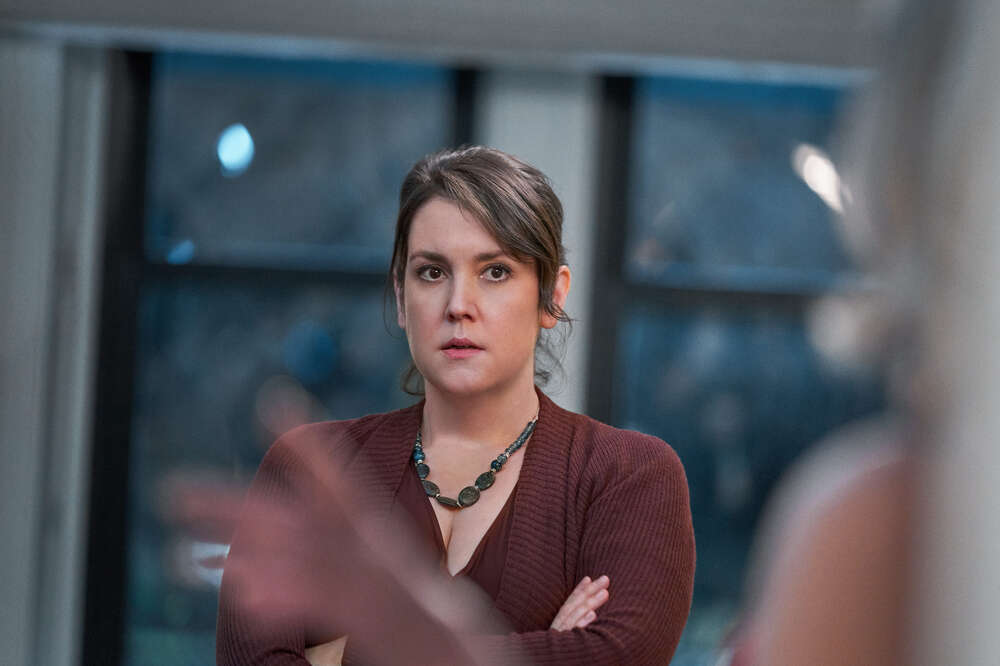
Melanie Lynskey

Also? The cast includes Melanie Lynskey, who has a brilliantly quiet career playing strong, soft-spoken women; she deserves a lot more attention than she gets. It’s a small role, but she’s perfect in it. She knows how to throw a pill bottle and make it sting.