justice, poetic

Six hundred and ninety-one days ago, Elizabeth Warren was testifying before the Senate Oversite Committee. She was then acting as an adviser to the Obama administration, helping establish the Consumer Financial Protection Bureau. Warren was the logical and obvious choice to head that agency, but the Wall Street lobby adamantly opposed her. That, of course, meant Republicans in Congress also opposed her. In fact, something like four dozen Republican Senators wrote a letter to President Obama vowing to oppose any candidate of any political party nominated to head the agency.

Before the hearing, Ms. Warren had notified the committee that she’d only be available for an hour because of a previously scheduled appointment. When she reminded committee members of that conflict during her testimony, Senator Patrick McHenry (Republican Asshole, North Carolina) accused her of lying. “You’re making that up,” he said.

Elizabeth Warren, 24 May, 2011

Elizabeth Warren, 24 May, 2011

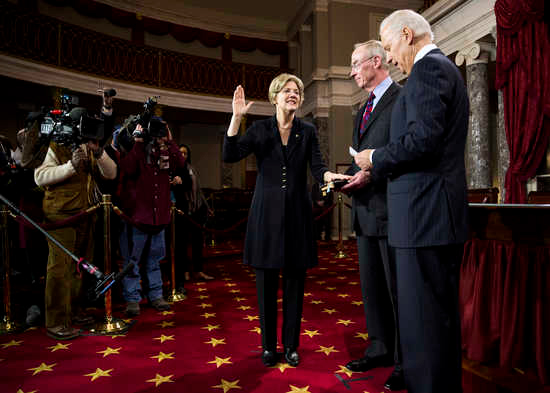
You can see the shock of the accusation registered on her face. This morning, though, she had a completely different look on her face. Here is freshman Senator Elizabeth Warren being sworn in today as the first woman Senator from Massachusetts.

Senator Elizabeth Warren, 4 January, 2013

Senator Elizabeth Warren, 4 January, 2013

Sen. Warren has been assigned to the Senate Banking Committee. That’s right, she’s going to be monitoring the activities of Wall Street. She’ll be seated at the same panel with Richard Shelby (Republican Asshole, Alabama), one of the group of Republican Senators who wrote the letter to the president swearing to oppose her and any other nominee to the Consumer Financial Protection Bureau.

The irony is delicious.

crows

When I was a kid, a neighbor had a crow for a pet. I was altogether fascinated by that bird. It was huge and black; it walked with a dignified, clerical stride; and it was astonishingly clever. It was so smart it hardly seemed to belong to the bird family. It was was almost as if some sort of spirit being was inhabiting an unnaturally large bird’s body. The bird was so large I found it a little scary and intimidating, but I was completely taken in by it.

Ever since I’ve been a fan of the crow. A fan of all the larger Corvidae, actually — ravens, jackdaws, rooks, magpies — but mainly the plain old common crow. One of the things I love about crows is that despite their size (they’re burly bastards; they get up to about 21 inches from beak to tail) they’re almost invisible. People simply don’t notice them most of the time. Cardinals, they notice. Goldfinches, they notice. Blue jays (also Corvids, by the way), they notice. Bright, cheery, colorful birds — even the tiniest of them — get noticed. Crows get ignored. It’s like they have the power to cloud the minds of humans.

From the day I first picked up a camera, I’ve wanted to take a good photograph of a crow. Not a good ‘nature’ photograph that includes a crow. Not a documentary photograph. Not a ‘pretty’ photo. What I wanted was to take a photograph that showed crow-ness. I wanted to shoot a photo that depicted crows as I understood them. That desire became more intense after I discovered Karasu, the book of photographs by Masahisa FukaseKarasu means ‘ravens’ in Japanese. The English-language version of the book was called The Solitude of Ravens. They were the most amazing black and white photographs — strange and wonderful. Fukase’s ravens were feral and furious; they looked supernatural and dangerously smart. I wanted to photograph a crow the way Fukase photographed ravens.

And I tried. For years I tried. If I saw crows — in town, in the woods, on a bike path, it didn’t matter where — I’d often follow them. I have been led astray by crows more times than I can count. But I never got a shot I liked. Never.

Yesterday on my Thursday Walk for Utata I happened to hear some crows flying overhead. I was talking on my cell phone at the time and had to end the call rather abruptly. “Oh god, crows…there are crows…lots of crows…have to go…bye.” I couldn’t see where they were coming from; a bulding blocked the way. But as I cleared the building I could see a tree filled with crows. Filled.

So I rushed to get there. I needn’t have hurried though. Crows kept coming. And coming. And flying away and coming. For an hour crows came, landed in the trees, rested a bit, took off, flew away. An hour. The most amazing hour. And they were still there when I left, still flying away, still arriving.

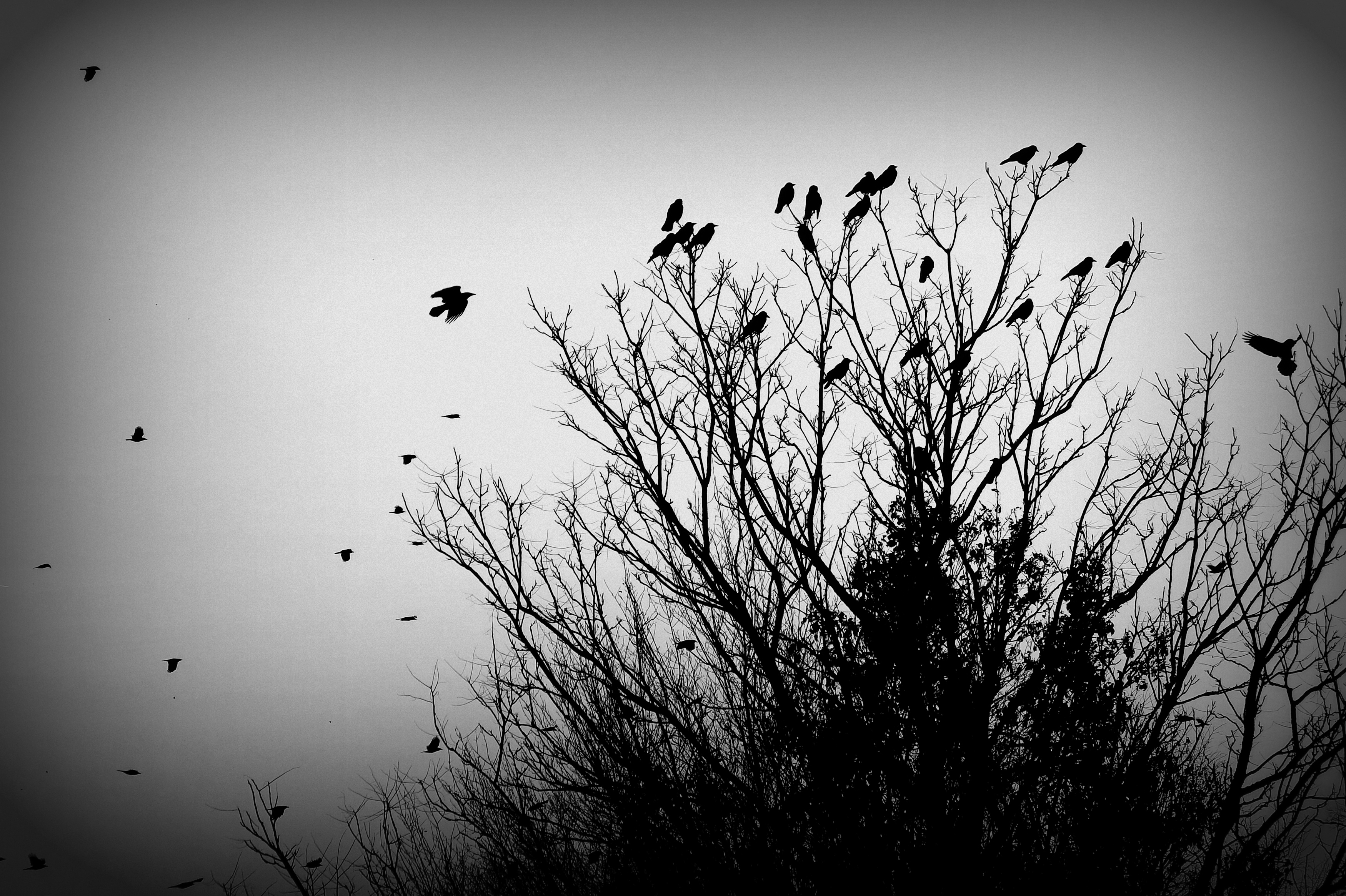
After about ten minutes I realized there were really too many crows. It was impossible to focus on just a few. It was a crow jumble, a mosh pit of corvids. It was almost Biblical. I’ve no idea how many there were. An overwhelming number of crows. There are, for example, 482 visible crows in the photograph above (Yes, I actually counted them, putting a red dot over each individual crow so I wouldn’t count them twice; 482…and there are certain to have been some I couldn’t make out in the tangle of branches).

The noise was staggering. Thousands — tens of thousands — of crows, all cawing and cackling. It created a sort of pervasive white noise. Your brain filters it out. Intellectually you register it as noise, but it somehow seems both physically and emotionally distant. Like if you were hearing it through the wrong side of a telescope — if that makes sense. Perhaps it was just sensory overload.

It never occurred to me to use my camera to video the crows — which I deeply, deeply regret. Instead I tried to find some way to photograph the mass, to show the scale of the murder of crows. It was impossible, of course. Maybe Fukase could have done it. Maybe. I surely couldn’t.

Eventually I stopped trying. I let the camera hang idly in my hand. I just stood there and watched and listened and was amazed.

It was, for me, a truly phenomenal moment — if you can call an hour a ‘moment.’ I don’t know why so many crows gathered together. I don’t know where they came from or where they were going. They were flying off into the sunset. Literally.

I still don’t have the photograph I want. I came a bit closer, but I suspect the only way to show real crow-ness — to show the essence of crow — is to zero in on just a few birds. Three, maybe, or four. Or two. Maybe one. Maybe just a part of one. I don’t know.

But last evening’s experience didn’t cure me. It added another level of enchantment to my understanding of crows.

eat a cookie

Like a lot of you folks, I was unaware this year, 2012, is the 100th anniversary of Oreo Cookies. I only became aware of it on June 25th, when Nabisco took what turned out to be a controversial step forward. On that day, in celebration of Gay Pride Month, they released this advert:

The ad, of course, delighted an awful lot of gay and gay-friendly straight folks. It was fun and funny, clever without being twee, and expressed a political and social position. That’s a lot to include in a simple advertisement.

Predictably, it caused an uproar among religious conservatives and homophobes. While liberals applauded, conservatives vowed to boycott Oreos specifically and Nabisco products in general. They swore would give their custom to Hydrox cookies — apparently unaware that Hydrox had gone out of business. It was a classic temper tantrum.

Kraft Foods, which makes Oreo cookies, rightly refused to back down. They released the following statement: “Kraft Foods has a proud history of celebrating diversity and inclusiveness. We feel the Oreo ad is a fun reflection of our values.”

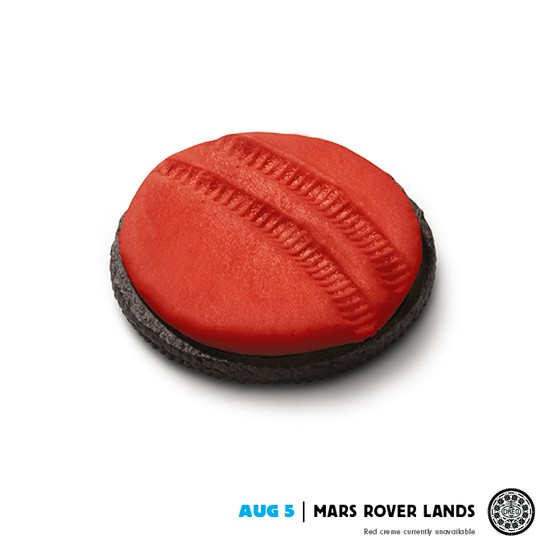
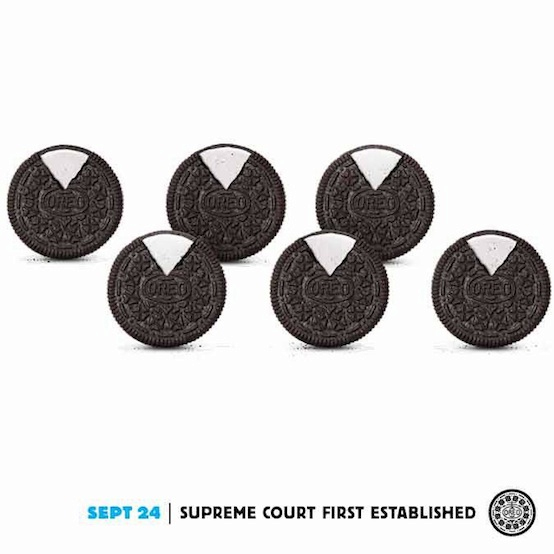
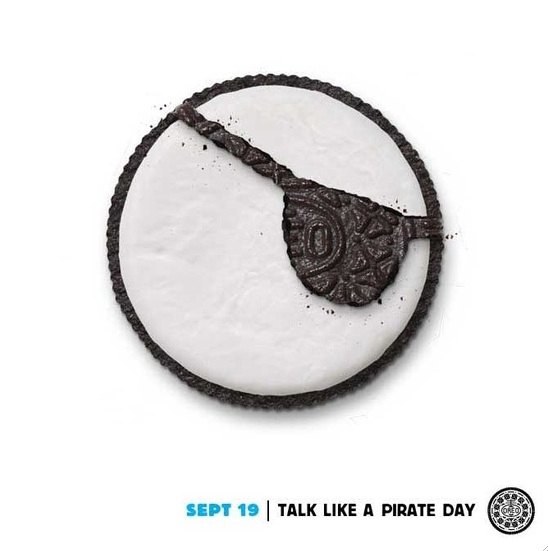
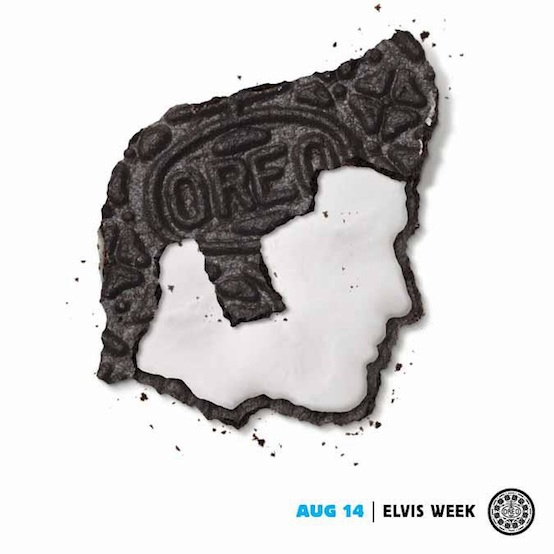
What is just as cool — and what has sadly been overlooked — is that for the next 100 days Oreo celebrated their centennial anniversary by releasing an interesting new advert each day, commemorating some event. Here’s a sample:

The ad campaign was known as The Daily Twist. They used multiple agencies and a dedicated team of four designers to come up with these clever ads, and sadly not nearly enough people saw them.

So here’s your chance to make up for that. Go buy some Oreos. Support the company. Remind them that we appreciate their willingness to do what’s right instead of what’s safe. Eat some cookies in a good cause.

all gothic and syrupy

I’ve occasionally mentioned Utata in this blog. I’ve talked about how the group has helped to shape the sort of photographs I shoot, and I’ve mentioned some of the projects that grow out of Utata (like the Thursday Walks, and Iron Photographer, and our bi-annual big projects).

But I haven’t said very much about the people I get to work with, and that’s a shame because those people are completely fucking brilliant and altogether charming. I was in a state of Off-the-Intertubes recently, and when I returned I discovered these two comments in the Super-Secret Utata Staff Lounge:

“I’m in the middle of making some bramble whisky. I may strain it through an old sock instead of the more conventional muslin cloth.”

“I’m making bramble whisky too, but I must be doing something wrong as my recipe doesn’t include old socks.”

First, I should probably note that I am occasionally referred to in Utata as ‘Old Sock’ (don’t ask; it’s not a long story, but it’s a story that makes almost no sense at all). Much more important is the bramble whisky. Now, I’m familiar with brambles and blackberries, and I’ve been rather intimate with various forms of whisky — but bramble whisky? Never heard of it. And I admitted as much, which sparked this conversation:

“I highly recommend bramble booze (or sloe, elderberry, rosehip, random non-deadly-nightshade hedgerow fruit). You can take the absolute dog-roughest bathtub poitín and turn it into a magical elixir for the price of a pound of sugar and a walk in the countryside.”

“Oh how I miss sloe gin. I hate regular gin, but sloe gin tastes like something from Tolkien.”

“Following last year’s damson glut, I have a ridiculously large amount of damson gin in the cupboard if anyone is desperate…”

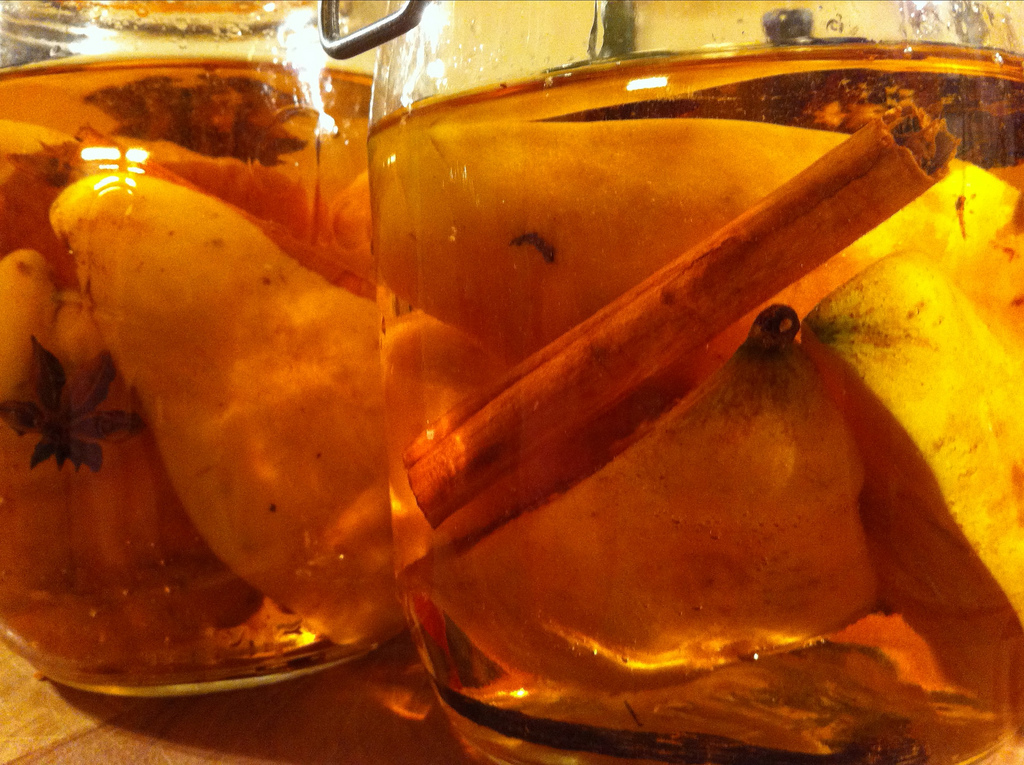
“You can flavour gin with quinces – the little decorative ones as well as the bigger eating ones. I have no idea if they’re any more easy to find in the US. It goes a lovely pink colour and tastes of … well … to me it tastes a bit like the perfume that my grandmother used to wear but I’m not sure that helps anybody else.”

“I made some quince brandy last year. Best described as ‘interesting’.”

“I think you need to beat those quinces up a bit. I chopped and slightly cooked mine before boozing them. Nearly killed an electric chopper with them too … they were just fractionally harder than diamonds.”

From bramble whisky to sloe gin to damson gin to quince brandy. I wouldn’t be the least bit surprised to discover I have some moonshiners in the South Carolina branch of the family, but to my knowledge none of my kin has created anything that sounds quite so romantic or Jane Austen-ish as quince brandy.

David Wilkinson’s quince brandy (photo by David his ownself)

Of course, I developed a strange, immediate desire to make my own bramble whisky, or something like it. So I asked for a recipe.

“Use a recipe depending on your fruit and liquor, specific ratios of fruit, booze sugar are needed, as Sam indicated this works best with hard fruits even if they’re supposedly soft fruits like cherries. If you want to go with folklore and hazy memories then here’s my description. Sit in a comfortable chair and listen to the radio. I always used a needle to prick them not a fork, and it’s been years, but the way I remember doing it with my Mamgu is to fill your empty bottle one third with the washed and pricked fruit, then pour fine granulated sugar on top till it comes about an inch above the fruit. Then we’d pour over the booze until the bottle was about four fifths full. The screw in the cork or the lid, and shake it violently.Put it in a cold dark pantry filled with jars of home-made chutney and marmalade. Shake it daily for a week or two, then once a week until shortly before Christmas. By then it should be all gothic and syrupy. Decant it and drink it from the tiny little glasses that you can’t buy new anywhere but little old ladies have millions so you’ll probably find some in Goodwill.”

There was some debate about the best way to prepare the fruit. One school of thought advocated a certain level of thuggery (“You do need to bash them up a bit”). Another seemed more appropriate to scaring off vampires (“Pin-pricking is too tedious – I take a sharp knife and cut a small cross into each damson”). But this response has settled me firmly in the pin-pricking school:

“Pricking them all over with a pin, while sitting in a comfy chair and listening to the radio (use BBC iplayer for this, they have a wacky dramatisation of Dracula this week) is the most important part. Your fingertips get stained an olive-ish purple and end up smelling like mossy hedgerows.”

And there you have it. Everything you’d ever want to know about preparing your own bramble whisky — from fruit-pricking instructions to the general ambience in which it should be prepared to the proper stemware in which it should be served.

And there you also have a brief introduction to the sort of people who staff Utata. Smart, funny, and infinitely helpful. That I get to work with these people makes me feel all gothic and syrupy.

my favorite interruption

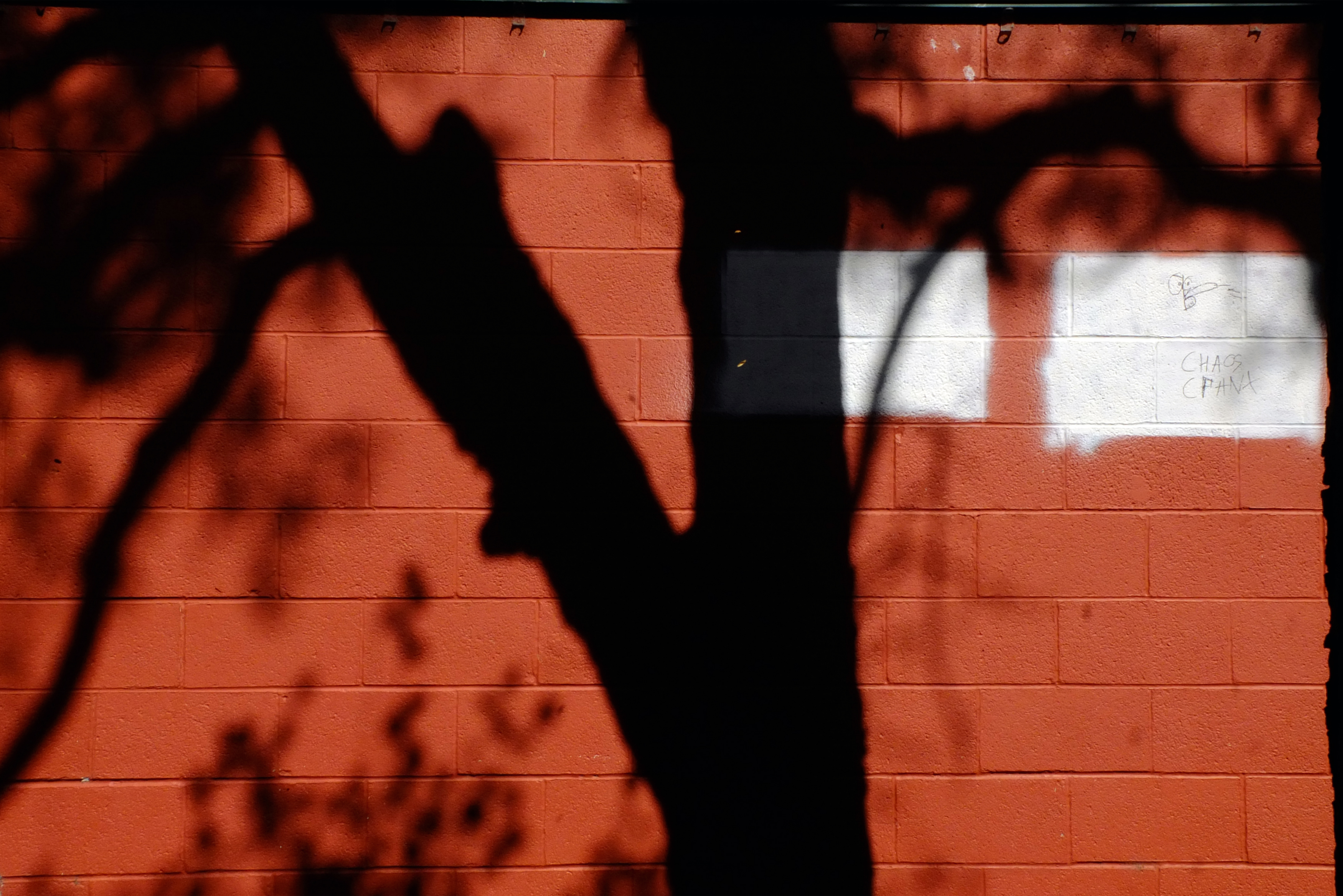
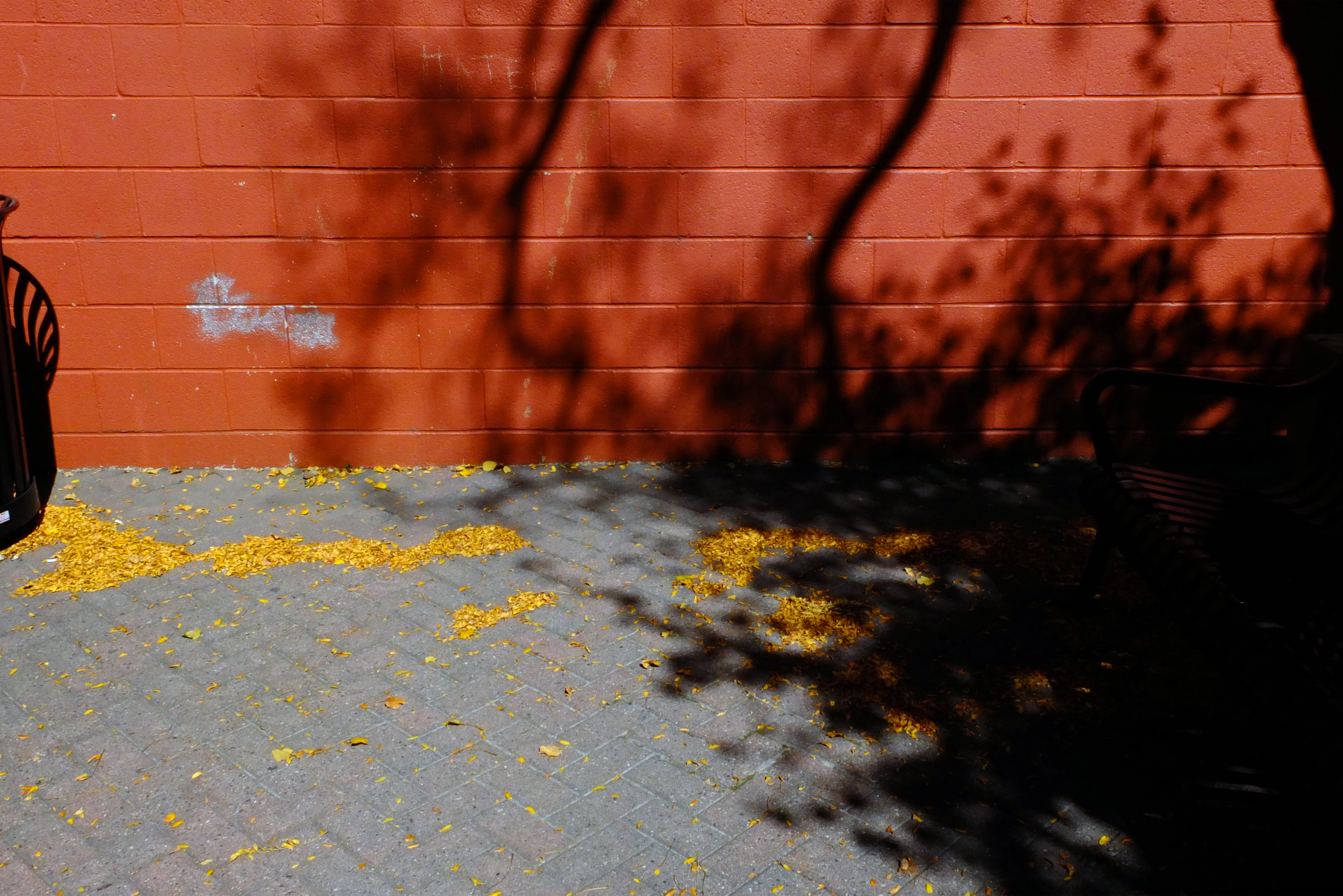
It’s an interruption of light. That’s all it is. But it fascinates me — visually, conceptually, artistically, emotionally. Most photographers look for good light; I look for good shadow.

A tree in this small alley-turned-courtyard obstructed the sunlight falling directly on the burnt sienna wall, resulting in a dark, self-similar shape of that tree. We’re able to see that tree because light within a certain spectrum falls on it; we see its shadow because light is prevented from falling on the wall. A shadow is the only thing we see because of the absence of light.

The term ‘shadow’ comes from Old English, the language spoken by Anglo-Saxons between the mid-5th century and the mid-12th century. It shares the same linguistic root as ‘shade’: sceadu, which referred to a place protected from glare and heat. ‘Shadow’ itself, however, comes from a somewhat later and more narrowly defined derivation of the term: sceadwian, which referred to the act of creating a small bit of shade (most beautifully defined by one etymologist as ‘to protect as with a covering wing’).

Though shade and shadow are essentially the same phenomenon, we experience them as very different beasts. We tend to treat shade as a form of shelter; we generally see shadow as only the reverse projection of an object. And that’s a shame, because when you raise an awning to shelter you from the sun, you’re using a shadow to create shade. You are, in effect, mimicking a bird tucking its head under its wing. If you can’t see the delicate loveliness in that, there’s no hope for you at all, at all.

I entered this alleyway/courtyard seeking shade. In it, I found a shadow. And I was content.

this is what we do

It’s hard to explain the affection I feel for Utata — for the community itself, for the staff, for the members, for the very concept of Utata as a place where intelligent, creative people from all over the globe gather to chat, argue, and shoot photographs. We often refer to Utata as a tribe — a neo-tribal virtual collective that’s held together by kinship. But this isn’t a kinship based on consanguinity; it’s a kinship of attitude and spirit and intelligence and exceedingly varied interests.

I feel especially affectionate toward Utata today. That’s partly because today is Labor Day in the U.S. Ever since 1894, the first Monday of September has been a day set aside to acknowledge and honor the economic and social contributions of workers. At least in theory. In reality it seems as if the United State no longer honors men and women who perform labor — only those people who make money off those who labor. So on this day I’m reminded how very special are the men and women who volunteer their time and labor to make Utata work. They don’t get paid, they take some dull and grinding chores upon themselves, they sacrifice their leisure time — and they do it all simply to create and maintain a venue for other folks to be creative. That’s what we do.

Just One Thing badge

This is the other reason I’m feeling affectionate about Utata today: we’ve released our summer project: Just One Thing. It’s a perfect example of what makes Utata unique. The concept is simple: focus creative attention on one thing  (or one type of thing). It might be a specific lawn chair moved from place to place in an Austrian town, or a wildly re-purposed red high heeled shoe, or a woman holding a variety of umbrellas, or a selection of grey post boxes in Canada., or a look at the world deliciously inverted through a glass apple, or the assorted old stuff found jammed in the hollow spaces of an interior wall and uncovered during home renovations.

It’s an odd collection, to be sure, but perfectly in keeping with the sensibilities of Utata. Beyond the obvious conceptual theme, one of the things that holds this project together is a generous sense of wit and whimsy. You will smile as you look through these photographs. And you will have thoughts you’ve never had before. That’s what we do in Utata.

nobody burned more bridges

“Nobody burned more bridges than Louise Brooks, or left prettier blazes on two continents.”

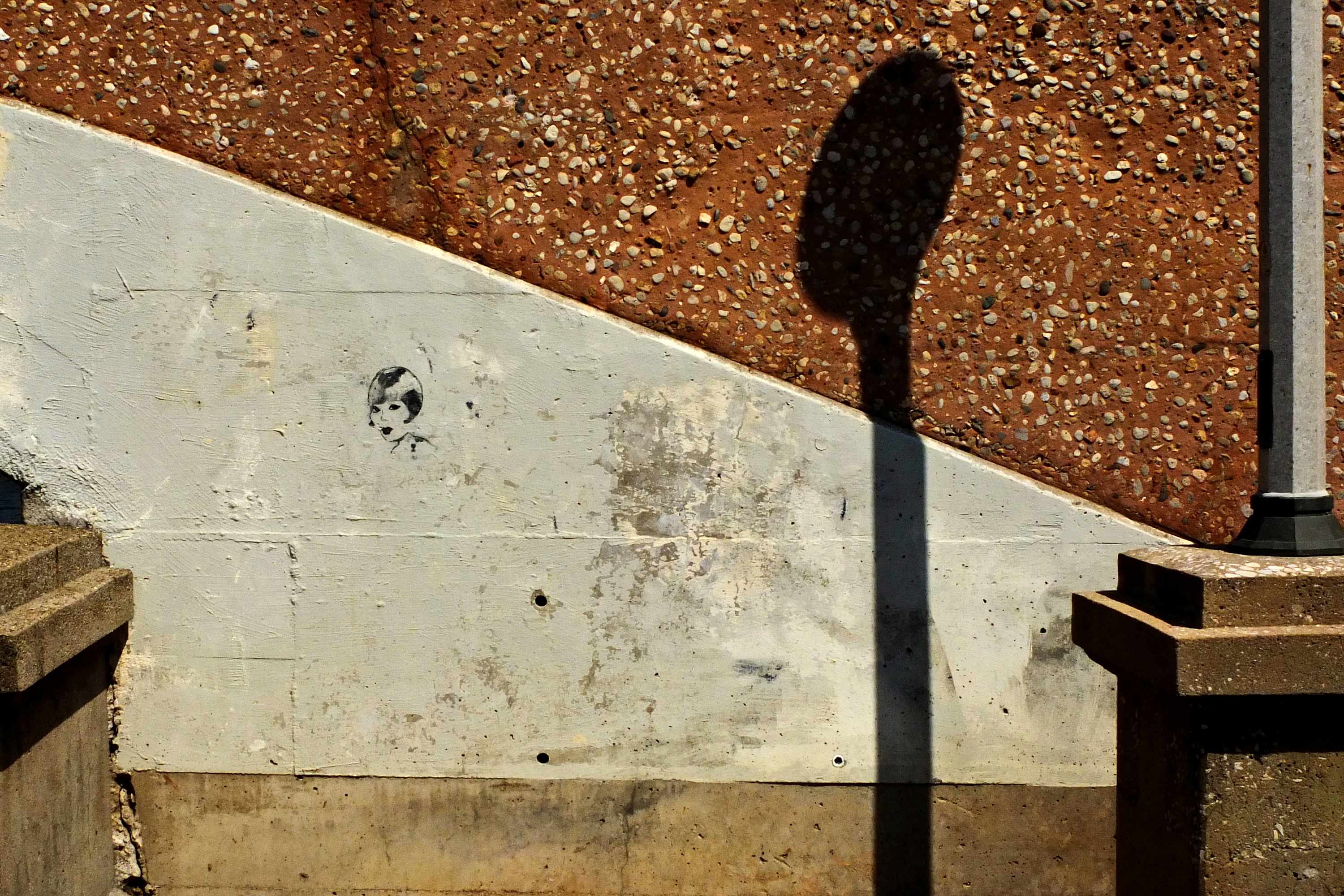
It was a pleasant afternoon and I was strolling along the riverwalk, which is a thing I like to do whenever possible. I was thinking about all the stuff I needed to get done, which is a thing I like to avoid thinking about whenever possible. As I approached one of the many bridges that cross the river I noticed a small sketch inked or painted on the side of the abutment.
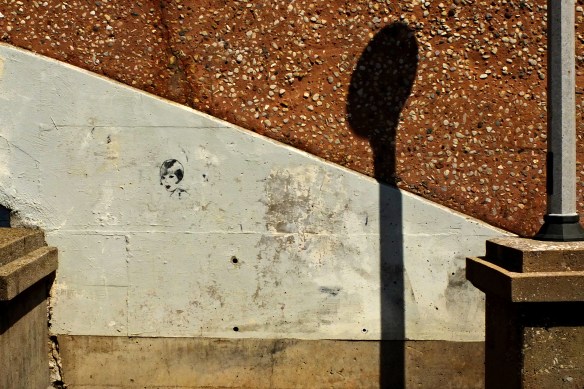
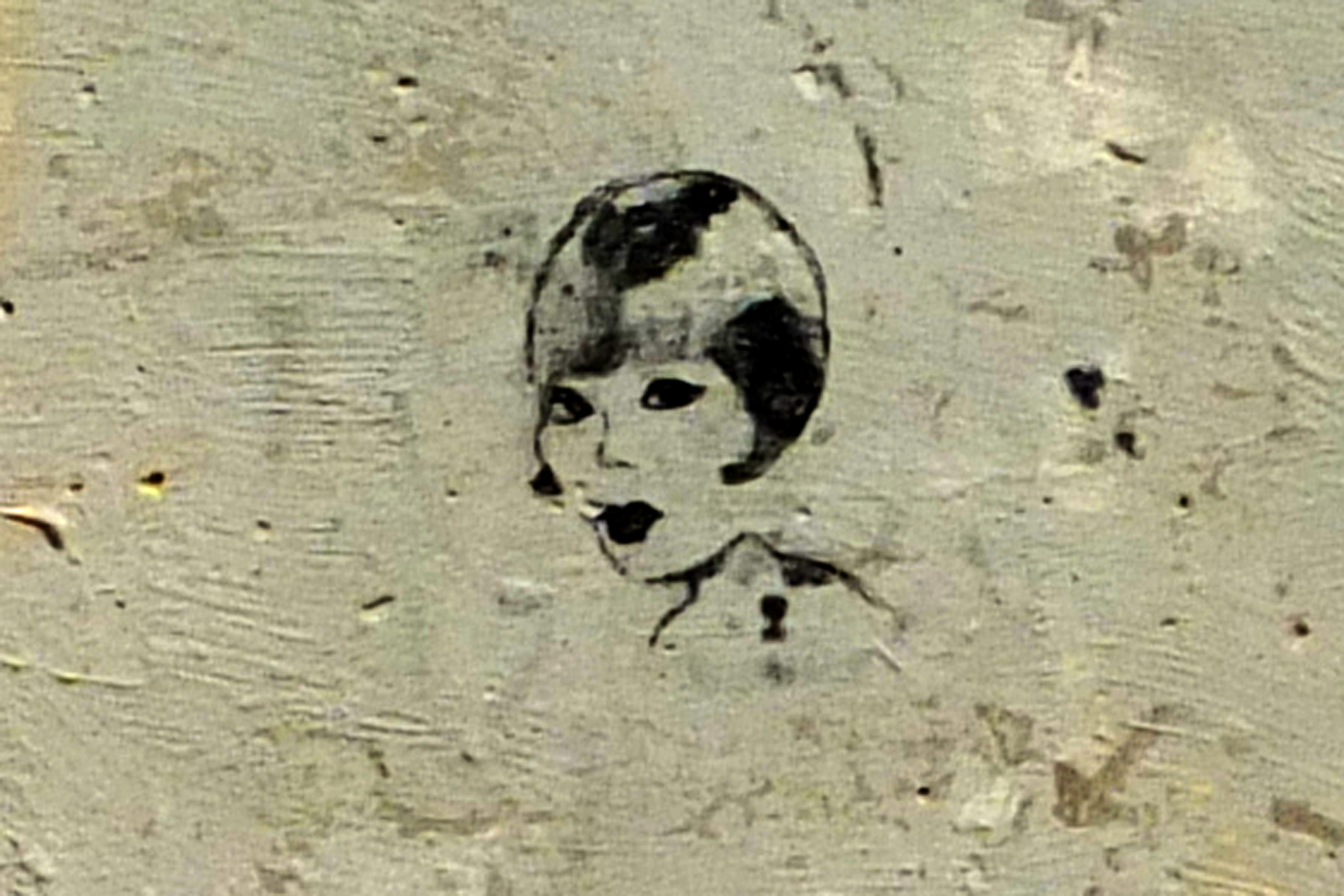
It clearly wasn’t the usual graffiti. It was a woman’s face, sketched small — not much bigger than my hand. There was something very familiar about the face. It was the hair, mostly — that short angled bob — but even the pose reminded me of something I’d seen somewhere before. I knew that face.

I stood there for a time and studied the sketch. There seemed to be a slight Asian quality to her eyes, and I wondered for a bit if it might be a sketch of Anna Mae Wong — the first Chinese-American movie star of the 1920s and 30s. I’d seen a documentary about Wong at some point, and it mentioned her as having gone through a ‘flapper’ period. It might be her.
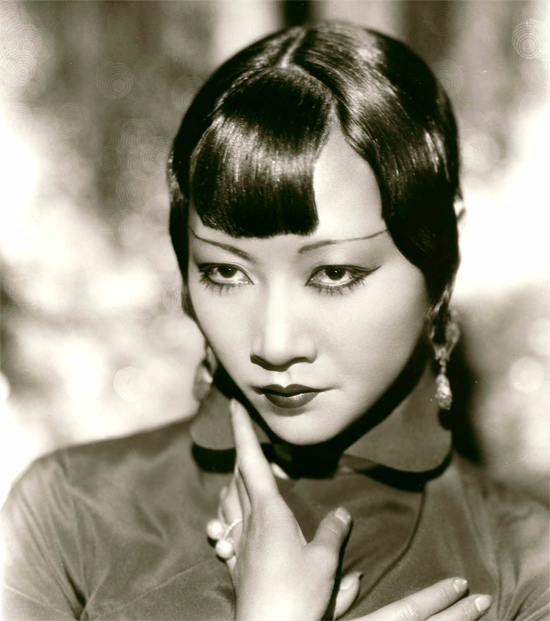
Anna Mae Wong

Anna Mae Wong

But no. When I returned home, I cracked open my computer and a quick Google search confirmed it. Whoever it was — if it was intended to be a sketch of an actual person — it wasn’t Anna Mae Wong.

But who was it? I was absolutely certain I’d seen that face somewhere. Maybe I’d come across a photo similar in style while researching a Sunday Salon. Some photographer from the 1920s or 30s, certainly. American? Possibly, but more probably European. A French photographer, perhaps. That hairstyle, though, definitely belonged to the flapper era. Was that a uniquely American Jazz Age phenomenon? Or was the flapper fashion cross-cultural? I’d no idea.

So I tried a Google image search using the keywords flapper bob. It seemed like a long shot…but there she was: first photograph on the first page.
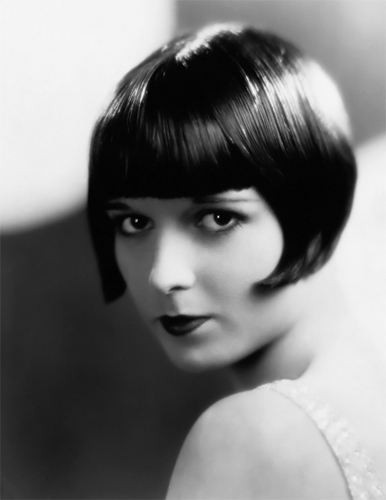
Her name is Louise Brooks, and she wasn’t European. She certainly wasn’t French — at least not by birth. She was born in 1906 in a small town in Kansas, of all places — a town with the improbable name of Cherryvale. She wanted to be a dancer, which was quite an ambition for a girl from Cherryvale (which, at the time she was born, had a population of about 4000 souls — almost double the current population, which tells you something about Cherryvale, Kansas).

Louise decided to do what all ambitious Midwestern girls dream of doing: she packed a bag and went to New York City. That was in 1922; Louise was 15 years old.

She was accepted into the Denishawn Dance Company, run by famed choreographers Ruth Saint-Denis and Ted Shawn. By 1923 she was one of the company’s principal dancers. By 1924 she was fired from the company because of her temper. By 1925 she was dancing in London, where she gained some notoriety for being the first woman in England to dance the Charleston on stage. Later that year Louise returned to the U.S. and signed a five year contract with Paramount Studios. She was 19 years old and they told her they wanted to make her a movie star.

And lawdy, they did. They surely did.

She made a number of silent films in the U.S., and her signature hairstyle quickly became adopted by young women all over the country. For the most part Louise played flappers and vamps, roles for which she was perfectly suited since she actually was a flapper and a vamp. Her career at Paramount was tumultuous — she drank too much, she had affairs with men and women (including Marlene Dietrich), she argued with the studio executives, and she alienated directors and producers by ‘reading too many books’ and having too many opinions.

And once again her fiery temper caused her to be fired. As before, Louise responded to being rejected by going to Europe and becoming a success. In 1929, at the age of 23, she made the film for which she’s best known: Die Büchse der Pandora. Pandora’s Box. Here’s how the movie is described:

The rise and inevitable fall of an amoral but naive young woman whose insouciant eroticism inspires lust and violence in those around her.

Louise played the role of Lulu, the ‘amoral but naive young woman.’ The movie itself is confused and disjointed, but by all accounts Louise personified the role. It lifted her from the status of ‘movie star’ up into the category of ‘movie legend’ and eventually ‘cult figure.’

Her life continued at the same dizzying, passionate pace. She returned to Hollywood, she married millionaires and divorced them, she argued and seduced and drank and danced, she posed in the nude for photographers, she made two more films (one with John Wayne) and then abruptly left the movie business. She moved back to New York and spent herself into bankruptcy. By the time the Great Depression rolled around Louise Brooks was broke but well-dressed. She worked part-time as a salesgirl at Saks Fifth Avenue and part-time as a courtesan, keeping company with the city’s few remaining rich men.
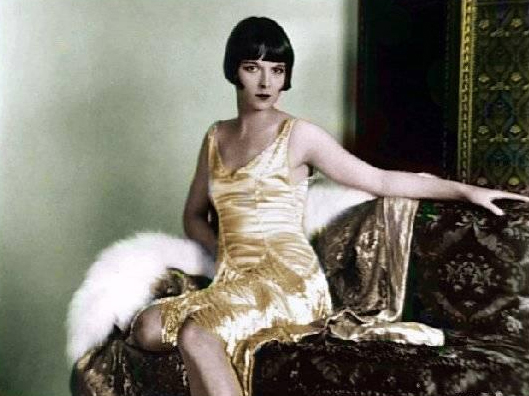
By the 1950s, Louise Brooks was something of a recluse, living in a small New York apartment. Then French film historians rediscovered her and began to revive her films. The critic Henri Langlois declared “There is no Garbo, there is no Dietrich, there is only Louise Brooks.” The French revival sparked interest in the U.S., and caused the film curator of the George Eastman House to track down Louise in New York City. He persuaded her to move to Rochester, NY, where she began to write about her life and acting career. She became something of a film critic herself, and later published an autobiography titled Lulu in Hollywood. When Liza Minnelli was looking for inspiration on which to base her character Sally Bowles in the movie Cabaret, she found it in Louise Brooks. Her life story fueled novels and biographies, it drew the attention of documentary filmmakers, and even became the underlying concept of a popular and influential Italian erotic comic book series — Valentina.
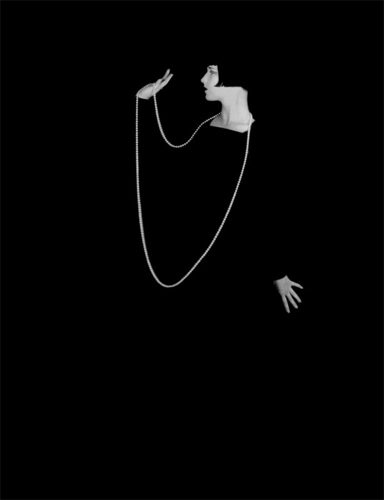
That face went from Cherryvale, Kansas to New York City to London to Hollywood to Germany to Hollywood again and New York City again to Rochester, NY and now it’s on the side of a bridge crossing the Des Moines River, some four hundred miles from Cherryvale. That’s a hell of a journey. It’s a hell of a story. Louise Brooks was a hell of a woman.
boneheaded mistakes

I have a new camera. I’ve had new cameras before, but not like this one. Almost all of my previous new cameras were SLRs or DSLRs, and it was fairly easy to adjust to them. A slightly different feel in the hand, some variation in the menu system — that was it.

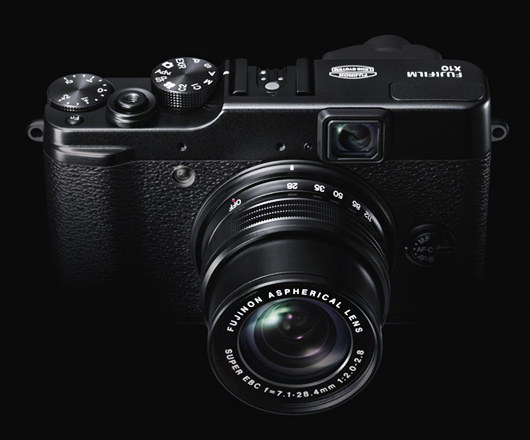
But not this time. This time is different. This time the new camera is a Fujifilm X10.

It’s a sweet little unit. Small but sturdy, beautifully constructed, extraordinarily quiet to use, pleasing to the eye but plain enough to be inconspicuous. It’s a rangefinder style camera, with an optical viewfinder that gives you absolutely NO information at all. No shutter speed, no aperture, no ISO, no hint at metering, nothing at all. If you want to get a good exposure, you’d damned well better know what you’re doing.

Oh, you can turn on the LCD monitor and use that to compose your photograph. That’ll provide you with nearly as much information as the Mars rover sends back to JPL. The LCD certainly makes shooting photos a lot easier. But I find I’m relying almost exclusively on the information-free viewfinder. It reminds me of my very first camera — an old Argus rangefinder from the 1950s. Completely manual, of course. I don’t think it even had a built-in light meter. It was just a metal box with a lens. Relying on the viewfinder with the X10 is like remembering how to drive a car with a manual transmission — you make some awkward and noisy mistakes, but you recall how much fun driving can be.

I wanted this camera to tote on my bicycle, but it’s turning out to be an ideal cityscape and street camera. I have no hesitation in pulling out the subtle little X10 in situations where I’d have been reluctant or unwilling to use a DSLR. There IS some hesitation before actually shooting the photo, however. Not because I’m uncomfortable with it, but because I have to pause a moment to consider issues of exposure. I have to hold back a bit while I judge the parallax error caused by the viewfinder.

It’s like learning to shoot photographs all over again. For the most part I walk around following the old Weegee rule for exposure: f8 and be there. But when immediacy isn’t an issue, I have to actually evaluate lighting conditions and decide on the proper exposure. Photography has become a challenge again. Every decision point that was second nature with a DSLR now requires active thought, which keeps me more engaged in the moment.

And isn’t that what photography is all about?

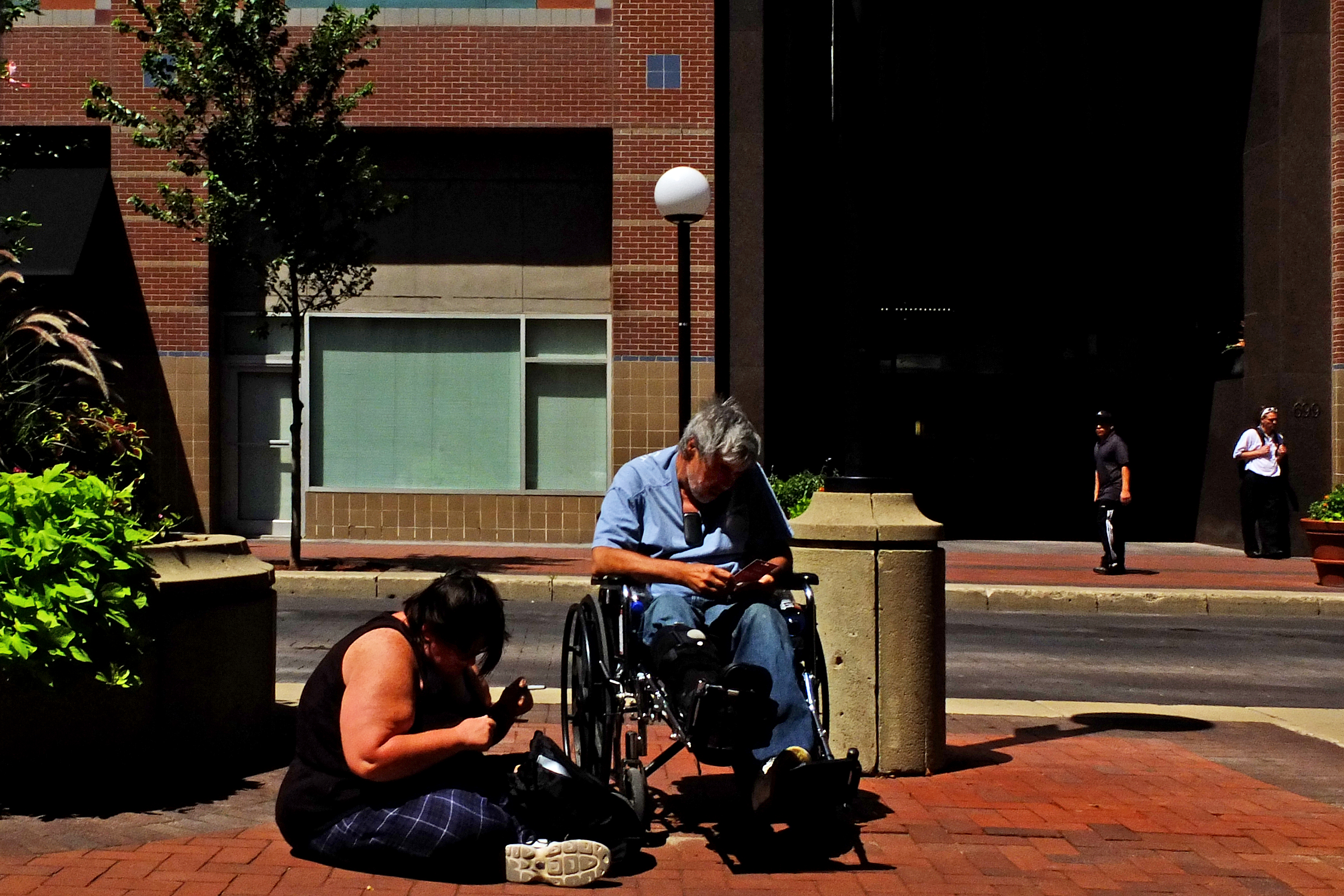
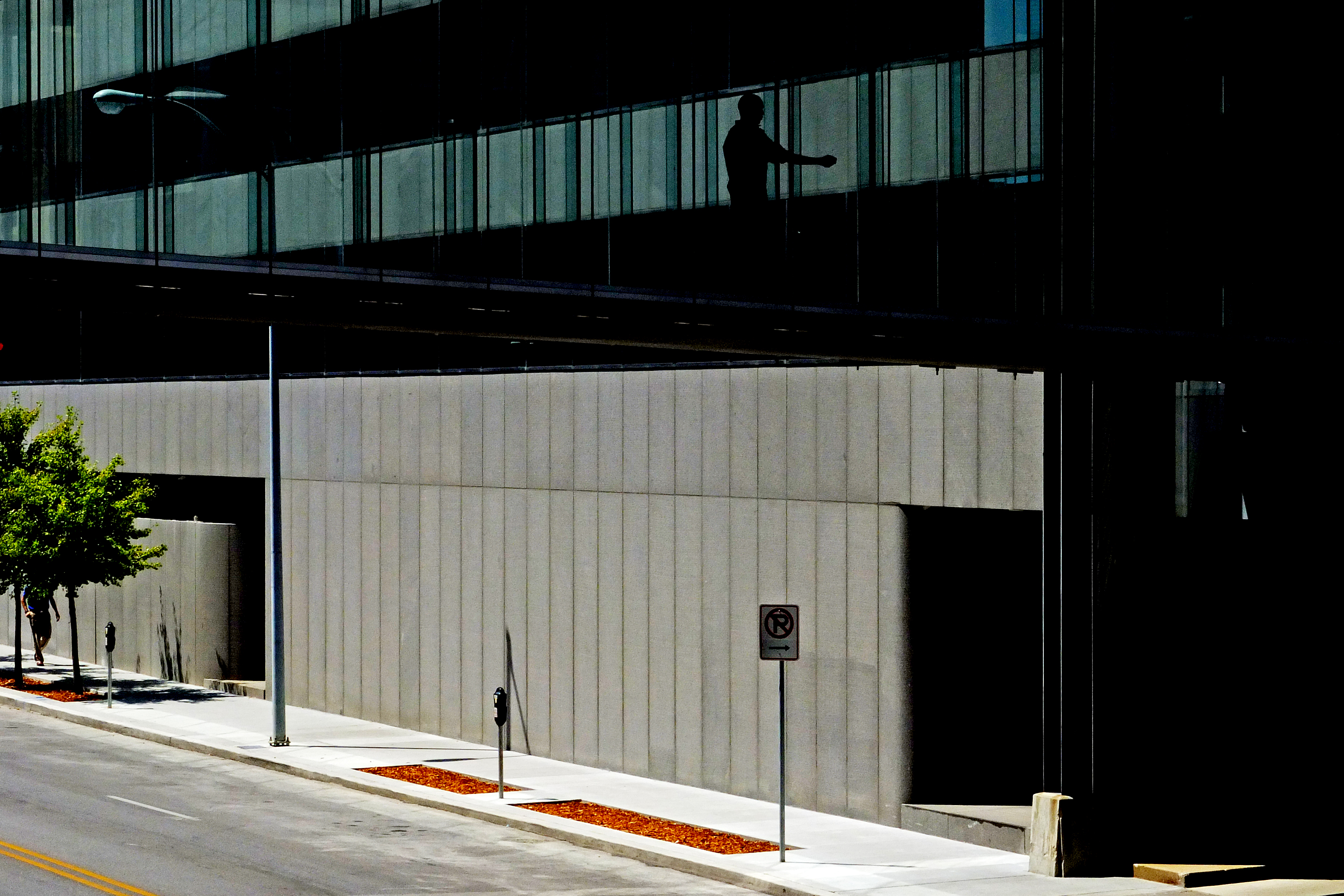
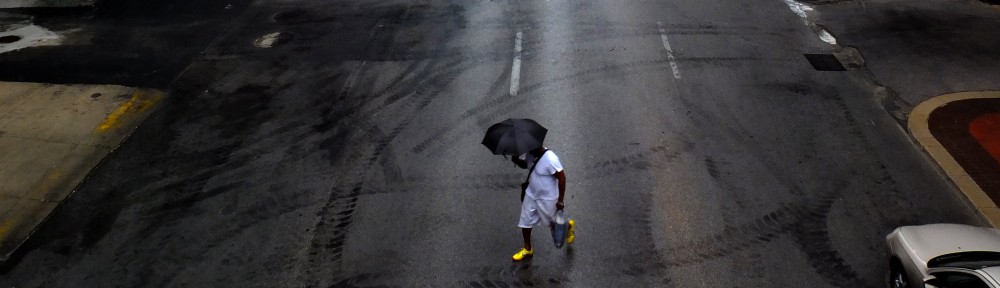
As you can see from some of these photographs, I’m still making mistakes. I sometimes get the exposure wrong, I screw up the composition by misreading the parallax difference, and I bungle the focus point. Rookie mistakes. Boneheaded mistakes.

I can’t tell you how much fun I’m having making those mistakes.