in which i look at an old photo (part 8)

Well, here we are again. This is the eighth time I’ve looked at an old photo. This is apparently a thing I do now. Why? Because in May of 2024 I read an article that suggested photographers could benefit from looking at their old photos as if they were made by a different person. I was skeptical about the idea, but what the hell…I did it. The notion still seems a wee bit precious to me. But here I am, doing it again.

Two things: first, I don’t recall the exact point of looking at your old photos as if they were made by a stranger. I know it had something to do with how our approach to photography changes over time, but surely that’s a given, isn’t it? In any event, when I look at these old photos, I find I’m mostly thinking about why I shot that particular photo, or why I shot it in that particular way, or what that photo means to me now. None of which, I suspect, is what the author of the article intended.

Second thing: when I decided to do this, I was stymied by the fact that I’d have to actually pick an old photo to look at. How do you do that? I chose a random approach. I pick a random month in a random year and see what catches my eye. I was completely unprepared to have emotions about this stuff. But I do.

Anyway, here we go.

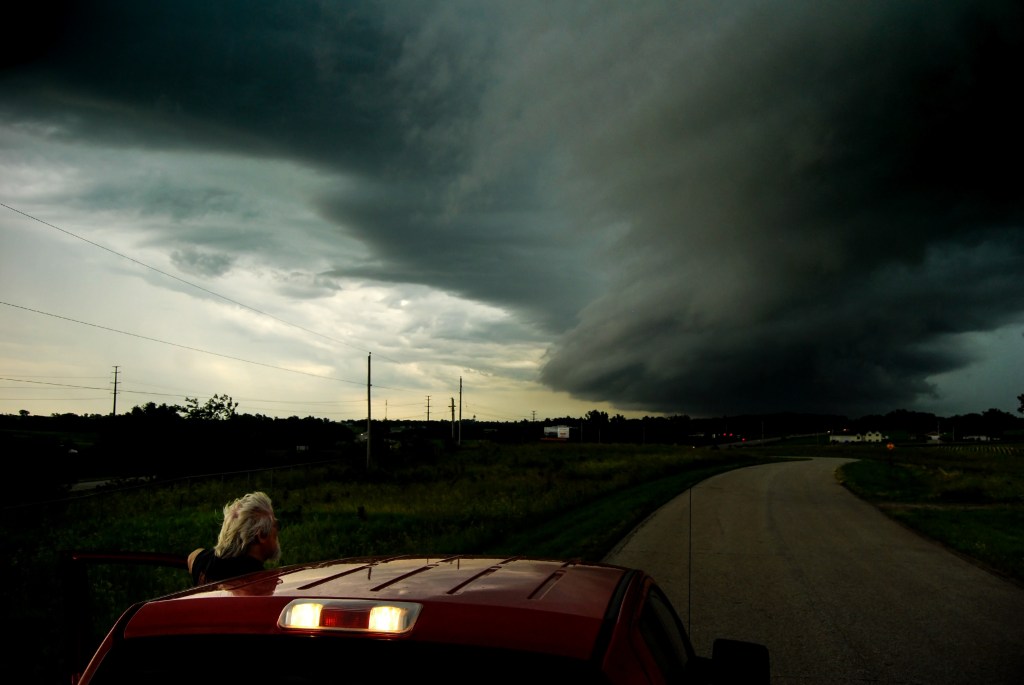
10:28 AM, Monday, June 21, 2010

I shot this photo standing up in the back of my brother’s pickup. What you’re seeing here is an anvil cloud. These form when a thunderstorm’s updraft reaches a level of the atmosphere where moisture effectively stops, which causes the storm to spread out horizontally. These sorts of clouds are associated with really severe weather, including hail and tornadoes. As I understand it, when the moist air can’t go any higher, water vapor coalesces and returns to Earth in the form of heavy rain and/or hail. There’s also a lot of wind. A lot of wind.

Light gets really weird during a thunderstorm. The clouds make a huge difference, of course; they shape the angle of sunlight. The air is full of moisture and particulate matter swept up by the wind, so the light gets diffused and often turns into a beautifully ominous bruised color. It’s compelling and lovely and wild and sometimes scary. It’s that savage, unpredictable, astonishing, untamed wildness that makes big storms both lovely and terrifying.

That’s exactly why my brother, Jesse Eugene, and I were there. He’d been a Marine in Vietnam, and a firefighter afterward. There was a stormy wildness in him. A wildness that showed up in most aspects of his life, to be honest. A wildness I’m afraid I encouraged during tornado season. The wildness–and his willingness to give into it–largely ruined his life. There was a part of him that loved the destructive power of fires, and loved facing and beating down that power. I’m sure that’s one of the reasons he loved thunderstorms. I think he probably saw them as a challenge he could face down.

On this particular day, we knew a bad storm was coming and we drove out to meet it. This was just a few miles outside the city. I’d had him stop his pickup at this particular spot because I liked the curve of the road. I got excited when I got out of the vehicle and saw the curve reflected the curve of the anvil cloud. It amused Jesse Eugene when I asked him to turn the truck around so I could include the red roof in a photo. He enjoyed the absurdity of it–of me insisting on posing a pickup truck while a massive thunderstorm was approaching. It soon became too dark and windy to shoot photographs, but we stayed there until the storm hit hard and it began pissing down rain like the End of Days. It was a good storm.

I picked this photo to look at because, even though you can see his face, it’s probably the most honest photograph I’ve taken of my brother. I’m happy with this just as a photograph, even though it’s flawed. I like the way the sunlight behind us illuminated my brother’s white hair. I like the artificial red shininess of the pickup’s roof. I like the way the curve of the road echoes the curve of the clouds. I like the emotion of the image; I like that the emotion is just there and doesn’t depend on the viewer knowing anything at all about the circumstance the people involved. It’s not a great photo, but I think it works.

I’m also happy with it as a memory. I’d much rather remember Jesse Eugene like this, laughing and facing a thunderstorm, rather than the thin, frail, cancer-ravaged person he became at the end. But that’s the thing, I guess. Even the wildest storms eventually lose strength and peter out.

comfort murders

A million years ago, when I was a lowly doctoral student, my dissertation advisor suggested I include a chapter comparing fictional detective work with actual detective work. I was reluctant to do that because, having been an actual private detective specializing in criminal defense work, I found detective fiction to be profoundly stupid. But a ‘suggestion’ from your dissertation advisor is pretty damned close to an order.

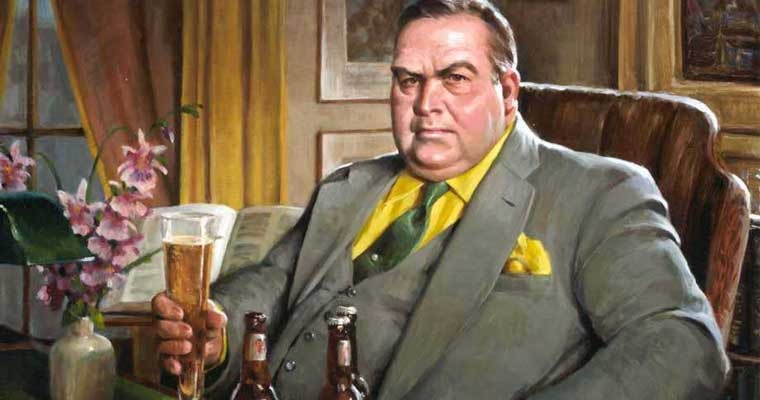
Her suggestion came with a list of authors and titles she thought I might find worthwhile. Somewhere near the middle of the list was this: Any Nero Wolfe novel by Rex Stout. Nero Wolfe, she told me, was an unorthodox detective–an obese, beer-drinking, gourmand genius who grows orchids, has a particular passion for the color yellow, and solves murders without ever leaving his house. I found this horrifying. I was supposed to somehow compare that to actual detective work? That would be like comparing a Star Trek transporter operator to a railroad engineer.

But I went to the university library like a good doctoral student, and asked the librarian to give me a random Nero Wolfe novel. And I read it. And I loved it.

Don’t get me wrong–it was as ridiculous as it sounds. Nero Wolfe was completely absurd. But his assistant, Archie Goodwin, was not. Well, that’s not true; he was also ridiculous. But unlike all the other detective novels I was forced to read, Archie Goodwin had a proper private detective’s attitude. Because Wolfe never leaves his house, he sends Archie out to gather information “guided by your intelligence and experience.” That’s pretty much how criminal defense investigation is done.

What made Archie Goodwin interesting and, to some extent, believable, was his attitude. He’s generally light-hearted and enjoys meeting people and talking to them; he undertakes each aspect of an investigation as if it’s an entertaining challenge. That makes him creative and improvisational, which are qualities you find in the best investigators. But below the surface, Archie is always focused on doing the job, getting the information needed to resolve the case. Getting results is the only real measure of PI work. The job always comes first.

What really sold me on the character was one particular scene. Archie interviews a woman at her home. Her husband has recently died (as I recall, his death is unrelated to the crime at the center of the story). but out of habit she continues cooking his breakfast and setting a place for him at the table. His hat still hangs on the hatrack near the door. Archie realizes she’s stuck, so he sits at her husband’s place at the table, eats his breakfast, then puts the man’s hat on his head when he leave. Which is enough to shock her out of that stage of her grief. (I may have the details wrong; it’s been a long time since I read it…and I’ll come back to that.)

That scene hit me hard because I had a similar encounter as a PI. I was interviewing a woman who’d had the bad luck to witness a crime. Her teen-aged son had recently died. His skateboard was still leaning against a wall in the kitchen. She couldn’t bring herself to move it. After the interview, as I was leaving, I told her I knew a kid who couldn’t afford a good skateboard (which was a total lie) and offered to buy it from her. She cried and gave it to me, glad that the skateboard would be used.

Why am I telling you all this? Because about 18 months ago, somewhat in response to how awful everything is right now, I decided to find that Nero Wolfe novel and read it again. The problem was I didn’t remember the title. An even bigger problem was that between 1934 and 1975, Rex Stout wrote more than forty novels and short story collections featuring Nero Wolfe and Archie Goodwin.

So I bought a Nero Wolfe novel at random and read it. It wasn’t the one I was looking for. So I bought another. Then another. And another.

They’re all basically the same novel. The characters never change or develop. They remain the same age, though time moves on. Their daily lives are unchanging. The cases are all variations on a theme: somebody has a problem (usually involving a murder), they consult Wolfe, Wolfe resists taking the case (unless he needs the money), Archie goads him into working, Archie (and a few other PIs) go out and gather information, Wolfe sits at his desk and thinks, everybody gathers in Wolfe’s office, and he identifies the murderer. They’re wildly unrealistic.

This should be boring AF. But it’s not. At least it’s not to me. I find them weirdly comforting. The novels and short stories actually comprise a slowly evolving love story between all the primary characters: Wolfe, Archie, the house chef Fritz, the orchid wrangler Theodore, the two police detectives (Inspector Cramer and Sgt. Purley Stebbins). Hell, even the house they live in is part of the love story. And the menus for meals, lawdy. The plot is just a reason to spend time with the characters.

Anyway, for the last year and a half, every second or third book I’ve read has been a Nero Wolfe novel. I’ve read 29 of them, in no particular order, and I still haven’t stumbled across the novel containing the scene I’m looking for. I have a list of 17 that I’ve yet to read.

At this point, I’ll probably keep reading them even after I finally find that one scene. I may as well complete the set. I figure it’ll take me another year or so to get through them all. I’m okay with that.

These are comfort murders, after all.

civic virtue selfies

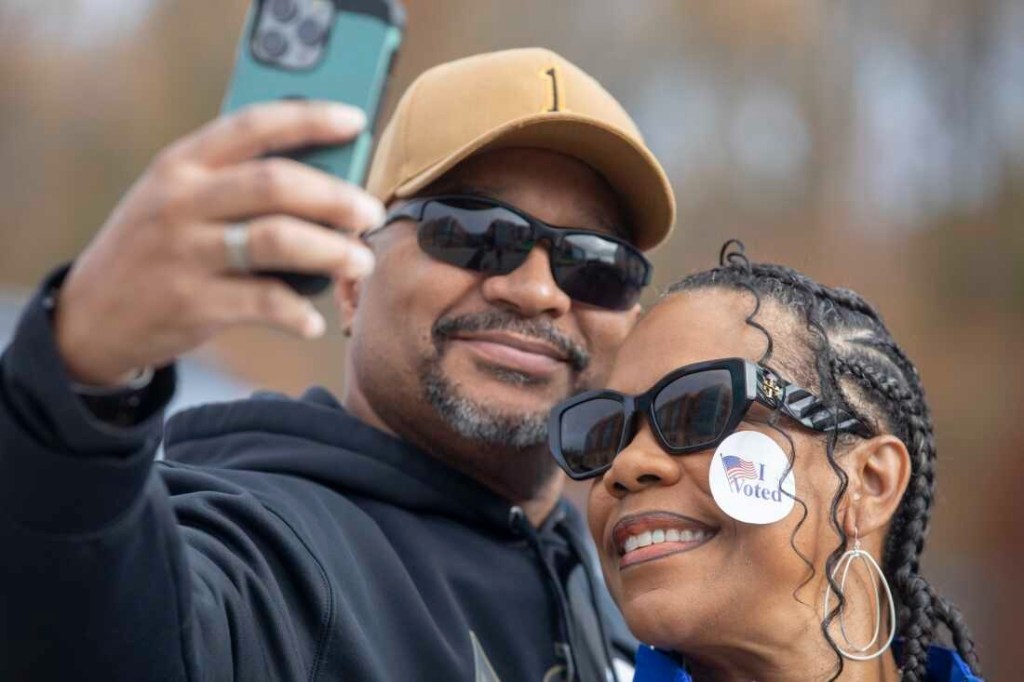
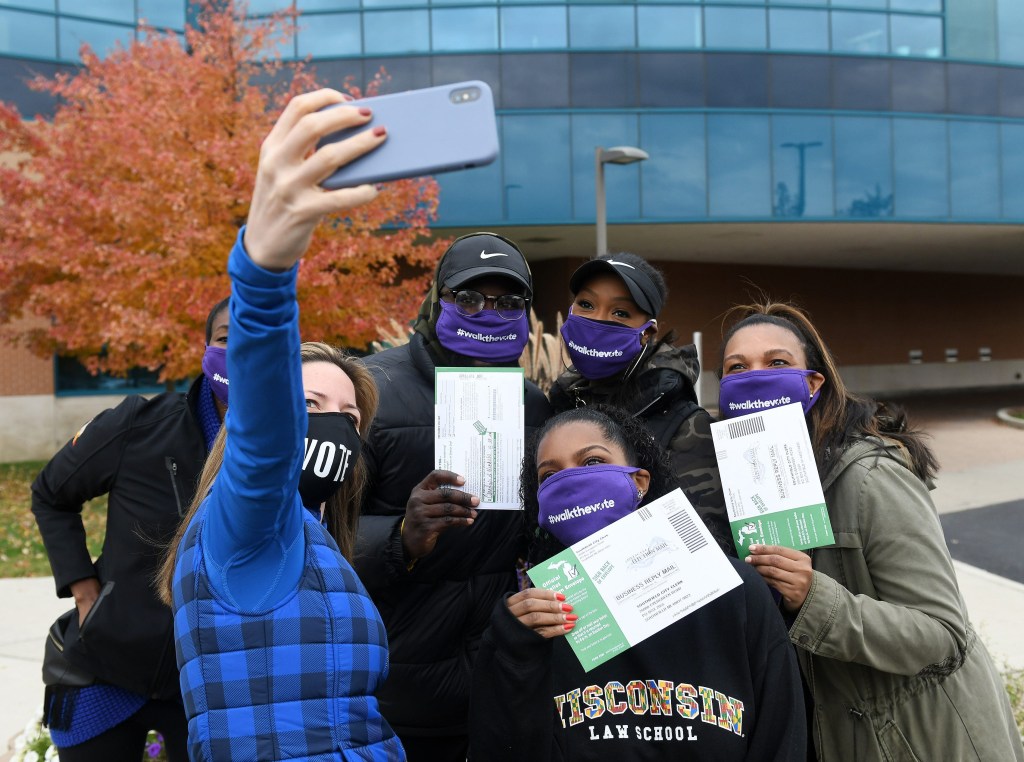
A friend recently said she was eager to vote in the coming local election next month, but was a wee bit sad that she wouldn’t be comfortable posting her usual “I Voted” selfie. I asked why she’d be uncomfortable. She said after posting her selfie after the last election, she was accused of virtue signaling.

My first thought was, “Okay, yeah, I get that.” Because saying, “Look how virtuous I am” is pretty cringe (and yeah, I know saying ‘cringe’ is…well, cringeworthy, but c’mon). My second thought, though, was, “Fuck that, go vote and post your selfie.”

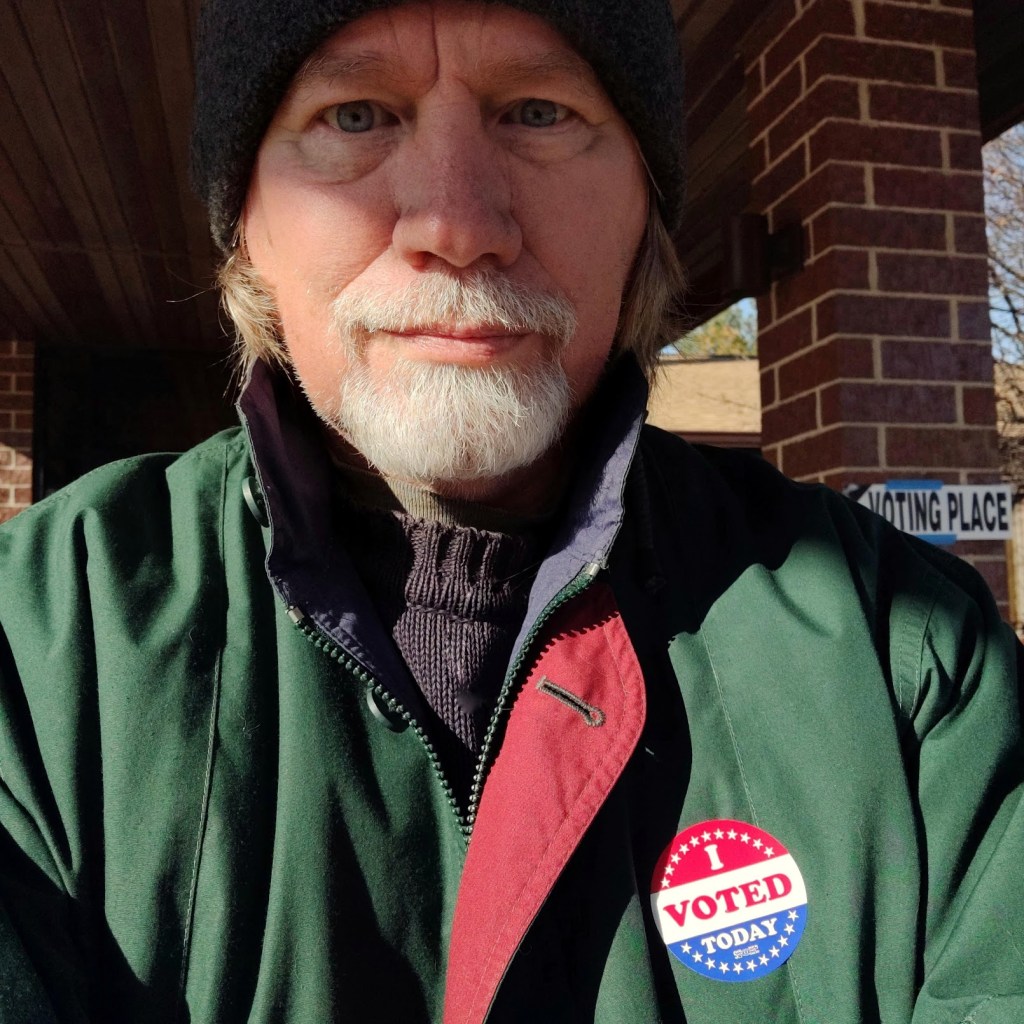
This is not me.

Nonverbal signals are important in any culture. You already know that, so I’m not going to natter on about it. There are some virtues that ought to be signaled. Civic virtue is a good thing. Right now, when we’re facing growing authoritarianism, claiming our civic virtues is critically important.

You may be wondering, “Greg, old sock, what is this ‘civic virtue’ of which you speak?” Well, I’m about to tell you…and I’ll warn you up front it’s rather old-fashioned and maybe a tad sappy. Civic virtue is the general belief among the citizenry that the common good of the public should come before special interests of the few. That’s it, that’s all it is. It’s that whole Spock “The needs of the many outweigh the needs of the few” thing.

This is not me.

Voting is good. It’s virtuous. Signal the fuck out of it. I firmly believe in the concept of civic virtue. I’m a good citizen. Most of my life has been spent in some form of public service. I vote in every election. I stay relatively well informed on current events. I pay my taxes. I pay my bills. I follow most of the laws most of the time. If I’m in the market and see some product has fallen off the shelf, well I pick that shit up and put it back where it belongs. This is how civil society is supposed to work.

This is not me.

Civic virtue is the primary distinguishing difference between republican forms of government (note that’s small r republican, not ‘Republican’) and monarchical or tyrannical forms. In a republic, power belongs to the public through their elected representatives. Decisions on governance should reflect values and attitudes that promote the general welfare. It’s the polar opposite of a monarchical society, in which decisions on public matters are made by a monarch and based on the monarch’s interests. (Yeah, I’m talking about Comrade President Donald Trump here.)

The so-called ‘Republican’ Party in the US doesn’t support republican ideals. MAGA is essentially a weird, twisted, mishmash of monarchical and consumerist ideologies. Governmental decisions are based on the wants and needs of one person who believes civic virtue and selflessness are for suckers, and wealth is the only true measure of worth, and scams are the best and easiest way to accumulate wealth.

This is me.

MAGA wants us to be embarrassed by expressions of civic virtue. Go vote. Take a selfie with your “I Voted” sticker. Post it on social media. Tell MAGA to go fuck itself with a chainsaw.

in which i return to instagram

I stopped posting photographs on Instagram (and posting anything on Facebook) back in January of this year (2025), after Mark Zuckerberg (you know…the desperately uncool dweeb who owns Meta, the parent company of IG and FB) announced Meta was ending its fact-checking program and ‘easing’ content moderation.

FB had already become a hostile, advert-bloated social medium; as much as I loved keeping in touch with friends, the FB experience itself was annoying and aggravating. The new policies only promised to make it worse. The problems with IG were different. A lot of people were getting caught up in the illusion of ‘perfect IG lives’ and that created all sorts of emotional health issues. I was only there for the photography, not for ‘lifestyle’ stuff. While it didn’t affect me, the fact that Zuckerberg didn’t care that if it DID affect a lot of people…especially young people…was reason enough to leave.

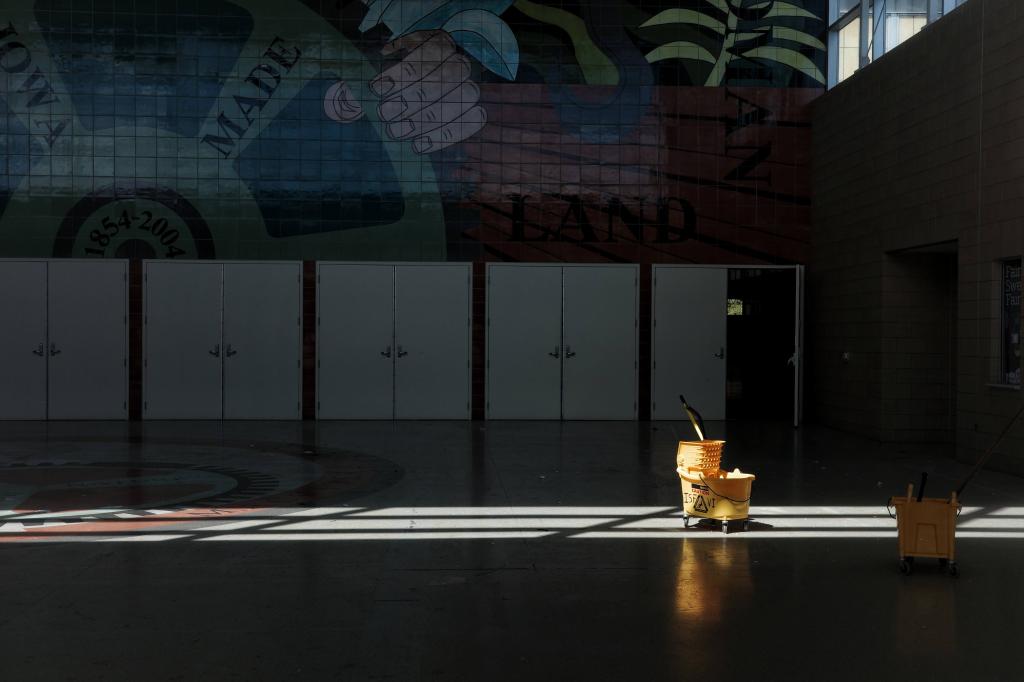
O Holy Mop Bucket (Tuesday, Aug. 26, 2025)

Why am I returning to Instagram? For the same reason I joined in the first place. Photography. I miss seeing good photography. Don’t get me wrong, there’s a lot of good photography on Bluesky, my preferred social medium, but it’s not well organized. In fact, it’s barely organized at all. Bsky is great, but it’s not photocentric. Instagram is. IG allows me to have a curated experience. I can follow a select group of photographers, who sometimes lead me to other interesting photographers.

I’m not doing this to become a ‘better’ photographer (although I think looking at–and trying to understand–good photos CAN lead a person to try new things, which can make you a better photographer). I’m doing this simply because looking at good photography makes me happy. Being happy is a good reason for doing anything, and it’s especially important these days.

I could, of course, just look at the good photos shot by other people; I don’t have any obligation to post anything. By posting (either photos or comments on the photos of other folks), I’m basically supporting the platform, which benefits Zuckerberg. But looking without participating is cowardly and furtive. If I’m going to use the platform, I have to take responsibility for it. So, this morning I posted a photograph on Instagram for the first time since January.

Here’s a stupid thing: when I decided I was going to actually return to IG, I felt some weird pressure to post the ‘right’ photo. A “Return to IG” photo. Something somehow meaningful, something symbolic (I told you it was stupid). So I opened up my photo app with that in mind. But I immediately saw the photo above and thought, “Oooh, mop bucket” like a little kid. So in the end, I just posted the first photo that caught my eye.

And maybe that’s the right way to do Instagram.

triffids killed my academic career

I should begin by saying I was never passionate about academia. In fact, I had no interest at all in academia. I almost became an accidental academic.

The only reason I went to graduate school was because I was badly burnt out after five years working in the Psych/Security unit of a prison for women and seven years as a criminal defense private investigator. I wanted a break. Hell, I needed a break. As a working class guy, I had no idea that you could actually get paid to attend graduate school. When I learned that, I applied to half a dozen different universities in half a dozen different disciplines. American University offered me the best deal: free tuition AND a small stipend to study Criminal Justice. So that’s what I did.

That was my plan. Take a year or two off, loafing as a graduate student, then find something else interesting to do. But as I was finishing my MS in Justice, I was offered more money to go for a Ph.D. So, again, that’s what I did.

A couple of years later I found myself with a contract from Fordham University to teach Sociology. I loved teaching and I was good at it. But I disliked academic politics, and I positively hated academic writing. Still, it was relatively easy work, so I didn’t complain. Then one day I was sitting in my Lincoln Center office reading an old paperback book I’d picked up at some second-hand bookshop and the Chair of the Department wandered in. He asked what I was reading.

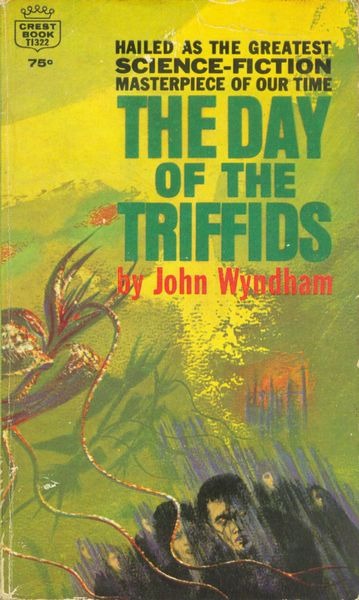
This is the actual cover of the novel I was reading.

Here’s a true thing about academia: it’s about specialization. For example, you can’t just study history. You have to study English history. But not just English history, English history of the Tudor period. But not just Tudor history, but Tudor history during the reign of Henry VII. And not just the history of Henry VII, but the fiscal policies of Henry VII. Academia is about narrowing your interests until you become a specialist in a small segment of a larger field of learning.

As a larval academic, I was expected to decide on an area of specialization and spend my time concentrating on it. I was expected to study the appropriate academic journals. Instead, I was reading a 1951 science fiction novel about venomous, carnivorous plants capable of locomotion (that’s right…walking plants) and the collapse of society.

“Are you reading this for your classwork?” I was asked.

I could have said yes. I mean, I could easily argue that the story examined economic systems (these dangerous plants, triffids, were cultivated as a source of industrial quality oil). I could say in all honesty that the collapse of society (a strange ‘meteor’ shower had turned most of the world blind, leaving only a small segment of the population capable of sight) resulted in a variety of localized ad-hoc systems of governance and justice, which could be explored through various criminological theories. I could accurately claim there was value in studying how a 1951 novel explored the ways new social norms and mores were formed from the bones of the old system. I could have absolutely justified reading The Day of the Triffids.

But the truth is, it never occurred to me that I needed to justify it. I told him the truth; I was reading for the pleasure of it. I was actually surprised by the disapproving, judgmental look on his face. I was even more surprised when I discovered the university had advertised a tenure-track position in the Sociology Department, and I hadn’t been asked to apply. I applied anyway, but I wasn’t even offered an interview, despite the fact that my teaching evaluations were among the highest in the department.

There were probably other reasons I wasn’t considered for the position. There’s often an unspoken (and sometimes loudly spoken) bias by academic theorists against practitioners. Some academics assumed my years as a private detective and as a prison counselor tainted my views. There’s a saying: In theory, there is no difference between theory and practice. In practice, there is. But after my brief encounter with the department Chair over Triffids, there was an obvious shift in attitude.

You could say triffids killed my academic career. It’s probably more accurate to say triffids saved me from an academic career.

not the weirdest thing i’ve done

A couple of days ago I wrote about a photograph I’d taken of some cracks and oil stains in a random patch of blacktop. It may seem a wee bit weird to photograph a patch of blacktop, but…well, just wait. In that post, I briefly referred to the fact that there’s a difference between blacktop and asphalt. That sparked a reply to the post, and that reply reminded me of an earlier crushed stone and bitumen-related photograph I’d taken fifteen years ago.

Now that was weird.

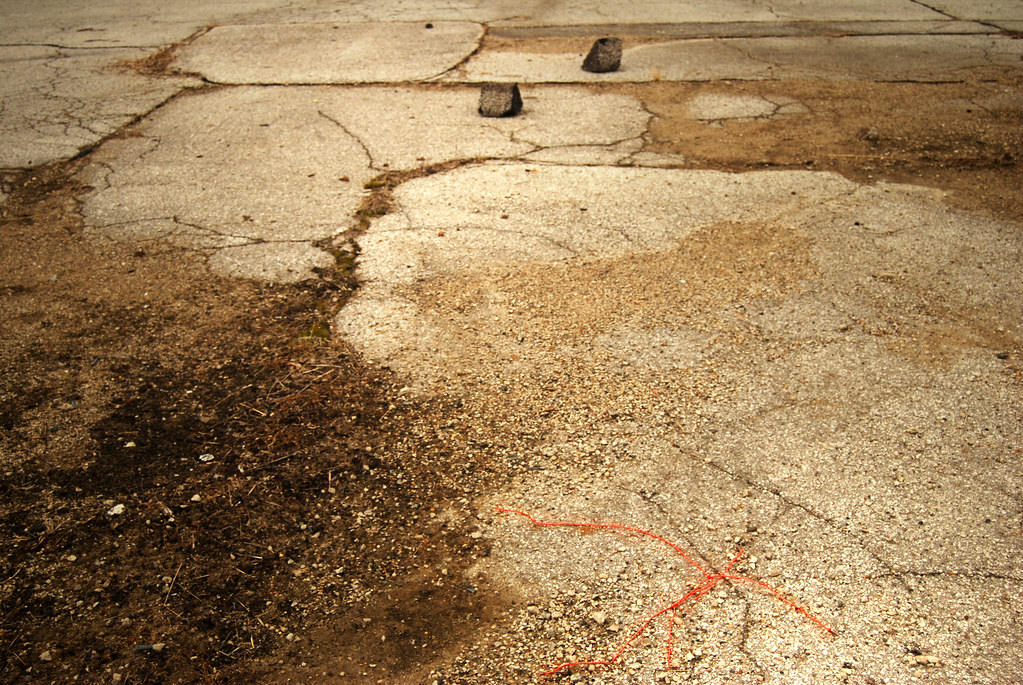
Back in November of 2010 I was noodling around a location where a local supermarket had been demolished. All that remained of the store was its foundational slab and what had once been a parking lot. That’s where I came across something odd.

November 13, 2010

Yep, that’s a chunk of asphalt curbing around which somebody had tied a strand of red PVC-coated wire. Why would somebody do that? I don’t know, but I assumed it was to make it easier to carry. Why would somebody want to carry a chunk of asphalt curbing? No idea. I located the spot from which the curbing had been removed about 20 yards away. There were several similar chunks of broken asphalt curbing. But somebody had selected that particular chunk, tied red PVC wire around it, and moved it.

Why? No fucking clue. But it was odd, and I do love things that are odd.

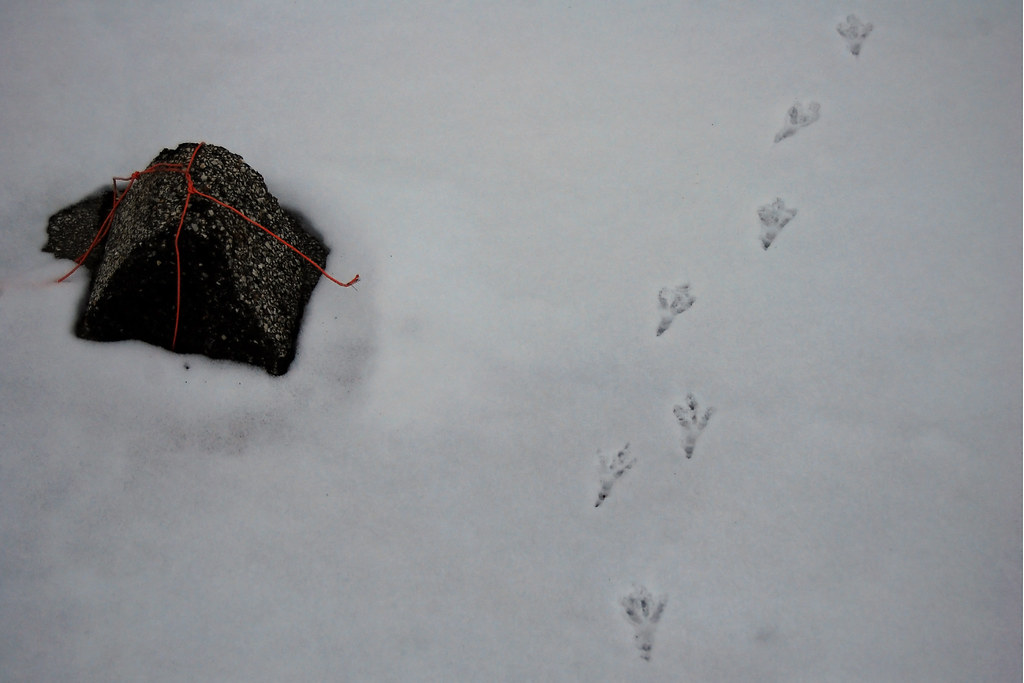
December 23, 2010

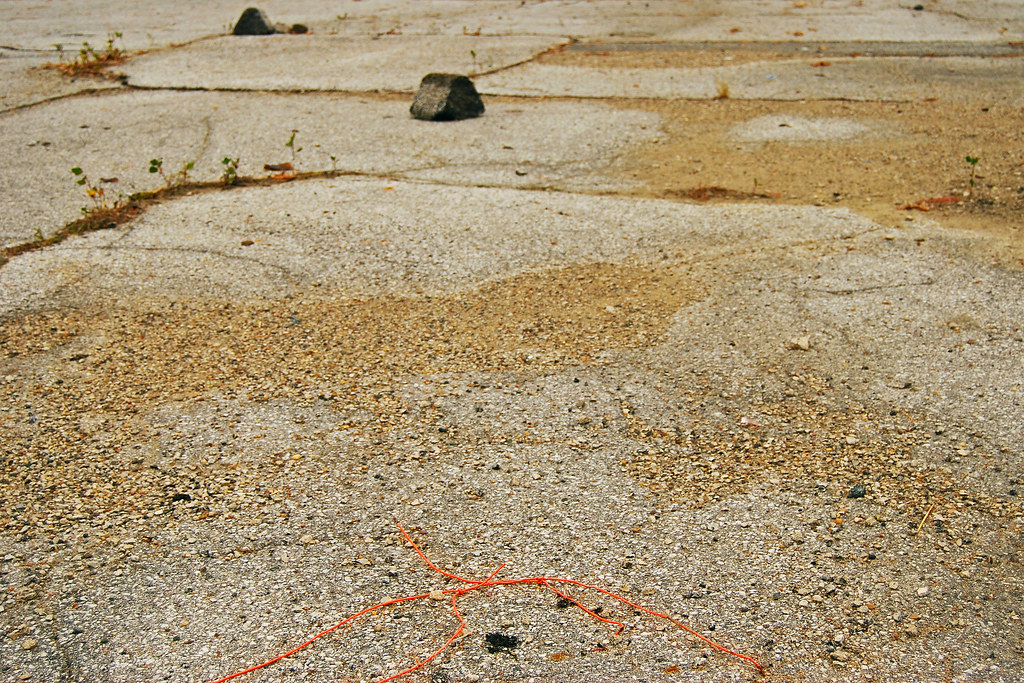
So I returned to that spot about six weeks later. The chunk of curbing was still there. It had snowed, but the snow had melted off the chunk. A heron had apparently been curious enough to check it out. Not sure if that meant the heron was as curious as I was, or if I was as stupid as a heron.

Anyway, I stood there in the snow for a while, trying to cobble together some semi-logical reason for somebody to tie some PVC wire around a chunk of curbing and carry it twenty yards before dropping it. I was sure there was a logical reason; not necessarily logical to me, but logical to the person who did it. But I’m damned if I could figure it out.

February 16, 2011

I found myself occasionally wondering about that chunk of curbing and the red PVC wire. Did the person just happen to have some red PVC wire in their pocket? Had they deliberately brought the wire with them, intending to move the chunk of curbing? And why why why would they want to move it in the first place? It made no sense, but I was intrigued by it.

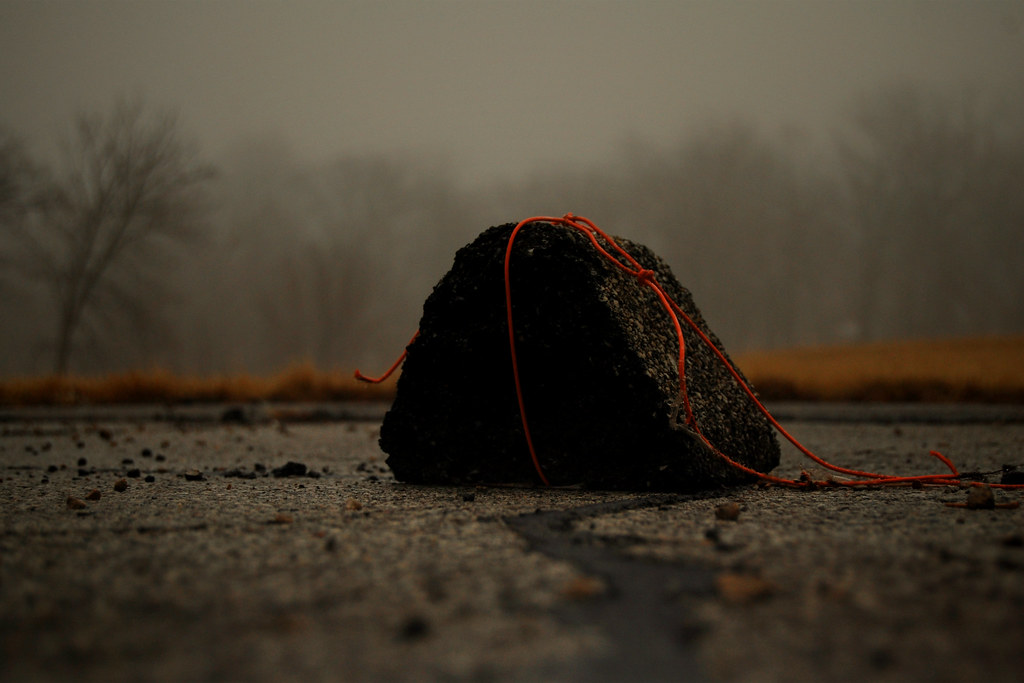
So I went back again on a cold, wet, foggy day in February. And yep, it was still there.

February 16, 2011

It wasn’t just strange; it was also visually interesting. I was taken with that red PVC wire. I considered taking hold of the wire and lifting the chunk, just to see how heavy it was. But I was reluctant to disturb it. It wasn’t just an object of curiosity anymore. That’s when I began to think of the chunk of curbing as a possible photo project. Which meant it didn’t seem right to intentionally change anything about the subject matter.

April 13, 2011

I returned to visit the chunk of curbing about a month later and was shocked to see it had been moved. Somebody had apparently picked it up, carried it about twenty-five feet, at which point the red PVC wire had snapped.

I can’t imagine many people would find a reason to noodle around the detritus of a former supermarket. But IF somebody did, and IF that somebody happened upon the chunk of curbing, then surely they’d be tempted to pick it up. I mean, I’d been tempted to pick it up myself. The way the PVC wire was wrapped around the chunk of curbing–it was clearly intended for it to be picked up. Who could resist it?

Somebody didn’t resist it. Somebody had seen it, had picked it up, and toted the chunk of curbing twenty-five feet. Hell, that was the most understandable thing about the whole situation.

August 24, 2011

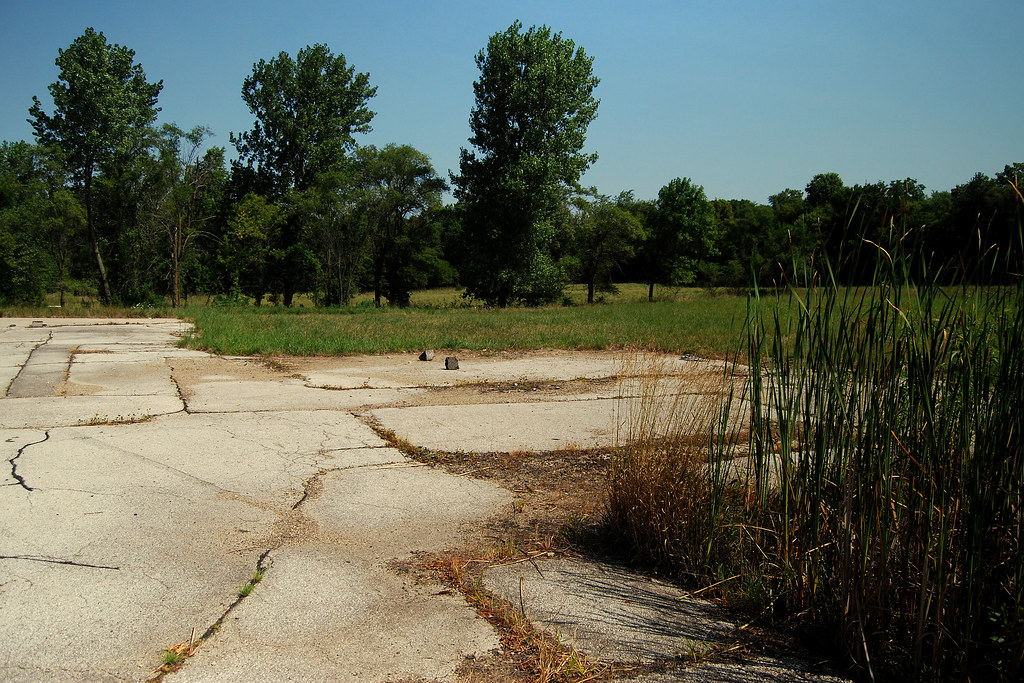
I didn’t get back to visit my pet chunk of asphalt curbing until late in the summer. As I approached, I saw two chunks. I thought maybe whomever had moved the curbing back in the spring must have returned and broken it.

But no. It was a second chunk of asphalt curbing. Somebody–maybe the same person who’d moved it earlier–had apparently gone to the spot where other chunks of curbing were scattered, picked up another chunk, carried it to the vicinity of my pet chunk, and dropped it.

This compounded the WTFedness of the situation. It reinforced the original weirdness. It made no sense at all. It was insane. It was…kind of wonderful. I was oddly pleased by the development.

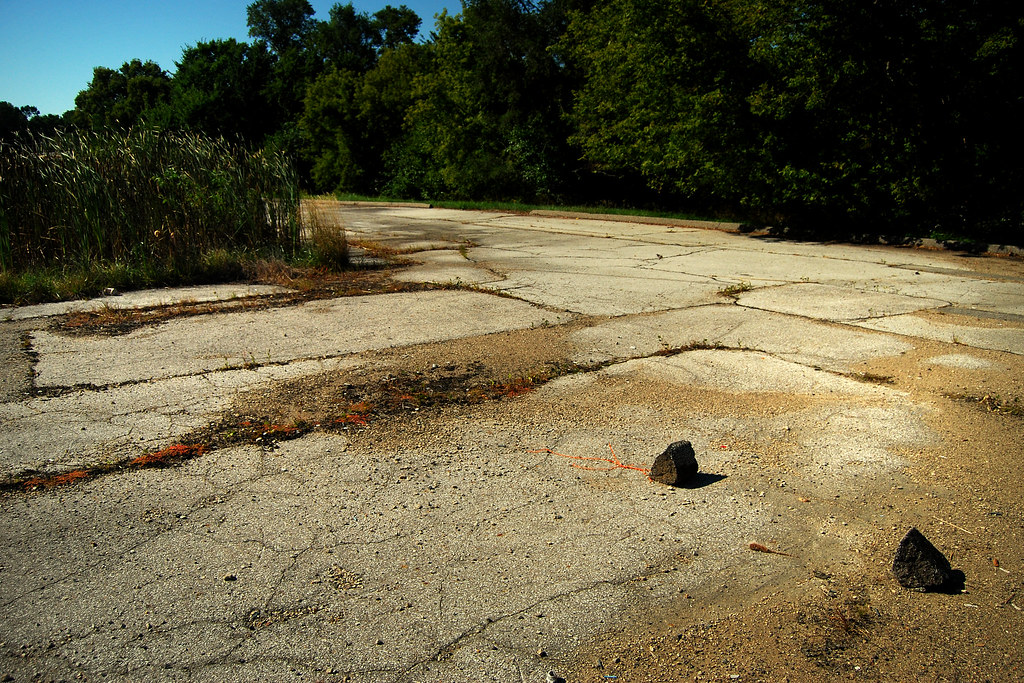
September 8, 2011

I returned a month later. Not much had changed. Some orangish lichen had grown in a nearby crack and I spent some time trying to find a way to photograph the red PVC wire and the orange lichen, but nothing seemed to work. In the end, I just documented my chunk of asphalt curbing along with its companion.

I figured I’d just about come to the end of the chunk’s story. I was still curious about the whole thing, but the original aura weirdness was beginning to fade.

October 18, 2011

Still, I’d developed something of a perverse relationship with that chunk of curbing. I felt a need to check on it. So of course I went back.

The red PVC wire had moved. It had broken six months earlier, but a length of it had been trapped beneath the chunk of curbing. How did it get loose? Maybe a bird or animal had tugged on the wire and freed it? In any event, I took it as a sign (No, not that sort of sign; just an ordinary sign) that the project was at an end. Surely, the wire would soon get blown away. Without the red PVC wire, the chunk of curbing was just a chunk of curbing. As soon as it was gone, the photo project would be over.

December 20, 2011

I gave it a couple of months. I went back in December. Nothing had changed. As near as I could tell, the red PVC wire hadn’t even moved. That was…weird. You’d think that over the course of two months something would have moved the wire. But that was just minor league weird compared to the overall weirdness.

Still, I’d made the decision that I’d keep coming back until the red wire was gone. So I returned in the spring. The entire area was fenced off and construction equipment was tearing up the old parking lot.

There’s an apartment complex there now.

I no longer live in that area, but maybe once or twice a year there’ll be a reason for me to pass nearby. And when I do, I think about that chunk of asphalt curbing, and the bright red PVC-insulated wire, and the person who’d tied the wire into a parcel-carrier. And I wonder what in the hell they’d been doing, and why. And it pleases me that I’ll never know the answer.

blacktop

So I’m in a parking lot. No, wait, not a parking lot…a parking area. It’s not like a parking lot outside a big box store, with lines designating parking spaces. This is just an extra wide bit of blacktop on a winding blacktop road through some woods near the spillway of a dam. It’s a place where people who fish the area above the spillway can park their cars.

On a weekday, it’s usually empty except for the occasional Asian or Latino immigrant looking to put some fish on the table. It’s a quiet spot. Shaded by trees. My partner and I sometimes make the half hour drive to this spot with a couple of camp chairs, something cool to drink, and our books. We sit, we read, we look at the birds, we listen to the wind in the trees, we chat with the folks who come to fish. On the way home we usually stop for ice cream. It’s nice.

She can sit still longer than I can. My knees are wonky and I have to get up periodically and stretch them. There’s always something to look at, and I’ve always got a camera with me, so occasionally I’ll take a photo. Yesterday I took a photo of the blacktop.

I don’t know why this particular patch of blacktop caught my attention, but it did. There are some cracks with little weedy bits growing in them, and some oil stains–some new, some faded. But it’s just blacktop (which isn’t asphalt, by the way; both blacktop and asphalt are made of crushed stone and bitumen, but the ratio of stone to bitumen is higher in blacktop, which can give it a more sparkly appearance–and lawdy, this is way more information than you need or want).

I pulled my Ricoh GR3X out of my pocket and looked at that patch of blacktop from several different angles and directions. I raised the camera higher, I lowered it closer to the surface, looking for a different framing of the patch. I probably spent three or four minutes trying to get the framing just right. Then I took this single photo.

I looked up to see my partner was watching me. She said,

“Bug?”
“What?”
“Where you taking a picture of a bug or something?”
“Oh. No. Just the blacktop.”

She looked at me for a moment, then nodded and went back to her book. The sky is blue, the clouds are white and fluffy, the water ripples a wee bit with the wind. There are swallows hawking for insects just above the surface of the lake. A kettle of vultures is making lazy circles in the distance. And there’s Greg taking a photo of a patch of blacktop.

The view.

Just another day at the upper spillway.

asking too much

Late last night I was noodling about on YouTube, looking for something about Japanese photographer Miyako Ishiuchi (who, by the way, is vastly underappreciated) and I came across a video by–I guess he’d be considered an ‘influencer’? I’m not going to mention names; he’s a good photographer, makes a LOT of videos about photography and photo gear, he’s got a large following. This particular video was focused on his feelings about being burnt out. He said:

“Lately I’ve been feeling like my photography hasn’t been saying what I want to say. I’ve been questioning if it’s even the right medium for me to communicate my thoughts and feelings.”

Okay, valid. And hey, he’s right. Still photography isn’t a very effective medium for expressing thoughts and feelings. Writing is a good medium for communicating thoughts and feelings. Cinematography–moving images–another good medium for communicating thoughts and feelings. A cohesive series of purposely related still images can be an effective medium for communicating thoughts and feelings.

But a single photograph? Nope.

A single photograph is useless for expressing thoughts and it’s unreliable as a tool for expressing something as complex as feelings. A single photo can certainly invoke a mood, and that mood might suggest something of what the photographer was feeling. But it might not. A happy photographer can shoot a grim, moody photo; a photographer in deep despair can still shoot a cheerful photograph. A single photo, regardless of how powerful it is, is just a moment isolated in time and limited by an artificial frame.

As to thoughts, you often hear people say stuff like, “This photo tells a story.” No. No, it doesn’t. A single photo doesn’t tell a story. It can’t tell a story. A story has a beginning, a middle, and an ending; you need at least three photographs to tell a story.

BUT a single photograph can hint at a story. It can imply a story. The viewer, looking at a single photo, can create a story based on that moment. But it’s the viewer’s story; it comes from the viewer. It’s only inspired by the photo. A single photo can be the beginning, the middle, or the ending of a story. But an entire story? Nope.

This is not a story. It could be part of a story, but it’s not, in itself, a story.

That said, still photography can be a powerful story-telling tool IF you string together a series of related photographs. Photo-stories can even be more powerful than video, because you can take your time looking at a still photo. You can examine every corner of the frame. You have time to blink and think and ponder what you’re seeing in each image, instead of simply responding to the images streaming in front of you.

The photographer in the video also said this:

“I feel like a good photograph is something that expresses what the creator wanted to say.”

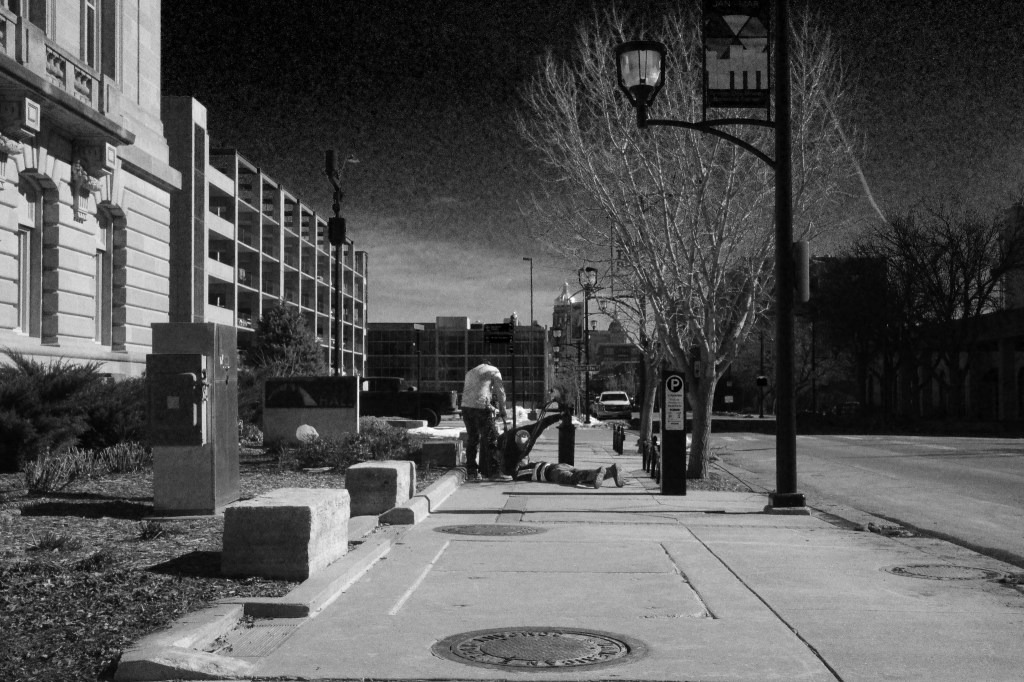
I dunno, maybe? If you want to say something like “Ducks are cool” or “Tall buildings are impressive” or “Look at this guy cleaning up street trash on a cold, wet, foggy morning,” then yeah, a good photo can express what you want to say. But if you want to express anything more complex than a simple declarative sentence, then your hope that a photograph will express what you want to say is…well, misplaced.

The only thing I was trying to say was, ‘Seeing this guy at work makes me feel something.’

Another thing—at no point in his video did the guy ever articulate WHAT he wanted to say. Or why he wanted to say it. Or how his photography was falling short. In fact, he said,

“I sometimes feel like I don’t have anything to say…and that I’m just making photos.”

Dude, that’s fine. Ain’t nothing wrong with just making photos. But when you deliberately take a photograph, regardless of the subject, you ARE saying something. You’re saying, “This is what I see. This is how I see it. What’s happening in front of my camera is interesting to me. It makes me feel a certain way. Maybe it’ll have a similar effect on you.” The impulse to press the shutter release is, by itself, a valid reason to take a photo.

I found this guy’s video annoying. Annoying and ironic. The irony is that the guy who was complaining that still photography failed to communicate his thoughts and feelings was actually communicating his thoughts and feelings using a medium designed to communicate thoughts and feelings.

My point is this: any expressive medium–still photography, cinema, writing, dance, painting, acting, sculpture–is limited. Don’t ask more from any expressive medium than it can give you. And don’t whine about the limitations.