
On social media I’ve been seeing a LOT of My Year in Books posts, in which people report on the books they’ve read in the preceding year. I confess, I’m a wee bit baffled by these posts. I mean, I’m interested in what other folks read. I’m interested in their thoughts about what they’ve read. That can be interesting. But the majority of these MYiB posts feature the number of books they’ve read, and I don’t understand the point of such a metric.
I don’t know how many books I’ve read in 2024. It never occurred to me to keep count. It was a bunch, to be sure. Probably less than fifty, but certainly more than thirty. So let’s say somewhere in the low-to-mid forties? But really, who cares how many books I read? Some of them were books I’ve read before, and I’m not sure if people count those towards their book total. Probably, right? I mean, they still read them.
More interesting to me are the books I bought that I thought I’d read, but didn’t. Again, I haven’t kept count, but I suspect I bought at least half a dozen books that I started to read, but ended up putting aside. A very few were books I just didn’t like (and no, I won’t name them). More were books I’d probably like, but simply wasn’t in the right mood to enjoy. Like The Priory of the Orange Tree. I’m totally smitten by the title and the cover art, but I got maybe 15-20 pages in and it just wasn’t working for me. I’ll try it again at some future point. Sometimes it just happens that way. It took me at least three tries before I finally got more than a couple of chapters into Dorothy Dunnett’s The Game of Kings, which is one of my all-time favorite novels. Same with Gideon the Ninth; the first time I tried to read it, I put the book down after less than fifty pages. Now I think it’s one of the most original and delightful novels I’ve ever read.
This year, like most years, I bought some books I didn’t think I’d like, but wanted to check out anyway. Like The Bright Sword, which is sort of a sideways retelling of the Arthurian saga. That’s the thing about Arthurian literature; you can’t trust it. The Arthurian story bones are so damned good that LOTS of people try to retell the story. Most attempts are at least tolerable. A very few are brilliant. But in my experience, the majority of new Arthurian stories are both regrettable and forgettable. However, sometimes your hopes pay off. To my surprise and delight, The Bright Sword turned out to be a lovely read.
This year, like the last several years, I tended to read mostly genre fiction and very little literary fiction. There’s probably a reason for that, but I can’t be bothered to examine it. I read a few mystery and detective novels, some science fiction, more fantasy than I care to admit (I want to like that genre more than I actually do), a couple of spy novels, and some novels that are clearly genre fiction without fitting neatly into a genre category.
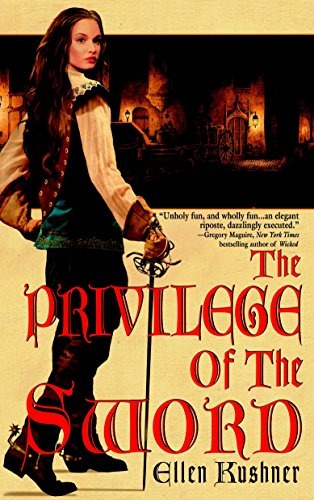
Last year I did more re-reading than I normally do. Comfort reading in uncomfortable times. I re-read books that, for one reason or another, make me happy. Rivers of London, for example; an absolutely charming story, the first book in a series of magical police procedurals that are consistently solid. Mick Herron’s original Slow Horses spy novel, which is a delight in its own offensive way. Ellen Kushner’s The Privilege of the Sword, which, to be fair, isn’t quite as good as her novel Swordspoint, but remains my favorite because there’s an inherent sweetness to the protagonist. I can be a bit of a sap sometimes.
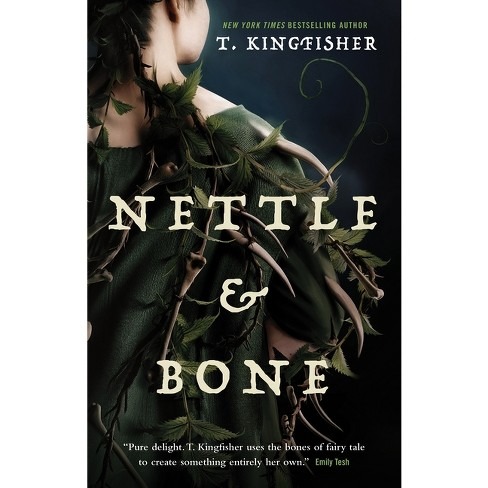
Did I have a favorite book in 2024? I guess. Sort of. I bought Nettle and Bone on a whim, based entirely on the title (which, I should point out, is a terribly stupid reason for buying a book). I have no idea what it is about the title that appealed to me so much. I was very skeptical about the novel at the beginning. I mean, it begins with a woman building a dog out of…well, bones. The scraps of former dogs. Unlike a LOT of novels in which magic is featured, Nettle and Bone doesn’t attempt to explain how magic works. The protagonist puts the dog bones together and when she’s done she’s got a bone dog…there it is, just matter-of-fact, magic exists. sometimes it works and sometimes not so much, you don’t need any more information than that, just accept the existence of the fucking bone dog and get on with the story. And that’s exactly what I did. Nettle and Bone is as dark as the darkest fairy tale (the best fairy tales are pretty damned dark), but it remained charming and amusing and incredibly emotional. Be aware that it deals very bluntly and unflinchingly with violence against women, but at the same time there’s a sweetness that cuts through the grim darkness.
Nettle and Bone was the most unexpected novel I’ve read in recent years. Is it a great novel? Naw, probably not. But I can’t recall any other novel that kept surprising me the way Nettle and Bone did. I look forward to re-reading it again this year.
 gregfallis.com