two of this, two of that

Occasionally I’ll take a walk with the specific intent to shoot photographs. More often, though, I take a walk just to…well, to take a walk. To get out of the house, to breathe some fresh air, to stretch the muscles and make the blood pump just a wee bit faster. And it helps me clear out the cobwebs when I’m having writing issues — like when I’m unable to think of a metaphor and I have to resort to a cliché like ‘clear out the cobwebs.’

Sometimes when I take a walk, I’ll stick my little Fujifilm X10 in a pocket. I almost never take it out. Almost never is another way of saying Sometimes I do. On a strangely warm morning back in January, I did. I took the camera out because as I walked through a small suburban park, I saw these two trees:

two treesBHere’s the problem. I’ve been working on a novel for a while. A novel is as much an exercise in persistence as anything else. I’ve published a lot of short fiction in various genres, I’ve published several nonfiction books, but I’ve only published one novel. So I very much want to get this novel manuscript finished and out the door. But I’m also heartily weary of the damned thing. Don’t get me wrong; I think the manuscript is good — but at this point I know everything there is to know about the characters and the plot. That leaves me with nothing to do but put words in a row. That’s not easy, of course. They have to be the right words. And that can be fun sometimes. But the real fun of writing fiction is, for me, the bit where you’re actively making shit up.

Why is that a problem? It’s a problem because it means my mind has already moved on to other projects. My mind can be a real asshole. When I take a walk, instead of thinking about my current project, my mind is kicking around ideas for the future. So when I saw those two trees, my mind began to build a scene around them. An anonymous guy running slowly between them. A guy running from something? Or toward something?

I turned around to see what he’d be running toward. And I saw these two horses:
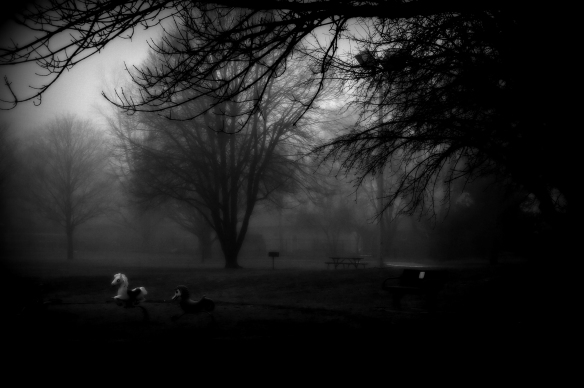
two horsesHere’s another part of the problem. I’ve only written for an adult audience. Not ‘adult’ as in ‘adult movies’ but adult as in ‘not young folks.’ But a lot of the most creative fiction I’ve read over the last couple of years has been in the Young Adult genre. I find myself wanting to write a YA novel. Most of the fiction I’ve published has been in the mystery and detective fiction field — and I’d like to try something altogether different. Over the last few years I’ve been drawn to the sort of world-building that takes place in fantasy fiction. However, I can’t really abide stuff with dragons and wizards, or magic swords, or those grand epic stories in which the pot-boy turns out to be the bastard-heir to the throne. If I ever write anything like that, you have my permission to stab me.

I much prefer stories that drop ordinary folks into extraordinary situations. So I’ve been wanting to write a YA novel revolving around a fairly ordinary kid who gets caught up in a situation having fantasy overtones. When I saw those two trees and those two horses, my asshole mind began to concoct an opening scene. An ordinary kid sitting on the bench near the horses sees an anonymous guy running slowly in his direction from between those two trees. The kid, of course, would be the protagonist. And the kid would have to be asking the very same question I was asking myself as a writer.
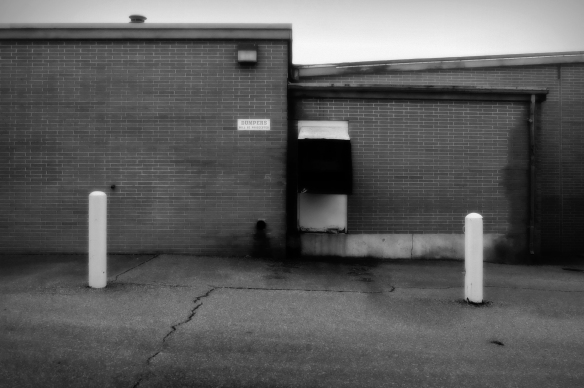
two bollardsBTension. It’s almost always the driving force in fiction, and it often expresses itself in some form of question. Like Who is that guy and why is he running towards me?

I kept walking and considering possible answers to that question, and soon found myself behind the local Salvation Army store, where there was a rubbish hatch tucked away between two bollards. A great place to hide, if somebody was chasing you. But who is being chased? The kid? The guy? Maybe both of them? Maybe the guy was being chased until he met the kid, and now the kid is being chased by whoever was chasing the guy?

I checked the rubbish hatch; it was locked from the inside (of course it was — this is real life). But one of the advantages fiction has over real life is that it doesn’t have to completely conform to reality. It only has to conform enough to be believable. There are a lot of ways to deal with a locked rubbish hatch. But what we’re after at this point is tension, and one way to ratchet up tension is to offer a release from the tension — then snatch it away. You show the protagonist (and the reader) the convenient rubbish hatch, you let them think a solution has been found. then you turn the apparent solution into another problem.

This is how writers torture readers and make them happy.
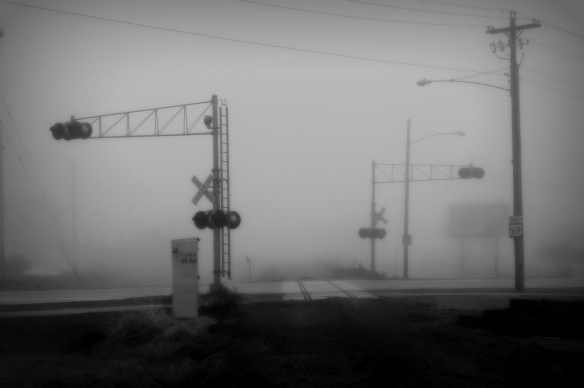
two crossingsBI walked along, thinking of various ways to construct the scene. You’d want the kid (and maybe the guy) desperately trying to open the hatch, looking back over his/her/their shoulder for whoever the hell is chasing him/her/them. Maybe have the kid and the guy (if he’s there — and there would be some distinct structural advantages to having the guy there) run off together. Maybe have them run off separately, never to meet again. Maybe have them run off separately, only to meet later in the story. Maybe have the kid run off and the guy stay behind to face whoever is doing the chasing — give the kid a chance to escape. So many options.

As I walked I saw two potential avenues of escape. The first, a shiny railroad track passing between two crossing signals. Hop a slow-moving freight train? Maybe one that picks up speed and becomes too dangerous to hop off? Lots of potential there — an ordinary kid sitting in a suburban park, and half an hour later he (or she, of course) is on an express freight high-balling out of town toward some unknown destination.

The second, by turning the other direction you see two muddy ruts leading to some old out-buildings.

two tracksBMore places to hide. And who knows what might be stashed away in those out-buildings? Farm implements, maybe. Rows of high-stacked pallets filled with potting soil and fertilizer and grass seed. Maybe rusting circus equipment. Or a meth lab. I spent the rest of the walk thinking of things that might be found in those buildings — everything from a secret missile defense system to the bastard heir to the throne who’d been turned into a dragon by a wizard with a magic sword. (I told you my mind can be a real asshole.)

That was back at the end of January. This is early April. Over the intervening two months I’ve continued to grudgingly work on the existing novel manuscript — but almost every time I set out on an idle walk, my asshole mind returns to this story idea.

An ordinary kid sitting alone in a park at dusk, a stranger slowly running towards him.

words is my business

Words is my business. I know a lot of them, and I enjoy using them. I enjoy seeing and hearing them used. I adore people who use them well.

One of the reasons I adore Meera Lee Sethi (just one of the reasons; there are so many reasons to adore Meera that you’d need an abacus to keep count) is because she’s engaged in the most wonderful and quixotic projects I’ve seen in some time: 366 Days of Words in Science.

This is more than a mere introduction to esoteric words. It’s partly a sort of diary, and partly a collection of philosophical musings, and partly a work or art (each term is accompanied by a photo that in some way illustrates the concept), and partly an act of immense generosity. It’s a delightful combination of intelligence and charm, and every day it offers something new to captivate the curious.

It’s highly unlikely I’ll ever be able to use ‘ceratotrichia’ or ‘palpebral’ in casual conversation, even if I can remember them. I’ve no idea how many of these 366 words I’ll actually fold into my vocabulary. But I do know that each day I look forward to another term, another photograph, and another brief peek into Meera’s mind.

So this little blog post is just an aliquot (a measured portion from a larger sample) of my affection for words and for science and for Meera. The level of my actual affection for words, science, and Meera is only measurable on a galactic scale.

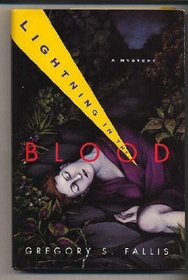
lightning in the blood

I wrote this novel in 1993, sort of by accident. I was working on my doctoral dissertation (an exploratory sociological study of private investigators) and one of my advisers suggested I should consider including a chapter comparing the work of real life private investigators and fictional ones. I wasn’t a fan of mystery of detective fiction and didn’t see any value in such a chapter, but you don’t argue much with your dissertation advisers.

So off I went to the Literature Department, where I tracked down a professor who taught a course in mystery and detective fiction. We set up an independent study program, she gave me a reading list, and I spent a semester reading detective novels. They all seemed a bit silly to me; the characters might be interesting, but most of the cases and the investigative approaches were pretty loopy. With each book I picked up, I found myself thinking “Hell, I could write something like this.”

So I did. I think it took me a couple of months, while still working on my graduate studies. I sent off the manuscript and St. Martin’s Press bought it. I still had to write a paper for my independent study, but when I showed the book contract to the professor, she just laughed and gave me an A. It’s hard to argue against a good grade and an advance. I began to grow fond of the detective genre.

My editor at St. Martin’s asked for another novel with the same characters. So I started working on a second novel. But the format (alternating First Person narratives) felt forced and awkward a second time. I decided the characters would work better in short fiction. I wrote some short stories and published them mostly in Alfred Hitchcock’s Mystery Magazine (some of which can be found in Dog on Fire). I suggested a short story collection to SMP, and my editor seemed receptive to the idea. But then she decided to go to law school and her replacement wanted to develop her own stable of writers. The project became ‘orphaned,’ as they say in the publishing biz.

And that was that. The first run of Lightning in the Blood sold well and I earned a bit more than the advance. But I had no desire to write a second novel with the same characters.

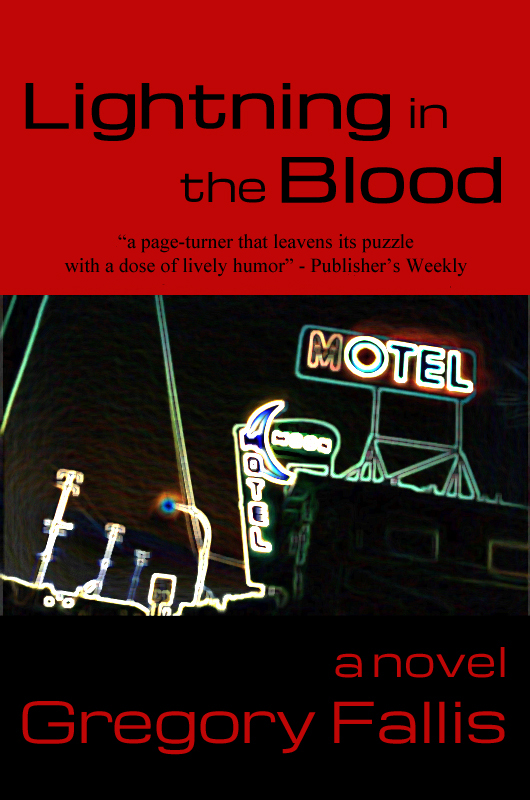
After I published Dog on Fire I decided to revamp LitB and release it as an e-book. At first, it was something of a painful experience. It was like the literary version of looking at your high school yearbook photo.

But since I hadn’t read the book since it was published (nearly two decades ago) I found I was able to read it as a reader. Normally I dislike reading anything I’ve written; I tend to see only the flaws. But I found myself actually enjoying parts of the book.

In the end, I decided to update LitB a bit. I removed references to outdated technology (it was written in an era when there were relatively few cell phones, most of which were about the size of extra large bean burrito, and were carried either by doctors or assholes who wanted people to know they could afford cell phones) and examples of 1990s slang. Other than that, it’s the same book.

And hey, considering I wrote it in my spare time, it ain’t bad. It should be available for the Nook and the Kindle by the end of the week, and for other formats at some point in the near future.

(Also…the new cover art features a photo by our own Lynn Longos.)

complications of the writing life

So Dog on Fire is done and out there (although I’m still waiting for it to appear in the Apple and Sony stores). I ought to be doing promotional stuff—and I intend to—but what I really want to do is get engaged with the next project.

The question is, which next project? I have four possibilities. 1) A novel that’s been published already and needs to be converted to e-publishing formats. 2) Another set of short stories. 3) A sort of police procedural/zombie novel. 4) A fantasy novel.

The most logical choice would be #1. I wrote Lightning in the Blood while I was doing the research for my doctoral dissertation. It was published by Saint Martin’s Press. The novel got generally good reviews, sold a few thousand copies, then disappeared—which is the fate of most novels.

But when I look at it now, all I can see are the flaws. It’s about the same two characters who appear in Dog on Fire. Each alternating chapter is narrated by the other character. That works pretty well in short fiction, I think, but not so much in a novel format. That’s exactly why I scrapped the second novel SMP asked for and began to use those characters in short stories.

If I undertake this project—and it would be stupid of me not to—I’ll want to update the novel, both to reflect modern PI tech and to improve bits of it. It would be dull grunt work, but this plan makes the most sense. Which doesn’t seem to weigh much in its favor.

A second book of short detective stories has its appeal. I’ve got maybe half a dozen scenarios sort of semi-sketched out. It would be fun and fairly easy, though time consuming (but then all of these possible projects would be time consuming). I know there’s interest in the characters, so there’s that. And I could probably sell some of the stories for print publication and bring in some extra jing that way. That’s an attractive aspect.

But then there’s the police procedural/zombie idea that’s been banging around in my head for a couple of years. It’s not a traditional zombie ‘must eat brains’ idea. It’s actually more of a civil rights story. Here (and other writers will probably think I’m nuts for putting this out in public) is the basic premise of the story.

Some unknown environment circumstance triggers a viral event which causes a person’s body to effectively meet the legal criteria for death: the heart stops, the circulatory system stops, respiration stops, brain activity stops. Many hours later, the patient revives—after a fashion. The heart doesn’t start beating, but it sort of vibrates; blood no longer circulates through the body, but it sort of quivers like jelly; respiration doesn’t take place, but the virus simulates hemoglobin so closely it deceives the body into behaving as if was receiving oxygenated blood; electrical brain activity resumes but not in any way recognizable by an EEG. The patient’s bodily functions fail to meet the legal criteria for life, but the patient still retains their ability to think, their identity, and a degree of mobility.

Naturally, fear of contagion means these people are quarantined. Over time it’s discovered the virus isn’t transmitted from person to person, but is triggered by some circumstance in the environment. One ‘zombie’ can’t create another ‘zombie.’ Something in nature does that, though most patients come from a very large geographical region (the Southwest).

The story takes place a few years after the outbreak. There’s a population of a few thousand ‘zombies’ who are being detained in one location—the town where the first patient died and revived. They’re confined to the hospital grounds, which has become overcrowded. An isolation zone of several square blocks of empty buildings, established during the early months of the outbreak, surrounds the hospital. Because each ‘zombie’ was declared legally dead, they have extremely limited civil rights. The courts are beginning to hear lawsuits by ‘zombies’ seeking relief from what they consider unlawful detention. It’s believed the courts will soon expand the limited rights of the ‘zombies,’ allowing them to occupy what has been the isolation zone. The community is opposed to the idea. During all this, a living hospital worker is murdered.

Somebody has to investigate the crime, but it appears the killer may be a ‘zombie.’ If so, can a person who is legally dead be arrested and charged with a crime? How could that person possibly be given a trial by their peers? Could the State just dispose of the accused in the way they’d dispose of any other dead body? The investigator has to deal with the political and cultural issues while trying to solve the murder. This stuff fascinates me.

Finally, I’ve been kicking around a fantasy novel for some time. I like the idea of the genre, but not much of the genre itself. I simply haven’t read much fantasy that wasn’t painfully formulaic. Magical swords, potboys who are rightfully the king of the realm, an evil force bent on world domination. That crap bores the hell out of me.

I have an idea for what’s essentially an adventure story that takes place in a border region between two hostile cultures. Again, it’s the clash of cultures that intrigues me. Nothing fancy about it, but it appeals to me.

So I have all these ideas. I just have to make a decision and focus on one of them. It ain’t easy. I’ve already written the novel, so there’s nothing new for me there–but it’s the logical next step. I enjoy writing short stories, but I’ve just finished a collection of them. The zombie market is flooded, and I’m not sure my idea is marketable even though it’s different and I’m sort of jazzed by it. There’s always a huge fantasy market, so that direction would also make sense and maybe be amusing.

The writing life—she is complicated.

i have a crush on stephen fry

If I was gay (or if I were gay and interested in the past subjunctive—which I’m not and which I’m not) I’d be in love with Stephen Fry. I’m about half in love with him anyway. Because he has one of the most delicious voices in this part of the galaxy, and he knows how to use it, and he uses it to say things that ought to be said, and he uses it to say things that ought not to be said but need saying anyway.

And because of this:

I confess, I’m one of those people who sometimes get annoyed at the verbing of nouns. In my defense, I’m only really annoyed when I see it used in corporate jargon. There’s a place for CorporateSpeak. For the most part, that place is Hell (which is where the guy who sent out a memo saying ‘Please gist your reports before sending them to me’ belongs). But the employee who first said she couldn’t go out to lunch because she was ‘dining al desko’ has a special place in heaven.

I can hear that—I shall be dining al desko today—in Stephen Fry’s voice. He makes it sound even better.

(Thanks to Olga van Saane for bringing that video to my attention)

lost in the noise

At some point in the next 24-72 hours Dog on Fire will be for sale as an e-book through Barnes & Noble and Amazon.com. At least that’s the plan.

I’ve published a bit in the analog world; a novel, a few non-fiction books, several short stories. I’ve been included in a few anthologies (including Otto Penzler’s Best American Mystery Stories 1999 and Alfred Hitchcock’s 50th anniversary anthology). I’ve ghosted a number of books for other people. I’ve put out a buttload of words in actual print. But this is the first thing I’ve done specifically for e-publication. (To be accurate, some of the stories in Dog on Fire have already appeared in print, but the stories presented as a collection is something new.)

I think of this as indie publishing. A lot of other folks think of it as self-publishing—which is generally seen as a sort of lower species of publishing. What’s odd is that many of those same folks regard independent cinema as very cool, and they see indie music releases as bold and ballsy. But putting your own writing out there seems to spark a bit of skepticism. There’s that silent but underlying question “What…you can’t get a real publisher to release your work?”

My initial response to this is “Yes, I can, but fuck you very much.”

I have to admit, there’s basis in reality for that skepticism. Technology has made it possible for a LOT of people who couldn’t get published in a traditional venue (and let’s face it, people whose work doesn’t really merit broad publication) to bang out something and put it up for sale on B&N.com and Amazon.com. And a lot of ‘real’ writers will complain—with some justification—that the amount of noise emitted by those folks makes it more difficult for their own work to find an audience.

My initial response to them is “Yes, you’re right, but also fuck you very much.

The democratization of publishing is a good thing, even if it makes it harder for the rest of us to earn a buck. Some people will claim good work will always find an audience—which is completely delusional. A lot of good work will get lost in the noise. The odds are that’ll happen to Dog on Fire too. It’s just the reality of the situation.

And then there are the folks who say something like “But you’re not really doing this for the money anyway.” Want to guess what my initial response is? “I am most certainly doing this for the money, and fuck you very much.” If I sell a short story, I get paid once. If that story gets anthologized, I get paid again. And that’s it. With an ebook collection of short stories, I get paid every time somebody buys it. I get paid less, of course, but the idea is that volume will make up for it. If the ebook gets lost in the noise, that may not work out. But if that happens, the fault doesn’t lie with the noise.

So I consider this something of an experiment. Experiments sometimes fail. Often fail. If this one fails—well, what the hell, I’ll probably try it again. I may be in this for the money, but if money were the primary consideration I’d have a straight job.

poor bastard

The beauty of traditional publishing is that all the writer has to do is write. That’s it. You make shit up and write it down. You finish the manuscript, you take it to the Post Office or Federal Express, you drop it in an envelope, send the damned thing off and that’s it. You can forget about it and move on to the next project. Easy peasy, as they say.

Some other poor bastard (or several poor bastards) will have to do the grunt work of copy editing, and considering issues of typeface, and dealing with formatting, and coming up with cover art.

But e-publishing makes every writer a poor bastard—at least in the sense of all the grunt work that’s necessary to prepare the manuscript for publication. Copy editing? You have to do it. Typeface and formatting? Figure it out. Cover art? Dude, it’s all up to you. You can stare at your computer and say “Dammit, Jim—I’m a doctor, not an engineer.” But you still have to get the warp engines back on line.

I’m okay with the copy editing. I hate it, but I can do it. I don’t know dick about typeface, but I can see that there are certain industry standards and follow those. I can cope with the formatting because the e-publishing software makes it a bit easier. But cover art? Dammit, Jim—I’m a writer, not a graphic designer.

Graphic designers never get the credit they deserve. I’ve known this for a long time—partly because graphic designers keep telling me it’s so, and partly because I’ve seen graphic designers make almost unnoticeable changes that somehow magically turns a dull design into one that seizes and holds the eye and the imagination. So I’ve known graphic designers have their own peculiar genius, but now that I’ve tried to build a book cover, I appreciate it all the more.

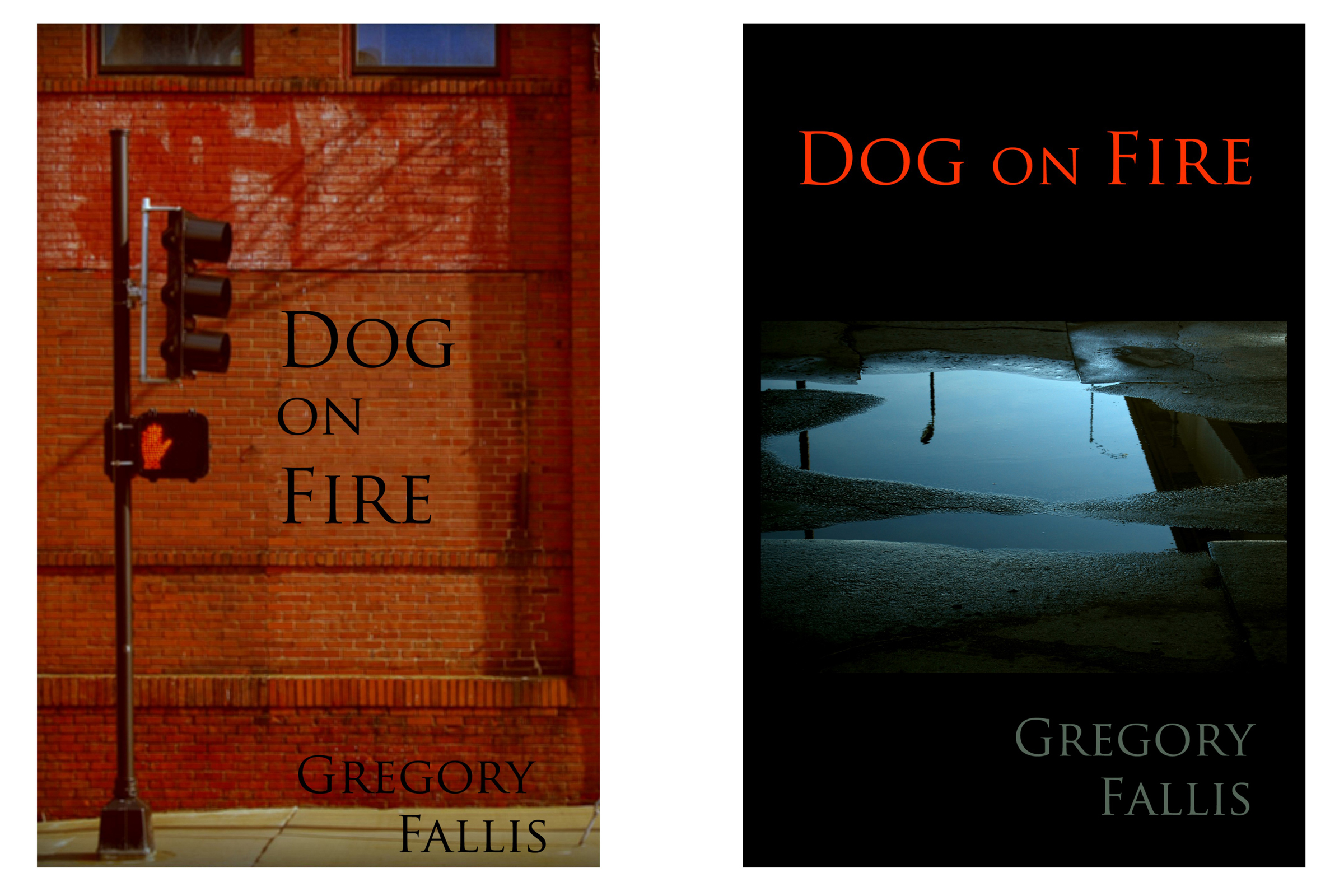
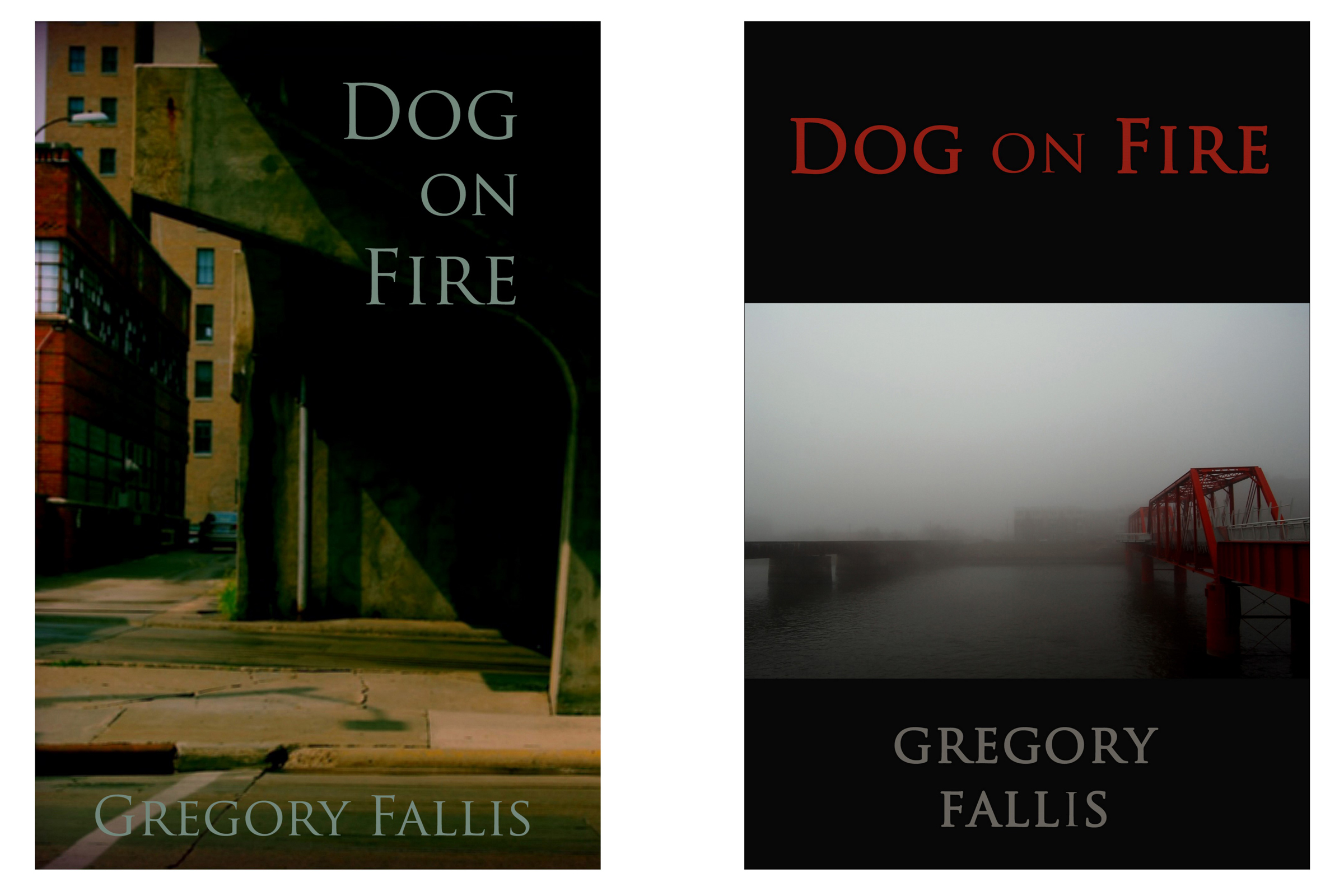
I tried to take a lot of things into account. The cover is for a book of non-traditional detective stories, so I wanted the cover to have a light noir-ish vibe—somewhat urban, but not quite hard-boiled. I wanted it to relate to something that appears in the stories—a setting, an object, an atmosphere. I wanted the cover to be clean and simple and somewhat austere.

I guess I’ve made maybe a couple dozen different covers now. They all look too simplistic to me. They look like—well, they look like I made them. They don’t look to me like real book covers. I spent an inordinate amount of time looking at e-book covers on Amazon.com and B&N.com, and I’ve got myself so turned around at this point that they don’t look like real book covers either.

I suspect I’ll settle for one of these four covers. Years ago I learned to be able to let go of a manuscript; now I have to learn to do the same with a book cover.

But this shit ain’t easy.

he quipped

Some words annoy me. Quip is one of them. Not the noun–I have no real problem with the noun. It’s the verb that offends me, and it offends me especially when used as a dialog tag. “Blah blah blah,” he quipped.

Dude, if you have to tell me it’s a quip, it’s not a very good quip. If you have to point out the quippy nature of the line, then you’ve failed in your job as a writer. If the context isn’t enough to reveal the level of quipitude–if you have to rely on a 16th century verb usage to rescue you–then just delete the fucking line and start over.