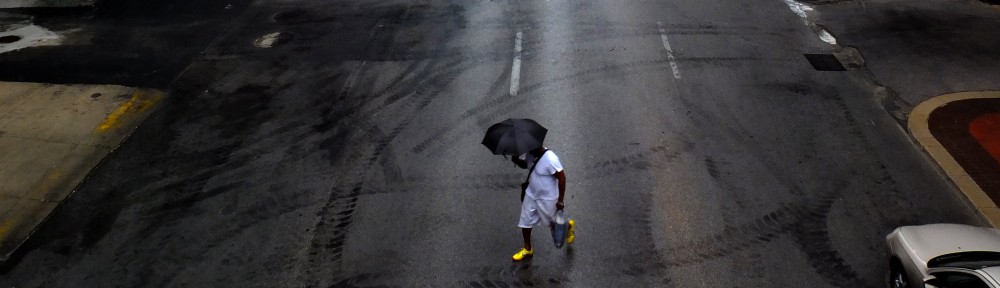
The Iowa State Fair…well, every fair, really…is a colorful event. Bright, garish colors. Not normally a venue I’d consider photographing in black-and-white. And, in fact, of the maybe 150 photos I shot during my five hours of noodling around the fairgrounds yesterday, only a few were shot in monochrome.
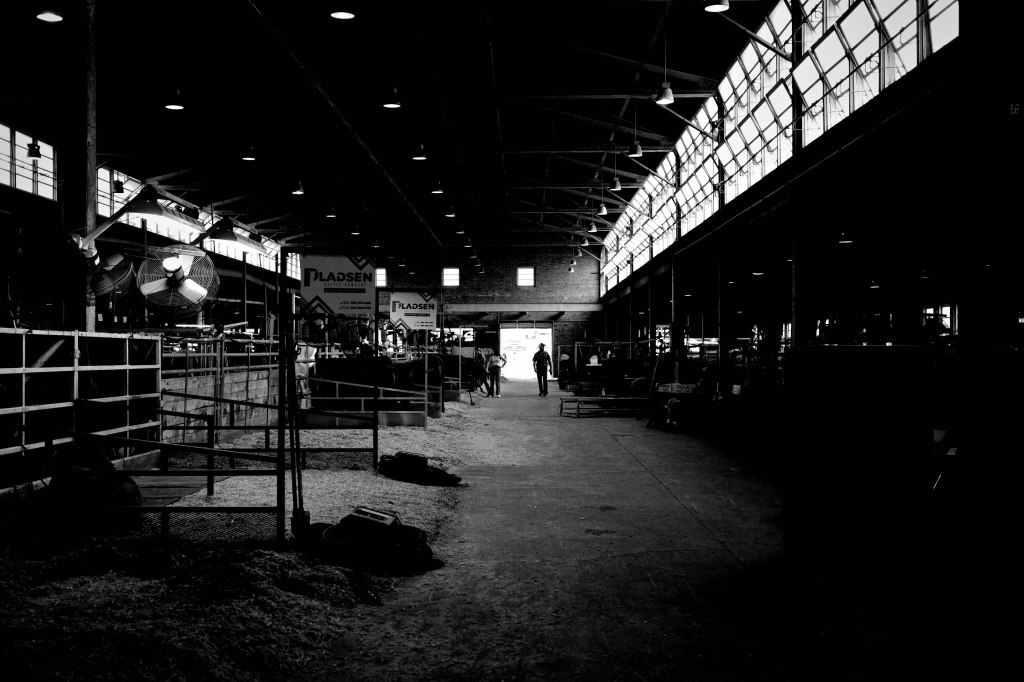
Why would I do that? Because there are some scenes that feel like they ought to be shot in monochrome. Color photography is my default approach, and sure, you can shoot scenes in color and convert them into black-and-white images (which is actually the best approach, since digital imagery is grounded in information rather than color). But if there’s something I want to shoot in black-and-white…well, I shoot it in black-and-white. I want to see it in black-and-white.
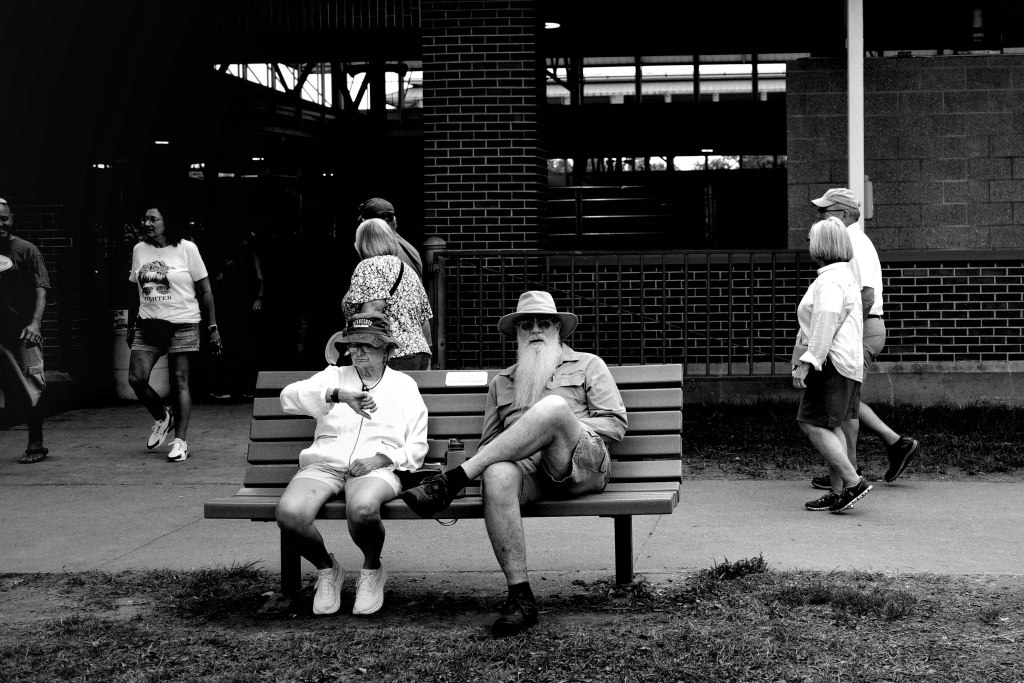
Obviously, we live in a world of color (well, most of us do) and yay for that. I love color. But sometimes it’s a distraction. The photograph above is all about the beard. But this guy’s clothing was a drab sort of khaki which made his beard almost disappear. Worse, the woman next to him was dressed in bright colors. In fact, most of the passers-by were dressed fairly colorfully. The only way this photo would work was if I removed the distractions of color.
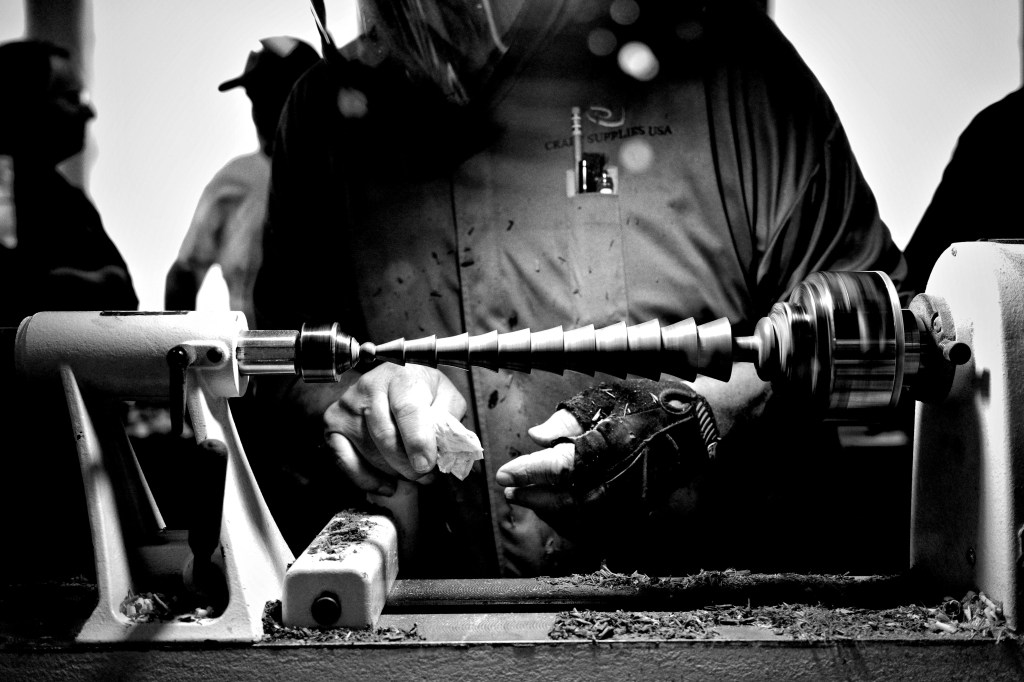
That’s one of the many advantages of digital photography. Almost every modern digital camera allows you to quickly shift back and forth between color and monochrome. I have my Ricoh GR3X set up with two different color profiles and a high contrast monochrome profile. When I saw this guy demonstrating wood-turning on a small lathe, I knew his brown-green smock would interfere with the color of the wood. A turn of a dial, and problem solved.
But what do you do when there are scenes that work in monochrome AND color? For example, a blacksmith at work. You can’t ignore the bright color of flame, or the way fire casts a glow on the surroundings. Obviously, you have to shoot both. Each carries a different emotional weight.
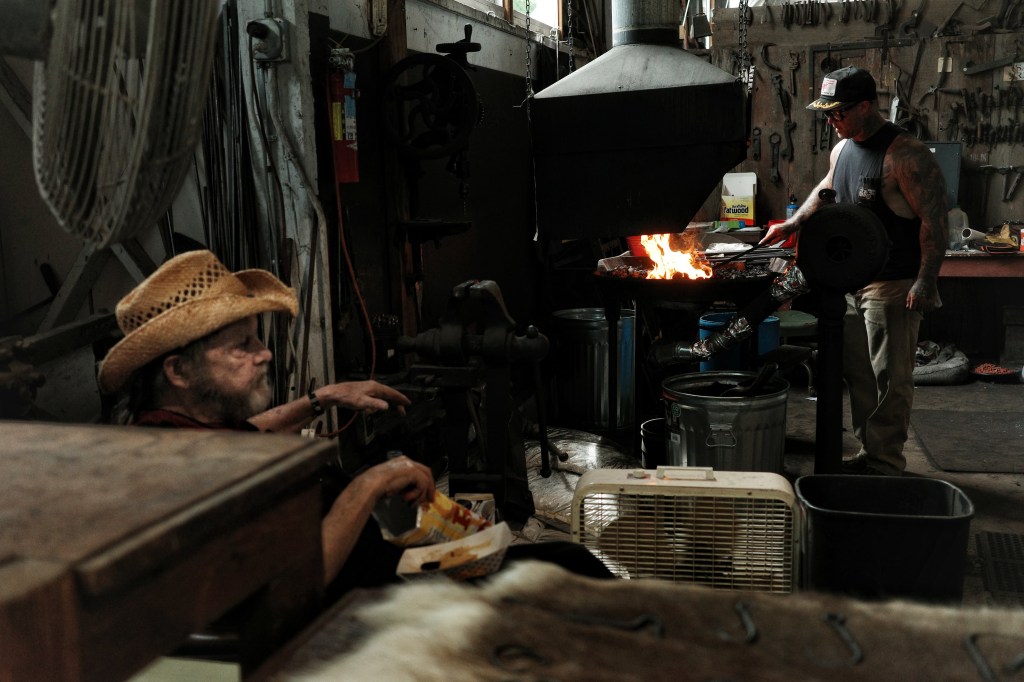
The photograph above is, I think, a very human photo. It’s as much…or more…about the people in the photo as it is about blacksmithing. The light cast by the flame and the high windows softens everything. It gives the image an almost cozy feeling.
When you remove the distractions of color, the mood changes. It’s not just that the composition becomes more focused on tone and texture, on shadow and light, or line and form. Removing color also means abandoning the strictures of reality. Black-and-white photos are a wee bit divorced from reality, a step or two away from the real world, recognizable but still different. This can give an image an almost mythic quality.
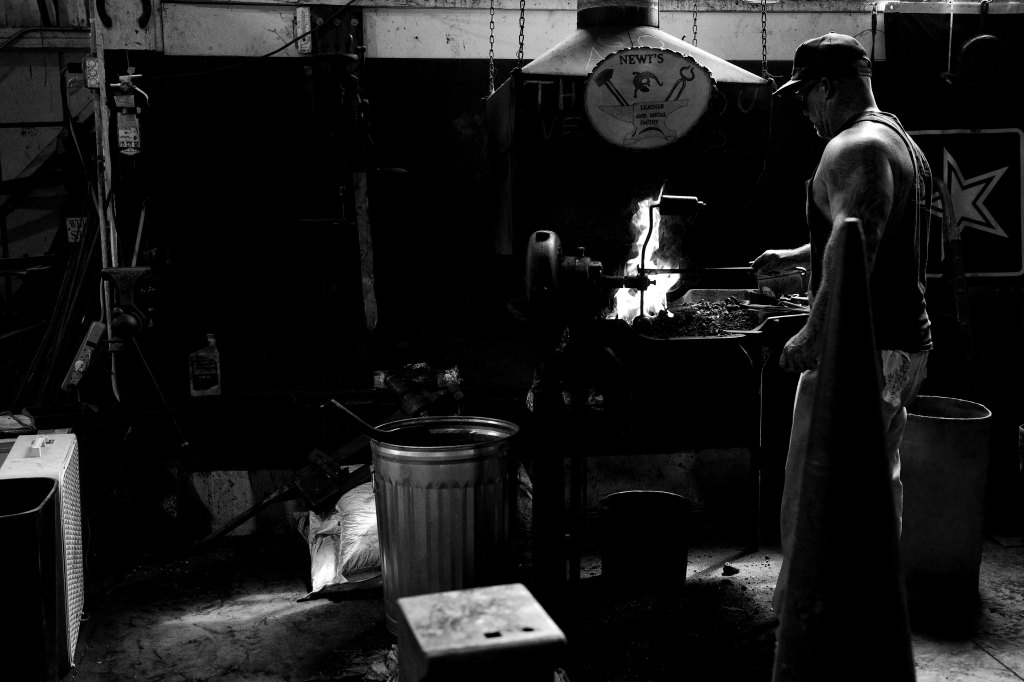
This photo is less personal, more emotionally distant, more analytic. It’s not about the guy doing the work; it’s more about the mythos of blacksmithing–the narrative of the smithy, the cultural representation of blacksmithing. It has a more primitive vibe. Where the color photo is about warmth, this is about heat and fire.
Also? Black-and-white photography encourages a LOT more artsy-fartsy bullshit.
 gregfallis.com
Beautiful shots, Greg! xoxoJ
LikeLiked by 1 person
A long time ago, when digital was still pretty new, I asked a photographer I worked with “Do you shoot in color or B&W?” They said “Color, you can always convert. But at least you have both.” That still resonates to me, though I also agree with everything you wrote here. Going B&W DOES carry different weight. It’s funny you mention the usage of B&W at the fair. One of my favorite “documentary” shoots I did was at the Mercer County (NJ) Fair about 10 years ago and I used all B&W. From the teens holding hands, to the wide-eyed wonder of the kids, to the bare-chested biker dude walking down the Midway. It all just seemed to work. But the next year…I shot color because I wanted the bright lights and colors. I could go on and on about this… Nice work here!
LikeLiked by 1 person
One of the things that convinced me to shift from film to digital was the fact that the viewfinder/screen would actually SHOW you the scene in B&W. Before, I had to try to visualize how the colorful world would appear in B&W. It was especially difficult if you used filters.
I know the smart thing for me to do is shoot RAW in color and convert to monochrome if I want to. Maybe today I’ll set up a new camera profile and try that.
LikeLike