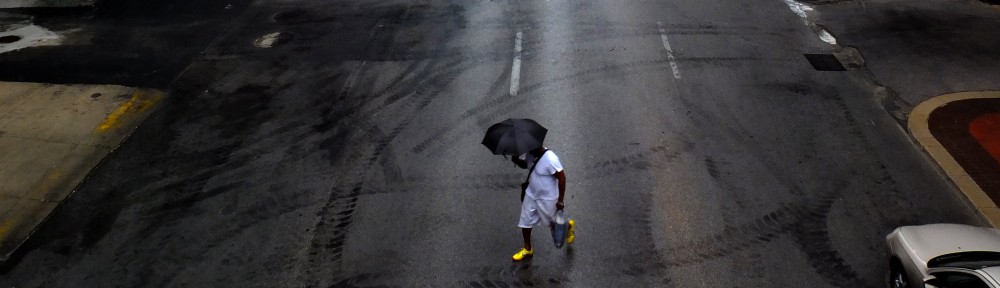
I was maybe 16 years old when I first borrowed my momma’s rangefinder camera and began shooting photographs. It was a completely manual film camera, which meant I had to learn the actual mechanics of photography–the relationships between shutter speed, aperture, and film speed; how the elements interact to determine the depth of field; how to use a light meter.
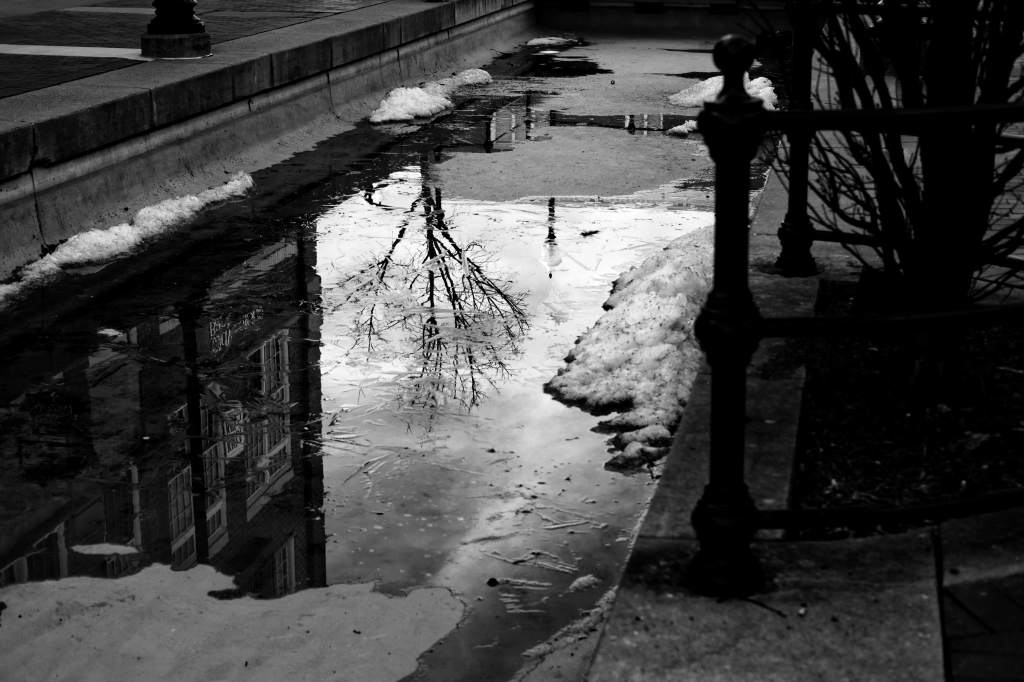
Basically, I spent a decade or so just goofing around with cameras. Then, for reasons I can’t recall, I decided to take it all a bit more seriously. I bought my first serious camera (a Canon A1) and I began to teach myself, in a semi-methodical way, the practice of photography.
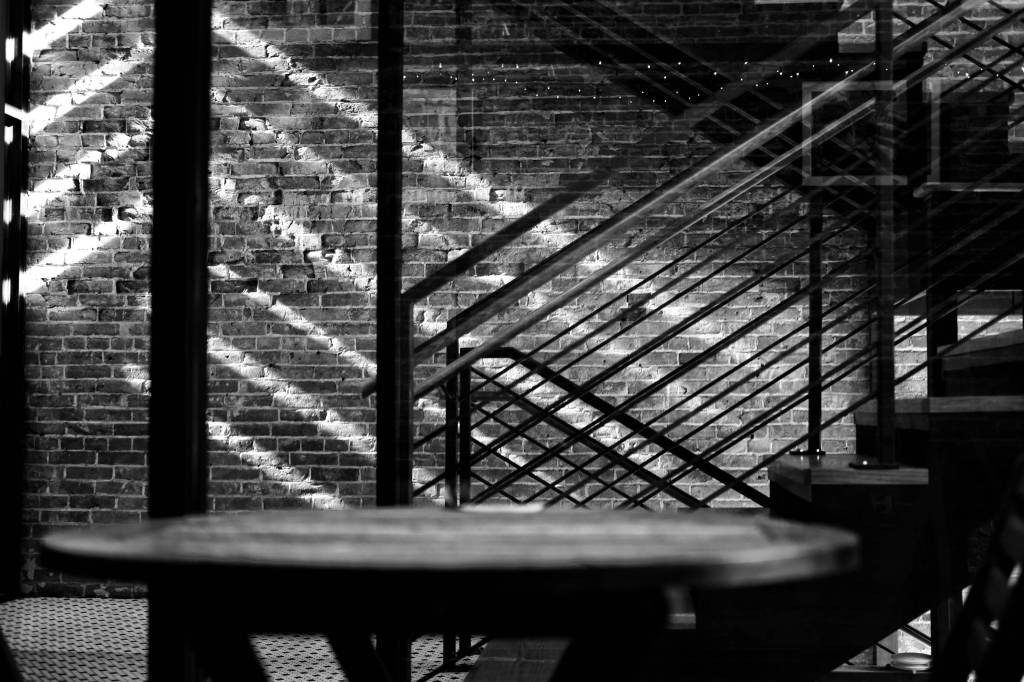
I say ‘semi-methodical’ because I set a sort of loose curriculum for myself. I’d periodically focus on some specific aspect of photography. Portraiture, for example, or capturing motion. When I decided to become more deliberate in terms of composition, I put a 50mm lens on the camera, put the camera on a tripod, and kept it there for a couple of months.
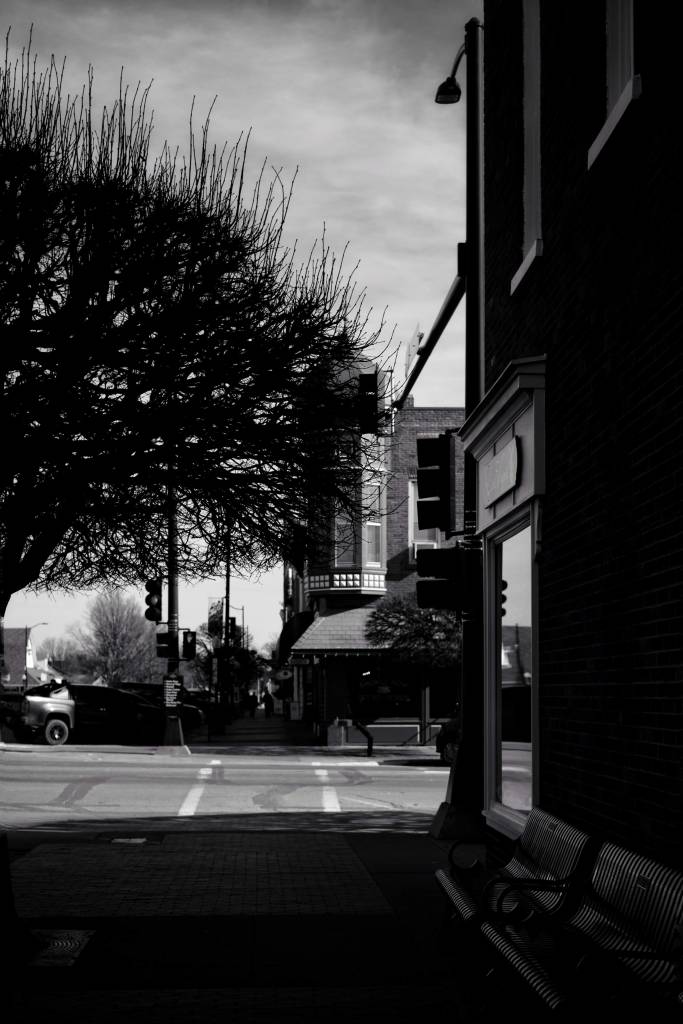
It was a massive pain in the ass. But it radically changed my approach to shooting. I learned to pay more attention to detail, to be aware of the corners of the compositional frame, to notice distractions within the frame, to be patient, to pre-visualize the composition. Having a prime lens on a tripod slows you down. Instead of simply changing the composition by taking a step forward, or to the left, or squatting down, I’d have to pick up the tripod and move it. Then possibly adjust the height of the camera, or make sure it’s level, or tilting it up or down. It meant thinking about the composition before shooting, and trying to put myself in the right place to avoid any hassle.
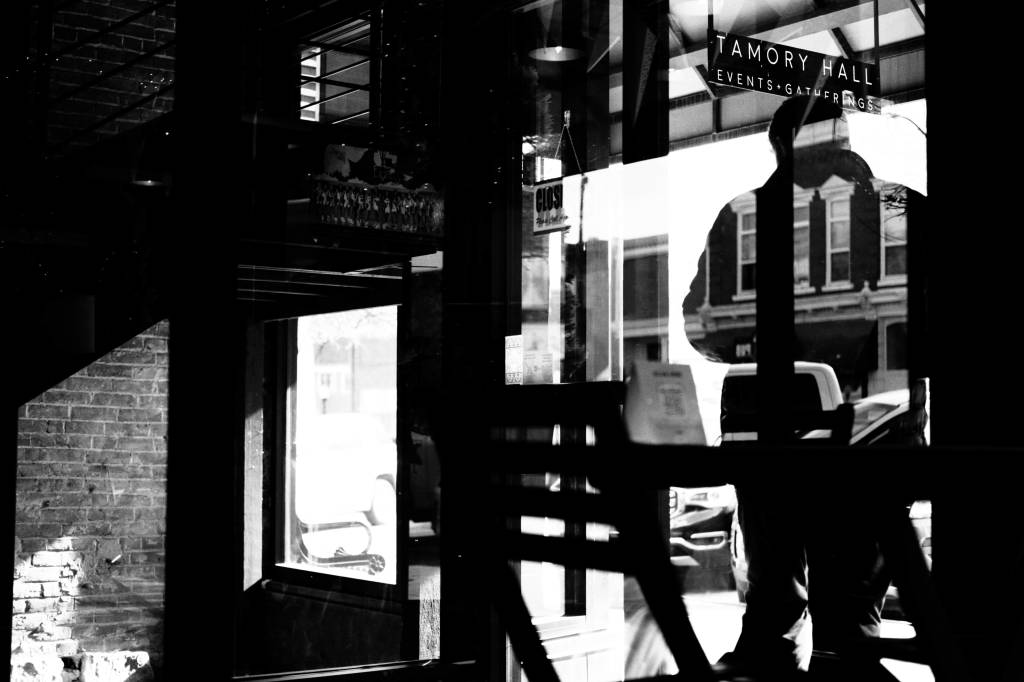
Now I’m thinking about doing something similar. I bought an inexpensive 35mm prime lens with the notion of putting it on another old Fujifilm camera (an X-T10) and leaving it there. Again, the idea is to force me to be more deliberate when it comes to composition. I’m also considering using that camera to shoot exclusively in black-and-white, to force myself to pay more attention to line, form, shape, and shadow.
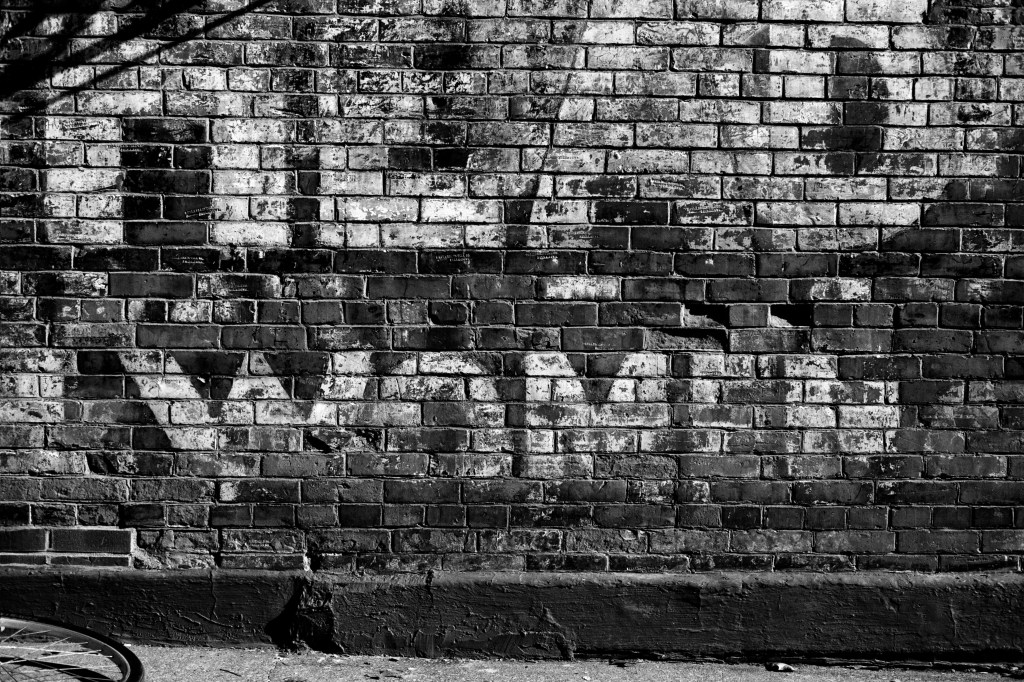
So far, I’ve only taken the X-T10 out once with those restrictions, and I have to say the results were mixed. I’d forgotten some very obvious problems with that approach. For example, physical obstructions can’t be negotiated. If, for example, a parked car makes it impossible to step as far back as you need to get everything you want in the frame, you’re just fucked. And working in monochrome denies you the joy of shooting a photo simply because the colors make something interesting. There was a coffee shop window with yellow, blue, and red vinyl seats, and I was terribly tempted to switch to a color profile. I told myself I can always go back with another camera. Which might be a lie.
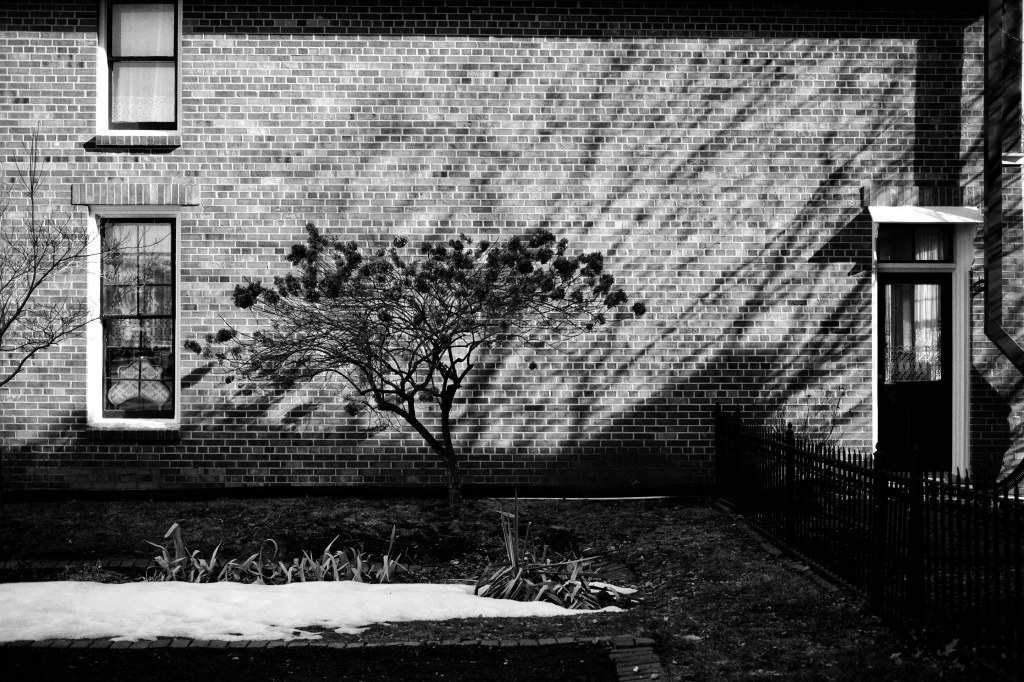
Shooting with a single prime lens turned out to be annoying as fuck. But it was also weirdly fun. I don’t know how long I’ll continue to abide by my self-imposed ‘prime lens in monochrome’ restrictions (and, of course, I’ll continue to shoot with my older and tinier Fujifilm X10), but my first foray was fun. And fun is what it’s about, right?
At least it is for me.
 gregfallis.com
Good eye, Greg!
LikeLiked by 1 person
Your description of how you started got me asking Dave some questions about how you begin to learn with film.
I had always been pretty pleased with myself if I took a photo and didn’t cut the heads or feet off. But then I met Dave, and he took it a LOT more seriously than that. And then I met a bunch of UTATA people and felt like the class dunce so I had to up my game a bit and managed to some extent, digital only.
But somewhere along the line I decided to sell shiny things. Shiny, coloured, reflective tapes and my oh my are they difficult to photograph. I’m still pretty hopeless at it. I need to take the photo head on but then I’m in the picture because some of these tapes are mirrors. The lights blow the detail out but without the lights the colours are dull.
On day…
Your black and white shots are all gorgeous. And all of things we just don’t see here. You live in an area with interesting alleys and structures.
LikeLiked by 1 person
The advantages in learning to shoot photos with a film camera are also the disadvantages. Film is/was expensive, having it processed and printed was expensive. Buying the gear to process and print your own film…expensive.
As a working class kid, it made me think about each shot before I took it. And, of course, film meant you never really knew if you had a good shot until hours/days/weeks later. A lot of photographers back in the day wrote notes about each shot (shutter speed/aperture/ISO/light conditions), so they could evaluate the exposure.
Digital made all of that immediate and inexpensive.
LikeLiked by 1 person
That was what I asked Dave. How did you experiment with different settings and lenses etc when it could b weeks before you saw the results. He also said “notebooks”. Hard work that. But it will also have taught you discipline and how to be thrifty with what you shoot. Whereas people who came in with the digital age just photograph everything willy-nilly and then never look at it again.
LikeLike
people who came in with the digital age just photograph everything willy-nilly and then never look at it again
That’s true for a lot of folks, but it’s important to remember that digital photography democratized the process. The cost of shooting film meant you had to be very dedicated to the process or very comfortable financially. A lot of potentially gifted photographers never had the opportunity to learn the craft, simply because they couldn’t afford it.
In a way, that’s still true. I’d love to shoot more film. I’d very much love to shoot Polaroids/Instax photos. But to do it properly–to actually learn to use those cameras in an expressive way–you’d have to shoot a lot of film. I just can’t justify the expense on my budget.
So I’m inclined to think the ease and convenience of digital photography has been good for the craft, if only because it’s opened it up to more people.
LikeLike
I keep my 1983 Pentax K1000 ready with the 50mm prime lens and a roll of 400 ISO black and white film, whatever brand is handy, tripod or not. Shooting winter, an obvious subject, but also spring in the woods when my DSLR needed a repair and I couldn’t get it done during the first months of Covid. Going back to BW photos I shot a couple of decades and more ago to see what I did with it then. There is nothing like black and white film. It’s a difficult adjustment, literally and figuratively, going from the flexibility of a DSLR, but somehow making me work harder makes me appreciate the photos more. And they sell better than any other images when I have my artwork and photos in a vendor show.
LikeLiked by 1 person
That Pentax is a workhorse. I had a buddy drop one; we saw it bounce and roll maybe 20 yards down a rocky slope. When we climbed down and found it, it was nicked and scratched, but still worked perfectly.
Another thing I loved about cameras of that era is that the ONLY thing that needed a battery was the simple but easy to use center-the-needle exposure system. If the battery died, you could still shoot photos; just had to guess at the exposure.
And yes, you’re right…it really made you appreciate the work more.
LikeLiked by 2 people
I’m so glad it was my first camera, and if I’ve had it for 40 years and it still works we need to start making everything this way. But the battery, yes–those batteries lasted so long you could forget they were there. The first time I took it out after a few years and the exposure needle wasn’t moving I slogged back to that little bit of information I’d stored and realized I needed a battery. But on that walk I just did my best to remember the settings I used most often and it worked fine, for the most part. I still use my DSLR with manual settings so the information is present.
LikeLiked by 1 person
Those black & white are all gorgeous. It’s cold and rainy….maybe I will find some monochrome in my life today. Thanks for the inspiration.
LikeLiked by 1 person
I know intellectually that you can get a better bw image if you shoot in color and then convert it to bw. There’s just more ‘information’ in color, and that makes it more easily manipulated, which gives you a LOT more control over the final image.
But like an idiot, I almost never do that. I think it’s because I learned photography on film. There are scenes I see in color and scenes I imagine in bw, so that’s how I shoot them. It’s stupid, but that’s how my mind works.
LikeLike